

Hypoxia Promotes Immune Evasion by Triggering β-Glucan Masking on the Candida albicans Cell Surface via Mitochondrial and cAMP-Protein Kinase A Signaling
Open accessThe DOI matches its Crossref record; 112 of the 112 references it cites were found in a registry or an index.
Abstract
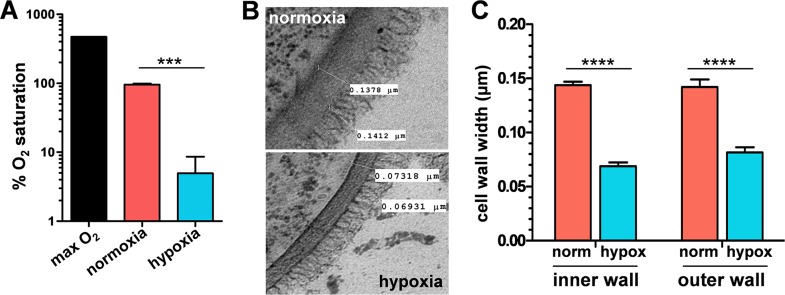
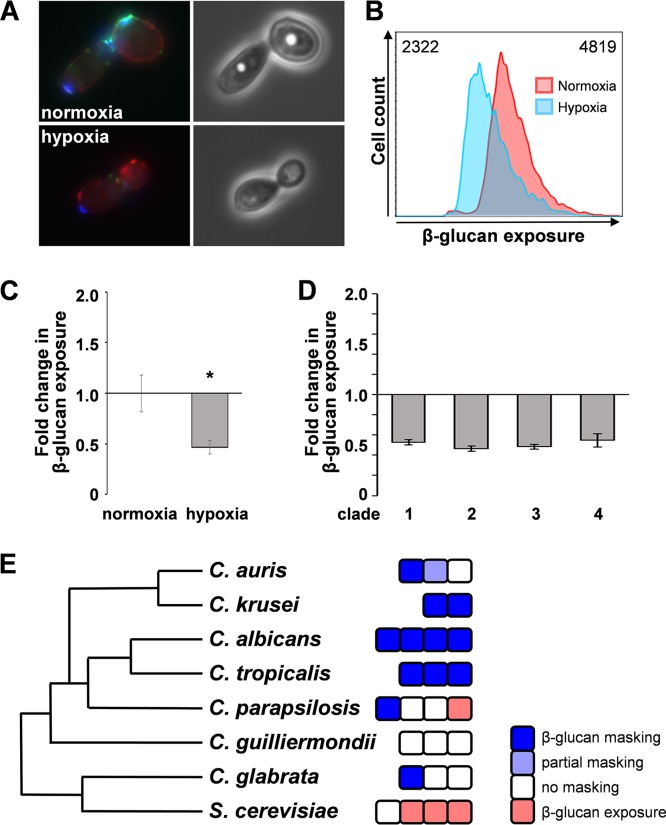
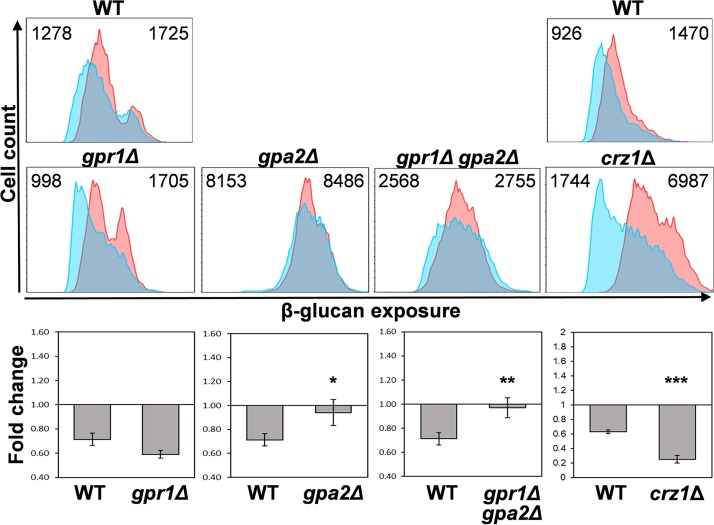
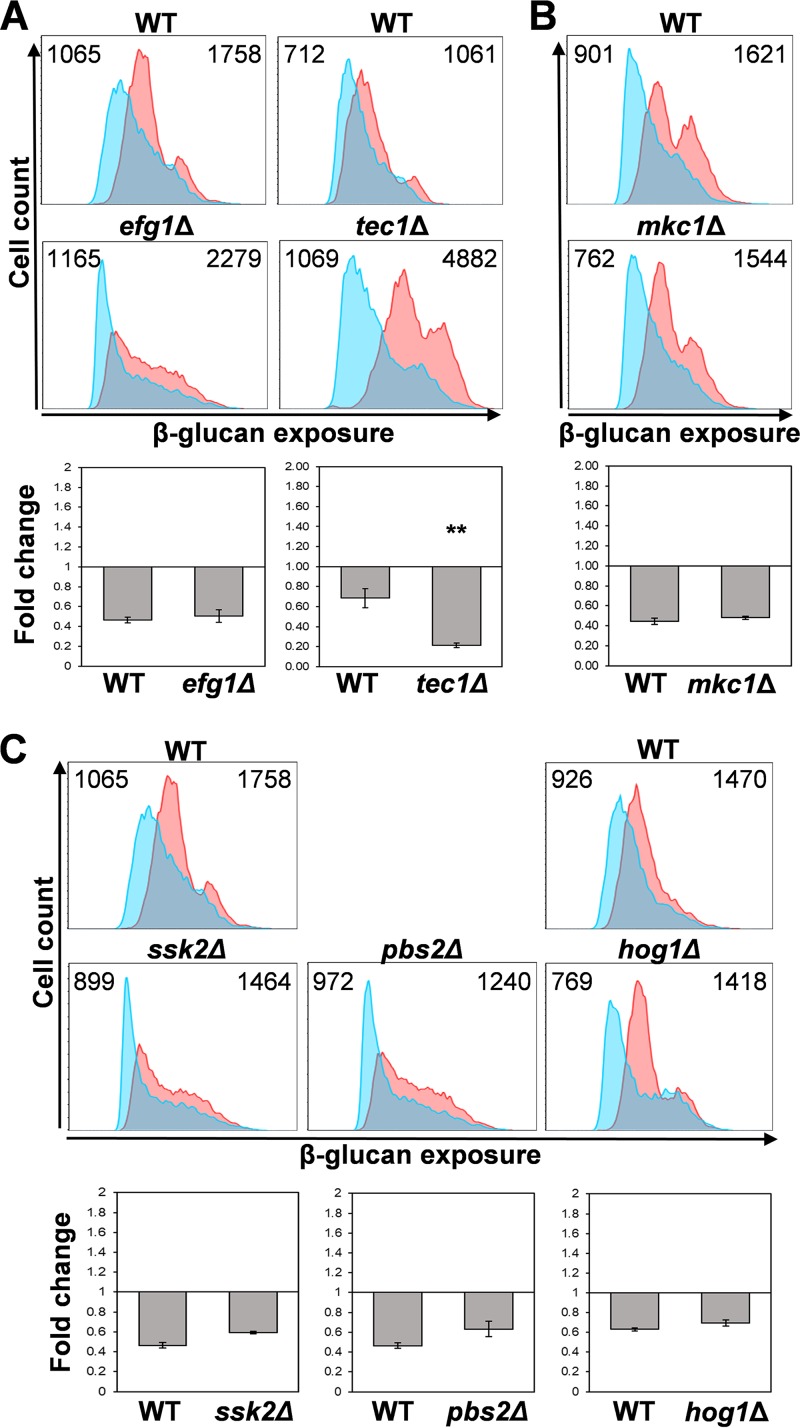
Animal, plant, and fungal cells occupy environments that impose changes in oxygen tension. Consequently, many species have evolved mechanisms that permit robust adaptation to these changes. The fungal pathogen Candida albicans can colonize hypoxic (low oxygen) niches in its human host, such as the lower gastrointestinal tract and inflamed tissues, but to colonize its host, the fungus must also evade local immune defenses. We reveal, for the first time, a defined link between hypoxic adaptation and immune evasion in C. albicans . As this pathogen adapts to hypoxia, it undergoes changes in cell wall structure that include masking of β-glucan at its cell surface, and it becomes better able to evade phagocytosis by innate immune cells. We also define the signaling mechanisms that mediate hypoxia-induced β-glucan masking, showing that they are dependent on mitochondrial signaling and the cAMP-protein kinase pathway. Therefore, hypoxia appears to trigger immune evasion in this fungal pathogen.
Overview
The claims and statistics of this paper haven’t been checked yet.
Free: it reads the open-access text and checks the first 5 claims that cite a source we can check. Create a free account to check every claim.
Integrity signals
Registry
Cites
Statistics
Figures
Verification
Claims the paper makes
The claims and statistics of this paper haven’t been checked yet.
Free: it reads the open-access text and checks the first 5 claims that cite a source we can check. Create a free account to check every claim.
Claims other papers make about this one
Each is checked against this paper’s own text: does it say what the citing paper says it does?
The source backs part of the claim, not all of it — or backs it for a different population, condition or comparison.
In the citing paper
“Found in diverse microbial pathogens, but not in humans, Aox is proposed as a potential drug target given its reported role in governing diverse cellular stress response pathways, including a role in maintaining cell wall architecture16,17.”
From Multifactor transcriptional control of alternative oxidase induction integrates diverse environmental inputs to enable fungal virulence (2023) · cites this paper as [17]
Experimental — accuracy not yet measuredThe source backs part of the claim, not all of it — or backs it for a different population, condition or comparison.
In the citing paper
“Found in diverse microbial pathogens, but not in humans, Aox is proposed as a potential drug target given its reported role in governing diverse cellular stress response pathways, including a role in maintaining cell wall architecture16,17.”
From Multifactor transcriptional control of alternative oxidase induction integrates diverse environmental inputs to enable fungal virulence (2023) · cites this paper as [17]
Experimental — accuracy not yet measuredThe cited source says what the claim attributes to it.
In the citing paper
“However, two recent studies clearly indicated that hypoxic conditions led to alterations in the cell wall that mask C. albicans from host responses (61, 62).”
From Inhibition of Classical and Alternative Modes of Respiration in Candida albicans Leads to Cell Wall Remodeling and Increased Macrophage Recognition (2019) · cites this paper as [62]
Self-check
Percentages, sums and reported differences re-computed from the paper’s own numbers.
The self-check needs the paper’s full text.
Citations
Cites
Hidden Killers: Human Fungal Infections
Brown, G. D., Denning, D. W., Gow, N. A. R., Levitz, S. M., Netea, M. G., & White, T. C. (2012) · Science Translational Medicine · doi:10.1126/scitranslmed.3004404 · Cited by 4,284
Self-citationSherman, F. (2002) · Methods in Enzymology · doi:10.1016/s0076-6879(02)50954-x · Cited by 4,121
[1] Getting started with yeast
Sherman, F. (1991) · Methods in Enzymology · doi:10.1016/0076-6879(91)94004-v · Cited by 4,067
MICROBIAL ECOLOGY OF THE GASTROINTESTINAL TRACT
Savage, D. C. (1977) · Annual Review of Microbiology · doi:10.1146/annurev.mi.31.100177.000543 · Cited by 2,436
Chandel, N. S., McClintock, D. S., Feliciano, C. E., Wood, T. M., Melendez, J. A., Rodriguez, A. M., & Schumacker, P. T. (2000) · Journal of Biological Chemistry · doi:10.1074/jbc.m001914200 · Cited by 2,000 · cited 1×
“This is particularly significant because respiratory complex III releases superoxide into the mitochondrial intermembrane space (57, 85–87) and complex III is critical for hypoxic signaling (57, 58, 81, 84, 88, 89).”
Mitochondrial reactive oxygen species trigger hypoxia-induced transcription
Chandel, N. S., Maltepe, E., Goldwasser, E., Mathieu, C. E., Simon, M. C., & Schumacker, P. T. (1998) · Proceedings of the National Academy of Sciences · doi:10.1073/pnas.95.20.11715 · Cited by 1,926 · cited 1×
“ticularly significant because respiratory complex III releases superoxide into the mitochondrial intermembrane space (57, 85–87) and complex III is critical for hypoxic signaling (57, 58, 81, 84, 88, 89).”
Brown, G. D., & Gordon, S. (2001) · Nature · doi:10.1038/35092620 · Cited by 1,579
Self-citationMitochondrial complex III is required for hypoxia-induced ROS production and cellular oxygen sensing
Guzy, R. D., Hoyos, B., Robin, E., Chen, H., Liu, L., Mansfield, K. D., Simon, M. C., Hammerling, U., & Schumacker, P. T. (2005) · Cell Metabolism · doi:10.1016/j.cmet.2005.05.001 · Cited by 1,545 · cited 1×
“This is particularly significant because respiratory complex III releases superoxide into the mitochondrial intermembrane space (57, 85–87) and complex III is critical for hypoxic signaling (57, 58, 81, 84, 88, 89).”
Ubisemiquinone is the electron donor for superoxide formation by complex III of heart mitochondria
Turrens, J. F., Alexandre, A., & Lehninger, A. L. (1985) · Archives of Biochemistry and Biophysics · doi:10.1016/0003-9861(85)90293-0 · Cited by 1,214 · cited 1×
“This is particularly significant because respiratory complex III releases superoxide into the mitochondrial intermembrane space (57, 85–87) and complex III is critical for hypoxic signaling (57, 58, 81, 84, 88, 89).”
Dectin-1 is required for β-glucan recognition and control of fungal infection
Taylor, P. R., Tsoni, S. V., Willment, J. A., Dennehy, K. M., Rosas, M., Findon, H., Haynes, K., Steele, C., Botto, M., Gordon, S., et al. (2007) · Nature Immunology · doi:10.1038/ni1408 · Cited by 1,161
Self-citation
Cited by
Items 101–133 of 133
Zhao, Y., Zou, W., Su, C., & Lu, Y. (2026) · iFungi · doi:10.26599/ifungi.2026.9670011 · Cited by 4
Sah, S. K., Yadav, A., Kruppa, M., & Rustchenko, E. P. (2023) · Microbiology Spectrum · doi:10.1128/spectrum.03295-23 · Cited by 5
Naik, S., & Mohammed, A. (2023) · International Journal of Molecular Sciences · doi:10.3390/ijms241411748 · Cited by 4
Pattern recognition receptors and the innate immune network
van Hensbergen, V. P., & Hu, X. (2024) · Elsevier eBooks · doi:10.1016/b978-0-12-818619-0.00131-3 · Cited by 9
Hickey, E., Leaves, I., Pradhan, A., Ma, Q., Yuecel, R., Gow, N. A. R., Brown, G. D., & Brown, A. J. P. (2025) · Current Microbiology · doi:10.1007/s00284-025-04400-0 · Cited by 4
“These exponential cells were fixed in 50 mM thi-merosal (Sigma-Aldrich) [51], washed, counted using a Vi-CELL BLU Counter (Beckman Coulter), brought to a concentration of 2.5 × 10 6 cells/ml, and stained with Fc-Dectin-1 and anti-human IgG conjugated to Alexaflour 488 (β−1,3-glucan exposure), with…”
InfluentialSelf-citationSterol-C4-methyl-oxidase Erg251 governs Candida albicans hypoxic growth, commensalism and virulence
Liu, Z., Yiu, B., Basso, P., Chen, X., Patel, D., Davie, T., Hossain, S., Fu, C., Archambault, L. S., Duncan, D., et al. (2025) · Nature Communications · doi:10.1038/s41467-025-66482-5 · Cited by 3
Mamdouh, S., El‐Kamel, R. S., Fekry, A. M., & Ameer, M. A. M. (2025) · BMC Chemistry · doi:10.1186/s13065-025-01586-z · Cited by 2
Visualizing Hypoxia in a Murine Model of Candida albicans Infection Using in vivo Biofluorencence
Lopes, J. P., & Urban, C. F. (2019) · BIO-PROTOCOL · doi:10.21769/bioprotoc.3326 · Cited by 2
“The ability to sustain growth and to survive in low oxygen environments has been linked to virulence in several fungi (Shepardson et al., 2013; Gresnigt et al., 2016; Pradhan et al., 2018).”
BackgroundGenechten, W. V., Wijnants, S., Vreys, J., & Dijck, P. V. (2022) · bioRxiv (Cold Spring Harbor Laboratory) · doi:10.1101/2022.11.30.518566 · Cited by 3
“albicans when challenged 190 with macrophages (13, 22).”
BackgroundHyphal swelling induced in the phagosome of macrophages
Alonso, M. F., Bain, J. M., Erwig, L. P., Brown, A. J. P., & Gow, N. A. R. (2024) · Fungal Biology · doi:10.1016/j.funbio.2024.08.011 · Cited by 3
Self-citationFactors Affecting Drug Resistance and Virulence in Fungal Pathogen
Sharma, P., Kumari, D., Kumari, P., Kumar, A., & Pasrija, R. (2024) · Springer eBooks · doi:10.1007/978-981-97-4909-6_7 · Cited by 2
zhang, J., Li, B., Zuo, B., & Li, X. (2025) · Pathogens · doi:10.3390/pathogens14010095 · Cited by 3
“In addition, many studies have shown that mitochondrial oxidative phosphorylation (OXPHOS) in C. albicans is crucial for β -glucan masking, hyphal formation, biofilm development, cell wall biosynthesis, and adaptation to stress by regulating different signaling pathways [22,24].”
InfluentialEngineered Probiotic Hydrogel Alleviates Vaginitis via Antimicrobial and Anti-inflammatory Pathways
Zhang, X., Pu, R., Zhang, C., Zhan, M., Chen, L., Ma, L., & Chen, H. (2025) · ACS Applied Bio Materials · doi:10.1021/acsabm.5c00766 · Cited by 3
Xu, R., Chen, Y., Yang, Y., Wang, C., Wu, D., & Wang, T. (2026) · Journal of Ethnopharmacology · doi:10.1016/j.jep.2026.121413 · Cited by 1
Wang, S., Tian, L., Li, F., Wang, Q., Tan, Y., Ning, Y., Cao, X., Liu, Y., Shangguan, J., Li, H., et al. (2026) · Food Research International · doi:10.1016/j.foodres.2026.119570 · Cited by 1
Effect of Antifungal-Treated Host Macrophages on Candida glabrata
Li, H., Li, N., Wen, S.-R., Qiang, M., Yang, Z.-H., Dong, T.-X., Li, Y., & Kuang, Y. (2021) · Canadian Journal of Infectious Diseases and Medical Microbiology · doi:10.1155/2021/8838444 · Cited by 1
“0e other mechanism may be mediated by hypoxia-induced β-glucan masking which is dependent on mitochondrial signaling and the cAMP-protein kinase pathway [30].”
BackgroundFungal symbionts produce prostaglandin E 2 to promote their intestinal colonizationPreprint
Tan, T. G., Lim, Y. S., Tan, A. S. M., Leong, R., & Pavelka, N. (2018) · bioRxiv (Cold Spring Harbor Laboratory) · doi:10.1101/477117 · Cited by 1
mSphere of Influence: Positive Research Culture Enables Excellence and Innovation
Ballou, E. R. (2020) · mSphere · doi:10.1128/msphere.00948-19
Kumwenda, P., Cottier, F., Keevan, B., Gallagher, H., Tsai, H.-J., & Hall, R. A. (2020) · bioRxiv (Cold Spring Harbor Laboratory) · doi:10.1101/2020.07.22.207191
DeORFanizing Candida albicans Genes using Co-ExpressionPreprint
O’Meara, T. R., & O’Meara, M. J. (2020) · bioRxiv (Cold Spring Harbor Laboratory) · doi:10.1101/2020.12.04.412718
Characterising phagocytes and measuring phagocytosis from live Galleria mellonella larvaePreprint
Campbell, J. S., Bebes, A., Pradhan, A., Yuecel, R., Brown, A., & Wakefield, J. G. (2023) · bioRxiv (Cold Spring Harbor Laboratory) · doi:10.1101/2023.10.09.558207
Self-citationTuor, M., Stappers, M. H. T., Ruchti, F., Desgardin, A., Sparber, F., Orr, S. J., Gow, N. A. R., & LeibundGut‐Landmann, S. (2024) · bioRxiv (Cold Spring Harbor Laboratory) · doi:10.1101/2024.07.12.603211
Self-citationPost‐Radiation Microbiological Changes in Osteoradionecrosis: Investigating the Microbial Landscape
Longfellow, G. A., Matthews, M. R., Adams, G. J., Cook, L. M., Fonesca, V. I., Benaim, E. H., Tasoulas, J., Hackman, T., & Sullivan, C. B. (2025) · Otolaryngology · doi:10.1002/ohn.70044
“46 In both cohorts, Gram ‐ positive cocci predominated, with Streptococcus spp .”
Shrivastava, M., Tebbji, F., Dubé, M., Vincent, A. T., & Sellam, A. (2025) · bioRxiv (Cold Spring Harbor Laboratory) · doi:10.64898/2025.12.19.695452
“Hypoxia is also known to induce substantial remodeling of the C. albicans cell wall, most notably through reduced β -glucan exposure, a strategy that promotes evasion of host immune detection (9, 40).”
Kashiwaba, A., Mitani, A., Sonoda, T., Shigemune, N., & Takahashi, H. (2026) · Journal of Microbiological Methods · doi:10.1016/j.mimet.2026.107405
Influence of the microbiota on Candida albicans gastrointestinal colonization in healthy individuals
Delavy, M. (2023) · theses.fr (ABES) · doi:10.70675/da5a2f9dz2e64z4e1fz9280z36a010c349be
Fonctions et biosynthèse des β-1,6-glucanes de la paroi cellulaire chez Candida albicans
Bekirian, C. (2024) · theses.fr (ABES) · doi:10.70675/b1028289z0c26z4acaz8f96z18e5c0c94464
Interactions hôte-candida au cours des péritonites fongiques graves de réanimation
Novy, E. (2024) · theses.fr (ABES) · doi:10.70675/bb875beazbffcz45cdz85b2z2ac1b68c7226
Sadamoto, S., Abe, M., Amemiya, K., Koizumi, A., Otani, A., Oiki, S., Shinohara, T., Shibuya, K., & Miyazaki, Y. (2026) · Journal of Infection and Chemotherapy · doi:10.1016/j.jiac.2026.102977
The prebiotic inulin affects virulence factor expression in Candida albicans
Hickey, E., Pradhan, A., Ma, Q., Leaves, I., Philip-Brookes, A., Duggan, S., Harvey, J. A., Dambuza, I. M., Cherek, P., Yuecel, R., et al. (2026) · mBio · doi:10.1128/mbio.03851-25
“5F), which are required for iron limitation-and hypoxia-induced β(1,3)-glucan masking, respectively (43, 64).”
Self-citationNiaz, N., Younis, H., Ni, Z., Guo, P., Ren, Z., Liu, X., 丁安国, & Junhua, Z. (2026) · Physiological and Molecular Plant Pathology · doi:10.1016/j.pmpp.2026.103483
Zhu, H., Wang, X., & Shao, J. (2026) · Biochimie · doi:10.1016/j.biochi.2026.09.004
Host receptor-mediated responses to Candida albicans : An update
Zhu, H., Wang, X., & Shao, J. (2026) · Medical Mycology · doi:10.1093/mmy/myag111
Metadata
- Authors
- Pradhan, A., Avelar, G. M., Bain, J. M., Childers, D. S., Larcombe, D. E., Netea, M. G., Shekhova, E., Munro, C. A., Brown, G. D., Erwig, L. P., Gow, N. A. R., & Brown, A. J. P.
- Affiliations
- University of Aberdeen (GB)
- Radboud University Nijmegen (NL)
- GlaxoSmithKline (United Kingdom) (GB)
- Corresponding author
- Brown, Alistair J. P.
- ORCID
- Venue
- mBio
- Publisher
- American Society for Microbiology
- Published
- 2018-12-21
- Volume
- 9
- Issue
- 6
- ISSN
- 2150-7511 (ISSN-L)
- 2161-2129
- PMC
- PMC6222127
- OpenAlex
- W2890504745
- Cited by
- 133
- References
- 111
- Citations by year
- 2026: 12 · 2025: 15 · 2024: 20 · 2023: 14 · 2022: 18 · 2021: 16 · 2020: 22 · 2019: 14 · 2018: 2
- FWCI
- 4.80
- Type
- journal article
- Language
- en
- Open access
- gold
- doi.org
- Licence
- cc-by
- creativecommons.org/licenses/by/4.0/ (vor)
- journals.asm.org/non-commercial-tdm-license (tdm)
- Locations
- mBio (publishedVersion, cc-by)
- Europe PMC (PubMed Central) (publishedVersion, cc-by)
- PubMed Central (publishedVersion, cc-by)
- PubMed (publishedVersion)
- Aberdeen University Research Archive (Aberdeen University) (submittedVersion)
- DOAJ (DOAJ: Directory of Open Access Journals) (submittedVersion, cc-by-sa)
- DOAJ (DOAJ: Directory of Open Access Journals) (submittedVersion)
- Radboud Repository (Radboud University) (submittedVersion)
- Radboud Repository (Radboud University) (submittedVersion, other-oa)
- Funders
- Wellcome Trust (097377, 102705)
- RCUK | Medical Research Council (MR/M026663/1, MR/N006364/1)
- University of Aberdeen (PhD Studentships)
- Topics
- Life Sciences › Biochemistry, Genetics and Molecular Biology › Molecular Biology › Fungal and yeast genetics research
- Health Sciences › Medicine › Infectious Diseases › Antifungal resistance and susceptibility
- Health Sciences › Medicine › Infectious Diseases › Fungal Infections and Studies
- Keywords
- Candida albicans, hypoxia, immune evasion, cell wall, phagocytosis resistance, mitochondrial signaling, cAMP/protein kinase A pathway, innate immunity
- MeSH terms
- Animals, Hypoxia, Candida albicans, Cell Wall, Humans, Macrophages, Male, Mice, Inbred C57BL, Mitochondria, Phagocytosis, Signal Transduction, Interleukin-10, Cyclic AMP-Dependent Protein Kinases, Chemokine CCL5, beta-Glucans, Mice, Host-Pathogen Interactions, Immune Evasion
About these checks
Registry, retraction, Cites and statistics results are computed, not judged, with one exception: a printed reference that no index lists is read once by a model before it counts as a citation error. Claims are extracted by a model and kept only when their quote appears verbatim in the text; each cited source is then checked, with a model’s help, for whether it says what the claim relies on. Those verdicts can be wrong — read the claim’s quote and the cited source before relying on one.
Statistics and arithmetic are recomputed, not judged.
Confidence bands are shown only for fields calibrated on our annotated test set. None is calibrated yet, so no band is shown.
What counts as a claim ›How we measure confidence ›How we check this ›
Are you an author, or do you see a problem with this page? Request a review
Data sources
Bibliographic data: Semantic Scholar, OpenAlex, Crossref.
Contains information from the Semantic Scholar Academic Graph Datasets, made available under the ODC Attribution License (ODC-BY 1.0).
Semantic Scholar’s data is described in: Kinney, R., et al. (2023). The Semantic Scholar Open Data Platform. arXiv:2301.10140.
