

Aspergillus fumigatus Photobiology Illuminates the Marked Heterogeneity between Isolates
Open accessThe DOI matches its Crossref record; 48 of the 48 references it cites were found in a registry or an index.
Abstract
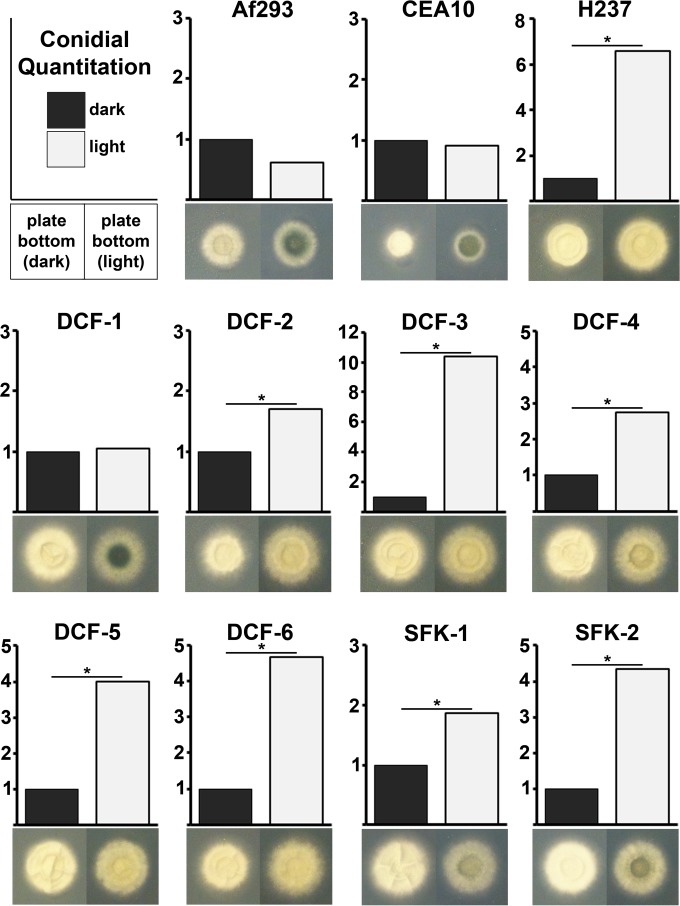
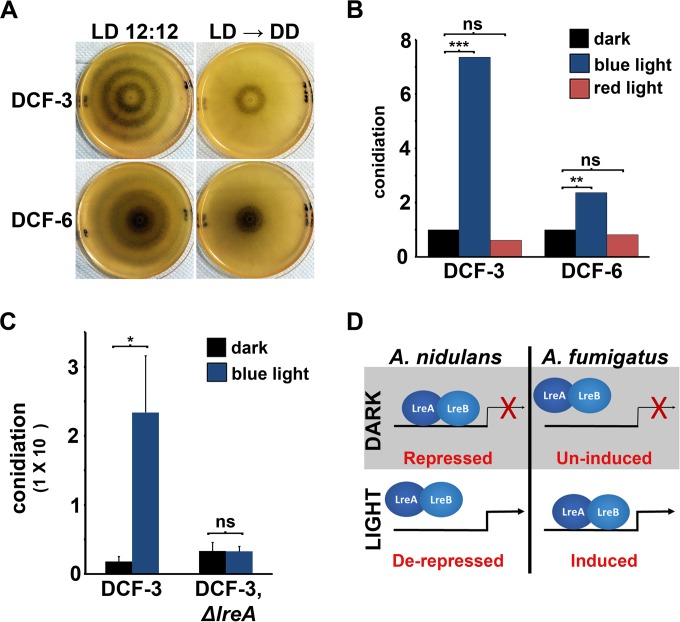
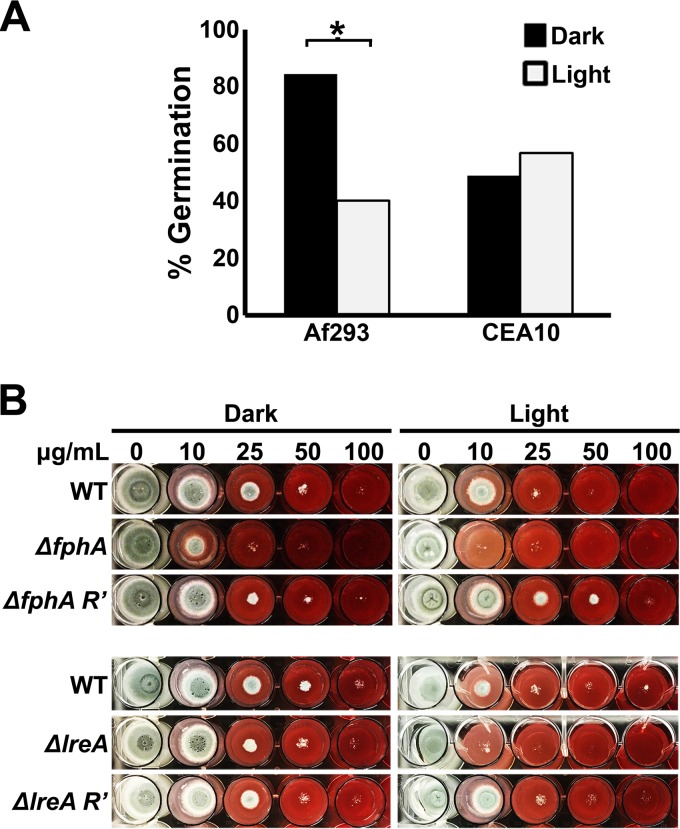
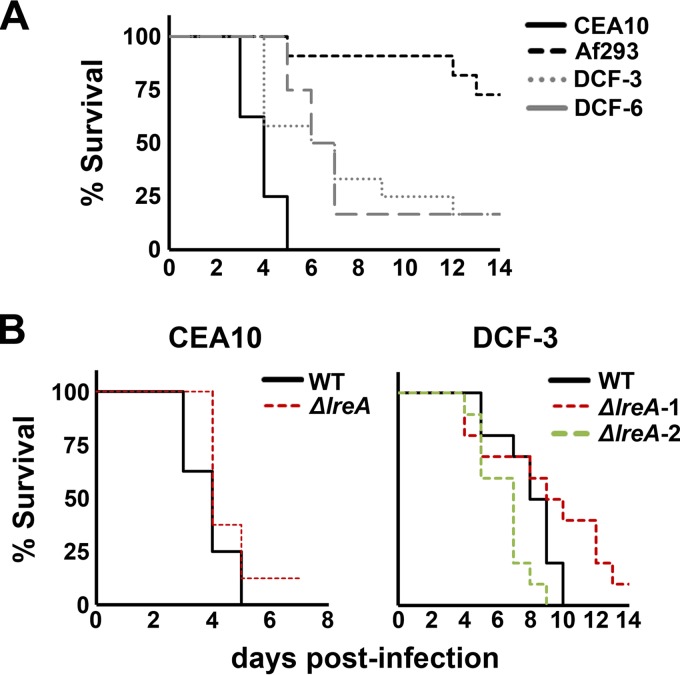
The given strain of Aspergillus fumigatus under study varies across laboratories, ranging from a few widely used “standards,” e.g., Af293 or CEA10, to locally acquired isolates that may be unique to one investigator. Since experiments concerning physiology or gene function are seldom replicated by others, i.e., in a different A. fumigatus background, the extent to which behavioral heterogeneity exists within the species is poorly understood. As a proxy for assessing such intraspecies variability, we analyzed the light response of 15 A. fumigatus isolates and observed striking quantitative and qualitative heterogeneity among them. The majority of the isolates fell into one of two seemingly mutually exclusive groups: (i) “photopigmenters” that robustly accumulate hyphal melanin in the light and (ii) “photoconidiators” that induce sporulation in the light. These two distinct responses were both governed by the same upstream blue light receptor, LreA, indicating that a specific protein’s contribution can vary in a strain-dependent manner. Indeed, while LreA played no apparent role in regulating cell wall homeostasis in strain Af293, it was essential in that regard in strain CEA10. The manifest heterogeneity in the photoresponses led us to compare the virulence levels of selected isolates in a murine model; remarkably, the virulence did vary greatly, although not in a manner that correlated with their overt light response. Taken together, these data highlight the extent to which isolates of A. fumigatus can vary, with respect to both broad physiological characteristics (e.g., virulence and photoresponse) and specific protein functionality (e.g., LreA-dependent phenotypes). IMPORTANCE The current picture of Aspergillus fumigatus biology is akin to a collage, patched together from data obtained from disparate “wild-type” strains. In a systematic assessment of 15 A. fumigatus isolates, we show that the species is highly heterogeneous with respect to its light response and virulence. Whereas some isolates accumulate pigments in light as previously reported with strain Af293, most induce sporulation which had not been previously observed. Other photoresponsive behaviors are also nonuniform, and phenotypes of identical gene deletants vary in a background-dependent manner. Moreover, the virulence of several selected isolates is highly variable in a mouse model and apparently does not track with any observed light response. Cumulatively, this work illuminates the fact that data obtained with a single A. fumigatus isolate are not necessarily predictive of the species as whole. Accordingly, researchers should be vigilant when making conclusions about their own work or when interpreting data from the literature.
Overview
The claims and statistics of this paper haven’t been checked yet.
Free: it reads the open-access text and checks the first 5 claims that cite a source we can check. Create a free account to check every claim.
Integrity signals
Registry
Cites
Statistics
Figures
Verification
Claims the paper makes
The claims and statistics of this paper haven’t been checked yet.
Free: it reads the open-access text and checks the first 5 claims that cite a source we can check. Create a free account to check every claim.
Claims other papers make about this one
Each is checked against this paper’s own text: does it say what the citing paper says it does?
In the citing paper
“The response to light was, however, able to disclose strain heterogeneity in this species (450).”
From Aspergillus fumigatus and Aspergillosis in 2019 (2019) · cites this paper as [450]
In the citing paper
“GAG is an adhesin involved in biofilm formation (450) that binds to epithelial cells and helps germ tubes cross through actin tunnels (204, 218).”
From Aspergillus fumigatus and Aspergillosis in 2019 (2019) · cites this paper as [450]
Self-check
Percentages, sums and reported differences re-computed from the paper’s own numbers.
The self-check needs the paper’s full text.
Citations
Cites
The induction and repression of nitrate reductase in the fungus Aspergillus nidulans
Cove, D. J. (1966) · Biochimica et Biophysica Acta (BBA) - Enzymology and Biological Oxidation · doi:10.1016/s0926-6593(66)80120-0 · Cited by 1,038
VelB/VeA/LaeA Complex Coordinates Light Signal with Fungal Development and Secondary Metabolism
Bayram, O., Krappmann, S., Ni, M., Bok, J. W., Helmstaedt, K., Valerius, O., Braus-Stromeyer, S., Kwon, N.-J., Keller, N. P., Yu, J.-H., et al. (2008) · Science · doi:10.1126/science.1155888 · Cited by 919
Biosynthesis of fungal melanins and their importance for human pathogenic fungi
Langfelder, K., Streibel, M., Jahn, B., Haase, G., & Brakhage, A. A. (2003) · Fungal Genetics and Biology · doi:10.1016/s1087-1845(02)00526-1 · Cited by 634 · cited 1×
“major overt response of Af293 included the accumulation of a dark-green hyphal pigment observable on the colony reverse (plate bottom), presumably dihydroxy naphthalene (DHN) melanin (20, 27).”
BackgroundWhite Collar-1, a Circadian Blue Light Photoreceptor, Binding to the frequency Promoter
Froehlich, A. C., Liu, Y., Loros, J. J., & Dunlap, J. C. (2002) · Science · doi:10.1126/science.1073681 · Cited by 520 · cited 5×
“LreA is a blue-light-sensing GATA-type transcription factor and ortholog of Neurospora White Collar-1 (WC-1) (4, 5).”
BackgroundInfluentialSelf-citationGenomic Islands in the Pathogenic Filamentous Fungus Aspergillus fumigatus
Fedorova, N. D., Khaldi, N., Joardar, V. S., Maiti, R., Amedeo, P., Anderson, M. J., Crabtree, J., Silva, J. C., Badger, J. H., Albarraq, A., et al. (2008) · PLoS Genetics · doi:10.1371/journal.pgen.1000046 · Cited by 508 · cited 3×
“For example, each strain harbors genes not found in the other; as for Af293, these lineage-specific genes may be involved in arsenic and betaine metabolism as well as osmotic and heavy metal stress (21).”
BackgroundWhite collar-1, a central regulator of blue light responses in Neurospora, is a zinc finger protein.
Ballario, P., Vittorioso, P., Magrelli, A., Talora, C., Cabibbo, A., & Macino, G. (1996) · The EMBO Journal · doi:10.1002/j.1460-2075.1996.tb00510.x · Cited by 453 · cited 1×
“In Neurospora, WC-1 directly drives transcription of target genes following photoactivation, and consequently, wc-1 mutants fail to accumulate conidia or carotenoids in the light (4, 5, 10).”
BackgroundWhite Collar-1, a DNA Binding Transcription Factor and a Light Sensor
He, Q., Cheng, P., Yang, Y., Wang, L., Gardner, K. H., & Liu, Y. (2002) · Science · doi:10.1126/science.1072795 · Cited by 419 · cited 5×
“LreA is a blue-light-sensing GATA-type transcription factor and ortholog of Neurospora White Collar-1 (WC-1) (4, 5).”
BackgroundInfluentialThe Aspergillus nidulans Phytochrome FphA Represses Sexual Development in Red Light
Blumenstein, A., Vienken, K., Tasler, R., Purschwitz, J., Veith, D., Frankenberg-Dinkel, N., & Fischer, R. (2005) · Current Biology · doi:10.1016/j.cub.2005.08.061 · Cited by 357 · cited 1×
“FphA is a red-light-sensing phytochrome that utilizes a conserved histidine kinase domain to regulate downstream components (12, 13).”
BackgroundWillger, S. D., Puttikamonkul, S., Kim, K.-H., Burritt, J. B., Grahl, N., Metzler, L. J., Barbuch, R., Bard, M., Lawrence, C. B., & Cramer, R. A. (2008) · PLoS Pathogens · doi:10.1371/journal.ppat.1000200 · Cited by 345 · cited 1×
“, the thermal stress (35) or hypoxic (36) response, we hypothesized that the virulence of a particular isolate would track with its overt photoresponse.”
BackgroundSelf-citationFunctional and Physical Interaction of Blue- and Red-Light Sensors in Aspergillus nidulans
Purschwitz, J., Müller, S., Kastner, C., Schöser, M., Haas, H., Espeso, E. A., Atoui, A., Calvo, A. M., & Fischer, R. (2008) · Current Biology · doi:10.1016/j.cub.2008.01.061 · Cited by 311 · cited 8×
“nidulans, LreA acts as a repressor of conidiation as evidenced by the fact that lreA mutants display a slight increase in conidiation in both the dark and the light (8, 9).”
BackgroundInfluential
Cited by
Aspergillus fumigatus and Aspergillosis in 2019
Latgé, J.-P., & Chamilos, G. (2019) · Clinical Microbiology Reviews · doi:10.1128/cmr.00140-18 · Cited by 1,400
Light sensing and responses in fungi
Yu, Z., & Fischer, R. (2019) · Nature Reviews Microbiology · doi:10.1038/s41579-018-0109-x · Cited by 285
Light in the Fungal World: From Photoreception to Gene Transcription and Beyond
Corrochano, L. M. (2019) · Annual Review of Genetics · doi:10.1146/annurev-genet-120417-031415 · Cited by 167
Macrophages inhibit Aspergillus fumigatus germination and neutrophil-mediated fungal killing
Rosowski, E. E., Raffa, N., Knox, B. P., Golenberg, N., Keller, N. P., & Huttenlocher, A. (2018) · PLoS Pathogens · doi:10.1371/journal.ppat.1007229 · Cited by 118
Melanin and pyomelanin in Aspergillus fumigatus: from its genetics to host interaction
Perez‐Cuesta, U., Aparicio-Fernandez, L., Guruceaga, X., Martin–Souto, L., Abad, A., Antoran, A., Buldain, I., Hernando, F. L., Ramirez‐Garcia, A., & Rementería, A. (2019) · International Microbiology · doi:10.1007/s10123-019-00078-0 · Cited by 118
Hagiwara, D., Sakai, K., Suzuki, S., Umemura, M., Nogawa, T., Kato, N., Osada, H., Watanabe, A., Kawamoto, S., Gonoi, T., et al. (2017) · PLoS ONE · doi:10.1371/journal.pone.0177050 · Cited by 102
The Zebrafish as a Model Host for Invasive Fungal Infections
Rosowski, E. E., Knox, B. P., Archambault, L. S., Huttenlocher, A., Keller, N. P., Wheeler, R. T., & Davis, J. M. (2018) · Journal of Fungi · doi:10.3390/jof4040136 · Cited by 73
“Two strains have emerged as common laboratory strains, Af293 and CEA10, and these strains differ by ~50,000 SNPs [35] and have significant phenotypic differences, including tolerance of hypoxia and response to light [98,107,108].”
BackgroundBastos, R. W., Valero, C., Silva, L. P., Schoen, T., Drott, M., Brauer, V., Silva-Rocha, R., Lind, A., Steenwyk, J. L., Rokas, A., et al. (2020) · mSphere · doi:10.1128/msphere.00153-20 · Cited by 60
“fumigatus, which show that virulence is as much a strain-dependent as a host-dependent trait (24, 37, 39, 51).”
BackgroundRies, L. N. A., Steenwyk, J. L., de Castro, P. A., de Lima, P. B. A., Almeida, F. B. D. R., de Assis, L. J., Manfiolli, A. O., Takahashi‐Nakaguchi, A., Kusuya, Y., Hagiwara, D., et al. (2019) · Frontiers in Microbiology · doi:10.3389/fmicb.2019.00854 · Cited by 61
“The cell wall makes up around onequarter of the total fungal biomass and is composed of proteins and a complex intertwined network of polysaccharides such as glucans, chitin and galactomannans (Gastebois and Aimanianda, 2009).”
Santos, R., Steenwyk, J. L., Rivero-Menéndez, O., Mead, M. E., Silva, L. P., Bastos, R. W., Alastruey‐Izquierdo, A., Goldman, G. H., & Rokas, A. (2020) · Frontiers in Genetics · doi:10.3389/fgene.2020.00459 · Cited by 65
“fumigatus strains have previously been shown to exhibit great quantitative and qualitative heterogeneity in light response (Fuller et al., 2016); in this case, heterogeneity in light response was not associated with heterogeneity in virulence.”
Insight into the Significance of Aspergillus fumigatus cyp51A Polymorphisms
Garcia‐Rubio, R., Alcázar‐Fuoli, L., Monteiro, M. C., Monzón, S., Cuesta, I., Peláez, T., & Mellado, E. (2018) · Antimicrobial Agents and Chemotherapy · doi:10.1128/aac.00241-18 · Cited by 65
Garcia‐Rubio, R., Monzón, S., Alcázar‐Fuoli, L., Cuesta, I., & Mellado, E. (2018) · Genes · doi:10.3390/genes9070363 · Cited by 51
Heterogeneity Confounds Establishment of “a” Model Microbial Strain
Keller, N. P. (2017) · mBio · doi:10.1128/mbio.00135-17 · Cited by 46
“An early comparison (2007) of the genomes of these two strains showed that while most regions of the two genomes displayed high synteny, Af293 contained 208 and CEA10 (also called A1163) contained 320 unique genes not found in the assembled genome of the other strain (10).”
BackgroundInfluentialOliveira, A. S., Braga, G. Ú. L., & Rangel, D. E. N. (2017) · Fungal Biology · doi:10.1016/j.funbio.2017.12.009 · Cited by 46
Fungal Light Sensing at the Bench and Beyond
Fuller, K. K., Dunlap, J., & Loros, J. (2016) · Advances in genetics · doi:10.1016/bs.adgen.2016.08.002 · Cited by 46
Self-citationDias, L. P., Souza, R. K. F., Pupin, B., & Rangel, D. E. N. (2021) · Fungal Biology · doi:10.1016/j.funbio.2021.06.003 · Cited by 40
Bayram, Ö. S., Dettmann, A., Karahoda, B., Moloney, N. M., Ormsby, T., McGowan, J., Cea-Sánchez, S., Miralles-Durán, A., Brancini, G. T. P., Luque, E. M., et al. (2019) · Genetics · doi:10.1534/genetics.119.302277 · Cited by 44
Sun, W., Yu, Y., Chen, J., Yu, B., Chen, T., Ying, H., Zhou, S., Ouyang, P., Liu, D., & Chen, Y. (2021) · mBio · doi:10.1128/mbio.03434-20 · Cited by 39
“Although fungi cannot directly harness light as an energy source (14), fungi can con-”
BackgroundKale, S. D., Ayubi, T., Chung, D., Tubau‐Juni, N., Leber, A. J., Dang, H. X., Karyala, S. V., Hontecillas, R., Lawrence, C. B., Cramer, R. A., et al. (2017) · Scientific Reports · doi:10.1038/s41598-017-17000-1 · Cited by 33
Self-citationRecent developments in Aspergillus fumigatus research: diversity, drugs, and disease
Kordana, N. E., Johnson, A., Quinn, K., Obar, J. J., & Cramer, R. A. (2025) · Microbiology and Molecular Biology Reviews · doi:10.1128/mmbr.00011-23 · Cited by 29
“As discussed further later in this review, phenotypic variation between strains’ metab olism, cell wall composition, low oxygen fitness, virulence, immune activation, and response to light have been explored in the last five years (4–6, 15, 39–42).”
Self-citationMisslinger, M., Gsaller, F., Hortschansky, P., Müller, C., Bracher, F., Bromley, M., & Haas, H. (2017) · Metallomics · doi:10.1039/c7mt00110j · Cited by 30
Watkins, T. N., Liu, H., Chung, M. C., Hazen, T. H., Hotopp, J. C. D., Filler, S. G., & Bruno, V. M. (2018) · Microbial Genomics · doi:10.1099/mgen.0.000154 · Cited by 25
“IPA is associated with a 25– 35%mortality rate despite current antifungal therapy [5, 6].”
MethodInfluentialDhingra, S., Buckey, J. C., & Cramer, R. A. (2017) · Antimicrobial Agents and Chemotherapy · doi:10.1128/aac.01953-17 · Cited by 24
Self-citationNLRX1 is a key regulator of immune signaling during invasive pulmonary aspergillosis
Kastelberg, B., Tubau‐Juni, N., Ayubi, T., Leung, A., Leber, A. J., Hontecillas, R., Bassaganya-Riera, J., & Kale, S. D. (2020) · PLoS Pathogens · doi:10.1371/journal.ppat.1008854 · Cited by 26
Colabardini, A. C., Wang, F., Dong, Z., Pardeshi, L. A., Rocha, M. C., Costa, J. H., dos Reis, T. F., Brown, A. C., Jaber, Q. Z., Fridman, M., et al. (2021) · Genetics · doi:10.1093/genetics/iyab183 · Cited by 25
Kowalski, C. H., Morelli, K. A., Stajich, J., Nadell, C. D., & Cramer, R. A. (2021) · mBio · doi:10.1128/mbio.03579-20 · Cited by 23
Self-citationCosta, T. P. C., Rodrigues, E. M., Dias, L. P., Pupin, B., Ferreira, P. C., & Rangel, D. E. N. (2020) · European Journal of Plant Pathology · doi:10.1007/s10658-020-02146-y · Cited by 22
“…dos Campos, SP, Brazil P. C. Ferreira Independent researcher, SP, Brazil several genes that encode proteins, which are involved in the detection of visible light, and have investigated the mechanisms that activate physiological and morphological responses (Chen et al. 2009; Fuller et al. 2016).”
BackgroundThe Third International Symposium on Fungal Stress – ISFUS
Alder-Rangel, A., Idnurm, A., Brand, A., Brown, A. J. P., Gorbushina, A. A., Kelliher, C., de Campos, C. B. L., Levin, D. E., Bell‐Pedersen, D., Dadachova, E., et al. (2020) · Fungal Biology · doi:10.1016/j.funbio.2020.02.007 · Cited by 21
Patil, R. H., Kotta‐Loizou, I., Palyzová, A., Pluháček, T., Coutts, R. H. A., Stevens, D. A., & Havlíček, V. (2021) · Journal of Fungi · doi:10.3390/jof7070497 · Cited by 21
Clark, H. R., Powell, A. B., Simmons, K., Ayubi, T., & Kale, S. D. (2019) · mSphere · doi:10.1128/msphere.00663-18 · Cited by 21
“(20, 21), we decided to determine if CEA10 conidia were as metabolically active as the AF293 isolate postchallenge with BEAS-2B cells.”
Cascant-Lopez, E., Crosthwaite, S. K., Johnson, L. J., & Harrison, R. J. (2020) · Frontiers in Microbiology · doi:10.3389/fmicb.2020.01977 · Cited by 17
The second International Symposium on Fungal Stress: ISFUS
Alder-Rangel, A., Bailão, A. M., da Cunha, A. F., Soares, C. M. A., Wang, C., Bonatto, D., Dadachova, E., Hakalehto, E., Eleuthério, E. C. A., Fernandes, É. K. K., et al. (2017) · Fungal Biology · doi:10.1016/j.funbio.2017.10.011 · Cited by 18
“…Fuller explained that for the saprophyte and opportunistic pathogen Aspergillus fumigatus, visible light leads to conspicuous effects on colonial growth, e.g. the induction of mycelial pigments or asexual spores, as well as an induction of genes involved in DNA repair (Fuller et al., 2013, 2016).”
BackgroundSelf-citationLin, S., Qin, H., Zhang, X., Li, W., & Liu, M. (2021) · Microbiology Spectrum · doi:10.1128/spectrum.00213-21 · Cited by 17
“The reason may be from a difference in the strain itself, and some researchers also found a similar phenomenon (20, 24).”
ResultSpontaneous circadian rhythms in a cold-adapted natural isolate of Aureobasidium pullulans
Franco, D. L., Canessa, P., Bellora, N., Risau-Gusman, S., Olivares-Yáñez, C., Pérez-Lara, R., Libkind, D., Larrondo, L. F., & Marpegán, L. (2017) · Scientific Reports · doi:10.1038/s41598-017-14085-6 · Cited by 18
Direct Visualization of Fungal Burden in Filamentous Fungus-Infected Silkworms
Yu, Y., Wolf, A., Thusek, S., Heinekamp, T., Bromley, M., Krappmann, S., Terpitz, U., Voigt, K., Brakhage, A. A., & Beilhack, A. (2021) · Journal of Fungi · doi:10.3390/jof7020136 · Cited by 13
“This is in line with previous studies comparing the virulence of CEA10 and Af293 in a non-neutropenic mouse model [61,62], and furthermore emphasizes that the infectious dose used for silkworm experiments must be adjusted individually according to the fungal genetic background.”
ResultHovhannisyan, H., & Gabaldón, T. (2018) · Current topics in microbiology and immunology · doi:10.1007/82_2018_122 · Cited by 17
Rinker, D. C., Sauters, T. J. C., Steffen, K., Gumilang, A., Raja, H. A., Rangel‐Grimaldo, M., Pinzan, C. F., de Castro, P. A., dos Reis, T. F., Delbaje, E., et al. (2024) · Communications Biology · doi:10.1038/s42003-024-06756-8 · Cited by 14
“In A. fumigatus , traitssuch as genotype 16 , chromatin state 17 , hypoxia tolerance 18,19 , photopigmentation and photoconidiation 20 , secondary metabolite biosynthesis 21,22 , and hyper-sensitivity to nitrosative or oxidative stresses 23 , all show extensive variation or heterogeneity between…”
BackgroundTranscriptome Analysis of Two Strains of Aspergillus oryzae with Different Responses to Light
Suzuki, S., & Kusumoto, K.-I. (2020) · Japan Agricultural Research Quarterly JARQ · doi:10.6090/jarq.54.13 · Cited by 11
Hagiwara, D., Takahashi, H., Takagi, H., Watanabe, A., & Kamei, K. (2018) · Medical Mycology Journal · doi:10.3314/mmj.18-00007 · Cited by 11
Kamath, M. M., Lightfoot, J. D., Adams, E. M., Kiser, R. M., Wells, B. L., & Fuller, K. K. (2023) · PLoS Pathogens · doi:10.1371/journal.ppat.1011435 · Cited by 10
Self-citationThe sino-nasal warzone: transcriptomic and genomic studies on sino-nasal aspergillosis in dogs
Valdes, I. D., de Ruijter, A. B. P. H., Torres, C., Breuker, J. C. A., Wösten, H. A. B., & de Cock, H. (2020) · npj Biofilms and Microbiomes · doi:10.1038/s41522-020-00163-7 · Cited by 10
El-Kamand, S., Steiner, M., Ramirez, C., Halliday, C. L., Chen, S. C. ‐., Papanicolaou, A., & Morton, C. O. (2022) · Pathogens · doi:10.3390/pathogens11040428 · Cited by 8
“These include the growth rate [8,9], pigmentation [10], resistance to oxidative stress [11], and azole antifungals [12].”
BackgroundExamining Signatures of Natural Selection in Antifungal Resistance Genes Across Aspergillus Fungi
Santos, R., Mead, M. E., Steenwyk, J. L., Rivero-Menéndez, O., Alastruey‐Izquierdo, A., Goldman, G. H., & Rokas, A. (2021) · Frontiers in Fungal Biology · doi:10.3389/ffunb.2021.723051 · Cited by 7
“Isolates of A. fumigatus are phenotypically heterogeneous (Fuller et al., 2016; Kowalski et al., 2016, 2019; Keller, 2017; Ries et al., 2019; Steenwyk et al., 2020a,b), and we recently showed that this heterogeneity extends to antifungal drug resistance among clinical isolates in A. fumigatus and…”
BackgroundMead, M. E., de Castro, P. A., Steenwyk, J. L., Gangneux, J., Hoenigl, M., Prattes, J., Rautemaa‐Richardson, R., Guegan, H., Moore, C. B., Lass‐Flörl, C., et al. (2023) · Microbiology Spectrum · doi:10.1128/spectrum.05128-22 · Cited by 6
Poudyal, N. R., Mehlem, R., Doneparthi, P., Cady, T., Kaufman, G., Willger, S. D., Ortiz, M., Noorai, R. E., Stajich, J., & Dhingra, S. (2026) · Genetics · doi:10.1093/genetics/iyag152 · Cited by 5
“Some of the factors attributed to this difference are nutrient plasticity and response to light and oxygen (Fuller et al. 2016; Kowalski et al. 2016 47-57 also leads to differential fungal response to sub-MIC concentrations of azoles (Fig.”
Jiang, N., Dong, H., Yu, H.-L., He, M., Li, Z., Zhou, F., Li, Y. W., Yu, C., & Li, Q.-Z. (2026) · Journal of Fungi · doi:10.3390/jof12060439 · Cited by 3
Characterization of Blue Light Receptors LreA and LreB in Aspergillus flavus
Park, H.-M., Son, Y.-E., Cho, H.-J., Yu, J., & Park, H.-S. (2025) · Journal of Microbiology and Biotechnology · doi:10.4014/jmb.2411.11054 · Cited by 2
“In A. fumigatus , the absence of lreA decreases conidiation under light conditions [41, 42].”
Leister, K., Dong, Y., Landmark, A., Ma, Y., Schreckenberger, B., Yu, Z., Lü, L., & Fischer, R. (2025) · mBio · doi:10.1128/mbio.02204-25 · Cited by 3
“Both have no role in A. fumigatus virulence (19, 27).”
Outstanding women scientists who have broadened the knowledge on biological photoreceptors-II
Braslavsky, S. E. (2024) · Photochemical & Photobiological Sciences · doi:10.1007/s43630-024-00551-4 · Cited by 2
“She pioneered global analysis of light-responsive genes [7, 11], determined the mechanism for photoadapta-tion [12, 13] and used photobiology to probe fungal pathogenesis [14].”
Ação imunomoduladora de vesículas extracelulares produzidas por Aspergillus flavus
Brauer, V. S. (2020) · Digital Library of Theses and Dissertations (Universidade de São Paulo) · doi:10.11606/t.17.2020.tde-07092020-102302 · Cited by 1
Strain heterogeneity in a non-pathogenic fungus highlights factors contributing to virulencePreprint
Rinker, D. C., Sauters, T. J. C., Steffen, K., Gumilang, A., Raja, H. A., Rangel‐Grimaldo, M., Pinzan, C. F., de Castro, P. A., dos Reis, T. F., Delbaje, E., et al. (2024) · bioRxiv (Cold Spring Harbor Laboratory) · doi:10.1101/2024.03.08.583994 · Cited by 1
Machi, H. A. (2019) · eDiss (Georg-August-Universität Göttingen) · doi:10.53846/goediss-7556
Aspergillus- Human Interactions: From the Environment to Clinical Significance
Thammahong, A. (2022) · IntechOpen eBooks · doi:10.5772/intechopen.98509 · Cited by 2
Regulation of Development and Secondary Metabolism in Aspergillus
Park, H.-S., Cho, H.-J., Chen, W., & Yu, J. (2026) · The mycota · doi:10.1007/978-3-032-15548-1_15
Metadata
- Authors
- Fuller, K. K., Cramer, R. A., Zegans, M. E., Dunlap, J. C., & Loros, J. J.
- Affiliations
- Dartmouth College (US)
- Corresponding author
- Dunlap, Jay C.
- Loros, Jennifer J.
- Venue
- mBio
- Publisher
- American Society for Microbiology
- Published
- 2016-11-02
- Volume
- 7
- Issue
- 5
- ISSN
- 2150-7511 (ISSN-L)
- 2161-2129
- PMC
- PMC5030361
- OpenAlex
- W2522087516
- Cited by
- 55
- References
- 48
- Citations by year
- 2026: 3 · 2025: 3 · 2024: 3 · 2023: 2 · 2022: 1 · 2021: 10 · 2020: 9 · 2019: 7 · 2018: 8 · 2017: 8 · 2016: 1
- FWCI
- 4.16
- Type
- journal article
- Language
- en
- Open access
- gold
- doi.org
- Licence
- cc-by
- creativecommons.org/licenses/by/4.0/ (vor)
- journals.asm.org/non-commercial-tdm-license (tdm)
- Locations
- mBio (publishedVersion, cc-by)
- Europe PMC (PubMed Central) (publishedVersion, cc-by)
- PubMed Central (publishedVersion, cc-by)
- PubMed (publishedVersion)
- DOAJ (DOAJ: Directory of Open Access Journals) (submittedVersion, cc-by-sa)
- DOAJ (DOAJ: Directory of Open Access Journals) (submittedVersion)
- Funders
- HHS | NIH | National Institute of Allergy and Infectious Diseases (R01AI081838)
- HHS | NIH | National Institute of General Medical Sciences (R35GM118022, R35GM118021)
- Topics
- Life Sciences › Biochemistry, Genetics and Molecular Biology › Molecular Biology › Fungal and yeast genetics research
- Health Sciences › Medicine › Infectious Diseases › Antifungal resistance and susceptibility
- Health Sciences › Medicine › Infectious Diseases › Fungal Infections and Studies
- Keywords
- Aspergillus fumigatus, light response, photobiology, blue light receptor, melanin accumulation, sporulation, cell wall homeostasis, virulence, mouse model
- MeSH terms
- Animals, Aspergillosis, Aspergillus fumigatus, Cell Wall, Disease Models, Animal, Genotype, Light, Melanins, Spores, Fungal, Genetic Variation, Virulence, Gene Deletion, Hyphae, Mice, Phototrophic Processes
About these checks
Registry, retraction, Cites and statistics results are computed, not judged, with one exception: a printed reference that no index lists is read once by a model before it counts as a citation error. Claims are extracted by a model and kept only when their quote appears verbatim in the text; each cited source is then checked, with a model’s help, for whether it says what the claim relies on. Those verdicts can be wrong — read the claim’s quote and the cited source before relying on one.
Statistics and arithmetic are recomputed, not judged.
Confidence bands are shown only for fields calibrated on our annotated test set. None is calibrated yet, so no band is shown.
What counts as a claim ›How we measure confidence ›How we check this ›
Are you an author, or do you see a problem with this page? Request a review
Data sources
Bibliographic data: Semantic Scholar, OpenAlex, Crossref.
Contains information from the Semantic Scholar Academic Graph Datasets, made available under the ODC Attribution License (ODC-BY 1.0).
Semantic Scholar’s data is described in: Kinney, R., et al. (2023). The Semantic Scholar Open Data Platform. arXiv:2301.10140.
