

Proteome Analysis Reveals the Conidial Surface Protein CcpA Essential for Virulence of the Pathogenic Fungus Aspergillus fumigatus
Open accessThe DOI matches its Crossref record; 67 of the 68 references it cites were found in a registry or an index.
Abstract
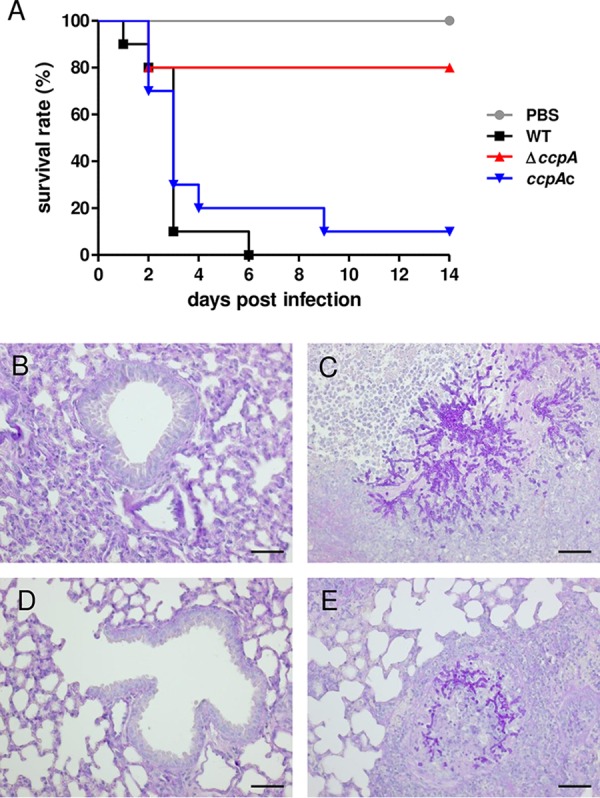
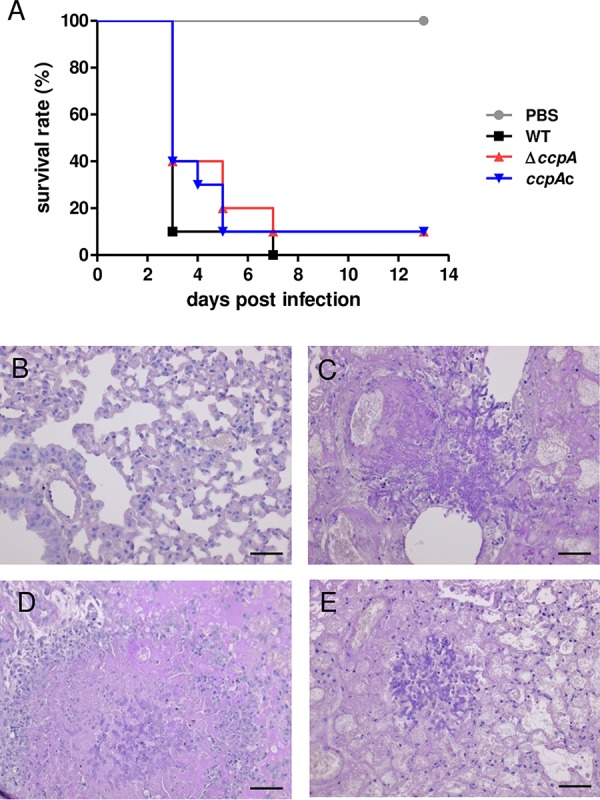
The mammalian immune system relies on recognition of pathogen surface antigens for targeting and clearance. In the absence of immune evasion strategies, pathogen clearance is rapid. In the case of Aspergillus fumigatus , the successful fungus must avoid phagocytosis in the lung to establish invasive infection. In healthy individuals, fungal spores are cleared by immune cells; however, in immunocompromised patients, clearance mechanisms are impaired. Here, using proteome analyses, we identified CcpA as an important fungal spore protein involved in pathogenesis. A. fumigatus lacking CcpA was more susceptible to immune recognition and prompt eradication and, consequently, exhibited drastically attenuated virulence. In infection studies, CcpA was required for virulence in infected immunocompromised mice, suggesting that it could be used as a possible immunotherapeutic or diagnostic target in the future. In summary, our report adds a protein to the list of those known to be critical to the complex fungal spore surface environment and, more importantly, identifies a protein important for conidial immunogenicity during infection.
Overview
The claims and statistics of this paper haven’t been checked yet.
Free: it reads the open-access text and checks the first 5 claims that cite a source we can check. Create a free account to check every claim.
Integrity signals
Registry
Cites
Statistics
Figures
Verification
Claims the paper makes
The claims and statistics of this paper haven’t been checked yet.
Free: it reads the open-access text and checks the first 5 claims that cite a source we can check. Create a free account to check every claim.
Claims other papers make about this one
Each is checked against this paper’s own text: does it say what the citing paper says it does?
In the citing paper
“Another cell wall protein, CcpA, found on the surface of the conidium, also played a role in immunomasking the conidium (473).”
From Aspergillus fumigatus and Aspergillosis in 2019 (2019) · cites this paper as [473]
In the citing paper
“Another cell wall protein, CcpA, found on the surface of the conidium, also played a role in immunomasking the conidium (473).”
From Aspergillus fumigatus and Aspergillosis in 2019 (2019) · cites this paper as [473]
Self-check
Percentages, sums and reported differences re-computed from the paper’s own numbers.
The self-check needs the paper’s full text.
Citations
Cites
Bradford, M. M. (1976) · Analytical Biochemistry · doi:10.1016/0003-2697(76)90527-3 · Cited by 255,302 · cited 1×
“After centrifugation at 20,800 g for 20 min at 16°C, protein concentration was determined using the Bio-Rad protein assay (Bio-Rad) (45).”
Krogh, A., Larsson, B., von Heijne, G., & Sonnhammer, E. L. L. (2001) · Journal of Molecular Biology · doi:10.1006/jmbi.2000.4315 · Cited by 12,654 · cited 1×
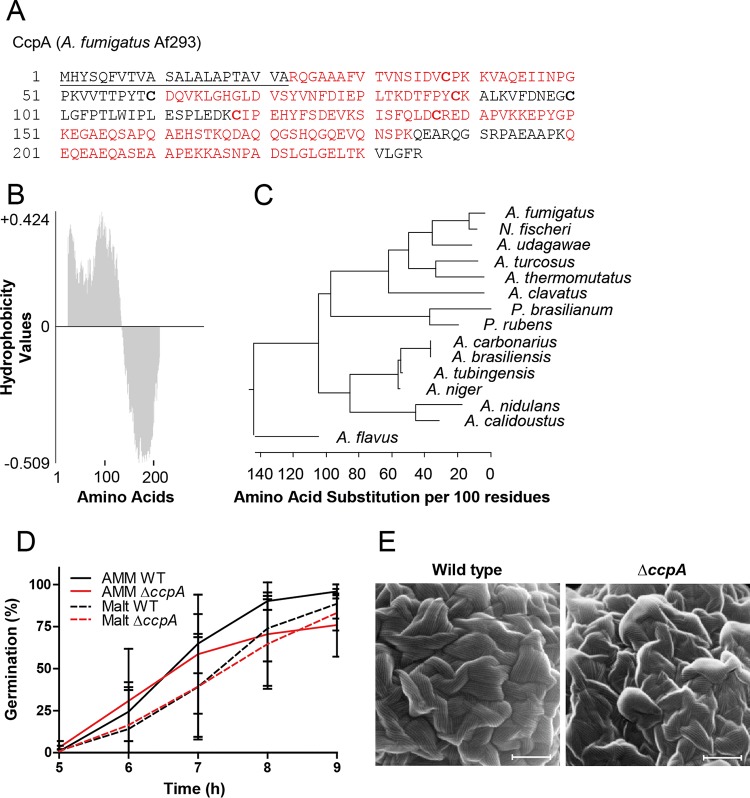
“A total of 43 proteins contained a signal peptide for secretion (SignalP 4.1 Server [21]), 8 proteins contained predicted transmembrane helices (TMHMM Server v. 2.0 [22, 23]), and 8 proteins contained a GPI-anchored attachment signal (according to the data in reference 24).”
InfluentialSignalP 4.0: discriminating signal peptides from transmembrane regions
Petersen, T. N., Brunak, S., von Heijne, G., & Nielsen, H. (2011) · Nature Methods · doi:10.1038/nmeth.1701 · Cited by 8,847 · cited 1×
“A total of 43 proteins contained a signal peptide for secretion (SignalP 4.1 Server [21]), 8 proteins contained predicted transmembrane helices (TMHMM Server v. 2.0 [22, 23]), and 8 proteins contained a GPI-anchored attachment signal (according to the data in reference 24).”
InfluentialProtein production by auto-induction in high-density shaking cultures
Studier, F. W. (2005) · Protein Expression and Purification · doi:10.1016/j.pep.2005.01.016 · Cited by 5,931 · cited 1×
“2% (wt/vol) -lactose, and appropriate supplements (55).”
Fitting a mixture model by expectation maximization to discover motifs in biopolymers.
Bailey, T. L., & Elkan, C. (1994) · PubMed · Cited by 5,806
Hidden Killers: Human Fungal Infections
Brown, G. D., Denning, D. W., Gow, N. A. R., Levitz, S. M., Netea, M. G., & White, T. C. (2012) · Science Translational Medicine · doi:10.1126/scitranslmed.3004404 · Cited by 4,284 · cited 1×
“Specific diagnostics and treatment options for IA are limited, resulting in high (30% to 95%) mortality rates (5).”
A hidden Markov model for predicting transmembrane helices in protein sequences.
Sonnhammer, E. L. L., von HEIJNE, G., & Krogh, A. (1998) · PubMed · Cited by 2,505
Bass, D. A., Parce, J. W., Dechatelet, L. R., Szejda, P., Seeds, M. C., & Thomas, M. (1983) · The Journal of Immunology · doi:10.4049/jimmunol.130.4.1910 · Cited by 1,809 · cited 1×
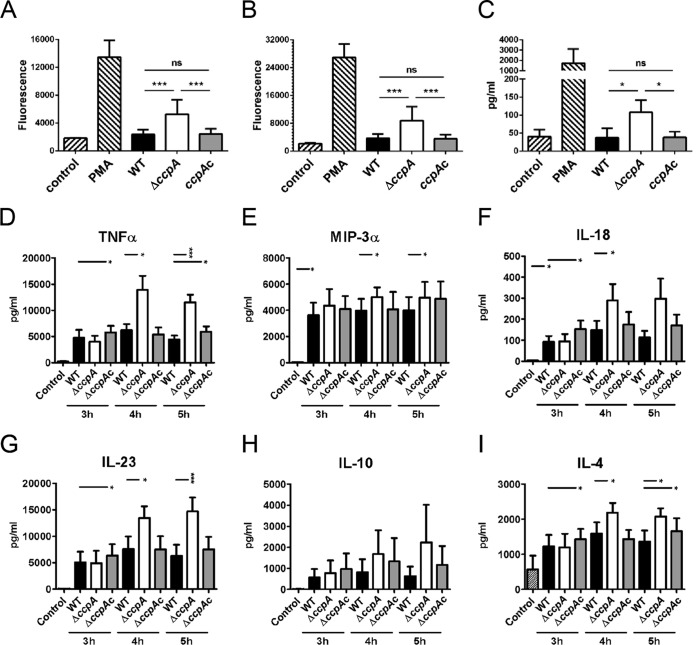
“Oxidative burst was determined by the 2=,7=-dichlorofluorescein (DCF) assay (58).”
Aspergillus fumigatus and Aspergillosis in 2019
Latgé, J.-P., & Chamilos, G. (2019) · Clinical Microbiology Reviews · doi:10.1128/cmr.00140-18 · Cited by 1,400
Interleukin‐8, a chemotactic and inflammatory cytokine
Baggiolini, M., & Clark-Lewis, I. (1992) · FEBS Letters · doi:10.1016/0014-5793(92)80909-z · Cited by 989
Research works printed but not linked: 1
- Sambrook J, Russell DW 2001 Molecular cloning: a laboratory manual. Cold Spring Harbor Laboratory Press, Cold Spring Harbor, NY.
Cited by
Aspergillus fumigatus and Aspergillosis in 2019
Latgé, J.-P., & Chamilos, G. (2019) · Clinical Microbiology Reviews · doi:10.1128/cmr.00140-18 · Cited by 1,400
Molecular Mechanisms of Conidial Germination in Aspergillus spp
Baltussen, T. J. H., Zoll, J., Verweij, P. E., & Melchers, W. J. G. (2019) · Microbiology and Molecular Biology Reviews · doi:10.1128/mmbr.00049-19 · Cited by 155
“Recently, an extensive A. fumigatus conidial surface proteome analysis was carried out using LC-MS/MS (107).”
MethodInfluentialQuarantin, A., Hadeler, B., Kröger, C., Schäfer, W., Favaron, F., Sella, L., & Martínez-Rocha, A. L. (2019) · Frontiers in Microbiology · doi:10.3389/fmicb.2019.00751 · Cited by 93
Ball, B., Bermas, A., Carruthers‐Lay, D., & Geddes‐McAlister, J. (2019) · Journal of Fungi · doi:10.3390/jof5020052 · Cited by 67
“Of these proteins, 40% contain a signal peptide, predicted transmembrane helix, or GPI-anchored attachment signal, supporting their presence at the interface between the cell surface and extracellular environment [38].”
BackgroundAmich, J., Mokhtari, Z., Strobel, M., Vialetto, E., Sheta, D., Yu, Y., Hartweg, J., Kalleda, N., Jarick, K. J., Brede, C., et al. (2020) · mBio · doi:10.1128/mbio.02752-19 · Cited by 64
Self-citationMenacing Mold: Recent Advances in Aspergillus Pathogenesis and Host Defense
Tischler, B. Y., & Hohl, T. M. (2019) · Journal of Molecular Biology · doi:10.1016/j.jmb.2019.03.027 · Cited by 60
An overview on enrichment methods for cell surface proteome profiling
Li, Y., Qin, H., & Ye, M. (2019) · Journal of Separation Science · doi:10.1002/jssc.201900700 · Cited by 62
Manfiolli, A. O., Siqueira, F. S., dos Reis, T. F., Dijck, P. V., Schrevens, S., Hoefgen, S., Föge, M., Straßburger, M., de Assis, L. J., Heinekamp, T., et al. (2019) · mBio · doi:10.1128/mbio.00215-19 · Cited by 57
Self-citationConidial surface proteins at the interface of fungal infections
Blango, M. G., Kniemeyer, O., & Brakhage, A. A. (2019) · PLoS Pathogens · doi:10.1371/journal.ppat.1007939 · Cited by 43
Self-citationJia, L., Rafiq, M., Radosa, L., Hortschansky, P., Cunha, C., Cseresnyés, Z., Krüger, T., Schmidt, F., Heinekamp, T., Straßburger, M., et al. (2022) · Cell Host & Microbe · doi:10.1016/j.chom.2023.02.002 · Cited by 45
Self-citationAn Overview of Genomics, Phylogenomics and Proteomics Approaches in Ascomycota
Muggia, L., Ametrano, C. G., Sterflinger, K., & Tesei, D. (2020) · Life · doi:10.3390/life10120356 · Cited by 49
“One protein, designated as conidial cell wall protein A (CcpA), was recognized the role of conidial stealth protein by altering the conidial surface structure to minimize innate immune recognition [323].”
BackgroundGPI Anchored Proteins in Aspergillus fumigatus and Cell Wall Morphogenesis
Samalova, M., Carr, P. D., Bromley, M., Blatzer, M., Moya‐Nilges, M., Latgé, J., & Mouyna, I. (2020) · Current topics in microbiology and immunology · doi:10.1007/82_2020_207 · Cited by 47
Neutrophil extracellular traps in fungal infections: A seesaw battle in hosts
Zhong, H., Lu, R.-Y., & Wang, Y. (2022) · Frontiers in Immunology · doi:10.3389/fimmu.2022.977493 · Cited by 36
Manipulation of host phagocytosis by fungal pathogens and therapeutic opportunities
Jia, L., González, K., Orasch, T., Schmidt, F., & Brakhage, A. A. (2024) · Nature Microbiology · doi:10.1038/s41564-024-01780-0 · Cited by 47
“Besides other effects of all of these molecules, they conceal β-glucan and other PAMPs from immune recognition 33,44–46 .”
Self-citationSchwarz, C., Eschenhagen, P. N., Schmidt, H., Hohnstein, T., Iwert, C., Grehn, C., Roehmel, J. F., Steinke, E., Stahl, M., Lozza, L., et al. (2023) · Journal of Clinical Investigation · doi:10.1172/jci161593 · Cited by 31
Self-citationPinzan, C. F., Valero, C., de Castro, P. A., da Silva, J. L., Earle, K., Liu, H., Horta, M. A. C., Kniemeyer, O., Krüger, T., Pschibul, A., et al. (2024) · Nature Microbiology · doi:10.1038/s41564-024-01782-y · Cited by 32
“There are five previous studies reporting the identification of A. fumigatus conidia-associated proteins 5,8,10,12,13 .”
InfluentialSelf-citationCell surface display of proteins on filamentous fungi
Urbar-Ulloa, J., Montaño‐Silva, P., Ramírez-Pelayo, A. S., Fernández-Castillo, E., Amaya-Delgado, L., Rodríguez‐Garay, B., & Verdín, J. (2019) · Applied Microbiology and Biotechnology · doi:10.1007/s00253-019-10026-7 · Cited by 29
Jia, L., Krüger, T., Blango, M. G., von Eggeling, F., Kniemeyer, O., & Brakhage, A. A. (2020) · mSphere · doi:10.1128/msphere.00535-20 · Cited by 26
“Two small proteins, Grg1 (glucose-repressible gene) and ConJ (conidiation-specific protein 10), were detected among the most prevalent proteins on dormant conidia of the ATCC 46645 strain using the HF-pyridine extraction method (10), on the CEA10 strain using the trypsin-shaving method (11), and in this study using bi…”
BackgroundMethodInfluentialSelf-citationXiao, F., Li, Y., Zhang, Y., Wang, H., Zhang, L., Ding, Z., Gu, Z., Xu, S., & Shi, G. (2020) · iScience · doi:10.1016/j.isci.2021.102400 · Cited by 25
Variation of virulence of five Aspergillus fumigatus isolates in four different infection models
Keizer, E., Valdes, I. D., Forn‐Cuní, G., Klijn, E., Meijer, A. H., Hillman, F., Wösten, H. A. B., & de Cock, H. (2021) · PLoS ONE · doi:10.1371/journal.pone.0252948 · Cited by 22
Gupta, L., Sen, P., Bhattacharya, A. K., & Vijayaraghavan, P. (2022) · Archives of Microbiology · doi:10.1007/s00203-022-02817-w · Cited by 24
“fumigatus possesses multiple virulence determinants like, conidial cell surface molecules (rodlet layer, DHN-melanin, pathogen associated molecular patterns (PAMPs)), secondary metabolite gliotoxin, thermotolerance, bio lm formation, oxidative stress components (Abad et al. 2010; Croft et al. 2016; Voltersen et al. 20…”
BackgroundDynamic Surface Proteomes of Allergenic Fungal Conidia
Blango, M. G., Pschibul, A., Rivieccio, F., Krüger, T., Rafiq, M., Jia, L., Zheng, T., Goldmann, M., Voltersen, V., Li, J., et al. (2020) · Journal of Proteome Research · doi:10.1021/acs.jproteome.0c00013 · Cited by 19
Self-citationActivation-induced surface proteins in the identification of antigen-responsive CD4 T cells
Elias, G., Ogunjimi, B., & Tendeloo, V. F. V. (2019) · Immunology Letters · doi:10.1016/j.imlet.2019.12.006 · Cited by 21
Conidium Specific Polysaccharides in Aspergillus fumigatus
Liu, Z., Valsecchi, I., Meur, R. A. L., Simenel, C., Guijarro, J. I., Comte, C., Muszkieta, L., Mouyna, I., Henrissat, B., Aimanianda, V., et al. (2023) · Journal of Fungi · doi:10.3390/jof9020155 · Cited by 24
Jiang, L., Gu, R., Li, X., & Mu, D. (2021) · Journal of Applied Microbiology · doi:10.1111/jam.15092 · Cited by 19
Recognition of Fungal Components by the Host Immune System
García-Carnero, L. C., Martínez-Álvarez, J. A., Salazar-García, L. M., Lozoya‐Pérez, N. E., González-Hernández, S. E., & Tamez-Castrellón, A. K. (2019) · Current Protein and Peptide Science · doi:10.2174/1389203721666191231105546 · Cited by 20
Cell wall of Aspergillus fumigatus: Variability and response to stress
Latgé, J. (2023) · Fungal Biology · doi:10.1016/j.funbio.2023.05.001 · Cited by 17
Host defense mechanisms against Aspergillus fumigatus lung colonization and invasion
Mackel, J. J., & Steele, C. H. (2019) · Current Opinion in Microbiology · doi:10.1016/j.mib.2019.04.003 · Cited by 19
Novel Treatment Approach for Aspergilloses by Targeting Germination
Verburg, K., van Neer, J., Duca, M., & de Cock, H. (2022) · Journal of Fungi · doi:10.3390/jof8080758 · Cited by 22
“Due to the ability of dormant conidia to evade the host’s immune system with proteins such as CcpA and RodA, clearance of these (dormant) conidia can be hindered in healthy people as well in immunocompromised individuals.”
BackgroundMethodInfluentialMannino, M. C., Davyt-Colo, B., Huarte‐Bonnet, C., Diambra, L. A., & Pedríni, N. (2023) · Scientific Reports · doi:10.1038/s41598-023-43889-y · Cited by 15
ELISA Test for the Serological Detection of Scedosporium/Lomentospora in Cystic Fibrosis Patients
Martin–Souto, L., Buldain, I., Areitio, M., Aparicio-Fernandez, L., Antoran, A., Bouchara, J., Martín-Gómez, M. T., Rementería, A., Hernando, F. L., & Ramirez‐Garcia, A. (2020) · Frontiers in Cellular and Infection Microbiology · doi:10.3389/fcimb.2020.602089 · Cited by 16
“This cross-reactivity could be explained by the fact that some surface proteins of the conidia are common to different moulds, are important for the survival of the fungus, and possess immune-modulatory functions (Voltersen et al., 2018).”
BackgroundValsecchi, I., Victor, E. S., Wong, S. S. W., Karnam, A., Sunde, M., Guijarro, J. I., de Francisco, B. R., Krüger, T., Kniemeyer, O., Brown, G. D., et al. (2020) · Journal of Fungi · doi:10.3390/jof6030151 · Cited by 16
“fumigatus [15] as well as other pathogenic fungi, such as Candida albicans and Cryptococcus neoformans.”
BackgroundMethodSelf-citationImmune Sensing and Potential Immunotherapeutic Approaches to Control Chromoblastomycosis
Breda, L. C. D., Menezes, I. G., Paulo, L. N. M., & de Almeida, S. R. (2020) · Journal of Fungi · doi:10.3390/jof7010003 · Cited by 18
“Therefore, more CBM studies that evaluate the fungal proteome are necessary [46].”
BackgroundRevealing the dynamics of fungal disease with proteomics
Sá, M. C. E. A., da Silva, M., Ball, B., & Geddes‐McAlister, J. (2025) · Molecular Omics · doi:10.1039/d4mo00222a · Cited by 12
Balotf, S., Wilson, R., Tegg, R. S., Nichols, D. S., & Wilson, C. R. (2020) · Molecules · doi:10.3390/molecules25143109 · Cited by 12
“The number of proteins identified in other proteomic studies of the spores included 319 in Moniliophthora perniciosa, 118 in Botrytis cinerea spores and 148 conidial surface proteins in Aspergillus fumigatus [20,37,38].”
BackgroundSensing the threat posed by Aspergillus infection
Obar, J. J. (2020) · Current Opinion in Microbiology · doi:10.1016/j.mib.2020.08.004 · Cited by 10
Hassan, M. I. A., Keller, M., Hillger, M., Binder, U., Reuter, S., Herold, K., Telagathoti, A., Dahse, H., Wicht, S., Trinks, N., et al. (2021) · Computational and Structural Biotechnology Journal · doi:10.1016/j.csbj.2021.01.023 · Cited by 11
Self-citationRahman, S., van Rhijn, N., Papastamoulis, P., Thomson, D. D., Carter, Z., Gregson, L., Fortune‐Grant, R., Rattray, M., Bromley, J. M., & Bignell, M. E. (2022) · Frontiers in Cellular and Infection Microbiology · doi:10.3389/fcimb.2022.907519 · Cited by 9
“In vitro infection studies have revealed speci fi c cell wall adhesins mediating adhesion to the lung epithelium at the distinct morphological growth stages of the fungus (Levdansky et al., 2010; Liu et al., 2016; Voltersen et al., 2018).”
Inácio, M. M., Cruz-Leite, V. R. M., Moreira, A. L. E., Mattos, K., Paccez, J. D., Ruiz, O. H., Venturini, J., Melhem, M. D. S. C., Paniago, A. M. M., Soares, C. M. D. A., et al. (2022) · Pathogens · doi:10.3390/pathogens11050569 · Cited by 9
Design and Synthesis of 1,3‐Diynes as Potent Antifungal Agents against Aspergillus fumigatus
Goswami, L., Gupta, L., Paul, S., Vijayaraghavan, P., & Bhattacharya, A. K. (2023) · ChemMedChem · doi:10.1002/cmdc.202300013 · Cited by 8
Treatment alternatives for multidrug-resistant fungal pathogens
Roe, K. (2023) · Drug Discovery Today · doi:10.1016/j.drudis.2023.103596 · Cited by 11
Nong, Y., Wang, F., Shuai, F., & Chen, S. (2024) · Current Microbiology · doi:10.1007/s00284-024-03623-x · Cited by 7
“…inside conidia has been shown to be a modulator of the conidia heterogeneity and has a driving effect on the pathogen’s future survival fate [19, 45], and the comparison of the transcripts and proteins expressed in these conidia produced from different growth conditions will be a new insight in…”
Kanjanapruthipong, T., Sukphopetch, P., Reamtong, O., Isarangkul, D., Muangkaew, W., Thiangtrongjit, T., Sansurin, N., Fongsodsri, K., & Ampawong, S. (2021) · Microbial Ecology · doi:10.1007/s00248-021-01750-7 · Cited by 8
“fumigatus associated with diagnostic aspects and fungal properties during their growth periods, such as swelling conidia, germinating conidia and hyphae formation [22, 23, 26, 27].”
BackgroundThirugnanasambandam, I., Vucurevich, T., Shelton, T. G., Kav, N. N. V., Sheedy, C., Laroche, A., & Challis, J. K. (2024) · ACS Agricultural Science & Technology · doi:10.1021/acsagscitech.4c00382 · Cited by 6
Page, L., Wallstabe, J., Lother, J., Bauser, M., Kniemeyer, O., Strobel, L., Voltersen, V., Teutschbein, J., Hortschansky, P., Morton, C. O., et al. (2021) · Frontiers in Immunology · doi:10.3389/fimmu.2021.659752 · Cited by 7
“CcpA is required for fungal virulence in immunocompromised mice with IPA, positioning the protein as a potential target for immunotherapy (11).”
BackgroundSelf-citationGupta, L., Hoda, S., Vermani, M., & Vijayaraghavan, P. (2021) · Mycological Progress · doi:10.1007/s11557-021-01677-w · Cited by 6
Mass Spectrometry-based Proteomics of Eukaryotes
Geddes‐McAlister, J., Rizakos, T., & Muselius, B. (2023) · Royal Society of Chemistry eBooks · doi:10.1039/bk9781837670338-00215 · Cited by 5
Virulence and pathogenicity of secondary fungal infections
Murugavel, A., & Ramakrishnan, J. (2025) · Critical Reviews in Microbiology · doi:10.1080/1040841x.2025.2537423 · Cited by 6
“Moreover, the conidial cell wall protein A (ccpA) modifies the conidial surface structure, potentially facilitating immune evasion (voltersen et al. 2018).”
Zhang, H., Ni, H., Tao, X., Chen, T., Zhang, Y., Zhu, X., Chen, Y., Peng, M., & Sun, Y. (2025) · Microbiology Spectrum · doi:10.1128/spectrum.02092-25 · Cited by 4
“Epidemiologi cal data indicate that approximately 30 million individuals worldwide are threatened by IA, with over 1 million new cases annually and mortality rates reaching 30%–90% (9, 10).”
Genetics and humoral responses of the immune system to Aspergillus fumigatus
Sanya, D. R. A., Jayachandran, K., & Onésime, D. (2025) · Molecular Immunology · doi:10.1016/j.molimm.2025.06.007 · Cited by 3
Proteomic Changes in Paracoccidioides brasiliensis Induced by Fludioxonil
Manfio, P. H. C., Segura, W. D., Navarro, M. V., Zauli, R. C., Lopes, P. S., Serrano, S. M. T., Chaves, A. F. A., & Batista, W. L. (2025) · Journal of Proteome Research · doi:10.1021/acs.jproteome.5c00038 · Cited by 2
Pinzan, C. F., Diehl, C., de Castro, P. A., Delbaje, E., Rocha, P. S., Marciano, C. L., da Rosa-Garzon, N. G., Cabral, H., Sprute, R., Kolovou, A., et al. (2025) · mBio · doi:10.1128/mbio.02481-25 · Cited by 2
Cell Surface Shaving-Based Proteomic Profiling of the Surfaceome in Pathogenic Microorganisms
Satała, D., Kowalik, K., & Karkowska‐Kuleta, J. (2026) · International Journal of Molecular Sciences · doi:10.3390/ijms27021048 · Cited by 4
Wolter, S., Krüger, T., Pelzel, D., Jacobsen, I. D., Brakhage, A. A., von Eggeling, F., & Kniemeyer, O. (2026) · microLife · doi:10.1093/femsml/uqag010 · Cited by 2
Self-citationLiu, H., Wang, C., Huang, W., Hu, S., & Huang, C. (2026) · Frontiers in Immunology · doi:10.3389/fimmu.2026.1788786 · Cited by 3
Self-citationWong, S. S. W., Dellière, S., Lafont, E., & Aimanianda, V. (2021) · Elsevier eBooks · doi:10.1016/b978-0-12-818731-9.00045-8 · Cited by 2
The infectious propagules of Aspergillus fumigatus are coated with antimicrobial peptides
Dümig, M., Binder, J., Gaculenko, A., Daul, F., Winandy, L., Hasenberg, M., Gunzer, M., Fischer, R., Künzler, M., & Krappmann, S. (2021) · Cellular Microbiology · doi:10.1111/cmi.13301 · Cited by 6
“Recently, the amphiphilic conidial cell wall protein A (CcpA) could be identified and characterized as further structural component that shields the spores of A. fumigatus from host recognition and eradication by impacting their immunogenicity (Voltersen et al., 2018).”
BackgroundSelf-citationPathoproteomik des humanpathogenen Pilzes Aspergillus fumigatus
Bigalke, A., Krüger, T., Jia, L., Kniemeyer, O., & Brakhage, A. A. (2023) · BIOspektrum · doi:10.1007/s12268-023-1932-9 · Cited by 1
Self-citationExtracellular Proteins and Their Roles in Aspergillus fumigatus Pathogenesis
Jia, L., & Brakhage, A. A. (2024) · The mycota · doi:10.1007/978-3-031-64853-3_4 · Cited by 1
Self-citationSingh, D. D., Tiwari, V. K., Singh, R., Sharam, G. L., & Dabur, R. (2018) · bioRxiv (Cold Spring Harbor Laboratory) · doi:10.1101/448704
Jia, L., Krüger, T., Blango, M. G., Kniemeyer, O., & Brakhage, A. A. (2020) · bioRxiv (Cold Spring Harbor Laboratory) · doi:10.1101/2020.04.03.021493
Self-citationInteraction between the opportunistic pathogen Aspergillus fumigatus and its host
Keizer, E. (2021) · Utrecht University Repository (Utrecht University) · doi:10.33540/632
Yu, J., & Park, H.-S. (2018) · Faculty Opinions – Post-Publication Peer Review of the Biomedical Literature · doi:10.3410/f.734151230.793552591
Jia, L., Rafiq, M., Radosa, L., Hortschansky, P., Cunha, C., Cseresnyés, Z., Krüger, T., Schmidt, F., Heinekamp, T., Straßburger, M., et al. (2022) · SSRN Electronic Journal · doi:10.2139/ssrn.4158007
Self-citationLuperini, R. S. (2023) · Digital Library of Theses and Dissertations (Universidade de São Paulo) · doi:10.11606/d.17.2023.tde-17102023-105339
Proteomics and Its Application to the Human Pathogenic Fungus Aspergillus fumigatus
Krüger, T., & Kniemeyer, O. (2024) · The mycota · doi:10.1007/978-3-031-64853-3_11
Self-citationMagray, A. R., & Rosowski, E. E. (2025) · bioRxiv (Cold Spring Harbor Laboratory) · doi:10.1101/2025.07.14.664761
Déterminisme de la sensibilité du blé tendre à la Fusariose de l'épi
Fabre, F. (2020) · theses.fr (ABES) · doi:10.70675/15ec3cd9zc7e9z495fz80baza8b3ab92f0b5 · Cited by 2
Duca, M. (2023) · theses.fr (ABES) · doi:10.33540/1692 · Cited by 1
Stanislaw, J. M., & Momany, M. (2026) · bioRxiv (Cold Spring Harbor Laboratory) · doi:10.64898/2026.06.11.730956
Stanislaw, J. M., & Momany, M. (2026) · mBio · doi:10.1128/mbio.01831-26
Metadata
- Authors
- Voltersen, V., Blango, M. G., Herrmann, S., Schmidt, F., Heinekamp, T., Strassburger, M., Krüger, T., Bacher, P., Lother, J., Weiss, E., Hünniger, K., Liu, H., Hortschansky, P., Scheffold, A., Löffler, J., Krappmann, S., Nietzsche, S., Kurzai, O., Einsele, H., Kniemeyer, O., Filler, S. G., Reichard, U., & Brakhage, A. A.
- Affiliations
- Leibniz-Institut für Naturstoff-Forschung und Infektionsbiologie e. V. - Hans-Knöll-Institut (HKI) (DE)
- Universitätsmedizin Göttingen (DE)
- Institute of Clinical Molecular Biology, Christian-Albrechts University Kiel, Kiel, Germany
- Universitätsklinikum Würzburg (DE)
- University of Würzburg (DE)
- University of California, Los Angeles (US)
- Christian-Albrechts-Universität zu Kiel (DE)
- Friedrich-Alexander-Universität Erlangen-Nürnberg (DE)
- Center for Electron Microscopy, Jena University Hospital, Jena, Germany
- Corresponding author
- Brakhage, Axel A.
- ORCID
- Venue
- mBio
- Publisher
- American Society for Microbiology
- Published
- 2018-11-07
- Volume
- 9
- Issue
- 5
- ISSN
- 2150-7511 (ISSN-L)
- 2161-2129
- PMC
- PMC6168859
- OpenAlex
- W2894964423
- Cited by
- 71
- References
- 68
- Citations by year
- 2026: 5 · 2025: 7 · 2024: 6 · 2023: 11 · 2022: 6 · 2021: 9 · 2020: 13 · 2019: 12 · 2018: 2
- FWCI
- 6.81
- Type
- journal article
- Language
- en
- Open access
- gold
- doi.org
- Licence
- cc-by
- creativecommons.org/licenses/by/4.0/ (vor)
- journals.asm.org/non-commercial-tdm-license (tdm)
- Locations
- mBio (publishedVersion, cc-by)
- Europe PMC (PubMed Central) (publishedVersion, cc-by)
- PubMed Central (publishedVersion, cc-by)
- PubMed (publishedVersion)
- DOAJ (DOAJ: Directory of Open Access Journals) (submittedVersion, cc-by-sa)
- DOAJ (DOAJ: Directory of Open Access Journals) (submittedVersion)
- eScholarship (California Digital Library) (submittedVersion)
- GoeScholar The Publication Server of the Georg-August-Universität Göttingen (Georg-August-Universität Göttingen) (submittedVersion, cc-by)
- Funders
- HHS | National Institutes of Health (R01AI073829, R56AI111836)
- Deutsche Forschungsgemeinschaft (JSMC, CRC/Tr-124 (FungiNet))
- Leibniz-Gemeinschaft (Leibniz Science Campus InfectoOptics)
- Bundesministerium für Bildung und Forschung (13N13861, 03ZZ0803A)
- BMBF (Project InfectControl 2020 (ART4Fun Fkz 03ZZ0813A, DIAT Fkz 03ZZ0827A))
- Topics
- Health Sciences › Medicine › Infectious Diseases › Antifungal resistance and susceptibility
- Life Sciences › Biochemistry, Genetics and Molecular Biology › Molecular Biology › Fungal and yeast genetics research
- Health Sciences › Medicine › Infectious Diseases › Fungal Infections and Studies
- Keywords
- Aspergillus fumigatus, California Consumer Privacy Act, fungal virulence, phagocytosis evasion, immunocompromised patients, invasive aspergillosis, immunotherapy targets, diagnostic targets
- MeSH terms
- A549 Cells, Animals, Aspergillosis, Aspergillus fumigatus, Cell Wall, Chromatography, Liquid, Dendritic Cells, Endocytosis, Epithelial Cells, Female, Fungal Proteins, Humans, Membrane Proteins, Spores, Fungal, T-Lymphocytes, Virulence, Immunocompromised Host, Neutrophil Activation, Proteome, Virulence Factors, Mice
About these checks
Registry, retraction, Cites and statistics results are computed, not judged, with one exception: a printed reference that no index lists is read once by a model before it counts as a citation error. Claims are extracted by a model and kept only when their quote appears verbatim in the text; each cited source is then checked, with a model’s help, for whether it says what the claim relies on. Those verdicts can be wrong — read the claim’s quote and the cited source before relying on one.
Statistics and arithmetic are recomputed, not judged.
Confidence bands are shown only for fields calibrated on our annotated test set. None is calibrated yet, so no band is shown.
What counts as a claim ›How we measure confidence ›How we check this ›
Are you an author, or do you see a problem with this page? Request a review
Data sources
Bibliographic data: Semantic Scholar, OpenAlex, Crossref.
Contains information from the Semantic Scholar Academic Graph Datasets, made available under the ODC Attribution License (ODC-BY 1.0).
Semantic Scholar’s data is described in: Kinney, R., et al. (2023). The Semantic Scholar Open Data Platform. arXiv:2301.10140.
