

Aspergillus Cell Wall Chitin Induces Anti- and Proinflammatory Cytokines in Human PBMCs via the Fc-γ Receptor/Syk/PI3K Pathway
Open accessThe DOI matches its Crossref record; 48 of the 49 references it cites were found in a registry or an index.
Abstract
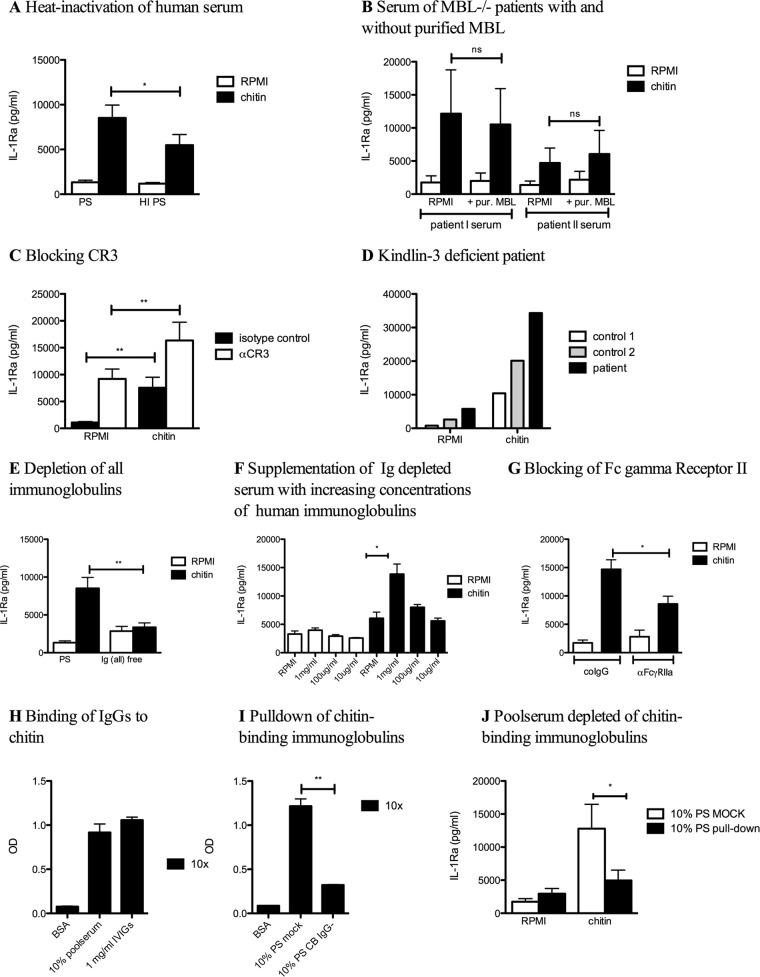
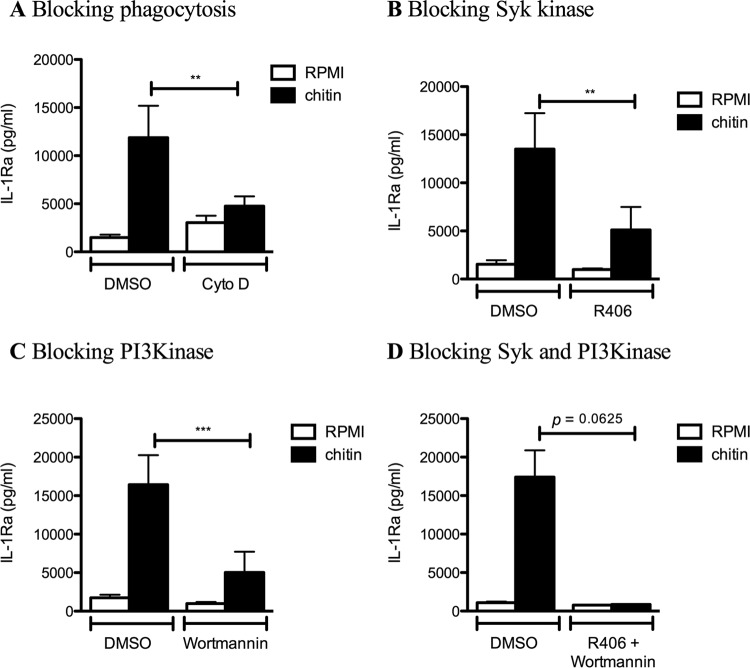
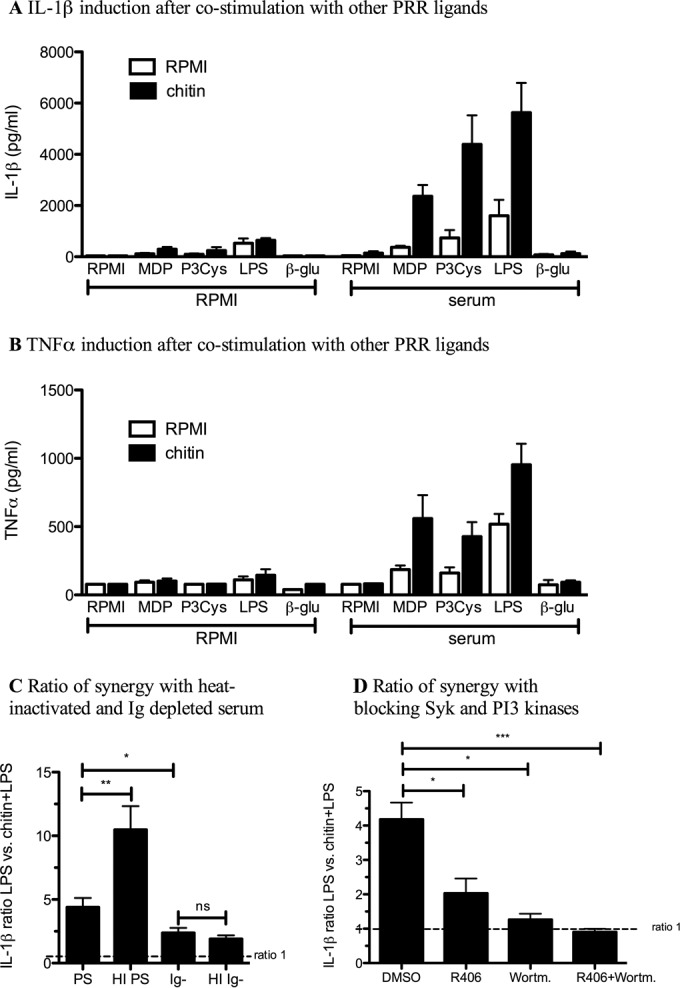
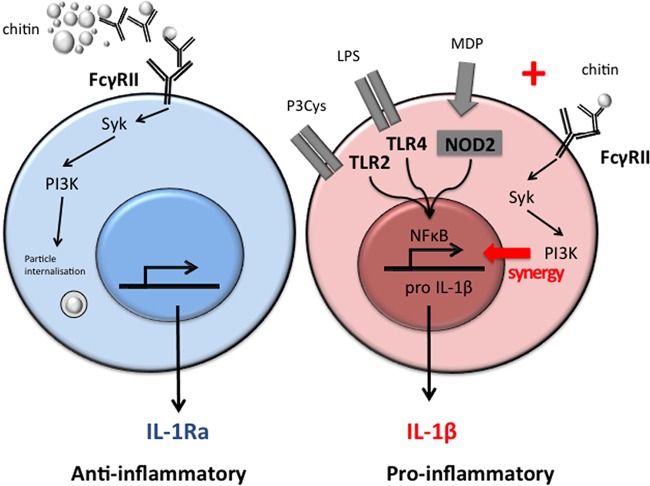
Chitin is an important cell wall component of Aspergillus fumigatus conidia, of which hundreds are inhaled on a daily basis. Previous studies have shown that chitin has both anti- and proinflammatory properties; however the exact mechanisms determining the inflammatory signature of chitin are poorly understood, especially in human immune cells. Human peripheral blood mononuclear cells were isolated from healthy volunteers and stimulated with chitin from Aspergillus fumigatus . Transcription and production of the proinflammatory cytokine interleukin-1β (IL-1β) and the anti-inflammatory cytokine IL-1 receptor antagonist (IL-1Ra) were measured from the cell culture supernatant by quantitative PCR (qPCR) or enzyme-linked immunosorbent assay (ELISA), respectively. Chitin induced an anti-inflammatory signature characterized by the production of IL-1Ra in the presence of human serum, which was abrogated in immunoglobulin-depleted serum. Fc-γ-receptor-dependent recognition and phagocytosis of IgG-opsonized chitin was identified as a novel IL-1Ra-inducing mechanism by chitin. IL-1Ra production induced by chitin was dependent on Syk kinase and phosphatidylinositol 3-kinase (PI3K) activation. In contrast, costimulation of chitin with the pattern recognition receptor (PRR) ligands lipopolysaccharide, Pam3Cys, or muramyl dipeptide, but not β-glucan, had synergistic effects on the induction of proinflammatory cytokines by human peripheral blood mononuclear cells (PBMCs). In conclusion, chitin can have both pro- and anti-inflammatory properties, depending on the presence of pathogen-associated molecular patterns and immunoglobulins, thus explaining the various inflammatory signatures reported for chitin. IMPORTANCE Invasive aspergillosis and allergic aspergillosis are increasing health care problems. Patients get infected by inhalation of the airborne spores of Aspergillus fumigatus . A profound knowledge of how Aspergillus and its cell wall components are recognized by the host cell and which type of immune response it induces is necessary to develop target-specific treatment options with less severe side effects than the treatment options to date. There is controversy in the literature about the receptor for chitin in human cells. We identified the Fc-γ receptor and Syk/PI3K pathway via which chitin can induce anti-inflammatory immune responses by inducing IL-1 receptor antagonist in the presence of human immunoglobulins but also proinflammatory responses in the presence of bacterial components. This explains why Aspergillus does not induce strong inflammation just by inhalation and rather fulfills an immune-dampening function. While in a lung coinfected with bacteria, Aspergillus augments immune responses by shifting toward a proinflammatory reaction.
Overview
The claims and statistics of this paper haven’t been checked yet.
Free: it reads the open-access text and checks the first 5 claims that cite a source we can check. Create a free account to check every claim.
Integrity signals
Registry
Cites
Statistics
Figures
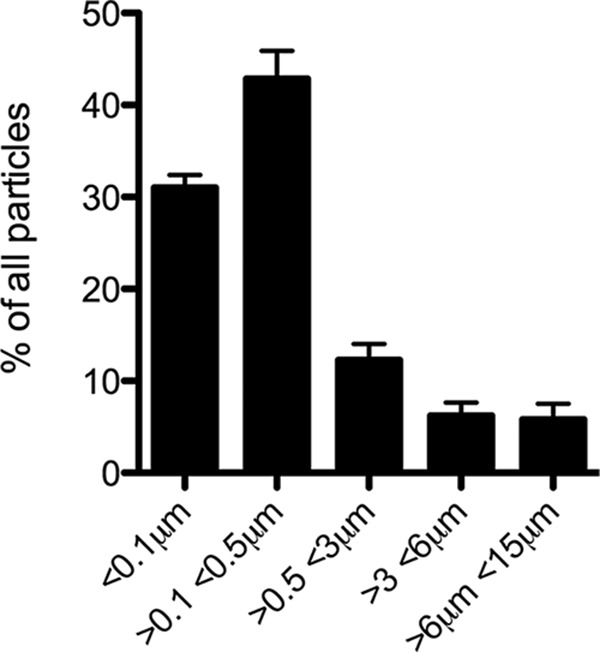
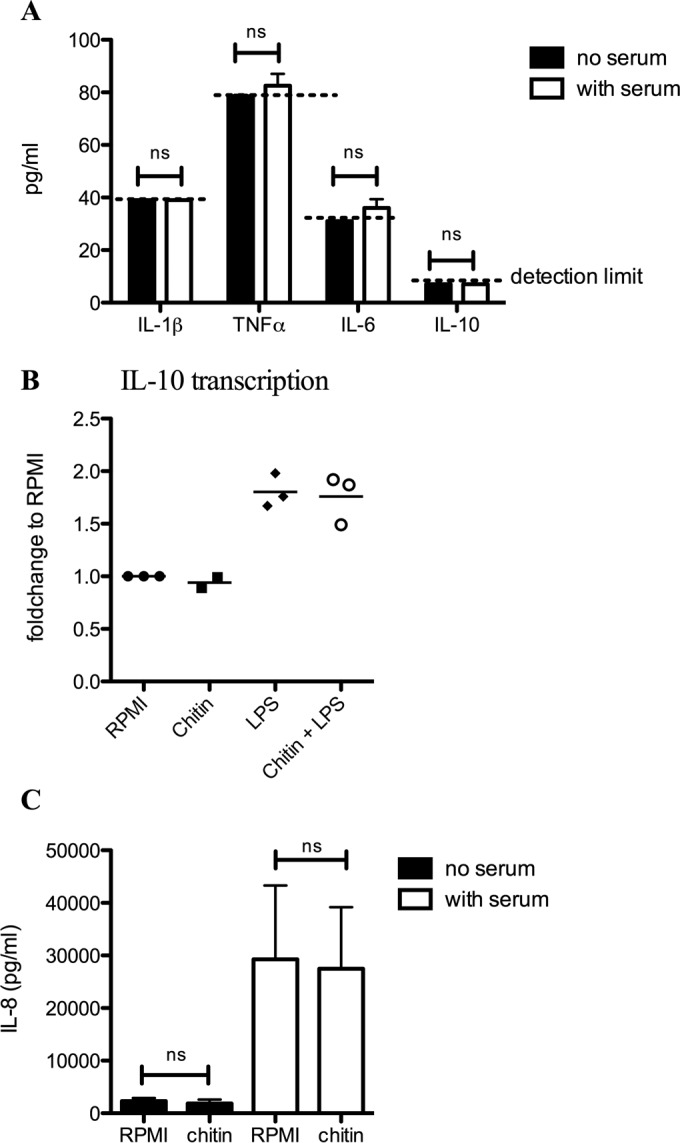
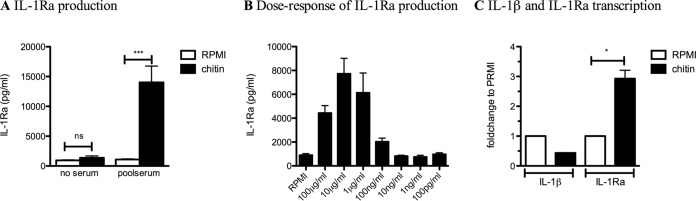
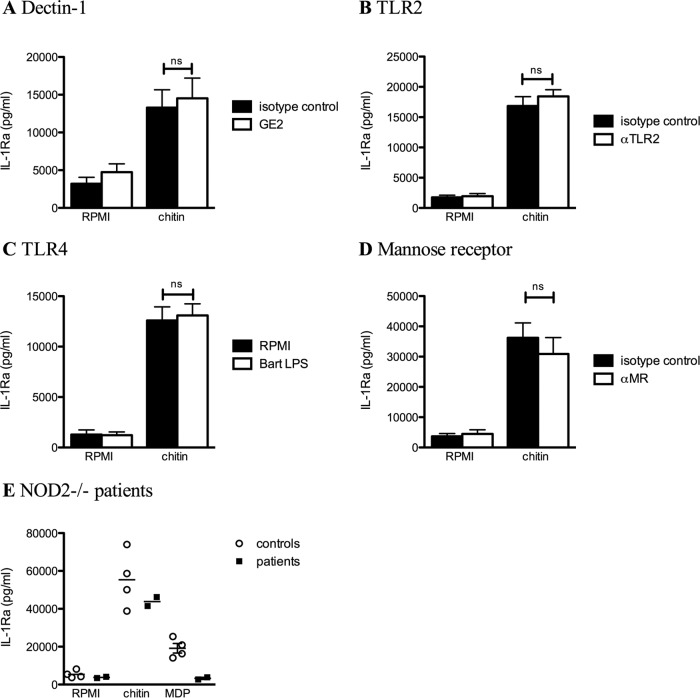
Verification
Claims the paper makes
The claims and statistics of this paper haven’t been checked yet.
Free: it reads the open-access text and checks the first 5 claims that cite a source we can check. Create a free account to check every claim.
Claims other papers make about this one
Each is checked against this paper’s own text: does it say what the citing paper says it does?
In the citing paper
“The other major cell wall component, chitin, also induces an immune response; however, the immune chitin receptor has not been identified, although the Fc-γ receptor seems to be important to induce a Syk kinase-dependent pathway (465).”
From Aspergillus fumigatus and Aspergillosis in 2019 (2019) · cites this paper as [465]
Self-check
Percentages, sums and reported differences re-computed from the paper’s own numbers.
The self-check needs the paper’s full text.
Citations
Cites
Fcγ receptors as regulators of immune responses
Nimmerjahn, F., & Ravetch, J. V. (2008) · Nature Reviews Immunology · doi:10.1038/nri2206 · Cited by 2,947
Dectin-1 is required for β-glucan recognition and control of fungal infection
Taylor, P. R., Tsoni, S. V., Willment, J. A., Dennehy, K. M., Rosas, M., Findon, H., Haynes, K., Steele, C., Botto, M., Gordon, S., et al. (2007) · Nature Immunology · doi:10.1038/ni1408 · Cited by 1,161 · cited 1×
“While -(1,3)-glucan is known as the ligand for dectin-1 (8), recent studies propose different identities of the chitin recognition receptor and the induced immune response.”
Role of Chitin and Chitinase/Chitinase-Like Proteins in Inflammation, Tissue Remodeling, and Injury
Lee, C. G., Da Silva, C. A., Dela Cruz, C. S., Ahangari, F., Ma, B., Kang, M.-J., He, C.-H., Takyar, S., & Elias, J. A. (2011) · Annual Review of Physiology · doi:10.1146/annurev-physiol-012110-142250 · Cited by 896 · cited 9×
“Chitin is one of the major fibrillar components of the Aspergillus cell wall and is covalently bound to -(1,3)-glucans (6).”
BackgroundMethodInfluentialChitin induces accumulation in tissue of innate immune cells associated with allergy
Reese, T. A., Liang, H.-E., Tager, A. M., Luster, A. D., Van Rooijen, N., Voehringer, D., & Locksley, R. M. (2007) · Nature · doi:10.1038/nature05746 · Cited by 753 · cited 1×
“In addition to proteins, the polysaccharide chitin is also known to induce allergy by causing accumulation of interleukin-4 (IL-4)expressing innate immune cells (2).”
BackgroundA Chitinase-like Protein in the Lung and Circulation of Patients with Severe Asthma
Chupp, G. L., Lee, C. G., Jarjour, N., Shim, Y. M., Holm, C. T., He, S., Dziura, J. D., Reed, J., Coyle, A. J., Kiener, P., et al. (2007) · New England Journal of Medicine · doi:10.1056/nejmoa073600 · Cited by 547 · cited 1×
“Polymorphisms in chitinase genes (4) or elevated serum levels of chitinaselike proteins have been associated with asthma (5), although the exact mechanism describing how chitinases and chitin interact with immune cells and trigger immune responses is not yet completely understood.”
BackgroundVetvicka, V, Thornton, B. P., & Ross, G. D. (1996) · Journal of Clinical Investigation · doi:10.1172/jci118777 · Cited by 407 · cited 1×
“CR3 is a known receptor recognizing complement-opsonized particles (12) and -glucan (13, 14).”
Backgroundda Silva Ferreira, M. E., Kress, M. R. V. Z., Savoldi, M., Goldman, M. H. S., Härtl, A., Heinekamp, T., Brakhage, A. A., & Goldman, G. H. (2006) · Eukaryotic Cell · doi:10.1128/ec.5.1.207-211.2006 · Cited by 403
Myeloid C-type Lectin Receptors in Pathogen Recognition and Host Defense
Osorio, F., & Reis e Sousa, C. (2011) · Immunity · doi:10.1016/j.immuni.2011.05.001 · Cited by 378
Inhibition of toll‐like receptor 4 breaks the inflammatory loop in autoimmune destructive arthritis
Abdollahi‐Roodsaz, S., Joosten, L. A. B., Roelofs, M. F., Radstake, T. R. D. J., Matera, G., Popa, C., van der Meer, J. W. M., Netea, M. G., & van den Berg, W. B. (2007) · Arthritis & Rheumatism · doi:10.1002/art.22848 · Cited by 302
Self-citationTasting the fungal cell wall: Tasting fungal cell wall
Latgé, J.-P. (2010) · Cellular Microbiology · doi:10.1111/j.1462-5822.2010.01474.x · Cited by 295 · cited 1×
“Furthermore, it has been shown that insoluble fibrillar polysaccharides can induce potent inflammatory responses by engaging multimerization of pattern recognition receptors (PRRs) and formation of supramolecular PRR complexes, which is known as the fibril hypothesis (30).”
BackgroundSelf-citation
Research works printed but not linked: 1
- Smeekens SP, Gresnigt MS, Becker KL, Cheng SC, Netea SA, Jacobs L, Jansen T, van de Veerdonk FL, Williams DL, Joosten LA, Dinarello CA, Netea MG 2015 An anti-inflammatory property of Candida albicans beta-glucan: induction of high levels of interleukin-1 receptor antagonist via a Dectin-1/CR3 independent mechanism. Cytokine 71: 215– 222. doi: 10.1016/j.cyto.2014.10.013. 25461401 PMC4437193 · DOI · Paper page
Cited by
The Fungal Cell Wall: Structure, Biosynthesis, and Function
Gow, N. A. R., Latge, J.-P., & Munro, C. A. (2017) · Microbiology Spectrum · doi:10.1128/microbiolspec.funk-0035-2016 · Cited by 1,423
Aspergillus fumigatus and Aspergillosis in 2019
Latgé, J.-P., & Chamilos, G. (2019) · Clinical Microbiology Reviews · doi:10.1128/cmr.00140-18 · Cited by 1,400
Self-citationThe Fungal Cell Wall: Candida, Cryptococcus, and Aspergillus Species
Garcia-Rubio, R., de Oliveira, H. C., Rivera, J., & Trevijano-Contador, N. (2020) · Frontiers in Microbiology · doi:10.3389/fmicb.2019.02993 · Cited by 917
Aspergillus fumigatus morphology and dynamic host interactions
van de Veerdonk, F. L., Gresnigt, M. S., Romani, L., Netea, M. G., & Latgé, J.-P. (2017) · Nature Reviews Microbiology · doi:10.1038/nrmicro.2017.90 · Cited by 490
Self-citationLatgé, J.-P., Beauvais, A., & Chamilos, G. (2017) · Annual Review of Microbiology · doi:10.1146/annurev-micro-030117-020406 · Cited by 207
Self-citation
Metadata
- Authors
- Becker, K. L., Aimanianda, V., Wang, X., Gresnigt, M. S., Ammerdorffer, A., Jacobs, C. W., Gazendam, R. P., Joosten, L. A. B., Netea, M. G., Latgé, J. P., & van de Veerdonk, F. L.
- Affiliations
- Radboud University Nijmegen (NL)
- Institut Pasteur (FR)
- Amsterdam UMC Location University of Amsterdam (NL)
- Department of Internal Medicine and Radboud Center for Infectious Diseases (RCI), Radboud University Medical Center, Nijmegen, The Netherlands
- Corresponding author
- Latgé, J. P.
- ORCID
- Venue
- mBio
- Publisher
- American Society for Microbiology
- Published
- 2016-07-06
- Volume
- 7
- Issue
- 3
- ISSN
- 2150-7511 (ISSN-L)
- 2161-2129
- PMC
- PMC4895119
- OpenAlex
- W2414474414
- Cited by
- 73
- References
- 49
- Citations by year
- 2026: 1 · 2025: 6 · 2024: 7 · 2023: 2 · 2022: 3 · 2021: 8 · 2020: 10 · 2019: 14 · 2018: 6 · 2017: 14 · 2016: 2
- FWCI
- 6.23
- Type
- journal article
- Language
- en
- Open access
- gold
- doi.org
- Licence
- other-oa
- creativecommons.org/licenses/by/4.0/ (vor)
- journals.asm.org/non-commercial-tdm-license (tdm)
- Locations
- mBio (publishedVersion, other-oa)
- Europe PMC (PubMed Central) (publishedVersion, cc-by)
- PubMed Central (publishedVersion, cc-by)
- PubMed (publishedVersion)
- Pure Amsterdam UMC (submittedVersion, other-oa)
- Radboud Repository (Radboud University) (submittedVersion)
- Data Archiving and Networked Services (DANS) (submittedVersion)
- HAL (submittedVersion, cc-by)
- DOAJ (DOAJ: Directory of Open Access Journals) (submittedVersion, cc-by-sa)
- DOAJ (DOAJ: Directory of Open Access Journals) (submittedVersion)
- Radboud Repository (Radboud University) (submittedVersion, other-oa)
- Funders
- Netherlands Organisation for Scientific Research
- RIMLS grant from Radboudumc
- ERC Consolidator Grant (#310372)
- Aviesan Fungi Grant Aspergillus
- ANR grant (ASP2R2)
- ANR-DST (ANR-13-ISV3-0004-01)
- E-rare grant EURO CMC
- Topics
- Life Sciences › Biochemistry, Genetics and Molecular Biology › Molecular Biology › Studies on Chitinases and Chitosanases
- Life Sciences › Immunology and Microbiology › Immunology › Immune Response and Inflammation
- Life Sciences › Biochemistry, Genetics and Molecular Biology › Molecular Biology › Inflammasome and immune disorders
- Keywords
- chitin, Aspergillus fumigatus, Fc gamma receptor, Syk, phosphatidylinositol 3-kinase, interleukin-1 receptor antagonist, IL-1β, peripheral blood mononuclear cells, IgG opsonization, phagocytosis, pattern recognition receptors, lipopolysaccharide, Pam3Cys, muramyl dipeptide, anti-inflammatory cytokines, inflammatory cytokines
- MeSH terms
- Pathogen-Associated Molecular Pattern Molecules, Syk Kinase, Acetylmuramyl-Alanyl-Isoglutamine, Aspergillus fumigatus, Cell Wall, Chitin, Humans, Leukocytes, Mononuclear, Lipoproteins, Signal Transduction, Cytokines, Receptors, IgG, Phosphatidylinositol 3-Kinases, Interleukin-1beta, Interleukin 1 Receptor Antagonist Protein
About these checks
Registry, retraction, Cites and statistics results are computed, not judged, with one exception: a printed reference that no index lists is read once by a model before it counts as a citation error. Claims are extracted by a model and kept only when their quote appears verbatim in the text; each cited source is then checked, with a model’s help, for whether it says what the claim relies on. Those verdicts can be wrong — read the claim’s quote and the cited source before relying on one.
Statistics and arithmetic are recomputed, not judged.
Confidence bands are shown only for fields calibrated on our annotated test set. None is calibrated yet, so no band is shown.
What counts as a claim ›How we measure confidence ›How we check this ›
Are you an author, or do you see a problem with this page? Request a review
How to cite
Cite CoChat for the checks on this page, and the paper for its own findings.
- This page
- CoChat. (2026). Citation check: Aspergillus Cell Wall Chitin Induces Anti- and Proinflammatory Cytokines in Human PBMCs via the Fc-γ Receptor/Syk/PI3K Pathway. https://app.cochat.ai/papers/10.1128/mbio.01823-15
- The paper
- Becker, K. L., Aimanianda, V., Wang, X., Gresnigt, M. S., Ammerdorffer, A., Jacobs, C. W., Gazendam, R. P., Joosten, L. A. B., Netea, M. G., Latgé, J. P., & van de Veerdonk, F. L. (2016). Aspergillus Cell Wall Chitin Induces Anti- and Proinflammatory Cytokines in Human PBMCs via the Fc-γ Receptor/Syk/PI3K Pathway. mBio. https://doi.org/10.1128/mbio.01823-15
Data sources
Bibliographic data: Semantic Scholar, OpenAlex, Crossref.
Contains information from the Semantic Scholar Academic Graph Datasets, made available under the ODC Attribution License (ODC-BY 1.0).
Semantic Scholar’s data is described in: Kinney, R., et al. (2023). The Semantic Scholar Open Data Platform. arXiv:2301.10140.
