

Salmonella enterica Infection Stimulates Macrophages to Hemophagocytose
Open accessThe DOI matches its Crossref record; 60 of the 60 references it cites were found in a registry or an index.
Abstract
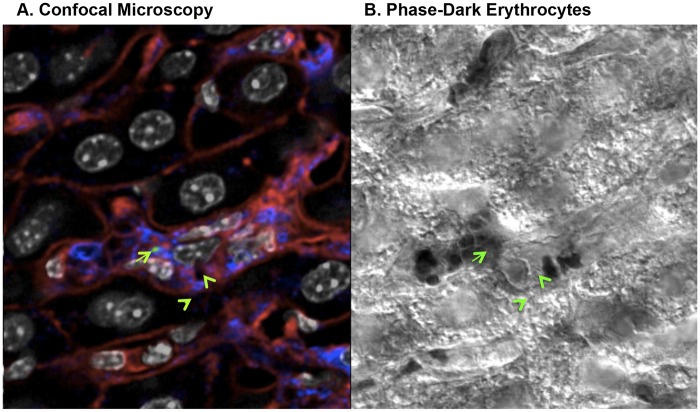
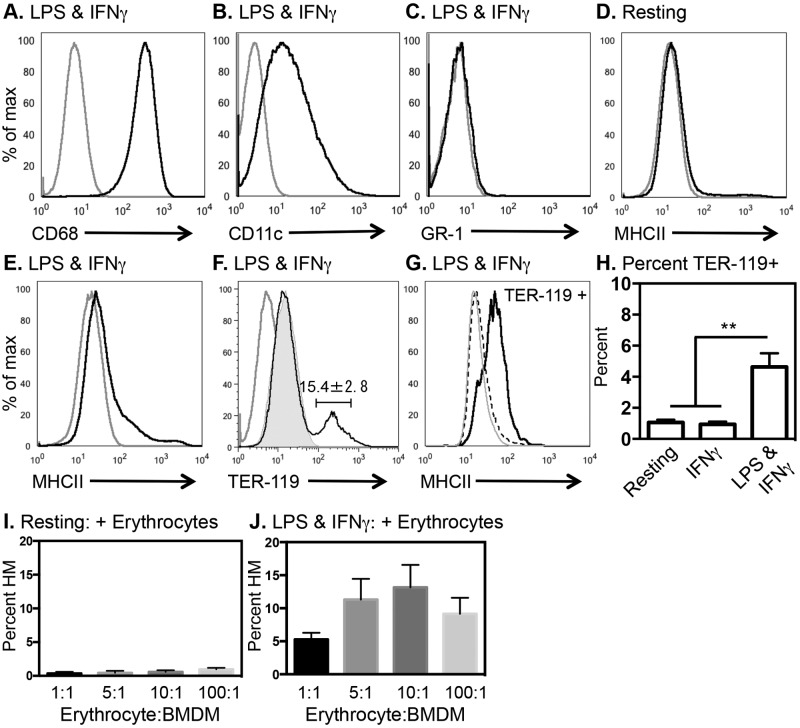
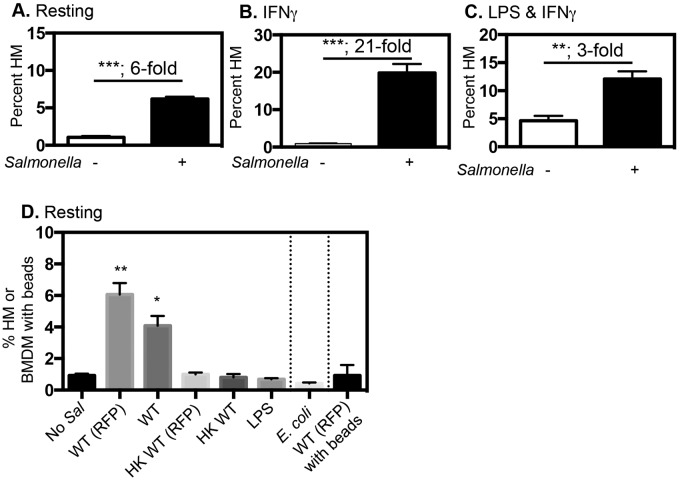
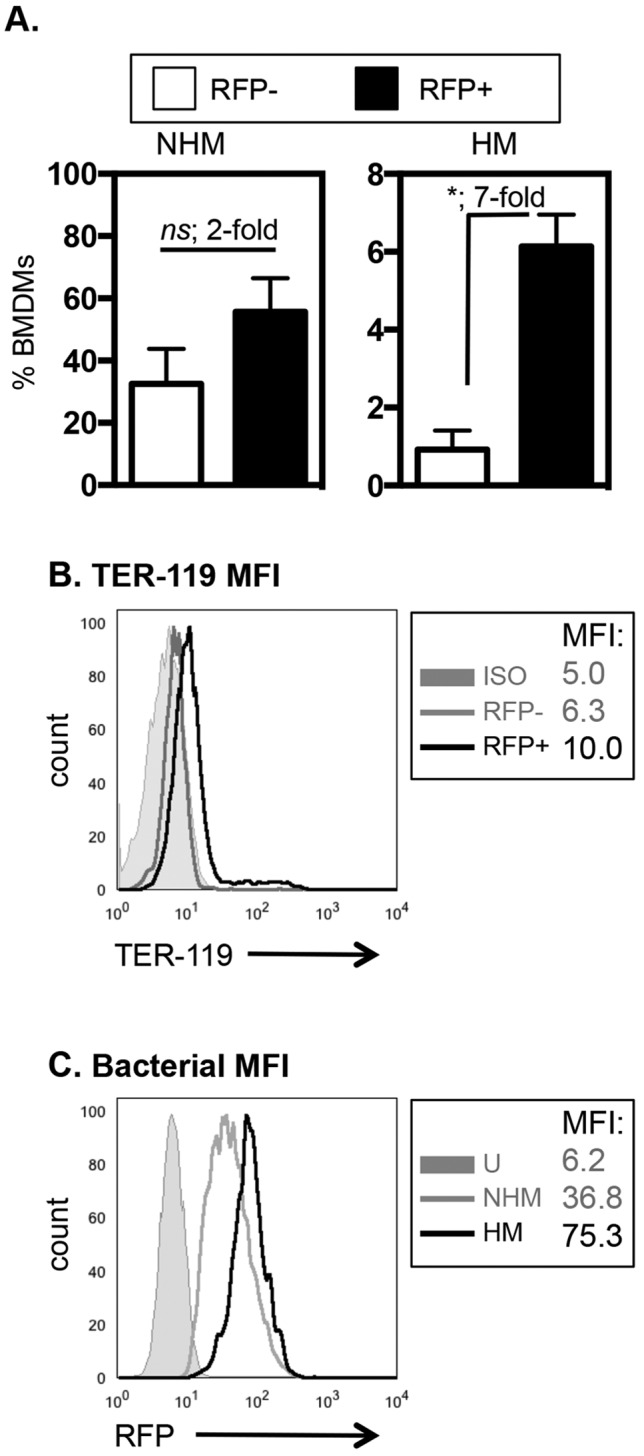
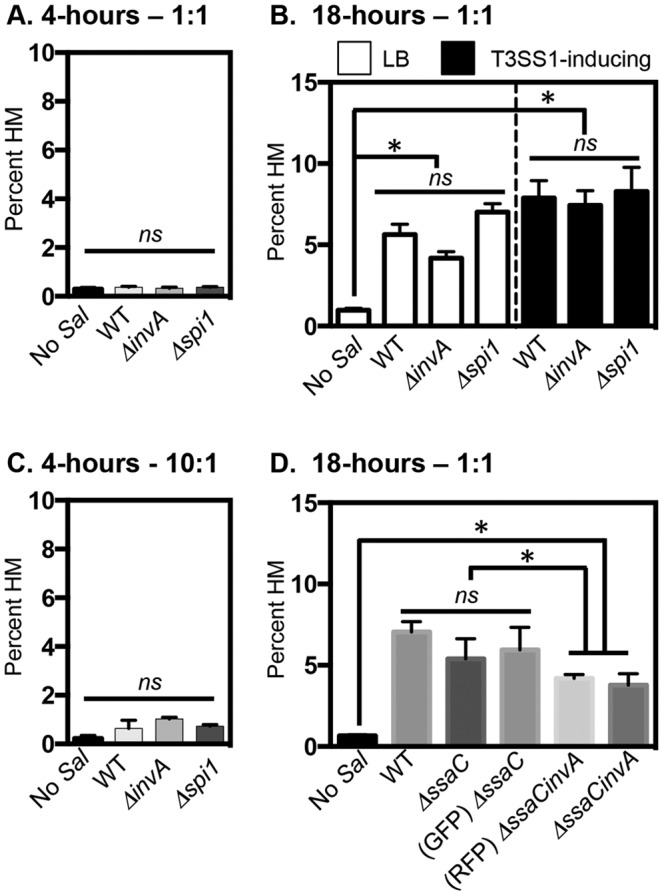
Hemophagocytes are cells of the monocyte lineage that have engulfed erythrocytes and leukocytes. Hemophagocytes frequently accumulate in patients with severe acute bacterial infections, such as those caused by Salmonella enterica,Brucella abortus, and Mycobacterium tuberculosis. The relationship between hemophagocytosis and infection is not well understood. In the murine liver,S. enterica serovar Typhimurium resides within hemophagocytic macrophages containing leukocytes. Here we show that S. Typhimurium also resides within hemophagocytes containing erythrocytes. In cell culture,S. Typhimurium benefits from residence within hemophagocytes by accessing iron, but why macrophages hemophagocytose is unknown. We show that treatment of macrophages with a cocktail of the proinflammatory cytokine interferon gamma (IFN-γ) and lipopolysaccharide (LPS) stimulates engulfment of nonsenescent erythrocytes. Exposure of resting or IFN-γ-treated macrophages to live, but not to heat-killed,S. Typhimurium cells also stimulates erythrocyte engulfment. Single-cell analyses show that S. Typhimurium-infected macrophages are more likely to erythrophagocytose and that infected macrophages engulf more erythrocytes than uninfected macrophages within the same culture well. In addition, macrophages containing erythrocytes harbor more bacteria. However,S. Typhimurium does not promote macrophage engulfment of polystyrene beads, suggesting a role for a ligand on the target cell. Finally, neither of the two S. Typhimurium type 3 secretion systems, T3SS1 or T3SS2, is fully required for hemophagocytosis. These results indicate that infection of macrophages with live S. Typhimurium cells stimulates hemophagocytosis. IMPORTANCE Macrophages are white blood cells (leukocytes) that engulf and destroy pathogens. Hemophagocytes, a subset of macrophages, are characteristic of severe acute infection in patients with, for instance, typhoid fever, brucellosis, tuberculosis, and leishmaniasis. Each of these diseases has the potential to become chronic. Hemophagocytes (blood-eating cells) engulf and degrade red and white blood cells for unknown reasons. The bacterial pathogen Salmonella acquires the essential nutrient iron from murine hemophagocytes. We report that Salmonella stimulates macrophages to engulf blood cells, indicating that cells of this bacterium actively promote the formation of a specialized cellular niche in which they can acquire nutrients, evade killing by the host immune system, and potentially transition to chronic infection.
Overview
The claims and statistics of this paper haven’t been checked yet.
Free: it reads the open-access text and checks the first 5 claims that cite a source we can check. Create a free account to check every claim.
Integrity signals
Registry
Cites
Statistics
Figures
Verification
Claims the paper makes
The claims and statistics of this paper haven’t been checked yet.
Free: it reads the open-access text and checks the first 5 claims that cite a source we can check. Create a free account to check every claim.
Claims other papers make about this one
Each is checked against this paper’s own text: does it say what the citing paper says it does?
The source backs part of the claim, not all of it — or backs it for a different population, condition or comparison.
In the citing paper
“In chronic infection with S. Typhimurium, the bacteria may induce erythrophagocytosis and the conversion of hepatic and splenic macrophages into an M2 phenotype, a process that also requires host signals but has not been characterized in molecular detail93.”
From Iron homeostasis in host defence and inflammation (2015) · cites this paper as [93]
Experimental — accuracy not yet measuredThe source backs part of the claim, not all of it — or backs it for a different population, condition or comparison.
In the citing paper
“Salmonella infection via the stimulation of Toll-like receptor 4 has been shown to stimulate macrophages to hemophagocytosis, a process that lead to the phagocytosis of red and white blood cells (29, 30).”
From Iron- and Hepcidin-Independent Downregulation of the Iron Exporter Ferroportin in Macrophages during Salmonella Infection (2017) · cites this paper as [29]
Experimental — accuracy not yet measuredThe source backs part of the claim, not all of it — or backs it for a different population, condition or comparison.
In the citing paper
“Our observations are concordant with literature, suggesting that the main driving force for the decrease of hematocrit during Salmonella infection is an accelerated clearance of RBC (29, 30).”
From Iron- and Hepcidin-Independent Downregulation of the Iron Exporter Ferroportin in Macrophages during Salmonella Infection (2017) · cites this paper as [29]
Experimental — accuracy not yet measured
Self-check
Percentages, sums and reported differences re-computed from the paper’s own numbers.
The self-check needs the paper’s full text.
Citations
Cites
The many faces of macrophage activation
Mosser, D. M. (2003) · Journal of Leukocyte Biology · doi:10.1189/jlb.0602325 · Cited by 1,902
The principles and practice of medicine
(1938) · The American Journal of Surgery · doi:10.1016/s0002-9610(38)91188-2 · Cited by 1,654
Physiology of the bacterial cell
Neidhardt, F. C., Ingraham, J. L., & Schaechter, M. (1990) · Cited by 1,575
Simultaneous Identification of Bacterial Virulence Genes by Negative Selection
Hensel, M., Shea, J. E., Gleeson, C., Jones, M. D., Dalton, E., & Holden, D. W. (1995) · Science · doi:10.1126/science.7618105 · Cited by 1,198 · cited 2×
“marker (34, 52); P7G2, ssaC/spiA::mTn5-GFP-kan (35); SCS480, ssaC/”
BackgroundParry, C. M., Hien, T. T., Dougan, G., White, N. J., & Farrar, J. J. (2002) · New England Journal of Medicine · doi:10.1056/nejmra020201 · Cited by 1,112
Salmonellae interplay with host cells
Haraga, A., Ohlson, M. B., & Miller, S. I. (2008) · Nature Reviews Microbiology · doi:10.1038/nrmicro1788 · Cited by 832 · cited 1×
“enterica serovar Typhi or Paratyphi, and requires colonization of macrophages and deployment of T3SS2, which regulates bacterial trafficking within host cells (1).”
BackgroundPhysiology of the bacterial cell : a molecular approach
Neidhardt, F. C., Ingraham, J. L., & Schaechter, M. (1990) · Cited by 808
Innate immune detection of the type III secretion apparatus through the NLRC4 inflammasome
Miao, E. A., Mao, D. P., Yudkovsky, N., Bonneau, R., Lorang, C. G., Warren, S. E., Leaf, I. A., & Aderem, A. (2010) · Proceedings of the National Academy of Sciences · doi:10.1073/pnas.0913087107 · Cited by 798 · cited 1×
“Therefore, a machinery component(s) (36) or an effector(s) that can be secreted from either apparatus (37) may contribute to triggering hemophagocytosis in BMDMs.”
BackgroundPhysiology of the bacterial cell — A molecular approach
Murrell, J. C. (1991) · Trends in Genetics · doi:10.1016/0168-9525(91)90427-r · Cited by 777
The Principles and Practice of Medicine
(1892) · The Journal of Nervous and Mental Disease · doi:10.1097/00005053-189205000-00028 · Cited by 634
Cited by
Iron homeostasis in host defence and inflammation
Ganz, T., & Nemeth, E. (2015) · Nature Reviews Immunology · doi:10.1038/nri3863 · Cited by 843
Siderophores in Iron Metabolism: From Mechanism to Therapy Potential
Wilson, B. R., Bogdan, A. R., Miyazawa, M., Hashimoto, K., & Tsuji, Y. (2016) · Trends in Molecular Medicine · doi:10.1016/j.molmed.2016.10.005 · Cited by 477
“This is a particularly interesting response that is well-conserved throughout vertebrates in response to severe infection, and is speculated to have evolved as a countermeasure to prevent potentially lethal levels of inflammation [36, 38].”
BackgroundSalmonella infection: Interplay between the bacteria and host immune system
Kurtz, J. R., Goggins, J. A., & McLachlan, J. B. (2017) · Immunology Letters · doi:10.1016/j.imlet.2017.07.006 · Cited by 304
Hoodwinking the Big-Eater to Prosper: The Salmonella-Macrophage Paradigm
Gogoi, M., Shreenivas, M. M., & Chakravortty, D. (2018) · Journal of Innate Immunity · doi:10.1159/000490953 · Cited by 78
Host–Pathogen Interaction in Leishmaniasis: Immune Response and Vaccination Strategies
Yasmin, H., Adhikary, A., Al‐Ahdal, M. N., Roy, S., & Kishore, U. (2022) · Immuno · doi:10.3390/immuno2010015 · Cited by 76
Immune Mechanisms in Inflammatory Anemia
Canny, S. P., Orozco, S. L., Thulin, N. K., & Hamerman, J. A. (2023) · Annual Review of Immunology · doi:10.1146/annurev-immunol-101320-125839 · Cited by 65
Taylor, S., & Winter, S. (2020) · PLoS Pathogens · doi:10.1371/journal.ppat.1008540 · Cited by 69
“Typhimurium infects hemophagocytic macrophages, macrophages that have ingested nonapoptotic cells [5, 6].”
BackgroundModulation of Iron Metabolism in Response to Infection: Twists for All Tastes
Gomes, A. C., Moreira, A. C., Mesquita, G., & Gomes, M. S. (2018) · Pharmaceuticals · doi:10.3390/ph11030084 · Cited by 56
“Typhimurium resides within macrophages containing phagocytized erythrocytes, which may benefit the acquisition of iron by the pathogen [121].”
BackgroundPrevalence, severity, and pathogeneses of anemia in visceral leishmaniasis
Goto, Y., Cheng, J., Omachi, S., & Morimoto, A. (2016) · Parasitology Research · doi:10.1007/s00436-016-5313-x · Cited by 49
Willemetz, A., Beatty, S., Richer, E., Rubio, A., Auriac, A., Milkereit, R. J., Thibaudeau, O., Vaulont, S., Malo, D., & Canonne-Hergaux, F. (2017) · Frontiers in Immunology · doi:10.3389/fimmu.2017.00498 · Cited by 45
“The data are presented as mean ± SD. 4 Willemetz et al. Salmonella Represses FPN in Macrophages Frontiers in Immunology | www.frontiersin.org May 2017 | Volume 8 | Article 498 high number of RBC (Hb autofluorescence) in large splenic macrophages (Figure 2D, enlargement).”
InfluentialDeterminants of persistent Salmonella infections
Ehrhardt, K., Becker, A.-L., & Graßl, G. A. (2023) · Current Opinion in Immunology · doi:10.1016/j.coi.2023.102306 · Cited by 46
Hemophagocytosis in Experimental Visceral Leishmaniasis by Leishmania donovani
Morimoto, A., Omachi, S., Osada, Y., CHAMBERS, J. K., Uchida, K., Sanjoba, C., Matsumoto, Y., & Goto, Y. (2016) · PLoS neglected tropical diseases · doi:10.1371/journal.pntd.0004505 · Cited by 38
“There is also a report that macrophages stimulated with IFN-γ and LPS become hemophagocytic [21].”
BackgroundSevere anaemia, iron deficiency, and susceptibility to invasive bacterial infections
Abuga, K. M., Nairz, M., MacLennan, C. A., & Atkinson, S. H. (2023) · Wellcome Open Research · doi:10.12688/wellcomeopenres.18829.1 · Cited by 37
Brown, D. E., Nick, H. J., McCoy, M. W., Moreland, S. M., Stepanek, A. M., Benik, R., O'Connell, K. E., Pilonieta, M. C., Nagy, T. A., & Detweiler, C. S. (2015) · Infection and Immunity · doi:10.1128/iai.02863-14 · Cited by 31
“The bacteria reside within tissue macrophages (6, 9) and hemophagocytic macrophages (10, 56), which have phagocytosed intact erythrocytes and leukocytes.”
BackgroundSelf-citationMorimoto, A., Uchida, K., CHAMBERS, J. K., Sato, K., Hong, J., Sanjoba, C., Matsumoto, Y., Yamagishi, J., & Goto, Y. (2019) · PLoS neglected tropical diseases · doi:10.1371/journal.pntd.0007816 · Cited by 30
Acevedo-Villanueva, K. Y., Lester, B., Renu, S., Han, Y., Shanmugasundaram, R., Renukaradhya, G. J., & Selvaraj, R. K. (2020) · PLoS ONE · doi:10.1371/journal.pone.0231998 · Cited by 28
Wellawa, D. H., Allan, B. J., White, A. P., & Köster, W. L. (2020) · Microorganisms · doi:10.3390/microorganisms8081203 · Cited by 26
González, J. F., Kurtz, J. R., Bauer, D. L., Hitt, R., Fitch, J., Wetzel, A. N., Perle, K. L., White, P., McLachlan, J. B., & Gunn, J. S. (2019) · mBio · doi:10.1128/mbio.02262-19 · Cited by 23
“Salmonella has also been shown to persist inside hemophagocytic macrophages (33) and to induce macrophages to phagocytose erythrocytes (34).”
BackgroundBacterial stimulation of toll-like receptor 4 drives macrophages to hemophagocytose
McDonald, E. M., Pilonieta, M. C., Nick, H. J., & Detweiler, C. S. (2016) · Infection and Immunity · doi:10.1128/iai.01149-15 · Cited by 18
“coli, stimulates hemophagocytosis (26).”
BackgroundMethodSelf-citationThe footprint of gut microbiota in gallbladder cancer: a mechanistic review
Liu, S., Li, W., Chen, J., Li, M., Geng, Y., Liu, Y., & Wu, W. (2024) · Frontiers in Cellular and Infection Microbiology · doi:10.3389/fcimb.2024.1374238 · Cited by 18
Aoyagi, T., Sato, Y., Toyama, M., Oshima, K., Kawakami, K., & Kaku, M. (2018) · Shock · doi:10.1097/shk.0000000000001231 · Cited by 16
“In some infectious diseases, macrophages could be hyperactivated by the high levels of cytokines, such as IFN-g, produced in response to gram-negative pathogens (21, 22).”
BackgroundA Salmonella subset exploits erythrophagocytosis to subvert SLC11A1-imposed iron deprivation
Roche, B., Claudi, B., Cunrath, O., Bleck, C. K. E., Antelo-Varela, M., Li, J., & Bumann, D. (2025) · Cell Host & Microbe · doi:10.1016/j.chom.2025.04.013 · Cited by 15
Rana, S., Maurya, S., Chadrasekhar, H., & Srikanth, C. V. (2021) · Molecular Aspects of Medicine · doi:10.1016/j.mam.2021.100997 · Cited by 14
Zahid, D., Zhang, N., Fang, H., Gu, J., Li, M., & Li, W. (2020) · Journal of Microbiology Immunology and Infection · doi:10.1016/j.jmii.2020.02.006 · Cited by 13
Rieger, J., Janczyk, P., nigen, H. H. ⁄., & Plendl, J. (2015) · European Journal of Histochemistry · doi:10.4081/ejh.2015.2516 · Cited by 12
AlMatar, M., Albarri, O., Makky, E. A., Var, İ., & Köksal, F. (2020) · Current Drug Targets · doi:10.2174/1389450121666200621193018 · Cited by 11
Salmonella Single-Cell Metabolism and Stress Responses in Complex Host Tissues
Bumann, D. (2019) · Microbiology Spectrum · doi:10.1128/microbiolspec.bai-0009-2019 · Cited by 9
“Several labs have used the mouse typhoid fever model to obtain intriguing initial insights into heterogeneous host-Salmonella interactions in mouse spleen (12, 22, 48, 52, 73 – 77) (Fig.”
BackgroundOxidative stress–driven red blood cell damage underlies anemia in typhoid fever patients
Ilesanmi, A., Alikpang, A. S., Ogunwale, K. A. T., & Ilesanmi, R. (2025) · Jurnal Teknologi Laboratorium · doi:10.29238/teknolabjournal.v14i2.413 · Cited by 2
“Dissemination of the disease is often facilitated by the ability of the organism to replicate within macrophages 15,16 .”
Banday, A. Z., Mehta, R., Vignesh, P., Kanaujia, R., Durgadevi, S., Angrup, A., Kumar, N., Ray, P., & Suri, D. (2020) · American Journal of Tropical Medicine and Hygiene · doi:10.4269/ajtmh.20-0566 · Cited by 4
Erythrophagocytosis in Bone Marrow: A Clue to Pyrexia of Unknown Origin
Garg, N., RAİNA, S., Kotru, M., & Sikka, M. (2018) · Journal of Microbiology and Infectious Diseases · doi:10.5799/jmid.434605 · Cited by 1
Salmonella ser. Typhimurium Bacteremia Related Hemophagocytic Lymphohistiocytosis: A Case Report
Durmuş, S. Y., Tanır, G., Öz, F. N., Teke, T. A., & Kaman, A. (2020) · Çocuk Enfeksiyon Dergisi/Journal of Pediatric Infection · doi:10.5578/ced.202013 · Cited by 2
Diazoxon exposure increases susceptibility to infection by Salmonella Typhimurium
Girón‐Pérez, D. A., Espinoza-Gonzalez, H. D., Cisneros, J. A. M., Covantes‐Rosales, C. E., Toledo‐Ibarra, G. A., Díaz‐Reséndiz, K. J. G., Barcelos-García, R. G., Benítez-Trinidad, A. B., & Girón‐Pérez, M. I. (2024) · International Journal of Environmental Health Research · doi:10.1080/09603123.2024.2363475 · Cited by 1
“…Medeiros et al. 2020; Skonieski et al. 2023; Camacho-Pérez et al. 2024) One of the microbes that can survive and replicate in various immune cell strains, including macrophages, neutrophils, monocytes, B cells, and dendritic cells, is S. Typhimurium (Souwer et al. 2012; Pilonieta et al. 2014).”
Contribution of Toll-Like Receptor 4 to Infection-Induced Hemophagocytosis
McDonald, E. (2016) · CU Scholar (University of Colorado Boulder)
Salmonella Single-Cell Metabolism and Stress Responses in Complex Host Tissues
Bumann, D. (2020) · John Wiley & Sons, Inc. eBooks · doi:10.1128/9781683670261.ch12
A Rare Case of Aplastic Anemia in Toxic Typhoid Fever
Novita, M. P., & Zaimatuddunia, I. (2024) · Nusantara Medical Science Journal · doi:10.20956/nmsj.vi.32595
Rare Case of Aplastic Anemia in Toxic Typhoid Fever
Novita, M. P., & Zaimatuddunia, I. (2025) · Healthy Tadulako Journal (Jurnal Kesehatan Tadulako) · doi:10.22487/htj.v11i2.1623
Iron, autoimmunity, and thrombosis: Exploring sex-specific interactions
Gualtierotti, R., & Valenti, L. V. C. (2026) · Autoimmunity Reviews · doi:10.1016/j.autrev.2026.104101
The involvement of multinucleated giant cells in the immunopathogenesis of visceral leishmaniasis
Hong, J. (2023) · Institutional Repositories DataBase (IRDB) · doi:10.15083/0002011599
Metadata
- Authors
- Pilonieta, M. C., Moreland, S. M., English, C. N., & Detweiler, C. S.
- Affiliations
- University of Colorado Boulder (US)
- Corresponding author
- Detweiler, Corrella S.
- Venue
- mBio
- Publisher
- American Society for Microbiology
- Published
- 2014-12-31
- Volume
- 5
- Issue
- 6
- Pages
- e02211-e02211
- ISSN
- 2150-7511 (ISSN-L)
- 2161-2129
- PMC
- PMC4324247
- OpenAlex
- W2123809547
- Cited by
- 35
- References
- 59
- Citations by year
- 2026: 1 · 2025: 1 · 2024: 2 · 2023: 3 · 2022: 1 · 2021: 1 · 2020: 9 · 2019: 3 · 2018: 4 · 2017: 2 · 2016: 4 · 2015: 4
- FWCI
- 1.52
- Type
- journal article
- Language
- en
- Open access
- gold
- doi.org
- Licence
- cc-by-nc-sa
- creativecommons.org/licenses/by-nc-sa/3.0/ (vor)
- journals.asm.org/non-commercial-tdm-license (tdm)
- Locations
- mBio (publishedVersion, cc-by-nc-sa)
- PubMed Central (publishedVersion, cc-by-nc-sa)
- PubMed (publishedVersion)
- DOAJ (DOAJ: Directory of Open Access Journals) (submittedVersion, cc-by-sa)
- Funders
- National Institutes of Health
- National Institute of Allergy and Infectious Diseases (R56AI095395, R01AI095395, AI-095395)
- Topics
- Life Sciences › Immunology and Microbiology › Immunology › Phagocytosis and Immune Regulation
- Life Sciences › Agricultural and Biological Sciences › Food Science › Salmonella and Campylobacter epidemiology
- Life Sciences › Immunology and Microbiology › Immunology › Immune Response and Inflammation
- Keywords
- hemophagocytosis, erythrophagocytosis, macrophages, interferon-gamma, lipopolysaccharide, iron acquisition, type III secretion system, Salmonella typhimurium, bacterial survival in host cells, typhoid fever
- MeSH terms
- Animals, Cell Line, Erythrocytes, Leukocytes, Liver, Macrophages, Phagocytosis, Salmonella Infections, Animal, Salmonella typhimurium, Mice
About these checks
Registry, retraction, Cites and statistics results are computed, not judged, with one exception: a printed reference that no index lists is read once by a model before it counts as a citation error. Claims are extracted by a model and kept only when their quote appears verbatim in the text; each cited source is then checked, with a model’s help, for whether it says what the claim relies on. Those verdicts can be wrong — read the claim’s quote and the cited source before relying on one.
Statistics and arithmetic are recomputed, not judged.
Confidence bands are shown only for fields calibrated on our annotated test set. None is calibrated yet, so no band is shown.
What counts as a claim ›How we measure confidence ›How we check this ›
Are you an author, or do you see a problem with this page? Request a review
Data sources
Bibliographic data: Semantic Scholar, OpenAlex, Crossref.
Contains information from the Semantic Scholar Academic Graph Datasets, made available under the ODC Attribution License (ODC-BY 1.0).
Semantic Scholar’s data is described in: Kinney, R., et al. (2023). The Semantic Scholar Open Data Platform. arXiv:2301.10140.
