

Directed Evolution Detects Supernumerary Centric Chromosomes Conferring Resistance to Azoles in Candida auris
Open accessThe DOI matches its Crossref record; 56 of the 56 references it cites were found in a registry or an index.
Abstract
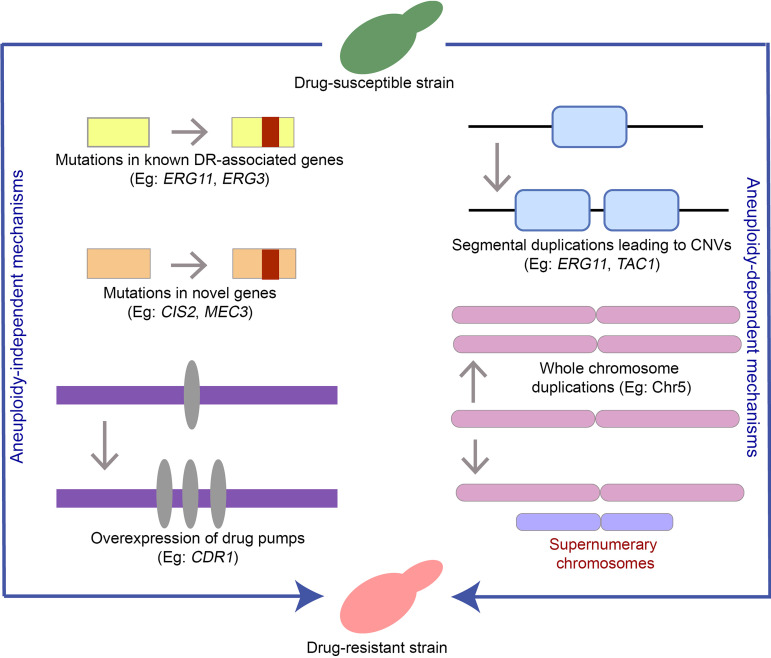
Fungal pathogens develop drug resistance through multiple pathways by acquiring gene mutations, increasing the copy number of genes, or altering gene expression. In this study, we attempt to understand the mechanisms of drug resistance in the recently emerged superbug, C. auris .
Overview
The claims and statistics of this paper haven’t been checked yet.
Free: it reads the open-access text and checks the first 5 claims that cite a source we can check. Create a free account to check every claim.
Integrity signals
Registry
Cites
Statistics
Figures
Verification
Claims the paper makes
The claims and statistics of this paper haven’t been checked yet.
Free: it reads the open-access text and checks the first 5 claims that cite a source we can check. Create a free account to check every claim.
Self-check
Percentages, sums and reported differences re-computed from the paper’s own numbers.
The self-check needs the paper’s full text.
Citations
Cites
Basic local alignment search tool
Altschul, S. F., Gish, W., Miller, W., Myers, E. W., & Lipman, D. J. (1990) · Journal of Molecular Biology · doi:10.1006/jmbi.1990.9999 · Cited by 98,669 · cited 1×
“Genes were annotated for functional information using BLAST7 (46) homology search against Candida albicans protein sequences from the UniProt database.”
MethodThe Sequence Alignment/Map format and SAMtools
Li, H., Handsaker, B., Wysoker, A., Fennell, T., Ruan, J., Homer, N., Marth, G., Abecasis, G., Durbin, R., & 1000 Genome Project Data Processing Subgroup (2009) · Bioinformatics · doi:10.1093/bioinformatics/btp352 · Cited by 62,041
Fast and accurate short read alignment with Burrows-Wheeler transform
Li, H., & Durbin, R. (2009) · Bioinformatics · doi:10.1093/bioinformatics/btp324 · Cited by 58,607
Fast gapped-read alignment with Bowtie 2
Langmead, B., & Salzberg, S. L. (2012) · Nature Methods · doi:10.1038/nmeth.1923 · Cited by 56,400
fastp: an ultra-fast all-in-one FASTQ preprocessor
Chen, S., Zhou, Y., Chen, Y., & Gu, J. (2018) · Bioinformatics · doi:10.1093/bioinformatics/bty560 · Cited by 29,721
HTSeq—a Python framework to work with high-throughput sequencing data
Anders, S., Pyl, P. T., & Huber, W. (2015) · Bioinformatics · doi:10.1093/bioinformatics/btu638 · Cited by 21,464
Differential expression analysis for sequence count data
Anders, S., & Huber, W. (2010) · Genome Biology · doi:10.1186/gb-2010-11-10-r106 · Cited by 15,581
Fast and accurate long-read alignment with Burrows-Wheeler transform.
Li, H., & Durbin, R. (2010) · Bioinformatics · doi:10.1093/bioinformatics/btp698 · Cited by 12,063
MultiQC: summarize analysis results for multiple tools and samples in a single report
Ewels, P., Magnusson, M., Lundin, S., & Käller, M. (2016) · Bioinformatics · doi:10.1093/bioinformatics/btw354 · Cited by 10,143
KAAS: an automatic genome annotation and pathway reconstruction server
Moriya, Y., Itoh, M., Okuda, S., Yoshizawa, A. C., & Kanehisa, M. (2007) · Nucleic Acids Research · doi:10.1093/nar/gkm321 · Cited by 4,153
Cited by
Fungal Drug Response and Antimicrobial Resistance
Osset-Trénor, P., Pascual‐Ahuir, A., & Proft, M. (2023) · Journal of Fungi · doi:10.3390/jof9050565 · Cited by 119
Evolution of antifungal resistance in the environment
van Rhijn, N., & Rhodes, J. L. (2025) · Nature Microbiology · doi:10.1038/s41564-025-02055-y · Cited by 94
Sharma, C., & Kadosh, D. (2023) · PLoS Pathogens · doi:10.1371/journal.ppat.1011190 · Cited by 64
The evolution of antifungal therapy: Traditional agents, current challenges and future perspectives
de Souza, C. M., Bezerra, B. T., Mellon, D. A., & de Oliveira, H. C. (2025) · Current Research in Microbial Sciences · doi:10.1016/j.crmicr.2025.100341 · Cited by 53
Zhang, Y., Zeng, L., Huang, X., Wang, Y., Chen, G., Moses, M., Zou, Y., Xiong, S., Xue, W., Dong, Y., et al. (2025) · Nature Communications · doi:10.1038/s41467-025-59898-6 · Cited by 33
Ramos, L. S., Barbosa, P. F., Lorentino, C. M. A., Lima, J. C., Braga, A. L., Lima, R., Giovanini, L., Casemiro, A. L., Siqueira, N. L. M., da Costa, S. C., et al. (2025) · Current Research in Microbial Sciences · doi:10.1016/j.crmicr.2025.100354 · Cited by 33
The Microevolution of Antifungal Drug Resistance in Pathogenic Fungi
Boyce, K. J. (2023) · Microorganisms · doi:10.3390/microorganisms11112757 · Cited by 29
White-Brown switching controls phenotypic plasticity and virulence of Candida auris
Phan-Canh, T., Jenull, S., Bitencourt, T. A., Seiser, S., Moser, D., Motamedi, M., Chowdhary, A., Elbe‐Bürger, A., & Kuchler, K. (2025) · Cell Reports · doi:10.1016/j.celrep.2025.115976 · Cited by 24
Zhou, X., Hilk, A. L., Solis, N. V., Scott, N. E., Beach, A., Soisangwan, N., Billings, C. L., Burrack, L. S., Filler, S. G., & Selmecki, A. M. (2024) · Nature Microbiology · doi:10.1038/s41564-024-01795-7 · Cited by 24
Sphingolipid diversity in Candida auris: unraveling interclade and drug resistance fingerprints
Ali, B., Kumar, M., Kumar, P., Chauhan, A., Usmani, S. A., Rudramurthy, S. M., Meis, J. F. G. M., Chakrabarti, A., Singh, A., Gaur, N. A., et al. (2024) · FEMS Yeast Research · doi:10.1093/femsyr/foae008 · Cited by 21
Self-citationExploration of novel mechanisms of azole resistance in Candida auris
Li, J., Brandalise, D., Coste, A. T., Sanglard, D., & Lamoth, F. (2024) · Antimicrobial Agents and Chemotherapy · doi:10.1128/aac.01265-24 · Cited by 19
Chauhan, A., Carolus, H., Sofras, D., Kumar, M., Kumar, P., Nair, R., Narayanan, A., Yadav, K., Ali, B., Biriukov, V., et al. (2025) · Molecular Microbiology · doi:10.1111/mmi.15379 · Cited by 16
“For in vitro evolution, two susceptible C. auris strains wt_A and wt_B (MIC 50 - AmB − 0.5 and 1 μg mL − 1 ) were subjected to the in vitro evolution procedure described in (Gerstein and Berman 2020; Narayanan, Kumar, et al. 2022), with some modifications.”
InfluentialSelf-citationAlvarado, M., Navajas, J. A. G., Muñoz, M. T. B., Gómez-Molero, E., Fernández-Sánchez, S., Eraso, E., Munro, C. A., Valentín, E., Mateo, E., & de Groot, P. W. J. (2024) · FEMS Yeast Research · doi:10.1093/femsyr/foae039 · Cited by 14
The hidden threat: Unveiling the rise of antifungal drug resistance
Chaudhary, R., & Thakur, Z. (2025) · Microbial Pathogenesis · doi:10.1016/j.micpath.2025.108068 · Cited by 12
A Comprehensive Analysis of the Lipidomic Signatures in Rhizopus delemar
Ali, B., Chauhan, A., Kumar, M., Kumar, P., Carolus, H., Romero, C. L., Vergauwen, R., Singh, A., Banerjee, A., Prakash, A., et al. (2024) · Journal of Fungi · doi:10.3390/jof10110760 · Cited by 10
Self-citationBohner, F., Papp, C., Takács, T., Varga, M., Szekeres, A., Nosanchuk, J. D., Vágvölgyi, C., Tóth, R., & Gácser, A. (2023) · Journal of Fungi · doi:10.3390/jof9121148 · Cited by 10
Drivers of diversification in fungal pathogen populations
Murante, D., & Hogan, D. A. (2024) · PLoS Pathogens · doi:10.1371/journal.ppat.1012430 · Cited by 9
Magrì, C., Carolis, E. D., Ivagnes, V., Pilato, V. D., Spruijtenburg, B., Marchese, A. E., Meijer, E. F. J., Chowdhary, A., & Sanguinetti, M. (2024) · Microorganisms · doi:10.3390/microorganisms12112153 · Cited by 9
Chauhan, A., Gow, N. A. R., & Prasad, R. (2026) · The Cell Surface · doi:10.1016/j.tcsw.2026.100168 · Cited by 8
Self-citationBehind the scenes: Centromere-driven genomic innovations in fungal pathogens
Narayanan, A., Reza, M. H., & Sanyal, K. (2024) · PLoS Pathogens · doi:10.1371/journal.ppat.1012080 · Cited by 7
Self-citationThe emerging pathogen Candida auris: host interactions and disease drivers
Sanya, D. R. A., Arevalo, A. V., Onésime, D., & Nobile, C. J. (2026) · Journal of Biomedical Science · doi:10.1186/s12929-026-01230-5 · Cited by 6
Narayanan, A., Joshi, S., Harchand, R., Prasad, R., Rudramurthy, S. M., Nishant, K. T., & Sanyal, K. (2026) · Nature Communications · doi:10.1038/s41467-026-75437-3 · Cited by 4
Self-citationNarayanan, A., Shaji, A. A., Pullepu, D., Bhattacharya, J., & Sanyal, K. (2025) · ACS Infectious Diseases · doi:10.1021/acsinfecdis.5c00081 · Cited by 3
Self-citationSousa, G., Correia, I., & Bezerra, A. R. (2026) · Microorganisms · doi:10.3390/microorganisms14020273 · Cited by 3
Fang, Z., Li, Y., Huang, J., Chen, M., Chen, X., Mo, X., Zhong, Z., Li, X., Lu, G., Lin, G., et al. (2025) · New Phytologist · doi:10.1111/nph.70438 · Cited by 3
Fungal Antimicrobial Resistance: Mechanisms, Drivers, and Global Clinical Burden
Baral, B. (2026) · ChemFoodChem · doi:10.1002/cfch.70026 · Cited by 2
Genomic Innovation and Virulence Evolution in the Emerging Human Fungal Pathogen Candida auris
Gifford, H., Rhodes, J. L., Wilson, D., & Farrer, R. A. (2024) · The mycota · doi:10.1007/978-3-031-75666-5_10 · Cited by 2
Cytrynbaum, E. G., & McClean, M. N. (2025) · Advanced Drug Delivery Reviews · doi:10.1016/j.addr.2025.115740 · Cited by 1
Fayed, B. E. (2026) · European Journal of Clinical Microbiology & Infectious Diseases · doi:10.1007/s10096-026-05515-3 · Cited by 1
Kumar, P., Ali, B., Kumar, M., Carolus, H., Romero, C. L., Vergauwen, R., Chauhan, A., Narayanan, A., Banerjee, A., Gaur, N. A., et al. (2025) · FEMS Yeast Research · doi:10.1093/femsyr/foaf030 · Cited by 1
Self-citationPhan-Canh, T., Elbe‐Bürger, A., & Kuchler, K. (2026) · Trends in Microbiology · doi:10.1016/j.tim.2026.08.011
Kumar, P., Kumar, M., Saini, A., Mohamad, S. O., Ali, B., Esquivel, B. D., Banerjee, A., White, T. C., Gaur, N. A., Shah, A. H., et al. (2026) · Journal of Fungi · doi:10.3390/jof12020094
Self-citationChauhan, A., Kumar, P., Kumar, M., Narayanan, A., Yadav, K., Ali, B., Saini, A., Singh, A., Banerjee, A., Rudramurthy, S. M., et al. (2023) · bioRxiv (Cold Spring Harbor Laboratory) · doi:10.1101/2023.09.20.558730
Self-citationUkolobi, O., Jacob, J. N., Akpo, M. O., Edo, G. I., Agbo, J. J., Orogu, J. O., Yousif, E., Jikah, A. N., Akpoghelie, P. O., Oghroro, E. E. A., et al. (2026) · Diagnostic Microbiology and Infectious Disease · doi:10.1016/j.diagmicrobio.2026.117711
Yeast Lipids: Emerging Key Players in Antifungal Resistance and Pathogenesis
Ali, B., Laitthma, D. T., Singh, A. K., & Prasad, R. (2025) · Current Clinical Microbiology Reports · doi:10.1007/s40588-025-00261-0
Self-citationBiological characterization of Candida parapsilosis haploids induced by voriconazole
Ji, L., Zheng, T., Hu, T., Li, S., Bing, J., Zheng, Q., Chu, H., & Huang, G. (2026) · International Journal of Antimicrobial Agents · doi:10.1016/j.ijantimicag.2026.107922
Fayed, B. E. (2026) · Fungal Biology Reviews · doi:10.1016/j.fbr.2026.100526
Metadata
- Authors
- Narayanan, A., Kumar, P., Chauhan, A., Kumar, M., Yadav, K., Banerjee, A., Sharma, R. D., Rudramurthy, S. M., Chakrabarti, A., Sanyal, K., & Prasad, R.
- Affiliations
- Jawaharlal Nehru Centre for Advanced Scientific Research (IN)
- Amity University Gurugram (IN)
- Post Graduate Institute of Medical Education and Research (IN)
- Corresponding author
- Sanyal, Kaustuv
- Prasad, Rajendra
- ORCID
- Venue
- mBio
- Publisher
- American Society for Microbiology
- Published
- 2022-12-20
- Volume
- 13
- Issue
- 6
- Pages
- e0305222-e0305222
- ISSN
- 2150-7511 (ISSN-L)
- PMC
- PMC9765433
- OpenAlex
- W4310463477
- Cited by
- 35
- References
- 56
- Citations by year
- 2026: 9 · 2025: 12 · 2024: 9 · 2023: 5
- FWCI
- 3.17
- Type
- journal article
- Language
- en
- Open access
- gold
- doi.org
- Licence
- cc-by
- creativecommons.org/licenses/by/4.0/ (vor)
- journals.asm.org/non-commercial-tdm-license (tdm)
- Locations
- mBio (publishedVersion, cc-by)
- PubMed Central (publishedVersion, cc-by)
- PubMed (publishedVersion)
- DOAJ (DOAJ: Directory of Open Access Journals) (submittedVersion, cc-by-sa)
- Greater South Information System
- Funders
- DST | Science and Engineering Research Board (JCB/2020/000021, PDF/2016/003256)
- Indian Council of Medical Research (2020-7196/CMB-BMS, AMR/149/2018- ECD-II)
- Topics
- Health Sciences › Medicine › Infectious Diseases › Antifungal resistance and susceptibility
- Life Sciences › Biochemistry, Genetics and Molecular Biology › Molecular Biology › Fungal and yeast genetics research
- Life Sciences › Agricultural and Biological Sciences › Plant Science › Fungal Plant Pathogen Control
- Keywords
- Candida auris, azole resistance, fluconazole resistance, segmental duplication, drug resistance mechanisms, antifungal resistance, gene amplification, drug efflux pumps, directed evolution
- MeSH terms
- Candida auris, Antifungal Agents, Azoles, Candida, Chromosomes, Microbial Sensitivity Tests, Fluconazole, Drug Resistance, Fungal
About these checks
Registry, retraction, Cites and statistics results are computed, not judged, with one exception: a printed reference that no index lists is read once by a model before it counts as a citation error. Claims are extracted by a model and kept only when their quote appears verbatim in the text; each cited source is then checked, with a model’s help, for whether it says what the claim relies on. Those verdicts can be wrong — read the claim’s quote and the cited source before relying on one.
Statistics and arithmetic are recomputed, not judged.
Confidence bands are shown only for fields calibrated on our annotated test set. None is calibrated yet, so no band is shown.
What counts as a claim ›How we measure confidence ›How we check this ›
Are you an author, or do you see a problem with this page? Request a review
Data sources
Bibliographic data: Semantic Scholar, OpenAlex, Crossref.
Contains information from the Semantic Scholar Academic Graph Datasets, made available under the ODC Attribution License (ODC-BY 1.0).
Semantic Scholar’s data is described in: Kinney, R., et al. (2023). The Semantic Scholar Open Data Platform. arXiv:2301.10140.
