

The DOI matches its Crossref record; 27 of the 27 references it cites were found in a registry or an index.
Human Skin, Oral, and Gut Microbiomes Predict Chronological Age
Open accessAbstract
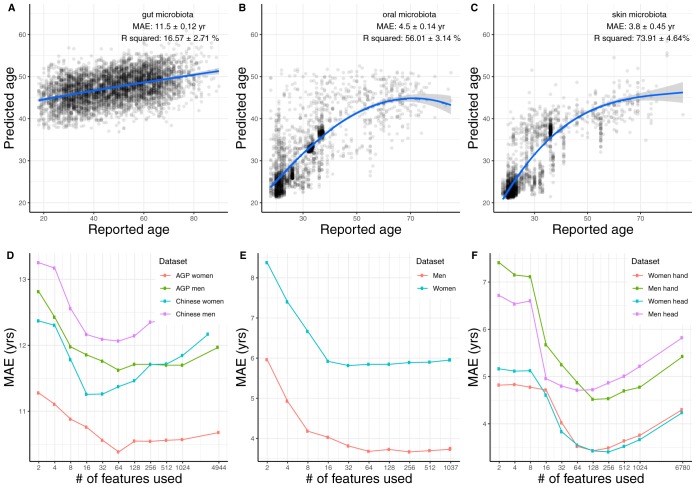
Considerable evidence suggests that the gut microbiome changes with age or even accelerates aging in adults. Whether the age-related changes in the gut microbiome are more or less prominent than those for other body sites and whether predictions can be made about a person’s age from a microbiome sample remain unknown. We therefore combined several large studies from different countries to determine which body site’s microbiome could most accurately predict age. We found that the skin was the best, on average yielding predictions within 4 years of chronological age. This study sets the stage for future research on the role of the microbiome in accelerating or decelerating the aging process and in the susceptibility for age-related diseases.
Overview
The claims and statistics of this paper haven’t been checked yet.
Run the check — free, no account needed. It reads the open-access text and checks the sources it cites.
Integrity signals
Registry
Cites
Statistics
Figures
Verification
Claims the paper makes
The claims and statistics of this paper haven’t been checked yet.
Run the check — free, no account needed. It reads the open-access text and checks the sources it cites.
Claims other papers make about this one
Each is checked against this paper’s own text: does it say what the citing paper says it does?
The cited source says what the claim attributes to it.
In the citing paper
“Notably, the microbiome of skin has been found to predict a person’s actual age accurately.160,163”
From Inflammation and aging: signaling pathways and intervention therapies (2023) · cites this paper as [163]
In the citing paper
“we repeated all bioinformatic, normalization, and ML steps using bacterial assignments from SHOGUN31 and its separate database48, which showed highly concordant performances”
From RETRACTED ARTICLE: Microbiome analyses of blood and tissues suggest cancer diagnostic approach (2020) · cites this paper as [48]
In the citing paper
“The ‘Web of Life’ database48 used for SHOGUN taxonomy assignments did not contain viruses, and SHOGUN processed a subset of all TCGA samples evaluated by Kraken (13,517 vs 17,625 samples).”
From RETRACTED ARTICLE: Microbiome analyses of blood and tissues suggest cancer diagnostic approach (2020) · cites this paper as [48]
Self-check
Percentages, sums and reported differences re-computed from the paper’s own numbers.
The self-check needs the paper’s full text.
Citations
Cites
Breiman, L. (2001) · Machine Learning · doi:10.1023/a:1010933404324 · Cited by 133,538
Reproducible, interactive, scalable and extensible microbiome data science using QIIME 2
Bolyen, E., Rideout, J. R., Dillon, M. R., Bokulich, N. A., Abnet, C. C., Al-Ghalith, G. A., Alexander, H., Alm, E. J., Arumugam, M., Asnicar, F., et al. (2019) · Nature Biotechnology · doi:10.1038/s41587-019-0209-9 · Cited by 23,742
Self-citationHuman gut microbiome viewed across age and geography
Yatsunenko, T., Rey, F. E., Manary, M. J., Trehan, I., Dominguez-Bello, M. G., Contreras, M., Magris, M., Hidalgo, G., Baldassano, R. N., Anokhin, A. P., et al. (2012) · Nature · doi:10.1038/nature11053 · Cited by 7,815
Self-citationranger : A Fast Implementation of Random Forests for High Dimensional Data in C++ and R
Wright, M. N., & Ziegler, A. (2017) · Journal of Statistical Software · doi:10.18637/jss.v077.i01 · Cited by 3,823
Topographical and Temporal Diversity of the Human Skin Microbiome
Grice, E. A., Kong, H. H., Conlan, S., Deming, C. B., Davis, J., Young, A. C., Program, N. C. S., Bouffard, G. G., Blakesley, R. W., Murray, P. R., et al. (2009) · Science · doi:10.1126/science.1171700 · Cited by 2,953
Population-level analysis of gut microbiome variation
Falony, G., Joossens, M., Vieira-Silva, S., Wang, J., Darzi, Y., Faust, K., Kurilshikov, A., Bonder, M. J., Valles-Colomer, M., Vandeputte, D., et al. (2016) · Science · doi:10.1126/science.aad3503 · Cited by 2,400
Population-based metagenomics analysis reveals markers for gut microbiome composition and diversity
Zhernakova, A., Kurilshikov, A., Bonder, M. J., Tigchelaar, E. F., Schirmer, M., Vatanen, T., Mujagic, Z., Vila, A. V., Falony, G., Vieira-Silva, S., et al. (2016) · Science · doi:10.1126/science.aad3369 · Cited by 1,914
Deblur Rapidly Resolves Single-Nucleotide Community Sequence Patterns
Amir, A., McDonald, D., Navas-Molina, J. A., Kopylova, E., Morton, J. T., Zech Xu, Z., Kightley, E. P., Thompson, L. R., Hyde, E. R., Gonzalez, A., et al. (2017) · mSystems · doi:10.1128/msystems.00191-16 · Cited by 1,881
Self-citationMoving pictures of the human microbiome
Caporaso, J. G., Lauber, C. L., Costello, E. K., Berg-Lyons, D., Gonzalez, A., Stombaugh, J., Knights, D., Gajer, P., Ravel, J., Fierer, N., et al. (2011) · Genome Biology · doi:10.1186/gb-2011-12-5-r50 · Cited by 1,138
Self-citationPartial restoration of the microbiota of cesarean-born infants via vaginal microbial transfer
Dominguez-Bello, M. G., De Jesus-Laboy, K. M., Shen, N., Cox, L. M., Amir, A., Gonzalez, A., Bokulich, N. A., Song, S. J., Hoashi, M., Rivera-Vinas, J. I., et al. (2016) · Nature Medicine · doi:10.1038/nm.4039 · Cited by 1,014
Self-citation
Research works printed but not linked: 1
- 10.1128/mSystems.00031-18 · DOI · Paper page
Cited by
Sorted by citations
Inflammation and aging: signaling pathways and intervention therapies
Li, X., Li, C., Zhang, W., Wang, Y., Qian, P., & Huang, H. (2023) · Signal Transduction and Targeted Therapy · doi:10.1038/s41392-023-01502-8 · Cited by 1,443
RETRACTED ARTICLE: Microbiome analyses of blood and tissues suggest cancer diagnostic approach
Poore, G. D., Kopylova, E., Zhu, Q., Carpenter, C., Fraraccio, S., Wandro, S., Kosciolek, T., Janssen, S., Metcalf, J., Song, S. J., et al. (2020) · Nature · doi:10.1038/s41586-020-2095-1 · Cited by 989
Self-citationRetractedThe gut microbiome as a modulator of healthy ageing
Ghosh, T. S., Shanahan, F., & O’Toole, P. W. (2022) · Nature Reviews Gastroenterology & Hepatology · doi:10.1038/s41575-022-00605-x · Cited by 817
Skin Senescence: Mechanisms and Impact on Whole-Body Aging
Franco, A. C., Aveleira, C., & Cavadas, C. (2022) · Trends in Molecular Medicine · doi:10.1016/j.molmed.2021.12.003 · Cited by 321
Microbiota succession throughout life from the cradle to the grave
Martino, C., Dilmore, A. H., Burcham, Z. M., Metcalf, J. L., Jeste, D., & Knight, R. (2022) · Nature Reviews Microbiology · doi:10.1038/s41579-022-00768-z · Cited by 275
Self-citationMa, Z., Zuo, T., Frey, N., & Rangrez, A. Y. (2024) · Signal Transduction and Targeted Therapy · doi:10.1038/s41392-024-01946-6 · Cited by 322
The Skin Microbiome: Current Landscape and Future Opportunities
Smythe, P., & Wilkinson, H. N. (2023) · International Journal of Molecular Sciences · doi:10.3390/ijms24043950 · Cited by 218
Living in Your Skin: Microbes, Molecules, and Mechanisms
Swaney, M. H., & Kalan, L. (2021) · Infection and Immunity · doi:10.1128/iai.00695-20 · Cited by 201
The Gut Microbial Bile Acid Modulation and Its Relevance to Digestive Health and Diseases
Fogelson, K. A., Dorrestein, P. C., Zarrinpar, A., & Knight, R. (2023) · Gastroenterology · doi:10.1053/j.gastro.2023.02.022 · Cited by 177
Self-citationZhang, L., Chen, S., Guerrero‐Juarez, C. F., Li, F., Tong, Y., Liang, Y., Liggins, M. C., Chen, X., Chen, H., Li, M., et al. (2018) · Immunity · doi:10.1016/j.immuni.2018.11.003 · Cited by 124
Byrd, K. M., & Gulati, A. (2021) · Frontiers in Immunology · doi:10.3389/fimmu.2021.620124 · Cited by 123
Zhu, Q., Huang, S. W., González, A., McGrath, I., McDonald, D. T., Haiminen, N., Armstrong, G., Vázquez‐Baeza, Y., Yu, J., Kuczynski, J., et al. (2022) · mSystems · doi:10.1128/msystems.00167-22 · Cited by 133
Self-citationShi, S., Zhang, Q., Sang, Y., Ge, S., Wang, Q., Wang, R., & He, J. (2022) · Nutrients · doi:10.3390/nu15010051 · Cited by 111
Larson, P. J., Zhou, W. L., Santiago, A., Driscoll, S., Fleming, E. S., Voigt, A. Y., Chun, O. K., Grady, J. J., Kuchel, G. A., Robison, J. T., et al. (2022) · Nature Aging · doi:10.1038/s43587-022-00287-9 · Cited by 104
Gut microbial determinants of clinically important improvement in patients with rheumatoid arthritis
Gupta, V. K., Cunningham, K. Y., Bakshi, U., Hur, B., Huang, H., Warrington, K. J., Taneja, V., Myasoedova, E., Davis, J. M., & Sung, J. (2021) · Genome Medicine · doi:10.1186/s13073-021-00957-0 · Cited by 94
Explainable AI reveals changes in skin microbiome composition linked to phenotypic differences
Carrieri, A. P., Haiminen, N., Maudsley-Barton, S., Gardiner, L., Murphy, B., Mayes, A. E., Paterson, S., Grimshaw, S. G., Winn, M., Shand, C., et al. (2021) · Scientific Reports · doi:10.1038/s41598-021-83922-6 · Cited by 98
Self-citationChen, Y., Wang, H., Lu, W., Wu, T., Yuan, W., Zhu, J., Lee, Y. K., Zhao, J., Zhang, H., & Chen, W. (2022) · Gut Microbes · doi:10.1080/19490976.2021.2025016 · Cited by 94
Interaction between the microbiota and the skin barrier in aging skin: a comprehensive review
Woo, Y. R., & Kim, H. S. (2024) · Frontiers in Physiology · doi:10.3389/fphys.2024.1322205 · Cited by 89
Self-citationHuang, S. W., He, T., Yue, F., Xu, X., Wang, L., Zhu, P., Teng, F., Sun, Z., Liu, X., Jing, G., et al. (2021) · mBio · doi:10.1128/mbio.03281-20 · Cited by 76
Self-citationApplications and Comparison of Dimensionality Reduction Methods for Microbiome Data
Armstrong, G., Rahman, G., Martino, C., McDonald, D. T., González, A., Mishne, G., & Knight, R. D. (2022) · Frontiers in Bioinformatics · doi:10.3389/fbinf.2022.821861 · Cited by 70
Self-citationThe Gut Microbiome, Metformin, and Aging
Induri, S. N. R., Kansara, P., Thomas, S. C., Xu, F., Saxena, D. B., & Li, X. (2021) · The Annual Review of Pharmacology and Toxicology · doi:10.1146/annurev-pharmtox-051920-093829 · Cited by 68
Li, S., Guo, R., Zhang, Y., Li, P., Chen, F., Wang, X., Li, J., Jie, Z., Lv, Q., Jin, H., et al. (2021) · iScience · doi:10.1016/j.isci.2022.104418 · Cited by 70
The dynamic balance of the skin microbiome across the lifespan
Townsend, E. C., & Kalan, L. (2023) · Biochemical Society Transactions · doi:10.1042/bst20220216 · Cited by 72
Skin health and biological aging
Furman, D., Auwerx, J. H., Bulteau, A., Church, G. M., Couturaud, V., Crabbé, L., Davies, K. J. A., Decottignies, A., Gladyshev, V. N., Kennedy, B. K., et al. (2025) · Nature Aging · doi:10.1038/s43587-025-00901-6 · Cited by 73
Jin, H., Hu, G., Sun, C., Duan, Y., Zhang, Z., Liu, Z., Zhao, X., & Chen, W. (2021) · Nucleic Acids Research · doi:10.1093/nar/gkab973 · Cited by 65
The oral microbiome, pancreatic cancer and human diversity in the age of precision medicine
Herremans, K. M., Riner, A. N., Cameron, M. E., McKinley, K. L., Triplett, E. W., Hughes, S. J., & Trevino, J. G. (2022) · Microbiome · doi:10.1186/s40168-022-01262-7 · Cited by 62
Rothschild, D., Leviatan, S., Hanemann, A., Cohen, Y., Weissbrod, O., & Segal, E. (2022) · PLoS ONE · doi:10.1371/journal.pone.0265756 · Cited by 60
A Journey on the Skin Microbiome: Pitfalls and Opportunities
Pistone, D., Meroni, G., Panelli, S., D’Auria, E., Acunzo, M., Pasala, A. R., Zuccotti, G., Bandi, C., & Drago, L. (2021) · International Journal of Molecular Sciences · doi:10.3390/ijms22189846 · Cited by 61
Human skin bacterial microbiota homeostasis: A delicate balance between health and disease
Zhu, Y., Yu, X., & Cheng, G. (2023) · mLife · doi:10.1002/mlf2.12064 · Cited by 63
Artificial intelligence for life sciences: A comprehensive guide and future trends
Luo, M., Yang, W., Bai, L., Zhang, L., Huang, J., Cao, Y.-H., Xie, Y., Tong, L., Zhang, H., Lei, Y., et al. (2024) · The Innovation Life · doi:10.59717/j.xinn-life.2024.100105 · Cited by 51
Role of the microbiome in oral cancer occurrence, progression and therapy
Li, Z., Liu, Y., & Zhang, L. (2022) · Microbial Pathogenesis · doi:10.1016/j.micpath.2022.105638 · Cited by 48
Microbial Interplay in Skin and Chronic Wounds
Sachdeva, C., Satyamoorthy, K., & Murali, T. S. (2022) · Current Clinical Microbiology Reports · doi:10.1007/s40588-022-00180-4 · Cited by 54
eXplainable Artificial Intelligence (XAI) in aging clock models
Kalyakulina, A., Yusipov, I., Moskalev, A., Franceschi, C., & Ivanchenko, M. (2023) · Ageing Research Reviews · doi:10.1016/j.arr.2023.102144 · Cited by 46
Early life microbial succession in the gut follows common patterns in humans across the globe
Bottino, G. F., Bonham, K. S., Patel, F., McCann, S., Zieff, M. R., Naspolini, N. F., Ho, D., Portlock, T., Joos, R., Midani, F. S., et al. (2025) · Nature Communications · doi:10.1038/s41467-025-56072-w · Cited by 51
A gut aging clock using microbiome multi-view profiles is associated with health and frail risk
Wang, H., Chen, Y., Feng, L., Lu, S., Zhu, J., Zhao, J., Zhang, H., Chen, W., & Lu, W. (2024) · Gut Microbes · doi:10.1080/19490976.2023.2297852 · Cited by 45
Cláudia-Ferreira, A., Barbosa, D. J., Saegeman, V., Fernández-Rodríguez, A., Dinis‐Oliveira, R. J., Freitas, A. R., & on behalf of the ESCMID Study Group of Forensic and Post-Mortem Microbiology (ESGFOR) (2023) · Microorganisms · doi:10.3390/microorganisms11102509 · Cited by 47
Biological Age Predictors: The Status Quo and Future Trends
Erema, V. V., Yakovchik, A., Kashtanova, D. A., Bochkaeva, Z. V., Ivanov, M. V., Сосин, Д. В., Matkava, L. R., Yudin, V. S., Makarov, V. V., Keskinov, A. A., et al. (2022) · International Journal of Molecular Sciences · doi:10.3390/ijms232315103 · Cited by 43
Post-Mortem Interval and Microbiome Analysis through 16S rRNA Analysis: A Systematic Review
Tozzo, P., Amico, I., Delicati, A., Toselli, F., & Caenazzo, L. (2022) · Diagnostics · doi:10.3390/diagnostics12112641 · Cited by 40
Critical review of aging clocks and factors that may influence the pace of aging
Min, M., Egli, C., Dulai, A. S., & Sivamani, R. K. (2024) · Frontiers in Aging · doi:10.3389/fragi.2024.1487260 · Cited by 42
An accurate aging clock developed from large-scale gut microbiome and human gene expression data
Gopu, V., Cai, Y., Krishnan, S., Rajagopal, S., Camacho, F. R., Toma, R., Torres, P. J., Vuyisich, M., Perlina, A., Banavar, G. S., et al. (2023) · iScience · doi:10.1016/j.isci.2023.108538 · Cited by 42
Host traits, lifestyle and environment are associated with human skin bacteria
Moitinho‐Silva, L., Boraczynski, N., Emmert, H., Baurecht, H., Szymczak, S., Schulz, H., Haller, D., Linseisen, J., Gieger, C., Peters, A., et al. (2021) · British Journal of Dermatology · doi:10.1111/bjd.20072 · Cited by 39
Martino, C., Kellman, B. P., Sandoval, D. R., Clausen, T. M., Marotz, C. A., Song, S. J., Wandro, S., Zaramela, L. S., Benítez, R. A. S., Zhu, Q., et al. (2020) · bioRxiv (Cold Spring Harbor Laboratory) · doi:10.1101/2020.08.17.238444 · Cited by 33
Self-citationFacial Skin Microbiome Composition and Functional Shift with Aging
Garlet, A., Frei, V., Bene, N. D., Cameron, H. J., Samuga, A., Rawat, V., Ternes, P., & Okombi, S. (2024) · Microorganisms · doi:10.3390/microorganisms12051021 · Cited by 35
Sun, C., Hu, G., Yi, L., Ge, W., Yang, Q., Yang, X., He, Y., Liu, Z., & Chen, W. (2024) · Microbiome · doi:10.1186/s40168-024-01891-0 · Cited by 34
Investigation of Age-Related Changes in the Skin Microbiota of Korean Women
Kim, M., Park, T., Yun, J. I., Lim, H. W., Han, N. R., & Lee, S. T. (2020) · Microorganisms · doi:10.3390/microorganisms8101581 · Cited by 30
Establishment and Resilience of Transplanted Gut Microbiota in Aged Mice
Wang, Y., Tang, J., Lv, Q., Tan, Y., Dong, X., Liu, H., Zhao, N., He, Z., Kou, Y., Tan, Y. Q., et al. (2021) · iScience · doi:10.1016/j.isci.2021.103654 · Cited by 30
Host Age Prediction from Fecal Microbiota Composition in Male C57BL/6J Mice
Low, A., Soh, M., Miyake, S., & Seedorf, H. (2022) · Microbiology Spectrum · doi:10.1128/spectrum.00735-22 · Cited by 34
How Diet and Lifestyle Can Fine-Tune Gut Microbiomes for Healthy Aging
Tamayo, M., Olivares, M., Ruas‐Madiedo, P., Margollés, A., Espı́n, J. C., Medina, I., Moreno-Arribas, M. V., Canals, S., Mirasso, C. R., Ortín, S., et al. (2024) · Annual Review of Food Science and Technology · doi:10.1146/annurev-food-072023-034458 · Cited by 33
Belheouane, M., Hermes, B. M., van Beek, N., Benoit, S., Bernard, P., Drenovska, K., Gerdes, S., Gläser, R., Goebeler, M., Günther, C., et al. (2022) · Journal of Advanced Research · doi:10.1016/j.jare.2022.03.019 · Cited by 29
Myers, T. D., Bouslimani, A., Huang, S. W., Hansen, S., Clavaud, C., Azouaoui, A., Ott, A., Guéniche, A., Bouez, C., Zheng, Q., et al. (2024) · Frontiers in Aging · doi:10.3389/fragi.2023.1304705 · Cited by 31
Self-citationThe Oral Microbiome for Geographic Origin: An Italian Study
Ogbanga, N., Nelson, A., Ghignone, S., Voyron, S., Lovisolo, F., Sguazzi, G., Renò, F., Migliario, M., Gino, S., & Procopio, N. (2023) · Forensic Science International Genetics · doi:10.1016/j.fsigen.2023.102841 · Cited by 28
From flesh to bones: Multi‐omics approaches in forensic science
Procopio, N., & Bonicelli, A. (2024) · PROTEOMICS · doi:10.1002/pmic.202200335 · Cited by 32
Tongue microbiome in children with autism spectrum disorder
Abdulhaq, A. A., Halboub, E. S., Homeida, H. E., Basode, V. K., Ghzwani, A. H., Zain, K. A., Baraniya, D., Chen, T., & Al-Hebshi, N. N. (2021) · Journal of Oral Microbiology · doi:10.1080/20002297.2021.1936434 · Cited by 28
Utilization of Host and Microbiome Features in Determination of Biological Aging
Ratiner, K., Abdeen, S. K., Goldenberg, K., & Elinav, E. (2022) · Microorganisms · doi:10.3390/microorganisms10030668 · Cited by 27
Jiang, L., Haiminen, N., Carrieri, A. P., Huang, S. W., Vázquez‐Baeza, Y., Parida, L., Kim, H., Swafford, A. D.-E., Knight, R. D., & Natarajan, L. (2021) · Biometrics · doi:10.1111/biom.13481 · Cited by 26
Self-citationTrick or Treating in Forensics—The Challenge of the Saliva Microbiome: A Narrative Review
D’Angiolella, G., Tozzo, P., Gino, S., & Caenazzo, L. (2020) · Microorganisms · doi:10.3390/microorganisms8101501 · Cited by 26
Deep Neural Network for Accurate Age Group Prediction through Pupil Using the Optimized UNet Model
Gowroju, S., Kumar, S., Aarti, A., et al. (2022) · Mathematical Problems in Engineering · doi:10.1155/2022/7813701 · Cited by 25
Taylor, B. C., Weldon, K. C., Ellis, R. J., Franklin, D., Groth, T., Gentry, E. C., Tripathi, A., McDonald, D. T., Humphrey, G., Bryant, M., et al. (2020) · mSystems · doi:10.1128/msystems.00465-20 · Cited by 22
Self-citationThe gut microbiome and ageing trajectories: mechanisms and clinical implications
Ticinesi, A., Maggi, S., Nouvenne, A., Zuliani, G., & Franceschi, C. (2026) · Nature Reviews Endocrinology · doi:10.1038/s41574-026-01236-x · Cited by 25
Parkinson’s disease alters the composition of subgingival microbiome
Yay, E., Yılmaz, M., Toygar, H. U., Balcı, N., Rivas, C. A., Kılıç, B. B., Zirh, A. T., Paster, B. J., & Kantarcı, A. (2023) · Journal of Oral Microbiology · doi:10.1080/20002297.2023.2250650 · Cited by 21
Approaches in line with human physiology to prevent skin aging
Ahmadi, N. K. (2023) · Frontiers in Physiology · doi:10.3389/fphys.2023.1279371 · Cited by 24
The impact of cross-kingdom molecular forensics on genetic privacy
Elhaik, E., Ahsanuddin, S., Robinson, J. M., Foster, E. M., & Mason, C. E. (2021) · Microbiome · doi:10.1186/s40168-021-01076-z · Cited by 20
How aging influences the gut-bone marrow axis and alters hematopoietic stem cell regulation
Wells, C., Robertson, T., Sheth, P. M., & Abraham, S. A. (2024) · Heliyon · doi:10.1016/j.heliyon.2024.e32831 · Cited by 22
Microbiome–Aging–Wrinkles Axis of Skin: Molecular Insights and Microbial Interventions
Challa, V., Prajapati, S. K., Gangani, S., Yadav, D., Lekkala, L., Jain, S., & Yadav, H. (2025) · International Journal of Molecular Sciences · doi:10.3390/ijms262010022 · Cited by 21
The Gut and Skin Microbiome and Its Association with Aging Clocks
Min, M., Egli, C., & Sivamani, R. K. (2024) · International Journal of Molecular Sciences · doi:10.3390/ijms25137471 · Cited by 22
Han, Z., Hu, Y., Lin, X., Cheng, H., Dong, B., Liu, X., Wu, B., & Xu, Z. Z. (2025) · mSystems · doi:10.1128/msystems.01247-24 · Cited by 24
Self-citationOGUs enable effective, phylogeny-aware analysis of even shallow metagenome community structuresPreprint
Zhu, Q., Huang, S. W., Gonzalez, A., McGrath, I., McDonald, D. T., Haiminen, N., Armstrong, G., Vázquez‐Baeza, Y., Yu, J., Kuczynski, J., et al. (2021) · bioRxiv (Cold Spring Harbor Laboratory) · doi:10.1101/2021.04.04.438427 · Cited by 19
Self-citationEXPERT: transfer learning-enabled context-aware microbial community classification
Chong, H., Zha, Y., Yu, Q., Cheng, M., Xiong, G., Wang, N., Huang, X., Huang, S., Sun, C., Wu, S., et al. (2022) · Briefings in Bioinformatics · doi:10.1093/bib/bbac396 · Cited by 20
Self-citationHan, J., Zhang, H., & Ning, K. (2024) · Briefings in Bioinformatics · doi:10.1093/bib/bbaf015 · Cited by 19
Iniesta, M., Vasconcelos, V., Sanz, M., & Herrera, D. (2024) · Antibiotics · doi:10.3390/antibiotics13060571 · Cited by 20
Radaschin, D. S., Iancu, A. V., Ionescu, A. M., Gurău, G., Niculeț, E., Bujoreanu, F. C., Beiu, C., Tatu, A. L., & Popa, L. G. (2024) · International Journal of Molecular Sciences · doi:10.3390/ijms251910583 · Cited by 20
The rectal mucosal but not fecal microbiota detects subclinical ulcerative colitis
Lin, Y., Sung, C. M., Ke, H., Kuo, C., Liu, W., Tsai, W., Lin, C.-Y., Cheng, H., Lu, M. J., Tsai, I. J., et al. (2021) · Gut Microbes · doi:10.1080/19490976.2020.1832856 · Cited by 16
Procopio, N., Sguazzi, G., Eriksson, E. V., Ogbanga, N., McKell, F. C., Newton, E. P., Magni, P. A., Bonicelli, A., & Gino, S. (2024) · Genes · doi:10.3390/genes15030375 · Cited by 15
Charting host-microbe co-metabolism in skin aging and application to metagenomics data
Alkema, W. B. L., Boekhorst, J., Eijlander, R. T., Schnittger, S., Gruyter, F. D., Lukovac, S., Schilling, K., & Kortman, G. A. M. (2021) · PLoS ONE · doi:10.1371/journal.pone.0258960 · Cited by 16
Myers, T. D., Song, S. J., Chen, Y., Pessemier, B. D., Khatib, L. A., McDonald, D. T., Huang, S. W., Gallo, R. L., Callewaert, C., Havulinna, A. S., et al. (2025) · Communications Biology · doi:10.1038/s42003-025-08590-y · Cited by 14
Self-citationThe human skin microbiome in health
MacGibeny, M. A., Adjei, S., Pyle, H. J., Bunick, C. G., Ghannoum, M. A., Grada, A. A., Harris-Tryon, T. A., Tyring, S. K., & Kong, H. H. (2024) · Journal of the American Academy of Dermatology · doi:10.1016/j.jaad.2024.07.1498 · Cited by 18
Gut microb-aging and its relevance to frailty aging
Cosquer, G. L., Vergnolle, N., & Motta, J. (2024) · Microbes and Infection · doi:10.1016/j.micinf.2024.105309 · Cited by 16
Métris, A., Barrett, P., Price, L. J., Klamert, S., & Fernandez‐Piquer, J. (2021) · Microbial Risk Analysis · doi:10.1016/j.mran.2021.100188 · Cited by 12
Diabetic kidney disease and aging: Focus on gut microbiota
Rong, J., Dai, Y., Zhang, B., Li, Y., Chen, K., Li, H., Zhao, T., & Liu, S. (2025) · Life Sciences · doi:10.1016/j.lfs.2025.123999 · Cited by 11
Gruber, J. V., & HOLTZ, R. W. (2023) · Journal of Cosmetic Dermatology · doi:10.1111/jocd.15927 · Cited by 11
Litichevskiy, L., Considine, M., Gill, J., Shandar, V., Cox, T. O., Descamps, H. C., Wright, K. M., Amses, K. R., Dohnalová, L., Liou, M. J., et al. (2025) · Nature Microbiology · doi:10.1038/s41564-025-01963-3 · Cited by 19
Tyson‐Carr, J., Leng, J., Scott, M., Adams, S., Hoptroff, M., Murphy, B., Fallon, N., Paterson, S., Thomas, A., Giesbrecht, T., et al. (2025) · British Journal of Dermatology · doi:10.1093/bjd/ljaf177 · Cited by 12
Yanomami skin microbiome complexity challenges prevailing concepts of healthy skin
Durack, J., Piceno, Y. M., Vuong, H. Q., Fanelli, B. C., Good, D. A., Hasan, N. A., Dadlani, M., Weiss, L., Oh, J., Kostic, A. D., et al. (2025) · Nature Communications · doi:10.1038/s41467-025-60131-7 · Cited by 11
Tilahun, Y., Quijada, J., Johnson, F., Lett, C., Smith, K. E., Gipson, T. A., McCallum, M. L., Hoyt, P. R., Tritt, A., Yadav, A., et al. (2022) · Scientific Reports · doi:10.1038/s41598-022-08939-x · Cited by 11
Aging-dependent skin microbiome alterations across body sites in a United Kingdom cohort
Swaney, M. H., Newman, D. J., Mao, J., Hilton, A. C., Worthington, T., & Li, M. (2025) · Frontiers in Aging · doi:10.3389/fragi.2025.1644012 · Cited by 11
The oral microbiome in aging: a window into health and longevity
Yue, Z., Li, C., Yan, F., Guan, S., Fan, Y., & Chen, X. (2025) · Journal of Oral Microbiology · doi:10.1080/20002297.2025.2589648 · Cited by 13
Ye, L., Liao, L., Lan, J., et al. (2024) · Forensic Science International · doi:10.1016/j.forsciint.2024.112219 · Cited by 10
Shea, M. K., Strath, L. J., Kim, M., Ðoàn, L. N., Booth, S. L., Brinkley, T. E., & Kritchevsky, S. B. (2024) · Advances in Nutrition · doi:10.1016/j.advnut.2024.100199 · Cited by 12
Bao, Z., Yang, Z., Sun, R.-X., Chen, G., Meng, R., Wu, W. H., & Li, M. D. (2024) · Scientific Reports · doi:10.1038/s41598-024-82418-3 · Cited by 10
Skin microbiome and skin aging: emerging strategies for manipulation
Wang, Z., Yuan, F., Zhong, X., Feng, S., & Song, T. (2025) · Microbiological Research · doi:10.1016/j.micres.2025.128285 · Cited by 10
Youngblut, N. D., de la Cuesta‐Zuluaga, J., & Ley, R. E. (2022) · Environmental Microbiology · doi:10.1111/1462-2920.15910 · Cited by 9
Hidden Links Between Skin Microbiome and Skin Imaging Phenome
Cheng, M., Zhou, H. W., Zhang, H., Zhang, X., Zhang, S. M., Bai, H. W., Zha, Y., Luo, D., Chen, D., Chen, S., et al. (2024) · Genomics Proteomics & Bioinformatics · doi:10.1093/gpbjnl/qzae040 · Cited by 9
Self-citationPrediction of BMI traits in the Chinese population based on the gut metagenome
Liang, Y., Dou, S., Zhao, G., Shen, J., Fu, G., Fu, L., Li, S., Cong, B., & Dong, C. (2023) · Microbial Cell Factories · doi:10.1186/s12934-023-02255-3 · Cited by 8
Resetting urban human‐microbial relations in pandemic times
Maller, C. J. (2023) · Geography Compass · doi:10.1111/gec3.12680 · Cited by 8
Occupational exposure in swine farm defines human skin and nasal microbiota
Wang, X., Chen, D., Du, J., Cheng, K., Fang, C., Liao, X., Liu, Y., Sun, J. G., Lian, X., & Ren, H. (2023) · Frontiers in Microbiology · doi:10.3389/fmicb.2023.1117866 · Cited by 7
The skin of the naked mole-rat and its resilience against aging and cancer
Wlaschek, M., Singh, K., Maity, P., & Scharffetter‐Kochanek, K. (2023) · Mechanisms of Ageing and Development · doi:10.1016/j.mad.2023.111887 · Cited by 7
Wang, B., Shen, Y., Fang, J., Su, X., & Xu, Z. Z. (2024) · Advanced Science · doi:10.1002/advs.202404277 · Cited by 8
Self-citationShi, S., Li, X., Zhang, F., Jiang, Z., Wang, J., Zhao, L., Chen, J., Shu, X., Fang, B., Liu, P., et al. (2024) · Foods · doi:10.3390/foods13223618 · Cited by 8
Toward Oral Thanatomicrobiology—An Overview of the Forensic Implications of Oral Microflora
Nilendu, D. (2023) · Academic Forensic Pathology · doi:10.1177/19253621231176411 · Cited by 8
Association of enterolactone with blood pressure and hypertension risk in NHANES
Weiner, C. M., Khan, S. E., Leong, C., Ranadive, S. M., Campbell, S. C., Howard, J. T., & Heffernan, K. S. (2024) · PLoS ONE · doi:10.1371/journal.pone.0302254 · Cited by 7
Metadata
- Authors
- Huang, S., Haiminen, N., Carrieri, A.-P., Hu, R., Jiang, L., Parida, L., Russell, B., Allaband, C., Zarrinpar, A., Vázquez-Baeza, Y., Belda-Ferre, P., Zhou, H., Kim, H.-C., Swafford, A. D., Knight, R., & Xu, Z. Z.
- Affiliations
- University of California San Diego (US)
- IBM Research - Thomas J. Watson Research Center (US)
- IBM (United Kingdom) (GB)
- Center for Microbiome Innovation, Jacobs School of Engineering, University of California, San Diego, La Jolla, California, USA
- Zhujiang Hospital (CN)
- IBM Research - Almaden (US)
- Nanchang University (CN)
- Corresponding author
- Knight, Rob
- Xu, Zhenjiang Zech
- ORCID
- Venue
- mSystems
- Publisher
- American Society for Microbiology
- Published
- 2020-02-11
- Volume
- 5
- Issue
- 1
- ISSN
- 2379-5077 (ISSN-L)
- PMC
- PMC7018528
- OpenAlex
- W3006148598
- Cited by
- 167
- References
- 27
- Citations by year
- 2026: 27 · 2025: 22 · 2024: 35 · 2023: 24 · 2022: 27 · 2021: 24 · 2020: 7
- FWCI
- 6.65
- Type
- journal article
- Language
- en
- Open access
- gold
- doi.org
- Licence
- Locations
- mSystems (publishedVersion, cc-by)
- Europe PMC (PubMed Central) (publishedVersion, cc-by)
- PubMed Central (publishedVersion, cc-by)
- PubMed (publishedVersion)
- eScholarship (California Digital Library) (submittedVersion, cc-by)
- DOAJ (DOAJ: Directory of Open Access Journals) (submittedVersion)
- DOAJ (DOAJ: Directory of Open Access Journals) (submittedVersion, cc-by-sa)
- eScholarship (California Digital Library) (submittedVersion)
- Funders
- National Institutes of Health (KL2TR000099, UL1TR001442, T32OD017863, DK120515)
- National Heart, Lung, and Blood Institute (R01HL148801)
- National Institute of Mental Health (R21MH117780)
- National Institute of Diabetes and Digestive and Kidney Diseases (R03DK114536, DK120515, K08DK102902, P30DK120515, P30DK063491)
- National Center for Advancing Translational Sciences
- Topics
- Life Sciences › Biochemistry, Genetics and Molecular Biology › Molecular Biology › Gut microbiota and health
- Health Sciences › Dentistry › Periodontics › Oral microbiology and periodontitis research
- Life Sciences › Biochemistry, Genetics and Molecular Biology › Aging › Genetics, Aging, and Longevity in Model Organisms
- Keywords
- chronological age estimation, skin microbiome, oral microbiota, gut microbiota, aging, age-related diseases
About these checks
Registry, retraction, Cites and statistics results are computed, not judged, with one exception: a printed reference that no index lists is read once by a model before it counts as a citation error. Claims are extracted by a model and kept only when their quote appears verbatim in the text; each cited source is then checked, with a model’s help, for whether it says what the claim relies on. Those verdicts can be wrong — read the claim’s quote and the cited source before relying on one.
Statistics and arithmetic are recomputed, not judged.
Confidence bands are shown only for fields calibrated on our annotated test set. None is calibrated yet, so no band is shown.
What counts as a claim ›How we measure confidence ›How we check this ›
Are you an author, or do you see a problem with this page? Request a review
