

Histone Acetylation Regulator Gcn5 Mediates Drug Resistance and Virulence of Candida glabrata
Open accessThe DOI matches its Crossref record; 54 of the 54 references it cites were found in a registry or an index.
Abstract
As an important and successful human pathogen, Candida glabrata is known for its swift adaptation and rapid acquisition of resistance to the most commonly used antifungal agents, resulting in therapeutic failure in clinical settings. Here, we describe that the histone acetyltransferase Gcn5 is a key factor in adapting to antifungal pressure and developing resistance in C. glabrata .
Overview
The claims and statistics of this paper haven’t been checked yet.
Free: it reads the open-access text and checks the first 5 claims that cite a source we can check. Create a free account to check every claim.
Integrity signals
Registry
Cites
Statistics
Figures
Verification
Claims the paper makes
The claims and statistics of this paper haven’t been checked yet.
Free: it reads the open-access text and checks the first 5 claims that cite a source we can check. Create a free account to check every claim.
Claims other papers make about this one
Each is checked against this paper’s own text: does it say what the citing paper says it does?
The source backs part of the claim, not all of it — or backs it for a different population, condition or comparison.
In the citing paper
“Lysine acetyltransferases, such as Gcn5, also mediate antifungal tolerance and resistance in Candida species93–95.”
From Molecular mechanisms governing antifungal drug resistance (2023) · cites this paper as [93]
Experimental — accuracy not yet measuredThe source backs part of the claim, not all of it — or backs it for a different population, condition or comparison.
In the citing paper
“Previous reports indicate that in C. albicans and N. glabratus, knockout of Gcn5 or the Spt7 or Spt8 subunits of the SAGA complex results in increased sensitivity to phagocytosis and enhanced killing by macrophages25,66,71.”
From Targeting epigenetic regulators to overcome drug resistance in the emerging human fungal pathogen Candida auris (2025) · cites this paper as [66]
Experimental — accuracy not yet measuredThe source backs part of the claim, not all of it — or backs it for a different population, condition or comparison.
In the citing paper
“Lysine acetylation is an evolutionarily conserved PTM found in both eukaryotic and prokaryotic organisms.”
From Potential role of lysine acetylation in the stepwise adaptation of Candida albicans to fluconazole (2025) · cites this paper as [12]
Experimental — accuracy not yet measuredThe cited source says what the claim attributes to it.
In the citing paper
“it has been reported that Gcn5-deficient mutants in both N. glabratus and C. neoformans exhibit significantly heightened sensitivity to the calcineurin inhibitor FK50653,54.”
From Targeting epigenetic regulators to overcome drug resistance in the emerging human fungal pathogen Candida auris (2025) · cites this paper as [54]
Self-check
Percentages, sums and reported differences re-computed from the paper’s own numbers.
The self-check needs the paper’s full text.
Citations
Cites
Analysis of Relative Gene Expression Data Using Real-Time Quantitative PCR and the 2−ΔΔCT Method
Livak, K. J., & Schmittgen, T. D. (2001) · Methods · doi:10.1006/meth.2001.1262 · Cited by 180,860 · cited 1×
“Relative quantification of gene expression was performed using the 2 method (53).”
MethodModerated estimation of fold change and dispersion for RNA-seq data with DESeq2
Love, M. I., Huber, W., & Anders, S. (2014) · Genome Biology · doi:10.1186/s13059-014-0550-8 · Cited by 95,106
Trimmomatic: a flexible trimmer for Illumina sequence data
Bolger, A. M., Lohse, M., & Usadel, B. (2014) · Bioinformatics · doi:10.1093/bioinformatics/btu170 · Cited by 65,548
HTSeq—a Python framework to work with high-throughput sequencing data
Anders, S., Pyl, P. T., & Huber, W. (2015) · Bioinformatics · doi:10.1093/bioinformatics/btu638 · Cited by 21,464
Graph-based genome alignment and genotyping with HISAT2 and HISAT-genotype
Kim, D., Paggi, J. M., Park, C., Bennett, C., & Salzberg, S. L. (2019) · Nature Biotechnology · doi:10.1038/s41587-019-0201-4 · Cited by 15,022 · cited 1×
“1 (48), and the raw read counts were obtained using HTSeq v.”
MethodclusterProfiler 4.0: A universal enrichment tool for interpreting omics data
(2021) · doi:10.1016/j.xinn.2021.100141 · Cited by 12,455
Mutation of the mouse klotho gene leads to a syndrome resembling ageing
Kuro-o, M., Matsumura, Y., Aizawa, H., Kawaguchi, H., Suga, T., Utsugi, T., Ohyama, Y., Kurabayashi, M., Kaname, T., Kume, E., et al. (1997) · Nature · doi:10.1038/36285 · Cited by 3,837
Pappas, P. G., Lionakis, M. S., Arendrup, M. C., Ostrosky-Zeichner, L., & Kullberg, B. J. (2018) · Nature Reviews Disease Primers · doi:10.1038/nrdp.2018.26 · Cited by 1,636 · cited 1×
“albicans Candida species have increased significantly in the past 2 decades (3, 4), among which Candida glabrata is the most frequently isolated species in the SENTRY antifungal surveillance program (5).”
BackgroundHistone acetyltransferase complexes: one size doesn't fit all
Lee, K. K., & Workman, J. L. (2007) · Nature Reviews Molecular Cell Biology · doi:10.1038/nrm2145 · Cited by 1,087 · cited 1×
“Gcn5 is a pleiotropic KAT constituting the catalytic subunit of the SAGA (Spt-AdaGcn5-acetyltransferase) complex that is conserved in eukaryotes (15, 16).”
BackgroundGrant, P. A., Duggan, L., Côté, J., Roberts, S. M., Brownell, J. E., Candau, R., Ohba, R., Owen-Hughes, T., Allis, C. D., Winston, F., et al. (1997) · Genes & Development · doi:10.1101/gad.11.13.1640 · Cited by 1,085 · cited 1×
“as a histone acetyltransferase, while Ada2 is more of a transcriptional adaptor (33).”
Background
Research works printed but not linked: 1
- CLSI. 2008. Reference method for broth dilution antifungal susceptibility testing of yeasts, 3rd ed., M27-A3. Clinical and Laboratory Standards Institute, Wayne, PA.
Cited by
Molecular mechanisms governing antifungal drug resistance
Lee, Y., Robbins, N., & Cowen, L. E. (2023) · npj Antimicrobials and Resistance · doi:10.1038/s44259-023-00007-2 · Cited by 304
“Lysine acetyltransferases, such as Gcn5, also mediate antifungal tolerance and resistance in Candida species 93 – 95 .”
Epigenetic Regulation of Antifungal Drug Resistance
Patra, S., Raney, M., Pareek, A., & Kaur, R. (2022) · Journal of Fungi · doi:10.3390/jof8080875 · Cited by 38
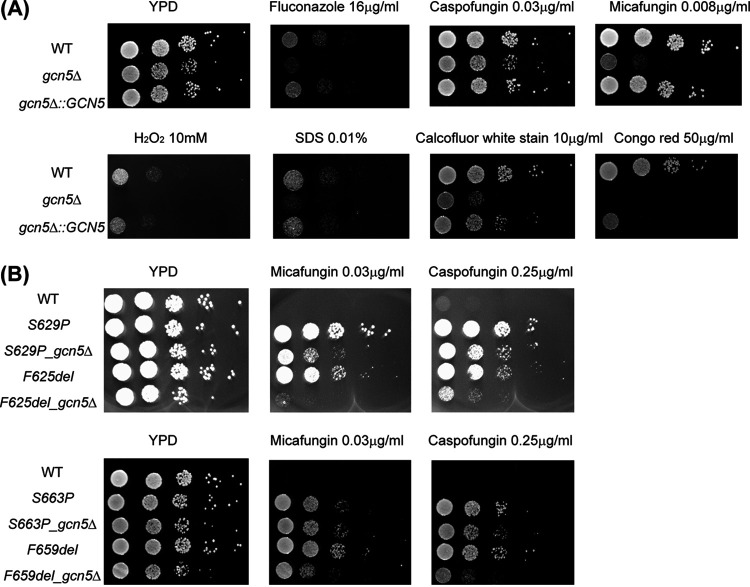
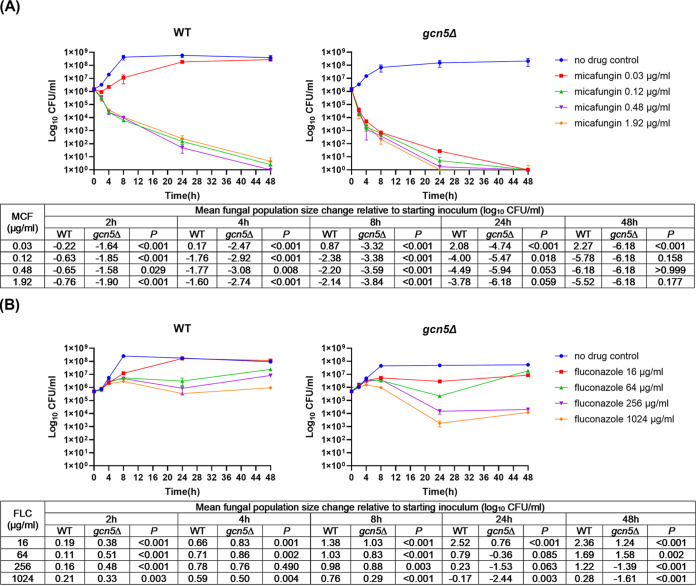
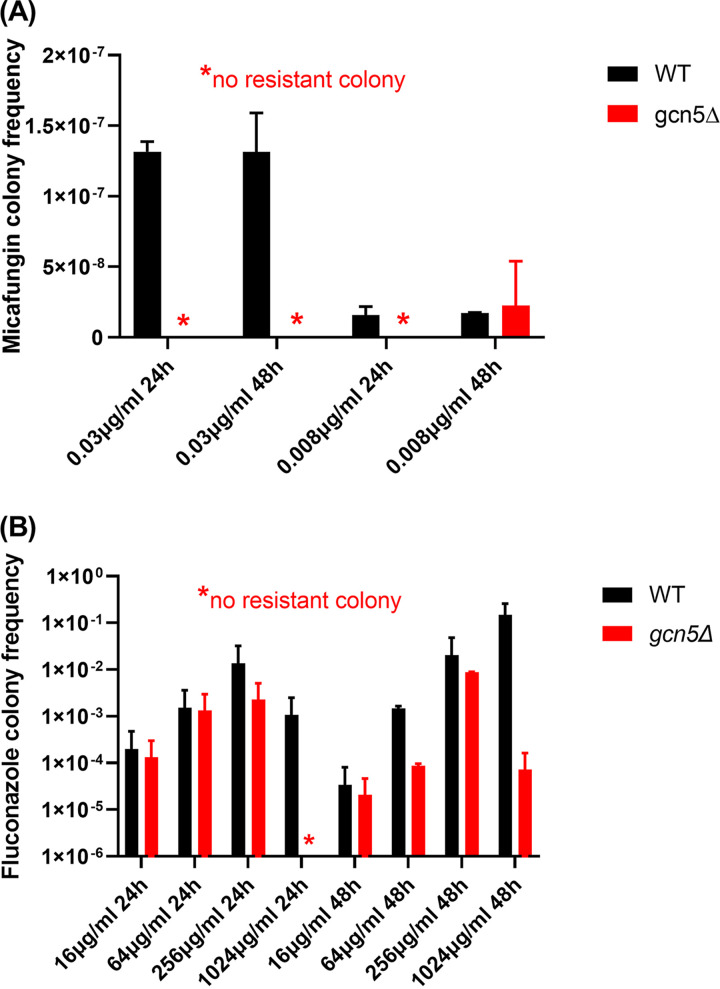
“CgGCN5 deletion led to both fluconazole and micafungin sensitivity, and mitigated against the emergence of drug resistance towards these drugs [51,52].”
BackgroundZhang, Y., Zeng, L., Huang, X., Wang, Y., Chen, G., Moses, M., Zou, Y., Xiong, S., Xue, W., Dong, Y., et al. (2025) · Nature Communications · doi:10.1038/s41467-025-59898-6 · Cited by 33
“Previous reports indicate that in C. albicans and N. glabratus , knockout of Gcn5 or the Spt7 or Spt8 subunits of the SAGA complex results in increased sensitivity to phagocytosis and enhanced killing by macrophages 25,66,71 .”
RETRACTED: The Emerging Role of Epigenetics in Metabolism and Endocrinology
Sibuh, B. Z., Quazi, S., Panday, H., Parashar, R., Jha, N. K., Mathur, R., Jha, S. K., Taneja, P., & Jha, A. K. (2023) · Biology · doi:10.3390/biology12020256 · Cited by 29
RetractedAntifungal resistance: Emerging mechanisms and implications (Review)
Kadariswantiningsih, I. N., Empitu, M. A., Santosa, T., & Alimu, Y. (2025) · Molecular Medicine Reports · doi:10.3892/mmr.2025.13612 · Cited by 30
“Genetic analysis and time‑kill assays may identify specific mutations associated with resistance, whereas tolerance may not be associated with stable genetic changes but rather transient stress responses (30,37).”
Metadata
- Authors
- Yu, S., Paderu, P., Lee, A., Eirekat, S., Healey, K., Chen, L., Perlin, D. S., & Zhao, Y.
- Affiliations
- Center for Discovery and Innovation, Hackensack Meridian Health, Nutley, New Jersey, USA
- Hackensack Meridian Health (US)
- William Paterson University (US)
- Georgetown University (US)
- Corresponding author
- Zhao, Yanan
- Venue
- Microbiology Spectrum
- Publisher
- American Society for Microbiology
- Published
- 2022-06-29
- Volume
- 10
- Issue
- 3
- Pages
- e0096322-e0096322
- ISSN
- 2165-0497 (ISSN-L)
- PMC
- PMC9241792
- OpenAlex
- W4281741944
- Cited by
- 23
- References
- 53
- Citations by year
- 2026: 4 · 2025: 10 · 2024: 3 · 2023: 5 · 2022: 1
- FWCI
- 2.32
- Type
- journal article
- Language
- en
- Open access
- gold
- doi.org
- Licence
- cc-by
- creativecommons.org/licenses/by/4.0/ (vor)
- journals.asm.org/non-commercial-tdm-license (tdm)
- Locations
- Microbiology Spectrum (publishedVersion, cc-by)
- PubMed Central (publishedVersion, cc-by)
- PubMed (publishedVersion)
- DOAJ (DOAJ: Directory of Open Access Journals) (submittedVersion)
- Funders
- HHS | NIH | National Institute of Allergy and Infectious Diseases (R01AI109025)
- Topics
- Health Sciences › Medicine › Infectious Diseases › Antifungal resistance and susceptibility
- Life Sciences › Biochemistry, Genetics and Molecular Biology › Molecular Biology › Fungal and yeast genetics research
- Life Sciences › Agricultural and Biological Sciences › Plant Science › Fungal Plant Pathogen Control
- Keywords
- GCN5, histone acetylation, histone acetyltransferase, Candida glabrata, antifungal resistance, fungal virulence, epigenetic regulation, drug response, drug target identification
- MeSH terms
- Acetylation, Antifungal Agents, Candida albicans, Fungal Proteins, Histones, Humans, Microbial Sensitivity Tests, Virulence, Drug Resistance, Fungal, Candida glabrata
About these checks
Registry, retraction, Cites and statistics results are computed, not judged, with one exception: a printed reference that no index lists is read once by a model before it counts as a citation error. Claims are extracted by a model and kept only when their quote appears verbatim in the text; each cited source is then checked, with a model’s help, for whether it says what the claim relies on. Those verdicts can be wrong — read the claim’s quote and the cited source before relying on one.
Statistics and arithmetic are recomputed, not judged.
Confidence bands are shown only for fields calibrated on our annotated test set. None is calibrated yet, so no band is shown.
What counts as a claim ›How we measure confidence ›How we check this ›
Are you an author, or do you see a problem with this page? Request a review
How to cite
Cite CoChat for the checks on this page, and the paper for its own findings.
- This page
- CoChat. (2026). Citation check: Histone Acetylation Regulator Gcn5 Mediates Drug Resistance and Virulence of Candida glabrata. https://app.cochat.ai/papers/10.1128/spectrum.00963-22
- The paper
- Yu, S., Paderu, P., Lee, A., Eirekat, S., Healey, K., Chen, L., Perlin, D. S., & Zhao, Y. (2022). Histone Acetylation Regulator Gcn5 Mediates Drug Resistance and Virulence of Candida glabrata. Microbiology Spectrum. https://doi.org/10.1128/spectrum.00963-22
Data sources
Bibliographic data: Semantic Scholar, OpenAlex, Crossref.
Contains information from the Semantic Scholar Academic Graph Datasets, made available under the ODC Attribution License (ODC-BY 1.0).
Semantic Scholar’s data is described in: Kinney, R., et al. (2023). The Semantic Scholar Open Data Platform. arXiv:2301.10140.
