

The DOI matches its Crossref record; 3 of the 3 references it cites were found in a registry or an index.
Identification of Arginine Phosphorylation in Mycolicibacterium smegmatis
Open accessPublished version of a preprint
Abstract
Mycobacteria that cause tuberculosis infections employ proteolytic pathways that modulate cellular behavior by destroying specific proteins in a highly regulated manner. Some proteolytic enzymes have emerged as novel antibacterial targets against drug-resistant tuberculosis infections.
Overview
The claims and statistics of this paper haven’t been checked yet.
Run the check — free, no account needed. It reads the open-access text and checks the sources it cites.
Integrity signals
Registry
Cites
Statistics
Figures
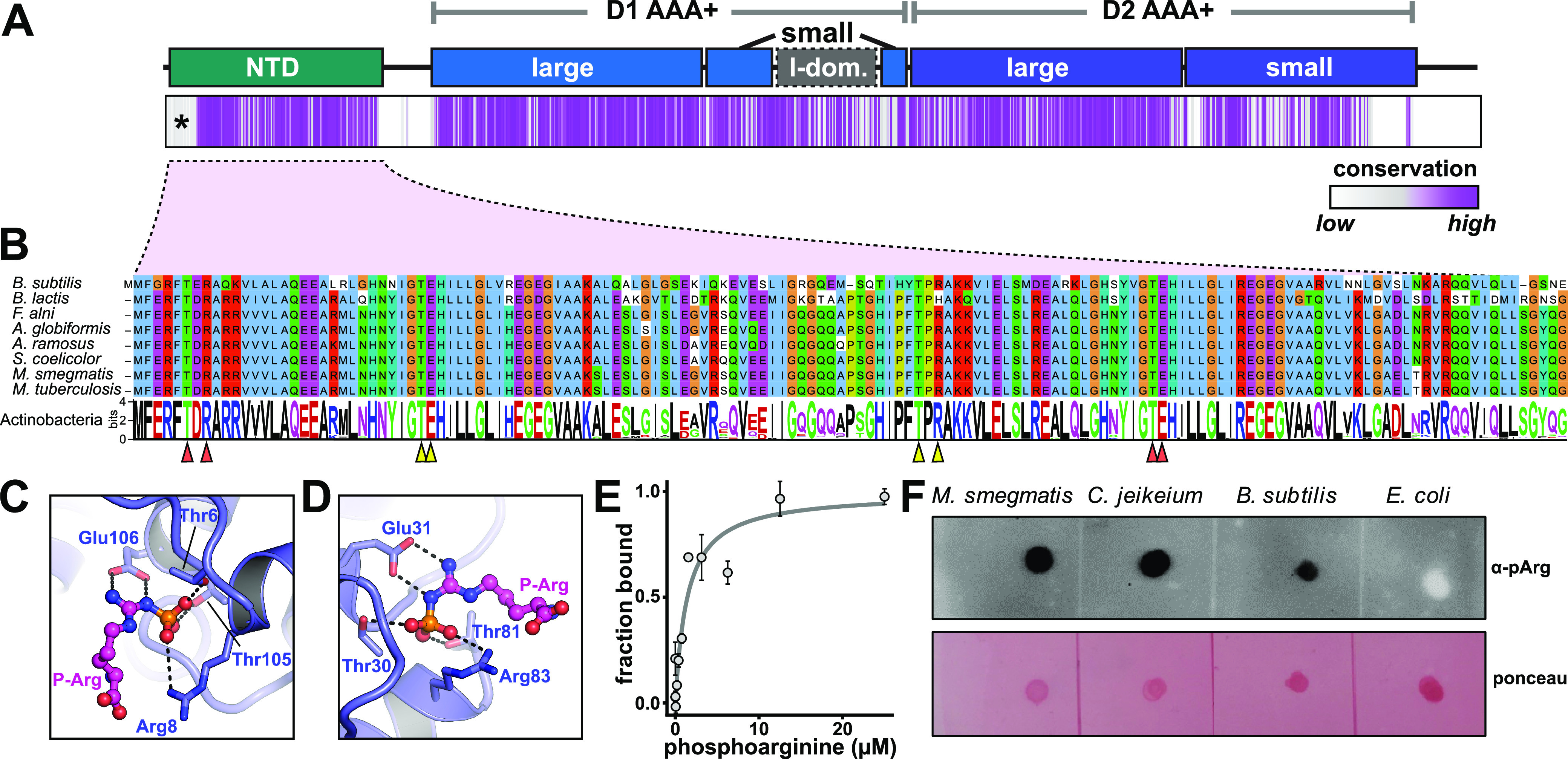
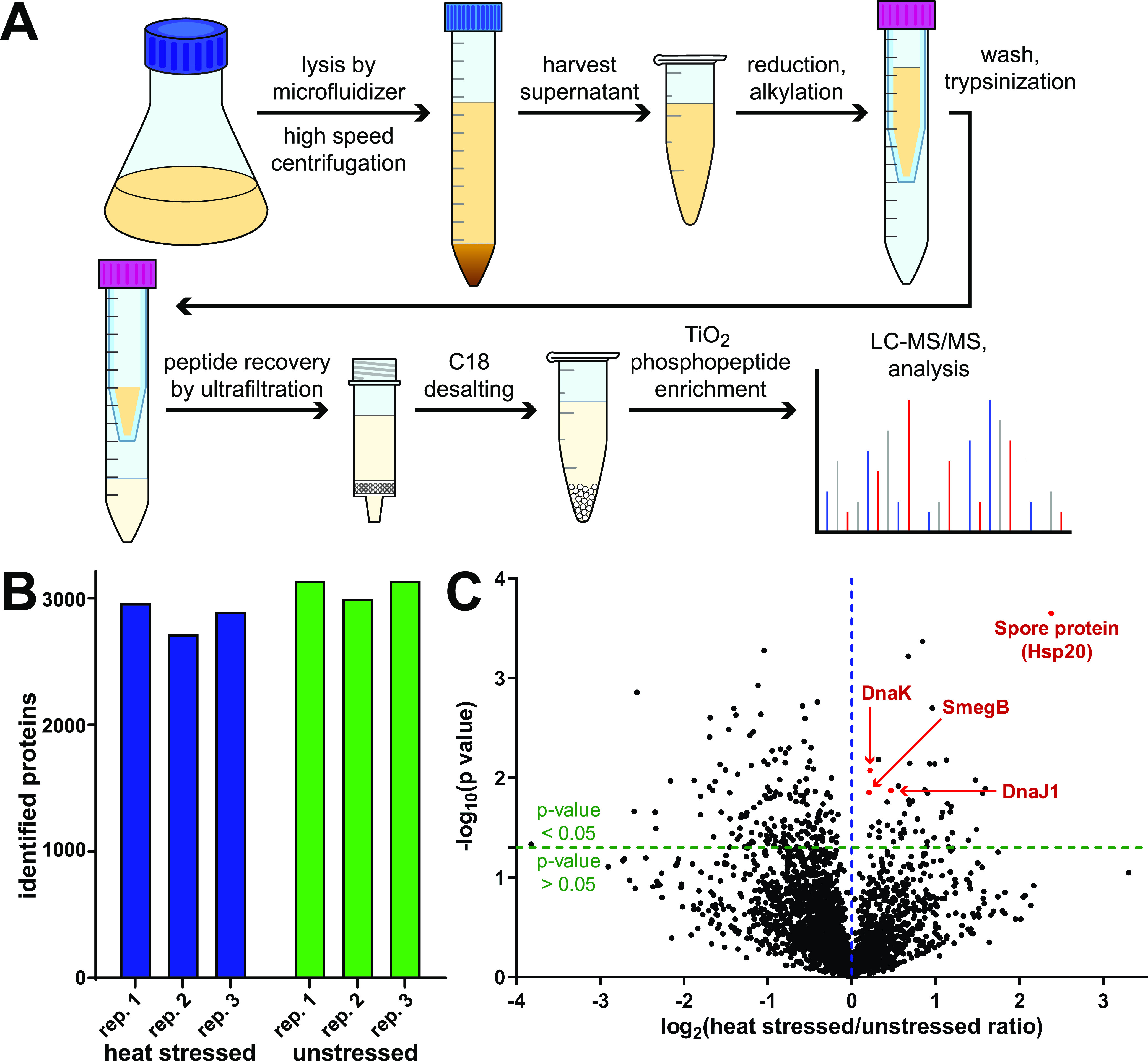
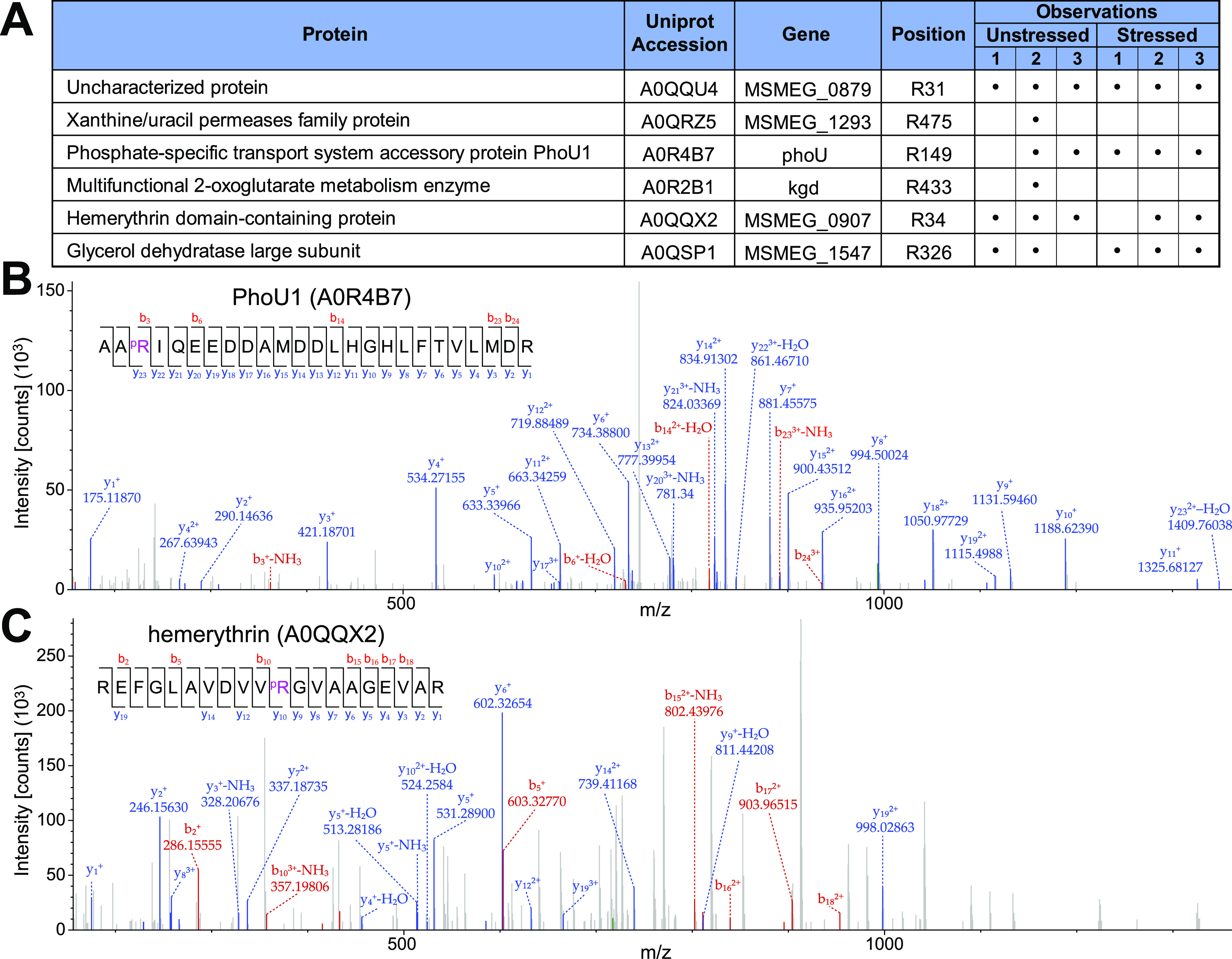
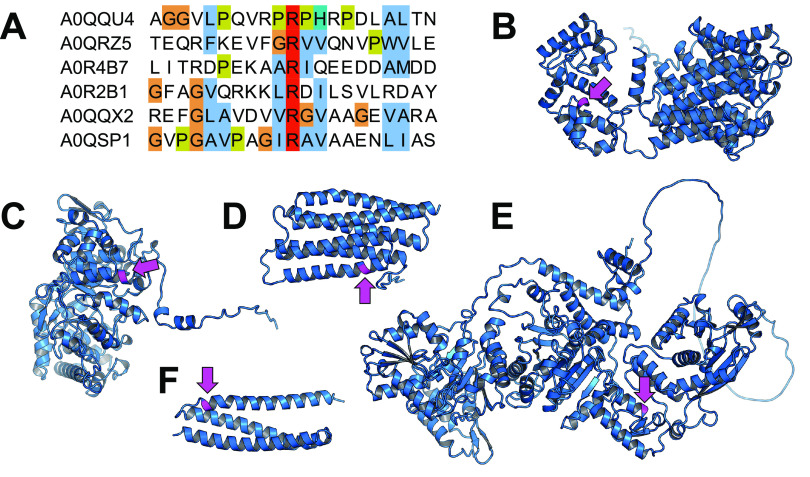
Verification
Claims the paper makes
The claims and statistics of this paper haven’t been checked yet.
Run the check — free, no account needed. It reads the open-access text and checks the sources it cites.
Self-check
Percentages, sums and reported differences re-computed from the paper’s own numbers.
The self-check needs the paper’s full text.
Citations
Cites
Highly accurate protein structure prediction with AlphaFold
Jumper, J., Evans, R., Pritzel, A., Green, T., Figurnov, M., Ronneberger, O., Tunyasuvunakool, K., Bates, R., Žídek, A., Potapenko, A., et al. (2021) · Nature · doi:10.1038/s41586-021-03819-2 · Cited by 43,764
Griffin, J. E., Gawronski, J. D., DeJesus, M. A., Ioerger, T. R., Akerley, B. J., & Sassetti, C. M. (2011) · PLoS Pathogens · doi:10.1371/journal.ppat.1002251 · Cited by 1,048
Global impact of protein arginine phosphorylation on the physiology of Bacillus subtilis
Elsholz, A. K. W., Turgay, K., Michalik, S., Hessling, B., Gronau, K., Oertel, D., Mäder, U., Bernhardt, J., Becher, D., Hecker, M., et al. (2012) · Proceedings of the National Academy of Sciences · doi:10.1073/pnas.1117483109 · Cited by 141
Research works printed but not linked: 80
- WHO. 2021. Global tuberculosis report 2021. World Health Organization, Geneva, Switzerland.
- 10.1046/j.1365-2958.2003.03425.x · DOI · Paper page
- 10.1371/journal.ppat.1003994 · DOI
- 10.1371/journal.ppat.1002511 · DOI
- 10.1128/mBio.02133-16 · DOI · Paper page
- 10.1021/cb400577b · DOI
- 10.1016/j.chembiol.2014.01.014 · DOI
- 10.1128/AAC.04054-14 · DOI
- 10.1128/mBio.00253-15 · DOI
- 10.1111/mmi.13362 · DOI
- 10.3390/ijms20092232 · DOI
- 10.1146/annurev-biochem-060408-172623 · DOI
- 10.1016/j.bbamcr.2011.06.007 · DOI
- 10.1038/emboj.2012.5 · DOI
- 10.1111/mmi.12694 · DOI
- 10.1073/pnas.1417120111 · DOI
- 10.1074/jbc.M115.700344 · DOI
- 10.1073/pnas.1921630117 · DOI
- 10.1371/journal.pone.0125345 · DOI
- 10.1038/s41598-019-53736-8 · DOI
- 10.1038/nm1306 · DOI · Paper page
- 10.1002/emmm.200900002 · DOI
- 10.1021/acs.jnatprod.5b01091 · DOI
- 10.1074/jbc.M114.625640 · DOI
- 10.1002/anie.201101740 · DOI
- 10.1021/acsinfecdis.8b00276 · DOI
- 10.1021/acs.jnatprod.0c01104 · DOI
- 10.1111/j.1365-2958.2009.07008.x · DOI
- 10.1038/s41467-020-15516-1 · DOI
- 10.1074/jbc.RA120.013456 · DOI
- 10.1111/febs.15335 · DOI
- 10.1128/JB.01233-07 · DOI
- 10.1038/nature20122 · DOI
- 10.3390/ijms19113651 · DOI
- 10.1074/mcp.M113.032292 · DOI
- 10.1074/mcp.RA117.000378 · DOI
- 10.1126/science.1170088 · DOI
- 10.1074/mcp.O113.035790 · DOI
- 10.1038/s41589-019-0265-y · DOI
- 10.1074/jbc.RA118.002251 · DOI
- 10.1073/pnas.0535717100 · DOI
- 10.1074/jbc.M113.493767 · DOI
- 10.1002/cbic.201500472 · DOI
- 10.1016/j.ijbiomac.2017.03.126 · DOI
- 10.1107/S2059798320004027 · DOI
- 10.1002/anie.201506737 · DOI
- 10.1038/nmeth.4580 · DOI
- 10.1007/s11426-019-9656-7 · DOI
- 10.1016/j.ijmm.2013.11.020 · DOI
- 10.3389/fmicb.2017.02523 · DOI
- 10.1016/j.chembiol.2011.06.004 · DOI
- 10.1504/IJBRA.2010.037988 · DOI
- 10.3389/fbioe.2020.500867 · DOI
- 10.1021/bi0607812 · DOI
- 10.1038/srep16130 · DOI
- 10.1042/BCJ20190827 · DOI
- 10.1038/s41579-019-0243-0 · DOI · Paper page
- 10.1111/j.1574-6968.1994.tb07285.x · DOI
- 10.1002/pmic.200700442 · DOI
- 10.1073/pnas.0913482107 · DOI · Paper page
- 10.3389/fmicb.2015.00237 · DOI
- 10.1073/pnas.1817742116 · DOI
- 10.1016/j.jbc.2022.102202 · DOI
- 10.1089/cmb.1995.2.9 · DOI
- 10.1038/msb.2011.75 · DOI · Paper page
- 10.1093/bioinformatics/btp033 · DOI · Paper page
- 10.1101/gr.849004 · DOI · Paper page
- 10.1021/jacs.6b03836 · DOI
- 10.1016/j.molstruc.2014.03.009 · DOI
- 10.1038/nmeth.1322 · DOI · Paper page
- 10.1038/nprot.2006.185 · DOI
- 10.1016/1044-0305(94)80016-2 · DOI · Paper page
- 10.1021/pr200611n · DOI · Paper page
- 10.1093/bioinformatics/bti610 · DOI · Paper page
- 10.1093/nar/25.1.217 · DOI
- 10.1093/nar/gkn785 · DOI · Paper page
- Hall TA. 1999. BioEdit: a user-friendly biological sequence alignment editor and analysis program for Windows 95/98/NT. Nucleic Acids Symp Ser 41:95–98.
- 10.1093/nar/28.1.235 · DOI · Paper page
- 10.1089/cmb.1994.1.39 · DOI
- 10.1093/nar/gky1106 · DOI
Cited by
Interactome Analysis Identifies MSMEI_3879 as a Substrate of Mycolicibacterium smegmatis ClpC1
Ogbonna, E. C., Anderson, H. R., Beardslee, P. C., Bheemreddy, P., & Schmitz, K. R. (2023) · Microbiology Spectrum · doi:10.1128/spectrum.04548-22 · Cited by 15
Self-citationBioinformatic identification of ClpI, a distinct class of Clp unfoldases in Actinomycetota
Jiang, J., & Schmitz, K. R. (2023) · Frontiers in Microbiology · doi:10.3389/fmicb.2023.1161764 · Cited by 3
Self-citation
Metadata
- Authors
- Ogbonna, E. C., Anderson, H. R., & Schmitz, K. R.
- Affiliations
- University of Delaware (US)
- Corresponding author
- Schmitz, Karl R.
- Venue
- Microbiology Spectrum
- Publisher
- American Society for Microbiology
- Published
- 2022-10-26
- Volume
- 10
- Issue
- 5
- Pages
- e0204222-e0204222
- ISSN
- 2165-0497 (ISSN-L)
- PMC
- PMC9604228
- OpenAlex
- W4304005546
- Cited by
- 18
- References
- 3
- Citations by year
- 2026: 3 · 2025: 3 · 2024: 8 · 2023: 4
- FWCI
- 1.83
- Type
- journal article
- Language
- en
- Open access
- gold
- doi.org
- Licence
- cc-by
- creativecommons.org/licenses/by/4.0/ (vor)
- journals.asm.org/non-commercial-tdm-license (tdm)
- Locations
- Microbiology Spectrum (publishedVersion, cc-by)
- bioRxiv (Cold Spring Harbor Laboratory) (acceptedVersion, cc-by-nc-nd)
- PubMed Central (publishedVersion, cc-by)
- PubMed (publishedVersion)
- DOAJ (DOAJ: Directory of Open Access Journals) (submittedVersion, cc-by-sa)
- Funders
- HHS | NIH | National Institute of General Medical Sciences (P20GM104316)
- Topics
- Health Sciences › Medicine › Infectious Diseases › Tuberculosis Research and Epidemiology
- Life Sciences › Biochemistry, Genetics and Molecular Biology › Genetics › Bacterial Genetics and Biotechnology
- Life Sciences › Biochemistry, Genetics and Molecular Biology › Structural Biology › Enzyme Structure and Function
- Keywords
- Mycobacterium smegmatis, mycobacteria, proteolytic enzymes, protein degradation, drug-resistant tuberculosis, antibiotic targets, protein chemical modification
- MeSH terms
- Anti-Bacterial Agents, Arginine, Bacterial Proteins, Humans, Mycobacterium tuberculosis, Organophosphorus Compounds, Phosphopeptides, Phosphorylation, Tuberculosis, Mycobacterium smegmatis, Proteome, ATP-Dependent Proteases
About these checks
Registry, retraction, Cites and statistics results are computed, not judged, with one exception: a printed reference that no index lists is read once by a model before it counts as a citation error. Claims are extracted by a model and kept only when their quote appears verbatim in the text; each cited source is then checked, with a model’s help, for whether it says what the claim relies on. Those verdicts can be wrong — read the claim’s quote and the cited source before relying on one.
Statistics and arithmetic are recomputed, not judged.
Confidence bands are shown only for fields calibrated on our annotated test set. None is calibrated yet, so no band is shown.
What counts as a claim ›How we measure confidence ›How we check this ›
Are you an author, or do you see a problem with this page? Request a review
How to cite
Cite CoChat for the checks on this page, and the paper for its own findings.
- This page
- CoChat. (2026). Citation check: Identification of Arginine Phosphorylation in Mycolicibacterium smegmatis. https://app.cochat.ai/papers/10.1128/spectrum.02042-22
- The paper
- Ogbonna, E. C., Anderson, H. R., & Schmitz, K. R. (2022). Identification of Arginine Phosphorylation in Mycolicibacterium smegmatis. Microbiology Spectrum. https://doi.org/10.1128/spectrum.02042-22
Data sources
Bibliographic data: Semantic Scholar, OpenAlex, Crossref.
Contains information from the Semantic Scholar Academic Graph Datasets, made available under the ODC Attribution License (ODC-BY 1.0).
Semantic Scholar’s data is described in: Kinney, R., et al. (2023). The Semantic Scholar Open Data Platform. arXiv:2301.10140.
