

What is CRISPR/Cas9?
Open accessThe DOI matches its Crossref record; 13 of the 14 references it cites were found in a registry or an index; 24 of the 24 sources its claims cite were checked for support.
Abstract
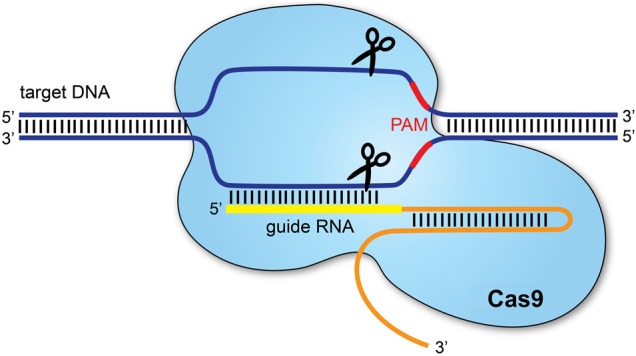
Clustered regularly interspaced palindromic repeats (CRISPR)/Cas9 is a gene-editing technology causing a major upheaval in biomedical research. It makes it possible to correct errors in the genome and turn on or off genes in cells and organisms quickly, cheaply and with relative ease. It has a number of laboratory applications including rapid generation of cellular and animal models, functional genomic screens and live imaging of the cellular genome.1 It has already been demonstrated that it can be used to repair defective DNA in mice curing them of genetic disorders,2 and it has been reported that human embryos can be similarly modified.3 Other potential clinical applications include gene therapy, treating infectious diseases such as HIV and engineering autologous patient material to treat cancer and other diseases. In this review we will give an overview of CRISPR/Cas9 with an emphasis on how it may impact on the specialty of paediatrics. Although it is likely to have a significant effect on paediatrics through its impact in the laboratory, here we will concentrate on its potential clinical applications. We will also describe some of the difficulties and ethical controversies associated with this novel technology. CRISPR/Cas9 is a gene-editing technology which involves two essential components: a guide RNA to match a desired target gene, and Cas9 (CRISPR-associated protein 9)—an endonuclease which causes a double-stranded DNA break, allowing modifications to the genome (see figure 1). Figure 1 The CRISPR/Cas9 system.1 Clustered regularly interspaced palindromic repeats (CRISPR) refers to sequences in the bacterial genome. They afford protection against invading viruses, when combined with a series of CRISPR-associated (Cas) proteins. Cas9, one of the associated proteins, is an endonuclease that cuts both strands of DNA. Cas9 is directed to its target by a section of RNA. This can be synthesised as a single strand called …
Overview
CoChat Summary
TL;DR
CRISPR/Cas9 is a gene-editing technology pairing a guide RNA with the Cas9 endonuclease to create targeted double-stranded DNA breaks, enabling genome correction or gene regulation. This narrative review outlines its potential paediatric clinical applications—correcting monogenic disorders, treating HIV, and engineering somatic cells ex vivo—while flagging delivery, off-target, and germline-ethics challenges.
Key findings
- CRISPR/Cas9 requires two components: a guide RNA matching the target gene and Cas9, an endonuclease that causes a double-stranded DNA break; repair via homology-directed repair allows edits "as precise as a single base-pair," while non-homologous end joining typically yields random insertions/deletions.
- Preclinical disease applications cited: correction of the most common CF mutation in intestinal organoids from two patients restored CFTR function; AAV-delivered CRISPR/Cas9 recovered dystrophin expression and partial muscle function in a DMD mouse model; BCL11A enhancer disruption induced fetal haemoglobin in mice and primary human erythroblast cells.
- HIV: CRISPR/Cas9 targeting of the HIV-1 genome inactivated viral gene expression and replication in latently infectable cells without toxic effects, and cells could be immunised against HIV-1 infection.
- Ex vivo engineering: CRISPR/Cas9 enabled knockout and knock-in editing in primary human CD4+ T-cells (including blocking PD-1 expression), and correction of the β-thalassaemia mutation in human induced pluripotent stem cells.
Methods
- Design: narrative review article (not primary research), aimed at describing CRISPR/Cas9 and its potential impact on paediatrics, with emphasis on clinical applications and associated difficulties and ethical controversies.
- Data: no original dataset; the review synthesises published preclinical and in vitro studies (e.g., Schwank et al on CF organoids, Tabebordbar et al on DMD mice, Canver et al on BCL11A, Hu et al on HIV-1, Schumann et al on T-cells, Xie et al on β-thalassaemia iPSCs).
- Analysis: descriptive synthesis of cited literature; no formal quantitative analysis reported.
Limitations
- Stated: delivery to the right cells in vivo remains a particular issue—AAV may be too small to transduce the Cas9 gene efficiently, and a smaller Cas9 has efficacy implications; other non-viral delivery systems need optimisation.
- Stated: off-target effects elsewhere in the genome could cause long-term complications including malignancy; Cas9 concentration and expression duration matter, and long-term safety is unestablished.
- Stated: germline/embryo editing is permanent with unclear long-term consequences, and ethical boundaries remain undetermined; the review notes its therapeutic examples are predominantly directed at somatic cells. Evident from the text: the clinical applications discussed are largely preclinical or in vitro, so bedside translation is not yet demonstrated.
Model-written summary. Check it against the paper before relying on it.
Integrity signals
Registry
Cites
Statistics
Figures
Verification
Claims the paper makes
23 Valid · 0 Not valid · 0 Not checked · 9 Own results and interpretations
Every source the paper cites for this claim was checked and supports it.
In the paper
“it has been reported that human embryos can be similarly modified.3”
§ What is CRISPR/Cas9? > INTRODUCTION
What the sources say
- Supportedcites [3] Liang P, Xu Y, Zhang X, et al. CRISPR/Cas9-mediated gene editing in human tripronuclear zygotes. Protein Cell 2015;6:363-72. source
The Introduction reports that CRISPR/Cas9 cleaved an endogenous gene in human tripronuclear zygotes and describes mosaicism and mutations in the edited embryos. This supports the claim that human embryos can be modified, with the qualification that the study used tripronuclear rather than normal embryos. (LLM, conf=0.92)
plainstates a cause- Asserted: passes — The authors put it forward as true.
- Checkable: passes — It can be checked against evidence.
- Load-bearing: unclear — It is unclear whether the paper’s conclusions depend on it.
- Based: passes — The paper gives a reason why it holds.
- Supported
Every source the paper cites for this claim was checked and supports it.
In the paper
“Using adult intestinal stem cells obtained from two patients with CF, they successfully corrected the most common mutation causing CF in intestinal organoids.”
§ What is CRISPR/Cas9? > Correction of genetic disorders
What the sources say
- Supportedcites [4] Schwank G, Koo BK, Sasselli V, et al. Functional repair of CFTR by CRISPR/Cas9 in intestinal stem cell organoids of cystic fibrosis patients. Cell Stem Cell 2013;13:653-8. source
The indexed paper describes F508 del as the most common CFTR mutation and says both patients carried it. Its concluding passage states that the authors used CRISPR/Cas9 to correct the mutation in adult intestinal stem cells from two CF patients and demonstrated function in organoids (indexed section: Abstract; page not given). (LLM, conf=0.94)
plainstates a causen = 2- Asserted: passes — The authors put it forward as true.
- Checkable: passes — It can be checked against evidence.
- Load-bearing: unclear — It is unclear whether the paper’s conclusions depend on it.
- Based: passes — The paper gives a reason why it holds.
- Supported
Every source the paper cites for this claim was checked and supports it.
In the paper
“They demonstrated that once the mutation had been corrected, the function of the CF transmembrane conductor receptor (CFTR) was restored.4”
§ What is CRISPR/Cas9? > Correction of genetic disorders
What the sources say
- Supportedcites [4] Schwank G, Koo BK, Sasselli V, et al. Functional repair of CFTR by CRISPR/Cas9 in intestinal stem cell organoids of cystic fibrosis patients. Cell Stem Cell 2013;13:653-8. source
The Summary states that the CFTR locus was corrected in intestinal stem cells from CF patients and that the corrected allele was fully functional in expanded organoids. The results passage reports swelling in corrected organoids, absent in untransfected controls, and concludes that the corrected allele rescued the CFTR phenotype. (LLM, conf=0.95)
boostedstates a causen = 2- Asserted: passes — The authors put it forward as true.
- Checkable: passes — It can be checked against evidence.
- Load-bearing: passes — The paper’s conclusions depend on it.
- Based: passes — The paper gives a reason why it holds.
- Supported
Every source the paper cites for this claim was checked and supports it.
In the paper
“This produces a truncated, but still functional protein.”
§ What is CRISPR/Cas9? > Correction of genetic disorders
What the sources say
- Supportedcites [5] Tabebordbar M, Zhu K, Cheng JK, et al. In vivo gene editing in dystrophic mouse muscle and muscle stem cells. Science 2016;351:407-11. source
The Abstract states that exon removal can produce a truncated but still functional protein. It reports that exon 23 deletion restored dystrophin expression in the mdx mouse model and partially recovered muscle function. (LLM, conf=0.93)
plain- Asserted: passes — The authors put it forward as true.
- Checkable: passes — It can be checked against evidence.
- Load-bearing: passes — The paper’s conclusions depend on it.
- Based: passes — The paper gives a reason why it holds.
- Supported
Every source the paper cites for this claim was checked and supports it.
In the paper
“Treated mice were shown to partially recover muscle functional deficiencies.5”
§ What is CRISPR/Cas9? > Correction of genetic disorders
What the sources say
- Supportedcites [5] Tabebordbar M, Zhu K, Cheng JK, et al. In vivo gene editing in dystrophic mouse muscle and muscle stem cells. Science 2016;351:407-11. source
The Abstract states that AAV-Dmd CRISPR treatment partially recovered muscle functional deficiencies in mdx mice, a model of DMD. It also reports improved muscle force and reduced force loss after damage compared with control-treated muscles. (LLM, conf=0.95)
plainstates a cause- Asserted: passes — The authors put it forward as true.
- Checkable: passes — It can be checked against evidence.
- Load-bearing: passes — The paper’s conclusions depend on it.
- Based: passes — The paper gives a reason why it holds.
- Supported
16 more claims · 12 with their cited sources checked
Create a free account to see all 32 claims and every source verdict.
- It may state two separate claims as one. 6
- Probably not a substantial claim. 6
Claims other papers make about this one
Each is checked against this paper’s own text: does it say what the citing paper says it does?
In the citing paper
“CRISPR/Cas9 is a two-component system that involves a guide RNA specific to the gene of interest and an endonuclease that induces a site specific double-stranded DNA to allow for genetic modification.9”
From Gene Therapy for Retinal Degenerative Diseases: Progress, Challenges, and Future Directions (2023) · cites this paper as [9]
Citations
Cites
Development and Applications of CRISPR-Cas9 for Genome Engineering
Hsu, P. D., Lander, E. S., & Zhang, F. (2014) · Cell · doi:10.1016/j.cell.2014.05.010 · Cited by 5,762
Schwank, G., Koo, B.-K., Sasselli, V., Dekkers, J. F., Heo, I., Demircan, T., Sasaki, N., Boymans, S., Cuppen, E., van der Ent, C. K., et al. (2013) · Cell Stem Cell · doi:10.1016/j.stem.2013.11.002 · Cited by 1,424
In vivo genome editing improves muscle function in a mouse model of Duchenne muscular dystrophy
Nelson, C. E., Hakim, C. H., Ousterout, D. G., Thakore, P. I., Moreb, E. A., Rivera, R. M. C., Madhavan, S., Pan, X., Ran, F. A., Yan, W. X., et al. (2016) · Science · doi:10.1126/science.aad5143 · Cited by 1,144 · cited 3×
“Two similar studies have described using the CRISPR/Cas9 system in vivo to increase expression of the dystrophin gene and improve muscle function in mouse models of DMD. 6 7 Other studies have used CRISPR/Cas9 to target duplication of exons in the human dystrophin gene in vitro and have shown that this approach can le…”
MethodInfluentialCRISPR/Cas9-mediated gene editing in human tripronuclear zygotes
Liang, P., Xu, Y., Zhang, X., Ding, C., Huang, R., Zhang, Z., Lv, J., Xie, X., Chen, Y., Li, Y., et al. (2015) · Protein & Cell · doi:10.1007/s13238-015-0153-5 · Cited by 1,135
In vivo gene editing in dystrophic mouse muscle and muscle stem cells
Tabebordbar, M., Zhu, K., Cheng, J. K. W., Chew, W. L., Widrick, J. J., Yan, W. X., Maesner, C., Wu, E. Y., Xiao, R., Ran, F. A., et al. (2016) · Science · doi:10.1126/science.aad5177 · Cited by 1,046
Genome editing with Cas9 in adult mice corrects a disease mutation and phenotype
Yin, H., Xue, W., Chen, S., Bogorad, R. L., Benedetti, E., Grompe, M., Koteliansky, V., Sharp, P. A., Jacks, T., & Anderson, D. G. (2014) · Nature Biotechnology · doi:10.1038/nbt.2884 · Cited by 951
BCL11A enhancer dissection by Cas9-mediated in situ saturating mutagenesis
Canver, M. C., Smith, E. C., Sher, F., Pinello, L., Sanjana, N. E., Shalem, O., Chen, D. D., Schupp, P. G., Vinjamur, D. S., Garcia, S. P., et al. (2015) · Nature · doi:10.1038/nature15521 · Cited by 886
Prevention of muscular dystrophy in mice by CRISPR/Cas9–mediated editing of germline DNA
Long, C., McAnally, J. R., Shelton, J. M., Mireault, A. A., Bassel-Duby, R., & Olson, E. N. (2014) · Science · doi:10.1126/science.1254445 · Cited by 720
Generation of knock-in primary human T cells using Cas9 ribonucleoproteins
Schumann, K., Lin, S., Boyer, E., Simeonov, D. R., Subramaniam, M., Gate, R. E., Haliburton, G. E., Ye, C. J., Bluestone, J. A., Doudna, J. A., et al. (2015) · Proceedings of the National Academy of Sciences · doi:10.1073/pnas.1512503112 · Cited by 702
Don’t edit the human germ line
Lanphier, E., Urnov, F., Haecker, S. E., Werner, M., & Smolenski, J. (2015) · Nature · doi:10.1038/519410a · Cited by 530
Cited by
Items 201–300 of 325
CRISPR/Cas9 Genome Editing: Future Treatment of Duane Retraction Syndrome
Zulfikar, M. R., Renesteen, E., & Wardhani, B. W. K. (2022) · Pharmaceutical Sciences and Research · doi:10.7454/psr.v9i1.1231
Biosensors: Programmable Nucleic Acid-Binding Protein-Based Nucleic Acid Detection and Biosensing
Lee, J. (2022) · Elsevier eBooks · doi:10.1016/b978-0-12-822548-6.00109-6
Challenges and hopes in CRISPR CAS technology in future
Srinivasarao, D., Chauhan, U., & Charan, L. S. (2021) · SALT Journal of Scientific Research in Healthcare · doi:10.56735/saltjsrh.ms2101020512
Genetic Study of Bacteria and Bacteriophage
Sharma, N. K. (2022) · Springer eBooks · doi:10.1007/978-981-16-7041-1_6 · Cited by 2
Applications of CRISPR/Cas9 in the field of microbiology
Bano, I., & Ali, A. (2023) · Methods in microbiology · doi:10.1016/bs.mim.2023.01.006
CRISPR/Cas9 Systems and Gene Editing Technology
Gök, Ö., Beyaz, S., & Aslan, A. N. (2023) · Osmaniye Korkut Ata Üniversitesi Fen Bilimleri Enstitüsü Dergisi · doi:10.47495/okufbed.1085220
Application of Gene Therapy for Treatment of Atrial Fibrillation
Sequeira, L. (2022) · Journal of Student Research · doi:10.47611/jsrhs.v11i3.3543
Inducible CRISPR/Cas9 Systems in the Treatment of Neurodegenerative Diseases
Tummala, P., & Dunn, C. E. (2022) · Journal of Student Research · doi:10.47611/jsrhs.v11i4.3828
Evaluation of DPP4/CD26 Potential Role for the Management of Inflammation in COVID-19 Patients
Akbarian, F., Chafjiri, S. R., Poornabi, M., Khani, F., Abolhasanzadeh, S., & Hosseini, F. (2023) · Current Respiratory Medicine Reviews · doi:10.2174/1573398x19666230724155039
Gene Editing: A New Approach to Treat Genetic DisordersPreprint
Mudhar, J. (2023) · doi:10.58445/rars.449
Making Antibiotic-Resistant E. coli Non-Resistant with CRISPR/Cas9 Gene Editing
Cavrar, I. (2023) · Gene Editing · doi:10.29228/genediting.66930
State of the art and future directions of degenerative cervical myelopathy
Pedro, K. M., Hejrati, N., & Fehlings, M. G. (2023) · Elsevier eBooks · doi:10.1016/b978-0-323-95334-4.00006-1
Tùng, B. T., Trang, V. T. T., & Anh, N. T. V. (2024) · Elsevier eBooks · doi:10.1016/b978-0-443-16013-4.00004-x · Cited by 1
Current and Developing Treatments to Target EGFR for NSCLC
Luo, L., & Wang, D. (2024) · Journal of Student Research · doi:10.47611/jsrhs.v13i2.6740
Where Do We Stand in Targeted Therapy Against BRCA1/2 Deficient Cancers?
Manuel-Epstein, Z. (2024) · Undergraduate Research in Natural and Clinical Science and Technology (URNCST) Journal · doi:10.26685/urncst.602
CRISPR IN ORAL ONCOLOGY: BRIDGING PRECISION MEDICINE AND ETHICAL CHALLENGES
Selvam, D., & Vasudevan, K. (2024) · International Journal of Advanced Research · doi:10.21474/ijar01/19434
Recent Advances in Induced Pluripotent Stem Cells-based Hypertrophic Cardiomyopathy Study
Petri, J., & Stamatopoulos, E. (2024) · American journal of student research. · doi:10.70251/hyjr2348.239199
CRISPR in Huntington’s Disease TreatmentPreprint
Sridhar, S. (2024) · doi:10.58445/rars.1948
Gang, N. (2024) · Carleton University's Institutional Repository (MacOdrum Library, Carleton University) · doi:10.22215/etd/2024-16264
Bacillus Genome Engineering Using Clustered Regularly Interspaced Short Palindromic Repeats (CRISPR)
Muthukumaran, M., Ida Nancy, K., Vasan, S. B., & Dharumadurai, D. (2024) · Methods and protocols in food science · doi:10.1007/978-1-0716-4180-4_62
Fermentação de Precisão: a tecnologia que está revolucionando o setor de proteínas alternativas
Heidemann, M. S., Pereira, I. D. O., Maske, B. L., Massaki, S., Manzoki, M. C., & Reis, G. G. (2024) · doi:10.22491/978-65-87080-95-6
An Overview of HIV and AIDS; Current and Future Treatment OptionsPreprint
Nandivada, R. (2024) · doi:10.58445/rars.2065
Shankar, R. G., & Huang, J. V. (2024) · doi:10.58445/rars.2099
Vu, K. (2024) · Berkeley Pharma Tech Journal of Medicine · doi:10.52243/bptjm.v4i2.70
CRISPR-Cas9 Guide RNA Designer using Python
Narendra Kumar, S., Hariharan, A., Abhisha, B. H., Bhumika, K., & Basavaraj, P. (2024) · International Conference on Computation System and Information Technology for Sustainable Solutions (CSITSS) · doi:10.1109/csitss64042.2024.10816736
Genome Editing Technologies as Powerful Tools in Food Engineering and Biotechnology
Marinković, T., Marinković, D., & Stamenović, M. (2024) · Lecture notes in networks and systems · doi:10.1007/978-3-031-78635-8_2
GENOM DÜZENLEME KONUSUNA BİYOETİK, SOSYOLOJİK VE HUKUKİ AÇIDAN BİR BAKIŞ
Berberoğlu, N., & Bilge, Y. (2025) · Ombudsman Akademik · doi:10.32002/ombudsmanakademik.1529431
Gene Therapy And Cystic Fibrosis
-, M. P. (2025) · International Journal For Multidisciplinary Research · doi:10.36948/ijfmr.2025.v07i01.36299
Ongoing Hurdles in Harnessing Xist to Treat Human Disease: Review ArticlePreprint
Khabazeh, A., & Sheen, V. L. (2025) · Preprints.org · doi:10.20944/preprints202502.0861.v1
Josefano, R. B., Yoel, A., Japri, B. M., Belva, F. L., Widjojo, C. A., & Hermantara, R. (2024) · Indonesian Journal of Life Sciences · doi:10.54250/ijls.v6i2.195
“A guide RNA aids in identifying the intended target gene, and Cas9 causes double-strand breaks that allow the genome to be changed (Redman et al., 2016).”
Insights into Polyhydroxyalkanoates Producing Engineered E. coli
Kulkarni, G. D., Mahale, P. U., Joshi, S. R., & Rodge, S. P. (2025) · Springer eBooks · doi:10.1007/978-981-96-1996-2_2
Sha, Y., Huang, L., Zhang, L., Hou, X., Mo, C., Pan, C., Chen, G., Luo, S., & Ou, M. (2025) · BMC Biology · doi:10.1186/s12915-025-02193-z
Generation of a RIP1 Knockout U937 Cell Line Using the CRISPR-Cas9 System
Deragon, M. A., Sharifi, H. J., & LaRocca, T. J. (2025) · Journal of Visualized Experiments · doi:10.3791/66077 · Cited by 1
Application of Advanced CRISPR/Cas-9 and Other Genomic Tools in RNA-Based Therapeutics
Awan, T. F., & Khan, M. J. (2025) · Springer eBooks · doi:10.1007/978-981-96-3456-9_2
dos Santos, J. C. (2024) · Digital Library of Theses and Dissertations (Universidade de São Paulo) · doi:10.11606/t.17.2024.tde-17012025-114418
Biomaterials in Retinal Regeneration
Hicks, E. A., Monteiro, A., Tran, N., Sheardown, L., & Sheardown, H. D. (2025) · Royal Society of Chemistry eBooks · doi:10.1039/9781839169779-00256
Overview of Gene Editing and Genetic DiseasesPreprint
Bagchi, S. (2025) · doi:10.58445/rars.2634
Parveen, F., Noor, M., Nasir, E., & Amjad, R. (2025) · medtigo Journal of Medicine · doi:10.63096/medtigo3061225
Moleküler Biyoloji Yöntemlerinin Tıbbi Laboratuvarda Güncel Kullanımı
Tetikoğlu, S., Tetikoğlu, F. B., & Uzuner, S. Ç. (2025) · Farabi Tıp Dergisi · doi:10.59518/farabimedj.1660424
Shukri, A. I. A., Abdullah, S., Abdullah, N. S., Hussein, S., Aziz, N. A., Razak, S. A., Ahmad, F., & Hasan, N. '. (2025) · Malaysian Applied Biology · doi:10.55230/mabjournal.v54i2.3187
Stem Cell Therapy for Metabolic Disorders
Bali, S. D., Shukla, A. K., Sahoo, R., Mahadik, V. A., & Kadoo, N. Y. (2025) · Wiley eBooks · doi:10.1002/9781394313785.ch8
Algal Biofuel: Modified Tag Production
Rop, J., & Kraus, S. (2025) · International Journal of Science and Research (IJSR) · doi:10.21275/sr25723021400
Kaur, S., Chopra, S., Kumar, V., & Guleria, P. (2025) · Elsevier eBooks · doi:10.1016/b978-0-443-23818-5.00009-0
CRISPR and Gene Editing Therapies: Current Applications in Treating Inherited Disorders
Haq, E. U., Shakir, M. Z., Noor, A., Saeed, Z. B., Akram, A., & Khalid, A. (2025) · Indus journal of bioscience research. · doi:10.70749/ijbr.v3i8.1980
Rueda-Pardo, S. J., & Ríos, Á. M. (2025) · Cuadernos de Filosofía Latinoamericana · doi:10.15332/25005375.10773
Antibiotics and antiviral agents
Sharma, S., & Tiwari, B. K. (2025) · Elsevier eBooks · doi:10.1016/b978-0-443-27461-9.00012-3
Genome editing of the D3 gene improves plant architecture and disease resistance in rice
He, J., He, Z., Zhao, Y.-D., Huang, Y., Yi, R., Chen, P., Liu, J., Hu, X., Li, G., Wang, H., et al. (2025) · Plant Hormones · doi:10.48130/ph-0025-0017
Can CRISPR-Cas be used to cure HIV/AIDS?
Bhatia, T., Wilwohl, K., Torremocha, V., & Kethar, J. (2025) · Journal of Student Research · doi:10.47611/jsrhs.v14i1.8500
Gene Editing Using CRISPR/Cas9 System in the Treatment of HIV and Cancers
Chen, B. (2025) · MedScien · doi:10.61173/de7yak51
Kósa, D., Pető, Á., & Bácskay, I. (2025) · Elsevier eBooks · doi:10.1016/b978-0-443-27370-4.00020-2
Effendy, D., Affandy, A., & Handoko, C. (2025) · doi:10.58445/rars.3032
Agany, D. D. M., Zylla, J. L. S., Aryal, S., Gorbatenko, O. V., Bergmann, D., Gadhamshetty, V. R., & Gnimpiéba, E. Z. (2025) · bioRxiv (Cold Spring Harbor Laboratory) · doi:10.1101/2025.09.13.675994
Plant genetic engineering, molecular farming and biosafety regulations in India
Maurya, A. K., Saksena, Y. P., Sheetal, Kaushik, B., Gaur, K. K., Banerjee, S., Bachhawat, T., Kulkarni, G., & Sinha, D. (2025) · Plant Science Today · doi:10.14719/pst.7530
Utilizing CRISPR/Cas9 Gene Editing Techniques for Knockout of Genes in Escherichia coli Bacteria
Peggs, C. M. D., Rakestraw, N. R., & Jain, P. (2025) · UF Journal of Undergraduate Research · doi:10.32473/ufjur.27.138804
Applications of genome synthesis and editing in synthetic biology
Mondal, H., Mondal, S., Biri, S. K., & Sharma, S. (2025) · Elsevier eBooks · doi:10.1016/b978-0-443-33649-2.00013-7
Kulshrestha, S., Samaddar, S., Singh, A., Yadav, K., Aul, D., Singh, T., Sharma, S. K., & Singh, S. K. (2025) · Onco · doi:10.3390/onco5040049
“…regularly interspaced palindromic repeats (CRISPR) is a genome-editing platform composed of a guide RNA that directs the system to a specific target sequence and the Cas endonuclease, which introduces a double-stranded DNA break to enable precise genetic modifications in the target sequence [218].”
Gene editing for inherited cardiac conditions: A new frontier in cardiology
Abdul-Rahman, T., Roy, P., Garg, N. K., Nazir, A., Mehta, K. S., Doshi, N. A., Hassnain, S., Reddi, R., Kanagala, S. G., Ashinze, P. T., et al. (2025) · Trends in Cardiovascular Medicine · doi:10.1016/j.tcm.2025.11.002
Functional analysis of AKT1 knockout in fibrosarcoma cells using CRISPR/Cas9 technology
Kim, S., & Kim, M. (2025) · Journal of Human Genetics · doi:10.1038/s10038-025-01436-9
Jaisudha., J. (2025) · Journal of chemical health risks · doi:10.52783/jchr.v15.i6.11030
Golovkin, I. A., Shatkovskii, D., & Serov, N. (2025) · International Journal of Molecular Sciences · doi:10.3390/ijms262411791
Liposomes-mediated gene delivery: Concepts and recent advances
Fadel, M., & El-Kholy, A. I. (2025) · Elsevier eBooks · doi:10.1016/b978-0-443-33548-8.00007-0
NKAP depletion‐mediated translational inhibition increases the metastatic behavior in melanoma
Bonalli, M. (2016) · Zurich Open Repository and Archive (University of Zurich) · doi:10.5167/uzh-128003
Developmental regulation of Drosophial Dad, the inhibitory SMAD for the TGFβ signaling pathway
Soares, A. R. D. S. (2022) · Portuguese National Funding Agency for Science, Research and Technology (RCAAP Project by FCT) · doi:10.34626/8avy-wq15
Developing Novel Combinatorial Treatments for Tuberous Sclerosis Complex (TSC).
Baxter, C. (2021) · Figshare
CRISPR mutagenesis in genes involved in metronidazole resistance in Giardia intestinalis.
Zegarra Vidarte, P. (2024) · KTH Publication Database DiVA (KTH Royal Institute of Technology)
Polo, L. C. G. (2024) · RiuNet (Universitat Politècnica de València)
Ibrahim, S. (2025) · University Library of Skövde (University of Skövde)
Regulation of Fetal Hemoglobin in Erythroid Progenitor Cells
Muroki, S. M. (2024) · Skemman
Antibiotic resistance gene transfer mechanisms in Escherichia coli
Sheikh, M. (2023) · University Library of Skövde (University of Skövde)
Innleiðing CRISPR/Cas9 base editor plasmíðs í brjóstakrabbameinsfrumulínu
Hrafnsdóttir, E. R. (2024) · Skemman
Epigenetic regulation of bone formation - Effects of LSD1 and RCOR2 on osteoblast differentiation
Rummukainen, P. (2025) · UTUPub (University of Turku)
Källström Alexandersson, I. (2024) · Epsilon Archive for Student Projects (University of Southampton)
Molhuizen, T. (2021) · Utrecht University Repository (Utrecht University)
Fermentación de precisión: La tecnología que está revolucionando el sector de proteínas alternativas
Heidemann, M. S., Pereira, I. D. O., Maske, B. L., Massaki, S., Manzoki, M. C., & Reis, G. G. (2025) · doi:10.22491/9788566241402
MICROBIAL INNOVATION AND RESISTANCE MANAGEMENT THROUGH CRISPR-CAS TECHNOLOGY
(2025) · Journal of Bio Innovation · doi:10.46344/jbino.2025.v14i05.18
Smith, C. L. (2025) · Digital Access to Scholarship at Harvard (DASH) (Harvard University)
Παπανικόλας, Θ. Φ., & Παπανικόλας, Θ. Φ. (2025) · University of Thessaly Institutional Repository (University of Thessaly)
A comparative review of vector insertion techniques in Saccharomyces cerevisiae
Gopalakrishnan, R., Kannan, K., Gunasekaran, R., Ramachandran, P., Ganapathy, D., & Sivaperumal, P. (2025) · Journal of Microbiological Methods · doi:10.1016/j.mimet.2025.107378 · Cited by 1
Clinical Insight into Gene Editing Using CRISPR-Cas9
Kandala, A. (2025) · International journal of high school research · doi:10.36838/v7i12.1 · Cited by 1
Zheng, J., & Wang, E. (2026) · Berkeley Pharma Tech Journal of Medicine · doi:10.52243/bptjm.v6i1.77
CRISPR: A comprehensive advance for gene editing
Ranganathan, V., Sowmya, K., Haripriya, D., & Maheshwari, T. (2025) · Journal of Bacteriology & Mycology Open Access · doi:10.15406/jbmoa.2025.13.00419
The Consequences of Attempted Human Perfection: Genetic Enhancement and Why It Is Immoral
Sajnani, K. (2026) · NSUWorks (Nova Southeastern University)
Joshi, D., Kshatri, P., Tiwari, A., Bhardwaj, U., & Patel, K. (2026) · Cell Biochemistry and Biophysics · doi:10.1007/s12013-026-02015-1 · Cited by 1
“CRISPR, which stands for clustered regularly interspaced short palindromic repeats, is a gene editing tool finding its origin in a bacterial defence mechanism [1 ].”
Computational Methods in CRISPR/Cas9-Gene Editing
Mäenpää, T. (2024) · Tampere University Institutional Repository (Tampere University)
CRISPR-Cas9 Mediated Genome Editing a Promise to Cure HIV: A Systematic Review
Hama, H. A. (2025) · Eurasian Journal of Science and Engineering · doi:10.23918/eajse.v11i3p14
Guo, Y. (2022) · Institutional Repositories DataBase (IRDB)
Gonzalez, V. G. (2023) · theses.fr (ABES) · doi:10.70675/f8c09968z97c4z4635za591z74bf90b6fe70 · Cited by 2
The role of striatal cholinergic signalling in the control of behaviour
Abbondanza, A. (2023) · theses.fr (ABES) · doi:10.70675/b863f1a3z958cz4fddzbbebz0c53835b0055
Online monitoring of bioreactors by Raman spectroscopy and machine learning
Yang, N. (2024) · theses.fr (ABES) · doi:10.70675/cfae52a0zdcd5z41a8z877bz3023f86d9a13
New mechanisms involved in the modulation of sickle red blood cells rheology and senescence
Esperti, S. (2023) · theses.fr (ABES) · doi:10.70675/57fbff51z05a3z4c75zbaedz4914780911db · Cited by 2
Natural and Scientific Conception: Motherhood(s) in Louisa Hall’s Reproduction
Ferreira, A. (2026) · Palgrave studies in science and popular culture · doi:10.1007/978-3-032-12633-7_14
Manipulação genética e direitos fundamentais: os limites da liberdade científica diante do CRISPR
Nakata, L. Y., & Oliveira, B. V. N. (2026) · Revista JRG de Estudos Acadêmicos · doi:10.55892/jrg.v9i20.3379
Fermentation Process Optimization for High 2-Phenylethanol Aroma Whisky
Tuerxun, K., Ding, Z., Luo, X., & Shishui, Z. (2026) · International Journal of Molecular Sciences · doi:10.3390/ijms27114759
“CRISPR-Cas9 is a gene editing technology involving two fundamental components: a guide RNA matching the target gene, and a nucleic acid endonuclease Cas9, causing a double-stranded DNA break and modifying the genome [42].”
Alternatives to Animal Testing and the Future of Preclinical Research
Parasuraman, S., Kamini, V., & Sam, A. T. (2026) · Springer eBooks · doi:10.1007/978-981-92-0038-2_14
Khanal, D., Biswas, S., Ravelombola, W., Thomson, M., & Septiningsih, E. M. (2026) · Current Plant Biology · doi:10.1016/j.cpb.2026.100637
Metadata
- Authors
- Redman, M., King, A., Watson, C., & King, D.
- Affiliations
- University of York (GB)
- John Radcliffe Hospital (GB)
- Churchill Hospital (GB)
- Sheffield Children's Hospital (GB)
- Corresponding author
- King, David
- Venue
- Archives of disease in childhood - Education & practice edition
- Publisher
- BMJ
- Published
- 2016-04-08
- Volume
- 101
- Issue
- 4
- Pages
- 213-215
- ISSN
- 1743-0585 (ISSN-L)
- 1743-0593
- PMC
- PMC4975809
- OpenAlex
- W2339144537
- Cited by
- 248
- References
- 14
- Citations by year
- 2026: 25 · 2025: 71 · 2024: 56 · 2023: 30 · 2022: 29 · 2021: 15 · 2020: 9 · 2019: 5 · 2018: 2 · 2017: 4 · 2016: 1
- FWCI
- 2.08
- Type
- journal article
- Language
- en
- Open access
- hybrid
- doi.org
- Licence
- cc-by
- Locations
- Archives of Disease in Childhood Education & Practice (publishedVersion, cc-by)
- Europe PMC (PubMed Central) (publishedVersion, cc-by)
- PubMed Central (publishedVersion, cc-by)
- PubMed (publishedVersion)
- White Rose Research Online (University of Leeds, The University of Sheffield, University of York) (acceptedVersion)
- HighWire Press Open Archive (submittedVersion)
- Funders
- Wellcome Trust (108785/Z/15/Z)
- Topics
- Life Sciences › Biochemistry, Genetics and Molecular Biology › Molecular Biology › CRISPR and Genetic Engineering
- Life Sciences › Biochemistry, Genetics and Molecular Biology › Molecular Biology › RNA regulation and disease
- Life Sciences › Biochemistry, Genetics and Molecular Biology › Genetics › Virus-based gene therapy research
- Keywords
- CRISPR/Cas9, genome editing, guide RNA, Cas9 endonuclease, clinical application, gene therapy, genetic disorders, ethical controversies, HIV treatment, cancer immunotherapy
- MeSH terms
- Adolescent, Child, Child, Preschool, Female, Humans, Infant, Infant, Newborn, Male, Pediatrics, Disease Management, Gene Silencing, Young Adult, Clustered Regularly Interspaced Short Palindromic Repeats, CRISPR-Cas Systems, CRISPR-Associated Proteins
About these checks
Registry, retraction, Cites and statistics results are computed, not judged, with one exception: a printed reference that no index lists is read once by a model before it counts as a citation error. Claims are extracted by a model and kept only when their quote appears verbatim in the text; each cited source is then checked, with a model’s help, for whether it says what the claim relies on. Those verdicts can be wrong — read the claim’s quote and the cited source before relying on one.
The claim verdicts this report counts are experimental: their accuracy is not yet measured.
A language model drew the claims from the paper on 2026-11-07, under version 3 of the claim definition (model deepseek-v4.1-flash, prompt extract-v3).
A second model labelled each claim on 2026-11-07 (model jev-1.13-20260917, definition revision gold-guideline-v0.2).
Cited sources are checked with a language model’s help (gpt-6-sol).
Statistics and arithmetic are recomputed, not judged.
Confidence bands are shown only for fields calibrated on our annotated test set. None is calibrated yet, so no band is shown.
What counts as a claim ›How we measure confidence ›How we check this ›
Are you an author, or do you see a problem with this page? Request a review
Data sources
Bibliographic data: Semantic Scholar, OpenAlex, Crossref.
Contains information from the Semantic Scholar Academic Graph Datasets, made available under the ODC Attribution License (ODC-BY 1.0).
Semantic Scholar’s data is described in: Kinney, R., et al. (2023). The Semantic Scholar Open Data Platform. arXiv:2301.10140.
