

Muscle-strengthening activities are associated with lower risk and mortality in major non-communicable diseases: a systematic review and meta-analysis of cohort studies.
Open accessThe DOI matches its Crossref record; 65 of the 65 references it cites were found in a registry or an index.
Abstract
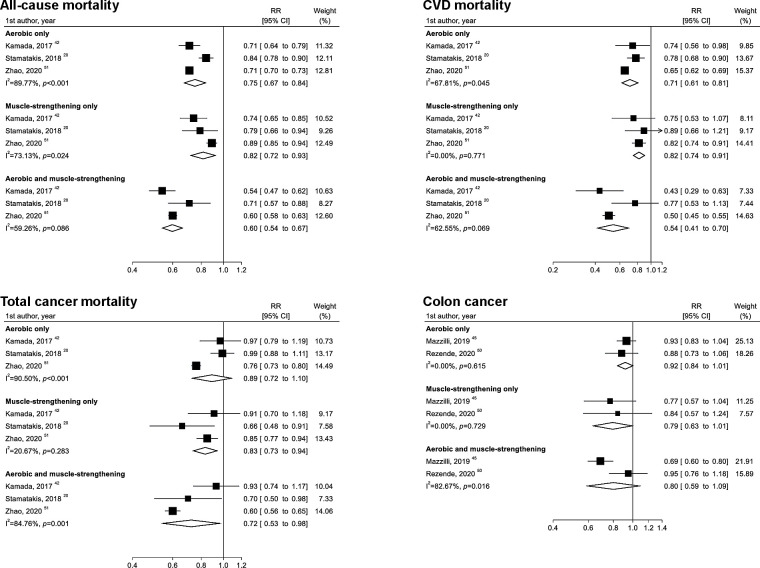
Objective: To quantify the associations between muscle-strengthening activities and the risk of non-communicable diseases and mortality in adults independent of aerobic activities. Design: Systematic review and meta-analysis of prospective cohort studies. Data sources: MEDLINE and Embase were searched from inception to June 2021 and the reference lists of all related articles were reviewed. Eligibility criteria for selecting studies: Prospective cohort studies that examined the association between muscle-strengthening activities and health outcomes in adults aged ≥18 years without severe health conditions. Results: Sixteen studies met the eligibility criteria. Muscle-strengthening activities were associated with a 10–17% lower risk of all-cause mortality, cardiovascular disease (CVD), total cancer, diabetes and lung cancer. No association was found between muscle-strengthening activities and the risk of some site-specific cancers (colon, kidney, bladder and pancreatic cancers). J-shaped associations with the maximum risk reduction (approximately 10–20%) at approximately 30–60 min/week of muscle-strengthening activities were found for all-cause mortality, CVD and total cancer, whereas an L-shaped association showing a large risk reduction at up to 60 min/week of muscle-strengthening activities was observed for diabetes. Combined muscle-strengthening and aerobic activities (versus none) were associated with a lower risk of all-cause, CVD and total cancer mortality. Conclusion: Muscle-strengthening activities were inversely associated with the risk of all-cause mortality and major non-communicable diseases including CVD, total cancer, diabetes and lung cancer; however, the influence of a higher volume of muscle-strengthening activities on all-cause mortality, CVD and total cancer is unclear when considering the observed J-shaped associations. Systematic review registration: PROSPERO CRD42020219808.
Overview
The claims and statistics of this paper haven’t been checked yet.
Free: it reads the open-access text and checks the first 5 claims that cite a source we can check. Create a free account to check every claim.
Integrity signals
Registry
Cites
Statistics
Figures
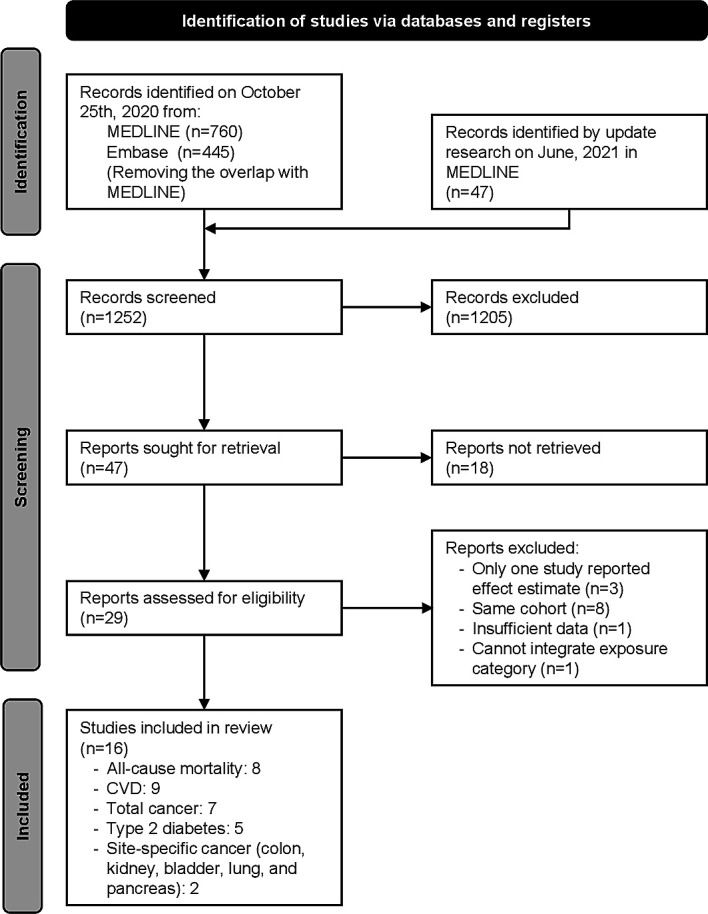
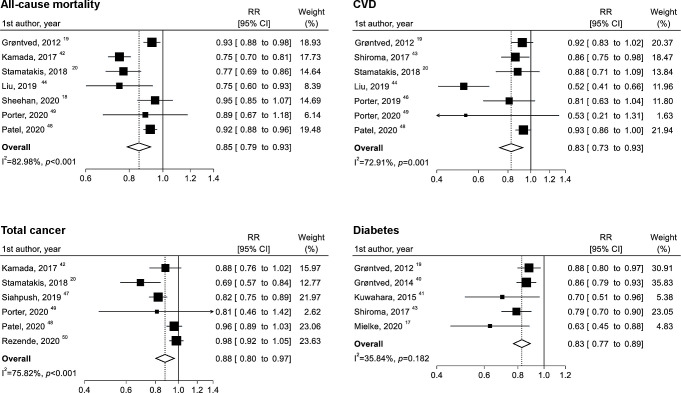
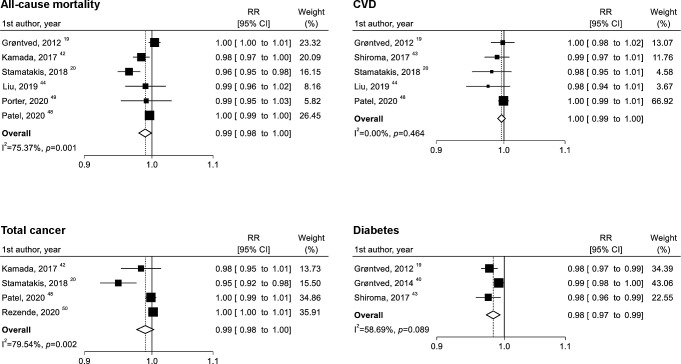
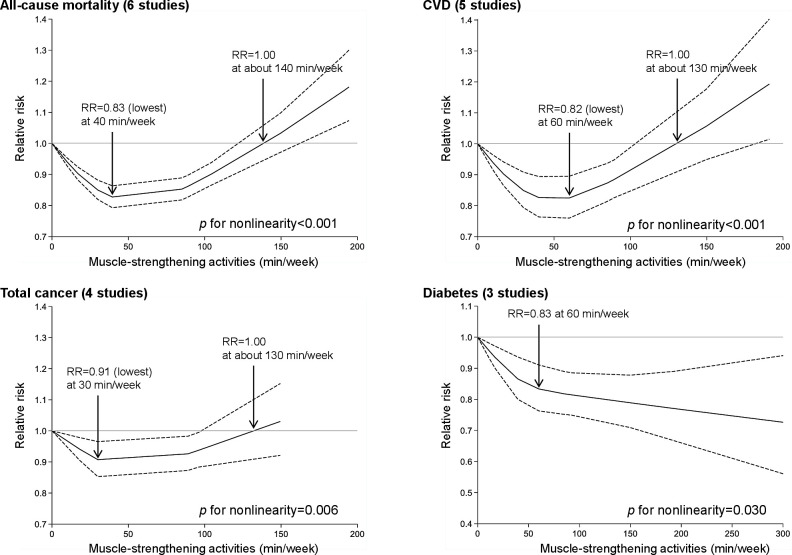
Verification
Claims the paper makes
The claims and statistics of this paper haven’t been checked yet.
Free: it reads the open-access text and checks the first 5 claims that cite a source we can check. Create a free account to check every claim.
Claims other papers make about this one
Each is checked against this paper’s own text: does it say what the citing paper says it does?
In the citing paper
“although both MVPA and strengthening activities are associated with improvements in cardiometabolic health and mortality risk, it is the combination of the two that provides the greatest effects.[7][8][9]”
From Exercise benefits in cardiovascular diseases: From mechanisms to clinical implementation (2023) · cites this paper as [7]
In the citing paper
“17% lower risk of CVD mortality with 40-60 min/ week of this type of activity).7”
From Exercise benefits in cardiovascular diseases: From mechanisms to clinical implementation (2023) · cites this paper as [7]
Self-check
Percentages, sums and reported differences re-computed from the paper’s own numbers.
The self-check needs the paper’s full text.
Citations
Cites
The PRISMA 2020 statement: An updated guideline for reporting systematic reviews
Page, M. J., McKenzie, J. E., Bossuyt, P. M., Boutron, I., Hoffmann, T. C., Mulrow, C. D., Shamseer, L., Tetzlaff, J. M., Akl, E. A., Brennan, S. E., et al. (2021) · BMJ · doi:10.1136/bmj.n71 · Cited by 108,283
Measuring inconsistency in meta-analyses
Higgins, J. P. T., Thompson, S. G., Deeks, J. J., & Altman, D. G. (2003) · BMJ · doi:10.1136/bmj.327.7414.557 · Cited by 63,139
Bias in meta-analysis detected by a simple, graphical test
Egger, M., Smith, G. D., Schneider, M., & Minder, C. (1997) · BMJ · doi:10.1136/bmj.315.7109.629 · Cited by 56,722
Meta-analysis in clinical trials
DerSimonian, R., & Laird, N. (1986) · Controlled Clinical Trials · doi:10.1016/0197-2456(86)90046-2 · Cited by 39,552 · cited 2×
“23 When the included studies had two or more exposed groups, the effect estimates among the exposed groups were synthesised to obtain a pooled effect estimate using a fixed-effects model with the inverse variance method.”
Dermyshi, E., Wang, Y., Yan, C., Hong, W., Qiu, G., Gong, X., & Zhang, T. (2017) · Neonatology · doi:10.1159/000454668 · Cited by 24,451
Meta-analysis of Observational Studies in Epidemiology<SUBTITLE>A Proposal for Reporting</SUBTITLE>
Stroup, D. F. (2000) · JAMA · doi:10.1001/jama.283.15.2008 · Cited by 20,623
(2014) · Medical Entomology and Zoology · Cited by 17,633
World Health Organization 2020 guidelines on physical activity and sedentary behaviour
Bull, F. C., Al-Ansari, S. S., Biddle, S., Borodulin, K., Buman, M. P., Cardon, G., Carty, C., Chaput, J.-P., Chastin, S., Chou, R., et al. (2020) · British Journal of Sports Medicine · doi:10.1136/bjsports-2020-102955 · Cited by 11,657
GRADE guidelines: 1. Introduction—GRADE evidence profiles and summary of findings tables
Guyatt, G., Oxman, A. D., Akl, E. A., Kunz, R., Vist, G., Brozek, J., Norris, S., Falck-Ytter, Y., Glasziou, P., & deBeer, H. (2011) · Journal of Clinical Epidemiology · doi:10.1016/j.jclinepi.2010.04.026 · Cited by 10,681
The Physical Activity Guidelines for Americans
Piercy, K. L., Troiano, R. P., Ballard, R. M., Carlson, S. A., Fulton, J. E., Galuska, D. A., George, S. M., & Olson, R. D. (2018) · JAMA · doi:10.1001/jama.2018.14854 · Cited by 9,755
Cited by
Items 101–200 of 307
Paravlic, A. H., Šlosar, L., Abazović, E., & Marušič, U. (2023) · Annals of Medicine · doi:10.1080/07853890.2023.2230886 · Cited by 6
“…osteoporosis, osteoarthritis, etc.), metabolic diseases (e.g. obesity, diabetes), and cardio-cerebral vascular system diseases (e.g. coronary artery disease and stroke survivors), lower levels of muscular strength were found to be a significant predictor of poorer rehabilitation outcomes [3,5–7].”
BackgroundExploring Women’s Psychological and Emotional Experiences in Long-Term Strength Training Adherence
Marrella, G. (2023) · American Journal of Health Education · doi:10.1080/19325037.2023.2277934 · Cited by 8
“27,28 Momma et al. 29 conducted a systematic review investigating strength training exercise and non-communicable disease risk.”
BackgroundMultivariable analysis for predicting lower limb muscular strength with a hip-joint exoskeleton
Kang, B., Lee, C., Kim, D., Lee, H.-J., Lee, D., Jeon, H. G., Kim, Y., & Kim, D. (2024) · Frontiers in Bioengineering and Biotechnology · doi:10.3389/fbioe.2024.1431015 · Cited by 6
Han, Y., & Kim, Y. S. (2025) · Journal of Obesity & Metabolic Syndrome · doi:10.7570/jomes24029 · Cited by 6
“20 Our research found that higher RGS levels are associated with a lower prevalence of T2DM.”
Wang, Y., Du, X., & Wang, Q. (2026) · Frontiers in Cardiovascular Medicine · doi:10.3389/fcvm.2026.1746819 · Cited by 6
“Recent meta-analyses show that participating in RT at moderate intensity (two to three sessions per week) is linked to a 10%–20% decrease in cardiovascular mortality and the incidence of CVD events, independent of aerobic exercise (13).”
A Strong Approach for Overcoming the FoRE: Fear of Resistance Exercise
Faigenbaum, A. D., Kamis, D., & Rebullido, T. R. (2024) · ACSMʼs Health & Fitness Journal · doi:10.1249/fit.0000000000000958 · Cited by 6
Taul-Madsen, L., Hvid, L. G., Riis, H. C., Broløs, M. K., Lundbye‐Jensen, J., & Dalgas, U. (2024) · Multiple Sclerosis Journal · doi:10.1177/13524585241305496 · Cited by 6
“31 Also, RT is known to reduce the risk of cardiovascular diseases and all-cause mortality, 32 hence the RT group in this study has obtained an improvement in their overall health status, as they increased their muscle strength by 12%, which is comparable to previous studies.”
Training Strategies to Optimize Cardiovascular Durability and Life Expectancy.
O’Keefe, J. H., O’Keefe, E. L., Eckert, R., & Lavie, C. J. (2023) · PubMed Central · Cited by 6
Santos, A. T., Costa, C. M., Delgado-Márquez, L., & Banheiro, R. M. (2023) · International Journal of Environmental Research and Public Health · doi:10.3390/ijerph20186714 · Cited by 5
Could resistance training prevent or improve work-related musculoskeletal disorders among surgeons?
Vijay, A., Brennan, P. A., Fagbohun, M., Oeppen, R. S., & Parry, D. (2024) · Annals of The Royal College of Surgeons of England · doi:10.1308/rcsann.2024.0089 · Cited by 8
“This information could be motivational for someone looking for the bene fi ts of RT.”
InfluentialÉdouard, P., Nunes, J. P., Koral, J., Thornton, J. S., Kemp, J. L., & Gronwald, T. (2023) · British Journal of Sports Medicine · doi:10.1136/bjsports-2023-107234 · Cited by 5
Lifestyle medicine pillars for women's heart health
Geyer, C., McHugh, J., Wasfy, M. M., & Frates, B. (2025) · American Journal of Preventive Cardiology · doi:10.1016/j.ajpc.2025.101085 · Cited by 4
“50 min per week [71], or around 2 – 3 sessions/week [58]) and closer to the risk of those doing no muscle strengthening activity at all.”
Measuring up: Is frequency enough for assessing adherence to muscle-strengthening guidelines?
Brummer, J., Herbolsheimer, F., Hoffmann, E., Stang, P., Steindorf, K., & Köllner, M. G. (2025) · Journal of Public Health · doi:10.1007/s10389-025-02596-w · Cited by 5
Li, G., Zhang, Y., Wu, Q., Shi, B., & Chen, D. (2025) · Frontiers in Cardiovascular Medicine · doi:10.3389/fcvm.2025.1612056 · Cited by 4
Rúa-Alonso, M., Rial-Vázquez, J., Nine, I., Fariñas, J., Revuelta-Lera, B., García, M. A. G., & Iglesias‐Soler, E. (2025) · Scientific Reports · doi:10.1038/s41598-025-14379-0 · Cited by 5
Korman, N., Stanton, R., Trott, M., Stubbs, B., Baker, A., Butler, C., Siskind, D. J., Rosenbaum, S., Firth, J., Martland, R., et al. (2025) · Australian & New Zealand Journal of Psychiatry · doi:10.1177/00048674251361681 · Cited by 4
“…2018), RT may offer critical health benefits, including reduced mortality and lower risks of cancer, type 2 diabetes and cardiovascular disease (Giovannucci et al., 2021; Momma et al., 2022), which are all significant threats to the health of people with psychotic disorders (Firth et al., 2019).”
Risk factors associated with weak and asymmetric handgrip strength in older Chinese adults
Weng, M., Pu, J., Wang, B., & Wang, Y. (2023) · American Journal of Human Biology · doi:10.1002/ajhb.24007 · Cited by 4
“Adults who experience falls or who suffer from asthma usually avoid exercise such as resistance training, which is beneficial in improving or maintaining both muscle mass and strength in middle-aged and older adults (Momma et al., 2022).”
BackgroundLai, B. W., Chaviano, K., Richman, J., Ahmad, M., Wright, A., Young, R., Davis, D., Rimmer, J. H., Madan‐Swain, A., & Chewning, J. H. (2024) · JMIR Research Protocols · doi:10.2196/64879 · Cited by 4
Nine, I., Padrón-Cabo, A., Carballeira, E., Rial-Vázquez, J., Rúa-Alonso, M., Fariñas, J., García, M. A. G., & Iglesias‐Soler, E. (2024) · PLoS ONE · doi:10.1371/journal.pone.0311524 · Cited by 4
Saketkoo, L. A., Obi, O. N., Varga, J. T., Poole, J. L., Varjú, C., Alexanderson, H., Paik, J. J., Pettersson, H., Regardt, M., Saygın, D., et al. (2024) · Journal of Precision Respiratory Medicine · doi:10.2500/jprm.2024.7.240003 · Cited by 4
Physical Activity, Steps, and Cardiovascular Disease: A Literature Review
Saldana, G., Liu, L. L., & German, C. A. (2025) · Heart and Mind · doi:10.4103/hm.hm-d-24-00094 · Cited by 4
Balance and Strength Measures are Associated With Mortality in Older Men
Paterson, J., Trevenen, M., Hill, K., Almeida, O. P., Yeap, B. B., Golledge, J., Hankey, G. J., & Flicker, L. A. (2023) · Journal of the American Medical Directors Association · doi:10.1016/j.jamda.2023.03.038 · Cited by 4
Exercise and tumor proteome: insights from a neuroblastoma model
Plaza‐Florido, A., Gálvez, B. G., López, J. A., Santos‐Lozano, A., Zazo, S., Rincón‐Castanedo, C., Martín-Ruiz, A., Lumbreras, J., Terron-Camero, L. C., López‐Soto, A., et al. (2024) · Physiological Genomics · doi:10.1152/physiolgenomics.00064.2024 · Cited by 4
Ojha, A., & Watve, M. (2024) · Qeios · doi:10.32388/gl52db · Cited by 4
Resistance Training is Medicine: Focusing on the Positive Impact on Metabolic Syndrome Risk Factors
Jung, D. (2025) · The Asian Journal of Kinesiology · doi:10.15758/ajk.2025.27.2.36 · Cited by 3
Mendoza-Puelma, J., Melo, J. B., Ferrari, G., Hernández, P. A. F., Espinoza-Salinas, A., Valdívia-Moral, P., Castillo-Paredes, A., Jofré‐Saldía, E., & Farías‐Valenzuela, C. (2025) · BMC Sports Science Medicine and Rehabilitation · doi:10.1186/s13102-025-01181-8 · Cited by 4
“High muscle strength is linked to a reduced risk of cardiometabolic diseases and mortality [7], with hand-grip strength (HGS) - both absolute (HGS-A) and relative (HGS-R)– widely recognized as predictors of overall health [8, 9].”
Higher central arterial wall viscosity and stiffness in resistance‐trained young men
Kawano, H., Nakamura, N., Tanisawa, K., Konishi, M., Miyashita, M., Yamamoto, K., Sakamoto, S., & Miyachi, M. (2025) · Physiological Reports · doi:10.14814/phy2.70526 · Cited by 3
“Indeed, a previous systematic review reported that a longer duration of muscle-strengthening activities was associated with a higher risk of cardiovascular disease mortality (Momma et al., 2022).”
Koźlenia, D., Szafraniec, R., Jarosz, J., Mazur, L., & Domaradzki, J. (2026) · Healthcare · doi:10.3390/healthcare14020161 · Cited by 3
“From a health perspective, muscular strength is increasingly recognized as an important marker of functional capacity and future cardiometabolic health, rather than solely a performance-related attribute [8,9].”
Kompf, J. M., & Rhodes, R. E. (2023) · Measurement in Physical Education and Exercise Science · doi:10.1080/1091367x.2023.2258869 · Cited by 3
“Momma et al. (2022) found that the lowest relative risk for mortality, CVD mortality and morbidity, and cancer was at 40 min/week, 60 min/week, and 30 min/week, respectively (Momma et al., 2022).”
BackgroundZhang, Q., Huang, K., Shi, X., Jin, H., Hou, D., Dong, Z., Chen, Z., Gong, J., Bai, T., Xu, Z., et al. (2024) · Scientia Sinica Vitae · doi:10.1360/ssv-2024-0307 · Cited by 4
Zhang, Y., DeFina, L. F., Leonard, D. S., Chen, B., Hébert, E. T., Barlow, C. E., Pavlovic, A., & Kohl, H. W. (2024) · Journal of Aging and Health · doi:10.1177/08982643241307757 · Cited by 3
“Previous literature suggests that MSA is independently related to multiple health outcomes, such as decreased risk of all-cause mortality, cardiometabolic diseases, depression and anxiety, and enhanced muscle hypertrophy and bone mineral density (Bennie et al., 2020; Momma et al., 2022).”
Taul-Madsen, L., Dalgas, U., Riis, H. C., Broløs, M. K., Lundbye‐Jensen, J., & Hvid, L. G. (2025) · Multiple Sclerosis Journal - Experimental Translational and Clinical · doi:10.1177/20552173251326171 · Cited by 3
“34”
Herranen, P., Waller, K. L., Joensuu, L., Palviainen, T., Laakkonen, E. K., Kaprio, J. A., & Sillanpää, E. (2025) · Journal of the American Heart Association · doi:10.1161/jaha.124.036941 · Cited by 3
“26 Numerous studies have also established a robust link between regular PA and reduced mortality risk, 21,27,28 which can be attributed to the beneficial effects of PA, including improvements in cardiorespiratory fitness, increased insulin sensitivity, and glycemic control, which are closely…”
Prokopidis, K., Cacciatore, S., Piaggi, P., Vetrano, D. L., & Schlögl, M. (2025) · European Geriatric Medicine · doi:10.1007/s41999-025-01327-4 · Cited by 3
The association between marijuana and e-cigarette use and exercise behavior among adults
Boutouis, S., Wymbs, F. A., & Franz, B. A. (2024) · Preventive Medicine Reports · doi:10.1016/j.pmedr.2024.102668 · Cited by 4
Ortega, J. A. F., Cuartas, L. A. H., Prieto, J. R., Pinzón, N. P. G., & Becerra-Patiño, B. A. (2024) · Retos · doi:10.47197/retos.v59.107090 · Cited by 3
“For example, several studies report a loss of strength (McLeod et al., 2016; Momma et al., 2022).”
BackgroundDai, J. M., Dai, W., & Li, W. (2025) · European Journal of Preventive Cardiology · doi:10.1093/eurjpc/zwaf061 · Cited by 6
Maruhashi, T., & Higashi, Y. (2024) · Hypertension Research · doi:10.1038/s41440-024-01868-4 · Cited by 3
“…the dose-response associations of resistance training with mortality and CVD are curvilinear, with the maximal bene fi t occurring at 30 – 60 min per week, suggesting that excessive muscle-strengthening activity is not necessary to gain the health bene fi ts of muscle-strengthening activities [4].”
Wang, M., Collings, P. J., Jang, H., Chen, Z., Luo, S., Yeung, S. L. A., Sharp, S. J., Brage, S., & Kim, Y. (2024) · Journal of Hypertension · doi:10.1097/hjh.0000000000003900 · Cited by 2
“It would appear to be plausible, since observational studies [27–29] and randomized controlled trials [30–32] have demonstrated demonstrated that higher muscle strength is associated with favorable levels of cardiometabolic risk factors including”
Relationship between LE8 score and peripheral arterial disease from NHANES perspective
Liu, Z., Zhang, Z., & Li, T. (2025) · VASA · doi:10.1024/0301-1526/a001169 · Cited by 2
Fernández‐Rodríguez, R., Martínez‐Vizcaíno, V., Reina‐Gutiérrez, S., Bizzozero‐Peroni, B., Amaro‐Gahete, F. J., ORTEGA, J. F., & Torres-Costoso, A. I. (2025) · European Journal of Clinical Investigation · doi:10.1111/eci.70028 · Cited by 3
“4 Indeed, the World Health Organization has strongly recommended regular PA for all adults, highlighting further benefits on CVD risk 5 in a dose-dependent manner, 6,7 such as those reported in endothelial function, blood lipid profile, inflammatory processes, and thrombosis.”
Mohan, N. M., Khaldi, N., Keogh, B., & Miller, A. (2025) · BMJ Nutrition Prevention & Health · doi:10.1136/bmjnph-2024-001050 · Cited by 2
Middle Aged Women and their Physical Activity Leisure Selves
Elliott, A., Turner, A. N., & Volante, M. (2025) · International Journal of the Sociology of Leisure · doi:10.1007/s41978-025-00180-w · Cited by 2
“…is well placed to affect improved health outcomes in this population and together with a wide array of governmental health messaging (Atkin et al., 2022; Beland et al., 2020; Chavez et al., 2021; Momma et al., 2022; Pub-1 lic Health England, 2020) offers substantial scope for participation.”
Body Image as a Case Topic for Eliciting Sensitive Health Experiences in Men
Zucchelli, F., Ahuja, L., Herring, B., Gentili, C., Smith, J. E. W., & Lewis‐Smith, H. (2025) · Qualitative Health Research · doi:10.1177/10497323251342923 · Cited by 2
Ashari, R. S., Sabirin, R. M., Merlinda, S. T. B., Pratiwi, D. A., Tsania, M. N., & Wibowo, R. A. (2025) · BMJ Open · doi:10.1136/bmjopen-2025-102211 · Cited by 2
Physiological basis for recommending changes to the physical activity guidelines
Skinner, J. S., & Durstine, J. L. (2025) · Sports Medicine and Health Science · doi:10.1016/j.smhs.2025.09.006 · Cited by 3
“14 Therefore, a strong argument is made emphasizing both aerobic and strength activities in PA guidelines.”
Different Intensities of Exercise and Cardiovascular Performance: A Review
Davoodi, M., & Zaravar, F. (2025) · Galen Medical Journal · doi:10.31661/gmj.v14i.3722 · Cited by 2
Li, H., Zhang, Z., Sun, M., & Xu, S. (2025) · Clinical Hypertension · doi:10.5646/ch.2025.31.e34 · Cited by 2
“Reducing sedentary time is thus a foundational priority in CVD prevention [56-58].”
Risk Factors Non-Communicable Diseases in Children and Adolescents
Anisimova, A. O., & Рычкова, Л. В. (2025) · Ural Medical Journal · doi:10.52420/umj.24.5.133 · Cited by 2
Fialho, T. C., Abrantes, L. C. S., Martins, K., Carvalho, R. P. R., Ramírez-López, C. J., de Sousa, A. F. R., Guimarães‐Ervilha, L. O., Oliveira, L. A., Lacerda, G. F., Moreira, A., et al. (2025) · Nutrients · doi:10.3390/nu17223587 · Cited by 3
“Resistance exercise (RE), characterized by muscle contractions against an external load, promotes physiological adaptations in both skeletal and cardiac muscle, demonstrating a functional interaction between these systems in response to physical training [1,2].”
Brummer, J., Herbolsheimer, F., & Köllner, M. G. (2026) · Sport Sciences for Health · doi:10.1007/s11332-026-01663-3 · Cited by 2
Brooks, A. M., Lane, A. D., Kirkham, A. A., & Fairman, C. M. (2026) · Sports Medicine - Open · doi:10.1186/s40798-026-00994-2 · Cited by 2
“Observational data suggest a potential J-shaped relationship, with lower cardiovascular risk observed with up to 60 min per week of resistance exercise, but risk reduction plateauing or even increasing at ≥ 130 min per week [153].”
Zhou, T., Su, S., Yuan, C., Jiang, D., Qiu, Y., Xiao, J., Lu, X., Gu, D., & Liu, F. (2026) · Medicine Plus · doi:10.1016/j.medp.2026.100137 · Cited by 2
One more rep! The case for resistance training in young cancer survivors
Lakičević, N., Ficarra, S., Ortega‐Gómez, S., Jiménez‐Pavón, D., Asimakopoulou, Z., Vantarakis, A., Tavares, P., Vaz, V., Thaller, J., Papakonstantinou, S., et al. (2023) · Frontiers in Oncology · doi:10.3389/fonc.2023.1284052 · Cited by 2
Nouni-García, R., Carbonell-Soliva, Á., Orozco‐Beltrán, D., López‐Pineda, A., Tomás-Rodríguez, M. I., Gil-Guillén, V. F., Quesada, J. A., & Carratalá‐Munuera, C. (2023) · Medicina · doi:10.3390/medicina59122187 · Cited by 2
“However, previous studies have associated certain physiotherapy interventions with a decrease in the risk factors associated with higher mortality [10,13–15].”
BackgroundAssociations Between Resistance Training and All-Cause Mortality: NHANES 1999-2006
Booker, R., Wong, M., Boyer, W. R., Gorzelitz, J., Carnethon, M. R., & Alexandria, S. J. (2024) · American Journal of Lifestyle Medicine · doi:10.1177/15598276241248107 · Cited by 2
Cheatham, S. W., Sutton, B. G., Ambler-Wright, T., Cheatham, C. J., & Ludwig, C. M. (2025) · International Journal of Sports Physical Therapy · doi:10.26603/001c.132493 · Cited by 2
Islam, J., Dixon, C., O'Rourke, M., & Räisänen, A. M. (2025) · The Journal of Strength and Conditioning Research · doi:10.1519/jsc.0000000000005147 · Cited by 2
Hyperinsulinemia: Diagnostic and Treatment Considerations
Hunt, C. W., & DeBellis, J. (2022) · Obesity and Diabetes Research · doi:10.47275/2692-0964-118 · Cited by 1
The Preparticipation Physical Examination for American Football Athletes
Leiszler, M. S., Holtz, J., & Ward, C. (2023) · HSS Journal® The Musculoskeletal Journal of Hospital for Special Surgery · doi:10.1177/15563316231174439 · Cited by 1
“There are numerous benefits to players who participate in competitive athletics, including the aerobic and strength benefits associated with training and competition [4,19].”
BackgroundBouger plus, bien vieillir : la prescription d’activité physique aux personnes aînées
Thornton, J. S., Morley, W. N., & Sinha, S. K. (2025) · Canadian Medical Association Journal · doi:10.1503/cmaj.231336-f · Cited by 1
“…d’exercices de résistance 60 minutes par semaine est associée à une réduction de 27 % du risque de mortalité toutes causes confondues 15 , et que la pratique d’exercices de raffermissement musculaire de 30–60 minutes par semaine est associée à une réduction de 10 %–20 % de ce même risque 16 .”
Efeitos da musculação na saúde e bem-estar de pessoas sedentárias
Nimet, J., Marosti, A. R., & Barbosa, C. P. (2025) · Arquivos do Mudi · doi:10.4025/arqmudi.v29i1.75704 · Cited by 4
“Segundo estudo de Momma et al. (6) , a realização concomitante de exercícios de musculação e exercícios aeróbicos (de moderados a vigorosos) mostrou benefícios adicionais, além de diminuir o risco de morte por doenças cardiovasculares e cânceres.”
Pinto, M. D., Ughini, C. C., Nunes, J. P., Cadore, E. L., & Pinto, R. S. (2025) · The Journal of Strength and Conditioning Research · doi:10.1519/jsc.0000000000005045 · Cited by 1
“Resistance training can also attenuate several cardiometabolic risk factors and mental disorders and is associated with reduced all-cause and cancer mortality (27).”
Morishima, T., Mizuno, S., Murakami, G., Yamazaki, R., & Ochi, E. (2025) · Clinical Physiology and Functional Imaging · doi:10.1111/cpf.70014 · Cited by 1
“Moreover, recent studies have reported that when the duration of resistance exercise exceeds 130 – 140 min per week, its positive effects on overall mortality, cardiovascular disease, and cancer diminish, and the risks increase (Momma et al., 2022).”
Cheng, H., Jia, Z., Chen, J., Xie, Y. J., Hernández, J., & Wang, H. (2025) · Environmental Health and Preventive Medicine · doi:10.1265/ehpm.24-00351 · Cited by 1
“…exercise prescriptions such as aerobic and resistance training can enhance muscle strength and reduce the risk of functional disabilities [9, 47], which may require nutritional strategies to optimise protein intake and improve dietary quality for supporting muscle and cardiovascular health…”
Time-Efficient Resistance Training: Bridging Science and Practical Implementation
Gonzalez, A. M., Harhash, T. S., Krawczyk, M. P., & Wang, D. (2025) · Journal of Fitness Wellness and Human Performance · doi:10.70834/jfwhp-25-0002 · Cited by 1
Lee, S., Choi, Y., & Kim, Y. S. (2025) · Journal of Diabetes & Metabolic Disorders · doi:10.1007/s40200-025-01675-9 · Cited by 1
Kulnik, S. T., Salbrechter, S., Radwanovsky, S., Garstenauer, U., Ebner, M., Fuhrmeister, T., Stainer-Hochgatterer, A., Wurhofer, D., & Roth, M. (2025) · Research Involvement and Engagement · doi:10.1186/s40900-025-00766-4 · Cited by 1
“However, the evidence-base for preventive and health benefits of muscle strengthening independent of aerobic PA has been growing, including new insights on all-cause mortality and cardiovascular risk reduction [34], and this has also been acknowledged in the latest WHO PA recommendations [4].”
Exercise Professionals' Strength Training Attitudes, Behaviors, and Knowledge: A Survey
McCall, C. H., Handlery, K., Stock, M. S., & Handlery, R. (2025) · The Journal of Strength and Conditioning Research · doi:10.1519/jsc.0000000000005248 · Cited by 2
“Strength training can also decrease blood pressure (12), improve dyslipidemia (13), improve depression (52), and decrease risk of all-cause mortality (32).”
Tumor Signatures of Physical Fitness: Insights from a Preclinical Model
Santos‐Lozano, A., Plaza‐Florido, A., Carrera‐Bastos, P., Pérez‐Prieto, I., Hernández‐Belmonte, A., Kamalinejad, F., Gálvez, B. G., López, J. A., Lumbreras, J., Rincón‐Castanedo, C., et al. (2025) · Medicine & Science in Sports & Exercise · doi:10.1249/mss.0000000000003836 · Cited by 1
Wang, X., Zhao, H., Liang, L., Gao, Y., Song, L., & Shi, H. (2025) · Cancer Control · doi:10.1177/10732748251375518 · Cited by 1
“41 Recent foundational studies are actively investigating new potential therapeutic targets to combat muscle wasting in lung cancer patients.”
Montemurro, A., Ruiz-Cárdenas, J. D., Gruet, M., & Souron, R. (2025) · European Journal of Applied Physiology · doi:10.1007/s00421-025-06010-x · Cited by 1
Haber, M., Nasr, M. S., Etri, H. A., & Nasr, S. (2025) · Frontiers in Cardiovascular Medicine · doi:10.3389/fcvm.2025.1664802 · Cited by 2
The Female Strengthspan: A Life Course Perspective on Resistance Exercise
Faigenbaum, A. D., Giagio, S., & Rebullido, T. R. (2025) · ACSMʼs Health & Fitness Journal · doi:10.1249/fit.0000000000001123 · Cited by 1
Taul-Madsen, L., Hvid, L. G., Sellebjerg, F. T., Christensen, J. R., Ratzer, R. L., Sejbæk, T., Svendsen, K. B., Papp, V., Chow, H. H., Lundbye‐Jensen, J., et al. (2025) · Journal of science and medicine in sport · doi:10.1016/j.jsams.2025.12.013 · Cited by 1
Resistance Training as a Non-Pharmacological Strategy in Chronic Diseases
Żukowiecka-Sęga, D., Porada, D., Tłoczek, W., Twardowska, D., Śliwa, W., Jelonek, B., Tomczak, B., Wandzel, M., Topolski, K., & Klubikowska, K. (2026) · Quality in Sport · doi:10.12775/qs.2026.52.69464 · Cited by 2
The ABCs of cardiovascular disease prevention: communicating what we know in 2026
Goren, L. R., Peng, A. W., Razavi, A. C., Blaha, M. J., Blumenthal, R. S., & Troy, A. L. (2026) · American Journal of Preventive Cardiology · doi:10.1016/j.ajpc.2026.101570 · Cited by 2
“Resistance training does not need to be time intensive, with at least two 30-minute sessions per week demonstrating benefit [87].”
Vondrasek, J. D., Brown, J. E., Grosicki, G. J., & Flatt, A. A. (2026) · The Journal of Strength and Conditioning Research · doi:10.1519/jsc.0000000000005363 · Cited by 1
Wu, S., Yu, L., Liu, M., & 董波 (2026) · Clinical & Translational Oncology · doi:10.1007/s12094-026-04367-9 · Cited by 1
“The health benefits are more pronounced when combined with aerobic exercise, and this protective effect is independent of aerobic activity [34].”
Brummer, J., Herbolsheimer, F., Fyfe, J. J., & Steindorf, K. (2026) · Frontiers in Public Health · doi:10.3389/fpubh.2026.1872337 · Cited by 1
“These activities also provide a range of additional health benefits (13–15), including improvements in risk factors for cardiovascular disease such as blood pressure and cardiorespiratory fitness (16–19), body composition (16, 20, 21), and musculoskeletal health (22, 23).”
InfluentialPham, A. T., Stylianou, M., Duncombe, S. L., Brown, W. J., Burton, N. W., & Mielke, G. I. (2026) · Journal of science and medicine in sport · doi:10.1016/j.jsams.2026.07.016 · Cited by 1
Kasović, M., Oreški, A., Vespalec, T., Štefan, A., & Štefan, L. (2024) · Journal of Sports Sciences · doi:10.1080/02640414.2024.2322250 · Cited by 1
“Although all components of physical fitness are important, cardiorespiratory and muscular fitness have been the strongest predictors of morbidity and premature mortality in both men and women, irrespective of other risk factors (Imboden et al., 2018; Momma et al., 2022).”
BackgroundHonda, T., Hata, J., Shibata, M., Sakata, S., Furuta, Y., Oishi, E., Kitazono, T., & Ninomiya, T. (2024) · BMJ Public Health · doi:10.1136/bmjph-2023-000186 · Cited by 1
Self-citationPhysical Activity and Its Effects on Cancer Prevention, Survival Rates, and Recovery
Dubińska, M., Paduch-Jakubczyk, W., Bilska, W., Ciułek, U., Dobosz, A., & Zduńczyk, W. (2024) · Quality in Sport · doi:10.12775/qs.2024.22.54321 · Cited by 1
López-Ruiz, I., Ruíz-Poveda, F. L., Masía, M. D., Elvar, J. R. H., & González-Gálvez, N. (2025) · Complementary Therapies in Clinical Practice · doi:10.1016/j.ctcp.2025.101960 · Cited by 2
Lee, H. A., Alnemri, A. G., Anaspure, O. S., Khela, H. S., Lenz, T., & Kelly, J. D. A. (2025) · Orthopaedic Journal of Sports Medicine · doi:10.1177/23259671251330585 · Cited by 1
Lim, S., Tan, J., & Ajani, A. T. (2025) · Journal of World Future Medicine Health and Nursing · doi:10.70177/health.v3i1.1902 · Cited by 3
“Collaborative international efforts will be essential to ensure that AI technologies are used effectively and equitably to prevent and control diseases worldwide (Momma, 2022).”
Strength training for older adults
小山, 真., & 山田, 実. (2024) · Nippon Ronen Igakkai Zasshi Japanese Journal of Geriatrics · doi:10.3143/geriatrics.61.271 · Cited by 1
Resistance (exercise) is far from futile: The unheralded benefits of weight training
Phillips, S. M. (2024) · The Conversation · doi:10.64628/aam.x6pnmt64e · Cited by 1
Losciale, J. M. (2025) · cIRcle (University of British Columbia) · doi:10.14288/1.0447249 · Cited by 1
Fecchio, R. Y. (2022) · Digital Library of Theses and Dissertations (Universidade de São Paulo) · doi:10.11606/t.39.2022.tde-10112022-172632 · Cited by 1
(2022) · The Nurse Practitioner · doi:10.1097/01.npr.0000884884.08980.16
Author Response to “Pushing the Limits of Strength Training”
Boyle, T., Shailendra, P., Baldock, K. L., Li, L. S. K., & Bennie, J. A. (2022) · American Journal of Preventive Medicine · doi:10.1016/j.amepre.2022.07.016
Prince, S. A., Lang, J. J., Butler, G., Roberts, K. C., Colley, R. C., Giangregorio, L., & El-Kotob, R. (2023) · Promotion de la santé et prévention des maladies chroniques au Canada · doi:10.24095/hpcdp.43.5.01f
Hajdar, A., Abazović, E., & Paravlic, A. H. (2023) · Lecture notes in networks and systems · doi:10.1007/978-3-031-31066-9_67
Exploring proven strategies that enable remote workers to take active breaks during their workday
Tarallo, M. (2023) · Digital Repository Service (Northeastern University) · doi:10.17760/d20481328
Park, D. Y., Kim, Y. S., & Kim, E. (2023) · The Korean Journal of Sports Medicine · doi:10.5763/kjsm.2023.41.4.216
Iterson, E. H. V., & Laffin, L. J. (2024) · British Journal of Sports Medicine · doi:10.1136/bjsports-2023-107566
Physical and mental preparedness for large animal practice
Linden, E. Z. (2024) · American Association of Bovine Practitioners Conference Proceedings · doi:10.21423/aabppro20238887
Metadata
- Authors
- Momma, H., Kawakami, R., Honda, T., & Sawada, S. S.
- Affiliations
- Tohoku University (JP)
- Waseda University (JP)
- Kyushu University (JP)
- Corresponding author
- Momma, Haruki
- Venue
- British Journal of Sports Medicine
- Publisher
- BMJ
- Published
- 2022-02-28
- Volume
- 56
- Issue
- 13
- Pages
- 755-763
- ISSN
- 0306-3674 (ISSN-L)
- 1473-0480
- PMC
- PMC9209691
- OpenAlex
- W4214658204
- Cited by
- 265
- References
- 64
- Citations by year
- 2026: 57 · 2025: 92 · 2024: 44 · 2023: 54 · 2022: 18
- FWCI
- 7.15
- Type
- journal article
- Language
- en
- Open access
- hybrid
- doi.org
- Locations
- British Journal of Sports Medicine (publishedVersion, cc-by)
- PubMed Central (publishedVersion, cc-by)
- PubMed (publishedVersion)
- Funders
- Ministry of Health, Labour and Welfare (JPMH20FA1006)
- Topics
- Health Sciences › Medicine › Public Health, Environmental and Occupational Health › Physical Activity and Health
- Health Sciences › Medicine › Physiology (medical) › Cardiovascular and exercise physiology
- Health Sciences › Medicine › Physiology (medical) › Exercise and Physiological Responses
- Keywords
- muscle-strengthening activity, resistance training, non-communicable diseases, all-cause mortality, cardiovascular disease, cancer risk, diabetes mellitus, lung cancer, J-shaped association, L-shaped association, aerobic exercise, physical activity volume, adults
- MeSH terms
- Noncommunicable Diseases, Adolescent, Adult, Cardiovascular Diseases, Humans, Lung Neoplasms, Muscles, Prospective Studies, Cohort Studies
About these checks
Registry, retraction, Cites and statistics results are computed, not judged, with one exception: a printed reference that no index lists is read once by a model before it counts as a citation error. Claims are extracted by a model and kept only when their quote appears verbatim in the text; each cited source is then checked, with a model’s help, for whether it says what the claim relies on. Those verdicts can be wrong — read the claim’s quote and the cited source before relying on one.
Statistics and arithmetic are recomputed, not judged.
Confidence bands are shown only for fields calibrated on our annotated test set. None is calibrated yet, so no band is shown.
What counts as a claim ›How we measure confidence ›How we check this ›
Are you an author, or do you see a problem with this page? Request a review
Data sources
Bibliographic data: Semantic Scholar, OpenAlex, Crossref.
Contains information from the Semantic Scholar Academic Graph Datasets, made available under the ODC Attribution License (ODC-BY 1.0).
Semantic Scholar’s data is described in: Kinney, R., et al. (2023). The Semantic Scholar Open Data Platform. arXiv:2301.10140.
