

Muscle-strengthening activities are associated with lower risk and mortality in major non-communicable diseases: a systematic review and meta-analysis of cohort studies.
Open accessThe DOI matches its Crossref record; 65 of the 65 references it cites were found in a registry or an index.
Abstract
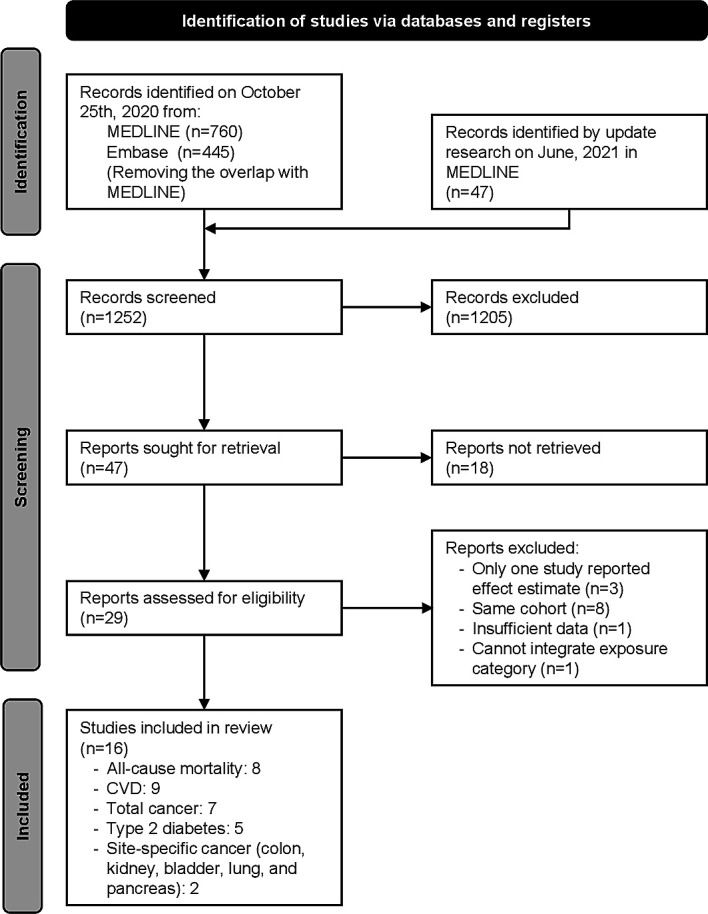
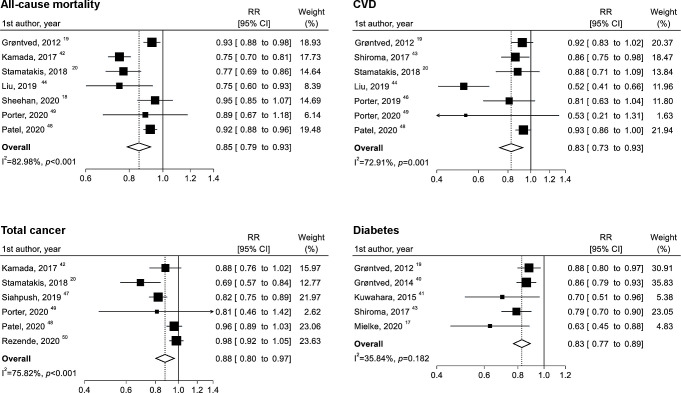
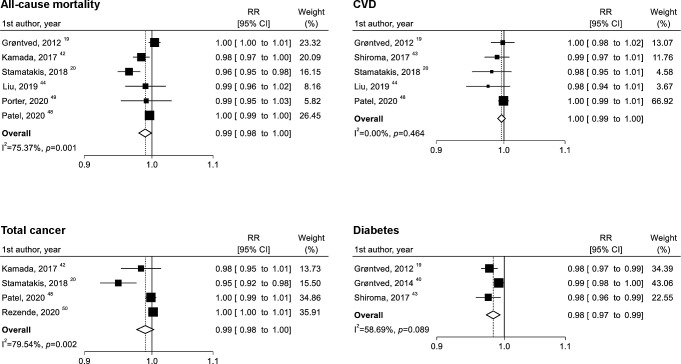
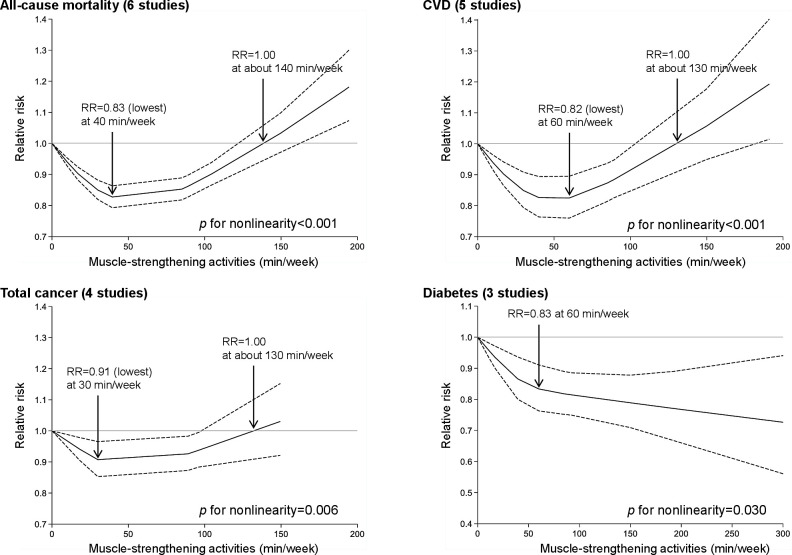
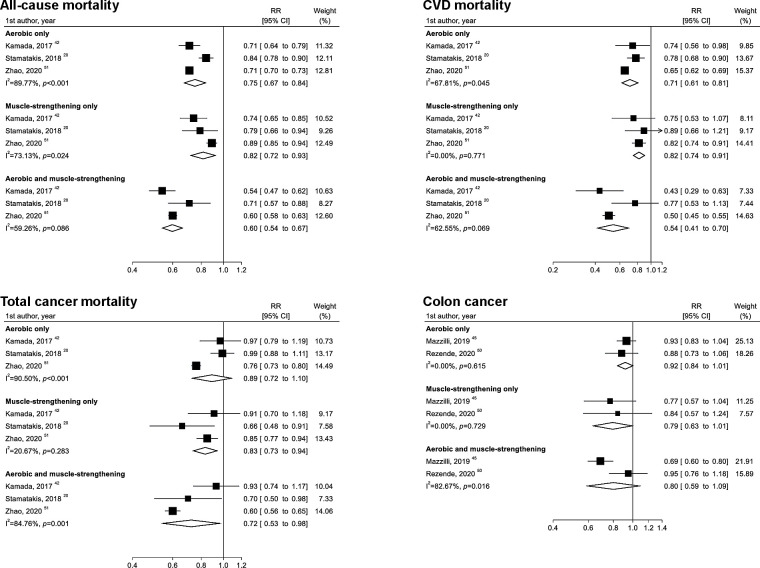
Objective: To quantify the associations between muscle-strengthening activities and the risk of non-communicable diseases and mortality in adults independent of aerobic activities. Design: Systematic review and meta-analysis of prospective cohort studies. Data sources: MEDLINE and Embase were searched from inception to June 2021 and the reference lists of all related articles were reviewed. Eligibility criteria for selecting studies: Prospective cohort studies that examined the association between muscle-strengthening activities and health outcomes in adults aged ≥18 years without severe health conditions. Results: Sixteen studies met the eligibility criteria. Muscle-strengthening activities were associated with a 10–17% lower risk of all-cause mortality, cardiovascular disease (CVD), total cancer, diabetes and lung cancer. No association was found between muscle-strengthening activities and the risk of some site-specific cancers (colon, kidney, bladder and pancreatic cancers). J-shaped associations with the maximum risk reduction (approximately 10–20%) at approximately 30–60 min/week of muscle-strengthening activities were found for all-cause mortality, CVD and total cancer, whereas an L-shaped association showing a large risk reduction at up to 60 min/week of muscle-strengthening activities was observed for diabetes. Combined muscle-strengthening and aerobic activities (versus none) were associated with a lower risk of all-cause, CVD and total cancer mortality. Conclusion: Muscle-strengthening activities were inversely associated with the risk of all-cause mortality and major non-communicable diseases including CVD, total cancer, diabetes and lung cancer; however, the influence of a higher volume of muscle-strengthening activities on all-cause mortality, CVD and total cancer is unclear when considering the observed J-shaped associations. Systematic review registration: PROSPERO CRD42020219808.
Overview
The claims and statistics of this paper haven’t been checked yet.
Free: it reads the open-access text and checks the first 5 claims that cite a source we can check. Create a free account to check every claim.
Integrity signals
Registry
Cites
Statistics
Figures
Verification
Claims the paper makes
The claims and statistics of this paper haven’t been checked yet.
Free: it reads the open-access text and checks the first 5 claims that cite a source we can check. Create a free account to check every claim.
Claims other papers make about this one
Each is checked against this paper’s own text: does it say what the citing paper says it does?
In the citing paper
“although both MVPA and strengthening activities are associated with improvements in cardiometabolic health and mortality risk, it is the combination of the two that provides the greatest effects.[7][8][9]”
From Exercise benefits in cardiovascular diseases: From mechanisms to clinical implementation (2023) · cites this paper as [7]
In the citing paper
“17% lower risk of CVD mortality with 40-60 min/ week of this type of activity).7”
From Exercise benefits in cardiovascular diseases: From mechanisms to clinical implementation (2023) · cites this paper as [7]
Self-check
Percentages, sums and reported differences re-computed from the paper’s own numbers.
The self-check needs the paper’s full text.
Citations
Cites
The PRISMA 2020 statement: An updated guideline for reporting systematic reviews
Page, M. J., McKenzie, J. E., Bossuyt, P. M., Boutron, I., Hoffmann, T. C., Mulrow, C. D., Shamseer, L., Tetzlaff, J. M., Akl, E. A., Brennan, S. E., et al. (2021) · BMJ · doi:10.1136/bmj.n71 · Cited by 108,283
Measuring inconsistency in meta-analyses
Higgins, J. P. T., Thompson, S. G., Deeks, J. J., & Altman, D. G. (2003) · BMJ · doi:10.1136/bmj.327.7414.557 · Cited by 63,139
Bias in meta-analysis detected by a simple, graphical test
Egger, M., Smith, G. D., Schneider, M., & Minder, C. (1997) · BMJ · doi:10.1136/bmj.315.7109.629 · Cited by 56,722
Meta-analysis in clinical trials
DerSimonian, R., & Laird, N. (1986) · Controlled Clinical Trials · doi:10.1016/0197-2456(86)90046-2 · Cited by 39,552 · cited 2×
“23 When the included studies had two or more exposed groups, the effect estimates among the exposed groups were synthesised to obtain a pooled effect estimate using a fixed-effects model with the inverse variance method.”
Dermyshi, E., Wang, Y., Yan, C., Hong, W., Qiu, G., Gong, X., & Zhang, T. (2017) · Neonatology · doi:10.1159/000454668 · Cited by 24,451
Meta-analysis of Observational Studies in Epidemiology<SUBTITLE>A Proposal for Reporting</SUBTITLE>
Stroup, D. F. (2000) · JAMA · doi:10.1001/jama.283.15.2008 · Cited by 20,623
(2014) · Medical Entomology and Zoology · Cited by 17,633
World Health Organization 2020 guidelines on physical activity and sedentary behaviour
Bull, F. C., Al-Ansari, S. S., Biddle, S., Borodulin, K., Buman, M. P., Cardon, G., Carty, C., Chaput, J.-P., Chastin, S., Chou, R., et al. (2020) · British Journal of Sports Medicine · doi:10.1136/bjsports-2020-102955 · Cited by 11,657
GRADE guidelines: 1. Introduction—GRADE evidence profiles and summary of findings tables
Guyatt, G., Oxman, A. D., Akl, E. A., Kunz, R., Vist, G., Brozek, J., Norris, S., Falck-Ytter, Y., Glasziou, P., & deBeer, H. (2011) · Journal of Clinical Epidemiology · doi:10.1016/j.jclinepi.2010.04.026 · Cited by 10,681
The Physical Activity Guidelines for Americans
Piercy, K. L., Troiano, R. P., Ballard, R. M., Carlson, S. A., Fulton, J. E., Galuska, D. A., George, S. M., & Olson, R. D. (2018) · JAMA · doi:10.1001/jama.2018.14854 · Cited by 9,755
Cited by
Martin, S. S., Aday, A. W., Allen, N. B., Almarzooq, Z. I., Anderson, C. A. M., Arora, P., Avery, C. L., Baker-Smith, C. M., Bansal, N., Beaton, A. Z., et al. (2025) · Circulation · doi:10.1161/cir.0000000000001303 · Cited by 1,080
Paluch, A. E., Boyer, W. R., Franklin, B. A., Laddu, D., Lobelo, F., Lee, D.-C., McDermott, M. M., Swift, D. L., Webel, A. R., Lane, A., et al. (2024) · Circulation · doi:10.1161/cir.0000000000001189 · Cited by 290
The molecular athlete: exercise physiology from mechanisms to medals
Furrer, R., Hawley, J. A., & Handschin, C. (2023) · Physiological Reviews · doi:10.1152/physrev.00017.2022 · Cited by 217
Exercise benefits in cardiovascular diseases: From mechanisms to clinical implementation
Valenzuela, P. L., Ruilope, L. M., Santos-Lozano, A., Wilhelm, M., Kränkel, N., Fiuza-Luces, C., & Lucia, A. (2023) · European Heart Journal · doi:10.1093/eurheartj/ehad170 · Cited by 237
Roberts, M. D., McCarthy, J. J., Hornberger, T. A., Phillips, S. M., Mackey, A. L., Nader, G. A., Boppart, M. D., Kavazis, A. N., Reidy, P. T., Ogasawara, R., et al. (2023) · Physiological Reviews · doi:10.1152/physrev.00039.2022 · Cited by 214
Currier, B. S., Mcleod, J. C., Banfield, L., Beyene, J., Welton, N. J., D'Souza, A. C., Keogh, J. A. J., Lin, L., Coletta, G., Yang, A., et al. (2023) · British Journal of Sports Medicine · doi:10.1136/bjsports-2023-106807 · Cited by 179
Garcia-Hermoso, A., López-Gil, J. F., Ramírez-Vélez, R., Alonso-Martínez, A. M., Izquierdo, M., & Ezzatvar, Y. (2023) · British Journal of Sports Medicine · doi:10.1136/bjsports-2022-106189 · Cited by 154
CURRIER, B. S., D’SOUZA, A. C., SINGH, M. A. F., LOWISZ, C. V., RAWSON, E. S., SCHOENFELD, B. J., SMITH-RYAN, A. E., STEEN, J. P., THOMAS, G. A., TRIPLETT, N. T., et al. (2026) · Medicine & Science in Sports & Exercise · doi:10.1249/mss.0000000000003897 · Cited by 105
“Beyond the hallmark improvements in skeletal muscle mass and function, the benefits of engaging in RT include reduced mortality and risk for and management of cardiovascular disease, cancer, and diabetes (4–6), reduced depression (7,8), and improved sleep quality (9).”
Al-Mhanna, S. B., Franklin, B. A., Jakicic, J. M., Stamatakis, E., Pescatello, L. S., Riebe, D. A., Thompson, W. R., Skinner, J. S., Colberg, S. R., Alkhamees, N. H., et al. (2025) · British Journal of Sports Medicine · doi:10.1136/bjsports-2024-108947 · Cited by 88
Lifestyle factors as determinants of atherosclerotic cardiovascular health
Schmidt‐Trucksäss, A., Lichtenstein, A. H., & von Känel, R. (2024) · Atherosclerosis · doi:10.1016/j.atherosclerosis.2024.117577 · Cited by 86
The Health Benefits of Resistance Exercise: Beyond Hypertrophy and Big Weights
Abou Sawan, S., Nunes, E. A., Lim, C., McKendry, J., & Phillips, S. M. (2023) · Exercise, Sport and Movement · doi:10.1249/esm.0000000000000001 · Cited by 76
Biomarkers of aging: from molecules and surrogates to physiology and function
Furrer, R., & Handschin, C. (2025) · Physiological Reviews · doi:10.1152/physrev.00045.2024 · Cited by 74
Bettariga, F., Galvao, D. A., Taaffe, D. R., Bishop, C. J., López, P., Maestroni, L., Quinto, G., Crainich, U., Verdini, E., Bandini, E., et al. (2025) · British Journal of Sports Medicine · doi:10.1136/bjsports-2024-108671 · Cited by 72
“Indeed, previous systematic reviews that have explored the association between muscle strength and/ or CRF with all-cause cancer mortality 15 20 21 were conducted in apparently healthy individuals before the diagnosis of cancer.”
Epidemiology and Cardiovascular Benefits of Physical Activity and Exercise
Mi, M., Perry, A., Krishnan, V., & Nayor, M. G. (2025) · Circulation Research · doi:10.1161/circresaha.125.325526 · Cited by 71
Tyler, J. R., Podaras, M., Richardson, B., Roeder, N. M., Hammond, N., Hamilton, J., Blum, K., Gold, M. S., Baron, D. A., & Thanos, P. K. (2023) · Frontiers in Public Health · doi:10.3389/fpubh.2023.1257629 · Cited by 61
Natalucci, V., Marmondi, F., Biraghi, M., & Bonato, M. (2023) · Nutrients · doi:10.3390/nu15040913 · Cited by 64
“However, it is well documented in the literature that resistance exercise alone can bring about significant health changes in numerous chronic conditions [91].”
BackgroundAkalu, Y., Frazer, A. K., Howatson, G., Pearce, A. J., Siddique, U., Rostami, M., Tallent, J., & Kidgell, D. J. (2023) · Physiological Reports · doi:10.14814/phy2.15765 · Cited by 48
Behm, D. G., Granacher, U., Warneke, K., Aragão-Santos, J. C., Da Silva-Grigoletto, M. E., & Konrad, A. (2024) · Sports Medicine · doi:10.1007/s40279-023-01949-3 · Cited by 45
Boonpor, J., Pell, J. P., Ho, F. K. W., Celis-Morales, C. A., & Gray, S. R. (2023) · Diabetes Obesity and Metabolism · doi:10.1111/dom.15338 · Cited by 48
Bilberg, A., Mannerkorpi, K., Börjesson, M., Svedlund, S., Sivertsson, J., Klingberg, E., & Bjersing, J. L. (2024) · British Journal of Sports Medicine · doi:10.1136/bjsports-2024-108369 · Cited by 49
May the Force Be with Youth: Foundational Strength for Lifelong Development
Faigenbaum, A. D., Ratamess, N. A., Kang, J., Bush, J. A., & Rebullido, T. R. (2023) · Current Sports Medicine Reports · doi:10.1249/jsr.0000000000001122 · Cited by 48
Afzal, M., Greco, F., Quinzi, F., Scionti, F., Maurotti, S., Montalcini, T., Mancini, A., Buono, P., & Emerenziani, G. P. (2024) · International Journal of Molecular Sciences · doi:10.3390/ijms25136813 · Cited by 43
“However, only limited evidence has been provided so far on the effects mediated by exercise on chronic obstructive pulmonary disease (COPD) and in some types of cancers [14,15].”
BackgroundFaghy, M. A., Yates, J., Hills, A. P., Jayasinghe, S. U., Goulart, C. D. L., Arena, R. A., Laddu, D., Gururaj, R., Veluswamy, S. K., Dixit, S., et al. (2023) · Progress in Cardiovascular Diseases · doi:10.1016/j.pcad.2023.01.004 · Cited by 48
Bettariga, F., Taaffe, D. R., Galvao, D. A., Bishop, C. J., Kim, J., & Newton, R. U. (2023) · Journal of sport and health science/Journal of Sport and Health Science · doi:10.1016/j.jshs.2023.12.001 · Cited by 42
Gluchowski, A., Bilsborough, H., McDermott, J., Hawley-Hague, H., & Todd, C. J. (2022) · International Journal of Environmental Research and Public Health · doi:10.3390/ijerph191610002 · Cited by 45
Aerobic or Muscle-Strengthening Physical Activity: Which Is Better for Health?
Brellenthin, A. G., Bennie, J. A., & Lee, D.-C. (2022) · Current Sports Medicine Reports · doi:10.1249/jsr.0000000000000981 · Cited by 38
Rahmati, M., Lee, H., Lee, H., Park, J., Vithran, D. T. A., Li, Y., Kazemi, A., Boyer, L., Fond, G. B., Smith, L., et al. (2025) · Journal of Cachexia Sarcopenia and Muscle · doi:10.1002/jcsm.13772 · Cited by 39
Coleman, C. J., McDonough, D. J., Pope, Z., & Pope, C. A. (2022) · British Journal of Sports Medicine · doi:10.1136/bjsports-2022-105519 · Cited by 42
Skouras, A. Z., Antonakis-Karamintzas, D., Tsantes, A. G., Triantafyllou, A. I., Papagiannis, G. I., Tsolakis, C. K., & Koulouvaris, P. (2023) · Sports · doi:10.3390/sports11040074 · Cited by 45
“Positive vascular alterations may explain why resistance training improves health [6,144].”
BackgroundHall, F. C., & Noonan, R. J. (2023) · Performance Enhancement & Health · doi:10.1016/j.peh.2023.100254 · Cited by 35
Oliveira, A. B., Katzmarzyk, P. T., Dantas, W. S., Benseñor, I. M., Goulart, A. C., & Ekelund, U. (2023) · Epidemiologia e Serviços de Saúde · doi:10.1590/s2237-96222023000200016 · Cited by 41
The Coming of Age of Resistance Exercise as a Primary Form of Exercise for Health
Phillips, S. M., Ma, J. K., & Rawson, E. S. (2023) · ACSMʼs Health & Fitness Journal · doi:10.1249/fit.0000000000000916 · Cited by 37
The Functional Role of Long Non-Coding RNA in Myogenesis and Skeletal Muscle Atrophy
Hitachi, K., Honda, M., & Tsuchida, K. (2022) · Cells · doi:10.3390/cells11152291 · Cited by 44
“Recent systematic reviews and meta-analyses of cohort studies have indicated that muscular training reduces the risk of mortality, cardiovascular diseases, cancers, and diabetes [16].”
BackgroundFat‐Free Mass: Friend or Foe to Metabolic Health?
Oliver, C. J., Climstein, M., Rosic, N. N., Bosy‐Westphal, A., Tinsley, G. M., & Myers, S. P. (2025) · Journal of Cachexia Sarcopenia and Muscle · doi:10.1002/jcsm.13714 · Cited by 34
Examining the Dose–Response Relationship between Physical Activity and Health Outcomes
Wasfy, M. M., & Lee, I.-M. M. (2022) · NEJM Evidence · doi:10.1056/evidra2200190 · Cited by 32
Move more, age well: prescribing physical activity for older adults
Thornton, J. S., Morley, W. N., & Sinha, S. K. (2025) · Canadian Medical Association Journal · doi:10.1503/cmaj.231336 · Cited by 31
Bastos, V., Machado, S. E. D. C., & Teixeira, D. (2024) · Perceptual and Motor Skills · doi:10.1177/00315125241241785 · Cited by 31
“…is an important variable in a resistance training (RT) program; it can be prescribed in conjunction with other exercise variables (e.g., volume), to elicit several desired health and performance-related outcomes (American College of Sports Medicine, 2021; Momma et al., 2022; Westcott, 2012).”
BackgroundPhysical activity types, variety, and mortality: results from two prospective cohort studies
Han, H., Hu, J., Lee, D. H., Zhang, Y., Giovannucci, E. L., Stampfer, M. J., Hu, F. B., Hu, Y., & Sun, Q. (2026) · BMJ Medicine · doi:10.1136/bmjmed-2025-001513 · Cited by 28
“36 Evidence linking bicycling to mortality is controversial.”
Promoting physical activity among cancer survivors: an umbrella review of systematic reviews
Qiu, L., Ye, M., Tong, Y., & Jin, Y. (2023) · Supportive Care in Cancer · doi:10.1007/s00520-023-07760-0 · Cited by 29
“Exercise is one of the vital measures for rehabilitation of many chronic diseases, improving the quality of life and reducing mortality [3, 4].”
BackgroundPowell, J. K., Costa, N., Schram, B. L., Hing, W. A., & Lewis, J. S. (2023) · Physical Therapy · doi:10.1093/ptj/pzad088 · Cited by 28
Duncan, M. J., Oftedal, S., Kline, C. E., Plotnikoff, R. C., & Holliday, E. G. (2023) · Journal of Sport and Health Science · doi:10.1016/j.jshs.2022.07.003 · Cited by 24
Čurović, I. (2025) · Frontiers in Physiology · doi:10.3389/fphys.2025.1549609 · Cited by 26
Time to consider the potential role of alternative resistance training methods in cancer management?
Bettariga, F., Bishop, C. J., Taaffe, D. R., Galvao, D. A., Maestroni, L., & Newton, R. U. (2023) · Journal of sport and health science/Journal of Sport and Health Science · doi:10.1016/j.jshs.2023.06.007 · Cited by 25
Bridging the gap between strengthspan and lifespan
Faigenbaum, A. D., García‐Hermoso, A., MacDonald, J. P., Mortatti, A. L., & Rebullido, T. R. (2024) · British Journal of Sports Medicine · doi:10.1136/bjsports-2024-108357 · Cited by 24
Bouguezzi, R., Sammoud, S., Markov, A., Negra, Y., & Chaabene, H. (2023) · Youth · doi:10.3390/youth3010010 · Cited by 23
“Muscle-strengthening activities are associated with a 10 to 17% decreased risk of all-cause mortality and major non-communicable diseases such as cardiovascular disease, cancer, and diabetes independent of aerobic activities in adults [37].”
Are we giving too much weight to lean mass loss?
Bolte, J., Smelter, A. A., & Norton, L. (2025) · Molecular Metabolism · doi:10.1016/j.molmet.2025.102253 · Cited by 22
“Evidence strongly supports the link between increased muscle strength and reduced all-cause mortality [228,229].”
Bonekamp, N. E., May, A. M., Halle, M., Dorresteijn, J. A. N., van der Meer, M. G., Ruigrok, Y. M., de Borst, G. J., Geleijnse, J. M., Visseren, F. L. J., & Koopal, C. (2023) · European Heart Journal Open · doi:10.1093/ehjopen/oead057 · Cited by 23
“In general population studies, muscle strengthening activities have been associated with reductions in risk of mortality and cardiovascular events compared with no exercise, albeit not as strongly as the associations found in the present study.(31) Endurance and resistance training have previously been directly compar…”
ResultWay, K. L., Thomas, H. J., Parker, L., Maiorana, A., Keske, M. A., Scott, D. S., Reed, J. L., Tieng, J., Hackett, D. A., Hawkins, T. C., et al. (2023) · Sports Medicine - Open · doi:10.1186/s40798-023-00634-z · Cited by 24
“Importantly, evidence is emerging on the prognostic benefits of engaging in resistance training [15, 25, 26].”
BackgroundLiu, C., Liu, T., Ge, Y., Song, M., Ruan, G., Lin, S., Xie, H., Shi, J., Zheng, X., Chen, Y., et al. (2023) · Journal of Translational Medicine · doi:10.1186/s12967-023-04008-7 · Cited by 20
“MSA and aerobic exercise are very effective measures [38].”
BackgroundWhy don't women engage in muscle strength exercise? An integrative review
Stimson, A., Anderson, C. C., Holt, A., & Henderson, A. J. (2024) · Health Promotion Journal of Australia · doi:10.1002/hpja.857 · Cited by 20
Coma, N., Moral, S., Ballesteros, E., Eraso, A., Ventura, M., Pujol, E. P., & Brugada, R. (2023) · Reviews in Cardiovascular Medicine · doi:10.31083/j.rcm2406160 · Cited by 21
“Recently, a J-shaped relationship has been observed between muscle-strengthening activities and cancer mortality, with the greatest reduction in risk occurring with 30–60 min of activity per week [37].”
BackgroundBastos, V., Rodrigues, F. F., Davis, P., & Teixeira, D. S. (2023) · PLoS ONE · doi:10.1371/journal.pone.0294529 · Cited by 20
Xueying, G., Tysinger, B., Wee, H. L., Subramaniam, M., Ma, S., Ng, T. P., & Chen, C. (2025) · Nature Aging · doi:10.1038/s43587-025-00915-0 · Cited by 19
Khalafi, M., Fatolahi, S., Symonds, M. E., Dinizadeh, F., Rosenkranz, S. K., & Batrakoulis, A. (2025) · Obesity Reviews · doi:10.1111/obr.70031 · Cited by 19
“Although resistance training can improve numerous cardiometabolic health-related indicators in populations with prediabetes and T2DM [25, 87], the present results do not confirm its efficacy on the VAT reduction as a standalone exercise.”
Govindasamy, K., Rao, C. R., Chandrasekaran, B., Parpa, K., & Granacher, U. (2025) · Life · doi:10.3390/life15050688 · Cited by 18
“…al. (2022) demonstrated that RT programs were associated with a 10–20% lower risk of all-cause mortality, cardiovascular disease, total cancer, diabetes, and lung cancer, with the maximum risk reduction observed at approximately 30–60 min per week of performing muscle-strengthening activities [56].”
Considerations on How to Prevent Parkinson’s Disease Through Exercise
Oosterhof, T. H., Darweesh, S. K. L., Bloem, B. R., & de Vries, N. M. (2024) · Journal of Parkinson s Disease · doi:10.3233/jpd-240091 · Cited by 15
Diretriz de Síndrome Coronariana Crônica – 2025
César, L. A. M., Gowdak, L. H. W., Pavanello, R., Ferreira, J. F. M., Mioto, B. M., Poppi, N. T., Mendonça, C. J. L., Beck, A. L. D. S., de Brito, A. S. X., Abizaid, A., et al. (2025) · Arquivos Brasileiros de Cardiologia · doi:10.36660/abc.20250619 · Cited by 33
Ageing with Interstitial lung disease: preserving health and well being
Saketkoo, L. A., Obi, O. N., Patterson, K. C., & Russell, A. (2022) · Current Opinion in Pulmonary Medicine · doi:10.1097/mcp.0000000000000880 · Cited by 15
Optimum Dose of Resistance Exercise for Cardiovascular Health and Longevity: Is More Better?
Lee, D.-C., & Lee, I.-M. M. (2023) · Current Cardiology Reports · doi:10.1007/s11886-023-01976-6 · Cited by 15
Gaesser, G. A. (2022) · Reviews in Cardiovascular Medicine · doi:10.31083/j.rcm2311364 · Cited by 14
“Three meta-analyses demonstrated that muscular strength was associated with a 13%–28% lower risk of T2D [39,82,89].”
BackgroundResultInfluentialChoi, Y., Lee, D.-C., Han, Y., Sung, H., Yoon, J., & Kim, Y. S. (2024) · Hypertension Research · doi:10.1038/s41440-024-01788-3 · Cited by 14
“A recent meta-analysis [26] reported that MSA is associated with a lower risk of mortality, including death due to CVD.”
BackgroundFSTL-1 as a Novel Cardiokine of Cardiac Angiogenesis: A Systematic Review
Karisa, P., Sylviana, N., Fitria, N., & Setiawan, I. (2025) · Vascular Health and Risk Management · doi:10.2147/vhrm.s509482 · Cited by 15
Economic burden of low muscle strength in Canadian adults
Chaput, J., Janssen, I., Sampasa‐Kanyinga, H., Tomkinson, G. R., & Lang, J. J. (2023) · Applied Physiology, Nutrition, and Metabolism · doi:10.1139/apnm-2022-0371 · Cited by 15
The association of various physical activities with erectile dysfunction: NHANES 2001-2004
Zhou, H., Xu, M., Xu, Z., Li, M., Ren, C., Chen, X., & Liu, X. (2023) · Sexual Medicine · doi:10.1093/sexmed/qfad036 · Cited by 17
Importance of strength training for sustaining performance and health in military personnel
Taipale, R. S., Drain, J. R., Vaara, J. P., Nindl, B. C., & Kyröläinen, H. (2024) · BMJ Military Health · doi:10.1136/military-2024-002744 · Cited by 13
“25 Progressive strength training can provide numerous health and performance benefits for warfighters, and by extension, support the preservation of organisational capability and readiness.”
BackgroundMarín‐Jiménez, N., Bizzozero‐Peroni, B., Molina‐García, P., Ortega, F. B., Chaput, J., Zhang, K., Lang, J. J., McGrath, R. P., Tomkinson, G. R., Martínez-Vizcaíno, V., et al. (2026) · British Journal of Sports Medicine · doi:10.1136/bjsports-2024-109173 · Cited by 13
Saunders, B., da Costa, L. R., de Souza, R. A. S., Barreto, G., & Marticorena, F. M. (2023) · Advances in food and nutrition research · doi:10.1016/bs.afnr.2023.03.002 · Cited by 15
Raising the Bar for Public Health: Resistance Training and Health Benefits
Tyler, J. R., & Thanos, P. K. (2023) · International Journal of Strength and Conditioning · doi:10.47206/ijsc.v3i1.195 · Cited by 15
“This benefit is greatly enhanced by its combination with aerobic exercise which grants a 46% and 40% lower risk of cardiovascular disease and all-cause mortality respectively (Momma et al., 2022).”
BackgroundMental stress, atheroma, myocardial ischaemia and injury: the link is inflammation
Ong, H. T., & Chen, J. (2023) · General Psychiatry · doi:10.1136/gpsych-2023-101282 · Cited by 12
Strength-training and balance activities in Canada: historical trends and current prevalence
Prince, S. A., Lang, J. J., Butler, G., Roberts, K. C., Colley, R. C., Giangregorio, L., & El-Kotob, R. (2023) · Health Promotion and Chronic Disease Prevention in Canada · doi:10.24095/hpcdp.43.5.01 · Cited by 12
Wang, Y., Yang, X., Zhou, Y., Ruan, W., Li, H., Han, Y., & Wang, H. (2024) · Journal of Affective Disorders · doi:10.1016/j.jad.2024.05.057 · Cited by 11
Polo‐López, A., Calatayud, J., Palau, P., López, L., Núñez‐Cortés, R., Andersen, L. L., & López‐Bueno, R. (2024) · Clinical Nutrition · doi:10.1016/j.clnu.2024.10.022 · Cited by 11
Sarcopenia and sarcopenic obesity in cardiovascular disease: a comprehensive review
Tan, L. F., Sia, C., & Merchant, R. A. (2025) · Singapore Medical Journal · doi:10.4103/singaporemedj.smj-2024-233 · Cited by 10
Khalafi, M., Fatolahi, S., Symonds, M. E., Rosenkranz, S. K., Dinizadeh, F., & Batrakoulis, A. (2025) · Obesity Reviews · doi:10.1111/obr.70052 · Cited by 13
How much resistance exercise is beneficial for healthy aging and longevity?
Burtscher, J., Strasser, B., D’Antona, G., Millet, G. P., & Burtscher, M. (2022) · Journal of sport and health science/Journal of Sport and Health Science · doi:10.1016/j.jshs.2022.11.004 · Cited by 10
Trends in adherence to the muscle-strengthening activity guidelines in the US over a 20-year span
Calatayud, J., López‐Bueno, R., Núñez‐Cortés, R., Yang, L., Cruz, B. D. P., & Andersen, L. L. (2023) · General Hospital Psychiatry · doi:10.1016/j.genhosppsych.2023.06.016 · Cited by 11
Shailendra, P., Baldock, K. L., Li, L. S. K., Gorzelitz, J., Matthews, C. E., Trabert, B. L., Bennie, J. A., & Boyle, T. (2024) · International Journal of Epidemiology · doi:10.1093/ije/dyae074 · Cited by 12
“10,11 12–14 However, although numerous studies suggest aerobic exercise is associated with lower mortality risk among the general population and older adults, 3,15 there are considerably fewer studies on muscle-strengthening exercises and mortality risk.”
BackgroundInfluentialLopez-Barreiro, J., Sabucedo, L. M. Á., Soidán, J. L. G., & Santos-Gago, J. M. (2023) · Interactive Journal of Medical Research · doi:10.2196/44135 · Cited by 11
“Of note, Momma et al [48], in their recent systematic review and meta-analysis of cohort studies on muscle-strengthening activities, highlighted the reduction in the risk of all-cause mortality, cardiovascular disease, cancer, and diabetes in participants by 10% to 17% [48].”
Wakeham, D. J., Pierce, G. L., & Heffernan, K. S. (2025) · Pulse · doi:10.1159/000543314 · Cited by 9
“” Observational data suggest 40 – 60 min/week of RE may be an optimum dose for maximum CVD and mortality bene fi ts, and 130 – 140 min/week of RE is a safe upper limit (maximum dose) [146].”
Zhang, F., Zhao, J., Zhang, Y., Tian, Z., Li, J., Lü, Q., Wang, W., Hong, T., Shan, Z., Yan, L., et al. (2026) · Journal of sport and health science/Journal of Sport and Health Science · doi:10.1016/j.jshs.2026.101124 · Cited by 10
Zhang, Y., Lee, D. H., Rezende, L. F. M., Ma, Y., & Giovannucci, E. L. (2026) · British Journal of Sports Medicine · doi:10.1136/bjsports-2025-110503 · Cited by 10
“7 Furthermore, most existing studies assessed resistance training exposure only once at baseline, 8 which may introduce measurement error and limit their ability to evaluate the dose-response of long-term resistance training on mortality.”
Lee, D. H., Luo, X., Rezende, L. F. M., Joh, H., Keum, N., Rimm, E. B., Tabung, F. K., Zhang, X., & Giovannucci, E. L. (2022) · Diabetes Care · doi:10.2337/dc21-2420 · Cited by 9
Muscle-strengthening activities to improve health outcomes: what the evidence supports
Marino, K. R., Vishnubala, D., & Oja, P. (2022) · British Journal of Sports Medicine · doi:10.1136/bjsports-2022-105481 · Cited by 9
Thiel, U., Stiebler, M., Labott, B. K., Bappert, J., Langhans, C., Halfpaap, N., Grässler, B., Herold, F., Schreiber, S., Braun-Dullaeus, R. C., et al. (2024) · Journal of Personalized Medicine · doi:10.3390/jpm14080888 · Cited by 8
“Even when started at old age, physical exercise improves physical capacity, markers of cardiometabolic health and neuroplasticity, and reduces the risk of all-cause mortality [6].”
BackgroundKnowledge of gym goers on myths and truths in resistance training
Unger, A., Mosgan, C., Wolte, C., Pettauer, S., & Wilke, J. (2025) · Scientific Reports · doi:10.1038/s41598-025-87485-8 · Cited by 10
Muscular Strength and Mortality in Women Aged 63 to 99 Years
LaMonte, M. J., Hyde, E. T., Nguyen, S., Castro, E., Seguin‐Fowler, R. A., Eaton, C. B., Miller, C. R., Di, C., Stefanick, M. L., & LaCroix, A. Z. (2026) · JAMA Network Open · doi:10.1001/jamanetworkopen.2025.59367 · Cited by 11
Korotych, V. (2024) · Bulletin Of Medical And Biological Research · doi:10.61751/bmbr/2.2024.25 · Cited by 8
“M.H. Stone et al. [12] and H. Momma et al. [13] stud - ied aspects of ST and their impact on health.”
BackgroundDimitriadis, N., & Panagiotakos, D. B. (2024) · Journal of preventive medicine and hygiene · doi:10.15167/2421-4248/jpmh2024.65.3.3198 · Cited by 10
From Hierarchy to Harmony: Transforming the Activity Pyramid into My Physical Activity Plate
Faigenbaum, A. D., MacDonald, J. P., Stracciolini, A., & Rebullido, T. R. (2025) · Current Sports Medicine Reports · doi:10.1249/jsr.0000000000001252 · Cited by 8
Kirk, B., Harrison, S. L., Zanker, J., Burghardt, A. J., ORWOLL, E. S., Cawthon, P. M., & Duque, G. (2025) · Age and Ageing · doi:10.1093/ageing/afaf189 · Cited by 9
“In fact, a meta-analysis of observational studies demonstrates that engagement in resistance exercise and/or aerobic exercise (e.g. muscle conditioning exercise) reduces mortality risk from all-cause, cancer-specific, and cardiovascular diseases [32].”
Han, E., Woo, S. Y., Jeon, J. Y., Kang, E. S., Soo, B., Lee, B., & Lee, Y. (2025) · Diabetes Research and Clinical Practice · doi:10.1016/j.diabres.2025.112209 · Cited by 8
Newman, L. E., Fornusek, C., & Hackett, D. A. (2023) · Journal of Exercise Rehabilitation · doi:10.12965/jer.2346020.010 · Cited by 7
“%) for all-cause mortality, cardiovascular disease and total cancer was observed with approximately 30–60 min per week of RT (Momma et al., 2022).”
BackgroundSeo, D. Y., Bae, J. H., Li, X., & Han, J. (2023) · CardioMetabolic Syndrome Journal · doi:10.51789/cmsj.2023.3.e20 · Cited by 8
Liu, H., Wang, Z., Zhou, S., Lin, Y., Ma, G., Zhang, R., & Yu, P. (2025) · Journal of science and medicine in sport · doi:10.1016/j.jsams.2025.08.020 · Cited by 7
RetractedPhillips, R. (2025) · Ophthalmology and Therapy · doi:10.1007/s40123-025-01160-9 · Cited by 8
“There is ample evidence in the literature that exercise has beneficial effects for all cause mortality [66–68], metabolic health, insulin resistance, glucose and lipid metabolism [69–72], mental health [73], sleep [74] and the gut microbiome [75, 76].”
Ghayomzadeh, M., Li, J., Eidy, F., Keshavarz, M., Sabag, A., Fornusek, C., & Hackett, D. A. (2025) · Journal of Science and Medicine in Sport · doi:10.1016/j.jsams.2025.07.011 · Cited by 4
Interventions for the prevention and management of cardiometabolic multiple long-term conditions
Valabhji, J., Hope, D. C. D., SAYED, N. A. E., Godia, P., Lawson, C. A., Seidu, S., & Khunti, K. (2026) · The Lancet · doi:10.1016/s0140-6736(26)00608-2 · Cited by 6
Wadsworth, D. D., Suire, K. B., Peart, A., Foote, S. J., Jones, C., Rodríguez-Hernández, M. G., McDonald, J. R., & Pascoe, D. D. (2022) · Journal of Functional Morphology and Kinesiology · doi:10.3390/jfmk7040110 · Cited by 6
“Resistance training increases strength and muscle mass [21]; induces favorable changes in body composition [22] and is related to all-cause mortality [23].”
BackgroundBantham, A., Young, J., & Kampert, M. (2024) · ACSMʼs Health & Fitness Journal · doi:10.1249/fit.0000000000000996 · Cited by 6
Kristensen, N. M., Taul-Madsen, L., Gaemelke, T., Riemenschneider, M., Dalgas, U., & Hvid, L. G. (2023) · Multiple Sclerosis and Related Disorders · doi:10.1016/j.msard.2023.104758 · Cited by 7
Metadata
- Authors
- Momma, H., Kawakami, R., Honda, T., & Sawada, S. S.
- Affiliations
- Tohoku University (JP)
- Waseda University (JP)
- Kyushu University (JP)
- Corresponding author
- Momma, Haruki
- Venue
- British Journal of Sports Medicine
- Publisher
- BMJ
- Published
- 2022-02-28
- Volume
- 56
- Issue
- 13
- Pages
- 755-763
- ISSN
- 0306-3674 (ISSN-L)
- 1473-0480
- PMC
- PMC9209691
- OpenAlex
- W4214658204
- Semantic Scholar
- 477307b9054d05230426757878a5c92d72cad0e9
- Cited by
- 265
- References
- 64
- Citations by year
- 2026: 57 · 2025: 92 · 2024: 44 · 2023: 54 · 2022: 18
- FWCI
- 7.15
- Type
- journal article
- Language
- en
- Open access
- hybrid
- doi.org
- Locations
- British Journal of Sports Medicine (publishedVersion, cc-by)
- PubMed Central (publishedVersion, cc-by)
- PubMed (publishedVersion)
- Funders
- Ministry of Health, Labour and Welfare (JPMH20FA1006)
- Topics
- Health Sciences › Medicine › Public Health, Environmental and Occupational Health › Physical Activity and Health
- Health Sciences › Medicine › Physiology (medical) › Cardiovascular and exercise physiology
- Health Sciences › Medicine › Physiology (medical) › Exercise and Physiological Responses
- Keywords
- muscle-strengthening activity, resistance training, non-communicable diseases, all-cause mortality, cardiovascular disease, cancer risk, diabetes mellitus, lung cancer, J-shaped association, L-shaped association, aerobic exercise, physical activity volume, adults
- MeSH terms
- Noncommunicable Diseases, Adolescent, Adult, Cardiovascular Diseases, Humans, Lung Neoplasms, Muscles, Prospective Studies, Cohort Studies
About these checks
Registry, retraction, Cites and statistics results are computed, not judged, with one exception: a printed reference that no index lists is read once by a model before it counts as a citation error. Claims are extracted by a model and kept only when their quote appears verbatim in the text; each cited source is then checked, with a model’s help, for whether it says what the claim relies on. Those verdicts can be wrong — read the claim’s quote and the cited source before relying on one.
Statistics and arithmetic are recomputed, not judged.
Confidence bands are shown only for fields calibrated on our annotated test set. None is calibrated yet, so no band is shown.
What counts as a claim ›How we measure confidence ›How we check this ›
Are you an author, or do you see a problem with this page? Request a review
Data sources
Bibliographic data: Semantic Scholar, OpenAlex, Crossref.
Contains information from the Semantic Scholar Academic Graph Datasets, made available under the ODC Attribution License (ODC-BY 1.0).
Semantic Scholar’s data is described in: Kinney, R., et al. (2023). The Semantic Scholar Open Data Platform. arXiv:2301.10140.
