

Muscle-strengthening activities are associated with lower risk and mortality in major non-communicable diseases: a systematic review and meta-analysis of cohort studies.
Open accessThe DOI matches its Crossref record; 65 of the 65 references it cites were found in a registry or an index.
Abstract
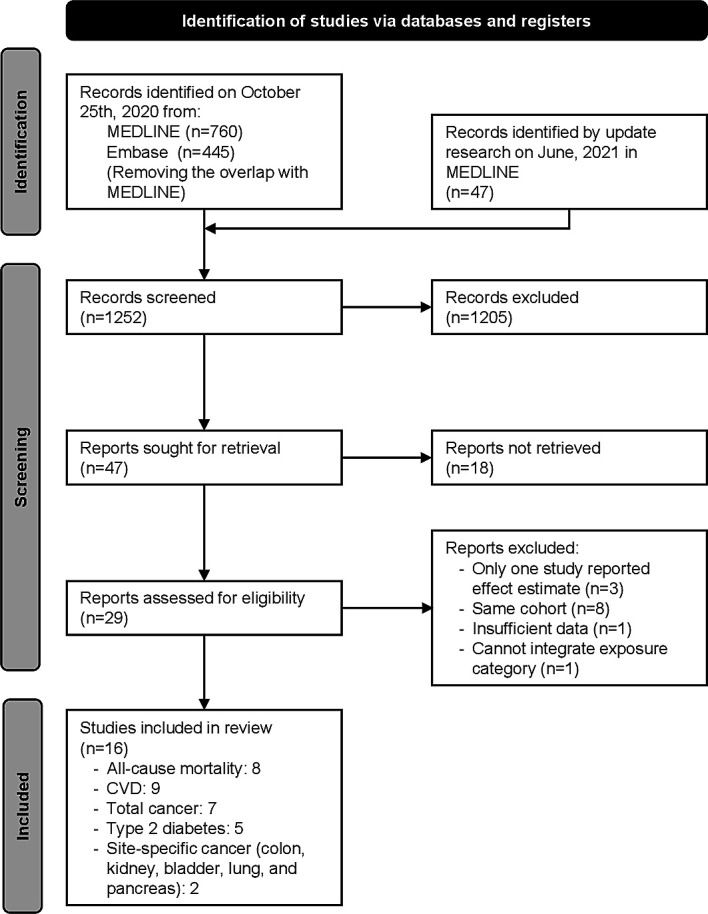
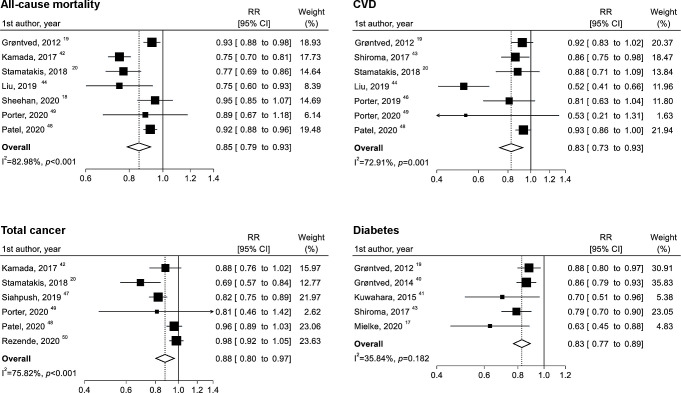
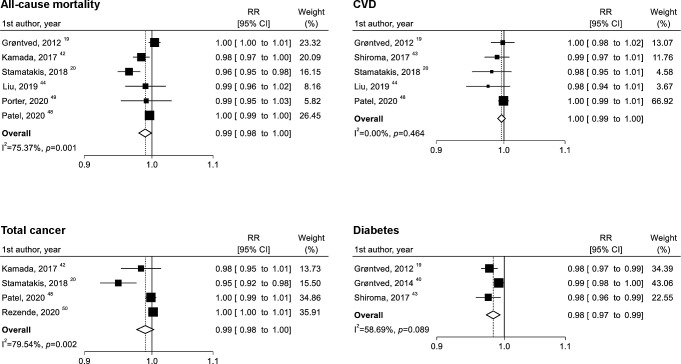
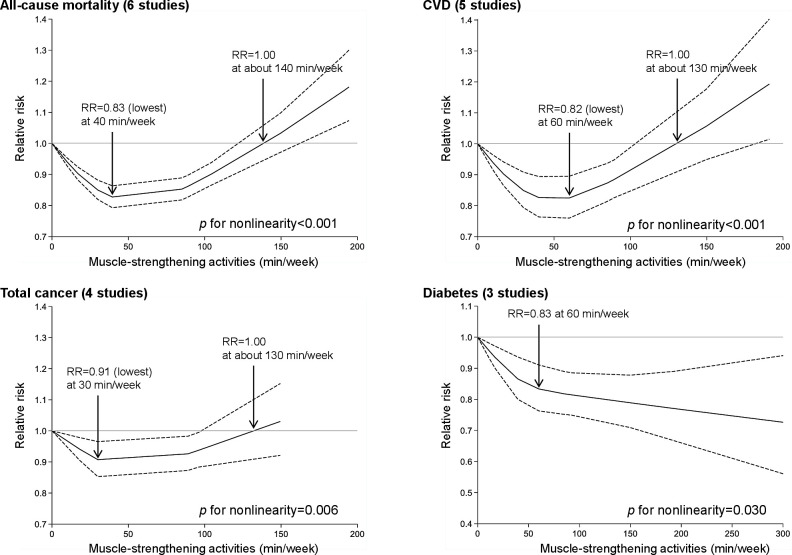
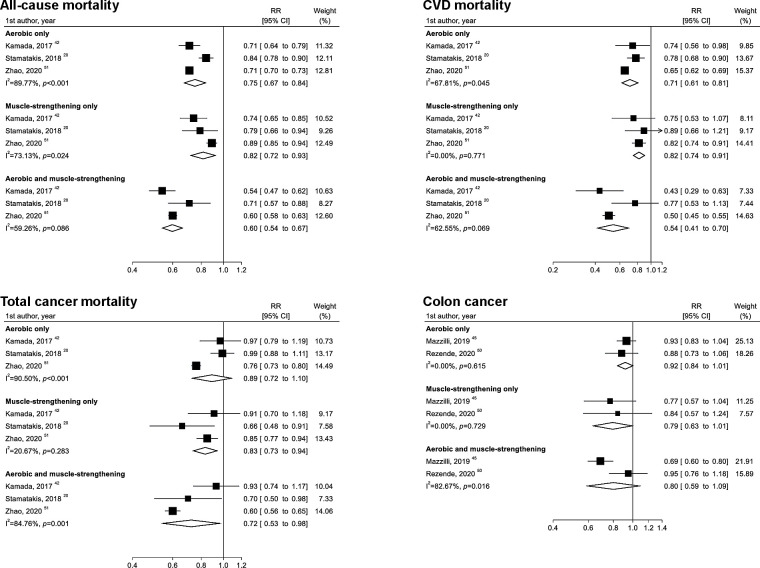
Objective: To quantify the associations between muscle-strengthening activities and the risk of non-communicable diseases and mortality in adults independent of aerobic activities. Design: Systematic review and meta-analysis of prospective cohort studies. Data sources: MEDLINE and Embase were searched from inception to June 2021 and the reference lists of all related articles were reviewed. Eligibility criteria for selecting studies: Prospective cohort studies that examined the association between muscle-strengthening activities and health outcomes in adults aged ≥18 years without severe health conditions. Results: Sixteen studies met the eligibility criteria. Muscle-strengthening activities were associated with a 10–17% lower risk of all-cause mortality, cardiovascular disease (CVD), total cancer, diabetes and lung cancer. No association was found between muscle-strengthening activities and the risk of some site-specific cancers (colon, kidney, bladder and pancreatic cancers). J-shaped associations with the maximum risk reduction (approximately 10–20%) at approximately 30–60 min/week of muscle-strengthening activities were found for all-cause mortality, CVD and total cancer, whereas an L-shaped association showing a large risk reduction at up to 60 min/week of muscle-strengthening activities was observed for diabetes. Combined muscle-strengthening and aerobic activities (versus none) were associated with a lower risk of all-cause, CVD and total cancer mortality. Conclusion: Muscle-strengthening activities were inversely associated with the risk of all-cause mortality and major non-communicable diseases including CVD, total cancer, diabetes and lung cancer; however, the influence of a higher volume of muscle-strengthening activities on all-cause mortality, CVD and total cancer is unclear when considering the observed J-shaped associations. Systematic review registration: PROSPERO CRD42020219808.
Overview
The claims and statistics of this paper haven’t been checked yet.
Free: it reads the open-access text and checks the first 5 claims that cite a source we can check. Create a free account to check every claim.
Integrity signals
Registry
Cites
Statistics
Figures
Verification
Claims the paper makes
The claims and statistics of this paper haven’t been checked yet.
Free: it reads the open-access text and checks the first 5 claims that cite a source we can check. Create a free account to check every claim.
Claims other papers make about this one
Each is checked against this paper’s own text: does it say what the citing paper says it does?
In the citing paper
“although both MVPA and strengthening activities are associated with improvements in cardiometabolic health and mortality risk, it is the combination of the two that provides the greatest effects.[7][8][9]”
From Exercise benefits in cardiovascular diseases: From mechanisms to clinical implementation (2023) · cites this paper as [7]
In the citing paper
“17% lower risk of CVD mortality with 40-60 min/ week of this type of activity).7”
From Exercise benefits in cardiovascular diseases: From mechanisms to clinical implementation (2023) · cites this paper as [7]
Self-check
Percentages, sums and reported differences re-computed from the paper’s own numbers.
The self-check needs the paper’s full text.
Citations
Cites
The PRISMA 2020 statement: An updated guideline for reporting systematic reviews
Page, M. J., McKenzie, J. E., Bossuyt, P. M., Boutron, I., Hoffmann, T. C., Mulrow, C. D., Shamseer, L., Tetzlaff, J. M., Akl, E. A., Brennan, S. E., et al. (2021) · BMJ · doi:10.1136/bmj.n71 · Cited by 108,283
Measuring inconsistency in meta-analyses
Higgins, J. P. T., Thompson, S. G., Deeks, J. J., & Altman, D. G. (2003) · BMJ · doi:10.1136/bmj.327.7414.557 · Cited by 63,139
Bias in meta-analysis detected by a simple, graphical test
Egger, M., Smith, G. D., Schneider, M., & Minder, C. (1997) · BMJ · doi:10.1136/bmj.315.7109.629 · Cited by 56,722
Meta-analysis in clinical trials
DerSimonian, R., & Laird, N. (1986) · Controlled Clinical Trials · doi:10.1016/0197-2456(86)90046-2 · Cited by 39,552 · cited 2×
“23 When the included studies had two or more exposed groups, the effect estimates among the exposed groups were synthesised to obtain a pooled effect estimate using a fixed-effects model with the inverse variance method.”
Dermyshi, E., Wang, Y., Yan, C., Hong, W., Qiu, G., Gong, X., & Zhang, T. (2017) · Neonatology · doi:10.1159/000454668 · Cited by 24,451
Meta-analysis of Observational Studies in Epidemiology<SUBTITLE>A Proposal for Reporting</SUBTITLE>
Stroup, D. F. (2000) · JAMA · doi:10.1001/jama.283.15.2008 · Cited by 20,623
(2014) · Medical Entomology and Zoology · Cited by 17,633
World Health Organization 2020 guidelines on physical activity and sedentary behaviour
Bull, F. C., Al-Ansari, S. S., Biddle, S., Borodulin, K., Buman, M. P., Cardon, G., Carty, C., Chaput, J.-P., Chastin, S., Chou, R., et al. (2020) · British Journal of Sports Medicine · doi:10.1136/bjsports-2020-102955 · Cited by 11,657
GRADE guidelines: 1. Introduction—GRADE evidence profiles and summary of findings tables
Guyatt, G., Oxman, A. D., Akl, E. A., Kunz, R., Vist, G., Brozek, J., Norris, S., Falck-Ytter, Y., Glasziou, P., & deBeer, H. (2011) · Journal of Clinical Epidemiology · doi:10.1016/j.jclinepi.2010.04.026 · Cited by 10,681
The Physical Activity Guidelines for Americans
Piercy, K. L., Troiano, R. P., Ballard, R. M., Carlson, S. A., Fulton, J. E., Galuska, D. A., George, S. M., & Olson, R. D. (2018) · JAMA · doi:10.1001/jama.2018.14854 · Cited by 9,755
The PRISMA 2020 statement: an updated guideline for reporting systematic reviews
Page, M. J., McKenzie, J., Bossuyt, P., Boutron, I., Hoffmann, T., mulrow, C., Shamseer, L., Tetzlaff, J., Akl, E., Brennan, S. E., et al. (2020) · doi:10.31222/osf.io/v7gm2_v1 · Cited by 8,090
Sterne, J. A. C., Sutton, A. J., Ioannidis, J. P. A., Terrin, N., Jones, D. R., Lau, J., Carpenter, J., Rucker, G., Harbord, R. M., Schmid, C. H., et al. (2011) · BMJ · doi:10.1136/bmj.d4002 · Cited by 7,709
The PRISMA 2020 statement: an updated guideline for reporting systematic reviews
Page, M. J., McKenzie, J., Bossuyt, P., Boutron, I., Hoffmann, T., mulrow, C., Shamseer, L., Tetzlaff, J., Akl, E., Brennan, S. E., et al. (2020) · doi:10.31222/osf.io/v7gm2 · Cited by 5,177
Norderyd, O. M., Koch, G., Papias, A., Köhler, A. A., Helkimo, A. N., Brahm, C., Lindmark, U., Lindfors, N., Mattsson, A., Rolander, B., et al. (2015) · PubMed · Cited by 3,584
GRADE guidelines 6. Rating the quality of evidence—imprecision
Guyatt, G. H., Oxman, A. D., Kunz, R., Brozek, J., Alonso-Coello, P., Rind, D., Devereaux, P. J., Montori, V. M., Freyschuss, B., Vist, G., et al. (2011) · Journal of Clinical Epidemiology · doi:10.1016/j.jclinepi.2011.01.012 · Cited by 2,693
Methods for Trend Estimation from Summarized Dose-Response Data, with Applications to Meta-Analysis
Greenland, S., & Longnecker, M. P. (1992) · American Journal of Epidemiology · doi:10.1093/oxfordjournals.aje.a116237 · Cited by 2,353 · cited 2×
“26 27 The method requires data including distribution of cases, person-years and adjusted RR with 95% CI across three or more quantitative categories.”
MethodGRADE guidelines: 7. Rating the quality of evidence—inconsistency
Guyatt, G. H., Oxman, A. D., Kunz, R., Woodcock, J., Brozek, J., Helfand, M., Alonso-Coello, P., Glasziou, P., Jaeschke, R., Akl, E. A., et al. (2011) · Journal of Clinical Epidemiology · doi:10.1016/j.jclinepi.2011.03.017 · Cited by 2,320
GRADE guidelines: 8. Rating the quality of evidence—indirectness
Guyatt, G. H., Oxman, A. D., Kunz, R., Woodcock, J., Brozek, J., Helfand, M., Alonso-Coello, P., Falck-Ytter, Y., Jaeschke, R., Vist, G., et al. (2011) · Journal of Clinical Epidemiology · doi:10.1016/j.jclinepi.2011.04.014 · Cited by 1,843
GRADE guidelines: 5. Rating the quality of evidence—publication bias
Guyatt, G. H., Oxman, A. D., Montori, V., Vist, G., Kunz, R., Brozek, J., Alonso-Coello, P., Djulbegovic, B., Atkins, D., Falck-Ytter, Y., et al. (2011) · Journal of Clinical Epidemiology · doi:10.1016/j.jclinepi.2011.01.011 · Cited by 1,819
GRADE guidelines: 9. Rating up the quality of evidence
Guyatt, G. H., Oxman, A. D., Sultan, S., Glasziou, P., Akl, E. A., Alonso-Coello, P., Atkins, D., Kunz, R., Brozek, J., Montori, V., et al. (2011) · Journal of Clinical Epidemiology · doi:10.1016/j.jclinepi.2011.06.004 · Cited by 1,336
Orsini, N., Li, R., Wolk, A., Khudyakov, P., & Spiegelman, D. (2012) · American Journal of Epidemiology · doi:10.1093/aje/kwr265 · Cited by 1,280 · cited 2×
“29 The joint benefit of muscle-strengthening activities and aerobic activities was also examined using the studies that reported the effect estimates of both muscle-strengthening and aerobic activities.”
Generalized Least Squares for Trend Estimation of Summarized Dose–response Data
Orsini, N., Bellocco, R., & Greenland, S. (2006) · The Stata Journal: Promoting communications on statistics and Stata · doi:10.1177/1536867x0600600103 · Cited by 1,241 · cited 2×
“27 This method allows estimating study-specific linear trends (slopes) considering the covariance for each exposure category within each study because they are calculated relative to a common reference group.”
MethodRoss, R., Chaput, J.-P., Giangregorio, L. M., Janssen, I., Saunders, T. J., Kho, M. E., Poitras, V. J., Tomasone, J. R., El-Kotob, R., McLaughlin, E. C., et al. (2020) · Applied Physiology, Nutrition, and Metabolism · doi:10.1139/apnm-2020-0467 · Cited by 941
Exercise Type and Intensity in Relation to Coronary Heart Disease in Men
Tanasescu, M. (2002) · JAMA · doi:10.1001/jama.288.16.1994 · Cited by 928
GRADE guidelines: 12. Preparing Summary of Findings tables—binary outcomes
Guyatt, G. H., Oxman, A. D., Santesso, N., Helfand, M., Vist, G., Kunz, R., Brozek, J., Norris, S., Meerpohl, J., Djulbegovic, B., et al. (2013) · Journal of Clinical Epidemiology · doi:10.1016/j.jclinepi.2012.01.012 · Cited by 836
García-Hermoso, A., Cavero-Redondo, I., Ramírez-Vélez, R., Ruiz, J. R., Ortega, F. B., Lee, D.-C., & Martínez-Vizcaíno, V. (2018) · Archives of Physical Medicine and Rehabilitation · doi:10.1016/j.apmr.2018.01.008 · Cited by 609
Aune, D., Greenwood, D. C., Chan, D. S. M., Vieira, R., Vieira, A. R., Navarro Rosenblatt, D. A., Cade, J. E., Burley, V. J., & Norat, T. (2012) · Annals of Oncology · doi:10.1093/annonc/mdr398 · Cited by 488
Zhao, M., Veeranki, S. P., Magnussen, C. G., & Xi, B. (2020) · BMJ · doi:10.1136/bmj.m2031 · Cited by 397
Wu, Y., Wang, W., Liu, T., & Zhang, D. (2017) · Journal of the American Medical Directors Association · doi:10.1016/j.jamda.2017.03.011 · Cited by 276
Methods for including information from multi-arm trials in pairwise meta-analysis
Rücker, G., Cates, C. J., & Schwarzer, G. (2017) · Research Synthesis Methods · doi:10.1002/jrsm.1259 · Cited by 251 · cited 1×
“24 25 We also conducted a dose–response meta-analysis to investigate the influence of muscle-strengthening activities on health outcomes using the method described by Greenland and Long - necker 26 and Orsini et al .”
Reliability and Validity of the Instrument Used in BRFSS to Assess Physical Activity
YORE, M. M., HAM, S. A., AINSWORTH, B. E., KRUGER, J., REIS, J. P., KOHL, H. W., & MACERA, C. A. (2007) · Medicine & Science in Sports & Exercise · doi:10.1249/mss.0b013e3180618bbe · Cited by 242 · cited 1×
“Given that the available data are limited, further studies—such as studies focusing on a more diverse population—are needed to increase the certainty of the evidence.”
The association of resistance training with mortality: A systematic review and meta-analysis
Saeidifard, F., Medina-Inojosa, J. R., West, C. P., Olson, T. P., Somers, V. K., Bonikowske, A. R., Prokop, L. J., Vinciguerra, M., & Lopez-Jimenez, F. (2019) · European Journal of Preventive Cardiology · doi:10.1177/2047487319850718 · Cited by 216
Stamatakis, E., Lee, I. M., Bennie, J., Freeston, J., Hamer, M., O’Donovan, G., Ding, D., Bauman, A., & Mavros, Y. (2018) · American Journal of Epidemiology · doi:10.1093/aje/kwx345 · Cited by 198
A Prospective Study of Weight Training and Risk of Type 2 Diabetes Mellitus in Men
Grøntved, A., Rimm, E. B., Willett, W. C., Andersen, L. B., & Hu, F. B. (2012) · Archives of Internal Medicine · doi:10.1001/archinternmed.2012.3138 · Cited by 195
Associations of resistance exercise with cardiovascular disease morbidity and mortality
LIU, Y., LEE, D.-C., LI, Y., ZHU, W., ZHANG, R., SUI, X., LAVIE, C. J., & BLAIR, S. N. (2019) · Medicine & Science in Sports & Exercise · doi:10.1249/mss.0000000000001822 · Cited by 187
Physical exercise and epigenetic modifications in skeletal muscle
Widmann, M., Nieß, A. M., & Munz, B. (2019) · Sports Medicine · doi:10.1007/s40279-019-01070-4 · Cited by 165 · cited 1×
“Although the potential of muscle-strengthening activities to reduce the risk of diabetes is supported by several biological mechanisms, 64 65 many of the previous studies on this topic were limited to short-term randomised controlled trials examining surrogates of diabetes.”
Evenson, K. R., Wen, F., & Herring, A. H. (2016) · American Journal of Epidemiology · doi:10.1093/aje/kww070 · Cited by 154
Grøntved, A., Pan, A., Mekary, R. A., Stampfer, M., Willett, W. C., Manson, J. E., & Hu, F. B. (2014) · PLoS Medicine · doi:10.1371/journal.pmed.1001587 · Cited by 145
Resistance training and health in adults: an overview of systematic reviews
El-Kotob, R., Ponzano, M., Chaput, J., Janssen, I., Kho, M. E., Poitras, V. J., Ross, R., Ross‐White, A., Saunders, T. J., & Giangregorio, L. (2020) · Applied Physiology, Nutrition, and Metabolism · doi:10.1139/apnm-2020-0245 · Cited by 136
Aguiar, E. J., Morgan, P. J., Collins, C. E., Plotnikoff, R. C., & Callister, R. (2014) · International Journal of Behavioral Nutrition and Physical Activity · doi:10.1186/1479-5868-11-2 · Cited by 135 · cited 1×
“66 Our findings showed that muscle-strengthening activities were associated with a 17% lower incidence of diabetes, with the risk of diabetes sharply decreasing until up to 60 min/week of muscle-strengthening activities followed by a gradual decrease.”
Zhao, G., Li, C., Ford, E. S., Fulton, J. E., Carlson, S. A., Okoro, C. A., Wen, X. J., & Balluz, L. S. (2014) · British Journal of Sports Medicine · doi:10.1136/bjsports-2013-092731 · Cited by 131
Adherence to the 2008 Adult Physical Activity Guidelines and Mortality Risk
Schoenborn, C. A., & Stommel, M. (2011) · American Journal of Preventive Medicine · doi:10.1016/j.amepre.2010.12.029 · Cited by 126
Strength Training and the Risk of Type 2 Diabetes and Cardiovascular Disease
SHIROMA, E. J., COOK, N. R., MANSON, J. E., MOORTHY, M., BURING, J. E., RIMM, E. B., & LEE, I.-M. (2017) · Medicine & Science in Sports & Exercise · doi:10.1249/mss.0000000000001063 · Cited by 126
Is strength training associated with mortality benefits? A 15 year cohort study of US older adults
Kraschnewski, J. L., Sciamanna, C. N., Poger, J. M., Rovniak, L. S., Lehman, E. B., Cooper, A. B., Ballentine, N. H., & Ciccolo, J. T. (2016) · Preventive Medicine · doi:10.1016/j.ypmed.2016.02.038 · Cited by 124
Resistance training to improve type 2 diabetes: working toward a prescription for the future
Pesta, D. H., Goncalves, R. L. S., Madiraju, A. K., Strasser, B., & Sparks, L. M. (2017) · Nutrition & Metabolism · doi:10.1186/s12986-017-0173-7 · Cited by 120 · cited 1×
“Although the potential of muscle-strengthening activities to reduce the risk of diabetes is supported by several biological mechanisms, 64 65 many of the previous studies on this topic were limited to short-term randomised controlled trials examining surrogates of diabetes.”
Kamada, M., Shiroma, E. J., Buring, J. E., Miyachi, M., & Lee, I. (2017) · Journal of the American Heart Association · doi:10.1161/jaha.117.007677 · Cited by 93 · cited 1×
“42–44 48 For example, Kamada et al showed a quadratic association between strength training and all-cause and CVD mortality, and the lowest risk of all-cause mortality was observed at 82 min/week of strength training.”
BackgroundBakker, E. A., Lee, D.-C., Sui, X., Artero, E. G., Ruiz, J. R., Eijsvogels, T. M. H., Lavie, C. J., & Blair, S. N. (2017) · Mayo Clinic Proceedings · doi:10.1016/j.mayocp.2017.02.018 · Cited by 76
Determining the Importance of Meeting Muscle-Strengthening Activity Guidelines
Dankel, S. J., Loenneke, J. P., & Loprinzi, P. D. (2015) · Mayo Clinic Proceedings · doi:10.1016/j.mayocp.2015.10.017 · Cited by 68
Giovannucci, E. L., Rezende, L. F. M., & Lee, D. H. (2021) · Journal of Internal Medicine · doi:10.1111/joim.13344 · Cited by 65
Dankel, S. J., Loenneke, J. P., & Loprinzi, P. D. (2016) · Archives of cardiovascular diseases · doi:10.1016/j.acvd.2016.04.005 · Cited by 50
Mielke, G. I., Bailey, T. G., Burton, N. W., & Brown, W. J. (2020) · Scandinavian Journal of Medicine and Science in Sports · doi:10.1111/sms.13795 · Cited by 49 · cited 1×
“%) when the study by Mielke et al 17 with low quality (NOS=4) was excluded (online supplemental figure 1).”
Nascimento, W., Ferrari, G., Martins, C. B., Rey-Lopez, J. P., Izquierdo, M., Lee, D. H., Giovannucci, E. L., & Rezende, L. F. M. (2021) · International Journal of Behavioral Nutrition and Physical Activity · doi:10.1186/s12966-021-01142-7 · Cited by 47 · cited 4×
“9 The reason for this discrepancy may be derived from the extracted effect estimates.”
InfluentialAssociations of Exercise Types with All-Cause Mortality among U.S. Adults
Sheehan, C. M., & Li, L. (2020) · Medicine & Science in Sports & Exercise · doi:10.1249/mss.0000000000002406 · Cited by 44 · cited 1×
“When only ORs were available, 18 they were considered equivalent to RRs because the overall cumulative incidence of the outcome was relatively low (16.5%).”
InfluentialHsu, B., Merom, D., Blyth, F., Naganathan, V., Hirani, V., Couteur, D. G. L., Seibel, M. J., Waite, L. M., Handelsman, D. J., & Cumming, R. G. (2017) · Journal of the American Medical Directors Association · doi:10.1016/j.jamda.2017.08.018 · Cited by 38
Weight Training and Risk of 10 Common Types of Cancer
Mazzilli, K. M., Matthews, C. E., Salerno, E. A., & Moore, S. C. (2019) · Medicine & Science in Sports & Exercise · doi:10.1249/mss.0000000000001987 · Cited by 34
Association of resistance exercise with the incidence of hypercholesterolemia in men
Bakker, E. A., Lee, D.-C., Sui, X., Eijsvogels, T. M. H., Ortega, F. B., Lee, I.-M., Lavie, C. J., & Blair, S. N. (2018) · Mayo Clinic Proceedings · doi:10.1016/j.mayocp.2017.11.024 · Cited by 33
Porter, A. K., Schilsky, S., Evenson, K. R., Florido, R., Palta, P., Holliday, K. M., & Folsom, A. R. (2019) · Journal of Physical Activity and Health · doi:10.1123/jpah.2018-0671 · Cited by 27
Relationship Between Muscle-Strengthening Activity and Cause-Specific Mortality in a Large US Cohort
Patel, A. V., Hodge, J. M., Rees‐Punia, E., Teras, L. R., Campbell, P. T., & Gapstur, S. M. (2020) · Preventing Chronic Disease · doi:10.5888/pcd17.190408 · Cited by 23 · cited 1×
“42–44 48 For example, Kamada et al showed a quadratic association between strength training and all-cause and CVD mortality, and the lowest risk of all-cause mortality was observed at 82 min/week of strength training.”
Rezende, L. F. M., Lee, D. H., Keum, N., Wu, K., Eluf‐Neto, J., Tabung, F. K., & Giovannucci, E. L. (2020) · British Journal of Cancer · doi:10.1038/s41416-020-0921-8 · Cited by 22 · cited 1×
“When the analysis was limited to total cancer mortality (ie, excluding the study by Rezende et al 50 ), a similar result was obtained (online supplemental figure 1).”
ResultLoprinzi, P. D., & Davis, R. E. L. (2015) · Physiology & Behavior · doi:10.1016/j.physbeh.2015.07.032 · Cited by 21
Participation in specific leisure-time activities and mortality risk among U.S. adults
Porter, A. K., Cuthbertson, C. C., & Evenson, K. R. (2020) · Annals of Epidemiology · doi:10.1016/j.annepidem.2020.06.006 · Cited by 21
Siahpush, M., Farazi, P. A., Wang, H., Robbins, R., Singh, G. K., & Su, D. (2019) · Cancer Causes & Control · doi:10.1007/s10552-019-01169-z · Cited by 20
Nie, J., Haberstroh, M., Acosta, T., Huang, W., Wang, Y., & Barengo, N. C. (2021) · The Journals of Gerontology Series A · doi:10.1093/gerona/glab114 · Cited by 15
Strength training and risk of type 2 diabetes in a Japanese working population: A cohort study
Kuwahara, K., Honda, T., Nakagawa, T., Yamamoto, S., Nanri, A., Kurotani, K., Hayashi, T., & Mizoue, T. (2015) · Journal of Diabetes Investigation · doi:10.1111/jdi.12347 · Cited by 12
Self-citationThe association of resistance training with risk of ovarian cancer
Buras, A. L., Hathaway, C. A., Wang, T., Townsend, M. K., & Tworoger, S. S. (2021) · Cancer Medicine · doi:10.1002/cam4.3804 · Cited by 6
Cited by
Martin, S. S., Aday, A. W., Allen, N. B., Almarzooq, Z. I., Anderson, C. A. M., Arora, P., Avery, C. L., Baker-Smith, C. M., Bansal, N., Beaton, A. Z., et al. (2025) · Circulation · doi:10.1161/cir.0000000000001303 · Cited by 1,080
Paluch, A. E., Boyer, W. R., Franklin, B. A., Laddu, D., Lobelo, F., Lee, D.-C., McDermott, M. M., Swift, D. L., Webel, A. R., Lane, A., et al. (2024) · Circulation · doi:10.1161/cir.0000000000001189 · Cited by 290
The molecular athlete: exercise physiology from mechanisms to medals
Furrer, R., Hawley, J. A., & Handschin, C. (2023) · Physiological Reviews · doi:10.1152/physrev.00017.2022 · Cited by 217
Exercise benefits in cardiovascular diseases: From mechanisms to clinical implementation
Valenzuela, P. L., Ruilope, L. M., Santos-Lozano, A., Wilhelm, M., Kränkel, N., Fiuza-Luces, C., & Lucia, A. (2023) · European Heart Journal · doi:10.1093/eurheartj/ehad170 · Cited by 237
Roberts, M. D., McCarthy, J. J., Hornberger, T. A., Phillips, S. M., Mackey, A. L., Nader, G. A., Boppart, M. D., Kavazis, A. N., Reidy, P. T., Ogasawara, R., et al. (2023) · Physiological Reviews · doi:10.1152/physrev.00039.2022 · Cited by 214
Metadata
- Authors
- Momma, H., Kawakami, R., Honda, T., & Sawada, S. S.
- Affiliations
- Tohoku University (JP)
- Waseda University (JP)
- Kyushu University (JP)
- Corresponding author
- Momma, Haruki
- Venue
- British Journal of Sports Medicine
- Publisher
- BMJ
- Published
- 2022-02-28
- Volume
- 56
- Issue
- 13
- Pages
- 755-763
- ISSN
- 0306-3674 (ISSN-L)
- 1473-0480
- PMC
- PMC9209691
- OpenAlex
- W4214658204
- Cited by
- 265
- References
- 64
- Citations by year
- 2026: 57 · 2025: 92 · 2024: 44 · 2023: 54 · 2022: 18
- FWCI
- 7.15
- Type
- journal article
- Language
- en
- Open access
- hybrid
- doi.org
- Locations
- British Journal of Sports Medicine (publishedVersion, cc-by)
- PubMed Central (publishedVersion, cc-by)
- PubMed (publishedVersion)
- Funders
- Ministry of Health, Labour and Welfare (JPMH20FA1006)
- Topics
- Health Sciences › Medicine › Public Health, Environmental and Occupational Health › Physical Activity and Health
- Health Sciences › Medicine › Physiology (medical) › Cardiovascular and exercise physiology
- Health Sciences › Medicine › Physiology (medical) › Exercise and Physiological Responses
- Keywords
- muscle-strengthening activity, resistance training, non-communicable diseases, all-cause mortality, cardiovascular disease, cancer risk, diabetes mellitus, lung cancer, J-shaped association, L-shaped association, aerobic exercise, physical activity volume, adults
- MeSH terms
- Noncommunicable Diseases, Adolescent, Adult, Cardiovascular Diseases, Humans, Lung Neoplasms, Muscles, Prospective Studies, Cohort Studies
About these checks
Registry, retraction, Cites and statistics results are computed, not judged, with one exception: a printed reference that no index lists is read once by a model before it counts as a citation error. Claims are extracted by a model and kept only when their quote appears verbatim in the text; each cited source is then checked, with a model’s help, for whether it says what the claim relies on. Those verdicts can be wrong — read the claim’s quote and the cited source before relying on one.
Statistics and arithmetic are recomputed, not judged.
Confidence bands are shown only for fields calibrated on our annotated test set. None is calibrated yet, so no band is shown.
What counts as a claim ›How we measure confidence ›How we check this ›
Are you an author, or do you see a problem with this page? Request a review
Data sources
Bibliographic data: Semantic Scholar, OpenAlex, Crossref.
Contains information from the Semantic Scholar Academic Graph Datasets, made available under the ODC Attribution License (ODC-BY 1.0).
Semantic Scholar’s data is described in: Kinney, R., et al. (2023). The Semantic Scholar Open Data Platform. arXiv:2301.10140.
