

Muscle-strengthening activities are associated with lower risk and mortality in major non-communicable diseases: a systematic review and meta-analysis of cohort studies.
Open accessThe DOI matches its Crossref record; 65 of the 65 references it cites were found in a registry or an index.
Abstract
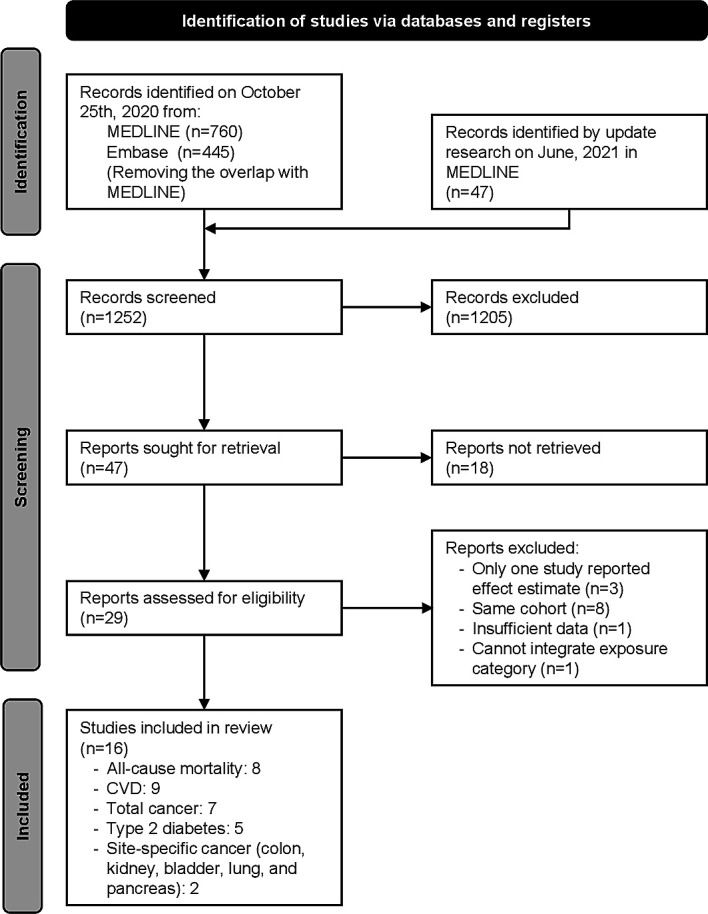
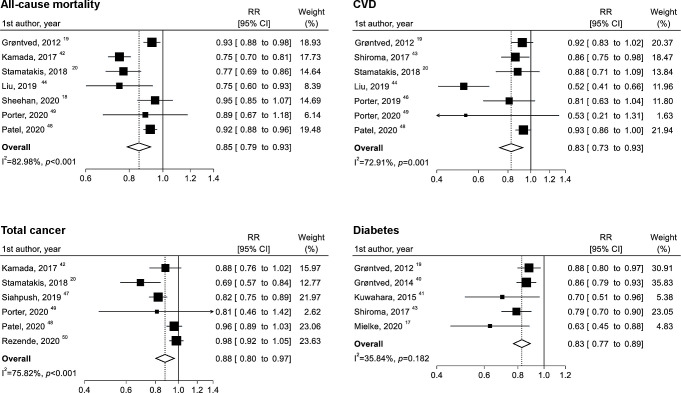
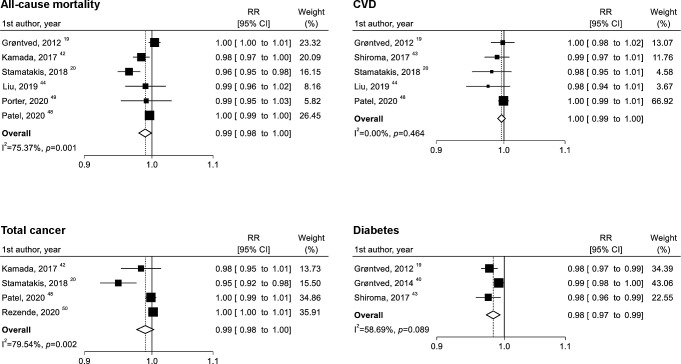
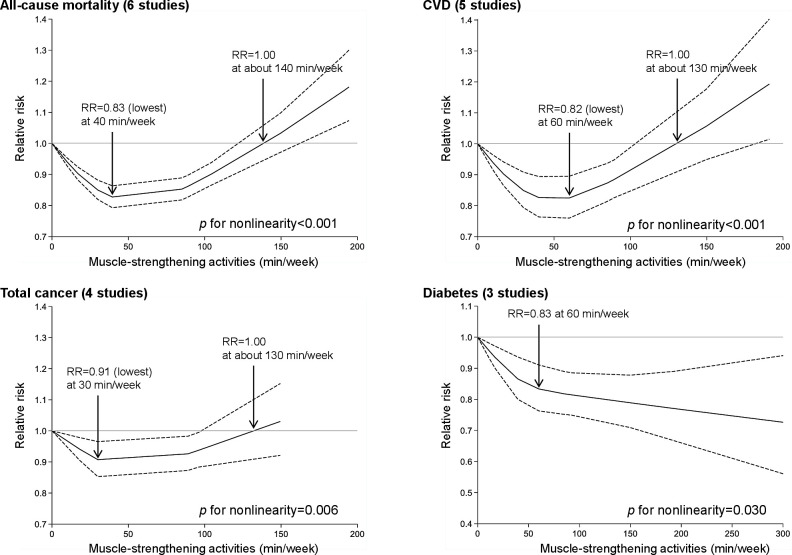
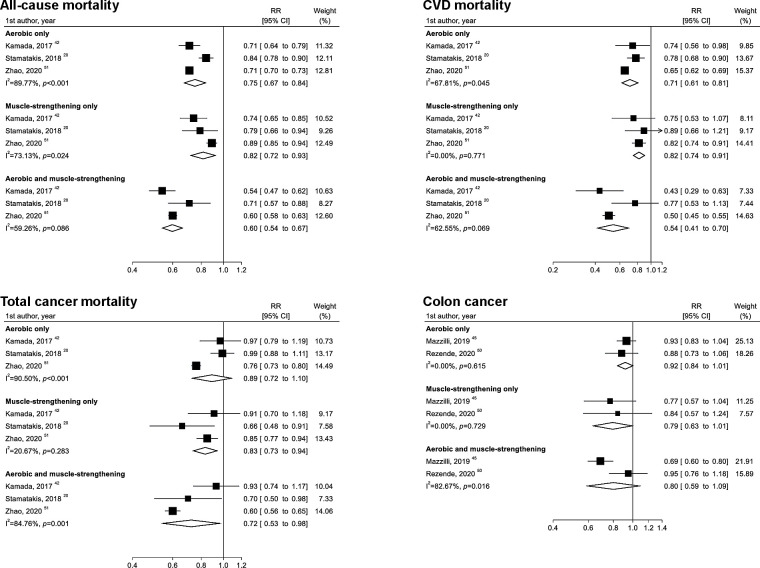
Objective: To quantify the associations between muscle-strengthening activities and the risk of non-communicable diseases and mortality in adults independent of aerobic activities. Design: Systematic review and meta-analysis of prospective cohort studies. Data sources: MEDLINE and Embase were searched from inception to June 2021 and the reference lists of all related articles were reviewed. Eligibility criteria for selecting studies: Prospective cohort studies that examined the association between muscle-strengthening activities and health outcomes in adults aged ≥18 years without severe health conditions. Results: Sixteen studies met the eligibility criteria. Muscle-strengthening activities were associated with a 10–17% lower risk of all-cause mortality, cardiovascular disease (CVD), total cancer, diabetes and lung cancer. No association was found between muscle-strengthening activities and the risk of some site-specific cancers (colon, kidney, bladder and pancreatic cancers). J-shaped associations with the maximum risk reduction (approximately 10–20%) at approximately 30–60 min/week of muscle-strengthening activities were found for all-cause mortality, CVD and total cancer, whereas an L-shaped association showing a large risk reduction at up to 60 min/week of muscle-strengthening activities was observed for diabetes. Combined muscle-strengthening and aerobic activities (versus none) were associated with a lower risk of all-cause, CVD and total cancer mortality. Conclusion: Muscle-strengthening activities were inversely associated with the risk of all-cause mortality and major non-communicable diseases including CVD, total cancer, diabetes and lung cancer; however, the influence of a higher volume of muscle-strengthening activities on all-cause mortality, CVD and total cancer is unclear when considering the observed J-shaped associations. Systematic review registration: PROSPERO CRD42020219808.
Overview
The claims and statistics of this paper haven’t been checked yet.
Free: it reads the open-access text and checks the first 5 claims that cite a source we can check. Create a free account to check every claim.
Integrity signals
Registry
Cites
Statistics
Figures
Verification
Claims the paper makes
The claims and statistics of this paper haven’t been checked yet.
Free: it reads the open-access text and checks the first 5 claims that cite a source we can check. Create a free account to check every claim.
Claims other papers make about this one
Each is checked against this paper’s own text: does it say what the citing paper says it does?
In the citing paper
“although both MVPA and strengthening activities are associated with improvements in cardiometabolic health and mortality risk, it is the combination of the two that provides the greatest effects.[7][8][9]”
From Exercise benefits in cardiovascular diseases: From mechanisms to clinical implementation (2023) · cites this paper as [7]
In the citing paper
“17% lower risk of CVD mortality with 40-60 min/ week of this type of activity).7”
From Exercise benefits in cardiovascular diseases: From mechanisms to clinical implementation (2023) · cites this paper as [7]
Self-check
Percentages, sums and reported differences re-computed from the paper’s own numbers.
The self-check needs the paper’s full text.
Citations
Cites
The PRISMA 2020 statement: An updated guideline for reporting systematic reviews
Page, M. J., McKenzie, J. E., Bossuyt, P. M., Boutron, I., Hoffmann, T. C., Mulrow, C. D., Shamseer, L., Tetzlaff, J. M., Akl, E. A., Brennan, S. E., et al. (2021) · BMJ · doi:10.1136/bmj.n71 · Cited by 108,283
Measuring inconsistency in meta-analyses
Higgins, J. P. T., Thompson, S. G., Deeks, J. J., & Altman, D. G. (2003) · BMJ · doi:10.1136/bmj.327.7414.557 · Cited by 63,139
Bias in meta-analysis detected by a simple, graphical test
Egger, M., Smith, G. D., Schneider, M., & Minder, C. (1997) · BMJ · doi:10.1136/bmj.315.7109.629 · Cited by 56,722
Meta-analysis in clinical trials
DerSimonian, R., & Laird, N. (1986) · Controlled Clinical Trials · doi:10.1016/0197-2456(86)90046-2 · Cited by 39,552 · cited 2×
“23 When the included studies had two or more exposed groups, the effect estimates among the exposed groups were synthesised to obtain a pooled effect estimate using a fixed-effects model with the inverse variance method.”
Dermyshi, E., Wang, Y., Yan, C., Hong, W., Qiu, G., Gong, X., & Zhang, T. (2017) · Neonatology · doi:10.1159/000454668 · Cited by 24,451
Meta-analysis of Observational Studies in Epidemiology<SUBTITLE>A Proposal for Reporting</SUBTITLE>
Stroup, D. F. (2000) · JAMA · doi:10.1001/jama.283.15.2008 · Cited by 20,623
(2014) · Medical Entomology and Zoology · Cited by 17,633
World Health Organization 2020 guidelines on physical activity and sedentary behaviour
Bull, F. C., Al-Ansari, S. S., Biddle, S., Borodulin, K., Buman, M. P., Cardon, G., Carty, C., Chaput, J.-P., Chastin, S., Chou, R., et al. (2020) · British Journal of Sports Medicine · doi:10.1136/bjsports-2020-102955 · Cited by 11,657
GRADE guidelines: 1. Introduction—GRADE evidence profiles and summary of findings tables
Guyatt, G., Oxman, A. D., Akl, E. A., Kunz, R., Vist, G., Brozek, J., Norris, S., Falck-Ytter, Y., Glasziou, P., & deBeer, H. (2011) · Journal of Clinical Epidemiology · doi:10.1016/j.jclinepi.2010.04.026 · Cited by 10,681
The Physical Activity Guidelines for Americans
Piercy, K. L., Troiano, R. P., Ballard, R. M., Carlson, S. A., Fulton, J. E., Galuska, D. A., George, S. M., & Olson, R. D. (2018) · JAMA · doi:10.1001/jama.2018.14854 · Cited by 9,755
Cited by
Items 201–300 of 307
Present State and Perspectives of Type 2 Diabetes Management
Azeez, T. A. (2024) · IntechOpen eBooks · doi:10.5772/intechopen.1002447 · Cited by 1
Fan, Q., & Wang, J. (2024) · Research Square · doi:10.21203/rs.3.rs-4682957/v1
Shi, H., Wang, X., & Zhao, H. (2024) · Research Square · doi:10.21203/rs.3.rs-5255311/v1
Passive Clutch System for the Selection of Concentric and Eccentric Exercises
Jeong, J.-S., Shin, W., song, Y., Kim, Y., Kwon, S., & Na, Y. (2024) · IEEE Access · doi:10.1109/access.2024.3513353
Drawing 2024 to a close, and welcoming in 2025 …
Wheeler, P. C., Marino, K. R., Mitchell, R. G., Wong, J., & Kluzek, S. (2024) · British Journal of Sports Medicine · doi:10.1136/bjsports-2024-109398
Resistance Training and the Risk of Breast Cancer: A Population-Based Case–Control Study
Modi, H. D., Byrne, S., Li, L. S. K., & Boyle, T. (2025) · Journal of Physical Activity and Health · doi:10.1123/jpah.2024-0327
Giannopoulos, A. J., Kottaras, S., Allanigue, B., Coish, J. M., Ditor, D. S., Fajardo, V. A., & Klentrou, P. (2025) · Nutrients · doi:10.3390/nu17071265 · Cited by 1
“…this type of training has been shown to enhance muscle strength and mass, reduce body fat and blood pressure, lower low-density lipoprotein (LDL) levels, increase high-density lipoprotein (HDL) levels, help prevent osteoporosis, and reduce the risk of type II diabetes and all-cause mortality [2–5].”
Nowakowski-Sims, E., & Papciak, R. (2025) · International Journal of Transgender Health · doi:10.1080/26895269.2025.2498758 · Cited by 1
Ilha, S., de Carli, M. R., Benetti, E. R. R., Jantsch, L. B., & Munhoz, O. L. (2025) · Revista de Pesquisa Cuidado é Fundamental Online · doi:10.9789/2175-5361.rpcfo.v17.13730
Overview of the Physical Activity Guide for Health Promotion 2023
Sawada, S. S. (2025) · Health Evaluation and Promotion · doi:10.7143/jhep.52.333
Self-citationA critical analysis of the disconnection between science and practice in weight training
Cereda, F. (2025) · Physical Education and Sports Studies and Research · doi:10.56003/pessr.v4i1.499
“Cohort studies have demonstrated that engagement in muscle-strengthening activities is linked to a lower mortality risk from non-communicable diseases, including cardiovascular conditions and cancer (Momma et al., 2022).”
The Up‐to‐date Therapeutic Exercise for Metabolic Diseases
Ogawa, Y. (2025) · リハビリテーション医学 : 日本リハビリテーション医学会誌 · doi:10.2490/jjrmc.62.266
Tunkamnerdthai, O., Thamnithis, P., Sawasdee, C., Keeratitanont, K., Auvichayapat, V., Punjaruk, W., Tiamkao, S., & Auvichayapat, P. (2025) · Healthcare · doi:10.3390/healthcare13111263
Lifestyle Medicine: Perspective of health needs.Review
Adrianzén-Arrieta, G., Aguirre-Alegría, L., Arambulo-Hidalgo, R., Arévalo-Humbo, O., & Arroyo-Sánchez, A. S. (2025) · Revista Médica de Trujillo · doi:10.17268/rmt.2025.v20i1.6470
Strickland, E., Tringali, V., & Eby, J. (2025) · Building Healthy Academic Communities Journal · doi:10.18061/bhac.v9i2.10441
Impact of strength training of large muscle groups on quality of life
Takahashi, T., Matsuzaki, J., Enomoto, T., & Saito, Y. (2025) · Journal of Clinical Biochemistry and Nutrition · doi:10.3164/jcbn.25-60
Hamdani, H., Komaini, A., Wibawa, J. C., Lobo, J., Rizki, A. Z., Afandi, A., Juniarisca, D. L., Kuntjoro, B. F. T., Ardha, M. A. A., & Ayubi, N. (2025) · Balneo and PRM Research Journal · doi:10.12680/balneo.2025.819
Ntoukas, S. M., McNeely, M. L., Prado, C. M. M., & Courneya, K. S. (2025) · PLoS ONE · doi:10.1371/journal.pone.0326860
“Muscle-strengthening activities were associated with a 10% to 17% lower risk of cardiovascular disease, total cancer occurrence, diabetes, cancer-specific mortality, and all-cause mortality independent of aerobic activities among adults [65,66].”
Integrative Approach in Cardiovascular Disease
Shen, J. (2025) · Nutrition and health · doi:10.1007/978-3-031-87441-3_21
Krishnan, M., & Vanithamani, P. (2025) · Research Square · doi:10.21203/rs.3.rs-7145294/v1
Ko, J.-H., Moon, S. J., Han, K., Kwon, H. M., Park, S.-E., Rhee, E.-J., & Lee, W. (2025) · Diabetes & Metabolism Journal · doi:10.4093/dmj.2024.0487
Tornquist, L., Sehn, A. P., Tornquist, D., Mansour, K. M. K., Silveira, J. F. D. C., Reuter, É. M., Renner, J. D. P., & Reuter, C. P. (2025) · Sport Sciences for Health · doi:10.1007/s11332-025-01489-5 · Cited by 1
La musculation a des bienfaits insoupçonnés sur la santé, surtout avec l'âge
Phillips, S. M. (2024) · The Conversation · doi:10.64628/aap.g7djyuu6q
Shaw, K. A., Zello, G. A., & Crizzle, A. M. (2025) · Applied Physiology, Nutrition, and Metabolism · doi:10.1139/apnm-2025-0188 · Cited by 2
Estimation of Arm Curl Repetitions Based on Personal Ability and Condition Using Fuzzy Inference
Yeung, C., OKABE, K., Sato-Shimokawara, E., & Okamoto, Y. (2025) · IEEE International Conference on Fuzzy Systems (FUZZ-IEEE) · doi:10.1109/fuzz62266.2025.11152084
“Resistance training or muscle training has been linked to a 10-17% reduction in the risk of all-cause mortality, cardio-vascular disease, total cancer, diabetes, and lung cancer [1].”
Strengthening the Surgeon: The Role of Resistance Training in Preventing Musculoskeletal Disorders
Petersen, H. J. (2025) · Oral Surgery · doi:10.1111/ors.70021
“A large meta-analysis reported a 15% reduction in all-cause mortality and significant reductions in cardiovascular disease, diabetes and cancer risk among those engaging in regular in resistance training [6].”
Winitchayothin, S., Chen, K., & Belcastro, F. P. (2025) · Nursing Research · doi:10.1097/nnr.0000000000000861
Roe, A. J., Leschewski, A., Johnson, S., Peutz, J., Hansen, K., Lee, S. G., Elvira, J., & Fitzgerald, N. (2025) · Nutrients · doi:10.3390/nu17193076
de Souza, L. N. N., Coimbra, D. R., Bueno, J. C. A., & Andrade, A. (2025) · Aging & Mental Health · doi:10.1080/13607863.2025.2541186
“Resistance training, which stimulates the muscles through various forms of resistance (e.g. body weight, resistance bands, machines, or free weights), remains a viable option (Momma et al., 2022; Ratamess et al., 2009).”
Sports and physical activities in children - a paediatric cardiologist view
Kubuš, P. (2025) · Pediatrie pro praxi · doi:10.36290/ped.2025.059
Primärpräventiver Nutzen körperlicher Aktivität und strukturierten Trainings
Samitz, G. (2025) · Springer eBooks · doi:10.1007/978-3-662-68883-0_2
Li, Z., Ju, P., Zhu, Y., Yu, W., He, J., & Zou, C. (2025) · BMC Nephrology · doi:10.1186/s12882-025-04591-5
“Notably, even minimal-dose resistance exercise has been effective in improving muscle health among older MHD patients, offering a feasible and impactful strategy to reduce the dual burden of SO [5].”
Promoting Brain Health: Report on Activities of the Bern Brain Health Working Group
Monschein, T., Penner, I., Filchenko, I., Vorster, A. P. A., Sarikaya, H., Tanna, G. L. D., Heldner, M. R., Draganski, B., Adorjan, K., Jung, S., et al. (2025) · Clinical and Translational Neuroscience · doi:10.3390/ctn9040056
“In the section « physical activity », the questionnaire assesses activity levels, muscle strength, and balance [69–72].”
Actividad física y envejecimiento saludable
Rodulfo, J. I. A. (2025) · Medicina Interna · doi:10.71035/rsvmi.2025.41.2.7
Saito, Y., Kikuchi, N., Watanabe, K., Nakamura, S., & Narimatsu, H. (2025) · JMIR Human Factors · doi:10.2196/63123
“Among these, meta-analyses have shown that strength training reduces the risk of all-cause mortality and development of cardiovascular diseases, cancer, and diabetes [21].”
Is the answer for health always “more”?
Loenneke, J. P. (2025) · Journal of Trainology · doi:10.17338/trainology.14.2_21
Bedarfserhebung zu Studentischem Gesundheitsmanagement bei Studierenden der Universität Regensburg
Kroiß, K. (2025) · University of Regensburg Publication Server (University of Regensburg) · doi:10.5283/epub.76691
Liu, C.-A., Liu, T., Ge, Y.-Z., Song, M.-M., Ruan, G., Lin, S.-Q., Xie, H.-L., Shi, J.-Y., Zheng, X., Chen, Y., et al. (2023) · Figshare · doi:10.6084/m9.figshare.22607518
Resposta afetiva e treino com resistência : uma exploração baseada em pressupostos hedónicos
Bastos, V. A. (2022) · Lusophone University Repository
Lahti, F., & Falk Ehrén, S. (2023) · Uppsala University Publications (Uppsala University)
The relationship between resistance training body composition and self-esteem in adolescents
Suber, J. (2023) · SHAREOK (University of Oklahoma; Oklahoma State University; Central Oklahoma University) · Cited by 1
Swales, B. (2024) · Stirling Online Research Repository (University of Stirling) · Cited by 1
Physical exercise to develop strength for persons with cardiovascular diseases
Štrancar, K. (2024) · Repository of the University of Ljubljana (University of Ljubljana)
岡本, 孝., 8243, Okamoto, T., オカモト, タ., 横山, 順., 7992, Yokoyama, J., ヨコヤマ, ジ., 齋藤, 義., 6612, et al. (2024) · Institutional Repositories DataBase (IRDB) · doi:10.69204/0002000837
Predictive value of the EHIS-PAQ for all-cause mortality
Martínez-Portillo, A., la Cámara, M. Á. D., Granero-Melcón, B., Ortíz, C., Neira-León, M., & Galán, I. (2025) · Journal of Public Health · doi:10.1093/pubmed/fdaf158
Effects of controlled physical training in patients with heart failure
Stoičkov, V., Stoickov, F., & Stoickov, I. (2025) · Srpski medicinski casopis Lekarske komore · doi:10.5937/smclk6-62342
FIZIKSEL AKTIVITE VE FIZIKSEL UYGUNLUK
SARI, A., & TÜRKER, B. (2025) · Bidge Yayınları eBooks · doi:10.70269/10.70269/6446874943
Musculação e identidade : um panorama a partir das (auto)biografias de movimento
Palmito, F. D. S. (2025) · LA Referencia (Red Federada de Repositorios Institucionales de Publicaciones Científicas)
Exercício Físico Aplicado na Recuperação de Lesões do Menisco
Bessa, A. D. S. (2023) · Portuguese National Funding Agency for Science, Research and Technology (RCAAP Project by FCT) · doi:10.34626/htqg-my58
Zhu, S., Chen, Q., Huang, C., Tang, Z., Yang, L., & Xu, X. (2026) · European journal of medical research · doi:10.1186/s40001-026-03870-7
Dembicka, K. M., Murphy, D., & O’Regan, A. (2026) · Irish Journal of Medical Science (1971 -) · doi:10.1007/s11845-025-04232-8
“Our finding of lower leg strength measured by 30 CST strength correlating with morbidity is repeatable in other non-communicable diseases such as lung cancer, diabetes and cardiovascular disease [ 30].”
Shih, C.-P., Kuang, S.-S., & Weng, S.-C. (2026) · BMC Research Notes · doi:10.1186/s13104-026-07684-y
“More than 80% of adults do not meet recommended strength-training guidelines [35, 36], and approximately half discontinue regular activity within six months [37].”
O Treinamento Resistido Também Deve Ser Considerado um Componente Obrigatório?
Abrahin, O. (2026) · Arquivos Brasileiros de Cardiologia · doi:10.36660/abc.20250653
The Association of Vascular Health With Cervical Paraspinal Muscle Atrophy and Disc Degeneration
Verna, B., Guven, A. E., Mielke, A. M., Burkhard, M. D., Tripathi, V., Slawitsky, J., Tsuchiya, K., Wimmer, J., Folkerts, T., Torres, P. A. R., et al. (2026) · Global Spine Journal · doi:10.1177/21925682261435477
“3,43,55,56 While further research is needed to establish causality, the present study raises the possibility that maintaining vascular health may help preserve musculoskeletal integrity and potentially surgical outcomes.”
The impact of physical activity on reducing the risk of developing non-communicable chronic diseases
Munih, D. (2026) · Repository of the University of Ljubljana (University of Ljubljana)
Sherman, S. A., Forseth, B. M., Boyer, W. R., Davis, K. K., & Quinn, T. D. (2026) · Journal of Physical Activity and Health · doi:10.1123/jpah.2025-0245
Leung, W. C. W., Tiralla, G., Shi, L., & Lee, J. (2026) · Research Quarterly for Exercise and Sport · doi:10.1080/02701367.2026.2612967
“Muscle-strengthening activity improves bone density, reducing the risk of osteoporosis and fractures (Connelly, 2000; Momma et al., 2022).”
Korman, N., Chapman, J., Romain, A. J., Arnautovska, U., Stubbs, B., Rosenbaum, S., Siskind, D. J., Stanton, R., & Trott, M. (2026) · Schizophrenia Bulletin · doi:10.1093/schbul/sbag012
Improving physical activity: Just-In-Time-Adaptive-Interventions
Pedersen, K. (2026) · Procedia Computer Science · doi:10.1016/j.procs.2026.03.089
The precision nutrition recommendations based on genomic information
He, J., Feng, J., Yu, K., Dong, Z., Shi, L., Shi, X., Jin, A., Zhang, Q., Gong, J., & Niu, X. (2026) · Precision Nutrition · doi:10.1097/pn9.0000000000000131
Pphysical activity, health and longevity
Tomažin, Ž.-Ž. (2026) · Repository of the University of Ljubljana (University of Ljubljana)
Bennie, J. A., Venugopal, K., Burnell, S., Krumeich, B., Taylor, E., Maher, C. A., Sincovich, A., & Nolan, R. (2026) · Preventive Medicine · doi:10.1016/j.ypmed.2026.108587
Control of muscle mass during growth and aging: Clinical targets and pathways
Sánchez, S. S., da Fonseca, G. W. P., & von Haehling, S. (2026) · Best Practice & Research Clinical Endocrinology & Metabolism · doi:10.1016/j.beem.2026.102114
Anheyer, D., Ostermann, T., & Cramer, H. (2026) · Preventive Medicine Reports · doi:10.1016/j.pmedr.2026.103495
Au, C.-Y., Liu, Y., Asinas, J. M., & Bhagat, A. A. S. (2026) · doi:10.2196/preprints.100626
Joseph, R. P., Gaesser, G. A., & Benitez, T. J. (2026) · Translational Journal of the American College of Sports Medicine · doi:10.1249/tjx.0000000000000368
Shibata, K., Yamaguchi, T., Takizawa, K., & Nosaka, K. (2026) · The Journal of Strength and Conditioning Research · doi:10.1519/jsc.0000000000005432
Wei, T., Zhou, C., You, J., Sun, Y., & Zhang, Q. (2026) · Journal of Cardiovascular Translational Research · doi:10.1007/s12265-026-10781-9
“Resistance training, defined as exercise that induces mus - cular contraction against external resistance, enhances or preserves skeletal muscle mass and strength and exerts favorable physiological and clinical effects on cardiovascu - lar diseases (CVDs) and their associated risk factors [98].”
Resistance training and the pelvic floor: Evidence, gaps, and clinical implications
Forner, L. B. (2026) · Elsevier eBooks · doi:10.1016/b978-0-443-32986-9.00007-2
Adaptations of blood fluidity markers to progressive resistance training in men
Valashjerdi, M. H., Hajmohammadi, A. A., Nazari, A., & Ahmadizad, S. (2026) · Clinical Hemorheology and Microcirculation · doi:10.1177/13860291261443191
Nishitani, N., & Hisataka, S. (2026) · PubMed Central · doi:10.18999/nagjms.88.2.207
Torres-Hernández, C. A., López-Miguel, A. Y., Herrera, B. M., Santamaría-Guzmán, K., Espinoza-Gutiérrez, R., Calleja-Núñez, J. J., Guzmán-Gutiérrez, E. C., & Corona, J. A. A. (2026) · Obesities · doi:10.3390/obesities6030035
“Although most academic support comes from traditional exercises such as walking, running, or resistance training [24,25], it is also relevant to explore the effect of new technologies, such as active video games (AVG), on health-related variables, such as glucose concentrations.”
The Role of physical activity in the prevention of colorectal cancer - a review
Kurciński, S., Sinkowska, J., Kudła, M., Czechowicz, P., Czechowicz, J., Zając, G., Arczyńska-Antkiewicz, A., Drozd, M., Łobaza, P., Krawczyk, A., et al. (2026) · Journal of Education Health and Sport · doi:10.12775/jehs.2026.92.72385
People who lift weights live longer – new study
McNamara, J. (2026) · The Conversation · doi:10.64628/ab.kydvaapc3
Quem pratica musculação vive mais, aponta novo estudo
McNamara, J. (2026) · The Conversation · doi:10.64628/ade.wp3hq3tmd
Is Resistance Training an Essential Component of a Heart-Healthy Lifestyle?
Miedema, M. D., Mallick, S., & Sanchez, O. A. (2026) · Journal of the American College of Cardiology · doi:10.1016/j.jacc.2026.05.026
Nath, N. D., Thomas, A., & Yoshioka, J. (2026) · Journal of Cardiovascular Pharmacology · doi:10.1097/fjc.0000000000001834
Aniotz, A. F., Reyes-Molina, D., Faúndez-Casanova, C., Espíndola, C. S., Alonso, M. R., García-Merino, S., Cigarroa, I., Cabezas, J. S., & Zapata‐Lamana, R. (2026) · Sportis Scientific Journal of School Sport Physical Education and Psychomotricity · doi:10.55040/3p5fe872
Bastos, V., Andrade, A. J., & Teixeira, D. (2026) · Journal of Human Kinetics · doi:10.5114/jhk/215978 · Cited by 1
“Resistance training (RT) is a form of exercise that can provide several relevant health benefits (American College of Sports Medicine, 2021; Momma et al., 2022).”
Hämäläinen, O. (2026) · Jyväskylä University Digital Archive (University of Jyväskylä)
Exercise Interventions for Adults With Chronic Conditions Living in Rural Areas—A Systematic Review
Beacroft, S., Brown, R. C. C., Plotnikoff, R. C., Burton, N. W., Hure, A. J., & Cox, E. R. (2026) · Journal of Physical Activity and Health · doi:10.1123/jpah.2026-0313 · Cited by 1
Räisänen, A. M. (2026) · Clinics and Practice · doi:10.3390/clinpract16080157
“In the field of physical activity research, the health benefits of muscle-strengthening activities have been studied less frequently than those of aerobic activity [10].”
Liu, W., Wang, Y., Wang, T., Zhao, C., Li, J., Chen, W., & Meng, F. (2026) · JMIR Serious Games · doi:10.2196/101833
Jovic, D. P., Plavšić, J., Al-Riyami, S. A. A., Vuković, M., Stanković, V. V., & Gligoroska, J. P. (2026) · Healthcare · doi:10.3390/healthcare14172783
“WHO recommendations identify muscle-strengthening activity as a distinct component of health-enhancing physical activity, while previous evidence has linked it to the preservation of physical function and lower risks of major non-communicable diseases and mortality [5,12].”
Kang, B., Lee, H.-J., Lee, D., Kim, Y., & Kim, D. (2026) · Scientific Reports · doi:10.1038/s41598-026-69403-8
Campos, R. M. D. S., Souza, H. D. S., Favaron, C. M., Saborosa, G. P., Ferez, L. C., Tufik, S. B., Antunes, H. K. M., D’Almeida, V., & Mônico‐Neto, M. (2026) · Frontiers in Sleep · doi:10.3389/frsle.2026.1943600
Modeling the Exposome in Murine Cardiovascular Disease
Sulaman, B. A., Zhu, J., Xiong, T., Ireland, T. E., Downey, J., Świrski, F. K., Robbins, C. S., Leeper, N. J., Poller, W. C., & McAlpine, C. S. (2026) · JACC Basic to Translational Science · doi:10.1016/j.jacbts.2026.101690
Saka, P., & Fitria, V. A. (2026) · TIN Terapan Informatika Nusantara · doi:10.47065/tin.v7i1.10214
“Aktivitas penguatan otot diketahui memiliki manfaat kesehatan karena berhubungan dengan penurunan risiko beberapa penyakit tidak menular dan mortalitas pada orang dewasa (Momma et al., 2022).”
Rethinking T2DM Care: GLP-1 Therapy and Strength Training Combined
Patel, J. H., & Alfadhli, L. (2026) · Health Science Inquiry · doi:10.29173/6n2qsv59
The strength–risk continuum: reframing muscular weakness as a clinically relevant risk marker
Faigenbaum, A. D., MacDonald, J. P., Mortatti, A. L., Villa‐González, E., & Rebullido, T. R. (2026) · British Journal of Sports Medicine · doi:10.1136/bjsports-2026-112013
Brandner, C. F. (2026) · Iowa Research Online (The University of Iowa) · doi:10.25820/etd.008470
Liu, C., Su, W., & Qi, X. (2026) · Frontiers in Pharmacology · doi:10.3389/fphar.2026.1875873
“In patients at high risk for sever AEs or overlapping syndrome at risk of severe progression, activity restriction is crucial until the inflammatory reaction resolve, helping to avoid worsening myotoxicity or rhabdomyolysis (Siciliano et al., 2019; Scott et al., 2021; Momma et al., 2022).”
Exercise, Atherosclerosis, and Cardiovascular Outcomes: Evidence and Challenges
Dehesh, M., Hosseini, R., Ali, R., Kaur, J., & Villines, T. C. (2026) · Journal of Cardiovascular Development and Disease · doi:10.3390/jcdd13100479
“The greatest benefit appeared at approximately 30–60 min/w, whereas the effects beyond 130–140 min/week remained uncertain [134].”
Microbial-derived exerkines as a model of drug discovery
Burke, B. I., Valentino, T. R., Ismaeel, A., Wen, Y., & McCarthy, J. J. (2026) · American Journal of Physiology-Cell Physiology · doi:10.1152/ajpcell.90006.2026
Santiago, M. P., Miranda, R. C. B., Mercedes, F. J. S., Gomez, R. M., & Rosabales, N. R. (2026) · Cureus · doi:10.7759/cureus.117480
Watkins, J. M., Goss, J. M., Mehls, K. D., Marshall, A., Dlugonski, D., & Downs, D. S. (2026) · Frontiers in Public Health · doi:10.3389/fpubh.2026.1970725
“There is growing evidence that resistance training independently reduces cardiovascular disease risk, improves metabolic health, preserves functional capacity, and supports healthy aging (6–8).”
Tur‐Boned, A., Calatayud, J., Núñez‐Cortés, R., Andersen, L. L., Suso‐Martí, L., Yang, L., & López‐Bueno, R. (2026) · Mayo Clinic Proceedings · doi:10.1016/j.mayocp.2026.09.023
Doing a short cardio session after weight training probably won’t boost your gains – here’s why
Pearson-Noseworthy, L. (2026) · The Conversation · doi:10.64628/ab.v4ydf9xxm
Pinnelli, V. B., Surendra Babu, T., A., J. C., Mathew, H. A., Kandi, V., R., M. G., Sam, K. T., Sucharitha, A. S., Divyadharshini, M. S., Batchu, S. V. C., et al. (2026) · Cureus · doi:10.7759/cureus.117984
Metadata
- Authors
- Momma, H., Kawakami, R., Honda, T., & Sawada, S. S.
- Affiliations
- Tohoku University (JP)
- Waseda University (JP)
- Kyushu University (JP)
- Corresponding author
- Momma, Haruki
- Venue
- British Journal of Sports Medicine
- Publisher
- BMJ
- Published
- 2022-02-28
- Volume
- 56
- Issue
- 13
- Pages
- 755-763
- ISSN
- 0306-3674 (ISSN-L)
- 1473-0480
- PMC
- PMC9209691
- OpenAlex
- W4214658204
- Cited by
- 265
- References
- 64
- Citations by year
- 2026: 57 · 2025: 92 · 2024: 44 · 2023: 54 · 2022: 18
- FWCI
- 7.15
- Type
- journal article
- Language
- en
- Open access
- hybrid
- doi.org
- Locations
- British Journal of Sports Medicine (publishedVersion, cc-by)
- PubMed Central (publishedVersion, cc-by)
- PubMed (publishedVersion)
- Funders
- Ministry of Health, Labour and Welfare (JPMH20FA1006)
- Topics
- Health Sciences › Medicine › Public Health, Environmental and Occupational Health › Physical Activity and Health
- Health Sciences › Medicine › Physiology (medical) › Cardiovascular and exercise physiology
- Health Sciences › Medicine › Physiology (medical) › Exercise and Physiological Responses
- Keywords
- muscle-strengthening activity, resistance training, non-communicable diseases, all-cause mortality, cardiovascular disease, cancer risk, diabetes mellitus, lung cancer, J-shaped association, L-shaped association, aerobic exercise, physical activity volume, adults
- MeSH terms
- Noncommunicable Diseases, Adolescent, Adult, Cardiovascular Diseases, Humans, Lung Neoplasms, Muscles, Prospective Studies, Cohort Studies
About these checks
Registry, retraction, Cites and statistics results are computed, not judged, with one exception: a printed reference that no index lists is read once by a model before it counts as a citation error. Claims are extracted by a model and kept only when their quote appears verbatim in the text; each cited source is then checked, with a model’s help, for whether it says what the claim relies on. Those verdicts can be wrong — read the claim’s quote and the cited source before relying on one.
Statistics and arithmetic are recomputed, not judged.
Confidence bands are shown only for fields calibrated on our annotated test set. None is calibrated yet, so no band is shown.
What counts as a claim ›How we measure confidence ›How we check this ›
Are you an author, or do you see a problem with this page? Request a review
Data sources
Bibliographic data: Semantic Scholar, OpenAlex, Crossref.
Contains information from the Semantic Scholar Academic Graph Datasets, made available under the ODC Attribution License (ODC-BY 1.0).
Semantic Scholar’s data is described in: Kinney, R., et al. (2023). The Semantic Scholar Open Data Platform. arXiv:2301.10140.
