

Ketamine for the acute treatment of severe suicidal ideation: double blind, randomised placebo controlled trial
Open accessThe DOI matches its Crossref record; 37 of the 37 references it cites were found in a registry or an index; 12 of the 44 sources its claims cite were checked for support.
Abstract
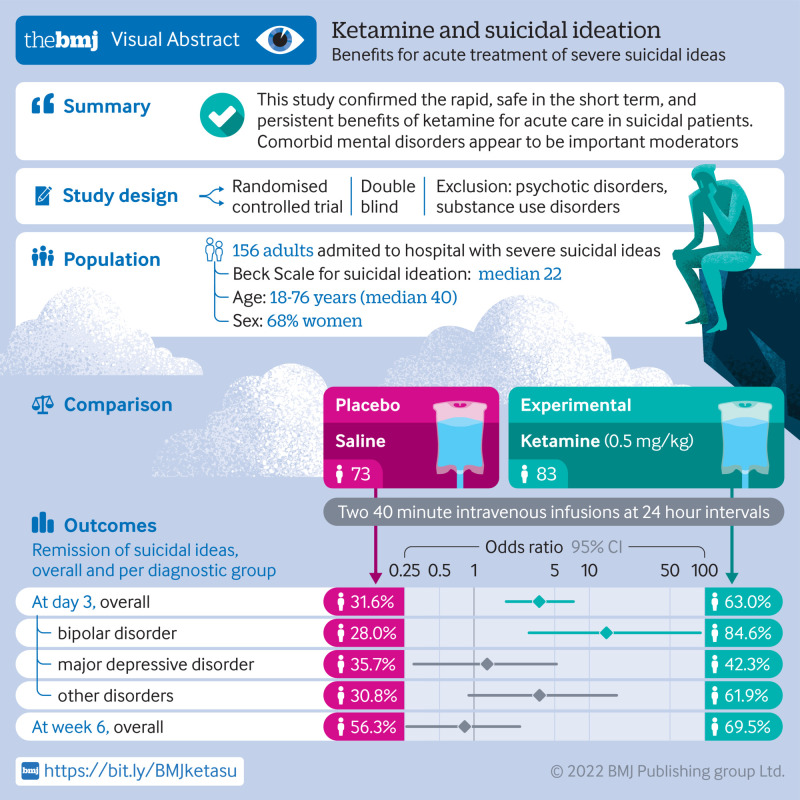
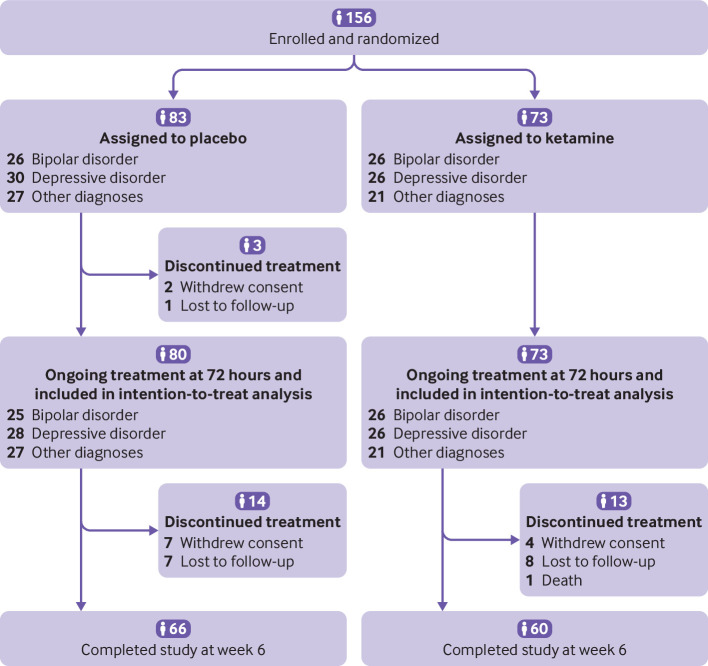
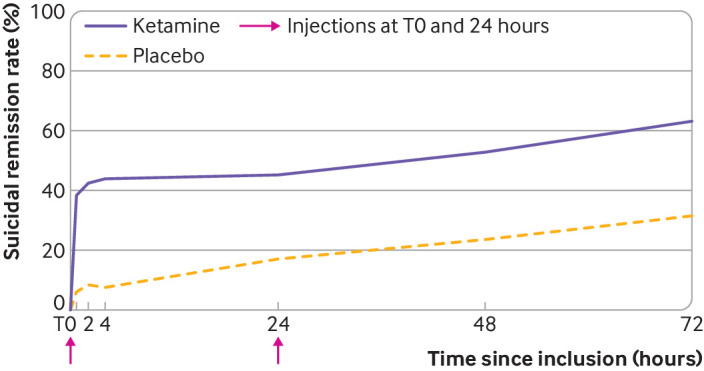
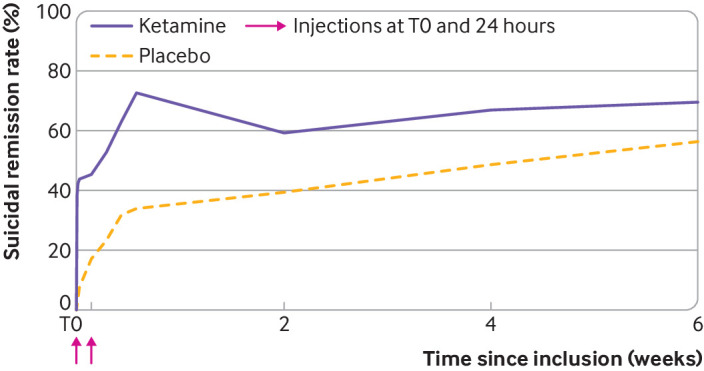
Objective: To confirm the rapid onset anti-suicidal benefits of ketamine in the short term and at six weeks, overall and according to diagnostic group. Design: Prospective, double blind, superiority, randomised placebo controlled trial. Setting: Seven French teaching hospitals between 13 April 2015 and 12 March 2019. Eligibility criteria for participants: Aged 18 or older with current suicidal ideation, admitted to hospital voluntarily. Exclusion criteria included a history of schizophrenia or other psychotic disorders, substance dependence, and contraindications for ketamine. Participants: 156 participants were recruited and randomised to placebo (n=83) or ketamine (n=73), stratified by centre and diagnosis: bipolar, depressive, or other disorders. Intervention: Two 40 minute intravenous infusions of ketamine (0.5 mg/kg) or placebo (saline) were administered at baseline and 24 hours, in addition to usual treatment. Main outcome measures: The primary outcome was the rate of patients in full suicidal remission at day 3, according to the scale for suicidal ideation total score ≤3. Analyses were conducted on an intention-to-treat basis. Results: More participants receiving ketamine reached full remission of suicidal ideas at day 3 than those receiving placebo: 46 (63.0%) of 83 participants in the ketamine arm and 25 (31.6%) of 73 in the placebo arm (odds ratio 3.7 (95% confidence interval 1.9 to 7.3), P<0.001). This effect differed according to the diagnosis (treatment: P<0.001; interaction: P=0.02): bipolar (odds ratio 14.1 (95% confidence interval 3.0 to 92.2), P<0.001), depressive (1.3 (0.3 to 5.2), P=0.6), or other disorders (3.7 (0.9 to 17.3, P=0.07)). Side effects were limited. No manic or psychotic symptom was seen. Moreover, a mediating effect of mental pain was found. At week 6, remission in the ketamine arm remained high, although non-significantly versus placebo (69.5% v 56.3%; odds ratio 0.8 (95% confidence interval 0.3 to 2.5), P=0.7). Conclusions: The findings indicate that ketamine is rapid, safe in the short term, and has persistent benefits for acute care in suicidal patients. Comorbid mental disorders appear to be important moderators. An analgesic effect on mental pain might explain the anti-suicidal effects of ketamine. Trial registration: ClinicalTrials.gov NCT02299440 .
Overview
CoChat Summary
TL;DR
In this double-blind randomised placebo-controlled trial, two intravenous ketamine infusions (0.5 mg/kg) rapidly increased full remission of severe suicidal ideation at day 3 compared with saline in voluntarily hospitalised adults. The effect differed by diagnostic group, was strongest in bipolar disorder, and was not statistically significant versus placebo at week 6.
Key findings
- At day 3, full suicidal remission (clinician-rated SSI total score ≤3) occurred in 46 (63.0%) of 73 patients in the ketamine arm versus 25 (31.6%) of 79 patients with data in the placebo arm (odds ratio 3.7, 95% confidence interval 1.9 to 7.3, P<0.001).
- The treatment effect differed by diagnosis (interaction P=0.02 or P=0.03 in adjusted analysis): bipolar disorder odds ratio 14.1 (3.0 to 92.2), P<0.001; depressive disorder 1.3 (0.3 to 5.2), P=0.6; other diagnoses 3.7 (0.9 to 17.3), P=0.07.
- At week 6, remission remained higher in the ketamine arm but was non-significant versus placebo: 69.5% v 56.3%; odds ratio 0.8 (0.3 to 2.5), P=0.7.
- Side effects were limited: 17 (23.3%) ketamine patients versus 7 (8.4%) placebo patients experienced at least one side effect; common ketamine side effects were sedation (11.0%), depersonalisation (9.6%), and nausea (6.8%). No manic or psychotic symptoms were seen. A mediation analysis suggested the anti-suicidal effect was mediated by reduced psychological pain.
Methods
- Prospective, double-blind, superiority, randomised placebo-controlled trial conducted in seven French teaching hospitals between 13 April 2015 and 12 March 2019; 156 adults aged ≥18 with current suicidal ideation, voluntarily admitted, were randomised 1:1 to ketamine (n=73) or placebo (n=83), stratified by centre and diagnosis (bipolar, depressive, or other).
- Intervention: two 40-minute intravenous infusions of ketamine (0.5 mg/kg) or placebo (0.9% saline) at baseline and 24 hours, in addition to usual treatment.
- Primary outcome: rate of full suicidal remission at day 3, defined as clinician-rated SSI total score ≤3; intention-to-treat analysis used logistic regression with arm-by-diagnostic-group interaction, Holm correction, linear mixed models for secondary outcomes, and a mediation model for psychological pain.
Limitations
- The paper states that diagnostic-group analyses used smaller samples, which may explain the large effect size in bipolar disorder and the lack of significant difference in depressive disorders; masking may have been compromised because ketamine can induce recognisable effects such as depersonalisation and dizziness, though this was not formally measured; and rapid resolution of suicidal ideas does not equate to reduced risk of suicidal acts, with similar suicide attempt rates during follow-up and potential for ketamine abuse requiring longer follow-up.
- Evident from the text: one centre included 75.0% of all patients, which may limit generalisability.
- Evident from the text: the abstract reports ketamine n=83 and placebo n=73, whereas the Methods and Results report ketamine n=73 and placebo n=83; the day 3 placebo denominator is also reported as 79 in the Results.
Model-written summary. Check it against the paper before relying on it.
Integrity signals
Registry
Cites
Statistics
Figures
Verification
Claims the paper makes
8 Valid · 2 Not valid · 22 Not checked · 80 Own results and interpretations
The cited sources support only part of this claim — read each source’s verdict below.
In the paper
“Firstly, the suicidal risk was often poorly measured (eg, with one single item of a depression scale).”
§ Ketamine for the acute treatment of severe suicidal ideation: double blind, randomised placebo controlled trial > Introduction
What the sources say
- Partly supportedcites [8] Diazgranados N Ibrahim L Brutsche NE. A randomized add-on trial of an N-methyl-D-aspartate antagonist in treatment-resistant bipolar depression. Arch Gen Psychiatry 2010; 67: 793- 802. 10.1001/archgenpsychiatry.2010.90 20679587 PMC3000408 sourceExperimental — accuracy not yet measured
Methods > Main Outcome Measures identifies the MADRS as this trial’s primary depression measure, and Results > Efficacy reports suicidal thoughts in an analysis of individual MADRS items. This supports the single-item example, but the paper does not say that previous ketamine studies often measured suicidal risk poorly. (LLM, conf=0.83)
- Not checked yetcites [9] Xiong J Lipsitz O Chen-Li D. The acute antisuicidal effects of single-dose intravenous ketamine and intranasal esketamine in individuals with major depression and bipolar disorders: A systematic review and meta-analysis. J Psychiatr Res 2021; 134: 57- 68. 10.1016/j.jpsychires.2020.12.038 33360864 source
- Supportedcites [10] Grunebaum MF Galfalvy HC Choo TH. Ketamine for Rapid Reduction of Suicidal Thoughts in Major Depression: A Midazolam-Controlled Randomized Clinical Trial. Am J Psychiatry 2018; 175: 327- 35. 10.1176/appi.ajp.2017.17060647 29202655 PMC5880701 source
The Abstract says that earlier reports of reduced suicidal ideation after ketamine were limited by measuring suicidal ideation with a single item from a depression inventory. This directly supports the citing sentence; the supplied passage does not specify a page. (LLM, conf=0.94)
plain- Asserted: passes — The authors put it forward as true.
- Checkable: passes — It can be checked against evidence.
- Load-bearing: passes — The paper’s conclusions depend on it.
- Based: passes — The paper gives a reason why it holds.
- Partly supported
The cited sources support only part of this claim — read each source’s verdict below.
In the paper
“Secondly, response (usually defined as a 50% score reduction on a scale) was the most common outcome rather than remission (that is, complete absence of suicidal ideas).”
§ Ketamine for the acute treatment of severe suicidal ideation: double blind, randomised placebo controlled trial > Introduction
What the sources say
- Partly supportedcites [8] Diazgranados N Ibrahim L Brutsche NE. A randomized add-on trial of an N-methyl-D-aspartate antagonist in treatment-resistant bipolar depression. Arch Gen Psychiatry 2010; 67: 793- 802. 10.1001/archgenpsychiatry.2010.90 20679587 PMC3000408 sourceExperimental — accuracy not yet measured
Our copy supports only the definitional parenthetical: the Statistical Analysis section defines 'Response (50% improvement from baseline on MADRS) and remission (MADRS scores <10)'. The attributed generalization — that previous ketamine studies of suicidal ideation usually took response rather than remission as the outcome — is nowhere stated; this trial measured depressive-symptom outcomes (MADRS primary), and the suicidal-thoughts item is explicitly reported as not significantly changed (Results, Efficacy). If anything, the Comment compares this trial with the 2006 ketamine trial in treatment-resistant MDD on both response AND remission rates ('similar remission rates at day 1 (31% for both studies)'), so the prior literature it cites did report remission. The claim's outcome-convention point about suicidal ideation is not supported by this source. (LLM, conf=0.65)
- Not checked yetcites [9] Xiong J Lipsitz O Chen-Li D. The acute antisuicidal effects of single-dose intravenous ketamine and intranasal esketamine in individuals with major depression and bipolar disorders: A systematic review and meta-analysis. J Psychiatr Res 2021; 134: 57- 68. 10.1016/j.jpsychires.2020.12.038 33360864 source
- Partly supportedcites [10] Grunebaum MF Galfalvy HC Choo TH. Ketamine for Rapid Reduction of Suicidal Thoughts in Major Depression: A Midazolam-Controlled Randomized Clinical Trial. Am J Psychiatry 2018; 175: 327- 35. 10.1176/appi.ajp.2017.17060647 29202655 PMC5880701 sourceExperimental — accuracy not yet measured
Our copy supports the definitional half of the sentence: in Randomization and Blinding it states 'Treatment response was defined as a day 1 SSI score ≥50% below baseline. We defined remission more stringently as a day 1 SSI score ≥50% below baseline and less than the eligibility threshold of 4,' and its Discussion describes earlier ketamine trials in response terms (Murrough et al.: 'odds ratio for response=2.2'; Hu et al.: 'faster response'). However, the paper nowhere characterizes previous ketamine suicidal-ideation studies as having 'usually' used response rather than remission; the limitations it credits to prior work (Abstract introduction) are measurement of ideation with a single depression-inventory item, lack of a control group, saline control, low baseline suicidal ideation, and mixed diagnoses. Note also that this source's 'remission' is a ≥50% drop plus SSI <4, not the complete absence of suicidal ideas the citing sentence glosses. (LLM, conf=0.65)
plain- Asserted: passes — The authors put it forward as true.
- Checkable: passes — It can be checked against evidence.
- Load-bearing: passes — The paper’s conclusions depend on it.
- Based: passes — The paper gives a reason why it holds.
- Partly supported
The cited sources support only part of this claim — read each source’s verdict below.
In the paper
“This placebo effect is also higher than that found in a meta-analysis of 10 trials analysing 157 suicidal patients with overall remission rates (clinician rated measures) of around 30% in the control group.29”
§ Ketamine for the acute treatment of severe suicidal ideation: double blind, randomised placebo controlled trial > Discussion > Principal findings
What the sources say
- Partly supportedcites [29] Wilkinson ST Ballard ED Bloch MH. The Effect of a Single Dose of Intravenous Ketamine on Suicidal Ideation: A Systematic Review and Individual Participant Data Meta-Analysis. Am J Psychiatry 2018; 175: 150- 8. 10.1176/appi.ajp.2017.17040472 28969441 PMC5794524 sourceExperimental — accuracy not yet measured
The Results (Characteristics of the Included Sample; page unavailable) report 10 included trials, but 167 participants with baseline suicidal ideation, not 157. The Results (The Effects of Ketamine on Clinician-Administered Suicidal Ideation Item Scores; page unavailable) compare the proportion free of suicidal ideation with a control group, but the available text does not give an overall control-group remission rate of around 30%. The Methods (Study Identification and Selection; page unavailable) also specify that controls received either saline placebo or midazolam, so the control outcome cannot simply be called a placebo effect. (LLM, conf=0.88)
plainn = 157- Asserted: passes — The authors put it forward as true.
- Checkable: passes — It can be checked against evidence.
- Load-bearing: unclear — It is unclear whether the paper’s conclusions depend on it.
- Based: passes — The paper gives a reason why it holds.
- Partly supported
Every source the paper cites for this claim was checked and supports it.
In the paper
“Additionally, one study of treatment resistant depression suggests that repeated doses of ketamine might be necessary for some patients to achieve remission of severe suicidal ideas.30”
§ Ketamine for the acute treatment of severe suicidal ideation: double blind, randomised placebo controlled trial > Discussion > Principal findings
What the sources say
- Supportedcites [30] Phillips JL Norris S Talbot J. Single and repeated ketamine infusions for reduction of suicidal ideation in treatment-resistant depression. Neuropsychopharmacology 2020; 45: 606- 12. 10.1038/s41386-019-0570-x 31759333 PMC7021716 source
The Discussion states that in the TRD sample, SI decreased after three Phase 2 infusions on clinician-rated MADRS-SI while 'the full course of six infusions was required to result in a significant SI decrease' on self-reported QIDS-SI, and that 'patients may gain additional benefits from repeated infusions beyond those obtained from single infusions.' The Abstract reports that 'Overall, 69% of participants had a complete alleviation of SI following repeated infusions,' and the Discussion opening and the marked-SI subgroup results (18 participants with baseline MADRS-SI ≥ 4) confirm cumulative reductions 'even for those with high pretreatment SI severity.' The hedged phrasing of the claim ('might be necessary for some patients') matches the source's own cautious framing of remission/alleviation of severe suicidal ideation requiring repeated dosing. (LLM, conf=0.85)
hedgedstates a possible cause- Asserted: passes — The authors put it forward as true.
- Checkable: passes — It can be checked against evidence.
- Load-bearing: unclear — It is unclear whether the paper’s conclusions depend on it.
- Based: passes — The paper gives a reason why it holds.
- Supported
The cited sources support only part of this claim — read each source’s verdict below.
In the paper
“Results in bipolar disorder—a disorder associated with a high suicidal risk and limited options to treat depression27—are highly encouraging and support two previous small studies.8 28”
§ Ketamine for the acute treatment of severe suicidal ideation: double blind, randomised placebo controlled trial > Discussion > Principal findings
What the sources say
- Partly supportedcites [8] Diazgranados N Ibrahim L Brutsche NE. A randomized add-on trial of an N-methyl-D-aspartate antagonist in treatment-resistant bipolar depression. Arch Gen Psychiatry 2010; 67: 793- 802. 10.1001/archgenpsychiatry.2010.90 20679587 PMC3000408 sourceExperimental — accuracy not yet measured
Our copy does report the bipolar-disorder results the sentence rests on: the Abstract (Results) and Results > Efficacy sections document significant rapid antidepressant effects of IV ketamine (0.5 mg/kg) added to lithium or valproate in 18 inpatients with treatment-resistant bipolar depression (71% responded to ketamine vs 6% to placebo; effect maintained through day 3), which is the 'highly encouraging' part. What our copy nowhere states is that these results 'support two previous small studies': the Comment relates the findings instead to the authors' single prior trial in treatment-resistant major depressive disorder (ref 34), listing both similarities and differences (faster onset, higher response at 40 min but lower at day 1, shorter duration), and the only 'consistent with all published studies using ketamine' statement (refs 30, 33, 34, 49) concerns dissociative adverse effects, not antidepressant efficacy. The same Comment also hedges the strength of the result ('these preliminary results require cautious interpretation. First, the group size was small'), so the citing sentence's unqualified framing overstates the source. (LLM, conf=0.70)
- Supportedcites [28] Zarate CA Jr Brutsche NE Ibrahim L. Replication of ketamine’s antidepressant efficacy in bipolar depression: a randomized controlled add-on trial. Biol Psychiatry 2012; 71: 939- 46. 10.1016/j.biopsych.2011.12.010 22297150 PMC3343177 source
The superscript 27 is attached to the parenthetical clause, i.e. that bipolar disorder carries high suicidal risk and has limited options for treating depression. Our copy's Introduction states exactly that framing: BPD is 'one of the most severe and lethal of all psychiatric disorders', the delay in treating suicidal behavior 'is an issue of particular concern in this already vulnerable population', and although several treatments are prescribed for bipolar depression 'none rapidly improve depressive symptoms—including suicidal ideation'; the Abstract Background adds that 'currently, no pharmacological treatments for bipolar depression exist' with rapid antidepressant/antisuicidal effects. The 'two previous small studies' portion of the sentence carries the separate citations 8 and 28 and is not attributed to this source (this paper itself replicates only its own earlier small bipolar trial, ref. 4). (LLM, conf=0.85)
plainstates an associationn = 26- Asserted: passes — The authors put it forward as true.
- Checkable: passes — It can be checked against evidence.
- Load-bearing: unclear — It is unclear whether the paper’s conclusions depend on it.
- Based: passes — The paper gives a reason why it holds.
- Partly supported
52 more claims
Create a free account to see all 112 claims and to verify the 32 references still open.
- It may state two separate claims as one. 29
- Probably not a substantial claim. 34
- The quote only partly states this claim. 1
Claims other papers make about this one
Each is checked against this paper’s own text: does it say what the citing paper says it does?
The cited source says what the claim attributes to it.
In the citing paper
“recent research demonstrating that ketamine significantly improved full remission rates for those presenting with severe acute suicidal ideation, though this effect differed based on primary diagnosis [76].”
From Ketamine in neuropsychiatric disorders: an update (2024) · cites this paper as [76]
The cited source says what the claim attributes to it.
In the citing paper
“Pharmacological approaches, particularly rapid-acting agents (i.e., ketamine), have attracted growing attention due to their capacity to produce short-term reductions in depressive symptoms, suicidal ideation, and affective distress [75,76,77].”
From Targeting Psychological Pain After a Suicide Attempt: Scoping Review and Intervention Protocol (2026) · cites this paper as [76]
Self-check
Percentages, sums and reported differences re-computed from the paper’s own numbers.
Each contradiction between two passages listed here was confirmed by an independent check.
Rated major: it would touch a result — a value a result rests on, reported and recomputed p-values on opposite sides of the significance level, two passages that conflict with no sign which is right, or a cited work retracted before this paper was published.
In the paper
“46 (63.0%) of 83 participants in the ketamine arm”
§ Ketamine for the acute treatment of severe suicidal ideation: double blind, randomised placebo controlled trial > Abstract > Results
Reported 63 · recomputed 55.421687
Rated major: it would touch a result — a value a result rests on, reported and recomputed p-values on opposite sides of the significance level, two passages that conflict with no sign which is right, or a cited work retracted before this paper was published.
In the paper
“25 (31.6%) of 73 in the placebo arm”
§ Ketamine for the acute treatment of severe suicidal ideation: double blind, randomised placebo controlled trial > Abstract > Results
Reported 31.6 · recomputed 34.246575
Rated major: it would touch a result — a value a result rests on, reported and recomputed p-values on opposite sides of the significance level, two passages that conflict with no sign which is right, or a cited work retracted before this paper was published.
In the paper
§ Ketamine for the acute treatment of severe suicidal ideation: double blind, randomised placebo controlled trial > Abstract > Results
“odds ratio 0.8 (95% confidence interval 0.3 to 2.5), P=0.7”
§ Ketamine for the acute treatment of severe suicidal ideation: double blind, randomised placebo controlled trial > Results > Outcomes at week 6
“the ketamine arm continued to have better full suicidal remission than the placebo arm (69.5 v 56.3% at week 6)”
Rated minor: it would not touch a result — a value no result rests on, a p-value that stays on the same side of the significance level, or a conflict that is clerical, resolved elsewhere in the paper, or outside its own findings.
In the paper
§ Ketamine for the acute treatment of severe suicidal ideation: double blind, randomised placebo controlled trial > Methods > Randomisation and masking
“based on the Mini-International Neuropsychiatric Interview (MINI) 5.0,17”
§ Ketamine for the acute treatment of severe suicidal ideation: double blind, randomised placebo controlled trial > Results > Patient characteristics
“MINI=Mini-International Neuropsychiatric Interview, seventh version (7.0.2)”
Rated minor: it would not touch a result — a value no result rests on, a p-value that stays on the same side of the significance level, or a conflict that is clerical, resolved elsewhere in the paper, or outside its own findings.
In the paper
§ Ketamine for the acute treatment of severe suicidal ideation: double blind, randomised placebo controlled trial > Results > Main outcomes at day 3
“Here, suicidal remission corresponds to a score < 3 on the Beck scale for suicidal ideation, clinician rated version”
§ Ketamine for the acute treatment of severe suicidal ideation: double blind, randomised placebo controlled trial > Methods > Outcomes
“The primary outcome was the rate of patients with a clinician rated SSI total score ≤3 (that is, in current full suicidal remission) at day 3”
Citations
Cites
The Brief Psychiatric Rating Scale.
Overall, J. E., & Gorham, D. R. (1962) · Psychological Reports · doi:10.2466/pr0.1962.10.3.799 · Cited by 11,090
(1998) · PubMed · Cited by 10,216
A Rating Scale for Mania: Reliability, Validity and Sensitivity
Young, R. C., Biggs, J. T., Ziegler, V. E., & Meyer, D. A. (1978) · British Journal of Psychiatry · doi:10.1192/bjp.133.5.429 · Cited by 8,744
Molecular Mechanisms of Depression: Perspectives on New Treatment Strategies
Lang, U. E., & Borgwardt, S. (2013) · Cellular Physiology and Biochemistry · doi:10.1159/000350094 · Cited by 8,475
The mini international neuropsychiatric interview
Lecrubier, Y., Sheehan, D., Hergueta, T., & Weiller, E. (1998) · European Psychiatry · doi:10.1016/s0924-9338(99)80239-9 · Cited by 5,872
The measurement of pessimism: the hopelessness scale
Beck, A. T., Weissman, A., Lester, D., & Trexler, L. (1974) · Journal of Consulting and Clinical Psychology · doi:10.1037/h0037562 · Cited by 5,494
Posner, K., Brown, G. K., Stanley, B., Brent, D. A., Yershova, K. V., Oquendo, M. A., Currier, G. W., Melvin, G. A., Greenhill, L., Shen, S., et al. (2011) · American Journal of Psychiatry · doi:10.1176/appi.ajp.2011.10111704 · Cited by 5,157
A randomized trial of an N-methyl-D-aspartate antagonist in treatment-resistant major depression.
Zarate, C. A., Singh, J. B., Carlson, P. J., Brutsche, N. E., Ameli, R., Luckenbaugh, D. A., Charney, D. S., & Manji, H. K. (2006) · Archives of General Psychiatry · doi:10.1001/archpsyc.63.8.856 · Cited by 3,766
Assessment of suicidal intention: The Scale for Suicide Ideation.
Beck, A. T., Kovacs, M., & Weissman, A. (1979) · Journal of Consulting and Clinical Psychology · doi:10.1037//0022-006x.47.2.343 · Cited by 3,419
The Inventory of Depressive Symptomatology (IDS): Psychometric properties
Rush, A. J., Gullion, C. M., Basco, M. R., Jarrett, R. B., & Trivedi, M. H. (1996) · Psychological Medicine · doi:10.1017/s0033291700035558 · Cited by 2,177
Research works printed but not linked: 1
- 10.1002/1097-4679(198807)44:4 · doi:10.1002/1097-4679(198807)44:4
Cited by
Yao, Y., Guo, D., Lu, T., Liu, F.-L., Huang, S., Diao, M.-Q., Li, S., Zhang, X.-J., Kosten, T. R., Shi, J., et al. (2024) · Psychiatry Research · doi:10.1016/j.psychres.2024.115886 · Cited by 175
History repeating: guidelines to address common problems in psychedelic science
van Elk, M., & Fried, E. I. (2023) · Therapeutic Advances in Psychopharmacology · doi:10.1177/20451253231198466 · Cited by 137
“Abbar et al. 27 found in a randomized controlled trial (RCT) comparing”
BackgroundThe molecular pathophysiology of depression and the new therapeutics
Tian, H., Hu, Z., Xu, J., & Wang, C. (2022) · MedComm · doi:10.1002/mco2.156 · Cited by 122
Ketamine in neuropsychiatric disorders: an update
Johnston, J. N., Kadriu, B., Kraus, C., Henter, I. D., & Zarate, C. A. (2024) · Neuropsychopharmacology · doi:10.1038/s41386-023-01632-1 · Cited by 108
“Two doses racemic ketamine (0.5 mg/kg), intravenous RCT ( n = 156) Signi fi cantly decreased severe acute suicidal ideation at three days, but heterogeneity in results based on primary diagnosis [76].”
BackgroundInfluentialThe clinical toxicology of ketamine
Schep, L. J., Slaughter, R. J., Watts, M., Mackenzie, E., & Gee, P. (2023) · Clinical Toxicology · doi:10.1080/15563650.2023.2212125 · Cited by 89
“One recent double-blind placebo-controlled trial, for example, indicated ketamine had a rapid effect, was safe in the short term and had persistent benefits for patients with suicidal ideation [18].”
BackgroundOral ketamine for depression: An updated systematic review
Meshkat, S., Haikazian, S., Vincenzo, J. D. D., Fancy, F., Johnson, D. E., Chen-Li, D. C. J., McIntyre, R. S., Mansur, R. B., & Rosenblat, J. D. (2023) · The World Journal of Biological Psychiatry · doi:10.1080/15622975.2023.2169349 · Cited by 70
“Ketamine has indicated anti-suicidal effects in multiple controlled clinical trials (Murrough et al. 2015; Abbar et al. 2022).”
BackgroundZhou, Y., Lan, X., Wang, C., Zhang, F., Liu, H., Fu, L., Li, W., Ye, Y., Hu, Z., Chao, Z., et al. (2023) · Journal of the American Academy of Child & Adolescent Psychiatry · doi:10.1016/j.jaac.2023.05.031 · Cited by 65
Hull, T. D., Malgaroli, M., Gazzaley, A., Akiki, T. J., Madan, A., Vando, L., Arden, K., Swain, J., Klotz, M., & Paleos, C. (2022) · Journal of Affective Disorders · doi:10.1016/j.jad.2022.07.004 · Cited by 58
“The large reductions in suicide ideation for KAT replicate those in more controlled settings (Abbar et al., 2022; Zeifman et al., 2022) and reiterate the potential utility of dissociative and psychedelic compounds for rapidly reducing suicide ideation and behavior.”
Lv, S., Yao, K., Zhang, Y., & Zhu, S. (2022) · Neuropharmacology · doi:10.1016/j.neuropharm.2022.109378 · Cited by 61
Ketamine and esketamine in suicidal thoughts and behaviors: a systematic review
Jollant, F., Colle, R., Nguyen, T. M. L., Corruble, E., Gardier, A. M., Walter, M., Abbar, M., & Wagner, G. (2023) · Therapeutic Advances in Psychopharmacology · doi:10.1177/20451253231151327 · Cited by 56
Self-citationSu, T., Li, C., Lin, W., Wu, H.-J., Tsai, S., Bai, Y., Mao, W., Tu, P., Chen, L., Li, W., et al. (2023) · The International Journal of Neuropsychopharmacology · doi:10.1093/ijnp/pyad014 · Cited by 66
“%) on day 3 (Abbar et al., 2022).”
BackgroundInfluentialThe Role of Ketamine in the Treatment of Bipolar Depression: A Scoping Review
Jawad, M. Y., Qasim, S., Ni, M., Guo, Z., Vincenzo, J. D. D., d’Andrea, G., Tabassum, A., Mckenzie, A., Badulescu, S., Grande, I., et al. (2023) · Brain Sciences · doi:10.3390/brainsci13060909 · Cited by 54
Ketamine, an Old–New Drug: Uses and Abuses
Vujović, K. S., Jotic, A. D., Medić, B., Srebro, D., Vujović, A., Žujović, J. T., Opanković, A., & Vučković, S. (2023) · Pharmaceuticals · doi:10.3390/ph17010016 · Cited by 55
The Rapidly Shifting Ketamine Landscape in the US
Wilkinson, S. T., Palamar, J. J., & Sanacora, G. (2024) · JAMA Psychiatry · doi:10.1001/jamapsychiatry.2023.4945 · Cited by 43
A meta-analysis of the effects of ketamine on suicidal ideation in depression patients
Shen, Z., Gao, D., Lv, X., Wang, H., & Yue, W. (2024) · Translational Psychiatry · doi:10.1038/s41398-024-02973-1 · Cited by 55
Personalized use of ketamine and esketamine for treatment-resistant depression
Medeiros, G. C., Demo, I., Goes, F. S., Zarate, C. A., & Gould, T. D. (2024) · Translational Psychiatry · doi:10.1038/s41398-024-03180-8 · Cited by 51
“…had greater antisuicidal effects (i.e., not antidepressant effects) in individuals with bipolar depression than those with unipolar depression [99], several studies did not fi nd signi fi cant differences in antidepressant effects between participants with bipolar and unipolar depression [78,…”
Biomarkers in Psychiatric Disorders
Glannon, W. (2022) · Cambridge Quarterly of Healthcare Ethics · doi:10.1017/s0963180122000056 · Cited by 48
“A recent study showed that ketamine could rapidly decrease suicidal ideation in participants with bipolar disorder.(35) The risk of harm from delayed intervention can be greater than the risk of harm from early intervention and potential adverse effects from psychotropic drugs.”
BackgroundGarel, N., Drury, J., Lévesque, J. T., Goyette, N., Lehmann, A., Looper, K. J., Erritzøe, D., Dames, S., Turecki, G., Rej, S., et al. (2023) · Frontiers in Psychiatry · doi:10.3389/fpsyt.2023.1268832 · Cited by 41
“In addition to strong evidence for antidepressant effects in complex real-world patients, ketamine can also produce benefits against suicidality (45, 46) and the cognitive symptoms of depression (47, 48), which are at least partially independent of core mood improvements (49).”
BackgroundChen, C., Zhou, N., Hu, N., Feng, J., & Wang, X. (2023) · Neuropsychiatric Disease and Treatment · doi:10.2147/ndt.s401032 · Cited by 40
Ketamine-assisted psychotherapy in adolescents with multiple psychiatric diagnoses
Wolfson, P. E., Andries, J., Ahlers, D., & Whippo, M. (2023) · Frontiers in Psychiatry · doi:10.3389/fpsyt.2023.1141988 · Cited by 34
“5 mg/kg of IV ketamine and assessment over 2 weeks (20).”
BackgroundThe diverse effects of ketamine, jack-of-all-trades: a narrative review
Richards, N. D., Howell, S. J., Bellamy, M. C., & Beck, J. (2025) · British Journal of Anaesthesia · doi:10.1016/j.bja.2024.11.018 · Cited by 33
Nierenberg, A. A., Lavin, P. T., Javitt, D. C., Shelton, R. C., Sapko, M. T., Mathew, S. J., Besthof, R. E., & Javitt, J. C. (2023) · International Journal of Bipolar Disorders · doi:10.1186/s40345-023-00308-5 · Cited by 29
“However, the clinical effect of a single ketamine infusion is demonstrated to diminish very quickly, e.g., three days post-intravenous dosing (Zarate et al. 2012; Abbar et al. 2022) and two days post-intranasal dosing (Canuso et al. 2018).”
BackgroundHumphreys, K. N., Korthuis, P. T., Stjepanović, D., & Hall, W. (2024) · Annual Review of Psychology · doi:10.1146/annurev-psych-020124-023532 · Cited by 32
Kurisu, K., Fujimori, M., Harashima, S., Akechi, T., Matsuda, T., Saika, K., Yoshiuchi, K., Miyashiro, I., & Uchitomi, Y. (2022) · Cancer Medicine · doi:10.1002/cam4.5122 · Cited by 25
Brenner, L. A., Capaldi, V., Constans, J., Dobscha, S., Fuller, M., Matarazzo, B., McGraw, K., Richter, K., Sall, J., Smolenski, D., et al. (2025) · Annals of Internal Medicine · doi:10.7326/annals-24-01938 · Cited by 22
“…suicide attempts in those with schizophrenia and suicidal ideation or a history of attempts (13) and ketamine infusion as an adjunctive treatment for the short-term reduction of suicidal ideation in those with suicidal ideation and major depressive disorder (14, 15) ( Table , Recommendation 12).”
Postsynaptic Proteins at Excitatory Synapses in the Brain—Relationship with Depressive Disorders
Samojedny, S., Czechowska, E., Pańczyszyn-Trzewik, P., & Sowa-Kućma, M. (2022) · International Journal of Molecular Sciences · doi:10.3390/ijms231911423 · Cited by 23
Yrondi, A., Javelot, H., Nobile, B., Boudieu, L., Aouizerate, B., Llorca, P., Charpeaud, T., Bennabi, D., Lefrere, A., & Samalin, L. (2024) · L Encéphale · doi:10.1016/j.encep.2023.11.029 · Cited by 26
Self-citationNew investigational agents for the treatment of major depressive disorder
Pochwat, B., Krupa, A. J., Siwek, M., & Szewczyk, B. (2022) · Expert Opinion on Investigational Drugs · doi:10.1080/13543784.2022.2113376 · Cited by 23
Lohani, M., Bryan, C. J., Elsey, J. S., Dutton, S., Findley, S. P., Langenecker, S. A., West, K., & Baker, J. C. (2024) · Journal of Affective Disorders · doi:10.1016/j.jad.2024.06.004 · Cited by 20
The Role of Visual Abstracts in the Dissemination of Medical Research.
Millar, B. C., & Lim, M. (2022) · PubMed Central · Cited by 43
Nobile, B., Gourguechon-Buot, E., Olié, É., & Courtet, P. (2025) · Journal of Affective Disorders · doi:10.1016/j.jad.2025.119854 · Cited by 22
Self-citationWolfgang, A. S., & Hoge, C. W. (2023) · Current Psychiatry Reports · doi:10.1007/s11920-023-01446-4 · Cited by 25
“Ketamine has also been found to rapidly improve suicidality within 1 day [34, 35], with effects that may be sustained for at least 6 weeks [36].”
BackgroundInterventions for attempted suicide
Menon, V., & Vijayakumar, L. (2022) · Current Opinion in Psychiatry · doi:10.1097/yco.0000000000000807 · Cited by 21
Suicide prevention: reflections on progress over the past decade
Hawton, K. E., & Pirkis, J. (2024) · The Lancet Psychiatry · doi:10.1016/s2215-0366(24)00105-6 · Cited by 22
Sobanski, T., Peikert, G., Kastner, U. W., & Wagner, G. (2022) · World Journal of Psychiatry · doi:10.5498/wjp.v12.i9.1115 · Cited by 20
Psychedelic Therapy: A Primer for Primary Care Clinicians—Ketamine
Evans, V. D., Arenas, A., Shinozuka, K., Tabaac, B. J., Beutler, B. D., Cherian, K. N., Fasano, C., & Muir, O. S. (2024) · American Journal of Therapeutics · doi:10.1097/mjt.0000000000001721 · Cited by 19
More, S. M., Kaleem, M., Kharwade, R., Almutairy, A. F., Shahzad, N., Mujtaba, M. A., Taha, M., Pise, A. G., Zafar, A., & Mahmood, D. (2024) · Brain Research · doi:10.1016/j.brainres.2024.149313 · Cited by 18
(Es)Ketamine for Suicidal Ideation and Behavior: Clinical Efficacy
Alario, A. A., & Niciu, M. J. (2022) · Chronic Stress · doi:10.1177/24705470221128017 · Cited by 18
“Psychological pain, as detected by the Physical and Psychological Pain Visual Analog Scale (PPP-VAS) mediated the antisuicidal response in this cohort.(19) Finally, Pathak and colleagues assessed participants in a MDE with current SI (Modified Scale for Suicidal Ideations >20) given 3 infusions of either ketamine or p…”
BackgroundMethodWilkowska, A., & Cubała, W. J. (2023) · Frontiers in Psychiatry · doi:10.3389/fpsyt.2023.1322752 · Cited by 20
“The response rate in the BP group was 84% vs. 28% in the placebo group, moreover, in the MDD group response rate was 42% vs. 37% in the placebo group (35).”
BackgroundThe Role of Intravenous Anesthetics for Neuro: Protection or Toxicity?
Wang, K., Wang, Y., Zhang, T., Chang, B., Fu, D., & Chen, X. (2024) · Neuroscience Bulletin · doi:10.1007/s12264-024-01265-4 · Cited by 21
Porras‐Segovia, A., Nobile, B., Olié, É., Gourguechon-Buot, E., Baca‐García, E., Gorwood, P. A. P. M., Abascal‐Peiró, S., & Courtet, P. (2023) · Journal of Affective Disorders · doi:10.1016/j.jad.2023.05.018 · Cited by 18
Self-citationAnti-Suicidal Effects of Lithium, Ketamine, and Clozapine—A 10-Year Systematic Review
Waszak, P. M., Opalko, J., Olszańska, N., & Zagożdżon, P. (2025) · Pharmaceuticals · doi:10.3390/ph18050742 · Cited by 15
“Murrough et al. and Abbar et al. investigated the efficacy of ketamine in patients with suicidal ideation and varying co-morbid mental disorders [46,57].”
InfluentialWang, S., Tang, S., Huang, J., & Chen, H. (2022) · General Psychiatry · doi:10.1136/gpsych-2022-100922 · Cited by 15
Trends in poisonings involving ketamine in the United States, 2019–2023
Palamar, J. J., Jewell, J. S., Shahawy, O. E., & Black, J. C. (2025) · Drug and Alcohol Dependence · doi:10.1016/j.drugalcdep.2025.112549 · Cited by 13
Fond, G. B., Faugère, M., Boyer, L., Peri, P., Stéphan, F., Molière, F., Anguill, L., Bennabi, D., Haffen, É., Bouvard, A., et al. (2023) · Progress in Neuro-Psychopharmacology and Biological Psychiatry · doi:10.1016/j.pnpbp.2023.110779 · Cited by 16
Self-citationOyetunji, A. O., Huelga, C., Bunte, K., Tao, R., & Bellman, V. (2023) · AIMS Public Health · doi:10.3934/publichealth.2023043 · Cited by 13
“Furthermore, ketamine has been proven to be harmless and advantageous in managing patients who are acutely suicidal or emotionally unstable in the short term [52].”
BackgroundIzadi, N., Mitchell, R. H. B., Giacobbe, P., Nestor, S. M., Steinberg, R. J., Amini, J., Sinyor, M., & Schaffer, A. (2023) · FOCUS The Journal of Lifelong Learning in Psychiatry · doi:10.1176/appi.focus.20230011 · Cited by 11
Lopes, E. I. T. C., Cavalcanti-Ribeiro, P., Palhano-Fontes, F., Gonçalves, K. T. D. C., Nunes, E. A., Lima, N. B. D. M., dos Santos, N. C., de Brito, A. J. C., de Araújo, D. B., & Coelho, N. L. G. (2024) · Journal of Psychiatric Research · doi:10.1016/j.jpsychires.2024.06.020 · Cited by 12
Yao, H., Wang, X., Chi, J., Chen, H., Liu, Y., Jiayi, Y., Yu, J., Ruan, Y., Xiang, X., Pi, J., et al. (2024) · Molecules · doi:10.3390/molecules29050964 · Cited by 12
Ketamine – An Imperfect Wonder Drug?
Magruder, T., Isenhart, M., Striepe, M. V., Mannisto, A., Jannie, K. M., Smith, J. M., McCarson, K. E., Christian, D., & Đurić, V. (2024) · Biochemical Pharmacology · doi:10.1016/j.bcp.2024.116516 · Cited by 14
Nobile, B., Gourguechon-Buot, E., Gorwood, P. A. P. M., Olié, É., & Courtet, P. (2024) · Psychiatry Research · doi:10.1016/j.psychres.2024.115833 · Cited by 13
Self-citationNobile, B., Gourguechon-Buot, E., Malestroit, M., Olié, É., Haffen, É., Gorwood, P. A. P. M., & Courtet, P. (2024) · Psychiatry Research · doi:10.1016/j.psychres.2024.116249 · Cited by 10
Self-citationPediatric suicide: Review of a preventable tragedy
Greydanus, D. E., Nazeer, A., Qayyum, Z., Patel, D. R., Rausch, R., Hoang, L.-N., Miller, C., Chahin, S. S., Apple, R. W., Saha, G. K., et al. (2024) · Disease-a-Month · doi:10.1016/j.disamonth.2024.101725 · Cited by 13
Feng, W., Chen, C., Zeng, Y., & Zhang, B. (2024) · Progress in Neuro-Psychopharmacology and Biological Psychiatry · doi:10.1016/j.pnpbp.2024.111152 · Cited by 11
Aref, S., Habib, M. Z., Eid, D., Eltantawy, E. H. B., Taeimah, M., Hassan, F. E., El‐Gabry, D. A., ElShahawi, H. H., Mohamad, M. I., Abdel-Tawab, A. M., et al. (2025) · Progress in Neuro-Psychopharmacology and Biological Psychiatry · doi:10.1016/j.pnpbp.2025.111503 · Cited by 10
Wang, Y., Xu, J., Zhou, X., Che, L., Qiu, M., Liu, Y., Gao, M., & Yang, Z. (2025) · Advanced Science · doi:10.1002/advs.202516024 · Cited by 13
Chen, M., Su, T., Chen, L., Li, C., Wu, H.-J., Lin, W., Tsai, S., Bai, Y., Mao, W., Tu, P., et al. (2023) · Journal of Psychiatric Research · doi:10.1016/j.jpsychires.2023.03.010 · Cited by 10
Gałuszko‐Węgielnik, M., Jakuszkowiak‐Wojten, K., Wiglusz, M. S., Cubała, W. J., & Pastuszak, M. (2023) · Frontiers in Neuroscience · doi:10.3389/fnins.2023.1214972 · Cited by 10
“Figure 2 and Table 3 exhibit item 10 from MADRS (suicidal ideation) and its temporal variations, indicating a reduction in suicidal thoughts, as corroborated by previous research on the subject (Abbar et al., 2022).”
ResultShivanekar, S., Gopalan, P., Pizon, A., Spotts, C., Cruz, N., Lightfoot, M., Rohac, R., Baumeister, A., Griffo, A., Panny, B., et al. (2022) · International Journal of Environmental Research and Public Health · doi:10.3390/ijerph192113792 · Cited by 8
“Abbar et al. used a single dose of IV ketamine for suicidality in a 2022 double-blind, randomized control trial (RCT) named KETIS [78].”
MethodShi, Z.-M., Lan, X.-J., Chen, Q., Chen, J., Su, Z. Z., Huang, X., Ning, Y.-P., Yang, X.-H., Wei, X., & Zheng, W. (2024) · Journal of Affective Disorders · doi:10.1016/j.jad.2024.11.034 · Cited by 9
Mușat, M. I., Ifrim-Predoi, A.-M., Mitran, S. I., Osiac, E., & Cătălin, B. (2025) · International Journal of Molecular Sciences · doi:10.3390/ijms26083558 · Cited by 9
“Ketamine treatment appears to be effective in a multitude of depression forms, including treatment-resistant depression [19,20] and depression with severe suicidal ideation [21].”
Raffone, F., Mazzoni, F., Ciechi, A. D., Girone, N., Macellaro, M., Martinotti, G., Dell’Osso, B. M., Olivola, M., & Martiadis, V. (2026) · Asian Journal of Psychiatry · doi:10.1016/j.ajp.2026.104983 · Cited by 10
Exploring effects and experiences of ketamine in group couples therapy
Cornfield, M., McBride, S., Torre, J. T. L., Zalewa, D., Gallo, J., Mahammadli, M., & Williams, M. T. (2024) · Journal of Psychedelic Studies · doi:10.1556/2054.2024.00302 · Cited by 9
“Ketamine ’ s effects are rapid and have been shown to be effective against depression and suicidal ideation within a single day (Abbar et al., 2022; Sera fi ni, Howland, Rovedi, Girardi, & Amore, 2014; Wil-kinson et al., 2018).”
BackgroundSuicide prevention and ketamine: insights from computational modeling
Charlton, C. E., Karvelis, P., McIntyre, R. S., & Diaconescu, A. O. (2023) · Frontiers in Psychiatry · doi:10.3389/fpsyt.2023.1214018 · Cited by 7
Shim, S. R., Jeong, H. S., Bommersbach, T. J., Nierenberg, A. A., Zarate, C. A., Kaster, T. S., Correll, C. U., McIntyre, R. S., Krystal, J. H., & Rhee, T. G. (2026) · JAMA Psychiatry · doi:10.1001/jamapsychiatry.2026.0612 · Cited by 11
Jollant, F., Dematteï, C., Fabbro-Péray, P., & Abbar, M. (2023) · Journal of Affective Disorders · doi:10.1016/j.jad.2023.11.043 · Cited by 10
Self-citationPsychiatric and legal considerations for ketamine treatment within prison settings
Bayrhammer-Savel, M., Ortner, M., Hout, M. C. V., & Komorowski, A. (2024) · Frontiers in Psychiatry · doi:10.3389/fpsyt.2024.1316108 · Cited by 9
Tu, L., Liu, Y., Zhu, H., Zhang, Q., & Xiao, J. (2024) · BMC Public Health · doi:10.1186/s12889-024-19095-4 · Cited by 11
A scientometric analysis of research on the role of NMDA receptor in the treatment of depression
Chen, X., Wang, X., Li, C., Zhang, Y., Feng, S., & Xu, S. (2024) · Frontiers in Pharmacology · doi:10.3389/fphar.2024.1394730 · Cited by 9
Ketamine for the Treatment of Psychiatric Disorders: A Systematic Review and Meta-Analysis
Kwan, A. T. H., Lakhani, M., Singh, G., Le, G. H., Wong, S., Teopiz, K. M., Dev, D. A., Manku, A. S., Sidhu, G., & McIntyre, R. S. (2024) · CNS Spectrums · doi:10.1017/s1092852924000580 · Cited by 15
Bozzatello, P., Novelli, R., Schisano, R., Brasso, C., Rocca, P., & Bellino, S. (2025) · Pharmaceuticals · doi:10.3390/ph18050665 · Cited by 8
“Improvement in suicidal ideation was assessed using the SSI [89,90], the C-SSRS [89–91], the Suicide Probability Scale (SPS) [88], the Positive and Negative Suicide Ideation Inventory (PANSI), and the MADRS item 10 score [91].”
Research trends and hotspots of ketamine from 2014 to 2023: a bibliometric analysis
Wang, Y., Chang, S., & Chen, D. (2024) · Frontiers in Neuroscience · doi:10.3389/fnins.2024.1407301 · Cited by 9
Sajid, S., Mann, J. J., & Grunebaum, M. F. (2025) · Translational Psychiatry · doi:10.1038/s41398-025-03255-0 · Cited by 10
“Others found a signi fi cant anti-SI effect of racemic ketamine that persisted till Day 3 [39], Day 5 [43, 44], and Week 2 [40].”
InfluentialA synopsis of multitarget therapeutic effects of anesthetics on depression
Wu, G., & Xu, H. (2023) · European Journal of Pharmacology · doi:10.1016/j.ejphar.2023.176032 · Cited by 7
Case report: Adult with bipolar disorder and autism treated with ketamine assisted psychotherapy
Harris, C. P., Jones, B., Walker, K. L., & Berry, M. S. (2024) · Frontiers in Psychiatry · doi:10.3389/fpsyt.2024.1322679 · Cited by 9
Guida, C. R., Maia, J. M., Ferreira, L. F. R., Rahdar, A., Branco, L. G. S., & Soriano, R. N. (2024) · Progress in Neuro-Psychopharmacology and Biological Psychiatry · doi:10.1016/j.pnpbp.2024.111070 · Cited by 7
Chen-Li, D. C. J., Mansur, R. B., Vincenzo, J. D. D., Chisamore, N., Kaczmarek, E. S., McIntyre, R. S., & Rosenblat, J. D. (2024) · Psychiatry Research · doi:10.1016/j.psychres.2024.116282 · Cited by 10
Ketamine Evolving Clinical Roles and Potential Effects with Cognitive, Motor and Driving Ability
Edinoff, A. N., Sall, S., Koontz, C., Williams, A. K., Drumgo, D., Mouhaffel, A., Cornett, E. M., Murnane, K. S., & Kaye, A. D. (2023) · Neurology International · doi:10.3390/neurolint15010023 · Cited by 7
“A prospective, double bind, randomized, placebo-controlled trial investigated the rapid reduction of suicidal ideation due to ketamine in both the short term and six weeks [24].”
BackgroundGold, N. D., Mallard, A. J., Hermann, J. C., Zeifman, R. J., Pagni, B. A., Bogenschutz, M. P., & Ross, S. (2023) · Journal of Palliative Medicine · doi:10.1089/jpm.2022.0604 · Cited by 6
“, 39, 64, 65 In addition to supporting those with life-threatening illness, evidence also suggests that both the serotonergic psychedel-ics 39,68,69 and ketamine 70–72 may reduce suicidality across various populations and settings, including those with major and treatment-resistant depression.”
Chen, M., Su, T., Li, C., Lin, W., Wu, H.-J., Tsai, S., Bai, Y., Mao, W., & Tu, P. (2023) · European Archives of Psychiatry and Clinical Neuroscience · doi:10.1007/s00406-023-01735-2 · Cited by 8
Willms, J. O., McCauley, B., Kerr, L., Presto, P., Arun, A., Shah, N., Irby, K., Strawn, M., & Kopel, J. J. (2022) · Frontiers in Psychiatry · doi:10.3389/fpsyt.2022.1020214 · Cited by 7
Li, J., Ma, L., Sun, H., Li, M., Cao, Y., Peng, Y., & Xu, J. (2025) · European Archives of Psychiatry and Clinical Neuroscience · doi:10.1007/s00406-024-01920-x · Cited by 5
Escobedo-Aedo, P. J., Serrand, C., Kabani, S., & Estric, C. (2025) · Journal of Eating Disorders · doi:10.1186/s40337-025-01232-y · Cited by 6
“Historically, ketamine was initially used for its soothing attributes but has lately been used as a fast-acting antidepressant and for suicidal ideation [34, 35].”
Wong, S., Le, G. H., Guillen-Burgos, H. F., Ho, R., Cao, B., Lo, H. K. Y., Teopiz, K. M., & McIntyre, R. S. (2025) · Journal of Affective Disorders · doi:10.1016/j.jad.2025.120783 · Cited by 9
Inflammation and treatment strategies for suicidal behavior
Behera, C., Gupta, S., Shelton, R. C., & Dwivedi, Y. (2026) · The World Journal of Biological Psychiatry · doi:10.1080/15622975.2026.2659772 · Cited by 5
Ivanović, A., Petrović, J., Stanić, D., Nedeljković, J., Ilić, M., Jukić, M. M., Pejušković, B., & Pešić, V. (2025) · Molecular and Cellular Neuroscience · doi:10.1016/j.mcn.2025.104006 · Cited by 6
Pompili, M., Dell’Osso, B. M., Rosso, G., Amore, M., Bellomo, A., Mautone, A., Pilotto, E., Ramacciotti, S., Scardigli, M. I., Ascione, G., et al. (2023) · Comprehensive Psychiatry · doi:10.1016/j.comppsych.2023.152430 · Cited by 5
Suicide: Epidemiology, Prevention, Assessment, Treatment, and Outcomes
Menon, V., Subramanian, K., & Balasubramanian, I. (2024) · Advances in mental health and addiction · doi:10.1007/978-3-031-56192-4_5 · Cited by 7
Tan, J.-Q., Gu, L.-M., Zhou, Y., Wang, C., Lan, X., Zheng, W., & Ning, Y. (2025) · Frontiers in Psychiatry · doi:10.3389/fpsyt.2025.1498952 · Cited by 7
Ilango, A., & Chazan, L. (2024) · Springer eBooks · doi:10.1007/978-3-031-48991-4_84 · Cited by 4
Kozlowitz, S., Ribeiro, A., Sibéoni, J., Brossard, B., & Chevance, A. (2025) · Psychotherapy and Psychosomatics · doi:10.1159/000548567 · Cited by 6
Neurophysiological biomarkers of treatment response in suicidal ideation: a systematic review
Stapper, N., Benster, L. L., Menon, S., Boyd, E. C., Poorganji, M., Hadas, I., Sun, Y., Appelbaum, L. G., Daskalakis, Z. J., & Weissman, C. R. (2025) · Translational Psychiatry · doi:10.1038/s41398-025-03477-2 · Cited by 4
Suicidal crisis: first regulatory approval of IV racemic ketamine
Jollant, F., Abbar, M., & Tayeb, A. E. K. A. (2026) · The Lancet · doi:10.1016/s0140-6736(26)00594-5 · Cited by 4
Self-citationRole of neural oscillations in depression: highlights on gamma oscillations
Yin, Y., & Li, Y. (2026) · Translational Psychiatry · doi:10.1038/s41398-026-03991-x · Cited by 4
“Beyond these, ketamine, exerting rapid-onset antidepressant actions in clinical practices [19, 20], has been reported to regulate gamma oscillations [7, 21].”
Nöhles, V. B., Bermpohl, F., Falkai, P., Reif-Leonhard, C., Jessen, F., Adli, M., Otte, C., Meyer‐Lindenberg, A., Bauer, M., Rubarth, K., et al. (2023) · BMC Psychiatry · doi:10.1186/s12888-023-05230-9 · Cited by 5
McInnes, L. A., Berman, R., Worley, M. J., & Shih, E. (2025) · Psychiatry Research · doi:10.1016/j.psychres.2025.116689 · Cited by 7
Suicidal behaviour is pathological: implications for psychiatric euthanasia
Sisti, D. A., Mann, J. J., & Oquendo, M. A. (2024) · Journal of Medical Ethics · doi:10.1136/jme-2023-109522 · Cited by 4
Ketamine for unipolar depression: A systematic review of efficacy and safety
Peiris, T. E., Pokhrel, A., & Paudel, Y. (2025) · Australasian Psychiatry · doi:10.1177/10398562251328805 · Cited by 3
“7,9 However,this review expands upon their fi ndings by providing a detailed assessment of response moderators, safety considerations, and long-term outcomes, which remain critical areas for future research.”
Consultation-Liaison Case Conference: Suicidal Ideation in a Patient at the End-of-Life
Calagua-Bedoya, E. A., Ernst, C. L., Shalev, D., & Bialer, P. A. (2022) · Journal of the Academy of Consultation-Liaison Psychiatry · doi:10.1016/j.jaclp.2022.11.004 · Cited by 5
Shan, Z., Can, A., Mohamed, A. Z., Dutton, M., Hermens, D. F., Calhoun, V. D., Williams, L. M., Bennett, M. R., & Lagopoulos, J. (2024) · European Archives of Psychiatry and Clinical Neuroscience · doi:10.1007/s00406-024-01831-x · Cited by 4
Metadata
- Authors
- Abbar, M., Demattei, C., El-Hage, W., Llorca, P.-M., Samalin, L., Demaricourt, P., Gaillard, R., Courtet, P., Vaiva, G., Gorwood, P., Fabbro, P., & Jollant, F.
- Affiliations
- Université de Montpellier (FR)
- Department of Biostatistics, Epidemiology, Public Health and Innovation in Methodology, CHU Nîmes, University of Montpellier, Nîmes, France
- CHRU Tours, Research Unit (UMR) 1253, iBrain, University of Tours, National Institute for Health and Medical Research (INSERM), Tours, France
- Institut Pascal (FR)
- School of Medicine, University of Paris and Sainte-Anne Hospital, Paris, France
- Inserm (FR)
- Department of Psychiatry, CHU Lille, Lille, France
- Université Paris Cité (FR)
- Corresponding author
- Jollant, Fabrice
- ORCID
- Venue
- BMJ
- Publisher
- BMJ
- Published
- 2022-02-02
- Volume
- 376
- Pages
- e067194
- ISSN
- 1756-1833 (ISSN-L)
- PMC
- PMC8808464
- OpenAlex
- W4210782512
- Cited by
- 181
- References
- 37
- Citations by year
- 2026: 37 · 2025: 37 · 2024: 46 · 2023: 38 · 2022: 23
- FWCI
- 21.54
- Type
- journal article
- Language
- en
- Open access
- hybrid
- doi.org
- Licence
- Locations
- BMJ (publishedVersion, cc-by-nc)
- PubMed Central (publishedVersion, cc-by-nc)
- PubMed (publishedVersion)
- HAL (submittedVersion, cc-by)
- Topics
- Health Sciences › Medicine › Pharmacology (medical) › Treatment of Major Depression
- Social Sciences › Psychology › Clinical Psychology › Suicide and Self-Harm Studies
- Health Sciences › Medicine › Psychiatry and Mental health › Electroconvulsive Therapy Studies
- Keywords
- ketamine, suicidal ideation, suicide prevention, rapid-acting antidepressants, bipolar disorder, depression, psychological suffering, mediating effect, intravenous infusion, hospitalized patients, treatment-resistant depression, mood stabilizers
- MeSH terms
- Adolescent, Adult, Aged, Analgesics, Depression, Double-Blind Method, Female, Humans, Ketamine, Male, Middle Aged, Prospective Studies, Remission Induction, Young Adult, Suicidal Ideation, Patient Acuity
About these checks
Registry, retraction, Cites and statistics results are computed, not judged, with one exception: a printed reference that no index lists is read once by a model before it counts as a citation error. Claims are extracted by a model and kept only when their quote appears verbatim in the text; each cited source is then checked, with a model’s help, for whether it says what the claim relies on. Those verdicts can be wrong — read the claim’s quote and the cited source before relying on one.
The claim verdicts this report counts are experimental: their accuracy is not yet measured.
A language model drew the claims from the paper on 2026-10-05, under version 3 of the claim definition (model deepseek-v4.1-flash, prompt extract-v3).
A second model labelled each claim on 2026-10-05 (model jev-1.13-20260917, definition revision gold-guideline-v0.2).
Cited sources are checked with a language model’s help (gpt-6-sol and qwen3.8-omni-flash).
Statistics and arithmetic are recomputed, not judged.
Confidence bands are shown only for fields calibrated on our annotated test set. None is calibrated yet, so no band is shown.
What counts as a claim ›How we measure confidence ›How we check this ›
Are you an author, or do you see a problem with this page? Request a review
Data sources
Bibliographic data: Semantic Scholar, OpenAlex, Crossref.
Contains information from the Semantic Scholar Academic Graph Datasets, made available under the ODC Attribution License (ODC-BY 1.0).
Semantic Scholar’s data is described in: Kinney, R., et al. (2023). The Semantic Scholar Open Data Platform. arXiv:2301.10140.
