

Reporting guideline for the early stage clinical evaluation of decision support systems driven by artificial intelligence: DECIDE-AI
Open accessThe DOI matches its Crossref record; 56 of the 57 references it cites were found in a registry or an index; 8 of the 19 sources its claims cite were checked for support.
Abstract
A growing number of artificial intelligence (AI)-based clinical decision support systems are showing promising performance in preclinical, in silico, evaluation, but few have yet demonstrated real benefit to patient care. Early stage clinical evaluation is important to assess an AI system’s actual clinical performance at small scale, ensure its safety, evaluate the human factors surrounding its use, and pave the way to further large scale trials. However, the reporting of these early studies remains inadequate. The present statement provides a multistakeholder, consensus-based reporting guideline for the Developmental and Exploratory Clinical Investigations of DEcision support systems driven by Artificial Intelligence (DECIDE-AI). We conducted a two round, modified Delphi process to collect and analyse expert opinion on the reporting of early clinical evaluation of AI systems. Experts were recruited from 20 predefined stakeholder categories. The final composition and wording of the guideline was determined at a virtual consensus meeting. The checklist and the Explanation & Elaboration (E&E) sections were refined based on feedback from a qualitative evaluation process. 123 experts participated in the first round of Delphi, 138 in the second, 16 in the consensus meeting, and 16 in the qualitative evaluation. The DECIDE-AI reporting guideline comprises 17 AI specific reporting items (made of 28 subitems) and 10 generic reporting items, with an E&E paragraph provided for each. Through consultation and consensus with a range of stakeholders, we have developed a guideline comprising key items that should be reported in early stage clinical studies of AI-based decision support systems in healthcare. By providing an actionable checklist of minimal reporting items, the DECIDE-AI guideline will facilitate the appraisal of these studies and replicability of their findings.
Overview
CoChat Summary
TL;DR
DECIDE-AI is a consensus-based reporting guideline for early-stage, small-scale live clinical evaluation of AI-based decision support systems. It provides a 27-item minimum reporting checklist focused on clinical utility, safety, human factors, and preparation for larger summative trials.
Key findings
- The DECIDE-AI guideline comprises 17 AI-specific reporting items (28 subitems) and 10 generic reporting items, with an Explanation & Elaboration paragraph for each.
- It was developed through a consensus process involving 151 experts from 18 countries and 20 stakeholder groups.
- The guideline targets early live clinical evaluation, where supported decisions have an actual impact on patient care, and is intended to be independent of study design and AI system modality.
- The consensus group deliberately excluded items on interpretability and user trust because there is currently no generally accepted way to quantify or evaluate them.
Methods
- A two-round modified Delphi process was conducted, with expert recruitment across 20 predefined stakeholder categories; 123 experts completed round 1, 138 completed round 2, 16 participated in the consensus meeting, and 16 in qualitative evaluation.
- The initial item list contained 54 items; round 1 yielded 43,986 words of free text, 6,419 item scores, 228 comments, 64 new item proposals, and 109 themes, producing a revised list of 53 items. Round 2 yielded 7,101 item scores and 923 comments.
- A virtual consensus meeting used an 80% inclusion threshold and selected the final 17 AI-specific and 10 generic items; drafts were refined through qualitative evaluation by 16 independent experts.
Limitations
- The paper states that consensus processes carry potential biases, including anchoring and participant selection biases, which were mitigated but likely not eliminated.
- Representation was skewed toward Europe and the United Kingdom, partly due to selection bias in expert recommendations and higher interest from European/UK scientists.
- Few examples of early-stage clinical evaluation of AI systems were available when development began, which may have affected the exhaustiveness of the initial item list.
- The paper also notes that the guideline’s impact on reporting standards will need to be assessed once the community uses it, and that interpretability and trust were excluded due to lack of accepted measurement methods.
Model-written summary. Check it against the paper before relying on it.
Integrity signals
Registry
Cites
Statistics
Figures
Verification
Claims the paper makes
5 Valid · 2 Not valid · 5 Not checked · 55 Own results and interpretations
Every source the paper cites for this claim was checked and supports it.
In the paper
“The DECIDE-AI guideline was developed through an international expert consensus process and in accordance with the EQUATOR Network's recommendations for guideline development.27”
§ Reporting guideline for the early stage clinical evaluation of decision support systems driven by artificial intelligence: DECIDE-AI > methods
What the sources say
- Supportedcites [27] 27. Moher D, Schulz KF, Simera I, Altman DG. Guidance for developers of health research reporting guidelines. PLoS Med 2010;7:e1000217. doi:10.1371/journal.pmed.1000217 source
Our copy is exactly the thing the citing sentence identifies: the Abstract states that 'David Moher and colleagues from the EQUATOR network offer guidance and recommended steps for developing health research reporting guidelines', and the Introduction (and Discussion) sets out the 18-step, five-phase strategy that constitutes those recommendations. The source also endorses the consensus element the sentence pairs with it — the Introduction states 'A consensus process [10] should be a crucial characteristic of developing a reporting guideline', with a Delphi exercise (step 5) and face-to-face consensus meeting (step 8) prescribed. No part of what is attributed to this source is unsupported; the specifics of DECIDE-AI's own process are the citing authors' statement, not this paper's. (LLM, conf=0.88)
plain- Asserted: passes — The authors put it forward as true.
- Checkable: passes — It can be checked against evidence.
- Load-bearing: unclear — It is unclear whether the paper’s conclusions depend on it.
- Based: passes — The paper gives a reason why it holds.
- Supported
Every source the paper cites for this claim was checked and supports it.
In the paper
“Finally, as also noted by the authors of the SPIRIT-AI and CONSORT-AI guidelines, 25 26 few examples of studies reporting on the early stage clinical evaluation of AI systems were available at the time we started developing the DECIDE-AI guideline.”
§ Reporting guideline for the early stage clinical evaluation of decision support systems driven by artificial intelligence: DECIDE-AI > User
What the sources say
- Supportedcites [25] 25. Cruz Rivera S, Liu X, Chan AW, Denniston AK, Calvert MJ, SPIRIT-AI and CONSORT-AI Working Group, SPIRIT-AI and CONSORT-AI Steering Group, SPIRIT-AI and CONSORT-AI Consensus Group. Guidelines for clinical trial protocols for interventions involving artificial intelligence: the SPIRIT-AI extension. Nat Med 2020;26:1351-63. doi:10.1038/ s41591-020-1037-7 source
The Discussion of our copy states directly that 'at the time of SPIRIT-AI development, there were only seven published trials and no published trial protocols in the field of AI for healthcare', so the decisions were 'not always supported by existing real-world examples'. The Literature review section quantifies this (316 registered trials on ClinicalTrials.gov as of 13 May 2019, only 62 completed and 7 with published results), and the Main text notes that 'the majority of published evidence has consisted of in silico, early-phase validation'. Together these support the attributed point that few studies reporting early-stage clinical evaluation of AI existed when the guideline was being developed; the reference to DECIDE-AI's own timing is the citing authors' framing, not a claim about this source. (LLM, conf=0.85)
- Supportedcites [26] 26. Liu X, Cruz Rivera S, Moher D, Calvert MJ, Denniston AK, SPIRIT-AI and CONSORT-AI Working Group. Reporting guidelines for clinical trial reports for interventions involving artificial intelligence: the CONSORT-AI extension. Nat Med 2020;26:1364-74. doi:10.1038/ s41591-020-1034-x source
The Discussion of CONSORT-AI states plainly that 'there are relatively few published interventional trials in the field of AI for healthcare; therefore, the discussions and decisions made during this study were not always supported by existing examples of completed trials', which is exactly the point the citing sentence attributes to the SPIRIT-AI/CONSORT-AI authors. The Main/introduction reinforces the 'early stage' element ('published evidence has consisted of in silico, early-phase validation'), and the Methods ('Literature review and candidate item generation') quantify it: of 316 registered AI-intervention trials found in a May 2019 ClinicalTrials.gov search, only 62 were completed and 7 had published results. The 'at the time we started developing the DECIDE-AI guideline' qualifier is the citing authors' own context, correctly paralleled with the source's own development period. (LLM, conf=0.85)
plain- Asserted: passes — The authors put it forward as true.
- Checkable: passes — It can be checked against evidence.
- Load-bearing: passes — The paper’s conclusions depend on it.
- Based: passes — The paper gives a reason why it holds.
- Supported
The cited sources support only part of this claim — read each source’s verdict below.
In the paper
“However, the reporting of these early studies remains inadequate.”
§ Reporting guideline for the early stage clinical evaluation of decision support systems driven by artificial intelligence: DECIDE-AI > Abstract
What the sources say
- Supportedcites [3] 3. Vasey B, Ursprung S, Beddoe B, et al. Association of Clinician Diagnostic Performance With Machine Learning- Based Decision Support Systems: A Systematic Review. JAMA Netw Open 2021;4:e211276. doi:10.1001/ jamanetworkopen.2021.1276 source
Our copy reports exactly this shortfall for the early clinical evaluations of ML-based AI systems it included: the Results (Risk of bias/funding paragraph) record that only 2 studies (5%) referenced a study protocol, 12 (32%) gave no or unclear funding information, 3 (8%) did not report clearly on test set independence, and none were low risk across all QUADAS-2 domains; the Discussion adds the absence of a protocol and of any power calculation as drivers of high risk of bias; and the Conclusions call for changes 'guided by accepted principles of trial conduct and reporting to avoid repetition of errors noted in the current literature.' The paper's own subject is early-stage (mostly non-randomized, median 4 clinicians) clinical studies of ML-based CDSSs, matching the claim's scope; the only caveat is that the source frames the deficit chiefly as risk of bias/study design, with reporting gaps as components of it. (LLM, conf=0.80)
- Partly supportedcites [22] 22. Nagendran M, Chen Y, Lovejoy CA, et al. Artificial intelligence versus clinicians: systematic review of design, reporting standards, and claims of deep learning studies. BMJ 2020;368:m689. doi:10.1136/ bmj.m689 sourceExperimental — accuracy not yet measured
The reporting-inadequacy part is squarely stated: the Abstract (Results) reports that 'adherence to reporting standards was suboptimal (<50% adherence for 12 of 29 TRIPOD items)' with full access to datasets/code unavailable in 95%/93% of studies, and Results > Non-randomised studies ('Adherence to reporting standards', median 62% adherence, flow diagram in 31%, hardware in 36%) plus Discussion (p. 1, 'improve the design, reporting, transparency') confirm poor reporting in these mostly retrospective, in silico studies (only 9/81 prospective, 6 in a real clinical setting). What the source does not support is the breadth of the paraphrase: it assessed only deep learning diagnostic medical imaging studies comparing AI with clinicians, and its Study limitations states 'we cannot definitively make this claim from our findings because we only assessed medical imaging studies' for other types of AI; the two published randomised trials it found actually had high adherence to reporting standards. (LLM, conf=0.75)
plain- Asserted: passes — The authors put it forward as true.
- Checkable: passes — It can be checked against evidence.
- Load-bearing: passes — The paper’s conclusions depend on it.
- Based: passes — The paper gives a reason why it holds.
- Supported
The cited sources support only part of this claim — read each source’s verdict below.
In the paper
“there is little high quality evidence for improved clinician performance or patient outcomes in clinical studies.3 4”
§ Reporting guideline for the early stage clinical evaluation of decision support systems driven by artificial intelligence: DECIDE-AI > Abstract
What the sources say
- Partly supportedcites [3] 3. Vasey B, Ursprung S, Beddoe B, et al. Association of Clinician Diagnostic Performance With Machine Learning- Based Decision Support Systems: A Systematic Review. JAMA Netw Open 2021;4:e211276. doi:10.1001/ jamanetworkopen.2021.1276 sourceExperimental — accuracy not yet measured
The Abstract Findings and Conclusions and the Discussion (p. unnumbered sections) state there was 'no robust evidence' that ML-based CDSS use was associated with improved clinician diagnostic performance, and that 'the evidence for any conclusion was weak because of a high risk of bias' — the Results report 28 of 37 studies (76%) at high risk of bias in at least one QUADAS-2 domain with none low across all four, which supports the 'little high quality evidence ... improved clinician performance' part. However, this review's outcomes were metrics of clinician performance only; no passage in our copy addresses evidence about patient outcomes, so that limb of the claim is not supported by this source (the citing sentence carries a second citation alongside it). (LLM, conf=0.80)
- Supportedcites [4] 4. Freeman K, Geppert J, Stinton C, et al. Use of artificial intelligence for image analysis in breast cancer screening programmes: systematic review of test accuracy. BMJ 2021;374:n1872. doi:10.1136/bmj. n1872 source
The Abstract Results and Results > Assessment of risk of bias and applicability state that the 12 included studies were 'of poor methodological quality' and that the evidence was 'of low quality and applicability across all studies', with 'no prospective studies measuring test accuracy of AI in screening practice' and 'no direct evidence… as to how AI might affect accuracy if integrated into breast screening practice'. The Discussion (Implications for research; Conclusions) adds that prospective research is required to measure the effect of AI in clinical practice, that evidence is needed on cancer type to assess benefits and harms (i.e. patient outcomes), and that current evidence 'is a long way from having the quality and quantity required for its implementation into clinical practice' — matching 'little high quality evidence for improved clinician performance or patient outcomes in clinical studies'. The reader-aid analyses showing higher radiologist sensitivity come only from laboratory test sets of limited generalisability, so they do not contradict the claim. The source establishes this within AI for mammographic breast cancer screening. (LLM, conf=0.85)
plain- Asserted: passes — The authors put it forward as true.
- Checkable: passes — It can be checked against evidence.
- Load-bearing: passes — The paper’s conclusions depend on it.
- Based: passes — The paper gives a reason why it holds.
- Partly supported
The cited sources support only part of this claim — read each source’s verdict below.
In the paper
“Iterative design evaluation cycles, if performed safely and reported transparently, offer opportunities to tailor an intervention to its users and beneficiaries, and augment chances of adoption of an optimised, fixed version during later summative evaluation.8 9 59 60”
§ Reporting guideline for the early stage clinical evaluation of decision support systems driven by artificial intelligence: DECIDE-AI > User
What the sources say
- Not checked yetcites [8] 8. McCulloch P, Altman DG, Campbell WB, et al, Balliol Collaboration. No surgical innovation without evaluation: the IDEAL recommendations. Lancet 2009;374:1105-12. doi:10.1016/S0140-6736(09)61116- 8 source
Checked before — its earlier verdict is held back until a new check runs.
- Partly supportedcites [9] 9. Hirst A, Philippou Y, Blazeby J, et al. No Surgical Innovation Without Evaluation: Evolution and Further Development of the IDEAL Framework and Recommendations. Ann Surg 2019;269:211-20. doi:10.1097/SLA.0000000000002794 sourceExperimental — accuracy not yet measured
Split into 2 atoms — 1 confirmed, 1 partially supported, 0 disputed, 0 misattributed, 0 unverifiable. Expand the claim to see per-atom verdicts.
- Not matchedcites [59] International Organization for Standardization. Ergonomics of human-system interaction — Part 210: Human-centred design for interactive systems (ISO 9241-210:2019). 2019.
Its entry has no title and year that we can search by.
plainstates a possible cause- Asserted: passes — The authors put it forward as true.
- Checkable: passes — It can be checked against evidence.
- Load-bearing: passes — The paper’s conclusions depend on it.
- Based: passes — The paper gives a reason why it holds.
- Not checked yet
9 more claims
Create a free account to see all 67 claims and to verify the 9 references still open.
- Probably not a substantial claim. 45
- It may state two separate claims as one. 23
Claims other papers make about this one
Each is checked against this paper’s own text: does it say what the citing paper says it does?
The source backs part of the claim, not all of it — or backs it for a different population, condition or comparison.
In the citing paper
“The same goes for the DECIDE-AI (Developmental and Exploratory Clinical Investigations of Decision Support Systems Driven by Artificial Intelligence) checklist, which is focused on reporting studies that involve the evaluation of AI systems during their implementation phase in the clinical setting [36].”
From Checklist Approach to Developing and Implementing AI in Clinical Settings: Instrument Development Study (2025) · cites this paper as [36]
Experimental — accuracy not yet measuredThe source backs part of the claim, not all of it — or backs it for a different population, condition or comparison.
In the citing paper
“Prospective evaluation provides a more accurate assessment by capturing workflow integration, clinician response, alert fatigue, and unintended consequences [44,45].”
From Artificial Intelligence in Clinical Decision-Making: A Comprehensive Review of Diagnostic, Prognostic, and Therapeutic Applications, Validation Gaps, Bias, and Deployment Challenges (2026) · cites this paper as [45]
Experimental — accuracy not yet measuredThe source backs part of the claim, not all of it — or backs it for a different population, condition or comparison.
In the citing paper
“Established through a multistakeholder Delphi process involving 123–138 experts, this 27-item checklist provides standards for early-stage clinical evaluation of AI-driven decision support systems, addressing key elements including interpretability, human-factor integration, and preliminary safety assessment.”
From Multimodal neuroimaging and AI integration in cognitive disorders: advances, challenges, and future directions for precision medicine (2026) · cites this paper as Vasey et al., 2022
Experimental — accuracy not yet measuredThe source backs part of the claim, not all of it — or backs it for a different population, condition or comparison.
In the citing paper
“Reporting, evaluation, and appraisal frameworks including SPIRIT-AI, CONSORT-AI, DECIDE-AI, TRIPOD+AI, and PROBAST+AI have substantially strengthened the conceptual and reporting architecture for trustworthy clinical AI [10,11,12,13,14].”
From Beyond Model Development in Healthcare AI: Post-Development Robustness, Post-Deployment Monitoring, and Lifecycle Governance—A Scoping Review of Reviews (2026) · cites this paper as [12]
Experimental — accuracy not yet measuredThe cited source says what the claim attributes to it.
In the citing paper
“international consensus initiatives have developed structured reporting frameworks such as the DECIDE-AI (Developmental and Exploratory Clinical Investigations of DEcision support systems driven by Artificial Intelligence) guideline (Vasey et al., 2022).”
From Multimodal neuroimaging and AI integration in cognitive disorders: advances, challenges, and future directions for precision medicine (2026) · cites this paper as Vasey et al., 2022
2 more claims about this paper
Create a free account to see every claim other papers make about this one.
Self-check
Percentages, sums and reported differences re-computed from the paper’s own numbers.
Each contradiction between two passages listed here was confirmed by an independent check.
Rated minor: it would not touch a result — a value no result rests on, a p-value that stays on the same side of the significance level, or a conflict that is clerical, resolved elsewhere in the paper, or outside its own findings.
In the paper
§ Reporting guideline for the early stage clinical evaluation of decision support systems driven by artificial intelligence: DECIDE-AI > Reporting item checklist
“Depending on the chosen study design and if available, authors may also wish to complete the reporting according to study type specific guideline (eg, STROBE for cohort studies).47”
§ Reporting guideline for the early stage clinical evaluation of decision support systems driven by artificial intelligence: DECIDE-AI > References
“47. Page MJ, McKenzie JE, Bossuyt PM, et al. The PRISMA 2020 statement: an updated guideline for reporting systematic reviews.”
Citations
Cites
The PRISMA 2020 statement: An updated guideline for reporting systematic reviews
Page, M. J., McKenzie, J. E., Bossuyt, P. M., Boutron, I., Hoffmann, T. C., Mulrow, C. D., Shamseer, L., Tetzlaff, J. M., Akl, E. A., Brennan, S. E., et al. (2021) · BMJ · doi:10.1136/bmj.n71 · Cited by 108,283
Harris, P. A., Taylor, R., Thielke, R., Payne, J., Gonzalez, N., & Conde, J. G. (2009) · Journal of Biomedical Informatics · doi:10.1016/j.jbi.2008.08.010 · Cited by 51,384
The REDCap consortium: building an international community of software platform partners
Harris, P. A., Taylor, R., Minor, B. L., Elliott, V., Fernandez, M., O'Neal, L., McLeod, L., Delacqua, G., Delacqua, F., Kirby, J., et al. (2019) · Journal of Biomedical Informatics · doi:10.1016/j.jbi.2019.103208 · Cited by 24,013
S., N. L. (2017) · doi:10.1177/1609406917733847 · Cited by 14,051
International Organization for Standardization
(2011) · SpringerReference · doi:10.1007/springerreference_16847 · Cited by 12,534
Elm, E. V., Altman, D. G., Egger, M., Pocock, S. J., Gøtzsche, P. C., & Vandenbroucke, J. P. (2007) · BMJ · doi:10.1136/bmj.39335.541782.ad · Cited by 10,766
The PRISMA 2020 statement: an updated guideline for reporting systematic reviews
Page, M. J., McKenzie, J., Bossuyt, P., Boutron, I., Hoffmann, T., mulrow, C., Shamseer, L., Tetzlaff, J., Akl, E., Brennan, S. E., et al. (2020) · doi:10.31222/osf.io/v7gm2_v1 · Cited by 8,090
An Experimental Application of the DELPHI Method to the Use of Experts
Dalkey, N., & Helmer, O. (1963) · Management Science · doi:10.1287/mnsc.9.3.458 · Cited by 6,061
Skivington, K., Matthews, L., Simpson, S. A., Craig, P., Baird, J., Blazeby, J. M., Boyd, K. A., Craig, N., French, D. P., McIntosh, E., et al. (2021) · BMJ · doi:10.1136/bmj.n2061 · Cited by 5,808
Lipton, Z. C. (2018) · Queue · doi:10.1145/3236386.3241340 · Cited by 5,427
Research works printed but not linked: 2
- 35. IMDRF Medical Device Clinical Evaluation Working Group. Clinical Evaluation. 2019. Report No.: WG/N56FINAL:2019. on 10 June 2022 at UB Augsburg. Protected by copyright. http://www.bmj.com/ BMJ: first published as 10.1136/bmj-2022-070904 on 18 May 2022. Downloaded from doi: 10.1136/bmj-2022-070904 | BMJ 2022;377:e070904 | the bmj
- 38. European Commission, Directorate-General for Communications Networks, Content and Technology. Ethics guidelines for trustworthy AI, Publications Office, 2019. https://data.europa.eu/ doi/10.2759/346720 · doi:10.2759/346720
Cited by
Items 101–200 of 923
AI-enabled clinical decision support tools for mental healthcare: A product review
Kleine, A., Kokje, E., Hummelsberger, P., Lermer, E., Schaffernak, I., & Gaube, S. (2024) · Artificial Intelligence in Medicine · doi:10.1016/j.artmed.2024.103052 · Cited by 29
“…(MINIMAR) [115], the Developmental and Exploratory Clinical Investigations of Decision support systems driven by Artificial Intelligence (DECIDE-AI) [116], or the Standard Protocol Items: Recommendations for Interventional Trials-Artificial Intelligence (SPIRIT-AI) [117] may also be appropriate.”
Randomized Controlled Trials Evaluating Artificial Intelligence in Cardiovascular Care
Barzilai, D. H., Sudri, K., Goshen, G., Klang, E., Zimlichman, E., Barbash, I. M., & Cohen, M. S. (2025) · JACC Advances · doi:10.1016/j.jacadv.2025.102152 · Cited by 29
Afshar, M., Resnik, F., Joyce, C., Oguss, M. K., Dligach, D., Burnside, E. S., Sullivan, A. G., Churpek, M. M., Patterson, B. W., Salisbury‐Afshar, E., et al. (2025) · Nature Medicine · doi:10.1038/s41591-025-03603-z · Cited by 28
“…traditional manual assessments, which depend on provider availability and workflow constraints, AI-driven solutions can operate without interruption and across all patient encounters within clinical systems, providing consistent, real-time risk identification at scale without human effort 21 .”
Luchinin, A. S. (2024) · Clinical oncohematology · doi:10.21320/2500-2139-2023-16-1-27-36 · Cited by 29
Zhong, J., Xing, Y., Lu, J. A., Zhang, G., Mao, S., Chen, H., Yin, Q., Cen, Q., Jiang, R., Hu, Y., et al. (2023) · BMC Medical Research Methodology · doi:10.1186/s12874-023-02117-x · Cited by 28
Pacholec, C., Flatland, B., Xie, H., & Zimmerman, K. (2024) · Veterinary Clinical Pathology · doi:10.1111/vcp.13401 · Cited by 28
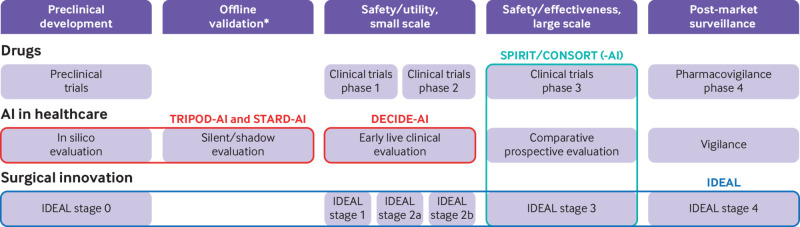
“19 Figure 2 is adapted from the DECIDE-AI guidelines and presents a graphical overview of AI development stages together with the names of relevant consensus statements.”
Zeng, Q., Huang, C., & Zhu, J. (2026) · Frontiers in Public Health · doi:10.3389/fpubh.2025.1656603 · Cited by 28
Fettiplace, M. R., Bhatia, A., Chen, Y., Orebaugh, S. L., Gofeld, M., Gabriel, R. A., Sessler, D. I., Lonsdale, H., Bungart, B. L., Cheng, C., et al. (2025) · Regional Anesthesia & Pain Medicine · doi:10.1136/rapm-2025-106852 · Cited by 26
“Authors may apply existing checklists (eg, MINIMAR, 9 CONSORT-AI, 11 DECIDE-AI 10 ) to guide reporting.”
King, H., Williams, B. J., Treanor, D. E., & Randell, R. (2022) · Journal of the American Medical Informatics Association · doi:10.1093/jamia/ocac254 · Cited by 26
Dinç, R., & Ardıç, N. (2026) · Cells · doi:10.3390/cells15030304 · Cited by 25
“Finally, transparent reporting frameworks for predictive modeling and clinical AI assessment (e.g., TRIPOD+AI, PROBAST+AI, and DECIDE-AI) can help standardize documentation of cohorts, endpoints, and analytical pipelines, improving reproducibility and interpretability [72–74].”
Holland, A. M., Lorenz, W. R., Cavanagh, J. C., Smart, N. J., Ayuso, S. A., Scarola, G. T., Kercher, K. W., Jørgensen, L. N., Janis, J. E., Fischer, J. P., et al. (2024) · JAMA Network Open · doi:10.1001/jamanetworkopen.2024.25373 · Cited by 24
Pascoe, J. L., Lu, L., Moore, M. M., Blezek, D. J., Ovalle, A. E., Linderbaum, J. A., Callstrom, M. R., & Williamson, E. E. (2024) · Mayo Clinic Proceedings Digital Health · doi:10.1016/j.mcpdig.2024.10.004 · Cited by 24
Miró Catalina, Q., Vidal-Alaball, J., Fuster-Casanovas, A., Escalé-Besa, A., Ruiz Comellas, A., & Solé-Casals, J. (2024) · Scientific Reports · doi:10.1038/s41598-024-55792-1 · Cited by 23
Rusanov, B., Ebert, M. A., Sabet, M., Rowshanfarzad, P., Barry, N., Kendrick, J., Alkhatib, Z., Gill, S., Dass, J., Bucknell, N. W., et al. (2025) · Physical and Engineering Sciences in Medicine · doi:10.1007/s13246-024-01513-x · Cited by 23
Information governance as a socio-technical process in the development of trustworthy healthcare AI
Rees, N., Holding, K., & Sujan, M. A. (2023) · Frontiers in Computer Science · doi:10.3389/fcomp.2023.1134818 · Cited by 23
“2 ergonomics studies that enable iterative and incremental assessment of what happens when AI is introduced into the wider socio-technical system (Sujan, Pool and Salmon, 2022; Vasey et al., 2022).”
BackgroundBailo, P., Nittari, G., Pesel, G., Basello, E., Spasari, T., & Ricci, G. (2026) · Sci · doi:10.3390/sci8020036 · Cited by 22
“To support frequent model changes without safety debt, CI/CD practices (versioning, signed artifacts, rollback plans) should be paired with post-market surveillance, DECIDE-AI-style reporting, and clear authority to halt models when evidence degrades [146,147,153].”
InfluentialChou, Y.-B., Kale, A. U., Lanzetta, P., Aslam, T. M., Barratt, J., Danese, C., Eldem, B. M., Eter, N., Gale, R. P., Korobelnik, J., et al. (2023) · Current Opinion in Ophthalmology · doi:10.1097/icu.0000000000000979 · Cited by 24
Self-citationMäenpää, S. M., & Korja, M. (2024) · International Journal of Medical Informatics · doi:10.1016/j.ijmedinf.2024.105523 · Cited by 22
van der Vegt, A. H., Campbell, V. K., & Zuccon, G. (2023) · The Medical Journal of Australia · doi:10.5694/mja2.52195 · Cited by 21
Clinical performance of automated machine learning: A systematic review
Thirunavukarasu, A. J., Elangovan, K., Gutiérrez, L., Hassan, R., Li, Y., Tan, T. F., Cheng, H., Teo, Z. L., Lim, G., & Ting, D. S. W. (2024) · Annals of the Academy of Medicine Singapore · doi:10.47102/https://doi.org/10.47102/annals-acadmedsg.2023113 · Cited by 21
Self-citationEvaluating dental AI research papers: Key considerations for editors and reviewers
Uribe, S. E., Hamdan, M. H., Valente, N. A., Yamaguchi, S., Umer, F., Tichý, A., Pauwels, R., & Schwendicke, F. (2025) · Journal of Dentistry · doi:10.1016/j.jdent.2025.105867 · Cited by 20
Torous, J. B., Ledley, K. T., Gorban, C., Strudwick, G., Schwarz, J., Choudhary, S., Emerson, M. R., Patriquin, M. A., Dempsey, A. G., Bantjes, J. R., et al. (2025) · JMIR Mental Health · doi:10.2196/84501 · Cited by 22
Kwak, S. G., & Kim, J. (2025) · Korean Journal of Anesthesiology · doi:10.4097/kja.25075 · Cited by 20
“If the AI system was used in a clinical trial [4] or its ability to make appropriate or optimal clinical decisions is being assessed [5], the version should be clearly indicated with a regulatory marker, such as a unique device identifier.”
Large language models for dermatological image interpretation – a comparative study
Cirkel, L., Lechner, F., Henk, L. A., Krusche, M., Hirsch, M. C., Hertl, M., Kühn, S., & Knitza, J. (2025) · Diagnosis · doi:10.1515/dx-2025-0014 · Cited by 20
“Beyond regulatory requirements, these systems must undergo robust clinical evaluation through preclinical and early clinical validation studies, including clinical simulation settings and/or Early Feasibility Studies [18, 19].”
Campbell, R. T., Petrie, M. C., Docherty, K. F., Brooksbank, K. J. M., McKinley, G., Haig, C. E., McConnachie, A., Lam, C. S. P., Adamson, C., Butler, E., et al. (2025) · European Journal of Heart Failure · doi:10.1002/ejhf.3783 · Cited by 19
Monfredi, O., Moore, C. C., Sullivan, B. A., Keim‐Malpass, J., Fairchild, K. D., Loftus, T. J., Bihorac, A., Krahn, K. N., Dubrawski, A. W., Lake, D. E., et al. (2022) · Journal of Electrocardiology · doi:10.1016/j.jelectrocard.2022.10.011 · Cited by 19
Verma, A. A., Trbovich, P., Mamdani, M., & Shojania, K. G. (2023) · BMJ Quality & Safety · doi:10.1136/bmjqs-2022-015713 · Cited by 19
“32 For example, a sepsis alert system reduced mortality only when clinicians confirmed the alert and prescribed antibiotics within 3 hours, 1 highlighting the importance of understanding what efforts were made to increase clinicians’ response to alerts.”
BackgroundArtificial intelligence for decision support in surgical oncology - a systematic review
Wagner, M., Schulze, A., Haselbeck-Köbler, M., Probst, P., Brandenburg, J. M., Kalkum, E., Majlesara, A., Ramouz, A., Klotz, R., Nickel, F., et al. (2022) · Artificial Intelligence Surgery · doi:10.20517/ais.2022.21 · Cited by 19
Alderman, J. E., Palmer, J., Laws, E., McCradden, M. D., Ordish, J., Ghassemi, M., Pfohl, S. R., Rostamzadeh, N., Cole-Lewis, H. J., Glocker, B., et al. (2024) · NEJM AI · doi:10.1056/aip2401088 · Cited by 19
Self-citationOwoyemi, A., Osuchukwu, J., Salwei, M. E., & Boyd, A. (2025) · JMIRx Med · doi:10.2196/65565 · Cited by 18
“…goes for the DECIDE-AI (Developmental and Exploratory Clinical Investigations of Decision Support Systems Driven by Artificial Intelligence) checklist, which is focused on reporting studies that involve the evaluation of AI systems during their implementation phase in the clinical setting [36].”
Artificial intelligence in rare diseases: toward clinical impact
Amorim, A. M. B., Orzeł, U., Caniceiro, A. B., Rosário‐Ferreira, N., & Moreira, I. S. (2025) · Trends in Pharmacological Sciences · doi:10.1016/j.tips.2025.10.010 · Cited by 18
Zhang, Y., Liu, B., Bunting, K. V., Brind, D., Thorley, A., Karwath, A., Lu, W., Zhou, D., Wang, X., Mobley, A., et al. (2024) · Frontiers in Medicine · doi:10.3389/fmed.2024.1354070 · Cited by 18
“Reporting follows the DECIDE-AI approach for clinical evaluation of decision support systems driven by artificial intelligence (see supplementary file for DECIDE-AI checklist) (12, 13).”
Klinische Entscheidungsfindung mit Künstlicher Intelligenz: Ein interdisziplinärer Governance-Ansatz
Samhammer, D., Beck, S., Budde, K., Burchardt, A., Faber, M., Gerndt, S., Möller, S., Osmanodja, B., Roller, R., & Dabrock, P. (2023) · Essentials · doi:10.1007/978-3-662-67008-8 · Cited by 18
Jiang, H., Wei, H., Liang, L., Wang, Y., Kuang, M., Ronot, M., Song, B., & Lee, J. M. (2025) · Liver Cancer · doi:10.1159/000546966 · Cited by 17
“Addressing these and similar challenges through robust validation, explainable AI methods, and multidisciplinary collaboration is essential for safe and effective clinical adoption of AI and radiomics [216, 217].”
Oakley, W., Tandle, S., Perkins, Z., & Marsden, M. E. R. (2024) · The Journal of Trauma: Injury, Infection, and Critical Care · doi:10.1097/ta.0000000000004385 · Cited by 17
Artificial intelligence methods available for cancer research
Murmu, A., & Győrffy, B. (2024) · Frontiers of Medicine · doi:10.1007/s11684-024-1085-3 · Cited by 18
Gauss, T., Moyer, J.-D., Colas, C., Pichon, M., Delhaye, N., Werner, M., Ramonda, V., Sempe, T., Medjkoune, S., Josse, J., et al. (2024) · BMC Medical Informatics and Decision Making · doi:10.1186/s12911-024-02723-9 · Cited by 17
“The description of the study followed the TRIPOD [15, 16] and DECIDE-AI [14] statements.”
BackgroundMethodInfluentialAI-driven innovation within the ICT sector
Grabocka, E., & Ndoka, E. (2025) · Smart Cities and Regional Development (SCRD) Journal · doi:10.25019/qkspkd85 · Cited by 17
Hardy, N., Epperlein, J. P., Dalli, J., Robertson, W., Liddy, R., Aird, J. J., Mulligan, N. J., Neary, P., McEntee, G., Conneely, J. B., et al. (2023) · Surgery Open Science · doi:10.1016/j.sopen.2023.03.004 · Cited by 16
“…apply this methodology to the liver, utilizing existing knowledge of ICG-liver interactions in combination with state-of -the-art ML methodologies to characterise and delineate CRLMs with reporting as per the DECIDE-AI guidelines for the early-stage evaluation of clinical support systems [14,15].”
MethodKhan, W. U., & Seto, E. (2023) · Journal of Medical Internet Research · doi:10.2196/43386 · Cited by 15
“…users and developers becomes a greater concern, our framework’s novel safety feature will allow it to complement existing and future AI reporting guidelines such as “DECIDE-AI” (Developmental and Exploratory Clinical Investigations of Decision support systems driven by Artificial Intelligence) [7].”
Rinderknecht, E., Haas, M., Schnabel, M. J., Kravchuk, A. P., Schäfer, C., Siepmann, S., Mayr, R., von Winning, D., Grassinger, J., Goßler, C., et al. (2025) · European Urology Oncology · doi:10.1016/j.euo.2025.11.016 · Cited by 16
Bias and Oversight in Clinical AI: A Review of Decision Support Tools and Equity Frameworks
Adegunle, F., Chhatwal, K., Arab, S., Alabdaljabar, M. S., Raslan, M. A., Sayed, O., & Goldsweig, A. M. (2026) · Journal of General Internal Medicine · doi:10.1007/s11606-026-10229-5 · Cited by 16
“Examples include SPIRIT-AI 90 , CONSORT-AI 91 , TRIPOD+AI 92 , PROBAST+AI 93 , MINIMAR 94 , MI-CLAIM 95 , DECIDE-AI 96 , and FUTURE-AI 97 .”
Artificial intelligence in 3D bioprinting and biofabrication: a validation-stringency assessment
Lee, J., Cha, J.-H., & Kim, B. S. (2026) · Biofabrication · doi:10.1088/1758-5090/ae7b07 · Cited by 17
“The Technology Readiness Levels (TRLs) in engineering and aerospace [64] and the recent DECIDE-AI guidelines for early-stage clinical evaluation of AI decision-support systems [65] both apply the same principle of progressive maturity from internal demonstration to real-world deployment.”
Artificial intelligence analysis of videos to augment clinical assessment: an overview
Wong, D., & Williams, S. (2023) · Neural Regeneration Research · doi:10.4103/1673-5374.382249 · Cited by 15
“Recent guidance from the DECIDE-AI collaborative (Vasey et al., 2022) highlights the importance of evaluations that include analysis of existing processes and infrastructure as well as the human-computer interaction between clinician and technology.”
BackgroundMaru, S., Matthias, M. D., Kuwatsuru, R., & Simpson, R. J. (2024) · Journal of Medical Internet Research · doi:10.2196/57750 · Cited by 15
“…and live clinical evaluation of decision-support systems based on AI, which compares development pathways among drugs, AI, and surgical innovation [25], the recent increase in prospective and randomized designs may be a reflection of enough studies progressing from the in silico evaluation stage…”
Reporting standards to support cost-effectiveness evaluations of AI-driven health care
Elvidge, J., & Dawoud, D. (2024) · The Lancet Digital Health · doi:10.1016/s2589-7500(24)00171-7 · Cited by 15
Fair Foundation Models for Medical Image Analysis: Challenges and Perspectives
Queiroz, D., Carlos, A., Anjos, A., & Berton, L. (2026) · ACM Transactions on Computing for Healthcare · doi:10.1145/3793542 · Cited by 15
“FMs serve as essential components in AI by enabling diverse tasks across text, image, video, audio, and other domains through their versatility and scalability [18].”
Artificial intelligence in diabetes mellitus and endocrine diseases — what can we expect?
Oikonomakos, I. T., Steenblock, C., & Bornstein, S. R. (2023) · Nature Reviews Endocrinology · doi:10.1038/s41574-023-00852-1 · Cited by 14
Generative AI - Assisted Adaptive Cancer Therapy
Derbal, Y. (2025) · Cancer Control · doi:10.1177/10732748251349919 · Cited by 15
“155 Several reporting guidelines for clinical trials of interventions involving AI have been developed, including CONSORT-AI, 156 DECIDE-AI 157 and SPIRIT-AI.”
Critical Appraisal Tools for Evaluating Artificial Intelligence in Clinical Studies: Scoping Review
Cabello, J. B., García, V. R., Torralba, M., Fernandez, M. M., Ubeda, M., Ansuategi, E., Ramos-Ruperto, L., Emparanza, J. I., Urreta, I., Iglesias, M. T., et al. (2025) · Journal of Medical Internet Research · doi:10.2196/77110 · Cited by 14
Foundation Models in Medical Image Analysis: A Systematic Review and Quantitative Analysis
Rajendran, P., Safari, M., He, W.-F., Hu, M.-Z., Shah, K., Wang, S.-S., Zhou, J., & Yang, X.-F. (2025) · Medical Image Analysis · doi:10.1016/j.media.2026.104293 · Cited by 8
Rosen, J., Russell, J., Kartik, P., & Vella‐Baldacchino, M. (2025) · Journal of Experimental Orthopaedics · doi:10.1002/jeo2.70549 · Cited by 14
Unveiling the Algorithm: The Role of Explainable Artificial Intelligence in Modern Surgery
Lopes, S., Mascarenhas, M., Fonseca, J., Fernandes, G., & Leite-Moreira, A. F. (2025) · Healthcare · doi:10.3390/healthcare13243208 · Cited by 15
“Frameworks like DECIDE-AI were initially proposed for early-phase AI evaluation in healthcare: they should be extended to include XAI-specific reporting items [109].”
Xue, P., Si, M., Qin, D., Wei, B., Seery, S., Ye, Z., Chen, M., Wang, S., Song, C., Zhang, B., et al. (2023) · Journal of Medical Internet Research · doi:10.2196/43832 · Cited by 15
“Recently, the DECIDE-AI (Developmental and Exploratory Clinical Investigations of Decision Support Systems Driven by Artificial Intelligence) reporting guidelines for the early-stage clinical evaluation of decision support systems were published [70].”
Evaluating a clinical decision support point of care instrument in low resource setting
Tegenaw, G. S., Amenu, D., Teklemariam, G. K., Verbeke, F., Cornelis, J. P., & Jansen, B. (2023) · BMC Medical Informatics and Decision Making · doi:10.1186/s12911-023-02144-0 · Cited by 13
“Then, to assure the authenticity and integrity of the computer aided CDSS evaluation, we employed an artificial intelligence evaluation framework for computer-aided CDSS evaluation [11] and DECIDE-AI reporting guidelines [12] for reporting CDSS evaluation results.”
MethodCLEAR guideline for radiomics: Early insights into current reporting practices endorsed by EuSoMII
Koçak, B., Ponsiglione, A., Stanzione, A., Ugga, L., Klontzas, M. E., Cannella, R., & Cuocolo, R. (2024) · European Journal of Radiology · doi:10.1016/j.ejrad.2024.111788 · Cited by 13
Negrini, F., Malfitano, C., Ferriero, G., Morone, G., Negrini, A., Zaina, F., Ferrario, I., Kiekens, C., Négrini, S., & Vitale, J. A. (2025) · European Spine Journal · doi:10.1007/s00586-025-09166-4 · Cited by 13
Recent Advances in AI and GenAI for Health Informatics
Ao, S. I., Palade, V., Holt, C., Araujo, S., Gourlay, M., & Kapetanovic, D. (2026) · Healthcare · doi:10.3390/healthcare14040495 · Cited by 13
“The DECIDE-AI guideline, in particular, addresses the evaluation of ML tools in early-stage, small-scale clinical settings, according to Vasey et al. [178].”
Data Science Implementation Trends in Nursing Practice: A Review of the 2021 Literature
Wieben, A. M., Walden, R. L., Alreshidi, B. G., Brown, S., Cato, K., Coviak, C. P., Cruz, C., D’Agostino, F., Douthit, B. J., Forbes, T. H., et al. (2023) · Applied Clinical Informatics · doi:10.1055/a-2088-2893 · Cited by 13
Current knowledge and availability of machine learning across the spectrum of trauma science
Gauss, T., Perkins, Z., & Tjardes, T. (2023) · Current Opinion in Critical Care · doi:10.1097/mcc.0000000000001104 · Cited by 13
Kim, D., Oh, H. W., & Suh, C. H. (2023) · Korean Journal of Radiology · doi:10.3348/kjr.2023.1027 · Cited by 13
How to read a paper involving artificial intelligence (AI)
Dijkstra, H. P., Greenhalgh, T., Mekki, Y. M., & Morley, J. (2025) · BMJ Medicine · doi:10.1136/bmjmed-2025-001394 · Cited by 13
The Promise and Challenges of Predictive Analytics in Perioperative Care
Wijeysundera, D. N., McIsaac, D. I., & London, M. J. (2022) · Anesthesiology · doi:10.1097/aln.0000000000004332 · Cited by 13
Koçak, B., Keleş, A., & Köse, F. (2024) · Diagnostic and Interventional Radiology · doi:10.4274/dir.2024.232604 · Cited by 12
Vidiyala, N., Sunkishala, P., Parupathi, P. R., & Nyavanandi, D. (2025) · AAPS PharmSciTech · doi:10.1208/s12249-025-03134-3 · Cited by 14
“AI can also be employed for identifying drug-drug interactions [70].”
Gupta, P., Pearce, A. K., Pham, T., Miller, M., Brunetti, K., Heskett, K. M., Malhotra, A., Mayampurath, A. M., & Afshar, M. (2025) · Intensive Care Medicine Experimental · doi:10.1186/s40635-025-00791-3 · Cited by 12
“…relevant studies and applied the Developmental and Exploratory Clinical Investigations of Decision support systems driven by Artificial Intelligence (DECIDE-AI) reporting guideline to each study, with an additional focus on the usability and implementation components of the framework [13].”
Hu, F., Shao, Y., Liu, J., Liu, J., Xiao, X., Shi, K., Zheng, Y., Zhang, J., & Wang, X. (2025) · Frontiers in Medicine · doi:10.3389/fmed.2025.1667087 · Cited by 12
Bertin, F., Lawrence, J., Niessen, S., Pinard, C. J., Reagan, K. L., & Rentko, V. T. (2026) · Journal of Veterinary Internal Medicine · doi:10.1093/jvimsj/aalaf045 · Cited by 13
AI for science: Progress, challenges, and perspectives
Xu, Y., Shao, Z., Liu, X., Li, Y., An, Z., Fu, C., Huang, C., Zhang, L., Gao, F., Li, J., et al. (2026) · The Innovation · doi:10.1016/j.xinn.2026.101530 · Cited by 15
Self-citationJoyce, C., Markossian, T. W., Nikolaides, J. K., Ramsey, E., Thompson, H. M., Rojas, J. C., Sharma, B., Dligach, D., Oguss, M. K., Cooper, R., et al. (2022) · JMIR Research Protocols · doi:10.2196/42971 · Cited by 12
Steenstra, I., Pedrelli, P., Shi, W., Marsella, S., & Bickmore, T. (2026) · arXiv (Cornell University) · doi:10.48550/arxiv.2602.19948 · Cited by 12
“While early medical benchmarks focused narrowly on exam-style knowledge retrieval [164], recent guidelines such as DECIDE-AI emphasize a staged approach incorporating human factors and safety monitoring [184].”
Abdalla, N., Arab, R. A. E., Abdrbo, A. A., Almari, M., Ayoub, M. Y., Alsaaideh, B., Dagamseh, M., Almagharbeh, W. T., Abuadas, F. H. A., Mahfouz, M. S. A., et al. (2026) · Frontiers in Digital Health · doi:10.3389/fdgth.2026.1737957 · Cited by 11
“Early, live clinical evaluations of AI-enabled interventions should follow DECIDE-AI to capture workflow fit, usability, and failure modes before definitive trials (72).”
Al-Jebrni, A. H., Jiang, Z., Qin, Y., Qiu, Y., Jiang, N., Li, G., Zheng, Y., Wong, T. Y., Kim, S., Jung, Y., et al. (2026) · Computational Visual Media · doi:10.26599/cvm.2026.9450530 · Cited by 11
Yao, M. W. M., Nguyen, E. T., Retzloff, M. G., Gago, L. A., Copland, S. D., Nichols, J. E., Payne, J. F., Opsahl, M. S., Cadesky, K., Meriano, J., et al. (2024) · Journal of Clinical Medicine · doi:10.3390/jcm13123560 · Cited by 11
“This study is reported according to the STROBE statement and DECIDE-AI guidelines [36,43].”
MethodWang, S. M., Hogg, H. D. J., Sangvai, D. G., Patel, M. R., Weissler, E. H., Kellogg, K. C., Ratliff, W., Balu, S., & Sendak, M. (2023) · JMIR Formative Research · doi:10.2196/43963 · Cited by 11
Current validation practice undermines surgical AI developmentPreprint
Reinke, A., Li, Z., Tizabi, M. D., André, P., Knopp, M., Rother, M. M., Machado, I. P., Altieri, M. S., Alapatt, D., Bano, S., et al. (2025) · arXiv (Cornell University) · doi:10.48550/arxiv.2511.03769 · Cited by 11
Dang, M., Liu, B., Chen, Y., & Zhang, Z. (2026) · Psychoradiology · doi:10.1093/psyrad/kkag007 · Cited by 10
Hasan, S. U. (2025) · Pakistan Journal of Life and Social Sciences (PJLSS) · doi:10.57239/pjlss-2025-23.1.00115 · Cited by 11
Leonard‐Hawkhead, B., Higgins, B. E., Wright, D. M., & Azuara‐Blanco, A. (2025) · Eye · doi:10.1038/s41433-025-03678-5 · Cited by 10
“The DECIDE-AI checklist is provided below in Table 1 [8].”
InfluentialEnhancing Business Administration Through Decision Support Systems: A Comprehensive Review
Zangana, H. M., & Salih, A. A. (2025) · Sistem Pendukung Keputusan dengan Aplikasi · doi:10.55537/spk.v4i2.1138 · Cited by 10
Bunnell, A., Valdez, D., Strand, F., Glaser, Y., Sadowski, P., & Shepherd, J. (2025) · PLOS Digital Health · doi:10.1371/journal.pdig.0001019 · Cited by 12
Chang, L., Li, H., Wu, W., Liu, X., Yan, J., Chen, Z., Wu, H., & Song, S. (2025) · Journal of Translational Medicine · doi:10.1186/s12967-025-07591-z · Cited by 10
“Mechanism-aware representation learning encodes biological and physical priors, improving transportability, interpretability, and safety under distribution shift [219].”
Self-citationTeo, Z. L., Kwee, A. K., Lim, J. C. W., Lam, C. S. P., Ho, D., Maurer‐Stroh, S., Su, Y., Chesterman, S. A., Chen, T., Tan, C. C., et al. (2023) · Annals of the Academy of Medicine Singapore · doi:10.47102/annals-acadmedsg.2022452 · Cited by 10
Self-citationHatamnejad, A., Higham, A., Somani, S., Tam, E. S., Lim, E., Khavandi, S., de Pennington, N., & Chiu, H. H. (2024) · BMJ Open Ophthalmology · doi:10.1136/bmjophth-2023-001475 · Cited by 10
“15 The objectives of this study are to describe: 1.”
BackgroundYao, M. W. M., Jenkins, J. M., Nguyen, E. T., Swanson, T., & Menabrito, M. (2024) · Seminars in Reproductive Medicine · doi:10.1055/s-0044-1791536 · Cited by 10
Eneva, Y., & Doğan, B. (2025) · Journal of Lifestyle and SDGs Review · doi:10.47172/2965-730x.sdgsreview.v5.n02.pe03545 · Cited by 10
“These tools can analyze and understand people's conditions and offer clinical solutions (Amann et al ., 2022; Vasey et al ., 2022).”
Explainable AI Applied in Healthcare: A Case Study of Diabetes Prediction
Lee, S.-Y., Chu, W. C., Tseng, Y., Zhang, Y.-G., & Tsai, H.-L. (2024) · IEEE International Conference on Software Quality, Reliability and Security Companion (QRS-C) · doi:10.1109/qrs-c63300.2024.00050 · Cited by 9
“Vasey et al. [26] proposed a reporting guideline for the early clinical evaluation of AI-driven CDSS called DECIDE-AI.”
BackgroundRuan, Q., Shi, J., Dai, Y., Yang, P., Zhu, N., & Wang, S. (2025) · Journal of Medical Systems · doi:10.1007/s10916-025-02247-3 · Cited by 9
“Vasey et al. noted that early clinical evaluation of AI decision-support systems should focus on small-scale clinical utility verification, safety, human factor assessment, and preparation for large-scale trials [26].”
Artificial Intelligence in Gynaecology Oncology
Sawan, S., Eftekhari, N., Linton‐Reid, K., Wood, N., Numan, T. A., Aboagye, E. O., & Angione, C. (2025) · BJOG An International Journal of Obstetrics & Gynaecology · doi:10.1111/1471-0528.70005 · Cited by 9
Şan, İ., Öz, M. A., Yortanlı, M., Genç, M., Bulut, B., GÜR, A., Yazıcı, R., Mutlu, H., & GÖNEN, M. Ö. (2025) · TURKISH JOURNAL OF MEDICAL SCIENCES · doi:10.55730/1300-0144.6083 · Cited by 9
“Fellowship exams are comprehensive examinations that assess both the theoretical knowledge and the clinical reasoning skills of candidates [9,10].”
Cao, W., Qu, M., Zhu, T., Liu, J., Shen, Y., Zou, J., Li, Y., Wang, H., Zhang, L., Liu, H., et al. (2026) · Journal of NeuroEngineering and Rehabilitation · doi:10.1186/s12984-026-01903-0 · Cited by 9
“It prioritizes evidence-based accuracy to mitigate the risk of “hallucinations” (aligned with EBM principles [2, 16]) and adherence to safety norms (per DECIDE-AI guidelines [36]), while explicitly integrating the person-centered functional focus of the ICF framework [22].”
Ong, A. Y., Hogg, H. D. J., Kale, A. U., Taribagil, P., Kras, A., Dow, E. R., Macdonald, T., Liu, X., Keane, P. A., & Denniston, A. K. (2024) · JMIR Research Protocols · doi:10.2196/52602 · Cited by 9
Self-citationPark, S. H., Sul, A.-R., Han, K., & Sung, Y. S. (2023) · Korean Journal of Radiology · doi:10.3348/kjr.2023.0448 · Cited by 9
“Nevertheless, the direct assessment of patient outcomes in clinical trials is important because diagnostic performance improvements do not guarantee improved patient outcomes for multiple reasons [8-10].”
BackgroundHellmeier, F., Brosien, K., Eickhoff, C., & Meyer, A. (2024) · arXiv (Cornell University) · doi:10.48550/arxiv.2409.04794 · Cited by 9
“17 Going further, van de Sande et al. recommend that specific evaluation tools be developed to allow robust evaluation of implementation outcomes.”
BackgroundMethodEl Arab, R. A., Mustafa, M. H., Almagharbeh, W. T., Saleem, N. H., Al Abdulmohsen, S., Boathab, R., & Bu Washl, M. (2026) · Healthcare · doi:10.3390/healthcare14111459 · Cited by 8
Josephson, C. B., Beniczky, S., Denaxas, S., Ikeda, A., Jehi, L. E., Mwesige, A. K., Jetté, N., Jones, G. D., Ryvlin, P., Sen, A., et al. (2025) · Epilepsia · doi:10.1002/epi.70058 · Cited by 8
“108 Once internal and external validity and early clinical evaluations are established, efforts must be made to perform decision curve analyses and subject models to rigorous RCTs and health economics analyses to establish real-world performance according to current and evolving guidelines and…”
Self-citationZitu, M. M., Owen, D., Manne, A., Zhu, Y., Binkheder, S., & Li, L. (2026) · Journal of Clinical Medicine · doi:10.3390/jcm15041649 · Cited by 8
“Recent guidance for clinical AI evaluation emphasizes that real-world decision support requires reporting beyond discrimination metrics, including workflow integration, operating thresholds, calibration, and monitoring in live settings [27,85–88].”
Morelli, N. (2024) · Physical Therapy · doi:10.1093/ptj/pzae137 · Cited by 8
Ethical, legal, and social issues (ELSI) and reporting guidelines of AI research in healthcare
Kameyama, J., Kodera, S., & Inoue, Y. (2024) · PLOS Digital Health · doi:10.1371/journal.pdig.0000607 · Cited by 8
A Visual Analytics Framework for Assessing Interactive AI for Clinical Decision Support
Prince, E. W., Hankinson, T. C., & Görg, C. (2024) · Pacific Symposium on Biocomputing (PSB) · doi:10.1142/9789819807024_0004 · Cited by 8
Metadata
- Authors
- Vasey, B., Nagendran, M., Campbell, B., Clifton, D. A., Collins, G. S., Denaxas, S., Denniston, A. K., Faes, L., Geerts, B., Ibrahim, M., Liu, X., Mateen, B. A., Mathur, P., McCradden, M. D., Morgan, L., Ordish, J., Rogers, C., Saria, S., Ting, D. S. W., Watkinson, P., Weber, W., Wheatstone, P., & McCulloch, P.
- Affiliations
- University of Oxford (GB)
- Imperial College London (GB)
- University of Exeter (GB)
- Centre for Statistics in Medicine, Nuffield Department of Orthopaedics, Rheumatology and Musculoskeletal Sciences, University of Oxford, Oxford, UK
- UCL Biomedical Research Centre (GB)
- University Hospitals Birmingham NHS Foundation Trust (GB)
- Moorfields Eye Hospital NHS Foundation Trust (GB)
- Healthplus.ai-R&D, Amsterdam, Netherlands
- Maimonides Medical Center (US)
- The Alan Turing Institute (GB)
- Cleveland Clinic (US)
- University of Toronto (CA)
- Morgan Human Systems, Shrewsbury, UK
- Medicines and Healthcare products Regulatory Agency (GB)
- HeartFlow (United States) (US)
- Johns Hopkins University (US)
- National University of Singapore (SG)
- BMJ Group (United Kingdom) (GB)
- School of Medicine, University of Leeds, Leeds, UK
- Corresponding author
- Vasey, Baptiste
- ORCID
- Vasey, Baptiste
- Nagendran, Myura
- Campbell, Bruce
- Clifton, David A
- Denaxas, Spiros
- Denniston, Alastair K
- Faes, Livia
- Geerts, Bart
- Ibrahim, Mudathir
- Liu, Xiaoxuan
- Mateen, Bilal A
- Mathur, Piyush
- McCradden, Melissa D
- Morgan, Lauren
- Ordish, Johan
- Rogers, Campbell
- Saria, Suchi
- Ting, Daniel S W
- Watkinson, Peter
- Weber, Wim
- McCulloch, Peter
- Venue
- BMJ
- Publisher
- BMJ
- Published
- 2022-05-18
- Volume
- 377
- Pages
- e070904
- ISSN
- 1756-1833 (ISSN-L)
- PMC
- PMC9116198
- OpenAlex
- W4280488363
- Semantic Scholar
- 3a8c344f67d5081ead5f7dd5ebf0f760d69fc01d
- Cited by
- 665
- References
- 50
- Citations by year
- 2026: 418 · 2025: 99 · 2024: 73 · 2023: 62 · 2022: 13
- FWCI
- 18.60
- Type
- journal article
- Language
- en
- Open access
- hybrid
- doi.org
- Licence
- Locations
- BMJ (publishedVersion, cc-by-nc)
- PubMed Central (publishedVersion, cc-by-nc)
- PubMed (publishedVersion)
- Pure Amsterdam UMC (publishedVersion, other-oa)
- University of Birmingham Research Portal (University of Birmingham) (publishedVersion, cc-by-nc)
- White Rose Research Online (University of Leeds, The University of Sheffield, University of York) (acceptedVersion)
- Lirias (submittedVersion, cc-by-nc)
- Queen Mary Research Online (Queen Mary University of London) (submittedVersion, cc-by-nc)
- Data Archiving and Networked Services (DANS) (submittedVersion)
- UCL Discovery (University College London) (submittedVersion)
- Open access LMU (Ludwid Maxmilian's Universitat Munchen) (submittedVersion, cc-by)
- Royal Devon and Exeter Research Repository (Royal Devon and Exeter) (submittedVersion, public-domain)
- Radboud Repository (Radboud University) (submittedVersion)
- Explore Bristol Research (submittedVersion, cc-by-nc)
- Spiral (Imperial College London) (submittedVersion, other-oa)
- OPUS (Augsburg University) (submittedVersion, cc-by-nc)
- Radboud Repository (Radboud University) (submittedVersion, other-oa)
- Funders
- National Science Foundation
- Alfred P. Sloan Foundation
- American Heart Association
- Pioneer Fund
- AstraZeneca
- GlaxoSmithKline
- Wellcome Trust (215010/Z/18/Z)
- Alan Turing Institute (N510129, TU/ASG/R-SPEH-105, TU/ASG/R-SPEH-113)
- UK Research and Innovation (P/S023283/1)
- Duke-NUS Medical School (05/FY2020/EX/15‐A58, Duke‐NUS/RSF/2021/0018, NUS/RSF/2021/0018)
- Cancer Research UK (27294, C49297/A27294, C49297)
- National Institute for Health and Care Research (NIHR302440, C49297/A27294, ACF-2009-14-007)
- Research Councils UK
- Academy of Medical Sciences (AMS-CSF4-Newcombe)
- University College London
- University of Oxford
- Agency for Science, Technology and Research (A20H4g2141, H20C6a0032)
- National Health Insurance Service
- Russian Science Foundation
- Sheffield Teaching Hospitals NHS Foundation Trust
- Medical Research Council (MR/K006584/1, MR/W01761X/1, C49297/A27294)
- Engineering and Physical Sciences Research Council (EP/P009824/1, N510129, EP/N020774/1)
- National Medical Research Council (MOH‐000655‐00, Duke-NUS/RSF/2021/0018, 05/FY2020/EX/15-A58)
- NIHR Oxford Biomedical Research Centre (C49297/ A27294)
- Topics
- Health Sciences › Medicine › Health Informatics › Artificial Intelligence in Healthcare and Education
- Social Sciences › Decision Sciences › Statistics, Probability and Uncertainty › Meta-analysis and systematic reviews
- Health Sciences › Medicine › Public Health, Environmental and Occupational Health › Clinical practice guidelines implementation
- Keywords
- artificial intelligence, clinical decision support systems, reporting guidelines, AI safety, human factors, stakeholder consensus, reporting checklist
- MeSH terms
- Artificial Intelligence, Humans, Research Design, Decision Support Systems, Clinical, Research Report
About these checks
Registry, retraction, Cites and statistics results are computed, not judged, with one exception: a printed reference that no index lists is read once by a model before it counts as a citation error. Claims are extracted by a model and kept only when their quote appears verbatim in the text; each cited source is then checked, with a model’s help, for whether it says what the claim relies on. Those verdicts can be wrong — read the claim’s quote and the cited source before relying on one.
The claim verdicts this report counts are experimental: their accuracy is not yet measured.
A language model drew the claims from the paper on 2026-11-17, under version 3 of the claim definition (model deepseek-v4.1-flash, prompt extract-v3).
A second model labelled each claim on 2026-11-17 (model jev-1.13-20260917, definition revision gold-guideline-v0.2).
Cited sources are checked with a language model’s help (qwen3.8-omni-flash).
Statistics and arithmetic are recomputed, not judged.
Confidence bands are shown only for fields calibrated on our annotated test set. None is calibrated yet, so no band is shown.
What counts as a claim ›How we measure confidence ›How we check this ›
Are you an author, or do you see a problem with this page? Request a review
Data sources
Bibliographic data: Semantic Scholar, OpenAlex, Crossref.
Contains information from the Semantic Scholar Academic Graph Datasets, made available under the ODC Attribution License (ODC-BY 1.0).
Semantic Scholar’s data is described in: Kinney, R., et al. (2023). The Semantic Scholar Open Data Platform. arXiv:2301.10140.
