

Reporting guideline for the early stage clinical evaluation of decision support systems driven by artificial intelligence: DECIDE-AI
Open accessThe DOI matches its Crossref record; 56 of the 57 references it cites were found in a registry or an index; 8 of the 19 sources its claims cite were checked for support.
Abstract
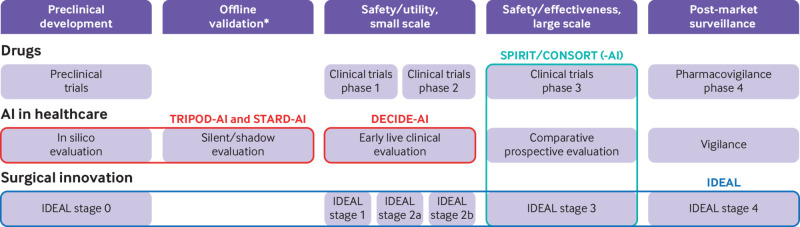
A growing number of artificial intelligence (AI)-based clinical decision support systems are showing promising performance in preclinical, in silico, evaluation, but few have yet demonstrated real benefit to patient care. Early stage clinical evaluation is important to assess an AI system’s actual clinical performance at small scale, ensure its safety, evaluate the human factors surrounding its use, and pave the way to further large scale trials. However, the reporting of these early studies remains inadequate. The present statement provides a multistakeholder, consensus-based reporting guideline for the Developmental and Exploratory Clinical Investigations of DEcision support systems driven by Artificial Intelligence (DECIDE-AI). We conducted a two round, modified Delphi process to collect and analyse expert opinion on the reporting of early clinical evaluation of AI systems. Experts were recruited from 20 predefined stakeholder categories. The final composition and wording of the guideline was determined at a virtual consensus meeting. The checklist and the Explanation & Elaboration (E&E) sections were refined based on feedback from a qualitative evaluation process. 123 experts participated in the first round of Delphi, 138 in the second, 16 in the consensus meeting, and 16 in the qualitative evaluation. The DECIDE-AI reporting guideline comprises 17 AI specific reporting items (made of 28 subitems) and 10 generic reporting items, with an E&E paragraph provided for each. Through consultation and consensus with a range of stakeholders, we have developed a guideline comprising key items that should be reported in early stage clinical studies of AI-based decision support systems in healthcare. By providing an actionable checklist of minimal reporting items, the DECIDE-AI guideline will facilitate the appraisal of these studies and replicability of their findings.
Overview
CoChat Summary
TL;DR
DECIDE-AI is a consensus-based reporting guideline for early-stage, small-scale live clinical evaluation of AI-based decision support systems. It provides a 27-item minimum reporting checklist focused on clinical utility, safety, human factors, and preparation for larger summative trials.
Key findings
- The DECIDE-AI guideline comprises 17 AI-specific reporting items (28 subitems) and 10 generic reporting items, with an Explanation & Elaboration paragraph for each.
- It was developed through a consensus process involving 151 experts from 18 countries and 20 stakeholder groups.
- The guideline targets early live clinical evaluation, where supported decisions have an actual impact on patient care, and is intended to be independent of study design and AI system modality.
- The consensus group deliberately excluded items on interpretability and user trust because there is currently no generally accepted way to quantify or evaluate them.
Methods
- A two-round modified Delphi process was conducted, with expert recruitment across 20 predefined stakeholder categories; 123 experts completed round 1, 138 completed round 2, 16 participated in the consensus meeting, and 16 in qualitative evaluation.
- The initial item list contained 54 items; round 1 yielded 43,986 words of free text, 6,419 item scores, 228 comments, 64 new item proposals, and 109 themes, producing a revised list of 53 items. Round 2 yielded 7,101 item scores and 923 comments.
- A virtual consensus meeting used an 80% inclusion threshold and selected the final 17 AI-specific and 10 generic items; drafts were refined through qualitative evaluation by 16 independent experts.
Limitations
- The paper states that consensus processes carry potential biases, including anchoring and participant selection biases, which were mitigated but likely not eliminated.
- Representation was skewed toward Europe and the United Kingdom, partly due to selection bias in expert recommendations and higher interest from European/UK scientists.
- Few examples of early-stage clinical evaluation of AI systems were available when development began, which may have affected the exhaustiveness of the initial item list.
- The paper also notes that the guideline’s impact on reporting standards will need to be assessed once the community uses it, and that interpretability and trust were excluded due to lack of accepted measurement methods.
Model-written summary. Check it against the paper before relying on it.
Integrity signals
Registry
Cites
Statistics
Figures
Verification
Claims the paper makes
5 Valid · 2 Not valid · 5 Not checked · 55 Own results and interpretations
Every source the paper cites for this claim was checked and supports it.
In the paper
“The DECIDE-AI guideline was developed through an international expert consensus process and in accordance with the EQUATOR Network's recommendations for guideline development.27”
§ Reporting guideline for the early stage clinical evaluation of decision support systems driven by artificial intelligence: DECIDE-AI > methods
What the sources say
- Supportedcites [27] 27. Moher D, Schulz KF, Simera I, Altman DG. Guidance for developers of health research reporting guidelines. PLoS Med 2010;7:e1000217. doi:10.1371/journal.pmed.1000217 source
Our copy is exactly the thing the citing sentence identifies: the Abstract states that 'David Moher and colleagues from the EQUATOR network offer guidance and recommended steps for developing health research reporting guidelines', and the Introduction (and Discussion) sets out the 18-step, five-phase strategy that constitutes those recommendations. The source also endorses the consensus element the sentence pairs with it — the Introduction states 'A consensus process [10] should be a crucial characteristic of developing a reporting guideline', with a Delphi exercise (step 5) and face-to-face consensus meeting (step 8) prescribed. No part of what is attributed to this source is unsupported; the specifics of DECIDE-AI's own process are the citing authors' statement, not this paper's. (LLM, conf=0.88)
plain- Asserted: passes — The authors put it forward as true.
- Checkable: passes — It can be checked against evidence.
- Load-bearing: unclear — It is unclear whether the paper’s conclusions depend on it.
- Based: passes — The paper gives a reason why it holds.
- Supported
Every source the paper cites for this claim was checked and supports it.
In the paper
“Finally, as also noted by the authors of the SPIRIT-AI and CONSORT-AI guidelines, 25 26 few examples of studies reporting on the early stage clinical evaluation of AI systems were available at the time we started developing the DECIDE-AI guideline.”
§ Reporting guideline for the early stage clinical evaluation of decision support systems driven by artificial intelligence: DECIDE-AI > User
What the sources say
- Supportedcites [25] 25. Cruz Rivera S, Liu X, Chan AW, Denniston AK, Calvert MJ, SPIRIT-AI and CONSORT-AI Working Group, SPIRIT-AI and CONSORT-AI Steering Group, SPIRIT-AI and CONSORT-AI Consensus Group. Guidelines for clinical trial protocols for interventions involving artificial intelligence: the SPIRIT-AI extension. Nat Med 2020;26:1351-63. doi:10.1038/ s41591-020-1037-7 source
The Discussion of our copy states directly that 'at the time of SPIRIT-AI development, there were only seven published trials and no published trial protocols in the field of AI for healthcare', so the decisions were 'not always supported by existing real-world examples'. The Literature review section quantifies this (316 registered trials on ClinicalTrials.gov as of 13 May 2019, only 62 completed and 7 with published results), and the Main text notes that 'the majority of published evidence has consisted of in silico, early-phase validation'. Together these support the attributed point that few studies reporting early-stage clinical evaluation of AI existed when the guideline was being developed; the reference to DECIDE-AI's own timing is the citing authors' framing, not a claim about this source. (LLM, conf=0.85)
- Supportedcites [26] 26. Liu X, Cruz Rivera S, Moher D, Calvert MJ, Denniston AK, SPIRIT-AI and CONSORT-AI Working Group. Reporting guidelines for clinical trial reports for interventions involving artificial intelligence: the CONSORT-AI extension. Nat Med 2020;26:1364-74. doi:10.1038/ s41591-020-1034-x source
The Discussion of CONSORT-AI states plainly that 'there are relatively few published interventional trials in the field of AI for healthcare; therefore, the discussions and decisions made during this study were not always supported by existing examples of completed trials', which is exactly the point the citing sentence attributes to the SPIRIT-AI/CONSORT-AI authors. The Main/introduction reinforces the 'early stage' element ('published evidence has consisted of in silico, early-phase validation'), and the Methods ('Literature review and candidate item generation') quantify it: of 316 registered AI-intervention trials found in a May 2019 ClinicalTrials.gov search, only 62 were completed and 7 had published results. The 'at the time we started developing the DECIDE-AI guideline' qualifier is the citing authors' own context, correctly paralleled with the source's own development period. (LLM, conf=0.85)
plain- Asserted: passes — The authors put it forward as true.
- Checkable: passes — It can be checked against evidence.
- Load-bearing: passes — The paper’s conclusions depend on it.
- Based: passes — The paper gives a reason why it holds.
- Supported
The cited sources support only part of this claim — read each source’s verdict below.
In the paper
“However, the reporting of these early studies remains inadequate.”
§ Reporting guideline for the early stage clinical evaluation of decision support systems driven by artificial intelligence: DECIDE-AI > Abstract
What the sources say
- Supportedcites [3] 3. Vasey B, Ursprung S, Beddoe B, et al. Association of Clinician Diagnostic Performance With Machine Learning- Based Decision Support Systems: A Systematic Review. JAMA Netw Open 2021;4:e211276. doi:10.1001/ jamanetworkopen.2021.1276 source
Our copy reports exactly this shortfall for the early clinical evaluations of ML-based AI systems it included: the Results (Risk of bias/funding paragraph) record that only 2 studies (5%) referenced a study protocol, 12 (32%) gave no or unclear funding information, 3 (8%) did not report clearly on test set independence, and none were low risk across all QUADAS-2 domains; the Discussion adds the absence of a protocol and of any power calculation as drivers of high risk of bias; and the Conclusions call for changes 'guided by accepted principles of trial conduct and reporting to avoid repetition of errors noted in the current literature.' The paper's own subject is early-stage (mostly non-randomized, median 4 clinicians) clinical studies of ML-based CDSSs, matching the claim's scope; the only caveat is that the source frames the deficit chiefly as risk of bias/study design, with reporting gaps as components of it. (LLM, conf=0.80)
- Partly supportedcites [22] 22. Nagendran M, Chen Y, Lovejoy CA, et al. Artificial intelligence versus clinicians: systematic review of design, reporting standards, and claims of deep learning studies. BMJ 2020;368:m689. doi:10.1136/ bmj.m689 sourceExperimental — accuracy not yet measured
The reporting-inadequacy part is squarely stated: the Abstract (Results) reports that 'adherence to reporting standards was suboptimal (<50% adherence for 12 of 29 TRIPOD items)' with full access to datasets/code unavailable in 95%/93% of studies, and Results > Non-randomised studies ('Adherence to reporting standards', median 62% adherence, flow diagram in 31%, hardware in 36%) plus Discussion (p. 1, 'improve the design, reporting, transparency') confirm poor reporting in these mostly retrospective, in silico studies (only 9/81 prospective, 6 in a real clinical setting). What the source does not support is the breadth of the paraphrase: it assessed only deep learning diagnostic medical imaging studies comparing AI with clinicians, and its Study limitations states 'we cannot definitively make this claim from our findings because we only assessed medical imaging studies' for other types of AI; the two published randomised trials it found actually had high adherence to reporting standards. (LLM, conf=0.75)
plain- Asserted: passes — The authors put it forward as true.
- Checkable: passes — It can be checked against evidence.
- Load-bearing: passes — The paper’s conclusions depend on it.
- Based: passes — The paper gives a reason why it holds.
- Supported
The cited sources support only part of this claim — read each source’s verdict below.
In the paper
“there is little high quality evidence for improved clinician performance or patient outcomes in clinical studies.3 4”
§ Reporting guideline for the early stage clinical evaluation of decision support systems driven by artificial intelligence: DECIDE-AI > Abstract
What the sources say
- Partly supportedcites [3] 3. Vasey B, Ursprung S, Beddoe B, et al. Association of Clinician Diagnostic Performance With Machine Learning- Based Decision Support Systems: A Systematic Review. JAMA Netw Open 2021;4:e211276. doi:10.1001/ jamanetworkopen.2021.1276 sourceExperimental — accuracy not yet measured
The Abstract Findings and Conclusions and the Discussion (p. unnumbered sections) state there was 'no robust evidence' that ML-based CDSS use was associated with improved clinician diagnostic performance, and that 'the evidence for any conclusion was weak because of a high risk of bias' — the Results report 28 of 37 studies (76%) at high risk of bias in at least one QUADAS-2 domain with none low across all four, which supports the 'little high quality evidence ... improved clinician performance' part. However, this review's outcomes were metrics of clinician performance only; no passage in our copy addresses evidence about patient outcomes, so that limb of the claim is not supported by this source (the citing sentence carries a second citation alongside it). (LLM, conf=0.80)
- Supportedcites [4] 4. Freeman K, Geppert J, Stinton C, et al. Use of artificial intelligence for image analysis in breast cancer screening programmes: systematic review of test accuracy. BMJ 2021;374:n1872. doi:10.1136/bmj. n1872 source
The Abstract Results and Results > Assessment of risk of bias and applicability state that the 12 included studies were 'of poor methodological quality' and that the evidence was 'of low quality and applicability across all studies', with 'no prospective studies measuring test accuracy of AI in screening practice' and 'no direct evidence… as to how AI might affect accuracy if integrated into breast screening practice'. The Discussion (Implications for research; Conclusions) adds that prospective research is required to measure the effect of AI in clinical practice, that evidence is needed on cancer type to assess benefits and harms (i.e. patient outcomes), and that current evidence 'is a long way from having the quality and quantity required for its implementation into clinical practice' — matching 'little high quality evidence for improved clinician performance or patient outcomes in clinical studies'. The reader-aid analyses showing higher radiologist sensitivity come only from laboratory test sets of limited generalisability, so they do not contradict the claim. The source establishes this within AI for mammographic breast cancer screening. (LLM, conf=0.85)
plain- Asserted: passes — The authors put it forward as true.
- Checkable: passes — It can be checked against evidence.
- Load-bearing: passes — The paper’s conclusions depend on it.
- Based: passes — The paper gives a reason why it holds.
- Partly supported
The cited sources support only part of this claim — read each source’s verdict below.
In the paper
“Iterative design evaluation cycles, if performed safely and reported transparently, offer opportunities to tailor an intervention to its users and beneficiaries, and augment chances of adoption of an optimised, fixed version during later summative evaluation.8 9 59 60”
§ Reporting guideline for the early stage clinical evaluation of decision support systems driven by artificial intelligence: DECIDE-AI > User
What the sources say
- Not checked yetcites [8] 8. McCulloch P, Altman DG, Campbell WB, et al, Balliol Collaboration. No surgical innovation without evaluation: the IDEAL recommendations. Lancet 2009;374:1105-12. doi:10.1016/S0140-6736(09)61116- 8 source
Checked before — its earlier verdict is held back until a new check runs.
- Partly supportedcites [9] 9. Hirst A, Philippou Y, Blazeby J, et al. No Surgical Innovation Without Evaluation: Evolution and Further Development of the IDEAL Framework and Recommendations. Ann Surg 2019;269:211-20. doi:10.1097/SLA.0000000000002794 sourceExperimental — accuracy not yet measured
Split into 2 atoms — 1 confirmed, 1 partially supported, 0 disputed, 0 misattributed, 0 unverifiable. Expand the claim to see per-atom verdicts.
- Not matchedcites [59] International Organization for Standardization. Ergonomics of human-system interaction — Part 210: Human-centred design for interactive systems (ISO 9241-210:2019). 2019.
Its entry has no title and year that we can search by.
plainstates a possible cause- Asserted: passes — The authors put it forward as true.
- Checkable: passes — It can be checked against evidence.
- Load-bearing: passes — The paper’s conclusions depend on it.
- Based: passes — The paper gives a reason why it holds.
- Not checked yet
9 more claims
Create a free account to see all 67 claims and to verify the 9 references still open.
- Probably not a substantial claim. 45
- It may state two separate claims as one. 23
Claims other papers make about this one
Each is checked against this paper’s own text: does it say what the citing paper says it does?
The source backs part of the claim, not all of it — or backs it for a different population, condition or comparison.
In the citing paper
“The same goes for the DECIDE-AI (Developmental and Exploratory Clinical Investigations of Decision Support Systems Driven by Artificial Intelligence) checklist, which is focused on reporting studies that involve the evaluation of AI systems during their implementation phase in the clinical setting [36].”
From Checklist Approach to Developing and Implementing AI in Clinical Settings: Instrument Development Study (2025) · cites this paper as [36]
Experimental — accuracy not yet measuredThe source backs part of the claim, not all of it — or backs it for a different population, condition or comparison.
In the citing paper
“Prospective evaluation provides a more accurate assessment by capturing workflow integration, clinician response, alert fatigue, and unintended consequences [44,45].”
From Artificial Intelligence in Clinical Decision-Making: A Comprehensive Review of Diagnostic, Prognostic, and Therapeutic Applications, Validation Gaps, Bias, and Deployment Challenges (2026) · cites this paper as [45]
Experimental — accuracy not yet measuredThe source backs part of the claim, not all of it — or backs it for a different population, condition or comparison.
In the citing paper
“Established through a multistakeholder Delphi process involving 123–138 experts, this 27-item checklist provides standards for early-stage clinical evaluation of AI-driven decision support systems, addressing key elements including interpretability, human-factor integration, and preliminary safety assessment.”
From Multimodal neuroimaging and AI integration in cognitive disorders: advances, challenges, and future directions for precision medicine (2026) · cites this paper as Vasey et al., 2022
Experimental — accuracy not yet measuredThe source backs part of the claim, not all of it — or backs it for a different population, condition or comparison.
In the citing paper
“Reporting, evaluation, and appraisal frameworks including SPIRIT-AI, CONSORT-AI, DECIDE-AI, TRIPOD+AI, and PROBAST+AI have substantially strengthened the conceptual and reporting architecture for trustworthy clinical AI [10,11,12,13,14].”
From Beyond Model Development in Healthcare AI: Post-Development Robustness, Post-Deployment Monitoring, and Lifecycle Governance—A Scoping Review of Reviews (2026) · cites this paper as [12]
Experimental — accuracy not yet measuredThe cited source says what the claim attributes to it.
In the citing paper
“international consensus initiatives have developed structured reporting frameworks such as the DECIDE-AI (Developmental and Exploratory Clinical Investigations of DEcision support systems driven by Artificial Intelligence) guideline (Vasey et al., 2022).”
From Multimodal neuroimaging and AI integration in cognitive disorders: advances, challenges, and future directions for precision medicine (2026) · cites this paper as Vasey et al., 2022
2 more claims about this paper
Create a free account to see every claim other papers make about this one.
Self-check
Percentages, sums and reported differences re-computed from the paper’s own numbers.
Each contradiction between two passages listed here was confirmed by an independent check.
Rated minor: it would not touch a result — a value no result rests on, a p-value that stays on the same side of the significance level, or a conflict that is clerical, resolved elsewhere in the paper, or outside its own findings.
In the paper
§ Reporting guideline for the early stage clinical evaluation of decision support systems driven by artificial intelligence: DECIDE-AI > Reporting item checklist
“Depending on the chosen study design and if available, authors may also wish to complete the reporting according to study type specific guideline (eg, STROBE for cohort studies).47”
§ Reporting guideline for the early stage clinical evaluation of decision support systems driven by artificial intelligence: DECIDE-AI > References
“47. Page MJ, McKenzie JE, Bossuyt PM, et al. The PRISMA 2020 statement: an updated guideline for reporting systematic reviews.”
Citations
Cites
The PRISMA 2020 statement: An updated guideline for reporting systematic reviews
Page, M. J., McKenzie, J. E., Bossuyt, P. M., Boutron, I., Hoffmann, T. C., Mulrow, C. D., Shamseer, L., Tetzlaff, J. M., Akl, E. A., Brennan, S. E., et al. (2021) · BMJ · doi:10.1136/bmj.n71 · Cited by 108,283
Harris, P. A., Taylor, R., Thielke, R., Payne, J., Gonzalez, N., & Conde, J. G. (2009) · Journal of Biomedical Informatics · doi:10.1016/j.jbi.2008.08.010 · Cited by 51,384
The REDCap consortium: building an international community of software platform partners
Harris, P. A., Taylor, R., Minor, B. L., Elliott, V., Fernandez, M., O'Neal, L., McLeod, L., Delacqua, G., Delacqua, F., Kirby, J., et al. (2019) · Journal of Biomedical Informatics · doi:10.1016/j.jbi.2019.103208 · Cited by 24,013
S., N. L. (2017) · doi:10.1177/1609406917733847 · Cited by 14,051
International Organization for Standardization
(2011) · SpringerReference · doi:10.1007/springerreference_16847 · Cited by 12,534
Elm, E. V., Altman, D. G., Egger, M., Pocock, S. J., Gøtzsche, P. C., & Vandenbroucke, J. P. (2007) · BMJ · doi:10.1136/bmj.39335.541782.ad · Cited by 10,766
The PRISMA 2020 statement: an updated guideline for reporting systematic reviews
Page, M. J., McKenzie, J., Bossuyt, P., Boutron, I., Hoffmann, T., mulrow, C., Shamseer, L., Tetzlaff, J., Akl, E., Brennan, S. E., et al. (2020) · doi:10.31222/osf.io/v7gm2_v1 · Cited by 8,090
An Experimental Application of the DELPHI Method to the Use of Experts
Dalkey, N., & Helmer, O. (1963) · Management Science · doi:10.1287/mnsc.9.3.458 · Cited by 6,061
Skivington, K., Matthews, L., Simpson, S. A., Craig, P., Baird, J., Blazeby, J. M., Boyd, K. A., Craig, N., French, D. P., McIntosh, E., et al. (2021) · BMJ · doi:10.1136/bmj.n2061 · Cited by 5,808
Lipton, Z. C. (2018) · Queue · doi:10.1145/3236386.3241340 · Cited by 5,427
Research works printed but not linked: 2
- 35. IMDRF Medical Device Clinical Evaluation Working Group. Clinical Evaluation. 2019. Report No.: WG/N56FINAL:2019. on 10 June 2022 at UB Augsburg. Protected by copyright. http://www.bmj.com/ BMJ: first published as 10.1136/bmj-2022-070904 on 18 May 2022. Downloaded from doi: 10.1136/bmj-2022-070904 | BMJ 2022;377:e070904 | the bmj
- 38. European Commission, Directorate-General for Communications Networks, Content and Technology. Ethics guidelines for trustworthy AI, Publications Office, 2019. https://data.europa.eu/ doi/10.2759/346720 · doi:10.2759/346720
Cited by
Items 401–500 of 923
Bridging AI and Clinical Practice: Fieldwork Insights from a Non-Interventional stroke Center
Nielsen, M. B., Børsen, T., & Knudsen, C. (2026) · Tidsskrift for Forskning i Sygdom og Samfund · doi:10.7146/tfss.v25i44.156503 · Cited by 1
Scoping review: artificial intelligence in patient education for scoliosis
Gibson, J. G., Lam, C., Boylan, C., Francis, R., Zaher, E., Vickars, D. J., Bulut, H., & Jones, M. (2026) · European Spine Journal · doi:10.1007/s00586-026-10130-z · Cited by 1
Kim, Y., Choe, S., Jeong, S., Ding, J., Wang, X., Lee�, H., & Kim, B. (2026) · Journal of Clinical Neurology · doi:10.3988/jcn.2026.0312 · Cited by 1
“We pro-pose the NEURAL framework: Novel clinical insight, 18,19 External and prospective validation, 39,40,42,43 Utility over accuracy, 18,19,39 Real-time workflow integration, 18,32 Algorithmic transparency, 32,41,44,45 and Long-term outcome linkage.”
InfluentialÇalışkan, Y. K., Başak, F., & Erdem, O. (2026) · World Journal of Surgery · doi:10.1002/wjs.70492 · Cited by 1
Large language models for intelligent healthcare and medicine: A systematic survey
Wu, C., & Zhu, Y. (2026) · Advanced IntelliEngineering · doi:10.46690/aie.2026.01.03 · Cited by 1
Zaqout, I. S., & Zakout, S. (2026) · Asian Pacific Journal of Cancer Care · doi:10.31557/apjcc.2026.11.4.613 · Cited by 1
Bailo, P., Carsana, C., Garreffa, M., Carannante, A., Giustini, M., Fazio, C., Falzano, L., Piccinini, A., & Gaudi, S. (2026) · Healthcare · doi:10.3390/healthcare14142174 · Cited by 1
“The decision to map rather than pool evidence is consistent with scoping-review guidance and staged-evaluation frameworks for early innovation and AI systems [22–25].”
The role of artificial intelligence in clinical trials in adult and pediatric rheumatology
Bella, S. L., Rebollo-Giménez, A. I., Alongi, A., Capitoli, G., Breda, L., Torre, F. L., Venerito, V., & Ruperto, N. (2026) · Current Opinion in Immunology · doi:10.1016/j.coi.2026.102818 · Cited by 1
Toward Individualized Music Therapy: Integrating Artificial Intelligence and Neuroscience
Xiao, C., Li, T., Cao, J., Zhu, B., Li, Q., & Wei, J. (2026) · Mental Illness · doi:10.1155/mij/7902487 · Cited by 1
Matos, K., Guimarães, H. H. D. S. D., Sobrinho, P. V. D. S., Almeida, L. M. D. F., Almeida, M. D. F., & Caldeira, C. L. (2026) · European Endodontic Journal · doi:10.65717/eej.2026.25054 · Cited by 1
“31 Therefore, future VRF studies should not only report diagnostic accuracy, but also evaluate whether AI changes clinician behaviour, improves calibration, or increases inappropriate intervention.”
Vallée, A. (2026) · PLOS Digital Health · doi:10.1371/journal.pdig.0001610 · Cited by 1
“During early clinical implementation, DECIDE-AI can guide reporting of human–AI interaction, workflow integration, failure modes, and clinician override patterns [82].”
Sujan, M. A., & Preston, K. (2026) · Springer series in design and innovation · doi:10.1007/978-3-032-23073-7_6 · Cited by 1
Vallée, A. (2026) · Frontiers in Digital Health · doi:10.3389/fdgth.2026.1908794 · Cited by 1
Roy, N., Powers, M., Gonzalez, M., & Cucullo, L. (2026) · Biosensors · doi:10.3390/bios16090477 · Cited by 1
Representational Veracity in Data Science Health Research: Targets, Proxies, Labels, and Descriptors
Adebamowo, C., Adebamowo, S. N., Akintola, A., Ikhane, P. A., Akintola, S., Ogundiran, T. O., Jegede, A. S., Adeyemo, O., Callier, S., Imam-Tamim, M. K., et al. (2026) · Journal of Medical Internet Research · doi:10.2196/102537 · Cited by 1
“Peer reviewers can be asked to evaluate whether a manuscript identifies the construct of interest, justifies the proxy chosen to operationalize it, explains how labels were generated, defines population descriptors, and states the limits of transportability [58,59].”
Gao, Y., Hao, D., Yang, Y., Jing, H.-H., Sun, Z.-S., Liu, X., Jiang, Z., Li, D.-R., Zhang, H., Feng, W., et al. (2026) · Frontiers in Medicine · doi:10.3389/fmed.2026.1891914 · Cited by 1
Self-citationYang, M.-A., & Ha, K.-S. (2026) · JMIR Formative Research · doi:10.2196/103345 · Cited by 1
AlRamadneh, T. N., Kholmurodov, I., Boboyeva, N., Hanumanthayya, M., Alhady, N. A., Singhal, D., Panigrahi, R., & Tailor, N. K. (2026) · Clinical Immunology · doi:10.1016/j.clim.2026.110765 · Cited by 1
Same-Patient, Same–Time Point Evidence for Radiomics Benchmarking
Kan, W., Pei, H., & Zhang, M. (2026) · Journal of Medical Internet Research · doi:10.2196/110058 · Cited by 1
Torales, J. C., O’Higgins, M. G., Barrios, I., Sequera, G., Estigarribia, G., Castaldelli-Maia, J. M., & Ventriglio, A. (2026) · International Review of Psychiatry · doi:10.1080/09540261.2026.2722686 · Cited by 1
Ngwu, D. C. (2026) · JMIR Cardio · doi:10.2196/103401 · Cited by 1
He, Z., Zhu, T., Luo, X., Qiu, Y., Zhang, M., Xu, X., & Guo, Q. (2026) · Journal of Artificial Intelligence and Information · doi:10.66069/ojspub.27450843 · Cited by 1
“Comparative evaluation should address clinical effectiveness, after which post-deployment monitoring should cover data and performance drift, subgroup differences, user response, and actual quality outcomes [2,4,39 – 41].”
Danilatou, V., & Arachchillage, D. J. (2026) · Seminars in Thrombosis and Hemostasis · doi:10.1055/a-2943-7750 · Cited by 1
AI-Driven tools and their influence on project decision-making in U.S. technology enterprises
Nodia, U. Z. Z., Hossain, M. M., Rahman, F., Antor, M. M. H., & Ahmed, M. T. (2025) · Global Academy of Multidisciplinary Studies · doi:10.35912/gams.v2i1.3599 · Cited by 1
Bakker, M., Garderen, A. V., Paget, T. L., Zhao, L., Naicker, L., Radhakrishnan, A., & Biddargardi, N. (2026) · International Journal of Medical Informatics · doi:10.1016/j.ijmedinf.2026.106701 · Cited by 1
Chi, H., Liu, X., Yan, Y., Wang, L., Luo, P., Su, L., Jiang, L., Zhou, X., Huang, G., Jiang, Y., et al. (2026) · Genes & Diseases · doi:10.1016/j.gendis.2026.102480 · Cited by 1
Self-citationArtificial intelligence in biomarker discovery for diseases: diagnostic and therapeutic prospects
Dinç, R., & Ardıç, N. (2026) · Signal Transduction and Targeted Therapy · doi:10.1038/s41392-026-02946-4 · Cited by 1
Alluhaibi, R. (2026) · Healthcare · doi:10.3390/healthcare14193293 · Cited by 1
“Post-market performance monitoring; PCCP governance for planned modifications [50] DECIDE-AI and statistically valid monitoring [25,39] Stage 4 requires particular care.”
Accountability for large language models in health care
Mourão, C. F., & Juliasse, L. E. R. (2026) · Bulletin of the World Health Organization · doi:10.2471/blt.26.296186 · Cited by 1
Chandio, K. A., Iftikhar, L., Shehzad, A., Rao, I., Waseem, M., Anas, M., Farrukh, M., Shalabi, A. A., Talaat, S., Şen, S., et al. (2026) · The Saudi Dental Journal · doi:10.1007/s44445-026-00249-6 · Cited by 1
“…accuracy studies, Developmental and Exploratory Clinical Investigations of DEcision support systems driven by Artificial Intelligence (DECIDE-AI) (Vasey et al. 2022 ) for early-stage clinical evaluation of AI-driven clinical decision-support systems, FUTURE-AI (Lekadir et al. 2025 ) for…”
InfluentialMutasar, N. H. (2024) · JETI · doi:10.5201/jet.v5i1.420 · Cited by 1
Lai, H., Tong, B., Spruyt, K., Jemioło, P., Kuriyama, A., Florez, I. D., Bała, M., Albarqouni, L., Myeong Soo, L. E. E., Liu, J., et al. (2026) · AI Evidence-Based Medicine · doi:10.1097/ai9.0000000000000004 · Cited by 1
Medical Decision-Making and Artificial Intelligence
Djulbegović, B., & Hozo, I. (2023) · Cancer treatment and research · doi:10.1007/978-3-031-37993-2_9 · Cited by 1
Allaart, C. G., van Houwelingen, S., Hilkens, P. H. E., van Halteren, A., Biesma, D. H., Dijksman, L. M., & van der Nat, P. B. (2024) · JMIR Human Factors · doi:10.2196/56521 · Cited by 1
DENİZ, E. (2024) · Journal of Academic Tourism Studies · doi:10.29228/jatos.79002 · Cited by 1
Ongwere, T., Nguyen, T., & Sadowski, Z. (2025) · Information · doi:10.3390/info16030237 · Cited by 1
AI’s Potential: Embracing AI in the Future of Healthcare
Prakash, V., Dua, K., Debono, C. J., & Garg, L. (2025) · Studies in computational intelligence · doi:10.1007/978-3-031-80813-5_20 · Cited by 1
Edison, E., Awaiz, A. D., Sehr, S., Afzal, A., Tahir, H., Aslam, M., & Khan, M. W. (2025) · Insights-Journal of Health and Rehabilitation · doi:10.71000/zhqww010 · Cited by 1
LEGAL DİMENSİON OF ARTİFİCİAL INTELLİGENCE SUPPORTED GRAPHİC DESİGN
Özdal, M. A. (2023) · DergiPark · Cited by 1
El impacto de la inteligencia artificial en la formación docente: herramientas
Rosado, V. A. C., Quevedo, Í. M. S., Tapia, I. G. O., & Mite, L. A. B. (2025) · Polo del Conocimiento · doi:10.23857/pc.v10i3.9082 · Cited by 1
Implementasi Aplikasi Point of Sale pada Toko Oli Special Teknik di Kabupaten Bireuen
Islahul Lana Putri, T. I. F., Fajri, T. I., & Prayoga, J. (2024) · JETI · doi:10.5201/jet.v5i1.422 · Cited by 1
Looking Back at 2022 and ahead to 2023 for the Korean Journal of Radiology
Park, S. H. (2023) · Korean Journal of Radiology · doi:10.3348/kjr.2022.0963 · Cited by 1
“Another new development regarding the scientific publication of AI research studies is the availability of reporting guidelines for research studies of AI in medicine, which have recently been published or are soon to be published [43-48].”
BackgroundAfshar, M., Resnik, F., Joyce, C., Oguss, M. K., Dligach, D., Burnside, E. S., Sullivan, A., Churpek, M. M., Patterson, B. W., Salisbury‐Afshar, E., et al. (2024) · Research Square · doi:10.21203/rs.3.rs-5200964/v1 · Cited by 1
“21 EHRs, which routinely capture detailed narratives of substance use, can be leveraged for automated AI-driven screening.”
BackgroundKraft, S., Theissler, A., Wienhausen-Wilke, V., Walter, P., & Kasneci, G. (2024) · arXiv (Cornell University) · doi:10.48550/arxiv.2409.13367 · Cited by 1
“AI-based clinical decision support systems (CDSS) in healthcare aim not only to improve the quality of outcomes but also to enhance the efficiency of medical practitioners’ work [30, 46].”
BackgroundVertical Federated Learning for Cerebrovascular Accident Outcome Prediction
Allaart, C. G. (2025) · doi:10.5463/thesis.1143 · Cited by 1
Haq, H. U., & Khan, M. A. H. (2025) · Clinics and Practice · doi:10.3390/clinpract15110195 · Cited by 1
“Ensuring broad generalizability will require multi-center, prospective studies and cross-border data harmonization, consistent with emerging DECIDE-AI guidelines [2].”
Eniolade, M. O. (2026) · arXiv (Cornell University) · doi:10.48550/arxiv.2605.21566 · Cited by 1
“Eight criteria were defined before analysis began, drawing on reporting standards for early-stage clinical AI evaluation [17, 26].”
Trigo, L., Penelo, S., José, P. G. S., Fuertes‐Recuero, M., & Ortiz‐Díez, G. (2026) · Research Square · doi:10.21203/rs.3.rs-9963688/v1 · Cited by 1
Heckmann, N. S., Vermillet, A., Molgaard, S. N., Suero, M. D. C., Melskens, L., Ompad, G. D., & Sessa, M. (2026) · arXiv (Cornell University) · doi:10.48550/arxiv.2607.03704 · Cited by 1
Advancing multimodal neuroimaging: Explainable and responsible AI for early dementia detection
Arco, J. E., Alizadehsani, R., Atzmueller, M., Barakova, E., Bloch, L., Bologna, G., Bonomini, P., Cho, S.-B., Cortes, J. M., Elazab, A., et al. (2026) · NeuroImage · doi:10.1016/j.neuroimage.2026.122142 · Cited by 1
Amoei, M., Fraser, K., & Poenaru, D. (2026) · doi:10.2196/preprints.107982 · Cited by 1
Harrison, S., Kirby, J., Armitage, J. M., Evans, R., Lee, S. I., Lewis, J. J., Tatton, C., Robinson, S., Mutanda, D., Davies, A. R., et al. (2026) · doi:10.2196/preprints.108233 · Cited by 1
An Agentic OODA Framework for Transparent End to End Clinical Decision SupportPreprint
Young, B., Reza, J. U., Abulizi, N., & Mamatjan, Y. (2026) · Research Square · doi:10.21203/rs.3.rs-10426136/v1 · Cited by 1
Volumetric Radiology AI in the Era of Multimodal Large Language ModelsPreprint
Ye, Z., Liu, S., Liu, X., Wang, C., Wang, Z., Liu, J., Wang, Z., Wang, C., Pan, W., Fang, M., et al. (2026) · arXiv (Cornell University) · doi:10.48550/arxiv.2608.20549 · Cited by 1
Self-citationÇelik, A. (2026) · European Cardiology Review · doi:10.15420/ecr.2026.46 · Cited by 1
AI-Based Synthetic Data in Biomedicine: A Decade of Growth and a Persistent Translation GapPreprint
Asgari, N., Pérez, I. F., Epelde, G., Zhang, L., Horesh, L., Saab, C. Y., Muszkat, M., & Rosen‐Zvi, M. (2026) · medRxiv · doi:10.64898/2026.09.12.26360876 · Cited by 1
HealthFound: a health world model for quantitative reasoning on longitudinal health profilesPreprint
Guo, H., Song, L., Ren, P., Han, J., Wang, Y., Li, H., Deng, J., Wang, J., Gong, W., Feng, J., et al. (2026) · medRxiv · doi:10.64898/2026.10.03.26364142 · Cited by 1
Patil, S. S., Jha, G. K., Mohsin, N., Patel, P., Ralte, L., & Shukla, A. K. (2026) · Cureus · doi:10.7759/cureus.109905
“Prospective evaluation provides a more accurate assessment by capturing workflow integration, clinician response, alert fatigue, and unintended consequences [44,45].”
Shen, Z., Shi, S., Mao, L., Li, C., & Xie, J. (2026) · Journal of Medical Internet Research · doi:10.2196/105599 · Cited by 2
Clinical AI in Canadian Community Hospitals: A Framework for Implementation Readiness
Mohiyeddini, C. (2026) · Healthcare Management Forum · doi:10.1177/08404704261494446
A scoping review of artificial intelligence-enabled wearables for medication adherence
Chen, Y., Zhao, H., Xu, R., Li, Y., Cai, S., & Hu, Y. (2026) · npj Digital Medicine · doi:10.1038/s41746-026-03246-5
Navigating the reporting guideline environment for computational pathology: A reviewPreprint
McGenity, C., & Treanor, D. E. (2023) · arXiv (Cornell University) · doi:10.48550/arxiv.2301.09985
Clinical Epidemiological Studies for Improving Patient Care in Juvenile Idiopathic Arthritis
van Straalen, J. W. (2023) · Utrecht University Repository (Utrecht University) · doi:10.33540/1824
Flogard, E. L., Mengshoel, O. J., Theisen, O. M., & Bach, K. (2023) · Frontiers in artificial intelligence and applications · doi:10.3233/faia230644
Corte, T. D., Maele, L. V., Dietvorst, J., Verhaeghe, J., Vandendriessche, A., Neve, N. D., Vanderhaeghen, S., Dumoulin, A., Temmerman, W., DeWulf, B., et al. (2023) · SSRN Electronic Journal · doi:10.2139/ssrn.4633349
AI-Enabled Clinical Decision Support Tools for Mental Healthcare: A Product ReviewPreprint
Kleine, A., Kokje, E., Hummelsberger, P., Lermer, E., & Gaube, S. (2023) · OSF Preprints (OSF Preprints) · doi:10.31219/osf.io/ez43g
Human intelligence for authors, reviewers and editors using artificial intelligence
Palacios, M. (2024) · Interdisciplinary Journal of Epidemiology and Public Health · doi:10.18041/2665-427x/ijeph.1.11268
Cardiomyopathy Classification System
Hilal, B. K., & AlShemmary, E. N. (2024) · Al-Furat Journal of Innovations in Electronics and Computer Engineering · doi:10.46649/fjiece.v3.2.14a.23.5.2024
Papers on artificial intelligence in healthcare
Greenhalgh, T., & Dijkstra, P. (2024) · Wiley eBooks · doi:10.1002/9781394206933.ch17
Reflections on 2024 and Perspectives for 2025 for KJR
Park, S. H. (2025) · Korean Journal of Radiology · doi:10.3348/kjr.2024.1254
“To this end, we strongly encourage authors to adhere to established reporting standards, particularly the 2024 version of CheckList for Artificial Intelligence in Medical imaging (CLAIM) [26,33-36].”
Concatenated Attention: A Novel Method for Regulating Information Structure Based on Sensors
Zhang, Z., Chen, T., & Todo, Y. (2025) · Applied Sciences · doi:10.3390/app15020523
Baby, A., Kannammal, A., & Keerthy, A. S. (2025) · Advances in computational intelligence and robotics book series · doi:10.4018/979-8-3693-8292-9.ch001
Exploring the Intersection of Engineering and Medicine Through Medical Devices
Aziz, B. A.-D. R., Arab, M. W. N., Ahmed, S. M. A., Fathi, D. T. A., & Mohammed, T. B. M. (2025) · Bright Sky Publications eBooks · doi:10.62906/bs.book.261
Prospective multicenter external validation of the rib fracture frailty index
Choi, J., Villarreal, J. A., Handelsman, R., Kirkorowciz, J., Knight, A. W., Kumar, A., McNabb, E. A., Perlstein, J., Tesoriero, R., Tsui, E. Y., et al. (2025) · The Journal of Trauma: Injury, Infection, and Critical Care · doi:10.1097/ta.0000000000004624
RECOMMENDATION SYSTEM FOR DETERMINING MARKETING LOCATION FOR NEW STUDENTS BASED ON K-MEAN CLUSTERING
Febrianto, D. M., Marisa, ., & Iriananda, S. W. (2024) · JOURNAL OF SCIENCE AND APPLIED ENGINEERING · doi:10.31328/jsae.v7i2.6416
“This stage is an important stage in this research because it involves the process of collecting data needed to implement a decision support system [13].”
Integrating Machine Learning Standards in Disseminating Machine Learning ResearchPreprint
Edmunds, S., Nogoy, N., Lan, Q., Zhang, H., Fan, Y., Zhou, H., & Armit, C. J. (2025) · MetArXiv (OSF Preprints) · doi:10.31222/osf.io/y6jh2_v1
Haber, T. S. W., Hinman, R. S., & Merolli, M. (2025) · Arthritis Care & Research · doi:10.1002/acr.25638
“…numerous guidelines, such as the Developmental and Exploratory Clinical Investigations of Decision Support Systems Driven by Arti-fi cial Intelligence (DECIDE-AI) guidelines, 24 have been developed to improve the quality of reporting of AI studies, the use of such guidelines remains infrequent.”
Halk Sağlığı Usul ve Üslubu Dördüncü Kitap-Devam-TETKİK
Turaman, C. (2025) · Akademisyen Kitabevi eBooks · doi:10.37609/akya.3777
Shafeea, M. S., Rittblat, M., & Dingle, A. M. (2025) · Journal of Robotic Surgery · doi:10.1007/s11701-025-02799-z
Karopka, T., Byskov, C. Ø., & Dyrba, M. (2025) · Studies in health technology and informatics · doi:10.3233/shti251485
PHYSICIANS IN MEDICINE: FROM HEALERS TO INNOVATORS IN THE AGE OF ARTIFICIAL INTELLIGENCE
Iftikhar, M., & Khan, S. J. (2025) · Khyber Journal Of Medical Sciences · doi:10.70520/kjms.v18i3.770
Liu, Z., Liu, J., & Sun, P. (2025) · International Journal of Surgery · doi:10.1097/js9.0000000000003661
Managing big data for TNBC research
Kothawade, S. N., Bole, S. S., Patil, P. B., Suryawanshi, J. S., & Pande, V. V. (2025) · Elsevier eBooks · doi:10.1016/b978-0-443-33565-5.00013-x
Acil Serviste Yapay Zekâ Destekli Karar Destek Sistemleri
Can, F. E. (2025) · Akademisyen Kitabevi eBooks · doi:10.37609/akya.63.c669
Personalized Surgery: Innovations, Ethics, and Equity
Cinà, C. S. (2025) · Springer eBooks · doi:10.1007/978-3-032-04866-0_13
Lee, Y. S., & Woo, S. H. (2025) · Korean Intraoperative Neuromonitoring Society · doi:10.54441/jnn.2025.5.2.75
“Meaningful progress will require multicenter, surgeon-in-the-loop evaluations that adhere to contemporary AI trial-reporting standards [7].”
Lee, Y., & Woo, S. H. (2025) · Korean Intraoperative Neuromonitoring Society · doi:10.54441/jnn.2025.5.2.94
Smith, A. B., Brock, J., Jones, H., Solari, F., Anss, R., Kimberley, C., Joyner, C., Yasin, T., Basbous, O., & Poacher, A. T. (2025) · BMJ Open · doi:10.1136/bmjopen-2025-104612
“25 Despite their benefits in reducing administrative burden, these tools raise concerns regarding data access, search limitations and ethical considerations.”
FAIRsharing record for: DECIDE-AI
FAIRsharing Team, & Girard, L. (2025) · FAIRsharing.org · doi:10.25504/fairsharing.feefc5
Escalé-Besa, A. (2025) · Tesis Doctorals en Xarxa (Consorci de Serveis Universitaris de Catalunya)
Digital health technologies in improving efficiency in reproductive medicine
Robertson, I. (2024) · ePrints Soton (University of Southampton)
Ail, A. A. S. H., Mazloum, M. Q. A. A., Muhammad, S. F. J., Hamza, R. A. M., & Mohammed, A. H. (2025) · Bright Sky Publications eBooks · doi:10.62906/bs.book.465
Quality Evaluation of Voice AI Software
Das, S. (2026) · Springer eBooks · doi:10.1007/978-3-032-03134-1_9
Formal analysis of machine learning-based systems using colored petri nets.
SILVEIRA, A. C. M. D. (2024) · LA Referencia (Red Federada de Repositorios Institucionales de Publicaciones Científicas)
Silva, G. H. P. D. [., Baena, C. P., & Guedes, M. H. (2023) · LA Referencia (Red Federada de Repositorios Institucionales de Publicaciones Científicas)
Han, Y., Wen, P., Liu, Z., Yi, R., Chen, Y., & Cao, S. (2026) · Ultrasound in Medicine & Biology · doi:10.1016/j.ultrasmedbio.2025.12.007
Sigfstead, S., Jiang, R., Davies, B., Laksman, Z., Cadrin‐Tourigny, J., Tadros, R., Khan, H. R., Atallah, J., Steinberg, C., Sanatani, S., et al. (2026) · arXiv (Cornell University) · doi:10.48550/arxiv.2601.07124
“20, 28 29-34 Accordingly, this study addresses three core questions.”
AI for Radiographers: Industry Perspectives
Spencer, N. J. B., Sutherland, K., King, G. J. W., & Jones, D. F. (2026) · Springer eBooks · doi:10.1007/978-3-032-05080-9_13
99Chapter 5 AI-guided surgical interventions for cancer and tumor removal
Malviya, R., Rajput, S., Roy, M., Sridhar, S. B., & Thomas, S. (2025) · De Gruyter eBooks · doi:10.1515/9783111670744-005
Metadata
- Authors
- Vasey, B., Nagendran, M., Campbell, B., Clifton, D. A., Collins, G. S., Denaxas, S., Denniston, A. K., Faes, L., Geerts, B., Ibrahim, M., Liu, X., Mateen, B. A., Mathur, P., McCradden, M. D., Morgan, L., Ordish, J., Rogers, C., Saria, S., Ting, D. S. W., Watkinson, P., Weber, W., Wheatstone, P., & McCulloch, P.
- Affiliations
- University of Oxford (GB)
- Imperial College London (GB)
- University of Exeter (GB)
- Centre for Statistics in Medicine, Nuffield Department of Orthopaedics, Rheumatology and Musculoskeletal Sciences, University of Oxford, Oxford, UK
- UCL Biomedical Research Centre (GB)
- University Hospitals Birmingham NHS Foundation Trust (GB)
- Moorfields Eye Hospital NHS Foundation Trust (GB)
- Healthplus.ai-R&D, Amsterdam, Netherlands
- Maimonides Medical Center (US)
- The Alan Turing Institute (GB)
- Cleveland Clinic (US)
- University of Toronto (CA)
- Morgan Human Systems, Shrewsbury, UK
- Medicines and Healthcare products Regulatory Agency (GB)
- HeartFlow (United States) (US)
- Johns Hopkins University (US)
- National University of Singapore (SG)
- BMJ Group (United Kingdom) (GB)
- School of Medicine, University of Leeds, Leeds, UK
- Corresponding author
- Vasey, Baptiste
- ORCID
- Vasey, Baptiste
- Nagendran, Myura
- Campbell, Bruce
- Clifton, David A
- Denaxas, Spiros
- Denniston, Alastair K
- Faes, Livia
- Geerts, Bart
- Ibrahim, Mudathir
- Liu, Xiaoxuan
- Mateen, Bilal A
- Mathur, Piyush
- McCradden, Melissa D
- Morgan, Lauren
- Ordish, Johan
- Rogers, Campbell
- Saria, Suchi
- Ting, Daniel S W
- Watkinson, Peter
- Weber, Wim
- McCulloch, Peter
- Venue
- BMJ
- Publisher
- BMJ
- Published
- 2022-05-18
- Volume
- 377
- Pages
- e070904
- ISSN
- 1756-1833 (ISSN-L)
- PMC
- PMC9116198
- OpenAlex
- W4280488363
- Semantic Scholar
- 3a8c344f67d5081ead5f7dd5ebf0f760d69fc01d
- Cited by
- 665
- References
- 50
- Citations by year
- 2026: 418 · 2025: 99 · 2024: 73 · 2023: 62 · 2022: 13
- FWCI
- 18.60
- Type
- journal article
- Language
- en
- Open access
- hybrid
- doi.org
- Licence
- Locations
- BMJ (publishedVersion, cc-by-nc)
- PubMed Central (publishedVersion, cc-by-nc)
- PubMed (publishedVersion)
- Pure Amsterdam UMC (publishedVersion, other-oa)
- University of Birmingham Research Portal (University of Birmingham) (publishedVersion, cc-by-nc)
- White Rose Research Online (University of Leeds, The University of Sheffield, University of York) (acceptedVersion)
- Lirias (submittedVersion, cc-by-nc)
- Queen Mary Research Online (Queen Mary University of London) (submittedVersion, cc-by-nc)
- Data Archiving and Networked Services (DANS) (submittedVersion)
- UCL Discovery (University College London) (submittedVersion)
- Open access LMU (Ludwid Maxmilian's Universitat Munchen) (submittedVersion, cc-by)
- Royal Devon and Exeter Research Repository (Royal Devon and Exeter) (submittedVersion, public-domain)
- Radboud Repository (Radboud University) (submittedVersion)
- Explore Bristol Research (submittedVersion, cc-by-nc)
- Spiral (Imperial College London) (submittedVersion, other-oa)
- OPUS (Augsburg University) (submittedVersion, cc-by-nc)
- Radboud Repository (Radboud University) (submittedVersion, other-oa)
- Funders
- National Science Foundation
- Alfred P. Sloan Foundation
- American Heart Association
- Pioneer Fund
- AstraZeneca
- GlaxoSmithKline
- Wellcome Trust (215010/Z/18/Z)
- Alan Turing Institute (N510129, TU/ASG/R-SPEH-105, TU/ASG/R-SPEH-113)
- UK Research and Innovation (P/S023283/1)
- Duke-NUS Medical School (05/FY2020/EX/15‐A58, Duke‐NUS/RSF/2021/0018, NUS/RSF/2021/0018)
- Cancer Research UK (27294, C49297/A27294, C49297)
- National Institute for Health and Care Research (NIHR302440, C49297/A27294, ACF-2009-14-007)
- Research Councils UK
- Academy of Medical Sciences (AMS-CSF4-Newcombe)
- University College London
- University of Oxford
- Agency for Science, Technology and Research (A20H4g2141, H20C6a0032)
- National Health Insurance Service
- Russian Science Foundation
- Sheffield Teaching Hospitals NHS Foundation Trust
- Medical Research Council (MR/K006584/1, MR/W01761X/1, C49297/A27294)
- Engineering and Physical Sciences Research Council (EP/P009824/1, N510129, EP/N020774/1)
- National Medical Research Council (MOH‐000655‐00, Duke-NUS/RSF/2021/0018, 05/FY2020/EX/15-A58)
- NIHR Oxford Biomedical Research Centre (C49297/ A27294)
- Topics
- Health Sciences › Medicine › Health Informatics › Artificial Intelligence in Healthcare and Education
- Social Sciences › Decision Sciences › Statistics, Probability and Uncertainty › Meta-analysis and systematic reviews
- Health Sciences › Medicine › Public Health, Environmental and Occupational Health › Clinical practice guidelines implementation
- Keywords
- artificial intelligence, clinical decision support systems, reporting guidelines, AI safety, human factors, stakeholder consensus, reporting checklist
- MeSH terms
- Artificial Intelligence, Humans, Research Design, Decision Support Systems, Clinical, Research Report
About these checks
Registry, retraction, Cites and statistics results are computed, not judged, with one exception: a printed reference that no index lists is read once by a model before it counts as a citation error. Claims are extracted by a model and kept only when their quote appears verbatim in the text; each cited source is then checked, with a model’s help, for whether it says what the claim relies on. Those verdicts can be wrong — read the claim’s quote and the cited source before relying on one.
The claim verdicts this report counts are experimental: their accuracy is not yet measured.
A language model drew the claims from the paper on 2026-11-17, under version 3 of the claim definition (model deepseek-v4.1-flash, prompt extract-v3).
A second model labelled each claim on 2026-11-17 (model jev-1.13-20260917, definition revision gold-guideline-v0.2).
Cited sources are checked with a language model’s help (qwen3.8-omni-flash).
Statistics and arithmetic are recomputed, not judged.
Confidence bands are shown only for fields calibrated on our annotated test set. None is calibrated yet, so no band is shown.
What counts as a claim ›How we measure confidence ›How we check this ›
Are you an author, or do you see a problem with this page? Request a review
Data sources
Bibliographic data: Semantic Scholar, OpenAlex, Crossref.
Contains information from the Semantic Scholar Academic Graph Datasets, made available under the ODC Attribution License (ODC-BY 1.0).
Semantic Scholar’s data is described in: Kinney, R., et al. (2023). The Semantic Scholar Open Data Platform. arXiv:2301.10140.
