

The DOI matches its Crossref record; 65 of the 65 references it cites were found in a registry or an index.
Evaluation of clinical prediction models (part 1): from development to external validation
Open accessAbstract
Evaluating the performance of a clinical prediction model is crucial to establish its predictive accuracy in the populations and settings intended for use. In this article, the first in a three part series, Collins and colleagues describe the importance of a meaningful evaluation using internal, internal-external, and external validation, as well as exploring heterogeneity, fairness, and generalisability in model performance.
Overview
The claims and statistics of this paper haven’t been checked yet.
Run the check — free, no account needed. It reads the open-access text and checks the sources it cites.
Integrity signals
Registry
Cites
Statistics
Figures
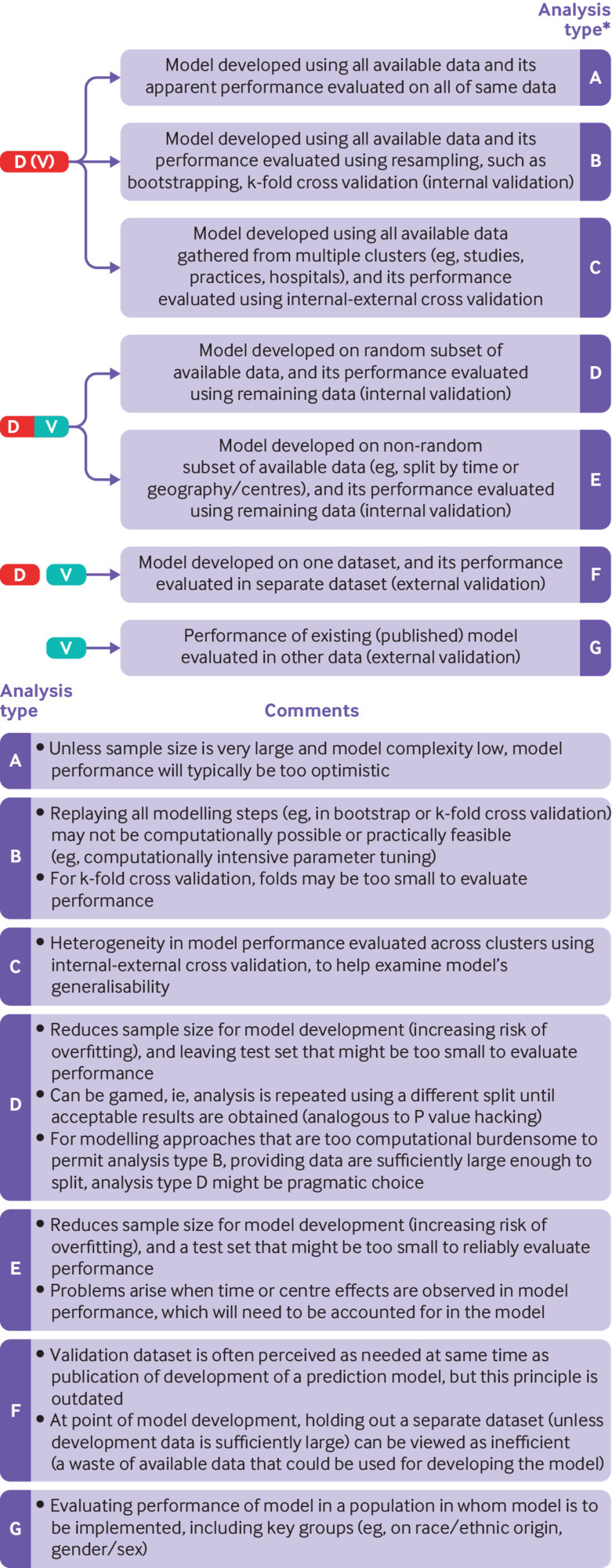
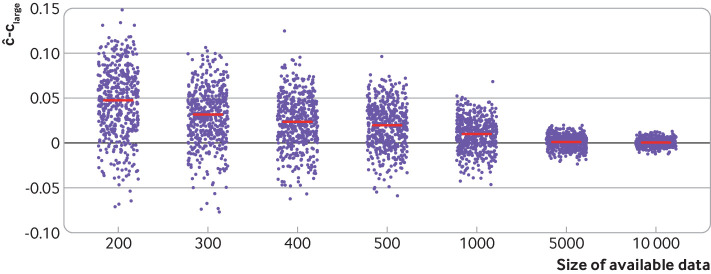
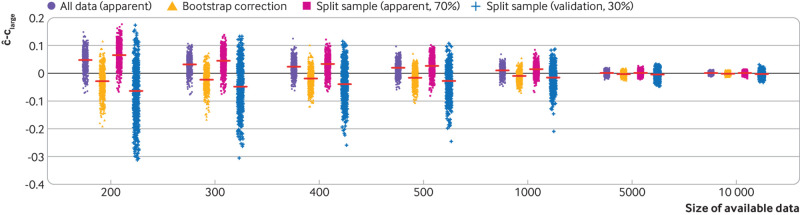
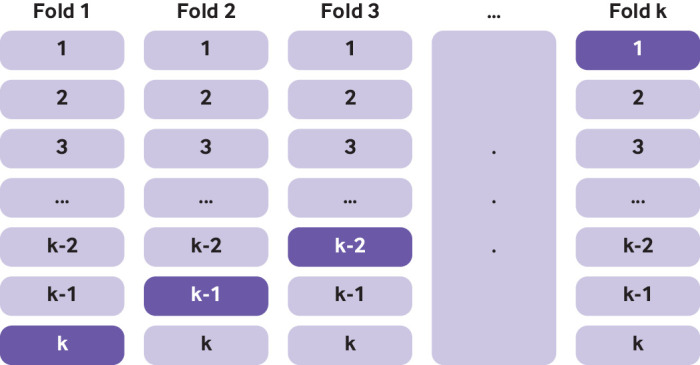
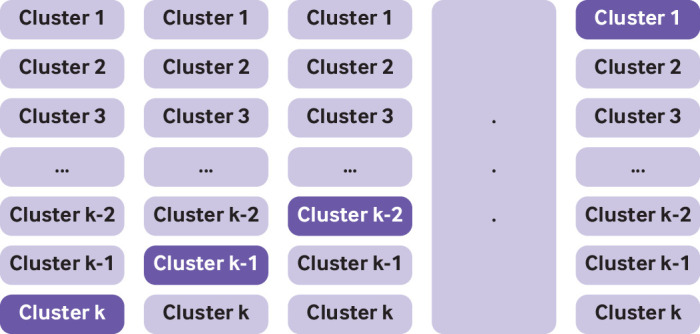
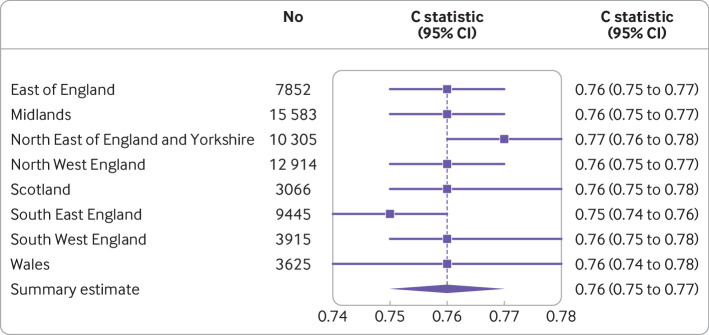
Verification
Claims the paper makes
The claims and statistics of this paper haven’t been checked yet.
Run the check — free, no account needed. It reads the open-access text and checks the sources it cites.
Claims other papers make about this one
Each is checked against this paper’s own text: does it say what the citing paper says it does?
The source backs part of the claim, not all of it — or backs it for a different population, condition or comparison.
In the citing paper
“To ensure validation, the dataset was split into training and testing subsets using a 70/30 ratio, with 70% of the data reserved for model development and 30% held out for independent performance assessment”
From A hybrid fuzzy logic–Random Forest model to predict psychiatric treatment order outcomes: an interpretable tool for legal decision support (2025) · cites this paper as Collins et al., 2024
Experimental — accuracy not yet measuredIn the citing paper
“Further, it might encourage researchers to repeat the procedure until they obtain satisfactory results.”
From Developing clinical prediction models: a step-by-step guide (2024) · cites this paper as [88]
In the citing paper
“However, implementation of k-fold cross validation and bootstrapping can be computationally demanding when multiple imputation of missing data is needed.”
From Developing clinical prediction models: a step-by-step guide (2024) · cites this paper as [88]
Self-check
Percentages, sums and reported differences re-computed from the paper’s own numbers.
The self-check needs the paper’s full text.
Citations
Cites
Harrell (2015) · Springer Series in Statistics · doi:10.1007/978-3-319-19425-7 · Cited by 6,878
Self-citationMoons, K. G. M., Altman, D. G., Reitsma, J. B., Ioannidis, J. P. A., Macaskill, P., Steyerberg, E. W., Vickers, A. J., Ransohoff, D. F., & Collins, G. S. (2015) · Annals of Internal Medicine · doi:10.7326/m14-0698 · Cited by 5,147
Self-citationCollins, G. S., Reitsma, J. B., Altman, D. G., & Moons, K. G. M. (2015) · BMJ · doi:10.1136/bmj.g7594 · Cited by 4,388
Self-citationCollins, P. G. S., Reitsma, J. B., Altman, D. G., & Moons, K. G. M. (2015) · British Journal of Cancer · doi:10.1038/bjc.2014.639 · Cited by 3,319
Self-citationClinical Prediction Models: A Practical Approach to Development, Validation, and Updating
Steyerberg, E. W. (2019) · Statistics for Biology and Health · doi:10.1007/978-3-030-16399-0 · Cited by 3,281
Wynants, L., Van Calster, B., Bonten, M. M., Collins, G. S., Debray, T. P., De Vos, M., Haller, M. C., Heinze, G., Moons, K. G., Riley, R. D., et al. (2020) · doi:10.1101/2020.03.24.20041020 · Cited by 3,070
Self-citationCalculating the sample size required for developing a clinical prediction model
Riley, R. D., Ensor, J., Snell, K. I. E., Harrell, F. E., Martin, G. P., Reitsma, J. B., Moons, K. G. M., Collins, G., & van Smeden, M. (2020) · BMJ · doi:10.1136/bmj.m441 · Cited by 2,917
Self-citationInternal validation of predictive models
Steyerberg, E. W., Harrell, F. E., Borsboom, G. J. J. M., Eijkemans, M. J. C., Vergouwe, Y., & Habbema, J. D. F. (2001) · Journal of Clinical Epidemiology · doi:10.1016/s0895-4356(01)00341-9 · Cited by 2,746
Self-citationChristodoulou, E., Ma, J., Collins, G. S., Steyerberg, E. W., Verbakel, J. Y., & Van Calster, B. (2019) · Journal of Clinical Epidemiology · doi:10.1016/j.jclinepi.2019.02.004 · Cited by 2,119
Self-citation
Research works printed but not linked: 2
- 10.1136/bmj.m1328 · DOI · Paper page
- 10.1177/962280218784726 · DOI
Cited by
Sorted by citations
Collins, G. S., Moons, K. G. M., Dhiman, P., Riley, R. D., Beam, A. L., Van Calster, B., Ghassemi, M., Liu, X., Reitsma, J. B., van Smeden, M., et al. (2024) · BMJ · doi:10.1136/bmj-2023-078378 · Cited by 4,718
Self-citationMoons, K. G. M., Damen, J. A. A., Kaul, T., Hooft, L., Andaur Navarro, C., Dhiman, P., Beam, A. L., Van Calster, B., Celi, L. A., Denaxas, S., et al. (2025) · BMJ · doi:10.1136/bmj-2024-082505 · Cited by 1,069
Self-citationDeveloping clinical prediction models: a step-by-step guide
Efthimiou, O., Seo, M., Chalkou, K., Debray, T., Egger, M., & Salanti, G. (2024) · BMJ · doi:10.1136/bmj-2023-078276 · Cited by 544
Evaluation of clinical prediction models (part 2): how to undertake an external validation study
Riley, R. D., Archer, L., Snell, K. I. E., Ensor, J., Dhiman, P., Martin, G. P., Bonnett, L. J., & Collins, P. G. S. (2024) · BMJ · doi:10.1136/bmj-2023-074820 · Cited by 565
Self-citation
Metadata
- Authors
- Collins, G. S., Dhiman, P., Ma, J., Schlussel, M. M., Archer, L., Van Calster, B., Harrell, F. E., Martin, G. P., Moons, K. G. M., van Smeden, M., Sperrin, M., Bullock, G. S., & Riley, R. D.
- Affiliations
- Centre for Statistics in Medicine, Nuffield Department of Orthopaedics, Rheumatology and Musculoskeletal Sciences, University of Oxford, Oxford OX3 7LD, UK
- University of Oxford (GB)
- National Institute for Health and Care Research (GB)
- KU Leuven, Department of Development and Regeneration, Leuven, Belgium
- Vanderbilt University (US)
- Manchester Academic Health Science Centre (GB)
- Utrecht University (NL)
- Julius Centre for Health Sciences and Primary Care, University Medical Centre Utrecht, Utrecht University, Utrecht, Netherlands
- ORCID
- Venue
- BMJ
- Publisher
- BMJ
- Published
- 2024-01-08
- Volume
- 384
- Pages
- e074819
- ISSN
- 1756-1833 (ISSN-L)
- PMC
- PMC10772854
- OpenAlex
- W4390674087
- Cited by
- 798
- References
- 65
- Citations by year
- 2026: 464 · 2025: 253 · 2024: 81
- FWCI
- 274.95
- Type
- journal article
- Language
- en
- Open access
- hybrid
- doi.org
- Locations
- BMJ (publishedVersion, cc-by)
- PubMed Central (publishedVersion, cc-by)
- PubMed (publishedVersion)
- University of Birmingham Research Portal (University of Birmingham) (publishedVersion, cc-by)
- Research Explorer (The University of Manchester) (publishedVersion, cc-by)
- Lirias (KU Leuven) (submittedVersion, cc-by)
- Utrecht University Repository (Utrecht University) (submittedVersion, other-oa)
- HighWire Press Open Archive (submittedVersion)
- Funders
- Cancer Research UK
- KU Leuven
- Engineering and Physical Sciences Research Council
- Topics
- Physical Sciences › Mathematics › Statistics and Probability › Statistical Methods in Epidemiology
- Health Sciences › Health Professions › Health Information Management › Artificial Intelligence in Healthcare
- Social Sciences › Decision Sciences › Statistics, Probability and Uncertainty › Meta-analysis and systematic reviews
- Keywords
- clinical prediction model, model evaluation, external validation, internal validation, prediction accuracy, model heterogeneity, fairness, generalizability
- MeSH terms
- Humans, Prognosis, Models, Statistical
About these checks
Registry, retraction, Cites and statistics results are computed, not judged, with one exception: a printed reference that no index lists is read once by a model before it counts as a citation error. Claims are extracted by a model and kept only when their quote appears verbatim in the text; each cited source is then checked, with a model’s help, for whether it says what the claim relies on. Those verdicts can be wrong — read the claim’s quote and the cited source before relying on one.
Statistics and arithmetic are recomputed, not judged.
Confidence bands are shown only for fields calibrated on our annotated test set. None is calibrated yet, so no band is shown.
What counts as a claim ›How we measure confidence ›How we check this ›
Are you an author, or do you see a problem with this page? Request a review
