

Investigating the impact of trial retractions on the healthcare evidence ecosystem (VITALITY Study I): retrospective cohort study
Open accessThe DOI matches its Crossref record; 122 of the 134 references it cites were found in a registry or an index; 13 of the 22 sources its claims cite were checked for support.
Abstract
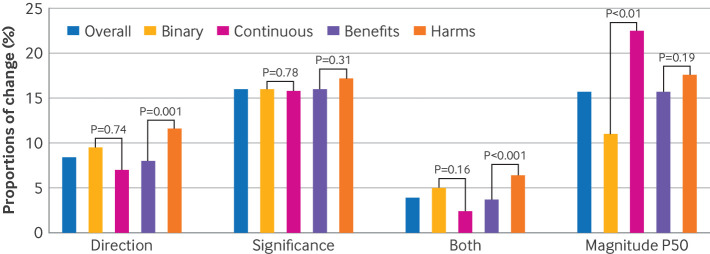
Objective: To investigate the impact of retracted trials on the production and use of healthcare evidence in the evidence ecosystem. Design: Retrospective cohort study based on forward citation searching. Data sources: Retraction Watch up to 5 November 2024. Study selection: Randomised controlled trials in humans that were retracted for any reason. Methods: Forward citation searching via Google Scholar and Scopus was used to identify evidence synthesis research (21 November 2024) that quantitatively incorporated retracted trials. Data were independently extracted by two groups of researchers. The results of meta-analyses were updated after exclusion of the retracted trials. The proportions of meta-analyses that changed direction of the pooled effect and/or the significance of the P value were estimated. A generalised linear mixed model was used to investigate the association between the number of included studies and the impact, measured by odds ratio and 95% confidence interval (CI). The impact of distorted evidence on clinical practice guidelines was also investigated on the basis of citation searching. Results: The searches identified 1330 retracted trials and 847 systematic reviews that quantitatively synthesised retracted trials, with a total of 3902 meta-analyses that could be replicated. After the potential clustering effects were accounted for, the exclusion of the retracted trials led to a change in the direction of the pooled effect in 8.4% (95% CI 6.8% to 10.1%), in its statistical significance in 16.0% (14.2% to 17.9%), and in both direction and significance in 3.9% (2.5% to 5.2%) and a >50% change in the magnitude of the effect in 15.7% (13.5% to 17.9%). An obvious non-linear association existed between the number of included studies and the impact on the results, with a lower number of studies having higher impact (eg, for 10 studies versus ≥20 studies, change of direction: odds ratio 2.63, 95% CI 1.29 to 5.38; P<0.001). Evidence from 68 systematic reviews with conclusions distorted by retracted trials was used in 157 guideline documents. Conclusion: Retracted trials have a substantial impact on the evidence ecosystem, including evidence synthesis, clinical practice guidelines, and evidence based clinical practice. Evidence generators, synthesisers, and users must pay attention to this problem, and feasible approaches that assist with easier identification and correction of such potential contamination are needed. Study registration: Open Science Framework ( https://osf.io/7eazq/ ).
Overview
CoChat Summary
## TL;DR
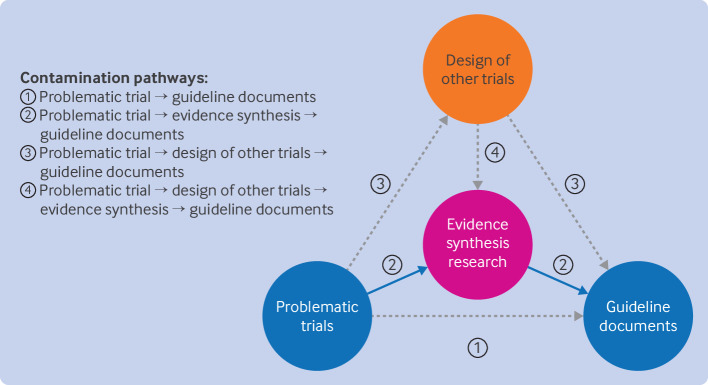
This retrospective cohort study used forward citation searching to trace how 1,330 retracted randomized trials propagated through systematic reviews and clinical practice guidelines. Excluding retracted trials changed pooled results in a meaningful minority of meta-analyses, showing a contamination cascade from trials to guidelines.
## Key findings
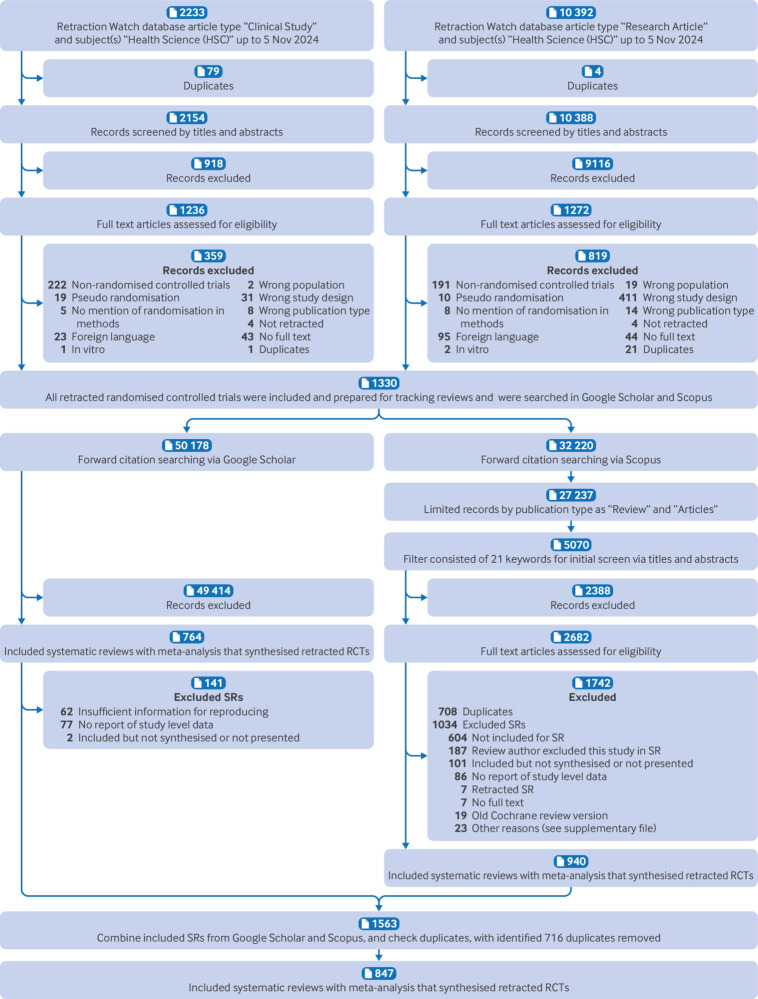
- The searches identified 1,330 retracted trials, 847 systematic reviews that quantitatively synthesized them, and 3,902 pair-wise meta-analyses that could be replicated.
- After excluding retracted trials, the pooled effect changed in 8.4% of meta-analyses, the P value significance changed in 16.0%, both direction and significance changed in 3.9%, and the effect magnitude changed by >50% in 15.7%.
- Meta-analyses with fewer studies were more affected; for 10 studies versus ≥20 studies, the odds of a change in direction were 2.63 (95% CI 1.29 to 5.38; P<0.001).
- Of the 1,330 retracted trials, 312 (23.5%) contaminated 4,095 meta-analyses from 847 systematic reviews, and 218 substantially affected meta-analyses from 68 systematic reviews were used in 157 English-language guideline documents.
## Methods
- Design: Retrospective cohort study based on forward citation searching; a pre-specified protocol was registered on 13 April 2023.
- Data/sample: Retracted human randomized controlled trials from Retraction Watch (updated to 5 November 2024), then systematic reviews/meta-analyses found via Google Scholar and Scopus, plus English-language clinical practice guidelines potentially affected by contaminated reviews.
- Main analysis: Two groups independently extracted data; three methodologists replicated meta-analyses, re-ran them after excluding retracted trials, and estimated the proportions with changed direction, changed statistical significance, both, or >50% change in magnitude using a generalised linear mixed model with clustering and subgroup analyses.
## Limitations
- The paper states that it could underestimate affected guidelines because some guidelines were not indexed, some were not in included languages, and some used trial evidence directly rather than through reviews.
- It also states that it focused only on pair-wise meta-analyses and on retracted randomized trials, so effects on network meta-analyses and non-randomized studies were not assessed.
- Evident from the text: the study relied on forward citation searching and reported that 193/4,095 (4.7%) meta-analyses could not be exactly reconstructed, which may mean some relevant evidence or exact model details were missed.
Model-written summary. Check it against the paper before relying on it.
Integrity signals
Registry
Cites
Statistics
Figures
Verification
Claims the paper makes
6 Valid · 2 Not valid · 7 Not checked · 77 Own results and interpretations
Every source the paper cites for this claim was checked and supports it.
In the paper
“The median time from the submission of concern to the first journal correction is estimated to be 22.1 months.108”
§ Investigating the impact of trial retractions on the healthcare evidence ecosystem (VITALITY Study I): retrospective cohort study > Discussion > Implications for future evidence synthesis practice Our findings have major implications for the field of evidence synthesis. One of the most challenging aspects of evidence synthesis practice is the identification of retracted trials.106 107 Even where “signals” of concerns were observed, the investigation of problematic trials still took a long time. The median time from the submission of concern to the first journal correction is estimated to be 22.1 months.108 Existing databases keep current records of retracted trials, but almost inevitably many retractions will take place only after the completion and publication of associated systematic reviews. As such, we recommend the following approach for future evidence synthesis research. Firstly, authors of systematic review should identify already retracted trials before completion via multiple databases (for example, Retraction Watch, Scopus, Web of Science, PubMed) and pre-specify how such trials will be detected and handled in the review process. Secondly, many retractions occur well after publication of the evidence synthesis in question, so a priori evaluation of the integrity and trustworthiness of included trials may be useful for users of systematic reviews. Several important instruments have been released, such as the REAPPRIAISE checklist for checking publication integrity by Grey and colleagues,109 the Cochrane Pregnancy and Childbirth Trustworthiness Screening Tool (CPC‐TST) for assessment of trustworthiness,110 the TRACT checklist by Mol and colleagues for assessment of trustworthiness,111 and the ongoing project of INSPECT-SR for identifying problematic trials.112 Thirdly, for any evidence synthesis research, reviewers may wish to consider prioritising checking for retracted trials. Fourthly, authors of systematic reviews should work together with journal editors to publish updated systematic reviews and meta-analyses if any of the included trials have been retracted, although a method for flagging this is needed. Further policy efforts should also make sure to keep up with the pace. For example, academic journals are expected to impose stricter policies on trial registration and data sharing. Although some journals (such as The BMJ and PLoS Medicine) already have such a policy,113 many journals still lack this. Some efforts have been made to track the potential retractions via forwards or backwards citation searching (for example, a systematic review accelerator called SpiderCite114) and to inform researchers when papers they have cited are retracted (for example, https://www.retracted.net/), and this may help the effort to correct the scientific record.
What the sources say
- Supportedcites [108] Grey A Avenell A Bolland M. Timeliness and content of retraction notices for publications by a single research group. Account Res 2022; 29: 347- 78. 10.1080/08989621.2021.1920409 33882262 source
The abstract (p. 2) reports a median of 22.1 months from submission of concerns to the first journal correction. The Results section, under “Timing of first correction notices” (p. 6), gives the same estimate for the 292 publications studied. (LLM, conf=0.95)
hedged- Asserted: passes — The authors put it forward as true.
- Checkable: passes — It can be checked against evidence.
- Load-bearing: passes — The paper’s conclusions depend on it.
- Based: passes — The paper gives a reason why it holds.
- Supported
The cited sources support only part of this claim — read each source’s verdict below.
In the paper
“an increasing number of retracted clinical trials have been documented owing to the questionable nature of their data and practices.”
§ Investigating the impact of trial retractions on the healthcare evidence ecosystem (VITALITY Study I): retrospective cohort study > Introduction
What the sources say
- Partly supportedcites [7] Wiedermann CJ Joannidis M. The Boldt scandal still in need of action: the example of colloids 10 years after initial suspicion of fraud. Intensive Care Med 2018; 44: 1735- 7. 29968012 PMC7572333 sourceExperimental — accuracy not yet measured
The Introduction describes planned retractions of 88 Boldt papers in 2011, and “From missing institutional review board approvals to scientific fraud” reports 96 retractions by June 2018 following evidence of fabrication, falsification and other manipulation. This supports an increasing count in the Boldt case, but the paper does not establish a general trend across clinical trials. (LLM, conf=0.84)
- Partly supportedcites [8] Wadhwa RR Rasendran C Popovic ZB Nissen SE Desai MY. Temporal Trends, Characteristics, and Citations of Retracted Articles in Cardiovascular Medicine. JAMA Netw Open 2021; 4: e2118263. 34292337 PMC8299312 sourceExperimental — accuracy not yet measured
The Results and Discussion report a rising rate of retractions among cardiology articles, and the Introduction says questions about a report’s veracity can lead to retraction. The paper does not establish that retracted clinical trials specifically are increasing, or that questionable data and practices caused the observed increase. (LLM, conf=0.85)
plainstates a cause- Asserted: passes — The authors put it forward as true.
- Checkable: passes — It can be checked against evidence.
- Load-bearing: passes — The paper’s conclusions depend on it.
- Based: passes — The paper gives a reason why it holds.
- Partly supported
A result the paper reports from its own data — it cites no other source for it, so there is none to check. The quote shows it is in the paper.
In the paper
“The proportion of meta-analyses in which both the direction of the effects and the significance of the P value were altered was 3.9% (95% CI 2.5% to 5.2%; n=218)”
§ Investigating the impact of trial retractions on the healthcare evidence ecosystem (VITALITY Study I): retrospective cohort study > Results > Impact of retracted trials on evidence synthesis
plainn = 218- Asserted: passes — The authors put it forward as true.
- Checkable: passes — It can be checked against evidence.
- Load-bearing: passes — The paper’s conclusions depend on it.
- Based: passes — The paper gives a reason why it holds.
- Rests on an assumption not shown here.
A result the paper reports from its own data — it cites no other source for it, so there is none to check. The quote shows it is in the paper.
In the paper
“An obvious non-linear association existed between the number of included studies and the impact on the results, with a lower number of studies having higher impact”
§ Investigating the impact of trial retractions on the healthcare evidence ecosystem (VITALITY Study I): retrospective cohort study > Abstract > Results
boostedstates an association- Asserted: passes — The authors put it forward as true.
- Checkable: passes — It can be checked against evidence.
- Load-bearing: passes — The paper’s conclusions depend on it.
- Based: passes — The paper gives a reason why it holds.
A result the paper reports from its own data — it cites no other source for it, so there is none to check. The quote shows it is in the paper.
In the paper
“In addition, the numbers of studies reporting harm outcomes were often lower than for benefits (median: 6 v 7 in our dataset)”
§ Investigating the impact of trial retractions on the healthcare evidence ecosystem (VITALITY Study I): retrospective cohort study > Discussion > Principal findings
plain- Asserted: passes — The authors put it forward as true.
- Checkable: passes — It can be checked against evidence.
- Load-bearing: passes — The paper’s conclusions depend on it.
- Based: passes — The paper gives a reason why it holds.
33 more claims
Create a free account to see all 92 claims and to verify the 1 reference still open.
- Probably not a substantial claim. 22
- It may state two separate claims as one. 40
- The quote only partly states this claim. 1
Claims other papers make about this one
Each is checked against this paper’s own text: does it say what the citing paper says it does?
The source backs part of the claim, not all of it — or backs it for a different population, condition or comparison.
In the citing paper
“A recent review identified 847 systematic reviews that included one or more retracted RCTs in meta-analysis, and found that excluding these studies changed the size of effect in 16% of meta-analyses, and the direction of effect in just over 8% (6).”
From INSPECT-SR: a tool for assessing trustworthiness of randomised controlled trials (2025) · cites this paper as [6]
Experimental — accuracy not yet measured
Self-check
Percentages, sums and reported differences re-computed from the paper’s own numbers.
Self-check results appear here once an independent check has confirmed them.
Cited works that were retracted
Works this paper cites that were later retracted, from the retraction notices publishers deposit. Major when the notice came out before this paper was published.
Rated major: it would touch a result — a value a result rests on, reported and recomputed p-values on opposite sides of the significance level, two passages that conflict with no sign which is right, or a cited work retracted before this paper was published.
In the paper
“Carlisle JB Stevenson CA. Drugs for preventing postoperative nausea and vomiting. Cochrane Database Syst Rev 2006; 2006: CD004125. 16856030 PMC6463839”
Cited work 10.1002/14651858.cd004125.pub2 · retracted 2017-07-17 · notice 10.1002/14651858.cd004125.pub3 · this paper published 2025-04-23
Rated major: it would touch a result — a value a result rests on, reported and recomputed p-values on opposite sides of the significance level, two passages that conflict with no sign which is right, or a cited work retracted before this paper was published.
In the paper
“10.1016/S0140-6736(21)01640-8”
Cited work 10.1016/s0140-6736(21)01640-8 · retracted 2024-04-04 · notice 10.1016/s0140-6736(24)00318-0 · this paper published 2025-04-23
Rated major: it would touch a result — a value a result rests on, reported and recomputed p-values on opposite sides of the significance level, two passages that conflict with no sign which is right, or a cited work retracted before this paper was published.
In the paper
“10.1056/NEJMoa1200303”
Cited work 10.1056/nejmoa1200303 · retracted 2018-06-13 · notice 10.1056/nejmc1806491 · this paper published 2025-04-23
A note, not an issue: for example, a cited work that was retracted only after this paper was published, which its authors could not have known.
In the paper
“10.1016/j.jclinepi.2022.06.015”
Cited work 10.1016/j.jclinepi.2022.06.015 · retraction date not known · this paper published 2025-04-23
A note, not an issue: for example, a cited work that was retracted only after this paper was published, which its authors could not have known.
In the paper
“10.1016/j.jclinepi.2022.05.013”
Cited work 10.1016/j.jclinepi.2022.05.013 · retraction date not known · this paper published 2025-04-23
A note, not an issue: for example, a cited work that was retracted only after this paper was published, which its authors could not have known.
In the paper
“Estruch R Ros E Salas-Salvadó J PREDIMED Study Investigators. Primary prevention of cardiovascular disease with a Mediterranean diet. N Engl J Med 2013; 368: 1279- 90. 29897867”
Cited work 10.1056/nejmc1806491 · retraction date not known · this paper published 2025-04-23
Citations
Cites
6 retracted
RETRACTED: Primary Prevention of Cardiovascular Disease with a Mediterranean Diet
Estruch, R., Ros, E., Salas-Salvadó, J., Covas, M.-I., Corella, D., Arós, F., Gómez-Gracia, E., Ruiz-Gutiérrez, V., Fiol, M., Lapetra, J., et al. (2013) · New England Journal of Medicine · doi:10.1056/nejmoa1200303 · Cited by 4,257
RetractedEstruch, R., Ros, E., Salas-Salvadó, J., Covas, M.-I., Corella, D., Arós, F., Gómez-Gracia, E., Ruiz-Gutiérrez, V., Fiol, M., Lapetra, J., et al. (2018) · New England Journal of Medicine · doi:10.1056/nejmc1806491 · Cited by 1,008
RetractedShi, Q., Wang, Y., Hao, Q., Vandvik, P. O., Guyatt, G., Li, J., Chen, Z., Xu, S., Shen, Y., Ge, L., et al. (2022) · The Lancet · doi:10.1016/s0140-6736(21)01640-8 · Cited by 279
Self-citationRetractedDrugs for preventing postoperative nausea and vomiting
Carlisle, J., & Stevenson, C. A. (2006) · Cochrane Database of Systematic Reviews · doi:10.1002/14651858.cd004125.pub2 · Cited by 264
RetractedKataoka, Y., Banno, M., Tsujimoto, Y., Ariie, T., Taito, S., Suzuki, T., Oide, S., & Furukawa, T. A. (2022) · Journal of Clinical Epidemiology · doi:10.1016/j.jclinepi.2022.06.015 · Cited by 44
RetractedRetracted systematic reviews continued to be frequently cited: a citation analysis
Wang, Z., Shi, Q., Zhou, Q., Zhao, S., Hou, R., Lu, S., Gao, X., & Chen, Y. (2022) · Journal of Clinical Epidemiology · doi:10.1016/j.jclinepi.2022.05.013 · Cited by 13
RetractedHarrell, F. E. (2001) · Springer Series in Statistics · doi:10.1007/978-1-4757-3462-1 · Cited by 9,195
Interventions for preventing falls in older people living in the community
Gillespie, L. D., Robertson, M. C., Gillespie, W. J., Sherrington, C., Gates, S., Clemson, L., & Lamb, S. E. (2012) · Cochrane Database of Systematic Reviews · doi:10.1002/14651858.cd007146.pub3 · Cited by 3,966
Randomized, Controlled Trials, Observational Studies, and the Hierarchy of Research Designs
Concato, J., Shah, N., & Horwitz, R. I. (2000) · New England Journal of Medicine · doi:10.1056/nejm200006223422507 · Cited by 3,563
Consensus Guidelines for the Management of Postoperative Nausea and Vomiting
Gan, T. J., Diemunsch, P., Habib, A. S., Kovac, A., Kranke, P., Meyer, T. A., Watcha, M., Chung, F., Angus, S., Apfel, C. C., et al. (2014) · Anesthesia & Analgesia · doi:10.1213/ane.0000000000000002 · Cited by 1,487
Murad, M. H., Asi, N., Alsawas, M., & Alahdab, F. (2016) · Evidence Based Medicine · doi:10.1136/ebmed-2016-110401 · Cited by 1,388
Exercise for preventing and treating osteoporosis in postmenopausal women
Howe, T. E., Shea, B., Dawson, L. J., Downie, F., Murray, A., Ross, C., Harbour, R. T., Caldwell, L. M., & Creed, G. (2011) · Cochrane Database of Systematic Reviews · doi:10.1002/14651858.cd000333.pub2 · Cited by 1,083
Understanding controlled trials: Why are randomised controlled trials important?
Sibbald, B., & Roland, M. (1998) · BMJ · doi:10.1136/bmj.316.7126.201 · Cited by 807
Interventions for preventing falls in older people living in the community
Gillespie, L. D., Robertson, M. C., Gillespie, W. J., Lamb, S. E., Gates, S., Cumming, R. G., & Rowe, B. H. (2009) · Cochrane Database of Systematic Reviews · doi:10.1002/14651858.cd007146.pub2 · Cited by 788
Vitamin D supplementation for women during pregnancy
De-Regil, L. M., Palacios, C., Lombardo, L. K., & Peña-Rosas, J. P. (2016) · Cochrane Database of Systematic Reviews · doi:10.1002/14651858.cd008873.pub3 · Cited by 744
Vitamin D supplementation for prevention of mortality in adults
Bjelakovic, G., Gluud, L. L., Nikolova, D., Whitfield, K., Wetterslev, J., Simonetti, R. G., Bjelakovic, M., & Gluud, C. (2014) · Cochrane Database of Systematic Reviews · doi:10.1002/14651858.cd007470.pub3 · Cited by 695
A full systematic review was completed in 2 weeks using automation tools: a case study
Clark, J., Glasziou, P., Del Mar, C., Bannach-Brown, A., Stehlik, P., & Scott, A. M. (2020) · Journal of Clinical Epidemiology · doi:10.1016/j.jclinepi.2020.01.008 · Cited by 687
Self-citationThe impact of study size on meta-analyses: examination of underpowered studies in Cochrane reviews
Turner, R. M., Bird, S. M., & Higgins, J. P. T. (2013) · PLoS ONE · doi:10.1371/journal.pone.0059202 · Cited by 672
Zarychanski, R., Abou-Setta, A. M., Turgeon, A. F., Houston, B. L., McIntyre, L., Marshall, J. C., & Fergusson, D. A. (2013) · JAMA · doi:10.1001/jama.2013.430 · Cited by 649
Multidisciplinary biopsychosocial rehabilitation for chronic low back pain
Kamper, S. J., Apeldoorn, A. T., Chiarotto, A., Smeets, R. J. E. M., Ostelo, R. W., Guzman, J., & van Tulder, M. W. (2014) · Cochrane Database of Systematic Reviews · doi:10.1002/14651858.cd000963.pub3 · Cited by 629
Holm, J. C., Nowicka, P., Farpour-Lambert, N. J., O'Malley, G., Hassapidou, M., Weiss, R., & Baker, J. L. (2014) · Obesity Facts · doi:10.1159/000365773 · Cited by 592
Mechanical methods for induction of labour
Jozwiak, M., Bloemenkamp, K. W., Kelly, A. J., Mol, B. W. J., Irion, O., & Boulvain, M. (2012) · Cochrane Database of Systematic Reviews · doi:10.1002/14651858.cd001233.pub2 · Cited by 536
Gupta, J. K., Daniels, J. P., Middleton, L. J., Pattison, H. M., Prileszky, G., Roberts, T. E., Sanghera, S., Barton, P., Gray, R., Kai, J., et al. (2015) · Health Technology Assessment · doi:10.3310/hta19880 · Cited by 399
Vitamin D supplementation for women during pregnancy
Palacios, C., Kostiuk, L. K., & Peña-Rosas, J. P. (2019) · Cochrane Database of Systematic Reviews · doi:10.1002/14651858.cd008873.pub4 · Cited by 377
Meta-analysis of proportions using generalized linear mixed models.
Lin, L., & Chu, H. (2020) · Epidemiology · doi:10.1097/ede.0000000000001232 · Cited by 345
Self-citationAntibiotics and antiseptics for venous leg ulcers
O'Meara, S., Al-Kurdi, D., Ologun, Y., Ovington, L. G., Martyn-St James, M., & Richardson, R. (2014) · Cochrane Database of Systematic Reviews · doi:10.1002/14651858.cd003557.pub5 · Cited by 292
Interventions to reduce haemorrhage during myomectomy for fibroids
Kongnyuy, E. J., & Wiysonge, C. S. (2014) · Cochrane Database of Systematic Reviews · doi:10.1002/14651858.cd005355.pub5 · Cited by 278
Golder, S., Loke, Y. K., Wright, K., & Norman, G. (2016) · PLOS Medicine · doi:10.1371/journal.pmed.1002127 · Cited by 277
Self-citationTurrini, G., Purgato, M., Acarturk, C., Anttila, M., Au, T., Ballette, F., Bird, M., Carswell, K., Churchill, R., Cuijpers, P., et al. (2019) · Epidemiology and Psychiatric Sciences · doi:10.1017/s2045796019000027 · Cited by 258
Drugs for preventing postoperative nausea and vomiting
Carlisle, J., & Stevenson, C. A. (2017) · Cochrane Database of Systematic Reviews · doi:10.1002/14651858.cd004125.pub3 · Cited by 244
The robust error meta-regression method for dose–response meta-analysis
Xu, C., & Doi, S. A. R. (2018) · International Journal of Evidence-Based Healthcare · doi:10.1097/xeb.0000000000000132 · Cited by 239
Self-citationInterventions for pain with intrauterine device insertion
Lopez, L. M., Bernholc, A., Zeng, Y., Allen, R. H., Bartz, D., O'Brien, P. A., & Hubacher, D. (2015) · Cochrane Database of Systematic Reviews · doi:10.1002/14651858.cd007373.pub3 · Cited by 231
Naudet, F., Sakarovitch, C., Janiaud, P., Cristea, I., Fanelli, D., Moher, D., & Ioannidis, J. P. A. (2018) · BMJ · doi:10.1136/bmj.k400 · Cited by 227
Cheuk, D. K., Yeung, J., Chung, K., & Wong, V. (2007) · Cochrane Database of Systematic Reviews · doi:10.1002/14651858.cd005472.pub2 · Cited by 226
Aromatase inhibitors (letrozole) for subfertile women with polycystic ovary syndrome
Franik, S., Eltrop, S. M., Kremer, J. A., Kiesel, L., & Farquhar, C. (2018) · Cochrane Database of Systematic Reviews · doi:10.1002/14651858.cd010287.pub3 · Cited by 211
de Jong, P. G., Kaandorp, S., Di Nisio, M., Goddijn, M., & Middeldorp, S. (2014) · Cochrane Database of Systematic Reviews · doi:10.1002/14651858.cd004734.pub4 · Cited by 204
The role of metformin in polycystic ovary syndrome: a systematic review
Moll, E., van der Veen, F., & van Wely, M. (2007) · Human Reproduction Update · doi:10.1093/humupd/dmm026 · Cited by 188
Antioxidants for female subfertility
Showell, M. G., Brown, J., Clarke, J., & Hart, R. J. (2013) · Cochrane Database of Systematic Reviews · doi:10.1002/14651858.cd007807.pub2 · Cited by 184
Mol, B. W., Lai, S., Rahim, A., Bordewijk, E. M., Wang, R., van Eekelen, R., Gurrin, L. C., Thornton, J. G., van Wely, M., & Li, W. (2023) · Research Integrity and Peer Review · doi:10.1186/s41073-023-00130-8 · Cited by 154
Survivorship, Version 2.2017, NCCN Clinical Practice Guidelines in Oncology
Denlinger, C. S., Sanft, T., Baker, K. S., Baxi, S., Broderick, G., Demark-Wahnefried, W., Friedman, D. L., Goldman, M., Hudson, M., Khakpour, N., et al. (2017) · Journal of the National Comprehensive Cancer Network · doi:10.6004/jnccn.2017.0146 · Cited by 152
Doi, S. A., Furuya-Kanamori, L., Xu, C., Lin, L., Chivese, T., & Thalib, L. (2022) · Journal of Clinical Epidemiology · doi:10.1016/j.jclinepi.2020.08.019 · Cited by 150
Self-citationA checklist to assess Trustworthiness in RAndomised Controlled Trials (TRACT checklist)
Mol, B. W., Lai, S., Rahim, A., Bordewijk, E. M., Wang, R., Eekelen, R. V., Gurrin, L. C., Thornton, J. G., Wely, M. V., & Li, W. (2023) · doi:10.21203/rs.3.rs-2119486/v1 · Cited by 149
Mechanical methods for induction of labour
de Vaan, M., Eikelder, M. T., Jozwiak, M., et al. (2019) · Cochrane Database of Systematic Reviews · doi:10.1002/14651858.cd001233.pub3 · Cited by 134
Metformin for ovulation induction (excluding gonadotrophins) in women with polycystic ovary syndrome
Sharpe, A., Morley, L. C., Tang, T., Norman, R. J., & Balen, A. H. (2019) · Cochrane Database of Systematic Reviews · doi:10.1002/14651858.cd013505 · Cited by 132
Progestogen for preventing miscarriage in women with recurrent miscarriage of unclear etiology
Haas, D. M., Hathaway, T. J., & Ramsey, P. S. (2018) · Cochrane Database of Systematic Reviews · doi:10.1002/14651858.cd003511.pub4 · Cited by 130
Evidence vs Consensus in Clinical Practice Guidelines
Djulbegovic, B., & Guyatt, G. (2019) · JAMA · doi:10.1001/jama.2019.9751 · Cited by 129
Compression bandages or stockings versus no compression for treating venous leg ulcers
Shi, C., Dumville, J. C., Cullum, N., Connaughton, E., & Norman, G. (2021) · Cochrane Database of Systematic Reviews · doi:10.1002/14651858.cd013397.pub2 · Cited by 128
Interventions for improving mobility after hip fracture surgery in adults
Fairhall, N., Dyer, S. M., Mak, J. C. S., Diong, J. H. L., Kwok, W. S., & Sherrington, C. (2022) · Cochrane Database of Systematic Reviews · doi:10.1002/14651858.cd001704.pub5 · Cited by 123
Antioxidants for female subfertility
Showell, M. G., Mackenzie-Proctor, R., Jordan, V., & Hart, R. J. (2020) · Cochrane Database of Systematic Reviews · doi:10.1002/14651858.cd007807.pub4 · Cited by 119
Pundir, J., Psaroudakis, D., Savnur, P., Bhide, P., Sabatini, L., Teede, H., Coomarasamy, A., & Thangaratinam, S. (2018) · BJOG: An International Journal of Obstetrics & Gynaecology · doi:10.1111/1471-0528.14754 · Cited by 115
Check for publication integrity before misconduct
Grey, A., Bolland, M. J., Avenell, A., Klein, A. A., & Gunsalus, C. K. (2020) · Nature · doi:10.1038/d41586-019-03959-6 · Cited by 114
Plantinga, N. L., de Smet, A. M. G. A., Oostdijk, E. A. N., de Jonge, E., Camus, C., Krueger, W. A., Bergmans, D. C. J. J., Reitsma, J. B., & Bonten, M. J. M. (2017) · Clinical Microbiology and Infection · doi:10.1016/j.cmi.2017.08.019 · Cited by 110
Synthesizing Evidence: Shifting the Focus From Individual Studies to the Body of Evidence
Murad, M. H., & Montori, V. M. (2013) · JAMA · doi:10.1001/jama.2013.5616 · Cited by 104
Deane, K. H. O., Jimoh, O. F., Biswas, P., O'Brien, A., Hanson, S., Abdelhamid, A. S., Fox, C., & Hooper, L. (2021) · The British Journal of Psychiatry · doi:10.1192/bjp.2019.234 · Cited by 104
Buckett, W. M., & Sierra, S. (2019) · Reproductive BioMedicine Online · doi:10.1016/j.rbmo.2019.05.023 · Cited by 102
Vitagliano, A., Sardo, A. D. S., Saccone, G., Valenti, G., Sapia, F., Kamath, M. S., Blaganje, M., Andrisani, A., & Ambrosini, G. (2018) · Fertility and Sterility · doi:10.1016/j.fertnstert.2018.04.040 · Cited by 100
Clomiphene and other antioestrogens for ovulation induction in polycystic ovarian syndrome
Brown, J., & Farquhar, C. (2016) · Cochrane Database of Systematic Reviews · doi:10.1002/14651858.cd002249.pub5 · Cited by 99
Jacob, M., Chappell, D., Conzen, P. F., Wilkes, M. M., Becker, B. F., & Rehm, M. (2008) · Critical Care · doi:10.1186/cc6812 · Cited by 98
Bordewijk, E. M., Ng, K. Y. B., Rakic, L., Mol, B. W. J., Brown, J., Crawford, T. J., & van Wely, M. (2020) · Cochrane Database of Systematic Reviews · doi:10.1002/14651858.cd001122.pub5 · Cited by 89
Progestogen for preventing miscarriage in women with recurrent miscarriage of unclear etiology
Haas, D. M., Hathaway, T. J., & Ramsey, P. S. (2019) · Cochrane Database of Systematic Reviews · doi:10.1002/14651858.cd003511.pub5 · Cited by 88
Geng, J., Qian, J., Cheng, H., Ji, F., & Liu, H. (2016) · PLoS ONE · doi:10.1371/journal.pone.0152829 · Cited by 87
Self-citationDodd, J. M., Grivell, R. M., O’Brien, C. M., Dowswell, T., & Deussen, A. R. (2017) · Cochrane Database of Systematic Reviews · doi:10.1002/14651858.cd012024.pub2 · Cited by 86
Heshmati, J., Farsi, F., Yosaee, S., Razavi, M., Rezaeinejad, M., Karimie, E., & Sepidarkish, M. (2018) · Probiotics and Antimicrobial Proteins · doi:10.1007/s12602-018-9493-9 · Cited by 86
Validity of data extraction in evidence synthesis practice of adverse events: reproducibility study
Xu, C., Yu, T., Furuya-Kanamori, L., Lin, L., Zorzela, L., Zhou, X., Dai, H., Loke, Y., & Vohra, S. (2022) · BMJ · doi:10.1136/bmj-2021-069155 · Cited by 82
Self-citationInterventions to reduce haemorrhage during myomectomy for fibroids
Kongnyuy, E. J., & Wiysonge, C. S. (2007) · Cochrane Database of Systematic Reviews · doi:10.1002/14651858.cd005355.pub2 · Cited by 74
Does retraction after misconduct have an impact on citations? A pre–post study
Candal-Pedreira, C., Ruano-Ravina, A., Fernández, E., Ramos, J., Campos-Varela, I., & Pérez-Ríos, M. (2020) · BMJ Global Health · doi:10.1136/bmjgh-2020-003719 · Cited by 67
Godoi, A., Reis Marques, I., Padrão, E. M. H., Mahesh, A., Hespanhol, L. C., Riceto Loyola Júnior, J. E., de Souza, I. A. F., Moreira, V. C. S., Silva, C. H., Miyawaki, I. A., et al. (2023) · Diabetology & Metabolic Syndrome · doi:10.1186/s13098-023-01144-4 · Cited by 67
Jia, D., Tan, H., Faramand, A. M., & Fang, F. (2019) · Obesity Surgery · doi:10.1007/s11695-019-04288-3 · Cited by 62
Juul, S., Nielsen, E. E., Feinberg, J. B., Siddiqui, F., Kamp, C. B., Barot, E., Holgersson, J., Nielsen, N., Bentzer, P., Veroniki, A. A., et al. (2021) · PLoS ONE · doi:10.1371/journal.pone.0248132 · Cited by 60
Avenell, A., Stewart, F., Grey, A., Gamble, G., & Bolland, M. (2019) · BMJ Open · doi:10.1136/bmjopen-2019-031909 · Cited by 59
Efficacy and Safety of Tramadol for Premature Ejaculation: A Systematic Review and Meta-analysis
Wu, T., Yue, X., Duan, X., Luo, D., Cheng, Y., Tian, Y., & Wang, K. (2012) · Urology · doi:10.1016/j.urology.2012.05.035 · Cited by 57
Self-citationBała, M. M., Paszek, E., Leśniak, W., Włoch-Kopeć, D., Jasińska, K., & Undas, A. (2018) · Cochrane Database of Systematic Reviews · doi:10.1002/14651858.cd012534.pub2 · Cited by 54
Platelet-rich-plasmapheresis for minimising peri-operative allogeneic blood transfusion
Carless, P. A., Rubens, F. D., Anthony, D., O’Connell, D. L., & Henry, D. A. (2011) · Cochrane Database of Systematic Reviews · doi:10.1002/14651858.cd004172.pub2 · Cited by 53
Interventions to treat premature ejaculation: a systematic review short report
Cooper, K., Martyn-St James, M., Kaltenthaler, E., Dickinson, K., & Cantrell, A. (2015) · Health Technology Assessment · doi:10.3310/hta19210 · Cited by 50
Fanelli, D., Wong, J., & Moher, D. (2022) · Accountability in Research · doi:10.1080/08989621.2021.1947810 · Cited by 49
Can Dexmedetomidine Influence Recovery Profiles from General Anesthesia in Nasal Surgery?
Lee, H., Yoon, H. Y., Jin, H. J., & Hwang, S. H. (2017) · Otolaryngology · doi:10.1177/0194599817733735 · Cited by 48
Future of Evidence Ecosystem Series: Evidence ecosystems and learning health systems: why bother?
Vandvik, P. O., & Brandt, L. (2020) · Journal of Clinical Epidemiology · doi:10.1016/j.jclinepi.2020.02.008 · Cited by 48
Development of an efficient search filter to retrieve systematic reviews from PubMed
Oliván, J. A. S., Cuenca, G. M., & Avilés, R. A. (2021) · Journal of the Medical Library Association JMLA · doi:10.5195/jmla.2021.1223 · Cited by 47
Hashim, H. A., Foda, O., & Ghayaty, E. (2015) · Acta Obstetricia Et Gynecologica Scandinavica · doi:10.1111/aogs.12673 · Cited by 46
Shahin, Y., Barnes, R., Barakat, H., & Chetter, I. C. (2013) · Atherosclerosis · doi:10.1016/j.atherosclerosis.2013.09.037 · Cited by 46
Wilkinson, J., Heal, C., Antoniou, G. A., Flemyng, E., Alfirevic, Z., Avenell, A., Barbour, G., Brown, N. J. L., Carlisle, J., Clarke, M., et al. (2024) · BMJ Open · doi:10.1136/bmjopen-2024-084164 · Cited by 45
The effects of vitamin and mineral supplementation on women with gestational diabetes mellitus
Li, D., Cai, Z., Pan, Z., Yang, Y., & Zhang, J. (2021) · BMC Endocrine Disorders · doi:10.1186/s12902-021-00712-x · Cited by 42
Weeks, J., Cuthbert, A., & Alfirevic, Z. (2023) · Cochrane Evidence Synthesis and Methods · doi:10.1002/cesm.12037 · Cited by 42
Timeliness and content of retraction notices for publications by a single research group
Grey, A., Avenell, A., & Bolland, M. (2022) · Accountability in Research · doi:10.1080/08989621.2021.1920409 · Cited by 41
Ovarian surgery for symptom relief in women with polycystic ovary syndrome
Lepine, S. J., Jo, J., Metwally, M., & Cheong, Y. C. (2017) · Cochrane Database of Systematic Reviews · doi:10.1002/14651858.cd009526.pub2 · Cited by 36
Haase, A., Follmann, M., Skipka, G., & Kirchner, H. (2007) · BMC Medical Research Methodology · doi:10.1186/1471-2288-7-28 · Cited by 36
Mott, A., Fairhurst, C., & Torgerson, D. (2019) · Journal of Health Services Research & Policy · doi:10.1177/1355819618797965 · Cited by 36
Liu, A., Zheng, C., Lang, J., & Chen, W. (2014) · Journal of obstetrics and gynaecology research · doi:10.1111/jog.12393 · Cited by 35
Bao, H. (2014) · Medical Science Monitor · doi:10.12659/msm.890102 · Cited by 33
Synthesis of evidence from zero‐events studies: A comparison of one‐stage framework methods
Xu, C., Furuya‐Kanamori, L., & Lin, L. (2021) · Research Synthesis Methods · doi:10.1002/jrsm.1521 · Cited by 33
Self-citationIzcovich, A., Peiris, S., Ragusa, M., Tortosa, F., Rada, G., Aldighieri, S., & Reveiz, L. (2022) · Journal of Clinical Epidemiology · doi:10.1016/j.jclinepi.2021.12.018 · Cited by 32
Chen, T. (2015) · Medical Science Monitor · doi:10.12659/msm.893310 · Cited by 31
Platelet-rich-plasmapheresis for minimising peri-operative allogeneic blood transfusion
Carless, P. A., Rubens, F. D., Anthony, D., O’Connell, D. L., & Henry, D. A. (2003) · Cochrane Database of Systematic Reviews · doi:10.1002/14651858.cd004172 · Cited by 29
Bakker, C., Boughton, S., Faggion, C. M., Fanelli, D., Kaiser, K., & Schneider, J. (2024) · BMJ Evidence-Based Medicine · doi:10.1136/bmjebm-2022-111921 · Cited by 28
Yu, C., Chen, H., Jinbo, C., Feng, Z., Zu, X., & Jian, D. (2018) · Journal of Cancer Research and Therapeutics · doi:10.4103/0973-1482.188434 · Cited by 26
Avenell, A., Bolland, M. J., Gamble, G. D., & Grey, A. (2024) · Accountability in Research · doi:10.1080/08989621.2022.2082290 · Cited by 26
Selective serotonin re-uptake inhibitors for premature ejaculation in adult men
Sathianathen, N. J., Hwang, E. C., Mian, R., Bodie, J., Soubra, A., Lyon, J. A., Sultan, S., & Dahm, P. (2021) · Cochrane Database of Systematic Reviews · doi:10.1002/14651858.cd012799.pub2 · Cited by 25
Pels, A., Ganzevoort, W., Kenny, L. C., Baker, P. N., von Dadelszen, P., Gluud, C. N., Kariya, C. T., Leemhuis, A. G., Groom, K. M., Sharp, A. N., et al. (2023) · Cochrane Database of Systematic Reviews · doi:10.1002/14651858.cd014498 · Cited by 25
Zhao, L.-Q., Yu, D.-Y., & Cheng, J.-W. (2019) · International Journal of Ophthalmology · doi:10.18240/ijo.2019.07.20 · Cited by 23
Christelle, K., Norhayati, M. N., & Jaafar, S. H. (2022) · Cochrane Database of Systematic Reviews · doi:10.1002/14651858.cd006034.pub3 · Cited by 23
Poor visibility of retracted articles: a problem that should no longer be ignored
Boudry, C., Howard, K., & Mouriaux, F. (2023) · BMJ · doi:10.1136/bmj-2022-072929 · Cited by 22
Zhong, J., Wei, D., Pan, H.-F., Chen, Y.-J., Liang, X., Yang, Z., & Tang, H. (2013) · Journal of Emergency Medicine · doi:10.1016/j.jemermed.2013.05.018 · Cited by 21
Tassi, A., Parisi, N., & Londero, A. P. (2020) · The European Journal of Contraception & Reproductive Health Care · doi:10.1080/13625187.2019.1706079 · Cited by 20
Gao, L., Yang, L., Lv, X., Bu, S., Wan, F., Qian, S., Wei, Q., Han, P., & Fan, T. (2013) · Journal of Cancer Research and Clinical Oncology · doi:10.1007/s00432-013-1574-2 · Cited by 18
Wiedermann, C. J., & Joannidis, M. (2018) · Intensive Care Medicine · doi:10.1007/s00134-018-5289-3 · Cited by 18
Li, H., Cao, Y., Ma, P., Ma, Z., Li, C., Yang, W., & Zhou, L. (2021) · Frontiers in Oncology · doi:10.3389/fonc.2021.644341 · Cited by 17
Su, Q., Pan, Z., Yin, R. H., & Li, X. (2024) · Frontiers in Endocrinology · doi:10.3389/fendo.2024.1370114 · Cited by 16
Temporal Trends, Characteristics, and Citations of Retracted Articles in Cardiovascular Medicine
Wadhwa, R. R., Rasendran, C., Popovic, Z. B., Nissen, S. E., & Desai, M. Y. (2021) · JAMA Network Open · doi:10.1001/jamanetworkopen.2021.18263 · Cited by 14
Zeng, Y., Zhang, X., Luo, W., & Sheng, Y. (2023) · European Journal of Gastroenterology & Hepatology · doi:10.1097/meg.0000000000002662 · Cited by 14
Hydroxyethyl starch for cardiovascular surgery: a systematic review of randomized controlled trials
Shi, X., Zou, Z., He, X., Xu, H., Yuan, H., & Liu, H. (2011) · European Journal of Clinical Pharmacology · doi:10.1007/s00228-011-1008-5 · Cited by 12
Self-citationHernández, A. V., Phan, M. T., Rocco, J., Pasupuleti, V., Barboza, J. J., Piscoya, A., Roman, Y. M., & White, C. M. (2021) · Journal of Clinical Medicine · doi:10.3390/jcm10112503 · Cited by 12
Baradwan, S., Abuzaid, M., Sabban, H., Alshahrani, M. S., Khadawardi, K. A., AlSghan, R., Alnoury, A., Bukhari, I. A., Alyousef, A., Belančić, A., et al. (2023) · Journal of Gynecology Obstetrics and Human Reproduction · doi:10.1016/j.jogoh.2023.102606 · Cited by 12
Ding, N., Chang, J., Jian, Q., Liang, X., Liang, Z., & Wang, F. (2016) · Gynecological Endocrinology · doi:10.1080/09513590.2016.1197196 · Cited by 11
Disaggregating level-specific effects in cross-classified multilevel models
Guo, Y., Dhaliwal, J., & Rights, J. D. (2023) · Behavior Research Methods · doi:10.3758/s13428-023-02238-7 · Cited by 9
The Roles of ACE Inhibitors in Lower Extremity Peripheral Artery Disease
Barrons, R., & Woods, J. A. (2014) · American Journal of Therapeutics · doi:10.1097/mjt.0000000000000011 · Cited by 8
Papanikolaou, E. G. E., Peitsidis, N., Tsakiridis, I. G., Michos, G., Skalias, A., Patoulias, D., Poutoglidis, A., Mamopoulos, A. M., Athanasiadis, A. P., Grimpizis, G., et al. (2023) · Frontiers in Surgery · doi:10.3389/fsurg.2023.1225111 · Cited by 8
Steen, R., & Hamer, R. (2014) · Publications · doi:10.3390/publications2010027 · Cited by 7
Xiao, Y., Tang, L., & Chen, N. (2023) · Journal of Anesthesia and Translational Medicine · doi:10.58888/2957-3912-2023-03-02 · Cited by 7
Clinical data mining reveals analgesic effects of lapatinib in cancer patients
Zhou, S., Zheng, F., & Zhan, C. (2021) · Scientific Reports · doi:10.1038/s41598-021-82318-w · Cited by 6
Augmentation versus No Augmentation for Immediate Postextraction Implants
Mohamed, H. H. B., Eldien, A. M. S., & Zahran, A. F. (2018) · International Journal of Dentistry · doi:10.1155/2018/5209108 · Cited by 5
Lin, L., Liu, J., Xu, L., et al. (2022) · Clinical and Experimental Obstetrics & Gynecology · doi:10.31083/j.ceog4901027 · Cited by 3
Self-citationMu, F., Yang, X., Wang, M., et al. (2023) · Journal of Biological Regulators and Homeostatic Agents/Journal of Biological Regulators & Homeostatic Agents · doi:10.23812/j.biol.regul.homeost.agents.20233704.192 · Cited by 1
Research works printed but not linked: 3
- World Health Organization. WHO antenatal care recommendations for a positive pregnancy experience: Nutritional interventions update: Multiple micronutrient supplements during pregnancy. World Health Organization, 2020. 32783435
- Liu A Zheng C Lang J Chen W. Letrozole versus clomiphene citrate for unexplained infertility: a systematic review and meta-analysis. J Obstet Gynaecol Res 2014; 40: 1205- 16. 10.1111/jog.12393 24754848 · DOI
- Barrons RW Woods JA. The Roles of ACE Inhibitors in Lower Extremity Peripheral Artery Disease. Am J Ther 2016; 23: e7- 15. 10.1097/MJT.0000000000000011 24786850 · DOI
Cited by
INSPECT-SR: a tool for assessing trustworthiness of randomised controlled trials
Wilkinson, J., Heal, C., Flemyng, E., Antoniou, G. A., Aburrow, T., Alfirevic, Z., Avenell, A., Barbour, V., Berghella, V., Bishop, D. V. M., et al. (2025) · medRxiv · doi:10.1101/2025.09.03.25334905 · Cited by 15
We must resist as Trump takes aim at science
Abbasi, K. A. (2025) · BMJ · doi:10.1136/bmj.r862 · Cited by 5
Abukhaled, Y., Allawama, T. M., & Serhan, H. A. A. (2025) · Medical Hypothesis Discovery & Innovation in Ophthalmology · doi:10.51329/mehdiophthal1522 · Cited by 8
“Nonetheless, researchers must take ethical responsibility to ensure their SRMAs are necessary, well-conducted, and contribute meaningfully to the field [16, 18].”
Mburu, G., Santesso, N. A., Brignardello‐Petersen, R., Farquhar, C. M., Kennedy, R., & Kiarie, J. N. (2025) · Human Reproduction · doi:10.1093/humrep/deaf217 · Cited by 5
Problematic trials are contaminating the evidence ecosystem
Liu, F., Xu, C., Doi, S. A. R., Chu, H., & Liu, H. (2025) · BMJ · doi:10.1136/bmj.r809 · Cited by 3
Self-citation
Metadata
- Authors
- Xu, C., Fan, S., Tian, Y., Liu, F., Furuya-Kanamori, L., Clark, J., Zhang, C., Li, S., Lin, L., Chu, H., Li, S., Golder, S., Loke, Y., Vohra, S., Glasziou, P., Doi, S. A., & Liu, H.
- Affiliations
- Eastern Hepatobiliary Surgery Hospital (CN)
- Second Military Medical University (CN)
- Bond University (AU)
- Hubei University of Medicine (CN)
- Sichuan University (CN)
- University of Arizona (US)
- University of Minnesota (US)
- University of York (GB)
- University of East Anglia (GB)
- University of Alberta (CA)
- Qatar University (QA)
- Corresponding author
- Liu, Hui
- ORCID
- Venue
- BMJ
- Publisher
- BMJ
- Published
- 2025-04-23
- Volume
- 389
- Pages
- e082068
- ISSN
- 1756-1833 (ISSN-L)
- PMC
- PMC12015725
- OpenAlex
- W4409776768
- Semantic Scholar
- 218cbee9909631669b74418f5b8de14c2f5d92f6
- Cited by
- 39
- References
- 134
- Citations by year
- 2026: 29 · 2025: 10
- FWCI
- 24.73
- Type
- journal article
- Language
- en
- Open access
- hybrid
- doi.org
- Locations
- BMJ (publishedVersion, cc-by)
- PubMed Central (publishedVersion, cc-by)
- PubMed (publishedVersion)
- White Rose Research Online (University of Leeds, The University of Sheffield, University of York) (acceptedVersion, cc-by)
- UEA Digital Repository (University of East Anglia) (acceptedVersion, cc-by)
- Bond University Research Portal (Bond University) (submittedVersion, cc-by)
- Qatar University QSpace (Qatar University) (submittedVersion)
- Funders
- Qatar National Research Fund
- Topics
- Social Sciences › Decision Sciences › Statistics, Probability and Uncertainty › Meta-analysis and systematic reviews
- Social Sciences › Education › Academic integrity and plagiarism
- Social Sciences › Library and Information Sciences › Academic Publishing and Open Access
- Keywords
- research integrity, evidence synthesis, meta-analysis, systematic reviews, evidence-based care, citation analysis, evidence ecosystem, research misconduct, publication bias, evidence-based medicine training
- MeSH terms
- Humans, Retrospective Studies, Meta-Analysis as Topic, Randomized Controlled Trials as Topic, Evidence-Based Medicine
About these checks
Registry, retraction, Cites and statistics results are computed, not judged, with one exception: a printed reference that no index lists is read once by a model before it counts as a citation error. Claims are extracted by a model and kept only when their quote appears verbatim in the text; each cited source is then checked, with a model’s help, for whether it says what the claim relies on. Those verdicts can be wrong — read the claim’s quote and the cited source before relying on one.
The claim verdicts this report counts are experimental: their accuracy is not yet measured.
A language model drew the claims from the paper on 2026-10-01, under version 3 of the claim definition (model deepseek-v4.1-flash, prompt extract-v3).
A second model labelled each claim on 2026-10-01 (model jev-1.13-20260917, definition revision gold-guideline-v0.2).
Cited sources are checked with a language model’s help (gpt-6-sol).
Statistics and arithmetic are recomputed, not judged.
Confidence bands are shown only for fields calibrated on our annotated test set. None is calibrated yet, so no band is shown.
What counts as a claim ›How we measure confidence ›How we check this ›
Are you an author, or do you see a problem with this page? Request a review
Data sources
Bibliographic data: Semantic Scholar, OpenAlex, Crossref.
Contains information from the Semantic Scholar Academic Graph Datasets, made available under the ODC Attribution License (ODC-BY 1.0).
Semantic Scholar’s data is described in: Kinney, R., et al. (2023). The Semantic Scholar Open Data Platform. arXiv:2301.10140.
