

The DOI matches its Crossref record; 87 of the 87 references it cites were found in a registry or an index.
Use of Framingham risk score and new biomarkers to predict cardiovascular mortality in older people: population based observational cohort study
Open accessAbstract
OBJECTIVES: To investigate the performance of classic risk factors, and of some new biomarkers, in predicting cardiovascular mortality in very old people from the general population with no history of cardiovascular disease. DESIGN: The Leiden 85-plus Study (1997-2004) is an observational prospective cohort study with 5 years of follow-up. SETTING: General population of the city of Leiden, the Netherlands. PARTICIPANTS: Population based sample of participants aged 85 years (215 women and 87 men) with no history of cardiovascular disease; no other exclusion criteria. Main measurements Cause specific mortality was registered during follow-up. All classic risk factors included in the Framingham risk score (sex, systolic blood pressure, total and high density lipoprotein cholesterol, diabetes mellitus, smoking and electrocardiogram based left ventricular hypertrophy), as well as plasma concentrations of the new biomarkers homocysteine, folic acid, C reactive protein, and interleukin 6, were assessed at baseline. RESULTS: During follow-up, 108 of the 302 participants died; 32% (35/108) of deaths were from cardiovascular causes. Classic risk factors did not predict cardiovascular mortality when used in the Framingham risk score (area under receiver operating characteristic curve 0.53, 95% confidence interval 0.42 to 0.63) or in a newly calibrated model (0.53, 0.43 to 0.64). Of the new biomarkers studied, homocysteine had most predictive power (0.65, 0.55 to 0.75). Entering any additional risk factor or combination of factors into the homocysteine prediction model did not increase its discriminative power. CONCLUSIONS: In very old people from the general population with no history of cardiovascular disease, concentrations of homocysteine alone can accurately identify those at high risk of cardiovascular mortality, whereas classic risk factors included in the Framingham risk score do not. These preliminary findings warrant validation in a separate cohort.
Overview
The claims and statistics of this paper haven’t been checked yet.
Run the check — free, no account needed. It reads the open-access text and checks the sources it cites.
Integrity signals
Registry
Cites
Statistics
Figures
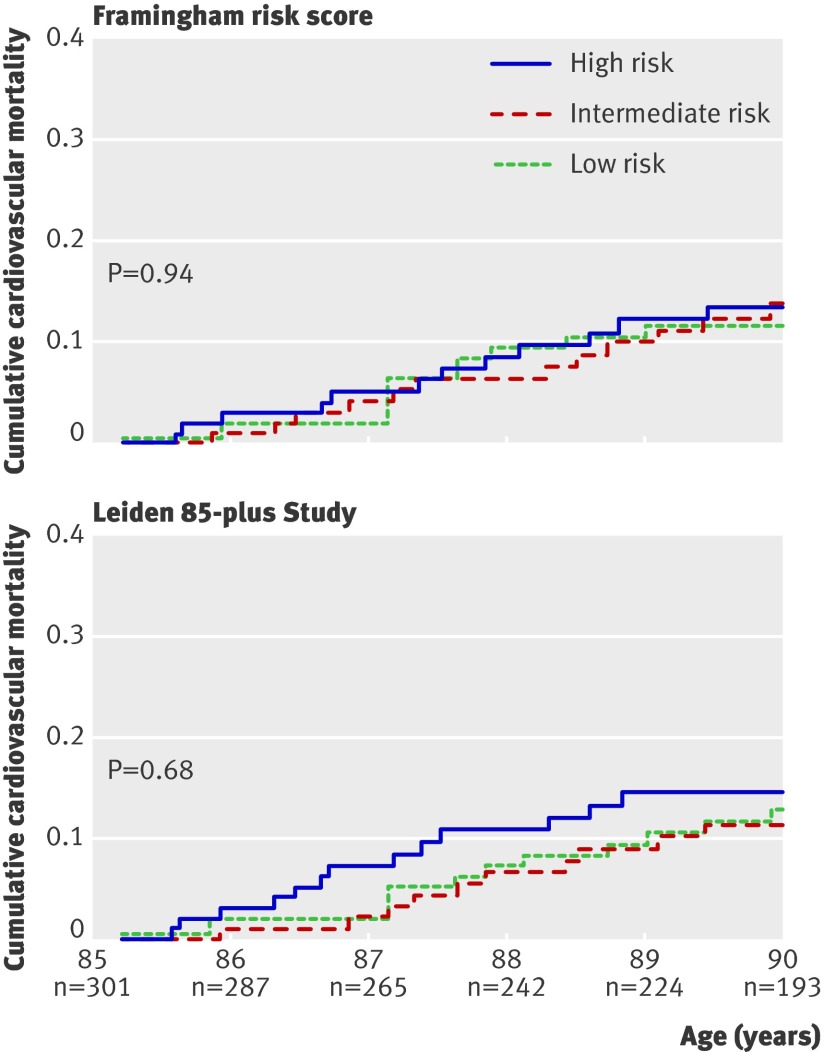
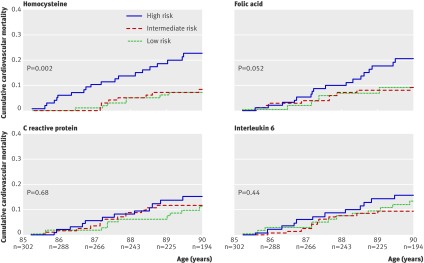
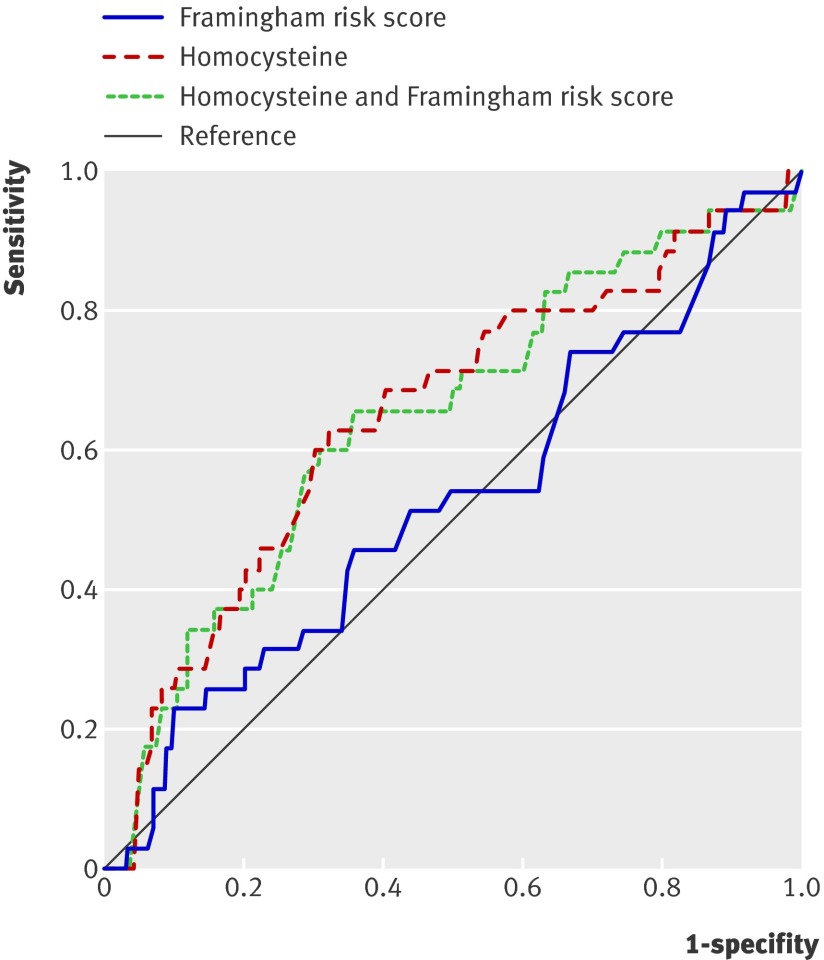
Verification
Claims the paper makes
The claims and statistics of this paper haven’t been checked yet.
Run the check — free, no account needed. It reads the open-access text and checks the sources it cites.
Claims other papers make about this one
Each is checked against this paper’s own text: does it say what the citing paper says it does?
In the citing paper
“The elevation of homocysteine concentration in the blood has been reported to be a risk factor not just for CAD but also for stroke and PAD287–289).”
From Japan Atherosclerosis Society (JAS) guidelines for prevention of atherosclerotic cardiovascular diseases 2017 (2018) · cites this paper as [289]
Self-check
Percentages, sums and reported differences re-computed from the paper’s own numbers.
The self-check needs the paper’s full text.
Citations
Cites
von Elm, E., Altman, D. G., Egger, M., Pocock, S. J., Gøtzsche, P. C., Vandenbroucke, J. P., & Initiative, F. T. S. (2007) · PLoS Medicine · doi:10.1371/journal.pmed.0040296 · Cited by 23,020
von Elm, E., Altman, D. G., Egger, M., Pocock, S. J., Gøtzsche, P. C., Vandenbroucke, J. P., & Initiative, F. T. S. (2007) · Annals of Internal Medicine · doi:10.7326/0003-4819-147-8-200710160-00010 · Cited by 17,796
Elm, E. V., Altman, D. G., Egger, M., Pocock, S. J., Gøtzsche, P. C., & Vandenbroucke, J. P. (2007) · BMJ · doi:10.1136/bmj.39335.541782.ad · Cited by 10,766
Pencina, M. J., D' Agostino, R. B., D' Agostino, R. B., & Vasan, R. S. (2008) · Statistics in Medicine · doi:10.1002/sim.2929 · Cited by 6,493
Ridker, P. M., Hennekens, C. H., Buring, J. E., & Rifai, N. (2000) · New England Journal of Medicine · doi:10.1056/nejm200003233421202 · Cited by 5,850
A Quantitative Assessment of Plasma Homocysteine as a Risk Factor for Vascular Disease
Boushey, C. J. (1995) · JAMA · doi:10.1001/jama.1995.03530130055028 · Cited by 3,708
Shepherd, J., Blauw, G. J., Murphy, M. B., Bollen, E. L., Buckley, B. M., Cobbe, S. M., Ford, I., Gaw, A., Hyland, M., Jukema, J. W., et al. (2002) · The Lancet · doi:10.1016/s0140-6736(02)11600-x · Cited by 3,378
Self-citationRosamond, W., Flegal, K., Friday, G., Furie, K., Go, A., Greenlund, K., Haase, N., Ho, M., Howard, V., Kissela, B., et al. (2007) · Circulation · doi:10.1161/circulationaha.106.179918 · Cited by 3,277
Treatment of hypertension in patients 80 years of age or older
Beckett, N. S., Peters, R., Fletcher, A. E., Staessen, J. A., Liu, L., Dumitrascu, D., Stoyanovsky, V., Antikainen, R. L., Nikitin, Y., Anderson, C., et al. (2008) · New England Journal of Medicine · doi:10.1056/nejmoa0801369 · Cited by 3,092
Danesh, J., Wheeler, J. G., Hirschfield, G. M., Eda, S., Eiriksdottir, G., Rumley, A., Lowe, G. D. O., Pepys, M. B., & Gudnason, V. (2004) · New England Journal of Medicine · doi:10.1056/nejmoa032804 · Cited by 2,953
Cardiovascular disease risk profiles
Anderson, K. M., Odell, P. M., Wilson, P. W. F., & Kannel, W. B. (1991) · American Heart Journal · doi:10.1016/0002-8703(91)90861-b · Cited by 2,163
Use and Misuse of the Receiver Operating Characteristic Curve in Risk Prediction
Cook, N. R. (2007) · Circulation · doi:10.1161/circulationaha.106.672402 · Cited by 2,156
Homocysteine and Risk of Ischemic Heart Disease and Stroke: A Meta-analysis
Homocysteine Studies Collaboration (2002) · JAMA · doi:10.1001/jama.288.16.2015 · Cited by 2,059
Homocysteine and cardiovascular disease: evidence on causality from a meta-analysis
Wald, D. S., Law, M., & Morris, J. K. (2002) · BMJ · doi:10.1136/bmj.325.7374.1202 · Cited by 1,945
KANNEL, W. B., DAWBER, T. R., KAGAN, A., REVOTSKIE, N., & STOKES, J. (1961) · Annals of Internal Medicine · doi:10.7326/0003-4819-55-1-33 · Cited by 1,837
An updated coronary risk profile. A statement for health professionals.
Anderson, K. M., Wilson, P. W., Odell, P. M., & Kannel, W. B. (1991) · Circulation · doi:10.1161/01.cir.83.1.356 · Cited by 1,834
Ridker, P. M., Buring, J. E., Rifai, N., & Cook, N. R. (2007) · JAMA · doi:10.1001/jama.297.6.611 · Cited by 1,814
Vascular pathology of homocysteinemia: implications for the pathogenesis of arteriosclerosis.
Ks, M. (1969) · PubMed Central · Cited by 1,803
Plasma Homocysteine Levels and Mortality in Patients with Coronary Artery Disease
Nygard, O. K., Nordrehaug, J. E., Refsum, H., Ueland, P. M., Farstad, M., & Vollset, S. E. (1997) · New England Journal of Medicine · doi:10.1056/nejm199707243370403 · Cited by 1,746
Homocysteine Lowering with Folic Acid and B Vitamins in Vascular Disease
(2006) · New England Journal of Medicine · doi:10.1056/nejmoa060900 · Cited by 1,729
European cardiovascular disease statistics
Allender, S. E., Scarborough, P., Peto, V., Rayner, M., Leal, J., Luengo-Fernández, R., & Gray, A. M. (2008) · Deakin Research Online (Deakin University) · Cited by 1,459
Homocysteine Lowering and Cardiovascular Events after Acute Myocardial Infarction
Bønaa, K. H., Njølstad, I., Ueland, P. M., Schirmer, H., Tverdal, A., Steigen, T., Wang, H., Nordrehaug, J. E., Arnesen, E., & Rasmussen, K. (2006) · New England Journal of Medicine · doi:10.1056/nejmoa055227 · Cited by 1,442
Toole, J. F., Malinow, M. R., Chambless, L. E., Spence, J. D., Pettigrew, L. C., Howard, V. J., Sides, E. G., Wang, C.-H., & Stampfer, M. (2004) · JAMA · doi:10.1001/jama.291.5.565 · Cited by 1,391
Multiple Biomarkers for the Prediction of First Major Cardiovascular Events and Death
Wang, T. J., Gona, P. N., Larson, M. G., Tofler, G. H., Levy, D. A., Newton‐Cheh, C., Jacques, P. F., Rifai, N., Selhub, J., Robins, S. J., et al. (2006) · New England Journal of Medicine · doi:10.1056/nejmoa055373 · Cited by 1,337
Greenland, P. (2007) · Statistics in Medicine · doi:10.1002/sim.2976 · Cited by 1,300
Cystatin C and the Risk of Death and Cardiovascular Events among Elderly Persons
Shlipak, M. G., Sarnak, M. J., Katz, R., Fried, L. F., Seliger, S. L., Newman, A. B., Siscovick, D. S., & Stehman‐Breen, C. O. (2005) · New England Journal of Medicine · doi:10.1056/nejmoa043161 · Cited by 1,241
Inflammatory Markers and the Risk of Coronary Heart Disease in Men and Women
Pai, J. K., Pischon, T., Ma, J., Manson, J. E., Hankinson, S. E., JOSHIPURA, K. J., Curhan, G. C., Rifai, N., Cannuscio, C. C., Stampfer, M. J., et al. (2004) · New England Journal of Medicine · doi:10.1056/nejmoa040967 · Cited by 1,186
Homocyst(e)ine and Cardiovascular Disease: A Critical Review of the Epidemiologic Evidence
Eikelboom, J. W., Lonn, E., Genest, J. J., Hankey, G. J., & Yusuf, S. (1999) · Annals of Internal Medicine · doi:10.7326/0003-4819-131-5-199909070-00008 · Cited by 908
Use of Multiple Biomarkers to Improve the Prediction of Death from Cardiovascular Causes
Zethelius, B., Berglund, L., Sundström, J., Ingelsson, E., Basu, S., Larsson, A. O., Venge, P., & Ärnlöv, J. (2008) · New England Journal of Medicine · doi:10.1056/nejmoa0707064 · Cited by 893
Boushey, C. J. (1995) · JAMA · doi:10.1001/jama.274.13.1049 · Cited by 771
Prineas, R. J., Crow, R. S., & BLACKBURN, H. W. (1982) · Cited by 701
Predictive value of statistical models.
Van Houwelingen, J. C., & Le Cessie, S. (1990) · Statistics in Medicine · doi:10.1002/sim.4780091109 · Cited by 621
Accuracy of Death Certificates for Coding Coronary Heart Disease as the Cause of Death
Lloyd-Jones, D. M., Martin, D. O., Larson, M. G., & Levy, D. (1998) · Annals of Internal Medicine · doi:10.7326/0003-4819-129-12-199812150-00005 · Cited by 480
Successful Aging in the Oldest Old
von Faber, M., Wiel, A. B. D., van Exel, E. R., Gussekloo, J., Lagaay, A. M., van Dongen, E., Knook, D. L., van der Geest, S., & Westendorp, R. G. J. (2001) · Archives of Internal Medicine · doi:10.1001/archinte.161.22.2694 · Cited by 477
Self-citationTotal cholesterol and risk of mortality in the oldest old
Weverling-Rijnsburger, A. W., Blauw, G. J., Lagaay, A. M., Knock, D. L., Meinders, A. E., & Westendorp, R. G. (1997) · The Lancet · doi:10.1016/s0140-6736(97)04430-9 · Cited by 474
Self-citationThe Limitations of Risk Factors as Prognostic Tools
Ware, J. H. (2006) · New England Journal of Medicine · doi:10.1056/nejmp068249 · Cited by 466
Weemering, M. L. (2001) · AORN Journal · doi:10.1016/s0001-2092(06)61846-2 · Cited by 437
Kannel, W. B. (1976) · BMJ · doi:10.1136/bmj.2.6046.1255-a · Cited by 394
Folsom, A. R., Chambless, L. E., Ballantyne, C. M., Coresh, J., HEISS, G. M., Wu, K. K., Boerwinkle, E., Mosley, T. H., Sorlie, P. D., Diao, G., et al. (2006) · Archives of Internal Medicine · doi:10.1001/archinte.166.13.1368 · Cited by 357
Geometric Determinants of Functional Tricuspid Regurgitation
Ton-Nu, T.-T., Levine, R. A., Handschumacher, M. D., Dorer, D. J., Yosefy, C., Fan, D., Hua, L., Jiang, L., & Hung, J. (2006) · Circulation · doi:10.1161/circulationaha.106.611889 · Cited by 354
Statins for Secondary Prevention in Elderly Patients
Afilalo, J., Duque, G., Steele, R. J., Jukema, J. W., de Craen, A. J. M., & Eisenberg, M. J. (2008) · Journal of the American College of Cardiology · doi:10.1016/j.jacc.2007.06.063 · Cited by 347
Troponin I as a Predictor of Coronary Heart Disease and Mortality in 70-Year-Old Men
Zethelius, B., Johnston, N., & Venge, P. (2006) · Circulation · doi:10.1161/circulationaha.105.570762 · Cited by 278
Coronary Artery Calcium to Predict All-Cause Mortality in Elderly Men and Women
Raggi, P., Góngora, M. C., Gopal, A., Callister, T. Q., Budoff, M. J., & Shaw, L. J. (2008) · Journal of the American College of Cardiology · doi:10.1016/j.jacc.2008.04.004 · Cited by 266
C-Reactive Protein, Cardiovascular Risk Factors, and Mortality in a Prospective Study in the Elderly
Strandberg, T. E., & Tilvis, R. S. (2000) · Arteriosclerosis Thrombosis and Vascular Biology · doi:10.1161/01.atv.20.4.1057 · Cited by 246
Mulrow, C. D. (1994) · JAMA · doi:10.1001/jama.272.24.1932 · Cited by 225
Inflammatory markers and cardiovascular health in older adults
Kritchevsky, S. B., Cesari, M., & Pahor, M. (2005) · Cardiovascular Research · doi:10.1016/j.cardiores.2004.12.026 · Cited by 222
Prediction of first coronary events with the Framingham score: A systematic review
Eichler, K., Puhan, M. A., Steurer, J., & Bachmann, L. M. (2007) · American Heart Journal · doi:10.1016/j.ahj.2007.02.027 · Cited by 219
Blood pressure and mortality in elderly people aged 85 and older: community based study
Boshuizen, H. C., Izaks, G. J., van Buuren, S., & Ligthart, G. J. (1998) · BMJ · doi:10.1136/bmj.316.7147.1780 · Cited by 196
van Bemmel, T., Gussekloo, J., Westendorp, R. G., & Blauw, G. J. (2006) · Journal of Hypertension · doi:10.1097/01.hjh.0000200513.48441.8e · Cited by 178
Self-citationBlood Pressure and Survival in the Oldest Old
Oates, D. J., Berlowitz, D. R., Glickman, M. E., Silliman, R. A., & Borzecki, A. M. (2007) · Journal of the American Geriatrics Society · doi:10.1111/j.1532-5415.2007.01069.x · Cited by 175
Isolated Systolic Hypertension in the Elderly
Chobanian, A. V. (2007) · New England Journal of Medicine · doi:10.1056/nejmcp071137 · Cited by 167
van der Steeg, W. A., Boekholdt, S. M., Stein, E. A., El-Harchaoui, K., Stroes, E. S. G., Sandhu, M. S., Wareham, N. J., Jukema, J. W., Luben, R., Zwinderman, A. H., et al. (2007) · Annals of Internal Medicine · doi:10.7326/0003-4819-146-9-200705010-00007 · Cited by 165
Coronary Heart Disease Risk Factors in the Elderly
Kannel, W. B. (2002) · The American Journal of Geriatric Cardiology · doi:10.1111/j.1076-7460.2002.00995.x · Cited by 159
Rastas, S., Pirttilä, T., Viramo, P., Verkkoniemi, A., Halonen, P. M., Juva, K., Niinistö, L., Mattila, K. J., Länsimies, E., & Sulkava, R. O. (2006) · Journal of the American Geriatrics Society · doi:10.1111/j.1532-5415.2006.00742.x · Cited by 143
Gersh, B. J. (2008) · Yearbook of Medicine · doi:10.1016/s0084-3873(08)79263-0 · Cited by 139
Inflammatory markers and the risk of coronary heart disease in men and women
Pai, J. K., Pischon, T., & Ma, J. (2005) · ACC Current Journal Review · doi:10.1016/j.accreview.2005.02.067 · Cited by 120
Are lipid-lowering guidelines evidence-based?
Abramson, J. D., & Wright, J. (2007) · The Lancet · doi:10.1016/s0140-6736(07)60084-1 · Cited by 105
The Framingham study: a prospective study of coronary heart disease.
Kagan, A., Dawber, T. R., Kannel, W. B., & Revotskie, N. (1962) · PubMed · Cited by 97
Treatment of Hypertension in Patients 80 Years of Age or Older
Elliott, W. J. (2009) · Yearbook of Cardiology · doi:10.1016/s0145-4145(08)79311-0 · Cited by 89
Cholesterol Fractions and Apolipoproteins as Risk Factors for Heart Disease Mortality in Older Men
Clarke, R., Emberson, J., Parish, S., Palmer, A., Shipley, M. J., Linksted, P., Sherliker, P., Clark, S., Armitage, J., FLETCHER, A. E., et al. (2007) · Archives of Internal Medicine · doi:10.1001/archinte.167.13.1373 · Cited by 82
Plasma homocysteine levels and mortality in patients with coronary artery disease
(1998) · Journal of Cardiothoracic and Vascular Anesthesia · doi:10.1016/s1053-0770(98)90076-3 · Cited by 82
Prevention of Cardiovascular Events in Elderly People
Andrawes, W. F., Bussy, C., & Belmin, J. (2005) · Drugs & Aging · doi:10.2165/00002512-200522100-00005 · Cited by 79
Toole, F. J., MALINOW, M. R., & Chambless, L. E. (2004) · ACC Current Journal Review · doi:10.1016/j.accreview.2004.04.035 · Cited by 77
Ammar, K. A., Kors, J. A., Yawn, B. P., & Rodeheffer, R. J. (2004) · American Heart Journal · doi:10.1016/j.ahj.2004.03.019 · Cited by 71
Homocysteine lowering and cardiovascular events after acute myocardial infarction
Watson, K. E. (2007) · Current Cardiovascular Risk Reports · doi:10.1007/s12170-007-0015-7 · Cited by 54
Rothenbacher, D. (2006) · Archives of Internal Medicine · doi:10.1001/archinte.166.22.2455 · Cited by 53
Evaluating the Appropriateness of Digoxin Level Monitoring
Cañas, F., Tanasijevic, M. J., Ma'luf, N., & Bates, D. W. (1999) · Archives of Internal Medicine · doi:10.1001/archinte.159.4.363 · Cited by 51
The International Pandemic of Chronic Cardiovascular Disease
McDermott, M. M. (2007) · JAMA · doi:10.1001/jama.297.11.1253 · Cited by 48
Ali, R., & Alexander, K. P. (2007) · The American Journal of Geriatric Pharmacotherapy · doi:10.1016/j.amjopharm.2007.03.008 · Cited by 38
Gersh, B. J. (2008) · Yearbook of Cardiology · doi:10.1016/s0145-4145(08)04050-1 · Cited by 36
Homocysteine and Short-term Risk of Myocardial Infarction and Stroke in the Elderly
Bots, M. L., Launer, L. J., Lindemans, J. W., Hoes, A. W., Albert Hofman, D., Witteman, J. C. M., Koudstaal, P. J., & Grobbee, D. E. (1999) · Archives of Internal Medicine · doi:10.1001/archinte.159.1.38 · Cited by 35
de Ruijter, W., Westendorp, R. G. J., Macfarlane, P. W., Jukema, J. W., Assendelft, W. J., & Gussekloo, J. (2007) · Journal of the American Geriatrics Society · doi:10.1111/j.1532-5415.2007.01180.x · Cited by 33
Self-citationQuality Indicators for the Care of Osteoarthritis in Vulnerable Elders
MacLean, C. H., Pencharz, J. N., & Saag, K. G. (2007) · Journal of the American Geriatrics Society · doi:10.1111/j.1532-5415.2007.01346.x · Cited by 33
Multiple biomarkers for the prediction of first major cardiovascular events and death
Wang, T. J., Gona, P. N., & Larson, M. G. (2007) · Journal of Vascular Surgery · doi:10.1016/j.jvs.2007.01.008 · Cited by 33
The Importance of Cardiovascular Risk Factors in the Elderly.
Kannel, W. B., & D’Agostino, R. B. (1995) · PubMed · Cited by 30
Danesh, J., Wheeler, J., & Hirschfeld, G. M. (2004) · ACC Current Journal Review · doi:10.1016/j.accreview.2004.04.049 · Cited by 29
Use of multiple biomarkers to improve the prediction of death from cardiovascular causes
Zethelius, B., Berglund, L., & Sundström, J. (2008) · Journal of Vascular Surgery · doi:10.1016/j.jvs.2008.06.012 · Cited by 28
Kistorp, C., Raymond, I. E., Pederson, F., Gustaffson, F., Faber, J., & Hildebrandt, P. R. (2005) · ACC Current Journal Review · doi:10.1016/j.accreview.2005.06.017 · Cited by 24
Primary Prevention of Coronary Heart Disease in the Elderly
Dornbrook-Lavender, K. A., Pieper, J. A., & Roth, M. T. (2003) · Annals of Pharmacotherapy · doi:10.1345/aph.1d025 · Cited by 23
The additional value of routine electrocardiograms in cardiovascular risk management of older people
de Ruijter, W., Assendelft, W. J., Macfarlane, P. W., Westendorp, R. G. J., & Gussekloo, J. (2008) · Scandinavian Journal of Primary Health Care · doi:10.1080/02813430802095812 · Cited by 15
Self-citationCardiovascular Disease Preventive Measures for the Older Patient: An Epidemiologic Perspective
Kannel, W. B. (2006) · The American Journal of Geriatric Cardiology · doi:10.1111/j.1076-7460.2006.04397.x · Cited by 13
Elliott, W. J. (2007) · Yearbook of Cardiology · doi:10.1016/s0145-4145(08)70018-2 · Cited by 5
Cystatin C and the Risk of Death and Cardiovascular Events Among Elderly Persons
Lee, H. T. (2006) · Yearbook of Anesthesiology and Pain Management · doi:10.1016/s1073-5437(08)70521-7 · Cited by 4
Homocysteine Lowering with Folic Acid and B Vitamins in Vascular Disease
Gersh, B. J. (2007) · Yearbook of Cardiology · doi:10.1016/s0145-4145(08)70158-8 · Cited by 4
Coronary Heart Disease at Elderly Age: Determinants of Clinical Decision-Making.
WENGER, N. K. (1995) · PubMed · Cited by 2
Monitoring quality improvements and measuring results.
Hermida, J., Tv, V. Z., & Murphy, G. (1995) · PubMed · Cited by 1
Research works printed but not linked: 1
- Sattar N, Murray H, Blauw G, Bollen E, Buckley B, Cobbe S, et al. CRP and risk of vascular events in PROSPER. Circulation 2006;114:143.
Cited by
Sorted by citations
Kinoshita, M., Yokote, K., Arai, H., Iida, M., Ishigaki, Y., Ishibashi, S., Umemoto, S., Egusa, G., Ohmura, H., Okamura, T., et al. (2018) · Journal of Atherosclerosis and Thrombosis · doi:10.5551/jat.gl2017 · Cited by 813
de Vries, T. I., Cooney, M. T., Selmer, R. M., Hageman, S. H. J., Pennells, L. A. M., Wood, A., Kaptoge, S. K., Xu, Z., Westerink, J., Rabanal, K. S., et al. (2021) · European Heart Journal · doi:10.1093/eurheartj/ehab312 · Cited by 682
Primary and Secondary Prevention of Cardiovascular Disease
Vandvik, P. O., Lincoff, A. M., Gore, J. M., Gutterman, D. D., Sonnenberg, F. A., Alonso-Coello, P., Akl, E. A., Lansberg, M. G., Guyatt, G. H., & Spencer, F. A. (2012) · Chest · doi:10.1378/chest.11-2306 · Cited by 476
Baber, U., Mehran, R., Sartori, S., Schoos, M. M., Sillesen, H., Muntendam, P., Garcia, M. J., Gregson, J., Pocock, S., Falk, E., et al. (2015) · Journal of the American College of Cardiology · doi:10.1016/j.jacc.2015.01.017 · Cited by 461
Value and Limitations of Existing Scores for the Assessment of Cardiovascular Risk
Cooney, M. T., Dudina, A. L., & Graham, I. M. (2009) · Journal of the American College of Cardiology · doi:10.1016/j.jacc.2009.07.020 · Cited by 436
Metadata
- Authors
- de Ruijter, W., Westendorp, R. G. J., Assendelft, W. J. J., den Elzen, W. P. J., de Craen, A. J. M., le Cessie, S., & Gussekloo, J.
- Affiliations
- Leiden University Medical Center (NL)
- Venue
- BMJ
- Publisher
- BMJ
- Published
- 2009-01-08
- Volume
- 338
- Issue
- jan08 2
- Pages
- a3083-a3083
- ISSN
- 0007-1447 (ISSN-L)
- 0959-8138
- 1468-5833
- PMC
- PMC2615548
- OpenAlex
- W2107794933
- Cited by
- 339
- References
- 87
- Citations by year
- 2026: 6 · 2025: 6 · 2024: 8 · 2023: 13 · 2022: 6 · 2021: 18 · 2020: 20 · 2019: 14 · 2018: 14 · 2017: 25 · 2016: 22 · 2015: 24 · 2014: 34 · 2013: 24 · 2012: 30
- FWCI
- 22.52
- Type
- journal article
- Language
- en
- Open access
- hybrid
- doi.org
- Licence
- cc-by-nc
- Locations
- BMJ (publishedVersion, cc-by-nc)
- PubMed Central (publishedVersion, cc-by-nc)
- PubMed (publishedVersion)
- Pure Amsterdam UMC (submittedVersion)
- Topics
- Health Sciences › Medicine › Cardiology and Cardiovascular Medicine › Cardiovascular Health and Risk Factors
- Health Sciences › Medicine › Cardiology and Cardiovascular Medicine › Lipoproteins and Cardiovascular Health
- Health Sciences › Medicine › Geriatrics and Gerontology › Frailty in Older Adults
- Keywords
- cardiovascular mortality, oldest old, Framingham risk score, cardiovascular risk factors, homocysteine, biomarkers, C-reactive protein, interleukin-6, folic acid, left ventricular hypertrophy, risk prediction, Leiden 85-plus Study
- MeSH terms
- Aged, 80 and over, Cardiovascular Diseases, Female, Humans, Male, Netherlands, Risk Factors, Cohort Studies, Biomarkers, Risk Assessment
About these checks
Registry, retraction, Cites and statistics results are computed, not judged, with one exception: a printed reference that no index lists is read once by a model before it counts as a citation error. Claims are extracted by a model and kept only when their quote appears verbatim in the text; each cited source is then checked, with a model’s help, for whether it says what the claim relies on. Those verdicts can be wrong — read the claim’s quote and the cited source before relying on one.
Statistics and arithmetic are recomputed, not judged.
Confidence bands are shown only for fields calibrated on our annotated test set. None is calibrated yet, so no band is shown.
What counts as a claim ›How we measure confidence ›How we check this ›
Are you an author, or do you see a problem with this page? Request a review
