

ROBINS-I: a tool for assessing risk of bias in non-randomised studies of interventions
Open accessThe DOI matches its Crossref record; 27 of the 27 references it cites were found in a registry or an index; none of the 8 sources its claims cite is checked for support yet.
Abstract
Non-randomised studies of the effects of interventions are critical to many areas of healthcare evaluation, but their results may be biased. It is therefore important to understand and appraise their strengths and weaknesses. We developed ROBINS-I (“Risk Of Bias In Non-randomised Studies - of Interventions”), a new tool for evaluating risk of bias in estimates of the comparative effectiveness (harm or benefit) of interventions from studies that did not use randomisation to allocate units (individuals or clusters of individuals) to comparison groups. The tool will be particularly useful to those undertaking systematic reviews that include non-randomised studies.
Overview
CoChat Summary
TL;DR
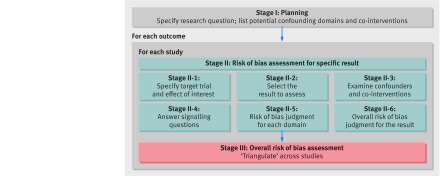
The authors developed ROBINS-I, a consensus-based tool for assessing risk of bias in non-randomised studies of interventions by comparing each study with a hypothetical pragmatic randomised “target” trial. It assesses seven bias domains using signalling questions and produces domain-level and overall risk-of-bias judgements.
Key findings
- ROBINS-I was developed over three years by expert consensus, with piloting and user feedback, and covers seven distinct bias domains: confounding, selection of participants, classification of interventions, deviations from intended interventions, missing data, measurement of outcomes, and selection of the reported result.
- The tool uses signalling questions with response options “Yes,” “Probably yes,” “Probably no,” “No,” and “No information” to inform domain-level judgements.
- Risk-of-bias judgements are categorised as “Low risk,” “Moderate risk,” “Serious risk,” and “Critical risk”; “Low risk” corresponds to the risk of bias in a high quality randomised trial.
- The authors recommend against including studies assessed as at “Critical risk” of bias in any meta-analysis and advocate caution for studies assessed as at “Serious risk” of bias.
Methods
- Development was largely by expert consensus, following seven principles previously described for assessing risk of bias in clinical trials; a core group coordinated recruitment, documents, and administrative support.
- Development activities included an initial scoping meeting in October 2011, a survey of Cochrane Review Groups in March 2012, a meeting in April 2012 to identify bias domains and working groups, a two-day face-to-face meeting in March 2013, piloting within working groups between September 2013 and March 2014, substantial revisions in June 2014, posting of version 1.0.0 in September 2014, and a three-day workshop in December 2014 where the tool was applied to six papers reporting NRSI.
- The paper describes the tool and its conceptual basis rather than reporting a quantitative validation study; no statistical analysis of reliability or validity is presented.
Limitations
- The paper states that the technical difficulty in making risk of bias judgements is expected to limit reliability, despite explicit links between signalling questions and judgements.
- The paper states that ROBINS-I focuses specifically on bias and does not address problems related to imprecision of results, such as when statistical analyses fail to account for clustering or matching of participants.
- The paper states that use of ROBINS-I requires review groups to include members with substantial methodological expertise and familiarity with modern epidemiological thinking; it also notes planned future consideration of specific NRSI types such as self-controlled designs, controlled before-and-after studies, interrupted time series, regression discontinuity, and instrumental variable analyses.
Model-written summary. Check it against the paper before relying on it.
Integrity signals
Registry
Cites
Statistics
Figures
Verification
Claims the paper makes
0 Valid · 0 Not valid · 8 Not checked · 21 Own results and interpretations
What the paper did — it cites no source for this, so there is none to check. The quote shows it is in the paper.
In the paper
“The tool views each study as an attempt to emulate (mimic) a hypothetical pragmatic randomised trial, and covers seven distinct domains through which bias might be introduced”
- Also stated in: § Domains of bias · plain
“We achieved consensus on seven domains through which bias might be introduced into a NRSI (see table 1 and appendix in supplementary data).”
§ ROBINS-I: a tool for assessing risk of bias in non-randomised studies of interventions > Summary points
plain- Asserted: passes — The authors put it forward as true.
- Checkable: passes — It can be checked against evidence.
- Load-bearing: passes — The paper’s conclusions depend on it.
- Based: passes — The paper gives a reason why it holds.
- Also stated in: § Domains of bias · plain
A conclusion the paper draws from its own results — it cites no other source for it, so there is none to check. The quote shows it is in the paper.
In the paper
“Therefore, there is substantial overlap for the last four domains between bias assessments in NRSI and randomised trials.”
§ ROBINS-I: a tool for assessing risk of bias in non-randomised studies of interventions > Methodological issues in assessing risk of bias in non-randomised studies > Domains of bias
plainstates an association- Asserted: passes — The authors put it forward as true.
- Checkable: passes — It can be checked against evidence.
- Load-bearing: unclear — It is unclear whether the paper’s conclusions depend on it.
- Based: passes — The paper gives a reason why it holds.
- Rests on 2 assumptions not shown here.
In the paper
“The tool views each study as an attempt to emulate (mimic) a hypothetical pragmatic randomised trial, and covers seven distinct domains through which bias might be introduced”
- Also stated in: § The target trial · plain
“Evaluations of risk of bias in the results of NRSI are facilitated by considering each NRSI as an attempt to emulate (mimic) a “target” trial.”
§ ROBINS-I: a tool for assessing risk of bias in non-randomised studies of interventions > Summary points
What the sources say
- Not matchedcites 11 12
This doesn’t read as a citation we can look up.
plain- Asserted: passes — The authors put it forward as true.
- Checkable: passes — It can be checked against evidence.
- Load-bearing: passes — The paper’s conclusions depend on it.
- Based: passes — The paper gives a reason why it holds.
- Also stated in: § The target trial · plain
In the paper
“We developed a tool for assessing risk of bias in the results of non-randomised studies of interventions that addresses weaknesses in previously available approaches.4”
§ ROBINS-I: a tool for assessing risk of bias in non-randomised studies of interventions > Discussion
What the sources say
- Not matchedcites [4] Sanderson S, Tatt ID, Higgins JPT. Tools for assessing quality and susceptibility to bias in observational studies in epidemiology: a systematic review and annotated bibliography. Int J Epidemiol 2007; 36: 666- 76. 10.1093/ije/dym018 pmid:17470488. 17470488
We don’t have this paper’s reference list.
plainstates a cause- Asserted: passes — The authors put it forward as true.
- Checkable: passes — It can be checked against evidence.
- Load-bearing: passes — The paper’s conclusions depend on it.
- Based: passes — The paper gives a reason why it holds.
- Not matched
A statement the paper makes itself — it cites no source for it, so there is none to check. The quote shows it is in the paper.
In the paper
“By contrast, unbiased estimation of the effect of starting and adhering to intervention requires consideration of both adherence and differences in additional interventions (“co-interventions”) between intervention groups.”
§ ROBINS-I: a tool for assessing risk of bias in non-randomised studies of interventions > Methodological issues in assessing risk of bias in non-randomised studies > The effect of interest
plain- Asserted: passes — The authors put it forward as true.
- Checkable: passes — It can be checked against evidence.
- Load-bearing: passes — The paper’s conclusions depend on it.
- Based: passes — The paper gives a reason why it holds.
9 more claims
Create a free account to see all 29 claims and every source verdict.
- Probably not a substantial claim. 14
- It may state two separate claims as one. 4
Claims other papers make about this one
Each is checked against this paper’s own text: does it say what the citing paper says it does?
The cited source doesn’t support the claim as written.
In the citing paper
“Quality assessment of RCTs was performed using the Cochrane Collaboration’s tool for assessing risk of bias in randomized trials (RoB-2) by two independent authors (M.A.C.C.A. and M.S.) [14].”
From Efficacy and safety of obicetrapib in patients with dyslipidemia: An updated meta-analysis of randomized controlled trials (2025) · cites this paper as [14]
Checked by a reasoning model — may be wrong.
Experimental — accuracy not yet measuredThe source backs part of the claim, not all of it — or backs it for a different population, condition or comparison.
In the citing paper
“we excluded studies rated to be at critical risk of bias (n = 19) from all of our analyses and figures, except for Fig. 2a”
From A systematic review and meta-analysis of the evidence on learning during the COVID-19 pandemic (2023) · cites this paper as [9]
Experimental — accuracy not yet measuredThe source backs part of the claim, not all of it — or backs it for a different population, condition or comparison.
In the citing paper
“When assessing the risk of bias, seven general principles are relevant, based on theoretical considerations, empirical work, and the experience with assessing risk of bias in RCTs and other studies [55–57].”
From COSMOS-E: Guidance on conducting systematic reviews and meta-analyses of observational studies of etiology (2019) · cites this paper as [56]
Experimental — accuracy not yet measuredThe source backs part of the claim, not all of it — or backs it for a different population, condition or comparison.
In the citing paper
“Relevant domains of risk of bias that should be considered include (i) bias due to (time-dependent) confounding, (ii) bias in selection of participants into the study (selection bias), (iii) bias in measurement of exposures or outcomes (information bias), (iv) bias due to missing data (selection bias), and (v) bias in selection of studies or reported outcomes (selection bias) [56].”
From COSMOS-E: Guidance on conducting systematic reviews and meta-analyses of observational studies of etiology (2019) · cites this paper as [56]
Experimental — accuracy not yet measuredThe source backs part of the claim, not all of it — or backs it for a different population, condition or comparison.
In the citing paper
“A modified Cochrane Collaboration's Risk of Bias in Non-Randomized Studies of Interventions was used to evaluate the risk of bias in selected studies as low, moderate, serious, and critical based on 6 domains (Table 3) (29,30).”
From Alterations in Heart Rate Variability Associated With Irritable Bowel Syndrome or Inflammatory Bowel Disease: A Systematic Review and Meta-Analysis (2021) · cites this paper as [29]
Experimental — accuracy not yet measured
64 more claims about this paper
Create a free account to see every claim other papers make about this one.
Citations
Cites
Yaşlı Kadınlarda Üreme Sağlığı
Kokanalı, D., & Engin Üstün, Y. (n.d.) · DergiPark (Istanbul University) · Cited by 170,090
The Cochrane Collaboration's tool for assessing risk of bias in randomised trials
Higgins, J. P. T., Altman, D. G., Gotzsche, P. C., Juni, P., Moher, D., Oxman, A. D., Savovic, J., Schulz, K. F., Weeks, L., Sterne, J. A. C., et al. (2011) · BMJ · doi:10.1136/bmj.d5928 · Cited by 33,817
Self-citationDermyshi, E., Wang, Y., Yan, C., Hong, W., Qiu, G., Gong, X., & Zhang, T. (2017) · Neonatology · doi:10.1159/000454668 · Cited by 24,451
Two new Later Stone Age sites from the Final Pleistocene in the Falémé Valley, eastern Senegal
Ndiaye, M., Lespez, L., Tribolo, C., Rassé, M., Hadjas, I., Davidoux, S., Huysecom, É., & Douze, K. (2024) · Monash University Research Portal (Monash University) · doi:10.3929/ethz-b-000667478 · Cited by 23,868
(2014) · Medical Entomology and Zoology · Cited by 17,633
Self-citationQUADAS-2: a revised tool for the quality assessment of diagnostic accuracy studies
Whiting, P. F., Rutjes, A. W. S., Westwood, M. E., Mallett, S., Deeks, J. J., Reitsma, J. B., Leeflang, M. M. G., Sterne, J. A. C., Bossuyt, P. M. M., & the QUADAS-2 Group* (2011) · Annals of Internal Medicine · doi:10.7326/0003-4819-155-8-201110180-00009 · Cited by 14,199
Self-citationDowns, S. H., & Black, N. (1998) · Journal of Epidemiology and Community Health · doi:10.1136/jech.52.6.377 · Cited by 8,252
Using Big Data to Emulate a Target Trial When a Randomized Trial Is Not Available: Table 1.
Hernán, M. A., & Robins, J. M. (2016) · American Journal of Epidemiology · doi:10.1093/aje/kwv254 · Cited by 3,115 · cited 1×
“11 12 Such a “target” trial need not be feasible or ethical: for example, it could compare individuals who were and were not assigned to start smoking.”
BackgroundSelf-citationGRADE guidelines: a new series of articles in the Journal of Clinical Epidemiology
Guyatt, G. H., Oxman, A. D., Schünemann, H. J., Tugwell, P., & Knottnerus, A. (2011) · Journal of Clinical Epidemiology · doi:10.1016/j.jclinepi.2010.09.011 · Cited by 3,094
Self-citationEvaluating non-randomised intervention studies
Deeks, J., Dinnes, J., D'Amico, R., Sowden, A., Sakarovitch, C., Song, F., Petticrew, M., & Altman, D. (2003) · Health Technology Assessment · doi:10.3310/hta7270 · Cited by 2,907
Self-citation
Cited by
Items 18,701–18,800 of 19,837
Autograft Versus Allograft in Indirect Corneal Neurotization: A Systematic Review
Al-Burak, S. A., Ali, M., Madani, M. T., Choudhary, S., Ahmed, M. S., Butt, F. R., Almoayad, Y., Alburak, T., Plemel, D. J. A., Camacho, A., et al. (2026) · American Journal of Ophthalmology · doi:10.1016/j.ajo.2026.07.003
Chen, C., Li, Y. C., Hu, J., Wei, L., Hu, H., Huang, B., & Chen, X. (2026) · Journal of Clinical Medicine · doi:10.3390/jcm15145353
“The Risk Of Bias In Non-randomised Studies of Interventions (ROBINS-I) [17] was applied to observational studies, including retrospective and prospective cohort designs, while randomized controlled trials (RCTs) were evaluated using the Cochrane Risk of Bias 2 (RoB 2) [18] tool.”
Simpson, A. I. F., Waqar, M. U., Gerritsen, C. J., Adamo, V., Kilada, M., Maheandiran, M., Besa, R., & Jones, R. M. (2026) · BJPsych Open · doi:10.1192/bjo.2026.12034 · Cited by 1
Sánchez-Infante, J., Pérez-Pozuelo, J. M., Crespo-Cañizares, A., Hernández-Iglesias, S., Esteban-Sopeña, J., Sánchez-Tovar, A., Gómez‐Cantarino, S., Hermida-Mota, M., & García‐Magro, N. (2026) · Frontiers in Pediatrics · doi:10.3389/fped.2026.1858823
“The assessment of bias risk was conducted following the Cochrane guidelines (33)(31), using the ROBINS-I tool designed for non-randomized studies of exposures.”
Elmashad, A., Elfil, M., Hawas, Y., et al. (2026) · Neurosurgical Review · doi:10.1007/s10143-026-04376-w
“Two authors independently assessed the quality of included studies using the Cochrane ROB-2 for randomized controlled trials (RCTs) [14], ROBINS-I for non-randomized studies [15], and JBI for case series studies [16].”
Kato, S., Koizumi, M., Nirei, J., et al. (2026) · Neonatology · doi:10.1159/000553435
Pyle, S., & Reinert, J. P. (2026) · Annals of Pharmacotherapy · doi:10.1177/10600280261457449
Suazo, J. R. P., Piuvezam, G., Pimenta, I. D. S. F., et al. (2026) · Turkish Journal of Emergency Medicine · doi:10.4103/tjem.tjem_373_25
“[23] Studies were categorized based on predefined criteria, including low, some concerns, or high risk of bias.”
Infection prevention and control measures for Ebola and Marburg disease: a series of rapid reviews
Shaver, N., Pham, B., Vyas, N., Collins, E., Bennett, A., Beck, A., Skidmore, B., Grossman, M. R., Cormack, G. V., Mishra, S., et al. (2026) · BMJ Open · doi:10.1136/bmjopen-2025-115610 · Cited by 4
“For binary outcomes, relative risks and 95% CI and the associated absolute effects per 1000 participants were calculated following Cochrane guidance.”
Self-citationAlseneid, A., Bhindi, S., Saleki, M., & Baker, D. (2026) · International Journal of Retina and Vitreous · doi:10.1186/s40942-026-00899-y
“The Risk Of Bias In Non-randomised Studies of Interventions (ROBINS-I) tool [25] was applied to the comparative observational study and to all single-arm cohort studies treated as pre-post within-subject comparisons in line with Cochrane Handbook guidance.”
Shi, H., Ren, C., & Mahmod, S. R. (2026) · Neurorehabilitation · doi:10.1177/10538135261454931
“Non-randomized comparative and observational studies of nerve transfer were appraised using the ROBINS-I tool for non-randomized studies (Sterne et al., 2016).”
Ishizuka, M., Shibuya, N., Hachiya, H., et al. (2026) · Supportive Care in Cancer · doi:10.1007/s00520-026-10975-6
“Bias was assessed using the ROBINS-1 tool for non-randomized studies [31] and the Cochrane Risk of Bias tool for randomized controlled studies [32].”
The Association Between COVID-19 and Herpes Zoster in Adult Populations: A Systematic Review
Khawaja, I., Khan, N., Kannangara, L., et al. (2026) · Cureus · doi:10.7759/cureus.112344
“Systematic reviews were assessed using AMSTAR-2, retrospective cohort studies were assessed using ROBINS-I, and case reports were assessed using the JBI critical appraisal checklist for case reports [16-18].”
Teixeira, E., Callado, G. Y., Rezzuto, D., Puga, C. J. V. W., Provinciatto, H. G., Braga, A., Tonni, G., & Júnior, E. A. (2026) · Geburtshilfe und Frauenheilkunde · doi:10.1055/a-2900-2752
Oh, L., Mearns, G. J., & Mowat, R. M. (2026) · BMJ Open · doi:10.1136/bmjopen-2026-119386
“Unlike clinical tools such as Cochrane’s RoB 2 19 and ROBINS-I, 20 the JBI checklists mitigate the risk of floor effects inherent in applying rigid clinical standards to educational interventions.”
de Moraes, F. C. A., Rego, L. H. R. M., de Paiva, F. A., Matheus, G. T. F. U., Burbano, R. M. R., & Hirata, M. H. (2026) · Expert Review of Anticancer Therapy · doi:10.1080/14737140.2026.2702452
Abud, T. H., de Paiva, M. E. C. B., Trindade, M. L. U., et al. (2026) · Journal of Laparoendoscopic & Advanced Surgical Techniques · doi:10.1177/10926429261468983
Knoetze, M., Pandey, P., Manchaiah, V. K. C., & Swanepoel, D. W. (2026) · Trends in Hearing · doi:10.1177/23312165261461350
Su, J., He, Y., & Shao, F. (2026) · BMJ Open · doi:10.1136/bmjopen-2026-121526
“26 For non-randomised interventional studies, studies with a concurrent comparator will be assessed using Risk Of Bias In Non-randomised Studies of Interventions 27 whereas eligible quasi-experimental studies without random allocation will be appraised using the revised Joanna Briggs Institute (JBI) critical appraisal…”
Wang, Y., Yao, J., Tian, J., Wang, Y., & Yang, Y. (2026) · JMIR Research Protocols · doi:10.2196/88163
“…in accordance with the PRISMA-P (Preferred Reporting Items for Systematic Reviews and Meta-Analyses Protocols) guidelines, follows the methodological standards recommended by the Cochrane Handbook for Systematic Reviews of Interventions , and has been prospectively registered in PROSPERO [22-26].”
Migliorini, F., Maffulli, N., Schäfer, L., Jeyaraman, M., Betsch, M., & Mahmoud, M. (2026) · Journal of Orthopaedics and Traumatology · doi:10.1186/s10195-026-00951-5
Deplano, Z., Cusworth, S., Doree, C. J., Griffin, J., Adderley, N. J., & Chandan, J. S. (2026) · BMJ Open · doi:10.1136/bmjopen-2025-111282
Klier, K., Masur, L., & Düking, P. (2026) · Frontiers in Sports and Active Living · doi:10.3389/fspor.2026.1872518
“The Cochrane ROBINS-I tool (33) was the basis for the risk of bias assessment of the remaining included studies.”
Kowalski, J. (2025) · Przegląd Psychologiczny · doi:10.31648/przegldpsychologiczny.12958
Altaher, H., Al-Mashhadani, M. M., Usman, R., Ghelani, H., & Jan, R. K. (2026) · Frontiers in Pharmacology · doi:10.3389/fphar.2026.1877033
“All studies included in this systematic review were critically appraised via the Risk of Bias in Non-randomized Studies of Interventions (ROBINS-I) tool due to the observational nature of the included studies evaluating the IFX intervention (Sterne et al., 2016).”
Hasenpusch, C., Kuper, P., Skiba, E.-M., Sprenger, A. A., Matterne, U., Kannengießer, L., Grätsch, E. I., Shin, J., Li, M., & Apfelbacher, C. (2026) · JMIR Medical Education · doi:10.2196/70400
“I b , Sterne et al [48], domains (n=7) Bias due to confounding 8 Bias in selection of participants into the study 5”
Watson, A., Hauke, S., DeRoma, K., et al. (2026) · Journal of Orthopaedic Surgery and Research · doi:10.1186/s13018-026-07109-3
Widyastuti, Y., & Awaludin, S. (2026) · Al-Rafidain Journal of Medical Sciences · doi:10.54133/ajms.v11i1.2986
“Methodological quality was assessed using design-specific tools: the Cochrane Risk of Bias tool (RoB 2) for randomized trials [36], ROBINS-I for non-randomized studies [37], and the CASP checklist for qualitative or case studies.”
Chen, D. Z., Hui, K., Lai, A., et al. (2026) · Journal of Refractive Surgery · doi:10.3928/1081597x-20260427-01
Miao, B., Cheng, P., Xu, J., Liu, B. Q., & Wang, Q. (2026) · Frontiers in Medicine · doi:10.3389/fmed.2026.1882223
“(5) Study quality: For non-randomized studies, those judged to be at a “Critical” or “No information” overall risk of bias according to the Risk of Bias in Non-randomized Studies of Interventions (ROBINS-I) tool were excluded (24).”
InfluentialBahadori, A. R., Röblom, A., Niemela, M. R., Salman, S. D., Siddiqui, A. H., Tawk, R. G., Jahromi, B. S., Freeman, W. D., Kashefiolasl, S., Dashti, R., et al. (2026) · Stroke Vascular and Interventional Neurology · doi:10.1161/svin.125.002212
“Both endoscopic lavage and IRRAflow were classified as ACE because each involves active removal or exchange of intra-ventricular blood/CSF compared with passive drainage by EVD. tool, 12 following Cochrane Collaboration guidelines.”
Shabaan, L. A., Mohsen, N., Solís-García, G., et al. (2026) · Journal of Neonatal-Perinatal Medicine · doi:10.1177/19345798261466198
Hendrawan, F., Chen, J. G., Chandra, G. N., Wicaksono, A. S., & Helal, A. (2026) · Neurosurgical Review · doi:10.1007/s10143-026-04387-7
“Risk of bias was assessed by the same reviewers using the Risk of Bias in Non-randomised Studies of Interventions (ROBINS-I) [ 30 ].”
Ketamine for Cancer-Related Pain in Palliative Care: A Systematic Review of Clinical Use and Safety
Vitorino-Afonso, C., & Reis-Pina, P. (2026) · Journal of Pain & Palliative Care Pharmacotherapy · doi:10.1080/15360288.2026.2700291
“Risk of bias was assessed using the Joanna Briggs Institute Critical Appraisal Checklist for Case Reports (12), and the ROBINS-I tool for non-randomized studies (13).”
Zhai, Z., Ma, S., Shang, S., Liang, X., Yin, S., Lin, H., Ding, R., Jiang, A., Zhang, R., Wu, M., et al. (2026) · The Oncologist · doi:10.1093/oncolo/oyag264 · Cited by 1
Tactile Perception of 3D‐Printed Typodont Materials in Dental Education: A Systematic Review
Cheadle, A. M. G., Bushell, R., Palin, W. M., Tomson, P. L. M., Yonel, Z., & Hadis, M. A. (2026) · European Journal Of Dental Education · doi:10.1111/eje.70243
Jo, D., Lee, J., & Kim, M. (2026) · Critical Reviews in Oncology/Hematology · doi:10.1016/j.critrevonc.2026.105480
Mohammad, A., Shetty, U. S. A., Asiwe, R., Zubair, H. H., Ahmad, Z., Raj, A., Cook, D. E., & Sattar, A. (2026) · Cureus · doi:10.7759/cureus.112444
“The risk of bias in the included studies was assessed using the Risk of Bias in Nonrandomized Studies-of Interventions (ROBINS-I) [11] tool for nonrandomized studies and the Cochrane Risk of Bias 2.0 (RoB 2) tool [12] for randomized controlled trials.”
InfluentialBrady, H. W., Coonradt, C., Roberts, M., et al. (2026) · Cureus · doi:10.7759/cureus.112510
“Risk of bias was assessed independently by two reviewers using the Risk of Bias in Non-randomized Studies of Interventions (ROBINS-I) tool [17].”
Systematic Reviews and Meta-Analysis
Sephien, A., & Kumar, A. (2026) · Springer eBooks · doi:10.1007/978-3-032-19175-5_8
Divya, A., Dalal, N., McKendry, G., Quinn, M., Bagchi, A., Dalia, A. A., & Shelton, K. (2026) · Cureus · doi:10.7759/cureus.112528
“The Cochrane Risk of Bias 2 (RoB 2) tool [10] was used for randomized controlled trials, while the Risk Of Bias In Non-randomized Studies of Interventions (ROBINS-I) tool [11] was used for observational studies.”
Michelakis, D., Perysinakis, I., Schizas, D., et al. (2026) · Cureus · doi:10.7759/cureus.112512
Alshahrani, S. D., Areef, R. F. S. A., Aloqaybi, R. A. S., Almuawi, F. G. A., Almaeawi, A. M., Alshahrani, R. S. S., Abuliat, A. A. S., Alharthi, M. A., Alharthi, A. O. G., Alghamdi, S. S. A., et al. (2026) · F1000Research · doi:10.12688/f1000research.185053.1
Early Patellofemoral Osteoarthritis Following ACL Reconstruction: A Narrative Review
Kekki, C., von Essen, C., Senorski, E. H., Helito, C. P., Ostojić, M., & Cristiani, R. (2026) · Healthcare · doi:10.3390/healthcare14142081
“However, risk of bias was assessed for all studies included in the risk factor section of the Results using the Cochrane Risk Of Bias In Non-randomized Studies of Interventions I version 2 (ROBINS-I V2) [19], and can be found in the electronic Supplementary Material Figure S1.”
Alsabri, M., Rath, S., Elkarargy, M. A., Abdelwahab, O. A., Ahmed, A. H., & Alwarraqi, A. G. (2026) · Pediatric Rheumatology · doi:10.1186/s12969-026-01242-3
“Non-randomized comparative studies were evaluated using ROBINS-I (Risk of Bias in Non-Randomized Studies of Interventions) [21], which examines seven domains: confounding, participant selection, classification of interventions, deviations from intended interventions, missing data, measurement of…”
Bang, C. S., Kang, S. J., Lim, H. C., Kim, S. H., Lee, M. W., Nam, S. Y., Tae, C. H., Kim, S. E., Kim, S. Y., Jung, H., et al. (2026) · Helicobacter · doi:10.1111/hel.70149 · Cited by 2
Elevating the importance of Risk of Bias assessment for ecology and evolutionary biology
Čulina, A., Foster, D., Grainger, M., O’Dea, R. E., Pescott, O. L., Sánchez‐Tójar, A., Boyd, R. J., Koricheva, J., Nakagawa, S., & Stewart, G. B. (2026) · Methods in Ecology and Evolution · doi:10.1111/2041-210x.70356 · Cited by 4
“Similar tools exist for studies assessing temporal trends in ecology (Boyd et al., 2022 ) and for animal studies (Hooijmans et al., 2014 ; Sterne et al., 2016 ).”
InfluentialCabrera, V. V., Fernández, L. F., Ortiz, M. P. P. G., et al. (2026) · Journal of Musculoskeletal Surgery and Research · doi:10.25259/jmsr_177_2026
Kingsley, C., Ahad, N., Rodriguez, K., & Xiang, A. Q. (2026) · Research Square · doi:10.21203/rs.3.rs-10308858/v1
Belfort, G. R., Pompeu, B. F., Velucci, M. P., Baptista, C. H., Delgado, L. M., Marques, F. A., Theis, C., Grande, L., de Figueiredo, S. M. P., & Formiga, F. B. (2026) · Colorectal Disease · doi:10.1111/codi.70543
Vector control strategies for preventing dengue transmission
Quarteroni, E., Rodriguez, J. P., Menai, S. D., Varela, L. B., Liquitay, C. M. E., & Garegnani, L. (2026) · Cochrane Database of Systematic Reviews · doi:10.1002/14651858.cd016364 · Cited by 1
Carboxymethyl-Chitosan for Symptomatic Knee Osteoarthritis: A Systematic Review and Meta-Analysis
Melinte, R. M., Simionescu, L., Jecan, A., Blănaru, V., Moldovan, A. N., Stanciu, N., Marta, P. C., & Melinte, M. A. (2026) · Balneo and PRM Research Journal · doi:10.12680/balneo.2026.1017
Campbell, D., Seo, C., Leung, A. A. C., et al. (2026) · Infection Control and Hospital Epidemiology · doi:10.1017/ice.2026.10486
The Use of Adipose Derived Stem Cells in Chronic Wound Healing
Ladley, S., & Naghdi, S. (2026) · International Wound Journal · doi:10.1111/iwj.70986 · Cited by 2
“Bias in non-randomised studies was assessed using the Risk Of Bias In Non-randomised Studies—of Interventions (ROBINS-I) tool [26] and the Revised Cochrane Risk of Bias tool for randomised trials (RoB 2) [27] was used for randomised studies.”
Price, A. J., SEARLE, E., Westby, M. J., Fabiano, G., Royle, P., Colquitt, J. L., Loveman, E., Barker, K. L., Glyn‐Jones, S., Palmer, A. J. R., et al. (2025) · Health Technology Assessment · doi:10.3310/tnfd7352
Interventions to Promote Communication in Minimally Verbal Autistic Children: A Systematic Review
Privitera, R., Piccolo, A., Domenico, C. D., Leonardi, G. C., Alito, A., Quartarone, A., Cucinotta, F., & Cara, M. D. (2026) · Medical Sciences · doi:10.3390/medsci14030388 · Cited by 2
Effectiveness of Pressure Mapping in Preventing Pressure Injuries: A Systematic Review
Şengül, T., Akyaz, D. Y., Avcul, M., Çeli̇k, S. Ş., & Kirkland‐Kyhn, H. (2026) · Advances in Skin & Wound Care · doi:10.1097/asw.0000000000000511
Lv, W., Li, D., Li, J., Xie, Y., & Yang, X. (2026) · Clinical and investigative medicine · doi:10.3138/cim-2025-0188
Yap, C. H. J., & Lim, Z. V. (2026) · Annals of the Academy of Medicine Singapore · doi:10.47102/annals-acadmedsg.2026346 · Cited by 2
Zhang, Q., Tian, Z., Wang, H., Chen, S., & Han, X. (2026) · Frontiers in Psychiatry · doi:10.3389/fpsyt.2026.1856344
“Randomized controlled trials were evaluated using the Cochrane Risk of Bias 2 (RoB 2) tool, whereas non-randomized intervention studies were assessed using the ROBINS-I framework (42).”
Lian, Q., Liang, L.-B., Wu, C.-Q., et al. (2026) · Diseases · doi:10.3390/diseases14070252
“Additionally, there were few patients classified as Kellgren– Lawrence grade IV, a factor that limits the ability to extrapolate results to severe cases [64]. https://doi.org/10.3390/diseases14070252 This study has several limitations.”
InfluentialBrezeanu, A.-M., Brezeanu, D., & Tica, V. (2026) · Healthcare · doi:10.3390/healthcare14142108 · Cited by 2
“According to GRADE, while PRP shows consistent benefits in scar quality, overall certainty remains limited by small sample sizes and heterogeneity, underscoring the need for adequately powered multicenter trials [26].”
Valverde, N. N. G., Hakkeem, B., Marine, J. E., Chilon, J., Mares, A. C., & Giorgi, J. M. (2026) · Journal of Arrhythmia · doi:10.1002/joa3.70419
“M) independently assessed the methodological quality of included studies using the Risk Of Bias In Non-randomized Studies of Interventions (ROBINS-I) tool [17].”
Mandel, M. R. (2026) · Educational Policy · doi:10.1177/08959048261461450 · Cited by 1
Faggiani, L. D., Machado, R. D. M., Giacomini, I., & Cardoso, M. A. (2026) · Archives of Medical Research · doi:10.1016/j.arcmed.2026.103489 · Cited by 1
Li, R. Z., Virk, A., Bulanov, D., et al. (2026) · Frontiers in Ophthalmology · doi:10.3389/fopht.2026.1872292
“…the following information: (1) Evidence quality assessment of eligible studies was conducted using the Risk Of Bias In Non-randomized Studies – of Interventions, Version 2 (ROBINS-I V2) for non-randomized studies and the risk of bias in randomized trials (ROB-2) for randomized studies (38, 39).”
Gontijo, É. E. L., Ferreira, R. G., da Silveira, J. M., et al. (2026) · Future Pharmacology · doi:10.3390/futurepharmacol6030038
“To evaluate the risk of bias in non-randomized clinical trials, the ROBINS-I (Risk Of Bias In Non-randomized Studies—of Interventions) tool was used, as recommended by the Cochrane Collaboration [14].”
Conversational AI in Cognitive and Social Training for People with Dementia: A Systematic Review
Chan, M. K. K., Ng, P. H. F., & Liu, K. P. Y. (2026) · Healthcare · doi:10.3390/healthcare14142106 · Cited by 3
“Non-randomized studies were assessed using using the Risk of Bias in Non-Randomized Studies of Interventions (ROBINS-I) tool (2016 version)z-[67], which evaluates seven domains (D1a–D7), with ratings of “low,” “moderate,” “serious,” or “critical” risk.”
Luxton, T., West, R. M., King, N., Gould, R., Wälti, C., & Sandoe, J. A. T. (2026) · Journal of Antimicrobial Chemotherapy · doi:10.1093/jac/dkag230 · Cited by 1
Wan, Q., Wei, R., Chen, L., et al. (2026) · Journal of Clinical Medicine · doi:10.3390/jcm15145517
“The risk of bias in individual studies was assessed using the revised Cochrane Risk of Bias Tool for Randomized Trials (ROB2) [16] for RCTs and the Risk of Bias in Non-Randomized Studies of Interventions (ROBINS-I) [17] for non-randomized comparative studies.”
EUS-guided transmural treatment of afferent loop syndrome: a systematic review and meta-analysis
Balanis, T., Doulberis, M., & Tutuian, R. (2026) · Frontiers in Gastroenterology · doi:10.3389/fgstr.2026.1853386
Nemati, A., Sadeghzadeh, F., Izadi, N., Hosseinzadeh, S., Kiani, S., Aghamohammadi, A., & Bohlouli, M. (2026) · Reproductive Sciences · doi:10.1007/s43032-026-02153-0
“For the non-randomized studies (n = 4), the ROBINS-I (Risk Of Bias In Non-ran-domized Studies of Interventions) tool was used [39], which includes seven domains: confounding, selection of participants, classification of interventions, deviations from intended interventions, missing data,…”
Krungkraipetch, L., Asawaworarit, N., Asawaworarit, R., et al. (2026) · Journal of Ophthalmic and Vision Research · doi:10.18502/jovr.v21.18209
Khan, A. M., Aljadaan, I., Al-Omair, A. M., Motabagani, D. M., Mousa, A., & Sesma, G. (2026) · Ophthalmology and Therapy · doi:10.1007/s40123-026-01443-9
“The single RCT was evaluated with RoB 2.0 [20, 21].”
InfluentialSun, J., Wang, Y., Hu, S., Ding, Y., Pu, C., Song, D., Xia, J., & Shan, C. (2026) · Journal of Medical Internet Research · doi:10.2196/92184 · Cited by 4
Pal, R., Banerjee, M., Yadav, U., Patra, S., & Bhadada, S. (2026) · Osteoporosis International · doi:10.1007/s00198-026-08136-w
Soria‐Oliver, M., García‐Sánchez, R., Martínez, J. M., Martín, M. J., Domínguez‐Gil, B., & López, J. S. (2026) · Transplantation · doi:10.1097/tp.0000000000005819
Mutie, C., Otieno, B., Kawira, R., Gachohi, J. M., & Mbuthia, G. W. (2026) · BMJ Open · doi:10.1136/bmjopen-2024-096089
Tran, T., Dang, C. N. T., & Vuong, C. M. (2026) · Pediatric Surgery International · doi:10.1007/s00383-026-06545-w
“Risk of bias was assessed independently by two reviewers (TT and CMV) using the Risk Of Bias In Non-randomized Studies of Interventions (ROBINS-I) tool [14].”
Rivero-Moreno, Y., Zamata-Ovalle, D., Fontaine-Nicola, A., Alvarez, J., Estrada, A., Moran-Atkin, E., Choi, J., & Camacho, D. (2026) · Journal of Laparoendoscopic & Advanced Surgical Techniques · doi:10.1177/10926429261469272
Polašek, O. (2026) · Research Square · doi:10.21203/rs.3.rs-10305898/v1
The Impact of Luting Agents on the Pulp of Vital Teeth: A Systematic Review
Andreou, G., Dede, M., Pouliezou, I., & Kerezoudis, N. P. (2026) · Dentistry Journal · doi:10.3390/dj14070442 · Cited by 1
“Non-randomized human in vivo studies: assessed with the ROBINS-I [10] tool.”
Buisman, B. L., Goense, L., Hoogwater, F. J. H., et al. (2026) · Journal of Gastrointestinal Cancer · doi:10.1007/s12029-026-01516-9
“The risk of bias in RCTs was evaluated with the risk-of-bias (RoB-2) tool and in nonrandomized studies with the risk of bias in non-randomized studies-of interventions (ROBINS-I) tool [20, 21].”
Saleem, M. M., Ahsan, A., Shariq, A., et al. (2026) · Journal of Pediatric Surgery · doi:10.1016/j.jpedsurg.2026.163305
Butt, A. B., Ali, M. A. A., Kaur, H., et al. (2026) · Canadian Journal of Ophthalmology · doi:10.1016/j.jcjo.2026.06.018
Passos, P. R. C., Filho, V. O. C., Venâncio, R. C., Noronha, M. M., Martins, C., Berry, J. L., & Pinheiro, R. F. (2026) · Hematological Oncology · doi:10.1002/hon.70226
Abdelrahim, M., Esmail, A., Zaidi, M., et al. (2026) · Cancers · doi:10.3390/cancers18142286
“Two investigators independently assessed the risk of bias of included studies using the Cochrane Risk of Bias in Non-Randomized Studies of Interventions (ROBINS-I) tool [21].”
Ranga, Y., Jain, C., Anand, A., et al. (2026) · SN Comprehensive Clinical Medicine · doi:10.1007/s42399-026-02476-8
N-Acetylcysteine in Endometriosis: A Systematic Review of Biological Rationale and Clinical Evidence
Watrowski, R., Kostov, S. G., Tozzi, R., Kupec, T., Schäfer, S. D., Chieppa, P., Yordanov, A. D., Sparić, R., Juhasz‐Böss, I., Vitale, S. G., et al. (2026) · Antioxidants · doi:10.3390/antiox15070880 · Cited by 3
“Risk Of Bias In Non-randomized Studies of Interventions (ROBINS-I) was used for non-randomized clinical intervention studies [40].”
Altawil, F. M., Korayem, M. A., AlHazmi, H. I., & Mahmoud, M. M. (2026) · Research Square · doi:10.21203/rs.3.rs-10371123/v1
Su, L., Yu, C., Zhang, C., Hu, W., Qu, W., Zhang, Z., & Luan, J. (2026) · Surgical Endoscopy · doi:10.1007/s00464-026-13140-6
“Non-randomized studies were assessed using the Risk Of Bias In Non-randomized Studies of Interventions (ROBINS-I) tool [19].”
Teaching swimming and water safety skills to children with disability: A systematic review
Graham, K., Ostojic, K., Johnston, L. M., & Clutterbuck, G. L. (2026) · Developmental Medicine & Child Neurology · doi:10.1111/dmcn.70393 · Cited by 2
Leka, T., & Garelick, H. (2026) · Exploration of Endocrine and Metabolic Diseases · doi:10.37349/eemd.2026.101477
Hamed, A. M., Elshaikh, R. E., Laradhi, A. A., et al. (2026) · Cureus · doi:10.7759/cureus.112774
“Non-randomized prospective studies, quasi-experimental studies, before-after studies, feasibility studies, service evaluations, and quality improvement studies were assessed using Risk Of Bias In Non-randomized Studies of Interventions (ROBINS-I) [14].”
Fatima, S. T., Shoaib, M. H., Ahmed, S., et al. (2026) · SN Comprehensive Clinical Medicine · doi:10.1007/s42399-026-02521-6
“21).”
Alqutaibi, A. Y., Algabri, R., Zaid, B. M. A., et al. (2026) · Journal of Prosthodontics · doi:10.1111/jopr.70195
Kania, J., Zawadzki, J. M., & Kudliński, B. (2026) · Journal of Clinical Medicine · doi:10.3390/jcm15145566
Yao, Y., Xia, X., Zhang, L., Hu, S., Wang, D., & Wei, H. (2026) · Clinical Lung Cancer · doi:10.1016/j.cllc.2026.07.005
Sohail, R., Khattak, R., Shah, H. H., et al. (2026) · World Journal of Cardiology · doi:10.4330/wjc.v18.i7.121472
Dimech, D. Z., Dimech, A.-A. Z., Grech, L., & Serracino‐Inglott, A. (2026) · European Psychiatry · doi:10.1192/j.eurpsy.2026.12236
Metadata
- Authors
- Sterne, J. A., Hernán, M. A., Reeves, B. C., Savović, J., Berkman, N. D., Viswanathan, M., Henry, D., Altman, D. G., Ansari, M. T., Boutron, I., Carpenter, J. R., Chan, A.-W., Churchill, R., Deeks, J. J., Hróbjartsson, A., Kirkham, J., Jüni, P., Loke, Y. K., Pigott, T. D., Ramsay, C. R., Regidor, D., Rothstein, H. R., Sandhu, L., Santaguida, P. L., Schünemann, H. J., Shea, B., Shrier, I., Tugwell, P., Turner, L., Valentine, J. C., Waddington, H., Waters, E., Wells, G. A., Whiting, P. F., & Higgins, J. P.
- Affiliations
- University of Bristol (GB)
- University Hospitals Bristol NHS Foundation Trust (GB)
- RTI International (US)
- University of Toronto (CA)
- University of Oxford (GB)
- University of Ottawa (CA)
- Inserm (FR)
- London School of Hygiene & Tropical Medicine (GB)
- University of York (GB)
- University of Birmingham (GB)
- University of Southern Denmark (DK)
- University of Liverpool (GB)
- St. Michael's Hospital (CA)
- University of East Anglia (GB)
- Loyola University Chicago (US)
- University of Aberdeen (GB)
- Kaiser Permanente (US)
- Baruch College (US)
- McMaster University (CA)
- Cochrane Canada (CA)
- Jewish General Hospital (CA)
- Ottawa Hospital Research Institute (CA)
- University of Louisville (US)
- London International Development Centre (GB)
- The University of Melbourne (AU)
- Ottawa Heart Institute (CA)
- Corresponding author
- Sterne, Jonathan AC
- ORCID
- Sterne, Jonathan AC
- Reeves, Barnaby C
- Savović, Jelena
- Berkman, Nancy D
- Viswanathan, Meera
- Henry, David
- Altman, Douglas G
- Boutron, Isabelle
- Carpenter, James R
- Chan, An-Wen
- Churchill, Rachel
- Deeks, Jonathan J
- Hróbjartsson, Asbjørn
- Kirkham, Jamie
- Jüni, Peter
- Loke, Yoon K
- Ramsay, Craig R
- Rothstein, Hannah R
- Santaguida, Pasqualina L
- Schünemann, Holger J
- Shrier, Ian
- Tugwell, Peter
- Valentine, Jeffrey C
- Waddington, Hugh
- Wells, George A
- Whiting, Penny F
- Higgins, Julian PT
- Venue
- BMJ
- Publisher
- BMJ
- Published
- 2016-10-12
- Volume
- 355
- Pages
- i4919
- ISSN
- 1756-1833 (ISSN-L)
- PMC
- PMC5062054
- OpenAlex
- W2531269403
- Cited by
- 20,329
- References
- 26
- Citations by year
- 2026: 3595 · 2025: 3693 · 2024: 3237 · 2023: 2484 · 2022: 2425 · 2021: 2040 · 2020: 1386 · 2019: 771 · 2018: 459 · 2017: 197 · 2016: 15
- FWCI
- 446.93
- Type
- journal article
- Language
- en
- Open access
- hybrid
- doi.org
- Licence
- cc-by-nc
- www.bmj.org/licenses/tdm/1.0/terms-and-conditions.html (tdm)
- Locations
- BMJ (publishedVersion, cc-by-nc)
- Europe PMC (PubMed Central) (publishedVersion, cc-by-nc)
- PubMed Central (publishedVersion, cc-by-nc)
- PubMed (publishedVersion)
- Bristol Research (University of Bristol) (publishedVersion, cc-by-nc)
- University of Southern Denmark Research Portal (University of Southern Denmark) (publishedVersion, cc-by-nc)
- White Rose Research Online (University of Leeds, The University of Sheffield, University of York) (acceptedVersion)
- UEA Digital Repository (University of East Anglia) (acceptedVersion, other-oa)
- LSHTM Research Online (London School of Hygiene and Tropical Medicine) (acceptedVersion)
- Aberdeen University Research Archive (Aberdeen University) (submittedVersion, other-oa)
- CUNY Academic Works (City University of New York) (submittedVersion, cc-by-nc)
- DSpace@MIT (Massachusetts Institute of Technology) (submittedVersion, cc-by-nc)
- eScholarship@McGill (McGill) (submittedVersion, cc-by)
- eScholarship (California Digital Library) (submittedVersion, cc-by)
- HighWire Press Open Archive (submittedVersion)
- Research Explorer (The University of Manchester) (submittedVersion, other-oa)
- Funders
- Cancer Research UK (16895)
- National Institute for Health and Care Research (NF-SI-0611-10168)
- University of Bristol
- National Institutes of Health (CA134294)
- Medical Research Council (MR/M025209/1, MC_UU_12023/21, MR/J004855/1, MC_UU_12023/24)
- National Cancer Institute (P01CA134294, R35CA197449)
- Topics
- Social Sciences › Decision Sciences › Statistics, Probability and Uncertainty › Meta-analysis and systematic reviews
- Physical Sciences › Mathematics › Statistics and Probability › Advanced Causal Inference Techniques
- Physical Sciences › Mathematics › Statistics and Probability › Statistical Methods in Epidemiology
- Keywords
- ROBINS-I, risk of bias assessment, non-randomized studies, observational studies, comparative effectiveness, systematic reviews, allocation bias, confounding, attrition bias, reporting bias, selection bias
- MeSH terms
- Clinical Trials as Topic, Humans, Pilot Projects, Risk, Statistics as Topic, Bias, Confounding Factors, Epidemiologic, Observational Studies as Topic
About these checks
Registry, retraction, Cites and statistics results are computed, not judged, with one exception: a printed reference that no index lists is read once by a model before it counts as a citation error. Claims are extracted by a model and kept only when their quote appears verbatim in the text; each cited source is then checked, with a model’s help, for whether it says what the claim relies on. Those verdicts can be wrong — read the claim’s quote and the cited source before relying on one.
A language model drew the claims from the paper on 2026-09-29, under version 3 of the claim definition (model deepseek-v4.1-flash, prompt extract-v3).
A second model labelled each claim on 2026-09-29 (model jev-1.13-20260917, definition revision gold-guideline-v0.2).
Statistics and arithmetic are recomputed, not judged.
Confidence bands are shown only for fields calibrated on our annotated test set. None is calibrated yet, so no band is shown.
What counts as a claim ›How we measure confidence ›How we check this ›
Are you an author, or do you see a problem with this page? Request a review
Data sources
Bibliographic data: Semantic Scholar, OpenAlex, Crossref.
Contains information from the Semantic Scholar Academic Graph Datasets, made available under the ODC Attribution License (ODC-BY 1.0).
Semantic Scholar’s data is described in: Kinney, R., et al. (2023). The Semantic Scholar Open Data Platform. arXiv:2301.10140.
