

ROBINS-I: a tool for assessing risk of bias in non-randomised studies of interventions
Open accessThe DOI matches its Crossref record; 27 of the 27 references it cites were found in a registry or an index; none of the 8 sources its claims cite is checked for support yet.
Abstract
Non-randomised studies of the effects of interventions are critical to many areas of healthcare evaluation, but their results may be biased. It is therefore important to understand and appraise their strengths and weaknesses. We developed ROBINS-I (“Risk Of Bias In Non-randomised Studies - of Interventions”), a new tool for evaluating risk of bias in estimates of the comparative effectiveness (harm or benefit) of interventions from studies that did not use randomisation to allocate units (individuals or clusters of individuals) to comparison groups. The tool will be particularly useful to those undertaking systematic reviews that include non-randomised studies.
Overview
CoChat Summary
TL;DR
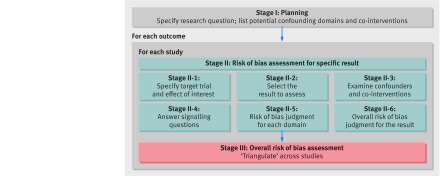
The authors developed ROBINS-I, a consensus-based tool for assessing risk of bias in non-randomised studies of interventions by comparing each study with a hypothetical pragmatic randomised “target” trial. It assesses seven bias domains using signalling questions and produces domain-level and overall risk-of-bias judgements.
Key findings
- ROBINS-I was developed over three years by expert consensus, with piloting and user feedback, and covers seven distinct bias domains: confounding, selection of participants, classification of interventions, deviations from intended interventions, missing data, measurement of outcomes, and selection of the reported result.
- The tool uses signalling questions with response options “Yes,” “Probably yes,” “Probably no,” “No,” and “No information” to inform domain-level judgements.
- Risk-of-bias judgements are categorised as “Low risk,” “Moderate risk,” “Serious risk,” and “Critical risk”; “Low risk” corresponds to the risk of bias in a high quality randomised trial.
- The authors recommend against including studies assessed as at “Critical risk” of bias in any meta-analysis and advocate caution for studies assessed as at “Serious risk” of bias.
Methods
- Development was largely by expert consensus, following seven principles previously described for assessing risk of bias in clinical trials; a core group coordinated recruitment, documents, and administrative support.
- Development activities included an initial scoping meeting in October 2011, a survey of Cochrane Review Groups in March 2012, a meeting in April 2012 to identify bias domains and working groups, a two-day face-to-face meeting in March 2013, piloting within working groups between September 2013 and March 2014, substantial revisions in June 2014, posting of version 1.0.0 in September 2014, and a three-day workshop in December 2014 where the tool was applied to six papers reporting NRSI.
- The paper describes the tool and its conceptual basis rather than reporting a quantitative validation study; no statistical analysis of reliability or validity is presented.
Limitations
- The paper states that the technical difficulty in making risk of bias judgements is expected to limit reliability, despite explicit links between signalling questions and judgements.
- The paper states that ROBINS-I focuses specifically on bias and does not address problems related to imprecision of results, such as when statistical analyses fail to account for clustering or matching of participants.
- The paper states that use of ROBINS-I requires review groups to include members with substantial methodological expertise and familiarity with modern epidemiological thinking; it also notes planned future consideration of specific NRSI types such as self-controlled designs, controlled before-and-after studies, interrupted time series, regression discontinuity, and instrumental variable analyses.
Model-written summary. Check it against the paper before relying on it.
Integrity signals
Registry
Cites
Statistics
Figures
Verification
Claims the paper makes
0 Valid · 0 Not valid · 8 Not checked · 21 Own results and interpretations
What the paper did — it cites no source for this, so there is none to check. The quote shows it is in the paper.
In the paper
“The tool views each study as an attempt to emulate (mimic) a hypothetical pragmatic randomised trial, and covers seven distinct domains through which bias might be introduced”
- Also stated in: § Domains of bias · plain
“We achieved consensus on seven domains through which bias might be introduced into a NRSI (see table 1 and appendix in supplementary data).”
§ ROBINS-I: a tool for assessing risk of bias in non-randomised studies of interventions > Summary points
plain- Asserted: passes — The authors put it forward as true.
- Checkable: passes — It can be checked against evidence.
- Load-bearing: passes — The paper’s conclusions depend on it.
- Based: passes — The paper gives a reason why it holds.
- Also stated in: § Domains of bias · plain
A conclusion the paper draws from its own results — it cites no other source for it, so there is none to check. The quote shows it is in the paper.
In the paper
“Therefore, there is substantial overlap for the last four domains between bias assessments in NRSI and randomised trials.”
§ ROBINS-I: a tool for assessing risk of bias in non-randomised studies of interventions > Methodological issues in assessing risk of bias in non-randomised studies > Domains of bias
plainstates an association- Asserted: passes — The authors put it forward as true.
- Checkable: passes — It can be checked against evidence.
- Load-bearing: unclear — It is unclear whether the paper’s conclusions depend on it.
- Based: passes — The paper gives a reason why it holds.
- Rests on 2 assumptions not shown here.
In the paper
“The tool views each study as an attempt to emulate (mimic) a hypothetical pragmatic randomised trial, and covers seven distinct domains through which bias might be introduced”
- Also stated in: § The target trial · plain
“Evaluations of risk of bias in the results of NRSI are facilitated by considering each NRSI as an attempt to emulate (mimic) a “target” trial.”
§ ROBINS-I: a tool for assessing risk of bias in non-randomised studies of interventions > Summary points
What the sources say
- Not matchedcites 11 12
This doesn’t read as a citation we can look up.
plain- Asserted: passes — The authors put it forward as true.
- Checkable: passes — It can be checked against evidence.
- Load-bearing: passes — The paper’s conclusions depend on it.
- Based: passes — The paper gives a reason why it holds.
- Also stated in: § The target trial · plain
In the paper
“We developed a tool for assessing risk of bias in the results of non-randomised studies of interventions that addresses weaknesses in previously available approaches.4”
§ ROBINS-I: a tool for assessing risk of bias in non-randomised studies of interventions > Discussion
What the sources say
- Not matchedcites [4] Sanderson S, Tatt ID, Higgins JPT. Tools for assessing quality and susceptibility to bias in observational studies in epidemiology: a systematic review and annotated bibliography. Int J Epidemiol 2007; 36: 666- 76. 10.1093/ije/dym018 pmid:17470488. 17470488
We don’t have this paper’s reference list.
plainstates a cause- Asserted: passes — The authors put it forward as true.
- Checkable: passes — It can be checked against evidence.
- Load-bearing: passes — The paper’s conclusions depend on it.
- Based: passes — The paper gives a reason why it holds.
- Not matched
A statement the paper makes itself — it cites no source for it, so there is none to check. The quote shows it is in the paper.
In the paper
“By contrast, unbiased estimation of the effect of starting and adhering to intervention requires consideration of both adherence and differences in additional interventions (“co-interventions”) between intervention groups.”
§ ROBINS-I: a tool for assessing risk of bias in non-randomised studies of interventions > Methodological issues in assessing risk of bias in non-randomised studies > The effect of interest
plain- Asserted: passes — The authors put it forward as true.
- Checkable: passes — It can be checked against evidence.
- Load-bearing: passes — The paper’s conclusions depend on it.
- Based: passes — The paper gives a reason why it holds.
9 more claims
Create a free account to see all 29 claims and every source verdict.
- Probably not a substantial claim. 14
- It may state two separate claims as one. 4
Claims other papers make about this one
Each is checked against this paper’s own text: does it say what the citing paper says it does?
The cited source doesn’t support the claim as written.
In the citing paper
“Quality assessment of RCTs was performed using the Cochrane Collaboration’s tool for assessing risk of bias in randomized trials (RoB-2) by two independent authors (M.A.C.C.A. and M.S.) [14].”
From Efficacy and safety of obicetrapib in patients with dyslipidemia: An updated meta-analysis of randomized controlled trials (2025) · cites this paper as [14]
Checked by a reasoning model — may be wrong.
Experimental — accuracy not yet measuredThe source backs part of the claim, not all of it — or backs it for a different population, condition or comparison.
In the citing paper
“we excluded studies rated to be at critical risk of bias (n = 19) from all of our analyses and figures, except for Fig. 2a”
From A systematic review and meta-analysis of the evidence on learning during the COVID-19 pandemic (2023) · cites this paper as [9]
Experimental — accuracy not yet measuredThe source backs part of the claim, not all of it — or backs it for a different population, condition or comparison.
In the citing paper
“When assessing the risk of bias, seven general principles are relevant, based on theoretical considerations, empirical work, and the experience with assessing risk of bias in RCTs and other studies [55–57].”
From COSMOS-E: Guidance on conducting systematic reviews and meta-analyses of observational studies of etiology (2019) · cites this paper as [56]
Experimental — accuracy not yet measuredThe source backs part of the claim, not all of it — or backs it for a different population, condition or comparison.
In the citing paper
“Relevant domains of risk of bias that should be considered include (i) bias due to (time-dependent) confounding, (ii) bias in selection of participants into the study (selection bias), (iii) bias in measurement of exposures or outcomes (information bias), (iv) bias due to missing data (selection bias), and (v) bias in selection of studies or reported outcomes (selection bias) [56].”
From COSMOS-E: Guidance on conducting systematic reviews and meta-analyses of observational studies of etiology (2019) · cites this paper as [56]
Experimental — accuracy not yet measuredThe source backs part of the claim, not all of it — or backs it for a different population, condition or comparison.
In the citing paper
“A modified Cochrane Collaboration's Risk of Bias in Non-Randomized Studies of Interventions was used to evaluate the risk of bias in selected studies as low, moderate, serious, and critical based on 6 domains (Table 3) (29,30).”
From Alterations in Heart Rate Variability Associated With Irritable Bowel Syndrome or Inflammatory Bowel Disease: A Systematic Review and Meta-Analysis (2021) · cites this paper as [29]
Experimental — accuracy not yet measured
64 more claims about this paper
Create a free account to see every claim other papers make about this one.
Citations
Cites
Yaşlı Kadınlarda Üreme Sağlığı
Kokanalı, D., & Engin Üstün, Y. (n.d.) · DergiPark (Istanbul University) · Cited by 170,090
The Cochrane Collaboration's tool for assessing risk of bias in randomised trials
Higgins, J. P. T., Altman, D. G., Gotzsche, P. C., Juni, P., Moher, D., Oxman, A. D., Savovic, J., Schulz, K. F., Weeks, L., Sterne, J. A. C., et al. (2011) · BMJ · doi:10.1136/bmj.d5928 · Cited by 33,817
Self-citationDermyshi, E., Wang, Y., Yan, C., Hong, W., Qiu, G., Gong, X., & Zhang, T. (2017) · Neonatology · doi:10.1159/000454668 · Cited by 24,451
Two new Later Stone Age sites from the Final Pleistocene in the Falémé Valley, eastern Senegal
Ndiaye, M., Lespez, L., Tribolo, C., Rassé, M., Hadjas, I., Davidoux, S., Huysecom, É., & Douze, K. (2024) · Monash University Research Portal (Monash University) · doi:10.3929/ethz-b-000667478 · Cited by 23,868
(2014) · Medical Entomology and Zoology · Cited by 17,633
Self-citationQUADAS-2: a revised tool for the quality assessment of diagnostic accuracy studies
Whiting, P. F., Rutjes, A. W. S., Westwood, M. E., Mallett, S., Deeks, J. J., Reitsma, J. B., Leeflang, M. M. G., Sterne, J. A. C., Bossuyt, P. M. M., & the QUADAS-2 Group* (2011) · Annals of Internal Medicine · doi:10.7326/0003-4819-155-8-201110180-00009 · Cited by 14,199
Self-citationDowns, S. H., & Black, N. (1998) · Journal of Epidemiology and Community Health · doi:10.1136/jech.52.6.377 · Cited by 8,252
Using Big Data to Emulate a Target Trial When a Randomized Trial Is Not Available: Table 1.
Hernán, M. A., & Robins, J. M. (2016) · American Journal of Epidemiology · doi:10.1093/aje/kwv254 · Cited by 3,115 · cited 1×
“11 12 Such a “target” trial need not be feasible or ethical: for example, it could compare individuals who were and were not assigned to start smoking.”
BackgroundSelf-citationGRADE guidelines: a new series of articles in the Journal of Clinical Epidemiology
Guyatt, G. H., Oxman, A. D., Schünemann, H. J., Tugwell, P., & Knottnerus, A. (2011) · Journal of Clinical Epidemiology · doi:10.1016/j.jclinepi.2010.09.011 · Cited by 3,094
Self-citationEvaluating non-randomised intervention studies
Deeks, J., Dinnes, J., D'Amico, R., Sowden, A., Sakarovitch, C., Song, F., Petticrew, M., & Altman, D. (2003) · Health Technology Assessment · doi:10.3310/hta7270 · Cited by 2,907
Self-citation
Cited by
Items 18,801–18,900 of 19,837
Garritty, C., Hamel, C., & Nußbaumer-Streit, B. (2026) · Cochrane Evidence Synthesis and Methods · doi:10.1002/cesm.70092
“I for non‐randomized studies [10] Single‐reviewer assessment with verification by a second reviewer is acceptable.”
Ayinde, B. O., Bako, R. S., Kanu, I. M., et al. (2026) · Journal of Gastrointestinal Surgery Open · doi:10.1016/j.jogsop.2026.100030
Digital Health Interventions to Improve Medication Adherence Among Older Adults: A Systematic Review
Haile, K. T., Shahin, W., Gebreyohannes, E. A., Yabeyu, A. B., Hareem, A., Kalayou, M. H., Yi, X., & Wang, K. (2026) · Australian Journal on Ageing · doi:10.1111/ajag.70206 · Cited by 3
Salimi, J., heris, S. S. A., Shokri, A., et al. (2026) · Trauma Surgery & Acute Care Open · doi:10.1136/tsaco-2025-002211
Kizzandy, K., Pahu, Y. G. P., Ratmandhika, S. R., Tanjaya, K., Rinanada, E. R., Yusuf, M., Aditya, M. R., & Bayuadi, I. S. (2026) · Indian Journal of Thoracic and Cardiovascular Surgery · doi:10.1007/s12055-026-02245-1
“We evaluated each study based on criteria for risk of bias using the Cochrane Risk of Bias 2 tool for RCTs and the Risk Of Bias In Non-randomized Studies of Interventions (ROBINS-I) for observational studies [21, 22].”
Safir, M., Chan, C. C., Teichman, J. C., et al. (2026) · Acta Ophthalmologica · doi:10.1111/aos.70196
Gutiérrez-Barros, G. A., Morales-Morales, M. V., Morales-Donado, G. M., Bartos, A. F. A., Gutiérrez, C. D. R., Jiménez, M. F. B., Cervantes, S. A. L., Mancipe, V. A. B., Ortega, L. M. A., Nieves, S. N., et al. (2026) · Journal of Biosciences and Medicines · doi:10.4236/jbm.2026.147020
Rehabilitation in Kienböck Disease: A Narrative Review of Current Concepts
Tenev, D., Hochbein, B., Enev, G., Cherkezov, N., Adolf, J., & Dimitrov, N. (2026) · Journal of Clinical Medicine · doi:10.3390/jcm15145590 · Cited by 2
“We applied the ROBINS-I tool [27] to each contributing cohort.”
Sanikommu, S., Santos, A. N., Dawoud, B., et al. (2026) · CNS Drugs · doi:10.1007/s40263-026-01316-6
“Two independent reviewers (SS and ANS) applied the Risk of Bias in Non-randomized Studies of Interventions (ROBINS-I) tool for the non-randomized studies [30].”
Guo, W.-X., 何瑞菊, Hu, Y., Gu, K., & Qiu, L. (2026) · Lasers in Medical Science · doi:10.1007/s10103-026-04955-9 · Cited by 1
“Meth - odological quality and risk of bias of non-randomized controlled trial (NRCT) studies were assessed using the ROBINS-I tool [ 11 ], and ROB2 tool [ 12] was used for ran - domized controlled trial (RCT) studies.”
Sandeep, B., Cheng, H., Liu, X., Huang, X., Yan, Y., Jiang, F., Xiong, D., Wu, Q., Gao, K., & Xiao, Z. (2026) · Current Problems in Cardiology · doi:10.1016/j.cpcardiol.2026.103398
Chukwu, M. E., Erivwo, O. M., Whyte, T. J., et al. (2026) · JPRAS Open · doi:10.1016/j.jpra.2026.07.018
Cormaci, V. M., Menichelli, D., Malatesta, D., Sole, F. D., Gazzaniga, G., Pignatelli, P., Galardo, G., Pugliese, F., & Pastori, D. (2026) · Journal of Infection · doi:10.1016/j.jinf.2026.106818
The Impact of Rhinosinusitis and Its Treatment on Sleep-Disordered Breathing: A Systematic Review
Almaqboul, T. M., Almutairi, A. K., Albarkheel, L. B., Alshammakhi, A. M., Areeshi, R. A., Alarfaj, A. A., & Alyahya, K. A. (2026) · Medicina · doi:10.3390/medicina62071392
“Randomized controlled trials were evaluated using the Cochrane Risk of Bias 2 (RoB 2) tool, non-randomized intervention studies using ROBINS-I [13], and observational cohort studies using the Newcastle–Ottawa Scale (NOS).”
Esperouz, F., Lorusso, M., Giannini, G. R., et al. (2026) · Clinical and Experimental Dental Research · doi:10.1002/cre2.70401
Xie, T., Yang, C., Tao, H., Yang, X., Deng, L., Zeng, J., Jiang, H., & Zhou, P. (2026) · Critical Care · doi:10.1186/s13054-026-06203-6
“Randomized controlled trials were assessed using the Cochrane Risk of Bias tool (RoB 2.0) [17], while non-randomized studies were evaluated using the Risk of Bias in Non-randomized Studies of Interventions tool (ROBINS-I) [18], with assessments performed independently by two reviewers.”
InfluentialAbuzenah, M., Zameer, R., Kumar, S., Ghananeem, Z. A., Batra, P., & Khaan, K. (2026) · Cureus · doi:10.7759/cureus.112972
“Non-randomized observational studies with treatment exposure were assessed using Risk Of Bias In Non-randomized Studies of Interventions (ROBINS-I) [11], particularly for confounding, participant selection, exposure classification, missing data, outcome measurement, and selective reporting.”
Iacovazzo, C., de Siena, A. U., Kotfis, K., Buonanno, P., Nappi, S., Merola, R., Vargas, M., Servillo, G., Pandharipande, P. P., & Marra, A. (2026) · Journal of Personalized Medicine · doi:10.3390/jpm16070385
“To assess the risk of bias for observational prospective studies, we used the Risk of Bias In Non-randomized Studies-of Interventions (ROBINS-I) [14].”
Chaiwala, A. H., Chaiwala, H., Franklin, S., Aguilar, L. Y. R., Bhardwaj, S., & Rickman, S. (2026) · Cureus · doi:10.7759/cureus.113045
“Risk Of Bias In Non-randomized Studies - of Interventions (ROBINS-I) was used for non-randomized studies [21].”
Lastovka, N., Stanfar, K., Ghajar, M., Bailey, A., Byham-Gray, L. D., & Radler, D. R. (2026) · Nutrition Reviews · doi:10.1093/nutrit/nuag093
Effectiveness of Decision Aids for Breast Cancer Treatment: A Systematic Review and Meta-Analysis
Hua, Y., Huang, Y., Han, Y., Chow, K. M., Yu, X., Su, X., Qiu, A., & Zhu, J. (2026) · Cancer Nursing · doi:10.1097/ncc.0000000000001574
Darwish, N., Hamdy, A. M., Ahmad, J., Omar, Y. M., Moubarak, E. S., Shashtari, A., Al-Ihribat, A. R., Salloum, O. H., Alhroub, W., & El‐Gilany, A. (2026) · Journal of Interventional Cardiology · doi:10.1155/joic/1251897
Von Phase I bis IV – Studiendesigns in der Ophthalmologie richtig verstehen und bewerten
Pfau, K., Deutsch, A., Németh, R., Fuhrmann, C., & Holz, F. G. (2026) · Die Ophthalmologie · doi:10.1007/s00347-026-02474-0
Ahmad, S., Sul, H. H., Danpanichkul, P., de Souza, M. H. G., Petrov, M. S., & The Global Intrapancreatic FaT (GIFT) Alliance (2026) · Current Obesity Reports · doi:10.1007/s13679-026-00737-0 · Cited by 5
“[ 35 , 36] Discrepancies were resolved through discussion with a third investigator (M.S.).”
Altamimi, I., Alqahtani, A., Alquhaibi, A. S., et al. (2026) · Archives of Dermatological Research · doi:10.1007/s00403-026-04742-0
“Two independent authors assessed the potential risk of bias of included randomized studies using the RoB 2 tool [22] and ROBINS-I [23] for non-randomized studies.”
Valarezo, J. A. J., Valarezo, J. D. J., Sánchez, A. C. V., Aponte, G. E. S., & Montufar, N. S. A. (2026) · ASCE MAGAZINE · doi:10.70577/asce.v5i3.1018
Patel, S., Nischal, S. A., White, G. W., et al. (2026) · Spine Deformity · doi:10.1007/s43390-026-01508-6
Dawoud, S., Dawoud, H., Hans, A. H., et al. (2026) · Cardiology in Review · doi:10.1097/crd.0000000000001394
Financial factors shaping treatment decisions in oncology: A systematic review
Olunuga, E. J., Woo, J., Kulkarni, A., Kurnot, J. A., Cantrell, S., & Kaye, D. R. (2026) · Journal of Cancer Policy · doi:10.1016/j.jcpo.2026.100784
Flow Diversion for Anterior Communicating Artery Aneurysms: Systematic Review and Meta-Analysis
Brito, A., Haselden, W. D., Cruz‐Criollo, L., Abdelhakim, N., Cespedes, J., Samaniego, E. A., Ortega‐Gutiérrez, S., & Zanaty, M. (2026) · Stroke Vascular and Interventional Neurology · doi:10.1161/svin.125.002259
“20”
Bain, J., Kompella, A., Millan, R., Jones, E. P., & Sawicki, C. M. (2026) · Journal of Clinical Medicine · doi:10.3390/jcm15145710
“…Studies of Interventions (ROBINS-I) tool was applied, which assesses bias across seven domains encompassing confounding, participant selection, intervention classification, deviations from intended interventions, missing data, outcome measurement, and selection of reported results [21].”
Effectiveness of Nursing Interventions for Poststroke Fatigue: A Systematic Review
Hur, Y., & Lee, S. J. (2026) · Rehabilitation Nursing · doi:10.1097/rnj.0000000000000558
de Sousa, L. C., Avelino, M. E. L., Carreiro, A. D. F. P., et al. (2026) · Journal of Prosthodontics · doi:10.1111/jopr.70194
Akhmetsharip, D., & Sazonov, V. (2026) · Children · doi:10.3390/children13070961
“Nonrandomized comparative or interventional studies were interpreted using ROBINS-I domains, and retrospective cohort studies were evaluated using Newcastle-Ottawa Scale concepts [20,21].”
Joo, J. H., Ki, Y., Jung, Y. J., Kim, H. Y., Choo, K. S., Nam, K. J., & Nam, S. B. (2026) · Journal of Clinical Medicine · doi:10.3390/jcm15145732
“The Risk of Bias 2 (RoB 2) tool was applied to randomized controlled trials (RCTs) [20], whereas non-randomized studies were appraised with Risk of Bias in Non-Randomized Studies of Interventions (ROBINS-I) [21].”
Effectiveness and Safety of Plasmapheresis in MOGAD Attacks
Vilardo, M., Mahler, J. V., de Souza, B. L. V., et al. (2026) · Neurology · doi:10.1212/wnl.0000000000218300
Okawa, Y. (2026) · Tobacco Induced Diseases · doi:10.18332/tid/225228
Faulkner, L., Smith, D., & Liu, S. (2026) · JPRAS Open · doi:10.1016/j.jpra.2026.07.019
“I) 20 for controlled studies, and Cochrane Risk of Bias 2 (RoB–2) 21 for randomised controlled trials (RCTs).”
Escandón, J. M., Nugent, A., Kreutz‐Rodrigues, L., Matsui, C., Bustos, S. S., Kalvapudi, S., Ku, G. D. L. C., & Vijayasekaran, A. (2026) · Journal of Plastic Reconstructive & Aesthetic Surgery · doi:10.1016/j.bjps.2026.07.023
Izadpanah, K., Rezaei, M., Nejadghaderi, S. A., & Sharifi, H. P. (2026) · Cancer Reports · doi:10.1002/cnr2.70627
Sacasa, F., Baus, G. H., Quach, M. P., et al. (2026) · Burns · doi:10.1016/j.burns.2026.108154
Балыкина, К. А., & Сухина, О. Ю. (2026) · Military and tactical medicine Emergency medicine · doi:10.55359/2782-3296.2026.25.51.004
Jeon, S., Kim, M. W., & Lee, D.-H. (2026) · Bioengineering · doi:10.3390/bioengineering13070843
“Non-randomised studies were appraised using the Methodological Index for Non-Randomised Studies (MINORS) [19] and, where applicable, ROBINS-I [20]; any randomised trials would https://doi.org/10.3390/bioengineering13070843 be appraised with RoB 2 [21].”
InfluentialAsif, M. A., Masood, S., Akbar, S. M. A., Khalid, M. H., Rehman, A., Imran, M., Suhaib, A., Asif, M. S., Khalid, A., Sohaib, M., et al. (2026) · Journal of Clinical Medicine · doi:10.3390/jcm15145737
“For cohort and other observational studies, the Risk of Bias in Non-randomized Studies of Interventions (ROBINS-I V2) [16] tool was used, which assesses bias across seven domains: https://doi.org/10.3390/jcm15145737 confounding, selection of participants, classification of interventions, deviations…”
InfluentialMatzeller, K. L., Kubicki, M., Atmaka, D. R., Milla, S. S., Tutman, J., Krebs, N. F., & Tang, M. (2026) · Nutrition Reviews · doi:10.1093/nutrit/nuag106
Giannakopoulos, G., & Prassou, A. (2026) · Children · doi:10.3390/children13070972
“Risk of bias was assessed independently by two reviewers using the revised Cochrane risk-of-bias tool for randomized trials (RoB 2) and the Risk of Bias in Non-randomized Studies of Interventions (ROBINS-I) framework for non-randomized or uncontrolled studies [29,30].”
Li, L., Liu, Y., Wu, Z., Liao, Y., Li, S., Chow, S., 廖彬池, Zhang, D., Xie, Z., & Wu, Y. (2026) · Journal of Evidence-Based Medicine · doi:10.1111/jebm.70172
“Given differing sources and magnitudes of bias in RCTs and RWS, we used design-specific, standardized tools endorsed by Cochrane: RoB 2.0 for RCTs and ROBINS-I for RWS [ 19, 20 ].”
InfluentialSurendran, H. P., Gopisetty, G., Rajappa, S. J., Rao, T. S., & Unnikrishnan, M. K. (2026) · Frontiers in Oncology · doi:10.3389/fonc.2026.1859306
“Randomized controlled trials were evaluated using the Cochrane Risk of Bias 2 (RoB 2) tool (10), while non-randomized comparative studies were assessed using the ROBINS-I tool (11).”
Castro-Rodríguez, J. A., Averill, S. H., Castro-Guevara, M. I., & Ducharme, F. M. (2026) · European Respiratory Review · doi:10.1183/16000617.0311-2025
“Two independent reviewers (F.M. Ducharme, S.H. Averill) assessed each study ’ s risk of bias, using the revised Cochrane risk-of-bias tools for nonrandomised intervention studies (RoB-I) or RCTs (RoB-2), as appropriate [21, 22].”
Ram, K., Hill, M., Stewart, C., Hardy, K. P., & Khurana, S. G. (2026) · Developmental Medicine & Child Neurology · doi:10.1111/dmcn.70385 · Cited by 2
Clinical outcomes of Day-7 blastocysts: a systematic review and meta-analysis
Firmin, J., Ducreux, B., Saidessalam, H., et al. (2026) · Human Reproduction Update · doi:10.1093/humupd/dmag017
Zaquinaula, M. A. A., Andrade, C. A. S., Nieto, R. M. S., Dávila, K. E. D., Iñiguez, M. P. C., Rodríguez, M. G. S., Vásquez, D. J. A., & Flores, M. A. S. (2026) · International Journal of Molecular Sciences · doi:10.3390/ijms27146538
“…that provided lists of annotated genes (e.g., from DMRs), we manually extracted the gene symbols and performed functional enrichment analysis using the DAVID Bioinformatics Resource (Version 2021) [43] and Gene Ontology (GO) and Kyoto Encyclopedia of Genes and Genomes (KEGG) pathway databases.”
Tiwari, S., Sharma, A., Ramassamy, E., & Sabat, R. (2026) · Special Care in Dentistry · doi:10.1111/scd.70225
Zhou, J., Li, S., Liu, H., Sun, Y., & Wang, Z. (2026) · International Journal of Nursing Practice · doi:10.1111/ijn.70172 · Cited by 1
Jalil, A., Rajab, F., Li, X., Ibrahim, A. D., Sawant, A., Bashir, M., Bandi, V. V., Bhatt, K., Mehta, S., Abaid, B., et al. (2026) · Journal of Arrhythmia · doi:10.1002/joa3.70366
Yang, H.-A., Jheng, W.-L., Hwang, Y., Wu, W., Lai, C. S., Chou, H., Kang, E. Y., Liu, L., Chao, A., Chen, Y.-T., et al. (2026) · BMJ Open Ophthalmology · doi:10.1136/bmjophth-2026-002896
Song, Y., Jiang, W., 庄敏, & Yue, J. (2026) · Journal of PeriAnesthesia Nursing · doi:10.1016/j.jopan.2026.06.008
Joglekar, K. G. (2026) · Cureus · doi:10.7759/cureus.113248
“Risk of bias in the included observational studies was assessed using the Risk Of Bias In Non-randomized Studies of Interventions (ROBINS-I) tool, described further below [13].”
Coles, D., Kalyana, A., Khalil, S., Chauhan, D., Rupasinghe, T., Costello, C., Batla, A., & Young, T. (2026) · Parkinson s Disease · doi:10.1155/padi/8540084
Laparoscopic anti-reflux surgery in connective tissue disorders: a review of clinical outcomes
Siby, J., Hendry, J., & Nageswaran, H. (2026) · Annals of The Royal College of Surgeons of England · doi:10.1308/rcsann.2026.0064
Liu, J., Kang, B., Deng, W., Hao, Z., Yang, C., & Zhang, L. (2026) · Frontiers in Pharmacology · doi:10.3389/fphar.2026.1819206 · Cited by 1
“For RCTs, we used the Cochrane Risk of Bias (RoB) (Higgins et al., 2011); for non-RCTs, we used Risk Of Bias In Non-randomized Studies of Interventions (ROBINS-I) (Sterne et al., 2016); for cohort studies and case-control studies we used the Newcastle-Ottawa Scale (NOS) (Cook and Reed, 2015); and for cross-sectional s…”
Gaebe, K., Lowe, K., Bosnalie, D., Khoury, S., Villemure‐Poliquin, N., & Nichols, A. (2026) · Facial Plastic Surgery & Aesthetic Medicine · doi:10.1177/26893614261457879 · Cited by 1
Hamed, M. A., Alnajjar, T. A. A., & Alsubhi, Z. D. (2026) · Cureus · doi:10.7759/cureus.113199 · Cited by 1
Bruna-Mejías, A., Alliendes, L. P., Perez-Lira, V., Santander-Chavez, D., Miranda-Schoen, M., Vega-Salces, R., Rodríguez-Luengo, M., Luengo-Mai, D., Valenzuela‐Fuenzalida, J. J., Moya, M. P., et al. (2026) · International Medical Education · doi:10.3390/ime5030067
“Randomized studies were evaluated using the Cochrane Risk of Bias 2 framework [20], whereas non-randomized and quasi-randomized comparative studies were interpreted using ROBINS-I principles where applicable [21].”
Wang, T., Wang, P., Tang, Y., Tian, Y., & Li, D. (2026) · Research in Developmental Disabilities · doi:10.1016/j.ridd.2026.105349
Lemos, M. J., Servidoni, A. C. P., de Mattos, I. L. L., Nakayama, C. M. A., Molisani, J. T., YoussefYoussef, & Abrão, M. S. (2026) · Journal of Minimally Invasive Gynecology · doi:10.1016/j.jmig.2026.07.018 · Cited by 1
Xu, W., Xin, Y., Yang, X., Wu, M., Chen, H., Lu, X., Guo, Y., Yu, D., & Zhou, F. (2026) · Medicine · doi:10.1097/md.0000000000049582
“The weighted kappa scores varied across the 7 domains of bias assessed by risk of bias in non-randomized studies – of interventions [22] (Table 2).”
Balachandren, N., Kastora, S. L., Anderson, R. A., Luehwink, C., Davies, M. C., Lavery, S. A., Mavrelos, D., & Yasmin, E. (2026) · Human Reproduction Update · doi:10.1093/humupd/dmag019
Xianggang, H., Jia, Q., Yang, J., et al. (2026) · Medicine · doi:10.1097/md.0000000000049772
“[16] The ROBINS-I assessment included bias due to confounding, participant selection, classification of interventions, deviations from intended interventions, missing data, outcome measurement, and selection of the reported results.”
Chen, S., Zhang, Y., Wu, Y., Chen, B., & Huang, H. G. (2026) · Medicine · doi:10.1097/md.0000000000049877
“[18] For non-RCTs, the Risk of Bias in Non-randomized Studies of Interventions tool was applied, [19] and the credibility of the network meta-analysis results was assessed using the Confidence in Network Meta-Analysis (CINeMA) application.”
Cost-effectiveness of glaucoma screening: a systematic review protocol
John, D., Ramachandran, A., Parikh, R., & Janakiram, C. (2026) · BMJ Open · doi:10.1136/bmjopen-2026-120863
“27 28 Disagreements between the reviewers will be solved through conversation or with the assistance of the third reviewer.”
Yan, M. C. K., Rees, A., & Saleki, M. (2026) · International Ophthalmology · doi:10.1007/s10792-026-04146-z
“Risk of bias for included studies was assessed using the ROBINS-I tool, appropriate for non-randomised studies [19].”
Huang, X., Lei, M., Liao, J., Huang, Z., Zhao, Z., & Cen, X. B. (2026) · BMC Oral Health · doi:10.1186/s12903-026-09379-z
“Non-randomized studies were assessed using ROBINS-I [30].”
SCREW VS. SUTURE FIXATION FOR TIBIAL EMINENCE FRACTURES: A META-ANALYSIS
Lavigne, P. E. D., Filho, M. V. R., Ribeiro, V. M., et al. (2026) · Acta Ortopédica Brasileira · doi:10.1590/1413-785220263404e300987
Bakht, D., Arham, M., Yousaf, F., et al. (2026) · Medicine · doi:10.1097/md.0000000000049933
“[19]”
Standardized handover in gastrointestinal surgery: From checklist adoption to safety culture
Kannan, J., & Shelat, V. G. (2026) · World Journal of Gastrointestinal Surgery · doi:10.4240/wjgs.120266
Is Capsaicin Effective in Relieving the Symptoms of Burning Mouth Syndrome? A Systematic Review
Silva, A. P. D. A., dos Santos, I. W. R., da Silva, Z. A., et al. (2026) · Journal of Oral Rehabilitation · doi:10.1111/joor.70275
Gómez, M. P. F., Perdomo, W. A. F., Vera, G. D. J. A., Saltaren, J. F., Moscote‐Salazar, L. R., Rajavadivel, K. R., Mishra, R., Agrawal, A., & Valerio, J. (2026) · Cureus · doi:10.7759/cureus.113349
Trindade, M. L. U., Abud, T. H., de Paiva, M. E. C. B., Frizzo, C. S., Delgado, L. M., Theis, C., de Figueiredo, S. M. P., Formiga, F. B., & Pompeu, B. F. (2026) · Journal of Laparoendoscopic & Advanced Surgical Techniques · doi:10.1177/10926429261472663 · Cited by 1
Risk Factors for Recurrence in Vulvar Squamous Cell Carcinoma: A Systematic Review and Meta‐Analysis
Sibarani, C. N. R., Salima, S., Suardi, D., et al. (2026) · Cancer Medicine · doi:10.1002/cam4.72110
Abouelmagd, A. A., Nazmy, A., Yassin, M. N., et al. (2026) · Coronary Artery Disease · doi:10.1097/mca.0000000000001663
Amiri, D., Shah, S. J., Briziarelli, L., Amiri, S., & Karlsson, B. (2026) · Metabolites · doi:10.3390/metabo16080527
“The methodological quality and risk of bias of the included studies were evaluated using study-design-appropriate assessment tools, including RoB 2 for randomized trials [23] and ROBINS-I for non-randomized intervention studies [24].”
Vaz, M. D., Debouche, S., Marsman, M., Lamperti, M., Antoniou, S. A., Schünemann, H. J., & Neumann, I. (2026) · European Journal of Anaesthesiology Intensive Care · doi:10.1097/ea9.0000000000000126
“If the available data are not suitable for meta-analysis, a narrative The risk of bias of the included controlled trials, 33 ROBINS-I for nonrandomised studies of interventions 34 and QUADAS-2 for diagnostic test accuracy studies.”
Self-citationDufault, S., Potvin, S., & Patry, S. (2026) · Brain Sciences · doi:10.3390/brainsci16080789
“Non-randomized studies were assessed using the Cochrane ROBINS-I tool [62] across seven domains: pre-intervention (confounding, participant selection), during intervention (misclassification, mismeasurement), and post-intervention (deviations, missing data, outcome measurement, reported results).”
de Oliveira, A. B. P., & Hein, M. (2026) · L Encéphale · doi:10.1016/j.encep.2026.04.004
Initial vascular access for neonatal resuscitation: a systematic review
Kawakami, M. D., Kong, J. Y., Almeida, M., et al. (2026) · Resuscitation · doi:10.1016/j.resuscitation.2026.111226
Bove, A. M., Carroll, L. A., Cone, S., Dibblee, P., Hensley, C. P., Lenington, K., Manner, P. A., Scalzitti, D. A., Tompkins, J., & Bade, M. (2026) · Physical Therapy · doi:10.1093/ptj/pzag058 · Cited by 5
Macías, J., Lara-Merín, L., & López-Pinar, C. (2026) · Psicothema · doi:10.70478/psicothema.2026.38.12
Pierdomenico, K. D., Bucsea, O., Hashemi, H., Leguia, A., Lovegrove, A., Cribbie, R. A., & Riddell, R. P. (2026) · npj Digital Medicine · doi:10.1038/s41746-026-03044-z · Cited by 1
Aleksander-Ivanov, Y., Valentim, C. C. S., Veiga, D. M., et al. (2026) · Journal of Cataract & Refractive Surgery · doi:10.1097/j.jcrs.0000000000002018
Setyawan, A. I., Wahid, M., Rakinaung, M. R., et al. (2026) · F1000Research · doi:10.12688/f1000research.186700.1
Building Trust in a Newly Established Physician–Patient Relationship: A Scoping Review
Mechúrová, B., Pomichálková, Š., Šefranková, J., & Loučka, M. (2026) · Health Expectations · doi:10.1111/hex.70788 · Cited by 1
“I (Risk Of Bias In Non‐randomised Studies of Interventions) [53] tool for quantitative observational studies.”
Kim, Y. W., Kim, S., Jang, J. Y., et al. (2026) · Medical Sciences · doi:10.3390/medsci14040442
“…search strings are provided in Appendix A. Risk of bias for included comparative studies was assessed independently by two reviewers using the ROBINS-I tool [23] and the Newcastle–Ottawa Scale, and the certainty of evidence for each pooled outcome was rated using the GRADE approach [24].”
Anggarany, A. D., Wafa, W., & Saputra, R. (2026) · Journal of Pharmaceutical And Sciences · doi:10.36490/journal-jps.com.v9i3.1714
Ma, Z., Huang, B., Chen, K., Yuan, R., Li, L., & Shen, Y. (2026) · Foods · doi:10.3390/foods15152646
“Although non-randomized controlled human intervention studies were eligible according to the inclusion criteria, no such study met the final eligibility criteria; therefore, ROBINS-I [18] was not applied.”
InfluentialHoward, M. B., Wilson-Lall, O. A., Sprauer, S., Napolitano, S. K., Lobner, K. L., Moon, R. Y., Ryan, L. M., & McKenzie, L. B. (2026) · Academic Pediatrics · doi:10.1016/j.acap.2026.103415
Xiang, S., Koch, H., Lilla, N., Nieuwenboom, J. W., & Schüpbach, M. (2026) · AI Brain and Child · doi:10.1007/s44436-026-00039-1
“This heterogeneity pre - cluded the consistent application of a single standardized risk-of-bias instrument, because RoB 2 (Sterne et al., 2019) and ROBINS-I (Sterne et al., 2016) are each designed for specific study designs.”
Xie, J., Zhu, L., & Zhang, J. (2026) · Frontiers in Surgery · doi:10.3389/fsurg.2026.1817062
One-Stage or Two-Stage Revision for Infected Shoulder Arthroplasty
Selim, A. A. H. A., Ibrahim, A., Abbas, A., et al. (2026) · JBJS Reviews · doi:10.2106/jbjs.rvw.26.00055
Junprasert, T., Surakarn, A., Kuptapol, K., & Suwanwong, C. (2026) · Wellbeing Space and Society · doi:10.1016/j.wss.2026.100455
Metadata
- Authors
- Sterne, J. A., Hernán, M. A., Reeves, B. C., Savović, J., Berkman, N. D., Viswanathan, M., Henry, D., Altman, D. G., Ansari, M. T., Boutron, I., Carpenter, J. R., Chan, A.-W., Churchill, R., Deeks, J. J., Hróbjartsson, A., Kirkham, J., Jüni, P., Loke, Y. K., Pigott, T. D., Ramsay, C. R., Regidor, D., Rothstein, H. R., Sandhu, L., Santaguida, P. L., Schünemann, H. J., Shea, B., Shrier, I., Tugwell, P., Turner, L., Valentine, J. C., Waddington, H., Waters, E., Wells, G. A., Whiting, P. F., & Higgins, J. P.
- Affiliations
- University of Bristol (GB)
- University Hospitals Bristol NHS Foundation Trust (GB)
- RTI International (US)
- University of Toronto (CA)
- University of Oxford (GB)
- University of Ottawa (CA)
- Inserm (FR)
- London School of Hygiene & Tropical Medicine (GB)
- University of York (GB)
- University of Birmingham (GB)
- University of Southern Denmark (DK)
- University of Liverpool (GB)
- St. Michael's Hospital (CA)
- University of East Anglia (GB)
- Loyola University Chicago (US)
- University of Aberdeen (GB)
- Kaiser Permanente (US)
- Baruch College (US)
- McMaster University (CA)
- Cochrane Canada (CA)
- Jewish General Hospital (CA)
- Ottawa Hospital Research Institute (CA)
- University of Louisville (US)
- London International Development Centre (GB)
- The University of Melbourne (AU)
- Ottawa Heart Institute (CA)
- Corresponding author
- Sterne, Jonathan AC
- ORCID
- Sterne, Jonathan AC
- Reeves, Barnaby C
- Savović, Jelena
- Berkman, Nancy D
- Viswanathan, Meera
- Henry, David
- Altman, Douglas G
- Boutron, Isabelle
- Carpenter, James R
- Chan, An-Wen
- Churchill, Rachel
- Deeks, Jonathan J
- Hróbjartsson, Asbjørn
- Kirkham, Jamie
- Jüni, Peter
- Loke, Yoon K
- Ramsay, Craig R
- Rothstein, Hannah R
- Santaguida, Pasqualina L
- Schünemann, Holger J
- Shrier, Ian
- Tugwell, Peter
- Valentine, Jeffrey C
- Waddington, Hugh
- Wells, George A
- Whiting, Penny F
- Higgins, Julian PT
- Venue
- BMJ
- Publisher
- BMJ
- Published
- 2016-10-12
- Volume
- 355
- Pages
- i4919
- ISSN
- 1756-1833 (ISSN-L)
- PMC
- PMC5062054
- OpenAlex
- W2531269403
- Cited by
- 20,329
- References
- 26
- Citations by year
- 2026: 3595 · 2025: 3693 · 2024: 3237 · 2023: 2484 · 2022: 2425 · 2021: 2040 · 2020: 1386 · 2019: 771 · 2018: 459 · 2017: 197 · 2016: 15
- FWCI
- 446.93
- Type
- journal article
- Language
- en
- Open access
- hybrid
- doi.org
- Licence
- cc-by-nc
- www.bmj.org/licenses/tdm/1.0/terms-and-conditions.html (tdm)
- Locations
- BMJ (publishedVersion, cc-by-nc)
- Europe PMC (PubMed Central) (publishedVersion, cc-by-nc)
- PubMed Central (publishedVersion, cc-by-nc)
- PubMed (publishedVersion)
- Bristol Research (University of Bristol) (publishedVersion, cc-by-nc)
- University of Southern Denmark Research Portal (University of Southern Denmark) (publishedVersion, cc-by-nc)
- White Rose Research Online (University of Leeds, The University of Sheffield, University of York) (acceptedVersion)
- UEA Digital Repository (University of East Anglia) (acceptedVersion, other-oa)
- LSHTM Research Online (London School of Hygiene and Tropical Medicine) (acceptedVersion)
- Aberdeen University Research Archive (Aberdeen University) (submittedVersion, other-oa)
- CUNY Academic Works (City University of New York) (submittedVersion, cc-by-nc)
- DSpace@MIT (Massachusetts Institute of Technology) (submittedVersion, cc-by-nc)
- eScholarship@McGill (McGill) (submittedVersion, cc-by)
- eScholarship (California Digital Library) (submittedVersion, cc-by)
- HighWire Press Open Archive (submittedVersion)
- Research Explorer (The University of Manchester) (submittedVersion, other-oa)
- Funders
- Cancer Research UK (16895)
- National Institute for Health and Care Research (NF-SI-0611-10168)
- University of Bristol
- National Institutes of Health (CA134294)
- Medical Research Council (MR/M025209/1, MC_UU_12023/21, MR/J004855/1, MC_UU_12023/24)
- National Cancer Institute (P01CA134294, R35CA197449)
- Topics
- Social Sciences › Decision Sciences › Statistics, Probability and Uncertainty › Meta-analysis and systematic reviews
- Physical Sciences › Mathematics › Statistics and Probability › Advanced Causal Inference Techniques
- Physical Sciences › Mathematics › Statistics and Probability › Statistical Methods in Epidemiology
- Keywords
- ROBINS-I, risk of bias assessment, non-randomized studies, observational studies, comparative effectiveness, systematic reviews, allocation bias, confounding, attrition bias, reporting bias, selection bias
- MeSH terms
- Clinical Trials as Topic, Humans, Pilot Projects, Risk, Statistics as Topic, Bias, Confounding Factors, Epidemiologic, Observational Studies as Topic
About these checks
Registry, retraction, Cites and statistics results are computed, not judged, with one exception: a printed reference that no index lists is read once by a model before it counts as a citation error. Claims are extracted by a model and kept only when their quote appears verbatim in the text; each cited source is then checked, with a model’s help, for whether it says what the claim relies on. Those verdicts can be wrong — read the claim’s quote and the cited source before relying on one.
A language model drew the claims from the paper on 2026-09-29, under version 3 of the claim definition (model deepseek-v4.1-flash, prompt extract-v3).
A second model labelled each claim on 2026-09-29 (model jev-1.13-20260917, definition revision gold-guideline-v0.2).
Statistics and arithmetic are recomputed, not judged.
Confidence bands are shown only for fields calibrated on our annotated test set. None is calibrated yet, so no band is shown.
What counts as a claim ›How we measure confidence ›How we check this ›
Are you an author, or do you see a problem with this page? Request a review
Data sources
Bibliographic data: Semantic Scholar, OpenAlex, Crossref.
Contains information from the Semantic Scholar Academic Graph Datasets, made available under the ODC Attribution License (ODC-BY 1.0).
Semantic Scholar’s data is described in: Kinney, R., et al. (2023). The Semantic Scholar Open Data Platform. arXiv:2301.10140.
