

ROBINS-I: a tool for assessing risk of bias in non-randomised studies of interventions
Open accessThe DOI matches its Crossref record; 27 of the 27 references it cites were found in a registry or an index; none of the 8 sources its claims cite is checked for support yet.
Abstract
Non-randomised studies of the effects of interventions are critical to many areas of healthcare evaluation, but their results may be biased. It is therefore important to understand and appraise their strengths and weaknesses. We developed ROBINS-I (“Risk Of Bias In Non-randomised Studies - of Interventions”), a new tool for evaluating risk of bias in estimates of the comparative effectiveness (harm or benefit) of interventions from studies that did not use randomisation to allocate units (individuals or clusters of individuals) to comparison groups. The tool will be particularly useful to those undertaking systematic reviews that include non-randomised studies.
Overview
CoChat Summary
TL;DR
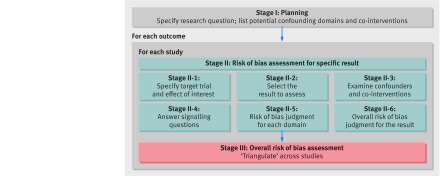
The authors developed ROBINS-I, a consensus-based tool for assessing risk of bias in non-randomised studies of interventions by comparing each study with a hypothetical pragmatic randomised “target” trial. It assesses seven bias domains using signalling questions and produces domain-level and overall risk-of-bias judgements.
Key findings
- ROBINS-I was developed over three years by expert consensus, with piloting and user feedback, and covers seven distinct bias domains: confounding, selection of participants, classification of interventions, deviations from intended interventions, missing data, measurement of outcomes, and selection of the reported result.
- The tool uses signalling questions with response options “Yes,” “Probably yes,” “Probably no,” “No,” and “No information” to inform domain-level judgements.
- Risk-of-bias judgements are categorised as “Low risk,” “Moderate risk,” “Serious risk,” and “Critical risk”; “Low risk” corresponds to the risk of bias in a high quality randomised trial.
- The authors recommend against including studies assessed as at “Critical risk” of bias in any meta-analysis and advocate caution for studies assessed as at “Serious risk” of bias.
Methods
- Development was largely by expert consensus, following seven principles previously described for assessing risk of bias in clinical trials; a core group coordinated recruitment, documents, and administrative support.
- Development activities included an initial scoping meeting in October 2011, a survey of Cochrane Review Groups in March 2012, a meeting in April 2012 to identify bias domains and working groups, a two-day face-to-face meeting in March 2013, piloting within working groups between September 2013 and March 2014, substantial revisions in June 2014, posting of version 1.0.0 in September 2014, and a three-day workshop in December 2014 where the tool was applied to six papers reporting NRSI.
- The paper describes the tool and its conceptual basis rather than reporting a quantitative validation study; no statistical analysis of reliability or validity is presented.
Limitations
- The paper states that the technical difficulty in making risk of bias judgements is expected to limit reliability, despite explicit links between signalling questions and judgements.
- The paper states that ROBINS-I focuses specifically on bias and does not address problems related to imprecision of results, such as when statistical analyses fail to account for clustering or matching of participants.
- The paper states that use of ROBINS-I requires review groups to include members with substantial methodological expertise and familiarity with modern epidemiological thinking; it also notes planned future consideration of specific NRSI types such as self-controlled designs, controlled before-and-after studies, interrupted time series, regression discontinuity, and instrumental variable analyses.
Model-written summary. Check it against the paper before relying on it.
Integrity signals
Registry
Cites
Statistics
Figures
Verification
Claims the paper makes
0 Valid · 0 Not valid · 8 Not checked · 21 Own results and interpretations
What the paper did — it cites no source for this, so there is none to check. The quote shows it is in the paper.
In the paper
“The tool views each study as an attempt to emulate (mimic) a hypothetical pragmatic randomised trial, and covers seven distinct domains through which bias might be introduced”
- Also stated in: § Domains of bias · plain
“We achieved consensus on seven domains through which bias might be introduced into a NRSI (see table 1 and appendix in supplementary data).”
§ ROBINS-I: a tool for assessing risk of bias in non-randomised studies of interventions > Summary points
plain- Asserted: passes — The authors put it forward as true.
- Checkable: passes — It can be checked against evidence.
- Load-bearing: passes — The paper’s conclusions depend on it.
- Based: passes — The paper gives a reason why it holds.
- Also stated in: § Domains of bias · plain
A conclusion the paper draws from its own results — it cites no other source for it, so there is none to check. The quote shows it is in the paper.
In the paper
“Therefore, there is substantial overlap for the last four domains between bias assessments in NRSI and randomised trials.”
§ ROBINS-I: a tool for assessing risk of bias in non-randomised studies of interventions > Methodological issues in assessing risk of bias in non-randomised studies > Domains of bias
plainstates an association- Asserted: passes — The authors put it forward as true.
- Checkable: passes — It can be checked against evidence.
- Load-bearing: unclear — It is unclear whether the paper’s conclusions depend on it.
- Based: passes — The paper gives a reason why it holds.
- Rests on 2 assumptions not shown here.
In the paper
“The tool views each study as an attempt to emulate (mimic) a hypothetical pragmatic randomised trial, and covers seven distinct domains through which bias might be introduced”
- Also stated in: § The target trial · plain
“Evaluations of risk of bias in the results of NRSI are facilitated by considering each NRSI as an attempt to emulate (mimic) a “target” trial.”
§ ROBINS-I: a tool for assessing risk of bias in non-randomised studies of interventions > Summary points
What the sources say
- Not matchedcites 11 12
This doesn’t read as a citation we can look up.
plain- Asserted: passes — The authors put it forward as true.
- Checkable: passes — It can be checked against evidence.
- Load-bearing: passes — The paper’s conclusions depend on it.
- Based: passes — The paper gives a reason why it holds.
- Also stated in: § The target trial · plain
In the paper
“We developed a tool for assessing risk of bias in the results of non-randomised studies of interventions that addresses weaknesses in previously available approaches.4”
§ ROBINS-I: a tool for assessing risk of bias in non-randomised studies of interventions > Discussion
What the sources say
- Not matchedcites [4] Sanderson S, Tatt ID, Higgins JPT. Tools for assessing quality and susceptibility to bias in observational studies in epidemiology: a systematic review and annotated bibliography. Int J Epidemiol 2007; 36: 666- 76. 10.1093/ije/dym018 pmid:17470488. 17470488
We don’t have this paper’s reference list.
plainstates a cause- Asserted: passes — The authors put it forward as true.
- Checkable: passes — It can be checked against evidence.
- Load-bearing: passes — The paper’s conclusions depend on it.
- Based: passes — The paper gives a reason why it holds.
- Not matched
A statement the paper makes itself — it cites no source for it, so there is none to check. The quote shows it is in the paper.
In the paper
“By contrast, unbiased estimation of the effect of starting and adhering to intervention requires consideration of both adherence and differences in additional interventions (“co-interventions”) between intervention groups.”
§ ROBINS-I: a tool for assessing risk of bias in non-randomised studies of interventions > Methodological issues in assessing risk of bias in non-randomised studies > The effect of interest
plain- Asserted: passes — The authors put it forward as true.
- Checkable: passes — It can be checked against evidence.
- Load-bearing: passes — The paper’s conclusions depend on it.
- Based: passes — The paper gives a reason why it holds.
9 more claims
Create a free account to see all 29 claims and every source verdict.
- Probably not a substantial claim. 14
- It may state two separate claims as one. 4
Claims other papers make about this one
Each is checked against this paper’s own text: does it say what the citing paper says it does?
The cited source doesn’t support the claim as written.
In the citing paper
“Quality assessment of RCTs was performed using the Cochrane Collaboration’s tool for assessing risk of bias in randomized trials (RoB-2) by two independent authors (M.A.C.C.A. and M.S.) [14].”
From Efficacy and safety of obicetrapib in patients with dyslipidemia: An updated meta-analysis of randomized controlled trials (2025) · cites this paper as [14]
Checked by a reasoning model — may be wrong.
Experimental — accuracy not yet measuredThe source backs part of the claim, not all of it — or backs it for a different population, condition or comparison.
In the citing paper
“we excluded studies rated to be at critical risk of bias (n = 19) from all of our analyses and figures, except for Fig. 2a”
From A systematic review and meta-analysis of the evidence on learning during the COVID-19 pandemic (2023) · cites this paper as [9]
Experimental — accuracy not yet measuredThe source backs part of the claim, not all of it — or backs it for a different population, condition or comparison.
In the citing paper
“When assessing the risk of bias, seven general principles are relevant, based on theoretical considerations, empirical work, and the experience with assessing risk of bias in RCTs and other studies [55–57].”
From COSMOS-E: Guidance on conducting systematic reviews and meta-analyses of observational studies of etiology (2019) · cites this paper as [56]
Experimental — accuracy not yet measuredThe source backs part of the claim, not all of it — or backs it for a different population, condition or comparison.
In the citing paper
“Relevant domains of risk of bias that should be considered include (i) bias due to (time-dependent) confounding, (ii) bias in selection of participants into the study (selection bias), (iii) bias in measurement of exposures or outcomes (information bias), (iv) bias due to missing data (selection bias), and (v) bias in selection of studies or reported outcomes (selection bias) [56].”
From COSMOS-E: Guidance on conducting systematic reviews and meta-analyses of observational studies of etiology (2019) · cites this paper as [56]
Experimental — accuracy not yet measuredThe source backs part of the claim, not all of it — or backs it for a different population, condition or comparison.
In the citing paper
“A modified Cochrane Collaboration's Risk of Bias in Non-Randomized Studies of Interventions was used to evaluate the risk of bias in selected studies as low, moderate, serious, and critical based on 6 domains (Table 3) (29,30).”
From Alterations in Heart Rate Variability Associated With Irritable Bowel Syndrome or Inflammatory Bowel Disease: A Systematic Review and Meta-Analysis (2021) · cites this paper as [29]
Experimental — accuracy not yet measured
64 more claims about this paper
Create a free account to see every claim other papers make about this one.
Citations
Cites
Yaşlı Kadınlarda Üreme Sağlığı
Kokanalı, D., & Engin Üstün, Y. (n.d.) · DergiPark (Istanbul University) · Cited by 170,090
The Cochrane Collaboration's tool for assessing risk of bias in randomised trials
Higgins, J. P. T., Altman, D. G., Gotzsche, P. C., Juni, P., Moher, D., Oxman, A. D., Savovic, J., Schulz, K. F., Weeks, L., Sterne, J. A. C., et al. (2011) · BMJ · doi:10.1136/bmj.d5928 · Cited by 33,817
Self-citationDermyshi, E., Wang, Y., Yan, C., Hong, W., Qiu, G., Gong, X., & Zhang, T. (2017) · Neonatology · doi:10.1159/000454668 · Cited by 24,451
Two new Later Stone Age sites from the Final Pleistocene in the Falémé Valley, eastern Senegal
Ndiaye, M., Lespez, L., Tribolo, C., Rassé, M., Hadjas, I., Davidoux, S., Huysecom, É., & Douze, K. (2024) · Monash University Research Portal (Monash University) · doi:10.3929/ethz-b-000667478 · Cited by 23,868
(2014) · Medical Entomology and Zoology · Cited by 17,633
Self-citationQUADAS-2: a revised tool for the quality assessment of diagnostic accuracy studies
Whiting, P. F., Rutjes, A. W. S., Westwood, M. E., Mallett, S., Deeks, J. J., Reitsma, J. B., Leeflang, M. M. G., Sterne, J. A. C., Bossuyt, P. M. M., & the QUADAS-2 Group* (2011) · Annals of Internal Medicine · doi:10.7326/0003-4819-155-8-201110180-00009 · Cited by 14,199
Self-citationDowns, S. H., & Black, N. (1998) · Journal of Epidemiology and Community Health · doi:10.1136/jech.52.6.377 · Cited by 8,252
Using Big Data to Emulate a Target Trial When a Randomized Trial Is Not Available: Table 1.
Hernán, M. A., & Robins, J. M. (2016) · American Journal of Epidemiology · doi:10.1093/aje/kwv254 · Cited by 3,115 · cited 1×
“11 12 Such a “target” trial need not be feasible or ethical: for example, it could compare individuals who were and were not assigned to start smoking.”
BackgroundSelf-citationGRADE guidelines: a new series of articles in the Journal of Clinical Epidemiology
Guyatt, G. H., Oxman, A. D., Schünemann, H. J., Tugwell, P., & Knottnerus, A. (2011) · Journal of Clinical Epidemiology · doi:10.1016/j.jclinepi.2010.09.011 · Cited by 3,094
Self-citationEvaluating non-randomised intervention studies
Deeks, J., Dinnes, J., D'Amico, R., Sowden, A., Sakarovitch, C., Song, F., Petticrew, M., & Altman, D. (2003) · Health Technology Assessment · doi:10.3310/hta7270 · Cited by 2,907
Self-citation
Cited by
Items 18,901–19,000 of 19,837
Cochlear implant electrode insertion complication in a group of over 300 paediatric recipients
Svobodová, V., Jurovčík, M., Balatková, Z., et al. (2026) · Cochlear Implants International · doi:10.1080/14670100.2026.2686528
Zhou, Y., Yang, X., Tian, T., Yang, B., Cheng, J., Liu, Y., Tang, D., Liu, Y., Li, Y., & Wang, F. (2026) · Frontiers in Immunology · doi:10.3389/fimmu.2026.1896444
Hajiaghajani, S., Farsani, A. S., Poursalehian, M., et al. (2026) · JBJS Reviews · doi:10.2106/jbjs.rvw.26.00060
Faizan, M. A., Rehman, T., Humayun, Z., et al. (2026) · The American Journal of Cardiology · doi:10.1016/j.amjcard.2026.07.020
Garcia, M. T. P., Valim, V., & Lopes‐Júnior, L. C. (2026) · Health Science Reports · doi:10.1002/hsr2.72824
“This instrument assesses potential sources of bias occurring before, during, and after the intervention, allowing studies to be classified according to the severity of bias as low, moderate, serious, or critical [26].”
Ramadanov, N., Lettner, J., Becker, R., Prill, R., Ostojić, M., & Ahmad, S. S. (2026) · Journal of Experimental Orthopaedics · doi:10.1002/jeo2.70867 · Cited by 1
“I tool for nonrandomised studies [102] and the RoB 2 tool for randomised controlled trials [103].”
Assessing Social Cognition in Neurological and Psychiatric Patients: A Psychometric Meta-analysis
Pittet, M., Piolet, A., Picard, M., Sokolov, A. A., & d’Honincthun, P. (2026) · Neuropsychology Review · doi:10.1007/s11065-026-09710-z · Cited by 1
Moraschini, V., de Moraes, J. B., Silva, A. M. D. O., da Silva, A. M. P., Louro, R. S., Lourenço, E. V., Costa, V. L. S., & Shibli, J. A. (2026) · Clinical Implant Dentistry and Related Research · doi:10.1111/cid.70176
“The risk of bias of the included studies was independently assessed by two reviewers (V.M. and J.M.B.) using the Cochrane Risk of Bias tool version 2 (RoB 2) for RCTs [24] and the ROBINS-I tool for observational studies [25].”
Complement-Targeted Therapies in Glioblastoma: A Systematic Review
Walton, C. M., & Strickland, B. A. (2026) · Biomedicines · doi:10.3390/biomedicines14081702
“…bias was assessed using validated tools matched to study design: SYRCLE Risk of Bias tool [27] for preclinical in vivo studies ( n = 15); ROBINS-I [28] for clinical observational studies ( n = 6); In Vitro Checklist for preclinical in vitro studies ( n = 13); and Bioinformatics Checklist for…”
Bonilla-Jiménez, C. J., Cuadrado-Morales, R. S., Cepeda, K. M. D., & Novillo-Fuentes, E. V. (2025) · INNOVATE Research Journal · doi:10.65133/irj.v1.n1.2025/a12
Boskova, K., Anders, M., & Vňuková, M. (2026) · Research Square · doi:10.21203/rs.3.rs-9277393/v1
Siddalingaiah, H. S., & Masali, P. A. (2026) · Research Square · doi:10.21203/rs.3.rs-10493038/v1
Arend, R. B., Lima, N. L., Ieggli, P. H., Peroni, B. Z., Kieling, D. M., Barbosa, G. L. V., da Silva, L. T., Rezende, A. C. U., Lobo, A. D., Mezzari, M. H. D. S., et al. (2026) · Operative Neurosurgery · doi:10.1227/ons.0000000000002147
Jannati, B. O., Lestari, M. I., & Liberty, I. A. (2026) · Journal of Anaesthesiology Clinical Pharmacology · doi:10.4103/joacp.joacp_636_25
Bhatt, P. B., Samarage, H. M., Wadhwa, A., et al. (2026) · Neurosurgery · doi:10.1227/neu.0000000000004168
Decompressive first metatarsal osteotomy for the treatment of Hallux rigidus: A systematic review
Lewis, T. L., Dellis, S., Matheron, G., et al. (2026) · Foot and Ankle Surgery · doi:10.1016/j.fas.2026.07.014
Mineesha, C. R., Sivanesan, S. N. M., Priya, P., et al. (2026) · Pharmacological Research - Modern Chinese Medicine · doi:10.1016/j.prmcm.2026.100851
Liu, J., Wang, X., Zhou, Z., et al. (2026) · International Journal of Clinical Practice · doi:10.1155/ijcp/4638501
Rhim, H. C., Shin, J., Olson, G., Fetterman, R., Guo, R., Combs, D. B., Pan, X., Ruiz, J., Dhawan, R., Robinson, D. M., et al. (2026) · British Journal of Sports Medicine · doi:10.1136/bjsports-2025-110539
Alterations in Cellular Immunity in Patients With Endometriosis: Systematic Review and Meta‐Analysis
Adamyan, L. V., Pivazyan, L. G., Kurbatova, K. S., Barsegyan, S., Grigoryan, B., & Stepanian, A. (2026) · American Journal of Reproductive Immunology · doi:10.1111/aji.70296
“Following the Cochrane Handbook for Systematic Reviews of Interventions, ROBINS-I was used for non-randomized studies, including prospective controlled studies, prospective cohort studies, retrospective studies, and other study designs [ 19 ].”
Mahomed-Kola, S., Mall, S., Daniels, K., Haffejee, S., Veronese, G., Jamei, Y. A., Hohlfeld, A., Ras, Y., Balakrishna, Y., & Kagee, A. (2026) · Cochrane Database of Systematic Reviews · doi:10.1002/14651858.cd016367
Peppas, S., Kawsar, F., Thongpiya, J., et al. (2026) · Endoscopy International Open · doi:10.1055/a-2919-1534
Ramadanov, N., Voss, M., Hable, R., et al. (2026) · International Journal of Surgery · doi:10.1097/js9.0000000000005544
Somerville, J. G., Mustafa, M. H., Seweid, M. M., & Arab, R. A. E. (2026) · Diagnostics · doi:10.3390/diagnostics16152389 · Cited by 2
“The non-randomised treatment-effect study by Han et al. was evaluated principally using ROBINS-I [44], because its primary objective was estimation of treatment effectiveness using an ML-derived counterfactual rather than development or validation of an AI clinical decision-support model.”
Gabriyanchik, M. A., Pirogov, K., Startseva, O. I., Meskhi, K. T., & Решетов, И. (2026) · Journal of Clinical Medicine · doi:10.3390/jcm15155959 · Cited by 1
“Risk of bias was assessed for all included comparative studies using the ROBINS-I tool [14] across the domains of confounding, participant selection, classification of intervention, deviation from intended intervention, missing data, outcome measurement, and https://doi.org/10.3390/jcm15155959…”
InfluentialBurns, J., Cobos, M. S., Emile, S. H., Szomstein, S., Pena, A., Bashiri, A., & Menzo, E. L. (2026) · Surgical Endoscopy · doi:10.1007/s00464-026-13218-1
“Two authors (J.B. & M.C.) independently assessed the risk of bias in the studies using the ROBINS-1 tool [14] for observational studies and the risk of bias-2 (ROB-2) tool [15] for RCTs. Discrepancies in assessments were resolved by discussion and agreement between the authors, with an overview by…”
Kassir, M. F., Walker, A. M., Howser, L. A., Huang, A., Nassar, S. I., Nguyen, S. A., & Abdelwahab, M. (2026) · Otolaryngology · doi:10.1002/ohn.70352
Anakinra for intravenous immunoglobulin-resistant Kawasaki disease: a systematic literature review
Matucci‐Cerinic, C., Alunno, A., Schoones, J. W., et al. (2026) · RMD Open · doi:10.1136/rmdopen-2026-006868
Whelan, E., Griffin, S. M., Ahern, E., Lebedová, A., McMahon, G., Bradshaw, D., & Muldoon, O. T. (2026) · Campbell Systematic Reviews · doi:10.1177/18911803261471160
“Risk of bias for the 17 non-RCTs was assessed using the ROBINS-I.”
InfluentialSun, D., Dion, P., Olejarz, M., et al. (2026) · Prehospital Emergency Care · doi:10.1080/10903127.2026.2706098
Cosmo, L. D., Barak, E. F., Choueiri, J. E., et al. (2026) · European Spine Journal · doi:10.1007/s00586-026-10223-9
Cantorani, J. R. H., & Lourenço, I. M. (2026) · Educação (UFSM) · doi:10.5902/1984644495536
Siracusano, L., Salvatorelli, G., Sanzarello, I., et al. (2026) · Applied Sciences · doi:10.3390/app16157579
Predictors of atrial fibrillation recurrence after catheter ablation: a systematic review
Towfig, M. F., Salih, M. S. K., Suliman, O. Y. E., et al. (2026) · The Egyptian Heart Journal · doi:10.1186/s43044-026-00765-0
Iqbal, S., Zaheer, R., Illahi, S., et al. (2026) · Indian Journal of Otolaryngology and Head & Neck Surgery · doi:10.1007/s12070-026-06772-6
“Risk of bias assessment was systematically performed using the Cochrane Risk of Bias tool (RoB 2.0) [ 25] for RCTs and the Risk Of Bias In Non-randomized Studies of Interventions (ROBINS-I) [26] tool for non-randomized studies.”
InfluentialEshetie, S., Ejekpokpo, O., Charlick, M., Tiruye, T. Y., Jay, A., Higgs, B., Shepherd, A., & Beckmann, K. (2026) · The World Journal of Men s Health · doi:10.5534/wjmh.260050
Etchegoyen, C. V., Chollet, L., Ahmed, M., et al. (2026) · Reviews in Cardiovascular Medicine · doi:10.31083/rcm49738
“To evaluate the quality of the selected studies, a risk-of-bias assessment was performed independently by two reviewers using the Cochrane Risk of Bias in Non-Randomized Studies of Interventions (ROBINS-I) tool [8].”
Basavanna, G. K., Garcia, B. G., de Azevedo, R. F., Lesinszki, L. S., Hakkeem, B., & Humbre, S. (2026) · Critical Care Science · doi:10.62675/2965-2774.20260413
“(5) Similarly, Mati et al. reported a decrease in difficulty in the 25º back-up position, while Semler et al. reported an increase in difficulty in the ramped position.”
Bhatti, M. I., Qadri, M., Asif, A., et al. (2026) · Therapeutic Advances in Ophthalmology · doi:10.1177/25158414261472730
Soeroto, A. A., Lionardi, S. K., & Wahyudi, I. (2026) · Research Square · doi:10.21203/rs.3.rs-10457783/v1
Functional Outcomes of Dorsal Preservation Rhinoplasty: A Systematic Review and Meta-analysis
Chan, C., North, A. S., Mansour, H. R. K., Saban, Y., & Joshi, A. K. (2026) · Facial Plastic Surgery · doi:10.1055/a-2927-6789
GRADE 1 approach in Spanish: Introduction to the GRADE framework
Yepes-Núñez, J. J., Sierra, A. M. G., Flórez, I. D., Estrada-Orozco, K., Morales, O. M. G., & Múñoz, Ó. (2026) · Colombian Journal of Anesthesiology · doi:10.5554/22562087.e1200
Development of a tool to assess the risk of bias in statistical simulation studies: study protocol
Arnup, S. J., Turner, S., Page, M. J., Korevaar, E., McDonald, S. J., Higgins, J. P. T., & McKenzie, J. E. (2026) · F1000Research · doi:10.12688/f1000research.184100.1
Self-citationAlMahmeed, A. S. (2026) · Trends in Computer Science and Information Technology · doi:10.17352/tcsit.000114
Lin, X., Li, Y., Wang, F., Guo, J., Chen, Y., Arbing, R. H. A., Chen, W., & Huang, F. (2026) · Frontiers in Public Health · doi:10.3389/fpubh.2026.1884561
“Study quality was independently assessed by the same two reviewers via standardized tools: the Cochrane Risk-of-Bias 2 (RoB 2) tool for randomized controlled trials (18) and the ROBINS-I tool for quasi-experimental studies (see Appendixes 2, 3) (19).”
Olfactory dysfunction and all-cause mortality: a systematic review and meta-analysis
Lin, Z., Liao, W., Xu, M., Li, T., Song, L., Chen, G., Du, H., Feng, G., Feng, Z., Zhang, Q., et al. (2026) · Journal of Global Health · doi:10.7189/jogh.16.04146
“In addition, the risk of bias was evaluated using the Risk Of Bias In Non-randomised Studies – of Interventions tool (Cochrane, London, UK) [ 31 ], which encompasses seven specific bias domains.”
Tudella, G. C. N., Pereira, M. A. O. M., Klostermann, A. U., Gonzalez, J. V. P., Gonçalves, O. R., Donato, K. O., Nantes, L. A. D. O., da Silva, A. M. P., Forte, A. R. C. C., Patrocínio, M. L. V., et al. (2026) · Journal of Clinical Psychopharmacology · doi:10.1097/jcp.0000000000002231
Buntain, H. H., Thompson, M., Perry, C., Hunter, O., Zahir, S. F., & Basu, B. B. (2026) · ANZ Journal of Surgery · doi:10.1111/ans.70861
Jaramillo, R. A. G., Avendaño, L. I., González, A. M. B., Suárez, B. D., Becerra, J. L. R., García, E. J., & Quintero, C. J. M. (2026) · Hernia · doi:10.1007/s10029-026-03807-3 · Cited by 1
“Bravo-Salva 2021 was assessed using ROBINS-I [ 19 ] across its bias domains (summarised in Table 2 ).”
Rudran, B., Little, C. D. J., Palmer, A. J. R., Judge, A., Carli, A., Price, A. J., & Alvand, A. (2026) · The Bone & Joint Journal · doi:10.1302/0301-620x.108b8.bjj-2025-1486.r2 · Cited by 1
Milasi, C., Maggio, M. G., Perrotti, G., Barbuto, P., Barberio, M., Albertini, A., Tallarico, N., Rocca, F., Contrada, M., Gallivanone, F., et al. (2026) · Bioengineering · doi:10.3390/bioengineering13080883
“Given this methodological heterogeneity and the limited information available to judge key aspects of the randomization process, these studies were evaluated separately using the Risk Of Bias In Non-randomized Studies of Interventions (ROBINS-I) tool [34].”
Almeida-Jardim, L., & Reis-Pina, P. (2026) · Palliative Medicine · doi:10.1177/02692163261465774
Badre, O., Chang, S.-L., Abdous, B., Lemieux, J., Durocher, F., Tchernof, A., & Diorio, C. (2026) · Cancers · doi:10.3390/cancers18152464
“The risk of bias in the included studies was evaluated using the ROBINS-E (Risk of Bias in Non-randomized Studies of Exposure) tool, updated in 2024 [24].”
The Impact of Video Game Experience on Surgical Performance: A Systematic Review
Freeman, J., Zak, I., McConnell, T., Pitaluga, R., Williams, A., Xu, J., & Frain, J. (2026) · Journal of surgical education · doi:10.1016/j.jsurg.2026.104076
Chene, G., Timoh, K. N., Agostini, A., Bendifallah, S., Solignac, C., Darné, B. M., Languille, S., Miquel, L., & Carbonnel, M. (2026) · Journal of Minimally Invasive Gynecology · doi:10.1016/j.jmig.2026.07.036
Miranda, C., Castilho, P., Guiomar, R. N. R. M., The VR-ACT Project Team, Carvalho, S. A., Menezes, P. J., Duarte, C., Skvarc, D., Silva, A. R., Valentim, A., et al. (2026) · Journal of Health Psychology · doi:10.1177/13591053261470710
Kolonics, M. V., Martyin, K., Galajda, N. Á., Meznerics, F. A., Abed, A., Fazekas, K. K., Krebs, M., Ungvári, Á., Czibulya, A., Kulyassa, P. M., et al. (2026) · Dermatologic Therapy · doi:10.1155/dth/8514168
Yang, F., Tao, S., Liu, X., & Zhang, Z. (2026) · International Journal of Nursing Practice · doi:10.1111/ijn.70176
Chandrababu, R., Mazarrello, A. M., Ramesh, J., Siva, N., Goyal, C., Reddy, G. G., Jagadeesh, N. S., & Solayappan, E. (2026) · Journal of Education and Health Promotion · doi:10.4103/jehp.jehp_449_26
Perez, M. C. P., Machado, G. D., Leister, H. W. D. A., et al. (2026) · Research Square · doi:10.21203/rs.3.rs-10155665/v1
Patel, S., Nischal, S. A., Nallanukala, G. S., et al. (2026) · European Spine Journal · doi:10.1007/s00586-026-10214-w
The Effect of Vitamin C Supplements on Urinary Stone Risk: A Systematic Review and Meta-Analysis
Farkouh, A., Seibly, E., Buell, M. I., Jhang, D., Amasyali, A. S., Okhunov, Z., & Baldwin, D. D. (2026) · Journal of Endourology · doi:10.1177/08927790261471733 · Cited by 1
Eluigwe, K. N., Okoye, N. A., Olatunji, O. L., & Oka, O. U. (2026) · Journal of Applied Gerontology · doi:10.1177/07334648261470134
Chirurgische koronare Mehrgefäßrevaskularisation: minimalinvasiv vs. konventionelle Sternotomie
Al‐Tawil, M., Kolashov, A., Silva, N., et al. (2026) · Zeitschrift für Herz- Thorax- und Gefäßchirurgie · doi:10.1007/s00398-026-00793-7
Gundogan, N., Kaya, T. T., Halaç, E., Süt, E., & Çıray, R. O. (2026) · Human Psychopharmacology Clinical and Experimental · doi:10.1002/hup.70058
“I) tool was used for non‐RCTs (Sterne et al. 2016).”
Heierli, G., Grass, F., Pereira, L. C., et al. (2026) · World Journal of Surgery · doi:10.1002/wjs.70490
“I (2016) tool [30] for non‐randomized studies.”
Cardoso, J. H. C. O., Collaço, B. G., MACRET, J. Z., et al. (2026) · Hernia · doi:10.1007/s10029-026-03744-1
Zailai, A. M., Noor, A., Alkhawari, D., Elsherbeny, S. H., Alsaffar, L., Alshaghdali, B. O., Alsakran, R., Al-Sultan, Y. A., Aldhumayri, N. F., Alqudaihi, W., et al. (2026) · Cureus · doi:10.7759/cureus.113767
“For non-randomized comparative studies, the Risk of Bias in Non-randomized Studies of Interventions (ROBINS-I) tool was applied [17].”
Boutros, M., Awad, G., Assi, A., et al. (2026) · European Journal of Orthopaedic Surgery & Traumatology · doi:10.1007/s00590-026-04871-2
“Methodological quality was independently assessed by two reviewers using the Risk of Bias in Non-randomized Studies of Interventions (ROBINS-I) tool [ 12] for non-randomized studies and the Cochrane Risk of Bias tool (RoB 2) [ 13] for randomized controlled trials.”
Khabaz, K., Alananzeh, R., Alkhani, L., et al. (2026) · CardioVascular and Interventional Radiology · doi:10.1007/s00270-026-04563-8
“…the Risk of Bias in Non-Randomized Studies of Interventions (ROBINS-I) tool for non-randomized studies, with assessments including visualizations, contour-enhanced funnel plots with formal asymmetry testing, and a leave-one-TAE-trial-out sensitivity analysis (see Supplemental Methods S2) [9–11].”
Cook, D. E., Gardezi, S. S. H., Sharma, E., James, J., Singla, S., Haroon, F., Singla, B., & Ali, A. B. (2026) · Cureus · doi:10.7759/cureus.113826
Menichelli, D., Malatesta, D., Pannunzio, A., Farcomeni, A., Violi, F., Pignatelli, P., & Pastori, D. (2026) · Internal and Emergency Medicine · doi:10.1007/s11739-026-04480-1 · Cited by 1
“Two authors (D.M. and A.P.) independently assessed the risk of bias (RoB) using the Cochrane Robins-I tool for observational studies [16], which evaluates the following domains: bias due to confounding, bias due to selection of participants, bias in classification of interventions, bias due to…”
Gordilho, R. M. V., Barretto, N. J. C. L., Silvão, R. B. F., Pazos, F. P. G., Queiroz, P. R., Figueiredo, M. O., Souza, R. A. F., Oliva, J. P. G. D. C., Góes, L. G. F. S., Oliveira, R. C. R. C., et al. (2026) · BJUI Compass · doi:10.1002/bco2.70257
Cai, S., Shi, S., Liu, H.-J., et al. (2026) · Journal of Nephrology · doi:10.1093/joneph/aajag212
Could Dupilumab Improve Sleep Quality in CRSwNP Patients: Myth or Reality? A Systematic Review
Moffa, A., Corso, E. D., Nardelli, D., et al. (2026) · Journal of Clinical Medicine · doi:10.3390/jcm15156010
Dagostin, A. F., Rehandhika, N. Y., de Souza, A. L. P., & Holland, S. (2026) · Endocrine · doi:10.1007/s12020-026-04727-z
Barbato, M., Fernández, A. M., Dufey, M., Zavalla, B. C., & Campino, T. (2026) · Research Square · doi:10.21203/rs.3.rs-10360621/v1
Shah, B., Jain, K., Lawal, O., et al. (2026) · Journal of Breast Cancer Research · doi:10.46439/breastcancer.6.034
Ahn, C., Kim, J. H., Hwang, S. J., & Oh, Y. T. (2026) · Medicina · doi:10.3390/medicina62081495
“Risk of bias was assessed using the ROBINS-I tool (Risk Of Bias In Non-randomized Studies—of Interventions) [25], evaluating seven domains: confounding, selection of participants, classification of interventions, deviations from intended interventions, missing data, measurement of outcomes, and…”
Burhan, M., Siddiqui, M., Khalid, M., et al. (2026) · Cardiology in Review · doi:10.1097/crd.0000000000001397
Nomura, M., Bronzwaer, S. F. C., Kroese, T. E., et al. (2026) · Diseases of the Esophagus · doi:10.1093/dote/doag078
Magnano, R., Rossi, D., Saraullo, S., Zuardi, V., Pezzi, L., D’Alleva, A., Marino, M. D., Scollo, C., Genovesi, E., Guarracini, S., et al. (2026) · Current Problems in Cardiology · doi:10.1016/j.cpcardiol.2026.103409
Cueva-Cañola, L. E., Fuente, A. C. B.-D. L., Ayala-Alban, M. S., Acosta, S. M., Carrión-Cuéllar, A. G., Polania-Pérez, O. N., Rathod, R. G., Lopez-Gonzales, M. E., Barreto, A. K. L. M., & Rangel-Castilla, L. (2026) · Neurocritical Care · doi:10.1007/s12028-026-02593-1 · Cited by 1
Kalpakidis, D., Efthimiou, G., Skanavis, C., & Papadas, I. T. (2026) · Die Naturwissenschaften · doi:10.1007/s00114-026-02139-7
“…informed by the principles of established instruments, namely the Cochrane RoB 2 tool for randomized trials (Sterne et al. 2019) and ROBINS-I for non-randomized studies of interventions (Sterne et al. 2016), supplemented by exposure-assessment criteria for the environmental field measurements.”
Platelet Transfusion in Dengue-Associated Thrombocytopenia: A Systematic Review and Meta-Analysis
Carretta, L. T. A., Cosmo, L. D., Faria, L. C., OLIVEIRA, N. B. D., Teixeira, P. R., Fernandes, J. V. A., Lopes, L. B., & Oliveira, F. R. (2026) · Revista da Sociedade Brasileira de Medicina Tropical · doi:10.1590/0037-8682-0181-2025
“The methodological quality of the observational studies included was thoroughly evaluated using the Risk of Bias in Non-Randomized Studies of Interventions (ROBINS-I) tool 10 .”
Lefebvre, I., Dion, P., Boet, S., et al. (2026) · Canadian Journal of Anesthesia/Journal canadien d anesthésie · doi:10.1007/s12630-026-03159-7
Episodic memory rehabilitation for HIV ‐associated neurocognitive disorders: A scoping review
Andersen, S., & Faure, S. (2026) · Journal of Neuropsychology · doi:10.1111/jnp.70069
LNVA for treating secondary lymphedema: A systematic review
Lilja, C., Chakari, W., Sørensen, J. A., et al. (2026) · JPRAS Open · doi:10.1016/j.jpra.2026.07.035
“11 , 12 The evidence was assessed using GRADE.”
Lastoria, D. A. A., Hunt, A., Ross, C., et al. (2026) · Archives of Orthopaedic and Trauma Surgery · doi:10.1007/s00402-026-06440-y
“In addition, the CLARITY tools for cohort and case-control studies were used [ 17 ], as well as the Cochrane collaboration tools for randomised controlled trials and non-randomised studies of intervention [ 18, 19 ].”
Song, X., Sun, L., Jin, J., Dai, M., & Qu, H. (2026) · Interactive Learning Environments · doi:10.1080/10494820.2026.2690472
Zhou, S., Li, J., Weng, X., Zheng, H., Weng, X., Yin, M., Yuan, L., & Yang, Y. (2026) · JMIR Serious Games · doi:10.2196/93610
Shaban, M., Mohammed, H. H., Osman, Y. M. M., & Shaban, M. M. (2026) · Journal of Advanced Nursing · doi:10.1111/jan.70706
Vanegas, A. P. A., Díaz, D. C. C., Prada, J. D. S., Moreno, J. V. S., & Rodríguez, D. P. G. (2026) · Actas Urológicas Españolas (English Edition) · doi:10.1016/j.acuroe.2026.502060
Lemborexant Versus Sedative-Hypnotics in the Treatment of Insomnia: A Systematic Narrative Review
Holloway, B., & Sandrini, J. (2026) · Sleep and Vigilance · doi:10.1007/s41782-026-00366-6
Current Use of Hyperbaric Oxygen Therapy in Plastic Surgery: A Systematic Review
Molina-Vega, J., Cascavita, C. T., Pferdehirt, R. E., & Vardanian, A. J. (2026) · Plastic & Reconstructive Surgery Global Open · doi:10.1097/gox.0000000000007989
“11 This assessment evaluated bias in confounding, participant selection, intervention classification, deviations from intended interventions, missing data, outcome measurement, and reporting.”
Gong, E. J., Bang, C. S., & Lee, J. J. (2026) · Journal of Medical Internet Research · doi:10.2196/93618 · Cited by 3
“For non-RCTs, we used the Risk of Bias in Non-randomized Studies of Interventions (ROBINS-I) tool [32], which evaluates bias due to confounding, selection of participants, classification of interventions, deviations from intended interventions, missing data, measurement of outcomes, and selection…”
Kırkbir, F., Khazanin, H., Delavari, M. A., Moazamigoudarzi, S., YILMAZ, F., Karakulak, İ., Yılmaz, O., Khosravi, M., Alimoradi, M., Alghosi, M., et al. (2026) · Healthcare · doi:10.3390/healthcare14152384
“The ROBINS-I instrument was applied to assess bias in non-randomized controlled trials (non-RCTs) [23], whereas the RoB-2 tool was utilized for randomized controlled trials (RCTs) [24].”
Román-Lazarte, V., Martínez-Esteban, P., Sotelo-Muñoz, M., et al. (2026) · Surgical Innovation · doi:10.1177/15533506261476391
Telitacicept for IgA nephropathy: a systematic review and meta-analysis of observational studies
Zheng, L., Gu, X., Yang, C., Zhang, W., Fu, C., Wang, Y., & Fang, X. (2026) · Frontiers in Medicine · doi:10.3389/fmed.2026.1894514
“was evaluated using the Risk Of Bias In Non-randomized Studies of Interventions (ROBINS-I) tool (14).”
Rowe, A. S., Zafar, S. F., Tesoro, E. P., et al. (2026) · Neurocritical Care · doi:10.1007/s12028-026-02614-z
“Risk of bias was assessed using the Cochrane Risk of Bias 2 (RoB-2) [25] tool for randomized trials and the Risk of Bias Instrument for Nonrandomized Studies-of Interventions (ROBINS-I) tool [26] nonrand-omized studies.”
Metadata
- Authors
- Sterne, J. A., Hernán, M. A., Reeves, B. C., Savović, J., Berkman, N. D., Viswanathan, M., Henry, D., Altman, D. G., Ansari, M. T., Boutron, I., Carpenter, J. R., Chan, A.-W., Churchill, R., Deeks, J. J., Hróbjartsson, A., Kirkham, J., Jüni, P., Loke, Y. K., Pigott, T. D., Ramsay, C. R., Regidor, D., Rothstein, H. R., Sandhu, L., Santaguida, P. L., Schünemann, H. J., Shea, B., Shrier, I., Tugwell, P., Turner, L., Valentine, J. C., Waddington, H., Waters, E., Wells, G. A., Whiting, P. F., & Higgins, J. P.
- Affiliations
- University of Bristol (GB)
- University Hospitals Bristol NHS Foundation Trust (GB)
- RTI International (US)
- University of Toronto (CA)
- University of Oxford (GB)
- University of Ottawa (CA)
- Inserm (FR)
- London School of Hygiene & Tropical Medicine (GB)
- University of York (GB)
- University of Birmingham (GB)
- University of Southern Denmark (DK)
- University of Liverpool (GB)
- St. Michael's Hospital (CA)
- University of East Anglia (GB)
- Loyola University Chicago (US)
- University of Aberdeen (GB)
- Kaiser Permanente (US)
- Baruch College (US)
- McMaster University (CA)
- Cochrane Canada (CA)
- Jewish General Hospital (CA)
- Ottawa Hospital Research Institute (CA)
- University of Louisville (US)
- London International Development Centre (GB)
- The University of Melbourne (AU)
- Ottawa Heart Institute (CA)
- Corresponding author
- Sterne, Jonathan AC
- ORCID
- Sterne, Jonathan AC
- Reeves, Barnaby C
- Savović, Jelena
- Berkman, Nancy D
- Viswanathan, Meera
- Henry, David
- Altman, Douglas G
- Boutron, Isabelle
- Carpenter, James R
- Chan, An-Wen
- Churchill, Rachel
- Deeks, Jonathan J
- Hróbjartsson, Asbjørn
- Kirkham, Jamie
- Jüni, Peter
- Loke, Yoon K
- Ramsay, Craig R
- Rothstein, Hannah R
- Santaguida, Pasqualina L
- Schünemann, Holger J
- Shrier, Ian
- Tugwell, Peter
- Valentine, Jeffrey C
- Waddington, Hugh
- Wells, George A
- Whiting, Penny F
- Higgins, Julian PT
- Venue
- BMJ
- Publisher
- BMJ
- Published
- 2016-10-12
- Volume
- 355
- Pages
- i4919
- ISSN
- 1756-1833 (ISSN-L)
- PMC
- PMC5062054
- OpenAlex
- W2531269403
- Cited by
- 20,329
- References
- 26
- Citations by year
- 2026: 3595 · 2025: 3693 · 2024: 3237 · 2023: 2484 · 2022: 2425 · 2021: 2040 · 2020: 1386 · 2019: 771 · 2018: 459 · 2017: 197 · 2016: 15
- FWCI
- 446.93
- Type
- journal article
- Language
- en
- Open access
- hybrid
- doi.org
- Licence
- cc-by-nc
- www.bmj.org/licenses/tdm/1.0/terms-and-conditions.html (tdm)
- Locations
- BMJ (publishedVersion, cc-by-nc)
- Europe PMC (PubMed Central) (publishedVersion, cc-by-nc)
- PubMed Central (publishedVersion, cc-by-nc)
- PubMed (publishedVersion)
- Bristol Research (University of Bristol) (publishedVersion, cc-by-nc)
- University of Southern Denmark Research Portal (University of Southern Denmark) (publishedVersion, cc-by-nc)
- White Rose Research Online (University of Leeds, The University of Sheffield, University of York) (acceptedVersion)
- UEA Digital Repository (University of East Anglia) (acceptedVersion, other-oa)
- LSHTM Research Online (London School of Hygiene and Tropical Medicine) (acceptedVersion)
- Aberdeen University Research Archive (Aberdeen University) (submittedVersion, other-oa)
- CUNY Academic Works (City University of New York) (submittedVersion, cc-by-nc)
- DSpace@MIT (Massachusetts Institute of Technology) (submittedVersion, cc-by-nc)
- eScholarship@McGill (McGill) (submittedVersion, cc-by)
- eScholarship (California Digital Library) (submittedVersion, cc-by)
- HighWire Press Open Archive (submittedVersion)
- Research Explorer (The University of Manchester) (submittedVersion, other-oa)
- Funders
- Cancer Research UK (16895)
- National Institute for Health and Care Research (NF-SI-0611-10168)
- University of Bristol
- National Institutes of Health (CA134294)
- Medical Research Council (MR/M025209/1, MC_UU_12023/21, MR/J004855/1, MC_UU_12023/24)
- National Cancer Institute (P01CA134294, R35CA197449)
- Topics
- Social Sciences › Decision Sciences › Statistics, Probability and Uncertainty › Meta-analysis and systematic reviews
- Physical Sciences › Mathematics › Statistics and Probability › Advanced Causal Inference Techniques
- Physical Sciences › Mathematics › Statistics and Probability › Statistical Methods in Epidemiology
- Keywords
- ROBINS-I, risk of bias assessment, non-randomized studies, observational studies, comparative effectiveness, systematic reviews, allocation bias, confounding, attrition bias, reporting bias, selection bias
- MeSH terms
- Clinical Trials as Topic, Humans, Pilot Projects, Risk, Statistics as Topic, Bias, Confounding Factors, Epidemiologic, Observational Studies as Topic
About these checks
Registry, retraction, Cites and statistics results are computed, not judged, with one exception: a printed reference that no index lists is read once by a model before it counts as a citation error. Claims are extracted by a model and kept only when their quote appears verbatim in the text; each cited source is then checked, with a model’s help, for whether it says what the claim relies on. Those verdicts can be wrong — read the claim’s quote and the cited source before relying on one.
A language model drew the claims from the paper on 2026-09-29, under version 3 of the claim definition (model deepseek-v4.1-flash, prompt extract-v3).
A second model labelled each claim on 2026-09-29 (model jev-1.13-20260917, definition revision gold-guideline-v0.2).
Statistics and arithmetic are recomputed, not judged.
Confidence bands are shown only for fields calibrated on our annotated test set. None is calibrated yet, so no band is shown.
What counts as a claim ›How we measure confidence ›How we check this ›
Are you an author, or do you see a problem with this page? Request a review
Data sources
Bibliographic data: Semantic Scholar, OpenAlex, Crossref.
Contains information from the Semantic Scholar Academic Graph Datasets, made available under the ODC Attribution License (ODC-BY 1.0).
Semantic Scholar’s data is described in: Kinney, R., et al. (2023). The Semantic Scholar Open Data Platform. arXiv:2301.10140.
