

ROBINS-I: a tool for assessing risk of bias in non-randomised studies of interventions
Open accessThe DOI matches its Crossref record; 27 of the 27 references it cites were found in a registry or an index; none of the 8 sources its claims cite is checked for support yet.
Abstract
Non-randomised studies of the effects of interventions are critical to many areas of healthcare evaluation, but their results may be biased. It is therefore important to understand and appraise their strengths and weaknesses. We developed ROBINS-I (“Risk Of Bias In Non-randomised Studies - of Interventions”), a new tool for evaluating risk of bias in estimates of the comparative effectiveness (harm or benefit) of interventions from studies that did not use randomisation to allocate units (individuals or clusters of individuals) to comparison groups. The tool will be particularly useful to those undertaking systematic reviews that include non-randomised studies.
Overview
CoChat Summary
TL;DR
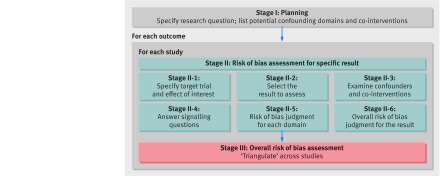
The authors developed ROBINS-I, a consensus-based tool for assessing risk of bias in non-randomised studies of interventions by comparing each study with a hypothetical pragmatic randomised “target” trial. It assesses seven bias domains using signalling questions and produces domain-level and overall risk-of-bias judgements.
Key findings
- ROBINS-I was developed over three years by expert consensus, with piloting and user feedback, and covers seven distinct bias domains: confounding, selection of participants, classification of interventions, deviations from intended interventions, missing data, measurement of outcomes, and selection of the reported result.
- The tool uses signalling questions with response options “Yes,” “Probably yes,” “Probably no,” “No,” and “No information” to inform domain-level judgements.
- Risk-of-bias judgements are categorised as “Low risk,” “Moderate risk,” “Serious risk,” and “Critical risk”; “Low risk” corresponds to the risk of bias in a high quality randomised trial.
- The authors recommend against including studies assessed as at “Critical risk” of bias in any meta-analysis and advocate caution for studies assessed as at “Serious risk” of bias.
Methods
- Development was largely by expert consensus, following seven principles previously described for assessing risk of bias in clinical trials; a core group coordinated recruitment, documents, and administrative support.
- Development activities included an initial scoping meeting in October 2011, a survey of Cochrane Review Groups in March 2012, a meeting in April 2012 to identify bias domains and working groups, a two-day face-to-face meeting in March 2013, piloting within working groups between September 2013 and March 2014, substantial revisions in June 2014, posting of version 1.0.0 in September 2014, and a three-day workshop in December 2014 where the tool was applied to six papers reporting NRSI.
- The paper describes the tool and its conceptual basis rather than reporting a quantitative validation study; no statistical analysis of reliability or validity is presented.
Limitations
- The paper states that the technical difficulty in making risk of bias judgements is expected to limit reliability, despite explicit links between signalling questions and judgements.
- The paper states that ROBINS-I focuses specifically on bias and does not address problems related to imprecision of results, such as when statistical analyses fail to account for clustering or matching of participants.
- The paper states that use of ROBINS-I requires review groups to include members with substantial methodological expertise and familiarity with modern epidemiological thinking; it also notes planned future consideration of specific NRSI types such as self-controlled designs, controlled before-and-after studies, interrupted time series, regression discontinuity, and instrumental variable analyses.
Model-written summary. Check it against the paper before relying on it.
Integrity signals
Registry
Cites
Statistics
Figures
Verification
Claims the paper makes
0 Valid · 0 Not valid · 8 Not checked · 21 Own results and interpretations
What the paper did — it cites no source for this, so there is none to check. The quote shows it is in the paper.
In the paper
“The tool views each study as an attempt to emulate (mimic) a hypothetical pragmatic randomised trial, and covers seven distinct domains through which bias might be introduced”
- Also stated in: § Domains of bias · plain
“We achieved consensus on seven domains through which bias might be introduced into a NRSI (see table 1 and appendix in supplementary data).”
§ ROBINS-I: a tool for assessing risk of bias in non-randomised studies of interventions > Summary points
plain- Asserted: passes — The authors put it forward as true.
- Checkable: passes — It can be checked against evidence.
- Load-bearing: passes — The paper’s conclusions depend on it.
- Based: passes — The paper gives a reason why it holds.
- Also stated in: § Domains of bias · plain
A conclusion the paper draws from its own results — it cites no other source for it, so there is none to check. The quote shows it is in the paper.
In the paper
“Therefore, there is substantial overlap for the last four domains between bias assessments in NRSI and randomised trials.”
§ ROBINS-I: a tool for assessing risk of bias in non-randomised studies of interventions > Methodological issues in assessing risk of bias in non-randomised studies > Domains of bias
plainstates an association- Asserted: passes — The authors put it forward as true.
- Checkable: passes — It can be checked against evidence.
- Load-bearing: unclear — It is unclear whether the paper’s conclusions depend on it.
- Based: passes — The paper gives a reason why it holds.
- Rests on 2 assumptions not shown here.
In the paper
“The tool views each study as an attempt to emulate (mimic) a hypothetical pragmatic randomised trial, and covers seven distinct domains through which bias might be introduced”
- Also stated in: § The target trial · plain
“Evaluations of risk of bias in the results of NRSI are facilitated by considering each NRSI as an attempt to emulate (mimic) a “target” trial.”
§ ROBINS-I: a tool for assessing risk of bias in non-randomised studies of interventions > Summary points
What the sources say
- Not matchedcites 11 12
This doesn’t read as a citation we can look up.
plain- Asserted: passes — The authors put it forward as true.
- Checkable: passes — It can be checked against evidence.
- Load-bearing: passes — The paper’s conclusions depend on it.
- Based: passes — The paper gives a reason why it holds.
- Also stated in: § The target trial · plain
In the paper
“We developed a tool for assessing risk of bias in the results of non-randomised studies of interventions that addresses weaknesses in previously available approaches.4”
§ ROBINS-I: a tool for assessing risk of bias in non-randomised studies of interventions > Discussion
What the sources say
- Not matchedcites [4] Sanderson S, Tatt ID, Higgins JPT. Tools for assessing quality and susceptibility to bias in observational studies in epidemiology: a systematic review and annotated bibliography. Int J Epidemiol 2007; 36: 666- 76. 10.1093/ije/dym018 pmid:17470488. 17470488
We don’t have this paper’s reference list.
plainstates a cause- Asserted: passes — The authors put it forward as true.
- Checkable: passes — It can be checked against evidence.
- Load-bearing: passes — The paper’s conclusions depend on it.
- Based: passes — The paper gives a reason why it holds.
- Not matched
A statement the paper makes itself — it cites no source for it, so there is none to check. The quote shows it is in the paper.
In the paper
“By contrast, unbiased estimation of the effect of starting and adhering to intervention requires consideration of both adherence and differences in additional interventions (“co-interventions”) between intervention groups.”
§ ROBINS-I: a tool for assessing risk of bias in non-randomised studies of interventions > Methodological issues in assessing risk of bias in non-randomised studies > The effect of interest
plain- Asserted: passes — The authors put it forward as true.
- Checkable: passes — It can be checked against evidence.
- Load-bearing: passes — The paper’s conclusions depend on it.
- Based: passes — The paper gives a reason why it holds.
9 more claims
Create a free account to see all 29 claims and every source verdict.
- Probably not a substantial claim. 14
- It may state two separate claims as one. 4
Claims other papers make about this one
Each is checked against this paper’s own text: does it say what the citing paper says it does?
The cited source doesn’t support the claim as written.
In the citing paper
“Quality assessment of RCTs was performed using the Cochrane Collaboration’s tool for assessing risk of bias in randomized trials (RoB-2) by two independent authors (M.A.C.C.A. and M.S.) [14].”
From Efficacy and safety of obicetrapib in patients with dyslipidemia: An updated meta-analysis of randomized controlled trials (2025) · cites this paper as [14]
Checked by a reasoning model — may be wrong.
Experimental — accuracy not yet measuredThe source backs part of the claim, not all of it — or backs it for a different population, condition or comparison.
In the citing paper
“we excluded studies rated to be at critical risk of bias (n = 19) from all of our analyses and figures, except for Fig. 2a”
From A systematic review and meta-analysis of the evidence on learning during the COVID-19 pandemic (2023) · cites this paper as [9]
Experimental — accuracy not yet measuredThe source backs part of the claim, not all of it — or backs it for a different population, condition or comparison.
In the citing paper
“When assessing the risk of bias, seven general principles are relevant, based on theoretical considerations, empirical work, and the experience with assessing risk of bias in RCTs and other studies [55–57].”
From COSMOS-E: Guidance on conducting systematic reviews and meta-analyses of observational studies of etiology (2019) · cites this paper as [56]
Experimental — accuracy not yet measuredThe source backs part of the claim, not all of it — or backs it for a different population, condition or comparison.
In the citing paper
“Relevant domains of risk of bias that should be considered include (i) bias due to (time-dependent) confounding, (ii) bias in selection of participants into the study (selection bias), (iii) bias in measurement of exposures or outcomes (information bias), (iv) bias due to missing data (selection bias), and (v) bias in selection of studies or reported outcomes (selection bias) [56].”
From COSMOS-E: Guidance on conducting systematic reviews and meta-analyses of observational studies of etiology (2019) · cites this paper as [56]
Experimental — accuracy not yet measuredThe source backs part of the claim, not all of it — or backs it for a different population, condition or comparison.
In the citing paper
“A modified Cochrane Collaboration's Risk of Bias in Non-Randomized Studies of Interventions was used to evaluate the risk of bias in selected studies as low, moderate, serious, and critical based on 6 domains (Table 3) (29,30).”
From Alterations in Heart Rate Variability Associated With Irritable Bowel Syndrome or Inflammatory Bowel Disease: A Systematic Review and Meta-Analysis (2021) · cites this paper as [29]
Experimental — accuracy not yet measured
64 more claims about this paper
Create a free account to see every claim other papers make about this one.
Citations
Cites
Yaşlı Kadınlarda Üreme Sağlığı
Kokanalı, D., & Engin Üstün, Y. (n.d.) · DergiPark (Istanbul University) · Cited by 170,090
The Cochrane Collaboration's tool for assessing risk of bias in randomised trials
Higgins, J. P. T., Altman, D. G., Gotzsche, P. C., Juni, P., Moher, D., Oxman, A. D., Savovic, J., Schulz, K. F., Weeks, L., Sterne, J. A. C., et al. (2011) · BMJ · doi:10.1136/bmj.d5928 · Cited by 33,817
Self-citationDermyshi, E., Wang, Y., Yan, C., Hong, W., Qiu, G., Gong, X., & Zhang, T. (2017) · Neonatology · doi:10.1159/000454668 · Cited by 24,451
Two new Later Stone Age sites from the Final Pleistocene in the Falémé Valley, eastern Senegal
Ndiaye, M., Lespez, L., Tribolo, C., Rassé, M., Hadjas, I., Davidoux, S., Huysecom, É., & Douze, K. (2024) · Monash University Research Portal (Monash University) · doi:10.3929/ethz-b-000667478 · Cited by 23,868
(2014) · Medical Entomology and Zoology · Cited by 17,633
Self-citationQUADAS-2: a revised tool for the quality assessment of diagnostic accuracy studies
Whiting, P. F., Rutjes, A. W. S., Westwood, M. E., Mallett, S., Deeks, J. J., Reitsma, J. B., Leeflang, M. M. G., Sterne, J. A. C., Bossuyt, P. M. M., & the QUADAS-2 Group* (2011) · Annals of Internal Medicine · doi:10.7326/0003-4819-155-8-201110180-00009 · Cited by 14,199
Self-citationDowns, S. H., & Black, N. (1998) · Journal of Epidemiology and Community Health · doi:10.1136/jech.52.6.377 · Cited by 8,252
Using Big Data to Emulate a Target Trial When a Randomized Trial Is Not Available: Table 1.
Hernán, M. A., & Robins, J. M. (2016) · American Journal of Epidemiology · doi:10.1093/aje/kwv254 · Cited by 3,115 · cited 1×
“11 12 Such a “target” trial need not be feasible or ethical: for example, it could compare individuals who were and were not assigned to start smoking.”
BackgroundSelf-citationGRADE guidelines: a new series of articles in the Journal of Clinical Epidemiology
Guyatt, G. H., Oxman, A. D., Schünemann, H. J., Tugwell, P., & Knottnerus, A. (2011) · Journal of Clinical Epidemiology · doi:10.1016/j.jclinepi.2010.09.011 · Cited by 3,094
Self-citationEvaluating non-randomised intervention studies
Deeks, J., Dinnes, J., D'Amico, R., Sowden, A., Sakarovitch, C., Song, F., Petticrew, M., & Altman, D. (2003) · Health Technology Assessment · doi:10.3310/hta7270 · Cited by 2,907
Self-citation
Cited by
Items 201–300 of 19,837
Nikolin, S., Tan, Y. Y., Schwaab, A., Moffa, A., Loo, C. K., & Martin, D. (2021) · Journal of Affective Disorders · doi:10.1016/j.jad.2021.01.084 · Cited by 205
Gao, G., Wang, Z., Qu, X., & Zhang, Z. (2020) · BMC Cancer · doi:10.1186/s12885-020-6668-z · Cited by 205
Tleyjeh, I. M., Kashour, Z., Damlaj, M., Riaz, M., Tlayjeh, H., Altannir, M., Altannir, Y., Al-Tannir, M., Tleyjeh, R., Hassett, L., et al. (2021) · Clinical Microbiology and Infection · doi:10.1016/j.cmi.2020.10.036 · Cited by 205
“Five reviewers (IT, HT, MA, TK and ZK) independently and in duplicate assessed the risk of bias for each study using the RoB 2 of the Cochrane risk-of-bias tool for randomized trials and the ROBINS-I (‘Risk Of Bias In Non-randomized Studies of Interventions’) for observational studies [24].”
Borsa, A., Bejarano, G., Ellen, M., & Bruch, J. D. (2023) · BMJ · doi:10.1136/bmj-2023-075244 · Cited by 205
Churuangsuk, C., Hall, J., Reynolds, A., Griffin, S. J., Combet, E., & Lean, M. E. J. (2022) · Diabetologia · doi:10.1007/s00125-021-05577-2 · Cited by 204
Xie, W., Wang, Y., Xiao, S., Qiu, L., Yu, Y., & Zhang, Z. (2022) · BMJ · doi:10.1136/bmj-2022-070244 · Cited by 204
Post‐extraction dimensional changes: A systematic review and meta‐analysis
Couso‐Queiruga, E., Stuhr, S., Tattan, M., Chambrone, L., & Avila‐Ortiz, G. (2021) · Journal of Clinical Periodontology · doi:10.1111/jcpe.13390 · Cited by 203
Digital contact tracing technologies in epidemics: a rapid review
Anglemyer, A., Moore, T. H., Parker, L., Chambers, T., Grady, A., Chiu, K., Parry, M., Wilczynska, M., Flemyng, E., & Bero, L. (2020) · Cochrane Database of Systematic Reviews · doi:10.1002/14651858.cd013699 · Cited by 202
Johnson, B. T., & Hennessy, E. A. (2019) · Social Science & Medicine · doi:10.1016/j.socscimed.2019.05.035 · Cited by 201
Agarwal, R., Liao, J. M., Gupta, A., & Navathe, A. S. (2020) · Health Affairs · doi:10.1377/hlthaff.2019.00784 · Cited by 199
Fitridge, R., Chuter, V., Mills, J., Hinchliffe, R., Azuma, N., Behrendt, C., Boyko, E. J., Conte, M. S., Humphries, M., Kirksey, L., et al. (2024) · Diabetes/Metabolism Research and Reviews · doi:10.1002/dmrr.3686 · Cited by 201
Geidl, W., Schlesinger, S., Mino, E., Miranda, L., & Pfeifer, K. (2020) · International Journal of Behavioral Nutrition and Physical Activity · doi:10.1186/s12966-020-01007-5 · Cited by 183
“Risk of bias in individual studies The Cochrane tool for assessing the “Risk Of Bias In Nonrandomised Studies - of Interventions” (ROBINS-I) was used to estimate the risk of bias and endorse conclusions closer to the truth [15].”
MethodBajis, S., Dore, G. J., Hajarizadeh, B., Cunningham, E. B., Maher, L., & Grebely, J. (2017) · International Journal of Drug Policy · doi:10.1016/j.drugpo.2017.07.002 · Cited by 199
Meta-analysis of recurrence pattern after resection for pancreatic cancer
Tanaka, M., Mihaljevic, A. L., Probst, P., Heckler, M., Klaiber, U., Heger, U., Büchler, M. W., & Hackert, T. (2019) · British Journal of Surgery · doi:10.1002/bjs.11295 · Cited by 199
Roerecke, M., Tobe, S. W., Kaczorowski, J., Bacon, S. L., Vafaei, A., Hasan, O. S. M., Krishnan, R. J., Raifu, A. O., & Rehm, J. (2018) · Journal of the American Heart Association · doi:10.1161/jaha.117.008202 · Cited by 199
MacMillan, K. D. L., Rendon, C. P., Verma, K., Riblet, N., Washer, D. B., & Volpe Holmes, A. (2018) · JAMA Pediatrics · doi:10.1001/jamapediatrics.2017.5195 · Cited by 197
Soltani, S., Jayedi, A., Shab-Bidar, S., Becerra-Tomás, N., & Salas-Salvadó, J. (2019) · Advances in Nutrition · doi:10.1093/advances/nmz041 · Cited by 196
“In line with the Cochrane Risk-of-Bias tool for Nonrandomized Studies (ROBINS-I) assessment scale, 2 independent investigators (SS and AJ) performed the quality assessment to examine the possible risk of bias associated with each of the included studies (13).”
MethodSuarez, S., Conde-Agudelo, A., Borovac-Pinheiro, A., Suarez-Rebling, D., Eckardt, M., Theron, G., & Burke, T. F. (2020) · American Journal of Obstetrics and Gynecology · doi:10.1016/j.ajog.2019.11.1287 · Cited by 196
Mahamat-Saleh, Y., Fiolet, T., Rebeaud, M. E., Mulot, M., Guihur, A., El Fatouhi, D., Laouali, N., Peiffer-Smadja, N., Aune, D., & Severi, G. (2021) · BMJ Open · doi:10.1136/bmjopen-2021-052777 · Cited by 196
“The natural logarithm of the RRs was weighted using random effects weights.”
MethodIslamophobia, Health, and Public Health: A Systematic Literature Review
Samari, G., Alcalá, H. E., & Sharif, M. Z. (2018) · American Journal of Public Health · doi:10.2105/ajph.2018.304402 · Cited by 196
Losciale, J. M., Zdeb, R. M., Ledbetter, L., Reiman, M. P., & Sell, T. C. (2019) · Journal of Orthopaedic & Sports Physical Therapy · doi:10.2519/jospt.2019.8190 · Cited by 193
Community-based active case-finding interventions for tuberculosis: a systematic review
Burke, R. M., Nliwasa, M., Feasey, H. R. A., Chaisson, L. H., Golub, J. E., Naufal, F., Shapiro, A. E., Ruperez, M., Telisinghe, L., Ayles, H., et al. (2021) · The Lancet Public Health · doi:10.1016/s2468-2667(21)00033-5 · Cited by 190
Sarich, P., Cabasag, C. J., Liebermann, E., Vaneckova, P., Carle, C., Hughes, S., Egger, S., O'Connell, D. L., Weber, M. F., da Costa, A. M., et al. (2022) · eClinicalMedicine · doi:10.1016/j.eclinm.2022.101375 · Cited by 193
Duong, Q. A., Pittet, L. F., Curtis, N., & Zimmermann, P. (2022) · Journal of Infection · doi:10.1016/j.jinf.2022.01.005 · Cited by 192
Effectiveness of suicide prevention interventions: A systematic review and meta-analysis
Hofstra, E., van Nieuwenhuizen, C., Bakker, M., Özgül, D., Elfeddali, I., de Jong, S. J., & van der Feltz-Cornelis, C. M. (2020) · General Hospital Psychiatry · doi:10.1016/j.genhosppsych.2019.04.011 · Cited by 192
Preventing food allergy in infancy and childhood: Systematic review of randomised controlled trials
de Silva, D., Halken, S., Singh, C., Muraro, A., Angier, E., Arasi, S., Arshad, H., Beyer, K., Boyle, R., du Toit, G., et al. (2020) · Pediatric Allergy and Immunology · doi:10.1111/pai.13273 · Cited by 192
Kilian, C., Manthey, J., Carr, S., Hanschmidt, F., Rehm, J., Speerforck, S., & Schomerus, G. (2021) · Alcoholism: Clinical and Experimental Research · doi:10.1111/acer.14598 · Cited by 192
“Potential risk of bias was determined based on an adapted version of the ROBINS- I tool (Sterne et al., 2016).”
MethodSarma, P., Kaur, H., Kumar, H., Mahendru, D., Avti, P., Bhattacharyya, A., Prajapat, M., Shekhar, N., Kumar, S., Singh, R., et al. (2020) · Journal of Medical Virology · doi:10.1002/jmv.25898 · Cited by 191
“In the case of nonrandomized interventional studies, we used ROBINS‐I tool.(19) In the case of observational studies, Newcastle Ottawa Scale was used.”
MethodCardiovascular effects of electronic cigarettes: a systematic review and meta-analysis
Skotsimara, G., Antonopoulos, A. S., Oikonomou, E., Siasos, G., Ioakeimidis, N., Tsalamandris, S., Charalambous, G., Galiatsatos, N., Vlachopoulos, C., & Tousoulis, D. (2019) · European Journal of Preventive Cardiology · doi:10.1177/2047487319832975 · Cited by 190
“Assessment of the risk of bias for each study was performed by using the ROBINS-I tool for non-randomized clinical studies.(13) All statistical analyses were performed by the STATA software version 13.”
Stuart, A. J., Romano, V., Virgili, G., & Shortt, A. J. (2018) · Cochrane Database of Systematic Reviews · doi:10.1002/14651858.cd012097.pub2 · Cited by 192
Methodological quality of COVID-19 clinical research
Jung, R. G., Di Santo, P., Clifford, C., Prosperi-Porta, G., Skanes, S., Hung, A., Parlow, S., Visintini, S., Ramirez, F. D., Simard, T., et al. (2021) · Nature Communications · doi:10.1038/s41467-021-21220-5 · Cited by 189
John, A., Eyles, E., Webb, R. T., Okolie, C., Schmidt, L., Arensman, E., Hawton, K., O'Connor, R. C., Kapur, N., Moran, P., et al. (2021) · F1000Research · doi:10.12688/f1000research.25522.2 · Cited by 189
“randomised or non-randomised studies examining the effects of interventions or aetiological epidemiological studies of the effects of exposures – we used a suitable version of the ROBINS-I or ROBINS-E tool to assess risk of bias as appropriate based on the research question and study design (Morgan et al., 2017; Stern…”
Self-citationLeruez-Ville, M., Chatzakis, C., Lilleri, D., Blazquez-Gamero, D., Alarcon, A., Bourgon, N., Foulon, I., Fourgeaud, J., Gonce, A., Jones, C. E., et al. (2024) · The Lancet Regional Health - Europe · doi:10.1016/j.lanepe.2024.100892 · Cited by 191
Ferguson, K. D., McCann, M., Katikireddi, S. V., Thomson, H., Green, M. J., Smith, D. J., & Lewsey, J. D. (2020) · International Journal of Epidemiology · doi:10.1093/ije/dyz150 · Cited by 188
Phthalate exposure and metabolic effects: a systematic review of the human epidemiological evidence
Radke, E. G., Galizia, A., Thayer, K. A., & Cooper, G. S. (2019) · Environment International · doi:10.1016/j.envint.2019.04.040 · Cited by 188
“These domains were based on the Risk of Bias in Non-randomized Studies of Interventions (ROBINS-I) tool (Sterne et al., 2016), modified for use with environmental exposures.”
MethodCusack, L., Del Mar, C. B., Chalmers, I., & Hoffmann, T. C. (2016) · Systematic Reviews · doi:10.1186/s13643-016-0213-9 · Cited by 188
Osteoarthritis and stem cell therapy in humans: a systematic review
Jevotovsky, D. S., Alfonso, A. R., Einhorn, T. A., & Chiu, E. S. (2018) · Osteoarthritis and Cartilage · doi:10.1016/j.joca.2018.02.906 · Cited by 187
Walsh, Z., Mollaahmetoglu, O. M., Rootman, J., Golsof, S., Keeler, J., Marsh, B., Nutt, D. J., & Morgan, C. J. A. (2022) · BJPsych Open · doi:10.1192/bjo.2021.1061 · Cited by 186
Ambient air pollution and clinical dementia: systematic review and meta-analysis
Wilker, E. H., Osman, M., & Weisskopf, M. G. (2023) · BMJ · doi:10.1136/bmj-2022-071620 · Cited by 186
The Impact of Choosing Wisely Interventions on Low‐Value Medical Services: A Systematic Review
CLIFF, B. Q., AVANCEÑA, A. L. V., HIRTH, R. A., & LEE, S. D. (2021) · The Milbank Quarterly · doi:10.1111/1468-0009.12531 · Cited by 185
Von Woon, E., Greer, O., Shah, N., Nikolaou, D., Johnson, M., & Male, V. (2022) · Human Reproduction Update · doi:10.1093/humupd/dmac006 · Cited by 185
McGuire, J., Kaiser, C., & Bach-Mortensen, A. M. (2022) · Nature Human Behaviour · doi:10.1038/s41562-021-01252-z · Cited by 185
Igelström, E., Campbell, M., Craig, P., & Katikireddi, S. V. (2021) · Journal of Clinical Epidemiology · doi:10.1016/j.jclinepi.2021.08.022 · Cited by 186
Chan, G. C. K., Stjepanović, D., Lim, C., Sun, T., Shanmuga Anandan, A., Connor, J. P., Gartner, C., Hall, W. D., & Leung, J. (2021) · Addiction · doi:10.1111/add.15246 · Cited by 183
Global changes in mortality rates in polytrauma patients admitted to the ICU—a systematic review
van Breugel, J. M. M., Niemeyer, M. J. S., Houwert, R. M., Groenwold, R. H. H., Leenen, L. P. H., & van Wessem, K. J. P. (2020) · World Journal of Emergency Surgery · doi:10.1186/s13017-020-00330-3 · Cited by 183
Combining randomized and non-randomized evidence in network meta-analysis
Efthimiou, O., Mavridis, D., Debray, T. P. A., Samara, M., Belger, M., Siontis, G. C. M., Leucht, S., Salanti, G., & 4, O. B. O. G. W. P. (2017) · Statistics in Medicine · doi:10.1002/sim.7223 · Cited by 183
Convalescent plasma or hyperimmune immunoglobulin for people with COVID-19: a rapid review
Valk, S. J., Piechotta, V., Chai, K. L., Doree, C., Monsef, I., Wood, E. M., Lamikanra, A., Kimber, C., McQuilten, Z., So-Osman, C., et al. (2020) · Cochrane Database of Systematic Reviews · doi:10.1002/14651858.cd013600 · Cited by 182
Kapetanović, A., Theodorou, C. I., Bergé, S. J., Schols, J. G. J. H., & Xi, T. (2021) · European Journal of Orthodontics · doi:10.1093/ejo/cjab005 · Cited by 182
Piechotta, V., Iannizzi, C., Chai, K. L., Valk, S. J., Kimber, C., Dorando, E., Monsef, I., Wood, E. M., Lamikanra, A. A., Roberts, D. J., et al. (2021) · Cochrane Database of Systematic Reviews · doi:10.1002/14651858.cd013600.pub4 · Cited by 181
Allan, V., Ramagopalan, S. V., Mardekian, J., Jenkins, A., Li, X., Pan, X., & Luo, X. (2020) · Journal of Comparative Effectiveness Research · doi:10.2217/cer-2020-0013 · Cited by 180
Nature and Children’s Health: A Systematic Review
Fyfe-Johnson, A. L., Hazlehurst, M. F., Perrins, S. P., Bratman, G. N., Thomas, R., Garrett, K. A., Hafferty, K. R., Cullaz, T. M., Marcuse, E. K., & Tandon, P. S. (2021) · Pediatrics · doi:10.1542/peds.2020-049155 · Cited by 181
Girum, T., Lentiro, K., Geremew, M., Migora, B., & Shewamare, S. (2020) · Tropical Medicine and Health · doi:10.1186/s41182-020-00285-w · Cited by 179
“Assessment of risk of bias in included studies Risk of bias was assessed through evaluating reliability and validity of data in included studies based on the Risk-Of-Bias In Non-randomized Studies - of Interventions (ROBINS-I) tool [11].”
MethodThe impact of the COVID-19 pandemic on self-harm and suicidal behaviour: a living systematic review
John, A., Okolie, C., Eyles, E., Webb, R. T., Schmidt, L., McGuinness, L. A., Olorisade, B. K., Arensman, E., Hawton, K., Kapur, N., et al. (2020) · F1000Research · doi:10.12688/f1000research.25522.1 · Cited by 178
Self-citationChen, F., Wang, L., Hong, J., Jiang, J., & Zhou, L. (2024) · Journal of the American Medical Informatics Association · doi:10.1093/jamia/ocae060 · Cited by 178
Rationale and evidence on the use of tocilizumab in COVID-19: a systematic review
Cortegiani, A., Ippolito, M., Greco, M., Granone, V., Protti, A., Gregoretti, C., Giarratano, A., Einav, S., & Cecconi, M. (2021) · Pulmonology · doi:10.1016/j.pulmoe.2020.07.003 · Cited by 178
Safety and effectiveness of acellular pertussis vaccination during pregnancy: a systematic review
Vygen-Bonnet, S., Hellenbrand, W., Garbe, E., von Kries, R., Bogdan, C., Heininger, U., Röbl-Mathieu, M., & Harder, T. (2020) · BMC Infectious Diseases · doi:10.1186/s12879-020-4824-3 · Cited by 178
“For non-randomized studies, the ROBINS-I tool was used, comprising the following domains: bias due to confounding, bias in selection of participants into the study, bias in classification of interventions, bias due to deviations from intended interventions, bias due to missing data, bias in measurement of outcomes, an…”
Methodvan Zuuren, E. J., Fedorowicz, Z., Kuijpers, T., & Pijl, H. (2018) · The American Journal of Clinical Nutrition · doi:10.1093/ajcn/nqy096 · Cited by 177
Stall, N. M., Kim, S. J., Hardacre, K. A., Shah, P. S., Straus, S. E., Bronskill, S. E., Lix, L. M., Bell, C. M., & Rochon, P. A. (2019) · Journal of the American Geriatrics Society · doi:10.1111/jgs.15690 · Cited by 177
Hsu, M. S. H., Rouf, A., & Allman-Farinelli, M. (2018) · Journal of Adolescent Health · doi:10.1016/j.jadohealth.2018.06.009 · Cited by 177
Yan, E., Veitch, M., Saripella, A., Alhamdah, Y., Butris, N., Tang-Wai, D. F., Tartaglia, M. C., Nagappa, M., Englesakis, M., He, D., et al. (2023) · Journal of Clinical Anesthesia · doi:10.1016/j.jclinane.2023.111221 · Cited by 176
Bhindi, B., Abel, E. J., Albiges, L., Bensalah, K., Boorjian, S. A., Daneshmand, S., Karam, J. A., Mason, R. J., Powles, T., & Bex, A. (2019) · European Urology · doi:10.1016/j.eururo.2018.09.016 · Cited by 176
Impact of Corticosteroids in Coronavirus Disease 2019 Outcomes
Cano, E. J., Fonseca Fuentes, X., Corsini Campioli, C., O’Horo, J. C., Abu Saleh, O., Odeyemi, Y., Yadav, H., & Temesgen, Z. (2021) · Chest · doi:10.1016/j.chest.2020.10.054 · Cited by 175
Health outcomes in redlined versus non-redlined neighborhoods: A systematic review and meta-analysis
Lee, E. K., Donley, G., Ciesielski, T. H., Gill, I., Yamoah, O., Roche, A., Martinez, R., & Freedman, D. A. (2022) · Social Science & Medicine · doi:10.1016/j.socscimed.2021.114696 · Cited by 176
Effects of Lean Healthcare on Patient Flow: A Systematic Review
Tlapa, D., Zepeda-Lugo, C. A., Tortorella, G. L., Baez-Lopez, Y. A., Limon-Romero, J., Alvarado-Iniesta, A., & Rodriguez-Borbon, M. I. (2020) · Value in Health · doi:10.1016/j.jval.2019.11.002 · Cited by 175
“Indeed, for many public health interventions, randomized trials are difficult or impossible to conduct on an area-wide basis.(77) Moreover, RCTs”
BackgroundMethodResultInfluentialAdiamah, A., Psaltis, E., Crook, M., & Lobo, D. N. (2018) · Clinical Nutrition · doi:10.1016/j.clnu.2017.09.028 · Cited by 175
“ROBINS-I: (Risk of bias in observational studies of intervention [11] e see Fig.”
BackgroundMethodSulis, G., Sayood, S., Katukoori, S., Bollam, N., George, I., Yaeger, L. H., Chavez, M. A., Tetteh, E., Yarrabelli, S., Pulcini, C., et al. (2022) · Clinical Microbiology and Infection · doi:10.1016/j.cmi.2022.03.014 · Cited by 174
The impact of digital health technologies on tuberculosis treatment: a systematic review
Ngwatu, B. K., Nsengiyumva, N. P., Oxlade, O., Mappin-Kasirer, B., Nguyen, N. L., Jaramillo, E., Falzon, D., & Schwartzman, K. (2018) · European Respiratory Journal · doi:10.1183/13993003.01596-2017 · Cited by 174
“For observational studies, we adapted the ROBINS-I (risk of bias in non-randomised studies of interventions) tool [27] to assess selection bias, bias due to confounding, bias due to missing data, and bias in measurement of outcomes.”
MethodCOVID-19-related medical research: a meta-research and critical appraisal
Raynaud, M., Zhang, H., Louis, K., Goutaudier, V., Wang, J., Dubourg, Q., Wei, Y., Demir, Z., Debiais, C., Aubert, O., et al. (2021) · BMC Medical Research Methodology · doi:10.1186/s12874-020-01190-w · Cited by 172
IWII Wound Infection in Clinical Practice consensus document: 2022 update
Swanson, T., Ousey, K., Haesler, E., Bjarnsholt, T., Carville, K., Idensohn, P., Kalan, L., Keast, D. H., Larsen, D., Percival, S., et al. (2022) · Journal of Wound Care · doi:10.12968/jowc.2022.31.sup12.s10 · Cited by 172
The Influence of Wearables on Health Care Outcomes in Chronic Disease: Systematic Review
Mattison, G., Canfell, O., Forrester, D., Dobbins, C., Smith, D., Töyräs, J., & Sullivan, C. (2022) · Journal of Medical Internet Research · doi:10.2196/36690 · Cited by 171
Puhl, R. M. (2020) · Obesity Reviews · doi:10.1111/obr.13008 · Cited by 171
“4 | Quality assessment Sources of bias were determined a priori using criteria identified in previously established quality assessment tools.(40,41) Because of the absence of longitudinal studies and the small number of experimental studies in the existing literature, assessment criteria were adjusted to be applicable…”
MethodCuello-Garcia, C. A., Santesso, N., Morgan, R. L., Verbeek, J., Thayer, K., Ansari, M. T., Meerpohl, J., Schwingshackl, L., Katikireddi, S. V., Brozek, J. L., et al. (2022) · Journal of Clinical Epidemiology · doi:10.1016/j.jclinepi.2021.11.026 · Cited by 172
Self-citationThe impact of Covid-19 on student achievement: Evidence from a recent meta-analysis
Di Pietro, G. (2023) · Educational Research Review · doi:10.1016/j.edurev.2023.100530 · Cited by 173
“(2021), the risk of bias in nonrandomized studies was assessed in 38(10) studies using the Risk Of Bias In Non-randomized Studies of Interventions (ROBINS-I) tool (Sterne et al., 2016).”
Risk-reducing bilateral salpingo-oophorectomy in women with BRCA1 or BRCA2 mutations
Eleje, G. U., Eke, A. C., Ezebialu, I. U., Ikechebelu, J. I., Ugwu, E. O., & Okonkwo, O. O. (2018) · Cochrane Database of Systematic Reviews · doi:10.1002/14651858.cd012464.pub2 · Cited by 170
Bodilsen, J., D'Alessandris, Q. G., Humphreys, H., Iro, M. A., Klein, M., Last, K., Montesinos, I. L., Pagliano, P., Sipahi, O. R., San-Juan, R., et al. (2024) · Clinical Microbiology and Infection · doi:10.1016/j.cmi.2023.08.016 · Cited by 170
Degenhardt, L., Clark, B., Macpherson, G., Leppan, O., Nielsen, S., Zahra, E., Larance, B., Kimber, J., Martino-Burke, D., Hickman, M., et al. (2023) · The Lancet Psychiatry · doi:10.1016/s2215-0366(23)00095-0 · Cited by 169
Pellegrini, M., Cioffi, I., Evangelista, A., Ponzo, V., Goitre, I., Ciccone, G., Ghigo, E., & Bo, S. (2020) · Reviews in Endocrine and Metabolic Disorders · doi:10.1007/s11154-019-09524-w · Cited by 168
Harder, T., Wichmann, O., Klug, S. J., van der Sande, M. A. B., & Wiese-Posselt, M. (2018) · BMC Medicine · doi:10.1186/s12916-018-1098-3 · Cited by 168
A systematic overview of the literature regarding group prenatal care for high-risk pregnant women
Byerley, B. M., & Haas, D. M. (2017) · BMC Pregnancy and Childbirth · doi:10.1186/s12884-017-1522-2 · Cited by 168
for the FACTS Consortium, Ranney, M., Karb, R., Ehrlich, P., Bromwich, K., Cunningham, R., & Beidas, R. S. (2019) · Journal of Behavioral Medicine · doi:10.1007/s10865-019-00035-2 · Cited by 168
Senefeld, J. W., Franchini, M., Mengoli, C., Cruciani, M., Zani, M., Gorman, E. K., Focosi, D., Casadevall, A., & Joyner, M. J. (2023) · JAMA Network Open · doi:10.1001/jamanetworkopen.2022.50647 · Cited by 168
Pasipanodya, J. G., Ogbonna, D., Ferro, B. E., Magombedze, G., Srivastava, S., Deshpande, D., & Gumbo, T. (2017) · Antimicrobial Agents and Chemotherapy · doi:10.1128/aac.01206-17 · Cited by 167
“The ROBINS-I tool measures bias for each effect size in seven domains: confounding, selection of participants, classification of interventions, departure from intended interventions, missing data, measurement of outcomes, and selection of reported outcomes (40).”
Kuramatsu, J. B., Biffi, A., Gerner, S. T., Sembill, J. A., Sprügel, M. I., Leasure, A., Sansing, L., Matouk, C., Falcone, G. J., Endres, M., et al. (2019) · JAMA · doi:10.1001/jama.2019.13014 · Cited by 167
Effects of COVID-19 pandemic on out-of-hospital cardiac arrests: A systematic review
Scquizzato, T., Landoni, G., Paoli, A., Lembo, R., Fominskiy, E., Kuzovlev, A., Likhvantsev, V., & Zangrillo, A. (2020) · Resuscitation · doi:10.1016/j.resuscitation.2020.10.020 · Cited by 167
Enhanced Recovery After Primary Total Hip and Knee Arthroplasty: A Systematic Review
Morrell, A. T., Layon, D. R., Scott, M. J., Kates, S. L., Golladay, G. J., & Patel, N. K. (2021) · Journal of Bone and Joint Surgery · doi:10.2106/jbjs.20.02169 · Cited by 167
NANDI, A., JAHAGIRDAR, D., DIMITRIS, M. C., LABRECQUE, J. A., STRUMPF, E. C., KAUFMAN, J. S., VINCENT, I., ATABAY, E., HARPER, S., EARLE, A., et al. (2018) · The Milbank Quarterly · doi:10.1111/1468-0009.12340 · Cited by 167
Tele-Ultrasound in Resource-Limited Settings: A Systematic Review
Britton, N., Miller, M. A., Safadi, S., Siegel, A., Levine, A. R., & McCurdy, M. T. (2019) · Frontiers in Public Health · doi:10.3389/fpubh.2019.00244 · Cited by 166
“Bias Assessment We utilized a tool adapted from the ROBINS-I from the Cochrane collaboration in order to evaluate bias at an individual study level (Table 1) (39).”
MethodWan, S. S., Ying, T. D., Wyburn, K., Roberts, D. M., Wyld, M., & Chadban, S. J. (2018) · Transplantation · doi:10.1097/tp.0000000000002049 · Cited by 166
Feigerlova, E., Hani, H., & Hothersall-Davies, E. (2025) · BMC Medical Education · doi:10.1186/s12909-025-06719-5 · Cited by 166
“The risk of bias was assessed using the Cochrane Col-laboration’s tools (RoB 2.0) for randomized trials [35] (Supplementary Table 5) and the appropriate version of risk of bias (ROBINS-1) for nonrandomized studies [36] (Supplementary Table 6).”
InfluentialDaniels, S. L., Lee, M. J., George, J., Kerr, K., Moug, S., Wilson, T. R., Brown, S. R., & Wyld, L. (2020) · BJS Open · doi:10.1002/bjs5.50347 · Cited by 165
Keloid treatments: an evidence-based systematic review of recent advances
Walsh, L. A., Wu, E., Pontes, D., Kwan, K. R., Poondru, S., Miller, C. H., & Kundu, R. V. (2023) · Systematic Reviews · doi:10.1186/s13643-023-02192-7 · Cited by 167
The Association of Preoperative Frailty and Postoperative Delirium: A Meta-analysis
Gracie, T. J., Caufield-Noll, C., Wang, N.-Y., & Sieber, F. E. (2021) · Anesthesia & Analgesia · doi:10.1213/ane.0000000000005609 · Cited by 164
Kengkla, K., Kongpakwattana, K., Saokaew, S., Apisarnthanarak, A., & Chaiyakunapruk, N. (2018) · Journal of Antimicrobial Chemotherapy · doi:10.1093/jac/dkx368 · Cited by 164
Peer Review Bias: A Critical Review
Haffar, S., Bazerbachi, F., & Murad, M. H. (2019) · Mayo Clinic Proceedings · doi:10.1016/j.mayocp.2018.09.004 · Cited by 163
Evaluating the impact of healthcare interventions using routine data
Clarke, G. M., Conti, S., Wolters, A. T., & Steventon, A. (2019) · BMJ · doi:10.1136/bmj.l2239 · Cited by 164
Roberts, H., van Lissa, C., Hagedoorn, P., Kellar, I., & Helbich, M. (2019) · Environmental Research · doi:10.1016/j.envres.2019.108606 · Cited by 165
Mirzaie, A., Halaji, M., Dehkordi, F. S., Ranjbar, R., & Noorbazargan, H. (2020) · Complementary Therapies in Clinical Practice · doi:10.1016/j.ctcp.2020.101214 · Cited by 164
Pravila PRISMA 2020.: ažurirane smjernice za izvještavanje u sustavnim pregledima
Page, M. J., Grimshaw, J. M., Hróbjartsson, A., Lalu, M. M., Li, T., Loder, E. W., Mayo-Wilson, E., McGuinness, L., McDonald, S., Stewart, L. A., et al. (2021) · Medicina Fluminensis · doi:10.21860/medflum2021_264903 · Cited by 163
Self-citationPark, H. J., Kim, K. W., Pyo, J., Suh, C. H., Yoon, S., Hatabu, H., & Nishino, M. (2020) · Radiology · doi:10.1148/radiol.2020200443 · Cited by 162
Serrano, L. P., Maita, K. C., Avila, F. R., Torres-Guzman, R. A., Garcia, J. P., Eldaly, A. S., Haider, C. R., Felton, C. L., Paulson, M. R., Maniaci, M. J., et al. (2023) · The Permanente Journal · doi:10.7812/tpp/23.022 · Cited by 162
Metadata
- Authors
- Sterne, J. A., Hernán, M. A., Reeves, B. C., Savović, J., Berkman, N. D., Viswanathan, M., Henry, D., Altman, D. G., Ansari, M. T., Boutron, I., Carpenter, J. R., Chan, A.-W., Churchill, R., Deeks, J. J., Hróbjartsson, A., Kirkham, J., Jüni, P., Loke, Y. K., Pigott, T. D., Ramsay, C. R., Regidor, D., Rothstein, H. R., Sandhu, L., Santaguida, P. L., Schünemann, H. J., Shea, B., Shrier, I., Tugwell, P., Turner, L., Valentine, J. C., Waddington, H., Waters, E., Wells, G. A., Whiting, P. F., & Higgins, J. P.
- Affiliations
- University of Bristol (GB)
- University Hospitals Bristol NHS Foundation Trust (GB)
- RTI International (US)
- University of Toronto (CA)
- University of Oxford (GB)
- University of Ottawa (CA)
- Inserm (FR)
- London School of Hygiene & Tropical Medicine (GB)
- University of York (GB)
- University of Birmingham (GB)
- University of Southern Denmark (DK)
- University of Liverpool (GB)
- St. Michael's Hospital (CA)
- University of East Anglia (GB)
- Loyola University Chicago (US)
- University of Aberdeen (GB)
- Kaiser Permanente (US)
- Baruch College (US)
- McMaster University (CA)
- Cochrane Canada (CA)
- Jewish General Hospital (CA)
- Ottawa Hospital Research Institute (CA)
- University of Louisville (US)
- London International Development Centre (GB)
- The University of Melbourne (AU)
- Ottawa Heart Institute (CA)
- Corresponding author
- Sterne, Jonathan AC
- ORCID
- Sterne, Jonathan AC
- Reeves, Barnaby C
- Savović, Jelena
- Berkman, Nancy D
- Viswanathan, Meera
- Henry, David
- Altman, Douglas G
- Boutron, Isabelle
- Carpenter, James R
- Chan, An-Wen
- Churchill, Rachel
- Deeks, Jonathan J
- Hróbjartsson, Asbjørn
- Kirkham, Jamie
- Jüni, Peter
- Loke, Yoon K
- Ramsay, Craig R
- Rothstein, Hannah R
- Santaguida, Pasqualina L
- Schünemann, Holger J
- Shrier, Ian
- Tugwell, Peter
- Valentine, Jeffrey C
- Waddington, Hugh
- Wells, George A
- Whiting, Penny F
- Higgins, Julian PT
- Venue
- BMJ
- Publisher
- BMJ
- Published
- 2016-10-12
- Volume
- 355
- Pages
- i4919
- ISSN
- 1756-1833 (ISSN-L)
- PMC
- PMC5062054
- OpenAlex
- W2531269403
- Cited by
- 20,329
- References
- 26
- Citations by year
- 2026: 3595 · 2025: 3693 · 2024: 3237 · 2023: 2484 · 2022: 2425 · 2021: 2040 · 2020: 1386 · 2019: 771 · 2018: 459 · 2017: 197 · 2016: 15
- FWCI
- 446.93
- Type
- journal article
- Language
- en
- Open access
- hybrid
- doi.org
- Licence
- cc-by-nc
- www.bmj.org/licenses/tdm/1.0/terms-and-conditions.html (tdm)
- Locations
- BMJ (publishedVersion, cc-by-nc)
- Europe PMC (PubMed Central) (publishedVersion, cc-by-nc)
- PubMed Central (publishedVersion, cc-by-nc)
- PubMed (publishedVersion)
- Bristol Research (University of Bristol) (publishedVersion, cc-by-nc)
- University of Southern Denmark Research Portal (University of Southern Denmark) (publishedVersion, cc-by-nc)
- White Rose Research Online (University of Leeds, The University of Sheffield, University of York) (acceptedVersion)
- UEA Digital Repository (University of East Anglia) (acceptedVersion, other-oa)
- LSHTM Research Online (London School of Hygiene and Tropical Medicine) (acceptedVersion)
- Aberdeen University Research Archive (Aberdeen University) (submittedVersion, other-oa)
- CUNY Academic Works (City University of New York) (submittedVersion, cc-by-nc)
- DSpace@MIT (Massachusetts Institute of Technology) (submittedVersion, cc-by-nc)
- eScholarship@McGill (McGill) (submittedVersion, cc-by)
- eScholarship (California Digital Library) (submittedVersion, cc-by)
- HighWire Press Open Archive (submittedVersion)
- Research Explorer (The University of Manchester) (submittedVersion, other-oa)
- Funders
- Cancer Research UK (16895)
- National Institute for Health and Care Research (NF-SI-0611-10168)
- University of Bristol
- National Institutes of Health (CA134294)
- Medical Research Council (MR/M025209/1, MC_UU_12023/21, MR/J004855/1, MC_UU_12023/24)
- National Cancer Institute (P01CA134294, R35CA197449)
- Topics
- Social Sciences › Decision Sciences › Statistics, Probability and Uncertainty › Meta-analysis and systematic reviews
- Physical Sciences › Mathematics › Statistics and Probability › Advanced Causal Inference Techniques
- Physical Sciences › Mathematics › Statistics and Probability › Statistical Methods in Epidemiology
- Keywords
- ROBINS-I, risk of bias assessment, non-randomized studies, observational studies, comparative effectiveness, systematic reviews, allocation bias, confounding, attrition bias, reporting bias, selection bias
- MeSH terms
- Clinical Trials as Topic, Humans, Pilot Projects, Risk, Statistics as Topic, Bias, Confounding Factors, Epidemiologic, Observational Studies as Topic
About these checks
Registry, retraction, Cites and statistics results are computed, not judged, with one exception: a printed reference that no index lists is read once by a model before it counts as a citation error. Claims are extracted by a model and kept only when their quote appears verbatim in the text; each cited source is then checked, with a model’s help, for whether it says what the claim relies on. Those verdicts can be wrong — read the claim’s quote and the cited source before relying on one.
A language model drew the claims from the paper on 2026-09-29, under version 3 of the claim definition (model deepseek-v4.1-flash, prompt extract-v3).
A second model labelled each claim on 2026-09-29 (model jev-1.13-20260917, definition revision gold-guideline-v0.2).
Statistics and arithmetic are recomputed, not judged.
Confidence bands are shown only for fields calibrated on our annotated test set. None is calibrated yet, so no band is shown.
What counts as a claim ›How we measure confidence ›How we check this ›
Are you an author, or do you see a problem with this page? Request a review
Data sources
Bibliographic data: Semantic Scholar, OpenAlex, Crossref.
Contains information from the Semantic Scholar Academic Graph Datasets, made available under the ODC Attribution License (ODC-BY 1.0).
Semantic Scholar’s data is described in: Kinney, R., et al. (2023). The Semantic Scholar Open Data Platform. arXiv:2301.10140.
