

Statin use and risk of developing diabetes: results from the Diabetes Prevention Program
Open accessThe DOI matches its Crossref record; 34 of the 34 references it cites were found in a registry or an index.
Abstract
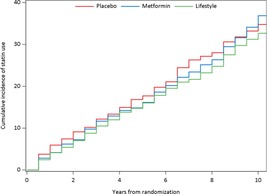
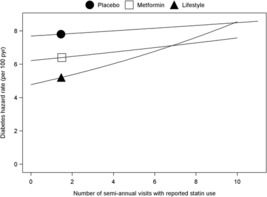
Objective: Several clinical trials of cardiovascular disease prevention with statins have reported increased risk of type 2 diabetes (T2DM) with statin therapy. However, participants in these studies were at relatively low risk for diabetes. Further, diabetes was often based on self-report and was not the primary outcome. It is unknown whether statins similarly modify diabetes risk in higher risk populations. Research design and methods: During the Diabetes Prevention Program Outcomes Study (n=3234), the long-term follow-up to a randomized clinical trial of interventions to prevent T2DM, incident diabetes was assessed by annual 75 g oral glucose tolerance testing and semiannual fasting glucose. Lipid profile was measured annually, with statin treatment determined by a participant’s own physician outside of the protocol. Statin use was assessed at baseline and semiannual visits. Results: At 10 years, the cumulative incidence of statin initiation prior to diabetes diagnosis was 33%–37% among the randomized treatment groups (p=0.36). Statin use was associated with greater diabetes risk irrespective of treatment group, with pooled HR (95% CI) for incident diabetes of 1.36 (1.17 to 1.58). This risk was not materially altered by adjustment for baseline diabetes risk factors and potential confounders related to indications for statin therapy. Conclusions: In this population at high risk for diabetes, we observed significantly higher rates of diabetes with statin therapy in all three treatment groups. Confounding by indication for statin use does not appear to explain this relationship. The effect of statins to increase diabetes risk appears to extend to populations at high risk for diabetes. Trial registration number: NCT00038727; Results.
Overview
The claims and statistics of this paper haven’t been checked yet.
Free: it reads the open-access text and checks the first 5 claims that cite a source we can check. Create a free account to check every claim.
Integrity signals
Registry
Cites
Statistics
Figures
Verification
Claims the paper makes
The claims and statistics of this paper haven’t been checked yet.
Free: it reads the open-access text and checks the first 5 claims that cite a source we can check. Create a free account to check every claim.
Claims other papers make about this one
Each is checked against this paper’s own text: does it say what the citing paper says it does?
In the citing paper
“This beneficial effect outweighs the potential diabetogenic effect of these drugs, estimated as a 9% increased risk of incident diabetes, especially in older patients and in patients already at risk of developing diabetes.251,252”
From 2023 ESC guidelines for the management of cardiovascular disease in patients with diabetes. (2023) · cites this paper as [252]
Self-check
Percentages, sums and reported differences re-computed from the paper’s own numbers.
The self-check needs the paper’s full text.
Citations
Cites
Reduction in the incidence of type 2 diabetes with lifestyle intervention or metformin
(2002) · New England Journal of Medicine · doi:10.1056/nejmoa012512 · Cited by 19,011 · cited 1×
“FPG (mg/dL) 106 (7) 108 (9)* 106 (9) 108 (9)* 105 (7) 108 (9)*”
Report of the Expert Committee on the Diagnosis and Classification of Diabetes Mellitus
The Expert Committee on the Diagnosis and Classification of Diabetes Mellitus* (2002) · Diabetes Care · doi:10.2337/diacare.25.2007.s5 · Cited by 10,338
Rosuvastatin to Prevent Vascular Events in Men and Women with Elevated C-Reactive Protein
Ridker, P. M., Danielson, E., Fonseca, F. A. H., Genest, J., Gotto, A. M., Kastelein, J. J. P., Koenig, W., Libby, P., Lorenzatti, A. J., MacFadyen, J. G., et al. (2008) · New England Journal of Medicine · doi:10.1056/nejmoa0807646 · Cited by 6,674
Report of the Expert Committee on the Diagnosis and Classification of Diabetes Mellitus
The Expert Committee on the Diagnosis and Classification of Diabetes Mellitus (1997) · Diabetes Care · doi:10.2337/diacare.20.7.1183 · Cited by 6,220
Rosuvastatin to Prevent Vascular Events in Men and Women With Elevated C-Reactive Protein
Ridker, P. M., Danielson, E., Fonseca, F. A. H., Genest, J., Gotto, A. M., Kastelein, J. J. P., Koenig, W., Libby, P., Lorenzatti, A. J., MacFadyen, J. G., et al. (2009) · Obstetrical & Gynecological Survey · doi:10.1097/01.ogx.0000344393.60303.0a · Cited by 3,641
Diabetes Prevention Program Research Group (2009) · The Lancet · doi:10.1016/s0140-6736(09)61457-4 · Cited by 3,020
Statins and risk of incident diabetes: A collaborative meta-analysis of randomised statin trials
Sattar, N., Preiss, D., Murray, H. M., Welsh, P., Buckley, B. M., de Craen, A. J., Seshasai, S. R. K., McMurray, J. J., Freeman, D. J., Jukema, J. W., et al. (2010) · The Lancet · doi:10.1016/s0140-6736(09)61965-6 · Cited by 2,436
Weyer, C., Bogardus, C., Mott, D. M., & Pratley, R. E. (1999) · Journal of Clinical Investigation · doi:10.1172/jci7231 · Cited by 1,940
Preiss, D. (2011) · JAMA · doi:10.1001/jama.2011.860 · Cited by 1,390
Effect of weight loss with lifestyle intervention on risk of diabetes
Hamman, R. F., Wing, R. R., Edelstein, S. L., Lachin, J. M., Bray, G. A., Delahanty, L., Hoskin, M., Kriska, A. M., Mayer-Davis, E. J., Pi-Sunyer, X., et al. (2006) · Diabetes Care · doi:10.2337/dc06-0560 · Cited by 1,344
Research works printed but not linked: 1
- Sabatine MS, Wiviott SD, Morrow DA, et al High-dose atorvastatin asssociated with worse glycemic control: A PROVE-IT TIMI 22 substudy. Circulation 2004; 110: S834.
Cited by
Cosentino, F., Grant, P. J., Aboyans, V., Bailey, C. J., Ceriello, A., Delgado, V., Federici, M., Filippatos, G., Grobbee, D. E., Hansen, T. B., et al. (2020) · European Heart Journal · doi:10.1093/eurheartj/ehz486 · Cited by 4,763
2023 ESC guidelines for the management of cardiovascular disease in patients with diabetes.
Marx, N., Federici, M., Schütt, K., Müller-Wieland, D., Ajjan, R. A., Antunes, M. J., Christodorescu, R. M., Crawford, C., Di Angelantonio, E., Eliasson, B., et al. (2023) · European Heart Journal · doi:10.1093/eurheartj/ehad192 · Cited by 1,642
Morrison, J., Knoblauch, N., Marcus, J. H., Stephens, M., & He, X. (2020) · Nature Genetics · doi:10.1038/s41588-020-0631-4 · Cited by 591
Contribution of Adipose Tissue Inflammation to the Development of Type 2 Diabetes Mellitus
Burhans, M. S., Hagman, D. K., Kuzma, J. N., Schmidt, K. A., & Kratz, M. (2018) · Comprehensive Physiology · doi:10.1002/cphy.c170040 · Cited by 373
3. Prevention or Delay of Diabetes and Associated Comorbidities: Standards of Care in Diabetes—2023
ElSayed, N. A., Aleppo, G., Aroda, V. R., Bannuru, R. R., Brown, F. M., Bruemmer, D., Collins, B. S., Gaglia, J. L., Hilliard, M. E., Isaacs, D., et al. (2023) · Diabetes Care · doi:10.2337/dc23-s003 · Cited by 204
3. Prevention or Delay of Diabetes and Associated Comorbidities: Standards of Care in Diabetes—2024
American Diabetes Association Professional Practice Committee, ElSayed, N. A., Aleppo, G., Bannuru, R. R., Bruemmer, D., Collins, B. S., Ekhlaspour, L., Gaglia, J. L., Hilliard, M. E., Johnson, E. L., et al. (2024) · Diabetes Care · doi:10.2337/dc24-s003 · Cited by 144
Galicia-Garcia, U., Jebari, S., Larrea-Sebal, A., Uribe, K. B., Siddiqi, H., Ostolaza, H., Benito-Vicente, A., & Martín, C. (2020) · International Journal of Molecular Sciences · doi:10.3390/ijms21134725 · Cited by 149
“Despite the safety and relative tolerability of statins, observational studies [4–8], clinical trials [9,10] and meta-analyses [11–16] have found that statins can increase the risk of new-onset type 2 diabetes mellitus (T2DM).”
Background3. Prevention or Delay of Diabetes and Associated Comorbidities: Standards of Care in Diabetes—2025
American Diabetes Association Professional Practice Committee, ElSayed, N. A., McCoy, R. G., Aleppo, G., Balapattabi, K., Beverly, E. A., Briggs Early, K., Bruemmer, D., Ebekozien, O., Echouffo-Tcheugui, J. B., et al. (2025) · Diabetes Care · doi:10.2337/dc25-s003 · Cited by 144
Klimentidis, Y. C., Arora, A., Newell, M., Zhou, J. J., Ordovás, J. M., Renquist, B. J., & Wood, A. C. (2020) · Diabetes · doi:10.2337/db19-1134 · Cited by 112
“09) (5,6) in a dose-dependent manner (7).”
ACC/AHA lipid guidelines: Personalized care to prevent cardiovascular disease
Reiter-Brennan, C., Osei, A. D., Iftekhar Uddin, S. M., Orimoloye, O. A., Obisesan, O. H., Mirbolouk, M., Blaha, M. J., & Dzaye, O. (2020) · Cleveland Clinic Journal of Medicine · doi:10.3949/ccjm.87a.19078 · Cited by 71
Statins and risk of type 2 diabetes: mechanism and clinical implications
Laakso, M., & Fernandes Silva, L. (2023) · Frontiers in Endocrinology · doi:10.3389/fendo.2023.1239335 · Cited by 82
“In four individual studies the risk of incident T2D was from 36-48% (38, 40, 42, 43), and in the US Veterans study (39) 21-22% for low and median potency statins (pravastatin, fl uvastatin), and 34% for high potency statins (simvastatin, atorvastatin, rosuvastatin).”
Background3. Prevention or Delay of Diabetes and Associated Comorbidities: Standards of Care in Diabetes—2026
Bajaj, M. S., McCoy, R. G., Balapattabi, K., Bannuru, R. R., Bellini, N. J., Bennett, A. K., Beverly, E. A., Early, K. B., ChallaSivaKanaka, S., Echouffo-Tcheugui, J. B., et al. (2025) · Diabetes Care · doi:10.2337/dc26-s003 · Cited by 106
Salem, H., Shams, M. Y., Elzeki, O. M., Elfattah, M. A., Al‐Amri, J. F., & Elnazer, S. (2022) · Applied Sciences · doi:10.3390/app12030950 · Cited by 81
“However, several factors appear to increase the risk of developing diabetes, including those that are discussed in [11,12]; major dimensions affecting diabetes are shown in Figure 2.”
BackgroundHemmingsen, B., Sonne, D. P., Metzendorf, M.-I., & Richter, B. (2016) · Cochrane Database of Systematic Reviews · doi:10.1002/14651858.cd012151.pub2 · Cited by 60
Diabetogenic Action of Statins: Mechanisms
Carmena, R., & Betteridge, D. J. (2019) · Current Atherosclerosis Reports · doi:10.1007/s11883-019-0780-z · Cited by 85
Guideline for the Management of Diabetes Mellitus in the Elderly in China (2024 Edition)
Guo, L., & Xiao, X. (2024) · Aging Medicine · doi:10.1002/agm2.12294 · Cited by 79
Madsen, K. S., Chi, Y., Metzendorf, M.-I., Richter, B., & Hemmingsen, B. (2019) · Cochrane Database of Systematic Reviews · doi:10.1002/14651858.cd008558.pub2 · Cited by 70
Yogev, Y., Shorer, Z., Koifman, A., Wormser, O., Drabkin, M., Halperin, D. S., Dolgin, V., Proskorovski‐Ohayon, R., Hadar, N., Davidov, G., et al. (2023) · Proceedings of the National Academy of Sciences · doi:10.1073/pnas.2217831120 · Cited by 67
Alvarez-Jimenez, L., Morales-Palomo, F., Moreno-Cabañas, A., Ortega, J. F., & Mora-Rodríguez, R. (2023) · European Journal of Pharmacology · doi:10.1016/j.ejphar.2023.175672 · Cited by 60
Margerie, D., Lefebvre, P., Raverdy, V., Schwahn, U., Ruetten, H., Larsen, P., Duhamel, A., Labreuche, J., Thuillier, D., Derudas, B., et al. (2019) · BMC Medical Genomics · doi:10.1186/s12920-019-0536-1 · Cited by 48
Mechanisms of insulin resistance by simvastatin in C2C12 myotubes and in mouse skeletal muscle
Sanvee, G. M., Panajatovic, M. V., Bouitbir, J., & Krähenbühl, S. (2019) · Biochemical Pharmacology · doi:10.1016/j.bcp.2019.02.025 · Cited by 51
Statins and the potential for higher diabetes mellitus risk
Yandrapalli, S., Malik, A. H., Guber, K., Rochlani, Y. M., Pemmasani, G., Jasti, M., & Aronow, W. S. (2019) · Expert Review of Clinical Pharmacology · doi:10.1080/17512433.2019.1659133 · Cited by 46
Emerging Roles of Small GTPases in Islet β-Cell Function
Veluthakal, R., & Thurmond, D. C. (2021) · Cells · doi:10.3390/cells10061503 · Cited by 48
De Filippo, O., D’Ascenzo, F., Iannaccone, M., Bertaina, M., Leone, A., Borzillo, I., Ravetti, E., Solano, A., Pagliassotto, I., Nebiolo, M., et al. (2023) · Cardiovascular Diabetology · doi:10.1186/s12933-023-02022-z · Cited by 43
“Although this meta-analysis does not confirm the previous suggestion that BA may significantly lower the risk of new-onset DM [16], showing only a numerically non-significant lower incidence of DM, it confirmed that BA does not increase the risk of new onset DM, at variance with statins [39].”
ResultSmith, M. L., Bull, C. J., Holmes, M. V., Smith, G. D., Sanderson, E. C. M., Anderson, E. L., & Bell, J. A. (2023) · EBioMedicine · doi:10.1016/j.ebiom.2023.104503 · Cited by 44
The Association of Statin Therapy with Incident Diabetes: Evidence, Mechanisms, and Recommendations
Agarwala, A., Kulkarni, S., & Maddox, T. M. (2018) · Current Cardiology Reports · doi:10.1007/s11886-018-0995-6 · Cited by 42
Patterns of statin use and long‐term adherence and persistence among older adults with diabetes
Ofori‐Asenso, R., Ilomäki, J., TACEY, M. A., Zomer, E., Curtis, A. J., Bell, J. S., Zoungas, S., & Liew, D. (2018) · Journal of Diabetes · doi:10.1111/1753-0407.12769 · Cited by 41
“There is strong evidence linking statins with increased risk of diabetes.(18) Furthermore, among people with established diabetes, statin therapy has been associated with poor glycemic control,(19) which could contribute to increased discontinuation or poor adherence.”
BackgroundRebeiro, P. F., Émond, B., Rossi, C., Bookhart, B., Shah, A., Caron‐Lapointe, G., Lafeuille, M., & Donga, P. Z. (2023) · Journal of the International AIDS Society · doi:10.1002/jia2.26123 · Cited by 42
Rho kinase, a potential target in the treatment of metabolic syndrome
Jahani, V., Kavousi, A., Mehri, S., & Karimi, G. (2018) · Biomedicine & Pharmacotherapy · doi:10.1016/j.biopha.2018.07.060 · Cited by 36
Carroll, C., Webb, D., Stevens, K. N., Vickery, J., Eyre, V., Ball, S., Wyse, R. K. H., Webber, M., Foggo, A., Zajicek, J., et al. (2019) · BMJ Open · doi:10.1136/bmjopen-2019-029740 · Cited by 36
Statin use and risk for type 2 diabetes: what clinicians should know
Maki, K. C., Diwadkar‐Navsariwala, V., & Kramer, M. W. (2017) · Postgraduate Medicine · doi:10.1080/00325481.2018.1402658 · Cited by 34
“2 years), all participants were invited to participate in the DPP Outcomes Study, a long-term observational follow-up [15].”
BackgroundImpact of lipid-lowering therapy on glycemic control and the risk for new-onset diabetes mellitus
Kosmas, C. E., Silverio, D., Sourlas, A., Garcia, F., Montan, P. D., & Guzman, E. (2018) · Drugs in Context · doi:10.7573/dic.212562 · Cited by 36
Strawbridge, R. J., & van Zuydam, N. R. (2018) · Current Diabetes Reports · doi:10.1007/s11892-018-1021-5 · Cited by 36
Statin Intolerance Clinical Guide 2018
Kajinami, K., Tsukamoto, K., Koba, S., Inoue, I., Yamakawa, M., Suzuki, S., Hamano, T., Saito, H., Saito, Y., Masuda, S., et al. (2019) · Journal of Atherosclerosis and Thrombosis · doi:10.5551/jat.50948 · Cited by 33
Ferner, R. E., & McGettigan, P. (2018) · BMJ · doi:10.1136/bmj.k4051 · Cited by 37
Cardiovascular events, diabetes and guidelines: the virtue of simplicity
Esper, R. J., & Nordaby, R. A. (2019) · Cardiovascular Diabetology · doi:10.1186/s12933-019-0844-y · Cited by 39
Effectiveness and Safety of Statin Therapy in Children: A Real-World Clinical Practice Experience
Kavey, R.-E. W., Manlhiot, C., Runeckles, K., Collins, T. H., Gidding, S. S., Demczko, M. M., Clauss, S. B., Harahsheh, A. S., Mietus-Syder, M., Khoury, M., et al. (2020) · CJC Open · doi:10.1016/j.cjco.2020.06.002 · Cited by 32
“Adults with acquired diabetes also have been primarily older individuals at high baseline risk for type 2 diabetes.(50) In pediatric patients enrolled in statin trials, there have been no reported effects on fasting glucose and/or HbA1c, and no reported cases of incident diabetes.”
BackgroundAccelerated DNA methylation age and medication use among African Americans
Kho, M., Wang, Y.-Z., Chaar, D., Zhao, W., Ratliff, S. M., Mosley, T. H., Peyser, P. A., Kardia, S. L. R., & Smith, J. A. (2021) · Aging · doi:10.18632/aging.203115 · Cited by 30
“The association between statin therapy and increased risk of development of diabetes has been previously demonstrated [40, 41], and type 2 diabetes is associated with GrimAA [20].”
BackgroundStatins Aggravate the Risk of Insulin Resistance in Human Muscle
Grunwald, S. A., Haafke, S., Grieben, U. I., Kassner, U., Steinhagen‐Thiessen, E., & Spuler, S. (2022) · International Journal of Molecular Sciences · doi:10.3390/ijms23042398 · Cited by 29
Implication of Lipids in Calcified Aortic Valve Pathogenesis: Why Did Statins Fail?
Nsaibia, M. J., Devendran, A. S., Goubaa, E., Bouitbir, J., Capoulade, R., & Bouchareb, R. (2022) · Journal of Clinical Medicine · doi:10.3390/jcm11123331 · Cited by 32
“The incidence of diabetes associated with statin therapy is estimated at up to 30% [92].”
BackgroundStatins and Male Fertility: Is There a Cause for Concern?
Omolaoye, T. S., Halabi, M., Mubarak, M., Cyril, A. C., Duvuru, R., Radhakrishnan, R., & du Plessis, S. S. (2022) · Toxics · doi:10.3390/toxics10100627 · Cited by 31
“This is in part due to the failure to resume the full course of treatment because of the fear of developing symptoms associated with drug interactions or the adverse effects of statin usage, such as myotoxicity, new-onset diabetes, and other complications [2,27,33,34].”
BackgroundJerome, R. N., Joly, M. M., Kennedy, N., Shirey-Rice, J. K., Roden, D. M., Bernard, G. R., Holroyd, K. J., Denny, J. C., & Pulley, J. M. (2020) · Drug Safety · doi:10.1007/s40264-020-00915-6 · Cited by 27
Sanvee, G. M., Hitzfeld, L., Bouitbir, J., & Krähenbühl, S. (2021) · Biochemical Pharmacology · doi:10.1016/j.bcp.2021.114750 · Cited by 26
Statins and Higher Diabetes Mellitus Risk: Incidence, Proposed Mechanisms, and Clinical Implications
Guber, K., Pemmasani, G., Malik, A. H., Aronow, W. S., Yandrapalli, S., & Frishman, W. H. (2020) · Cardiology in Review · doi:10.1097/crd.0000000000000348 · Cited by 24
Neutrophils for Revascularization Require Activation of CCR6 and CCL20 by TNFα
Lörchner, H., Esteve, L. C., Góes, M. E., Harzenetter, R., Brachmann, N., Gajawada, P., Günther, S., Doll, N., Pöling, J., & Braun, T. W. (2023) · Circulation Research · doi:10.1161/circresaha.123.323071 · Cited by 22
Galis, P., Bartosova, L., Farkašová, V., Barteková, M., Ferenczyová, K., & Rajtík, T. (2024) · Frontiers in Endocrinology · doi:10.3389/fendo.2024.1451100 · Cited by 21
“This bene fi cial effect outweighs the potential diabetogenic effect of these drugs, estimated as a 9% increased risk of incident diabetes, especially in older patients and in patients that are already at risk of developing diabetes (191, 192).”
BackgroundUnexplained reciprocal regulation of diabetes and lipoproteins
Higuchi, S., Izquierdo, M. C., & Haeusler, R. A. (2018) · Current Opinion in Lipidology · doi:10.1097/mol.0000000000000521 · Cited by 20
Hepatocyte Rap1a contributes to obesity- and statin-associated hyperglycemia
Wang, Y., Spolitu, S., Zadroga, J. A., Sarecha, A. K., & Özcan, L. (2022) · Cell Reports · doi:10.1016/j.celrep.2022.111259 · Cited by 19
“A number of transcription factors and coactivators including, forkhead box O1 (FoxO1), cAMP response element-binding protein (CREB) and CREB-regulated transcription co-activator 2 (CRTC2) activate and stimulate the transcription of these gluconeogenic genes in T2D; however, little is known about the endogenous regulat…”
InfluentialStatins: Rationale, Mode of Action, and Side Effects
Sultan, S., D'Souza, A., Zabetakis, I., Lordan, R., Τσούπρας, Α., Kavanagh, E. P., & Hynes, N. (2019) · Elsevier eBooks · doi:10.1016/b978-0-12-813792-5.00006-9 · Cited by 25
Gjelsvik, B., Tran, A. T. N., Berg, T. J., Bakke, Å., Mdala, I., Nøkleby, K., Cooper, J. G., Claudi, T., Løvaas, K. F., Thue, G., et al. (2019) · BJGP Open · doi:10.3399/bjgpopen18x101636 · Cited by 15
“Recently, statin treatment has been reported to exert such effects.(11,12) Prescriptions for secondary prevention in patients with T2DM is largely in line with national recommendations with regard to medications in use.”
BackgroundO’Flaherty, M., Lloyd‐Williams, F., Capewell, S., Boland, A., Maden, M., Collins, B., Bandosz, P., Hyseni, L., & Kypridemos, C. (2021) · Health Technology Assessment · doi:10.3310/hta25350 · Cited by 17
Bai, L., Kwong, J. C., Kaufman, J. S., Benmarhnia, T., Chen, C., van Donkelaar, A., Martin, R. V., Kim, J., Lu, H., Burnett, R. T., et al. (2024) · International Journal of Epidemiology · doi:10.1093/ije/dyae084 · Cited by 15
“44 Sixth, our PM 2.5 exposure was measured based on postal codes, which do not completely reflect personal exposure (e.g. indoor exposures, occupation-related exposures) or capture daily mobility.”
MethodInfluentialRates and Correlates of Incident Type 2 Diabetes Mellitus Among Persons Living With HIV-1 Infection
Ye, Y., Shrestha, S., Burkholder, G., Bansal, A., Erdmann, N. B., Wiener, H. W., & Tang, J. (2020) · Frontiers in Endocrinology · doi:10.3389/fendo.2020.555401 · Cited by 16
How I Treat statin-associated Side Effects in an Outpatient Setting
Pulipati, V. P., & Davidson, M. H. (2021) · Future Cardiology · doi:10.2217/fca-2020-0153 · Cited by 14
Wang, L., Zhu, L., Zheng, Z., Meng, L., Liu, H., Wang, K., Chen, J., Li, P., & Yang, H. Q. (2022) · Metabolism · doi:10.1016/j.metabol.2021.155120 · Cited by 13
Skeletal muscle disorders as risk factors for type 2 diabetes
Tammineni, E. R., Manno, C. D., Oza, G., & Figueroa, L. (2025) · Molecular and Cellular Endocrinology · doi:10.1016/j.mce.2025.112466 · Cited by 13
Lembo, M., Trimarco, V., Izzo, R., Pacella, D., Jankauskas, S. S., Gallo, P., Piccinocchi, R., Morisco, C., Piccinocchi, G., Bardi, L., et al. (2025) · Cardiovascular Diabetology · doi:10.1186/s12933-025-02798-2 · Cited by 13
Rap1 in the Context of PCSK9, Atherosclerosis, and Diabetes
Agarwal, H., Tinsley, B., Sarecha, A. K., & Özcan, L. (2023) · Current Atherosclerosis Reports · doi:10.1007/s11883-023-01162-7 · Cited by 14
Kato, S., & Miura, M. (2018) · Journal of Clinical Pharmacy and Therapeutics · doi:10.1111/jcpt.12675 · Cited by 14
Urbano, F., Pino, A. D., Scicali, R., Filippello, A., Mauro, S. D., Scamporrino, A., Marchisello, S., Rabuazzo, A. M., Purrello, F., & Piro, S. (2019) · European Journal of Endocrinology · doi:10.1530/eje-19-0173 · Cited by 11
Kosmas, C. E., Sourlas, A., Bouza, K. V., DeJesus, E., Silverio, D., Montan, P. D., & Guzman, E. (2018) · Annals of Translational Medicine · doi:10.21037/atm.2018.02.20 · Cited by 11
“Finally, an analysis conducted to evaluate the statin-diabetes association using data from the Diabetes Prevention Program (DPP), which studied a cohort of overweight and obese individuals at high risk for diabetes, followed specifically for incident diabetes, showed that statin therapy raised the risk of incident dia…”
MethodChee, H. K., Abbas, F., Winkelhoff, A. J. V., Tjakkes, G. E., Htoon, H. M., Li, H., de Waal, Y. C. M., Vissink, A., & Seneviratne, C. J. (2024) · Journal Of Clinical Periodontology · doi:10.1111/jcpe.14090 · Cited by 12
Kip, K. E., Diamond, D. M., Mulukutla, S. R., & Marroquin, O. C. (2024) · BMJ Open · doi:10.1136/bmjopen-2023-077949 · Cited by 11
A Saudi Heart Association Position Statement on Cardiovascular Diseases and Diabetes Mellitus
AlHabeeb, W., Elasfar, A., Kinsara, A. J., Aljizeeri, A. H., Jelaidan, I., Alghalayini, K. W., AlKheraiji., M. F., Akbar, M. A. J., Lawand, S., Alyousif, S. M., et al. (2024) · Journal of the Saudi Heart Association · doi:10.37616/2212-5043.1407 · Cited by 11
Panajatovic, M. V., Singh, F., Krähenbühl, S., & Bouitbir, J. (2021) · International Journal of Molecular Sciences · doi:10.3390/ijms22094950 · Cited by 11
“In addition, insulin resistance and diabetes have been reported as adverse reactions of statins, which may increase the risk up to 30% in patients [19,20].”
BackgroundWendan decoction for dyslipidemia: Protocol for a systematic review and meta-analysis
Feng, W., Ye, X., Lv, H., Hou, C., & Chen, Y. (2019) · Medicine · doi:10.1097/md.0000000000014159 · Cited by 10
Pidd, K., Breeze, P. R., Ahern, A. L., Griffin, S. J., & Brennan, A. (2025) · BMJ Open · doi:10.1136/bmjopen-2024-095046 · Cited by 10
“17 18 Weight loss was found to reduce cholesterol levels and systolic blood pressure (SBP) for individuals with insulin resistance or T2D; 9 19 however, this can vary with the type of weight loss intervention.”
Gigante, B., Chen, Q., Björkbacka, H., Björnson, E., Brinck, J. W., Chorell, E., Djekic, D., Edsfeldt, A., Engström, G., Eriksson, J. W., et al. (2024) · International Journal of Cardiology · doi:10.1016/j.ijcard.2024.132698 · Cited by 10
Kuhlman, A. B., Mikkelsen, L. B., Regnersgaard, S., Heinrichsen, S., Nielsen, F. H., Frandsen, J., Orlando, P., Silvestri, S., Larsen, S., Helge, J. W., et al. (2021) · The Journal of Physiology · doi:10.1113/jp281475 · Cited by 10
“The mechanism is unclear (Carmena & Betteridge, 2019), and the incidence is most prominent in people with a high risk for diabetes (Cederberg et al. 2015; Crandall et al. 2017), and the presence or absence of myalgia does not affect glucose homeostasis in simvastatin-treated patients (Morville et al.”
BackgroundÁlvarez-Jiménez, L., Morales‐Palomo, F., Moreno‐Cabañas, A., ORTEGA, J. F., & Mora‐Rodríguez, R. (2022) · Scandinavian Journal of Medicine and Science in Sports · doi:10.1111/sms.14193 · Cited by 10
Nakajima, K., Higuchi, R., Iwane, T., Shibata, M., Takada, K., Sugiyama, M., Matsuda, M., & Nakamura, T. (2019) · Journal of Clinical Medicine · doi:10.3390/jcm8030381 · Cited by 8
Duspara, K., Sikora, R., Petrovic, A., Kuna, L., Matić, A., Kralik, K., Roguljić, H., Kizivat, T., Duspara, M., Igrec, D., et al. (2024) · Medicina · doi:10.3390/medicina60030508 · Cited by 9
“…statins did not decrease DKK-1 levels, probably due to the presence of more patients with a higher grade of disease and diabetes in the SP group compared with the P group This is consistent with a study by Crandall et al. [51] which concluded that statins can increase the risk of diabetes (10–12”
ResultPotential of Phage Display Antibody Technology for Cardiovascular Disease Immunotherapy
Yeoh, S. G., Sum, J.-S., Lai, J. Y., Isa, W. Y. H. W., & Lim, T. S. (2021) · Journal of Cardiovascular Translational Research · doi:10.1007/s12265-021-10169-x · Cited by 8
“Statin monotherapy also increases the number of LDL receptor (LDLR) that promotes the entry of cholesterol into pancreatic cells leading to diabetes [8].”
BackgroundDoerfler, A. M., Han, J., Jarrett, K. E., Tang, L., Jain, A., Saltzman, A. B., Giorgi, M. D., Chuecos, M., Hurley, A. E., Li, A., et al. (2022) · Arteriosclerosis Thrombosis and Vascular Biology · doi:10.1161/atvbaha.122.317320 · Cited by 7
Balaji, J. N., Prakash, S., Joshi, A., & Surapaneni, K. M. (2022) · Clinics and Practice · doi:10.3390/clinpract12040060 · Cited by 7
“Studies have shown that progression to diabetes is greater among statin users who possess risk factors including obesity, female gender, elderliness, Asian lineage, hypertension and hypertriglyceridemia as well as inpatients with borderline alterations in glycemic parameters and metabolic syndrome [6,26,39,44,45].”
BackgroundSimvastatin Impairs Glucose Homeostasis in Mice Depending on PGC-1α Skeletal Muscle Expression
Panajatovic, M. V., Singh, F., Krähenbühl, S., & Bouitbir, J. (2020) · Biomedicines · doi:10.3390/biomedicines8090351 · Cited by 7
“In populations with high risk for type 2 diabetes, approximately 30% of the patients treated with statins developed diabetes [19,20].”
BackgroundIndian dyslipidaemia guidelines: Need of the hour
Sawhney, J. P. S., & Gupta, R. (2024) · Indian Heart Journal · doi:10.1016/j.ihj.2024.01.008 · Cited by 9
“21 A clinical study compared low-dose vs high-dose atorvastatin (40 mg vs 80 mg) on LDL cholesterol in Indian patients with atherosclerotic dyslipidaemia.”
BackgroundChen, W., Guo, B., Chen, C., Hsu, M., Wang, C., & Lee, T. (2023) · Journal of Food and Drug Analysis · doi:10.38212/2224-6614.3472 · Cited by 6
Kim, J., Kim, M., Kim, M.-J., You, Y., Song, Y., & Lee, B. (2024) · Metabolism · doi:10.1016/j.metabol.2024.155795 · Cited by 6
Linee guida ESC 2023 per il trattamento delle malattie cardiovascolari nei pazienti diabetici
Marx, N., Federici, M., Schütt, K. S., Müller‐Wieland, D., Ajjan, R., Antunes, M. J., Christodorescu, R., Crawford, C. A., Angelantonio, E. D., Eliasson, B., et al. (2024) · Giornale Ialiano di Cardiologia · doi:10.1714/4162.41558 · Cited by 6
The effect of liver enzymes on body composition: A Mendelian randomization study
Liu, J., Yeung, S. L. A., Kwok, M. K., Leung, J. Y. Y., Hui, L. L., Leung, G. M., & Schooling, C. M. (2020) · PLoS ONE · doi:10.1371/journal.pone.0228737 · Cited by 6
“Additionally, it is also consistent with statins usage which is associated with lower testosterone, [56] elevated aminotransferase levels, [57] and higher diabetes risk.[58] Etiologically, these findings are consistent with the evolutionary public health, i.”
ResultWang, L., Ma, Q., Yao, H., He, L., Fang, B., Cai, W., Zhang, B., Wang, Z., Su, Y., Du, G., et al. (2018) · Europe PMC (PubMed Central) · Cited by 7
Identification of Genetic Loci Simultaneously Associated with Multiple Cardiometabolic Traits
Wood, A. C., Arora, A., Newell, M., Bland, V. L., Zhou, J. J., Pirastu, N., Ordovás, J. M., & Klimentidis, Y. C. (2021) · Nutrition Metabolism and Cardiovascular Diseases · doi:10.1016/j.numecd.2022.01.002 · Cited by 7
Estimating the effect of lipid‐lowering agents on novel subtypes of adult‐onset diabetes
Ye, J., Guo, K., Li, J., Li, X., Zhou, Z., & Yang, L. (2024) · Diabetes/Metabolism Research and Reviews · doi:10.1002/dmrr.3793 · Cited by 5
“32 Clinicians should take this variability into account when considering statin therapy for individual patients, and they should regularly screen patients taking statins for diabetes, particularly high ‐ dose users.”
BackgroundLee, S., Kang, W. C., Lee, J., Lee, J., Yang, T., Yoon, J., Lee, Y., Hong, S., Ahn, C., Kim, J., et al. (2023) · EClinicalMedicine · doi:10.1016/j.eclinm.2023.102227 · Cited by 5
Chen, J., Zha, L., Jin-hong, X., & Chen, G. (2024) · Food, Nutrition and Health. · doi:10.1007/s44403-024-00001-0 · Cited by 5
Jack, A., Wahid, M. E. A., Kamaruddin, N. N., Din, L. H. M., Hajri, N. A., & Muhammad, T. S. T. (2021) · Saudi Journal of Biological Sciences · doi:10.1016/j.sjbs.2021.08.003 · Cited by 6
Lai, K. Z. H., Harris, S. B., Retnakaran, R. R., Hanley, A. J., & Schwarz, U. I. (2025) · The Journal of Clinical Endocrinology & Metabolism · doi:10.1210/clinem/dgaf031 · Cited by 4
Statins associated diabetes: state of the problem in 2018
Kobalava, Z. D., Lazarev, P. V., & Вадимовна, В. С. (2018) · Russian Cardiology Journal (Russian Cardiology Society) · doi:10.15829/1560-4071-2018-9-89-99 · Cited by 4
Current Perspectives of Diabetic Dyslipidemia and Treatment Modalities
Akkuş, G. (2025) · Current Medicinal Chemistry · doi:10.2174/0109298673336501241001093417 · Cited by 4
Differential effects of OATP2B1 on statin accumulation and toxicity in a beta cell model
Kwon, J., Kim, M. S., Blagojevic, C., Mailloux, J., Medwid, S. J., Tirona, R. G., Wang, R., & Schwarz, U. I. (2023) · Toxicology Mechanisms and Methods · doi:10.1080/15376516.2023.2262568 · Cited by 3
“Clinical evidence suggests altered insulin secretion as an underlying mechanism (Cederberg et al. 2015; Crandall et al. 2017), which is further supported by animal and cell-based studies.”
Shehab, A., Bhagavathula, A. S., Elnour, A. A., Al‐Rasadi, K., & Al-Shamsi, S. (2019) · Current Vascular Pharmacology · doi:10.2174/1570161117666190408164908 · Cited by 3
A Multicenter Prospective Hospital-based Cohort Study on the Efficacy and Safety of Pitavastatin
Shehab, A. M., Elnour, A. A., Bhagavathula, A. S., Kurian, J. P., Hassan, G., AlZaabi, S., Gilbert, H., & Al‐Rasadi, K. (2020) · Current Diabetes Reviews · doi:10.2174/1573399817666201228164243 · Cited by 3
Zhou, Z., Chowdhury, E., Breslin, M. C., Curtis, A. J., Reid, C. M., & Nelson, M. R. (2021) · Heart & Lung · doi:10.1016/j.hrtlng.2021.09.005 · Cited by 3
Kononova, Y. A., Abramyan, L., Derevitskii, I. V., & Babenko, A. Y. (2023) · Journal of Personalized Medicine · doi:10.3390/jpm13060997 · Cited by 3
Statins for women with polycystic ovary syndrome not actively trying to conceive
Xiong, T., Fraison, É., Kolibianaki, E., Costello, M., Venetis, C. A., & Kostova, E. (2023) · Cochrane Database of Systematic Reviews · doi:10.1002/14651858.cd008565.pub3 · Cited by 4
Attimarad, M., Venugopala, K. N., Nair, A. B., Al‐Dhubiab, B. E., & Sreeharsha, N. (2024) · Open Physics · doi:10.1515/phys-2024-0014 · Cited by 3
Lu, J., Liu, Y., Wang, Z., Zhou, K., Pan, Y., Zhong, S., & Jiang, G. (2024) · JACC Asia · doi:10.1016/j.jacasi.2024.07.011 · Cited by 4
Гришаев, С. Л., Cherkashin, D. V., Салухов, В. В., & Alanichev, A. E. (2024) · Russian Journal of Cardiology · doi:10.15829/1560-4071-2024-5689 · Cited by 3
Type 2 diabetes genetic risk and incident diabetes across diabetes risk enhancers
Moura, F. A., Kamanu, F., Wiviott, S. D., Giugliano, R. P., Udler, M. S., Florez, J. C., Ellinor, P. T., Sabatine, M. S., Ruff, C. T., & Marston, N. (2024) · Diabetes Obesity and Metabolism · doi:10.1111/dom.16123 · Cited by 2
“24,25 28 However, the risk of incident diabetes has not been found to occur with pharmacologic inhibition of PCSK9, 16,29,30 with the distinction that individuals from these trials have comparatively less time of exposure to PCKS9 inhibition than those with lifetime exposure due to genetic…”
Metadata
- Authors
- Crandall, J. P., Mather, K., Rajpathak, S. N., Goldberg, R. B., Watson, K., Foo, S., Ratner, R., Barrett-Connor, E., & Temprosa, M.
- Affiliations
- Albert Einstein College of Medicine (US)
- Indiana University Indianapolis (US)
- University of Miami (US)
- University of California, Los Angeles (US)
- St. Luke's-Roosevelt Hospital Center (US)
- MedStar Health Research Institute (US)
- University of California System (US)
- Milken Institute (US)
- Corresponding author
- Crandall, Jill P
- ORCID
- Venue
- BMJ Open Diabetes Research & Care
- Publisher
- BMJ
- Published
- 2017-10
- Volume
- 5
- Issue
- 1
- Pages
- e000438
- ISSN
- 2052-4897 (ISSN-L)
- PMC
- PMC5652620
- OpenAlex
- W2762394426
- Cited by
- 137
- References
- 34
- Citations by year
- 2026: 3 · 2025: 8 · 2024: 22 · 2023: 17 · 2022: 12 · 2021: 17 · 2020: 16 · 2019: 21 · 2018: 16 · 2017: 4
- FWCI
- 15.97
- Type
- journal article
- Language
- en
- Open access
- gold
- doi.org
- Licence
- cc-by-nc
- Locations
- BMJ Open Diabetes Research & Care (publishedVersion, cc-by-nc)
- Europe PMC (PubMed Central) (publishedVersion, cc-by-nc)
- PubMed Central (publishedVersion, cc-by-nc)
- PubMed (publishedVersion)
- IUScholarWorks (Indiana University) (submittedVersion, cc-by-nc)
- Funders
- National Institute of Diabetes and Digestive and Kidney Diseases
- Topics
- Health Sciences › Medicine › Cardiology and Cardiovascular Medicine › Lipoproteins and Cardiovascular Health
- Health Sciences › Medicine › Endocrinology, Diabetes and Metabolism › Diabetes, Cardiovascular Risks, and Lipoproteins
- Life Sciences › Biochemistry, Genetics and Molecular Biology › Cancer Research › Cancer, Lipids, and Metabolism
- Keywords
- statins, type 2 diabetes, incident diabetes risk, Diabetes Prevention Program Outcomes Study, vulnerable populations, confounding by indication, lipid-lowering therapy, glucose tolerance test, fasting blood glucose
About these checks
Registry, retraction, Cites and statistics results are computed, not judged, with one exception: a printed reference that no index lists is read once by a model before it counts as a citation error. Claims are extracted by a model and kept only when their quote appears verbatim in the text; each cited source is then checked, with a model’s help, for whether it says what the claim relies on. Those verdicts can be wrong — read the claim’s quote and the cited source before relying on one.
Statistics and arithmetic are recomputed, not judged.
Confidence bands are shown only for fields calibrated on our annotated test set. None is calibrated yet, so no band is shown.
What counts as a claim ›How we measure confidence ›How we check this ›
Are you an author, or do you see a problem with this page? Request a review
Data sources
Bibliographic data: Semantic Scholar, OpenAlex, Crossref.
Contains information from the Semantic Scholar Academic Graph Datasets, made available under the ODC Attribution License (ODC-BY 1.0).
Semantic Scholar’s data is described in: Kinney, R., et al. (2023). The Semantic Scholar Open Data Platform. arXiv:2301.10140.
