

Community health workers for pandemic response: a rapid evidence synthesis
Open accessPublished version of a preprint
The DOI matches its Crossref record; 51 of the 51 references it cites were found in a registry or an index.
Abstract
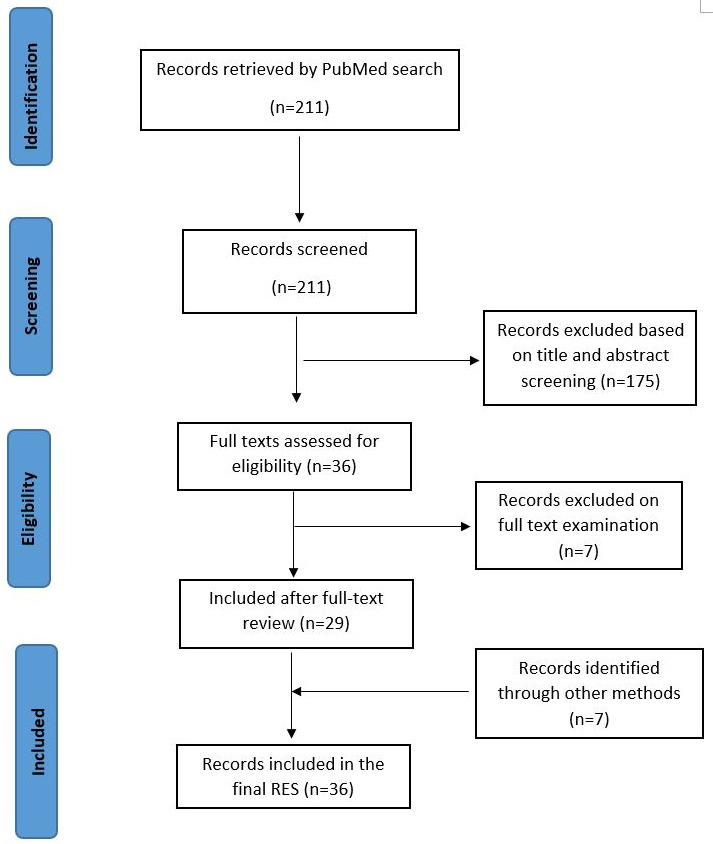
Introduction: Coronavirus disease (COVID-19), affects 213 countries or territories globally. We received a request from National Health Systems Resource Centre, a public agency in India, to conduct rapid evidence synthesis (RES) on community health workers (CHWs) for COVID-19 prevention and control in 3 days. Methods: We searched PubMed, websites of ministries (n=3), public agencies (n=6), multilateral institutions (n=3), COVID-19 resource aggregators (n=5) and preprints (n=1) (without language restrictions) for articles on CHWs in pandemics. Two reviewers screened the records independently with a third reviewer resolving disagreements. One reviewer extracted data with another reviewer cross-checking it. A framework on CHW performance in primary healthcare not specific to pandemic was used to guide data extraction and narrative analysis. Results: We retrieved 211 records and finally included 36 articles. Most of the evidence was from low-and middle-income countries with well-established CHW programmes. Evidence from CHW programmes initiated during pandemics and for CHW involvement in pandemic response in high-income countries was scant. CHW roles and tasks change substantially during pandemics. Clear guidance, training for changed roles and definition of what constitutes essential activities (ie, those that must to be sustained) is required. Most common additional activities during pandemics were community awareness, engagement and sensitisation (including for countering stigma) and contact tracing. CHWs were reported to be involved in all aspects of contact tracing - this was reported to affect routine service delivery. CHWs have often been stigmatised or been socially ostracised during pandemics. Providing PPE, housing allowance, equal training opportunities, transportation allowance, improving salaries (paid on time and for a broad range of services) and awards in high-profile public events contributed to better recruitment and retention. We also created inventories of resources with guiding notes on guidelines for health workers (n=24), self-isolation in the community (n=10) and information, education and counselling materials on COVID-19 (n=16). Conclusions: CHWs play a critical role in pandemics. It is important to ensure role clarity, training, supportive supervision, as well as their work satisfaction, health and well-being. More implementation research on CHWs in pandemics is required.
Overview
The claims and statistics of this paper haven’t been checked yet.
Free: it reads the open-access text and checks the first 5 claims that cite a source we can check. Create a free account to check every claim.
Integrity signals
Registry
Cites
Statistics
Figures
Verification
Claims the paper makes
The claims and statistics of this paper haven’t been checked yet.
Free: it reads the open-access text and checks the first 5 claims that cite a source we can check. Create a free account to check every claim.
Claims other papers make about this one
Each is checked against this paper’s own text: does it say what the citing paper says it does?
The source backs part of the claim, not all of it — or backs it for a different population, condition or comparison.
In the citing paper
“Training of CHWs on basic technological skills such as the use of digital megaphones and robocalls for health education, SMS for data collection, and voice call for a consultation, will help accelerate the response to the Covid-19 pandemic [7].”
From Equipping community health workers with digital tools for pandemic response in LMICs (2021) · cites this paper as [7]
Experimental — accuracy not yet measuredThe check wasn’t confident either way, so it gives no verdict — never disputed.
In the citing paper
“In Mozambique [7], upSCALE digital platform has been adapted to support CHWs to respond to COVID-19.”
From Equipping community health workers with digital tools for pandemic response in LMICs (2021) · cites this paper as [7]
Experimental — accuracy not yet measured
Self-check
Percentages, sums and reported differences re-computed from the paper’s own numbers.
The self-check needs the paper’s full text.
Citations
Cites
PRISMA Extension for Scoping Reviews (PRISMA-ScR): Checklist and Explanation
Tricco, A. C., Lillie, E., Zarin, W., O'Brien, K. K., Colquhoun, H., Levac, D., Moher, D., Peters, M. D. J., Horsley, T., Weeks, L., et al. (2018) · Annals of Internal Medicine · doi:10.7326/m18-0850 · Cited by 43,565 · cited 1×
“There are no reporting guidelines specifically for rapid evidence synthesis, so we used the PRISMA checklist for scoping reviews.(5) The PRISMA checklist is presented in Appendix 1.”
Supporting the health care workforce during the COVID-19 global epidemic
Adams, J. G., & Walls, R. M. (2020) · JAMA · doi:10.1001/jama.2020.3972 · Cited by 1,498 · cited 1×
“…(n=11) 7–17 followed by descriptive cross-sectional studies (n=9), 18–26 pretest and post-test studies (n=6), 27–32 literature reviews (n=3), 33–35 mixed-methods studies (n=2), 36 37 guidelines (n=2), 38 39 one systematic review, 40 one randomised controlled trial 41 and one case report.”
Scott, K., Beckham, S. W., Gross, M., Pariyo, G., Rao, K. D., Cometto, G., & Perry, H. B. (2018) · Human Resources for Health · doi:10.1186/s12960-018-0304-x · Cited by 732 · cited 1×
“54 Performance-based incentives (financial or in-kind) leads to CHWs focusing more on tasks that are remuner-ated.”
Jaskiewicz, W., & Tulenko, K. (2012) · Human Resources for Health · doi:10.1186/1478-4491-10-38 · Cited by 381 · cited 1×
“planned by the United Kingdom(47) is not well understood, but considerable challenges might be expected considering the larger body of literature around community trust, and systems integration being critical for success.(48-51)”
The health impact of the 2014–15 Ebola outbreak
Elston, J. W. T., Cartwright, C., Ndumbi, P., & Wright, J. (2017) · Public Health · doi:10.1016/j.puhe.2016.10.020 · Cited by 362 · cited 1×
“health owing to disruption in routine service delivery.(43-45) Disruption in supply-chain,”
BackgroundInterventions targeting mental health self-stigma: A review and comparison.
Yanos, P. T., Lucksted, A., Drapalski, A. L., Roe, D., & Lysaker, P. (2015) · Psychiatric Rehabilitation Journal · doi:10.1037/prj0000100 · Cited by 351
Roles and Functions of Community Health Workers in Primary Care
Hartzler, A. L., Tuzzio, L., Hsu, C., & Wagner, E. H. (2018) · The Annals of Family Medicine · doi:10.1370/afm.2208 · Cited by 310 · cited 1×
“Community health workers (CHWs) constitute a significant frontline health workforce in many countries(3) and can potentially play an important role in control and prevention of COVID-19.”
Cometto, G., Ford, N., Pfaffman-Zambruni, J., Akl, E. A., Lehmann, U., McPake, B., Ballard, M., Kok, M., Najafizada, M., Olaniran, A., et al. (2018) · The Lancet Global Health · doi:10.1016/s2214-109x(18)30482-0 · Cited by 268 · cited 1×
“More broadly, recognition as staff and moving towards a base salary structure in alignment with the 2018 WHO recommendation against a performance-based incentive structure 55 during a pandemic should be planned.”
Healthcare workers' attitudes to working during pandemic influenza: a qualitative study
Ives, J., Greenfield, S., Parry, J. M., Draper, H., Gratus, C., Petts, J. I., Sorell, T., & Wilson, S. (2009) · BMC Public Health · doi:10.1186/1471-2458-9-56 · Cited by 250 · cited 2×
“Honesty, transparency of communication and reciprocity of information with CHWs was noted to be beneficial (9, 14, 21).”
National UK programme of community health workers for COVID-19 response
Haines, A., de Barros, E. F., Berlin, A., Heymann, D. L., & Harris, M. J. (2020) · The Lancet · doi:10.1016/s0140-6736(20)30735-2 · Cited by 237
Research works printed but not linked: 2
- WHO Who guideline on health policy and system support to optimize community health worker programmes Geneva: World Health organization 2018. Available: https://apps.who.int/iris/bitstream/handle/10665/275474/9789241550369-eng.pdf 30431747
- WHO Communicating Risk in Public Health Emergencies: A WHO Guideline for Emergency Risk Communication (ERC) policy and practice Geneva: World Health Organisation 2017. Available: https://apps.who.int/iris/bitstream/handle/10665/259807/9789241550208-eng.pdf;jsessionid=5C8DB861A3900CA529331F4C724C3218?sequence=2 31059213
Cited by
Items 201–257 of 257
Repercussões da pandemia da covid-19 na organização e oferta de serviços da atenção básica
Lopes, W. P., Carvalho, B. G., Martins, C. P., Nunes, E. D. F. P. D. A., & Mendonça, F. D. F. (2023) · Ciência Cuidado e Saúde · doi:10.4025/ciencuidsaude.v22i0.65868
Strengthening the community health worker practice
(2023) · Frontiers research topics · doi:10.3389/978-2-8325-3451-9
Kivuti-Bitok, L. (2024) · African Journal of Health Nursing and Midwifery · doi:10.52589/ajhnm-bfl2utsq · Cited by 1
“Nonetheless, there's a growing recognition of the invaluable role these volunteers play in healthcare delivery, particularly in rural and underserved areas (Angwenyi et al., 2018; Bhaumik et al., 2020).”
BackgroundEvaluating factors in urban dengue prevention and control during Indonesia's COVID-19
Boerman, B., Nasir, N. M., & Karyadi, K. (2024) · International Journal of Public Health Science (IJPHS) · doi:10.11591/ijphs.v14i1.24095
Healthcare behaviour during a health crisis: the case of COVID-19 in Madagascar
Razakamanana, M. V., Rakotonirainy, M., & Ramiandrisoa, T. O. (2024) · Discover Social Science and Health · doi:10.1007/s44155-024-00100-5
“According to Bhaumik et al., in reviewing the literature on the roles of CHWs in Sub-Saharan Africa, their roles include ensuring the control and prevention of COVID-19 [33].”
Okusanya, T. R., Gresser, J., Stevenson, M., Kumar, A., Haque, M. R., & Franco, Z. E. (2024) · Proceedings of the ... International ISCRAM Conference · doi:10.59297/v8k21916
Perez-Ramos, J. G., McIntosh, S. E., Chen, J. W., Alicea-Vellon, J., & Rodríguez-Díaz, C. E. (2024) · medRxiv · doi:10.1101/2024.11.13.24317260 · Cited by 1
Pessima, W. T., Molleh, B., Silla-Kanu, M., Stafford, B., Lahai, W. K., Falama, A. M., Mishra, S., Chan, A. K., Sevalie, S., Lakoh, S., et al. (2025) · medRxiv · doi:10.1101/2025.01.21.25320891
(2025) · International Journal of Open-access Interdisciplinary and New Educational Discoveries of ETCOR Educational Research Center (iJOINED ETCOR) · doi:10.63498/etcor285
Assessing the Effect of the COVID-19 Pandemic on Community Health Services: A Pre-post Analysis
Juttla, P. K., Kimani, B., Kamita, M., Kariuki, T., Wachira, N., Odongo, A. O., & Mwancha-Kwasa, M. (2025) · INQUIRY The Journal of Health Care Organization Provision and Financing · doi:10.1177/00469580251338681
“However, given that the community level has been fraught with a myriad of inces-sant issues of its own, 2,16,23 this study aimed to establish the effect of COVID-19 on the utilization of health services at the community level in Kiambu county, Kenya.”
Botha, S., Kruger, I. M., Rabie, T., & Froneman, K. (2025) · The Open Public Health Journal · doi:10.2174/0118749445381167250515092750
Exploring COVID-19’s Impact on Community Health Workers and their Role in Emergency Response
Maglantay, M. G., & Maglantay, A. A. (2025) · Journal of interdisciplinary perspectives · doi:10.69569/jip.2025.348
Okafor, U. B., Obasanjo, I., & Goon, D. T. (2025) · Risk Management and Healthcare Policy · doi:10.2147/rmhp.s488249
“2 Based on the topics from the interview guides, a coding framework was designed deductively.”
Aina, A. B., Holt, A., Meredith, A. H., Frazier, C., Harrison, C., Fonseca-Tames, C., Lynnet, F., Gonzalvo, J. D., Buenavides, K., Byrd, K. A. D., et al. (2025) · BMC Health Services Research · doi:10.1186/s12913-025-12859-7
“Public health researchers have highlighted a call-to-action for more literature on CHW programs implemented and coordinated during active crises, and such research is warranted to prospectively build workforce capacity and competencies in anticipation of future pandemics [7, 13].”
Determining factors influencing the ethical values of health workers in government hospitals
Munir, M. A., Cyio, M. A. D., & Tandiabang, P. A. (2025) · Population Medicine · doi:10.18332/popmed/207891
Mehdizad, M., Ashktorab, T., Zayeri, F., Mehrabian, F., Zarei, E., & Daneshkohan, A. (2025) · Payesh (Health Monitor) Journal · doi:10.61882/payesh.24.4.547
Mwancha-Kwasa, M., Mwaniki, B., Ndimbii, J. N., Juttla, P. K., Kimani, B., Wachira, N., Kamita, M., & Odongo, A. O. (2025) · Journal of Interventional Epidemiology and Public Health · doi:10.37432/jieph-d-25-00133
Pattanaik, S., & Dutta, M. J. (2025) · Health Communication · doi:10.1080/10410236.2025.2588896
“Despite pandemic-driven distrust and misinformation, ASHAs may have leveraged these bonds to mitigate backlash and ensure healthcare continuity (Bhaumik et al., 2020; Olateju et al., 2022).”
InfluentialFrança, C. D. J., Nunes, C. A., Vilasbôas, A. L. Q., Aquino, R., & Prado, N. M. D. B. L. (2025) · Cadernos Saúde Coletiva · doi:10.1590/1414-462x202533040302
The design of incentives for community health workers in Indonesia during the COVID-19 pandemic
Gadsden, T. (2023) · UNSWorks (UNSW Sydney) · doi:10.26190/unsworks/25021
Kallon, L. H., Raven, J., Wurie, H. R., & Mansour, W. (2024) · Figshare · doi:10.6084/m9.figshare.26637903
Musoke, D., Lubega, G. B., Twesigye, B., Nakachwa, B., Brown, M. O., & Gibson, L. M. (2024) · Figshare · doi:10.6084/m9.figshare.26750270
de-Winton Cummings, P.-J. (2026) · Iowa Research Online (The University of Iowa) · doi:10.25820/etd.007955
Namuhani, N., Babirye, Z., Monje, F., Salawu, M. M., Bosonkie, M., Bello, S., Kabwama, S. N., Egbende, L., Bamgboye, E. A., Tusubira, A. K., et al. (2024) · Figshare · doi:10.6084/m9.figshare.26367975
Rebnord, I. K., Rørtveit, G., Huibers, L., Dale, J. N., Smits, M., & Morken, T. (2023) · Figshare · doi:10.6084/m9.figshare.22616563
Belita, E., Neil-Sztramko, S. E., Miller, A., Anderson, L. N., Apatu, E., Bellefleur, O., Kapiriri, L., Read, K., Sherifali, D., Tarride, J.-É., et al. (2022) · Figshare · doi:10.6084/m9.figshare.20141134
Rebnord, I. K., Rørtveit, G., Huibers, L., Dale, J. N., Smits, M., & Morken, T. (2023) · Figshare · doi:10.6084/m9.figshare.22616560
Η αποτελεσματικότητα του συστήματος υγείας της Ελλάδας την περίοδο του COVID-19
Καρελλά, Κ. (2022) · Dione (University of Piraeus) · doi:10.26267/unipi_dione/3091
Belita, E., Neil-Sztramko, S. E., Miller, A., Anderson, L. N., Apatu, E., Bellefleur, O., Kapiriri, L., Read, K., Sherifali, D., Tarride, J.-É., et al. (2022) · Figshare · doi:10.6084/m9.figshare.20141128
Marchi, M., Magarini, F. M., Chiarenza, A., Galeazzi, G. M., Paloma, V., Garrido, R., Ioannidi, E., Vassilikou, K., de Matos, M. G., Gaspar, T., et al. (2022) · Figshare · doi:10.6084/m9.figshare.19746416
A Retrospective Analysis of Rabies Lyssavirus Animal Testing in Nebraska, 2012 through 2021
Theye, E. (2023) · DigitalCommons@UNMC
al, A. S. S. A. E. (2024) · Letters in High Energy Physics
Unni, D., Venugopalan, M., & Kaladharan, S. (2025) · Lecture notes in networks and systems · doi:10.1007/978-3-032-06674-9_39
Kaseje, N. C. (2025) · LSHTM Research Online (London School of Hygiene and Tropical Medicine) · doi:10.17037/pubs.04678285
Perez-Ramos, J. G., McIntosh, S., Chen, J. W., Alicea-Vellon, J., & Rodríguez-Díaz, C. E. (2026) · Journal of Participatory Medicine · doi:10.2196/86907
Harjana, N. P. A., Oktayani, P. P. I., Wardhani, B. D. K., Sudastri, N. K., Sigfrid, L., & Januraga, P. P. (2026) · Research Square · doi:10.21203/rs.3.rs-9005691/v1
-, T. (2026) · International Journal For Multidisciplinary Research · doi:10.36948/ijfmr.2026.v08i02.76682
Arjyal, A., Baral, S., Karki, S., Parajuli, A., Chand, O., Regmi, S., Mansour, W., Theobald, S., Witter, S., & Raven, J. (2026) · PLOS Global Public Health · doi:10.1371/journal.pgph.0006393
Hooten, M., & McEntee, M. L. (2026) · Harm Reduction Journal · doi:10.1186/s12954-026-01465-3
“Training and implementation challenges aside, CHWs have been shown to be effective in addressing high-priority public health issues such as managing chronic disease [7, 9, 10], the COVID-19 pandemic [6, 11, 12], as well as the opioid epidemic [13].”
Sharma, S., Tiwari, A., Deshwal, R., Garg, R., Anjali, A., Saxena, K., & kumari, P. (2026) · International Journal of Drug Delivery Technology · doi:10.25258/ijddt.16.45s.152
Capili, J. T. (2026) · International Journal of Biosciences (IJB) · doi:10.12692/ijb/28.5.43-51
Local governance and health equity: Practical reflections from Chinese crisis governance
Zhang, T., & Xu, R. (2026) · Global Public Health · doi:10.1080/17441692.2026.2704270
Riley, A., Doughty, H., Hill, J. E., Giebel, C. M., Harris, M. J., & Williams, N. H. (2026) · BMC Health Services Research · doi:10.1186/s12913-026-15114-9
“CHWs play a critical role in the delivery of primary healthcare in low-and middle-income countries (LMICs) [7–11], where they operate under various titles, including community navigator, promotora, ASHA, lady health worker, and community health advisor [6].”
Kgongwana, T. H., & Mathibe-Neke, J. M. (2026) · Orapuh Journal · doi:10.4314/orapj.v7i6.60
Afanji, S., Nana, C., Ayim, M., & Ajonina, M. U. (2026) · Journal of Biosciences and Medicines · doi:10.4236/jbm.2026.148019
Sayar, S. E., & Yaralı, S. (2026) · Journal of General Health Sciences (JGEHES) Necmettin Erbakan University · doi:10.51123/jgehes.2026.261
Atchara Kittivongvisut, P., Kruesathit, O., Thuanjai Poosakaew, P., & Prateep Kankhwao, P. (2026) · Acta Medica Philippina · doi:10.47895/amp.v60i16.13731
Babalola, O. (2025) · University of the Witwatersrand, Johannesburg Institutional Repository on DSpace (University of the Witwatersrand, Johannesburg)
Pivoting in the pandemic: how HIV-focused community-health workers addressed COVID-19 disparities
Kenya, S., Young, B., & Carrasquillo, O. (2026) · Frontiers in Health Services · doi:10.3389/frhs.2026.1813009
Forte, F. D. S., Dias, M. S. D. A., Farias, S. F., Pequeno, A. M. C., Guimarães, J. M. X., Machado, M. D. F. A. S., Vieira, N. F. C., Vasconcelos, M. I. O., do Nascimento, E. F., Morais, A. P. P., et al. (2026) · Interface - Comunicação Saúde Educação · doi:10.1590/interface.250315
Thammapithak, S., & Sueprasertsith, C. (2026) · Cogent Social Sciences · doi:10.1080/23311886.2026.2729598
Calixto, J. J. D. M., de Lima, C., & da Silva, A. T. C. (2026) · Revista de APS · doi:10.34019/1809-8363.2026.v29.49433
Johnson, L. (2021) · University of the Western Cape Electronic Theses and Dissertations Repository (University of the Western Cape)
Keaittipattanachai, K., Rutchanagul, P., & Sangnimitchaikul, W. (2024) · Thai Red Cross Nursing Journal
Maanda, T. P. (2025) · Nelson Mandela University Research Repository
Mehdizad, M., Ashktorab, T., Zayeri, F., Mehrabian, F., Zarei, E., Alimoradi, M., & Daneshkohan, A. (2026) · Discover Public Health · doi:10.1186/s12982-026-03224-y
“Clear guidance, training for newly assigned roles, and a defined set of essential activities are particularly important when CHW roles change rapidly during a health emergency [55].”
Metadata
- Authors
- Bhaumik, S., Moola, S., Tyagi, J., Nambiar, D., & Kakoti, M.
- Affiliations
- UNSW Sydney (AU)
- George Institute for Global Health (IN)
- Manipal Academy of Higher Education (IN)
- Corresponding author
- Bhaumik, Soumyadeep
- Venue
- BMJ Global Health
- Publisher
- BMJ
- Published
- 2020-06
- Volume
- 5
- Issue
- 6
- Pages
- e002769
- ISSN
- 2059-7908 (ISSN-L)
- PMC
- PMC7292038
- OpenAlex
- W3034130239
- Semantic Scholar
- fda3644f0983ba52968a9ed7ef9cbde5302d81e1
- Cited by
- 233
- References
- 51
- Citations by year
- 2026: 16 · 2025: 27 · 2024: 36 · 2023: 47 · 2022: 54 · 2021: 39 · 2020: 13
- FWCI
- 7.29
- Type
- journal article
- Language
- en
- Open access
- gold
- doi.org
- Locations
- BMJ Global Health (publishedVersion, cc-by)
- medRxiv (acceptedVersion, cc-by-nc)
- PubMed Central (publishedVersion, cc-by)
- PubMed (publishedVersion)
- DOAJ (DOAJ: Directory of Open Access Journals) (submittedVersion, cc-by-sa)
- Greater South Information System
- Funders
- Alliance for Health Policy and Systems Research
- Topics
- Health Sciences › Health Professions › General Health Professions › Healthcare Systems and Challenges
- Health Sciences › Medicine › Public Health, Environmental and Occupational Health › Public Health Policies and Education
- Health Sciences › Medicine › Public Health, Environmental and Occupational Health › Global Health Workforce Issues
- Keywords
- community health workers, COVID-19 pandemic response, contact tracing, stigma, primary care, supportive supervision, CHW training, low- and middle-income countries, healthcare worker well-being
- MeSH terms
- Betacoronavirus, COVID-19, SARS-CoV-2, Community Health Workers, Community Health Services, Decision Making, Humans, India, Pneumonia, Viral, Occupational Health, Coronavirus Infections, Professional Role, Pandemics
About these checks
Registry, retraction, Cites and statistics results are computed, not judged, with one exception: a printed reference that no index lists is read once by a model before it counts as a citation error. Claims are extracted by a model and kept only when their quote appears verbatim in the text; each cited source is then checked, with a model’s help, for whether it says what the claim relies on. Those verdicts can be wrong — read the claim’s quote and the cited source before relying on one.
Statistics and arithmetic are recomputed, not judged.
Confidence bands are shown only for fields calibrated on our annotated test set. None is calibrated yet, so no band is shown.
What counts as a claim ›How we measure confidence ›How we check this ›
Are you an author, or do you see a problem with this page? Request a review
Data sources
Bibliographic data: Semantic Scholar, OpenAlex, Crossref.
Contains information from the Semantic Scholar Academic Graph Datasets, made available under the ODC Attribution License (ODC-BY 1.0).
Semantic Scholar’s data is described in: Kinney, R., et al. (2023). The Semantic Scholar Open Data Platform. arXiv:2301.10140.
