

Developing, implementing, and governing artificial intelligence in medicine: a step-by-step approach to prevent an artificial intelligence winter
Open accessThe DOI matches its Crossref record; 75 of the 76 references it cites were found in a registry or an index.
Abstract
Objective: Although the role of artificial intelligence (AI) in medicine is increasingly studied, most patients do not benefit because the majority of AI models remain in the testing and prototyping environment. The development and implementation trajectory of clinical AI models are complex and a structured overview is missing. We therefore propose a step-by-step overview to enhance clinicians’ understanding and to promote quality of medical AI research. Methods: We summarised key elements (such as current guidelines, challenges, regulatory documents and good practices) that are needed to develop and safely implement AI in medicine. Conclusion: This overview complements other frameworks in a way that it is accessible to stakeholders without prior AI knowledge and as such provides a step-by-step approach incorporating all the key elements and current guidelines that are essential for implementation, and can thereby help to move AI from bytes to bedside.
Overview
The claims and statistics of this paper haven’t been checked yet.
Free: it reads the open-access text and checks the first 5 claims that cite a source we can check. Create a free account to check every claim.
Integrity signals
Registry
Cites
Statistics
Figures
![Figure 1 Global evolution of research in artificial intelligence in medicine. The number of AI papers in humans on PubMed.com was arranged by year, 2011–2020. The blue bars represent the number of studies. The following search was performed: (“artificial intelligence”[MeSH Terms] OR (“artificial”[All Fields) and “intelligence”[All Fields]) OR “artificial intelligence”[All Fields]) OR (“machine learning”[MeSH Terms] OR (“machine”[All Fields] AND “learning”[All Fields]) OR “machine learning”[All Fields]) OR (“deep learning”[MeSH Terms] OR (“deep”[All Fields] AND “learning”[All Fields]) OR “deep learning”[All Fields]).](https://figures.cochat.ai/paper-figures/c94412a7ef2e4a69951fb3b111377b00/developing-implementing-and-governing-artificial-intelligence-in-medicine-a-step-figure-1.jpg)
Verification
Claims the paper makes
The claims and statistics of this paper haven’t been checked yet.
Free: it reads the open-access text and checks the first 5 claims that cite a source we can check. Create a free account to check every claim.
Claims other papers make about this one
Each is checked against this paper’s own text: does it say what the citing paper says it does?
The source backs part of the claim, not all of it — or backs it for a different population, condition or comparison.
In the citing paper
“Regular maintenance is also necessary to update the model as new data becomes available and to retrain it if its performance drops [56, 62].”
From Generative AI in healthcare: an implementation science informed translational path on application, integration and governance (2024) · cites this paper as [62]
Experimental — accuracy not yet measuredThe source backs part of the claim, not all of it — or backs it for a different population, condition or comparison.
In the citing paper
“Generative AI models need to be validated to ensure that they are accurate and reliable [62].”
From Generative AI in healthcare: an implementation science informed translational path on application, integration and governance (2024) · cites this paper as [62]
Experimental — accuracy not yet measuredThe source backs part of the claim, not all of it — or backs it for a different population, condition or comparison.
In the citing paper
“Development of AI prediction algorithms consists of several stages, each of which may contribute to bias [18,19].”
From Bias in artificial intelligence algorithms and recommendations for mitigation (2023) · cites this paper as [18]
Experimental — accuracy not yet measuredThe cited source says what the claim attributes to it.
In the citing paper
“It is necessary to clean and preprocess the collected data to ensure its quality and consistency [61, 62].”
From Generative AI in healthcare: an implementation science informed translational path on application, integration and governance (2024) · cites this paper as [62]
The cited source says what the claim attributes to it.
In the citing paper
“Therefore, after implementation, assessment of the algorithms needs to continue throughout the entire lifespan [18].”
From Bias in artificial intelligence algorithms and recommendations for mitigation (2023) · cites this paper as [18]
Self-check
Percentages, sums and reported differences re-computed from the paper’s own numbers.
The self-check needs the paper’s full text.
Citations
Cites
User Acceptance of Computer Technology: A Comparison of Two Theoretical Models
Davis, F. D., Bagozzi, R. P., & Warshaw, P. R. (1989) · Management Science · doi:10.1287/mnsc.35.8.982 · Cited by 25,709
The FAIR Guiding Principles for scientific data management and stewardship
Wilkinson, M. D., Dumontier, M., Aalbersberg, I. J., Appleton, G., Axton, M., Baak, A., Blomberg, N., Boiten, J.-W., da Silva Santos, L. B., Bourne, P. E., et al. (2016) · Scientific Data · doi:10.1038/sdata.2016.18 · Cited by 18,423
High-performance medicine: the convergence of human and artificial intelligence
Topol, E. J. (2019) · Nature Medicine · doi:10.1038/s41591-018-0300-7 · Cited by 10,450
The use of the area under the ROC curve in the evaluation of machine learning algorithms
Bradley, A. P. (1997) · Pattern Recognition · doi:10.1016/s0031-3203(96)00142-2 · Cited by 7,217
Rajkomar, A., Dean, J., & Kohane, I. (2019) · New England Journal of Medicine · doi:10.1056/nejmra1814259 · Cited by 4,579
Collins, G. S., Reitsma, J. B., Altman, D. G., & Moons, K. G. M. (2015) · BMJ · doi:10.1136/bmj.g7594 · Cited by 4,388
Collins, G. S., Reitsma, J. B., Altman, D. G., & Moons, K. G. M. (2015) · British Journal of Cancer · doi:10.1038/bjc.2014.639 · Cited by 3,293
Key challenges for delivering clinical impact with artificial intelligence
Kelly, C. J., Karthikesalingam, A., Suleyman, M., Corrado, G., & King, D. (2019) · BMC Medicine · doi:10.1186/s12916-019-1426-2 · Cited by 3,136
PROBAST: A Tool to Assess the Risk of Bias and Applicability of Prediction Model Studies
Wolff, R. F., Moons, K. G. M., Riley, R. D., Whiting, P. F., Westwood, M., Collins, G. S., Reitsma, J. B., Kleijnen, J., Mallett, S., & for the PROBAST Group† (2019) · Annals of Internal Medicine · doi:10.7326/m18-1376 · Cited by 2,984
Calculating the sample size required for developing a clinical prediction model
Riley, R. D., Ensor, J., Snell, K. I. E., Harrell, F. E., Martin, G. P., Reitsma, J. B., Moons, K. G. M., Collins, G., & van Smeden, M. (2020) · BMJ · doi:10.1136/bmj.m441 · Cited by 2,917
Research works printed but not linked: 1
- MBAM BN, Chauhan G, Naumann T, et al. Rethinking clinical prediction: why machine learning must consider year of care and feature aggregation. machine learning for health (ML4H). NeurIPS 2018.
Cited by
Bias in artificial intelligence algorithms and recommendations for mitigation
Nazer, L. H., Zatarah, R., Waldrip, S., Ke, J. X. C., Moukheiber, M., Khanna, A. K., Hicklen, R. S., Moukheiber, L., Moukheiber, D., Ma, H., et al. (2023) · PLOS Digital Health · doi:10.1371/journal.pdig.0000278 · Cited by 621
“For example, though it is important to predict illnesses, such as sepsis, the algorithm should produce actionable output that ultimately links to clinical decision-making [18,19].”
BackgroundInfluentialReddy, S. (2024) · Implementation Science · doi:10.1186/s13012-024-01357-9 · Cited by 554
Fritsch, S. J., Blankenheim, A., Wahl, A., Hetfeld, P., Maassen, O., Deffge, S., Kunze, J., Rossaint, R., Riedel, M., Marx, G., et al. (2022) · DIGITAL HEALTH · doi:10.1177/20552076221116772 · Cited by 232
Higgins, O., Short, B. L., Chalup, S. K., & Wilson, R. L. (2023) · International Journal of Mental Health Nursing · doi:10.1111/inm.13114 · Cited by 150
ChatGPT: promise and challenges for deployment in low- and middle-income countries
Wang, X., Sanders, H. M., Liu, Y., Seang, K., Tran, B. X., Atanasov, A. G., Qiu, Y., Tang, S., Car, J., Wang, Y. X., et al. (2023) · The Lancet Regional Health - Western Pacific · doi:10.1016/j.lanwpc.2023.100905 · Cited by 138
Solving the Explainable AI Conundrum by Bridging Clinicians’ Needs and Developers’ Goals
Bienefeld, N., Boss, J. M., Lüthy, R., Brodbeck, D., Azzati, J., Blaser, M., Willms, J., & Keller, E. (2023) · npj Digital Medicine · doi:10.1038/s41746-023-00837-4 · Cited by 159
Implementation frameworks for end-to-end clinical AI: derivation of the SALIENT framework
van der Vegt, A. H., Scott, I. A., Dermawan, K., Schnetler, R. J., Kalke, V. R., & Lane, P. J. (2023) · Journal of the American Medical Informatics Association · doi:10.1093/jamia/ocad088 · Cited by 109
Ruksakulpiwat, S., Thorngthip, S., Niyomyart, A., Benjasirisan, C., Phianhasin, L., Aldossary, H., Ahmed, B., & Samai, T. (2024) · Journal of Multidisciplinary Healthcare · doi:10.2147/jmdh.s459946 · Cited by 98
Advancing healthcare AI governance through a comprehensive maturity model based on systematic review
Hussein, R., Zink, A., Ramadan, B., Howard, F. M., Hightower, M., Shah, S., & Beaulieu-Jones, B. K. (2026) · npj Digital Medicine · doi:10.1038/s41746-026-02418-7 · Cited by 96
Trustworthy and ethical AI-enabled cardiovascular care: a rapid review
Mooghali, M., Stroud, A. M., Yoo, D. W., Barry, B. A., Grimshaw, A. A., Ross, J. S., Zhu, X., & Miller, J. E. (2024) · BMC Medical Informatics and Decision Making · doi:10.1186/s12911-024-02653-6 · Cited by 94
“Mitigation strategies Several papers described the importance of providing sufficient training to device users to reduce the risk of patient harm, with an emphasis on educating healthcare providers about the potential pitfalls and limitations of AI technologies [48, 52].”
BackgroundThe Impact and Issues of Artificial Intelligence in Nursing Science and Healthcare Settings
Pailaha, A. D. (2023) · SAGE Open Nursing · doi:10.1177/23779608231196847 · Cited by 85
Artificial intelligence to enhance clinical value across the spectrum of cardiovascular healthcare
Gill, S. K., Karwath, A., Uh, H., Cardoso, V. R., Gu, Z., Barsky, A., Slater, L. T., Acharjee, A., Duan, J., Dall’Olio, L., et al. (2023) · European Heart Journal · doi:10.1093/eurheartj/ehac758 · Cited by 85
“Further work is needed (and ongoing) to ensure that challenges in implementation are addressed, including robust evaluation, governance, and acceptability to both care receivers and care givers.(45)”
BackgroundBienefeld, N., Keller, E., & Grote, G. (2024) · Journal of Medical Internet Research · doi:10.2196/50130 · Cited by 62
Artificial intelligence & clinical nutrition: What the future might have in store
Bond, A., Mccay, K., & Lal, S. (2023) · Clinical Nutrition ESPEN · doi:10.1016/j.clnesp.2023.07.082 · Cited by 79
Review on the Evaluation and Development of Artificial Intelligence for COVID-19 Containment
Hasan, M. M., Islam, M. U., Sadeq, M. J., Fung, W.-K., & Uddin, J. (2023) · Sensors · doi:10.3390/s23010527 · Cited by 77
Stogiannos, N., Malik, R., Kumar, A., Barnes, A., Pogose, M., Harvey, H., McEntee, M. F., & Malamateniou, C. (2023) · The British Journal of Radiology · doi:10.1259/bjr.20221157 · Cited by 58
“71 Post-market assessment of the model’s clinical safety and effectiveness is paramount to ensure that the model will continue to perform as per the initial design and that no harm will impact end-users.”
BackgroundA normative framework for artificial intelligence as a sociotechnical system in healthcare
McCradden, M. D., Joshi, S. D., Anderson, J. A., & London, A. J. (2023) · Patterns · doi:10.1016/j.patter.2023.100864 · Cited by 74
van der Vegt, A. H., Campbell, V. K., Mitchell, I., Malycha, J., Simpson, J., Flenady, T., Flabouris, A., Lane, P. J., Mehta, N., Kalke, V. R., et al. (2023) · Journal of the American Medical Informatics Association · doi:10.1093/jamia/ocad220 · Cited by 66
Must-have Qualities of Clinical Research on Artificial Intelligence and Machine Learning
Koçak, B., Cuocolo, R., Santos, D. P. D., Stanzione, A., & Ugga, L. (2023) · Balkan Medical Journal · doi:10.4274/balkanmedj.galenos.2022.2022-11-51 · Cited by 64
Schouten, J., Kalden, M. A. C. M., van Twist, E., Reiss, I. K. M., Gommers, D. A. M. P. J., van Genderen, M. E., & Taal, H. R. (2024) · Intensive Care Medicine · doi:10.1007/s00134-024-07629-8 · Cited by 59
Self-citationRimondi, A., Gottlieb, K. T., Despott, E. J., Iacucci, M., Murino, A., & Tontini, G. E. (2023) · Digestive and Liver Disease · doi:10.1016/j.dld.2023.11.005 · Cited by 53
Artificial Intelligence in Obstetrics and Gynecology: Transforming Care and Outcomes
Patel, D. J., Chaudhari, K., Acharya, N., Shrivastava, D., & Muneeba, S. (2024) · Cureus · doi:10.7759/cureus.64725 · Cited by 52
Methods for using Bing’s AI-powered search engine for data extraction for a systematic review
Hill, J. E., Harris, C., & Clegg, A. (2024) · Research Synthesis Methods · doi:10.1002/jrsm.1689 · Cited by 45
Embracing Generative Artificial Intelligence in Clinical Research and Beyond
Foote, H. P., Hong, C., Anwar, M. M., Borentain, M., Bugin, K., Dreyer, N. A., Fessel, J. P., Goyal, N., Hanger, M., Hernandez, A. F., et al. (2025) · JACC Advances · doi:10.1016/j.jacadv.2025.101593 · Cited by 42
Artificial intelligence tool development: what clinicians need to know?
Chew, B.-H., & Ngiam, K. Y. (2025) · BMC Medicine · doi:10.1186/s12916-025-04076-0 · Cited by 41
“This is to be regulatory, acceptable and economically rewarding to the two stakeholders [83, 114].”
van der Meijden, S. L., de Hond, A. A. H., Thoral, P. J., Steyerberg, E. W., Kant, I. M. J., Cinà, G., & Arbous, M. S. (2023) · JMIR Human Factors · doi:10.2196/39114 · Cited by 39
“However, a recent review showed that implementation of these AI-CDS tools in clinical ICU practice is lacking due to difficulties at several levels [8].”
BackgroundWesdorp, N. J., Zeeuw, M. J., Postma, S. C. J., Roor, J., van Waesberghe, J. H. T. M., van den Bergh, J. E., Nota, I., Moos, S. I., Kemna, R., Vadakkumpadan, F., et al. (2023) · European Radiology Experimental · doi:10.1186/s41747-023-00383-4 · Cited by 39
Self-citationDwyer, B., Flathers, M., Sano, A., Dempsey, A. G., Cipriani, A., Gazi, A. H., Hill, B., Gorban, C., Rodríguez, C. I., Stromeyer, C., et al. (2025) · NPP—Digital Psychiatry and Neuroscience · doi:10.1038/s44277-025-00049-6 · Cited by 41
Assessing the Links Between Artificial Intelligence and Precision Nutrition
Ferreira, D. D., Ferreira, L. G., Amorim, K. A., Delfino, D. C. T., Ferreira, A. C. B. H., & de Souza, L. P. M. (2025) · Current Nutrition Reports · doi:10.1007/s13668-025-00635-2 · Cited by 38
“Thus, healthcare professionals need to assess the reliability of AI outputs in clinical decision-making to use these technologies safely [71].”
Human-artificial intelligence interaction in gastrointestinal endoscopy
Campion, J. R., O’Connor, D. B., & Lahiff, C. J. (2024) · World Journal of Gastrointestinal Endoscopy · doi:10.4253/wjge.v16.i3.126 · Cited by 37
Deep learning for electrocardiogram interpretation: Bench to bedside
Schots, B. B. S., Pizarro, C. S., Arends, B. K. O., Oerlemans, M. I. F. J., Ahmetagić, D., van der Harst, P., & van Es, R. (2025) · European Journal of Clinical Investigation · doi:10.1111/eci.70002 · Cited by 36
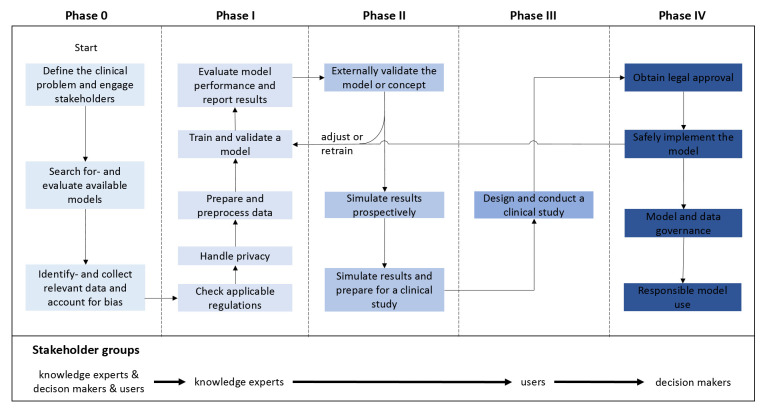
“Similar to the development of other medical devices, development of DL algorithms needs to follow a structured approach 71 (Figure 3).”
Critical Bias in Critical Care Devices
Charpignon, M.-L., Byers, J., Cabral, S., Celi, L. A., Fernandes, C., Gallifant, J., Lough, M. E., Mlombwa, D., Moukheiber, L., Ong, B. A., et al. (2023) · Critical Care Clinics · doi:10.1016/j.ccc.2023.02.005 · Cited by 35
Stogiannos, N., Gillan, C., Precht, H., dos Reis, C. S., Kumar, A., O’Regan, T., Ellis, V., Barnes, A., Meades, R., Pogose, M., et al. (2024) · Journal of medical imaging and radiation sciences · doi:10.1016/j.jmir.2024.101717 · Cited by 35
Governance for safe and responsible AI in healthcare organisations: a scoping review of frameworks
Wang, A., Freeman, S., & Magrabi, F. (2026) · npj Digital Medicine · doi:10.1038/s41746-026-02679-2 · Cited by 35
AI Quality Standards in Health Care: Rapid Umbrella Review
Kuziemsky, C. E., Chrimes, D., Minshall, S. R., Mannerow, M., & Lau, F. (2024) · Journal of Medical Internet Research · doi:10.2196/54705 · Cited by 34
Improving child health through Big Data and data science
Vesoulis, Z. A., Husain, A. N., & Cole, F. S. (2022) · Pediatric Research · doi:10.1038/s41390-022-02264-9 · Cited by 33
Dijkstra, H., van de Kuit, A., de Groot, T. M., Canta, O., Groot, O. Q., Oosterhoff, J. H. F., Doornberg, J. N., van den Bekerom, M., Calderon, S. L., Colaris, J., et al. (2024) · Bone & Joint Open · doi:10.1302/2633-1462.51.bjo-2023-0095.r1 · Cited by 32
“61 International collaborations and standardization of international registries may allow for universally externally valid ML decision support tools.”
BackgroundNatural Language Processing for Breast Imaging: A Systematic Review
Diab, K. M., Deng, J., Wu, Y., Yesha, Y., Collado‐Mesa, F., & Nguyen, P. (2023) · Diagnostics · doi:10.3390/diagnostics13081420 · Cited by 30
Ramaekers, M., Viviers, C. G. A., Janssen, B. V., Hellström, T. A. E., Ewals, L. J. S., van der Wulp, K., Nederend, J., Jacobs, I., Pluyter, J. R., Mavroeidis, D., et al. (2023) · Journal of Clinical Medicine · doi:10.3390/jcm12134209 · Cited by 31
Groot, T. M., Ramsey, D. C., Groot, O. Q., Fourman, M. S., Karhade, A. V., Twining, P. K., Berner, E. A., Fenn, B. P., Collins, A. K., Raskin, K. A., et al. (2023) · Clinical Orthopaedics and Related Research · doi:10.1097/corr.0000000000002698 · Cited by 29
Johns, E., Godet, J., Alkanj, A., Beck, M., Mas, L. D., Gourieux, B., Sauleau, E., & Michel, B. (2023) · European Journal of Hospital Pharmacy · doi:10.1136/ejhpharm-2023-003857 · Cited by 28
“defining a global framework to regulate and provide advice to research and development teams (30,31).”
BackgroundStakeholder perspectives on ethical and trustworthy voice AI in health care
Bélisle‐Pipon, J., Powell, M., English, R., Malo, M.-F. A., Ravitsky, V., & Bensoussan, Y. E. (2024) · Digital Health · doi:10.1177/20552076241260407 · Cited by 28
Applications of Multimodal Artificial Intelligence in Non-Hodgkin Lymphoma B Cells
Isavand, P., Aghamiri, S. S., & Amin, R. (2024) · Biomedicines · doi:10.3390/biomedicines12081753 · Cited by 28
“First, no regulatory frameworks or standards exist for assessing and approving multimodal AI algorithms for clinical usage [126,127].”
BackgroundFischer, A., Rietveld, A., Teunissen, P., Hoogendoorn, M., & Bakker, P. (2023) · BMJ Open · doi:10.1136/bmjopen-2023-076017 · Cited by 26
van der Vorst, J. P., Smit, J. M., van de Sande, D., van der Ster, B. J. P., Daams, F. D., Schasfoort, R. A., Gommers, D. A. M. P. J., Verhoef, C. K., Grünhagen, D. J., van Genderen, M. E., et al. (2025) · BMJ Digital Health & AI · doi:10.1136/bmjdhai-2025-000046 · Cited by 25
Self-citationGeneration of Synthetic Tabular Healthcare Data Using Generative Adversarial Networks
Nik, A., Riegler, M. A., Halvorsen, P., & Storås, A. M. (2023) · Lecture notes in computer science · doi:10.1007/978-3-031-27077-2_34 · Cited by 25
“In the healthcare domain, access to large datasets can be challenging because of privacy protection regulations and lack of data, e.g., due to rare or neglected diseases [4,5].”
Artificial Intelligence Applications in Healthcare
Usmani, U. A., Happonen, A., Watada, J., & Khakurel, J. (2023) · Lecture notes in networks and systems · doi:10.1007/978-981-99-3091-3_89 · Cited by 25
Khosravi, M., Zare, Z., Mojtabaeian, S. M., & Izadi, R. (2024) · Journal of Public Health · doi:10.1007/s10389-024-02219-w · Cited by 25
“The design and development of data analysis by AI involves multiple steps, which may introduce bias at different levels (van de Sande et al. 2022).”
Jeong, C., Goh, Y., & Kwak, J. (2024) · Ewha Medical Journal · doi:10.12771/emj.2024.e49 · Cited by 26
Tovar, D., Rosenthal, M. H., Maitra, A., & Koay, E. J. (2023) · Artificial Intelligence Surgery · doi:10.20517/ais.2022.38 · Cited by 24
“External evaluation will provide the most accurate analysis of the model’s reproducibility, which is important for further clinical trials [75] .”
BackgroundTorous, J. B., Ledley, K. T., Gorban, C., Strudwick, G., Schwarz, J., Choudhary, S., Emerson, M. R., Patriquin, M. A., Dempsey, A. G., Bantjes, J. R., et al. (2025) · JMIR Mental Health · doi:10.2196/84501 · Cited by 22
The role of diet in cancer: the potential of shaping public policy and clinical outcomes in the UK
Britten, O., & Tosi, S. (2024) · Genes & Nutrition · doi:10.1186/s12263-024-00750-9 · Cited by 20
“AI-based devices or applications designed for treating or preventing conditions like cancer are classified as ‘software as a medical device’ [125, 138].”
BackgroundKritikos, I., Sarantopoulos, A., Roumeliotis, A., Vasiliades, J., & Matsinas, I. (2025) · Health Economics and Management Review · doi:10.61093/hem.2025.2-01 · Cited by 20
The algorithm journey map: a tangible approach to implementing AI solutions in healthcare
Boag, W., Hasan, A., Kim, J. Y., Revoir, M., Nichols, M., Ratliff, W., Gao, M., Zilberstein, S., Samad, Z., Hoodbhoy, Z., et al. (2024) · npj Digital Medicine · doi:10.1038/s41746-024-01061-4 · Cited by 19
AI-Based Models for Risk Prediction in MASLD: A Systematic Review
Njei, B. M., Al‐Ajlouni, Y. A., Lemos, S. Y., Ugwendum, D. F., Njei, N., Ta’ani, O. A., Ameyaw, P. A., Njei, L., & Boateng, S. (2025) · Digestive Diseases and Sciences · doi:10.1007/s10620-025-09499-6 · Cited by 19
“Furthermore, ethical considerations, such as ensuring informed consent and addressing algorithmic bias, are paramount, as biased datasets could exacerbate existing disparities in health-care outcomes [83].”
Adaptive Cancer Therapy in the Age of Generative Artificial Intelligence
Derbal, Y. M. (2024) · Cancer Control: Journal of the Moffitt Cancer Cente · doi:10.1177/10732748241264704 · Cited by 16
Ghosh, J. (2024) · International Journal of Advancement in Life Sciences Research · doi:10.31632/ijalsr.2024.v07i03.001 · Cited by 18
Frood, R. T., Willaime, J. M. Y., Miles, B., Chambers, G., Al-Chalabi, H., Ali, T., Hougham, N., Brooks, N., Petrides, G. S., Naylor, M., et al. (2024) · Frontiers in Nuclear Medicine · doi:10.3389/fnume.2023.1327186 · Cited by 17
Informing the ethical review of human subjects research utilizing artificial intelligence
Makridis, C. A., Boese, A., Fricks, R., Workman, D. E., Klote, M., Mueller, J. M., Hildebrandt, I. J., Kim, M. P., & Alterovitz, G. (2023) · Frontiers in Computer Science · doi:10.3389/fcomp.2023.1235226 · Cited by 16
Deployment and validation of the CLL treatment infection model adjoined to an EHR system
Agius, R., Riis-Jensen, A. C., Wimmer, B., da Cunha‐Bang, C., Murray, D. D., Poulsen, C. B., Bertelsen, M. B., Schwartz, B., Lundgren, J. D., Langberg, H., et al. (2024) · npj Digital Medicine · doi:10.1038/s41746-024-01132-6 · Cited by 14
A Clinician’s Guide to Understanding Bias in Critical Clinical Prediction Models
de Matos, J. C. R. G., Gallifant, J., Chowdhury, A., Economou-Zavlanos, N., Charpignon, M., Gichoya, J. W., Celi, L. A., Nazer, L. H., King, H., & Wong, A.-K. I. (2024) · Critical Care Clinics · doi:10.1016/j.ccc.2024.05.011 · Cited by 14
Drogt, J., Milota, M., Veldhuis, W. B., Vos, S., & Jongsma, K. R. (2024) · JMIR Human Factors · doi:10.2196/52514 · Cited by 14
Editorial: Trustworthy AI for healthcare
Agafonov, O., Babić, A., Sousa, S., & Alagaratnam, S. (2024) · Frontiers in Digital Health · doi:10.3389/fdgth.2024.1427233 · Cited by 13
Harnessing AI in critical care: opportunities, challenges and key steps for success
Kalimouttou, A., Stevens, R. D., & Pirracchio, R. (2026) · Thorax · doi:10.1136/thorax-2024-222125 · Cited by 12
“64 Mitigating bias requires deliberate efforts to ensure representativeness of training data, transparency in model development and regular audits to identify and rectify potential sources of biases.”
Robustness and Reliability Testing in Healthcare Using Artificial Intelligence
Khinvasara, T., Shankar, A., & Wong, C. (2024) · Asian Journal of Research in Computer Science · doi:10.9734/ajrcos/2024/v17i7482 · Cited by 12
Vidiyala, N., Sunkishala, P., Parupathi, P. R., & Nyavanandi, D. (2025) · AAPS PharmSciTech · doi:10.1208/s12249-025-03134-3 · Cited by 14
“…on the properties of the drug substance such as particle size distribution, flow, compressibility, and stability concerns such as hydrolysis, oxidation, and thermal sensitivity, the AI can propose a suitable manufacturing platform and the optimum process parameters to initiate the development [80].”
Zadek, F., Brunoni, B., Mulazzani, F., Ubiali, S., Bonaiti, A., Giudici, R., Minotti, F., Fontana, I., Langer, T., & Fumagalli, R. (2022) · Intensive Care Medicine Experimental · doi:10.1186/s40635-022-00468-1 · Cited by 12
Rosselló-Jiménez, D., Sierra, S. D., Collado, Y., Cuadra-Llopart, L., Riba, F., & Llonch-Masriera, M. (2024) · European Geriatric Medicine · doi:10.1007/s41999-024-00970-7 · Cited by 12
Wesdorp, N. J., Zeeuw, M. J., van der Meulen, D., Erve, I. V. ’., Bodalal, Z., Roor, J., van Waesberghe, J. H., Moos, S. I., van den Bergh, J., Nota, I., et al. (2023) · Cancers · doi:10.3390/cancers15235648 · Cited by 11
Self-citationDetecting Throat Cancer From Speech Signals Using Machine Learning: A Scoping Literature Review
Paterson, M., Moor, J. W., & Cutillo, L. (2025) · IEEE Access · doi:10.1109/access.2025.3555767 · Cited by 11
“While there is currently no defined pathway for the implementation of AI into clinical practice, several frameworks have been suggested [19], [20], [21].”
Apfelbacher, T., Koçman, S. E., Prokosch, H., & Christoph, J. (2024) · Studies in health technology and informatics · doi:10.3233/shti240527 · Cited by 11
Integrating Ethical Principles Into the Regulation of AI-Driven Medical Software
Faheem, F., Haq, M., Derhab, M., Saeed, R., Ahmad, U., & Kalia, J. S. (2025) · Cureus · doi:10.7759/cureus.79506 · Cited by 10
“However, the evolving nature of AI poses unique challenges and complexities associated with SaMD that may not be fully addressed by current guidelines [55].”
Sarfraz, M., Khawaja, K. F., & Waheed, Z. (2025) · Business Process Management Journal · doi:10.1108/bpmj-06-2023-0457 · Cited by 11
Esteitieh, Y., Mandal, S., & Laliotis, G. (2025) · medRxiv · doi:10.1101/2025.01.28.25321282 · Cited by 10
Development and internal validation of a diagnostic prediction model for psoriasis severity
Liljendahl, M. S., Loft, N., Egeberg, A., Skov, L., & Nguyen, T. (2023) · Diagnostic and Prognostic Research · doi:10.1186/s41512-023-00141-5 · Cited by 9
“The difficulty of applying such models is largely discussed within the field and with an aim to make the use of these tools more tangible in the future [24, 25].”
BackgroundWeil, L. I., Zwerwer, L. R., Chu, H., Verhoeff, M., Jeurissen, P., & Munster, B. C. V. (2024) · Health and Technology · doi:10.1007/s12553-024-00824-z · Cited by 9
Rebooting the Electronic Health Record
Zhang, E. J., Tan, H., Sanford, J. A., Michelson, J. D., Waldschmidt, B. M., & Tsai, M. H. (2022) · Journal of Medical Systems · doi:10.1007/s10916-022-01834-y · Cited by 8
Vijlbrief, D. C., Dudink, J., van Solinge, W. W., Benders, M. J. N. L., & Haitjema, S. (2022) · Pediatric Research · doi:10.1038/s41390-022-02413-0 · Cited by 8
“Yet, we and others undertook efforts to implement algorithms in clinical care.(2,3) Despite good intentions of researchers, there are challenges.”
Tekin, A., Joghataee, M., Rovati, L., Truong, H., Zambrano, C. C., Kushagra, K., Nikravangolsefid, N., Ozkan, M. C., Gupta, A., Herasevich, V., et al. (2024) · Biomolecules and Biomedicine · doi:10.17305/bb.2024.10447 · Cited by 8
Stokel-Walker, C. (2023) · BMJ · doi:10.1136/bmj.p2362 · Cited by 7
Spencer, E.-J., Economou-Zavlanos, N., & van Genderen, M. E. (2024) · Intensive Care Medicine · doi:10.1007/s00134-024-07747-3 · Cited by 7
“Moving AI towards bedside use can be achieved without incurring high risk and expense, such as through the deployment of models in smaller-scale settings with limited end-users or through clinical feasibility studies [14].”
Popoff, B., Cabon, S., Cuggia, M., Bouzillé, G., & Clavier, T. (2025) · JMIR Medical Informatics · doi:10.2196/63709 · Cited by 6
Villavicencio, H. M. E., Gamboa-Cruzado, J., López-Goycochea, J., & Soto, L. S. (2024) · International Journal of Online and Biomedical Engineering (iJOE) · doi:10.3991/ijoe.v20i04.45429 · Cited by 6
The evolving landscape: Role of artificial intelligence in cancer detection
Kumar, P., Izankar, S. V., Weerarathna, I. N., Raymond, D., & Verma, P. (2024) · AIMS bioengineering · doi:10.3934/bioeng.2024009 · Cited by 6
“There can be several levels at which AI algorithms can be improved, such as data collection and preparation methods, model development and validation, model deployment in a clinical environment, types of patients, and regions of the deployment [78] .”
BackgroundKemna, R., Zeeuw, M. J., Ziesemer, K. A., Ali, M., Bereska, J. I., Marquering, H. A., Stoker, J., Verpalen, I. M., Swijnenburg, R., Huiskens, J., et al. (2025) · Oncology · doi:10.1159/000546572 · Cited by 5
Self-citationMitigating Clinician Information Overload: Generative AI for Integrated EHR and RPM Data Analysis
Shetgaonkar, A., Pradhan, D., Arora, L., Girija, S. S., Raj, A., & Kapoor, S. (2025) · IEEE Annual International Computer Software and Applications Conference (COMPSAC) · doi:10.1109/compsac65507.2025.00284 · Cited by 5
“Current challenges involve managing granular patient consent for diverse data uses, ensuring secure data transmission and processing pipelines, and mitigating re-identification risks, especially as models become more powerful [31].”
Taubert, M., Hackett, R., & Tavabie, S. (2024) · BMJ Supportive & Palliative Care · doi:10.1136/spcare-2024-005217 · Cited by 5
Detection of retinal diseases using an accelerated reused convolutional network
Kasani, A. A., & Sajedi, H. (2024) · Computers in Biology and Medicine · doi:10.1016/j.compbiomed.2024.109466 · Cited by 5
The tumour histopathology “glossary” for AI developers
Mandal, S., Baker, A., Graham, T. A., & Bräutigam, K. (2025) · PLoS Computational Biology · doi:10.1371/journal.pcbi.1012708 · Cited by 5
Luckscheiter, A., Thiel, M., Zink, W., Eisenberger, J., Viergutz, T., & Schneider‐Lindner, V. (2025) · Scandinavian Journal of Trauma Resuscitation and Emergency Medicine · doi:10.1186/s13049-025-01350-1 · Cited by 4
“Although the results of the model comparison, with their excellent class discrimination, are promising, they represent only a first step in model development [40].”
Clinicians' Voice: Fundamental Considerations for XAI in HealthcarePreprint
Röber, T. E., Goedhart, R., & Birbil, Ş. İ. (2024) · UvA-DARE (University of Amsterdam) · doi:10.48550/arxiv.2411.04855 · Cited by 4
A foundation for evaluating the surgical artificial intelligence literature
Hashimoto, D. A., Sambasastry, S. K., Singh, V., Kurada, S., Altieri, M. S., Yoshida, T., Madani, A., & Jogan, M. (2024) · European Journal of Surgical Oncology · doi:10.1016/j.ejso.2024.108014 · Cited by 3
Challenges in designing a human-centred AI system in manufacturing
Sandström, K., Muñoz, Á. A., & Yamamoto, Y. (2024) · International Journal of Mechatronics and Manufacturing Systems · doi:10.1504/ijmms.2024.144289 · Cited by 3
Reframing Cancer as an Immunological Disorder Through Personalized Nutrition and AI Integration
Ghosh, J., & Roy, A. (2025) · Advances in computational intelligence and robotics book series · doi:10.4018/979-8-3693-9725-1.ch012 · Cited by 3
Soleimani, A., kani, M. M., Radfar, G., & Jahani, S. (2025) · InfoScience Trends · doi:10.61186/ist.202502.05.05 · Cited by 3
Nursing Cadre Skill Development for AI-Enabled Hospitals
Aggarwal, D., Bansal, P., & Goyal, A. (2024) · Advances in healthcare information systems and administration book series · doi:10.4018/979-8-3693-5523-7.ch012 · Cited by 3
Cherubini, A. (2024) · AI in Precision Oncology · doi:10.1089/aipo.2024.0025 · Cited by 3
Artificial Intelligence and Forensic Science—Ethical Issues, Integrity and Challenges
Siwan, D., Krishan, K., & Sharma, V. (2024) · Elsevier eBooks · doi:10.1016/b978-0-443-21441-7.00343-5 · Cited by 3
Popoff, B., Delange, B., Nicolas, J., Le Gall, A., Dahamna, B., Cuggia, M., Clavier, T., & Bouzillé, G. (2025) · Scientific Reports · doi:10.1038/s41598-025-26774-8 · Cited by 2
Sato, M., Nagata, S., Ohnuma, M., Takahashi, H., Kakazu, T., Yamamura, M., Yoshikawa, A., & Matsushita, Y. (2026) · JMIR Medical Informatics · doi:10.2196/89173 · Cited by 2
Metadata
- Authors
- van de Sande, D., Van Genderen, M. E., Smit, J. M., Huiskens, J., Visser, J. J., Veen, R. E. R., van Unen, E., BA, O. H., Gommers, D., & Bommel, J. V.
- Affiliations
- Department of Adult Intensive Care, Erasmus Medical Center, Rotterdam, The Netherlands
- Erasmus MC (NL)
- SAS Institute Inc, Health, Huizen, The Netherlands
- Active Medical Devices/Medical Device Software, CE Plus GmbH, Badenweiler, Germany
- ORCID
- Venue
- BMJ Health & Care Informatics
- Publisher
- BMJ
- Published
- 2022-02
- Volume
- 29
- Issue
- 1
- Pages
- e100495
- ISSN
- 2632-1009 (ISSN-L)
- PMC
- PMC8860016
- OpenAlex
- W4213117535
- Semantic Scholar
- f079d2c49646735ffe09e4117b075f4e900f4420
- Cited by
- 135
- References
- 76
- Citations by year
- 2026: 21 · 2025: 31 · 2024: 42 · 2023: 32 · 2022: 8
- FWCI
- 1.94
- Type
- journal article
- Language
- en
- Open access
- gold
- doi.org
- Licence
- Locations
- BMJ Health & Care Informatics (publishedVersion, cc-by-nc)
- PubMed Central (publishedVersion, cc-by-nc)
- PubMed (publishedVersion)
- EUR Research Repository (Erasmus University Rotterdam) (publishedVersion, cc-by-nc)
- EUR Research Repository (Erasmus University Rotterdam) (submittedVersion, cc-by-nc)
- DOAJ (DOAJ: Directory of Open Access Journals) (submittedVersion, cc-by-sa)
- Topics
- Health Sciences › Medicine › Health Informatics › Artificial Intelligence in Healthcare and Education
- Physical Sciences › Computer Science › Artificial Intelligence › Ethics and Social Impacts of AI
- Physical Sciences › Computer Science › Artificial Intelligence › Artificial Intelligence Applications
- Keywords
- artificial intelligence in healthcare, AI governance, AI winter, best practices
- MeSH terms
- Artificial Intelligence, Humans, Biomedical Research
About these checks
Registry, retraction, Cites and statistics results are computed, not judged, with one exception: a printed reference that no index lists is read once by a model before it counts as a citation error. Claims are extracted by a model and kept only when their quote appears verbatim in the text; each cited source is then checked, with a model’s help, for whether it says what the claim relies on. Those verdicts can be wrong — read the claim’s quote and the cited source before relying on one.
Statistics and arithmetic are recomputed, not judged.
Confidence bands are shown only for fields calibrated on our annotated test set. None is calibrated yet, so no band is shown.
What counts as a claim ›How we measure confidence ›How we check this ›
Are you an author, or do you see a problem with this page? Request a review
Data sources
Bibliographic data: Semantic Scholar, OpenAlex, Crossref.
Contains information from the Semantic Scholar Academic Graph Datasets, made available under the ODC Attribution License (ODC-BY 1.0).
Semantic Scholar’s data is described in: Kinney, R., et al. (2023). The Semantic Scholar Open Data Platform. arXiv:2301.10140.
