

Incorporation of assessments of risk of bias of primary studies in systematic reviews of randomised trials: a cross-sectional study
Open accessThe DOI matches its Crossref record; 22 of the 22 references it cites were found in a registry or an index.
Abstract
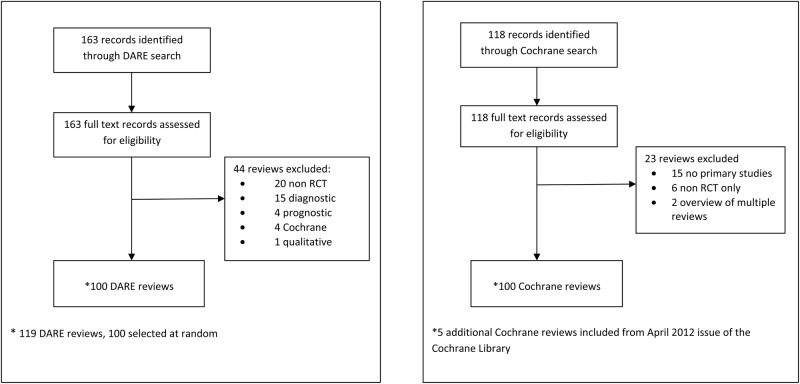
Objective: We examined how assessments of risk of bias of primary studies are carried out and incorporated into the statistical analysis and overall findings of a systematic review. Design: A cross-sectional review. Sample: We assessed 200 systematic reviews of randomised trials published between January and March 2012; Cochrane (n=100), non-Cochrane (Database of Reviews of Effects) (n=100). Main outcomes: Our primary outcome was a descriptive analysis of how assessments of risk of bias are carried out, the methods used, and the extent to which such assessments were incorporated into the statistical analysis and overall review findings. Results: While Cochrane reviews routinely reported the method of risk of bias assessment and presented their results either in text or table format, 20% of non-Cochrane reviews failed to report the method used and 39% did not present the assessment results. Where it was possible to evaluate the individual results of the risk of bias assessment (n=154), 75% (n=116/154) of reviews had ≥1 trial at high risk of bias; the median proportion of trials per review at high risk of bias was 50% (IQR 31% to 89%). Despite this, only 56% (n=65/116) incorporated the risk of bias assessment into the interpretation of the results in the abstract and 41% (n=47/116) (49%; n=40/81 Cochrane and 20%; n=7/35 non-Cochrane) incorporated the risk of bias assessment into the interpretation of the conclusions. Of the 83% (n=166/200) systematic reviews which included a meta-analysis, only 11% (n=19/166) incorporated the risk of bias assessment into the statistical analysis. Conclusions: Cochrane reviews were more likely than non-Cochrane reviews to report how risk of bias assessments of primary studies were carried out; however, both frequently failed to take such assessments into account in the statistical analysis and conclusions of the systematic review.
Overview
The claims and statistics of this paper haven’t been checked yet.
Free: it reads the open-access text and checks the first 5 claims that cite a source we can check. Create a free account to check every claim.
Integrity signals
Registry
Cites
Statistics
Figures
Verification
Claims the paper makes
The claims and statistics of this paper haven’t been checked yet.
Free: it reads the open-access text and checks the first 5 claims that cite a source we can check. Create a free account to check every claim.
Claims other papers make about this one
Each is checked against this paper’s own text: does it say what the citing paper says it does?
The cited source says what the claim attributes to it.
In the citing paper
“More guidance on incorporating riskof-bias assessments into meta-analyses and review conclusions is also needed. 4 5”
From RoB 2: a revised tool for assessing risk of bias in randomised trials (2019) · cites this paper as [4]
Self-check
Percentages, sums and reported differences re-computed from the paper’s own numbers.
The self-check needs the paper’s full text.
Citations
Cites
Preferred Reporting Items for Systematic Reviews and Meta-Analyses: the PRISMA statement
Moher, D., Liberati, A., Tetzlaff, J., Altman, D. G., & for the PRISMA Group (2009) · BMJ · doi:10.1136/bmj.b2535 · Cited by 83,823
Self-citationPreferred reporting items for systematic reviews and meta-analyses: the PRISMA Statement.
(2009) · PubMed Central · Cited by 44,859
Self-citationThe Cochrane Collaboration's tool for assessing risk of bias in randomised trials
Higgins, J. P. T., Altman, D. G., Gotzsche, P. C., Juni, P., Moher, D., Oxman, A. D., Savovic, J., Schulz, K. F., Weeks, L., Sterne, J. A. C., et al. (2011) · BMJ · doi:10.1136/bmj.d5928 · Cited by 33,817
Self-citationLiberati, A., Altman, D. G., Tetzlaff, J., Mulrow, C., Gøtzsche, P. C., Ioannidis, J. P. A., Clarke, M., Devereaux, P. J., Kleijnen, J., & Moher, D. (2009) · PLoS Medicine · doi:10.1371/journal.pmed.1000100 · Cited by 28,164
Self-citationGRADE: an emerging consensus on rating quality of evidence and strength of recommendations
Guyatt, G. H., Oxman, A. D., Vist, G. E., Kunz, R., Falck-Ytter, Y., Alonso-Coello, P., & Schünemann, H. J. (2008) · BMJ · doi:10.1136/bmj.39489.470347.ad · Cited by 23,305
Preferred Reporting Items for Systematic Reviews and Meta-Analyses: The PRISMA Statement
Moher, D., Liberati, A., Tetzlaff, J., & Altman, D. G. (2009) · Journal of Clinical Epidemiology · doi:10.1016/j.jclinepi.2009.06.005 · Cited by 19,575
Self-citationAssessing the quality of reports of randomized clinical trials: Is blinding necessary?
Jadad, A. R., Moore, R. A., Carroll, D., Jenkinson, C., Reynolds, D. J. M., Gavaghan, D. J., & McQuay, H. J. (1996) · Controlled Clinical Trials · doi:10.1016/0197-2456(95)00134-4 · Cited by 17,582
Liberati, A., Altman, D. G., Tetzlaff, J., Mulrow, C., Gøtzsche, P. C., Ioannidis, J. P. A., Clarke, M., Devereaux, P. J., Kleijnen, J., & Moher, D. (2009) · Annals of Internal Medicine · doi:10.7326/0003-4819-151-4-200908180-00136 · Cited by 10,349
Self-citation(2008) · Cited by 3,790
Assessing Risk of Bias in Included Studies
Higgins, J. P., & Altman, D. G. (2008) · Cochrane Handbook for Systematic Reviews of Interventions · doi:10.1002/9780470712184.ch8 · Cited by 3,396
Self-citation
Research works printed but not linked: 2
- Schulz KF Grimes DA The Lancet hadbook of essential concepts in clincal research. London: Elsevier 2006
- Methods guide for effectiveness and comparative effectiveness reviews. AHRQ Publication No 10(12)-EHC063-EF. Rockville, MD: Agency for Healthcare Research and Quality. 2012. http://www.effectivehealthcare.hrq.gov 21433403
Cited by
RoB 2: a revised tool for assessing risk of bias in randomised trials
Sterne, J. A. C., Savović, J., Page, M. J., Elbers, R. G., Blencowe, N. S., Boutron, I., Cates, C. J., Cheng, H.-Y., Corbett, M. S., Eldridge, S. M., et al. (2019) · BMJ · doi:10.1136/bmj.l4898 · Cited by 34,787
Self-citationJørgensen, L., Paludan-Müller, A. S., Laursen, D. R. T., Savović, J., Boutron, I., Sterne, J. A. C., Higgins, J. P. T., & Hróbjartsson, A. (2016) · Systematic Reviews · doi:10.1186/s13643-016-0259-8 · Cited by 396
“Hopewell and colleagues [16] studied assessment of risk of bias in Cochrane and non-Cochrane reviews indexed in The Database of Abstracts of Reviews of Effects (DARE) [17] and published in 2012.”
BackgroundSelf-citationConsidering bias and conflicts of interest among the included studies
Boutron, I., Page, M. J., Higgins, J. P., Altman, D. G., Lundh, A., Hróbjartsson, A., & on behalf of the Cochrane Bias Methods Group (2019) · Cochrane Handbook for Systematic Reviews of Interventions · doi:10.1002/9781119536604.ch7 · Cited by 258
Self-citationRandomized Clinical Trials of Machine Learning Interventions in Health Care: A Systematic Review
Plana, D., Shung, D. L., Grimshaw, A. A., Saraf, A., Sung, J. J. Y., & Kann, B. H. (2022) · JAMA Network Open · doi:10.1001/jamanetworkopen.2022.33946 · Cited by 236
Association Between Analytic Strategy and Estimates of Treatment Outcomes in Meta-analyses
Dechartres, A., Altman, D. G., Trinquart, L., Boutron, I., & Ravaud, P. (2014) · JAMA · doi:10.1001/jama.2014.8166 · Cited by 233
Self-citationSchraag, S., Pradelli, L., Alsaleh, A. J. O., Bellone, M., Ghetti, G., Chung, T. L., Westphal, M., & Rehberg, S. (2018) · BMC Anesthesiology · doi:10.1186/s12871-018-0632-3 · Cited by 194
Lu, C., Lu, T., Ge, L., Yang, N., Yan, P., & Yang, K. (2020) · Annals of Translational Medicine · doi:10.21037/atm-20-392a · Cited by 165
“Studies have shown that quality of SRs can be influenced by many factors (9-11), e.”
BackgroundKatikireddi, S. V., Egan, M., & Petticrew, M. (2015) · Journal of Epidemiology and Community Health · doi:10.1136/jech-2014-204711 · Cited by 126
Basic study design influences the results of orthodontic clinical investigations
Papageorgiou, S. N., Xavier, G. M., & Cobourne, M. T. (2015) · Journal of Clinical Epidemiology · doi:10.1016/j.jclinepi.2015.03.008 · Cited by 108
“Various methods have also been suggested to inform the meta-analysis results about the extent of bias by empirically based priors [58] or directly by mixed treatment comparison meta-analysis [59] but are not widely used and may require specialized statistical expertise and software [60].”
MethodMeta-analyses including non-randomized studies of therapeutic interventions: a methodological review
Faber, T., Ravaud, P., Riveros, C., Perrodeau, E., & Dechartres, A. (2016) · BMC Medical Research Methodology · doi:10.1186/s12874-016-0136-0 · Cited by 100
“Another critical part of the systematic review process is assessing the methodological quality or risk of bias of the studies included, because the validity of the meta-analysis could be questionable with problems in the design and conduct of individual studies [40].”
BackgroundSelf-citationEtoom, M., Hawamdeh, M., Hawamdeh, Z. M., Al-Wardat, M. S., Giordani, L., Bacciu, S., Scarpini, C., & Foti, C. (2016) · International Journal of Rehabilitation Research · doi:10.1097/mrr.0000000000000169 · Cited by 110
“For example, inadequate allocation concealment may overestimate the treatment effects by 5–30% (Hopewell et al., 2013) and lack of double blinding may overestimate the effect by 9–44% (Savovic et al., 2012).”
BackgroundRzewuska, M., Ferreira, M. L., McLachlan, A. J., Machado, G. C., & Maher, C. G. (2015) · European Spine Journal · doi:10.1007/s00586-015-3821-5 · Cited by 89
“Physiotherapy Evidence Database (PEDro) scale [29, 30], which has been shown to be a valid and reliable tool in assessing trial methodological quality [29, 30] and is commonly used to assess the risk of bias in clinical trials [31].”
Bias from historical control groups used in orthodontic research: a meta-epidemiological study
Papageorgiou, S. N., Koretsi, V., & Jäger, A. (2017) · The European Journal of Orthodontics · doi:10.1093/ejo/cjw035 · Cited by 80
“Various methods have also been suggested to inform the meta-analysis results about the extent of bias by empirically based priors (32) or directly by mixed treatment comparison meta-analysis (33), but are not widely used and may require specialized statistical expertise and software (34).”
MethodSystematic reviews experience major limitations in reporting absolute effects
Alonso-Coello, P., Carrasco-Labra, A., Brignardello-Petersen, R., Neumann, I., Akl, E. A., Vernooij, R. W. M., Johnston, B. C., Sun, X., Briel, M., Busse, J. W., et al. (2016) · Journal of Clinical Epidemiology · doi:10.1016/j.jclinepi.2015.11.002 · Cited by 70
Boutron, I., Créquit, P., Williams, H. C., Meerpohl, J. J., Craig, J. C., & Ravaud, P. (2020) · Journal of Clinical Epidemiology · doi:10.1016/j.jclinepi.2020.01.024 · Cited by 70
“considered in the interpretation of results [15,18], and reporting bias is often ignored when”
BackgroundSelf-citationTurner, L., Boutron, I., Hróbjartsson, A., Altman, D. G., & Moher, D. (2013) · Systematic Reviews · doi:10.1186/2046-4053-2-79 · Cited by 62
Self-citationBüttner, F., Winters, M., Delahunt, E., Elbers, R., Lura, C. B., Khan, K. M., Weir, A., & Ardern, C. L. (2020) · British Journal of Sports Medicine · doi:10.1136/bjsports-2019-101675 · Cited by 55
Rethinking the assessment of risk of bias due to selective reporting: a cross-sectional study
Page, M. J., & Higgins, J. P. T. (2016) · Systematic Reviews · doi:10.1186/s13643-016-0289-2 · Cited by 60
Automating Risk of Bias Assessment for Clinical Trials
Marshall, I. J., Kuiper, J., & Wallace, B. C. (2015) · IEEE Journal of Biomedical and Health Informatics · doi:10.1109/jbhi.2015.2431314 · Cited by 59
Agarwal, A., Johnston, B. C., Vernooij, R. W. M., Carrasco‐Labra, A., Brignardello‐Petersen, R., Neumann, I., Akl, E. A., Sun, X., Briel, M., Busse, J. W., et al. (2016) · Journal of Clinical Epidemiology · doi:10.1016/j.jclinepi.2016.08.004 · Cited by 49
Detweiler, B., Kollmorgen, L., Umberham, B. A., Hedin, R. J., & Vassar, M. B. (2016) · Anaesthesia · doi:10.1111/anae.13520 · Cited by 44
“Hopewell et al. conducted a cross-sectional review of risk of bias assessment, but it was limited to systematic reviews from the Cochrane Database and non-Cochrane reviews from the Database of Abstracts of Reviews of Effects (DARE) [14].”
BackgroundBertizzolo, L., Bossuyt, P., Atal, I., Ravaud, P., & Dechartres, A. (2019) · BMJ Open · doi:10.1136/bmjopen-2018-028382 · Cited by 35
Self-citationKahale, L. A., Diab, B., Brignardello-Petersen, R., Agarwal, A., Mustafa, R. A., Kwong, J., Neumann, I., Li, L., Lopes, L. C., Briel, M., et al. (2018) · Journal of Clinical Epidemiology · doi:10.1016/j.jclinepi.2018.02.016 · Cited by 37
Petersen, J. M., Barrett, M., Ahrens, K. A., Murray, E. J., Bryant, A., HOGUE, C. J. R., Mumford, S. L., Gadupudi, S. S., Fox, M. P., & Trinquart, L. (2022) · Research Synthesis Methods · doi:10.1002/jrsm.1544 · Cited by 36
“Moreover, it is insufficient to simply describe whether control was adequate; incorporation of such assessments into meta-analyses is necessary for drawing valid conclusions from the best available observational evidence.(7,8) Most systematic reviews of observational studies do not define the most important confounder…”
BackgroundAkl, E. A., Carrasco‐Labra, A., Brignardello‐Petersen, R., Neumann, I., Johnston, B. C., Sun, X., Briel, M., Busse, J. W., Ebrahim, S., Granados, C., et al. (2015) · BMJ Open · doi:10.1136/bmjopen-2015-009368 · Cited by 33
“A recent study examined how 100 Cochrane systematic reviews and 100 non-Cochrane systematic reviews published in 2012 assessed risk of bias of primary studies and incorporated them into their statistical analysis and overall findings.(7) The investigators found that incomplete outcome data, defined as missing outcome…”
BackgroundAutomating risk of bias assessment for clinical trials
Marshall, I. J., Kuiper, J., & Wallace, B. C. (2014) · Proceedings of the 5th ACM Conference on Bioinformatics, Computational Biology, and Health Informatics · doi:10.1145/2649387.2649406 · Cited by 28
“Additionally, the tool is now widely used outside of Cochrane [32].”
MethodGevert, M. V., Soares, R. C., Wambier, L. M., Ribeiro, A. E., Avais, L. S., de Souza, J. F., & Chibinski, A. C. R. (2022) · Clinical Oral Investigations · doi:10.1007/s00784-022-04612-9 · Cited by 25
“Registering a research protocol prior to the development of the systematic review is a fundamental step in the development of any systematic review that makes the research transparent and reproducible [18, 19, 22].”
BackgroundOchodo, E., van Enst, W. A., Naaktgeboren, C. A., de Groot, J. A. H., Hooft, L., Moons, K. G. M., Reitsma, J. B., Bossuyt, P. M., & Leeflang, M. (2014) · BMC Medical Research Methodology · doi:10.1186/1471-2288-14-33 · Cited by 24
“A similar study done almost 10 years later by Hopewell and colleagues [15] reported that only 41% of the 200 reviews they examined incorporated the risk of bias assessment into the interpretation of their conclusions.”
ResultBoussageon, R., Blanchard, C., Charuel, É., Ménini, T., Pereira, B., Naudet, F., Kassaï, B., Gueyffier, F., Cucherat, M., & Vaillant-Roussel, H. (2022) · Therapies · doi:10.1016/j.therap.2022.10.008 · Cited by 22
Rhodes, K. M., Savović, J., Elbers, R. G., Jones, H. E., Higgins, J. P. T., Sterne, J. A. C., Welton, N. J., & Turner, R. (2019) · Journal of the Royal Statistical Society Series A (Statistics in Society) · doi:10.1111/rssa.12485 · Cited by 20
“Our methods make use of risk-of-bias tables that are routinely created as part of Cochrane reviews and are commonly created also in non-Cochrane reviews (Hopewell et al. , 2013), meaning that the additional work of preparing summary trial information for the elicitation is minimal.”
The role of catastrophizing in chronic cyclical pelvic pain: A systematic review and meta-analysis
Rabinowitz, E. P., Sayer, M. A., & Delahanty, D. L. (2023) · Women s Health · doi:10.1177/17455057231199949 · Cited by 18
“59”
Riberholt, C. G., Olsen, M. H., Milan, J. B., Hafliðadóttir, S. H., Svanholm, J. H., Pedersen, E. B., Lew, C. C. H., Asante, M. A., Ribeiro, J. P., Wagner, V., et al. (2024) · BMC Medical Research Methodology · doi:10.1186/s12874-024-02318-y · Cited by 18
Zeraatkar, D., Kohut, A., Bhasin, A. A., Morassut, R. E., Churchill, I. F., Gupta, A. A., Lawson, D. O., Miroshnychenko, A., Sirotich, E., Aryal, K., et al. (2021) · BMJ Nutrition Prevention & Health · doi:10.1136/bmjnph-2021-000248 · Cited by 17
The Problem of Biased Data and Potential Solutions for Health and Environmental Assessments
Suter, G. W., & Cormier, S. M. (2014) · Human and Ecological Risk Assessment An International Journal · doi:10.1080/10807039.2014.974499 · Cited by 17
“• Use the review of the data source to assign a weight to each piece of evidence derived from the data and incorporate the risk of bias into the conclusions (Hopewell et al. 2013; McCarty et al. 2012).”
BackgroundMuchandifunga Trust Muchadeyi, Hernández-Villafuerte, K., & Schlander, M. (2022) · BMC Medical Research Methodology · doi:10.1186/s12874-022-01784-6 · Cited by 16
Methodological quality is underrated in systematic reviews and meta-analyses in health psychology
Oliveras, I., Losilla, J.-M., & Vives, J. (2017) · Journal of Clinical Epidemiology · doi:10.1016/j.jclinepi.2017.05.002 · Cited by 15
Akl, E. A., Kahale, L. A., Agarwal, A., Al-Matari, N., Ebrahim, S., Alexander, P. E., Briel, M., Brignardello‐Petersen, R., Busse, J. W., Diab, B., et al. (2014) · Systematic Reviews · doi:10.1186/2046-4053-3-137 · Cited by 15
“A major reason is that the former reviews tend to be of higher methodological quality compared to the latter [19,20].”
Zeng, L., Ning-sheng, W., Wang, Q., Zou, Y., Liang, Z., Kong, L., Wu, H., Liao, N.-Y., Liang, X.-W., & Mo, Y. (2015) · Complementary Therapies in Medicine · doi:10.1016/j.ctim.2015.01.014 · Cited by 15
Bevacizumab versus ranibizumab for neovascular age-related macular degeneration: a Meta-analysis.
Wang, W., Chen, J., Zhang, X., Yao, M., Liu, X.-Y., Zhou, Q., & Qu, Y.-X. (2015) · International Journal of Ophthalmology · doi:10.3980/j.issn.2222-3959.2015.01.26 · Cited by 13
Bo, A., Hai, A. H., Chen, D., & Hammock, K. (2021) · Journal of Clinical Epidemiology · doi:10.1016/j.jclinepi.2021.06.012 · Cited by 12
Yavchitz, A., Ravaud, P., Hopewell, S., Baron, G., & Boutron, I. (2014) · BMC Medical Research Methodology · doi:10.1186/1471-2288-14-123 · Cited by 11
“The search strategy and eligibility criteria for this cohort were described elsewhere [13].”
BackgroundMethodInfluentialSelf-citationEfficacy of laser therapy on primary burning mouth syndrome: a systematic review
Khemiss, M., Dammak, N., Lajili, O., Yacoub, S., & Khélifa, M. B. (2024) · Journal of Oral & Facial Pain and Headache · doi:10.22514/jofph.2024.003 · Cited by 9
Systematic Reviews and Meta‐Analysis
Crombie, I. (2021) · Wiley eBooks · doi:10.1002/9781394322183.ch5 · Cited by 9
Effects of acupuncture on musculoskeletal pain: an evidence map
Ang, L., Song, E., Choi, T., Jun, J. H., Lee, B., Yim, M. H., Lee, H. W., & Lee, M. S. (2025) · Frontiers in Medicine · doi:10.3389/fmed.2025.1575226 · Cited by 8
Place of placebo therapy in the treatment of burning mouth syndrome: A systematic review
Khemiss, M., Chaabouni, D., Khaled, R. B., & Khélifa, M. B. (2022) · Dental and Medical Problems · doi:10.17219/dmp/152646 · Cited by 7
Psilocybin-assisted psychotherapy in adults with depression – A literature review
Dorczok, M. C., Mittmann, G., Ettl, T., & Steiner‐Hofbauer, V. (2025) · Progress in Neuro-Psychopharmacology and Biological Psychiatry · doi:10.1016/j.pnpbp.2025.111508 · Cited by 4
Long, Y., Wang, X., Xiao, W., Chen, R., Guo, Q., Liu, J., Shao, R., Huang, J., & Du, L. (2020) · Acupuncture in Medicine · doi:10.1177/0964528420946043 · Cited by 4
Whiting, P. F., Wolff, R. F., Savović, J., Devine, B., & Mallett, S. (2024) · Journal of Clinical Epidemiology · doi:10.1016/j.jclinepi.2024.111486 · Cited by 4
Bertizzolo, L., Bossuyt, P. M., Atal, I., Ravaud, P., & Dechartres, A. (2020) · Journal of Clinical Epidemiology · doi:10.1016/j.jclinepi.2020.03.008 · Cited by 3
Self-citationAssessing the Risk of Bias in Randomized Trials
Page, M. J., Altman, D. G., & Egger, M. (2022) · Wiley eBooks · doi:10.1002/9781119099369.ch4 · Cited by 3
Self-citationVitamin D lacks efficacy: A re‐analysis of a systematic review using the REB method
Bironneau, V., Palamede, M. L., Charuel, É., Jouault, C., Blanchard, C., Mainbourg, S., Grenet, G., Roussel, H. V., & Boussageon, R. (2025) · Fundamental and Clinical Pharmacology · doi:10.1111/fcp.70011 · Cited by 2
“…collaboration recommends performing a primary meta-analysis excluding RCTs with a high risk of bias or performing a meta-analysis stratified according to the risk of bias [21], only 11% to 16% of the meta-analyses consider the risk of bias of included studies in their statistical analysis [22, 23].”
Bittar, I., GUYENARD, L., Blanchard, C., & Boussageon, R. (2026) · European Journal of Clinical Pharmacology · doi:10.1007/s00228-025-03927-2 · Cited by 2
“The REB method consists of a sensitivity analysis based on the risk of bias, as recommended but rarely performed [27, 28 ].”
Zhang, J., Wang, J., Han, L., Cao, X., & Shields, L. E. (2016) · Nursing Outlook · doi:10.1016/j.outlook.2016.11.004 · Cited by 2
“Compared to our study, 95% of the Cochrane reviews n Hopewell’s study[21] used the Cochrane Handbook, while 27% non-Cochrane revie ws did so (Table 3).”
BackgroundMethodResultInfluentialFramskyggnar slembirannsóknir og þýðing þeirra fyrir framþróun læknisfræðinnar
Þorgeirsson, G. (2014) · Hirsla (Landspítali University Hospital) · Cited by 2
Buitrago Garcia, D. C. (2018) · Repositorio Institucional UN - Biblioteca Digital · Cited by 2
Savage, A. J., Shafik, C. G., Savage, S. A., Catalano, J. D., Tee, J., Akhlaghi, H., Dhillon, R., & O’Donohoe, T. J. (2024) · Journal of Clinical Neuroscience · doi:10.1016/j.jocn.2024.110916 · Cited by 1
Kutash, L. A., Sayer, M. A., & Delahanty, D. L. (2025) · Psychosomatic Medicine · doi:10.1097/psy.0000000000001359 · Cited by 1
de Fréminville, H., Lucatelli, L., Chanelière, M., Grenet, G., Mainbourg, S., & Boussageon, R. (2025) · Fundamental and Clinical Pharmacology · doi:10.1111/fcp.70052 · Cited by 1
Is there a link between journal quality and evaluation quality in road safety research?
Ambros, J., & Kieć, M. (2026) · Transportation Research Interdisciplinary Perspectives · doi:10.1016/j.trip.2025.101813 · Cited by 1
Turner, R., Rhodes, K. M., Jones, H. E., Higgins, J. P. T., Haskins, J. A., Whiting, P. F., Hróbjartsson, A., Caldwell, D. M., Morris, R. W., Reeves, B. C., et al. (2020) · Journal of Clinical Epidemiology · doi:10.1016/j.jclinepi.2020.05.009 · Cited by 1
“Most systematic reviews do not incorporate bias assessments into the statistical analysis [11].”
BackgroundSelf-citationDo Academics Doubt Their Own Research?Preprint
Stapleton, L. M. (2015) · SSRN Electronic Journal · doi:10.2139/ssrn.2744576
“Further, there is no guarantee that research synthesists will follow good practice in terms of identification, analysis and reporting (Hopewell et al., 2013; Moher et al., 1999; Moher et al., 2009; Moja et al., 2005; Stanley et al, 2013) which begs the question of the relative validity of their…”
BackgroundPelcowitz, M. J. (2016) · TSpace (University of Toronto)
Ferreira, C. A., Atallah, Á. N., & Loureiro, C. A. (2020) · Sao Paulo Medical Journal · doi:10.1590/1516-3180.2019.0458.r1.04022020
Improving risk of bias assessment and quality of reporting in clinical research
Bertizzolo, L. (2021) · theses.fr (ABES) · doi:10.70675/7c89a3e9zfac2z4b5bza6a5z77fb27b5a29b
Vediya, N., Jain, V., Sritharan, P., Param, A., Shah, A., Lameire, D. L., & Khoshbin, A. (2025) · Arthroplasty Today · doi:10.1016/j.artd.2025.101913
“…experimental treatment despite high ROB in primary studies”, was the predominant form of spin, present in 86.5% of SRs. Literature across other medical fields is consistent with this finding where ROB analyses are not used meaningfully in the overall conclusion or discussion of the results [68].”
InfluentialMuchandifunga Trust Muchadeyi, Hernández-Villafuerte, K., & Schlander, M. (2022) · Figshare · doi:10.6084/m9.figshare.21629208
Retos y oportunidades de la diseminación de la investigación clínica del cáncer
Silva, M. P. B., & de Pediatria, D. I. G. I. D. M. P. U. A. D. B. D. (2019) · Tesis Doctorals en Xarxa (Consorci de Serveis Universitaris de Catalunya)
Wenger, D., Balcerak, G., Johnson, A., & Johnson, B. (2020) · Oklahoma State Medical Proceedings
Mendes, R. A. (2022) · LA Referencia (Red Federada de Repositorios Institucionales de Publicaciones Científicas)
Smaïl‐Faugeron, V. (2015) · theses.fr (ABES) · doi:10.70675/5e01de18z5c23z4d25z9460zdfc581dee0a4
Le gaspillage évitable de la recherche dans les essais cliniques
Yordanov, Y. (2019) · theses.fr (ABES) · doi:10.70675/130e8831z862fz47f2z8000z2f04c8541788
Balogun, O. T., Jain, V., Sritharan, P., Param, A., Shah, A., Lameire, D. L., & Sheth, U. (2026) · Shoulder & Elbow · doi:10.1177/17585732261472066
“These fi ndings reinforce prior work showing that up to 59% of SRs fail to consider risk of bias in their abstract or conclusions 71,72 The PRISMA guidelines themselves which have extensive reporting guidelines for manuscripts only feature one recommendation for abstracts; therefore, there is…”
Cheng, J., Wang, F., Dai, Z., Li, Z., Kong, X., Xinwei, W., Zhang, H., & Wang, Y. (2026) · Digital Health · doi:10.1177/20552076261487043
Sritharan, P., Jain, V., Cecere, M., Lameire, D. L., Chahal, J., Wasserstein, D., Atrey, A., & Khoshbin, A. (2026) · EFORT Open Reviews · doi:10.1530/eor-2025-0242
Kostakis, N., Lega, J., & Boussageon, R. (2026) · Fundamental and Clinical Pharmacology · doi:10.1111/fcp.70112
Metadata
- Authors
- Hopewell, S., Boutron, I., Altman, D. G., & Ravaud, P.
- Affiliations
- Inserm (FR)
- University of Oxford (GB)
- Corresponding author
- Hopewell, Sally
- Venue
- BMJ Open
- Publisher
- BMJ
- Published
- 2013-08
- Volume
- 3
- Issue
- 8
- Pages
- e003342
- ISSN
- 2044-6055 (ISSN-L)
- PMC
- PMC3753473
- OpenAlex
- W2121498030
- Cited by
- 66
- References
- 21
- Citations by year
- 2026: 5 · 2025: 5 · 2024: 4 · 2023: 1 · 2022: 6 · 2021: 4 · 2020: 6 · 2019: 6 · 2018: 2 · 2017: 1 · 2016: 9 · 2015: 8 · 2014: 8 · 2013: 1
- FWCI
- 1.78
- Type
- journal article
- Language
- en
- Open access
- gold
- doi.org
- Licence
- cc-by-nc
- Locations
- BMJ Open (publishedVersion, cc-by-nc)
- Europe PMC (PubMed Central) (publishedVersion, cc-by-nc)
- PubMed Central (publishedVersion, cc-by-nc)
- PubMed (publishedVersion)
- Topics
- Social Sciences › Decision Sciences › Statistics, Probability and Uncertainty › Meta-analysis and systematic reviews
- Physical Sciences › Mathematics › Statistics and Probability › Statistical Methods in Epidemiology
- Health Sciences › Nursing › Issues, ethics and legal aspects › Pharmaceutical industry and healthcare
- Keywords
- risk of bias assessment, systematic reviews, randomised trials, reporting quality, meta-analysis
About these checks
Registry, retraction, Cites and statistics results are computed, not judged, with one exception: a printed reference that no index lists is read once by a model before it counts as a citation error. Claims are extracted by a model and kept only when their quote appears verbatim in the text; each cited source is then checked, with a model’s help, for whether it says what the claim relies on. Those verdicts can be wrong — read the claim’s quote and the cited source before relying on one.
Statistics and arithmetic are recomputed, not judged.
Confidence bands are shown only for fields calibrated on our annotated test set. None is calibrated yet, so no band is shown.
What counts as a claim ›How we measure confidence ›How we check this ›
Are you an author, or do you see a problem with this page? Request a review
Data sources
Bibliographic data: Semantic Scholar, OpenAlex, Crossref.
Contains information from the Semantic Scholar Academic Graph Datasets, made available under the ODC Attribution License (ODC-BY 1.0).
Semantic Scholar’s data is described in: Kinney, R., et al. (2023). The Semantic Scholar Open Data Platform. arXiv:2301.10140.
