

Pioglitazone and cardiovascular outcomes in patients with insulin resistance, pre-diabetes and type 2 diabetes: a systematic review and meta-analysis
Open accessThe DOI matches its Crossref record; 41 of the 44 references it cites were found in a registry or an index.
Abstract
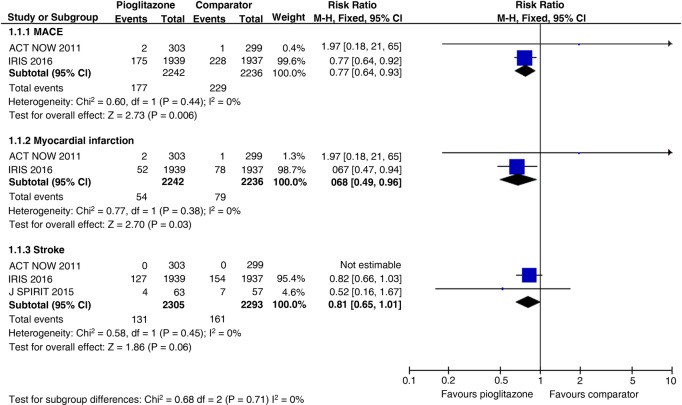
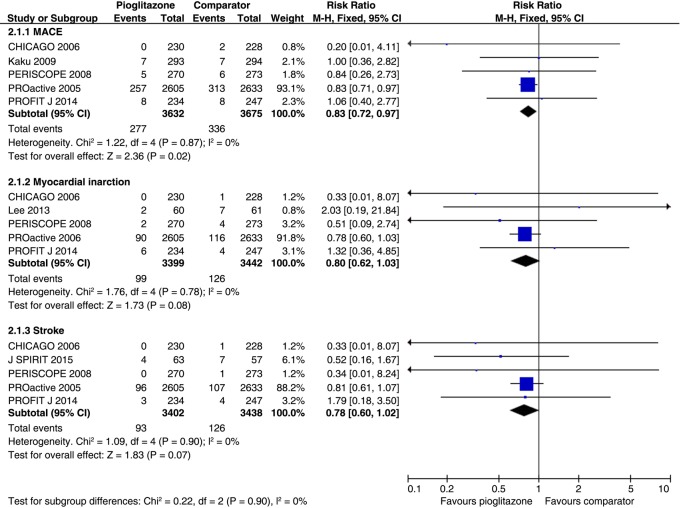
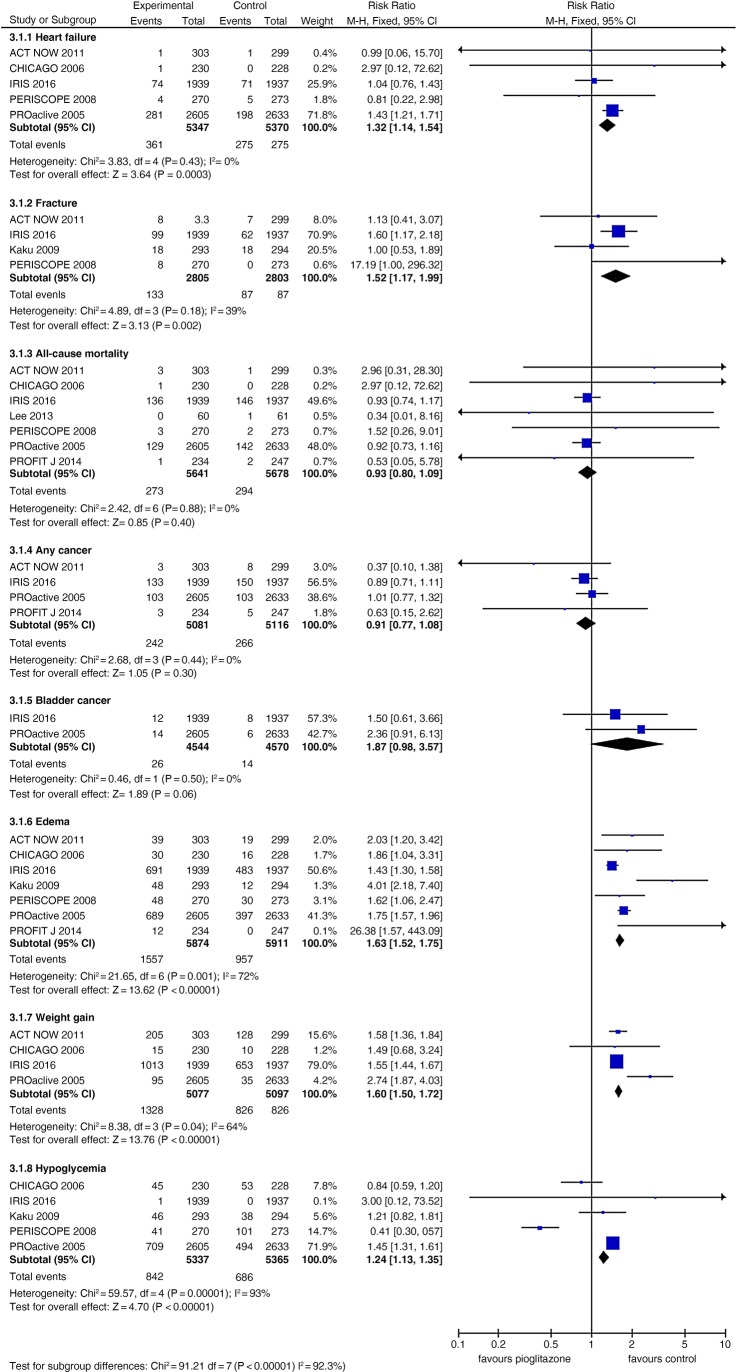
Objectives: To evaluate the effect of pioglitazone in people with insulin resistance, pre-diabetes and type 2 diabetes. Design and setting: Systematic review and meta-analysis of randomised, controlled trials. Data sources: Literature searches were performed across PubMed, EMBASE, MEDLINE and Cochrane Central Register of Controlled Trials from 1966 to May 2016 to identify randomised, controlled trials with more than 1 year follow-up. Outcome measures: Relative risk (RR) with 95% CI was used to evaluate the association between pioglitazone and the risk of major adverse cardiovascular events (MACE: composite of non-fatal myocardial infarction, non-fatal stroke and cardiovascular death) and safety outcomes, after pooling data across trials in a fixed-effects model. Results: Nine trials with 12 026 participants were enrolled in the current meta-analysis. Pioglitazone therapy was associated with a lower risk of MACE in patients with pre-diabetes or insulin resistance (RR 0.77, 95% CI 0.64 to 0.93), and diabetes (RR 0.83, 95% CI 0.72 to 0.97). Risks of heart failure (RR 1.32; CI 1.14 to 1.54), bone fracture (RR 1.52, 95% CI 1.17 to 1.99), oedema (RR, 1.63; CI 1.52 to 1.75) and weight gain (RR 1.60; CI 1.50 to 1.72) increased in pioglitazone group. Conclusions: Pioglitazone was associated with reduced risk of MACE in people with insulin resistance, pre-diabetes and diabetes mellitus. However, the risks of heart failure, bone fracture, oedema and weight gain were increased.
Overview
The claims and statistics of this paper haven’t been checked yet.
Free: it reads the open-access text and checks the first 5 claims that cite a source we can check. Create a free account to check every claim.
Integrity signals
Registry
Cites
Statistics
Figures
Verification
Claims the paper makes
The claims and statistics of this paper haven’t been checked yet.
Free: it reads the open-access text and checks the first 5 claims that cite a source we can check. Create a free account to check every claim.
Claims other papers make about this one
Each is checked against this paper’s own text: does it say what the citing paper says it does?
The check wasn’t confident either way, so it gives no verdict — never disputed.
In the citing paper
“Dulaglutide has an additional indication to reduce MACE for people with T2D with and without established CVD.”
From American Association of Clinical Endocrinology Clinical Practice Guideline: Developing a Diabetes Mellitus Comprehensive Care Plan-2022 Update. (2022) · cites this paper as [662]
Experimental — accuracy not yet measuredThe check wasn’t confident either way, so it gives no verdict — never disputed.
In the citing paper
“Currently, FDAeapproved indications for the GLP-1 RAs exenatide QW, lixisenatide, and oral semaglutide are to improve glycemic control in adults with T2D.”
From American Association of Clinical Endocrinology Clinical Practice Guideline: Developing a Diabetes Mellitus Comprehensive Care Plan-2022 Update. (2022) · cites this paper as [662]
Experimental — accuracy not yet measuredThe check wasn’t confident either way, so it gives no verdict — never disputed.
In the citing paper
“Liraglutide and semaglutide SC are approved to reduce the risk of MI, CVA, or CV death in adults with T2D and CVD.662”
From American Association of Clinical Endocrinology Clinical Practice Guideline: Developing a Diabetes Mellitus Comprehensive Care Plan-2022 Update. (2022) · cites this paper as [662]
Experimental — accuracy not yet measured
Self-check
Percentages, sums and reported differences re-computed from the paper’s own numbers.
The self-check needs the paper’s full text.
Citations
Cites
Preferred Reporting Items for Systematic Reviews and Meta-Analyses: the PRISMA statement
Moher, D., Liberati, A., Tetzlaff, J., Altman, D. G., & for the PRISMA Group (2009) · BMJ · doi:10.1136/bmj.b2535 · Cited by 83,823
Preferred reporting items for systematic reviews and meta-analyses: the PRISMA Statement.
(2009) · PubMed Central · Cited by 44,859
Effect of Rosiglitazone on the Risk of Myocardial Infarction and Death from Cardiovascular Causes
Nissen, S. E., & Wolski, K. (2007) · New England Journal of Medicine · doi:10.1056/nejmoa072761 · Cited by 4,675 · cited 1×
“However, the observed cardiovascular benefits of pioglitazone cannot be simply explained by a thiazolidinedione ‘class effect’, since another agent in this class, rosiglitazone, has been associated with an increased risk of cardiovascular events in several meta-analyses.(29) 30 There are several safety considerations…”
BackgroundDormandy, J. A., Charbonnel, B., Eckland, D. J., Erdmann, E., Massi-Benedetti, M., Moules, I. K., Skene, A. M., Tan, M. H., Lefèbvre, P. J., Murray, G. D., et al. (2005) · The Lancet · doi:10.1016/s0140-6736(05)67528-9 · Cited by 4,129
Progress and challenges in translating the biology of atherosclerosis
Libby, P., Ridker, P. M., & Hansson, G. K. (2011) · Nature · doi:10.1038/nature10146 · Cited by 4,010
Cholesterol efflux capacity, high-density lipoprotein function, and atherosclerosis
Khera, A. V., Cuchel, M., de la Llera-Moya, M., Rodrigues, A., Burke, M. F., Jafri, K., French, B. C., Phillips, J. A., Mucksavage, M. L., Wilensky, R. L., et al. (2011) · New England Journal of Medicine · doi:10.1056/nejmoa1001689 · Cited by 1,943 · cited 1×
“Also, cholesterol efflux capacity was inversely associated with the incidence of cardiovascular events in a population-based cohort(26) and treatment with pioglitazone for 12 weeks significantly increased the cholesterol efflux capacity.(27) In a study using serial (18) F-fluorodeoxyglucose positron emission tomograph…”
BackgroundTrial sequential analysis may establish when firm evidence is reached in cumulative meta-analysis
Wetterslev, J., Thorlund, K., Brok, J., & Gluud, C. (2008) · Journal of Clinical Epidemiology · doi:10.1016/j.jclinepi.2007.03.013 · Cited by 1,881 · cited 1×
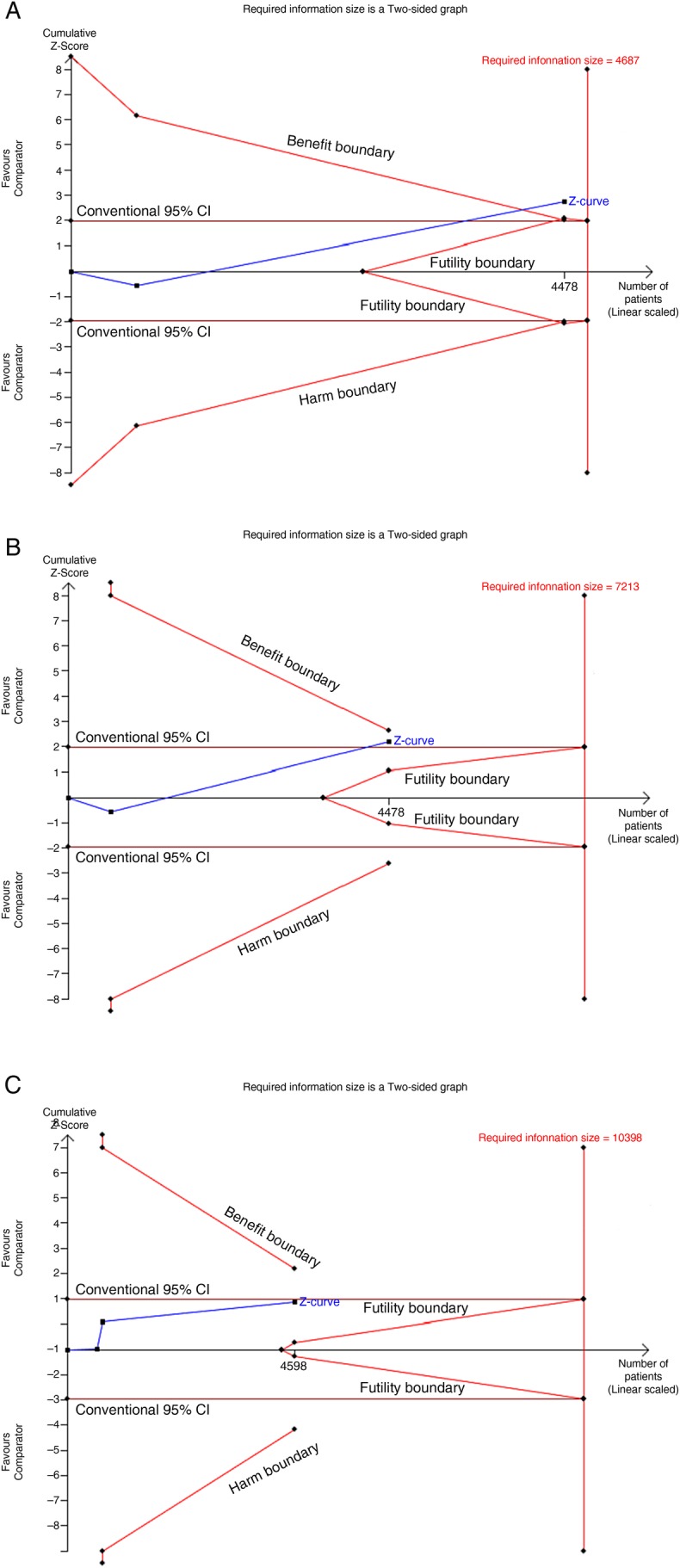
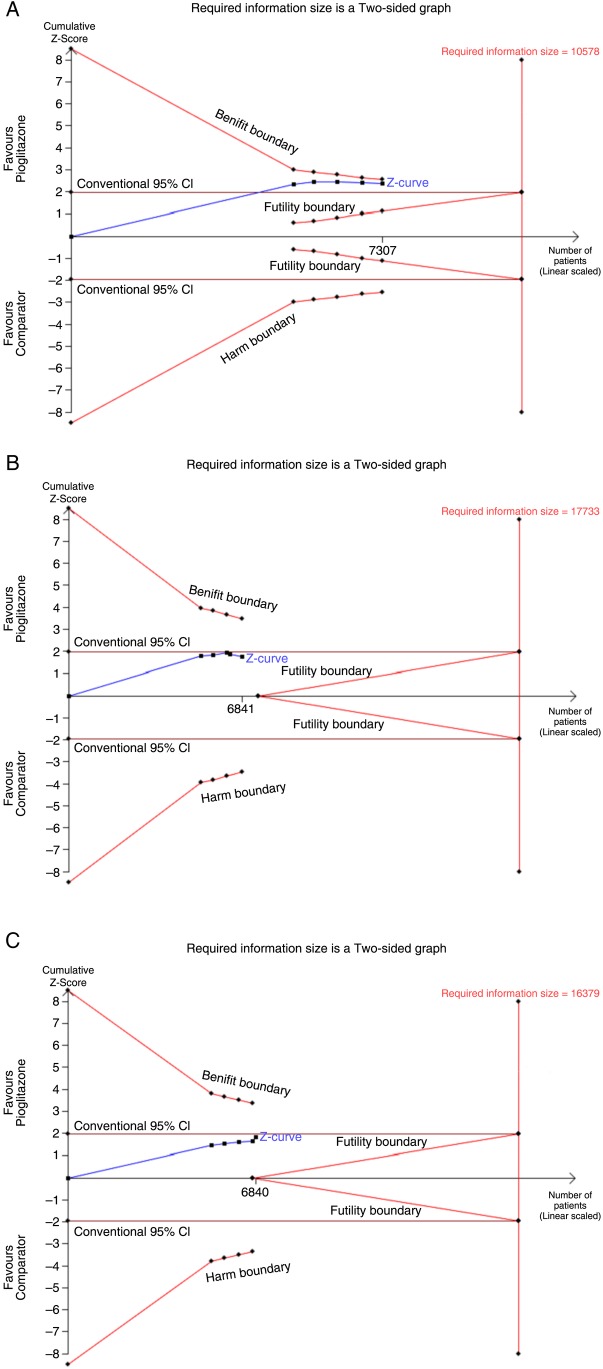
“To evaluate whether the present meta-analysis had sufficient sample size to reach firm conclusions about the effect of interventions, trial sequential analysis (TSA) was performed for the major outcomes.(16) TSA performs accumulative meta-analysis, which creates Z curve of the summarised observed effect and the monito…”
MethodBasal insulin and cardiovascular and other outcomes in dysglycemia
The ORIGIN Trial Investigators (2012) · New England Journal of Medicine · doi:10.1056/nejmoa1203858 · Cited by 1,636
HDL cholesterol efflux capacity and incident cardiovascular events
Rohatgi, A., Khera, A., Berry, J. D., Givens, E. G., Ayers, C. R., Wedin, K. E., Neeland, I. J., Yuhanna, I. S., Rader, D. R., de Lemos, J. A., et al. (2014) · New England Journal of Medicine · doi:10.1056/nejmoa1409065 · Cited by 1,390
Type 2 diabetes and incidence of cardiovascular diseases: a cohort study in 1.9 million people
Shah, A. D., Langenberg, C., Rapsomaniki, E., Denaxas, S., Pujades-Rodriguez, M., Gale, C. P., Deanfield, J., Smeeth, L., Timmis, A., & Hemingway, H. (2015) · The Lancet Diabetes & Endocrinology · doi:10.1016/s2213-8587(14)70219-0 · Cited by 1,225
Cited by
Targher, G., Byrne, C. D., & Tilg, H. (2020) · Gut · doi:10.1136/gutjnl-2020-320622 · Cited by 827
Kenny, H. C., & Abel, E. D. (2019) · Circulation Research · doi:10.1161/circresaha.118.311371 · Cited by 660
“These findings have been further supported by 2 recent meta-analyses.(90,91) Figure.”
ResultInsulin Resistance and Atherosclerosis: Implications for Insulin-Sensitizing Agents
Di Pino, A., & DeFronzo, R. A. (2019) · Endocrine Reviews · doi:10.1210/er.2018-00141 · Cited by 535
Blonde, L., Umpierrez, G. E., Reddy, S. S., McGill, J. B., Berga, S. L., Bush, M., Chandrasekaran, S., DeFronzo, R. A., Einhorn, D., Galindo, R. J., et al. (2022) · Endocrine Practice · doi:10.1016/j.eprac.2022.08.002 · Cited by 507
Age-related changes in glucose metabolism, hyperglycemia, and cardiovascular risk
Chia, C. W., Egan, J. M., & Ferrucci, L. (2018) · Circulation Research · doi:10.1161/circresaha.118.312806 · Cited by 454
“However, the third drug in this class, pioglitazone, based on a recent meta-analysis of 9 trials with ≈12 000 participants (mean age, 62 years), seems to have cardiovascular benefits with regards to major cardiovascular events in people with insulin resistance, glucose impairment, and type 2 diabetes mellitus, but it…”
BackgroundNonalcoholic Fatty Liver Disease and the Heart
Stahl, E. P., Dhindsa, D. S., Lee, S. K., Sandesara, P. B., Chalasani, N. P., & Sperling, L. S. (2019) · Journal of the American College of Cardiology · doi:10.1016/j.jacc.2018.11.050 · Cited by 439
“It has been shown to reduce the risk of all-cause mortality, nonfatal myocardial infarction, and stroke in patients with type 2 DM with evidence of macrovascular disease (142,143) and to reduce the composite of nonfatal myocardial infarction, nonfatal stroke, and cardiovascular death among patients with insulin resist…”
BackgroundMuzurović, E., Mikhailidis, D. P., & Mantzoros, C. (2021) · Metabolism · doi:10.1016/j.metabol.2021.154770 · Cited by 336
Treatment of type 2 diabetes: challenges, hopes, and anticipated successes
Nauck, M. A., Wefers, J., & Meier, J. J. (2021) · The Lancet Diabetes & Endocrinology · doi:10.1016/s2213-8587(21)00113-3 · Cited by 289
Non-alcoholic fatty liver disease: A patient guideline
Francque, S. M., Marchesini, G., Kautz, A., Walmsley, M., Dorner, R., Lazarus, J. V., Zelber-Sagi, S., Hallsworth, K., Busetto, L., Frühbeck, G., et al. (2021) · JHEP Reports · doi:10.1016/j.jhepr.2021.100322 · Cited by 264
Pharmacological treatment of hyperglycemia in type 2 diabetes
Taylor, S. I., Yazdi, Z. S., & Beitelshees, A. L. (2021) · Journal of Clinical Investigation · doi:10.1172/jci142243 · Cited by 245
“CVOTs were conducted for both pioglitazone (20, 54) and rosiglitazone (18, 19).”
MethodCoronary heart disease risk: Low-density lipoprotein and beyond
Shaya, G. E., Leucker, T. M., Jones, S. R., Martin, S. S., & Toth, P. P. (2022) · Trends in Cardiovascular Medicine · doi:10.1016/j.tcm.2021.04.002 · Cited by 236
Ma, X., Dong, L., Shao, Q., Cheng, Y., Lv, S., Sun, Y., Shen, H., Wang, Z., Zhou, Y., & Liu, X. (2020) · Cardiovascular Diabetology · doi:10.1186/s12933-020-01006-7 · Cited by 232
The Relationship Between Type 2 Diabetes, NAFLD, and Cardiovascular Risk
Caussy, C., Aubin, A., & Loomba, R. (2021) · Current Diabetes Reports · doi:10.1007/s11892-021-01383-7 · Cited by 230
Pioglitazone: the forgotten, cost-effective cardioprotective drug for type 2 diabetes
DeFronzo, R. A., Inzucchi, S., Abdul-Ghani, M., & Nissen, S. E. (2019) · Diabetes and Vascular Disease Research · doi:10.1177/1479164118825376 · Cited by 223
Athyros, V. G., Alexandrides, T. K., Bilianou, H., Cholongitas, E., Doumas, M., Ganotakis, E. S., Goudevenos, J., Elisaf, M. S., Germanidis, G., Giouleme, O., et al. (2017) · Metabolism · doi:10.1016/j.metabol.2017.02.014 · Cited by 219
“[31] Liao HW, Saver JL, Wu YL, Chen TH, Lee M, Ovbiagele B.”
An Overview of Lipid Metabolism and Nonalcoholic Fatty Liver Disease
Pei, K., Gui, T., Kan, D., Feng, H., Jin, Y., Yang, Y., Zhang, Q., Du, Z., Gai, Z., Wu, J., et al. (2020) · BioMed Research International · doi:10.1155/2020/4020249 · Cited by 204
“According to the current guidelines, pioglitazone is useful and is advocated for elderly patients with advanced fibrosis, confirmed by biopsy, who are unable to adopt or maintain lifestyle interventions and have persistent metabolic risk factors; however, pioglitazone should be administered to patients with T2DM and/o…”
Backgroundde Jong, M., van der Worp, H. B., van der Graaf, Y., Visseren, F. L. J., & Westerink, J. (2017) · Cardiovascular Diabetology · doi:10.1186/s12933-017-0617-4 · Cited by 132
“54), fractures, edema and weight gain, while there was no significant difference in all-cause mortality between pioglitazone and control group [38].”
BackgroundSeferovic, P. M., Paulus, W. J., Rosano, G., Polovina, M. M., Petrie, M. C., Jhund, P. S., Tschöpe, C., Sattar, N. A., Piepoli, M. F., Papp, Z. L., et al. (2024) · European Journal of Heart Failure · doi:10.1002/ejhf.3347 · Cited by 144
Rethinking pioglitazone as a cardioprotective agent: a new perspective on an overlooked drug
Nesti, L., Tricò, D., Mengozzi, A., & Natali, A. (2021) · Cardiovascular Diabetology · doi:10.1186/s12933-021-01294-7 · Cited by 124
“The predominant mechanism, which will be discussed below, may be volume expansion due to renal fluid retention, without alterations in cardiac function or structure [14].”
Background2024 EACTS Guidelines on perioperative medication in adult cardiac surgery
Jeppsson, A., (Sweden), (.-C., Rocca, B., (Italy), (.-C., Hansson, E. C., (Sweden), Guðbjartsson, T., (Iceland), James, S. K., (Sweden), et al. (2024) · European Journal of Cardio-Thoracic Surgery · doi:10.1093/ejcts/ezae355 · Cited by 131
Personalized type 2 diabetes management: an update on recent advances and recommendations
Williams, D. M., Jones, H., & Stephens, J. W. (2022) · Diabetes, Metabolic Syndrome and Obesity: Targets and Therapy · doi:10.2147/dmso.s331654 · Cited by 121
“One meta-analysis reported pioglitazone use in people with pre-diabetes or T2D reduced 3P-MACE, though there was an increased risk of heart failure, edema, weight gain and bone fractures.(56) While insulin use is usually reserved for those with more advanced or poorly controlled T2D who typically have greater cardiova…”
BackgroundDiabesity and antidiabetic drugs
Pappachan, J. M., Fernandez, C. J., & Chacko, E. C. (2018) · Molecular Aspects of Medicine · doi:10.1016/j.mam.2018.10.004 · Cited by 109
Diabetic heart disease: A clinical update
Rajbhandari, J., Fernandez, C. J., Agarwal, M., Yeap, B. X. Y., & Pappachan, J. M. (2021) · World Journal of Diabetes · doi:10.4239/wjd.v12.i4.383 · Cited by 104
Pharmacological Treatment for Non-alcoholic Fatty Liver Disease
Francque, S., & Vonghia, L. (2019) · Advances in Therapy · doi:10.1007/s12325-019-00898-6 · Cited by 84
“Pioglitazone clearly improved CV outcomes in diabetic patients and has a more favourable safety profile [46], but is nevertheless not frequently used.”
BackgroundZhou, Y., Huang, Y., Ji, X., Wang, X., Shen, L., & Wang, Y. (2020) · The Journal of Clinical Endocrinology & Metabolism · doi:10.1210/clinem/dgz252 · Cited by 81
Metabolism amelioration of Dendrobium officinale polysaccharide on type II diabetic rats
Chen, H., Nie, Q., Hu, J., Huang, X., Huang, W., & Nie, S. (2019) · Food Hydrocolloids · doi:10.1016/j.foodhyd.2019.105582 · Cited by 72
Marchesini, G., Bugianesi, E., Burra, P., Marra, F., Miele, L., Alisi, A., Vajro, P., Masarone, M., Petta, S., Persico, M., et al. (2022) · Nutrition, Metabolism and Cardiovascular Diseases · doi:10.1016/j.numecd.2021.04.028 · Cited by 35
Tian, Y., Chen, T., Wu, Y., Yang, L., Wang, L., Fan, X., Zhang, W., Feng, J., Yu, H., Yang, Y., et al. (2017) · Cardiovascular Diabetology · doi:10.1186/s12933-017-0623-6 · Cited by 66
“Although some human studies have shown that the risk of heart failure increased [33], and left ventricle diastolic function reduced [34] in PIO users, recent studies found that PIO therapy was associated with lower risks of non-fatal myocardial infarction, non-fatal stroke and cardiovascular death in patients with abn…”
ResultSelf-citationMolecular Mechanisms Underlying the Cardiovascular Benefits of SGLT2i and GLP-1RA
Khat, D. Z., & Husain, M. (2018) · Current Diabetes Reports · doi:10.1007/s11892-018-1011-7 · Cited by 66
Targeting obesity and diabetes to treat heart failure with preserved ejection fraction
Altara, R., Giordano, M., Nordén, E. S., Cataliotti, A., Kurdi, M., Bajestani, S. N., & Booz, G. W. (2017) · Frontiers in Endocrinology · doi:10.3389/fendo.2017.00160 · Cited by 61
“Concerns of increased adverse cardiovascular outcomes, including HF, are associated with the use of sulfonylureas and thiazolidinediones (TZDs) in diabetic patients (45, 142, 143).”
BackgroundEvaluation and management of extrahepatic manifestations of nonalcoholic fatty liver disease
Wijarnpreecha, K., Aby, E. S., Ahmed, A., & Kim, D. (2020) · Clinical and Molecular Hepatology · doi:10.3350/cmh.2020.0239 · Cited by 60
“(55) However, it should be noted in a systemic review and meta-analysis that pioglitazone was associated with an increased risk of heart failure, weight gain, edema, and bone fractures.(55) These findings of reduced major CVD events, but increased risk of heart failure with pioglitazone were corroborated by a recent l…”
BackgroundAtherosclerosis and Insulin Resistance: Is There a Link Between Them?
Brie, A. D., Christodorescu, R., Popescu, R., Adam, O., Tîrziu, A., & Brie, D. M. (2025) · Biomedicines · doi:10.3390/biomedicines13061291 · Cited by 58
Future trends in the treatment of non-alcoholic steatohepatitis
Fiorucci, S., Biagioli, M., & Distrutti, E. (2018) · Pharmacological Research · doi:10.1016/j.phrs.2018.07.014 · Cited by 53
Chan, C.-W., Yu, C.-L., Lin, J.-C., Hsieh, Y.-C., Lin, C.-C., Hung, C.-Y., Li, C.-H., Liao, Y.-C., Lo, C.-P., Huang, J.-L., et al. (2018) · Cardiovascular Diabetology · doi:10.1186/s12933-018-0663-6 · Cited by 51
Cersosimo, E., Johnson, E. L., Chovanes, C., & Skolnik, N. (2018) · Diabetes, Obesity and Metabolism · doi:10.1111/dom.13108 · Cited by 52
“patients with insulin resistance, prediabetes and T2D, but with an increased risk of heart failure, bone fracture, oedema, and weight gain.(99) Overall, these findings further support the individualization of”
ResultComprehensive Review of Cardiovascular Disease Risk in Nonalcoholic Fatty Liver Disease
Josloff, K., Beiriger, J., Khan, A., Gawel, R. J., Kirby, R. S., Kendrick, A. D., Rao, A. K., Wang, R. X., Schafer, M., Pearce, M. E., et al. (2022) · Journal of Cardiovascular Development and Disease · doi:10.3390/jcdd9120419 · Cited by 51
Francque, S., Lanthier, N., Verbeke, L., Reynaert, H., Steenkiste, C. V., Vonghia, L., Kwanten, W. J., Weyler, J., Trépo, E., Cassiman, D. M., et al. (2018) · PubMed · Cited by 50
Witham, M. D., Granic, A., Pearson, E. R., Robinson, S. M., & Sayer, A. A. (2023) · Drugs & Aging · doi:10.1007/s40266-023-01042-4 · Cited by 49
“These include weight gain for insulin [178]; weight loss, gastrointestinal side effects and lactic acidosis for metformin [80, 82]; genital and urinary tract infections, weight loss and euglycaemic ketosis with SGLT2 inhibitors [179]; a possible association with bladder cancer for pioglitazone [180, 181] and with oste…”
BackgroundGanguli, S., Deleeuw, P., & Satapathy, S. K. (2019) · Hepatic Medicine Evidence and Research · doi:10.2147/hmer.s188991 · Cited by 50
“There were drawbacks, however, to using this class of drugs including weight gain throughout duration of use as well as risk for heart failure.(59,60,61) The data support the use of pioglitazone over rosiglitazone in the treatment of T2DM and NASH.”
MethodSinclair, A. J., Pennells, D., & Abdelhafiz, A. H. (2022) · Aging Clinical and Experimental Research · doi:10.1007/s40520-022-02142-8 · Cited by 48
“The glitazone, pioglitazone reduces the risk of major CV events but increases the risk of heart failure and peripheral oedema [98].”
BackgroundSinha, B., & Ghosal, S. (2020) · Scientific Reports · doi:10.1038/s41598-020-72967-8 · Cited by 46
Binet, Q., Loumaye, A., Preumont, V., Thissen, J., Hermans, M. P., & Lanthier, N. (2022) · Acta gastro-enterologica belgica · doi:10.51821/85.2.9775 · Cited by 45
Zhou, Y., Suo, W., Zhang, X., Liang, J., Zhao, W., Wang, Y., Li, H., & Ni, Q. (2023) · Biomedicine & Pharmacotherapy · doi:10.1016/j.biopha.2023.115669 · Cited by 44
Searching for novel PET radiotracers: imaging cardiac perfusion, metabolism and inflammation.
Davidson, C., Phenix, C. P., Tai, T. C., Khaper, N., & Lees, S. J. (2018) · Europe PMC (PubMed Central) · Cited by 44
Laichuthai, N., Abdul‐Ghani, M. A., Kosiborod, M., Parksook, W. W., Kerr, S. J., & DeFronzo, R. A. (2020) · Diabetes Care · doi:10.2337/dc20-0059 · Cited by 45
“mia, orbloodpressure, suggestingadirect vascular benefit of the thiazolidinedione (45,46).”
BackgroundLi, M., Wang, F., Wang, J., Wang, A., Yao, X., Strappe, P., Zhou, Z., Wu, Q., & Guo, T. (2022) · Food Chemistry · doi:10.1016/j.foodchem.2022.133089 · Cited by 44
Hambling, C. E., Khunti, K., Cos, X., Wens, J., Martinez, L., Topsever, P., Prato, S. D., Sinclair, A. J., Schernthaner, G., Rutten, G. E. H. M., et al. (2019) · Primary care diabetes · doi:10.1016/j.pcd.2018.12.005 · Cited by 41
Diabetes and stroke: An important complication
Bloomgarden, Z. T., & CHILTON, R. J. (2020) · Journal of Diabetes · doi:10.1111/1753-0407.13142 · Cited by 41
The interplay between nonalcoholic fatty liver disease and atherosclerotic cardiovascular disease
Finney, A. C., Das, S., Kumar, D., McKinney, M. P., Cai, B., Yurdagul, A., & Rom, O. (2023) · Frontiers in Cardiovascular Medicine · doi:10.3389/fcvm.2023.1116861 · Cited by 40
Marchesini, G., Bugianesi, E., Burra, P., Marra, F., Miele, L., Alisi, A., Vajro, P., Masarone, M., Petta, S., Persico, M., et al. (2021) · Digestive and Liver Disease · doi:10.1016/j.dld.2021.04.029 · Cited by 38
Impact of glucose-lowering therapies on risk of stroke in type 2 diabetes
Bonnet, F., & Scheen, A. J. (2017) · Diabetes & Metabolism · doi:10.1016/j.diabet.2017.04.004 · Cited by 40
“…(2.9) 0.82 (0.57–1.18) NS Meta-analyses Lincoff et al., 2007 [62] 19 trials (n = 16,390) Pioglitazone 104/8554 (1.22) 131/7836 (1.67) 0.80 (0.62–1.04) 0.09 Liao et al., 2017 [63] IGT patients, three trials (n = 4598) Pioglitazone 131/2305 (5.68) 161/2293 (7.02) 0.81 (0.65–1.01) 0.06 T2D…”
InfluentialHan, E., Shin, E., Kim, G., Lee, J.-Y., Lee, Y., Lee, B., Kang, E. S., & Soo, B. (2018) · Frontiers in Endocrinology · doi:10.3389/fendo.2018.00412 · Cited by 37
“Although TZD has a protective effect against cardiovascular disease and inflammation (10, 11), this class of drug induces fluid retention and edema, and aggravates congestive heart failure because of increased sodium reabsorption (12).”
BackgroundManagement of Diabetes in Candidates for Liver Transplantation and in Transplant Recipients
Brodosi, L., Petta, S., Petroni, M. L., Marchesini, G., & Morelli, M. C. (2021) · Transplantation · doi:10.1097/tp.0000000000003867 · Cited by 36
“Its use is hindered by fluid retention, favoring heart failure 48 and possibly ascites.”
BackgroundSheikh, I. M., Hassan, O. A., Adam, S. M., Ali, A. I., Ogedegbe, O. J., Tabowei, G., Barbarawi, A., Yussuf, F. M., & Nor, M. A. (2023) · Cureus · doi:10.7759/cureus.46911 · Cited by 35
“This is due to a link between the pathophysiology of diabetes, inflammation, and high blood pressure, which all increase the chances of developing CVDs [9].”
BackgroundMethodInfluentialCardiovascular Disease in Nonalcoholic Steatohepatitis: Screening and Management
Shroff, H., & VanWagner, L. B. (2020) · Current Hepatology Reports · doi:10.1007/s11901-020-00530-0 · Cited by 35
López, Y. O. N., Casu, A., Kováčová, Z., Petrilli, A. M., Sideleva, O., Tharp, W. G., & Pratley, R. E. (2022) · Frontiers in Endocrinology · doi:10.3389/fendo.2022.955593 · Cited by 34
Strongman, H., Christopher, S., Majak, M., Williams, R., Bahmanyar, S., Linder, M., Heintjes, E. M., Bennett, D., Korhonen, P. A., & Hoti, F. J. (2018) · BMJ Open Diabetes Research & Care · doi:10.1136/bmjdrc-2017-000481 · Cited by 32
Treatment options for nonalcoholic steatohepatitis - a safety evaluation
Issa, D., Wattacheril, J. J., & Sanyal, A. J. (2017) · Expert Opinion on Drug Safety · doi:10.1080/14740338.2017.1343299 · Cited by 30
“Available literature from large, well-designed, trials now proves the efficacy and safety of pioglitazone in patients with NASH and demonstrates reduction in cardiovascular risk and all-cause mortality [64,67].”
BackgroundWoo, M.-H., Lee, H. S., & Kim, J. (2019) · Cardiovascular Diabetology · doi:10.1186/s12933-019-0874-5 · Cited by 30
Legere, R. M., Taylor, D. R., Davis, J. L., Bello, K., Parker, C. R., Judd, R. L., & Wooldridge, A. A. (2019) · Journal of Equine Veterinary Science · doi:10.1016/j.jevs.2019.102797 · Cited by 29
Pharmacological management of type 2 diabetes: what’s new in 2017?
Scheen, A. J. (2017) · Expert Review of Clinical Pharmacology · doi:10.1080/17512433.2017.1376652 · Cited by 28
“These favorable data were confirmed in two meta-analyses [30,31].”
ResultResidual cardiovascular risk among people with diabetes
Dash, S., & Leiter, L. A. (2019) · Diabetes Obesity and Metabolism · doi:10.1111/dom.13646 · Cited by 27
“However, in meta-analyses of secondary prevention studies in patients with IR with and without overt T2D, pioglitazone reduced the risk of MACE but had no effect on mortality, and increased the risk of heart failure.33,36 Pioglitazone has also been shown in an RCT to reduce the risk of myocardial infarction (MI) or st…”
BackgroundInfluentialAdvances in type 2 diabetes therapy: a focus on cardiovascular and renal outcomes
Libianto, R., Davis, T. M. E., & Ekinci, E. I. (2020) · The Medical Journal of Australia · doi:10.5694/mja2.50472 · Cited by 27
Katkar, G. D., Sayed, I. M., Anandachar, M. S., Castillo, V., Vidales, E., Toobian, D., Usmani, F., Sawires, J. R., Leriche, G., Yang, J., et al. (2022) · Communications Biology · doi:10.1038/s42003-022-03168-4 · Cited by 26
“Despite these insights, the 171 biopharmaceutical industry has not been able to harness the beneficial impact of this major target within 172 emergent therapeutic strategies largely due to a trail of withdrawals after devastating long-term side effects 173 including heart failure, bone fracture, bladder cancer, fluid…”
BackgroundTian, X., Chen, S., Zhang, Y., Zhang, X., Xu, Q., Wang, P., Wu, S., Wang, A., & Luo, Y. (2022) · Cardiovascular Diabetology · doi:10.1186/s12933-022-01617-2 · Cited by 26
“A systematic review and meta-analysis included nine clinical trials showed that in patients with IR or diabetes, pioglitazone had beneficial effects in reducing the risk of major adverse cardiovascular events, and the benefits were more with the treatment start early and long [30].”
MethodStrategies of Unloading the Failing Heart from Metabolic Stress
Koutroumpakis, E., Jozwik, B., Aguilar, D. A., & Taegtmeyer, H. (2019) · The American Journal of Medicine · doi:10.1016/j.amjmed.2019.08.035 · Cited by 26
“improving glucose control and insulin resistance, TZDs have been linked to greater rates of heart failure hospitalization in multiple clinical trials (23) (24).”
BackgroundImpact of treatment with pioglitazone on stroke outcomes: A real‐world database analysis
Morgan, C. L., Inzucchi, S. E., Puelles, J., Jenkins‐Jones, S., & Currie, C. J. (2018) · Diabetes Obesity and Metabolism · doi:10.1111/dom.13344 · Cited by 26
“All admissions 123 6 (2-20) 132 7 (3-16) 0.”
InfluentialNAFLD and type 2 diabetes: A practical guide for the joint management
Genua, I., Iruzubieta, P., Rodríguez-Duque, J. C., Pérez, A., & Crespo, J. (2022) · Gastroenterología y Hepatología · doi:10.1016/j.gastrohep.2022.12.002 · Cited by 25
Reducing the Burden of Diabetes Treatment: A Review of Low-cost Oral Hypoglycemic Medications
Vaughan, E. M., Rueda, J. J., Samson, S. L., & Hyman, D. J. (2020) · Current Diabetes Reviews · doi:10.2174/1573399816666200206112318 · Cited by 25
Liao, H., Wu, Y., Sue, Y., Lee, M., & Ovbiagele, B. I. (2018) · Endocrinology Diabetes & Metabolism · doi:10.1002/edm2.50 · Cited by 26
Self-citationWang, L., Wang, Y., Liu, R., Xu, L., Zhong, W., Li, L., Wang, C., He, C., Fu, C., & Wei, Q. (2022) · Lipids in Health and Disease · doi:10.1186/s12944-022-01738-3 · Cited by 24
“Importantly, decreasing the levels of insulin resistance may benefit clinical prognosis of patients with cardiovascular disease [70].”
BackgroundDiabetes mellitus, vitamin D & osteoporosis
Goswami, R., & Nair, A. (2019) · The Indian Journal of Medical Research · doi:10.4103/ijmr.ijmr_1920_19 · Cited by 24
The Low-Dose (7.5 mg/day) Pioglitazone Therapy
Yanai, H., & Adachi, H. (2017) · Journal of Clinical Medicine Research · doi:10.14740/jocmr3144w · Cited by 25
“Despite these beneficial effects, pioglitazone therapy had higher risks of heart failure (+32%), bone fractures (+52%), edema (+63%) and weight gain (+60%) in the meta-analysis [4].”
BackgroundIpsen, E. Ø., Madsen, K. S., Chi, Y., Pedersen-Bjergaard, U., Richter, B., Metzendorf, M.-I., & Hemmingsen, B. (2020) · Cochrane Database of Systematic Reviews · doi:10.1002/14651858.cd013516.pub2 · Cited by 23
NAFLD and HIV: Do Sex, Race, and Ethnicity Explain HIV-Related Risk?
Soti, S., Corey, K. E., Lake, J. E., & Erlandson, K. M. (2018) · Current HIV/AIDS Reports · doi:10.1007/s11904-018-0392-1 · Cited by 23
Weight Management in Adolescents with Polycystic Ovary Syndrome
Moore, J. M., Waldrop, S., & Cree‐Green, M. (2021) · Current Obesity Reports · doi:10.1007/s13679-021-00437-x · Cited by 24
Paridari, P., Jabermoradi, S., Gholamzadeh, R., Vazifekhah, S., Vazirizadeh-Mahabadi, M., Dizaji, S. R., Forouzannia, S. A., Hosseini, M., & Yousefifard, M. (2023) · Diabetes & Metabolic Syndrome Clinical Research & Reviews · doi:10.1016/j.dsx.2023.102721 · Cited by 23
Challenges and Strategies for Diabetes Management in Community-Living Older Adults
Sinclair, A. J., & Abdelhafiz, A. H. (2020) · Diabetes Spectrum · doi:10.2337/ds20-0013 · Cited by 23
Associazione Italiana per lo Studio del Fegato (AISF), S. I. D. D. (. A. S. I. D. (. (2021) · Eating and Weight Disorders - Studies on Anorexia Bulimia and Obesity · doi:10.1007/s40519-021-01287-1 · Cited by 22
Prato, S. D., & CHILTON, R. J. (2017) · Diabetes Obesity and Metabolism · doi:10.1111/dom.13169 · Cited by 23
“54).(64) The increased risk of HF with glitazones has been claimed widely as a consequence of fluid retention and edema formation attributed to the salt-retaining effects of PPARγ activation on the nephron.”
BackgroundBhoria, S., Yadav, J., Yadav, H., Chaudhary, D., Jaiwal, R., & Jaiwal, P. K. (2022) · Biotechnology Letters · doi:10.1007/s10529-022-03247-w · Cited by 21
Research Priorities for Precision Medicine in NAFLD
Iruzubieta, P., Bataller, R. A., Arias, M., Arrese, M. A., Calleja, J. L., Castro‐Narro, G., Cusi, K. J., Dillon, J. F., Martínez‐Chantar, M. L., Mateo, M., et al. (2023) · Clinics in Liver Disease · doi:10.1016/j.cld.2023.01.016 · Cited by 20
An adipocentric perspective of pancreatic lipotoxicity in diabetes pathogenesis
Risi, R., Vidal‐Puig, A., & Bidault, G. (2024) · Journal of Endocrinology · doi:10.1530/joe-23-0313 · Cited by 19
Environmental Factors Modifying HDL Functionality
Kostara, C. E., Kosmas, C. E., Sourlas, A., & Guzman, E. (2021) · Current Medicinal Chemistry · doi:10.2174/0929867328666210714155422 · Cited by 18
Bombicz, M., Priksz, D., Gesztelyi, R., Kiss, R., Hollos, N., Varga, B., Németh, J., Tóth, A., Papp, Z., Szilvássy, Z., et al. (2019) · Molecules · doi:10.3390/molecules24030586 · Cited by 18
“Moreover, a recent meta-analysis showed that although pioglitazone-treatment is associated with reduced risk of non-fatal CVD events and insulin-resistance, it may increase the risk of weight gain, edema and heart failure [32].”
BackgroundDefining the Role of SGLT2 Inhibitors in Primary Care: Time to Think Differently
Evans, M., Morgan, A. R., Bain, S. C., Davies, S., Dashora, U. K., Sinha, S., Seidu, S., Patel, D., Beba, H., & Strain, W. D. (2022) · Diabetes Therapy · doi:10.1007/s13300-022-01242-y · Cited by 18
“For example, although pioglitazone was associated with reduced risk of major adverse cardiovascular events (MACE), the risks of heart failure, bone fracture, oedema and weight gain were increased [25].”
BackgroundGLUcose COntrol Safety & Efficacy in type 2 DIabetes, a systematic review and NETwork meta-analysis
Grenet, G., Ribault, S., Nguyen, G. B., Glais, F., Metge, A., Linet, T., Kassaï, B., Cornu, C., Bejan‐Angoulvant, T., Erpeldinger, S., et al. (2019) · PLoS ONE · doi:10.1371/journal.pone.0217701 · Cited by 18
Khoo, C. M. (2023) · Elsevier eBooks · doi:10.1016/b978-0-323-99967-0.00079-x · Cited by 17
Seydi, E., Servati, T., Samiei, F., Naserzadeh, P., & Pourahmad, J. (2020) · Drug Research · doi:10.1055/a-1085-2542 · Cited by 16
Sönmez, A., Sabbour, H. M., Echtay, A. S., Rahmah, A. M., Alhozali, A. M., Sabaan, F. S. A., Haddad, F., Iraqi, H., Elebrashy, I., Assaad, S. N., et al. (2022) · Journal of Diabetes · doi:10.1111/1753-0407.13266 · Cited by 16
“Tables S2-S4 provide a broad overview of major randomized controlled trials, real-world studies, and meta-analyses for SGLT2is, GLP-1RAs, and thiazolidinediones.(77,79,80,82,83,85-145) The benefits of dapagliflozin and empagliflozin that they lower the risk of CV events, HHF, and all-cause mortality have been evidence…”
BackgroundManagement of Cardiovascular Risk in the Non‑alcoholic Fatty Liver Disease Setting
Luque-Linero, P., & Castilla‐Guerra, L. (2024) · European Cardiology Review · doi:10.15420/ecr.2023.19 · Cited by 14
“48 In a recent systematic review of 10 randomised control trials involving 887 participants, the authors found that pioglitazone consistently improved histological parameters and normalised liver transaminases, although evidence supporting the benefits of other drugs in this class was minimal.”
BackgroundShen, T., Aby, E. S., Vock, D. M., & Farley, J. F. (2024) · Diabetes Obesity and Metabolism · doi:10.1111/dom.15853 · Cited by 13
Khashayar, P., Rad, F. F., Tabatabaei‐Malazy, O., Golabchi, S. M., Khashayar, P., Mohammadi, M., Ebrahimpour, S., & Larijani, B. A. (2024) · Diabetology & Metabolic Syndrome · doi:10.1186/s13098-024-01518-2 · Cited by 13
Metabolic alterations in spinal and bulbar muscular atrophy
Francini‐Pesenti, F., Vitturi, N., Tresso, S., & Sorarú, G. (2020) · Revue Neurologique · doi:10.1016/j.neurol.2020.03.020 · Cited by 13
Patoulias, D., Stavropoulos, K., Imprialos, K. P., Athyros, V. G., Doumas, M. N., & Karagiannis, A. I. (2019) · Current Vascular Pharmacology · doi:10.2174/1570161117666190426162746 · Cited by 15
Pioglitazone, Bladder Cancer, and the Presumption of Innocence
Papaetis, G. S. (2022) · Current Drug Safety · doi:10.2174/1574886317666220304124756 · Cited by 13
Zhao, L., Kang, S., & Kang, H. (2024) · Scientific Reports · doi:10.1038/s41598-024-71904-3 · Cited by 12
“Some medications help to prevent the progression from prediabetes to diabetes and CVD 38 and to reduce major adverse cardiovascular events in patients with prediabetes and diabetes, as well as new diabetes onset 39 .”
BackgroundZhao, Z.-W., Liu, C., Zhao, Q., Xu, Y.-K., Cheng, Y., Sun, T., & Zhou, Y. (2022) · Frontiers in Cardiovascular Medicine · doi:10.3389/fcvm.2022.1019233 · Cited by 12
Yang, R., Yang, H., Huili, Y. A. N. G., Jiang, D., Xu, L., & Feng, L. (2022) · PeerJ · doi:10.7717/peerj.14171 · Cited by 12
Neuroinflammation in fetal alcohol spectrum disorders and related novel therapeutic approaches
Padilla-Valdez, M. M., Díaz-Iñiguez, M. I., Ortuño‐Sahagún, D., & Rojas-Mayorquín, A. E. (2023) · Biochimica et Biophysica Acta (BBA) - Molecular Basis of Disease · doi:10.1016/j.bbadis.2023.166854 · Cited by 12
Metadata
- Authors
- Liao, H.-W., Saver, J. L., Wu, Y.-L., Chen, T.-H., Lee, M., & Ovbiagele, B.
- Affiliations
- Jia-Yi Clinic, Taoyuan, Taiwan
- University of California, Los Angeles (US)
- Chang Gung University (TW)
- Wan Fang Hospital (TW)
- Medical University of South Carolina (US)
- Corresponding author
- Lee, Meng
- Venue
- BMJ Open
- Publisher
- BMJ
- Published
- 2017-01
- Volume
- 7
- Issue
- 1
- Pages
- e013927
- ISSN
- 2044-6055 (ISSN-L)
- PMC
- PMC5223642
- OpenAlex
- W2568525643
- Cited by
- 198
- References
- 44
- Citations by year
- 2026: 11 · 2025: 15 · 2024: 18 · 2023: 20 · 2022: 29 · 2021: 21 · 2020: 24 · 2019: 27 · 2018: 18 · 2017: 14
- FWCI
- 3.31
- Type
- journal article
- Language
- en
- Open access
- gold
- doi.org
- Licence
- cc-by-nc
- Locations
- BMJ Open (publishedVersion, cc-by-nc)
- PubMed Central (publishedVersion, cc-by-nc)
- PubMed (publishedVersion)
- eScholarship (California Digital Library) (submittedVersion, cc-by-nc)
- HighWire Press Open Archive (submittedVersion)
- Funders
- Ministry of Science and Technology (MOST104-2314-B-182-019 and MOST105-2628-B-182-008-)
- Topics
- Health Sciences › Medicine › Endocrinology, Diabetes and Metabolism › Diabetes Treatment and Management
- Health Sciences › Medicine › Endocrinology, Diabetes and Metabolism › Diabetes, Cardiovascular Risks, and Lipoproteins
- Health Sciences › Medicine › Cardiology and Cardiovascular Medicine › Cardiovascular Function and Risk Factors
- Keywords
- pioglitazone, insulin resistance, prediabetes, type 2 diabetes, major adverse cardiovascular events, heart failure, bone fractures, edema, weight gain, adverse drug reactions, thiazolidinediones
- MeSH terms
- Pioglitazone, Cardiovascular Diseases, Diabetes Mellitus, Type 2, Edema, Humans, Hypoglycemic Agents, Insulin Resistance, Prediabetic State, Weight Gain, Randomized Controlled Trials as Topic, Thiazolidinediones, Fractures, Bone, Protective Factors
About these checks
Registry, retraction, Cites and statistics results are computed, not judged, with one exception: a printed reference that no index lists is read once by a model before it counts as a citation error. Claims are extracted by a model and kept only when their quote appears verbatim in the text; each cited source is then checked, with a model’s help, for whether it says what the claim relies on. Those verdicts can be wrong — read the claim’s quote and the cited source before relying on one.
Statistics and arithmetic are recomputed, not judged.
Confidence bands are shown only for fields calibrated on our annotated test set. None is calibrated yet, so no band is shown.
What counts as a claim ›How we measure confidence ›How we check this ›
Are you an author, or do you see a problem with this page? Request a review
Data sources
Bibliographic data: Semantic Scholar, OpenAlex, Crossref.
Contains information from the Semantic Scholar Academic Graph Datasets, made available under the ODC Attribution License (ODC-BY 1.0).
Semantic Scholar’s data is described in: Kinney, R., et al. (2023). The Semantic Scholar Open Data Platform. arXiv:2301.10140.
