

Scoping review on the use of socially assistive robot technology in elderly care
Open accessThe DOI matches its Crossref record; 69 of the 70 references it cites were found in a registry or an index.
Abstract
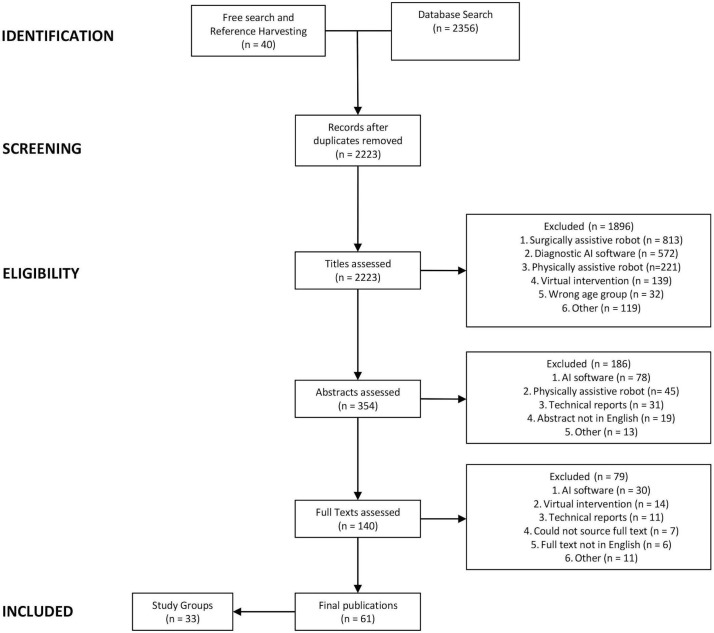
Objective: With an elderly population that is set to more than double by 2050 worldwide, there will be an increased demand for elderly care. This poses several impediments in the delivery of high-quality health and social care. Socially assistive robot (SAR) technology could assume new roles in health and social care to meet this higher demand. This review qualitatively examines the literature on the use of SAR in elderly care and aims to establish the roles this technology may play in the future. Design: Scoping review. Data sources: Search of CINAHL, Cochrane Library, Embase, MEDLINE, PsychINFO and Scopus databases was conducted, complemented with a free search using Google Scholar and reference harvesting. All publications went through a selection process, which involved sequentially reviewing the title, abstract and full text of the publication. No limitations regarding date of publication were imposed, and only English publications were taken into account. The main search was conducted in March 2016, and the latest search was conducted in September 2017. Eligibility criteria: The inclusion criteria consist of elderly participants, any elderly healthcare facility, humanoid and pet robots and all social interaction types with the robot. Exclusions were acceptability studies, technical reports of robots and publications surrounding physically or surgically assistive robots. Results: In total, 61 final publications were included in the review, describing 33 studies and including 1574 participants and 11 robots. 28 of the 33 papers report positive findings. Five roles of SAR were identified: affective therapy, cognitive training, social facilitator, companionship and physiological therapy. Conclusions: Although many positive outcomes were reported, a large proportion of the studies have methodological issues, which limit the utility of the results. Nonetheless, the reported value of SAR in elderly care does warrant further investigation. Future studies should endeavour to validate the roles demonstrated in this review. Systematic review registration: NIHR 58672.
Overview
The claims and statistics of this paper haven’t been checked yet.
Free: it reads the open-access text and checks the first 5 claims that cite a source we can check. Create a free account to check every claim.
Integrity signals
Registry
Cites
Statistics
Figures
Verification
Claims the paper makes
The claims and statistics of this paper haven’t been checked yet.
Free: it reads the open-access text and checks the first 5 claims that cite a source we can check. Create a free account to check every claim.
Claims other papers make about this one
Each is checked against this paper’s own text: does it say what the citing paper says it does?
The source backs part of the claim, not all of it — or backs it for a different population, condition or comparison.
In the citing paper
“but also highlight substantial heterogeneity and predominantly low-to-moderate study quality [46,56].”
From The Effectiveness of Artificial Intelligence-Based Pet Therapy in Improving the Care of Patients: A Systematic Review (2026) · cites this paper as [46]
Experimental — accuracy not yet measuredThe source backs part of the claim, not all of it — or backs it for a different population, condition or comparison.
In the citing paper
“In some settings, simple alternatives, such as plush toys or digital programs, produce similar benefits, depending on preferences and care context [32,40,46].”
From The Effectiveness of Artificial Intelligence-Based Pet Therapy in Improving the Care of Patients: A Systematic Review (2026) · cites this paper as [46]
Experimental — accuracy not yet measuredThe cited source says what the claim attributes to it.
In the citing paper
“systematic reviews point to potentially beneficial effects on quality of life and biopsychological outcomes”
From The Effectiveness of Artificial Intelligence-Based Pet Therapy in Improving the Care of Patients: A Systematic Review (2026) · cites this paper as [46]
Self-check
Percentages, sums and reported differences re-computed from the paper’s own numbers.
The self-check needs the paper’s full text.
Citations
Cites
Preferred reporting items for systematic reviews and meta-analyses: The PRISMA statement
Moher, D., Liberati, A., Tetzlaff, J., Altman, D. G., & the PRISMA Group* (2009) · Annals of Internal Medicine · doi:10.7326/0003-4819-151-4-200908180-00135 · Cited by 37,554
Cochrane Handbook for Systematic Reviews of Interventions: Cochrane Book Series
(2008) · doi:10.1002/9780470712184 · Cited by 25,048
Social Relationships and Mortality Risk: A Meta-analytic Review
Holt-Lunstad, J., Smith, T. B., & Layton, J. B. (2010) · PLoS Medicine · doi:10.1371/journal.pmed.1000316 · Cited by 7,272
The Handbook of Research Synthesis and Meta-Analysis
(2019) · doi:10.7758/9781610448864 · Cited by 4,553
Reprint—Preferred Reporting Items for Systematic Reviews and Meta-Analyses: The PRISMA Statement
Moher, D., Liberati, A., Tetzlaff, J., Altman, D. G., & and the PRISMA Group (2009) · Physical Therapy · doi:10.1093/ptj/89.9.873 · Cited by 2,486
Division, U. P. (1991) · Cited by 1,434
Being alone in later life: Loneliness, social isolation and living alone
Victor, C., Scambler, S., Bond, J., & Bowling, A. (2000) · Reviews in Clinical Gerontology · doi:10.1017/s0959259800104101 · Cited by 730
Wada, K., & Shibata, T. (2007) · IEEE Transactions on Robotics · doi:10.1109/tro.2007.906261 · Cited by 583
Animal-Assisted Therapy and Loneliness in Nursing Homes: Use of Robotic versus Living Dogs
Banks, M. R., Willoughby, L. M., & Banks, W. A. (2008) · Journal of the American Medical Directors Association · doi:10.1016/j.jamda.2007.11.007 · Cited by 548
The Psychosocial Effects of a Companion Robot: A Randomized Controlled Trial
Robinson, H., MacDonald, B., Kerse, N., & Broadbent, E. (2013) · Journal of the American Medical Directors Association · doi:10.1016/j.jamda.2013.02.007 · Cited by 546
Research works printed but not linked: 2
- Wada K, Shibata T, Musha T, et al Robot Therapy for Elders Affected by Dementia 2014 IEEE Long Isl Syst Appl Technol Conf LISAT. 2014.
- Thodberg K, Sørensen LU, Christensen JW, et al Therapeutic effects of dog visits in nursing homes for the elderly. Psychogeriatrics 2016; 16: 289– 97. 10.1111/psyg.12159 26510632 · DOI · Paper page
Cited by
Items 301–400 of 582
Nakamura, M., Okajima, K., Matsumoto, Y., Tanaka, T., Iijima, K., & Nihei, M. (2021) · Journal of Robotics and Mechatronics · doi:10.20965/jrm.2021.p0719 · Cited by 6
Collette, B., Mois, G., Beer, J. M., Boccanfuso, L., Ramachadran, A., Gibson, P., Emerson, K. G., & Renzi‐Hammond, L. M. (2021) · Proceedings of the Human Factors and Ergonomics Society Annual Meeting · doi:10.1177/1071181321651280 · Cited by 4
“…education, and rehabilitation (Feil-Seifer & Matarić, 2005) and have been employed for a diverse range of jobs with older adults such as providing social interactions, companionship, education, tutoring, and even delivering some limited health services (for review, see Abdi et al., 2018).”
MethodComplexity management as an ethical challenge for AI-based age tech
Rubeis, G. (2022) · International Conference on PErvasive Technologies Related to Assistive Environments (PETRA) · doi:10.1145/3529190.3534752 · Cited by 6
“It has been proven that many of these studies show cultural as well gender bias [19].”
BackgroundA Social Robot for Explaining Medical Tests and Procedures: An Exploratory Study in the Wild
Boumans, R., Melis, R. J. F., Bosse, T., & Thill, S. (2023) · ACM/IEEE International Conference on Human-Robot Interaction (HRI) · doi:10.1145/3568294.3580085 · Cited by 8
“Much research has been done into social robots for healthcare, as becomes clear from recent systematic reviews on that topic [10]– [17].”
BackgroundGonzález, A. L., Geiskkovitch, D. Y., & Young, J. E. (2023) · i-com · doi:10.1515/icom-2022-0047 · Cited by 5
“Socially assistive robots have the potential to improve mental health and wellbeing, reducing loneliness, anxiety, and improve quality of life (Abdi et al., 2018; Kachouie et al., 2014; Whelan et al., 2018).”
BackgroundDetecting Anomalous Behavior of Socially Assistive Robots in Geriatric Care Facilities
Coffee-Johnson, L., & Perouli, D. (2019) · ACM/IEEE International Conference on Human-Robot Interaction (HRI) · doi:10.1109/hri.2019.8673263 · Cited by 5
Gilleard, C. J., & HIGGS, P. F. D. (2021) · Routledge eBooks · doi:10.4324/9780429278266-8 · Cited by 5
Digital Technologies in Dementia Care
Coelho, T. (2021) · Advances in psychology, mental health, and behavioral studies (APMHBS) book series · doi:10.4018/978-1-7998-8634-1.ch006 · Cited by 5
Zhang, Z., Zhang, C., & Li, X. (2022) · Sustainability · doi:10.3390/su14042303 · Cited by 7
Neef, C., Linden, K., Killmann, S., Arndt, J., Weßels, N., & Richert, A. (2022) · Lecture notes in computer science · doi:10.1007/978-3-031-24670-8_44 · Cited by 6
Huang, T.-R., Liu, Y., Hsu, S.-M., Goh, J. O. S., Chang, Y., Yeh, S., & Fu, L. (2020) · International Journal of Social Robotics · doi:10.1007/s12369-020-00716-y · Cited by 6
Robotics Application in the Hospital Domain: Operator-Patient- Robot InterfacePreprint
Cruz, E. M. G. N. V., Oliveira, S. M., & Correia, A. M. C. (2024) · Preprints.org · doi:10.20944/preprints202406.1161.v1 · Cited by 8
Attitudes towards Humanoid Robots for In-Home Assistance
Radka, B., Layne, E., & Çakmak, M. (2025) · IEEE RO-MAN · doi:10.1109/ro-man63969.2025.11217783 · Cited by 5
“The humanoid form is common in socially assistive robots [14], [15], but humanoids used for social assistance are significantly different from the newer, function-oriented humanoids studied in this paper.”
Luan, B., & Li, Y. (2026) · BMC Public Health · doi:10.1186/s12889-026-26328-1 · Cited by 5
“Abdi et al. further found that intelligent companions not only alleviate loneliness, but also foster older adults’ self-identity and sense of social belonging via personalized dialogue and emotion recognition [32].”
How do you do the things that you do? Ethological approach to the description of robot behaviour
Korcsok, B., & Köröndi, P. (2023) · Biologia Futura · doi:10.1007/s42977-023-00178-z · Cited by 5
“…the next decades (Belanche et al. 2021) with service robots anticipated to take over major roles for example in hospitality (Belanche et al. 2021; Bowen and Morosan 2018; Eksiri and Kimura 2015) and assistive robots in elderly care (Abdi et al. 2018; Bajones et al. 2018; Hebesberger et al. 2017).”
BackgroundWarmbein, A., Sehn, L., Rathgeber, I., Seif, J., Ohneberg, C., Stöbich, N., Delker, A., Zach, C., Eberl, I., & Fischer, U. (2025) · International Journal of Social Robotics · doi:10.1007/s12369-025-01215-8 · Cited by 5
Ware, C., Rigaud, A., Blavette, L., Damnée, S., Dacunha, S., Lenoir, H., Piccoli, M., Cristancho‐Lacroix, V., & Pino, M. (2025) · BMC Geriatrics · doi:10.1186/s12877-025-05891-z · Cited by 7
“In recent years, the number and types of social robots used in geriatrics has increased [2, 3, 5, 6].”
Dolman, A. J., Kaliappan, S., Zhou, Y., Palleti, D., Marquard, J. L., Lee, S. I., Karkar, R., & Jimison, H. B. (2025) · Innovation in Aging · doi:10.1093/geroni/igaf106 · Cited by 5
Doctor Robots: Design and Implementation of a Heart Rate Estimation Algorithm
Göngör, F., & Tutsoy, Ö. (2022) · International Journal of Social Robotics · doi:10.1007/s12369-022-00888-9 · Cited by 4
“It has been well-documented that the HRs envisioned to play crucial roles in the health-care practices such asmonitoring the progress of critical symptoms [19, 20] and assisting with daily routine needs [21–25].”
Background“How Would You Communicate With a Robot?”: People with Neourodevelopmental Disorder's Perspective
Pacelli, C., Kinkini, T., Geeganage, D. S. P. H., Spitale, M., Beccaluva, E. A., & Garzotto, F. (2022) · ACM/IEEE International Conference on Human-Robot Interaction (HRI) · doi:10.1109/hri53351.2022.9889360 · Cited by 4
“…robots that are able to socially interact with humans to measurably help in improving their skills) has been shown as a promising avenue to address the challenges of people with special needs [4]–[7] (e.g., helping elderly [8], supporting children with autism [9]–[16], promoting well-being [17]).”
BackgroundEnoki, M., Watanabe, K., & Noguchi, H. (2024) · Sensors · doi:10.3390/s24041272 · Cited by 7
“Socially assistive robots are anticipated to find application in monitoring the health and accidents of older adults and providing psychological support in their homes [1].”
BackgroundThe Effects of Observing Robotic Ostracism on Children's Prosociality and Basic Needs
Correia, F., Neto, I., Paulo, S. F., Piedade, P., Erel, H., Paiva, A., & Nicolau, H. (2024) · ACM/IEEE International Conference on Human-Robot Interaction (HRI) · doi:10.1145/3610977.3634997 · Cited by 7
“Social robots take on various roles within modern society, such as language teaching [45], care and assistance [1], mental health [20], games [40], and companionship [65].”
BackgroundChowdary, M. K., Gopatoti, A., Shahila, D. F. D., Chaturvedi, A., Talasila, V., & Babu, A. K. (2024) · Entertainment Computing · doi:10.1016/j.entcom.2024.100803 · Cited by 4
Rohrer, C., Souissi, S. B., & Kurpicz-Briki, M. (2025) · Artificial Intelligence Review · doi:10.1007/s10462-024-11084-8 · Cited by 5
“By 2030, a third of the population of Western Europe is expected to be over 60 years old (Abdi et al. 2018).”
Rangel, P., Brotherton, K., Anderson, E., Hennad, A., Vega, A., & Plotkin, M. (2019) · International Symposium on Measurement and Control in Robotics (ISMCR) · doi:10.1109/ismcr47492.2019.8955724 · Cited by 6
“SAR have been implemented in many forms with the main objective of assisting the elderly: [7], [8], [9].”
BackgroundEnsamhet bland äldre personer i Norden
Dahlberg, L., Frank, A., Lennartsson, C., & McKee, K. (2020) · TemaNord · doi:10.6027/temanord2020-517 · Cited by 10
Method to Record and Analyze the Operation of Seal Robot in Elderly Care
Kuramochi, K., Wada, K., Kimita, K., Kurokawa, H., Inoue, K., & Shimomura, Y. (2021) · Journal of Robotics and Mechatronics · doi:10.20965/jrm.2021.p0730 · Cited by 4
Emotion-aware Human–Robot Interaction and Social Robots
Tian, L., Oviatt, S. L., Muszyński, M., Chamberlain, B. C., Healey, J., & Sano, A. (2022) · ACM eBooks · doi:10.1145/3502398.3502407 · Cited by 6
Friedrich, P., Gaiduk, M., Alarcón, Á. S., Scherz, W. D., Madrid, N. M., Seepold, R., Gaßner, M., & Fuchs, D. (2022) · Procedia Computer Science · doi:10.1016/j.procs.2022.09.359 · Cited by 6
D.O.T. PAQUITOP, an Autonomous Mobile Manipulator for Hospital Assistance
Tagliavini, L., Baglieri, L., Colucci, G. P., Botta, A., Visconte, C., & Quaglia, G. (2023) · Electronics · doi:10.3390/electronics12020268 · Cited by 4
A Theoretical Framework for the Development of “Needy” Socially Assistive Robots
Jones, N., Loizides, F., & Jones, K. (2023) · Lecture notes in computer science · doi:10.1007/978-3-031-42293-5_42 · Cited by 6
“While research indicates that SARs are an effective means of caring for the elderly [7, 3], their adoption has not yet become widespread.”
BackgroundA Genre of Cognitive Evolutions Through Artificial Superintelligence and Robotics Technology
Mostufa, S., & Chakrabarti, K. (2024) · Studies in Rhythm Engineering · doi:10.1007/978-981-97-0232-9_4 · Cited by 6
A Methodological Approach to Evaluate Elderly-Robot Interactions
Pereira, C., Pinheira, V. M. B., Moreira, M. J. G., Gonçalves, P. J. S., & Silva, S. (2018) · The European Journal of Social & Behavioural Sciences · doi:10.15405/ejsbs.241 · Cited by 6
Tokuhisa, S., & Morimoto, T. (2025) · Design research foundations · doi:10.1007/978-3-031-78884-0_11 · Cited by 7
Klebbe, R., & Friese, C. (2025) · International Journal of Social Robotics · doi:10.1007/s12369-025-01270-1 · Cited by 6
“…robots, on the other hand, are primarily utilized to support caregivers within emotional and cognitive care work by stimulating and activating social interaction among patients in order to reduce challenging behaviors, stress levels, feelings of loneliness, and to increase positive mood [25, 26].”
Wang, Y., Chen, H., Cheng, H. M., Qiu, J., Huang, R., Zou, C., Song, G., Liu, M., Liu, Q., Zhang, J., et al. (2025) · Innovation in Aging · doi:10.1093/geroni/igaf097 · Cited by 5
Mapping Nursing Roles in Long‐Term Care: A Systematic Review With Network Analysis
Park, K. H., & Kim, H. (2025) · Journal of Advanced Nursing · doi:10.1111/jan.70242 · Cited by 3
An interview study on socially assistive robots and professional care relationships
Bubeck, M. J., Keusgen, C. V., Haltaufderheide, J., Klingler, C., & Ranisch, R. (2025) · Nursing Ethics · doi:10.1177/09697330251385025 · Cited by 4
“7 These observations raise questions about the implications for user autonomy and the extent to which SARs in fl uence caregiving practices.”
Cultural Feasibility of Conversational Robots for Dementia Care in India: Participatory Design Study
Lima, M. R., Srinivasan, N., Daniels, S., Vaitheswaran, S., & Vaidyanathan, R. (2025) · Journal of Participatory Medicine · doi:10.2196/80457 · Cited by 4
“Socially assistive robots (SARs) and conversational artificial intelligence (AI) technologies hold potential to enhance independence and well-being at home [8-10].”
An Integrated Analysis of Factors Influencing Acceptance of Care Robots Among Older Korean Adults
Yoon, H. J., Ban, S. W., Han, Y., Shin, H., Kim, Y. S., Shin, W. C., Yoo, S. D., & Park, J. H. (2026) · Healthcare · doi:10.3390/healthcare14030322 · Cited by 3
“Moreover, studies that integrate various factors, including health-related variables, digital competence, and psychological factors, to analyze their combined effects and relative contributions remain comparatively limited [14].”
Patient and Family-Initiated Safety Event Reporting: A Scoping Review
Quon, S., Low, S., Zhou, S., & Zheng, K. (2026) · Patient Safety · doi:10.33940/001c.156234 · Cited by 4
Aged Care with Socially Assistive Robotics under Advance Care Planning
Koimizu, J. (2019) · IEEE Workshop on Advanced Robotics and its Social Impacts (ARSO) · doi:10.1109/arso46408.2019.8948742 · Cited by 5
“They are expected to have therapeutic effects on the aged care recipients in both physical and mental aspects[2].”
BackgroundService Robots in Nursing Homes (SeRoNu): a holistic model of influencing factors
Obst, L., Bielefeldt, F., von der Weth, R., & Dick, M. (2022) · Gruppe Interaktion Organisation Zeitschrift für Angewandte Organisationspsychologie (GIO) · doi:10.1007/s11612-022-00639-4 · Cited by 3
Cardiology professionals’ views of social robots in augmenting heart failure patient care
Bouchard, K., Liu, P. P., Dautenhahn, K., Fiedorowicz, J. G., Afrin, J., Dans, M., McGuinty, C., & Tulloch, H. E. (2023) · European Heart Journal - Digital Health · doi:10.1093/ehjdh/ztad067 · Cited by 5
KANDEMİR, B. H., & Güre, M. D. P. (2024) · Tıbbi Sosyal Hizmet Dergisi · doi:10.46218/tshd.1335473 · Cited by 6
Memory Remedy: An AI-Enhanced Interactive Story Exploring Human-Robot Interaction and Companionship
Han, L., Zhou, Y., Chen, Q., & Yip, D. K. M. (2024) · International Symposium on Visual Information Communication and Interaction (VINCI) · doi:10.1145/3678698.3687186 · Cited by 6
“For instance, Abdi et al. conducted a scoping review on the use of socially assistive robot technology in elderly care, emphasizing the potential for these technologies to support daily living activities and provide companionship [2].”
Anthropomorphism and Human–Robot Interaction
Wullenkord, R., Lacroix, D., & Eyssel, F. (2024) · Cambridge University Press eBooks · doi:10.1017/9781009386708.005 · Cited by 5
Cubero, G., Villa, L., Favela, J., Ochoa, S. F., Díaz-Fernández, C., & Hervás, R. (2024) · Lecture notes in networks and systems · doi:10.1007/978-3-031-77571-0_10 · Cited by 3
Social Robots in Organizational Contexts: The Role of Culture and Future Research Needs
Schmiedel, T., Jäger, J., & Zhong, V. J. (2020) · Studies in systems, decision and control · doi:10.1007/978-3-030-48332-6_11 · Cited by 7
Roboter in der Therapie: Vom Demonstrationsobjekt zum Psychotherapeuten
Baisch, S., & Kolling, T. (2021) · Springer eBooks · doi:10.1007/978-3-658-31114-8_22 · Cited by 7
Acceptability of Assistive Robotics by Older Adults: Results from a Human-Centred Qualitative Study
Becchimanzi, C., Iacono, E., & Brischetto, A. (2022) · AHFE international · doi:10.54941/ahfe1001637 · Cited by 5
“2009) and the roles they are expected to play (Abdi et al. 2018).”
BackgroundHumanoids at the Helm of the Nursing Profession in Elderly Care: Critical Review
Dankar, M. J., & Badr, N. G. (2022) · Lecture notes in information systems and organisation · doi:10.1007/978-3-031-10902-7_1 · Cited by 3
Sorrentino, A., Fiorini, L., Viola, C. L., & Cavallo, F. (2022) · Annual International Conference of the IEEE Engineering in Medicine and Biology Society (EMBC) · doi:10.1109/embc48229.2022.9871513 · Cited by 6
“Social assistive robots (SARs) are used for improving the psychological status and overall well-being of their users [5].”
BackgroundGürpınar, C., Takır, Ș., Biçer, E., Uluer, P., Arıca, N., & Köse, H. (2022) · Image and Vision Computing · doi:10.1016/j.imavis.2022.104572 · Cited by 5
Exploring the effects of indoor air quality on sleep and sleep quality of older people
Kort, H. S. M., & Loomans, M. G. L. C. (2022) · Gerontechnology · doi:10.4017/gt.2022.21.s.593.2.sp3 · Cited by 3
Active and Healthy Aging: The Role of a Proactive Information Assistant Embedded on TV
Faria, G., Silva, T., & Abreu, J. (2022) · Communications in computer and information science · doi:10.1007/978-3-031-22210-8_5 · Cited by 3
Tónay, G., Pilissy, T., Tóth, A., & Fazekas, G. (2023) · International Journal of Rehabilitation Research · doi:10.1097/mrr.0000000000000571 · Cited by 7
A Comprehensive Review on AI in Endodontics
Patel, A. (2023) · International Journal for Research in Applied Science and Engineering Technology · doi:10.22214/ijraset.2023.54565 · Cited by 5
Ethical Issues concerning Health Data Ownership
Cha, H., & Kim, J. (2021) · Korean Journal of Medical Ethics · doi:10.35301/ksme.2021.24.4.423 · Cited by 3
“현재 보건의료 영역에서 데이터는 진단 및 치료에 대한 정보 제공을 넘어 인공지능과 영상의 결합 [4], 원격 진료[5], 돌봄 로봇[6] 등 다양한 영역에 서 점차 그 적용과 활용의 범위를 넓히고 있다.”
Hung, L., Chen, I., Wong, K. L. Y., Jackson, L., & LOU, V. W. Q. (2024) · BMJ Open · doi:10.1136/bmjopen-2023-080751 · Cited by 4
Wei-sheng, L., Peng, X.-Y., & Cheng, Y. (2024) · International Journal of Intelligent Robotics and Applications · doi:10.1007/s41315-024-00401-7 · Cited by 5
Tate, J. A., Mion, L. C., Migovich, M., Ghosh, R., Khan, N., Kilpatrick, A., Scharre, D. W., NEWHOUSE, P. A., Maxwell, C. A., Tan, A., et al. (2025) · Contemporary Clinical Trials · doi:10.1016/j.cct.2025.107980 · Cited by 4
“…because organizational factors, staffing characteristics, staff attitudes, family attitudes, and older adults’ attitudes can impact implementation of robotic technology in LTCs [13,15,22,33], we conduct interviews with older adults, family members, and staff at the conclusion of the experiment.”
Ulhøi, J. P., & Nørskov, S. (2020) · Springer eBooks · doi:10.1007/978-3-030-55732-4_4 · Cited by 6
Codesal, M. B., Álvarez, C. C., & Blanco, A. V. (2019) · International Journal of Developmental and Educational Psychology Revista INFAD de psicología · doi:10.17060/ijodaep.2019.n2.v2.1906 · Cited by 5
Schmietow, B. (2020) · De Gruyter eBooks · doi:10.1515/9783110677485-011 · Cited by 4
“In the form of robots they include machine-like, human-like and animal-like robots with and without learning responses (Abdi et al. 2018; Buhtz et al. 2018).”
BackgroundDesigning socially assistive robots: Qualitative analysis of stakeholders’ expectations and desires
Green, M., Dao, D. V., & Moyle, W. (2024) · Interaction Studies Social Behaviour and Communication in Biological and Artificial Systems · doi:10.1075/is.24010.gre · Cited by 2
Introduction: Designing Adaptable and Adaptive Robots
Andriella, A., Carme Torras, A., & Alenyà, G. (2025) · Springer tracts in advanced robotics · doi:10.1007/978-3-031-71732-1_1 · Cited by 3
A Socially Assistive Robot as Orchestrator of an AAL Environment for Seniors
Sánchez-Torres, C. E., Lozano, E. A., López-Nava, I. H., García‐Macías, J. A., & Favela, J. (2025) · Technologies · doi:10.3390/technologies13060260 · Cited by 3
Geomorphological Mapping and Social Sciences: A Qualitative Review
Franceschi, L., Bosino, A., Licata, M. L., & Amicis, M. D. (2025) · Geosciences · doi:10.3390/geosciences15070271 · Cited by 3
Healthcare reimagined: Carebots from hospital to home
Kaliya-Perumal, A.-K., & Sidarta, A. (2025) · Public Health · doi:10.1016/j.puhe.2025.105920 · Cited by 2
Tan, S. Y., Li, L., & Taeihagh, A. (2025) · Public Administration and Development · doi:10.1002/pad.70026 · Cited by 2
Esfahlani, S. S., Mohaghegh, V., Sanaei, A., Bilal, Z., Arthur, N., & Shirvani, H. (2026) · JMIR Formative Research · doi:10.2196/69877 · Cited by 2
“In the United Kingdom, for example, many adults aged over 75 years live alone and receive only brief daily visits, leading to malnutrition and declining health [4,5].”
Moumeni, I. N., Abdel-Nasser, N. M., Abdullahi, A., Horlister, T. K. B., Mourey, F., & Tsatedem, F. A. (2026) · Journal of Aging and Rehabilitation · doi:10.1097/jagr.0000000000000041 · Cited by 2
Rethinking backward-looking moral responsibility as care robots move toward superintelligence
Kropf, M. (2026) · Discover Artificial Intelligence · doi:10.1007/s44163-026-01025-5 · Cited by 3
Cabilan, C. J., Meyer, A., Elmore, R., Nash, T., Eley, R. M., & Tuckett, A. G. (2021) · Journal of Gerontological Nursing · doi:10.3928/00989134-20210309-03 · Cited by 2
HRCS_EE: a human-robot collaboration system to help the elderly
Meng, J., Feng, Z., Lang, X., Dou, S., Ai, C., & Shao, H. (2021) · International Joint Conference on Neural Networks (IJCNN) · doi:10.1109/ijcnn52387.2021.9534040 · Cited by 2
Nakao, M., Onishi, H., ASAKAWA, Y., Tagami, M., & Izumi, S. (2022) · リハビリテーション医学 : 日本リハビリテーション医学会誌 · doi:10.2490/jjrmc.22018 · Cited by 2
Simon, A., Raju, R., Amitha, M., Hashim, M. S., Jose, J., & George, R. (2022) · IEEE Conference on Information and Communication Technology (CICT) · doi:10.1109/cict56698.2022.9997901 · Cited by 2
Development of Behaviour Oriented Multimodal Interactive Pet Robot for Elderly Engagements
Sheba, J. K., Tianyu, S., Hui, L. S., Veerajagadheswar, P., Elara, M. R., & Martínez-Garcíad, E. (2023) · IEEE Conference on Industrial Electronics and Applications (ICIEA) · doi:10.1109/iciea58696.2023.10241603 · Cited by 2
“With the advances in medicine, infant mortality rates have dropped and people over 60 years are on the rise [1], [2].”
BackgroundUn prototipo de robot mascota para interacción con ancianos
de la Cruz, A., Cabezaolias, C., Gómez, M. M., Castillo, J. C., & Salichs, M. A. (2023) · RUC (Universidade Da Coruña) · doi:10.17979/spudc.9788497498609.569 · Cited by 2
Evidence for rehabilitation and socially assistive robotics
Krebs, H. I., & Hamilton, T. (2023) · Elsevier eBooks · doi:10.1016/b978-0-323-91931-9.00023-2 · Cited by 4
Wasić, C., Erzgräber, R., Unger-Büttner, M., Donath, C., Böhme, H.-J., & Graessel, E. (2024) · Frontiers in Robotics and AI · doi:10.3389/frobt.2024.1258847 · Cited by 4
Revolutionizing Microbial Infection Diagnosis: The Role of Artificial Intelligence
Hossainpour, H., & Mahmoudi, H. (2024) · Iranian Journal of Medical Microbiology · doi:10.30699/ijmm.18.2.66 · Cited by 3
Perspectives from Unpaid Carers on Socially Assistive Robot Interactions in Older Adult Care
Gul, A., Turner, L. D., & Fuentes, C. (2025) · Lecture notes in computer science · doi:10.1007/978-981-96-3525-2_9 · Cited by 3
“Existing studies on SARs and caregiving predominantly focus on dyadic interactions, addressing interactions between robot-unpaid carer [33], robot-older adult [34], or unpaid carer-older adult [19] but not all three simultaneously.”
Perceptions of Technology-Related Job Insecurity among Healthcare Personnel: A Cross-Sectional Study
Reegård, K., Fernandes, A., & Bloch, M. (2025) · International Journal of Social Robotics · doi:10.1007/s12369-025-01283-w · Cited by 5
“This is of particular significance in the realm of healthcare robot adoption, their adoption has been argued to potentially contribute to addressing workforce challenges [4–6].”
Zhang, X., & Wang, X. (2021) · Journal of Healthcare Engineering · doi:10.1155/2021/9920421 · Cited by 2
RetractedDiscovery Report Following 5 Years of Research Project on Socially Assistive Robotics
Ocnarescu, I., & Cossin, I. (2020) · Current Robotics Reports · doi:10.1007/s43154-020-00031-4 · Cited by 5
Liu, F., Wang, W., Zhou, Y., & Huang, F. (2020) · International Conference on Educational Technology Management (ICETM) · doi:10.1145/3446590.3446615 · Cited by 2
“also made some research about smart home robot for elderly care [12, 13].”
BackgroundThe Effect of Communication Approaches on Intimacy in Human-Humanoid Robot Interaction
Chang, B.-F., Chien, S.-Y. J., & Lin, Y.-L. (2021) · IEEE International Conference on Human-Machine Systems (ICHMS) · doi:10.1109/ichms53169.2021.9582634 · Cited by 2
Itai, S., Nariai, T., & Kojima, H. (2022) · IIAI International Congress on Advanced Applied Informatics (IIAI-AAI) · doi:10.1109/iiaiaai55812.2022.00015 · Cited by 2
“As the older adults in aged care facilities become isolated without adjusting to their surroundings, recreational activities are regularly held to promote communication among the older adults [5,6].”
BackgroundMateriality, Corporeality, and Relationality in Older Human–Robot Interaction (OHRI)
Vidovićová, L., & Menšíková, T. (2023) · Societies · doi:10.3390/soc13010015 · Cited by 2
Lachaux, K., Maítre, J., Bouchard, K., Lussier, M., Bottari, C. L., Couture, M., Bier, N., Giroux, S., & Gaboury, S. (2022) · IEEE International Conference on Blockchain, Smart Healthcare and Emerging Technologies (SmartBlock4Health) · doi:10.1109/smartblock4health56071.2022.10034526 · Cited by 2
“There is a great deal of work on the use of the NAO robot in various contexts due to its great social acceptability demonstrated with young children as well as with older adults [17, 18].”
BackgroundRobot Rotation Estimation Using Spherical Moments in Neural Networks
Du, Y., Mateo, C. M., & Tahri, O. (2022) · IEEE Applied Imagery Pattern Recognition Workshop · doi:10.1109/aipr57179.2022.10092205 · Cited by 2
“Mobile robots have been used in many scenarios, such as: applications in medical facilities [1]; service robots [2]; agricultural applications [3]; or package delivery [4], a case in point are corporations like Amazon FedEx and UPS which have been working on local package delivery by drone during…”
MethodPractical Thinking and Definition of Socially Assistive Robot Design in Smart Care for the Aged
Huang, K.-L., Zhang, S., & Lin, H. H. (2023) · Lecture notes in computer science · doi:10.1007/978-3-031-35939-2_26 · Cited by 2
Complex Activity Recognition Using Polyphonic Sound Event Detection
Kang, J., Kim, J. Y., Kim, K., & Sohn, M. M. (2018) · Advances in intelligent systems and computing · doi:10.1007/978-3-319-93554-6_66 · Cited by 2
Development of an Interactive System for a Companion Robot Based on Telepresence Technology
Chen, S., Yao, L., Hsu, Y., & Chen, T. (2019) · Mechanisms and machine science · doi:10.1007/978-3-030-30036-4_18 · Cited by 2
Okan, C., Weidemann, G., & Bailey, P. E. (2021) · Elsevier eBooks · doi:10.1016/b978-0-12-824289-6.00017-9 · Cited by 3
Role of Artificial Intelligence in Robotic Medical Services: Kenyan Healthcare ForesightPreprint
Odhiambo, J. (2024) · SSRN Electronic Journal · doi:10.2139/ssrn.4808101 · Cited by 2
Naranjo-Saucedo, A. B., Dueñas, A., Suárez-Mejías, C., Iglesias, A. M., Marfil, R., & Bandera, A. J. (2019) · Advances in computational intelligence and robotics book series · doi:10.4018/978-1-7998-0137-5.ch002 · Cited by 1
Introduction to Applied Affective Computing
Tian, L., Oviatt, S. L., Muszyński, M., Chamberlain, B. C., Healey, J., & Sano, A. (2022) · ACM eBooks · doi:10.1145/3502398.3502400 · Cited by 1
“3 1.1 Affective Computing engaging in social interactions with patients have been used in psychosocial health interventions [Robinson et al. 2019] and have shown promising health benefits, especially in autism treatment [Ismail et al. 2019] and elderly care [Abdi et al. 2018].”
MethodInfluential
Metadata
- Authors
- Abdi, J., Al-Hindawi, A., Ng, T., & Vizcaychipi, M. P.
- Affiliations
- Imperial College London (GB)
- Magill Department of Anaesthesia, Intensive Care Medicine and Pain Management, Chelsea and Westminster Hospital, London, UK
- Chelsea and Westminster Hospital NHS Foundation Trust (GB)
- Corresponding author
- Abdi, Jordan
- Venue
- BMJ Open
- Publisher
- BMJ
- Published
- 2018-02
- Volume
- 8
- Issue
- 2
- Pages
- e018815
- ISSN
- 2044-6055 (ISSN-L)
- PMC
- PMC5829664
- OpenAlex
- W2789445850
- Cited by
- 583
- References
- 70
- Citations by year
- 2026: 60 · 2025: 83 · 2024: 80 · 2023: 81 · 2022: 104 · 2021: 72 · 2020: 59 · 2019: 35 · 2018: 9
- FWCI
- 6.61
- Type
- journal article
- Language
- en
- Open access
- gold
- doi.org
- Licence
- cc-by-nc
- Locations
- BMJ Open (publishedVersion, cc-by-nc)
- PubMed Central (publishedVersion, cc-by-nc)
- PubMed (publishedVersion)
- Spiral (Imperial College London) (submittedVersion, cc-by-nc)
- Funders
- National Institute for Health and Care Research
- Topics
- Social Sciences › Psychology › Social Psychology › Social Robot Interaction and HRI
- Health Sciences › Medicine › Geriatrics and Gerontology › Technology Use by Older Adults
- Life Sciences › Agricultural and Biological Sciences › Animal Science and Zoology › Human-Animal Interaction Studies
- Keywords
- socially assistive robots, elderly care, older adults, humanoid robots, pet robots, cognitive training, social facilitation, companionship, social interaction with robots, population aging
- MeSH terms
- Aged, Aging, Humans, Interpersonal Relations, Quality of Health Care, Quality of Life, Robotics, Randomized Controlled Trials as Topic
About these checks
Registry, retraction, Cites and statistics results are computed, not judged, with one exception: a printed reference that no index lists is read once by a model before it counts as a citation error. Claims are extracted by a model and kept only when their quote appears verbatim in the text; each cited source is then checked, with a model’s help, for whether it says what the claim relies on. Those verdicts can be wrong — read the claim’s quote and the cited source before relying on one.
Statistics and arithmetic are recomputed, not judged.
Confidence bands are shown only for fields calibrated on our annotated test set. None is calibrated yet, so no band is shown.
What counts as a claim ›How we measure confidence ›How we check this ›
Are you an author, or do you see a problem with this page? Request a review
Data sources
Bibliographic data: Semantic Scholar, OpenAlex, Crossref.
Contains information from the Semantic Scholar Academic Graph Datasets, made available under the ODC Attribution License (ODC-BY 1.0).
Semantic Scholar’s data is described in: Kinney, R., et al. (2023). The Semantic Scholar Open Data Platform. arXiv:2301.10140.
