

Scoping review on the use of socially assistive robot technology in elderly care
Open accessThe DOI matches its Crossref record; 69 of the 70 references it cites were found in a registry or an index.
Abstract
Objective: With an elderly population that is set to more than double by 2050 worldwide, there will be an increased demand for elderly care. This poses several impediments in the delivery of high-quality health and social care. Socially assistive robot (SAR) technology could assume new roles in health and social care to meet this higher demand. This review qualitatively examines the literature on the use of SAR in elderly care and aims to establish the roles this technology may play in the future. Design: Scoping review. Data sources: Search of CINAHL, Cochrane Library, Embase, MEDLINE, PsychINFO and Scopus databases was conducted, complemented with a free search using Google Scholar and reference harvesting. All publications went through a selection process, which involved sequentially reviewing the title, abstract and full text of the publication. No limitations regarding date of publication were imposed, and only English publications were taken into account. The main search was conducted in March 2016, and the latest search was conducted in September 2017. Eligibility criteria: The inclusion criteria consist of elderly participants, any elderly healthcare facility, humanoid and pet robots and all social interaction types with the robot. Exclusions were acceptability studies, technical reports of robots and publications surrounding physically or surgically assistive robots. Results: In total, 61 final publications were included in the review, describing 33 studies and including 1574 participants and 11 robots. 28 of the 33 papers report positive findings. Five roles of SAR were identified: affective therapy, cognitive training, social facilitator, companionship and physiological therapy. Conclusions: Although many positive outcomes were reported, a large proportion of the studies have methodological issues, which limit the utility of the results. Nonetheless, the reported value of SAR in elderly care does warrant further investigation. Future studies should endeavour to validate the roles demonstrated in this review. Systematic review registration: NIHR 58672.
Overview
The claims and statistics of this paper haven’t been checked yet.
Free: it reads the open-access text and checks the first 5 claims that cite a source we can check. Create a free account to check every claim.
Integrity signals
Registry
Cites
Statistics
Figures
Verification
Claims the paper makes
The claims and statistics of this paper haven’t been checked yet.
Free: it reads the open-access text and checks the first 5 claims that cite a source we can check. Create a free account to check every claim.
Claims other papers make about this one
Each is checked against this paper’s own text: does it say what the citing paper says it does?
The source backs part of the claim, not all of it — or backs it for a different population, condition or comparison.
In the citing paper
“but also highlight substantial heterogeneity and predominantly low-to-moderate study quality [46,56].”
From The Effectiveness of Artificial Intelligence-Based Pet Therapy in Improving the Care of Patients: A Systematic Review (2026) · cites this paper as [46]
Experimental — accuracy not yet measuredThe source backs part of the claim, not all of it — or backs it for a different population, condition or comparison.
In the citing paper
“In some settings, simple alternatives, such as plush toys or digital programs, produce similar benefits, depending on preferences and care context [32,40,46].”
From The Effectiveness of Artificial Intelligence-Based Pet Therapy in Improving the Care of Patients: A Systematic Review (2026) · cites this paper as [46]
Experimental — accuracy not yet measuredThe cited source says what the claim attributes to it.
In the citing paper
“systematic reviews point to potentially beneficial effects on quality of life and biopsychological outcomes”
From The Effectiveness of Artificial Intelligence-Based Pet Therapy in Improving the Care of Patients: A Systematic Review (2026) · cites this paper as [46]
Self-check
Percentages, sums and reported differences re-computed from the paper’s own numbers.
The self-check needs the paper’s full text.
Citations
Cites
Preferred reporting items for systematic reviews and meta-analyses: The PRISMA statement
Moher, D., Liberati, A., Tetzlaff, J., Altman, D. G., & the PRISMA Group* (2009) · Annals of Internal Medicine · doi:10.7326/0003-4819-151-4-200908180-00135 · Cited by 37,554
Cochrane Handbook for Systematic Reviews of Interventions: Cochrane Book Series
(2008) · doi:10.1002/9780470712184 · Cited by 25,048
Social Relationships and Mortality Risk: A Meta-analytic Review
Holt-Lunstad, J., Smith, T. B., & Layton, J. B. (2010) · PLoS Medicine · doi:10.1371/journal.pmed.1000316 · Cited by 7,272
The Handbook of Research Synthesis and Meta-Analysis
(2019) · doi:10.7758/9781610448864 · Cited by 4,553
Reprint—Preferred Reporting Items for Systematic Reviews and Meta-Analyses: The PRISMA Statement
Moher, D., Liberati, A., Tetzlaff, J., Altman, D. G., & and the PRISMA Group (2009) · Physical Therapy · doi:10.1093/ptj/89.9.873 · Cited by 2,486
Division, U. P. (1991) · Cited by 1,434
Being alone in later life: Loneliness, social isolation and living alone
Victor, C., Scambler, S., Bond, J., & Bowling, A. (2000) · Reviews in Clinical Gerontology · doi:10.1017/s0959259800104101 · Cited by 730
Wada, K., & Shibata, T. (2007) · IEEE Transactions on Robotics · doi:10.1109/tro.2007.906261 · Cited by 583
Animal-Assisted Therapy and Loneliness in Nursing Homes: Use of Robotic versus Living Dogs
Banks, M. R., Willoughby, L. M., & Banks, W. A. (2008) · Journal of the American Medical Directors Association · doi:10.1016/j.jamda.2007.11.007 · Cited by 548
The Psychosocial Effects of a Companion Robot: A Randomized Controlled Trial
Robinson, H., MacDonald, B., Kerse, N., & Broadbent, E. (2013) · Journal of the American Medical Directors Association · doi:10.1016/j.jamda.2013.02.007 · Cited by 546
Research works printed but not linked: 2
- Wada K, Shibata T, Musha T, et al Robot Therapy for Elders Affected by Dementia 2014 IEEE Long Isl Syst Appl Technol Conf LISAT. 2014.
- Thodberg K, Sørensen LU, Christensen JW, et al Therapeutic effects of dog visits in nursing homes for the elderly. Psychogeriatrics 2016; 16: 289– 97. 10.1111/psyg.12159 26510632 · DOI · Paper page
Cited by
The benefits of and barriers to using a social robot paro in care settings: a scoping review
Hung, L., Liu, C., Woldum, E., Au-Yeung, A., Berndt, A., Wallsworth, C., Horne, N., Gregorio, M., Mann, J., & Chaudhury, H. (2019) · BMC Geriatrics · doi:10.1186/s12877-019-1244-6 · Cited by 356
Ageing and population shrinking: implications for sustainability in the urban century
Jarzebski, M. P., Elmqvist, T., Gasparatos, A., Fukushi, K., Eckersten, S., Haase, D., Goodness, J., Khoshkar, S., Saito, O., Takeuchi, K., et al. (2021) · npj Urban Sustainability · doi:10.1038/s42949-021-00023-z · Cited by 261
Artificial Intelligence in Endodontics: Current Applications and Future Directions
Aminoshariae, A., Kulild, J., & Nagendrababu, V. (2021) · Journal of Endodontics · doi:10.1016/j.joen.2021.06.003 · Cited by 226
An Introduction to Ethics in Robotics and AI
Bartneck, C., Lütge, C., Wagner, A., & Welsh, S. (2021) · SpringerBriefs in Ethics · doi:10.1007/978-3-030-51110-4 · Cited by 223
Papadopoulos, I., Koulouglioti, C., Lazzarino, R., & Ali, S. (2020) · BMJ Open · doi:10.1136/bmjopen-2019-033096 · Cited by 212
Robinson, N. L., Cottier, T. V., & Kavanagh, D. J. (2019) · Journal of Medical Internet Research · doi:10.2196/13203 · Cited by 215
“Identified systematic reviews are for social robot interventions in highly specialized areas of elderly care [20,21] and autism spectrum disorder (ASD) [22,23].”
Artificial intelligence in elderly healthcare: A scoping review
Ma, B., Yang, J., Wong, F. K. Y., Wong, A. K. C., Ma, T., Meng, J., Zhao, Y., Wang, Y., & Lu, Q. (2023) · Ageing Research Reviews · doi:10.1016/j.arr.2022.101808 · Cited by 178
Human-Robot Interaction in Rehabilitation and Assistance: a Review
Mohebbi, A. (2020) · Current Robotics Reports · doi:10.1007/s43154-020-00015-4 · Cited by 173
Carros, F., Meurer, J., Löffler, D., Unbehaun, D., Matthies, S., Koch, I., Wieching, R., Randall, D., Hassenzahl, M., & Wulf, V. (2020) · Proceedings of the 2020 CHI Conference on Human Factors in Computing Systems · doi:10.1145/3313831.3376402 · Cited by 168
Can social robots help children in healthcare contexts? A scoping review
Dawe, J., Sutherland, C., Barco, A., & Broadbent, E. (2019) · BMJ Paediatrics Open · doi:10.1136/bmjpo-2018-000371 · Cited by 159
“In recent years, there has been considerable interest in the application of social robots to the care of the elderly (eg, see Bemelmans et al, Mordoch et al and Robinson et al), and recently a scoping review was published in this area.(9) However, research into the application of social robots to help children in heal…”
BackgroundPaquet, C., Whitehead, J., Shah, R., Adams, A. M., Dooley, D., Spreng, R. N., Aunio, A.-L., & Dubé, L. (2023) · Journal of Medical Internet Research · doi:10.2196/40213 · Cited by 156
Gasteiger, N., Loveys, K., Law, M., & Broadbent, E. (2021) · Clinical Interventions in Aging · doi:10.2147/cia.s282709 · Cited by 153
“34–38 No reviews to date have collated the evidence on social robots and computer agents specifically for reducing loneliness in https://doi.org/10.2147/CIA.S282709”
InfluentialRobots in Healthcare: a Scoping Review
Morgan, A. A., Abdi, J., Syed, M. A. Q., Kohen, G. E., Barlow, P. L., & Vizcaychipi, M. P. (2022) · Current Robotics Reports · doi:10.1007/s43154-022-00095-4 · Cited by 213
Self-citationThe integration of AI in nursing: addressing current applications, challenges, and future directions
Wei, Q., Pan, S., Liu, X., Hong, M., Nong, C., & Zhang, W. (2025) · Frontiers in Medicine · doi:10.3389/fmed.2025.1545420 · Cited by 143
“These robots might provide companionship and basic support for elderly or chronically ill patients, addressing issues such as loneliness while enabling nurses to focus on more specialized aspects of care (82, 83).”
Bradwell, H. L., Edwards, K. J., Winnington, R., Thill, S., & Jones, R. B. (2019) · BMJ Open · doi:10.1136/bmjopen-2019-032468 · Cited by 138
“bACkgrOunD Life expectancy, and thus proportion of the population at retirement age or above, is increasing worldwide.(1) As human functional capacity can decline with age,(2) this creates a greater demand for services(3) while the number of health and social care workers decreases,(1) putting pressure on health and s…”
BackgroundResearch Trends in Social Robots for Learning
Johal, W. (2020) · Current Robotics Reports · doi:10.1007/s43154-020-00008-3 · Cited by 155
“For review specifically on social assistive robotics for autism or elderly therapy, we recommend (for review on this field) to see [57 – 61].”
MethodRobotics in Healthcare: A Survey
Silvera‐Tawil, D. (2024) · SN Computer Science · doi:10.1007/s42979-023-02551-0 · Cited by 186
“SARs are also entering patients’ homes to assist with everyday needs and nursing support (e.g., medication reminders and health monitoring) to people with chronic conditions, the elderly and individuals with cognitive impairments [11, 108, 125, 126].”
Leng, M., Liu, P., Zhang, P., Hu, M., Zhou, H., Li, G., Yin, H., & Chen, L. (2019) · Psychiatry Research · doi:10.1016/j.psychres.2018.12.032 · Cited by 119
Koh, W. Q., Felding, S. A., Budak, K. B., Toomey, E. C., & Casey, D. (2021) · BMC Geriatrics · doi:10.1186/s12877-021-02277-9 · Cited by 148
“They provide a multitude of services such as affective therapy, cognitive training and companionship [10] and may be categorised into three operational groups based on their functions: (i) socially assistive robots, (ii) pet robots (or robopets), and (iii) telepresence robots.”
BackgroundPapadopoulos, C., Castro, N., Nigath, A., Davidson, R., Faulkes, N., Menicatti, R., Khaliq, A. A., Recchiuto, C., Battistuzzi, L., Randhawa, G., et al. (2022) · International Journal of Social Robotics · doi:10.1007/s12369-021-00781-x · Cited by 117
“…wellbeing’ subscale alone [31, 32], the differences in score change over time between groups were close to meeting the statistical significance threshold (Experimental group vs Care As Usual group: F[1] = 4.249, sig = 0.054; Experimental group vs Control group: F[1] = 3.836, sig = 0.065).”
BackgroundResultInfluentialSocially Assistive Robots: The Specific Case of the NAO
Robaczewski, A., Bouchard, J., Bouchard, K., & Gaboury, S. (2020) · International Journal of Social Robotics · doi:10.1007/s12369-020-00664-7 · Cited by 160
“Also, as mentioned in [4], future studies should be more careful when choosing outcome measures, since performance or social interaction components such as laughter or duration of eye-gaze are not certainly relatable measures.”
BackgroundMethodResultInfluentialARI: the Social Assistive Robot and Companion
Cooper, S., Fava, A. D., Vivas, C., Marchionni, L., & Ferro, F. (2020) · IEEE RO-MAN · doi:10.1109/ro-man47096.2020.9223470 · Cited by 150
“of several related works [8], [3], [9] a possible general classification might consist of the following categories:”
BackgroundSocial Robots for the Care of Persons with Dementia: A Systematic Review
Ghafurian, M., Hoey, J., & Dautenhahn, K. (2021) · ACM Transactions on Human-Robot Interaction · doi:10.1145/3469653 · Cited by 144
“[2] reviewed the literature on the use of socially assistive robots for the care of older adults and suggested that some of the existing studies might have methodological issues and limitations.”
BackgroundWelch, V., Ghogomu, E. T., Barbeau, V. I., Dowling, S., Doyle, R., Beveridge, E., Boulton, E., Desai, P., Huang, J., Elmestekawy, N., et al. (2023) · Campbell Systematic Reviews · doi:10.1002/cl2.1369 · Cited by 100
A Survey on Blockchain in Robotics: Issues, Opportunities, Challenges and Future Directions
Aditya, U. S. P. S., Singh, R., Singh, P. K., & Kalla, A. (2021) · Journal of Network and Computer Applications · doi:10.1016/j.jnca.2021.103245 · Cited by 122
Effectiveness of Companion Robot Care for Dementia: A Systematic Review and Meta-Analysis
Lu, L.-C., Lan, S.-H., Hsieh, Y.-P., Lin, L.-Y., Lan, S.-J., & Chen, J.-C. (2021) · Innovation in Aging · doi:10.1093/geroni/igab013 · Cited by 97
“In recent studies, most humanoid robots were used to conduct cognitive function training for older adults or dementia patients, but the benefit was unclear till now (15).”
BackgroundDigital health care for older adults
Evangelista, L., Steinhubl, S. R., & Topol, E. J. (2019) · The Lancet · doi:10.1016/s0140-6736(19)30800-1 · Cited by 98
Vandemeulebroucke, T., Dzi, K. T. J., & Gastmans, C. (2021) · Archives of Gerontology and Geriatrics · doi:10.1016/j.archger.2021.104399 · Cited by 122
Robots for Elderly Care in the Home: A Landscape Analysis and Co-Design Toolkit
Bardaro, G., Antonini, A., & Motta, E. (2022) · International Journal of Social Robotics · doi:10.1007/s12369-021-00816-3 · Cited by 92
Guemghar, I., Padilha, P. P. D. O., Abdel‐Baki, A., Jutras‐Aswad, D., Paquette, J., & Pomey, M. (2022) · JMIR Mental Health · doi:10.2196/36094 · Cited by 128
“Although there have been reviews of SAR use in other health care contexts, reviews solely focused on mental health care are lacking [33-35].”
BackgroundImpacts of Low-cost Robotic Pets for Older Adults and People With Dementia: Scoping Review
Koh, W. Q., Ang, F. X. H., & Casey, D. (2021) · JMIR Rehabilitation and Assistive Technologies · doi:10.2196/25340 · Cited by 87
“This corresponded with findings from a review paper that investigated the use of social robots for older people [52] and found that only 3 studies reported outcomes relating to loneliness among healthy older adults.”
ResultYou’ve got a friend in me: sociable robots for older adults in an age of global pandemics
Jecker, N. S. (2020) · Ethics and Information Technology · doi:10.1007/s10676-020-09546-y · Cited by 108
Implementation of robotic devices in nursing care. Barriers and facilitators: an integrative review
Servaty, R., Kersten, A., Brukamp, K., Möhler, R., & Müller, M. (2020) · BMJ Open · doi:10.1136/bmjopen-2020-038650 · Cited by 111
Governing the adoption of robotics and autonomous systems in long-term care in Singapore
Tan, S. Y., & Taeihagh, A. (2021) · Policy and Society · doi:10.1080/14494035.2020.1782627 · Cited by 80
“In the context of LTC, robotics and autonomous systems are deployed to serve various functional roles to perform different care tasks and deliver different services for older people (Abdi et al., 2018; Robinson et al., 2014).”
BackgroundNursing and Rehabilitative Care of the Elderly Using Humanoid Robots
Tanioka, T. (2019) · The Journal of Medical Investigation · doi:10.2152/jmi.66.19 · Cited by 79
Internet of Things and Robotics in Transforming Current-Day Healthcare Services
Pradhan, B. K., Bharti, D., Chakravarty, S., Ray, S. S., Voinova, V. V., Bonartsev, A. P., & Pal, K. (2021) · Journal of Healthcare Engineering · doi:10.1155/2021/9999504 · Cited by 102
“In the last decade, several articles have reported the application of service robots in elderly care [92, 93].”
BackgroundConversational Affective Social Robots for Ageing and Dementia Support
Lima, M. R., Wairagkar, M., Gupta, M., Rodriguez y Baena, F., Barnaghi, P., Sharp, D. J., & Vaidyanathan, R. (2022) · IEEE Transactions on Cognitive and Developmental Systems · doi:10.1109/tcds.2021.3115228 · Cited by 75
“the wild, and clinical translation remain largely untapped; the development of appropriate robots for dementia is at an early stage with fewer examples beyond research studies [11]–[13].”
BackgroundAssistive robots to improve the independent living of older persons: results from a needs study
Fiorini, L., De Mul, M., Fabbricotti, I., Limosani, R., Vitanza, A., D’Onofrio, G., Tsui, M., Sancarlo, D., Giuliani, F., Greco, A., et al. (2021) · Disability and Rehabilitation: Assistive Technology · doi:10.1080/17483107.2019.1642392 · Cited by 76
Macrae, C. (2022) · Risk Analysis · doi:10.1111/risa.13850 · Cited by 76
Technological Frames and Care Robots in Eldercare
Frennert, S., Aminoff, H., & Östlund, B. (2021) · International Journal of Social Robotics · doi:10.1007/s12369-020-00641-0 · Cited by 75
“However, research findings specifically regarding healthcare professionals’ and older people’s perceptions and attitudes to care robots are few and inconclusive [5, 11, 40, 44, 47, 48].”
BackgroundYen, H., Huang, C., Chiu, H., & Jin, G. (2024) · Journal of the American Medical Directors Association · doi:10.1016/j.jamda.2024.02.017 · Cited by 100
Care Robot Orientation: What, Who and How? Potential Users’ Perceptions
Johansson-Pajala, R.-M., Thommes, K., Hoppe, J. A., Tuisku, O., Hennala, L., Pekkarinen, S., Melkas, H., & Gustafsson, C. (2020) · International Journal of Social Robotics · doi:10.1007/s12369-020-00619-y · Cited by 72
Application of Artificial Intelligence in Geriatric Care: Bibliometric Analysis
Wang, J., Liang, Y., Cao, S., Cai, P., & Fan, Y. (2023) · Journal of Medical Internet Research · doi:10.2196/46014 · Cited by 90
Nursing and human-computer interaction in healthcare robots for older people: An integrative review
Diño, M. J. S., Davidson, P. M., Dion, K. W., Szanton, S. L., & Ong, I. L. (2022) · International Journal of Nursing Studies Advances · doi:10.1016/j.ijnsa.2022.100072 · Cited by 88
“Healthcare robots have long been recognized for their promising roles to complement quality supportive health and nursing services for the growing aging population (Abdi et al., 2018; Wynsberghe, 2015).”
BackgroundLuperto, M., Monroy, J., Renoux, J., Lunardini, F., Basilico, N., Bulgheroni, M., Cangelosi, A., Cesari, M., Cid, M., Ianes, A., et al. (2022) · International Journal of Social Robotics · doi:10.1007/s12369-021-00843-0 · Cited by 87
“When surveying the contributions among SARs, the authors of [1] distinguished between service robots, aiming at helping users in daily activities, and companion robots, as [63], targeting the psychological well-being of their owners.”
BackgroundArtificial Intelligence With Robotics in Healthcare: A Narrative Review of Its Viability in India
Deo, N., & Anjankar, A. P. (2023) · Cureus · doi:10.7759/cureus.39416 · Cited by 111
Aerschot, L. V., & Parviainen, J. (2020) · Ethics and Information Technology · doi:10.1007/s10676-020-09536-0 · Cited by 92
“The systematic and scoping reviews of care robots (Abdi et al. 2018; Pedersen et al. 2018; Shishehgar et al. 2018) have summarized the types of care robots and how these robots or prototypes have achieved their intended targets based on the results of empirical experiments.”
BackgroundRobotic Telemedicine for Mental Health: A Multimodal Approach to Improve Human-Robot Engagement
Lima, M. R., Wairagkar, M., Natarajan, N., Vaitheswaran, S., & Vaidyanathan, R. (2021) · Frontiers in Robotics and AI · doi:10.3389/frobt.2021.618866 · Cited by 64
“…with the aim of providing stimulation, entertainment, personal assistance, monitoring and safety for older adults and PwD (Inoue et al., 2012; Martín et al., 2013; Mordoch et al., 2013; Joranson et al., 2015; Moyle et al., 2017; Falck et al., 2020); see (Abdi et al., 2018) for a recent review.”
BackgroundVogan, A. A., Alnajjar, F., Gochoo, M., & Khalid, S. (2020) · IEEE Access · doi:10.1109/access.2020.2966819 · Cited by 63
“Worldwide, by 2050 it is predicted that more people will be older than 60 years than under 15 [2].”
BackgroundInfluentialCasey, D., Barrett, E., Kovacic, T., Sancarlo, D., Ricciardi, F., Murphy, K., Koumpis, A., Santorelli, A., Gallagher, N., & Whelan, S. (2020) · International Journal of Environmental Research and Public Health · doi:10.3390/ijerph17228621 · Cited by 63
Chiu, C., Hu, J.-C., Lo, Y., & Chang, E.-Y. (2020) · International Journal of Environmental Research and Public Health · doi:10.3390/ijerph17155335 · Cited by 61
“[15] suggested five roles for social assistive technology (SAR), which included affective therapy, cognitive training, social facilitation, companionship, and physiological therapy.”
BackgroundSocietal and Ethical Issues in HRI
Wullenkord, R., & Eyssel, F. (2020) · Current Robotics Reports · doi:10.1007/s43154-020-00010-9 · Cited by 72
Bradwell, H. L., Noury, G. A., Edwards, K. J., Winnington, R., Thill, S., & Jones, R. B. (2021) · Health Policy and Technology · doi:10.1016/j.hlpt.2021.100544 · Cited by 72
Toward Label-Efficient Emotion and Sentiment Analysis
Zhao, S., Hong, X., Yang, J., Zhao, Y., & Ding, G. (2023) · Proceedings of the IEEE · doi:10.1109/jproc.2023.3309299 · Cited by 77
“Thus, it is necessary to develop service platforms and emotional comfort assistants for the elderly to improve their quality of life [348].”
BackgroundFollmann, A., Schollemann, F., Arnolds, A., Weismann, P., Laurentius, T., Rossaint, R., & Czaplik, M. (2021) · International Journal of Environmental Research and Public Health · doi:10.3390/ijerph18094846 · Cited by 70
“Within a scoping review, the analysis of 61 studies dealing with the use of robots in elderly care was divided into five groups: affective therapy, cognitive training, social facilitator, companionship, and physiological therapy [20].”
BackgroundThe effect of PARO robotic seals for hospitalized patients with dementia: A feasibility study
Kelly, P. A., Cox, L. A., Petersen, S. F., Gilder, R. E., Blann, A., Autrey, A. E., & MacDonell, K. (2021) · Geriatric Nursing · doi:10.1016/j.gerinurse.2020.11.003 · Cited by 58
Vandemeulebroucke, T., Dierckx de Casterlé, B., Welbergen, L., Massart, M., & Gastmans, C. (2020) · The Journals of Gerontology: Series B · doi:10.1093/geronb/gbz070 · Cited by 57
Bradwell, H. L., Edwards, K., Shenton, D., Winnington, R., Thill, S., & Jones, R. B. (2021) · JMIR Rehabilitation and Assistive Technologies · doi:10.2196/30337 · Cited by 54
“The population worldwide is undergoing a demographic shift, and with life expectancy increasing, a greater proportion of the population is of retirement age or above [1].”
BackgroundUse of a Social Robot (LOVOT) for Persons With Dementia: Exploratory Study
Dinesen, B., Hansen, H. K., Grønborg, G. B., Dyrvig, A.-K., Leisted, S. D., Stenstrup, H., Skov Schacksen, C., & Oestergaard, C. (2022) · JMIR Rehabilitation and Assistive Technologies · doi:10.2196/36505 · Cited by 60
Chiu, C., Hsieh, S., & Li, C.-W. (2021) · Journal of Medical Internet Research · doi:10.2196/23471 · Cited by 62
A Survey on Recent Advances in Social Robotics
Youssef, K., Said, S., Kork, S. A., & Beyrouthy, T. (2022) · Robotics · doi:10.3390/robotics11040075 · Cited by 67
Mahmoudi Asl, A., Molinari Ulate, M., Franco Martin, M., & van der Roest, H. (2022) · Journal of Medical Internet Research · doi:10.2196/37434 · Cited by 50
Sato, M., Yasuhara, Y., Osaka, K., Ito, H., Diño, M. J. S., Ong, I. L., Zhao, Y., & Tanioka, T. (2020) · Enfermería Clínica · doi:10.1016/j.enfcli.2019.09.021 · Cited by 65
Papadopoulos, C., Hill, T., Battistuzzi, L., Castro, N., Nigath, A., Randhawa, G., Merton, L., Kanoria, S., Kamide, H., Chong, N. Y., et al. (2020) · Archives of Public Health · doi:10.1186/s13690-020-00409-y · Cited by 60
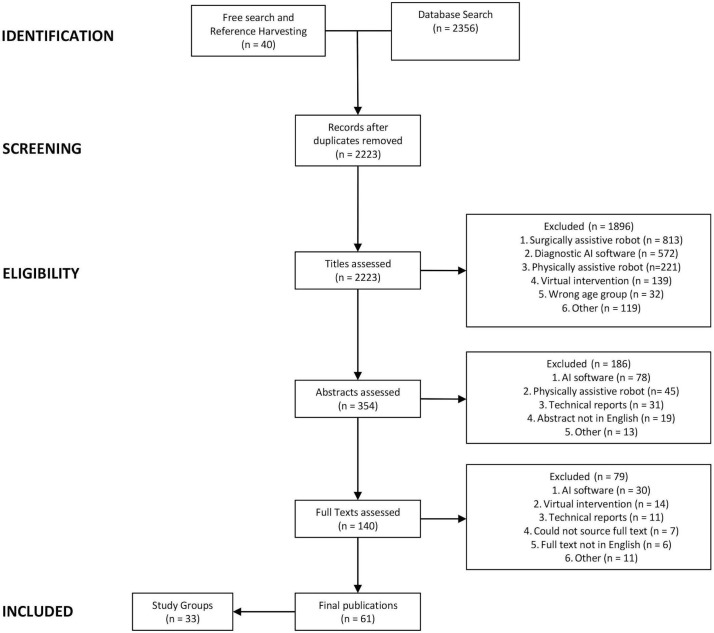
“For example, Abdi et al’s [8] scoping review of 33 studies consisting of 1574 participants and 11 robots showed that 28 of the 33 papers reported positive outcomes (five studies showed non-significant findings), and that SARs could be employed to offer a wide range of roles within the elderly care context particularly…”
BackgroundHsieh, C., Li, P.-S., Wang, C., Lin, S.-L., Hsu, T.-C., & Tsai, C.-M. (2023) · Gerontology · doi:10.1159/000529849 · Cited by 78
Cantone, A. A., Esposito, M., Perillo, F. P., Romano, M., Sebillo, M., & Vitiello, G. (2023) · Electronics · doi:10.3390/electronics12183918 · Cited by 55
Kiuchi, K., Otsu, K., & Hayashi, Y. (2023) · Behaviour and Information Technology · doi:10.1080/0144929x.2023.2286528 · Cited by 64
“Since then, not all of these challenges had been resolved, especially the ethical and legal aspects, which have not yet been fully discussed (Abdi et al. 2018; Gibelli et al. 2021; Vandemeulebroucke, de Casterlé, and Gastmans 2018; Vandemeulebroucke, Dzi, and Gastmans 2021).”
Cohavi, O., & Levy‐Tzedek, S. (2022) · International Journal of Human-Computer Studies · doi:10.1016/j.ijhcs.2022.102775 · Cited by 55
Yuan, S., Coghlan, S., Lederman, R., & Waycott, J. (2023) · International Journal of Social Robotics · doi:10.1007/s12369-023-01053-6 · Cited by 65
“In the context of residential aged care, two types of social robots have been most widely deployed: robot pets and humanoid robots [2].”
BackgroundChen, S., Jones, C., & Moyle, W. (2019) · International Journal of Social Robotics · doi:10.1007/s12369-019-00613-z · Cited by 55
“Recent systematic reviews have highlighted the use of social robots to facilitate social connectedness [3] and improve psychological well-being for older adults [4].”
Guardians of humanity? The challenges of nursing practice in the digital age
Rubeis, G. (2020) · Nursing Philosophy · doi:10.1111/nup.12331 · Cited by 47
Robots for Inter-Generational Interactions: Implications for Nonfamilial Community Settings
Joshi, S., & Šabanović, S. (2019) · ACM/IEEE International Conference on Human-Robot Interaction (HRI) · doi:10.1109/hri.2019.8673167 · Cited by 57
“A recent review of Socially-Assistive Robots (SARs) for eldercare shows that the use of robots leads to improved sociability in subjects with and without dementia and across robot systems, including AIBO, Paro, and Sophie and Jack, especially in group settings and when used as social facilitators [12].”
BackgroundBradwell, H. L., Winnington, R., Thill, S., & Jones, R. B. (2020) · BMC Geriatrics · doi:10.1186/s12877-020-01641-5 · Cited by 44
The Effects of Intimacy and Proactivity on Trust in Human-Humanoid Robot Interaction
Chien, S.-Y. J., Lin, Y.-L., & Chang, B.-F. (2022) · Information Systems Frontiers · doi:10.1007/s10796-022-10324-y · Cited by 53
“…interaction between human operators and robotic agents to support novel services and enhance human–robot experiences (Hsu et al., 2022), such as robot tutors for educational purposes (Alemi et al., 2014; Gordon et al., 2016) or companion robots in elderly care contexts (Abdi et al., 2018).”
Robinson, F., & Nejat, G. (2022) · Journal of Rehabilitation and Assistive Technologies Engineering · doi:10.1177/20556683221101389 · Cited by 66
“85 Senior care studies on sar features Several HRI studies have been conducted with older adults to measure and compare appearance features and interaction modes of SARs using key concepts such as trust, likeability, and intent to use.”
BackgroundThe emergence of social robots: Adding physicality and agency to technology
Ulhøi, J. P., & Nørskov, S. (2022) · Journal of Engineering and Technology Management · doi:10.1016/j.jengtecman.2022.101703 · Cited by 47
Robots in Assisted Living Facilities: Scoping Review
Trainum, K., Tunis, R., Xie, B., & Hauser, E. (2023) · JMIR Aging · doi:10.2196/42652 · Cited by 46
Fattal, C., Cossin, I., Pain, F., Haize, E., Marissael, C., Schmutz, S., & Ocnarescu, I. (2020) · Disability and Rehabilitation Assistive Technology · doi:10.1080/17483107.2020.1786732 · Cited by 56
“Five main roles were identified in the literature: affective therapy, cognitive training, social facilitator, companionship and physiological therapy [9].”
BackgroundCan Robots Help in the Evaluation of Mental Wellbeing in Children? An Empirical Study
Abbasi, N. I., Spitale, M., Anderson, J., Ford, T. J., Jones, P. B., & Güneş, H. (2022) · IEEE RO-MAN · doi:10.1109/ro-man53752.2022.9900843 · Cited by 64
“, children with autism [5], elderly people [6]).”
BackgroundSocial Robots in Aged Care: Care Staff Experiences and Perspectives on Robot Benefits and Challenges
Yuan, S., Coghlan, S., Lederman, R., & Waycott, J. (2022) · Proceedings of the ACM on Human-Computer Interaction · doi:10.1145/3555220 · Cited by 48
“For example, a scoping review of 61 publications with clinical outcomes from social robot trials showed that robopets and humanoid robots can play positive roles in therapeutic interventions and social interactions, improving the quality of life and wellbeing of older adults [2].”
Background“Gymmy”: Designing and Testing a Robot for Physical and Cognitive Training of Older Adults
Krakovski, M., Kumar, S., Givati, S., Bardea, M., Zafrani, O., Nimrod, G., Bar‐Haim, S., & Edan, Y. (2021) · Applied Sciences · doi:10.3390/app11146431 · Cited by 50
Kang, H. S., Koh, I. S., Makimoto, K., & Yamakawa, M. (2023) · Geriatric Nursing · doi:10.1016/j.gerinurse.2023.01.025 · Cited by 45
“Care robots provide support for daily tasks and can function as companions for the older adults.(4,6) Furthermore, voice-activated speakers are becoming increasingly popular.”
Smart Home Devices for Supporting Older Adults: A Systematic Review
Ghafurian, M., Wang, K., Dhode, I., Kapoor, M., Morita, P. P., & Dautenhahn, K. (2023) · IEEE Access · doi:10.1109/access.2023.3266647 · Cited by 50
“, [11], [12], [13]), we only included studies with robots if the robot was also connected with another smart home device/sensor or was operating in a smart home environment.”
BackgroundLee, O. E., Nam, I., Chon, Y., Park, A., & Choi, N. G. (2022) · Journal of Applied Gerontology · doi:10.1177/07334648221138283 · Cited by 47
“SAHRs have the potential to help older adults, especially those who live alone, improve their subjective well-being (Abdi et al., 2018).”
BackgroundMarvin: An Innovative Omni-Directional Robotic Assistant for Domestic Environments
Eirale, A., Martini, M., Tagliavini, L., Gandini, D., Chiaberge, M., & Quaglia, G. (2022) · Sensors · doi:10.3390/s22145261 · Cited by 46
“Although the specific role and objectives of a robotic assistant for elderly care need to be concurrently discussed from an ethical perspective, according to Abdi et al. [3] diverse robotic platforms for social assistance already exist.”
BackgroundUse of robots to encourage social engagement between older adults
Lin, Y.-C., Fan, J., Tate, J. A., Sarkar, N., & Mion, L. C. (2021) · Geriatric Nursing · doi:10.1016/j.gerinurse.2021.11.008 · Cited by 47
Can the Paro be my Buddy? Meaningful experiences from the perspectives of older adults
Chen, S., Davis, B. H., Kuo, C.-Y., Maclagan, M., Chien, C.-O., & Lin, M. (2021) · Geriatric Nursing · doi:10.1016/j.gerinurse.2021.11.011 · Cited by 45
Golant, S. M. (2019) · Journal of Aging Studies · doi:10.1016/j.jaging.2019.100793 · Cited by 48
Schüssler, S., Zuschnegg, J., Paletta, L., Fellner, M., Lodron, G., Steiner, J., Pansy-Resch, S., Lammer, L., Prodromou, D., Brunsch, S., et al. (2020) · JMIR Research Protocols · doi:10.2196/14927 · Cited by 39
“They can also look like an android with an almost realistic human-like appearance, or, in the case of animal-like SAR, can look like an animal, such as Paro, the seal baby [13,14].”
BackgroundInfluentialRobotics to support aging in place
Mois, G., & Beer, J. M. (2020) · Living with Robots · doi:10.1016/b978-0-12-815367-3.00003-7 · Cited by 36
Older adult perspectives on emotion and stigma in social robots
Dosso, J. A., Kailley, J. N., Guerra, G. K., & Robillard, J. M. (2023) · Frontiers in Psychiatry · doi:10.3389/fpsyt.2022.1051750 · Cited by 40
Pashangpour, S., & Nejat, G. (2024) · Robotics · doi:10.3390/robotics13080112 · Cited by 50
“Single-modal robot communication in healthcare applications has mainly consisted of either textual or verbal information exchange [102,103].”
BackgroundKaipainen, K., Ahtinen, A., & Hiltunen, A. (2018) · International Academic Mindtrek Conference (Mindtrek) · doi:10.1145/3275116.3275137 · Cited by 55
“They have also been utilized in assistive roles such as teachers’ assistants in language learning at schools [6] and companions in elderly care [2].”
BackgroundPilozzi, A. R., & Huang, X. (2020) · Brain Sciences · doi:10.3390/brainsci10030183 · Cited by 40
“The global population is aging considerably, while there is a proportional decrease in social and healthcare providers [36].”
BackgroundExploring the Use of Socially Assistive Robots Among Socially Isolated Korean American Older Adults
Lee, O. E., ok, N. K., Kim, E. M., Choi, N. G., & Park, D.-H. (2024) · Journal of Applied Gerontology · doi:10.1177/07334648241236081 · Cited by 33
“However, most previous studies of the effectiveness of SARs including humanoids and animoids were conducted in long-term care settings, not with community-dwelling older adults (Abdi et al., 2018; Chen et al., 2020).”
Ong, Y. C., Tang, A., & Tam, W. (2021) · Journal of Psychiatric Research · doi:10.1016/j.jpsychires.2021.05.077 · Cited by 36
Healthcare robots and human generations: Consequences for nursing and healthcare
Betriana, F., Tanioka, R., Gunawan, J., & Locsin, R. C. (2022) · Collegian Journal of the Royal College of Nursing Australia · doi:10.1016/j.colegn.2022.01.008 · Cited by 38
Medical Robotics: Opportunities in China
Guo, Y., Chen, W., Zhao, J., & Yang, G. (2022) · Annual Review of Control Robotics and Autonomous Systems · doi:10.1146/annurev-control-061521-070251 · Cited by 39
Leung, C., Wong, K. C., So, W. W. Y., Tse, Z. C. K., Li, D., Cao, Y., & Shum, D. (2022) · PsyCh Journal · doi:10.1002/pchj.565 · Cited by 39
Chita-Tegmark, M., Ackerman, J. M., & Scheutz, M. J. (2019) · Journal of Medical Internet Research · doi:10.2196/13729 · Cited by 38
Metadata
- Authors
- Abdi, J., Al-Hindawi, A., Ng, T., & Vizcaychipi, M. P.
- Affiliations
- Imperial College London (GB)
- Magill Department of Anaesthesia, Intensive Care Medicine and Pain Management, Chelsea and Westminster Hospital, London, UK
- Chelsea and Westminster Hospital NHS Foundation Trust (GB)
- Corresponding author
- Abdi, Jordan
- Venue
- BMJ Open
- Publisher
- BMJ
- Published
- 2018-02
- Volume
- 8
- Issue
- 2
- Pages
- e018815
- ISSN
- 2044-6055 (ISSN-L)
- PMC
- PMC5829664
- OpenAlex
- W2789445850
- Cited by
- 583
- References
- 70
- Citations by year
- 2026: 60 · 2025: 83 · 2024: 80 · 2023: 81 · 2022: 104 · 2021: 72 · 2020: 59 · 2019: 35 · 2018: 9
- FWCI
- 6.61
- Type
- journal article
- Language
- en
- Open access
- gold
- doi.org
- Licence
- cc-by-nc
- Locations
- BMJ Open (publishedVersion, cc-by-nc)
- PubMed Central (publishedVersion, cc-by-nc)
- PubMed (publishedVersion)
- Spiral (Imperial College London) (submittedVersion, cc-by-nc)
- Funders
- National Institute for Health and Care Research
- Topics
- Social Sciences › Psychology › Social Psychology › Social Robot Interaction and HRI
- Health Sciences › Medicine › Geriatrics and Gerontology › Technology Use by Older Adults
- Life Sciences › Agricultural and Biological Sciences › Animal Science and Zoology › Human-Animal Interaction Studies
- Keywords
- socially assistive robots, elderly care, older adults, humanoid robots, pet robots, cognitive training, social facilitation, companionship, social interaction with robots, population aging
- MeSH terms
- Aged, Aging, Humans, Interpersonal Relations, Quality of Health Care, Quality of Life, Robotics, Randomized Controlled Trials as Topic
About these checks
Registry, retraction, Cites and statistics results are computed, not judged, with one exception: a printed reference that no index lists is read once by a model before it counts as a citation error. Claims are extracted by a model and kept only when their quote appears verbatim in the text; each cited source is then checked, with a model’s help, for whether it says what the claim relies on. Those verdicts can be wrong — read the claim’s quote and the cited source before relying on one.
Statistics and arithmetic are recomputed, not judged.
Confidence bands are shown only for fields calibrated on our annotated test set. None is calibrated yet, so no band is shown.
What counts as a claim ›How we measure confidence ›How we check this ›
Are you an author, or do you see a problem with this page? Request a review
Data sources
Bibliographic data: Semantic Scholar, OpenAlex, Crossref.
Contains information from the Semantic Scholar Academic Graph Datasets, made available under the ODC Attribution License (ODC-BY 1.0).
Semantic Scholar’s data is described in: Kinney, R., et al. (2023). The Semantic Scholar Open Data Platform. arXiv:2301.10140.
