

Help-seeking by male victims of domestic violence and abuse (DVA): a systematic review and qualitative evidence synthesis
Open accessThe DOI matches its Crossref record; 35 of the 36 references it cites were found in a registry or an index; 32 of the 136 sources its claims cite were checked for support.
Abstract
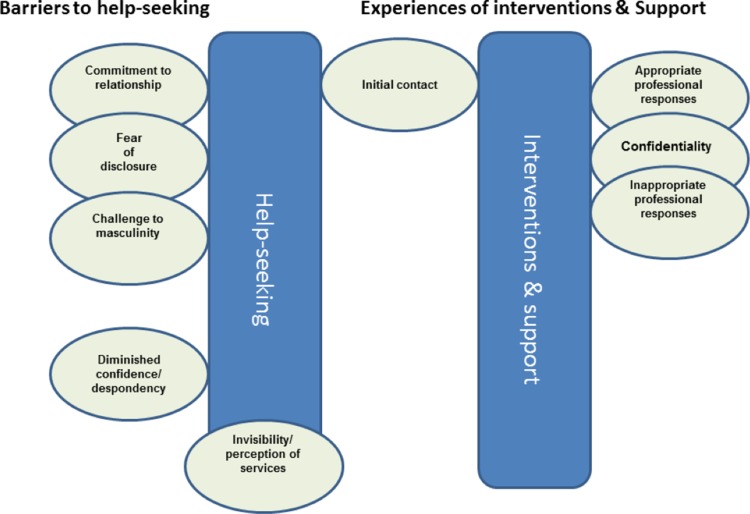
Objectives: To understand help-seeking by male victims of domestic violence and abuse (DVA) and their experiences of support services by systematically identifying qualitative and mixed-method studies and thematically synthesising their findings. Design: Systematic review and qualitative evidence synthesis. Searches were conducted in 12 databases and the grey literature with no language or date restrictions. Quality appraisal of the studies was carried out using the Critical Appraisal Skills Programme tool. Reviewers extracted first and second order constructs related to help-seeking, identified themes and combined them by interpretative thematic synthesis. Setting: DVA experienced by male victims and defined as any incident or pattern of incidents of controlling coercive or threatening behaviour, violence or abuse among people aged 18 or over who are or have been intimate partners or family members, regardless of gender or sexuality. Participants: Male victims of DVA. Interventions: Any intervention which provides practical and/or psychological support to male victims of DVA including but not limited to DVA-specific services, primary healthcare and sexual health clinics. Primary and secondary outcome measures: Qualitative data describing help-seeking experiences and interactions with support services of male victims of domestic violence Results: We included twelve studies which were published between 2006 and 2017. We grouped nine themes described over two phases (a)barriers to help-seeking: fear of disclosure, challenge to masculinity, commitment to relationship, diminished confidence/despondency and invisibility/perception of services; and (b)experiences of interventions and support: initial contact, confidentiality, appropriate professional approaches and inappropriate professional approaches. Conclusion: The recent publication of the primary studies suggests a new interest in the needs of male DVA victims. We have confirmed previously identified barriers to help-seeking by male victims of DVA and provide new insight into barriers and facilitators to service provision. PROSPERO registration number: CRD42016039999.
Overview
CoChat Summary
TL;DR
This systematic review and qualitative evidence synthesis of 12 studies found that male victims of domestic violence and abuse face barriers to help-seeking centred on fear of disclosure, masculinity, relationship commitment, diminished confidence, and service invisibility, while their service experiences hinge on initial contact, confidentiality, and professional approaches. It concludes that services need to be more inclusive, publicly advertised, confidential, continuous, and tailored to men’s diverse needs.
Key findings
- The review included 12 qualitative/mixed-method studies published between 2006 and 2017: 6 from the UK, 4 from the USA, 1 from Sweden, and 1 from Portugal. It grouped nine themes into two phases: barriers to help-seeking (fear of disclosure, challenge to masculinity, commitment to relationship, diminished confidence/despondency, invisibility/perception of services) and experiences of interventions/support (initial contact, confidentiality, appropriate professional approaches, inappropriate professional approaches).
- Fear of disclosure emerged from 10 of 12 studies; challenge to masculinity from 7; commitment to relationship from 2; diminished confidence/despondency from 3; invisibility/perception of services from 3. In phase 2, initial contact drew on 4 studies, confidentiality on 5, appropriate professional approaches on 5, and inappropriate professional approaches on 6.
- Men often preferred female professionals and valued confidentiality and continuity of contact; primary healthcare was regarded as suitable by some, but MSM participants reported services were not configured for their needs and could be inappropriate or “heterosexual-orientated.”
- Quality appraisal found studies were generally well conducted, but two were predominantly quantitative in design, three had potentially inadequate recruitment strategies, only three considered the researcher–participant relationship, and while eight described ethical approval, four did not mention it.
Methods
- Systematic review and qualitative evidence synthesis. Searches were conducted in 12 databases and the grey literature with no language or date restrictions; initial searches were on 14 March 2016 and updated on 9 June 2017. PROSPERO registration number: CRD42016039999.
- Eligible studies were qualitative or mixed-method studies, with mixed-method studies eligible only if they reported qualitative findings separately, describing male victims of DVA aged ≥18 years. Data were extracted independently by two reviewers, quality was appraised using the Critical Appraisal Skills Programme (CASP) tool, and first- and second-order constructs were combined using interpretative thematic synthesis.
- Twelve studies were included; six focused specifically on help-seeking and six included it as a significant part of the research. Recruitment sources included DVA or social/community services, the criminal justice system, sexual health/HIV clinics, and primary healthcare.
Limitations
- Stated in the paper: not all dimensions of the topic are covered by the included qualitative studies, for example ethnicity and cultural barriers to help-seeking by men; the term MSM is acknowledged as contentious and needing further refinement; and the studies captured the voices of men willing to speak to someone, whereas more anonymous methods might have yielded different findings.
- Stated/evident: participants were predominantly white and within a relatively narrow age range of 40–60 years, were self-selecting, and in the majority of studies the currency of the abusive relationship(s) was not well recorded.
- Evident from the quality appraisal: some studies had potentially inadequate recruitment strategies, limited consideration of the researcher–participant relationship, and incomplete reporting of ethical approval and of safety/confidentiality procedures.
Model-written summary. Check it against the paper before relying on it.
Integrity signals
Registry
Cites
Statistics
Figures
Verification
Claims the paper makes
26 Valid · 1 Not valid · 56 Not checked · 69 Own results and interpretations
The sources with a verdict support this claim; the rest weren’t checked yet, have no full text we could read, or their verdicts aren’t rated yet.
In the paper
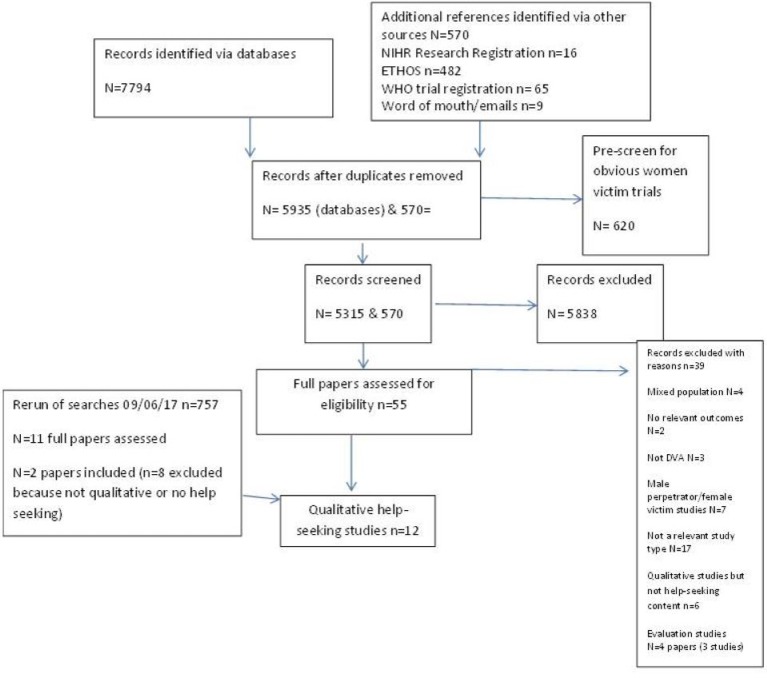
“The searches identified 12 relevant qualitative studies (figure 1).11–22”
§ Help-seeking by male victims of domestic violence and abuse (DVA): a systematic review and qualitative evidence synthesis > Results
What the sources say
- Supportedcites [11] Bacchus LJ, Buller AM, Ferrari G, et al “It’s Always Good to Ask”: a mixed methods study on the perceived role of sexual health practitioners asking gay and bisexual men about experiences of domestic violence and abuse. Journal of Mixed Methods Research 2018; 12: 221– 43. 10.1177/1558689816651808 source
The citation identifies this paper as one of the studies found, rather than asking it to substantiate the citing authors’ total of 12. The Abstract describes a mixed-methods study with 19 interviews, and the Semistructured Interview Participants section confirms that interview data from 19 gay and bisexual men were presented. Its qualitative component supports its identification as a relevant qualitative study; this paper does not itself establish the citing authors’ search count. (LLM, conf=0.85)
- Not matchedcites [12] Donovan C, Hester M, Holmes J, et al Comparing Domestic Abuse in Same Sex and Heterosexual Relationships. 2006 http://www.equation.org.uk/wp-content/uploads/2012/12/Comparing-Domestic-Abuse-in-Same-Sex-and-Heterosexual-relationships.pdf.
We searched by its title and found no matching paper.
- Not matchedcites [13] Frierson DT The Fear of Being Judged: African American Gay Men and Intimate Partner Violence: a qualitative study. Washington DC: PhD thesis Howard University, 2014.
Its entry has no title and year that we can search by.
- Could not verifycites [14] Hines DA, Douglas EM A closer look at men who sustain intimate terrorism by women. Partner Abuse 2010; 1: 286– 313. 10.1891/1946-6560.1.3.286 20686677 PMC2913504 sourceExperimental — accuracy not yet measured
The Method (Participants and Procedure; page not available in our copy) describes recruiting 302 men for a survey, not searching for qualitative studies. Searches of our copy for the number 12, qualitative studies, and study-selection searches found no passage reporting that 12 relevant studies were identified. (LLM, conf=0.76)
- Not matchedcites [15] Hogan K Men’s experiences of female-perpetrated intimate partner violence: a qualitative exploration. D Couns Psych: University of the West of England, 2016.
Its entry has no title and year that we can search by.
- Not checked — no full text of the sourcecites [16] Machado A, Hines D, Matos M Help-seeking and needs of male victims of intimate partner violence in Portugal. Psychol Men Masc 2016; 17: 255– 64. 10.1037/men0000013 source
- Not checked — no full text of the sourcecites [17] McCarrick J, Davis-McCabe C, Hirst-Winthrop S Men’s Experiences of the criminal justice system following female perpetrated intimate partner violence. J Fam Violence 2016; 31: 203– 13. 10.1007/s10896-015-9749-z source
- Not checked — no full text of the sourcecites [18] Morgan K, Williamson E, Hester M, et al Asking men about domestic violence and abuse in a family medicine context: Help seeking and views on the general practitioner role. Aggress Violent Behav 2014; 19: 637– 42. 10.1016/j.avb.2014.09.008 source
- Not checked — no full text of the sourcecites [19] Morgan W, Wells M ‘It’s deemed unmanly’: men’s experiences of intimate partner violence (IPV). J Forens Psychiatry Psychol 2016; 27: 404– 18. 10.1080/14789949.2015.1127986 source
- Supportedcites [20] Simmons J, Brüggemann AJ, Swahnberg K Disclosing victimisation to healthcare professionals in Sweden: a constructivist grounded theory study of experiences among men exposed to interpersonal violence. BMJ Open 2016; 6: e010847 10.1136/bmjopen-2015-010847 PMC4916578 27324711 source
The Methodology section describes a constructivist grounded theory study, and the Participants section reports interviews with men. The citation identifies this paper as one of the qualitative studies found; the total of 12 is the citing authors’ search result, not a finding attributed to this individual paper. (LLM, conf=0.86)
plain- Asserted: passes — The authors put it forward as true.
- Checkable: passes — It can be checked against evidence.
- Load-bearing: passes — The paper’s conclusions depend on it.
- Based: passes — The paper gives a reason why it holds.
- Supported
The cited sources support only part of this claim — read each source’s verdict below.
In the paper
“only three studies considered the relationship between the researcher and participant11 13 15”
§ Help-seeking by male victims of domestic violence and abuse (DVA): a systematic review and qualitative evidence synthesis > Results > Quality of studies
What the sources say
- Supportedcites [11] Bacchus LJ, Buller AM, Ferrari G, et al “It’s Always Good to Ask”: a mixed methods study on the perceived role of sexual health practitioners asking gay and bisexual men about experiences of domestic violence and abuse. Journal of Mixed Methods Research 2018; 12: 221– 43. 10.1177/1558689816651808 source
The Discussion considers the researcher–participant relationship: it notes that interviews were conducted by female researchers and that male researchers might have elicited different data. This supports citing the paper as an example of a study that considered that relationship; the count of three is the citing authors’ assessment across studies. (LLM, conf=0.87)
- Not matchedcites [13] Frierson DT The Fear of Being Judged: African American Gay Men and Intimate Partner Violence: a qualitative study. Washington DC: PhD thesis Howard University, 2014.
Its entry has no title and year that we can search by.
- Not matchedcites [15] Hogan K Men’s experiences of female-perpetrated intimate partner violence: a qualitative exploration. D Couns Psych: University of the West of England, 2016.
Its entry has no title and year that we can search by.
plain- Asserted: passes — The authors put it forward as true.
- Checkable: passes — It can be checked against evidence.
- Load-bearing: unclear — It is unclear whether the paper’s conclusions depend on it.
- Based: passes — The paper gives a reason why it holds.
- Supported
The sources with a verdict support this claim; the rest weren’t checked yet, have no full text we could read, or their verdicts aren’t rated yet.
In the paper
“However two studies were predominantly quantitative in design,14 19”
§ Help-seeking by male victims of domestic violence and abuse (DVA): a systematic review and qualitative evidence synthesis > Results > Quality of studies
What the sources say
- Supportedcites [14] Hines DA, Douglas EM A closer look at men who sustain intimate terrorism by women. Partner Abuse 2010; 1: 286– 313. 10.1891/1946-6560.1.3.286 20686677 PMC2913504 source
The Methods section describes a questionnaire and calculated prevalence, frequency, and chronicity variables. The Results section reports percentages and mean frequencies, confirming that this paper was predominantly quantitative in design. This source establishes the design of this paper, not that of the other study cited in the sentence. (LLM, conf=0.92)
- Not checked — no full text of the sourcecites [19] Morgan W, Wells M ‘It’s deemed unmanly’: men’s experiences of intimate partner violence (IPV). J Forens Psychiatry Psychol 2016; 27: 404– 18. 10.1080/14789949.2015.1127986 source
plain- Asserted: passes — The authors put it forward as true.
- Checkable: passes — It can be checked against evidence.
- Load-bearing: unclear — It is unclear whether the paper’s conclusions depend on it.
- Based: passes — The paper gives a reason why it holds.
- Supported
The cited sources support only part of this claim — read each source’s verdict below.
In the paper
“One of the most recurrent fears was losing custody of their children.14 15 20”
§ Help-seeking by male victims of domestic violence and abuse (DVA): a systematic review and qualitative evidence synthesis > Results > Theme 1: fear of disclosure
What the sources say
- Supportedcites [14] Hines DA, Douglas EM A closer look at men who sustain intimate terrorism by women. Partner Abuse 2010; 1: 286– 313. 10.1891/1946-6560.1.3.286 20686677 PMC2913504 source
The Discussion says the men feared losing custody of their children. The Results section, “What Prevents Them From Leaving?”, reports that fear of never seeing their children again was the fourth most common reason for staying, supporting the description of it as a recurrent fear. (LLM, conf=0.90)
- Not matchedcites [15] Hogan K Men’s experiences of female-perpetrated intimate partner violence: a qualitative exploration. D Couns Psych: University of the West of England, 2016.
Its entry has no title and year that we can search by.
- Partly supportedcites [20] Simmons J, Brüggemann AJ, Swahnberg K Disclosing victimisation to healthcare professionals in Sweden: a constructivist grounded theory study of experiences among men exposed to interpersonal violence. BMJ Open 2016; 6: e010847 10.1136/bmjopen-2015-010847 PMC4916578 27324711 sourceExperimental — accuracy not yet measured
In ‘Experiences and fears in relation to the healthcare system’ (page not available), the paper reports that some men feared losing child custody rights, particularly when the perpetrator was a former female intimate partner. It does not establish that this was one of the most recurrent fears. (LLM, conf=0.86)
plain- Asserted: passes — The authors put it forward as true.
- Checkable: passes — It can be checked against evidence.
- Load-bearing: unclear — It is unclear whether the paper’s conclusions depend on it.
- Based: passes — The paper gives a reason why it holds.
- Supported
The sources with a verdict support this claim; the rest weren’t checked yet, have no full text we could read, or their verdicts aren’t rated yet.
In the paper
“three studies had potentially inadequate recruitment strategies,14 19 21”
§ Help-seeking by male victims of domestic violence and abuse (DVA): a systematic review and qualitative evidence synthesis > Results > Quality of studies
What the sources say
- Supportedcites [14] Hines DA, Douglas EM A closer look at men who sustain intimate terrorism by women. Partner Abuse 2010; 1: 286– 313. 10.1891/1946-6560.1.3.286 20686677 PMC2913504 source
The Discussion (page not provided) identifies recruitment limitations in this study: the sample was restricted to help-seeking men who encountered an online advertisement or called a particular helpline, excluding others. This supports the citing sentence’s assessment of this study as one of three with potentially inadequate recruitment strategies; it does not need to establish that the other two studies had the same limitation. (LLM, conf=0.89)
- Not checked — no full text of the sourcecites [19] Morgan W, Wells M ‘It’s deemed unmanly’: men’s experiences of intimate partner violence (IPV). J Forens Psychiatry Psychol 2016; 27: 404– 18. 10.1080/14789949.2015.1127986 source
- Not checked — no full text of the sourcecites [21] Tsui V, Cheung M, Leung P Help-seeking among male victims of partner abuse: men’s hard times. J Community Psychol 2010; 38: 769– 80. 10.1002/jcop.20394 source
hedged- Asserted: passes — The authors put it forward as true.
- Checkable: passes — It can be checked against evidence.
- Load-bearing: unclear — It is unclear whether the paper’s conclusions depend on it.
- Based: passes — The paper gives a reason why it holds.
- Supported
62 more claims · 9 with their cited sources checked
Create a free account to see all 152 claims and to verify the 5 references still open.
- It may state two separate claims as one. 67
- Probably not a substantial claim. 36
Claims other papers make about this one
Each is checked against this paper’s own text: does it say what the citing paper says it does?
The cited source says what the claim attributes to it.
In the citing paper
“The qualitative themes demonstrate the importance of a facilitative environment, sensible timing and effective communication skills in trust building and effective immediate response [4].”
Self-check
Percentages, sums and reported differences re-computed from the paper’s own numbers.
Each contradiction between two passages listed here was confirmed by an independent check.
Rated minor: it would not touch a result — a value no result rests on, a p-value that stays on the same side of the significance level, or a conflict that is clerical, resolved elsewhere in the paper, or outside its own findings.
In the paper
§ Help-seeking by male victims of domestic violence and abuse (DVA): a systematic review and qualitative evidence synthesis > Abstract > Results
“We included twelve studies which were published between 2006 and 2017.”
§ Help-seeking by male victims of domestic violence and abuse (DVA): a systematic review and qualitative evidence synthesis > References
“11. Bacchus LJ, Buller AM, Ferrari G, et al “It’s Always Good to Ask”: a mixed methods study on the perceived role of sexual health practitioners asking gay and bisexual men about experiences of domestic violence and abuse. Journal of Mixed Methods Research 2018; 12: 221– 43.”
Rated minor: it would not touch a result — a value no result rests on, a p-value that stays on the same side of the significance level, or a conflict that is clerical, resolved elsewhere in the paper, or outside its own findings.
In the paper
§ Help-seeking by male victims of domestic violence and abuse (DVA): a systematic review and qualitative evidence synthesis > Abstract > Design
“Searches were conducted in 12 databases and the grey literature with no language or date restrictions.”
§ Help-seeking by male victims of domestic violence and abuse (DVA): a systematic review and qualitative evidence synthesis > Methods > Eligibility criteria of studies
“A search strategy was devised in Medline using the eligibility criteria and modified appropriately for: EMBASE, CINAHL, CENTRAL, PsycINFO, LILACS, BNI, HMIC, ERIC, SSCI, Conference Proceedings Citation Index-Social Science & Humanities, IBSS and Social Services Abstract from their inception dates”
Rated minor: it would not touch a result — a value no result rests on, a p-value that stays on the same side of the significance level, or a conflict that is clerical, resolved elsewhere in the paper, or outside its own findings.
In the paper
§ Help-seeking by male victims of domestic violence and abuse (DVA): a systematic review and qualitative evidence synthesis > Results > Theme 1: fear of disclosure
“In the Tsui et al study, in which men completed open-ended questions, men expressed the fear of putting themselves at future risk of harm from their partner by disclosing.”
§ Help-seeking by male victims of domestic violence and abuse (DVA): a systematic review and qualitative evidence synthesis > Results
“Sixty-eight agency representatives responded. Mean age 43 years. 72% female.”
Rated minor: it would not touch a result — a value no result rests on, a p-value that stays on the same side of the significance level, or a conflict that is clerical, resolved elsewhere in the paper, or outside its own findings.
In the paper
“(n=28) ≥18 years, English-speaking, currently receiving HIV-related care at the clinic site. Mean age 43.6, SD 5 6.2. Male 24, transgender 4, gay 23, bisexual 3, bispirit 1, other 1. Currently in relationship 12. Living with partner 6. Relationship status unknown 10. White/European 13, black/African-American 8, Latino/Hispanic 2. American, Indian/Alaskan Native 3. Biracial/multiracial 3.”
§ Help-seeking by male victims of domestic violence and abuse (DVA): a systematic review and qualitative evidence synthesis > Results
Reported 28 · recomputed 29
Rated minor: it would not touch a result — a value no result rests on, a p-value that stays on the same side of the significance level, or a conflict that is clerical, resolved elsewhere in the paper, or outside its own findings.
In the paper
§ Help-seeking by male victims of domestic violence and abuse (DVA): a systematic review and qualitative evidence synthesis > Results > Characteristics of study population
“one study recruited from the criminal justice system,17”
§ Help-seeking by male victims of domestic violence and abuse (DVA): a systematic review and qualitative evidence synthesis > Results
“McCarrick et al 17 2016, UK Charitable agency that support male victims and via advertisements placed on a website.”
2 more findings
Create a free account to see every finding of this check.
Citations
Cites
Methods for the thematic synthesis of qualitative research in systematic reviews
Thomas, J., & Harden, A. (2008) · BMC Medical Research Methodology · doi:10.1186/1471-2288-8-45 · Cited by 9,312
Noblit, G., & Hare, R. (1988) · doi:10.4135/9781412985000 · Cited by 2,723
Meta-Ethnography: Synthesizing Qualitative Studies
Noblit, G. W., & Hare, R. D. (1988) · Medical Entomology and Zoology · Cited by 2,191
O’Brien, R., Hunt, K., & Hart, G. (2005) · Social Science & Medicine · doi:10.1016/j.socscimed.2004.12.008 · Cited by 797 · cited 1×
“The perception that victims may have about negative reactions from family; friends and professionals may be reinforced by these behaviours.(32) 33 In our recommendations for practice we state that service provision needs to be more inclusive and better tailored to more effectively address the needs of all genders and…”
BackgroundFeder, G. S. (2006) · Archives of Internal Medicine · doi:10.1001/archinte.166.1.22 · Cited by 641
Self-citationVogel, D. L., Heimerdinger-Edwards, S. R., Hammer, J. H., & Hubbard, A. (2011) · Journal of Counseling Psychology · doi:10.1037/a0023688 · Cited by 551
Hester, M. (2011) · British Journal of Social Work · doi:10.1093/bjsw/bcr095 · Cited by 295
Intimate Partner Violence Among Men Who Have Sex With Men: A Systematic Review
Finneran, C., & Stephenson, R. (2013) · Trauma, Violence, & Abuse · doi:10.1177/1524838012470034 · Cited by 291
Masculinity studies and feminist theory: new directions
(2002) · Choice Reviews Online · doi:10.5860/choice.40-1239 · Cited by 238
A Closer Look at Men Who Sustain Intimate Terrorism by Women
Hines, D. A., & Douglas, E. M. (2010) · Partner Abuse · doi:10.1891/1946-6560.1.3.286 · Cited by 169 · cited 5×
“The currency of the abusive relationship(s) was not well recorded, with the exception of three studies.(14) 15 19 Equally most studies included participants who self-reported having experienced DVA with little detail of duration, frequency or type of abuse experienced, although in one study the male victims were takin…”
BackgroundInfluential
Research works printed but not linked: 4
- Shannon Harvey and Davina James-Hanman. Developing quality standards for services working with men who have experienced domestic abuse: Evidence review: what we know about how men’s service provision needs differ. 2015 http://respect.uk.net/.
- Frierson DT The Fear of Being Judged: African American Gay Men and Intimate Partner Violence: a qualitative study. Washington DC: PhD thesis Howard University, 2014.
- Gardiner JK, Masculinity Studies and Feminist Theory: New Directions 2002. New York: Columbia University Press, 2002: 1– 29.
- Hague G, Malos E, Dear W Multi-agency work and domestic violence: a national study of inter-agency initiatives: The Policy Press, 2000.
Cited by
Items 101–172 of 172
More GP Consultations by Violence Victims: Results from the Representative German DEGS1 Study
Hunzelar, C., Krumpholtz, Y., Schlack, R., & Weltermann, B. (2023) · International Journal of Environmental Research and Public Health · doi:10.3390/ijerph20054646 · Cited by 2
Hombres víctimas de violencia de pareja: una revisión sistemática
Ruiz, E. Y. G., Varas, G. J. V., & Cabada, R. I. S. (2023) · PSIQUEMAG/ Revista Científica Digital de Psicología · doi:10.18050/psiquemag.v12i1.2342 · Cited by 16
Intimate partner abuse and male identity: Experiences and perspectives of abused men in Zimbabwe
Medzani, J. M. (2019) · UpSpace Institutional Repository (University of Pretoria) · Cited by 4
Jensen, C. (2021) · Open Access Victoria University of Wellington | Te Herenga Waka (Figshare) · doi:10.26686/wgtn.14528688 · Cited by 2
Intimate Relationships Among Physicians—A Critical Revisit
Peisah, C., & Lele, K. (2022) · Journal of Psychosexual Health · doi:10.1177/26318318221108522 · Cited by 4
Szilassy, E., Coope, C., Emsley, E., Williamson, E., Barbosa, E. C., Johnson, M., Dowrick, A., & Feder, G. S. (2023) · Research Square · doi:10.21203/rs.3.rs-2832326/v1 · Cited by 2
Self-citationReutens, S. G., Karystianis, G., Withall, A., & Butler, T. G. (2024) · Frontiers in Psychiatry · doi:10.3389/fpsyt.2024.1331915 · Cited by 3
Mukole, M., & Mwandayi, C. (2024) · Pharos Journal of Theology · doi:10.46222/pharosjot.105.411 · Cited by 1
Isangha, S. O., Tam, H.-L., Chuang, S. S., Akintunde, T. Y., Choi, A. W., Cudjoe, E., & Umar, R. D. (2025) · Families in Society The Journal of Contemporary Social Services · doi:10.1177/10443894251322846 · Cited by 1
Reutens, S. G., Akpanekpo, E. I., Karystianis, G., Withall, A., & Butler, T. G. (2025) · JMIR Aging · doi:10.2196/75993 · Cited by 1
“Underreporting and underdetection of the abuse of older male individuals have been noted [21,23] and occur against a broader background of underreporting of older people’s mistreatment, with estimates that 1 in 6 older people are mistreated, but only 1 in 24 cases are reported [10].”
Russo, L. N., Mezzapelle, J. L., Hines, D. A., Douglas, E. M., Lee, K. A., & Sabina, C. (2026) · Victims & Offenders · doi:10.1080/15564886.2026.2650131 · Cited by 1
“…align with prior work showing that men may struggle to label their experiences as IPV or identify as victims, particularly when abuse does not conform to dominant cultural scripts of victimization (Addis & Mahalik, 2003; Bates, 2020; Brooks et al., 2020; Huntley et al., 2019; Walker et al., 2020).”
Sengoelge, M., Ponce, Á., Perry, E., Pauncz, A., & Geldschläger, H. (2020) · Journal of Gender-Based Violence · doi:10.1332/239868020x16040660254792 · Cited by 5
Time to exercise caution? Project CARA and out-of-court responses to domestic abuse
Myhill, A., & Bartlett, A. (2024) · Policing A Journal of Policy and Practice · doi:10.1093/police/paad094 · Cited by 2
Nason, J. A., Moylan, C. A., Nelson, A., Munro‐Kramer, M. L., Fedewa, T., & Campbell, R. (2024) · Journal of Child Sexual Abuse · doi:10.1080/10538712.2024.2319084 · Cited by 1
“…are hesitant to contact formal support systems, particularly when their experience deviates from that of the stereotypical white, heterosexual, cisgen-der woman (e.g., Calton et al., 2016, Huntley et al., 2019), and some survivors may therefore be particularly likely to test a resource’s safety.”
BackgroundCapinha, M., Rijo, D., de Matos, M. A. V., & Pereira, M. (2024) · Journal of Interpersonal Violence · doi:10.1177/08862605241249740 · Cited by 1
Burhai, L.-M., Hine, B. A., Bates, E. A., & Chuang, S. S. (2024) · Partner Abuse · doi:10.1891/pa-2023-0006 · Cited by 1
Female-perpetrated Intimate Partner Violence Against Men: Perceptions of Portuguese Police Officers
Santiago, J., Machado, A., & de Matos, M. A. V. (2024) · European Journal on Criminal Policy and Research · doi:10.1007/s10610-024-09602-z · Cited by 2
“Data from various sources highlight a significant number of male IPV victims (Desma - rais et al., 2012; Huntley et al., 2019; Machado et al., 2018 ).”
Effectiveness of intimate partner violence programs: an umbrella review
Bellanti, D. M., Boyd, C. C., Shank, L. M., Parisi, K., Cowansage, K. K., Morgan, M. A., Evatt, D. P., & Kelber, M. S. (2026) · Current Psychology · doi:10.1007/s12144-025-08978-3 · Cited by 1
“…who experience IPV may have singularly unique needs, such as fear, embarrassment, shame, and stigma of being a victim of abuse (regardless of their partner’s gender), heightened concerns about confiden - tiality, and the perception that treatment options are gender-biased (Huntley et al., 2019 ).”
Le, M. T. H. (2020) · Queensland University of Technology · doi:10.5204/thesis.eprints.201745 · Cited by 1
Male victims of intimate partner violence: a mixed methods exploration
O'Connor, G. (2020) · University of Limerick Institutional Repository (University of Limerick) · doi:10.34961/8066 · Cited by 2
Dawson, J. (2022) · Cronfa (Swansea University) · doi:10.23889/suthesis.59162 · Cited by 1
Ending the Stigma of Male Domestic Violence and Abuse Victims: A Mixed-Methods StudyPreprint
Ambrozewicz, P., Fido, D., & Hammond, C. (2023) · doi:10.31234/osf.io/6rhdp · Cited by 1
Gender-Role Stereotypes and Domestic Violence
Joseph, R. M., O’Connell, E., & Bongar, B. M. (2023) · Springer eBooks · doi:10.1007/978-3-030-85493-5_660-1 · Cited by 2
Amundsen, S. (2021) · Tuwhera (Auckland University of Technology)
Domestic Violence in Married Couples: From the Viewpoint of WomenPreprint
Areshtanab, H. N., Vaseai, F., Ebrahimi, H., Bostanabad, M. A., & Hosseinzadeh, M. (2021) · Research Square · doi:10.21203/rs.3.rs-576334/v1
An Introduction to Sexual Abuse and Domestic Violence in Germany
Naik, Y. J. (2021) · Springer eBooks · doi:10.1007/978-3-030-86807-9_1
(2022) · Emerald Group Publishing Limited eBooks · doi:10.1108/978-1-80043-334-220221014
Domestic Violence in Married Couples: From the Viewpoint of WomenPreprint
Areshtanab, H. N., Vaseai, F., Ebrahimi, H., Bostanabad, M. A., & Hosseinzadeh, M. (2021) · Research Square · doi:10.21203/rs.3.rs-576334/v2 · Cited by 2
Burke, A. N., Fouché, C., & O’Brien, M. A. (2023) · Partner Abuse · doi:10.1891/pa-2022-0009 · Cited by 3
Ben‐Porat, A., Dekel, R., & Gilbar, O. (2023) · European Journal of Social Work · doi:10.1080/13691457.2023.2200906 · Cited by 1
“A few studies have also pointed out that men are usually cast as the perpetrator and that the interventions o ff ered them by social services align with this perspective (Bates, 2019; Huntley et al., 2019).”
BackgroundCebreros, B. (2023) · Open Access Victoria University of Wellington | Te Herenga Waka (Figshare) · doi:10.26686/wgtn.23904225 · Cited by 1
Characteristics of Men Who Seek Help From an Irish Domestic Abuse Helpline: The MENCALLHELP Study
Corbally, M., Hine, B. A., & Kestell, B. (2023) · Partner Abuse · doi:10.1891/pa-2023-0017 · Cited by 2
Alexander, K., Zhou, A., Wise, S., & Humphreys, C. (2023) · Child Abuse & Neglect · doi:10.1016/j.chiabu.2023.106511 · Cited by 2
Hill, N., Graham, N., & Forrester, R. L. (2024) · Community Mental Health Journal · doi:10.1007/s10597-023-01220-z · Cited by 1
“This may be important to consider as males are significantly less likely to seek help following interpersonal trauma, compared to women (Huntley et al., 2019).”
BackgroundExploring young people’s constructions of domestic violence as portrayed in the media.
Mtshali, Z. P. (2022) · ResearchSpace (University of KwaZulu-Natal) · doi:10.29086/10413/22827
Li, L., nd, T. W., McManus, S., Stewart, R. J., & Roberts, A. (2024) · doi:10.2196/preprints.58932
A Multi-Level Analysis of Help-Seeking Behaviour of Male Victims of Intimate Partner Violence
Candia, D. A., Weke, P. G. O., Muhua, G. O., & Manene, M. M. (2024) · Sri Lankan Journal of Applied Statistics · doi:10.4038/sljas.v25i1.8121
“…commitment to the relationship, low confidence, denial, shame, embar-rassment, post-traumatic stress disorder, unemployment, staying with young children, negative expectations, etc. (Dim and Lysova, 2021; Douglas et al., 2011; Huntley et al., 2019; Lysova and Dim, 2020; Tsui et al., 2010).”
BackgroundHansén, C. (2024) · doi:10.15626/lud.531.2024 · Cited by 1
Qualitative Evidence Synthesis Using COSTAQDA
Costa, K., & Costa, A. P. (2024) · Lecture notes in networks and systems · doi:10.1007/978-3-031-65735-1_4 · Cited by 2
Dutka, J. (2024) · Acta Universitatis Lodziensis Folia Iuridica · doi:10.18778/0208-6069.109.01
“Another problem involves confidentiality concerns and pressure to keep quiet, especially in closely-knit communities, such as in rural areas and in the families of members of the police force (DeKeseredy 2019, 317–318; Johnson et al. 2005, 4; Huntley et al. 2019, 9; Zavala et al. 2015).”
Buller, A. M., Ferrari, G., Bleile, A. C. E., Feder, G. S., Brzank, P. J., & Bacchus, L. (2025) · PLoS ONE · doi:10.1371/journal.pone.0312807 · Cited by 1
Self-citationOkah, P. S., Nwafor, N. F., & Onalu, C. E. (2025) · Journal of Aggression Maltreatment & Trauma · doi:10.1080/10926771.2025.2456905
“Similarly, population-based studies from various countries indicate that between 10% and 75% of married couples reported that an intimate partner has physically abused them at least once in their lifetime (Huntley et al., 2019).”
Mistreatment of Vulnerable Adults: A Conceptual Analysis of the Help-Seeking Process
Mongeon, J. G., Soulières, M., Giguère, N., Zakaria, R., Simamonika, P., & Israël, S. (2025) · Trauma Violence & Abuse · doi:10.1177/15248380251325815
“On an emotional level, attachment to the abuser can sometimes hinder the help-seeking process, as the victim may strive to protect the abuser’s image and maintain the relationship (Gavin, 2008; Huntley et al., 2019; Li et al., 2022; Snell-Rood, 2015; Stork, 2008).”
Kankanamge, D. V. H., Rubbo, B., Morgan, K., et al. (2025) · BMJ Open · doi:10.1136/bmjopen-2024-089913
“12 Hypothesis—there is a positive association between experiences of domestic violence and self-harm.”
Hagos, A., Karystianis, G., Kita, S., Montalto, A., Lerigo, F., & Butler, T. (2025) · Crime Science · doi:10.1186/s40163-025-00250-0
“…perpetrators of abuse against a female intimate partner, male victims have received little attention in the research literature, (Casali et al., 2017; Margherita et al., 2021; Worman et al., 2021) and their needs have been comparatively neglected (Huntley et al., 2019) resulting to a lack of data.”
InfluentialWidanaralalage, B. K., Raman, E., & Murphy, A. D. (2025) · International journal of law, crime and justice · doi:10.1016/j.ijlcj.2025.100746 · Cited by 3
Participation Management in Family Harm Emergency Police Calls Involving Co-present Others
Gallacher, F. (2025) · Open Access Victoria University of Wellington | Te Herenga Waka (Figshare) · doi:10.26686/wgtn.29369135
Brännvall, M., Enander, V., & Örmon, K. (2025) · Journal of Gender-Based Violence · doi:10.1332/23986808y2025d000000087
“At the time of the study, the nurses had only met heterosexual couples, which is why this study focuses on patterns of violence within heterosexual couples and on differences between women’s and men’s exposure to violence (Huntley et al, 2019).”
Elungata, P. (2025) · Frontiers in Sociology · doi:10.3389/fsoc.2025.1266401
Marco, M. H. D., & Rowlands, J. (2025) · International Journal of Qualitative Methods · doi:10.1177/16094069251374613 · Cited by 1
“For example, Hope (2021) analysed 22 Domestic Homicide Reviews (DHRs) concerning domestic abuse-related deaths of men and reported signi fi cant fi ndings, including insights into the experiences of men and the ways gender can shape these experiences (Huntley et al., 2019).”
Factors for Perceived Helpfulness of Support Sources Among Survivors of Intimate Partner Violence
Cho, H., Kim, W., Gillis, K., & Goetz, K. (2025) · Behavioral Sciences · doi:10.3390/bs15101350 · Cited by 2
“The results of some studies highlight that men are more likely to feel supported by informal sources of support, such as friends or family, rather than formal services (Huntley et al., 2019; Kim et al., 2024; Morgan & Wells, 2016).”
Waila, J. M., Horstick, O., Mitiro, D. O., Musyimi, C. W., & Wilson, M. L. (2025) · Social Science & Medicine · doi:10.1016/j.socscimed.2025.118694 · Cited by 1
Rasmussen, E. L. (2025) · Violence Against Women · doi:10.1177/10778012251409176 · Cited by 1
Translation and validation of the Hebrew HITS screening tool for Intimate Partner Violence (IPV)
Weishut, D. J. N., Soffer-Elnekave, R., Vass, A., & Zalcberg, S. (2026) · BMC Public Health · doi:10.1186/s12889-026-26480-8 · Cited by 1
“However, recent studies have highlighted the barriers men face in disclosing IPV and seeking help, including stigma and traditional gender expectations [6–8] A meta-analysis of 30 studies reported that physical IPV toward men was 20%, psychological IPV was 44%, and sexual IPV was 7% [9].”
Coping and psychological outcomes of male victims of intimate partner violence: A systematic review
Isangha, S. O., Akintunde, T. Y., Tam, H.-L., Choi, A. W., & Olurin, T. K. (2026) · Public Health · doi:10.1016/j.puhe.2026.106187 · Cited by 3
Intimate Partner Violence and Male Survivors’ Help-Seeking
Cho, H., Kim, W., Gillis, K., Harris, R., & Goetz, K. (2026) · Journal of Family Violence · doi:10.1007/s10896-026-01059-4 · Cited by 1
Pell, B., Howarth, E., Bacchus, L., Buckley, K., Burn, A., Evans, R., & Moore, G. (2026) · Journal of Family Violence · doi:10.1007/s10896-026-01063-8
“Despite negative impacts, men often do not get the support they need due to multiple barriers to help-seeking (Huntley et al., 2019).”
InfluentialHögberg, B., Lindberg, J. Å., Snellman, M.-L., Sundqvist, J., & Blom, B. (2026) · Journal of Family Violence · doi:10.1007/s10896-026-01058-5
Choo, S., Wagner, G. J., Siconolfi, D. E., & Storholm, E. D. (2026) · Journal of Interpersonal Violence · doi:10.1177/08862605261426330
Mdoe, C. N., Jeckoniah, J., & Ngowi, E. E. (2026) · Next research. · doi:10.1016/j.nexres.2026.101614
Goede, L.-R., & Schemmel, J. (2026) · Springer eBooks · doi:10.1007/978-3-658-48467-5_30
Millar, R., Nolan, E., & McLaughlin, K. (2026) · Journal of Family Violence · doi:10.1007/s10896-026-01101-5
Gander‐Zaucker, S., Unwin, G., Christopher, J., & Larkin, M. (2026) · Social Sciences · doi:10.3390/socsci15040239
Ike, T. J., Jidong, D. E., Ntaji, M. I., Ayobi, E. E., Ike, M. L., Ayobi, K. O., Ike, P. R., Doghor, R. F., Mahmood, T., & Azam, M. T. (2026) · American Journal of Men s Health · doi:10.1177/15579883261436764
“Such concern is further compounded by the adverse effect of IPV on males, including psychological distress (Lysova & Dim, 2025), loss of self-esteem (Macassa et al., 2025), and economic decline (Huntley et al., 2019).”
Patient-Clinician Communication About Traumatic Experiences: A Qualitative Dyadic Framework Analysis
Hargrave, A. S., Knight, K. R., Schillinger, D., Escober, J., Talavera, G., Bernard-Pearl, D., & Machtinger, E. L. (2026) · Journal of General Internal Medicine · doi:10.1007/s11606-026-10620-2
Gender-based violence against man: A silent reality
Mathebula, W. N., Matuba, S. D., Machaba, S. S., & Mathebula, N. (2026) · International Journal of Research in Business and Social Science (2147-4478) · doi:10.20525/ijrbs.v15i4.4984
“For instance, several studies highlight that male victims frequently encounter dismissive responses from police and healthcare professionals (Thobejane et al., 2018; Huntley et al., 2019 & Nuzzo, 2020).”
Explicit and Implicit Legitimization of Intimate Partner Violence: A Pilot Study with Adolescents
Mosca, O., Mureddu, C., Scarci, F., Cecalupo, A., Mula, S., Saladino, V., & Maricchiolo, F. (2026) · Journal of Aggression Maltreatment & Trauma · doi:10.1080/10926771.2026.2711244
“This pattern is consistent with research indicating that male victims of IPV are often perceived as less credible, less vulnerable, and more responsible for the violence they experience (Huntley et al., 2019; Taylor et al., 2022).”
Rowlands, E. (2026) · Palgrave studies in victims and victimology · doi:10.1007/978-3-032-26973-7_1
Lakshman, M., Bissoon, Z., Padilla-Medina, D. M., D’Amato-Orloff, A., & Fix, R. L. (2026) · Journal of Interpersonal Violence · doi:10.1177/08862605261473536
Russo, L. N., Sabina, C., Lee, K. A., Mezzapelle, J. L., Hines, D. A., & Douglas, E. M. (2026) · Journal of Racial and Ethnic Health Disparities · doi:10.1007/s40615-026-03169-7
Metadata
- Authors
- Huntley, A. L., Potter, L., Williamson, E., Malpass, A., Szilassy, E., & Feder, G.
- Affiliations
- University of Bristol (GB)
- Corresponding author
- Huntley, Alyson L
- Venue
- BMJ Open
- Publisher
- BMJ
- Published
- 2019-05
- Volume
- 9
- Issue
- 6
- Pages
- e021960
- ISSN
- 2044-6055 (ISSN-L)
- PMC
- PMC6585830
- OpenAlex
- W2919692388
- Cited by
- 194
- References
- 36
- Citations by year
- 2026: 21 · 2025: 21 · 2024: 41 · 2023: 35 · 2022: 20 · 2021: 35 · 2020: 18 · 2019: 3
- FWCI
- 4.05
- Type
- journal article
- Language
- en
- Open access
- gold
- doi.org
- Licence
- cc-by-nc
- Locations
- BMJ Open (publishedVersion, cc-by-nc)
- Europe PMC (PubMed Central) (publishedVersion, cc-by-nc)
- PubMed Central (publishedVersion, cc-by-nc)
- PubMed (publishedVersion)
- DOAJ (DOAJ: Directory of Open Access Journals) (submittedVersion, cc-by-sa)
- HighWire Press Open Archive (submittedVersion)
- Bristol Research (University of Bristol) (submittedVersion, cc-by-nc)
- Explore Bristol Research (submittedVersion, cc-by)
- Funders
- National Institute for Health Research
- Topics
- Social Sciences › Health › Intimate Partner and Family Violence
- Health Sciences › Medicine › Geriatrics and Gerontology › Elder Abuse and Neglect
- Social Sciences › Gender Studies › Sexual Assault and Victimization Studies
- Keywords
- domestic violence, male victims, help-seeking, help-seeking barriers, masculinity, fear of disclosure, relationship commitment, confidentiality, professional approach, support services, intimate partner violence, sexual health services, primary care
- MeSH terms
- Humans, Male, Patient Acceptance of Health Care, Social Support, Domestic Violence, Crime Victims, Qualitative Research
About these checks
Registry, retraction, Cites and statistics results are computed, not judged, with one exception: a printed reference that no index lists is read once by a model before it counts as a citation error. Claims are extracted by a model and kept only when their quote appears verbatim in the text; each cited source is then checked, with a model’s help, for whether it says what the claim relies on. Those verdicts can be wrong — read the claim’s quote and the cited source before relying on one.
The claim verdicts this report counts are experimental: their accuracy is not yet measured.
A language model drew the claims from the paper on 2026-10-10, under version 3 of the claim definition (model deepseek-v4.1-flash, prompt extract-v3).
A second model labelled each claim on 2026-10-10 (model jev-1.13-20260917, definition revision gold-guideline-v0.2).
Cited sources are checked with a language model’s help (gpt-6-sol).
Statistics and arithmetic are recomputed, not judged.
Confidence bands are shown only for fields calibrated on our annotated test set. None is calibrated yet, so no band is shown.
What counts as a claim ›How we measure confidence ›How we check this ›
Are you an author, or do you see a problem with this page? Request a review
Data sources
Bibliographic data: Semantic Scholar, OpenAlex, Crossref.
Contains information from the Semantic Scholar Academic Graph Datasets, made available under the ODC Attribution License (ODC-BY 1.0).
Semantic Scholar’s data is described in: Kinney, R., et al. (2023). The Semantic Scholar Open Data Platform. arXiv:2301.10140.
