

Comparative safety of the sodium glucose co-transporter 2 (SGLT2) inhibitors: a systematic review and meta-analysis
Open accessThe DOI matches its Crossref record; 144 of the 145 references it cites were found in a registry or an index.
Abstract
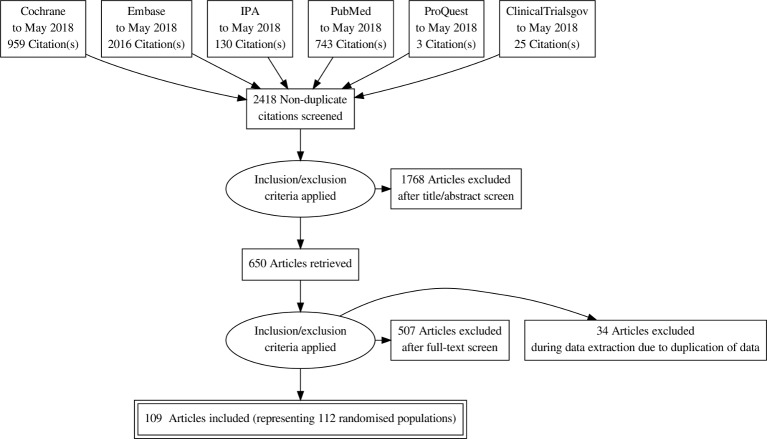
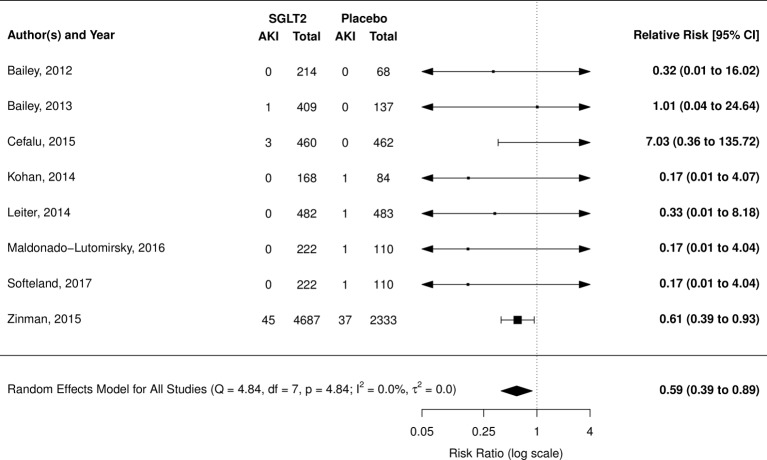
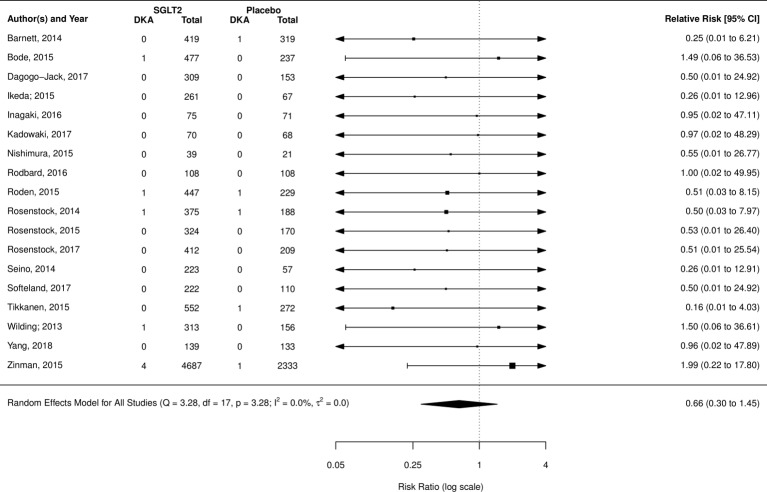
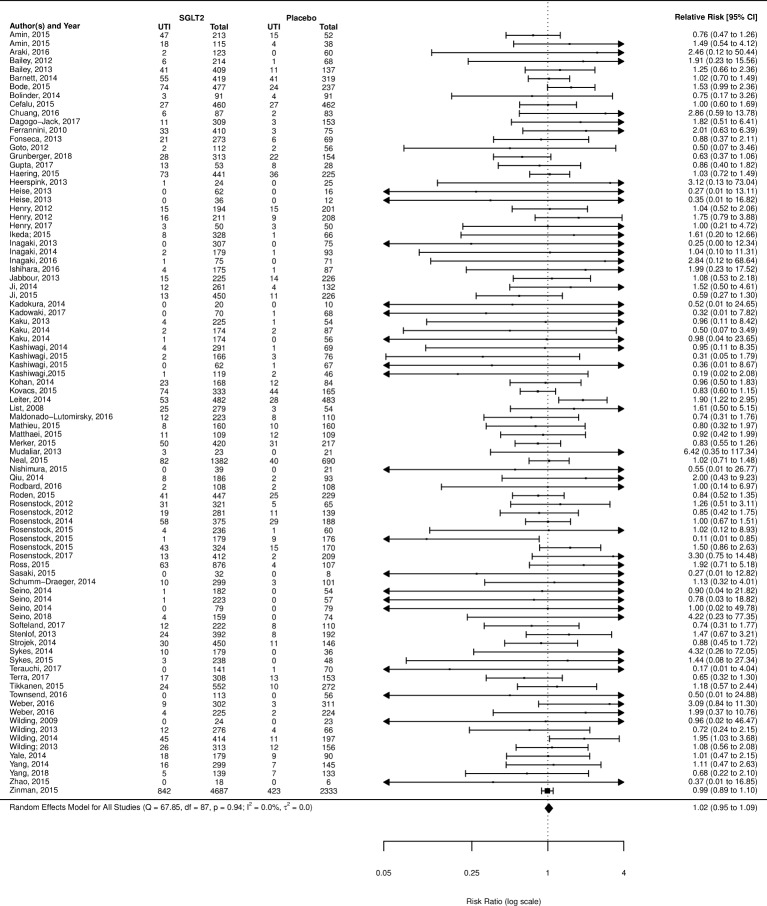
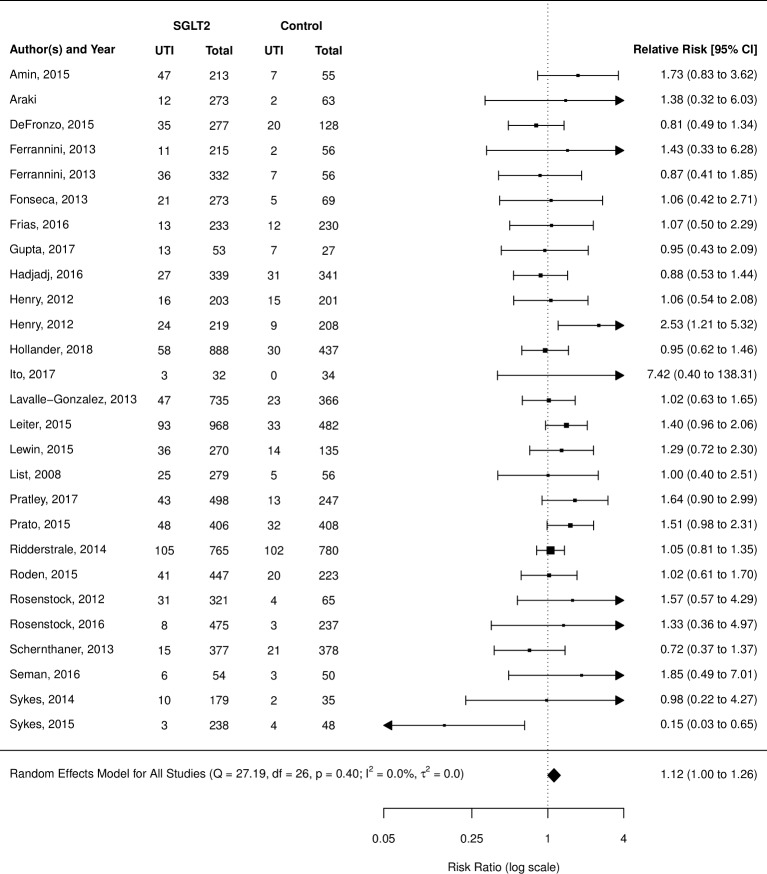
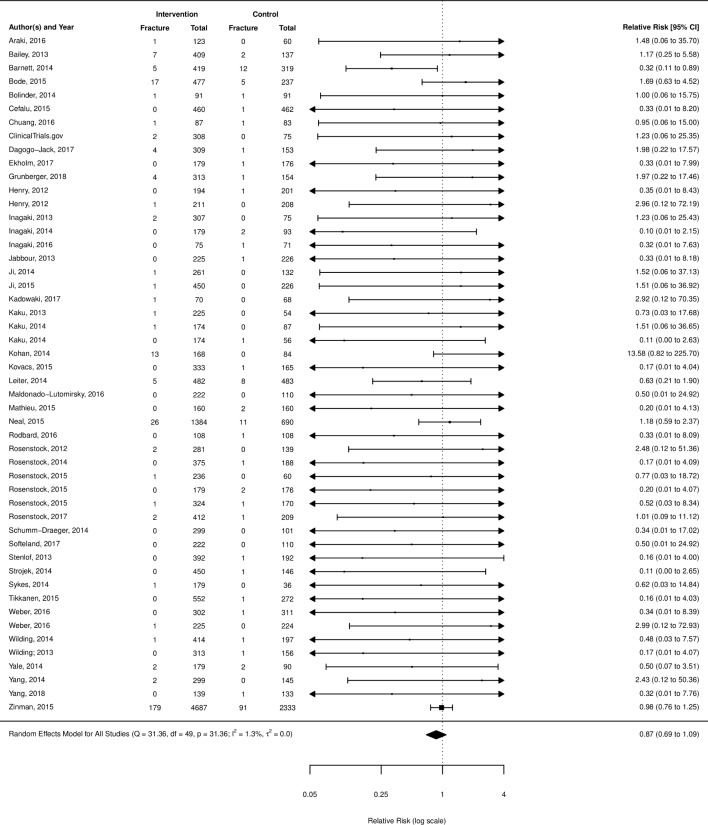
Objective: To estimate the association between the use of sodium glucose co-transporter-2 (SGLT2) inhibitors and postmarket harms as identified by drug regulatory agencies. Design: We conducted a systematic review and meta-analysis of randomised controlled trials (RCT). Six large databases were searched from inception to May 2018. Random effects models were used to estimate pooled relative risks (RRs). Intervention: SGLT2 inhibitors, compared with placebo or active comparators. Primary outcomes: Acute kidney injury (AKI), diabetic ketoacidosis (DKA), urinary tract infections (UTI), bone fractures and lower limb amputations. Results: We screened 2418 citations of which 109 were included. Most studies included one of four SGLT2 inhibitors, dapagliflozin, canagliflozin, empagliflozin and ipragliflozin. When compared with placebo, SGLT2 inhibitors were found to be significantly protective against AKI (RR=0.59; 95% CI 0.39 to 0.89; I 2=0.0%), while no difference was found for DKA (RR 0.66; 95% CI 0.30 to 1.45, I 2=0.0%), UTI (RR 1.02; 95% CI 0.95 to 1.09, I 2=0.0%) or bone fracture (RR 0.87; 95% CI 0.69 to 1.09, I 2=1.3%). Three studies reported on amputation, with one finding a significant increase risk. No increased risk for either outcome was found when compared with active controls. Subgroup analysis did show an increased risk of UTI with dapagliflozin only (RR 1.21; 95% CI 1.02 to 1.43, I 2=0.0%), but no other analysis supported an increased risk of AKI, DKA, UTI or fracture. Conclusions: Current evidence from RCTs does not suggest an increased risk of harm with SGLT2 inhibitors as a class over placebo or active comparators with respect to AKI, DKA, UTI or fracture. However, wide CIs for many comparisons suggest limited precision, and therefore clinically important adverse events cannot be ruled out. Dapagliflozin, appears to independently increase the risk of UTI, although the mechanism for this intraclass variation in risk is unclear. PROSPERO registration number: CRD42016038715.
Overview
The claims and statistics of this paper haven’t been checked yet.
Free: it reads the open-access text and checks the first 5 claims that cite a source we can check. Create a free account to check every claim.
Integrity signals
Registry
Cites
Statistics
Figures
Verification
Claims the paper makes
The claims and statistics of this paper haven’t been checked yet.
Free: it reads the open-access text and checks the first 5 claims that cite a source we can check. Create a free account to check every claim.
Claims other papers make about this one
Each is checked against this paper’s own text: does it say what the citing paper says it does?
The source backs part of the claim, not all of it — or backs it for a different population, condition or comparison.
In the citing paper
“Despite theoretical concerns for acute kidney injury and urinary tract infection, SGLT2 inhibitors do not increase these risks and acute kidney injury is less common (69,95).”
From SGLT2 inhibition for CKD and cardiovascular disease in type 2 diabetes: report of a scientific workshop sponsored by the National Kidney Foundation (2021) · cites this paper as [95]
Experimental — accuracy not yet measuredIn the citing paper
“Higher risks for amputation and fracture were not observed in CVOTs of other SGLT2 inhibitors or with canagliflozin in the CREDENCE trial (14,69,95).”
From SGLT2 inhibition for CKD and cardiovascular disease in type 2 diabetes: report of a scientific workshop sponsored by the National Kidney Foundation (2021) · cites this paper as [95]
Self-check
Percentages, sums and reported differences re-computed from the paper’s own numbers.
The self-check needs the paper’s full text.
Citations
Cites
Preferred Reporting Items for Systematic Reviews and Meta-Analyses: the PRISMA statement
Moher, D., Liberati, A., Tetzlaff, J., Altman, D. G., & for the PRISMA Group (2009) · BMJ · doi:10.1136/bmj.b2535 · Cited by 83,823
Measuring inconsistency in meta-analyses
Higgins, J. P. T., Thompson, S. G., Deeks, J. J., & Altman, D. G. (2003) · BMJ · doi:10.1136/bmj.327.7414.557 · Cited by 63,139 · cited 2×
“Statistical heterogeneity was evaluated using the I(2) statistic, with significant heterogeneity defined as an I(2)>50%.(34) To explore treatment effect heterogeneity, we conducted numerous subgroup analyses according to individual”
MethodPreferred reporting items for systematic reviews and meta-analyses: the PRISMA Statement.
(2009) · PubMed Central · Cited by 44,859
Preferred reporting items for systematic reviews and meta-analyses: The PRISMA statement
Moher, D., Liberati, A., Tetzlaff, J., Altman, D. G., & the PRISMA Group* (2009) · Annals of Internal Medicine · doi:10.7326/0003-4819-151-4-200908180-00135 · Cited by 37,554
The Cochrane Collaboration's tool for assessing risk of bias in randomised trials
Higgins, J. P. T., Altman, D. G., Gotzsche, P. C., Juni, P., Moher, D., Oxman, A. D., Savovic, J., Schulz, K. F., Weeks, L., Sterne, J. A. C., et al. (2011) · BMJ · doi:10.1136/bmj.d5928 · Cited by 33,817 · cited 4×
“risk of bias assessment Each included study was critically appraised using the Cochrane Collaboration domain-based tool for assessing the risk of bias for RCTs.(32) This tool captures six main sources of bias, including: randomisation sequence, allocation concealment, blinding of participant and researcher, blinded ou…”
InfluentialDermyshi, E., Wang, Y., Yan, C., Hong, W., Qiu, G., Gong, X., & Zhang, T. (2017) · Neonatology · doi:10.1159/000454668 · Cited by 24,451
Empagliflozin, Cardiovascular Outcomes, and Mortality in Type 2 Diabetes
Zinman, B., Wanner, C., Lachin, J. M., Fitchett, D., Bluhmki, E., Hantel, S., Mattheus, M., Devins, T., Johansen, O. E., Woerle, H. J., et al. (2015) · New England Journal of Medicine · doi:10.1056/nejmoa1504720 · Cited by 12,315 · cited 1×
“large study.(142) When the analyses were re-run using a fixed-effects model, the risk estimates remained the same or had slightly smaller CIs.”
MethodCanagliflozin and Cardiovascular and Renal Events in Type 2 Diabetes
Neal, B., Perkovic, V., Mahaffey, K. W., de Zeeuw, D., Fulcher, G., Erondu, N., Shaw, W., Law, G., Desai, M., & Matthews, D. R. (2017) · New England Journal of Medicine · doi:10.1056/nejmoa1611925 · Cited by 7,830 · cited 2×
“Data were identified on amputation for three studies.(23) 46 107 One case of amputation was found in the ClinicalTrials.”
BackgroundLiraglutide and Cardiovascular Outcomes in Type 2 Diabetes
Marso, S. P., Daniels, G. H., Brown-Frandsen, K., Kristensen, P., Mann, J. F. E., Nauck, M. A., Nissen, S. E., Pocock, S., Poulter, N. R., Ravn, L. S., et al. (2016) · New England Journal of Medicine · doi:10.1056/nejmoa1603827 · Cited by 7,629 · cited 1×
“The Canagliflozin Cardiovascular Assessment Study (CANVAS), Liraglutide Effect and Action in Diabetes: Evaluation of Cardiovascular Outcome Results (LEADER) trial and the Trial to Evaluate Cardiovascular and Other Long-term Outcomes with Semaglutide in Subjects with Type 2 Diabetes (SUSTAIN-6) have also demonstrated s…”
BackgroundSemaglutide and Cardiovascular Outcomes in Patients with Type 2 Diabetes
Marso, S. P., Bain, S. C., Consoli, A., Eliaschewitz, F. G., Jódar, E., Leiter, L. A., Lingvay, I., Rosenstock, J., Seufert, J., Warren, M. L., et al. (2016) · New England Journal of Medicine · doi:10.1056/nejmoa1607141 · Cited by 6,900
Methods to estimate the between‐study variance and its uncertainty in meta‐analysis
Veroniki, A. A., Jackson, D., Viechtbauer, W., Bender, R., Bowden, J., Knapp, G., Kuss, O., Higgins, J. P., Langan, D., & Salanti, G. (2016) · Research Synthesis Methods · doi:10.1002/jrsm.1164 · Cited by 1,685 · cited 1×
“Data synthesis We conducted a series of pair-wise random effects meta-analyses to estimate the pooled treatment effect using RRs, using the restricted maximum likelihood method.(33) The primary analysis was split into two comparisons, with the first between SGLT2 inhibitors and placebo, and the second between SGLT2 in…”
MethodMorrison, A., Polisena, J., Husereau, D., Moulton, K., Clark, M., Fiander, M., Mierzwinski-Urban, M., Clifford, T., Hutton, B., & Rabb, D. (2012) · International Journal of Technology Assessment in Health Care · doi:10.1017/s0266462312000086 · Cited by 1,257
Evidence summaries: the evolution of a rapid review approach
Khangura, S., Konnyu, K., Cushman, R., Grimshaw, J., & Moher, D. (2012) · Systematic Reviews · doi:10.1186/2046-4053-1-10 · Cited by 1,232 · cited 2×
“Duplicate screening was carried out using the ‘liberal accelerated’ method at both level one and level two, which was first applied by Khangura et al.31 This method involves having a second reviewer only evaluate studies that were deemed not relevant by the lead reviewer.”
MethodDapagliflozin a glucose-regulating drug with diuretic properties in subjects with type 2 diabetes
Lambers Heerspink, H. J., de Zeeuw, D., Wie, L., Leslie, B., & List, J. (2013) · Diabetes, Obesity and Metabolism · doi:10.1111/dom.12127 · Cited by 837
Ferrannini, E., Ramos, S. J., Salsali, A., Tang, W., & List, J. F. (2010) · Diabetes Care · doi:10.2337/dc10-0612 · Cited by 716
Sodium-Glucose Cotransport Inhibition With Dapagliflozin in Type 2 Diabetes
List, J. F., Woo, V., Morales, E., Tang, W., & Fiedorek, F. T. (2009) · Diabetes Care · doi:10.2337/dc08-1863 · Cited by 698
Kohan, D. E., Fioretto, P., Tang, W., & List, J. F. (2014) · Kidney International · doi:10.1038/ki.2013.356 · Cited by 652
Stenlöf, K., Cefalu, W. T., Kim, K. ‐., Alba, M., Usiskin, K., Tong, C., Canovatchel, W., & Meininger, G. (2013) · Diabetes, Obesity and Metabolism · doi:10.1111/dom.12054 · Cited by 614
Barnett, A. H., Mithal, A., Manassie, J., Jones, R., Rattunde, H., Woerle, H. J., & Broedl, U. C. (2014) · The Lancet Diabetes & Endocrinology · doi:10.1016/s2213-8587(13)70208-0 · Cited by 574
Mahaffey, K. W., Neal, B., Perkovic, V., de Zeeuw, D., Fulcher, G., Erondu, N., Shaw, W., Fabbrini, E., Sun, T., Li, Q., et al. (2018) · Circulation · doi:10.1161/circulationaha.117.032038 · Cited by 498
Lavalle-González, F. J., Januszewicz, A., Davidson, J., Tong, C., Qiu, R., Canovatchel, W., & Meininger, G. (2013) · Diabetologia · doi:10.1007/s00125-013-3039-1 · Cited by 492
Zaccardi, F., Webb, D. R., Htike, Z. Z., Youssef, D., Khunti, K., & Davies, M. J. (2016) · Diabetes, Obesity and Metabolism · doi:10.1111/dom.12670 · Cited by 489
Bolinder, J., Ljunggren, Ö., Johansson, L., Wilding, J., Langkilde, A. M., Sjöström, C. D., Sugg, J., & Parikh, S. (2014) · Diabetes, Obesity and Metabolism · doi:10.1111/dom.12189 · Cited by 482
Schernthaner, G., Gross, J. L., Rosenstock, J., Guarisco, M., Fu, M., Yee, J., Kawaguchi, M., Canovatchel, W., & Meininger, G. (2013) · Diabetes Care · doi:10.2337/dc12-2491 · Cited by 480
Empagliflozin Reduces Blood Pressure in Patients With Type 2 Diabetes and Hypertension
Tikkanen, I., Narko, K., Zeller, C., Green, A., Salsali, A., Broedl, U. C., & Woerle, H. J. (2015) · Diabetes Care · doi:10.2337/dc14-1096 · Cited by 468
Effects of canagliflozin on fracture risk in patients with type 2 diabetes mellitus
Watts, N. B., Bilezikian, J. P., Usiskin, K., Edwards, R., Desai, M., Law, G., & Meininger, G. (2016) · The Journal of Clinical Endocrinology & Metabolism · doi:10.1210/jc.2015-3167 · Cited by 454 · cited 2×
“Two published meta-analyses(20) 21 of SGLT2 inhibitors did not find an increased risk, nor did a pooled analysis of eight canagliflozin trials.(22) Finally, in May 2017, the FDA supported earlier speculation of increased risk of low limb amputation(11) with evidence gathered from re-analysis of the CANVAS and CANVAS r…”
ResultWhat contributions do languages other than English make on the results of meta-analyses?
Moher, D., Pham, Klassen, T. P., Schulz, K. F., Berlin, J. A., Jadad, A. R., & Liberati, A. (2000) · Journal of Clinical Epidemiology · doi:10.1016/s0895-4356(00)00188-8 · Cited by 453
Rosenstock, J., Aggarwal, N., Polidori, D., Zhao, Y., Arbit, D., Usiskin, K., Capuano, G., Canovatchel, W., & for the Canagliflozin DIA 2001 Study Group (2012) · Diabetes Care · doi:10.2337/dc11-1926 · Cited by 421
Rosenstock, J., Vico, M., Wei, L., Salsali, A., & List, J. F. (2012) · Diabetes Care · doi:10.2337/dc11-1693 · Cited by 408
Frías, J. P., Guja, C., Hardy, E., Ahmed, A., Dong, F., Öhman, P., & Jabbour, S. A. (2016) · The Lancet Diabetes & Endocrinology · doi:10.1016/s2213-8587(16)30267-4 · Cited by 398
Ridderstråle, M., Andersen, K. R., Zeller, C., Kim, G., Woerle, H. J., & Broedl, U. C. (2014) · The Lancet Diabetes & Endocrinology · doi:10.1016/s2213-8587(14)70120-2 · Cited by 378
Rosenstock, J., Jelaska, A., Frappin, G., Salsali, A., Kim, G., Woerle, H. J., & Broedl, U. C. (2014) · Diabetes Care · doi:10.2337/dc13-3055 · Cited by 363
Wilding, J. P. H., Norwood, P., T'joen, C., Bastien, A., List, J. F., & Fiedorek, F. T. (2009) · Diabetes Care · doi:10.2337/dc09-0517 · Cited by 363
Bailey, C. J., Gross, J. L., Hennicken, D., Iqbal, N., Mansfield, T. A., & List, J. F. (2013) · BMC Medicine · doi:10.1186/1741-7015-11-43 · Cited by 352
SGLT2 Inhibitors and the Diabetic Kidney
Fioretto, P., Zambon, A., Rossato, M., Busetto, L., & Vettor, R. (2016) · Diabetes Care · doi:10.2337/dcs15-3006 · Cited by 348
Risk of diabetic ketoacidosis after initiation of an SGLT2 inhibitor
Fralick, M., Schneeweiss, S., & Patorno, E. (2017) · New England Journal of Medicine · doi:10.1056/nejmc1701990 · Cited by 334
Wilding, J. P. H., Charpentier, G., Hollander, P., González‐Gálvez, G., Mathieu, C., Vercruysse, F., Usiskin, K., Law, G., Black, S., Canovatchel, W., et al. (2013) · International Journal of Clinical Practice · doi:10.1111/ijcp.12322 · Cited by 317
Henry, R. R., Murray, A. V., Marmolejo, M. H., Hennicken, D., Ptaszynska, A., & List, J. F. (2012) · International Journal of Clinical Practice · doi:10.1111/j.1742-1241.2012.02911.x · Cited by 310
Ogawa, W., & Sakaguchi, K. (2016) · Journal of Diabetes Investigation · doi:10.1111/jdi.12401 · Cited by 307 · cited 1×
“Although rare, the SGLT2 inhibitors are thought to increase the risk by two potential mechanisms: (1) they increase urinary glucose excretion which leads to a reduction in insulin secretion and stimulates free fatty acid production which are later converted to ketone bodies and (2) they stimulate glucagon secretion wh…”
BackgroundDeFronzo, R. A., Lewin, A., Patel, S., Liu, D., Kaste, R., Woerle, H. J., & Broedl, U. C. (2015) · Diabetes Care · doi:10.2337/dc14-2364 · Cited by 296
Wilding, J. P. H., Woo, V., Rohwedder, K., Sugg, J., Parikh, S., & for the Dapagliflozin 006 Study Group (2014) · Diabetes, Obesity and Metabolism · doi:10.1111/dom.12187 · Cited by 291
Rosenstock, J., Hansen, L., Zee, P., Li, Y., Cook, W., Hirshberg, B., & Iqbal, N. (2015) · Diabetes Care · doi:10.2337/dc14-1142 · Cited by 290
Jabbour, S. A., Hardy, E., Sugg, J., Parikh, & for the Study 10 Group (2014) · Diabetes Care · doi:10.2337/dc13-0467 · Cited by 286
Possible adverse effects of SGLT2 inhibitors on bone
Taylor, S. I., Blau, J. E., & Rother, K. I. (2015) · The Lancet Diabetes & Endocrinology · doi:10.1016/s2213-8587(14)70227-x · Cited by 283
Ito, D., Shimizu, S., Inoue, K., Saito, D., Yanagisawa, M., Inukai, K., Akiyama, Y., Morimoto, Y., Noda, M., & Shimada, A. (2017) · Diabetes Care · doi:10.2337/dc17-0518 · Cited by 279
Yale, J. ‐., Bakris, G., Cariou, B., Nieto, J., David‐Neto, E., Yue, D., Wajs, E., Figueroa, K., Jiang, J., Law, G., et al. (2014) · Diabetes, Obesity and Metabolism · doi:10.1111/dom.12348 · Cited by 273
Heise, T., Seewaldt‐Becker, E., Macha, S., Hantel, S., Pinnetti, S., Seman, L., & Woerle, H. J. (2013) · Diabetes, Obesity and Metabolism · doi:10.1111/dom.12073 · Cited by 273
Liu, J., Li, L., Li, S., Jia, P., Deng, K., Chen, W., & Sun, X. (2017) · Scientific Reports · doi:10.1038/s41598-017-02733-w · Cited by 273 · cited 1×
“12).(17) The previous meta-analysis limited inclusion to studies of at least 24 weeks and having a fulltext publication.”
BackgroundEffect of reporting bias on meta-analyses of drug trials: reanalysis of meta-analyses
Hart, B., Lundh, A., & Bero, L. (2012) · BMJ · doi:10.1136/bmj.d7202 · Cited by 255 · cited 1×
“Inclusion of unpublished data from the FDA has been shown to substantially impact the effect estimates of meta-analyses of drug trials.(27)”
BackgroundWeber, M. A., Mansfield, T. A., Cain, V. A., Iqbal, N., Parikh, S., & Ptaszynska, A. (2016) · The Lancet Diabetes & Endocrinology · doi:10.1016/s2213-8587(15)00417-9 · Cited by 254
Systematic reviews of adverse effects: framework for a structured approach
Loke, Y. K., Price, D., Herxheimer, A., & the Cochrane Adverse Effects Methods Group (2007) · BMC Medical Research Methodology · doi:10.1186/1471-2288-7-32 · Cited by 253
Li, D., Wang, T., Shen, S., Fang, Z., Dong, Y., & Tang, H. (2017) · Diabetes, Obesity and Metabolism · doi:10.1111/dom.12825 · Cited by 253
Rosenstock, J., Jelaska, A., Zeller, C., Kim, G., Broedl, U. C., Woerle, H. J., & on behalf of the EMPA‐REG BASAL trial investigators (2015) · Diabetes, Obesity and Metabolism · doi:10.1111/dom.12503 · Cited by 252
SGLT2 inhibitors and diabetic ketoacidosis: data from the FDA Adverse Event Reporting System
Fadini, G. P., Bonora, B. M., & Avogaro, A. (2017) · Diabetologia · doi:10.1007/s00125-017-4301-8 · Cited by 242
Del Prato, S., Nauck, M., Durán‐Garcia, S., Maffei, L., Rohwedder, K., Theuerkauf, A., & Parikh, S. (2015) · Diabetes, Obesity and Metabolism · doi:10.1111/dom.12459 · Cited by 233
Neal, B., Perkovic, V., de Zeeuw, D., Mahaffey, K. W., Fulcher, G., Ways, K., Desai, M., Shaw, W., Capuano, G., Alba, M., et al. (2015) · Diabetes Care · doi:10.2337/dc14-1237 · Cited by 233
Bode, B., Stenlöf, K., Harris, S., Sullivan, D., Fung, A., Usiskin, K., & Meininger, G. (2015) · Diabetes, Obesity and Metabolism · doi:10.1111/dom.12428 · Cited by 229 · cited 1×
“In an RCT conducted by Bode et al, additional investigation into the change in bone mineral density in canagliflozin versus placebo users was conducted.(119) Their results showed a decreased placebo-corrected bone mineral density in the canagliflozin users at 2 years of 0.”
Leiter, L. A., Yoon, K.-H., Arias, P., Langslet, G., Xie, J., Balis, D. A., Millington, D., Vercruysse, F., Canovatchel, W., & Meininger, G. (2015) · Diabetes Care · doi:10.2337/dc13-2762 · Cited by 227
Devineni, D., Curtin, C. R., Polidori, D., Gutierrez, M. J., Murphy, J., Rusch, S., & Rothenberg, P. L. (2013) · The Journal of Clinical Pharmacology · doi:10.1002/jcph.88 · Cited by 217
Long-Term Safety and Efficacy of Empagliflozin, Sitagliptin, and Metformin
Ferrannini, E., Berk, A., Hantel, S., Pinnetti, S., Hach, T., Woerle, H. J., & Broedl, U. C. (2013) · Diabetes Care · doi:10.2337/dc13-0663 · Cited by 214
Kaku, K., Watada, H., Iwamoto, Y., Utsunomiya, K., Terauchi, Y., Tobe, K., Tanizawa, Y., Araki, E., Ueda, M., Suganami, H., et al. (2014) · Cardiovascular Diabetology · doi:10.1186/1475-2840-13-65 · Cited by 212
Initial Combination of Empagliflozin and Linagliptin in Subjects With Type 2 Diabetes
Lewin, A., DeFronzo, R. A., Patel, S., Liu, D., Kaste, R., Woerle, H. J., & Broedl, U. C. (2015) · Diabetes Care · doi:10.2337/dc14-2365 · Cited by 188
Acute kidney injury in patients on SGLT2 inhibitors: a propensity-matched analysis
Nadkarni, G. N., Ferrandino, R., Chang, A., Surapaneni, A., Chauhan, K., Poojary, P., Saha, A., Ferket, B., Grams, M. E., & Coca, S. G. (2017) · Diabetes Care · doi:10.2337/dc17-1011 · Cited by 188
Yang, L., Di, G., Qi, X., Qu, M., Wang, Y., Duan, H., Danielson, P., Xie, L., & Zhou, Q. (2014) · Diabetes · doi:10.2337/db14-0163 · Cited by 184
Rosenstock, J., Frias, J., Páll, D., Charbonnel, B., Pascu, R., Saur, D., Darekar, A., Huyck, S., Shi, H., Lauring, B., et al. (2018) · Diabetes, Obesity and Metabolism · doi:10.1111/dom.13103 · Cited by 184
Leiter, L. A., Cefalu, W. T., de Bruin, T. W. A., Gause‐Nilsson, I., Sugg, J., & Parikh, S. J. (2014) · Journal of the American Geriatrics Society · doi:10.1111/jgs.12881 · Cited by 182
Cefalu, W. T., Leiter, L. A., de Bruin, T. W. A., Gause-Nilsson, I., Sugg, J., & Parikh, S. J. (2015) · Diabetes Care · doi:10.2337/dc14-0315 · Cited by 182
Ji, L., Ma, J., Li, H., Mansfield, T. A., T’joen, C. L., Iqbal, N., Ptaszynska, A., & List, J. F. (2014) · Clinical Therapeutics · doi:10.1016/j.clinthera.2013.11.002 · Cited by 172
Bailey, C. J., Iqbal, N., T'joen, C., & List, J. F. (2012) · Diabetes, Obesity and Metabolism · doi:10.1111/j.1463-1326.2012.01659.x · Cited by 167
Pratley, R. E., Eldor, R., Raji, A., Golm, G., Huyck, S. B., Qiu, Y., Sunga, S., Johnson, J., Terra, S. G., Mancuso, J. P., et al. (2018) · Diabetes, Obesity and Metabolism · doi:10.1111/dom.13194 · Cited by 162
Tang, H. L., Li, D. D., Zhang, J. J., Hsu, Y. H., Wang, T. S., Zhai, S. D., & Song, Y. Q. (2016) · Diabetes, Obesity and Metabolism · doi:10.1111/dom.12742 · Cited by 161
Dagogo‐Jack, S., Liu, J., Eldor, R., Amorin, G., Johnson, J., Hille, D., Liao, Y., Huyck, S., Golm, G., Terra, S. G., et al. (2018) · Diabetes, Obesity and Metabolism · doi:10.1111/dom.13116 · Cited by 156
Mathieu, C., Ranetti, A. E., Li, D., Ekholm, E., Cook, W., Hirshberg, B., Chen, H., Hansen, L., & Iqbal, N. (2015) · Diabetes Care · doi:10.2337/dc15-0779 · Cited by 150
Grunberger, G., Camp, S., Johnson, J., Huyck, S., Terra, S. G., Mancuso, J. P., Jiang, Z. W., Golm, G., Engel, S. S., & Lauring, B. (2018) · Diabetes Therapy · doi:10.1007/s13300-017-0337-5 · Cited by 148
Terra, S. G., Focht, K., Davies, M., Frias, J., Derosa, G., Darekar, A., Golm, G., Johnson, J., Saur, D., Lauring, B., et al. (2017) · Diabetes, Obesity and Metabolism · doi:10.1111/dom.12888 · Cited by 147
Rosenstock, J., Chuck, L., González-Ortiz, M., Merton, K., Craig, J., Capuano, G., & Qiu, R. (2016) · Diabetes Care · doi:10.2337/dc15-1736 · Cited by 143
Seino, Y., Sasaki, T., Fukatsu, A., Ubukata, M., Sakai, S., & Samukawa, Y. (2014) · Current Medical Research and Opinion · doi:10.1185/03007995.2014.912983 · Cited by 142
Ruanpeng, D., Ungprasert, P., Sangtian, J., & Harindhanavudhi, T. (2017) · Diabetes/Metabolism Research and Reviews · doi:10.1002/dmrr.2903 · Cited by 139 · cited 2×
“Two meta-analyses have been published examining the risk of fracture when comparing SGLT2 inhibitors with placebo.(20) 21 Ruanpeng et al(20) included 20 RCTs, and Tang et al included 38 RCTs.”
BackgroundKaku, K., Inoue, S., Matsuoka, O., Kiyosue, A., Azuma, H., Hayashi, N., Tokudome, T., Langkilde, A. M., & Parikh, S. (2013) · Diabetes, Obesity and Metabolism · doi:10.1111/dom.12047 · Cited by 136
Inagaki, N., Kondo, K., Yoshinari, T., Maruyama, N., Susuta, Y., & Kuki, H. (2013) · Diabetes, Obesity and Metabolism · doi:10.1111/dom.12149 · Cited by 135
Acute kidney injury from SGLT2 inhibitors: potential mechanisms
Hahn, K. M., Ejaz, A. A., Kanbay, M., Lanaspa, M. A., & Johnson, R. J. (2016) · Nature Reviews Nephrology · doi:10.1038/nrneph.2016.159 · Cited by 133 · cited 1×
“Additional potential mechanisms of renal injury include an increase in the urinary uric acid level leading to both crystal-dependent and crystal-independent tubular injury, and activation of aldose reductase resulting in fructose generation ultimately leading to increased oxidative stress, uric acid, cytokine release…”
BackgroundSøfteland, E., Meier, J. J., Vangen, B., Toorawa, R., Maldonado-Lutomirsky, M., & Broedl, U. C. (2017) · Diabetes Care · doi:10.2337/dc16-1347 · Cited by 128
On behalf of the EMPA-REG EXTEND™ MONO investigators, Roden, M., Merker, L., Christiansen, A. V., Roux, F., Salsali, A., Kim, G., Stella, P., Woerle, H. J., & Broedl, U. C. (2015) · Cardiovascular Diabetology · doi:10.1186/s12933-015-0314-0 · Cited by 127
Devineni, D., & Polidori, D. (2015) · Clinical Pharmacokinetics · doi:10.1007/s40262-015-0285-z · Cited by 126
Heise, T., Seman, L., Macha, S., Jones, P., Marquart, A., Pinnetti, S., Woerle, H. J., & Dugi, K. (2013) · Diabetes Therapy · doi:10.1007/s13300-013-0030-2 · Cited by 126
Kovács, C. S., Seshiah, V., Merker, L., Christiansen, A. V., Roux, F., Salsali, A., Kim, G., Stella, P., Woerle, H., & Broedl, U. C. (2015) · Clinical Therapeutics · doi:10.1016/j.clinthera.2015.05.511 · Cited by 123
Inagaki, N., Kondo, K., Yoshinari, T., Takahashi, N., Susuta, Y., & Kuki, H. (2014) · Expert Opinion on Pharmacotherapy · doi:10.1517/14656566.2014.935764 · Cited by 123
Weber, M. A., Mansfield, T. A., Alessi, F., Iqbal, N., Parikh, S., & Ptaszynska, A. (2016) · Blood Pressure · doi:10.3109/08037051.2015.1116258 · Cited by 123
Kashiwagi, A., Takahashi, H., Ishikawa, H., Yoshida, S., Kazuta, K., Utsuno, A., & Ueyama, E. (2015) · Diabetes, Obesity and Metabolism · doi:10.1111/dom.12403 · Cited by 116
Wilding, J. P. H., Ferrannini, E., Fonseca, V. A., Wilpshaar, W., Dhanjal, P., & Houzer, A. (2013) · Diabetes, Obesity and Metabolism · doi:10.1111/dom.12038 · Cited by 116
Initial Combination of Empagliflozin and Metformin in Patients With Type 2 Diabetes
Hadjadj, S., Rosenstock, J., Meinicke, T., Woerle, H. J., & Broedl, U. C. (2016) · Diabetes Care · doi:10.2337/dc16-0522 · Cited by 115
Hollander, P., Liu, J., Hill, J., Johnson, J., Jiang, Z. W., Golm, G., Huyck, S., Terra, S. G., Mancuso, J. P., Engel, S. S., et al. (2018) · Diabetes Therapy · doi:10.1007/s13300-017-0354-4 · Cited by 107
Mudaliar, S., Henry, R. R., Boden, G., Smith, S., Chalamandaris, A.-G., Duchesne, D., Iqbal, N., & List, J. (2014) · Diabetes Technology & Therapeutics · doi:10.1089/dia.2013.0167 · Cited by 106
Nishimura, R., Tanaka, Y., Koiwai, K., Inoue, K., Hach, T., Salsali, A., Lund, S. S., & Broedl, U. C. (2015) · Cardiovascular Diabetology · doi:10.1186/s12933-014-0169-9 · Cited by 106
Szalat, A., Perlman, A., Muszkat, M., Khamaisi, M., Abassi, Z. A., & Heyman, S. N. (2017) · Drug Safety · doi:10.1007/s40264-017-0602-6 · Cited by 106 · cited 2×
“Szalat et al proposed three possible mechanisms that may explain the potential for an increased risk of AKI with SGLT2 inhibitors: (1) excessive diuresis leading to volume depletion, a particular concern for those who are haemodynamically unstable and volume-depleted; (2) a greater drop in transglomerular pressure due…”
BackgroundKaku, K., Kiyosue, A., Inoue, S., Ueda, N., Tokudome, T., Yang, J., & Langkilde, A. M. (2014) · Diabetes, Obesity and Metabolism · doi:10.1111/dom.12325 · Cited by 104
Kashiwagi, A., Kazuta, K., Yoshida, S., & Nagase, I. (2014) · Journal of Diabetes Investigation · doi:10.1111/jdi.12156 · Cited by 101
Kashiwagi, A., Kazuta, K., Takinami, Y., Yoshida, S., Utsuno, A., & Nagase, I. (2014) · Diabetology International · doi:10.1007/s13340-014-0164-0 · Cited by 93
Fonseca, V. A., Ferrannini, E., Wilding, J. P. H., Wilpshaar, W., Dhanjal, P., Ball, G., & Klasen, S. (2012) · Journal of Diabetes and its Complications · doi:10.1016/j.jdiacomp.2012.11.005 · Cited by 91
Empagliflozin as add-on to metformin plus sulphonylurea in patients with type 2 diabetes
Haering, H.-U., Merker, L., Christiansen, A. V., Roux, F., Salsali, A., Kim, G., Meinicke, T. W., Woerle, H. J., & Broedl, U. C. (2015) · Diabetes Research and Clinical Practice · doi:10.1016/j.diabres.2015.05.044 · Cited by 86
Ji, L., Han, P., Liu, Y., Yang, G., Dieu Van, N. K., Vijapurkar, U., Qiu, R., & Meininger, G. (2015) · Diabetes, Obesity and Metabolism · doi:10.1111/dom.12385 · Cited by 86
Townsend, R. R., Machin, I., Ren, J., Trujillo, A., Kawaguchi, M., Vijapurkar, U., Damaraju, C. V., & Pfeifer, M. (2016) · The Journal of Clinical Hypertension · doi:10.1111/jch.12747 · Cited by 85
Empagliflozin as add‐on to metformin in people with Type 2 diabetes
Merker, L., Häring, H., Christiansen, A. V., Roux, F., Salsali, A., Kim, G., Meinicke, T., Woerle, H. J., Broedl, U. C., & the EMPA‐REG EXTEND MET investigators (2015) · Diabetic Medicine · doi:10.1111/dme.12814 · Cited by 81
Tanizawa, Y., Kaku, K., Araki, E., Tobe, K., Terauchi, Y., Utsunomiya, K., Iwamoto, Y., Watada, H., Ohtsuka, W., Watanabe, D., et al. (2014) · Expert Opinion on Pharmacotherapy · doi:10.1517/14656566.2014.887680 · Cited by 80
Rosenstock, J., Cefalu, W. T., Lapuerta, P., Zambrowicz, B., Ogbaa, I., Banks, P., & Sands, A. (2015) · Diabetes Care · doi:10.2337/dc14-0890 · Cited by 79
Henry, R. R., Strange, P., Zhou, R., Pettus, J., Shi, L., Zhuplatov, S. B., Mansfield, T., Klein, D., & Katz, A. (2018) · Diabetes Technology & Therapeutics · doi:10.1089/dia.2018.0052 · Cited by 79
Saad, M. S., Mahmoud, A. N., Elgendy, I. Y., Abu‐Zaid, A., Barakat, A. F., Elgendy, A. Y., Al‐Ani, M. A., Mentias, A. G., Nairooz, R. S., Bavry, A. A., et al. (2016) · International Journal of Cardiology · doi:10.1016/j.ijcard.2016.11.181 · Cited by 76 · cited 1×
“A previous meta-analysis on the risk of DKA currently showed no increased risk.(19) In January 2016, the FDA issued an expanded warning regarding a potential increased risk for fracture with canagliflozin.”
Strojek, K., Yoon, K.-H., Hruba, V., Sugg, J., Langkilde, A. M., & Parikh, S. (2014) · Diabetes Therapy · doi:10.1007/s13300-014-0072-0 · Cited by 74
Ikeda, S., Takano, Y., Cynshi, O., Tanaka, R., Christ, A. D., Boerlin, V., Beyer, U., Beck, A., Ciorciaro, C., Meyer, M., et al. (2015) · Diabetes, Obesity and Metabolism · doi:10.1111/dom.12538 · Cited by 73
Iijima, H., Kifuji, T., Maruyama, N., & Inagaki, N. (2015) · Advances in Therapy · doi:10.1007/s12325-015-0234-0 · Cited by 70
Seman, W. J. W., Kori, N., Rajoo, S., Othman, Z., Noor, N. M., Wahab, N. A. A., Sukor, N., Mustafa, N., & Kamaruddin, N. A. (2016) · Diabetes Obesity and Metabolism · doi:10.1111/dom.12649 · Cited by 70
Inagaki, N., Harashima, S.-I., Maruyama, N., Kawaguchi, Y., Goda, M., & Iijima, H. (2016) · Cardiovascular Diabetology · doi:10.1186/s12933-016-0407-4 · Cited by 70
Matthaei, S., Bowering, K., Rohwedder, K., Sugg, J., Parikh, S., Johnsson, E., & on behalf of the Study 05 Group (2015) · Diabetes, Obesity and Metabolism · doi:10.1111/dom.12543 · Cited by 69
Inagaki, N., Kondo, K., Yoshinari, T., & Kuki, H. (2015) · Journal of Diabetes Investigation · doi:10.1111/jdi.12266 · Cited by 69
Amin, N. B., Wang, X., Jain, S. M., Lee, D. S., Nucci, G., & Rusnak, J. M. (2015) · Diabetes, Obesity and Metabolism · doi:10.1111/dom.12460 · Cited by 68
Kashiwagi, A., Akiyama, N., Shiga, T., Kazuta, K., Utsuno, A., Yoshida, S., & Ueyama, E. (2014) · Diabetology International · doi:10.1007/s13340-014-0184-9 · Cited by 66
Lu, C., Min, K. W., Chuang, L., Kokubo, S., Yoshida, S., & Cha, B. (2016) · Journal of Diabetes Investigation · doi:10.1111/jdi.12422 · Cited by 66
Seino, Y., Sasaki, T., Fukatsu, A., Sakai, S., & Samukawa, Y. (2014) · Current Medical Research and Opinion · doi:10.1185/03007995.2014.901943 · Cited by 63
Araki, E., Tanizawa, Y., Tanaka, Y., Taniguchi, A., Koiwai, K., Kim, G., Salsali, A., Woerle, H. J., & Broedl, U. C. (2015) · Diabetes, Obesity and Metabolism · doi:10.1111/dom.12464 · Cited by 62
Schumm‐Draeger, P. ‐., Burgess, L., Korányi, L., Hruba, V., Hamer‐Maansson, J. E., & de Bruin, T. W. A. (2015) · Diabetes, Obesity and Metabolism · doi:10.1111/dom.12387 · Cited by 62
Rodbard, H. W., Seufert, J., Aggarwal, N., Cao, A., Fung, A., Pfeifer, M., & Alba, M. (2016) · Diabetes, Obesity and Metabolism · doi:10.1111/dom.12684 · Cited by 62
Amin, N. B., Wang, X., Mitchell, J. R., Lee, D. S., Nucci, G., & Rusnak, J. M. (2015) · Diabetes, Obesity and Metabolism · doi:10.1111/dom.12486 · Cited by 60
Seino, Y., Sasaki, T., Fukatsu, A., Ubukata, M., Sakai, S., & Samukawa, Y. (2014) · Current Medical Research and Opinion · doi:10.1185/03007995.2014.909390 · Cited by 60
Yang, W., Ma, J., Li, Y., Li, Y., Zhou, Z., Kim, J. H., Zhao, J., & Ptaszynska, A. (2018) · Journal of Diabetes · doi:10.1111/1753-0407.12634 · Cited by 58
Kadowaki, T., Inagaki, N., Kondo, K., Nishimura, K., Kaneko, G., Maruyama, N., Nakanishi, N., Iijima, H., Watanabe, Y., & Gouda, M. (2017) · Diabetes, Obesity and Metabolism · doi:10.1111/dom.12898 · Cited by 57
Kadowaki, T., Haneda, M., Inagaki, N., Terauchi, Y., Taniguchi, A., Koiwai, K., Rattunde, H., Woerle, H. J., & Broedl, U. C. (2015) · Advances in Therapy · doi:10.1007/s12325-015-0198-0 · Cited by 55
Araki, E., Onishi, Y., Asano, M., Kim, H., Ekholm, E., JOHNSSON, E. K., & Yajima, T. (2015) · Journal of Diabetes Investigation · doi:10.1111/jdi.12453 · Cited by 54
Ishihara, H., Yamaguchi, S., Nakao, I., Okitsu, A., & Asahina, S. (2016) · Diabetes Obesity and Metabolism · doi:10.1111/dom.12745 · Cited by 54
Ross, S., Thamer, C., Cescutti, J., Meinicke, T., Woerle, H. J., & Broedl, U. C. (2015) · Diabetes, Obesity and Metabolism · doi:10.1111/dom.12469 · Cited by 50
Sykes, A. P., O’Connor‐Semmes, R., Dobbins, R. L., Dorey, D., Jd, L., Walker, S., Wilkison, W. O., & Kler, L. (2014) · Diabetes Obesity and Metabolism · doi:10.1111/dom.12391 · Cited by 48
Terauchi, Y., Tamura, M., Senda, M., Gunji, R., & Kaku, K. (2017) · Diabetes Obesity and Metabolism · doi:10.1111/dom.12957 · Cited by 48
The systemic control of circadian gene expression
Gerber, A., Saini, C., Curie, T., Emmenegger, Y., Rando, G., Gosselin, P., Gotić, I., Gos, P., Franken, P., & Schibler, U. (2015) · Diabetes Obesity and Metabolism · doi:10.1111/dom.12512 · Cited by 41
Kadokura, T., Akiyama, N., Kashiwagi, A., Utsuno, A., Kazuta, K., Yoshida, S., Nagase, I., Smulders, R. A., & Kageyama, S. (2014) · Diabetes Research and Clinical Practice · doi:10.1016/j.diabres.2014.07.020 · Cited by 38
Jensen, M. L., Persson, F., Andersen, G. S., Ridderstråle, M., Nolan, J. J., Carstensen, B., & Jørgensen, M. E. (2017) · Diabetes Care · doi:10.2337/dc16-2793 · Cited by 38
Sykes, A. P., Kemp, G. L., Dobbins, R. L., O’Connor‐Semmes, R., Almond, S., Wilkison, W. O., Walker, S., & Kler, L. (2014) · Diabetes Obesity and Metabolism · doi:10.1111/dom.12393 · Cited by 35
Qiu, R., Capuano, G. A., & Meininger, G. E. (2014) · Journal of Clinical & Translational Endocrinology · doi:10.1016/j.jcte.2014.04.001 · Cited by 32
Seino, Y., Sasaki, T., Fukatsu, A., Imazeki, H., Ochiai, H., & Sakai, S. (2018) · Current Medical Research and Opinion · doi:10.1080/03007995.2018.1441816 · Cited by 31
Ekholm, E., Hansen, L., JOHNSSON, E. K., Iqbal, N., Carlsson, B., Chen, H., & Hirshberg, B. (2016) · Endocrine Practice · doi:10.4158/ep161323.or · Cited by 27
Zhao, X., Cui, Y., Zhao, S., Lang, B. J., Broedl, U. C., Salsali, A., Pinnetti, S., & Macha, S. (2015) · Clinical Therapeutics · doi:10.1016/j.clinthera.2015.05.001 · Cited by 23
Sasaki, T., Seino, Y., Fukatsu, A., Ubukata, M., Sakai, S., & Samukawa, Y. (2015) · Advances in Therapy · doi:10.1007/s12325-015-0200-x · Cited by 23
PARKINSON, J. R., Tang, W., Johansson, C., Boulton, D. W., & Hamrén, B. (2016) · Diabetes Obesity and Metabolism · doi:10.1111/dom.12647 · Cited by 22 · cited 1×
“A reasonable biologic mechanism for an increased risk of UTIs among dapagliflozin users is unclear; however, some early pathophysiological studies suggest that the dose-response relationship with urinary glucose excretion seems to plateau at the beginning of the normal recommended doses for most SGLT2 inhibitors,(126)…”
BackgroundSuvarna, V. R., Gupta, S., Shaikh, S. S., Joshi, P., & Bhure, S. (2017) · Indian Journal of Endocrinology and Metabolism · doi:10.4103/ijem.ijem_517_16 · Cited by 22
Devineni, D., Polidori, D., Curtin, C. R., Murphy, J., Wang, S., Stieltjes, H., & Wajs, E. (2015) · International Journal of Clinical Pharmacology and Therapeutics · doi:10.5414/cp202324 · Cited by 18
Clinical Diabetes/Therapeutics
(2012) · Diabetes · doi:10.2337/db12-836-1328 · Cited by 8
Research works printed but not linked: 5
- Health Canada. Summary Safety Review - Sodium Glucose Cotransporter 2 (SGLT2) Inhibitors INVOKANA (canagliflozin) and FORXIGA (dapagliflozin) - Evaluation of a Potential Risk of Acute Kidney Injury. 2015 http://www.hc-sc.gc.ca/dhp-mps/medeff/reviews-examens/sglt2-eng.php (Accessed 10 Dec 2015).
- Health Canada Forxiga, Invokana. Health Canada begins safety review of diabetes drugs known as SGLT2 inhibitors and risk of ketoacidosis. http://healthycanadians.gc.ca/recall-alert-rappel-avis/hc-sc/2015/53892a-eng.php (Accessed 10 Dec 2015).
- Donnan J, Marra C, Aubrey Bassler K, et al Comparative safety of the sodium glucose co-transporter 2 (SGLT2) inhibitors: a systematic review and network meta-analysis. 2017 PROSPERO 2016:CRD42016038715 Available from http://www.crd.york.ac.uk/PROSPERO_REBRANDING/display_record.asp?ID=CRD42016038715 PMC6361337 30813108
- Maldonado-Lutomirsky M, Søfteland E, Meier J, et al Empagliflozin (EMPA) as add-on to linagliptin (LINA) and metformin in patients with type 2 diabetes (T2DM): A 24-week randomised, double-blind, parallel-group trial. Diabetologia 2016; 59: S93.
- Zinman B, Wanner C, Lachin JM, et al Empagliflozin, cardiovascular outcomes, and mortality in Type 2 diabetes. N Engl J Med 2015; 373: 2117– 28. 10.1056/NEJMoa1504720 26378978 · DOI · Paper page
Cited by
Cardiovascular and renal outcomes with empagliflozin in heart failure
Packer, M., Anker, S. D., Butler, J., Filippatos, G., Pocock, S. J., Carson, P., Januzzi, J., Verma, S., Tsutsui, H., Brueckmann, M., et al. (2020) · New England Journal of Medicine · doi:10.1056/nejmoa2022190 · Cited by 5,206
Sodium–glucose cotransporter type 2 inhibitors for the treatment of type 2 diabetes mellitus
Scheen, A. J. (2020) · Nature Reviews Endocrinology · doi:10.1038/s41574-020-0392-2 · Cited by 267
Fresh insights into glucocorticoid-induced diabetes mellitus and new therapeutic directions
Li, J.-X., & Cummins, C. L. (2022) · Nature Reviews Endocrinology · doi:10.1038/s41574-022-00683-6 · Cited by 257
Renal Protection with SGLT2 Inhibitors: Effects in Acute and Chronic Kidney Disease
Bailey, C. J., Day, C., & Bellary, S. (2022) · Current Diabetes Reports · doi:10.1007/s11892-021-01442-z · Cited by 248
“Moreover, several meta-analyses of clinical trial data have concluded that use of an SGLT2 inhibitor in T2DM reduces the risk of AKI by 30–40%, and analyses of data from ‘real world’ observational studies have indicated reductions in risk of AKI by > 40% [81, 85, 86].”
BackgroundNonalcoholic fatty liver disease in adults: current concepts in etiology, outcomes, and management
Marjot, T., Moolla, A., Cobbold, J. F., Hodson, L., & Tomlinson, J. W. (2020) · Endocrine Reviews · doi:10.1210/endrev/bnz009 · Cited by 228
Metadata
- Authors
- Donnan, J. R., Grandy, C. A., Chibrikov, E., Marra, C. A., Aubrey-Bassler, K., Johnston, K., Swab, M., Hache, J., Curnew, D., Nguyen, H., & Gamble, J.-M.
- Affiliations
- Memorial University of Newfoundland (CA)
- Corresponding author
- Gamble, John-Michael
- Venue
- BMJ Open
- Publisher
- BMJ
- Published
- 2019-01
- Volume
- 9
- Issue
- 1
- Pages
- e022577
- ISSN
- 2044-6055 (ISSN-L)
- PMC
- PMC6361337
- OpenAlex
- W2913306188
- Cited by
- 222
- References
- 145
- Citations by year
- 2026: 17 · 2025: 15 · 2024: 35 · 2023: 33 · 2022: 34 · 2021: 37 · 2020: 36 · 2019: 14
- FWCI
- 4.64
- Type
- journal article
- Language
- en
- Open access
- gold
- doi.org
- Licence
- cc-by-nc
- Locations
- BMJ Open (publishedVersion, cc-by-nc)
- Europe PMC (PubMed Central) (publishedVersion, other-oa)
- PubMed Central (publishedVersion, cc-by-nc)
- PubMed (publishedVersion)
- DOAJ (DOAJ: Directory of Open Access Journals) (submittedVersion)
- Funders
- Canadian Diabetes Association
- Newfoundland and Labrador Centre for Applied Health Research
- Topics
- Health Sciences › Medicine › Endocrinology, Diabetes and Metabolism › Diabetes Treatment and Management
- Life Sciences › Pharmacology, Toxicology and Pharmaceutics › Toxicology › Pharmacovigilance and Adverse Drug Reactions
- Health Sciences › Medicine › Pharmacology (medical) › Pharmacology and Obesity Treatment
- Keywords
- SGLT2 inhibitors, dapagliflozin, canagliflozin, empagliflozin, ipragliflozin, acute kidney injury, diabetic ketoacidosis, urinary tract infection, bone fractures, lower limb amputation, drug safety, adverse drug reactions, type 2 diabetes
- MeSH terms
- Canagliflozin, Sodium-Glucose Transporter 2 Inhibitors, Amputation, Surgical, Benzhydryl Compounds, Glucosides, Humans, Thiophenes, Urinary Tract Infections, Randomized Controlled Trials as Topic, Diabetic Ketoacidosis, Fractures, Bone, Acute Kidney Injury
About these checks
Registry, retraction, Cites and statistics results are computed, not judged, with one exception: a printed reference that no index lists is read once by a model before it counts as a citation error. Claims are extracted by a model and kept only when their quote appears verbatim in the text; each cited source is then checked, with a model’s help, for whether it says what the claim relies on. Those verdicts can be wrong — read the claim’s quote and the cited source before relying on one.
Statistics and arithmetic are recomputed, not judged.
Confidence bands are shown only for fields calibrated on our annotated test set. None is calibrated yet, so no band is shown.
What counts as a claim ›How we measure confidence ›How we check this ›
Are you an author, or do you see a problem with this page? Request a review
Data sources
Bibliographic data: Semantic Scholar, OpenAlex, Crossref.
Contains information from the Semantic Scholar Academic Graph Datasets, made available under the ODC Attribution License (ODC-BY 1.0).
Semantic Scholar’s data is described in: Kinney, R., et al. (2023). The Semantic Scholar Open Data Platform. arXiv:2301.10140.
