

Comparative safety of the sodium glucose co-transporter 2 (SGLT2) inhibitors: a systematic review and meta-analysis
Open accessThe DOI matches its Crossref record; 144 of the 145 references it cites were found in a registry or an index.
Abstract
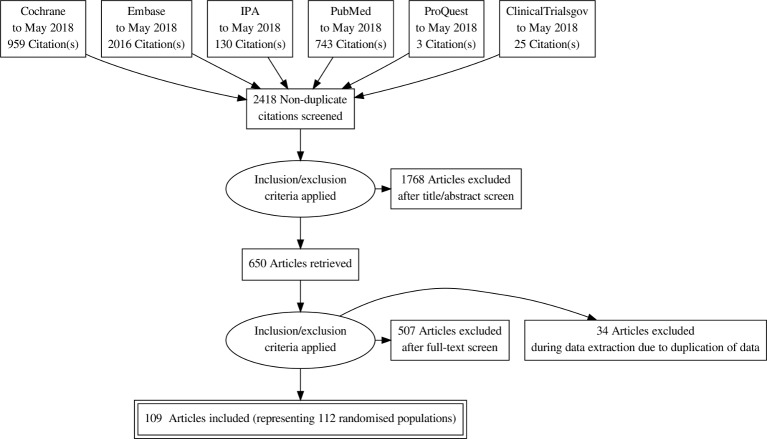
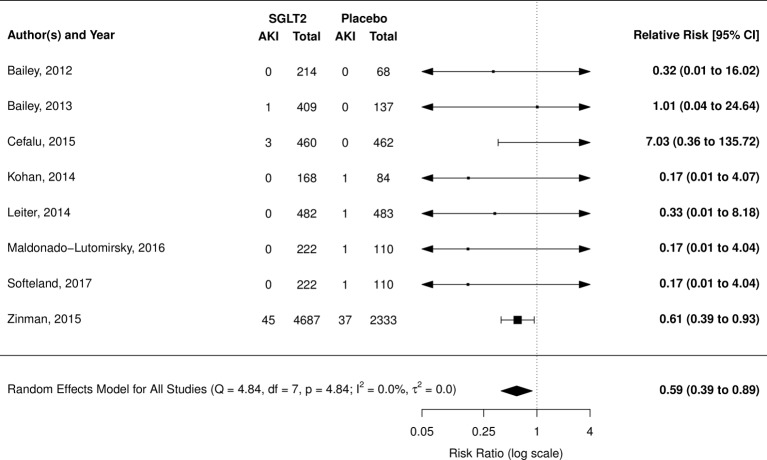
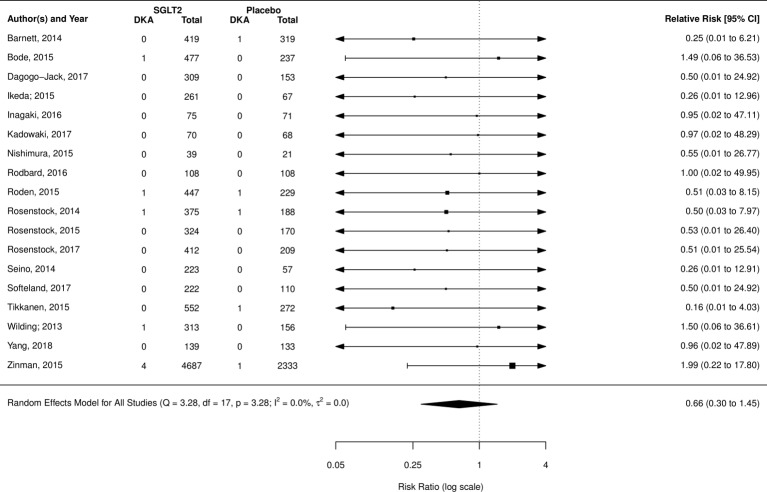
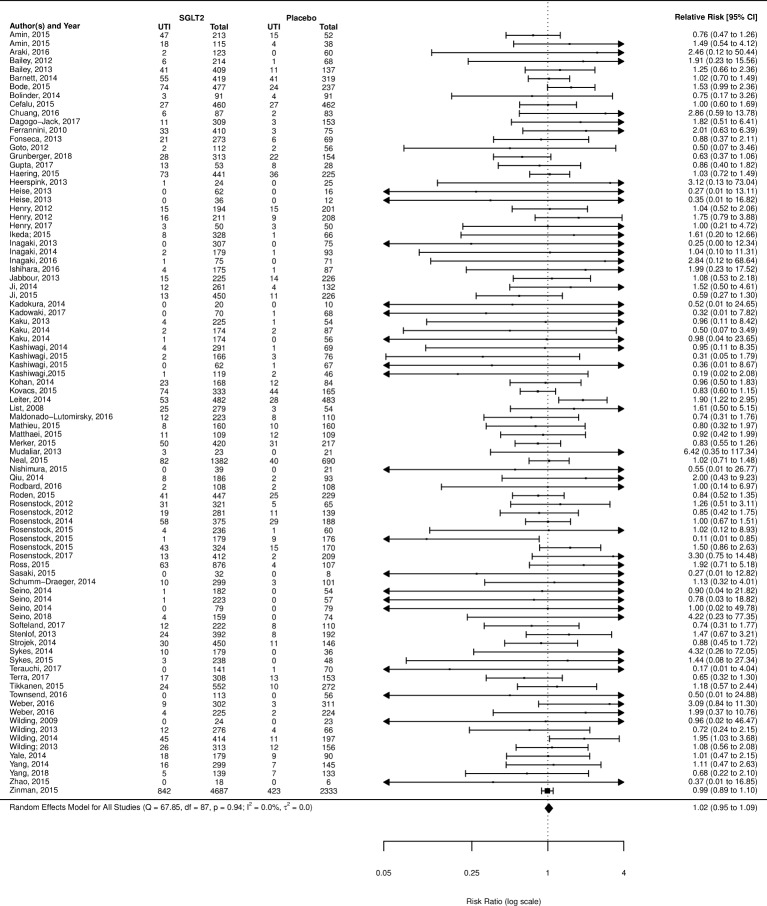
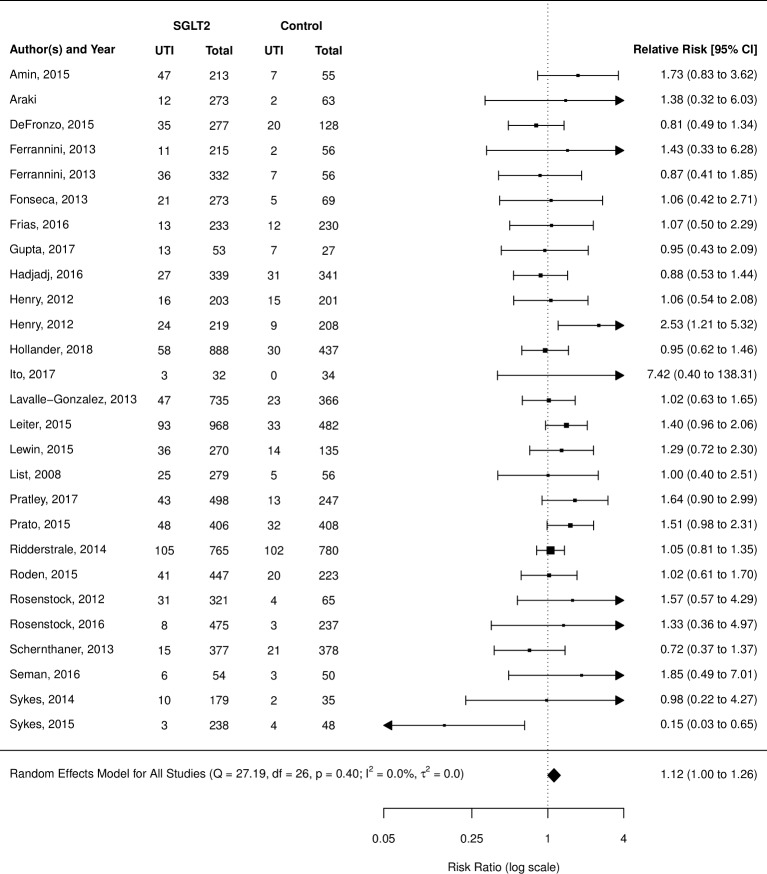
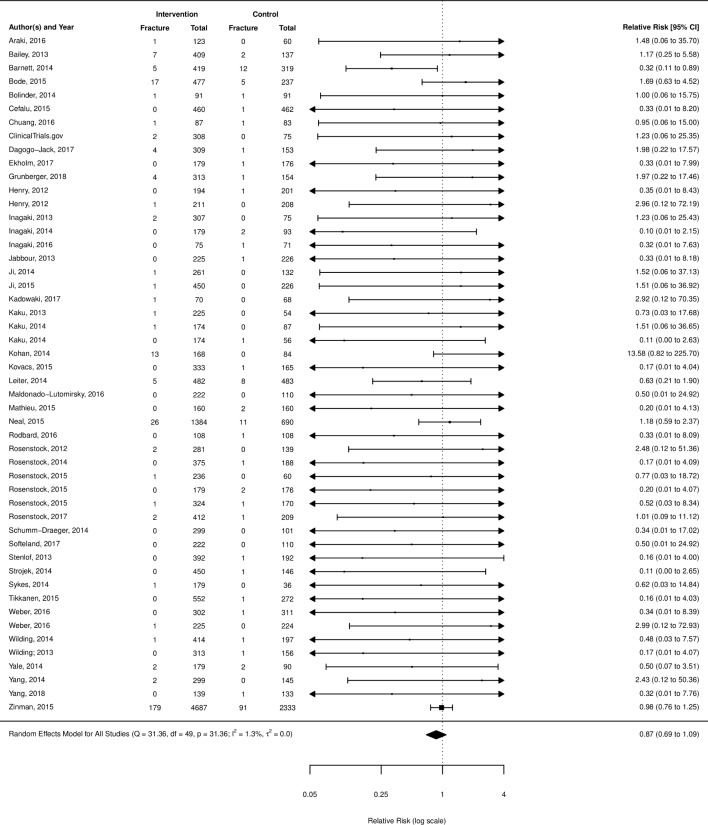
Objective: To estimate the association between the use of sodium glucose co-transporter-2 (SGLT2) inhibitors and postmarket harms as identified by drug regulatory agencies. Design: We conducted a systematic review and meta-analysis of randomised controlled trials (RCT). Six large databases were searched from inception to May 2018. Random effects models were used to estimate pooled relative risks (RRs). Intervention: SGLT2 inhibitors, compared with placebo or active comparators. Primary outcomes: Acute kidney injury (AKI), diabetic ketoacidosis (DKA), urinary tract infections (UTI), bone fractures and lower limb amputations. Results: We screened 2418 citations of which 109 were included. Most studies included one of four SGLT2 inhibitors, dapagliflozin, canagliflozin, empagliflozin and ipragliflozin. When compared with placebo, SGLT2 inhibitors were found to be significantly protective against AKI (RR=0.59; 95% CI 0.39 to 0.89; I 2=0.0%), while no difference was found for DKA (RR 0.66; 95% CI 0.30 to 1.45, I 2=0.0%), UTI (RR 1.02; 95% CI 0.95 to 1.09, I 2=0.0%) or bone fracture (RR 0.87; 95% CI 0.69 to 1.09, I 2=1.3%). Three studies reported on amputation, with one finding a significant increase risk. No increased risk for either outcome was found when compared with active controls. Subgroup analysis did show an increased risk of UTI with dapagliflozin only (RR 1.21; 95% CI 1.02 to 1.43, I 2=0.0%), but no other analysis supported an increased risk of AKI, DKA, UTI or fracture. Conclusions: Current evidence from RCTs does not suggest an increased risk of harm with SGLT2 inhibitors as a class over placebo or active comparators with respect to AKI, DKA, UTI or fracture. However, wide CIs for many comparisons suggest limited precision, and therefore clinically important adverse events cannot be ruled out. Dapagliflozin, appears to independently increase the risk of UTI, although the mechanism for this intraclass variation in risk is unclear. PROSPERO registration number: CRD42016038715.
Overview
The claims and statistics of this paper haven’t been checked yet.
Free: it reads the open-access text and checks the first 5 claims that cite a source we can check. Create a free account to check every claim.
Integrity signals
Registry
Cites
Statistics
Figures
Verification
Claims the paper makes
The claims and statistics of this paper haven’t been checked yet.
Free: it reads the open-access text and checks the first 5 claims that cite a source we can check. Create a free account to check every claim.
Claims other papers make about this one
Each is checked against this paper’s own text: does it say what the citing paper says it does?
The source backs part of the claim, not all of it — or backs it for a different population, condition or comparison.
In the citing paper
“Despite theoretical concerns for acute kidney injury and urinary tract infection, SGLT2 inhibitors do not increase these risks and acute kidney injury is less common (69,95).”
From SGLT2 inhibition for CKD and cardiovascular disease in type 2 diabetes: report of a scientific workshop sponsored by the National Kidney Foundation (2021) · cites this paper as [95]
Experimental — accuracy not yet measuredIn the citing paper
“Higher risks for amputation and fracture were not observed in CVOTs of other SGLT2 inhibitors or with canagliflozin in the CREDENCE trial (14,69,95).”
From SGLT2 inhibition for CKD and cardiovascular disease in type 2 diabetes: report of a scientific workshop sponsored by the National Kidney Foundation (2021) · cites this paper as [95]
Self-check
Percentages, sums and reported differences re-computed from the paper’s own numbers.
The self-check needs the paper’s full text.
Citations
Cites
Preferred Reporting Items for Systematic Reviews and Meta-Analyses: the PRISMA statement
Moher, D., Liberati, A., Tetzlaff, J., Altman, D. G., & for the PRISMA Group (2009) · BMJ · doi:10.1136/bmj.b2535 · Cited by 83,823
Measuring inconsistency in meta-analyses
Higgins, J. P. T., Thompson, S. G., Deeks, J. J., & Altman, D. G. (2003) · BMJ · doi:10.1136/bmj.327.7414.557 · Cited by 63,139 · cited 2×
“Statistical heterogeneity was evaluated using the I(2) statistic, with significant heterogeneity defined as an I(2)>50%.(34) To explore treatment effect heterogeneity, we conducted numerous subgroup analyses according to individual”
MethodPreferred reporting items for systematic reviews and meta-analyses: the PRISMA Statement.
(2009) · PubMed Central · Cited by 44,859
Preferred reporting items for systematic reviews and meta-analyses: The PRISMA statement
Moher, D., Liberati, A., Tetzlaff, J., Altman, D. G., & the PRISMA Group* (2009) · Annals of Internal Medicine · doi:10.7326/0003-4819-151-4-200908180-00135 · Cited by 37,554
The Cochrane Collaboration's tool for assessing risk of bias in randomised trials
Higgins, J. P. T., Altman, D. G., Gotzsche, P. C., Juni, P., Moher, D., Oxman, A. D., Savovic, J., Schulz, K. F., Weeks, L., Sterne, J. A. C., et al. (2011) · BMJ · doi:10.1136/bmj.d5928 · Cited by 33,817 · cited 4×
“risk of bias assessment Each included study was critically appraised using the Cochrane Collaboration domain-based tool for assessing the risk of bias for RCTs.(32) This tool captures six main sources of bias, including: randomisation sequence, allocation concealment, blinding of participant and researcher, blinded ou…”
InfluentialDermyshi, E., Wang, Y., Yan, C., Hong, W., Qiu, G., Gong, X., & Zhang, T. (2017) · Neonatology · doi:10.1159/000454668 · Cited by 24,451
Empagliflozin, Cardiovascular Outcomes, and Mortality in Type 2 Diabetes
Zinman, B., Wanner, C., Lachin, J. M., Fitchett, D., Bluhmki, E., Hantel, S., Mattheus, M., Devins, T., Johansen, O. E., Woerle, H. J., et al. (2015) · New England Journal of Medicine · doi:10.1056/nejmoa1504720 · Cited by 12,315 · cited 1×
“large study.(142) When the analyses were re-run using a fixed-effects model, the risk estimates remained the same or had slightly smaller CIs.”
MethodCanagliflozin and Cardiovascular and Renal Events in Type 2 Diabetes
Neal, B., Perkovic, V., Mahaffey, K. W., de Zeeuw, D., Fulcher, G., Erondu, N., Shaw, W., Law, G., Desai, M., & Matthews, D. R. (2017) · New England Journal of Medicine · doi:10.1056/nejmoa1611925 · Cited by 7,830 · cited 2×
“Data were identified on amputation for three studies.(23) 46 107 One case of amputation was found in the ClinicalTrials.”
BackgroundLiraglutide and Cardiovascular Outcomes in Type 2 Diabetes
Marso, S. P., Daniels, G. H., Brown-Frandsen, K., Kristensen, P., Mann, J. F. E., Nauck, M. A., Nissen, S. E., Pocock, S., Poulter, N. R., Ravn, L. S., et al. (2016) · New England Journal of Medicine · doi:10.1056/nejmoa1603827 · Cited by 7,629 · cited 1×
“The Canagliflozin Cardiovascular Assessment Study (CANVAS), Liraglutide Effect and Action in Diabetes: Evaluation of Cardiovascular Outcome Results (LEADER) trial and the Trial to Evaluate Cardiovascular and Other Long-term Outcomes with Semaglutide in Subjects with Type 2 Diabetes (SUSTAIN-6) have also demonstrated s…”
BackgroundSemaglutide and Cardiovascular Outcomes in Patients with Type 2 Diabetes
Marso, S. P., Bain, S. C., Consoli, A., Eliaschewitz, F. G., Jódar, E., Leiter, L. A., Lingvay, I., Rosenstock, J., Seufert, J., Warren, M. L., et al. (2016) · New England Journal of Medicine · doi:10.1056/nejmoa1607141 · Cited by 6,900
Research works printed but not linked: 5
- Health Canada. Summary Safety Review - Sodium Glucose Cotransporter 2 (SGLT2) Inhibitors INVOKANA (canagliflozin) and FORXIGA (dapagliflozin) - Evaluation of a Potential Risk of Acute Kidney Injury. 2015 http://www.hc-sc.gc.ca/dhp-mps/medeff/reviews-examens/sglt2-eng.php (Accessed 10 Dec 2015).
- Health Canada Forxiga, Invokana. Health Canada begins safety review of diabetes drugs known as SGLT2 inhibitors and risk of ketoacidosis. http://healthycanadians.gc.ca/recall-alert-rappel-avis/hc-sc/2015/53892a-eng.php (Accessed 10 Dec 2015).
- Donnan J, Marra C, Aubrey Bassler K, et al Comparative safety of the sodium glucose co-transporter 2 (SGLT2) inhibitors: a systematic review and network meta-analysis. 2017 PROSPERO 2016:CRD42016038715 Available from http://www.crd.york.ac.uk/PROSPERO_REBRANDING/display_record.asp?ID=CRD42016038715 PMC6361337 30813108
- Maldonado-Lutomirsky M, Søfteland E, Meier J, et al Empagliflozin (EMPA) as add-on to linagliptin (LINA) and metformin in patients with type 2 diabetes (T2DM): A 24-week randomised, double-blind, parallel-group trial. Diabetologia 2016; 59: S93.
- Zinman B, Wanner C, Lachin JM, et al Empagliflozin, cardiovascular outcomes, and mortality in Type 2 diabetes. N Engl J Med 2015; 373: 2117– 28. 10.1056/NEJMoa1504720 26378978 · DOI · Paper page
Cited by
Cardiovascular and renal outcomes with empagliflozin in heart failure
Packer, M., Anker, S. D., Butler, J., Filippatos, G., Pocock, S. J., Carson, P., Januzzi, J., Verma, S., Tsutsui, H., Brueckmann, M., et al. (2020) · New England Journal of Medicine · doi:10.1056/nejmoa2022190 · Cited by 5,206
Sodium–glucose cotransporter type 2 inhibitors for the treatment of type 2 diabetes mellitus
Scheen, A. J. (2020) · Nature Reviews Endocrinology · doi:10.1038/s41574-020-0392-2 · Cited by 267
Fresh insights into glucocorticoid-induced diabetes mellitus and new therapeutic directions
Li, J.-X., & Cummins, C. L. (2022) · Nature Reviews Endocrinology · doi:10.1038/s41574-022-00683-6 · Cited by 257
Renal Protection with SGLT2 Inhibitors: Effects in Acute and Chronic Kidney Disease
Bailey, C. J., Day, C., & Bellary, S. (2022) · Current Diabetes Reports · doi:10.1007/s11892-021-01442-z · Cited by 248
“Moreover, several meta-analyses of clinical trial data have concluded that use of an SGLT2 inhibitor in T2DM reduces the risk of AKI by 30–40%, and analyses of data from ‘real world’ observational studies have indicated reductions in risk of AKI by > 40% [81, 85, 86].”
BackgroundNonalcoholic fatty liver disease in adults: current concepts in etiology, outcomes, and management
Marjot, T., Moolla, A., Cobbold, J. F., Hodson, L., & Tomlinson, J. W. (2020) · Endocrine Reviews · doi:10.1210/endrev/bnz009 · Cited by 228
The current role of sodium-glucose cotransporter 2 inhibitors in type 2 diabetes mellitus management
Xu, B., Li, S., Kang, B., & Zhou, J. (2022) · Cardiovascular Diabetology · doi:10.1186/s12933-022-01512-w · Cited by 190
“There is little or no evidence of effects of SGLT-2 inhibitors on blindness, amputation, neuropathic pain, eye disease, or health-related quality of life in large meta-analyses [55, 129].”
BackgroundInfluentialLiu, J., Li, L., Li, S., Wang, Y., Qin, X., Deng, K., Liu, Y., Zou, K., & Sun, X. (2020) · Diabetes, Obesity and Metabolism · doi:10.1111/dom.14075 · Cited by 176
Kidney and heart failure outcomes associated with SGLT2 inhibitor use
van der Aart-van der Beek, A. B., de Boer, R. A., & Heerspink, H. J. L. (2022) · Nature Reviews Nephrology · doi:10.1038/s41581-022-00535-6 · Cited by 173
Gongora, C. A., Drobni, Z. D., Quinaglia Araujo Costa Silva, T., Zafar, A., Gong, J., Zlotoff, D. A., Gilman, H. K., Hartmann, S. E., Sama, S., Nikolaidou, S., et al. (2022) · JACC: Heart Failure · doi:10.1016/j.jchf.2022.03.006 · Cited by 159
Masuda, T., Muto, S., Fukuda, K., Watanabe, M., Ohara, K., Koepsell, H., Vallon, V., & Nagata, D. (2020) · Physiological Reports · doi:10.14814/phy2.14360 · Cited by 150
“Recent large-scale clinical trials and meta-analysis have shown that SGLT2 inhibitors may even protect type 2 diabetic patients from AKI, although an increase in AKI related to the diuretic property and resulting volume depletion have been a concern (Donnan et al., 2019; Gilbert & Thorpe, 2019).”
BackgroundTuttle, K. R., Brosius, F. C., Cavender, M. A., Fioretto, P., Fowler, K. J., Heerspink, H. J. L., Manley, T., McGuire, D. K., Molitch, M. E., Mottl, A. K., et al. (2020) · American Journal of Kidney Diseases · doi:10.1053/j.ajkd.2020.08.003 · Cited by 146
Tuttle, K. R., Brosius, F. C., Cavender, M. A., Fioretto, P., Fowler, K. J., Heerspink, H. J. L., Manley, T., McGuire, D. K., Molitch, M. E., Mottl, A. K., et al. (2021) · Diabetes · doi:10.2337/dbi20-0040 · Cited by 123
“Despite theoretical concerns for acute kidney injury and urinary tract infection, SGLT2 inhibitors do not increase these risks and acute kidney injury is less common (69,95).”
BackgroundSodium-Glucose Cotransporter-2 (SGLT2) Inhibitors: A Clinician’s Guide
Simes, B. C., & MacGregor, G. G. (2019) · Diabetes, Metabolic Syndrome and Obesity: Targets and Therapy · doi:10.2147/dmso.s212003 · Cited by 103
“However, multiple meta-analyses have found no increased risk of DKA for patients taking SGLT2 inhibitors vs placebo.(101,102)”
BackgroundColacci, M., Fralick, J., Odutayo, A., & Fralick, M. (2022) · Canadian Journal of Diabetes · doi:10.1016/j.jcjd.2021.04.006 · Cited by 94
Gilbert, R. E., & Thorpe, K. E. (2019) · Diabetes, Obesity and Metabolism · doi:10.1111/dom.13754 · Cited by 92
Pelletier, R., Ng, K., Alkabbani, W., Labib, Y., Mourad, N., & Gamble, J. (2021) · Therapeutic Advances in Drug Safety · doi:10.1177/2042098621989134 · Cited by 100
Self-citationSafety profile of sodium glucose co-transporter 2 (SGLT2) inhibitors: A brief summary
Mascolo, A., Napoli, R. D., Balzano, N., Cappetta, D., Urbanek, K., Angelis, A. D., Scisciola, L., Meo, I. D., Sullo, M. G., Rafaniello, C., et al. (2022) · Frontiers in Cardiovascular Medicine · doi:10.3389/fcvm.2022.1010693 · Cited by 109
Acute Kidney Injury: A Bona Fide Complication of Diabetes
Advani, A. (2020) · Diabetes · doi:10.2337/db20-0604 · Cited by 93
Giorgino, F., Vora, J. P., Fenici, P., & Solini, A. (2020) · Cardiovascular Diabetology · doi:10.1186/s12933-020-01163-9 · Cited by 100
SGLT2 inhibitor counteracts NLRP3 inflammasome via tubular metabolite itaconate in fibrosis kidney
Ke, Q., Shi, C., Lv, Y., Wang, L., Luo, J., Jiang, L., Yang, J., & Zhou, Y. (2021) · The FASEB Journal · doi:10.1096/fj.202100909rr · Cited by 97
Bone health in diabetes and prediabetes
Costantini, S., & Conte, C. (2019) · World Journal of Diabetes · doi:10.4239/wjd.v10.i8.421 · Cited by 97
Shao, S., Chang, K., Hung, M., Yang, N.-I., Chan, Y., Chen, H., Yang, Y. K., & Lai, E. C. (2019) · Cardiovascular Diabetology · doi:10.1186/s12933-019-0919-9 · Cited by 82
Uitrakul, S., Aksonnam, K., Srivichai, P., Wicheannarat, S., & Incomenoy, S. (2022) · Medicines · doi:10.3390/medicines9120059 · Cited by 64
“Moreover, several studies concluded that SGLT2 inhibitors did not significantly increase the risk of UTI when compared with placebo or other antidiabetes agents [6,7].”
BackgroundOhara, K., Masuda, T., Morinari, M., Okada, M., Miki, A., Nakagawa, S., Murakami, T., Oka, K., Asakura, M., Miyazawa, Y., et al. (2020) · Diabetology & Metabolic Syndrome · doi:10.1186/s13098-020-00545-z · Cited by 68
SGLT2 Inhibitors: The Sweet Success for Kidneys
Dharia, A., Khan, A. A., Sridhar, V. S., & Cherney, D. Z. I. (2023) · Annual Review of Medicine · doi:10.1146/annurev-med-042921-102135 · Cited by 69
Acute kidney injury in diabetic patients: A narrative review
Kaur, A., Sharma, G. S., & Kumbala, D. R. (2023) · Medicine · doi:10.1097/md.0000000000033888 · Cited by 81
“[67] Meta-analysis showed the protective effect of SGLT2 inhibitors with AKI, primarily driven by empagliflozin.[68] These drugs should not be started in CRS 1 and 3 but may be continued with close hemodynamic and renal function monitoring.”
BackgroundSGLT2 inhibitors: a narrative review of efficacy and safety
Nelinson, D. S., Sosa, J. M., & CHILTON, R. J. (2021) · Journal of Osteopathic Medicine · doi:10.1515/jom-2020-0153 · Cited by 70
“Plausible mechanisms by which these agents may increase the risk of DKA include reduced insulin secretion, with consequent increased synthesis of free fatty acids which are converted to ketone bodies, and stimulation of glucagon secretion which leads to ketone body synthesis.(52) Risk factors for DKA in SGLT2 inhibito…”
BackgroundDiabetic peripheral neuropathy in people with type 2 diabetes: too little too late
Javed, S., Hayat, T., Menon, L., Alam, U., & Malik, R. A. (2019) · Diabetic Medicine · doi:10.1111/dme.14194 · Cited by 65
We Can Finally Stop Worrying About SGLT2 Inhibitors and Acute Kidney Injury
Sridhar, V. S., Tuttle, K. R., & Cherney, D. Z. I. (2020) · American Journal of Kidney Diseases · doi:10.1053/j.ajkd.2020.05.014 · Cited by 54
Glucose Metabolism in Osteoblasts in Healthy and Pathophysiological Conditions
Donat, A., Knapstein, P.-R., Jiang, S., Baranowsky, A., Ballhause, T.-M., Frosch, K.-H., & Keller, J. (2021) · International Journal of Molecular Sciences · doi:10.3390/ijms22084120 · Cited by 53
Täger, T., Atar, D., Agewall, S., Katus, H. A., Grundtvig, M., Cleland, J. G. F., Clark, A. L., Fröhlich, H., & Frankenstein, L. (2020) · Heart Failure Reviews · doi:10.1007/s10741-020-09954-8 · Cited by 63
SGLT2 Inhibitors in Chronic Kidney Disease: From Mechanisms to Clinical Practice
Škrabić, R., Kumrić, M., Vrdoljak, J., Rušić, D., Skrabic, I., Vilović, M., Martinović, D., Duplancic, V., Kurir, T. T., & Božić, J. (2022) · Biomedicines · doi:10.3390/biomedicines10102458 · Cited by 60
Bidulka, P., Lugo-Palacios, D. G., Carroll, O., O’Neill, S., Adler, A., Basu, A., Silverwood, R. J., Bartlett, J. W., Nitsch, D., Charlton, P., et al. (2024) · BMJ · doi:10.1136/bmj-2023-077097 · Cited by 64
The effect of canagliflozin on amputation risk in the CANVAS program and the CREDENCE trial
Arnott, C., Huang, Y., Neuen, B. L., Di Tanna, G. L., Cannon, C. P., Oh, R., Edwards, R., Kavalam, M., Rosenthal, N., Perkovic, V., et al. (2020) · Diabetes, Obesity and Metabolism · doi:10.1111/dom.14091 · Cited by 45
New Insights into the Use of Empagliflozin—A Comprehensive Review
Forycka, J., Hajdys, J., Krzemińska, J., Wilczopolski, P., Wronka, M., Młynarska, E., Rysz, J., & Franczyk, B. (2022) · Biomedicines · doi:10.3390/biomedicines10123294 · Cited by 65
“The risk of euglycemic ketoacidosis may be increased through the excessive production of ketone bodies by two mechanisms—increasing glucagon secretion or increasing glucosuria and thereby decreasing insulin secretion, resulting in an increased production of free fatty acids (FFA) [26].”
BackgroundInfluentialMilder, T. Y., STOCKER, S. L., Day, R. O., & Greenfield, J. R. (2020) · Drug Safety · doi:10.1007/s40264-020-01010-6 · Cited by 50
“In summary, meta-analyses and population-based studies of SGLT2 inhibitor therapy have largely not demonstrated an increased risk of fracture [40, 47, 84, 85, 88].”
BackgroundThe Extraglycemic Effect of SGLT-2is on Mineral and Bone Metabolism and Bone Fracture
Dong, B., Lv, R., Wang, J., Che, L., Wang, Z., Huai, Z., Wang, Y., & Xu, L. (2022) · Frontiers in Endocrinology · doi:10.3389/fendo.2022.918350 · Cited by 54
Yu, W., Huang, J., Lin, M., Wei, G., Yang, F., Tang, Z., Zeng, F., & Wu, S. (2021) · Analytical Chemistry · doi:10.1021/acs.analchem.1c00223 · Cited by 43
Alicic, R. Z., & Nicholas, S. B. (2022) · Mayo Clinic Proceedings · doi:10.1016/j.mayocp.2022.05.003 · Cited by 48
“It is unclear whether this is a chance finding because higher risks of amputation and fractures have not been observed with other SGLT2 inhibitors or with canagliflozin in the CREDENCE trial.(31,86) In addition to potential adverse events, an added barrier to the use of SGLT2 inhibitors can be their relatively high co…”
BackgroundSodium-glucose cotransporter 2 inhibition: towards an indication to treat diabetic kidney disease
Górriz, J. L., Navarro‐González, J. F., Ortíz, A., Vergara, A., Núñez, J. E., Jacobs-Cachá, C., Martínez‐Castelao, A., & Soler, M. J. (2020) · Nephrology Dialysis Transplantation · doi:10.1093/ndt/gfz237 · Cited by 40
“A systematic review and meta-analysis of RCT that included SGLT2i up to May 2018 [61] selected 109 reports on SGLT2i, mainly dapagliflozin, canagliflozin, empagliflozin and ipragliflozin.”
BackgroundCahn, A., Raz, I., Bonaca, M. P., Mosenzon, O., Murphy, S. A., Yanuv, I., Rozenberg, A., Wilding, J. P. H., Bhatt, D. L., McGuire, D. K., et al. (2020) · Diabetes Obesity and Metabolism · doi:10.1111/dom.14041 · Cited by 39
Treatment Response to SGLT2 Inhibitors: From Clinical Characteristics to Genetic Variations
Klen, J., & Dolžan, V. (2021) · International Journal of Molecular Sciences · doi:10.3390/ijms22189800 · Cited by 47
“Life-threatening diabetic ketoacidosis rarely develops in patients with T2DM, although it is necessary to be careful in patients with characteristic symptoms, even if they do not have high blood sugar levels [16].”
BackgroundZheng, C., Lin, M., Chen, Y., Xu, H., Yan, L., & Dai, H. (2021) · Cardiovascular Diabetology · doi:10.1186/s12933-021-01272-z · Cited by 40
“Previous meta-analyses have shown that SGLT-2i do not increase the risk of fracture or amputation; however, the heterogeneity of these studies was high [51].”
SGLT2 Inhibitors in Kidney Diseases—A Narrative Review
Gajewska, A., Wasiak, J., Sapeda, N., Młynarska, E., Rysz, J., & Franczyk, B. (2024) · International Journal of Molecular Sciences · doi:10.3390/ijms25094959 · Cited by 48
“One meta-analysis even suggested that SGLT2 inhibitors significantly reduce the risk of AKI occurrence [80].”
BackgroundKandeel, M. K. (2022) · Frontiers in Pharmacology · doi:10.3389/fphar.2022.926717 · Cited by 35
“Moreover, although the additional metabolic benefits of SGLT2Is have encouraged ongoing clinical evaluation of these inhibitors for DN treatment (Donnan et al., 2019; Caparrotta et al., 2021), the body of available data has not been previously systematically reviewed.”
BackgroundScheen, A. J. (2020) · Expert Opinion on Drug Safety · doi:10.1080/14740338.2020.1733967 · Cited by 35
Sodium-glucose cotransporter 2 inhibitors’ mechanisms of action in heart failure
Rotkvić, P. G., Berković, M. C., Bulj, N., Rotkvić, L., & Ćelap, I. (2020) · World Journal of Diabetes · doi:10.4239/wjd.v11.i7.269 · Cited by 29
Roy, A., Maiti, A., Sinha, A., Baidya, A., Basu, A. K., Sarkar, D., Sanyal, D., Biswas, D., Maisnam, I., Pandit, K., et al. (2020) · Diabetes Therapy · doi:10.1007/s13300-020-00921-y · Cited by 27
Takeuchi, Y., Kumamaru, H., Hagiwara, Y., Matsui, H., Yasunaga, H., Miyata, H., & Matsuyama, Y. (2021) · Diabetes Obesity and Metabolism · doi:10.1111/dom.14353 · Cited by 28
“Although a meta-analysis of randomized controlled trials (RCTs) reported that SGLT2 inhibitors have a higher UTI risk than placebo,(4) other meta-analyses have not confirmed this association.(9,10) Pharmacoepidemiological studies conducted using routinely collected medical data have reported that SGLT2 inhibitors are…”
BackgroundYang, T., Zhou, Y. F., & Cui, Y. (2023) · Expert Opinion on Drug Safety · doi:10.1080/14740338.2023.2288897 · Cited by 31
“However, a meta-analysis of 86 randomized controlled trials (RCTs) enrolling 50,880 T2DM patients demonstrated that the risk of UTIs was not increased with SGLT-2 inhibitors compared to placebo (RR 1.03, 95% CI 0.96–1.11) or other hypoglycemic agents (RR 1.08, 95% CI 0.93–1.25) [19,20].”
InfluentialKumar, N., Kumar, B., Ashique, S., Yasmin, S., Venkatesan, K., Islam, A., Ghosh, S., Sahu, A., Bhui, U., & Ansari, M. Y. (2025) · Diabetes Research and Clinical Practice · doi:10.1016/j.diabres.2025.112050 · Cited by 29
Diabetes and Bone Fragility: SGLT2 Inhibitor Use in the Context of Renal and Cardiovascular Benefits
Jackson, K. M., & Moseley, K. F. (2020) · Current Osteoporosis Reports · doi:10.1007/s11914-020-00609-z · Cited by 34
Greene, S. J., Butler, J., & Kosiborod, M. (2024) · The American Journal of Medicine · doi:10.1016/j.amjmed.2023.04.019 · Cited by 29
Liang, I.-C., Chang, H.-H., Lai, Y.-J., Chan, C.-M., Sung, C.-H., Pu, C., Chang, D., Ho, C.-C., & Hung, C. (2025) · Medicina · doi:10.3390/medicina61020202 · Cited by 28
“In 2019, Donnan, J.R. et al. [46] conducted a meta-analysis evaluating the safety of SGLT2 inhibitors in T2DM patients.”
Yeong, T. J. J., Mai, A. S., Lim, O. Z.-H., Ng, C. H., Chin, Y. H., Tay, P. W. L., Lin, C., Muthiah, M. D., Khoo, C. M., Dalakoti, M., et al. (2022) · ESC Heart Failure · doi:10.1002/ehf2.13822 · Cited by 26
“hypoglycaemia, acute kidney injury, and diabetic ketoacidosis.(50,51) However, reviews and meta-analyses have”
BackgroundWilding, J. P. H., Evans, M., Fernando, K., Górriz, J. L., Cebrián, A., Diggle, J., Hicks, D., James, J., Newland‐Jones, P., Ali, A., et al. (2022) · Diabetes Therapy · doi:10.1007/s13300-022-01228-w · Cited by 30
Maiorana, A., Tagliaferri, F., & Dionisi‐Vici, C. (2023) · Frontiers in Endocrinology · doi:10.3389/fendo.2023.1145111 · Cited by 28
Lau, D., Pannu, N., Yeung, R. O., Scott‐Douglas, N., & Klarenbach, S. W. (2023) · CMAJ Open · doi:10.9778/cmajo.20210281 · Cited by 24
Zheng, Z., He, D., Chen, J., Xie, X., Lu, Y., Wu, B., & Jiang, X. (2023) · Clinical Drug Investigation · doi:10.1007/s40261-023-01256-9 · Cited by 33
Sridharan, K., & Sivaramakrishnan, G. (2024) · Journal of Clinical Medicine · doi:10.3390/jcm13061748 · Cited by 30
“Donnan et al., in a meta-analysis of 26 randomized clinical trials (RCTs), found no significant risk with SGLT2is (relative risk: 0.66, 95% confidence intervals: 0.3, 1.45) [10].”
BackgroundInfluentialRemogliflozin: the new low cost SGLT-2 inhibitor for type 2 diabetes mellitus
Atal, S., Fatima, Z., Singh, S., Sadasivam, B., & Joshi, R. P. (2020) · Diabetology International · doi:10.1007/s13340-020-00472-4 · Cited by 25
The elephant in the room: Why cardiologists should stop ignoring type 2 diabetes
O’Keefe, J. H., Nassif, M. E., MAGWIRE, M. L., O’Keefe, E. L., & Lavie, C. J. (2019) · Progress in Cardiovascular Diseases · doi:10.1016/j.pcad.2019.08.001 · Cited by 22
Scheen, A. J., & Delanaye, P. (2021) · Diabetes & Metabolism · doi:10.1016/j.diabet.2021.101315 · Cited by 24
Canagliflozin and Amputation Risk: Evidence So Far
Papadokostaki, E., Rizos, E. C., Tigas, S. K., & Liberopoulos, E. N. (2019) · The International Journal of Lower Extremity Wounds · doi:10.1177/1534734619878090 · Cited by 23
“Another meta-analysis of all SGLT2irelated serious adverse events including lower limb amputations found no increased harm.(22) In another meta-analysis, use of SGLT2i was also not associated with increased risk of amputations in patients with T2DM and CKD.”
BackgroundAhmed, A. S., Mona, M. M., Abdel‐Kareem, M. A., & Elsisy, R. A. (2021) · Biomedicine & Pharmacotherapy · doi:10.1016/j.biopha.2021.111624 · Cited by 22
SGLT2 Inhibitors, What the Emergency Physician Needs to Know: A Narrative Review
Lu, H. Y., Lu, H., Kosinski, C., Wojtusciszyn, A., Zanchi, A., Carron, P., Müller, M., Meyer, P., Martin, J., Müller, O., et al. (2021) · Journal of Clinical Medicine · doi:10.3390/jcm10092036 · Cited by 21
“However, in a large meta-analysis which included 110 trials, SGLT2is did not demonstrate an increased risk of UTIs [13].”
BackgroundInfluentialMukai, J., Kanno, S., & Kubota, R. (2021) · Scientific Reports · doi:10.1038/s41598-021-92925-2 · Cited by 20
Al-Hindi, B., Mohammed, M. A., Mangantig, E., & Martini, N. D. (2023) · Journal of the American Pharmacists Association · doi:10.1016/j.japh.2023.10.010 · Cited by 22
Caro, M. K. C., Cunanan, E. C., & Kho, S. (2022) · Diabetes Epidemiology and Management · doi:10.1016/j.deman.2022.100082 · Cited by 22
Li, C. X., Liu, T. T., Zhang, Q., Xie, Q., Geng, X. H., Man, C., Li, J. Y., Mao, X. Y., Qiao, Y., & Liu, H. (2023) · Frontiers in Pharmacology · doi:10.3389/fphar.2023.1275060 · Cited by 27
Safety of Empagliflozin: An Individual Participant-Level Data Meta-Analysis from Four Large Trials
Wanner, C., Iliev, H., Duarte, N., Schueler, E., Soares, A. R., Thanam, V., & Pfarr, E. (2024) · Advances in Therapy · doi:10.1007/s12325-024-02879-w · Cited by 29
Basic and Clinical Pharmaco-Therapeutics of SGLT2 Inhibitors: A Contemporary Update
Kalra, S., Shetty, K., Nagarajan, V. B., & Ved, J. (2020) · Diabetes Therapy · doi:10.1007/s13300-020-00789-y · Cited by 22
Watanabe, S., Sawa, N., Mizuno, H., Yamanouchi, M., Suwabe, T., Hoshino, J., Kinowaki, K., Ohashi, K., Fujii, T., Yamaguchi, Y., et al. (2021) · CEN Case Reports · doi:10.1007/s13730-021-00609-7 · Cited by 21
“Consequently, vital clinical adverse events cannot be ruled out [8].”
BackgroundSodium-Glucose Cotransporter-2 Inhibitor in Diabetic and Nondiabetic Renal Transplant Recipients
Maigret, L., Baslé, L., Châtelet, V., Écotière, L., Perrin, P., Golbin, L., Bertrand, D., Anglicheau, D., Poulain, C., Garrouste, C., et al. (2024) · Kidney International Reports · doi:10.1016/j.ekir.2024.11.033 · Cited by 21
Chandrashekar, M., Philip, S., Nesbitt, A. L., Joshi, A., & Perera, M. (2021) · International Journal of Urology · doi:10.1111/iju.14624 · Cited by 21
Alkabbani, W., & Gamble, J. (2021) · Drug Design Development and Therapy · doi:10.2147/dddt.s281602 · Cited by 19
“Multiple systematic reviews have assessed the safety of SGLT-2 inhibitors as a class and ipragliflozin as a molecule, either within a network meta-analysis or traditional pair-wise meta-analysis.(7,44,65) We focus on the”
BackgroundSelf-citationKatsuhara, Y., & Ogawa, T. (2020) · Clinical Drug Investigation · doi:10.1007/s40261-020-00925-3 · Cited by 23
Nyström, T. (2024) · Diabetes Obesity and Metabolism · doi:10.1111/dom.15696 · Cited by 21
“121 SGLT2 inhibitors demonstrate effectiveness in reducing cardio-renal risks in the elderly, supported by both RCTs 78,121,122 and RWE studies.”
Recent advances in the management of secondary hypertension: chronic kidney disease
Masuda, T., & Nagata, D. (2020) · Hypertension Research · doi:10.1038/s41440-020-0491-4 · Cited by 19
Johansson, K. S., Sonne, D. P., Knop, F. K., & Christensen, M. (2020) · Expert Opinion on Drug Discovery · doi:10.1080/17460441.2020.1791078 · Cited by 17
How should rheumatologists manage glucocorticoid-induced hyperglycemia?
Nakamura, H., Fujieda, Y., Nakamura, A., & Atsumi, T. (2020) · Modern Rheumatology · doi:10.1080/14397595.2020.1823060 · Cited by 20
“a risk of urinary tract and genital infections [72].”
BackgroundThe interplay between bone and heart health as reflected in medication effects: A narrative review
Trost, S. U., Tesfaye, N., & Harindhanavudhi, T. (2023) · Women s Health · doi:10.1177/17455057231165549 · Cited by 20
Complicated Urinary Tract Infections
Sabih, A., & Leslie, S. (2019) · StatPearls · Cited by 17
Management of Hyperglycemia in Older Adults with Type 2 Diabetes
Gandhi, G. Y., & Mooradian, A. D. (2021) · Drugs & Aging · doi:10.1007/s40266-021-00910-1 · Cited by 18
“Despite some reports of increased risk of serious UTIs with SGLT2 inhibitor use, meta-analyses and population-based studies have generally not found an elevated risk of UTIs [130, 139].”
BackgroundInsight on Infections in Diabetic Setting
Pari, B., Gallucci, M., Ghigo, A., & Brizzi, M. F. (2023) · Biomedicines · doi:10.3390/biomedicines11030971 · Cited by 21
“The original concerns regarding a possible increase in UTIs are currently mitigated since it was limited to Dapaglifozin [76].”
BackgroundHarms and benefits fo sodium-glucose co-transporter 2 inhibitors
Chesterman, T., & Thynne, T. (2020) · Australian Prescriber · doi:10.18773/austprescr.2020.049 · Cited by 21
Katsuhara, Y., & Ikeda, S. (2021) · Clinical Drug Investigation · doi:10.1007/s40261-021-01006-9 · Cited by 16
Sridharan, K., & Sivaramakrishnan, G. (2024) · Expert Review of Clinical Pharmacology · doi:10.1080/17512433.2024.2355287 · Cited by 19
“Donnan et al . did not observe any increased risk of UTI for SGLT2is but specifically for dapagliflozin only [11].”
BackgroundNakamura, I., Maegawa, H., Tobe, K., & Uno, S. (2020) · Expert Opinion on Pharmacotherapy · doi:10.1080/14656566.2020.1817388 · Cited by 18
“Among particular ADRs of special interest examined in this study, the results of a large, recent meta-analysis using data from over 100 randomized controlled trials of patients with T2DM found no apparent increase in the risk of diabetic ketoacidosis, urinary tract infection and fracture associated with SGLT2 inhibito…”
ResultAlkabbani, W., Zongo, A., Minhas‐Sandhu, J. K., Eurich, D. T., Shah, B. R., Alsabbagh, M. W., & Gamble, J. (2021) · BMJ Open Diabetes Research & Care · doi:10.1136/bmjdrc-2021-002496 · Cited by 19
Self-citationManaging the side effects of sodium-glucose cotransporter-2 inhibitors
Kodur, N., Sharew, B., Lansang, M. C., & Tang, W. H. W. (2025) · Cleveland Clinic Journal of Medicine · doi:10.3949/ccjm.92a.24071 · Cited by 22
“10 Supporting these fi ndings, a propensity score–matched cohort study of 137,667 Medicare benefi ciaries with type 2 diabetes found that SGLT2 inhibitors did not increase the risk of fracture relative to other diabetes medications, namely dipeptidyl peptidase 4 inhibitors and glucagon-like…”
Deshpande, R., Patel, R., Regmi, M. R., Salih, M., Kropp, R. J., Al-bast, B., Sheikh, M. A., Sagalov, A., Kulkarni, A., Siddique, M. S., et al. (2023) · Cardiovascular Endocrinology & Metabolism · doi:10.1097/xce.0000000000000284 · Cited by 16
“(2019) found no significant increase in risk for DKA in pooled results of 16 RCTs which they attributed to minimal event rate with insufficient sample size of included RCTs [39].”
Utsunomiya, K., Koshida, R., Kakiuchi, S., Senda, M., Fujii, S., Kurihara, Y., Gunji, R., & Kaku, K. (2020) · Journal of Diabetes Investigation · doi:10.1111/jdi.13333 · Cited by 14
Kalra, S., Aydin, H., Sahay, M., Ghosh, S. K., Ruder, S., TIWASKAR, M. H., Kilov, G., Kishor, K., Nair, T., Makkar, V., et al. (2020) · touchREVIEWS in Endocrinology · doi:10.17925/ee.2020.16.2.113 · Cited by 15
“A meta-analysis of 11 randomised controlled trials proved a protective effect of SGLT2 inhibitors for AKI, an effect primarily driven by the evidence with empagliflozin.(69) AKI is a challenging condition to manage and adds to the burden by increasing the need for renal replacement therapy, hospital stays and costs, a…”
BackgroundNew Perspectives in Management of Cardiovascular Risk Among People With Diabetes
Gami, A., Blumenthal, R. S., McGuire, D. K., Sarkar, S., & Kohli, P. (2024) · Journal of the American Heart Association · doi:10.1161/jaha.123.034053 · Cited by 17
“51 To limit the risk of diabetic ketoacidosis, patients should maintain adequate hydration and not take the medication during illness or decreased oral intake for any reason.”
BackgroundCannarella, R., Rubulotta, M., Cannarella, V., Vignera, S. L., & Calogero, A. E. (2025) · European Journal of Internal Medicine · doi:10.1016/j.ejim.2025.06.010 · Cited by 16
Is there any robust evidence showing that SGLT2 inhibitor use predisposes to acute kidney injury?
Çöpür, S., Yıldız, A. B., Basile, C., Tuttle, K. R., & Kanbay, M. (2022) · Journal of Nephrology · doi:10.1007/s40620-022-01422-w · Cited by 18
“Results showed no association of AKI with SGLT2i use [23, 26], decrease in AKI incidence [24, 25], increasing AKI incidence [27].”
BackgroundMethodLee, K., Noh, J. H., Park, S., Choi, K. M., Kang, S., Won, K. C., Cho, H., Moon, M. K., & Korean Society of Heart Failure (2023) · Diabetes & Metabolism Journal · doi:10.4093/dmj.2022.0420 · Cited by 14
“Ketoacidosis with euglycemia or modestly elevated blood glucose levels ( 250 mg/dL) has been re-ported in patients receiving SGLT2 inhibitor therapy [73].”
Rabbani, S. A., El‐Tanani, M., Kumar, R., Saini, M., El‐Tanani, Y., Sharma, S., Aljabali, A. A. A., Hajeer, E., & Rizzo, M. (2025) · Pharmaceuticals · doi:10.3390/ph18081130 · Cited by 17
SGLT-2 Inhibitors: The Next-generation Treatment for Type 2 Diabetes Mellitus
Lukic, N., Mačvanin, M., Gluvic, Z. M., Rizzo, M., Radak, D. J., Suri, J. S., & Isenović, E. R. (2023) · Current Medicinal Chemistry · doi:10.2174/0109298673251493231011192520 · Cited by 16
Metadata
- Authors
- Donnan, J. R., Grandy, C. A., Chibrikov, E., Marra, C. A., Aubrey-Bassler, K., Johnston, K., Swab, M., Hache, J., Curnew, D., Nguyen, H., & Gamble, J.-M.
- Affiliations
- Memorial University of Newfoundland (CA)
- Corresponding author
- Gamble, John-Michael
- Venue
- BMJ Open
- Publisher
- BMJ
- Published
- 2019-01
- Volume
- 9
- Issue
- 1
- Pages
- e022577
- ISSN
- 2044-6055 (ISSN-L)
- PMC
- PMC6361337
- OpenAlex
- W2913306188
- Cited by
- 222
- References
- 145
- Citations by year
- 2026: 17 · 2025: 15 · 2024: 35 · 2023: 33 · 2022: 34 · 2021: 37 · 2020: 36 · 2019: 14
- FWCI
- 4.64
- Type
- journal article
- Language
- en
- Open access
- gold
- doi.org
- Licence
- cc-by-nc
- Locations
- BMJ Open (publishedVersion, cc-by-nc)
- Europe PMC (PubMed Central) (publishedVersion, other-oa)
- PubMed Central (publishedVersion, cc-by-nc)
- PubMed (publishedVersion)
- DOAJ (DOAJ: Directory of Open Access Journals) (submittedVersion)
- Funders
- Canadian Diabetes Association
- Newfoundland and Labrador Centre for Applied Health Research
- Topics
- Health Sciences › Medicine › Endocrinology, Diabetes and Metabolism › Diabetes Treatment and Management
- Life Sciences › Pharmacology, Toxicology and Pharmaceutics › Toxicology › Pharmacovigilance and Adverse Drug Reactions
- Health Sciences › Medicine › Pharmacology (medical) › Pharmacology and Obesity Treatment
- Keywords
- SGLT2 inhibitors, dapagliflozin, canagliflozin, empagliflozin, ipragliflozin, acute kidney injury, diabetic ketoacidosis, urinary tract infection, bone fractures, lower limb amputation, drug safety, adverse drug reactions, type 2 diabetes
- MeSH terms
- Canagliflozin, Sodium-Glucose Transporter 2 Inhibitors, Amputation, Surgical, Benzhydryl Compounds, Glucosides, Humans, Thiophenes, Urinary Tract Infections, Randomized Controlled Trials as Topic, Diabetic Ketoacidosis, Fractures, Bone, Acute Kidney Injury
About these checks
Registry, retraction, Cites and statistics results are computed, not judged, with one exception: a printed reference that no index lists is read once by a model before it counts as a citation error. Claims are extracted by a model and kept only when their quote appears verbatim in the text; each cited source is then checked, with a model’s help, for whether it says what the claim relies on. Those verdicts can be wrong — read the claim’s quote and the cited source before relying on one.
Statistics and arithmetic are recomputed, not judged.
Confidence bands are shown only for fields calibrated on our annotated test set. None is calibrated yet, so no band is shown.
What counts as a claim ›How we measure confidence ›How we check this ›
Are you an author, or do you see a problem with this page? Request a review
Data sources
Bibliographic data: Semantic Scholar, OpenAlex, Crossref.
Contains information from the Semantic Scholar Academic Graph Datasets, made available under the ODC Attribution License (ODC-BY 1.0).
Semantic Scholar’s data is described in: Kinney, R., et al. (2023). The Semantic Scholar Open Data Platform. arXiv:2301.10140.
