

Diagnosed prevalence of Ehlers-Danlos syndrome and hypermobility spectrum disorder in Wales, UK: a national electronic cohort study and case–control comparison
Open accessThe DOI matches its Crossref record; 41 of the 41 references it cites were found in a registry or an index; 9 of the 22 sources its claims cite were checked for support.
Abstract
Objectives: To describe the epidemiology of diagnosed hypermobility spectrum disorder (HSD) and Ehlers-Danlos syndromes (EDS) using linked electronic medical records. To examine whether these conditions remain rare and primarily affect the musculoskeletal system. Design: Nationwide linked electronic cohort and nested case–control study. Setting: Routinely collected data from primary care and hospital admissions in Wales, UK. Participants: People within the primary care or hospital data systems with a coded diagnosis of EDS or joint hypermobility syndrome (JHS) between 1 July 1990 and 30 June 2017. Main outcome measures: Combined prevalence of JHS and EDS in Wales. Additional diagnosis and prescription data in those diagnosed with EDS or JHS compared with matched controls. Results: We found 6021 individuals (men: 30%, women: 70%) with a diagnostic code of either EDS or JHS. This gives a diagnosed point prevalence of 194.2 per 100 000 in 2016/2017 or roughly 10 cases in a practice of 5000 patients. There was a pronounced gender difference of 8.5 years (95% CI: 7.70 to 9.22) in the mean age at diagnosis. EDS or JHS was not only associated with high odds for other musculoskeletal diagnoses and drug prescriptions but also with significantly higher odds of a diagnosis in other disease categories (eg, mental health, nervous and digestive systems) and higher odds of a prescription in most disease categories (eg, gastrointestinal and cardiovascular drugs) within the 12 months before and after the first recorded diagnosis. Conclusions: EDS and JHS (since March 2017 classified as EDS or HSD) have historically been considered rare diseases only affecting the musculoskeletal system and soft tissues. These data demonstrate that both these assertions should be reconsidered.
Overview
CoChat Summary
TL;DR
In Wales, a linked electronic cohort identified 6021 people with coded EDS/JHS, giving a diagnosed point prevalence of 194.2 per 100 000 in 2016/2017, or roughly 10 cases in a 5000-patient practice. Nested case–control analyses found higher odds of diagnoses and prescriptions across many body systems, not only musculoskeletal, with a pronounced 8.5-year gender difference in mean age at diagnosis.
Key findings
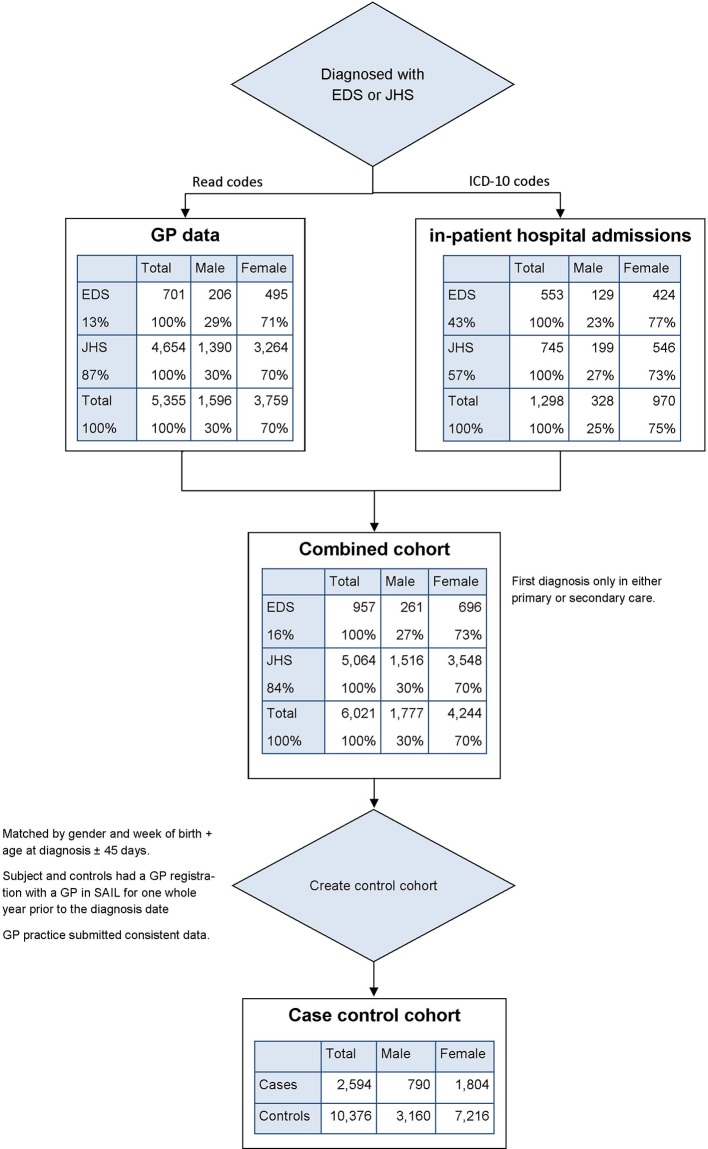
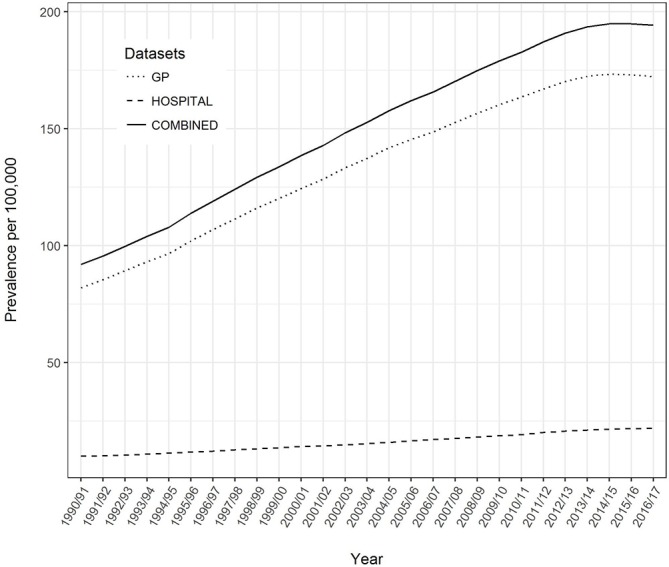
- The combined cohort contained 6021 distinct individuals (70% women, 30% men): 5064 (84%) coded with JHS and 957 (16%) with EDS. In 2016/2017, 4598 people had an EDS/JHS diagnosis first appearing in primary care (172 per 100 000) and 711 in secondary care (22 per 100 000), yielding a combined diagnosed point prevalence of 194.2 per 100 000.
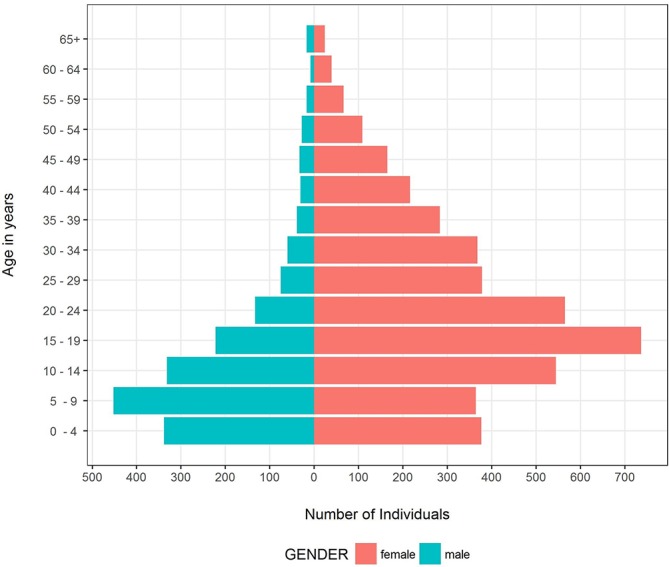
- Mean age at diagnosis differed by 8.5 years between men and women (95% CI: 7.70 to 9.22); 72% of men were diagnosed during childhood (<18 years) versus 41% of women. Age at first diagnosis peaked at 5–9 years for men and 15–19 years for women.
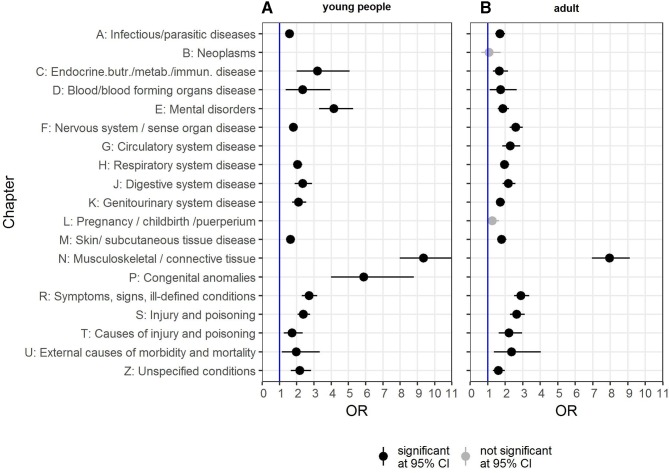
- In the 12 months before and after first coded diagnosis, young people (<18 years) had significantly more additional diagnoses in 16 of 20 Read code disease categories than controls; top odds were musculoskeletal (OR 9.36, 95% CI: 7.98 to 11.00), congenital anomalies (OR 5.89, 95% CI: 3.98 to 8.80) and mental disorders (OR 4.16, 95% CI: 3.29 to 5.27). Adults (≥18 years) also had significantly more diagnoses in 16 of 20 categories; top odds were musculoskeletal (OR 7.95, 95% CI: 6.95 to 9.12), congenital anomalies (OR 5.18, 95% CI: 2.78 to 9.78) and symptoms/signs/ill-defined conditions (OR 2.9, 95% CI: 2.5 to 3.37).
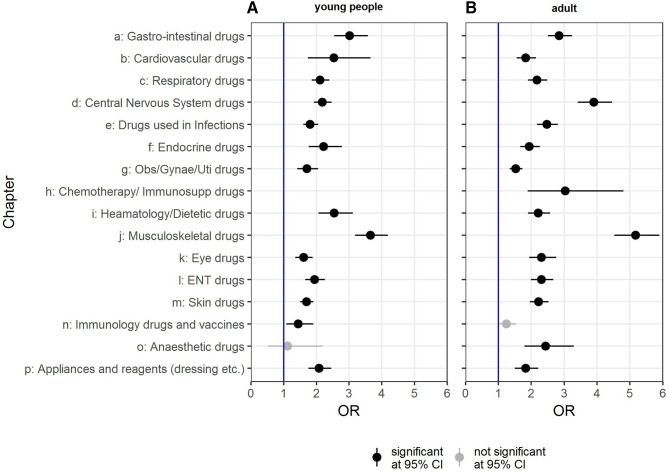
- Prescription odds were higher in 14 of 17 Read code categories for young people and 15 of 17 for adults. Top prescription categories for young people were musculoskeletal drugs (OR 3.65, 95% CI: 3.18 to 4.18), gastrointestinal drugs (OR 3.02, 95% CI: 2.54 to 3.58) and haematology/dietetic drugs (OR 2.54, 95% CI: 2.06 to 3.11); for adults they were musculoskeletal drugs (OR 5.17, 95% CI: 4.53 to 5.9), central nervous system drugs (OR 3.9, 95% CI: 3.41 to 4.46) and chemotherapy/immunosuppressant drugs (OR 3.03, 95% CI: 1.89 to 4.8).
Methods
- Nationwide linked electronic cohort and nested case–control study using the Secure Anonymised Information Linkage (SAIL) databank, with routinely collected primary care (Read Version 2) and hospital admissions (ICD-10) data in Wales from 1 July 1990 to 30 June 2017. Primary care data covered about 80% of coded GP information in Wales; Welsh Demographics Service and Patient Episode Database for Wales covered the whole of Wales.
- Cohort: Welsh residents with a Read Version 2 or ICD-10 diagnostic code of EDS or JHS in primary or secondary care; primary and hospital datasets were combined, duplications identified, and the earliest diagnosis date kept for individuals in both. Prevalence denominators were adjusted for people registered and living in Wales and, for primary care, whose GP practice contributed data to SAIL.
- Case–control: each case was matched to four controls of the same gender and similar age (within 45 days of the week of birth). Cases and controls required uninterrupted GP registration for 1 year before and after the relevant diagnosis (or died during follow-up), registration with a SAIL-contributing GP, and consistent GP data recording; controls with any diagnosed hereditary connective tissue disorder were excluded. ORs were calculated using Read chapters excluding EDS/JHS codes, and results affecting at least 5 cases or 20 controls were visualised.
Limitations
- Stated: the study cannot quantify how many people with hEDS or HSD remain undiagnosed, nor comment on the reliability of the diagnoses. Most subjects (89%) were identified via primary care, so studies not using primary care data may underestimate prevalence; data coverage for the first couple of years is less comprehensive; and comparisons were only at Read chapter level.
- Stated: it is likely that the majority of cases were not actually diagnosed in primary care but had entries created through secondary care contacts, such as outpatient appointments or musculoskeletal assessment clinics, while coded data from those sources are lacking.
- Evident from the text: the nested case–control cohort was slightly older than the overall cohort (data not shown), and strict selection criteria reduced the number of cases and controls available for analysis; diagnoses were based on coded records without clinical validation, and the study notes possible coding bias during early years of GP computerisation.
Model-written summary. Check it against the paper before relying on it.
Integrity signals
Registry
Cites
Statistics
Figures
Verification
Claims the paper makes
6 Valid · 1 Not valid · 9 Not checked · 39 Own results and interpretations
Every source the paper cites for this claim was checked and supports it.
In the paper
“Although a snapshot of Read chapters codes that are more prevalent in our JHS/EDS cohort does not allow us to look at specific diagnoses and prescriptions, they can all be matched to conditions associated with EDS/JHS in the literature, for instance pain, fatigue, cardiovascular, gastrointestinal and gynaecological disorders, dysautonomia, mast cell activation as well as urinary tract infections.7”
§ Diagnosed prevalence of Ehlers-Danlos syndrome and hypermobility spectrum disorder in Wales, UK: a national electronic cohort study and case–control comparison > Discussion > Strengths and limitations
What the sources say
- Supportedcites [7] Tinkle B, Castori M, Berglund B, et al Hypermobile Ehlers-Danlos syndrome (a.k.a. Ehlers-Danlos syndrome type III and Ehlers-Danlos syndrome hypermobility type): clinical description and natural history. Am J Med Genet C Semin Med Genet 2017; 175: 48– 69. 10.1002/ajmg.c.31538 28145611 source
The paper describes pain and fatigue (clinical description), gastrointestinal involvement (Gastrointestinal Disorders), cardiovascular symptoms and dysautonomia (Dysautonomia), gynecologic complaints (Gynecologic Issues), and urinary tract infections (Urinary System) in hEDS/JHS. Its Mast Cell Activation Disorder section discusses a possible association, while explicitly saying whether mast cell activation syndrome is more common in hEDS remains unclear. The paper supports the listed literature matches; it does not assess the citing authors’ Read codes. (LLM, conf=0.86)
plainstates an association- Asserted: passes — The authors put it forward as true.
- Checkable: passes — It can be checked against evidence.
- Load-bearing: unclear — It is unclear whether the paper’s conclusions depend on it.
- Based: passes — The paper gives a reason why it holds.
- Supported
The cited sources support only part of this claim — read each source’s verdict below.
In the paper
“It has been shown that using linked health data is an economic and effective alternative to performing de novo longitudinal studies, including rare conditions.24 25”
§ Diagnosed prevalence of Ehlers-Danlos syndrome and hypermobility spectrum disorder in Wales, UK: a national electronic cohort study and case–control comparison > Introduction
What the sources say
- Not checked yetcites [24] Holman C D'Arcy J, Bass JA, Rosman DL, et al A decade of data linkage in Western Australia: strategic design, applications and benefits of the WA data linkage system. Australian Health Review 2008; 32: 766– 77. 10.1071/AH080766 18980573 source
- Partly supportedcites [25] Cooksey R, Husain MJ, Brophy S, et al The cost of ankylosing spondylitis in the UK using linked routine and patient-reported survey data. PLoS One 2015; 10: e0126105 10.1371/journal.pone.0126105 26185984 PMC4506082 sourceExperimental — accuracy not yet measured
The Discussion (page not specified) says linked routine and patient-reported data provide comprehensive information for estimating ankylosing spondylitis costs, supporting the method's effectiveness for that purpose. The paper does not establish that linkage is cheaper than a de novo longitudinal study or address its use for rare conditions; searches for those comparisons found no supporting passage. (LLM, conf=0.83)
boostedstates a cause- Asserted: passes — The authors put it forward as true.
- Checkable: passes — It can be checked against evidence.
- Load-bearing: passes — The paper’s conclusions depend on it.
- Based: passes — The paper gives a reason why it holds.
The cited sources that could be checked couldn’t confirm or dispute this claim.
In the paper
“It is possible to extrapolate a combined population prevalence figure for JHS and EDS for Sweden5 of around 120 per 100 000 from a study focusing on comorbid mental health issues, but no investigators have thus far set out to investigate the combined diagnosed prevalence of JHS/EDS within a population.”
§ Diagnosed prevalence of Ehlers-Danlos syndrome and hypermobility spectrum disorder in Wales, UK: a national electronic cohort study and case–control comparison > Introduction
What the sources say
- Could not verifycites [5] Cederlöf M, Larsson H, Lichtenstein P, et al Nationwide population-based cohort study of psychiatric disorders in individuals with Ehlers–Danlos syndrome or hypermobility syndrome and their siblings. BMC Psychiatry 2016; 16 10.1186/s12888-016-0922-6 PMC4932739 27377649 sourceExperimental — accuracy not yet measured
The citation is attached to the Swedish extrapolation, not directly to the statement that no investigators have studied combined diagnosed prevalence. The Results give separate counts for EDS and hypermobility syndrome, and the Discussion describes the study’s focus as psychiatric disorders. Neither section establishes whether other investigators have studied combined diagnosed prevalence. (LLM, conf=0.73)
plain- Asserted: passes — The authors put it forward as true.
- Checkable: passes — It can be checked against evidence.
- Load-bearing: passes — The paper’s conclusions depend on it.
- Based: passes — The paper gives a reason why it holds.
- Could not verify
A result the paper reports from its own data — it cites no other source for it, so there is none to check. The quote shows it is in the paper.
In the paper
“During this year, 2 668 902 people were registered with a GP in Wales submitting data to SAIL, of whom 4598 had a diagnostic code of EDS/JHS which first appeared in the primary care data (172 in 100 000).”
§ Diagnosed prevalence of Ehlers-Danlos syndrome and hypermobility spectrum disorder in Wales, UK: a national electronic cohort study and case–control comparison > Results > Demographics of combined EDS/JHS cohort
plain- Asserted: passes — The authors put it forward as true.
- Checkable: passes — It can be checked against evidence.
- Load-bearing: passes — The paper’s conclusions depend on it.
- Based: passes — The paper gives a reason why it holds.
- Rests on an assumption not shown here.
A result the paper reports from its own data — it cites no other source for it, so there is none to check. The quote shows it is in the paper.
In the paper
“A further 711 people out of the 3 239 153 registered with any GP in Wales during 2016/2017 had an EDS/JHS diagnosis which first appears in secondary care data (22 in 100 000).”
§ Diagnosed prevalence of Ehlers-Danlos syndrome and hypermobility spectrum disorder in Wales, UK: a national electronic cohort study and case–control comparison > Results > Demographics of combined EDS/JHS cohort
plainn = 711- Asserted: passes — The authors put it forward as true.
- Checkable: passes — It can be checked against evidence.
- Load-bearing: passes — The paper’s conclusions depend on it.
- Based: passes — The paper gives a reason why it holds.
- Rests on an assumption not shown here.
15 more claims
Create a free account to see all 55 claims and to verify the 13 references still open.
- Probably not a substantial claim. 20
- It may state two separate claims as one. 22
- The quote only partly states this claim. 2
Claims other papers make about this one
Each is checked against this paper’s own text: does it say what the citing paper says it does?
The source backs part of the claim, not all of it — or backs it for a different population, condition or comparison.
In the citing paper
“It is estimated that the prevalence of HSD/hEDS is greater than 1:500 [8]”
From Meta-Analysis: Chronic Gastrointestinal Symptoms and Comorbidities in Hypermobile Ehlers-Danlos Syndrome and Hypermobility Spectrum Disorders (2026) · cites this paper as [8]
Experimental — accuracy not yet measuredThe source backs part of the claim, not all of it — or backs it for a different population, condition or comparison.
In the citing paper
“With this dataset, we can confirm that hEDS is not rare [46]: 42% of the patients referred to the hypermobility-dedicated consultation met the 2017 diagnostic criteria.”
From Are patients with hypermobile Ehlers–Danlos syndrome or hypermobility spectrum disorder so different? (2021) · cites this paper as [46]
Experimental — accuracy not yet measuredThe source backs part of the claim, not all of it — or backs it for a different population, condition or comparison.
In the citing paper
“These characteristics reflect those of the Registry ( Table 1 ), and the gender and race proportions are representative of the patient population more broadly. 12 , 13”
From Comorbidity, misdiagnoses, and the diagnostic odyssey in patients with hypermobile Ehlers-Danlos syndrome (2023) · cites this paper as [13]
Experimental — accuracy not yet measuredThe cited source says what the claim attributes to it.
In the citing paper
“Clinical features of HSD and hEDS are not limited to musculoskeletal and cutaneous symptoms (9). Associations exist with cardiovascular autonomic dysfunction (12), gastrointestinal difficulties (13), fatigue (12) and pain syndromes (14), gynecological and obstetric problems (15, 16), and mental health concerns (17–19).”
From Joint Hypermobility Links Neurodivergence to Dysautonomia and Pain (2022) · cites this paper as [9]
The cited source says what the claim attributes to it.
In the citing paper
“Results for the boys in our sample are in line with the recently published cohort study where the age at first joint hypermobility syndrome (JHS)/EDS diagnosis peaked in the age group 5–9 years for a male.”
6 more claims about this paper
Create a free account to see every claim other papers make about this one.
Citations
Cites
International Statistical Classification of Diseases and Related Health Problems
Eisfeld, J. (2014) · TSQ: Transgender Studies Quarterly · doi:10.1215/23289252-2399740 · Cited by 3,570
(1985) · Annals of Internal Medicine · doi:10.7326/0003-4819-103-3-486_3 · Cited by 2,056
The 2017 international classification of the Ehlers–Danlos syndromes
Malfait, F., Francomano, C., Byers, P., Belmont, J., Berglund, B., Black, J., Bloom, L., Bowen, J. M., Brady, A. F., Burrows, N. P., et al. (2017) · American Journal of Medical Genetics Part C: Seminars in Medical Genetics · doi:10.1002/ajmg.c.31552 · Cited by 1,936
White, J. M. L., Kita, M., Krpelanová, E., Alsokhn, C., Costa, M. L., Fibbe, W., Gaebel, W., Reed, G. M., Lokuhetty, D., Woolf, A., et al. (2026) · Bulletin of the World Health Organization · doi:10.2471/blt.25.294650 · Cited by 834
(2000) · PubMed · Cited by 738
The SAIL databank: linking multiple health and social care datasets
Lyons, R. A., Jones, K. H., John, G., Brooks, C. J., Verplancke, J.-P., Ford, D. V., Brown, G., & Leake, K. (2009) · BMC Medical Informatics and Decision Making · doi:10.1186/1472-6947-9-3 · Cited by 638 · cited 2×
“We identified Welsh residents with a Read Version 2 27 diagnostic code of EDS or JHS in primary care data or International Statistical Classification of Diseases and Related Health Problems, 10th Revision (ICD-10) diagnostic codes 28 in secondary care data (hospital admissions) between 1 July 1990…”
Self-citationHolman, C. D. J., Bass, J. A., Rosman, D. L., Smith, M. B., Semmens, J. B., Glasson, E. J., Brook, E. L., Trutwein, B., Rouse, I. L., Watson, C. R., et al. (2008) · Australian Health Review · doi:10.1071/ah080766 · Cited by 507 · cited 1×
“26”
The Read clinical classification.
Chisholm, J. (1990) · BMJ · doi:10.1136/bmj.300.6732.1092 · Cited by 504
Tinkle, B., Castori, M., Berglund, B., Cohen, H., Grahame, R., Kazkaz, H., & Levy, H. (2017) · American Journal of Medical Genetics Part C: Seminars in Medical Genetics · doi:10.1002/ajmg.c.31538 · Cited by 499 · cited 2×
“…us to look at specific diagnoses and prescriptions, they can all be matched to conditions associated with EDS/ JHS in the literature, for instance pain, fatigue, cardio-vascular, gastrointestinal and gynaecological disorders, dysautonomia, mast cell activation as well as urinary tract infections.”
The Ehlers–Danlos syndrome, a disorder with many faces
De Paepe, A., & Malfait, F. (2012) · Clinical Genetics · doi:10.1111/j.1399-0004.2012.01858.x · Cited by 379 · cited 1×
“Copyright a n d m o r al right s for p u blications m a d e available in ORCA a r e r e t ain e d by t h e copyrig ht hold e rs.”
Research works printed but not linked: 2
- Grahame R, Hakim AJ Joint hypermobility syndrome is highly prevalent in general rheumatology clinics, its occurrence and clinical presentation being gender, age and race-related. Annals of the Rheumatic Diseases 2006; 65: 263– 63.
- 10.1002/(sici)1096-8628(19980428)77:1 · doi:10.1002/(sici)1096-8628(19980428)77:1
Cited by
Items 101–200 of 274
Clark, N., Johnson, M., Rangan, A., Kottam, L., Hogarth, A., Scott, S., & Swainston, K. (2024) · Clinical Rheumatology · doi:10.1007/s10067-024-07172-3 · Cited by 7
Genetic diagnosis of the Ehlers-Danlos syndromes
Zschocke, J., Demirdas, S., & van Dijk, F. S. (2024) · Medizinische Genetik · doi:10.1515/medgen-2024-2061 · Cited by 9
Sokol, O. E., Biggs, E. E., Berger, A. S., Simons, L. E., & Bhandari, R. P. (2025) · Children · doi:10.3390/children12020170 · Cited by 6
“EDS, including hEDS, has historically been considered a rare disease; however, emerging research suggests that the prevalence of EDS is underestimated and challenges the assertion that EDS is a rare disease [2,3].”
Tudini, F. T., Levine, D. F., Healy, M., Jordon, M., & Chui, K. K. (2023) · Frontiers in Pain Research · doi:10.3389/fpain.2023.1089748 · Cited by 6
Anderson, L. K., & Lane, K. R. (2023) · Journal of the American Association of Nurse Practitioners · doi:10.1097/jxx.0000000000000900 · Cited by 6
“Without a de fi nitive biomarker for diagnosis and clinicians ’ limited understanding of hEDS/HSD, researchers believe that prevalence estimates are low due to underdiagnosis (Demmler et al., 2019;).”
BackgroundHypermobility spectrum disorders and active migraine in Israeli adolescents: A nationwide study
Zloof, Y., Simchoni, M., Derazne, E., Tsur, A. M., Tzur, D., Braun, M., Amarilyo, G., Shlaifer, A., Honig, A., & Braun‐Moscovici, Y. (2023) · Headache The Journal of Head and Face Pain · doi:10.1111/head.14526 · Cited by 7
Ewer, E., Kazkaz, H., Ninis, N., Rowe, P. C., Pauw, R. D., Tang, E., Barrett, C., Rombaut, L., Wandele, I. D., & Simmonds, J. V. (2024) · The Journal of Pediatrics Clinical Practice · doi:10.1016/j.jpedcp.2024.200098 · Cited by 8
Variants in the Kallikrein Gene Family and Hypermobile Ehlers-Danlos SyndromePreprint
Gensemer, C., Beck, T. C., Guo, L., Petrucci, T., Morningstar, J. E., Kornblau, I., Byerly, K., Biggs, R. M., Weintraub, A., Moore, K. S., et al. (2024) · Research Square · doi:10.21203/rs.3.rs-4547888/v1 · Cited by 7
Zloof, Y., Peretz, L., Braun, M., Simchoni, M., Tsur, A. M., Tzur, D., Derazne, E., Ben‐Tov, A., Pinhas‐Hamiel, O., Amarilyo, G., et al. (2023) · Journal of Gastroenterology and Hepatology · doi:10.1111/jgh.16341 · Cited by 5
“25,26 The prevalence of 0.3% reported here is consistent with the latest studies.”
ResultInfluentialNeurobiological and neuropsychological disturbance in EDS
Westerman, M., Kafkas, A., Parry‐Jones, A., Strong, S., Retzler, C., & Hallam, G. (2025) · Frontiers in Neurology · doi:10.3389/fneur.2025.1648702 · Cited by 6
Leinoe, E. B., Fridriksdottir, H., Rasmussen, A. Ø., Funding, E., Sørensen, A. L. T., Kampmann, P., Lykkesfeldt, J., & Rossing, M. (2024) · Haemophilia · doi:10.1111/hae.15099 · Cited by 5
Comorbidities and neurosurgical interventions in a cohort with connective tissue disorders
Ruhoy, I. S., Bolognese, P. A., Rosenblum, J. S., Dass, R. A., Nayyer, N. S., Wood, J. D., & Biggins, J. B. (2025) · Frontiers in Neurology · doi:10.3389/fneur.2024.1484504 · Cited by 7
Considerations for lactation with Ehlers-Danlos syndrome: a narrative review
Francis, J., & Dickton, D. (2022) · International Breastfeeding Journal · doi:10.1186/s13006-021-00442-9 · Cited by 6
“While it was once thought to be an extraordinarily rare condition, the prevalence of EDS using newer estimation models could be as common as 194 per 100,000 in 2016 / 2017 [11].”
BackgroundOrthognathic Surgery in Ehlers-Danlos Syndrome: Review of the Literature and Case Report
DeLeonibus, A., Bogart, J., Gharb, B. B., & Rampazzo, A. (2023) · The Cleft Palate-Craniofacial Journal · doi:10.1177/10556656231152632 · Cited by 5
Oral Health-Related Quality of Life in Different Subtypes of Ehlers-Danlos Syndrome
Balke, J., Bohner, L. O. L., Köppe, J., Jackowski, J., Oelerich, O., & Hanisch, M. R. (2023) · International Journal of Environmental Research and Public Health · doi:10.3390/ijerph20032218 · Cited by 5
“may affect more people than previously thought [6].”
BackgroundTrudgian, R., & Flood, T. (2024) · PLoS ONE · doi:10.1371/journal.pone.0307574 · Cited by 7
Ewer, E., Pauw, R. D., Kazkazk, H., Ninis, N., Rowe, P. C., Simmonds, J. V., & Wandele, I. D. (2024) · Clinical Rheumatology · doi:10.1007/s10067-024-07071-7 · Cited by 7
“Whilst the exact prevalence of HSD/hEDS is difficult to quantify due to varying terminology and diagnostic criteria, it is thought to affect around 1 in 500 patients in the UK [21].”
BackgroundNikolaeva, E. A., & Semyachkina, A. N. (2021) · Rossiyskiy Vestnik Perinatologii i Pediatrii (Russian Bulletin of Perinatology and Pediatrics) · doi:10.21508/1027-4065-2021-66-1-22-30 · Cited by 6
Retinal arterial tortuosity in Ehlers–Danlos syndromes
Ghoraba, H. H., & Moshfeghi, D. M. (2022) · Eye · doi:10.1038/s41433-022-02278-x · Cited by 5
“Other studies have reported significantly higher rates up to 10:5000 [2].”
BackgroundChild Abuse, Misdiagnosed by an Expertise Center: Part I—Medico-Social Aspects
Vlaming, M., Sauer, P. J. J., Janssen, E. P. F., Koppen, P. J. V., Bruijninckx, C. M. A., van Zelst, M. A.-Z., Neumann, H. A. M., & van Gemert, M. J. C. (2023) · Children · doi:10.3390/children10060963 · Cited by 8
“The incidence of the EDS/Hypermobility Syndrome is not well known, but is reported to be between about 1:5000 [24] and 1:500 [25], see also Malfait et al.”
BackgroundLogarbo, B. P., Yang, M., Longo, M. T., Kingry, C., & Courseault, J. (2023) · PM&R · doi:10.1002/pmrj.13120 · Cited by 7
A clinical update on hypermobile Ehlers-Danlos syndrome during pregnancy, birth and beyond
Pezaro, S., Pearce, G., & Reinhold, E. J. (2021) · British Journal of Midwifery · doi:10.12968/bjom.2021.29.9.492 · Cited by 7
Self-citationClark, N., Johnson, M., Rangan, A., Swainston, K., & Kottam, L. (2024) · Systematic Reviews · doi:10.1186/s13643-024-02452-0 · Cited by 5
Lindholm, S., Petersson, S., Molander, P., & Björk, M. (2025) · European Journal of Pain · doi:10.1002/ejp.70000 · Cited by 4
Foster, J., Stephens-Lewis, D., & Schenke, K. C. (2025) · Disability and Rehabilitation · doi:10.1080/09638288.2025.2458187 · Cited by 6
“Whilst this is largely reflective of the wider population of hEDS (who are typically white females [72], it is important to be cautious when generalising to other ethnicities and genders.”
Svendsen, C., Vivekanantha, P., Braunstein, D., Raja, S., Jagdeo, V., Duong, A., Simunovic, N., & Ayeni, O. R. (2025) · Current Reviews in Musculoskeletal Medicine · doi:10.1007/s12178-025-09979-2 · Cited by 4
“These conditions affect approximately one in 5000 individuals globally according to some estimates, though these vary significantly due to diagnostic challenges and phenotypic heterogeneity [3].”
Lamari, M. M., Lamari, N. M., de Medeiros, M. P., Giacomini, M. G., Santos, A. B., Filho, G. M. D. A., Goloni‐Bertollo, E. M., & Pavarino, É. C. (2024) · Children · doi:10.3390/children11030344 · Cited by 5
“The condition is more frequent in women and children [15,16] and individuals of African descent [17].”
BackgroundIncreased Opioid Use in Patients With Ehlers-Danlos Syndrome Before and After Total Hip Arthroplasty
Kelly, M., Kagan, R. P., & Yoo, J. U. (2024) · Arthroplasty Today · doi:10.1016/j.artd.2024.101390 · Cited by 4
Kozyra, M., Kostyun, R. O., & Strecker, S. E. (2024) · Medicine · doi:10.1097/md.0000000000039212 · Cited by 8
“[16,17] It is very difficult to diagnose hypermobile hEDS and HMS in children under the age of 5 as they present with higher Beighton scores and exhibit more flexibility than adults.”
BackgroundShirvani, P., Shirvani, A., & Holick, M. F. (2025) · Current Issues in Molecular Biology · doi:10.3390/cimb47020134 · Cited by 7
“Recent epidemiological data suggest hEDS may be more prevalent than previously thought [3,4].”
Yasukawa, S., Uehara, M., Suzuki, T., Nakano, M., Kosho, T., Nakamura, Y., & Takahashi, J. (2020) · Modern Rheumatology Case Reports · doi:10.1080/24725625.2020.1799493 · Cited by 4
Español, E., Soto, F., Martinez, S., & Españ, E. (2023) · Revista Científica Odontológica · doi:10.21142/2523-2754-1103-2023-164 · Cited by 5
“Existen 13 subtipos de SED, de los cuales el SEDh es el más frecuente (80-90% de los pacientes) (2).”
BackgroundPearce, G., Bell, L., Magee, P., & Pezaro, S. (2023) · International Journal of Environmental Research and Public Health · doi:10.3390/ijerph20206955 · Cited by 4
“In a study of healthcare records, 1 in 500 people were found to have a diagnosis of either EDS or Joint Hypermobility Syndrome (JHS) on their medical records [6], where individuals previously diagnosed with JHS may now be described as having hEDS or HSD.”
BackgroundSomers, C., McCusker, C. G., Prendeville, P., & Kelleher, S. (2024) · Research in Developmental Disabilities · doi:10.1016/j.ridd.2024.104789 · Cited by 6
Petrucci, T., Guilhaumou, S., Berrandou, T.-E., Gensemer, C., Georges, A. B., Huff, M. L., Fustier, M., Esmael, A., Henry, J., Jaye, O., et al. (2025) · medRxiv · doi:10.1101/2025.09.19.25336146 · Cited by 7
Mind the gaps: therapists’ experiences of managing symptomatic hypermobility in Scotland
Dockrell, D. M., Berg, K. M., & Ralston, S. H. (2021) · Rheumatology Advances in Practice · doi:10.1093/rap/rkab046 · Cited by 3
Fuqua, A. A., Worden, J. A., Ross, B. J., Bonsu, J. M., & Premkumar, A. (2024) · The Journal of Arthroplasty · doi:10.1016/j.arth.2024.07.008 · Cited by 3
Hauser, R. A., Griffiths, M., Watterson, A., Matias, D. P., & Rawlings, B. R. (2026) · Journal of Clinical Medicine · doi:10.3390/jcm15062212 · Cited by 5
Wright, T. S., & Cygan, P. H. (2023) · Obstetrics and Gynecology · doi:10.1097/aog.0000000000005262 · Cited by 4
Gunendran, T., & DWARAKANATH, N. U. (2023) · Cureus · doi:10.7759/cureus.45713 · Cited by 3
“The increasing incidence of prescription opioid use disorders (OUDs) and opiate-related overdose deaths is a significant cause for worry.”
BackgroundInfluentialImaging modalities for atraumatic shoulder hypermobility: a scoping review
Diep, D., Gemae, M. R., Farag, J., Tay, M. R. J., Mohankumar, R., & Mittal, N. (2024) · Skeletal Radiology · doi:10.1007/s00256-024-04816-y
“No age restrictions were applied given that shoulder hypermobility is often observed in genetic syndromes such as hEDS, which have an early age of diagnosis [15].”
Sheehan, D., Oliemans, J. P., Golden, D. W., Walls, K. D., Bennett, E. C., Skaper, S. J., Asmussen, M. J., Manocha, R. H. K., & Fletcher, J. R. (2025) · Clinical Biomechanics · doi:10.1016/j.clinbiomech.2025.106695 · Cited by 4
Chiu, W.-C., Chen, S., Lo, M.-C., & Kuo, H.-T. (2020) · BMC Pediatrics · doi:10.1186/s12887-020-02386-1 · Cited by 3
Bernhoff, G., Huhmar, H., & Käll, L. B. (2021) · Journal of Back and Musculoskeletal Rehabilitation · doi:10.3233/bmr-210081 · Cited by 4
Jeong, H., Engel, J. M., Muriello, M. J., Basel, D., & Slavens, B. A. (2024) · Gait & Posture · doi:10.1016/j.gaitpost.2024.02.007 · Cited by 3
Chew, M. T., İlhan, E., Nicholson, L. L., Kobayashi, S., & Chan, C. L. (2024) · Disability and Rehabilitation · doi:10.1080/09638288.2024.2351180 · Cited by 3
“Population studies suggest that their collective prevalence may be as high as 1 in 500 [23].”
Garcia, N., Lytch, A., Cramer, E., Black, W. R., & Jones, J. T. (2024) · Archives of Rehabilitation Research and Clinical Translation · doi:10.1016/j.arrct.2024.100416 · Cited by 4
Hypothesis: Young infant bone strength is a multifactorial trait
Miller, M. E. (2025) · Medicine · doi:10.1097/md.0000000000041701 · Cited by 3
“Prematurity: 10% [18] 6. h-EDS: 0.2% [19] 7.”
InfluentialHalverson, C. M. E., & Doyle, T. A. (2023) · Disability and Rehabilitation · doi:10.1080/09638288.2023.2200039 · Cited by 6
“Hypermobile Ehlers–Danlos Syndrome is the most common of the 13 types, accounting for approximately 84% of all patients with EDS [6].”
BackgroundGuedry, S. E., Langley, B. O., Schaefer, K., & Hanes, D. A. (2024) · Disability and Rehabilitation · doi:10.1080/09638288.2024.2314713 · Cited by 5
“It is estimated that 56% of patients are misdiagnosed and that 70% receive inappropriate medical treatments and diagnostic delays upward of 28 years [8].”
Wesley, A., Bray, P., Pacey, V., Chan, C. L., & Nicholson, L. L. (2022) · American Journal of Occupational Therapy · doi:10.5014/ajot.2022.049282 · Cited by 4
“H eritable disorders of connective tissue (HDCTs) are a rare and heterogeneous group of disorders with a prevalence of up to 22 per 10,000 (Demmler et al., 2019; Mueller et al., 2016, 2018).”
Otolaryngologic sequelae of Ehlers Danlos Syndrome in pediatric patients
Cottone, C., Nanu, D. P., Gawel, E. M., Corbin, A. F., Clausen, S., & Carr, M. M. (2024) · International Journal of Pediatric Otorhinolaryngology · doi:10.1016/j.ijporl.2024.111959 · Cited by 2
Mathena, S. A., Allen, R. M., Laukaitis, C. M., & Andrews, J. (2025) · Frontiers in Neurology · doi:10.3389/fneur.2024.1499582 · Cited by 2
Subramanian, T., Uzzo, R. N., Lama, J. E., Mazzucco, M., Ortiz, S., & Gausden, E. B. (2025) · The Journal of Arthroplasty · doi:10.1016/j.arth.2025.01.018 · Cited by 2
A case of massive hematoma: reflections on hypermobile Ehlers-Danlos syndrome
Liu, Q., Zeng, G., Xiong, Y., & Xu, C. (2025) · Frontiers in Medicine · doi:10.3389/fmed.2025.1514349 · Cited by 2
Conditions Associated with Median Arcuate Ligament Syndrome: POTS, MCAS, EDS
DeCicco, J. P., Johnson, J., & Wilson, R. (2025) · Springer eBooks · doi:10.1007/978-3-031-80740-4_6 · Cited by 2
Kaabi, N. A., Camacho, E., Orchanian‐Cheff, A., Silano, V., McGillis, L., Truong, W. T., Reid, W. D., Chow, C., Ryan, C. M., Slepian, P. M., et al. (2025) · Journal of Clinical Medicine · doi:10.3390/jcm14124126 · Cited by 2
Tariq, A., Khan, M. N., Jamali, A. G., Basra, M. A., Mahato, A., Imran, S. M., Mohsin, Z., Singla, S., Mirani, I. K., Asmat, U., et al. (2025) · Cureus · doi:10.7759/cureus.86123 · Cited by 3
“It also released other comorbidities that were related to the musculoskeletal system, including mental health and gastrointestinal disorders [4].”
Pelvic floor disorders in Ehlers Danlos syndrome compared to control population
Bonglack, M. N., Hoehn, J. M., Ray, M. M., Carrel-Lammert, M. H., Lewis, K. E., Yeung, J., Pauls, R. N., & Crisp, C. C. (2025) · Discover Medicine · doi:10.1007/s44337-025-00385-8 · Cited by 3
“[3].”
Lau, J., Kaelber, D. C., & Otteson, T. D. (2025) · International Journal of Pediatric Otorhinolaryngology · doi:10.1016/j.ijporl.2025.112460 · Cited by 3
Orthopaedic Manifestations in Hypermobile Ehlers-Danlos Syndrome
Eichinger, J. K., Byrd, R. L., Bailey, E., Reis, R. J., Daylor, V., Schiessl, M., Gensemer, C., Friedman, R. J., Patel, S. J., & Norris, R. A. (2025) · Journal of Bone and Joint Surgery · doi:10.2106/jbjs.24.01106 · Cited by 4
Rauterberg, J., Hock, M., Kernich, N., Shukri, A., Klapproth, H., Löw, V., Henning, M., & Tantcheva‐Poór, I. (2025) · Orphanet Journal of Rare Diseases · doi:10.1186/s13023-025-03937-4 · Cited by 3
“These demographics are in accordance with previous studies showing that hEDS constitutes 80 to 90% of all EDS and that up to 80% of the hEDS/HSD patients are females [6, 13–16].”
Platelet defects in patients and mice with Ehlers-Danlos syndrome
Kumskova, M., Flora, G. D., Nayak, M. K., Budnik, I., Jain, A., Patel, R. B., Jha, A., Ghatge, M., Chauhan, N., Michael, J. V., et al. (2025) · Blood · doi:10.1182/blood.2025029912 · Cited by 3
Golden, D. W., Low, J. L., Daun, J. T., Jones, C. A., Dennett, L., Culos-Reed, S. N., & Manocha, R. H. K. (2026) · JMIR Research Protocols · doi:10.2196/80394 · Cited by 2
“While the true prevalence of these conditions is unclear and thought to be underestimated [2], the combined prevalence of HSD/ hEDS has been reported to be 1 in 500 (Wales, United Kingdom), and recent unpublished data have shown a prevalence of 1 in 227 (Northumberland, United Kingdom) [1,3].”
Sexual Dimorphism in Allergic and Mast Cell-Associated Diseases
Kotha, A., Maldonado, T. D., Hamze, H., Hussain, Z. Y., Gobinathan, N., Yao, A. Z., Abudulkadir, M., Ching, J. M., & Ryan, J. J. (2026) · Clinical Reviews in Allergy & Immunology · doi:10.1007/s12016-026-09150-w · Cited by 2
“Similarly, EDS patients are approximately 70% female [249].”
Ahmed, A., Paudel, B., & Sharma, A. (2026) · Digestive Diseases and Sciences · doi:10.1007/s10620-026-09958-8 · Cited by 2
“In 2019, Demmler et al. reported a prevalence of approximately 0.2% among 6021 patients diagnosed with either Ehlers-Danlos syndrome (EDS) or Joint Hypermobility Syndrome (JHS) in Wales [7].”
InfluentialRen, R., Chen, T., Illescas, A., Yin, C., Chan, W., Candan, B., Poeran, J., Malhotra, A., Memtsoudis, S. G., Sideris, A., et al. (2026) · Regional Anesthesia & Pain Medicine · doi:10.1136/rapm-2026-107817 · Cited by 2
A Case of Early Osteoarthritis in a Patient With Ehlers-Danlos Syndrome
Tran, S., Thakkar, R., Gillie, M., & Anderson, J. (2022) · Cureus · doi:10.7759/cureus.27069 · Cited by 2
“Hypermobility of the hip joint leads to instability and dysfunction that is associated with early onset osteoarthritis prompting surgical intervention [2,10].”
BackgroundShichman, I., Rajahraman, V., Anil, U., Lin, C. C., Rozell, J. C., & Schwarzkopf, R. M. (2024) · Hip International · doi:10.1177/11207000241234030 · Cited by 2
Jeong, H., Tarima, S. S., Nguyen, A., Qashqai, A., Muriello, M. J., Basel, D., & Slavens, B. A. (2024) · Journal of Biomechanics · doi:10.1016/j.jbiomech.2024.112151 · Cited by 3
The Financial Impact of Ehlers-Danlos Syndromes on Patients in the United States in 2022
Schubart, J. R., Schaefer, É., Mills, S. E., Knight, D. R. T., Shen, C., & Francomano, C. A. (2024) · Mayo Clinic Proceedings Innovations Quality & Outcomes · doi:10.1016/j.mayocpiqo.2024.11.003 · Cited by 3
Chew, M. T., İlhan, E., Nicholson, L. L., Kobayashi, S., Pacey, V., Hakim, A. J., & Chan, C. L. (2025) · European Journal of Pain · doi:10.1002/ejp.70030 · Cited by 4
Berne, J. V., Li, J., Shaheen, E., Politis, C., Peeters, H., & Jacobs, R. (2022) · International Journal of Oral and Maxillofacial Surgery · doi:10.1016/j.ijom.2022.02.004 · Cited by 2
Steiner, L., Bodensteiner, A., & Johnson, N. (2023) · Journal of Orthopedic Research and Therapy · doi:10.29011/2575-8241.001313 · Cited by 2
Emotional and personal characteristics of adolescents with Ehlers–Danlos syndrome
Troitskaya, L. A., Surkova, K. L., Semyachkina, A. N., & Nikolaeva, E. A. (2021) · Rossiyskiy Vestnik Perinatologii i Pediatrii (Russian Bulletin of Perinatology and Pediatrics) · doi:10.21508/1027-4065-2021-66-2-101-104 · Cited by 2
Hypermobility spectrum disorders and migraine in adolescents
Chiang, C. (2023) · Headache The Journal of Head and Face Pain · doi:10.1111/head.14650 · Cited by 2
Translating Research into Change: Reporting the Lived Experience of hEDS and HSD in Scotland
Berg, K. M., Dockrell, D., & Matheson, R. (2024) · doi:10.2218/ed.9781912669837 · Cited by 2
Wilson, F. C., Zangerle, D. J., Darakjian, A. A., Bhutani, M., Fliess, J. J., Gehin, J. M., Strandes, M. W., Hamilton, C., Sledge, H. J., Hodge, D. O., et al. (2026) · Research Square · doi:10.21203/rs.3.rs-8310986/v1 · Cited by 4
Kulin, D., Holtmann, G., Fairlie, T., Staller, K., Nurko, S., Keefer, L., Drossman, D. A., Jones, M. P., Aziz, Q., & Shah, A. (2026) · Alimentary Pharmacology & Therapeutics · doi:10.1111/apt.70856 · Cited by 1
Gaudiani, M. A., Samuel, L. T., Burkhart, R. J., Acuña, A. J., Rosneck, J. T., & Kamath, A. F. (2022) · Archives of Orthopaedic and Trauma Surgery · doi:10.1007/s00402-022-04737-2 · Cited by 1
“Our results showed a mean age of 28 years which is consistent with various studies on joint laxity and hip arthroscopy [27, 30].”
BackgroundResultInfluentialKałuża, B., Rychlík, I., Domański, J., Żuk‐Łapan, A., Babula, E., Iga, P., Jakub, P., Kowalów, E., & Franek, E. (2025) · Journal of Clinical Medicine · doi:10.3390/jcm14030941 · Cited by 1
Shirvani, A., Shirvani, P., Jonah, U., Moore, B. E., & Holick, M. F. (2025) · Biomedicines · doi:10.3390/biomedicines13020469 · Cited by 2
“A study conducted in Wales found a combined occurrence of hEDS and Hypermobility Spectrum Disorder (HSD) of 1 in 500 individuals, with a notable gender disparity as 70% of those diagnosed were female [3]. hEDS follows an autosomal dominant inheritance pattern [4].”
Beckwith, R., & Stephens-Lewis, D. (2025) · Research in Developmental Disabilities · doi:10.1016/j.ridd.2025.105084 · Cited by 1
Butt, M. F., Dervin, H., Hoshino, S., Yazaki, E., Gerard, P., Sweis, R., Sifrim, D. A., Aziz, Q., Zárate-López, N., & Fikree, A. (2026) · Clinical Gastroenterology and Hepatology · doi:10.1016/j.cgh.2026.04.019 · Cited by 1
Goehringer, J., Kosmin, A., Laible, N., & Romagnoli, K. M. (2024) · JMIR Formative Research · doi:10.2196/49720 · Cited by 4
“Historically, hEDS has been considered a rare condition, but there is more recent evidence suggesting that it is substantially more prevalent [9].”
BackgroundSelf-reported Demographics of 154 Hypermobile Ehlers-Danlos Syndrome Patients
Ploeg, A. N., Courseault, J., & Cheng, W. S. (2025) · American Journal of Physical Medicine & Rehabilitation · doi:10.1097/phm.0000000000002766 · Cited by 1
Moon, J.-Y., Inhestern, L., Landskron, N., Barvencik, F., Amling, M., & Oheim, R. (2025) · JBMR Plus · doi:10.1093/jbmrpl/ziaf076 · Cited by 1
“5,6 Although the clinical manifestations of these conditions vary, they share a significant impact on patients’ lives as they are, for example, major contributors to chronic pain, significantly affecting both physical and emotional well-being of the patients.”
Jones, E., & Carrieri, D. (2025) · Disability and Rehabilitation · doi:10.1080/09638288.2025.2517246 · Cited by 4
“However, unlike rarer subtypes of Ehlers–Danlos syndrome (EDS), there are no genetic tests available for definitive diagnosis, and validity of clinical tools is low; as such, the actual prevalence of cases may be far greater [9,10].”
InfluentialVoice Disorders in Ehlers–Danlos Syndrome
Venkatraman, A., Schenck, A., & Thibeault, S. L. (2025) · American Journal of Speech-Language Pathology · doi:10.1044/2025_ajslp-25-00069 · Cited by 2
Montana, P., Le, H. M., Lo, J., Elie, O., Cook, D. L., Hambright, S., & d’Hemecourt, P. A. (2025) · Advances in Integrative Medicine · doi:10.1016/j.aimed.2025.100577 · Cited by 1
Tabernacki, T., McLachlan, L. M., Loria, M., Gupta, S., Banik, S., Mishra, K., & McNamara, M. A. (2025) · LGBT Health · doi:10.1177/23258292251382250 · Cited by 1
“8,9 Recognizing that hEDS and HSD are lifelong, chronic conditions without a cure, the primary outcome was chosen to be the prevalence of hEDS, EDS-NOS, and HSD (Q79.”
InfluentialStafford, L. V., Lynskey, M. T., Schlag, A. K., Nutt, D. J., & Eccles, J. (2025) · Drug Science Policy and Law · doi:10.1177/20503245251398260 · Cited by 1
“It has been recognised that the condition is more prevalent than previously believed (Demmler et al., 2019) whilst being commonly associated with severe and impairing chronic pain (Voermans et al., 2010), prescription drug and opioid use (Schubart et al., 2019) and increased risk of psychiatric…”
Hill, J. C., Cascante, D. C., & Breazeale, J. (2025) · BMJ connections. · doi:10.1136/bmjccgg-2025-000044 · Cited by 1
Foster, J., Walklet, E., & Stephens-Lewis, D. (2025) · Rare · doi:10.1016/j.rare.2025.100107 · Cited by 1
Lower Limb Biomechanical Observations in Hypermobile Children: An Exploratory Case—Control Study
Maarj, M., Pacey, V., Tofts, L., Fellas, A., Clapham, M., & Coda, A. (2025) · International Journal of Environmental Research and Public Health · doi:10.3390/ijerph22121776 · Cited by 1
“Secondly, sex distribution was unbalanced as 72% of the GJH children were girls in this study, which reflects the higher frequency of GJH among females [99,100].”
Kosma, M., Erickson, N., Hinerman, A. L., & Anderson, I. A. (2025) · International Journal of Environmental Research and Public Health · doi:10.3390/ijerph23010055 · Cited by 1
“About 70% of the diagnosed hEDS cases occur among women [19].”
Berg, K. M., & Dockrell, D. (2026) · Disability and Rehabilitation · doi:10.1080/09638288.2026.2646723 · Cited by 1
“A 2019 study from Wales suggested a prevalence of hEDS/HSD of 1 in 500 [9], with a more recent study based in Northumberland reporting an even higher prevalence of 1 in 227 [10].”
Prevalence of Scoliosis in Hypermobile Ehlers-Danlos Syndrome
Gillas, F., Mekki, A., Foy, M., Carlier, R., & Bénistan, K. (2021) · European Medical Journal · doi:10.33590/emj/20-00284 · Cited by 1
Gać, P., Jaworski, A., Karwacki, J., Jarocki, M., Ams, A., & Poręba, R. (2023) · Diagnostics · doi:10.3390/diagnostics13233555 · Cited by 1
“The estimated prevalence of EDS approximates 194.2 cases per 100,000 individuals [3].”
BackgroundInfluentialBesson, L., Kalisch, L., & Baeza‐Velasco, C. (2020) · Kinésithérapie la Revue · doi:10.1016/j.kine.2020.05.004 · Cited by 1
Metadata
- Authors
- Demmler, J. C., Atkinson, M. D., Reinhold, E. J., Choy, E., Lyons, R. A., & Brophy, S. T.
- Affiliations
- Swansea University (GB)
- Royal College of General Practitioners (GB)
- Cardiff University (GB)
- Corresponding author
- Demmler, Joanne C
- Reinhold, Emma J
- Venue
- BMJ Open
- Publisher
- BMJ
- Published
- 2019-11
- Volume
- 9
- Issue
- 11
- Pages
- e031365
- ISSN
- 2044-6055 (ISSN-L)
- PMC
- PMC6858200
- OpenAlex
- W2987538608
- Cited by
- 271
- References
- 41
- Citations by year
- 2026: 35 · 2025: 54 · 2024: 59 · 2023: 47 · 2022: 24 · 2021: 39 · 2020: 10 · 2019: 1
- FWCI
- 11.11
- Type
- journal article
- Language
- en
- Open access
- gold
- doi.org
- Licence
- cc-by
- Locations
- BMJ Open (publishedVersion, cc-by)
- Europe PMC (PubMed Central) (publishedVersion, cc-by)
- PubMed Central (publishedVersion, cc-by)
- PubMed (publishedVersion)
- ORCA Online Research @Cardiff (Cardiff University) (acceptedVersion)
- DOAJ (DOAJ: Directory of Open Access Journals) (submittedVersion)
- HighWire Press Open Archive (submittedVersion)
- Funders
- Medical Research Council (MR/K006525/1, NIWA1)
- Topics
- Life Sciences › Biochemistry, Genetics and Molecular Biology › Genetics › Connective tissue disorders research
- Health Sciences › Health Professions › Physical Therapy, Sports Therapy and Rehabilitation › Musculoskeletal pain and rehabilitation
- Life Sciences › Biochemistry, Genetics and Molecular Biology › Genetics › Genomics and Rare Diseases
- Keywords
- Ehlers-Danlos syndrome, hypermobility spectrum disorders, joint hypermobility syndrome, prevalence, rare diseases, musculoskeletal disorders, comorbidities, prescription drug use, age at diagnosis, sex differences, Wales
- MeSH terms
- Adolescent, Adult, Aged, Child, Ehlers-Danlos Syndrome, Female, Humans, Joint Instability, Male, Medical Record Linkage, Middle Aged, Wales, Prevalence, Case-Control Studies
About these checks
Registry, retraction, Cites and statistics results are computed, not judged, with one exception: a printed reference that no index lists is read once by a model before it counts as a citation error. Claims are extracted by a model and kept only when their quote appears verbatim in the text; each cited source is then checked, with a model’s help, for whether it says what the claim relies on. Those verdicts can be wrong — read the claim’s quote and the cited source before relying on one.
The claim verdicts this report counts are experimental: their accuracy is not yet measured.
A language model drew the claims from the paper on 2026-10-04, under version 3 of the claim definition (model deepseek-v4.1-flash, prompt extract-v3).
A second model labelled each claim on 2026-10-04 (model jev-1.13-20260917, definition revision gold-guideline-v0.2).
Cited sources are checked with a language model’s help (gpt-6-sol).
Statistics and arithmetic are recomputed, not judged.
Confidence bands are shown only for fields calibrated on our annotated test set. None is calibrated yet, so no band is shown.
What counts as a claim ›How we measure confidence ›How we check this ›
Are you an author, or do you see a problem with this page? Request a review
Data sources
Bibliographic data: Semantic Scholar, OpenAlex, Crossref.
Contains information from the Semantic Scholar Academic Graph Datasets, made available under the ODC Attribution License (ODC-BY 1.0).
Semantic Scholar’s data is described in: Kinney, R., et al. (2023). The Semantic Scholar Open Data Platform. arXiv:2301.10140.
