

Diagnosed prevalence of Ehlers-Danlos syndrome and hypermobility spectrum disorder in Wales, UK: a national electronic cohort study and case–control comparison
Open accessThe DOI matches its Crossref record; 41 of the 41 references it cites were found in a registry or an index; 9 of the 22 sources its claims cite were checked for support.
Abstract
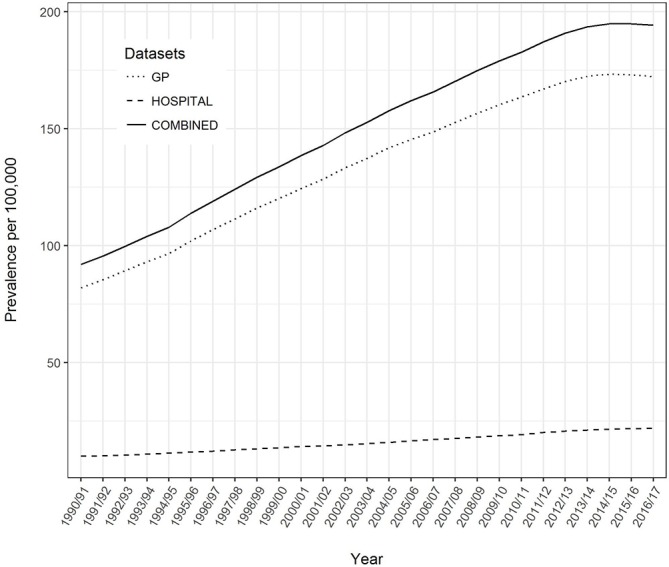
Objectives: To describe the epidemiology of diagnosed hypermobility spectrum disorder (HSD) and Ehlers-Danlos syndromes (EDS) using linked electronic medical records. To examine whether these conditions remain rare and primarily affect the musculoskeletal system. Design: Nationwide linked electronic cohort and nested case–control study. Setting: Routinely collected data from primary care and hospital admissions in Wales, UK. Participants: People within the primary care or hospital data systems with a coded diagnosis of EDS or joint hypermobility syndrome (JHS) between 1 July 1990 and 30 June 2017. Main outcome measures: Combined prevalence of JHS and EDS in Wales. Additional diagnosis and prescription data in those diagnosed with EDS or JHS compared with matched controls. Results: We found 6021 individuals (men: 30%, women: 70%) with a diagnostic code of either EDS or JHS. This gives a diagnosed point prevalence of 194.2 per 100 000 in 2016/2017 or roughly 10 cases in a practice of 5000 patients. There was a pronounced gender difference of 8.5 years (95% CI: 7.70 to 9.22) in the mean age at diagnosis. EDS or JHS was not only associated with high odds for other musculoskeletal diagnoses and drug prescriptions but also with significantly higher odds of a diagnosis in other disease categories (eg, mental health, nervous and digestive systems) and higher odds of a prescription in most disease categories (eg, gastrointestinal and cardiovascular drugs) within the 12 months before and after the first recorded diagnosis. Conclusions: EDS and JHS (since March 2017 classified as EDS or HSD) have historically been considered rare diseases only affecting the musculoskeletal system and soft tissues. These data demonstrate that both these assertions should be reconsidered.
Overview
CoChat Summary
TL;DR
In Wales, a linked electronic cohort identified 6021 people with coded EDS/JHS, giving a diagnosed point prevalence of 194.2 per 100 000 in 2016/2017, or roughly 10 cases in a 5000-patient practice. Nested case–control analyses found higher odds of diagnoses and prescriptions across many body systems, not only musculoskeletal, with a pronounced 8.5-year gender difference in mean age at diagnosis.
Key findings
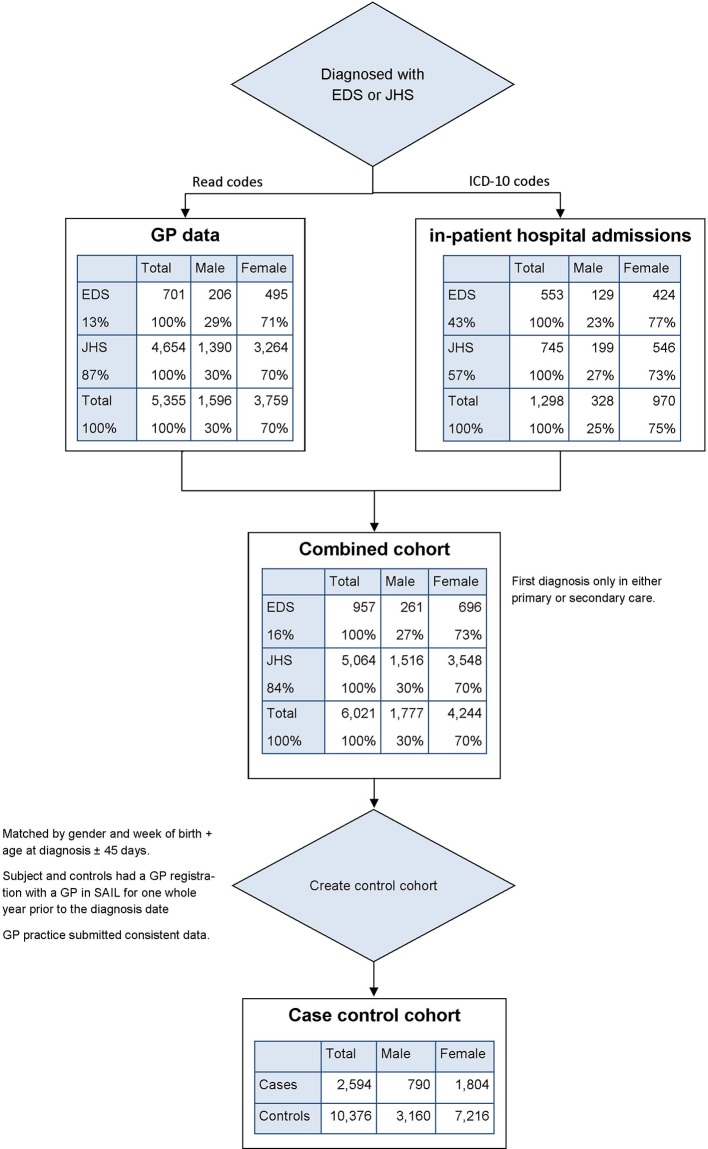
- The combined cohort contained 6021 distinct individuals (70% women, 30% men): 5064 (84%) coded with JHS and 957 (16%) with EDS. In 2016/2017, 4598 people had an EDS/JHS diagnosis first appearing in primary care (172 per 100 000) and 711 in secondary care (22 per 100 000), yielding a combined diagnosed point prevalence of 194.2 per 100 000.
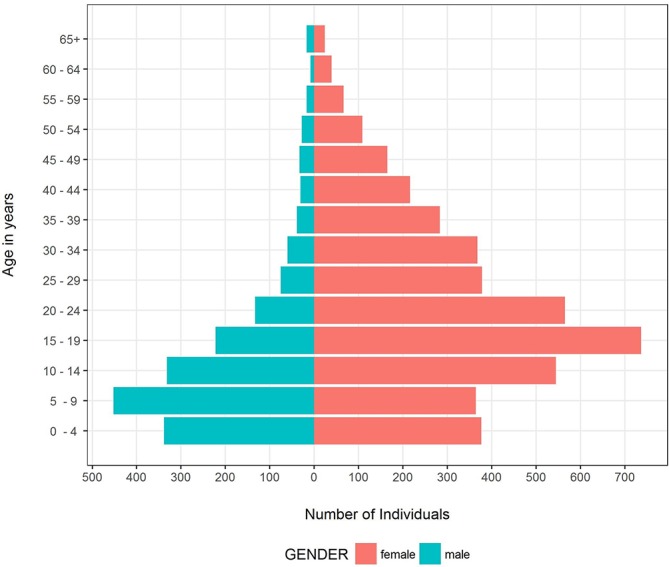
- Mean age at diagnosis differed by 8.5 years between men and women (95% CI: 7.70 to 9.22); 72% of men were diagnosed during childhood (<18 years) versus 41% of women. Age at first diagnosis peaked at 5–9 years for men and 15–19 years for women.
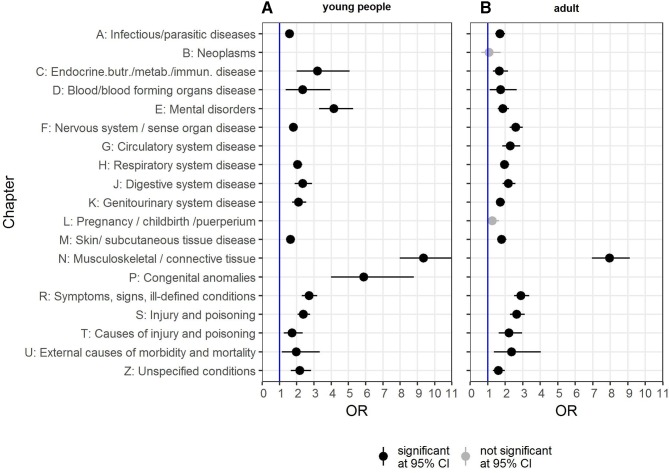
- In the 12 months before and after first coded diagnosis, young people (<18 years) had significantly more additional diagnoses in 16 of 20 Read code disease categories than controls; top odds were musculoskeletal (OR 9.36, 95% CI: 7.98 to 11.00), congenital anomalies (OR 5.89, 95% CI: 3.98 to 8.80) and mental disorders (OR 4.16, 95% CI: 3.29 to 5.27). Adults (≥18 years) also had significantly more diagnoses in 16 of 20 categories; top odds were musculoskeletal (OR 7.95, 95% CI: 6.95 to 9.12), congenital anomalies (OR 5.18, 95% CI: 2.78 to 9.78) and symptoms/signs/ill-defined conditions (OR 2.9, 95% CI: 2.5 to 3.37).
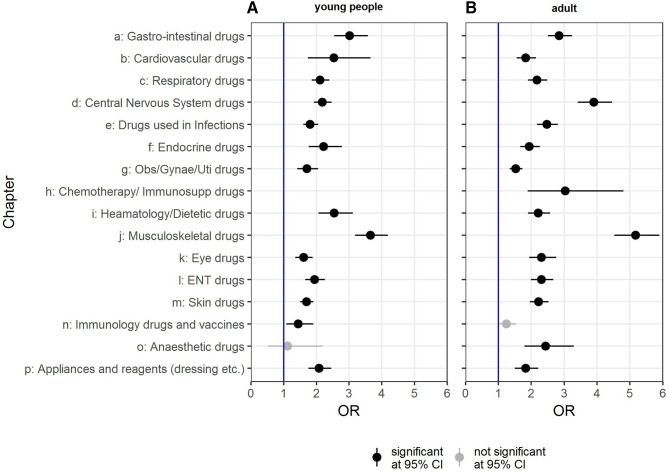
- Prescription odds were higher in 14 of 17 Read code categories for young people and 15 of 17 for adults. Top prescription categories for young people were musculoskeletal drugs (OR 3.65, 95% CI: 3.18 to 4.18), gastrointestinal drugs (OR 3.02, 95% CI: 2.54 to 3.58) and haematology/dietetic drugs (OR 2.54, 95% CI: 2.06 to 3.11); for adults they were musculoskeletal drugs (OR 5.17, 95% CI: 4.53 to 5.9), central nervous system drugs (OR 3.9, 95% CI: 3.41 to 4.46) and chemotherapy/immunosuppressant drugs (OR 3.03, 95% CI: 1.89 to 4.8).
Methods
- Nationwide linked electronic cohort and nested case–control study using the Secure Anonymised Information Linkage (SAIL) databank, with routinely collected primary care (Read Version 2) and hospital admissions (ICD-10) data in Wales from 1 July 1990 to 30 June 2017. Primary care data covered about 80% of coded GP information in Wales; Welsh Demographics Service and Patient Episode Database for Wales covered the whole of Wales.
- Cohort: Welsh residents with a Read Version 2 or ICD-10 diagnostic code of EDS or JHS in primary or secondary care; primary and hospital datasets were combined, duplications identified, and the earliest diagnosis date kept for individuals in both. Prevalence denominators were adjusted for people registered and living in Wales and, for primary care, whose GP practice contributed data to SAIL.
- Case–control: each case was matched to four controls of the same gender and similar age (within 45 days of the week of birth). Cases and controls required uninterrupted GP registration for 1 year before and after the relevant diagnosis (or died during follow-up), registration with a SAIL-contributing GP, and consistent GP data recording; controls with any diagnosed hereditary connective tissue disorder were excluded. ORs were calculated using Read chapters excluding EDS/JHS codes, and results affecting at least 5 cases or 20 controls were visualised.
Limitations
- Stated: the study cannot quantify how many people with hEDS or HSD remain undiagnosed, nor comment on the reliability of the diagnoses. Most subjects (89%) were identified via primary care, so studies not using primary care data may underestimate prevalence; data coverage for the first couple of years is less comprehensive; and comparisons were only at Read chapter level.
- Stated: it is likely that the majority of cases were not actually diagnosed in primary care but had entries created through secondary care contacts, such as outpatient appointments or musculoskeletal assessment clinics, while coded data from those sources are lacking.
- Evident from the text: the nested case–control cohort was slightly older than the overall cohort (data not shown), and strict selection criteria reduced the number of cases and controls available for analysis; diagnoses were based on coded records without clinical validation, and the study notes possible coding bias during early years of GP computerisation.
Model-written summary. Check it against the paper before relying on it.
Integrity signals
Registry
Cites
Statistics
Figures
Verification
Claims the paper makes
6 Valid · 1 Not valid · 9 Not checked · 39 Own results and interpretations
Every source the paper cites for this claim was checked and supports it.
In the paper
“Although a snapshot of Read chapters codes that are more prevalent in our JHS/EDS cohort does not allow us to look at specific diagnoses and prescriptions, they can all be matched to conditions associated with EDS/JHS in the literature, for instance pain, fatigue, cardiovascular, gastrointestinal and gynaecological disorders, dysautonomia, mast cell activation as well as urinary tract infections.7”
§ Diagnosed prevalence of Ehlers-Danlos syndrome and hypermobility spectrum disorder in Wales, UK: a national electronic cohort study and case–control comparison > Discussion > Strengths and limitations
What the sources say
- Supportedcites [7] Tinkle B, Castori M, Berglund B, et al Hypermobile Ehlers-Danlos syndrome (a.k.a. Ehlers-Danlos syndrome type III and Ehlers-Danlos syndrome hypermobility type): clinical description and natural history. Am J Med Genet C Semin Med Genet 2017; 175: 48– 69. 10.1002/ajmg.c.31538 28145611 source
The paper describes pain and fatigue (clinical description), gastrointestinal involvement (Gastrointestinal Disorders), cardiovascular symptoms and dysautonomia (Dysautonomia), gynecologic complaints (Gynecologic Issues), and urinary tract infections (Urinary System) in hEDS/JHS. Its Mast Cell Activation Disorder section discusses a possible association, while explicitly saying whether mast cell activation syndrome is more common in hEDS remains unclear. The paper supports the listed literature matches; it does not assess the citing authors’ Read codes. (LLM, conf=0.86)
plainstates an association- Asserted: passes — The authors put it forward as true.
- Checkable: passes — It can be checked against evidence.
- Load-bearing: unclear — It is unclear whether the paper’s conclusions depend on it.
- Based: passes — The paper gives a reason why it holds.
- Supported
The cited sources support only part of this claim — read each source’s verdict below.
In the paper
“It has been shown that using linked health data is an economic and effective alternative to performing de novo longitudinal studies, including rare conditions.24 25”
§ Diagnosed prevalence of Ehlers-Danlos syndrome and hypermobility spectrum disorder in Wales, UK: a national electronic cohort study and case–control comparison > Introduction
What the sources say
- Not checked yetcites [24] Holman C D'Arcy J, Bass JA, Rosman DL, et al A decade of data linkage in Western Australia: strategic design, applications and benefits of the WA data linkage system. Australian Health Review 2008; 32: 766– 77. 10.1071/AH080766 18980573 source
- Partly supportedcites [25] Cooksey R, Husain MJ, Brophy S, et al The cost of ankylosing spondylitis in the UK using linked routine and patient-reported survey data. PLoS One 2015; 10: e0126105 10.1371/journal.pone.0126105 26185984 PMC4506082 sourceExperimental — accuracy not yet measured
The Discussion (page not specified) says linked routine and patient-reported data provide comprehensive information for estimating ankylosing spondylitis costs, supporting the method's effectiveness for that purpose. The paper does not establish that linkage is cheaper than a de novo longitudinal study or address its use for rare conditions; searches for those comparisons found no supporting passage. (LLM, conf=0.83)
boostedstates a cause- Asserted: passes — The authors put it forward as true.
- Checkable: passes — It can be checked against evidence.
- Load-bearing: passes — The paper’s conclusions depend on it.
- Based: passes — The paper gives a reason why it holds.
The cited sources that could be checked couldn’t confirm or dispute this claim.
In the paper
“It is possible to extrapolate a combined population prevalence figure for JHS and EDS for Sweden5 of around 120 per 100 000 from a study focusing on comorbid mental health issues, but no investigators have thus far set out to investigate the combined diagnosed prevalence of JHS/EDS within a population.”
§ Diagnosed prevalence of Ehlers-Danlos syndrome and hypermobility spectrum disorder in Wales, UK: a national electronic cohort study and case–control comparison > Introduction
What the sources say
- Could not verifycites [5] Cederlöf M, Larsson H, Lichtenstein P, et al Nationwide population-based cohort study of psychiatric disorders in individuals with Ehlers–Danlos syndrome or hypermobility syndrome and their siblings. BMC Psychiatry 2016; 16 10.1186/s12888-016-0922-6 PMC4932739 27377649 sourceExperimental — accuracy not yet measured
The citation is attached to the Swedish extrapolation, not directly to the statement that no investigators have studied combined diagnosed prevalence. The Results give separate counts for EDS and hypermobility syndrome, and the Discussion describes the study’s focus as psychiatric disorders. Neither section establishes whether other investigators have studied combined diagnosed prevalence. (LLM, conf=0.73)
plain- Asserted: passes — The authors put it forward as true.
- Checkable: passes — It can be checked against evidence.
- Load-bearing: passes — The paper’s conclusions depend on it.
- Based: passes — The paper gives a reason why it holds.
- Could not verify
A result the paper reports from its own data — it cites no other source for it, so there is none to check. The quote shows it is in the paper.
In the paper
“During this year, 2 668 902 people were registered with a GP in Wales submitting data to SAIL, of whom 4598 had a diagnostic code of EDS/JHS which first appeared in the primary care data (172 in 100 000).”
§ Diagnosed prevalence of Ehlers-Danlos syndrome and hypermobility spectrum disorder in Wales, UK: a national electronic cohort study and case–control comparison > Results > Demographics of combined EDS/JHS cohort
plain- Asserted: passes — The authors put it forward as true.
- Checkable: passes — It can be checked against evidence.
- Load-bearing: passes — The paper’s conclusions depend on it.
- Based: passes — The paper gives a reason why it holds.
- Rests on an assumption not shown here.
A result the paper reports from its own data — it cites no other source for it, so there is none to check. The quote shows it is in the paper.
In the paper
“A further 711 people out of the 3 239 153 registered with any GP in Wales during 2016/2017 had an EDS/JHS diagnosis which first appears in secondary care data (22 in 100 000).”
§ Diagnosed prevalence of Ehlers-Danlos syndrome and hypermobility spectrum disorder in Wales, UK: a national electronic cohort study and case–control comparison > Results > Demographics of combined EDS/JHS cohort
plainn = 711- Asserted: passes — The authors put it forward as true.
- Checkable: passes — It can be checked against evidence.
- Load-bearing: passes — The paper’s conclusions depend on it.
- Based: passes — The paper gives a reason why it holds.
- Rests on an assumption not shown here.
15 more claims
Create a free account to see all 55 claims and to verify the 13 references still open.
- Probably not a substantial claim. 20
- It may state two separate claims as one. 22
- The quote only partly states this claim. 2
Claims other papers make about this one
Each is checked against this paper’s own text: does it say what the citing paper says it does?
The source backs part of the claim, not all of it — or backs it for a different population, condition or comparison.
In the citing paper
“It is estimated that the prevalence of HSD/hEDS is greater than 1:500 [8]”
From Meta-Analysis: Chronic Gastrointestinal Symptoms and Comorbidities in Hypermobile Ehlers-Danlos Syndrome and Hypermobility Spectrum Disorders (2026) · cites this paper as [8]
Experimental — accuracy not yet measuredThe source backs part of the claim, not all of it — or backs it for a different population, condition or comparison.
In the citing paper
“With this dataset, we can confirm that hEDS is not rare [46]: 42% of the patients referred to the hypermobility-dedicated consultation met the 2017 diagnostic criteria.”
From Are patients with hypermobile Ehlers–Danlos syndrome or hypermobility spectrum disorder so different? (2021) · cites this paper as [46]
Experimental — accuracy not yet measuredThe source backs part of the claim, not all of it — or backs it for a different population, condition or comparison.
In the citing paper
“These characteristics reflect those of the Registry ( Table 1 ), and the gender and race proportions are representative of the patient population more broadly. 12 , 13”
From Comorbidity, misdiagnoses, and the diagnostic odyssey in patients with hypermobile Ehlers-Danlos syndrome (2023) · cites this paper as [13]
Experimental — accuracy not yet measuredThe cited source says what the claim attributes to it.
In the citing paper
“Clinical features of HSD and hEDS are not limited to musculoskeletal and cutaneous symptoms (9). Associations exist with cardiovascular autonomic dysfunction (12), gastrointestinal difficulties (13), fatigue (12) and pain syndromes (14), gynecological and obstetric problems (15, 16), and mental health concerns (17–19).”
From Joint Hypermobility Links Neurodivergence to Dysautonomia and Pain (2022) · cites this paper as [9]
The cited source says what the claim attributes to it.
In the citing paper
“Results for the boys in our sample are in line with the recently published cohort study where the age at first joint hypermobility syndrome (JHS)/EDS diagnosis peaked in the age group 5–9 years for a male.”
6 more claims about this paper
Create a free account to see every claim other papers make about this one.
Citations
Cites
International Statistical Classification of Diseases and Related Health Problems
Eisfeld, J. (2014) · TSQ: Transgender Studies Quarterly · doi:10.1215/23289252-2399740 · Cited by 3,570
(1985) · Annals of Internal Medicine · doi:10.7326/0003-4819-103-3-486_3 · Cited by 2,056
The 2017 international classification of the Ehlers–Danlos syndromes
Malfait, F., Francomano, C., Byers, P., Belmont, J., Berglund, B., Black, J., Bloom, L., Bowen, J. M., Brady, A. F., Burrows, N. P., et al. (2017) · American Journal of Medical Genetics Part C: Seminars in Medical Genetics · doi:10.1002/ajmg.c.31552 · Cited by 1,936
White, J. M. L., Kita, M., Krpelanová, E., Alsokhn, C., Costa, M. L., Fibbe, W., Gaebel, W., Reed, G. M., Lokuhetty, D., Woolf, A., et al. (2026) · Bulletin of the World Health Organization · doi:10.2471/blt.25.294650 · Cited by 834
(2000) · PubMed · Cited by 738
The SAIL databank: linking multiple health and social care datasets
Lyons, R. A., Jones, K. H., John, G., Brooks, C. J., Verplancke, J.-P., Ford, D. V., Brown, G., & Leake, K. (2009) · BMC Medical Informatics and Decision Making · doi:10.1186/1472-6947-9-3 · Cited by 638 · cited 2×
“We identified Welsh residents with a Read Version 2 27 diagnostic code of EDS or JHS in primary care data or International Statistical Classification of Diseases and Related Health Problems, 10th Revision (ICD-10) diagnostic codes 28 in secondary care data (hospital admissions) between 1 July 1990…”
Self-citationHolman, C. D. J., Bass, J. A., Rosman, D. L., Smith, M. B., Semmens, J. B., Glasson, E. J., Brook, E. L., Trutwein, B., Rouse, I. L., Watson, C. R., et al. (2008) · Australian Health Review · doi:10.1071/ah080766 · Cited by 507 · cited 1×
“26”
The Read clinical classification.
Chisholm, J. (1990) · BMJ · doi:10.1136/bmj.300.6732.1092 · Cited by 504
Tinkle, B., Castori, M., Berglund, B., Cohen, H., Grahame, R., Kazkaz, H., & Levy, H. (2017) · American Journal of Medical Genetics Part C: Seminars in Medical Genetics · doi:10.1002/ajmg.c.31538 · Cited by 499 · cited 2×
“…us to look at specific diagnoses and prescriptions, they can all be matched to conditions associated with EDS/ JHS in the literature, for instance pain, fatigue, cardio-vascular, gastrointestinal and gynaecological disorders, dysautonomia, mast cell activation as well as urinary tract infections.”
The Ehlers–Danlos syndrome, a disorder with many faces
De Paepe, A., & Malfait, F. (2012) · Clinical Genetics · doi:10.1111/j.1399-0004.2012.01858.x · Cited by 379 · cited 1×
“Copyright a n d m o r al right s for p u blications m a d e available in ORCA a r e r e t ain e d by t h e copyrig ht hold e rs.”
Research works printed but not linked: 2
- Grahame R, Hakim AJ Joint hypermobility syndrome is highly prevalent in general rheumatology clinics, its occurrence and clinical presentation being gender, age and race-related. Annals of the Rheumatic Diseases 2006; 65: 263– 63.
- 10.1002/(sici)1096-8628(19980428)77:1 · doi:10.1002/(sici)1096-8628(19980428)77:1
Cited by
The Beighton Score as a measure of generalised joint hypermobility
Malek, S., Reinhold, E. J., & Pearce, G. S. (2021) · Rheumatology International · doi:10.1007/s00296-021-04832-4 · Cited by 224
Self-citationGensemer, C., Burks, R., Kautz, S., Judge, D. P., Lavallee, M., & Norris, R. A. (2021) · Developmental Dynamics · doi:10.1002/dvdy.220 · Cited by 149
“Demmler et al recently reported the combined prevalence of hEDS and HSD to be 1 in 500 people in Wales with 70% of the diagnosed being women, suggesting that hEDS/HSD prevalence has been grossly underestimated.(91) With the spectrum of severity, variation in symptom presentation and the lack of an effective clinical d…”
BackgroundJoint Hypermobility Links Neurodivergence to Dysautonomia and Pain
Csecs, J. L. L., Iodice, V., Rae, C. L., Brooke, A., Simmons, R., Quadt, L., Savage, G. K., Dowell, N. G., Prowse, F., Themelis, K., et al. (2022) · Frontiers in Psychiatry · doi:10.3389/fpsyt.2021.786916 · Cited by 119
Pollack, B., von Saltza, E., McCorkell, L., Santos, L., Hultman, A., Cohen, A. K., & Soares, L. (2023) · Frontiers in Rehabilitation Sciences · doi:10.3389/fresc.2023.1122673 · Cited by 95
Pediatric joint hypermobility: a diagnostic framework and narrative review
Tofts, L. J., Simmonds, J., Schwartz, S. B., Richheimer, R. M., O’Connor, C., Elias, E., Engelbert, R., Cleary, K., Tinkle, B. T., Kline, A. D., et al. (2023) · Orphanet Journal of Rare Diseases · doi:10.1186/s13023-023-02717-2 · Cited by 93
Aubry-Rozier, B., Schwitzguebel, A., Valerio, F., Tanniger, J., Paquier, C., Berna, C., Hügle, T., & Benaim, C. (2021) · Rheumatology International · doi:10.1007/s00296-021-04968-3 · Cited by 66
“With this dataset, we can confirm that hEDS is not rare [46]: 42% of the patients referred to the hypermobility-dedicated consultation met the 2017 diagnostic criteria.”
MethodHalverson, C. M. E., Clayton, E. W., Garcia Sierra, A., & Francomano, C. (2021) · American Journal of Medical Genetics Part C: Seminars in Medical Genetics · doi:10.1002/ajmg.c.31935 · Cited by 64
“It is noteworthy that up to 80% of patients who receive an hEDS diagnosis are female (Demmler et al., 2019), particularly as it is clear that female patients often feel disbelieved by healthcare professionals and that their pain is often dismissed (McManimen, McClellan, Stoothoff, Gleason, & Jason,…”
BackgroundKindgren, E., Quiñones Perez, A., & Knez, R. (2021) · Neuropsychiatric Disease and Treatment · doi:10.2147/ndt.s290494 · Cited by 59
Eccles, J. A., Thompson, B., Themelis, K., Amato, M. L., Stocks, R., Pound, A., Jones, A.-M., Cipinova, Z., Shah-Goodwin, L., Timeyin, J., et al. (2021) · Clinical Medicine · doi:10.7861/clinmed.2020-0743 · Cited by 55
Fascia as a regulatory system in health and disease
Slater, A. M., Barclay, S. J., Granfar, R. M. S., & Pratt, R. L. (2024) · Frontiers in Neurology · doi:10.3389/fneur.2024.1458385 · Cited by 64
Chohan, K., Mittal, N., McGillis, L., Lopez-Hernandez, L., Camacho, E., Rachinsky, M., Mina, D. S., Reid, W. D., Ryan, C. M., Champagne, K., et al. (2021) · Chronic Respiratory Disease · doi:10.1177/14799731211025313 · Cited by 56
“The nomenclature for EDS has undergone multiple revisions, which is important to highlight given variable overlapping symptoms across the EDS subtypes and evolving literature.(3) In 1999, the Brighton criteria was proposed to diagnose joint hypermobility syndrome (JHS), which includes a constellation of symptoms beyon…”
BackgroundArterial dissections: Common features and new perspectives
Bax, M., Romanov, V., Junday, K., Giannoulatou, E., Martinac, B., Kovacic, J. C., Liu, R., Iismaa, S. E., & Graham, R. M. (2022) · Frontiers in Cardiovascular Medicine · doi:10.3389/fcvm.2022.1055862 · Cited by 55
Halverson, C. M. E., Penwell, H. L., & Francomano, C. A. (2023) · SSM - Qualitative Research in Health · doi:10.1016/j.ssmqr.2023.100237 · Cited by 60
“The majority were White (N = 24) and female (N = 22), a demographic skew that closely reflects that of the population with a known hEDS diagnosis (Demmler et al., 2019; Voermans et al., 2009).”
BackgroundHalverson, C. M. E., Cao, S., Perkins, S. M., & Francomano, C. A. (2023) · Genetics in Medicine Open · doi:10.1016/j.gimo.2023.100812 · Cited by 47
Hypermobility spectrum disorders: A review
Carroll, M. B. (2023) · Rheumatology and Immunology Research · doi:10.2478/rir-2023-0010 · Cited by 45
“Patients may have mental health, nervous system, and digestive system issues with a higher odds of receiving a prescription in other disease categories (such as gastrointestinal and cardiovascular drugs) within 12 months before and after the diagnosis.[14] The strongest associations of HSDs are with orthostasis, a var…”
BackgroundMethodInfluentialSystemic manifestations of Ehlers-Danlos syndrome
Song, B., Yeh, P., & Harrell, J. (2021) · Baylor University Medical Center Proceedings · doi:10.1080/08998280.2020.1805714 · Cited by 43
“ited understanding may hinder the detection and treatment of otherwise preventable complications.(6) The aim of this”
BackgroundAnderson, L. K., & Lane, K. R. (2021) · Journal of the American Association of Nurse Practitioners · doi:10.1097/jxx.0000000000000672 · Cited by 53
“A recent study estimated the combined prevalence of hEDS/HSD as 194/100,000 (Demmler et al., 2019).”
BackgroundNicholson, L. L., Simmonds, J. V., Pacey, V., Wandele, I. D., Rombaut, L., Williams, C., & Chan, C. L. (2022) · JCR Journal of Clinical Rheumatology · doi:10.1097/rhu.0000000000001864 · Cited by 61
Ashtari, S., & Taylor, A. D. (2022) · Journal of Medical Internet Research · doi:10.2196/39172 · Cited by 41
“Our demographics reflect that of the general population with EDS, which is 73.9% women and 26.1% men [19,20].”
InfluentialBulbena‐Cabré, A., Baeza‐Velasco, C., Rosado‐Figuerola, S., & Bulbena, A. (2021) · American Journal of Medical Genetics Part C: Seminars in Medical Genetics · doi:10.1002/ajmg.c.31955 · Cited by 41
Yates, S., Carey, G. E., Malbon, E., & Hargrave, J. (2021) · Health & Social Care in the Community · doi:10.1111/hsc.13669 · Cited by 40
Hakim, A. J., Tinkle, B. T., & Francomano, C. A. (2021) · American Journal of Medical Genetics Part C: Seminars in Medical Genetics · doi:10.1002/ajmg.c.31954 · Cited by 37
Donaghy, B., Moore, D., & Green, J. (2023) · Child Care in Practice · doi:10.1080/13575279.2022.2149471 · Cited by 46
“By doing so, treatment can be initiated earlier possibly preventing further physical health complications in adulthood (Demmler et al., 2019).”
BackgroundMcGillis, L., Mittal, N., Santa Mina, D., So, J., Soowamber, M., Weinrib, A., Soever, L., Rozenberg, D., Liu, L., Tse, Y., et al. (2020) · American Journal of Medical Genetics Part A · doi:10.1002/ajmg.a.61459 · Cited by 35
“The incidence of hEDS is not currently known but a recent study suggests a combined incidence of hEDS and hypermobility spectrum disorders (HSD) at 10 in 5000 (Demmler et al., 2019).”
BackgroundAshtari, S., & Taylor, A. (2023) · JMIR Formative Research · doi:10.2196/41610 · Cited by 33
Hypermobile Ehlers-Danlos Syndrome and Hypermobility Spectrum Disorders.
Yew, K. S., Kamps-Schmitt, K. A., & Borge, R. (2021) · American family physician · Cited by 73
The biopsychosocial impact of hypermobility spectrum disorders in adults: a scoping review
Clark, N., Johnson, M., Rangan, A., Kottam, L., & Swainston, K. (2023) · Rheumatology International · doi:10.1007/s00296-023-05298-2 · Cited by 36
Daylor, V., Griggs, M., Weintraub, A., Byrd, R. L., Petrucci, T., Huff, M. L., Byerly, K., Fenner, R., Severance, S., Griggs, C., et al. (2025) · Journal of Clinical Medicine · doi:10.3390/jcm14165636 · Cited by 36
Langhinrichsen‐Rohling, J., Lewis, C. L., McCabe, S., Lathan, E. C., Agnew, G. A., Selwyn, C. N., & Gigler, M. E. (2021) · Therapeutic Advances in Rare Disease · doi:10.1177/26330040211022033 · Cited by 29
Brooks, R. S., Grady, J., Lowder, T. W., & Blitshteyn, S. (2021) · Rheumatology · doi:10.1093/rheumatology/keaa926 · Cited by 28
Management of Shoulder Instability in Patients with Underlying Hyperlaxity
Rupp, M., Rutledge, J. C., Quinn, P. M., & Millett, P. J. (2023) · Current Reviews in Musculoskeletal Medicine · doi:10.1007/s12178-023-09822-6 · Cited by 32
Ehlers-Danlos Syndrome in Pregnancy: A Review
Kang, J., Hanif, M., Mirza, E., & Jaleel, S. (2020) · European Journal of Obstetrics & Gynecology and Reproductive Biology · doi:10.1016/j.ejogrb.2020.10.033 · Cited by 31
Sandmann, W., Scholbach, T., & Verginis, K. (2021) · American Journal of Medical Genetics Part C Seminars in Medical Genetics · doi:10.1002/ajmg.c.31949 · Cited by 30
Estrella, E., & Frazier, P. A. (2023) · Disability and Rehabilitation · doi:10.1080/09638288.2023.2176554 · Cited by 28
“However, a recent study from the UK reported that the combined prevalence rate of hEDS and HSD is closer to one in 500 [8], suggesting that these closely related syndromes are not actually rare.”
BackgroundSpinal manifestations of Ehlers-Danlos syndrome: a scoping review
Marathe, N. A., Lohkamp, L., & Fehlings, M. G. (2022) · Journal of Neurosurgery Spine · doi:10.3171/2022.6.spine211011 · Cited by 24
Mittal, N., Mina, D. S., McGillis, L., Weinrib, A., Slepian, P. M., Rachinsky, M., Buryk-Iggers, S., Laflamme, C., Lopez-Hernandez, L., Hussey, L., et al. (2021) · Orphanet Journal of Rare Diseases · doi:10.1186/s13023-021-01962-7 · Cited by 28
“Recent studies have raised the question of underestimation and have suggested a potentially higher prevalence in the general population [8].”
BackgroundResultArnaert, S., Arts, J., Raymenants, K., Baert, F., & Delsupehe, K. (2024) · Journal of Neurogastroenterology and Motility · doi:10.5056/jnm23099 · Cited by 26
Ritelli, M., Chiarelli, N., Cinquina, V., Bertini, V., Piantoni, S., Caproli, A., Pina, S. E. L. D., Franceschini, F., Zarattini, G., Gandy, W., et al. (2024) · American Journal of Medical Genetics Part A · doi:10.1002/ajmg.a.63857 · Cited by 29
“Recent data from the NIH “All of Us” database and studies of medical records in Wales (Demmler et al. 2019) suggest that more than one million people in the USA, and 15 million worldwide, may suffer from these conditions.”
Hypermobile Ehlers-Danlos syndrome and spontaneous CSF leaks: the connective tissue conundrum
Severance, S., Daylor, V., Petrucci, T., Gensemer, C., Patel, S. M., & Norris, R. A. (2024) · Frontiers in Neurology · doi:10.3389/fneur.2024.1452409 · Cited by 24
Ritelli, M., Chiarelli, N., Cinquina, V., Vezzoli, M., Venturini, M., & Colombi, M. (2023) · American Journal of Medical Genetics Part A · doi:10.1002/ajmg.a.63426 · Cited by 25
“However, recent research from the UK reported that the combined prevalence of hEDS and HSD is closer to 1:500 (Demmler et al., 2019), and estimates from the NIH “ All of Us ” database suggest 1:300.”
BackgroundPezaro, S., Pearce, G., & Reinhold, E. J. (2020) · Midwifery · doi:10.1016/j.midw.2020.102749 · Cited by 23
Self-citationMasterclass: Hypermobility and hypermobility related disorders
Simmonds, J. V. (2022) · Musculoskeletal Science and Practice · doi:10.1016/j.msksp.2021.102465 · Cited by 21
Ali, A. A., Andrzejowski, P., Kanakaris, N. K., & Giannoudis, P. V. (2020) · Journal of Clinical Medicine · doi:10.3390/jcm9123992 · Cited by 25
“(2015) did attempt, though, to investigate the diagnosed prevalence of EDS and HSD in Wales, UK [24].”
BackgroundEstablishing an Ehlers-Danlos Syndrome Clinic: Lessons Learned
Knight, D. R. T., Confiado, S. M., Bruno, K. A., Fairweather, D., Seymour-Sonnier, A. M., Jain, A., Gehin, J. M., Whelan, E. R., Culberson, J., Munipalli, B., et al. (2022) · SN Comprehensive Clinical Medicine · doi:10.1007/s42399-022-01218-w · Cited by 21
“For 25% of patients, it took over 28 years to obtain an hEDS diagnosis [16, 17].”
BackgroundSchubart, J. R., Bascom, R., Francomano, C. A., Bloom, L. C., & Hakim, A. J. (2021) · American Journal of Medical Genetics Part C Seminars in Medical Genetics · doi:10.1002/ajmg.c.31960 · Cited by 21
“The prevalence of HSD and the most common variant of EDS, hypermobile EDS (hEDS) is not known, but considered likely to be common (in the order of one in 500 in the general population) based on studies of Joint Hypermobility Syndrome (JHS), a former diagnosis that included both HSD and hEDS populations (Demmler et al.…”
BackgroundScicluna, K., Formosa, M. M., Farrugia, R., & Borg, I. (2022) · Clinical Genetics · doi:10.1111/cge.14026 · Cited by 20
“This limitation was highlighted in previous publications.(49) Therefore, studies conducted prior to 2017 must be interpreted with a degree of caution.”
Management of shoulder instability in hypermobility-type Ehlers-Danlos syndrome
Broida, S. E., Sweeney, A. P., Gottschalk, M. B., & Wagner, E. R. (2021) · JSES Reviews Reports and Techniques · doi:10.1016/j.xrrt.2021.03.002 · Cited by 29
Smith, S. J., Sichlau, M. J., Sewall, L. E., Smith, B. H., Chen, B., Khurana, N., & Rowe, P. C. (2022) · Phlebology The Journal of Venous Disease · doi:10.1177/02683555221112567 · Cited by 22
Teran-Wodzinski, P. C., & Kumar, A. (2023) · Rheumatology International · doi:10.1007/s00296-023-05378-3 · Cited by 25
“The combined prevalence of hEDS and HSD has recently been estimated to be 1 in 5000 people [4].”
Ritelli, M., Chiarelli, N., Cinquina, V., Zoppi, N., Bertini, V., Venturini, M., & Colombi, M. (2022) · Cells · doi:10.3390/cells11244040 · Cited by 25
“However, the spectrum of severity, the heterogeneous presentations of both hEDS and HSD, and the high cumulative incidence of these disorders (1:500) [31], strongly suggest that hEDS/HSD is most likely caused by various genetic changes with an oligogenic if not polygenic inheritance in combination with lifestyle and e…”
BackgroundMalek, S., & Köster, D. (2021) · Frontiers in Cell and Developmental Biology · doi:10.3389/fcell.2021.649082 · Cited by 21
“Collectively, EDS/HSD has a diagnosed prevalence of 1 in 500 (Demmler et al., 2019).”
BackgroundHypermobile Ehlers-Danlos Syndrome: Cerebrovascular, Autonomic and Neuropathic Features
Novák, P., Systrom, D. M., Marciano, S. P., Witte, A. V., Warren, A., Felsenstein, D., Giannetti, M. P., Hamilton, M. J., Nicoloro‐SantaBarbara, J. M., Castells, M., et al. (2025) · American Journal of Medicine Open · doi:10.1016/j.ajmo.2025.100111 · Cited by 22
Csecs, J. L. L., Dowell, N. G., Savage, G. K., Iodice, V., Mathias, C. J., Critchley, H., & Eccles, J. (2021) · American Journal of Medical Genetics Part C Seminars in Medical Genetics · doi:10.1002/ajmg.c.31957 · Cited by 20
Some cases of hypermobile Ehlers–Danlos syndrome may be rooted in mast cell activation syndrome
Afrin, L. B. (2021) · American Journal of Medical Genetics Part C Seminars in Medical Genetics · doi:10.1002/ajmg.c.31944 · Cited by 18
Pearce, G., Bell, L., Pezaro, S., & Reinhold, E. J. (2023) · International Journal of Environmental Research and Public Health · doi:10.3390/ijerph20206957 · Cited by 20
“Most sub-types of EDS such as classical and vascular are rare; however, the hypermobile subtype (hEDS) [4] is understood to be more common [5] (see Box 1 for diagnostic criteria and nomenclature history).”
BackgroundSelf-citationThe psychological burden associated with Ehlers-Danlos syndromes: a systematic review
Kennedy, M., Loomba, K., Ghani, H., & Riley, B. A. (2022) · Journal of Osteopathic Medicine · doi:10.1515/jom-2021-0267 · Cited by 21
“An international study from Wales suggested that the prevalence of hEDS is even higher at 1/500 according to the 2017 reclassification [4].”
BackgroundCOL1A1 and COL1A2 variants in Ehlers‐Danlos syndrome phenotypes and COL1 ‐related overlap disorder
Venable, E. R., Knight, D. R. T., Thoreson, E. K., & Baudhuin, L. M. (2023) · American Journal of Medical Genetics Part C Seminars in Medical Genetics · doi:10.1002/ajmg.c.32038 · Cited by 20
“The prevalence of EDS ranges widely based on subtype, with estimates from 1 in 3000 for hypermobile EDS (hEDS) to less than 1 in 1,000,000 for a few of the ultra-rare, autosomal recessive subtypes of EDS (Brady et al., 2017; Demmler et al., 2019; Kulas Soborg et al., 2017).”
BackgroundPsychosocial and Motor Characteristics of Patients With Hypermobility
Lamari, M. M., Lamari, N. M., Filho, G. M. D. A., de Medeiros, M. P., Marques, V. R. P., & Pavarino, É. C. (2022) · Frontiers in Psychiatry · doi:10.3389/fpsyt.2021.787822 · Cited by 16
Schubart, J. R., Schaefer, É., Knight, D. R. T., Mills, S. E., & Francomano, C. A. (2024) · Frontiers in Public Health · doi:10.3389/fpubh.2024.1365712 · Cited by 15
Gensemer, C., Daylor, V., NIX, J. E., Norris, R. A., & Patel, S. M. (2024) · Frontiers in Neurology · doi:10.3389/fneur.2024.1441866 · Cited by 14
Outcomes of orthopaedic surgery in Ehlers-Danlos syndromes: a scoping review
Schubart, J. R., Mills, S. E., Rodeo, S. A., & Francomano, C. A. (2024) · BMC Musculoskeletal Disorders · doi:10.1186/s12891-024-07937-6 · Cited by 15
Rocchetti, M., Bassotti, A., Corradi, J., Damiani, S., Pasta, G., Annunziata, S., Guerrieri, V., Mosconi, M., Gentilini, D., & Brondino, N. (2021) · Healthcare · doi:10.3390/healthcare9111472 · Cited by 18
Willich, L., Bohner, L., Köppe, J., Jackowski, J., Hanisch, M., & Oelerich, O. (2023) · Orphanet Journal of Rare Diseases · doi:10.1186/s13023-023-02877-1 · Cited by 14
“It is characterized by moderate extensibility of the skin, lack of brittleness, and marked hypermobility of the joints [4, 5].”
BackgroundUrogynaecology and Ehlers–Danlos syndrome
Patel, M., & Khullar, V. (2021) · American Journal of Medical Genetics Part C Seminars in Medical Genetics · doi:10.1002/ajmg.c.31959 · Cited by 13
“The prevalence can be estimated from national healthcare records studies as to the prevalence of EDS being in the order 1 in 2,500–3,500 to (Cederlöf et al., 2016; Demmler et al., 2019; Kulas Søborg, Leganger, Quitzau Mortensen, Rosenberg, & Burcharth, 2017).”
BackgroundPezaro, S., Brock, I., Buckley, M., Callaway, S., Demirdas, S., Hakim, A. J., Harris, C. L., Gross, C. H., Karanfil, M., Ray, I. L., et al. (2024) · PLoS ONE · doi:10.1371/journal.pone.0302401 · Cited by 14
Bell, L., & Pearce, G. (2021) · Children s Health Care · doi:10.1080/02739615.2021.1960165 · Cited by 12
Choudhary, A., Fikree, A., & Aziz, Q. (2021) · American Journal of Medical Genetics Part C Seminars in Medical Genetics · doi:10.1002/ajmg.c.31938 · Cited by 14
Guedry, S. E., Langley, B. O., Schaefer, K., & Hanes, D. A. (2022) · Disability and Rehabilitation · doi:10.1080/09638288.2022.2131003 · Cited by 17
Primary Hemostasis Disorders as a Cause of Heavy Menstrual Bleeding in Women of Reproductive Age
Kontogiannis, A., Matsas, A., Valsami, S. I., Livanou, M. E., Panoskaltsis, T., & Christopoulos, P. (2023) · Journal of Clinical Medicine · doi:10.3390/jcm12175702 · Cited by 17
“Some of the best estimates to date, about the combined prevalence of EDS and HSD, estimate a proportion of about 2 patients for every 1000 individuals in the general population [80].”
BackgroundCeliac plexus block: A diagnostic tool for neurogenic median arcuate ligament syndrome
Bower, K. S., McCarthy, C. C., Vyasa, P., Nagarsheth, K., & Desai, M. J. (2024) · Pain Practice · doi:10.1111/papr.13403 · Cited by 11
“Huynh et al. 17 previously described the association between MALS and gastroparesis.”
InfluentialLeft to themselves: Time to target chronic pain in childhood rare diseases
Sieberg, C. B., Lebel, A., Silliman, E., Holmes, S. A., Borsook, D., & Elman, I. (2021) · Neuroscience & Biobehavioral Reviews · doi:10.1016/j.neubiorev.2021.03.008 · Cited by 12
Baeza-Velasco, C., Vergne, J., Poli, M., Kalisch, L., & Calati, R. (2025) · Autism · doi:10.1177/13623613251328059 · Cited by 16
“%) was much higher than the reported by literature for combined EDS and HSD (0.19%; Demmler et al., 2019).”
InfluentialGlayzer, J. E., Bray, B. C., Kobak, W. H., Steffen, A. D., & Schlaeger, J. M. (2024) · JMIR Research Protocols · doi:10.2196/53646 · Cited by 12
“The average age of participants was 38.6 (SD 11.7) years, similar to the average age of participants in big data studies of EDS [4,12,13,30].”
InfluentialJeong, H., Engel, J. M., Wilwert, O., Muriello, M. J., Basel, D., & Slavens, B. A. (2023) · Physical & Occupational Therapy In Pediatrics · doi:10.1080/01942638.2022.2163601 · Cited by 11
“The ratio of males to females diagnosed with EDS/joint hypermobility syndrome is 3: 7 (Demmler et al., 2019).”
BackgroundInfluentialvan Iersel, T. P., Verweij, L. P. E., Hoorntje, A., van der Hoeven, H., van Noort, A., Kleinlugtenbelt, Y. V., Floor, S., van den Bekerom, M. P. J., & van Deurzen, D. F. P. (2023) · Journal of Shoulder and Elbow Surgery · doi:10.1016/j.jse.2023.01.003 · Cited by 10
Social media use by patients with hypermobile Ehlers–Danlos syndrome
Halverson, C. M. E., Doyle, T. A., & Vershaw, S. L. (2024) · Molecular Genetics & Genomic Medicine · doi:10.1002/mgg3.2467 · Cited by 12
Investigation of dermal collagen nanostructures in Ehlers-Danlos Syndrome (EDS) patients
Neshatian, M., Mittal, N., Huang, S., Ali, A., Khattignavong, E., & Bozec, L. (2024) · PLoS ONE · doi:10.1371/journal.pone.0307442 · Cited by 14
Song, J. Z., Luong, D., Feldman, E. C. H., Tran, S., Perrier, L., Eubanks, K., Bayley, M., Kastner, M., Slepian, M., & Munce, S. E. P. (2023) · Orphanet Journal of Rare Diseases · doi:10.1186/s13023-023-02799-y · Cited by 9
“This is aligned with the prevalence of EDS and HSD in males and females; a UK cohort study showed that out of 6021 individuals diagnosed with EDS or HSD, roughly 70% were women [53].”
BackgroundLost in research translation: Female athletes are not male athletes, especially at the hip
Lewis, C. L., & Shefelbine, S. J. (2024) · Journal of Orthopaedic Research® · doi:10.1002/jor.25860 · Cited by 15
Bates, A. V., McGregor, A. H., & Alexander, C. M. (2021) · BMC Musculoskeletal Disorders · doi:10.1186/s12891-021-04549-2 · Cited by 11
“JHS and GJH are more common in females [23], and a recent study of a Wales population found that of people diagnosed with HSD or EDS, 70% were female [24].”
BackgroundJeffery, T., Postăvaru, G.-I., Matei, R., & Meizel, K. (2021) · Journal of Voice · doi:10.1016/j.jvoice.2021.11.017 · Cited by 11
Silvernale, C. J., Garcia‐Fischer, I., & Staller, K. D. (2023) · Digestive Diseases and Sciences · doi:10.1007/s10620-023-08201-y · Cited by 10
“Our group was predominantly white, female, and diagnosed with hypermobile-type EDS; although hyper-mobile-EDS has been shown to be more common in women (70% women versus 30% men), our study’s demographics may not be representative of the population at large [17].”
Patient experiences of receiving a diagnosis of hypermobile Ehlers–Danlos syndrome
Wang, Y., Jahani, S., Swols, D. M., Kapely, A., Rosen, A. R., & Forghani, I. (2024) · American Journal of Medical Genetics Part A · doi:10.1002/ajmg.a.63613 · Cited by 16
“The prevalence of all EDS types is 1 in 3000 to 1 in 5000, and prevalence of hypermobility spectrum disorders and hEDS are 1 in 600 to 1 in 900 (Demmler et al., 2019; The Ehlers-Danlos Society, n. d.).”
BackgroundHerr, K., Lu, P., Diamreyan, K., Xu, H., Mendonça, E. A., Weaver, K. N., & Chen, J. (2024) · Human Genetics and Genomics Advances · doi:10.1016/j.xhgg.2024.100341 · Cited by 17
“35,36 For malacia disorders, such as congenital laryngomalacia (MIM: 150280) and congenital tracheomalacia, higher prevalence was observed in males, as reported previously.”
Headache disorders in patients with Ehlers-Danlos syndromes and hypermobility spectrum disorders
Mehta, D., Simmonds, L., Hakim, A. J., & Matharu, M. S. (2024) · Frontiers in Neurology · doi:10.3389/fneur.2024.1460352 · Cited by 10
Griggs, M., Daylor, V., Petrucci, T., Weintraub, A., Huff, M. L., Willey, S., Byerly, K., Loizzi, B., Morningstar, J. E., Ball, L. E., et al. (2025) · ImmunoHorizons · doi:10.1093/immhor/vlaf044 · Cited by 12
Nicholson, L. L., Chan, C. L., Tofts, L., & Pacey, V. (2022) · Australian Journal of General Practice · doi:10.31128/ajgp-03-21-5870 · Cited by 10
Temporomandibular disorders among Ehlers-Danlos syndromes: a narrative review
Oelerich, O., Daume, L., Yekkalam, N., Hanisch, M. R., & Menne, M. C. (2024) · Journal of International Medical Research · doi:10.1177/03000605241242582 · Cited by 9
Laryngological presentations and patient-reported outcome measures in Ehlers–Danlos syndrome
Lam, C. M., Wood, G., & Birchall, M. (2021) · The Journal of Laryngology & Otology · doi:10.1017/s0022215121004072 · Cited by 10
Child Abuse, Misdiagnosed by an Expertise Center—Part II—Misuse of Bayes’ Theorem
van Gemert, M. J. C., Zwinderman, A. H., Koppen, P. J. V., Neumann, H. A. M., & Vlaming, M. (2023) · Children · doi:10.3390/children10050843 · Cited by 8
“Its incidence is not precisely known, reported between about 1:5000 [6] and 1:500 [7], see also the review by Malfait et al. [8].”
Boileau, A., Brierre, T., Castel-Lacanal, E., Soulie, M., & Gamé, X. (2024) · The French Journal of Urology · doi:10.1016/j.fjurol.2024.102698 · Cited by 8
The prevalence of hypermobile Ehlers–Danlos syndrome at a gender-affirming primary care clinic
Stein, T., Collins, S. M., & Louis, J. S. (2025) · SAGE Open Medicine · doi:10.1177/20503121251315021 · Cited by 7
Long COVID and hypermobility spectrum disorders have shared pathophysiology
Ganesh, R., & Munipalli, B. (2024) · Frontiers in Neurology · doi:10.3389/fneur.2024.1455498 · Cited by 10
Levine, D. F., Work, B. D., McDonald, S., Harty, N., Mabe, C., Powell, A., & Sanford, G. (2021) · Occupational Therapy In Health Care · doi:10.1080/07380577.2021.1975200 · Cited by 9
“, 2017); however, a recent study has found that EDS/HSD may be as high as 1 in 500 (Demmler et al., 2019).”
BackgroundOcular manifestations in Ehlers-Danlos syndrome
Kim, S., Shaia, J. K., Kaelber, D. C., Singh, R. P., & Talcott, K. E. (2025) · Eye · doi:10.1038/s41433-025-03787-1 · Cited by 6
Robbins, K. (2022) · Nursing for Women s Health · doi:10.1016/j.nwh.2022.03.005 · Cited by 7
Testing strategies used in the diagnosis of rare inherited bleeding disorders
Pruthi, R. K. (2023) · Expert Review of Hematology · doi:10.1080/17474086.2023.2211257 · Cited by 7
“Although EDS variants were felt to be rare and are not included in the definition of RBD, a recent study estimated a prevalence of approximately 1 in 500 in the general population [14].”
BackgroundMast cell activation and nutritional disorders in patients with hypermobility
Penny, H. A., Aziz, I., & Lam, C. (2024) · Current Opinion in Gastroenterology · doi:10.1097/mog.0000000000001008 · Cited by 6
“The reported combined prevalence of hEDS/HSDs within the Western world is around 1 in 600–900 population, with a higher prevalence in women than men [3].”
BackgroundWagner, W., Doyle, T. A., Francomano, C. A., Knight, D. R. T., & Halverson, C. M. E. (2024) · Orphanet Journal of Rare Diseases · doi:10.1186/s13023-024-03109-w · Cited by 8
Higo, A., Palmer, S., Liaghat, B., Tallis, J. A., Silvester, L. J., & Pearce, G. (2024) · Archives of Rehabilitation Research and Clinical Translation · doi:10.1016/j.arrct.2024.100360 · Cited by 10
“6 The prevalence of hEDS/HSD has been estimated to be 0.2%, 7 with reports of 3.4% of the general population describing chronic pain and hypermobility.”
BackgroundInfluential
Metadata
- Authors
- Demmler, J. C., Atkinson, M. D., Reinhold, E. J., Choy, E., Lyons, R. A., & Brophy, S. T.
- Affiliations
- Swansea University (GB)
- Royal College of General Practitioners (GB)
- Cardiff University (GB)
- Corresponding author
- Demmler, Joanne C
- Reinhold, Emma J
- Venue
- BMJ Open
- Publisher
- BMJ
- Published
- 2019-11
- Volume
- 9
- Issue
- 11
- Pages
- e031365
- ISSN
- 2044-6055 (ISSN-L)
- PMC
- PMC6858200
- OpenAlex
- W2987538608
- Cited by
- 271
- References
- 41
- Citations by year
- 2026: 35 · 2025: 54 · 2024: 59 · 2023: 47 · 2022: 24 · 2021: 39 · 2020: 10 · 2019: 1
- FWCI
- 11.11
- Type
- journal article
- Language
- en
- Open access
- gold
- doi.org
- Licence
- cc-by
- Locations
- BMJ Open (publishedVersion, cc-by)
- Europe PMC (PubMed Central) (publishedVersion, cc-by)
- PubMed Central (publishedVersion, cc-by)
- PubMed (publishedVersion)
- ORCA Online Research @Cardiff (Cardiff University) (acceptedVersion)
- DOAJ (DOAJ: Directory of Open Access Journals) (submittedVersion)
- HighWire Press Open Archive (submittedVersion)
- Funders
- Medical Research Council (MR/K006525/1, NIWA1)
- Topics
- Life Sciences › Biochemistry, Genetics and Molecular Biology › Genetics › Connective tissue disorders research
- Health Sciences › Health Professions › Physical Therapy, Sports Therapy and Rehabilitation › Musculoskeletal pain and rehabilitation
- Life Sciences › Biochemistry, Genetics and Molecular Biology › Genetics › Genomics and Rare Diseases
- Keywords
- Ehlers-Danlos syndrome, hypermobility spectrum disorders, joint hypermobility syndrome, prevalence, rare diseases, musculoskeletal disorders, comorbidities, prescription drug use, age at diagnosis, sex differences, Wales
- MeSH terms
- Adolescent, Adult, Aged, Child, Ehlers-Danlos Syndrome, Female, Humans, Joint Instability, Male, Medical Record Linkage, Middle Aged, Wales, Prevalence, Case-Control Studies
About these checks
Registry, retraction, Cites and statistics results are computed, not judged, with one exception: a printed reference that no index lists is read once by a model before it counts as a citation error. Claims are extracted by a model and kept only when their quote appears verbatim in the text; each cited source is then checked, with a model’s help, for whether it says what the claim relies on. Those verdicts can be wrong — read the claim’s quote and the cited source before relying on one.
The claim verdicts this report counts are experimental: their accuracy is not yet measured.
A language model drew the claims from the paper on 2026-10-04, under version 3 of the claim definition (model deepseek-v4.1-flash, prompt extract-v3).
A second model labelled each claim on 2026-10-04 (model jev-1.13-20260917, definition revision gold-guideline-v0.2).
Cited sources are checked with a language model’s help (gpt-6-sol).
Statistics and arithmetic are recomputed, not judged.
Confidence bands are shown only for fields calibrated on our annotated test set. None is calibrated yet, so no band is shown.
What counts as a claim ›How we measure confidence ›How we check this ›
Are you an author, or do you see a problem with this page? Request a review
Data sources
Bibliographic data: Semantic Scholar, OpenAlex, Crossref.
Contains information from the Semantic Scholar Academic Graph Datasets, made available under the ODC Attribution License (ODC-BY 1.0).
Semantic Scholar’s data is described in: Kinney, R., et al. (2023). The Semantic Scholar Open Data Platform. arXiv:2301.10140.
