

Experiences and perceptions of critical care nurses on the use of point-of-care ultrasound (POCUS) to establish peripheral venous access in patients with difficult intravenous access: a qualitative study
Open accessThe DOI matches its Crossref record; 28 of the 28 references it cites were found in a registry or an index.
Abstract
Objectives: This study aims to explore and describe critical care nurses’ (CCNs’) experiences and perceptions of using point-of-care ultrasound (POCUS) to establish peripheral intravenous access in patients with difficult intravenous access (DIVA). Design: A qualitative design with a hermeneutic approach was chosen for this study. From May to August 2022, data were collected using individual, face-to-face, and digital semistructured interviews and analysed using Braun and Clarke’s reflexive thematic analysis. Setting: The study were conducted in six intensive care units in both Norway and Sweden. Participants: Nine CCNs experienced in using point-of-care ultrasound (POCUS) to establish peripheral intravenous access in patients with DIVA were recruited. Results: Data analysis led to the construction of the overarching theme : ‘POCUS simplifies a complicated procedure’ based on the following five subthemes: ‘Sharing the experience’ , ‘Seeing inside the body’ , ‘Independent in establishing difficult intravenous access ’, ‘Using POCUS to increase action readiness ’, and ‘Appreciating an expanded role as critical care nurses ’. Conclusion: Ultrasound-guided peripheral intravenous access can become a valuable skill for CCN’s caring for patients with DIVA in the intensive care unit. This practice can potentially reduce patient suffering, improve patient outcomes, enable the CCN to provide high-quality care, improve action readiness, time management and job satisfaction for the nurses.
Overview
The claims and statistics of this paper haven’t been checked yet.
Free: it reads the open-access text and checks the first 5 claims that cite a source we can check. Create a free account to check every claim.
Integrity signals
Registry
Cites
Statistics
Figures
Verification
Claims the paper makes
The claims and statistics of this paper haven’t been checked yet.
Free: it reads the open-access text and checks the first 5 claims that cite a source we can check. Create a free account to check every claim.
Claims other papers make about this one
Each is checked against this paper’s own text: does it say what the citing paper says it does?
The source backs part of the claim, not all of it — or backs it for a different population, condition or comparison.
In the citing paper
“its generalised implementation is limited by the availability of teams and the need for specialised training.37 38”
From Difficult intravenous access (DIVA) in the adult population: an umbrella review (2026) · cites this paper as [37]
Experimental — accuracy not yet measured
Self-check
Percentages, sums and reported differences re-computed from the paper’s own numbers.
The self-check needs the paper’s full text.
Citations
Cites
(2016) · Andalas University Repository (Andalas University) · Cited by 8,424
Thematic Analysis: A Practical Guide
Braun, V., & Clarke, V. (2022) · QMiP Bulletin · doi:10.53841/bpsqmip.2022.1.33.46 · Cited by 5,438
Nursing: human science and human care. A theory of nursing.
Watson, J. (1988) · PubMed · Cited by 882
Moral distress in critical care nursing: The state of the science
McAndrew, N. S., Leske, J., & Schroeter, K. (2018) · Nursing Ethics · doi:10.1177/0969733016664975 · Cited by 237
Cooke, M., Ullman, A. J., Ray-Barruel, G., Wallis, M., Corley, A., & Rickard, C. M. (2018) · PLOS ONE · doi:10.1371/journal.pone.0193436 · Cited by 233
Safety of peripheral intravenous administration of vasoactive medication
Cardenas‐Garcia, J., Schaub, K. F., Belchikov, Y. G., Narasimhan, M., Koenig, S. J., & Mayo, P. H. (2015) · Journal of Hospital Medicine · doi:10.1002/jhm.2394 · Cited by 217 · cited 1×
“12–14 16 17 31 To our knowledge, no studies have reported on CCNs’ experience using USGPIVC in patients with DIVA.”
BackgroundNew Dimensions of Human Caring Theory
Watson, M. J. (1988) · Nursing Science Quarterly · doi:10.1177/089431848800100411 · Cited by 184
Mealer, M. L., & Moss, M. M. (2016) · Intensive Care Medicine · doi:10.1007/s00134-016-4441-1 · Cited by 144
Nickel, B. (2019) · Critical Care Nurse · doi:10.4037/ccn2019790 · Cited by 85
Defining difficult intravenous access (DIVA): a systematic review
Bahl, A., Johnson, S., Alsbrooks, K., Mares, A., Gala, S., & Hoerauf, K. (2023) · The Journal of Vascular Access · doi:10.1177/11297298211059648 · Cited by 82 · cited 1×
“18 21–23 25 23 26 More than 50% of patients with DIVA have PIVC placed in an anatomical location unsuitable for the prescribed treatment, leaving them vulnerable to complications.”
BackgroundDavis, E. M., Feinsmith, S., Amick, A. E., Sell, J., McDonald, V., Trinquero, P., Moore, A., Gappmaier, V., Colton, K., Cunningham, A., et al. (2021) · The American Journal of Emergency Medicine · doi:10.1016/j.ajem.2020.11.013 · Cited by 77 · cited 3×
“9 11 9–16 Inserting a well-placed PIVC is a crucial and significant skill for CCNs. 14 17 18–20 Patients with DIVA are defined by two or more failed attempts at PIVC insertion, a history of DIVA, or non-palpable and invisible veins.”
BackgroundTran, Q. K., Mester, G., Bzhilyanskaya, V., Afridi, L. Z., Andhavarapu, S., Alam, Z., Widjaja, A., Andersen, B., Matta, A., & Pourmand, A. (2020) · The American Journal of Emergency Medicine · doi:10.1016/j.ajem.2020.09.047 · Cited by 75
Experiences of peripheral IV insertion in hospital: a qualitative study
Larsen, E., Keogh, S., Marsh, N., & Rickard, C. (2017) · British Journal of Nursing · doi:10.12968/bjon.2017.26.19.s18 · Cited by 72
Halvorsen, K., Jensen, J. F., Collet, M. O., Olausson, S., Lindahl, B., Hansen, B. S., Lind, R., & Eriksson, T. (2021) · Journal of Clinical Nursing · doi:10.1111/jocn.15910 · Cited by 64
Bahl, A., Hijazi, M., Chen, N.-W., Lachapelle-Clavette, L., & Price, J. (2020) · Annals of Emergency Medicine · doi:10.1016/j.annemergmed.2019.11.013 · Cited by 63
Ultrasound-guided peripheral venous cannulation in critically ill patients: a practical guideline
Blanco, P. (2019) · The Ultrasound Journal · doi:10.1186/s13089-019-0144-5 · Cited by 60 · cited 1×
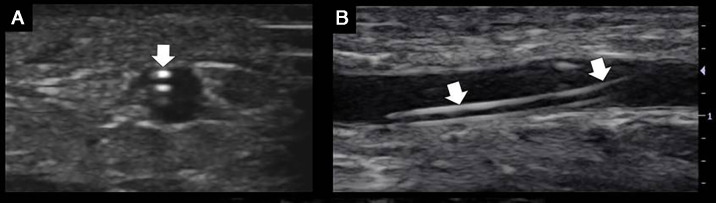
“…such as point- of-care ultrasound (POCUS), is recommended when establishing peripheral intravenous access in patients with DIVA (figure 1), 10 30 and patients describe the insertion of ultrasound-guided peripheral intravenous catheters (USGPIVCs) as more comfortable than traditional landmark…”
BackgroundFabiani, A., Dreas, L., & Sanson, G. (2016) · Heart & Lung · doi:10.1016/j.hrtlng.2016.09.003 · Cited by 50
Engström, Å. H., & Forsberg, A. (2018) · Journal of Clinical Nursing · doi:10.1111/jocn.14668 · Cited by 37
Schults, J. A., Calleja, P., Slaughter, E., Paterson, R., Rickard, C. M., Booker, C., Marsh, N., Fenn, M., Kelly, J., Snelling, P. J., et al. (2022) · PLOS ONE · doi:10.1371/journal.pone.0269788 · Cited by 35 · cited 3×
“21 22–24 In addition, patients with DIVA report that they encounter a lack of communication and information from nurses during PIVC insertion procedures.”
BackgroundPlohal, A. (2020) · Journal of Infusion Nursing · doi:10.1097/nan.0000000000000408 · Cited by 29 · cited 4×
“7 18 22–25 Participants in this study reported that patients enjoyed watching the procedure on the screen and displaying true facts.”
BackgroundInfluentialDifficult intravenous access in a paediatric intensive care unit
de la Vieja-Soriano, M., Blanco-Daza, M., Macip-Belmonte, S., Domínguez-Muñoz, M., López-Sánchez, E., & Pérez-Pérez, E. (2022) · Enfermería Intensiva (English ed ) · doi:10.1016/j.enfie.2021.03.006 · Cited by 29
Hackett, A., Wells, C., Zhang, Z., Kero, J., Soriano, J., Rivera, J., Brito, A., Guiney, J., Leibner, E. S., & Kohli-Seth, R. D. (2021) · Journal of Pediatric Nursing · doi:10.1016/j.pedn.2021.09.017 · Cited by 20
Bagley, K. (2022) · Dimensions of Critical Care Nursing · doi:10.1097/dcc.0000000000000528 · Cited by 18
Nickel, B. (2019) · Critical Care Nurse · doi:10.4037/ccn2019443 · Cited by 17
Nalini, K., Archana, S., & Rath, P. (2017) · Anesthesia Essays and Researches · doi:10.4103/aer.aer_172_17 · Cited by 11
Vascular Access Care in Patients with Multimorbidity
Armenteros‐Yeguas, V., Tomás‐López, M. A., Miranda‐Serrano, E., Moraza-Dulanto, I., Meléndez-Fernández, L., Merino-Romero, E., Cristóbal‐Domínguez, E., & Gárate‐Echenique, L. (2020) · Journal of the Association for Vascular Access · doi:10.2309/java-d-20-00023 · Cited by 3 · cited 2×
“22 23 25 27 In addition, they experience PIVCs that are often inappropriate for prescribed treatment, making them more susceptible to potential complications.”
BackgroundImproved Patient Safety and Quality Outcomes With Amiodarone Infusions
Woods, C., Hughes, P., Wood, M., Ryan, S., & Powers, J. (2021) · Journal of Nursing Care Quality · doi:10.1097/ncq.0000000000000589 · Cited by 2
Mirzaei, S., & DeVon, H. A. (2019) · Critical Care Nurse · doi:10.4037/ccn2019543 · Cited by 1
Cited by
Utilisation of point-of-care ultrasound by critical care nurses: a scoping review protocol
Knutsen, K., & Solbakken, R. (2025) · BMJ Open · doi:10.1136/bmjopen-2025-100911 · Cited by 12
“15 The arguments for CCNs to use POCUS are numerous.”
Self-citationThe Experiences of Critical Care Nurses Implementing Point‐Of‐Care Ultrasound: A Qualitative Study
Su, H., Wang, N., Li, Z., Dong, X., Chen, G., & Cao, L. (2025) · Nursing in Critical Care · doi:10.1111/nicc.70104 · Cited by 12
Abagnale, M., Palazzo, C., Zampetti, N., Filippo, M. D., Citarella, R., Abagnale, F. G., Cecere, L., Limonti, F., & Gravante, F. (2026) · Healthcare · doi:10.3390/healthcare14101286 · Cited by 4
“Conducted across multiple geographical regions, including Europe [25,40–42], North America [43–46], South America [47], and Asia [48], these studies reflect a growing international interest in the integration of PoCUS into advanced nursing practice within critical care environments.”
InfluentialKnutsen, K., Vaismoradi, M., & Solbakken, R. (2026) · Intensive and Critical Care Nursing · doi:10.1016/j.iccn.2026.104506 · Cited by 2
Self-citationde Farias, J. J. M., Pontes, C. A. D. F., Freire, W. T., Barbosa, K. T. F., Mangueira, S. D. O., de Sousa, M. M., & Cabral, J. V. B. (2025) · Rev Rene · doi:10.36517/2175-6783.20252695685 · Cited by 1
Metadata
- Authors
- Hansen, Ø. M., & Solbakken, R.
- Affiliations
- Nordland Hospital Trust (NO)
- Nord University (NO)
- Corresponding author
- Hansen, Øystein Myrlund
- Venue
- BMJ Open
- Publisher
- BMJ
- Published
- 2024-06
- Volume
- 14
- Issue
- 6
- Pages
- e078106
- ISSN
- 2044-6055 (ISSN-L)
- PMC
- PMC11163595
- OpenAlex
- W4399328595
- Cited by
- 10
- References
- 28
- Citations by year
- 2026: 7 · 2025: 3
- FWCI
- 3.75
- Type
- journal article
- Language
- en
- Open access
- gold
- doi.org
- Licence
- Locations
- BMJ Open (publishedVersion, cc-by-nc)
- PubMed Central (publishedVersion, cc-by-nc)
- PubMed (publishedVersion)
- DOAJ (DOAJ: Directory of Open Access Journals) (submittedVersion)
- NORA - Norwegian Open Research Archives (submittedVersion, cc-by-nc)
- HighWire Press Open Archive (submittedVersion)
- Topics
- Health Sciences › Medicine › Critical Care and Intensive Care Medicine › Ultrasound in Clinical Applications
- Health Sciences › Medicine › Critical Care and Intensive Care Medicine › Central Venous Catheters and Hemodialysis
- Physical Sciences › Engineering › Biomedical Engineering › Intravenous Infusion Technology and Safety
- Keywords
- point-of-care ultrasound, peripheral intravenous access, difficult venous access, intensive care unit nurses, ultrasound-guided venipuncture, intensive care unit, nursing role expansion, action readiness, job satisfaction
- MeSH terms
- Adult, Attitude of Health Personnel, Catheterization, Peripheral, Female, Humans, Intensive Care Units, Male, Middle Aged, Norway, Sweden, Ultrasonography, Interventional, Point-of-Care Systems, Qualitative Research, Critical Care Nursing
About these checks
Registry, retraction, Cites and statistics results are computed, not judged, with one exception: a printed reference that no index lists is read once by a model before it counts as a citation error. Claims are extracted by a model and kept only when their quote appears verbatim in the text; each cited source is then checked, with a model’s help, for whether it says what the claim relies on. Those verdicts can be wrong — read the claim’s quote and the cited source before relying on one.
Statistics and arithmetic are recomputed, not judged.
Confidence bands are shown only for fields calibrated on our annotated test set. None is calibrated yet, so no band is shown.
What counts as a claim ›How we measure confidence ›How we check this ›
Are you an author, or do you see a problem with this page? Request a review
Data sources
Bibliographic data: Semantic Scholar, OpenAlex, Crossref.
Contains information from the Semantic Scholar Academic Graph Datasets, made available under the ODC Attribution License (ODC-BY 1.0).
Semantic Scholar’s data is described in: Kinney, R., et al. (2023). The Semantic Scholar Open Data Platform. arXiv:2301.10140.
