

Liver organoids: from basic research to therapeutic applications
Open accessThe DOI matches its Crossref record; 115 of the 116 references it cites were found in a registry or an index.
Abstract
Organoid cultures have emerged as an alternative in vitro system to recapitulate tissues in a dish. While mouse models and cell lines have furthered our understanding of liver biology and associated diseases, they suffer in replicating key aspects of human liver tissue, in particular its complex architecture and metabolic functions. Liver organoids have now been established for multiple species from induced pluripotent stem cells, embryonic stem cells, hepatoblasts and adult tissue-derived cells. These represent a promising addition to our toolbox to gain a deeper understanding of this complex organ. In this perspective we will review the advances in the liver organoid field, its limitations and potential for biomedical applications.
Overview
The claims and statistics of this paper haven’t been checked yet.
Free: it reads the open-access text and checks the first 5 claims that cite a source we can check. Create a free account to check every claim.
Integrity signals
Registry
Cites
Statistics
Figures
Verification
Claims the paper makes
The claims and statistics of this paper haven’t been checked yet.
Free: it reads the open-access text and checks the first 5 claims that cite a source we can check. Create a free account to check every claim.
Claims other papers make about this one
Each is checked against this paper’s own text: does it say what the citing paper says it does?
The source backs part of the claim, not all of it — or backs it for a different population, condition or comparison.
In the citing paper
“the need for a 3D environment to maintain cellular maintaining polarity and plasticity”
From Decellularized liver scaffolds for constructing drug-metabolically functional ex vivo human liver models (2025) · cites this paper as [6]
Experimental — accuracy not yet measuredThe source backs part of the claim, not all of it — or backs it for a different population, condition or comparison.
In the citing paper
“the requirement for a complex extracellular matrix (ECM) that support molecular, tissue, and cellular characteristics, metabolic regulation, and signal transduction [5,6]”
From Decellularized liver scaffolds for constructing drug-metabolically functional ex vivo human liver models (2025) · cites this paper as [6]
Experimental — accuracy not yet measuredThe source backs part of the claim, not all of it — or backs it for a different population, condition or comparison.
In the citing paper
“the absence of lineage stage-specific paracrine signals from epithelial-mesenchymal cell-cell interactions”
From Decellularized liver scaffolds for constructing drug-metabolically functional ex vivo human liver models (2025) · cites this paper as [6]
Experimental — accuracy not yet measured
Self-check
Percentages, sums and reported differences re-computed from the paper’s own numbers.
The self-check needs the paper’s full text.
Citations
Cites
Sorafenib in advanced hepatocellular carcinoma
Llovet, J. M., Ricci, S., Mazzaferro, V., Hilgard, P., Gane, E., Blanc, J.-F., de Oliveira, A. C., Santoro, A., Raoul, J.-L., Forner, A., et al. (2008) · New England Journal of Medicine · doi:10.1056/nejmoa0708857 · Cited by 13,097
Establishment in culture of pluripotential cells from mouse embryos
Evans, M. J., & Kaufman, M. H. (1981) · Nature · doi:10.1038/292154a0 · Cited by 8,607
Single Lgr5 stem cells build crypt-villus structures in vitro without a mesenchymal niche
Sato, T., Vries, R. G., Snippert, H. J., van de Wetering, M., Barker, N., Stange, D. E., van Es, J. H., Abo, A., Kujala, P., Peters, P. J., et al. (2009) · Nature · doi:10.1038/nature07935 · Cited by 7,204
A New Era of Systemic Therapy for Hepatocellular Carcinoma with Regorafenib and Lenvatinib
Kudo, M. (2017) · Liver Cancer · doi:10.1159/000462153 · Cited by 5,936
Sorafenib in Advanced Hepatocellular Carcinoma
정, 재. (2008) · Cited by 5,586
Kudo, M., Finn, R. S., Qin, S., Han, K.-H., Ikeda, K., Piscaglia, F., Baron, A., Park, J.-W., Han, G., Jassem, J., et al. (2018) · The Lancet · doi:10.1016/s0140-6736(18)30207-1 · Cited by 5,497
Cerebral organoids model human brain development and microcephaly
Lancaster, M. A., Renner, M., Martin, C.-A., Wenzel, D., Bicknell, L. S., Hurles, M. E., Homfray, T., Penninger, J. M., Jackson, A. P., & Knoblich, J. A. (2013) · Nature · doi:10.1038/nature12517 · Cited by 5,372
Sato, T., Stange, D. E., Ferrante, M., Vries, R. G. J., van Es, J. H., van den Brink, S., van Houdt, W. J., Pronk, A., van Gorp, J., Siersema, P. D., et al. (2011) · Gastroenterology · doi:10.1053/j.gastro.2011.07.050 · Cited by 3,753
Organoid Models and Applications in Biomedical Research
Xinaris, C., Brizi, V., & Remuzzi, G. (2015) · Nephron · doi:10.1159/000433566 · Cited by 3,515
Organogenesis in a dish: Modeling development and disease using organoid technologies
Lancaster, M. A., & Knoblich, J. A. (2014) · Science · doi:10.1126/science.1247125 · Cited by 2,931
Cited by
Items 101–200 of 356
Establishment of a 3D hyperuricemia model based on cultured human liver organoids
Hou, C., Hu, Y., Jiang, H., Xu, Z., Sha, W., Liu, J., Ren, J., & Yao, M. (2021) · Free Radical Biology and Medicine · doi:10.1016/j.freeradbiomed.2021.11.023 · Cited by 27
Pluripotent Stem Cell-Derived Hepatocyte-like Cells: Induction Methods and Applications
Luo, Q., Wang, N., Que, H., Mai, E., Hu, Y., Tan, R., Gu, J. H., & Gong, P. (2023) · International Journal of Molecular Sciences · doi:10.3390/ijms241411592 · Cited by 31
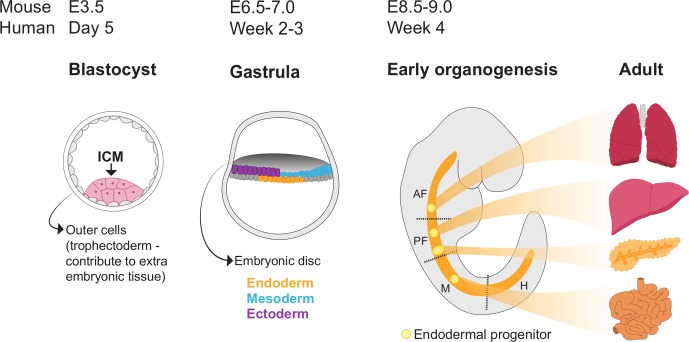
“ICM, the inner cell mass; AF, anterior foregut; PF, posterior foregut; F, foregut; M, midgut; H, hindgut; FGF, fibroblast growth factor; BMP, bone morphogenetic protein.”
BackgroundInfluentialWang, L., Koui, Y., Kanegae, K., Kido, T., Tamura-Nakano, M., Yabe, S., Tai, K., Nakajima, Y., Kusuhara, H., Sakai, Y., et al. (2024) · Biomaterials · doi:10.1016/j.biomaterials.2024.122621 · Cited by 25
Artificial Intelligence for Organoids Multidimensional Assessment
Mo, Y., Wang, J., Yang, H., Bai, L., Xu, K., & Su, J. (2025) · SmartMat · doi:10.1002/smm2.70016 · Cited by 29
Evolving Cell-Based and Cell-Free Clinical Strategies for Treating Severe Human Liver Diseases
Cernigliaro, V., Peluso, R., Zedda, B., Silengo, L., Tolosano, E., Pellicano, R., Altruda, F., & Fagoonee, S. (2020) · Cells · doi:10.3390/cells9020386 · Cited by 26
“Hitherto, organoids have provided an excellent tool to study biological processes associated with liver development and regeneration, disease modelling and determination of drug response to offer personalised therapy [109].”
BackgroundAriyachet, C., Chuaypen, N., Kaewsapsak, P., Chantaravisoot, N., Jindatip, D., Potikanond, S., & Tangkijvanich, P. (2022) · International Journal of Molecular Sciences · doi:10.3390/ijms23169380 · Cited by 30
Gaining New Biological and Therapeutic Applications into the Liver with 3D In Vitro Liver Models
Lee, S. W., Jung, D. J., & Jeong, G. S. (2020) · Tissue Engineering and Regenerative Medicine · doi:10.1007/s13770-020-00245-9 · Cited by 26
“Organoids are 3D cellular clusters derived from primary tissues, ESCs or iPSCs that recapitulate features of the tissue from which the cells originate [20, 88].”
BackgroundKim, J. J., Bae, M., & Cho, D. (2024) · Small Science · doi:10.1002/smsc.202400314 · Cited by 29
Liver ductal organoids reconstruct intrahepatic biliary trees in decellularized liver grafts
Tomofuji, K., Fukumitsu, K., Kondo, J., Horie, H., Makino, K., Wakama, S., Ito, T., Oshima, Y., Ogiso, S., Ishii, T., et al. (2022) · Biomaterials · doi:10.1016/j.biomaterials.2022.121614 · Cited by 24
The deLIVERed promises of gene therapy: Past, present, and future of liver-directed gene therapy
Puzzo, F., & Kay, M. A. (2025) · Molecular Therapy · doi:10.1016/j.ymthe.2025.03.041 · Cited by 31
“82,83 Furthermore, advancements in organ-on-a-chip technology have enabled the integration of additional cellular complexity into liver organoids by incorporating other liver-resident cell types, including endothelial cells and Kupffer cells.”
Leslie, J., Krishnamurthy, K. A., Gopalsamy, I. K., Inácio, P., Huch, M., Gallage, S., Oakley, F., & Vacca, M. (2026) · Nature Reviews Gastroenterology & Hepatology · doi:10.1038/s41575-025-01162-9 · Cited by 30
Self-citationChusilp, S., Lee, C. M., Li, B., Lee, D., Yamoto, M., Ganji, N., Vejchapipat, P., & Pierro, A. (2020) · Pediatric Surgery International · doi:10.1007/s00383-020-04765-2 · Cited by 28
“These organoids contained cholangiocytes [19, 23] that predominantly expressed cholangiocyte marker, cytokeratin 19 (Fig.”
BackgroundSepúlveda‐Crespo, D., Resino, S., & Martínez, I. (2021) · Drugs · doi:10.1007/s40265-020-01458-x · Cited by 24
Enteroviruses: The role of receptors in viral pathogenesis
Heckenberg, E., Steppe, J. T., & Coyne, C. B. (2022) · Advances in virus research · doi:10.1016/bs.aivir.2022.09.002 · Cited by 24
Engineered human liver based on pullulan-dextran hydrogel promotes mice survival after liver failure
Guilcher, C. L., Merlen, G., Dellaquila, A., Labour, M.-N., Aid, R., Tordjmann, T., Letourneur, D., & Simón‐Yarza, T. (2023) · Materials Today Bio · doi:10.1016/j.mtbio.2023.100554 · Cited by 29
“alternative to two-dimensional (2D) hepatocytes culture models that do not mimic complex tissue structures and exhibit poor long-term viability or functionality, [2,3].”
BackgroundWesthaus, A., Cabanes‐Creus, M., Dilworth, K. L., Zhu, E., Gómez, D. S., Navarro, R. G., Amaya, A. K., Scott, S., Kwiatek, M., McCorkindale, A. L., et al. (2023) · Human Gene Therapy · doi:10.1089/hum.2022.188 · Cited by 25
“Using adult stem cell–derived ductal organoids consisting of liver ductal progenitor cells, 50 we found AAV5 to be most effective at entering cells (29% of NGS reads at the DNA level) (Fig.”
Signalling pathways and transcriptional regulators orchestrating liver development and cancer
Campbell, S. A., Stephan, T. L., Lotto, J., Cullum, R., Drissler, S., & Hoodless, P. A. (2021) · Development · doi:10.1242/dev.199814 · Cited by 23
Chen, P., Zou, F., & Liu, W. (2025) · Frontiers in Pharmacology · doi:10.3389/fphar.2025.1549526 · Cited by 41
Human Organoids and Their Application in Tumor Models, Disease Modeling, and Tissue Engineering
Song, S., Liu, Z., Wang, Y., & Gong, B. (2025) · Medicine Bulletin · doi:10.1002/mdb2.70001 · Cited by 33
Organoids for tissue repair and regeneration
Yu, B., Zhou, D., Wang, F., Chen, X., Li, M., & Su, J. (2025) · Materials Today Bio · doi:10.1016/j.mtbio.2025.102013 · Cited by 40
Hepatic bile acid synthesis and secretion: Comparison of in vitro methods
de Bruijn, V. M. P., Wang, Z., Bakker, W., Zheng, W., Spee, B., & Bouwmeester, H. (2022) · Toxicology Letters · doi:10.1016/j.toxlet.2022.06.004 · Cited by 26
Cartilaginous Organoids: Advances, Applications, and Perspectives
Yu, Y., Wang, J., Li, Y., Chen, Y., & Cui, W. (2022) · Advanced NanoBiomed Research · doi:10.1002/anbr.202200114 · Cited by 25
Advances in liver and pancreas organoids: how far we have come and where we go next
Sljukic, A., Jenkinson, J. G., Niksic, A., Prior, N., & Huch, M. (2025) · Nature Reviews Gastroenterology & Hepatology · doi:10.1038/s41575-025-01116-1 · Cited by 27
“Therapeutic applications of liver organoids have been comprehensively reviewed elsewhere 33,35,36,106 .”
Self-citationOrganoids for the Study of Liver Cancer
Wang, H., Calvisi, D. F., & Chen, X. (2021) · Seminars in Liver Disease · doi:10.1055/s-0040-1719176 · Cited by 24
Pozzobon, M., D’Agostino, S., Roubelakis, M. G., Cargnoni, A., Gramignoli, R., Wolbank, S., Gindraux, F., Bollini, S., Kerdjoudj, H., Fénelon, M., et al. (2022) · Frontiers in Bioengineering and Biotechnology · doi:10.3389/fbioe.2022.961987 · Cited by 23
“The therapeutic potential of liver organoids represents an alternative of functional and expandable cells for transplantation, exceeding the current limitations (Prior et al., 2019).”
BackgroundToward better drug development: Three-dimensional bioprinting in toxicological research
Szűcs, D., Fekete, Z., Guba, M., Kemény, L. V., Jemnitz, K., Kis, E., & Veréb, Z. (2023) · International Journal of Bioprinting · doi:10.18063/ijb.v9i2.663 · Cited by 27
“Organoids are appropriate for reproductive toxicology studies and more suitable than animals in preclinical studies, because of interspecies differences[7-9,34,48,58,60-77].”
BackgroundHan, D., Xu, K., Jin, Z., Xu, Y., Li, Y., Wang, L., Cao, Q., Kim, K.-P., Ryu, D. H., Hong, K., et al. (2023) · International Journal of Biological Sciences · doi:10.7150/ijbs.85145 · Cited by 24
“For this reason, PHHs and 2D hepatocyte–like cells are insufficient for reproducing the cellular crosstalk, as they lack pro-inflammatory and pro-fibrotic cell types, which are critical for initiation and progression of NAFLD and NASH (24, 168).”
InfluentialRabiet, L., Arakélian, L., Jeger‐Madiot, N., García, D. R., Larghero, J., & Aider, J. (2024) · Biotechnology and Bioengineering · doi:10.1002/bit.28651 · Cited by 21
“Third, considering the high potential of liver ‐ on ‐ chip for cell therapy, drug testing, and fundamental research (Beckwitt et al., 2018; Brooks et al., 2021; Prior et al., 2019; Sae ‐ be et al., 2023; Zuchowska et al., 2017), we levitated HepaRG cells (Andersson et al., 2012).”
BackgroundKinge, C. W., Bhoola, N. H., & Kramvis, A. (2020) · Viruses · doi:10.3390/v12030353 · Cited by 25
Organoid, organ-on-a-chip and traditional Chinese medicine
Yang, J., Jiang, Y., Li, M., Wu, K., Wei, S., Zhao, Y., Shen, J., Du, F., Chen, Y., Deng, S., et al. (2025) · Chinese Medicine · doi:10.1186/s13020-025-01071-8 · Cited by 23
“First, organoids are constructed by culturing stem cells or progenitor cells under specific conditions, allowing them to self-assemble to form miniature organ types with three-dimensional structures [36].”
Huang, J., Sun, L., Yin, Y., Yang, H., Zeng, K., Huang, P., Liang, X., Wu, J., Xiang, A. P., & Wang, J. (2025) · Cell Reports · doi:10.1016/j.celrep.2025.116207 · Cited by 26
Intersection of nanomaterials and organoids technology in biomedicine
Shen, C., Zhang, Z., Li, X., Huang, Y.-P., Wang, Y., Zhou, H. R., Xiong, L., Wen, Y., Zou, H., & Liu, Z. (2023) · Frontiers in Immunology · doi:10.3389/fimmu.2023.1172262 · Cited by 21
“For example, we still cannot very precisely control organoid size, shape, proportion of cellular composition (6).”
BackgroundAdvances in organoid-on-a-chip for recapitulation of human physiological events
Park, B. J., Park, J., Han, S., Kwon, T., Sung, J. Y., Kim, J., Safarkhani, M., Min, K.-H., Lee, E.-H., Kang, S., et al. (2025) · Materials Today · doi:10.1016/j.mattod.2025.02.002 · Cited by 23
Hepatic organoids as a platform for liver disease modeling and the development of novel therapies
Luce, E., Messina, A., & Duclos‐Vallée, J. (2025) · Clinics and Research in Hepatology and Gastroenterology · doi:10.1016/j.clinre.2025.102647 · Cited by 24
Gehling, K., Parekh, S., Schneider, F., Kirchner, M., Kondylis, V., Nikopoulou, C., & Tessarz, P. (2022) · Life Science Alliance · doi:10.26508/lsa.202101340 · Cited by 27
“Organoids can be derived either from pluripotent cells, such as embryonic or induced pluripotent stem cells, but also from tissue-resident stem and progenitor cells (Prior et al, 2019).”
BackgroundIL-17 signaling in primary sclerosing cholangitis patient-derived organoids
Moreno, A. S. G., Guicciardi, M. E., Wixom, A. Q., Jessen, E., Yang, J., Ilyas, S. I., Bianchi, J. K., Vairo, F. P. E., Lazaridis, K. N., & Gores, G. J. (2024) · Hepatology Communications · doi:10.1097/hc9.0000000000000454 · Cited by 25
Zhang, K., Li, H., Xin, Z., Li, Y., Wang, X., Hu, Y., Liu, H., & Cai, D. (2020) · Journal of Animal Science and Biotechnology/Journal of animal science and biotechnology · doi:10.1186/s40104-020-00511-9 · Cited by 20
The Efficacy of the Hepatocyte Spheroids for Hepatocyte Transplantation
Shibuya, K., Watanabe, M., Goto, R., Zaitsu, M., Ganchiku, Y., & Taketomi, A. (2021) · Cell Transplantation · doi:10.1177/09636897211000014 · Cited by 20
Cell-Based Regeneration and Treatment of Liver Diseases
Hofmann, J. D., Hackl, V., Esser, H., Mészáros, A., Fodor, M., Öfner, D., Troppmair, J., Schneeberger, S., & Hautz, T. (2021) · International Journal of Molecular Sciences · doi:10.3390/ijms221910276 · Cited by 23
Experimental Protocols Used to Mimic Gastrointestinal Protein Digestion: A Systematic Review
Luz, A. B. S., de Medeiros, A. F., de Medeiros, G. C. B. S., Piuvezam, G., Passos, T. S., & Morais, A. H. D. A. (2024) · Nutrients · doi:10.3390/nu16152398 · Cited by 18
Three-dimensional (3D) cell culture studies: a review of the field of toxicology
İpek, S., Üstündağ, A., & Eke, B. C. (2022) · Drug and Chemical Toxicology · doi:10.1080/01480545.2022.2066114 · Cited by 22
Große‐Segerath, L., Follert, P., Behnke, K., Ettich, J., Buschmann, T., Kirschner, P., Hartwig, S., Lehr, S., Korf‐Klingebiel, M., Eberhard, D., et al. (2024) · Nature Communications · doi:10.1038/s41467-024-44760-y · Cited by 21
“In general, organoids are considered more physiologically representative than classic 2D cell cultures, since the cells of organoids are ) P = 0.0314 located within a three-dimensional (3D) environment with a higher number of cell-to-cell contacts 41 .”
InfluentialUsing Liver Organoids as Models to Study the Pathobiology of Rare Liver Diseases
Obeid, D. A., Mir, T. A., Alzhrani, A., Altuhami, A., Shamma, T., Ahmed, S. G., Kazmi, S., Fujitsuka, I., Ikhlaq, M., Mir, M. S., et al. (2024) · Biomedicines · doi:10.3390/biomedicines12020446 · Cited by 20
“…three-dimensional cell culture system derived from adult stem cells, embryonic stem cells, or induced pluripotent stem cells that are capa-Biomedicines ble of self-renewal and self-organization and recapitulate the genotypic and phenotypic characteristics of the native tissue or organ [14,27].”
BackgroundLiver organoids: From fabrication to application in liver diseases
Liu, Q., Zeng, A., Liu, Z., Wu, C., & Song, L. (2022) · Frontiers in Physiology · doi:10.3389/fphys.2022.956244 · Cited by 19
“While animal models used to study liver disease mechanisms and targeted therapeutics share key biological and histological features with the liver in humans (Prior et al., 2019), the intrinsic differences between animal models and humans cannot be easily resolved, especially in replicating the key aspects of the compl…”
BackgroundKim, H., & Park, H. (2025) · Toxicological Research · doi:10.1007/s43188-024-00275-8 · Cited by 25
“Generation of hPSC-derived hepatic models, including hLOs, recapitulates the embryonic development of the human liver in a culture dish [24].”
Cell Culture Models for the Study of Hepatitis D Virus Entry and Infection
Heuschkel, M. J., Baumert, T. F., & Verrier, E. R. (2021) · Viruses · doi:10.3390/v13081532 · Cited by 18
“This system is an advancement in the models for generating fundamental knowledge of HBV and HDV biology and providing a promising platform toward screening potential new therapies and the development of customized hepatitis treatment [69].”
BackgroundFrom Non-Alcoholic Fatty Liver Disease to Liver Cancer: Microbiota and Inflammation as Key Players
Rodríguez‐Lara, A., Rueda‐Robles, A., Sáez‐Lara, M. J., Plaza‐Díaz, J., & Álvarez‐Mercado, A. I. (2023) · Pathogens · doi:10.3390/pathogens12070940 · Cited by 18
“A closer collaboration with bioengineers is also important, and adding blood vessels to liver organoids would be a reasonable approach to overcoming the problem of limited nutrition availability that ultimately affects the growth of organoids [98].”
Latest impact of engineered human liver platforms on drug development
Monckton, C. P., Brown, G. E., & Khetani, S. R. (2021) · APL Bioengineering · doi:10.1063/5.0051765 · Cited by 18
3D bioprinting lobule-like hepatorganoids with induced vascularization for orthotopic implantation
Yan, J., Ye, Z., Lu, Y., Yuan, Y., Wang, X., Yan, T., Yin, J., & Wang, Y. (2025) · Materials Today Bio · doi:10.1016/j.mtbio.2025.101515 · Cited by 15
Ge, Y., Yang, S., Zhang, T., Luo, K., Zhang, J., Wei, Y., Pu, Y., Chen, Z., & Liang, G. (2025) · Ecotoxicology and Environmental Safety · doi:10.1016/j.ecoenv.2025.118215 · Cited by 20
Iteration of Tumor Organoids in Drug Development: Simplification and Integration
Zhao, R., Feng, Q., Xia, Y., Liao, L., & Xie, S. (2025) · Pharmaceuticals · doi:10.3390/ph18101540 · Cited by 21
“Clinical translation is further constrained by small sample sizes and insufficient validation across diverse cohorts, primarily due to limited biopsy availability and inconsistent culture conditions [19,20].”
Zhao, Q., Lu, S., Guan, Y., Sun, Z., Qiu, S., & Zhang, A. (2026) · Lipids in Health and Disease · doi:10.1186/s12944-026-02867-9 · Cited by 17
“…structure and endogenous metabolic functions of hepatocytes, and are thus more suitable for simulating the cell-autonomous phenotypes caused by the persistent activation of the ASF axis, such as enhanced DNL and intracellular LDs accumulation driven by the SREBP1/FASN signaling pathway [245].”
Two-Dimensional and Three-Dimensional Cell Culture and Their Applications
Ballav, S., Deshmukh, A. J., Siddiqui, S., Aich, J., & Basu, S. (2022) · Biochemistry · doi:10.5772/intechopen.100382 · Cited by 24
“The application of organoids has helped in producing numerous in vitro organoids such as rectal [48], gastric [49], lung [50], liver [51], pancreas [52], retina [53], thyroid [54], kidney [55] and intestine [56] that had successfully recapitulated the structural and functional motif of real organs.”
BackgroundProgress and perspective of organoid technology in cancer-related translational medicine
Lin, Y., Jiang, L., He, Q., Yuan, M., & Cao, J. (2022) · Biomedicine & Pharmacotherapy · doi:10.1016/j.biopha.2022.112869 · Cited by 19
Human brain organoid: trends, evolution, and remaining challenges
Li, M., Yuan, Y., Hou, Z., Hao, S., Jin, L., & Wang, B. (2023) · Neural Regeneration Research · doi:10.4103/1673-5374.390972 · Cited by 18
“…been generated, including brain, retina, lung, liver, gastrointestinal, heart, and kidney organoids (Barkauskas et al., 2017; Nishinakamura, 2019; Prior et al., 2019; Hofbauer et al., 2021; Cordella et al., 2022; Hou et al., 2022; Kelava et al., 2022; Scott and Huang, 2022; Bouffi et al., 2023;…”
Jabri, A., Khan, J. A., Taftafa, B., Alsharif, M., Mhannayeh, A., Chinnappan, R., Alzhrani, A., Kazmi, S., Mir, M. S., Alsaud, A. W., et al. (2024) · Bioengineering · doi:10.3390/bioengineering11040346 · Cited by 15
“Recent advances in organoid research indicate that this technology can be applied to culture and fabricate liver organoids for disease models, cancer research, viral infection models, and translational research [49–51 , 150 ].”
BackgroundEx Vivo Tools and Models in MASLD Research
Velliou, R.-I., Giannousi, E., Ralliou, C., Kassi, E., & Chatzigeorgiou, A. (2024) · Cells · doi:10.3390/cells13221827 · Cited by 15
“To negate this concern, organoids can be derived from embryonic or adult tissue-resident stem cells [77].”
Clinical application of stem cell in patients with end-stage liver disease: progress and challenges
Tao, Y.-C., & Chen, E.-Q. (2020) · Annals of Translational Medicine · doi:10.21037/atm.2020.03.153 · Cited by 15
“Organoids can be generated from both tissue-resident stem/progenitor cells and pluripotent stem cells (12).”
BackgroundHou, C., Sha, W., Xu, Z., Hu, Y., Amakye, W. K., Yao, M., & Ren, J. (2021) · Food Chemistry · doi:10.1016/j.foodchem.2021.131634 · Cited by 16
Peng, W., Zhou, N., Song, Z., Zhang, H., & He, X. (2023) · Metabolites · doi:10.3390/metabo13010084 · Cited by 16
“Once hepatic antioxidant responses are unable to cope with these challenges, the homeostatic systems gradually deteriorate and lead to a decline in disease resistance [23].”
Fabrication of functional ameloblasts from hiPSCs for dental application
Kim, K.-H., Kim, E., Kim, H., Li, S., & Jung, H.-S. (2023) · Frontiers in Cell and Developmental Biology · doi:10.3389/fcell.2023.1164811 · Cited by 17
“, 2020), liver (endoderm) (Guan et al., 2017; Prior et al., 2019; Olgasi et al., 2020), brain (ectoderm) (Lee et al.”
In silico study of heterogeneous tumour-derived organoid response to CAR T-cell therapy
Luque, L. M., Carlevaro, C. M., Rodríguez‐Lomba, E., & Lomba, E. (2024) · Scientific Reports · doi:10.1038/s41598-024-63125-5 · Cited by 16
“Organoids have been used to establish living biobanks of cancer and normal tissues that preserve the genetic and functional heterogeneity among patients 24,25 .”
MethodModel Organoids: Integrated Frameworks for the Next Frontier of Healthcare Advancements
Bhattacharya, R., Bose, D., Kaur, T., Patel, R., Renuka, O., & Rodriguez, R. V. (2024) · Stem Cell Reviews and Reports · doi:10.1007/s12015-024-10814-3 · Cited by 19
“The primary mediators of drug-related hepatotoxicity are cytochrome P450 enzymes, which liver organoids demonstrate at levels close to physi - ological levels [ 47 ].”
Lehmann, V., Schene, I. F., Ardisasmita, A. I., Liv, N., Veenendaal, T., Klumperman, J., van der Doef, H. P. J., Verkade, H. J., Verstegen, M. M. A., van der Laan, L. J. W., et al. (2021) · Journal of Inherited Metabolic Disease · doi:10.1002/jimd.12450 · Cited by 14
“Moreover, ICO generation and differentiation does not require genetic reprogramming or immortalization.(40,41) Previous in vitro copper metabolism studies were all performed in genetically induced fibroblasts or embryonic stem cells.”
BackgroundSebők, C., Tráj, P., Vörösházi, J., Mackei, M., Papp, M., Gálfi, P., Neogrády, Z., & Mátis, G. (2021) · Cells · doi:10.3390/cells10081910 · Cited by 18
Li, J., Liu, J., Xia, W., Yang, H., Sha, W., & Chen, H. H. (2024) · Technology in Cancer Research & Treatment · doi:10.1177/15330338231221856 · Cited by 15
“103,104 Direct intrinsic liver toxicity typically depends on the dosage, whereas idiosyncratic liver toxicity is unpredictable and can often occur within therapeutic doses.”
BackgroundRapid Self‐Assembly Mini‐Livers Protect Mice Against Severe Hepatectomy‐Induced Liver Failure
Luo, M., Lai, J., Zhang, E., Ma, Y., He, R., Mao, L., Deng, B., Zhu, J., Ding, Y., Huang, J., et al. (2024) · Advanced Science · doi:10.1002/advs.202309166 · Cited by 15
Progress, application and challenges of liver organoids
Sang, C., Lin, J., Ji, S., & Gao, Q. (2024) · Clinical Cancer Bulletin · doi:10.1007/s44272-024-00012-0 · Cited by 16
“Furthermore, organoid-culture technology also has been widely applied in liver disease studies [15, 16].”
Pérez-Luz, S., Lalchandani, J., Matamala, N., Barrero, M. J., Gil-Martín, S., Saz, S. R.-D., Varona, S., Monzón, S., Cuesta, I., Justo, I., et al. (2023) · International Journal of Molecular Sciences · doi:10.3390/ijms241512472 · Cited by 14
“Human organoids, as a novel model system, are very useful in studying organ health and diseases, as well as the effects of treatments [20,21].”
BackgroundSapir, G., Steinberg, D. J., Aqeilan, R. I., & Katz‐Brull, R. (2021) · Pharmaceuticals · doi:10.3390/ph14090878 · Cited by 12
“, kidney [5], liver [6], and pancreas [7]), as well as neural development and diseases [8].”
BackgroundCellular and Transcriptional Heterogeneity in the Intrahepatic Biliary Epithelium
Hrncir, H. R., & Gracz, A. D. (2022) · Gastro Hep Advances · doi:10.1016/j.gastha.2022.07.015 · Cited by 14
Novel, Innovative Models to Study Ischemia/Reperfusion-Related Redox Damage in Organ Transplantation
Hofmann, J. D., Pühringer, M., Steinkellner, S., Holl, A.-S., Mészáros, A., Schneeberger, S., Troppmair, J., & Hautz, T. (2022) · Antioxidants · doi:10.3390/antiox12010031 · Cited by 17
Modeling Innate Antiviral Immunity in Physiological Context
Goldstein, M. E., & Scull, M. A. (2021) · Journal of Molecular Biology · doi:10.1016/j.jmb.2021.167374 · Cited by 14
Progress, prospects, and limitations of organoid technology
Park, J. H., Byeun, D. G., & Choi, J. K. (2022) · Organoid · doi:10.51335/organoid.2022.2.e9 · Cited by 12
“Several organoids, such as testis [7], fallopian tube [8], endometrium [9], brain [10], gut [11], and liver [12], have been cultured either from directly sourced tissue-resident adult stem cells (ASCs) from biopsy samples or pluripotent stem cells (PSCs).”
BackgroundThree-Dimensional Organoids as a Model to Study Nonalcoholic Fatty Liver Disease
Park, Y., Thadasina, D., Bolujo, I., Isidan, A., Cross-Najafi, A. A., Lopez, K., Li, P., Dahlem, A. M., Kennedy, L. L., Sato, K., et al. (2022) · Seminars in Liver Disease · doi:10.1055/a-1934-5588 · Cited by 15
Liver cell therapies: cellular sources and grafting strategies
Zhang, W., Cui, Y., Du, Y., Yang, Y., Fang, T., Lu, F., Kong, W.-X., Xiao, C., Shi, J., Reid, L. M., et al. (2023) · Frontiers of Medicine · doi:10.1007/s11684-023-1002-1 · Cited by 12
Marques, L., & Vale, N. (2025) · Pharmaceutics · doi:10.3390/pharmaceutics17060747 · Cited by 14
Neuro–immune–tumor axis in gliomas: a review of mechanisms, models, and translational opportunities
Lu, X., Chen, S., Fu, Y., Zhou, T., Yu, J., Li, J., & Chen, W. (2025) · Frontiers in Immunology · doi:10.3389/fimmu.2025.1682322 · Cited by 18
Application of nanomaterials in organoid culture and cryopreservation
He, W. J., Sun, Q., Ge, D., Liu, Y., & Sun, B. (2025) · Nanoscale Advances · doi:10.1039/d5na00534e · Cited by 11
Application and challenges of tumor organoid technology in precision immunotherapy
Zhao, X., Gao, J., Liu, Y., Shi, Y., Zhang, M., Zhang, C., & Chen, J. (2025) · Frontiers in Immunology · doi:10.3389/fimmu.2025.1723995 · Cited by 15
Watanabe, S., Sugiura, H., & Arai, F. (2022) · IEEE Robotics and Automation Letters · doi:10.1109/lra.2022.3144766 · Cited by 12
Precision Medicine in Parkinson's Disease Using Induced Pluripotent Stem Cells
Kim, M. S., Kim, H., & Lee, G. (2024) · Advanced Healthcare Materials · doi:10.1002/adhm.202303041 · Cited by 12
Addante, A., González‐Corralejo, C., Roncero, C., Lazcanoiturburu, N., García‐Sáez, J., Herrera, B. M., & Sánchez, A. (2022) · Cells · doi:10.3390/cells11030365 · Cited by 12
“HGF is an important component of the growth Cells 2022, 11, 365 14 of 17 factor/hormone cocktails used to drive hepatocyte generation from pluripotent stem cells (iPSCs and ESCs) [38].”
BackgroundZhang, J.-S., Wang, Z.-B., Lai, Z.-Z., Yang, J.-W., Song, W.-J., Wei, Y.-B., Mei, J., & Wang, J.-G. (2023) · Hepatobiliary & Pancreatic Diseases International · doi:10.1016/j.hbpd.2022.10.007 · Cited by 11
Novel approaches to liver disease diagnosis and modeling
de Oliveira, A. G., & Fiorotto, R. (2021) · Translational Gastroenterology and Hepatology · doi:10.21037/tgh-20-109 · Cited by 14
Tao, H., Mao, K., Zhang, Z., Wei, W., Huang, X., Chen, Y., Mei, S., & Tian, X. (2025) · Pharmacological Research · doi:10.1016/j.phrs.2025.108020 · Cited by 13
Prediction of Acute Hepatotoxicity With Human Pluripotent Stem Cell‐Derived Hepatic Organoids
Kim, H., Kim, S. K., Oelgeschläger, M., & Park, H. (2024) · Current Protocols · doi:10.1002/cpz1.1015 · Cited by 12
“They can be derived from liver tissue-resident stem/progenitor cells, or differentiated from hPSCs, and are capable of proliferation and self-organization (Prior et al., 2019).”
BackgroundMethodLiu, J., Zhang, Y. F., & Yu, Y. (2025) · Cellular and Molecular Life Sciences · doi:10.1007/s00018-024-05557-w · Cited by 14
Mini-organs with big impact: Organoids in liver cancer studies
Khawar, M. B., WANG, Y., MAJEED, A., AFZAL, A., Haneef, K., & Sun, H. (2023) · Oncology Research Featuring Preclinical and Clinical Cancer Therapeutics · doi:10.32604/or.2023.029718 · Cited by 10
Induced Pluripotent Stem Cells (Ipscs) Based Liver Organoid: the Benefits and Challenges
Septiana, W. L., Noviantari, A., & Antarianto, R. D. (2023) · Cellular Physiology and Biochemistry · doi:10.33594/000000662 · Cited by 12
“To modify cell survival, migration, morphogenesis, differentiation, proliferation, and discovered that the construction of a microenvironment using 3D approaches is more advantageous physiologically , biochemically, and biomechanically [22, 29].”
BackgroundMethodTowards novel treatments for adrenal diseases: Cell- and gene therapy-based approaches
Mariniello, K., & Guasti, L. (2021) · Molecular and Cellular Endocrinology · doi:10.1016/j.mce.2021.111160 · Cited by 11
Liu, J., Hanson, A., Yin, W., Wu, Q., Wauthier, E., Diao, J., Dinh, T., Macdonald, J., Li, R., Terajima, M., et al. (2025) · Bioactive Materials · doi:10.1016/j.bioactmat.2024.09.029 · Cited by 9
“…cell-cell interactions, the need for a 3D environment to maintain cellular maintaining polarity and plasticity, and the requirement for a complex extracellular matrix (ECM) that support molecular, tissue, and cellular characteristics, metabolic regulation, and signal transduction [5,6].”
BackgroundRecent Advances of COVID-19 Modeling Based on Regenerative Medicine
Larijani, B. A., Heravani, N. F., Abedi, M., Tayanloo-Beik, A., Rezaei–Tavirani, M., Adibi, H., & Arjmand, B. (2021) · Frontiers in Cell and Developmental Biology · doi:10.3389/fcell.2021.683619 · Cited by 10
Development and Applications of Organoids in Gynecological Diseases
Yang, J., Li, W., Zhang, Z., Xu, Z., Zhu, W., Wang, J., & Wang, W. (2024) · Stem Cell Reviews and Reports · doi:10.1007/s12015-024-10833-0 · Cited by 10
“Subsequently, human liver and kidney organoids were also successfully established [ 10 , 11].”
Zhu, L., Liu, S., Yang, Z., Yang, L., Yang, Y., Han, P., Yu, M., Lin, L., Xu, L., Li, Y., et al. (2025) · Bioactive Materials · doi:10.1016/j.bioactmat.2025.04.030 · Cited by 23
“Liver organoids (LOs) can reproduce the specific structures and functions of the liver in vitro, thus providing a novel strategy to address the source of hepatocytes [10].”
Chen, W., Chen, X., Gao, F., Yao, Q., Cheng, S., Pan, Q., Yu, J., Yang, J., Ma, G., Gong, J., et al. (2025) · Journal of Nanobiotechnology · doi:10.1186/s12951-025-03617-2 · Cited by 14
“Here, we establish a novel, efficient three-dimensional (3D) model of multilineage organoids (Mulorgs), consisting of cholangiocytes, hepatocytes, and HSCs, which replicate the physiology and genetic profile of liver of PSC patients [5, 27].”
Tomofuji, K., Kondo, J., Onuma, K., Coppo, R., Horie, H., Oyama, K., Miyoshi, E., Fukumitsu, K., Ishii, T., Hatano, E., et al. (2023) · Hepatology Communications · doi:10.1097/hc9.0000000000000134 · Cited by 11
“[1] 3] Furthermore, functional hepatocytes are anticipated to be a resource for regenerative medicine to treat liver failure either through direct cell transplantation or the establishment of bioartificial liver devices.”
The application of organoid models in research into metabolic diseases
Song, Y., Lu, S., Gao, F., Wei, T., & Ma, W. (2023) · Diabetes Obesity and Metabolism · doi:10.1111/dom.15390 · Cited by 10
Single-cell multi-omics in the study of digestive system cancers
Zhou, S., Lin, N., Yu, L., Su, X., Liu, Z., Yu, X., Gao, H., Lin, S., & Zeng, Y. (2023) · Computational and Structural Biotechnology Journal · doi:10.1016/j.csbj.2023.12.007 · Cited by 10
“…have attempted to generate HCC organoids from human HCC specimens and maintain the growth of HCC spheroids in a three-dimensional culture system, which can be used for the construction of HCC organoid libraries, drug toxicity analysis, and drug screening and precision medicine research [144].”
MethodScalable Matrigel‐Free Suspension Culture for Generating High‐Quality Human Liver Ductal Organoids
Gong, S., He, K., Liu, Y., Luo, X., Ashraf, K., He, J., Li, W., Yang, L., Rehman, T. U., Shen, M., et al. (2025) · Cell Proliferation · doi:10.1111/cpr.70033 · Cited by 14
“Organoids hold particular potential for tissue repair as they retain key functions and characteristics of their original tissue [11–13].”
Metadata
- Authors
- Prior, N., Inacio, P., & Huch, M.
- Affiliations
- University of Cambridge (GB)
- Wellcome Trust-Cancer Research UK Gurdon Institute, University of Cambridge, Cambridge, UK
- Corresponding author
- Huch, Meritxell
- Venue
- Gut
- Publisher
- BMJ
- Published
- 2019-07-12
- Volume
- 68
- Issue
- 12
- Pages
- 2228-2237
- ISSN
- 0017-5749 (ISSN-L)
- 1468-3288
- PMC
- PMC6872443
- OpenAlex
- W2958872567
- Semantic Scholar
- 759f4e8e2dd837c38ecae5daf06e937fa18af646
- Cited by
- 356
- References
- 116
- Citations by year
- 2026: 30 · 2025: 60 · 2024: 52 · 2023: 51 · 2022: 60 · 2021: 55 · 2020: 47
- FWCI
- 5.31
- Type
- journal article
- Language
- en
- Open access
- hybrid
- doi.org
- Licence
- cc-by
- Locations
- Gut (publishedVersion, cc-by)
- PubMed Central (publishedVersion, cc-by)
- PubMed (publishedVersion)
- ePrints Soton (University of Southampton) (acceptedVersion)
- HighWire Press Open Archive (submittedVersion)
- MPG.PuRe (Max Planck Society) (submittedVersion)
- Apollo (University of Cambridge) (submittedVersion, cc-by)
- Apollo (cc-by)
- Funders
- H2020 European Research Council
- Wellcome
- Cancer Research UK
- National Centre for the Replacement, Refinement and Reduction of Animals in Research
- Wellcome Trust
- Topics
- Health Sciences › Medicine › Hepatology › Liver physiology and pathology
- Life Sciences › Biochemistry, Genetics and Molecular Biology › Molecular Biology › Pluripotent Stem Cells Research
- Health Sciences › Medicine › Surgery › Tissue Engineering and Regenerative Medicine
- Keywords
- liver organoids, organoid culture, in vitro liver models, induced pluripotent stem cells, embryonic stem cells, hepatoblasts, hepatic metabolism, liver disease, therapeutic applications
- MeSH terms
- Animals, Cell Line, Humans, Liver, Models, Biological, Organoids, Cell Culture Techniques, Biomedical Research, Regenerative Medicine
About these checks
Registry, retraction, Cites and statistics results are computed, not judged, with one exception: a printed reference that no index lists is read once by a model before it counts as a citation error. Claims are extracted by a model and kept only when their quote appears verbatim in the text; each cited source is then checked, with a model’s help, for whether it says what the claim relies on. Those verdicts can be wrong — read the claim’s quote and the cited source before relying on one.
Statistics and arithmetic are recomputed, not judged.
Confidence bands are shown only for fields calibrated on our annotated test set. None is calibrated yet, so no band is shown.
What counts as a claim ›How we measure confidence ›How we check this ›
Are you an author, or do you see a problem with this page? Request a review
Data sources
Bibliographic data: Semantic Scholar, OpenAlex, Crossref.
Contains information from the Semantic Scholar Academic Graph Datasets, made available under the ODC Attribution License (ODC-BY 1.0).
Semantic Scholar’s data is described in: Kinney, R., et al. (2023). The Semantic Scholar Open Data Platform. arXiv:2301.10140.
