

The DOI matches its Crossref record; 60 of the 60 references it cites were found in a registry or an index.
Long-term dietary patterns are associated with pro-inflammatory and anti-inflammatory features of the gut microbiome
Open accessAbstract
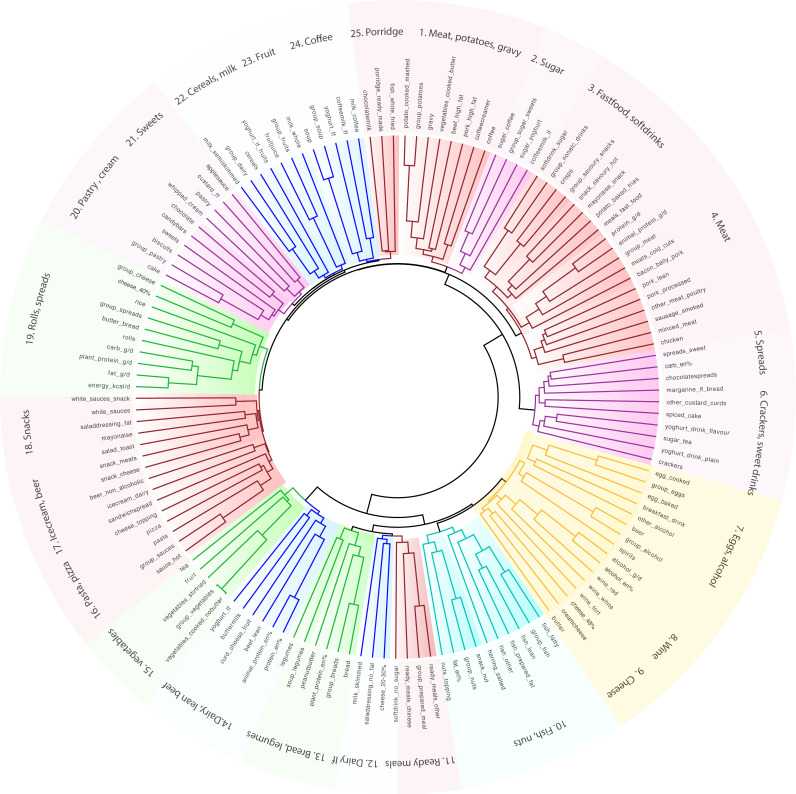
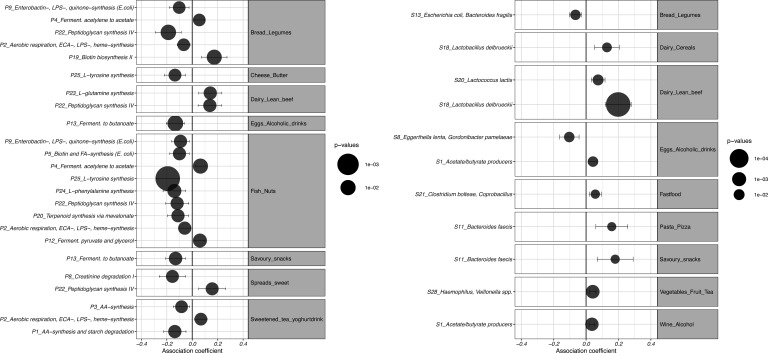
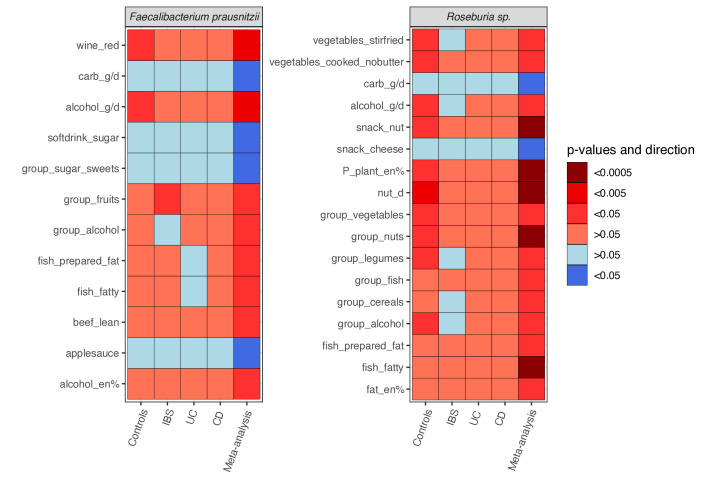
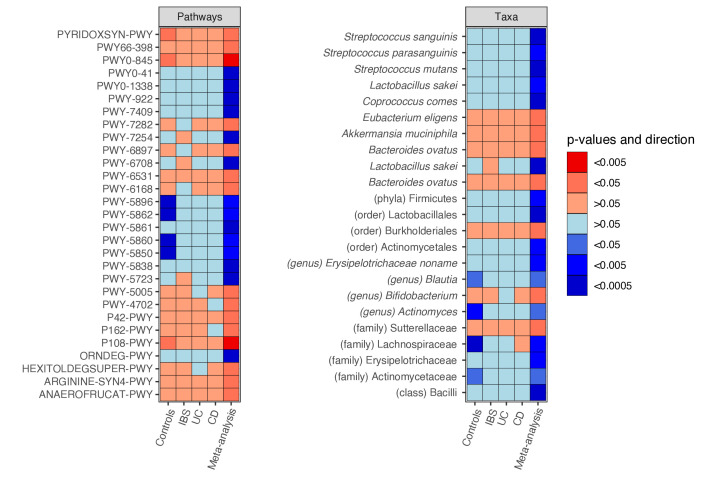
Objective: The microbiome directly affects the balance of pro-inflammatory and anti-inflammatory responses in the gut. As microbes thrive on dietary substrates, the question arises whether we can nourish an anti-inflammatory gut ecosystem. We aim to unravel interactions between diet, gut microbiota and their functional ability to induce intestinal inflammation. Design: We investigated the relation between 173 dietary factors and the microbiome of 1425 individuals spanning four cohorts: Crohn’s disease, ulcerative colitis, irritable bowel syndrome and the general population. Shotgun metagenomic sequencing was performed to profile gut microbial composition and function. Dietary intake was assessed through food frequency questionnaires. We performed unsupervised clustering to identify dietary patterns and microbial clusters. Associations between diet and microbial features were explored per cohort, followed by a meta-analysis and heterogeneity estimation. Results: We identified 38 associations between dietary patterns and microbial clusters. Moreover, 61 individual foods and nutrients were associated with 61 species and 249 metabolic pathways in the meta-analysis across healthy individuals and patients with IBS, Crohn’s disease and UC (false discovery rate<0.05). Processed foods and animal-derived foods were consistently associated with higher abundances of Firmicutes, Ruminococcus species of the Blautia genus and endotoxin synthesis pathways. The opposite was found for plant foods and fish, which were positively associated with short-chain fatty acid-producing commensals and pathways of nutrient metabolism. Conclusion: We identified dietary patterns that consistently correlate with groups of bacteria with shared functional roles in both, health and disease. Moreover, specific foods and nutrients were associated with species known to infer mucosal protection and anti-inflammatory effects. We propose microbial mechanisms through which the diet affects inflammatory responses in the gut as a rationale for future intervention studies.
Overview
The claims and statistics of this paper haven’t been checked yet.
Run the check — free, no account needed. It reads the open-access text and checks the sources it cites.
Integrity signals
Registry
Cites
Statistics
Figures
Verification
Claims the paper makes
The claims and statistics of this paper haven’t been checked yet.
Run the check — free, no account needed. It reads the open-access text and checks the sources it cites.
Claims other papers make about this one
Each is checked against this paper’s own text: does it say what the citing paper says it does?
The cited source says what the claim attributes to it.
In the citing paper
“Previous studies have suggested that long-term dietary habits play a role in shaping the composition and metabolic activity of the gut microbiota.”
From Adaptation to tolerate high doses of arabinoxylan is associated with fecal levels of Bifidobacterium longum (2024) · cites this paper as [55]
In the citing paper
“The gut microbiota releases byproducts from the cell wall, such as endotoxins like LPS, which can act locally and may be present in the gut, gingiva, and skin, as well as other tissues, causing dysregulation of GBA signaling (64), or can cross the intestinal barrier to enter the circulatory system; this is called metabolic endotoxemia (65).”
From Modulation of the gut–brain axis via the gut microbiota: a new era in treatment of amyotrophic lateral sclerosis (2023) · cites this paper as [65]
In the citing paper
“The Mediterranean diet has been associated with an increased abundance of bacteria producing SCFAs3 that have been shown to be predictive of immunotherapy response in several studies.2,4,5,6”
From Association of a Mediterranean Diet With Outcomes for Patients Treated With Immune Checkpoint Blockade for Advanced Melanoma (2023) · cites this paper as [3]
Self-check
Percentages, sums and reported differences re-computed from the paper’s own numbers.
The self-check needs the paper’s full text.
Citations
Cites
1 retracted
ESPEN guideline: Clinical nutrition in inflammatory bowel disease
Forbes, A., Escher, J., Hébuterne, X., Kłęk, S., Krznaric, Z., Schneider, S., Shamir, R., Stardelova, K., Wierdsma, N., Wiskin, A. E., et al. (2017) · Clinical Nutrition · doi:10.1016/j.clnu.2016.12.027 · Cited by 625
RetractedDiet rapidly and reproducibly alters the human gut microbiome
David, L. A., Maurice, C. F., Carmody, R. N., Gootenberg, D. B., Button, J. E., Wolfe, B. E., Ling, A. V., Devlin, A. S., Varma, Y., Fischbach, M. A., et al. (2014) · Nature · doi:10.1038/nature12820 · Cited by 10,100
From Dietary Fiber to Host Physiology: Short-Chain Fatty Acids as Key Bacterial Metabolites
Koh, A., De Vadder, F., Kovatcheva-Datchary, P., & Bäckhed, F. (2016) · Cell · doi:10.1016/j.cell.2016.05.041 · Cited by 7,070
Linking long-term dietary patterns with gut microbial enterotypes
Wu, G. D., Chen, J., Hoffmann, C., Bittinger, K., Chen, Y.-Y., Keilbaugh, S. A., Bewtra, M., Knights, D., Walters, W. A., Knight, R., et al. (2011) · Science · doi:10.1126/science.1208344 · Cited by 6,513
Reproducibility and validity of a semiquantitative food frequency questionnaire
WILLETT, W. C., SAMPSON, L., STAMPFER, M. J., ROSNER, B., BAIN, C., WITSCHI, J., HENNEKENS, C. H., & SPEIZER, F. E. (1985) · American Journal of Epidemiology · doi:10.1093/oxfordjournals.aje.a114086 · Cited by 4,274
Commensal Bifidobacterium promotes antitumor immunity and facilitates anti–PD-L1 efficacy
Sivan, A., Corrales, L., Hubert, N., Williams, J. B., Aquino-Michaels, K., Earley, Z. M., Benyamin, F. W., Man Lei, Y., Jabri, B., Alegre, M.-L., et al. (2015) · Science · doi:10.1126/science.aac4255 · Cited by 3,888
Turnbaugh, P. J., Bäckhed, F., Fulton, L., & Gordon, J. I. (2008) · Cell Host & Microbe · doi:10.1016/j.chom.2008.02.015 · Cited by 2,915
Desai, M. S., Seekatz, A. M., Koropatkin, N. M., Kamada, N., Hickey, C. A., Wolter, M., Pudlo, N. A., Kitamoto, S., Terrapon, N., Muller, A., et al. (2016) · Cell · doi:10.1016/j.cell.2016.10.043 · Cited by 2,805
Influence of diet on the gut microbiome and implications for human health
Singh, R. K., Chang, H.-W., Yan, D., Lee, K. M., Ucmak, D., Wong, K., Abrouk, M., Farahnik, B., Nakamura, M., Zhu, T. H., et al. (2017) · Journal of Translational Medicine · doi:10.1186/s12967-017-1175-y · Cited by 2,599
Artificial sweeteners induce glucose intolerance by altering the gut microbiota
Suez, J., Korem, T., Zeevi, D., Zilberman-Schapira, G., Thaiss, C. A., Maza, O., Israeli, D., Zmora, N., Gilad, S., Weinberger, A., et al. (2014) · Nature · doi:10.1038/nature13793 · Cited by 2,067
Research works printed but not linked: 1
- 10.1186/s12967-017-1175-y · DOI · Paper page
Cited by
Sorted by citations
Items 601–601 of 601
Lin, M., Zhang, D., Li, S., Qu, Y., & Cai, H. (2026) · Nutrients · doi:10.3390/nu18213588
Metadata
- Authors
- Bolte, L. A., Vich Vila, A., Imhann, F., Collij, V., Gacesa, R., Peters, V., Wijmenga, C., Kurilshikov, A., Campmans-Kuijpers, M. J. E., Fu, J., Dijkstra, G., Zhernakova, A., & Weersma, R. K.
- Affiliations
- University Medical Center Groningen (NL)
- Department of Gastroenterology and Hepatology, University of Groningen and University Medical Centre Groningen, Groningen, The Netherlands
- Corresponding author
- Weersma, Rinse K
- ORCID
- Venue
- Gut
- Publisher
- BMJ
- Published
- 2021-04-02
- Volume
- 70
- Issue
- 7
- Pages
- 1287-1298
- ISSN
- 0017-5749 (ISSN-L)
- 1468-3288
- PMC
- PMC8223641
- OpenAlex
- W3151963551
- Cited by
- 595
- References
- 60
- Citations by year
- 2026: 87 · 2025: 151 · 2024: 121 · 2023: 117 · 2022: 92 · 2021: 26
- FWCI
- 28.57
- Type
- journal article
- Language
- en
- Open access
- hybrid
- doi.org
- Locations
- Gut (publishedVersion, cc-by)
- PubMed Central (publishedVersion, cc-by)
- PubMed (publishedVersion)
- University of Groningen research database (University of Groningen / Centre for Information Technology) (publishedVersion, cc-by)
- University of Groningen research database (University of Groningen / Centre for Information Technology) (submittedVersion, cc-by)
- Funders
- CardioVasculair Onderzoek Nederland (CVON 2012-03)
- Netherlands’ Top Institute Food and Nutrition (GH001)
- Top Sector Life Sciences & Health, Samenwerkende Gezondheidsfondsen (LSHM18057-SGF)
- European Research Council (ERC Consolidator grant 101001678, ERC-715772)
- Nederlandse Organisatie voor Wetenschappelijk Onderzoek (NWO Gravitation grant ExposomeNL 024.004.017, NWO Gravitation grant Organ-on-Chip 024.003.001, NWO SPI 92-266, NWO VIDI grant 016.178.056)
- Topics
- Life Sciences › Biochemistry, Genetics and Molecular Biology › Molecular Biology › Gut microbiota and health
- Health Sciences › Medicine › Public Health, Environmental and Occupational Health › Nutritional Studies and Diet
- Health Sciences › Medicine › Gastroenterology › Inflammatory Bowel Disease
- Keywords
- dietary habits, gut microbiota, intestinal inflammation, Crohn's disease, ulcerative colitis, irritable bowel syndrome, processed foods, animal products, plant-based foods, fish consumption, Firmicutes, Ruminococcus, Blautia, short-chain fatty acids, mucosal protection, anti-inflammatory bacteria, microbial metabolic pathways
- MeSH terms
- Gastrointestinal Microbiome, Adult, Bacteria, Beverages, Colitis, Ulcerative, Crohn Disease, Diet, Feces, Food, Humans, Inflammation, Middle Aged, Surveys and Questionnaires, Time Factors, Irritable Bowel Syndrome, Metagenomics
About these checks
Registry, retraction, Cites and statistics results are computed, not judged, with one exception: a printed reference that no index lists is read once by a model before it counts as a citation error. Claims are extracted by a model and kept only when their quote appears verbatim in the text; each cited source is then checked, with a model’s help, for whether it says what the claim relies on. Those verdicts can be wrong — read the claim’s quote and the cited source before relying on one.
Statistics and arithmetic are recomputed, not judged.
Confidence bands are shown only for fields calibrated on our annotated test set. None is calibrated yet, so no band is shown.
What counts as a claim ›How we measure confidence ›How we check this ›
Are you an author, or do you see a problem with this page? Request a review
