

Helicobacter pylori infection has a detrimental impact on the efficacy of cancer immunotherapies
Open accessThe DOI matches its Crossref record; 52 of the 52 references it cites were found in a registry or an index.
Abstract
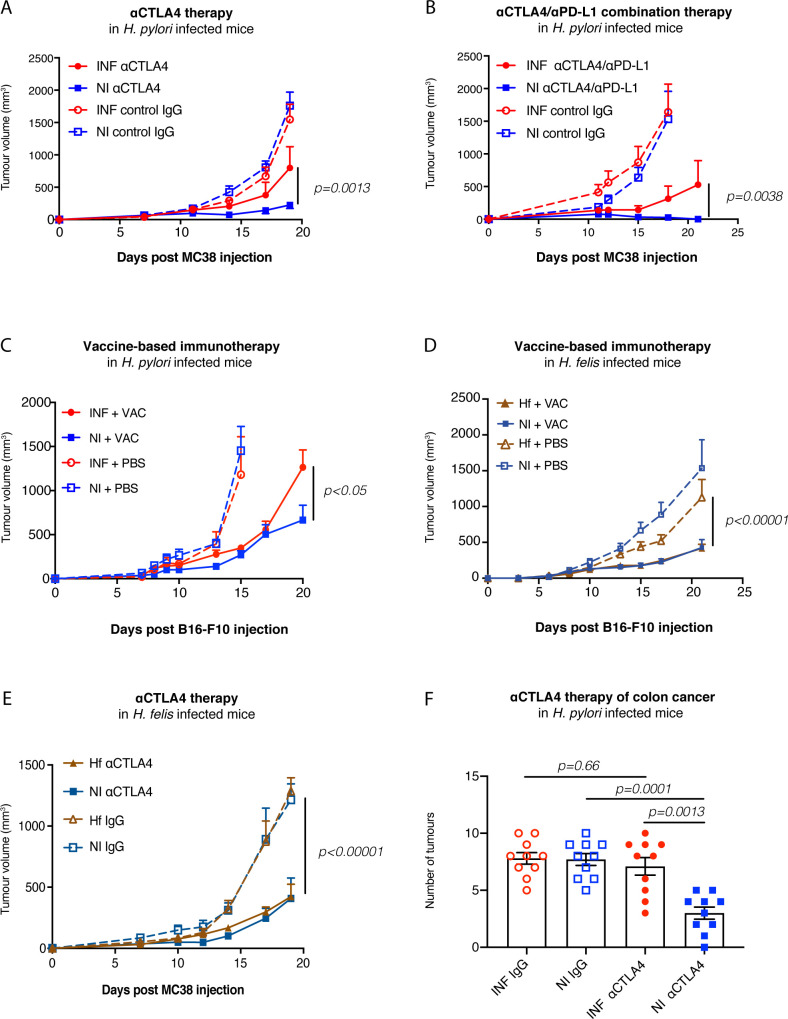
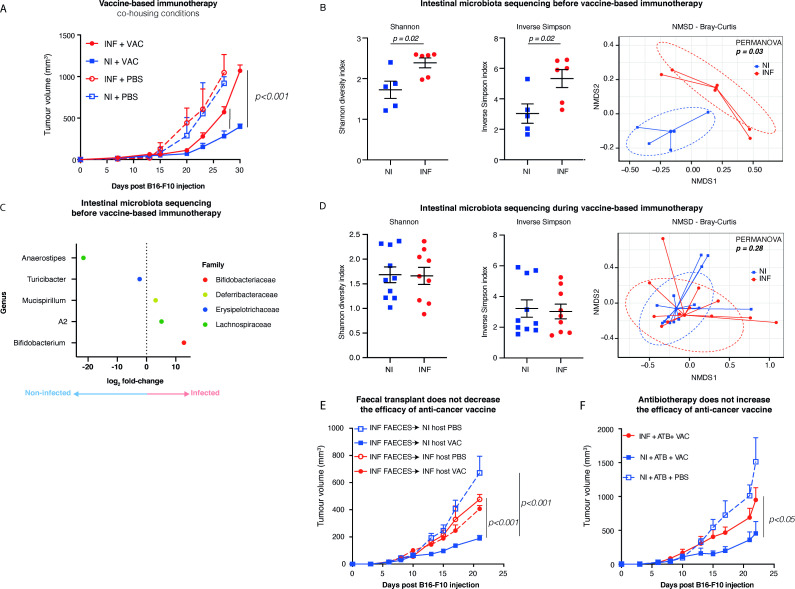
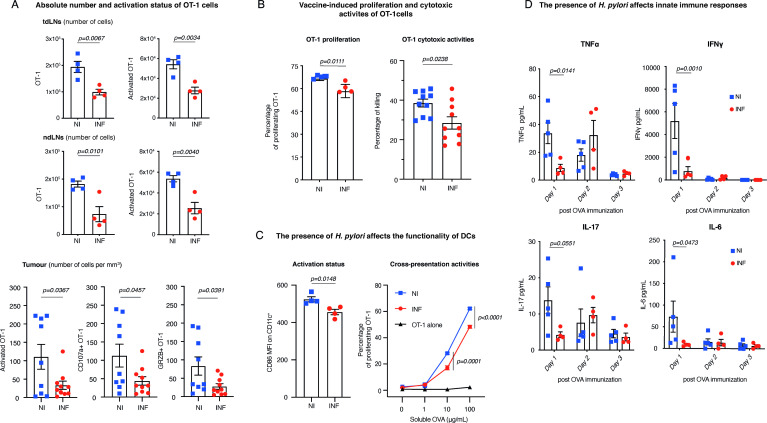
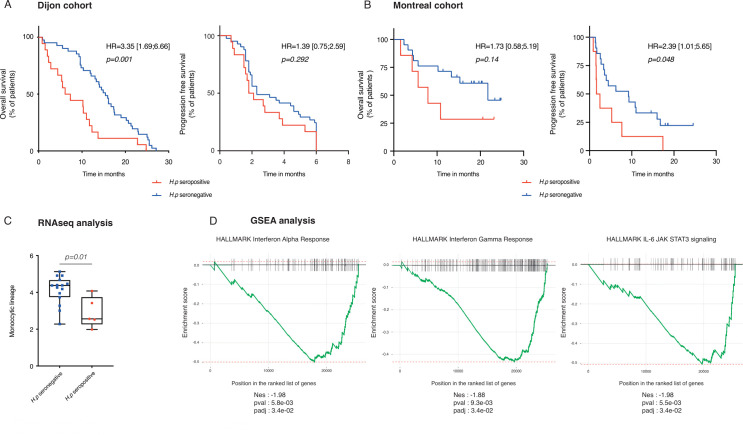
Objective: In this study, we determined whether Helicobacter pylori ( H. pylori ) infection dampens the efficacy of cancer immunotherapies. Design: Using mouse models, we evaluated whether immune checkpoint inhibitors or vaccine-based immunotherapies are effective in reducing tumour volumes of H. pylori -infected mice. In humans, we evaluated the correlation between H. pylori seropositivity and the efficacy of the programmed cell death protein 1 (PD-1) blockade therapy in patients with non-small-cell lung cancer (NSCLC). Results: In mice engrafted with MC38 colon adenocarcinoma or B16-OVA melanoma cells, the tumour volumes of non-infected mice undergoing anticytotoxic T-lymphocyte-associated protein 4 and/or programmed death ligand 1 or anti-cancer vaccine treatments were significantly smaller than those of infected mice. We observed a decreased number and activation status of tumour-specific CD8 + T cells in the tumours of infected mice treated with cancer immunotherapies independent of the gut microbiome composition. Additionally, by performing an in vitro co-culture assay, we observed that dendritic cells of infected mice promote lower tumour-specific CD8 + T cell proliferation. We performed retrospective human clinical studies in two independent cohorts. In the Dijon cohort, H. pylori seropositivity was found to be associated with a decreased NSCLC patient survival on anti-PD-1 therapy. The survival median for H. pylori seropositive patients was 6.7 months compared with 15.4 months for seronegative patients (p=0.001). Additionally, in the Montreal cohort, H. pylori seropositivity was found to be associated with an apparent decrease of NSCLC patient progression-free survival on anti-PD-1 therapy. Conclusion: Our study unveils for the first time that the stomach microbiota affects the response to cancer immunotherapies and that H. pylori serology would be a powerful tool to personalize cancer immunotherapy treatment.
Overview
The claims and statistics of this paper haven’t been checked yet.
Free: it reads the open-access text and checks the first 5 claims that cite a source we can check. Create a free account to check every claim.
Integrity signals
Registry
Cites
Statistics
Figures
Verification
Claims the paper makes
The claims and statistics of this paper haven’t been checked yet.
Free: it reads the open-access text and checks the first 5 claims that cite a source we can check. Create a free account to check every claim.
Claims other papers make about this one
Each is checked against this paper’s own text: does it say what the citing paper says it does?
The source backs part of the claim, not all of it — or backs it for a different population, condition or comparison.
In the citing paper
“In the context of ICIs, three retrospective studies demonstrated that the presence of circulating anti-H. pylori antibodies is associated with resistance to immunotherapy in patients with non-small cell lung cancer (NSCLC), melanoma, and gastric cancer.”
From Melanoma and microbiota: Current understanding and future directions (2024) · cites this paper as [65]
Experimental — accuracy not yet measured
Self-check
Percentages, sums and reported differences re-computed from the paper’s own numbers.
The self-check needs the paper’s full text.
Citations
Cites
Gut microbiome influences efficacy of PD-1-based immunotherapy against epithelial tumors
Routy, B., Le Chatelier, E., Derosa, L., Duong, C. P. M., Alou, M. T., Daillère, R., Fluckiger, A., Messaoudene, M., Rauber, C., Roberti, M. P., et al. (2018) · Science · doi:10.1126/science.aan3706 · Cited by 5,671
Self-citationGut microbiome modulates response to anti-PD-1 immunotherapy in melanoma patients
Gopalakrishnan, V., Spencer, C. N., Nezi, L., Reuben, A., Andrews, M. C., Karpinets, T. V., Prieto, P. A., Vicente, D., Hoffman, K., Wei, S. C., et al. (2018) · Science · doi:10.1126/science.aan4236 · Cited by 4,812 · cited 1×
“…importantly, human data clearly demonstrated that the composition of the intestinal microbiome had a considerable influence on the effectiveness of anti-cancer immunotherapies 3–5 and that the use of anti-biotics compromised the efficacy of programmed cell death protein 1 (PD-1) blockade therapy.”
Induction of Intestinal Th17 Cells by Segmented Filamentous Bacteria
Ivanov, I. I., Atarashi, K., Manel, N., Brodie, E. L., Shima, T., Karaoz, U., Wei, D., Goldfarb, K. C., Santee, C. A., Lynch, S. V., et al. (2009) · Cell · doi:10.1016/j.cell.2009.09.033 · Cited by 4,554 · cited 1×
“38 39 Thus, the eradication of H. pylori using a strategy that spares the microbiota, such as vaccination, would likely prove to be unsuccessful, as the immune system would have been previously imprinted.”
Commensal Bifidobacterium promotes antitumor immunity and facilitates anti–PD-L1 efficacy
Sivan, A., Corrales, L., Hubert, N., Williams, J. B., Aquino-Michaels, K., Earley, Z. M., Benyamin, F. W., Man Lei, Y., Jabri, B., Alegre, M.-L., et al. (2015) · Science · doi:10.1126/science.aac4255 · Cited by 3,888
Anticancer immunotherapy by CTLA-4 blockade relies on the gut microbiota
Vétizou, M., Pitt, J. M., Daillère, R., Lepage, P., Waldschmitt, N., Flament, C., Rusakiewicz, S., Routy, B., Roberti, M. P., Duong, C. P. M., et al. (2015) · Science · doi:10.1126/science.aad1329 · Cited by 3,488 · cited 1×
“1 Vétizou et al 2 demonstrated that the antitumour effects elicited by anticytotoxic T- lymphocyte-associated protein 4 (CTLA4) blockade in mice were dependent on the presence of Bacteroides fragilis , Bacteroides thetaiotaomicron and Burkholderiales in the gut microbiota.”
Self-citationCommensal Bacteria Control Cancer Response to Therapy by Modulating the Tumor Microenvironment
Iida, N., Dzutsev, A., Stewart, C. A., Smith, L., Bouladoux, N., Weingarten, R. A., Molina, D. A., Salcedo, R., Back, T., Cramer, S., et al. (2013) · Science · doi:10.1126/science.1240527 · Cited by 2,251 · cited 2×
“30”
Fecal microbiota transplant overcomes resistance to anti–PD-1 therapy in melanoma patients
Davar, D., Dzutsev, A. K., McCulloch, J. A., Rodrigues, R. R., Chauvin, J.-M., Morrison, R. M., Deblasio, R. N., Menna, C., Ding, Q., Pagliano, O., et al. (2021) · Science · doi:10.1126/science.abf3363 · Cited by 1,781 · cited 1×
“42 In summary, our study is in alignment with the recognised major role played by the microbiome on the efficacy of cancer immunotherapies.”
Fecal microbiota transplant promotes response in immunotherapy-refractory melanoma patients
Baruch, E. N., Youngster, I., Ben-Betzalel, G., Ortenberg, R., Lahat, A., Katz, L., Adler, K., Dick-Necula, D., Raskin, S., Bloch, N., et al. (2021) · Science · doi:10.1126/science.abb5920 · Cited by 1,757
Microbiome-derived inosine modulates response to checkpoint inhibitor immunotherapy
Mager, L. F., Burkhard, R., Pett, N., Cooke, N. C. A., Brown, K., Ramay, H., Paik, S., Stagg, J., Groves, R. A., Gallo, M., et al. (2020) · Science · doi:10.1126/science.abc3421 · Cited by 1,407 · cited 1×
“25 Remarkably, the number of colon tumours in non-infected mice undergoing anti-CTLA4 treatment was significantly lower than those of H. pylori - infected mice (figure 1F).”
The Influence of the Gut Microbiome on Cancer, Immunity, and Cancer Immunotherapy
Gopalakrishnan, V., Helmink, B. A., Spencer, C. N., Reuben, A., & Wargo, J. A. (2018) · Cancer Cell · doi:10.1016/j.ccell.2018.03.015 · Cited by 1,392
Research works printed but not linked: 1
- Oertli M, Noben M, Engler DB, et al. Helicobacter pylori γ-glutamyl transpeptidase and vacuolating cytotoxin promote gastric persistence and immune tolerance. Proc Natl Acad Sci U S A 2013; 110: 3047– 52. 10.1073/pnas.1211248110 23382221 PMC3581963 · DOI · Paper page
Cited by
Malfertheiner, P., Camargo, M. C., El-Omar, E., Liou, J.-M., Peek, R., Schulz, C., Smith, S. I., & Suerbaum, S. (2023) · Nature Reviews Disease Primers · doi:10.1038/s41572-023-00431-8 · Cited by 1,191
Role of the gut microbiota in anticancer therapy: from molecular mechanisms to clinical applications
Zhao, L.-Y., Mei, J.-X., Yu, G., Lei, L., Zhang, W.-H., Liu, K., Chen, X.-L., Kołat, D., Yang, K., & Hu, J.-K. (2023) · Signal Transduction and Targeted Therapy · doi:10.1038/s41392-023-01406-7 · Cited by 359
Helicobacter pylori and gastric cancer: mechanisms and new perspectives
Duan, Y., Xu, Y., Dou, Y., & Xu, D. (2025) · Journal of Hematology & Oncology · doi:10.1186/s13045-024-01654-2 · Cited by 300
Intratumoural microbiota: a new frontier in cancer development and therapy
Cao, Y., Xia, H., Tan, X., Shi, C., Ma, Y., Meng, D., Zhou, M., Lv, Z., Wang, S., & Jin, Y. (2024) · Signal Transduction and Targeted Therapy · doi:10.1038/s41392-023-01693-0 · Cited by 253
Messaoudene, M., Pidgeon, R., Richard, C., Ponce, M., Diop, K., Benlaifaoui, M., Nolin-Lapalme, A., Cauchois, F., Malo, J., Belkaid, W., et al. (2022) · Cancer Discovery · doi:10.1158/2159-8290.cd-21-0808 · Cited by 250
“Lastly, an in vivo CD8+ T-cell killing assay was performed after mice received an intravenous injection of carboxyfluorescein succinimidyl ester (CSFE)–labeled target cells as previously described (23).”
Self-citationCritical role of the gut microbiota in immune responses and cancer immunotherapy
Li, Z., Xiong, W., Liang, Z., Wang, J., Zeng, Z., Kołat, D., Li, X., Zhou, D., Xu, X., & Zhao, L. (2024) · Journal of Hematology & Oncology · doi:10.1186/s13045-024-01541-w · Cited by 176
Role of gut microbiome in cancer immunotherapy: from predictive biomarker to therapeutic target
Zhang, M., Liu, J., & Xia, Q. (2023) · Experimental Hematology and Oncology · doi:10.1186/s40164-023-00442-x · Cited by 167
“For example, Helicobacter pylori is an important pathogen mainly cloned in the stomach, and a recent study found that H. pylori seronegative patients survive longer than seropositive patients (survival median: 6.7 months compared with 15.4 months) in NSCLC patients treated with PD-1 inhibitors [71].”
InfluentialPeng, R., Liu, S., You, W., Huang, Y., Hu, C., Gao, Y., Jia, X., Li, G., Xu, Z., & Chen, Y. (2022) · Cancer Immunology Research · doi:10.1158/2326-6066.cir-22-0107 · Cited by 127
Recent developments in immunotherapy for gastrointestinal tract cancers
Chong, X., Madeti, Y., Cai, J., Li, W., Cong, L., Lu, J., Mo, L., Liu, H., He, S., Yu, C., et al. (2024) · Journal of Hematology & Oncology · doi:10.1186/s13045-024-01578-x · Cited by 148
Li, Y., Xing, S., Chen, F., Li, Q., Dou, S., Huang, Y., An, J., Liu, W., & Zhang, G. (2023) · Nature Communications · doi:10.1038/s41467-023-40987-3 · Cited by 122
Engelsberger, V., Gerhard, M., & Mejías‐Luque, R. (2024) · Frontiers in Cellular and Infection Microbiology · doi:10.3389/fcimb.2024.1339750 · Cited by 119
Boosting Checkpoint Immunotherapy with Biomaterials
Liu, L., Pan, Y., Zhao, C., Huang, P., Chen, X. S., & Rao, L. (2023) · ACS Nano · doi:10.1021/acsnano.2c11691 · Cited by 100
Gut Microbiome in Colorectal Cancer: Clinical Diagnosis and Treatment
Liu, Y., Lau, H. C.-H., Cheng, W. Y., & Yu, J. Q. (2022) · Genomics Proteomics & Bioinformatics · doi:10.1016/j.gpb.2022.07.002 · Cited by 120
“pylori-seropositive patients with non-small cell lung cancer [85].”
Melanoma and microbiota: Current understanding and future directions
Routy, B., Jackson, T., Mählmann, L., Baumgartner, C. K., Blaser, M., Byrd, A., Corvaia, N., Couts, K., Davar, D., Derosa, L., et al. (2024) · Cancer Cell · doi:10.1016/j.ccell.2023.12.003 · Cited by 89
Self-citationPredictive Biomarkers for Immunotherapy in Gastric Cancer: Current Status and Emerging Prospects
Hou, W., Zhao, Y., & Zhu, H. (2023) · International Journal of Molecular Sciences · doi:10.3390/ijms242015321 · Cited by 105
Che, H., Xiong, Q., Ma, J., Chen, S., Wu, H., Xu, H., & Hou, B. (2022) · BMC Cancer · doi:10.1186/s12885-022-10004-9 · Cited by 74
Luo, D. Y., Zhou, J., Ruan, S., Zhang, B., Zhu, H., Que, Y., Ying, S., Li, X., Hu, Y., & Song, Z. (2025) · Cell Death and Disease · doi:10.1038/s41419-025-07385-7 · Cited by 81
Koch, M. R., Gong, R., Friedrich, V., Engelsberger, V., Kretschmer, L., Wanisch, A., Jarosch, S., Ralser, A., Lugen, B., Quante, M., et al. (2022) · Gastroenterology · doi:10.1053/j.gastro.2022.12.016 · Cited by 71
The role of the gut microbiota in gastric cancer: the immunoregulation and immunotherapy
Wang, M., Yang, G., Tian, Y., Zhang, Q., Liu, Z., & Xin, Y. (2023) · Frontiers in Immunology · doi:10.3389/fimmu.2023.1183331 · Cited by 74
Effects of gut microbiota on immune responses and immunotherapy in colorectal cancer
Hou, X., Zheng, Z., Wei, J., & Zhao, L. (2022) · Frontiers in Immunology · doi:10.3389/fimmu.2022.1030745 · Cited by 66
“The modulation by distinctive microbiome antigens can also consequently affect the activation of cytotoxic CD8+ T cells that limit the direct lysis of cancer cells (63).”
Effects of helicobacter pylori on tumor microenvironment and immunotherapy responses
Deng, R., Zheng, H., Cai, H., Li, M., Shi, Y., & Ding, S. (2022) · Frontiers in Immunology · doi:10.3389/fimmu.2022.923477 · Cited by 66
“Furthermore, HPNAP promotes the maturation of DCs with Th1 polarization and improves migration of mature DCs. Stimulating neutrophils and monocytes by HP-NAP induces IL-12 and IL-23 expression, thus shifting antigen-specific T cell responses from the Th2 to the Th1 phenotype which characterized by abundant IFN-g and T…”
InfluentialMagahis, P. T., Maron, S. B., Cowzer, D., King, S., Schattner, M. A., Janjigian, Y. Y., Faleck, D. M., & Laszkowska, M. (2023) · Journal for ImmunoTherapy of Cancer · doi:10.1136/jitc-2023-007699 · Cited by 64
Helicobacter pylori and immunotherapy for gastrointestinal cancer
Jia, K., Chen, Y., Xie, Y., Wang, X., Hu, Y., Sun, Y., Cao, Y., Zhang, L., Wang, Y., Wang, Z., et al. (2024) · The Innovation · doi:10.1016/j.xinn.2023.100561 · Cited by 74
Sitkin, S. I., Лазебник, Л. Б., Avalueva, E. B., Kononova, S., & Vakhitov, T. (2022) · World Journal of Gastroenterology · doi:10.3748/wjg.v28.i7.766 · Cited by 53
Liu, Z., Zhang, D., & Chen, S. (2024) · Journal of Experimental & Clinical Cancer Research · doi:10.1186/s13046-024-03034-7 · Cited by 63
“Concurrently, a decrease in the abundance of monocyte-derived cells and a noteworthy suppression of genes under the regulation of type I IFN, IFNγ, and IL-6 were detected within the TME of NSCLC patients who exhibited resistance to ICIs therapy and had pre-existing H. pylori infection [200].”
Cai, H., Li, M., Deng, R., Wang, M., & Shi, Y. (2022) · Biomarker Research · doi:10.1186/s40364-022-00413-0 · Cited by 48
“pylori reduced the efficacy of anti-PD-1 immunotherapy [79].”
The impact of the gut microbiome on tumor immunotherapy: from mechanism to application strategies
Guo, C., Kong, L., Xiao, L., Liu, K., Cui, H., Xin, Q., Gu, X., Jiang, C., & Wu, J. (2023) · Cell & Bioscience · doi:10.1186/s13578-023-01135-y · Cited by 48
Microbiota in cancer: current understandings and future perspectives
Yao, Y., Zhu, Y., Chen, K., Chen, J., Li, Y., Li, D., & Wei, P. (2026) · Signal Transduction and Targeted Therapy · doi:10.1038/s41392-025-02335-3 · Cited by 61
Predicting cancer immunotherapy response from gut microbiomes using machine learning models
Liang, H., Jo, J., Zhang, Z., MacGibeny, M. A., Han, J., Proctor, D. M., Taylor, M. E., Che, Y., Juneau, P. L., Apolo, A. B., et al. (2022) · Oncotarget · doi:10.18632/oncotarget.28252 · Cited by 50
Helicobacter pylori CagA promotes gastric cancer immune escape by upregulating SQLE
Liu, S., Zhang, N., Ji, X., Yang, S., Zhao, Z., & Li, P. (2025) · Cell Death and Disease · doi:10.1038/s41419-024-07318-w · Cited by 57
The triple interactions between gut microbiota, mycobiota and host immunity
Yang, J., Yang, H., & Li, Y. (2022) · Critical Reviews in Food Science and Nutrition · doi:10.1080/10408398.2022.2094888 · Cited by 49
“…found that H. pylori seropositivity was highly correlated with reduced survival in patients with non-small cell lung cancer treated with anti-PD-1 (Oster et al. 2021), suggesting that H. pylori can independently reduce anti-PD-1 therapy, and also suggests that it is not only the colonic…”
The role of oral microbiota in cancer
Lan, Z., Liu, W.-J., Cui, H., Zou, K., Chen, H. H., Zhao, Y., & Yu, G. (2023) · Frontiers in Microbiology · doi:10.3389/fmicb.2023.1253025 · Cited by 42
Influence of the gut microbiota on immune cell interactions and cancer treatment
Liu, C., Fu, L., Wang, Y., & Yang, W. (2024) · Journal of Translational Medicine · doi:10.1186/s12967-024-05709-3 · Cited by 50
“…cohort studies have shown that H. pylori seropositivity is associated with decreased survival in non-small cell lung cancer patients receiving anti-programmed cell death protein 1 (anti-PD-1) therapy, largely due to a decreased number and activation status of tumour-specific CD8 + T cells [30].”
Targeting gut-microbiota for gastric cancer treatment: a systematic review
Marashi, A. H., Hasany, S., Moghimi, S., Kiani, R., Asl, S. M., Dareghlou, Y. A., Lorestani, P., Varmazyar, S., Jafari, F., Ataeian, S., et al. (2024) · Frontiers in Medicine · doi:10.3389/fmed.2024.1412709 · Cited by 40
Resistance to immune checkpoint inhibitors in gastric cancer
Liu, K., Yuan, S., Wang, C., & Zhu, H. (2023) · Frontiers in Pharmacology · doi:10.3389/fphar.2023.1285343 · Cited by 38
PD-L1 as a Biomarker in Gastric Cancer Immunotherapy
Cho, Y., Ahn, S., & Kim, K. (2024) · Journal of the Korean Gastric Cancer Association · doi:10.5230/jgc.2025.25.e4 · Cited by 39
Connecting the Human Microbiome and Pancreatic Cancer
Sexton, R. E., Uddin, M. H., Bannoura, S. F., Khan, H. Y., Mzannar, Y., Li, Y., Aboukameel, A., Al-Hallak, M. N., Al-Share, B. A., Mohamed, A., et al. (2022) · Cancer and Metastasis Reviews · doi:10.1007/s10555-022-10022-w · Cited by 38
Multi-omics reveals microbiome, host gene expression, and immune landscape in gastric carcinogenesis
Park, C. H., Hong, C., Lee, A.-R., Sung, J., & Hwang, T. H. (2022) · iScience · doi:10.1016/j.isci.2022.103956 · Cited by 39
“All four measures of intragastric microbial alpha-diversity were found to be lower in patients with HP-associated gastritis compared to the healthy group, possibly because of an overrepresentation of HP during HP infection (Park et al., 2019).”
Chang, Y., Lin, W.-Y., Chang, Y.-C., Huang, C.-H., Tzeng, H.-E., Abdul-Lattif, E., Wang, T.-H., Tseng, T.-H., Kang, Y., & Chi, K. (2022) · Cancers · doi:10.3390/cancers15010284 · Cited by 33
“Oster and colleagues [85] unveiled that H.”
Tonneau, M., Nolin-Lapalme, A., Kazandjian, S., Auclin, E., Panasci, J., Benlaifaoui, M., Ponce, M., Al-Saleh, A., Belkaid, W., Naimi, S., et al. (2022) · OncoImmunology · doi:10.1080/2162402x.2022.2096535 · Cited by 34
“pylori Pos patients had decrease ICI efficacy.(18) Oster et al.”
InfluentialSelf-citationEmerging roles of the gut microbiota in cancer immunotherapy
Shi, Z., Li, H., Song, W., Zhou, Z., Li, Z., & Zhang, M. (2023) · Frontiers in Immunology · doi:10.3389/fimmu.2023.1139821 · Cited by 34
“Interestingly, Helicobacter pylori seropositivity has been reported to be linked with an inferior NSCLC patient survival on anti-PD-1 therapy (32), and further be confirmed in in vitro co-culture assay and in H.”
Influence of Helicobacter pylori infection on PD‐1/PD‐L1 blockade therapy needs more attention
Shi, Y., Zheng, H., Wang, M., & Ding, S. (2022) · Helicobacter · doi:10.1111/hel.12878 · Cited by 35
Jiang, Q., Liu, W., Zeng, X., Zhang, C., Du, Y., Zeng, L., Yin, Y., Fan, J., Yang, M., Tao, K., et al. (2023) · Frontiers in Immunology · doi:10.3389/fimmu.2023.1122121 · Cited by 32
Xin, Y., Liu, C., Zang, D., & Chen, J. (2024) · Frontiers in Immunology · doi:10.3389/fimmu.2024.1343450 · Cited by 40
Gut–lung axis: role of the gut microbiota in non-small cell lung cancer immunotherapy
Zhang, H., & Xu, Z. (2023) · Frontiers in Oncology · doi:10.3389/fonc.2023.1257515 · Cited by 34
Microbiome meets immunotherapy: unlocking the hidden predictors of immune checkpoint inhibitors
Huang, L., Li, Y., Zhang, C., Jiang, A., Zhu, L., Mou, W., Li, K., Zhang, J., Cui, C., Cui, X., et al. (2025) · npj Biofilms and Microbiomes · doi:10.1038/s41522-025-00819-2 · Cited by 28
Crouch, L. I., Rodrigues, C. S., Bakshani, C. R., Tavares-Gomes, L., Gaifem, J., & Pinho, S. S. (2024) · Seminars in Immunology · doi:10.1016/j.smim.2024.101891 · Cited by 31
The Efficacy of Cancer Immunotherapies Is Compromised by Helicobacter pylori Infection
Oster, P., Vaillant, L., McMillan, B., & Velin, D. (2022) · Frontiers in Immunology · doi:10.3389/fimmu.2022.899161 · Cited by 32
“Interestingly, the tumor volumes of H pylori infected mice undergoing treatment were significantly larger than those of non-infected mice (19).”
InfluentialSelf-citationThe role of microbiota in the development and treatment of gastric cancer
Wang, Y., Han, W., Wang, N., Han, M., Ban, M., Dai, J., Dong, Y., Sun, T., & Xu, J. (2023) · Frontiers in Oncology · doi:10.3389/fonc.2023.1224669 · Cited by 30
“discovered that HP infection could reduce the effectiveness of anti-CTLA-4 and antiPD-L1 therapy, decrease the potency of cancer vaccines, and inhibit in situ tumor immunotherapy (66, 68).”
Role of N6‐methyladenosine RNA modification in cancer
Qu, Y., Gao, N., Zhang, S., Gao, L., He, B., Wang, C., Gong, C., Shi, Q., Li, Z., Yang, S., et al. (2024) · MedComm · doi:10.1002/mco2.715 · Cited by 31
“276 Some researchers have suggested that increasing the expression of PD-L1 could be an early response to Hp infection.”
Dendritic cells: understanding ontogeny, subsets, functions, and their clinical applications
Li, W., Yu, C., Zhang, X., Gu, Y., He, X., Xu, R., Xu, J. F., Yu, G., & Wu, Y. (2025) · Molecular Biomedicine · doi:10.1186/s43556-025-00300-8 · Cited by 30
“This DCs dysfunction compromises antitumor immunity, as evidenced by reduced tumor-specific T cell priming in infected mice and shorter progression-free survival among H. pylori-positive lung cancer patients receiving PD-1 blockade therapy [222].”
The microbiome, gastrointestinal cancer, and immunotherapy
Newsome, R. C., Yang, Y., & Jobin, C. (2021) · Journal of Gastroenterology and Hepatology · doi:10.1111/jgh.15742 · Cited by 28
Immune-Related Adverse Events of the Gastrointestinal System
Nicolaides, S., & Boussioutas, A. (2023) · Cancers · doi:10.3390/cancers15030691 · Cited by 28
PHKG2 regulates RSL3-induced ferroptosis in Helicobacter pylori related gastric cancer
Zhu, W., Liu, D., Lu, Y., Sun, J., Zhu, J., Xing, Y., Ma, X., Wang, Y., Ji, M., & Jia, Y. (2023) · Archives of Biochemistry and Biophysics · doi:10.1016/j.abb.2023.109560 · Cited by 29
Koizumi, Y., Ahmad, S., Ikeda, M., Yashima‐Abo, A., Espina, G., Sugimoto, R., Sugai, T., Iwaya, T., Tamura, G., Koeda, K., et al. (2022) · JNCI Journal of the National Cancer Institute · doi:10.1093/jnci/djac085 · Cited by 23
Chen, X., Zou, Y., Zhang, S., Fang, P., Li, S., Li, P., Sun, Y., Yuan, G., & Hu, H. (2022) · Acta Pharmaceutica Sinica B · doi:10.1016/j.apsb.2022.05.014 · Cited by 26
Association of lung-intestinal microecology and lung cancer therapy
Kong, L., Chen, X.-Y., Lu, X., Caiyin, Q., & Yang, D. (2023) · Chinese Medicine · doi:10.1186/s13020-023-00742-8 · Cited by 22
Helicobacter pylori infection and PD‐L1 expression in gastric cancer: A meta‐analysis
Zhu, Y., Zhu, F., Ba, H., Chen, J., & Bian, X. (2022) · European Journal of Clinical Investigation · doi:10.1111/eci.13880 · Cited by 20
Gut microbiota in cancer initiation, development and therapy
Zhang, R., Zhang, X., Lau, H. C.-H., & Yu, J. Q. (2024) · Science China Life Sciences · doi:10.1007/s11427-024-2831-x · Cited by 19
“Furthermore, Hangesha-shinto (TJ-14), a Kampo medicine containing the β -glucuroni- dase inhibitor baicalin, has successfully lowered both the incidence and duration of CIM in patients with CRC (Matsuda et al., 2015), and alleviated irinotecan-induced diarrhea in patients with non-small-cell lung cancer (NSCLC) (Mori…”
InfluentialMicrobiota: A key factor affecting and regulating the efficacy of immunotherapy
Jiang, Y., Jia, D., Sun, Y., Ding, N., & Wang, L. (2023) · Clinical and Translational Medicine · doi:10.1002/ctm2.1508 · Cited by 22
Immuno-oncology-microbiome axis of gastrointestinal malignancy
Lin, Q., Guan, S.-W., & Yu, H. (2023) · World Journal of Gastrointestinal Oncology · doi:10.4251/wjgo.v15.i5.757 · Cited by 28
Microbiota and gastric cancer: from molecular mechanisms to therapeutic strategies
Chen, Z., Jin, D., Hu, J., Guan, D., Bai, Q., & Gou, Y. (2025) · Frontiers in Cellular and Infection Microbiology · doi:10.3389/fcimb.2025.1563061 · Cited by 23
Sun, Y.-T., Lu, S., Lai, M.-Y., Yang, X., Guan, W., Yang, L.-Q., Li, Y.-H., Wang, F., Yang, D., & Qiu, M. (2024) · Cancer Immunology Immunotherapy · doi:10.1007/s00262-024-03721-6 · Cited by 20
Effects and mechanisms of Helicobacter pylori infection on the occurrence of extra-gastric tumors
Zhao, S.-Q., Zheng, H., Zhong, X.-T., Wang, Z.-Y., Su, Y., & Shi, Y. (2024) · World Journal of Gastroenterology · doi:10.3748/wjg.v30.i37.4090 · Cited by 18
“It may also affect the tumor microenvironment and potentially undermine the efficacy of tumor immunotherapies, which have recently become a hot spot[12,13].”
ADP-heptose attenuates Helicobacter pylori -induced dendritic cell activation
Neuper, T., Frauenlob, T., Dang, H.-H., Krenn, P. W., Posselt, G., Regl, C., Fortelny, N., Schäpertöns, V., Unger, M. S., Üblagger, G., et al. (2024) · Gut Microbes · doi:10.1080/19490976.2024.2402543 · Cited by 18
“68 In light of these studies, the finding that ADP-heptose attenuates type I IFN signaling upon H. pylori infection is of great interest, as it suggests a potential mode of action by which H. pylori mitigates CD8 + T cell responses.”
Zhang, Y., Chen, X., Chen, R., Li, L., Ju, Q., Qiu, D., Wang, Y., Jing, P., Chang, N., Wang, M., et al. (2025) · Clinical and Translational Medicine · doi:10.1002/ctm2.70170 · Cited by 23
The immune microenvironment of pathogen-associated cancers and current clinical therapeutics
Wei, X., Feng, H., Zhu, Y.-Y., Guo, S.-J., Wang, H., Li, M., & Mei, Q. (2025) · Molecular Cancer · doi:10.1186/s12943-025-02448-x · Cited by 23
“Additionally, DC dysfunction contributes significantly to the clinic from their effects to human subjects, establishing chronic infection and continuing their illness associated with cancer [43].”
Recent advances in the mechanisms of PD-L1 expression in gastric cancer: a review
Chen, P., Chen, Z., Sui, W., & Han, W. (2025) · Biological Research · doi:10.1186/s40659-025-00597-3 · Cited by 20
“Recently, Paul et al. found that H. pylori seropositivity decreases the effectiveness of anti-CTLA4/PD-L1 combination therapy in clinical cohorts of colon cancer and non-small cell lung cancer [34].”
Intratumoral microbiota remodeling of the tumor microenvironment impact solid tumor immunotherapy
Jia, J., Gao, W., Wang, C., Liu, L., Li, Y., Sun, Z., Yang, C., Chen, Y., Yu, H., & Cheng, Y. (2025) · Cell Death and Disease · doi:10.1038/s41419-025-08211-w · Cited by 21
Research Progress of Biomarkers for Immune Checkpoint Inhibitors on Digestive System Cancers
Wang, J., Ma, X., Ma, Z., Ma, Y., Wang, J., & Cao, B. (2022) · Frontiers in Immunology · doi:10.3389/fimmu.2022.810539 · Cited by 15
Xu, J., Jia, S., Ren, Y., Zhang, Y., Zhang, J., Tang, C., Kan, J., Liu, J., & Wang, Y. (2025) · Food Bioscience · doi:10.1016/j.fbio.2025.106769 · Cited by 14
Sun, F., Gao, X., Wang, W., Zhao, X., Zhang, J., & Zhu, Y. (2025) · Frontiers in Immunology · doi:10.3389/fimmu.2025.1599908 · Cited by 21
Beyond the gastric epithelium — the paradox of Helicobacter pylori-induced immune responses
Neuper, T., Frauenlob, T., Posselt, G., & Horejs‐Hoeck, J. (2022) · Current Opinion in Immunology · doi:10.1016/j.coi.2022.102208 · Cited by 17
Candelli, M., Franza, L., Cianci, R., Pignataro, G., Merra, G., Piccioni, A., Ojetti, V., Gasbarrini, A., & Franceschi, F. (2023) · International Journal of Molecular Sciences · doi:10.3390/ijms242417520 · Cited by 17
“Overall, it appears that GM composition can promote the onset and progression of atherosclerosis through both metabolic and immunological pathways, in which H. pylori plays a significant role.”
Liu, L., Guo, Y., Wang, B., Pan, Y., Zhao, C., Xiao, Z., Liu, Y., Yu, G., Chen, X. S., & Rao, L. (2025) · Cell Biomaterials · doi:10.1016/j.celbio.2025.100072 · Cited by 19
Incorporating Immunotherapy in the Management of Gastric Cancer: Molecular and Clinical Implications
Agnarelli, A., Vella, V., Samuels, M. E., Papanastasopoulos, P., & Giamas, G. (2022) · Cancers · doi:10.3390/cancers14184378 · Cited by 15
“Such anti-tumour immunity can be boosted by cancer immunoth rapies, for instance by sing immune checkpoint inhibitors (ICIs) that block the natural function of immune checkpoints and prevent attenuation of immune cell activation [71].”
InfluentialThe Sunrise of Tertiary Lymphoid Structures in Cancer
Rochefort, J., Marodon, G., Teillaud, J., & Dieu‐Nosjean, M. (2025) · Immunological Reviews · doi:10.1111/imr.70046 · Cited by 16
Gong, X., Shen, L., Xie, J., Liu, D., Xie, Y., & Liu, D. (2023) · Helicobacter · doi:10.1111/hel.13011 · Cited by 13
“10 On the one hand, H. pylori infection can inhibit the antigen-presenting ability of DCs, resulting in reduced activation of tumor-specific CD8 T cells, which can decrease the efficacy of the tumor-specific immune response.”
Gut microbiota in cancer: insights on microbial metabolites and therapeutic strategies
Chen, Y., Wang, X., Ye, Y., & Ren, Q. (2023) · Medical Oncology · doi:10.1007/s12032-023-02249-6 · Cited by 14
“Zheng et al. [75] isolated an anti-Fusobacterium nucleatum ( F. nucleatum ) phage that precisely removes F. nucleatum in the intestinal tract of mice, thereby eliminating F. nucleatum - induced irinotecan resistance of CRC [76].”
Relationships among microbiota, gastric cancer, and immunotherapy
Li, Y., Huang, X., Tong, D., Jiang, C., Zhu, X., Wei, Z., Gong, T., & Jin, C. (2022) · Frontiers in Microbiology · doi:10.3389/fmicb.2022.987763 · Cited by 15
“A recent animal study also found that HP-infected mice responded less to CTLA-4 alone or its combination with anti-PD-L1 than uninfected mice, which was not associated with HP-induced intestinal microflora changes (Oster et al., 2021).”
Exploiting lactic acid bacteria for colorectal cancer: a recent update
Chen, Y., Yang, B. K., Zhao, J., Ross, R. P., Stanton, C., Zhang, H., & Chen, W. (2022) · Critical Reviews in Food Science and Nutrition · doi:10.1080/10408398.2022.2154742 · Cited by 14
“Desulfovibrio and Staphylococcus are enriched in CRC patients and may be potentially harmful bacteria (Chen et al. 2018; Taylor et al. 2021), while Helicobacter reduces immunotherapeutic efficacy in CRC patients (Oster et al. 2022).”
Cross-talk between Helicobacter pylori and gastric cancer: a scientometric analysis
Yang, S., Hao, S., Ye, H., & Zhang, X. (2024) · Frontiers in Cellular and Infection Microbiology · doi:10.3389/fcimb.2024.1353094 · Cited by 14
IRnet: Immunotherapy response prediction using pathway knowledge-informed graph neural network
Jiang, Y., Immadi, M. S., Wang, D., Zeng, S., On Chan, Y., Zhou, J., Xu, D., & Joshi, T. (2025) · Journal of Advanced Research · doi:10.1016/j.jare.2024.07.036 · Cited by 12
Effect ofHelicobacter pylorion immunotherapy is gaining more attention
Shi, Y., Zheng, H., Guo, Z., Deng, R., Yu, W., Song, Y., & Ding, S. (2022) · Helicobacter · doi:10.1111/hel.12925 · Cited by 13
Biomarkers for Immunotherapy in Driver-Gene-Negative Advanced NSCLC
Huang, Y., Chau, Y. F., Bai, H., Wu, X., & Duan, J. (2023) · International Journal of Molecular Sciences · doi:10.3390/ijms241914521 · Cited by 12
Microbes in the tumor microenvironment: New additions to break the tumor immunotherapy dilemma
Zhou, L., Fan, S., Zhang, W., Wang, D., & Tang, D. (2024) · Microbiological Research · doi:10.1016/j.micres.2024.127777 · Cited by 13
Yu, Z., Wang, Q., Wang, Z., Liu, S., Xia, T., Duan, C., Liu, Y., Ding, X., Chen, S., Yu, T., et al. (2024) · Head & Neck · doi:10.1002/hed.27917 · Cited by 14
Molecular pathogenesis and emerging targets of gastric adenocarcinoma
Ivey, A. D., Pratt, H. G., & Boone, B. A. (2022) · Journal of Surgical Oncology · doi:10.1002/jso.26874 · Cited by 11
Autophagy in gastrointestinal cancers
Shao, B., Chai, N., Yao, Y., Li, J., Law, H., & Linghu, E. (2022) · Frontiers in Oncology · doi:10.3389/fonc.2022.975758 · Cited by 11
“pylori) infection is regarded as an independent risk factor, especially cancers in the lower (distal) part of the stomach (112).”
Helicobacter pylori and gastric cancer: a critical approach to who really needs eradication
Kouroumalis, E., Tsomidis, I., & Voumvouraki, A. (2024) · Exploration of Digestive Diseases · doi:10.37349/edd.2024.00043 · Cited by 15
Effects and mechanisms of Helicobacter pylori on cancers development and immunotherapy
Zhong, X., Zheng, H., Zhao, S., Wang, Z., Su, Y., Zhong, K., Wang, M., & Shi, Y. (2024) · Frontiers in Immunology · doi:10.3389/fimmu.2024.1469096 · Cited by 12
Relationship Between Human Microbiome and Helicobacter pylori
Placa, G. L., Covino, M., Candeli, M., Gasbarrini, A., Franceschi, F., & Merra, G. (2025) · Microbiology Research · doi:10.3390/microbiolres16010024 · Cited by 10
Gut and Intratumoral microbiota: Key to lung Cancer development and immunotherapy
Cai, J., Zhang, W., Zhu, S., Lin, T., Mao, R., Wu, N., Zhang, P., & Kang, M. (2025) · International Immunopharmacology · doi:10.1016/j.intimp.2025.114677 · Cited by 13
Tian, Z., Dong, S., Zuo, W., Li, P., Zhang, F., Gao, S., Yang, Y., Li, C., Zhang, P., Wang, X., et al. (2022) · Frontiers in Pharmacology · doi:10.3389/fphar.2022.987569 · Cited by 10
“In addition, many factors affect the efficacy of PD-1 inhibitors in combination therapy, such as the timing of administration, use of growth factors, antibiotic use, and Helicobacter pylori infections (Cortellini et al., 2020; Salas-Benito et al., 2021; Oster et al., 2022).”
Liu, Y., Wang, L., Du, W., Huang, Y., Guo, Y. H., Chen, S., Tian, Z., Niu, S., Xie, J., Liu, J., et al. (2023) · Frontiers in Cellular and Infection Microbiology · doi:10.3389/fcimb.2023.1207235 · Cited by 10
Cella, C. A., Ciardiello, D., Gervaso, L., van Laarhoven, H. W. M., Nezi, L., Catozzi, C., Lordick, F., Smyth, E. C., Pascale, S. D., Benini, L., et al. (2024) · ESMO Gastrointestinal Oncology · doi:10.1016/j.esmogo.2024.100048 · Cited by 10
Gastric Cancer, Immunotherapy, and Nutrition: The Role of Microbiota
Raoul, P. C., Gaetano, V. D., Sciaraffia, G., Ormea, G., Cintoni, M., Pozzo, C., Strippoli, A., Gasbarrini, A., Mele, M. C., & Rinninella, E. (2024) · Pathogens · doi:10.3390/pathogens13050357 · Cited by 11
The Skin Microbiome: A New Key Player in Melanoma, From Onset to Metastatic Stage
L'Orphelin, J. ‐., Dompmartin, A., & Dréno, B. (2025) · Pigment Cell & Melanoma Research · doi:10.1111/pcmr.13224 · Cited by 14
Geng, H., Dong, Z., Zhang, L., Yang, C. G., Li, T., Lin, Y., Ke, S., Xia, X., Zhang, Z., Zhao, G., et al. (2022) · Cancers · doi:10.3390/cancers14133276 · Cited by 14
“HP seropositivity was reported to be linked to a detrimental impact on the efficacy of anti-PD-1 immunotherapy in patients [84].”
Effects of exosomes on tumor immunomodulation and their potential clinical applications (Review)
Li, M., Cai, H., Deng, R., Cheng, J., & Shi, Y. (2022) · International Journal of Oncology · doi:10.3892/ijo.2022.5437 · Cited by 9
Metadata
- Authors
- Oster, P., Vaillant, L., Riva, E., McMillan, B., Begka, C., Truntzer, C., Richard, C., Leblond, M. M., Messaoudene, M., Machremi, E., Limagne, E., Ghiringhelli, F., Routy, B., Verdeil, G., & Velin, D.
- Affiliations
- Centre Hospitalier Universitaire Vaudois (CH)
- Centre Georges François Leclerc (FR)
- Centre Hospitalier de l’Université de Montréal (CA)
- Department of Medical Oncology, Centre Georges François Leclerc, Dijon, France
- Department of Oncology, Centre Hospitalier Universitaire Vaudois, University of Lausanne, Lausanne, Switzerland
- Corresponding author
- Velin, Dominique
- ORCID
- Venue
- Gut
- Publisher
- BMJ
- Published
- 2021-07-12
- Volume
- 71
- Issue
- 3
- Pages
- 457-466
- ISSN
- 0017-5749 (ISSN-L)
- 1468-3288
- PMC
- PMC8862014
- OpenAlex
- W3179559990
- Cited by
- 176
- References
- 52
- Citations by year
- 2026: 22 · 2025: 38 · 2024: 40 · 2023: 33 · 2022: 41 · 2021: 2
- FWCI
- 10.55
- Type
- journal article
- Language
- en
- Open access
- hybrid
- doi.org
- Licence
- Locations
- Gut (publishedVersion, cc-by-nc)
- PubMed Central (publishedVersion, cc-by-nc)
- PubMed (publishedVersion)
- IRIS (submittedVersion, cc-by-nc)
- SERVAL (Université de Lausanne) (submittedVersion, cc-by-nc)
- Funders
- Foundation Emma Muschamp (NA)
- Faculté de Biologie et de Médecine de Lausanne (NA)
- Foundation Max Cloëtta (NA)
- Swiss Cancer Research Foundation (KFS-4452-02-2018; KFS-4840-08-2019)
- Foundation Porphyrogenis (NA)
- Topics
- Health Sciences › Medicine › Oncology › Cancer Immunotherapy and Biomarkers
- Health Sciences › Medicine › Gastroenterology › Helicobacter pylori-related gastroenterology studies
- Life Sciences › Immunology and Microbiology › Immunology › Immunotherapy and Immune Responses
- Keywords
- Helicobacter pylori infection, cancer immunotherapy, immune checkpoint inhibitors, anti-PD-1 therapy, non-small cell lung cancer, gastric microbiota, CD8+ T cells, dendritic cells, cancer vaccines, CTLA-4, PD-L1, H. pylori seropositivity, treatment response prediction
- MeSH terms
- Immune Checkpoint Inhibitors, Adenocarcinoma, Animals, Carcinoma, Non-Small-Cell Lung, Colonic Neoplasms, Disease Models, Animal, Female, Humans, Lung Neoplasms, Male, Mice, Inbred C57BL, Retrospective Studies, Helicobacter pylori, Helicobacter Infections, Cancer Vaccines, Mice
About these checks
Registry, retraction, Cites and statistics results are computed, not judged, with one exception: a printed reference that no index lists is read once by a model before it counts as a citation error. Claims are extracted by a model and kept only when their quote appears verbatim in the text; each cited source is then checked, with a model’s help, for whether it says what the claim relies on. Those verdicts can be wrong — read the claim’s quote and the cited source before relying on one.
Statistics and arithmetic are recomputed, not judged.
Confidence bands are shown only for fields calibrated on our annotated test set. None is calibrated yet, so no band is shown.
What counts as a claim ›How we measure confidence ›How we check this ›
Are you an author, or do you see a problem with this page? Request a review
Data sources
Bibliographic data: Semantic Scholar, OpenAlex, Crossref.
Contains information from the Semantic Scholar Academic Graph Datasets, made available under the ODC Attribution License (ODC-BY 1.0).
Semantic Scholar’s data is described in: Kinney, R., et al. (2023). The Semantic Scholar Open Data Platform. arXiv:2301.10140.
