

The DOI matches its Crossref record; 30 of the 32 references it cites were found in a registry or an index.
Effects and costs of real-time cardiac telerehabilitation: randomised controlled non-inferiority trial
Open accessAbstract
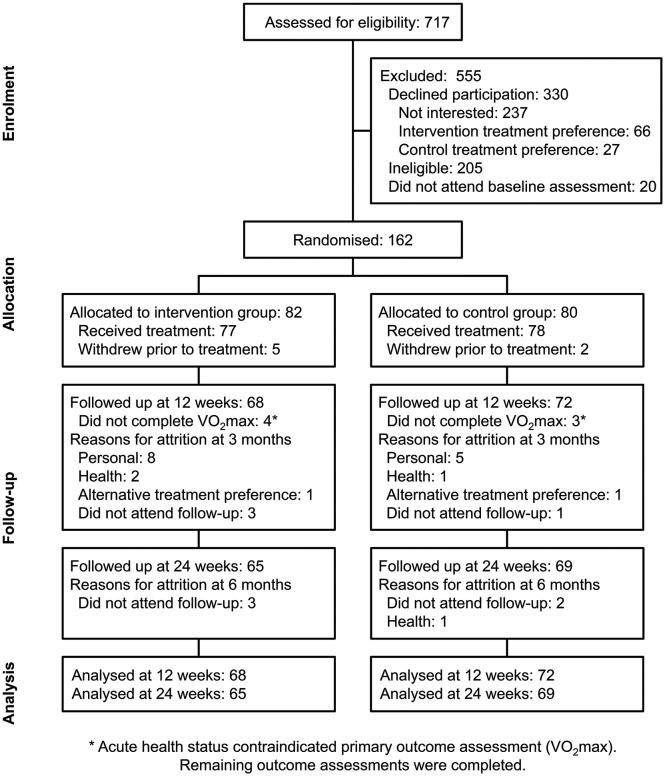
Objective: Compare the effects and costs of remotely monitored exercise-based cardiac telerehabilitation (REMOTE-CR) with centre-based programmes (CBexCR) in adults with coronary heart disease (CHD). Methods: Participants were randomised to receive 12 weeks of telerehabilitation or centre-based rehabilitation. REMOTE-CR provided individualised exercise prescription, real-time exercise monitoring/coaching and theory-based behavioural strategies via a bespoke telerehabilitation platform; CBexCR provided individualised exercise prescription and coaching via established rehabilitation clinics. Outcomes assessed at baseline, 12 and/or 24 weeks included maximal oxygen uptake (V̇O 2 max, primary) modifiable cardiovascular risk factors, exercise adherence, motivation, health-related quality of life and programme delivery, hospital service utilisation and medication costs. The primary hypothesis was a non-inferior between-group difference in V̇O 2 max at 12 weeks (inferiority margin=−1.25 mL/kg/min); inferiority margins were not set for secondary outcomes. Results: 162 participants (mean 61±12.7 years, 86% men) were randomised. V̇O 2 max was comparable in both groups at 12 weeks and REMOTE-CR was non-inferior to CBexCR (REMOTE-CR-CBexCR adjusted mean difference (AMD)=0.51 (95% CI −0.97 to 1.98) mL/kg/min, p=0.48). REMOTE-CR participants were less sedentary at 24 weeks (AMD=−61.5 (95% CI −117.8 to −5.3) min/day, p=0.03), while CBexCR participants had smaller waist (AMD=1.71 (95% CI 0.09 to 3.34) cm, p=0.04) and hip circumferences (AMD=1.16 (95% CI 0.06 to 2.27) cm, p=0.04) at 12 weeks. No other between-group differences were detected. Per capita programme delivery (NZD1130/GBP573 vs NZD3466/GBP1758) and medication costs (NZD331/GBP168 vs NZD605/GBP307, p=0.02) were lower for REMOTE-CR. Hospital service utilisation costs were not statistically significantly different (NZD3459/GBP1754 vs NZD5464/GBP2771, p=0.20). Conclusion: REMOTE-CR is an effective, cost-efficient alternative delivery model that could—as a complement to existing services—improve overall utilisation rates by increasing reach and satisfying unique participant preferences.
Overview
The claims and statistics of this paper haven’t been checked yet.
Run the check — free, no account needed. It reads the open-access text and checks the sources it cites.
Integrity signals
Registry
Cites
Statistics
Figures
Verification
Claims the paper makes
The claims and statistics of this paper haven’t been checked yet.
Run the check — free, no account needed. It reads the open-access text and checks the sources it cites.
Claims other papers make about this one
Each is checked against this paper’s own text: does it say what the citing paper says it does?
The cited source says what the claim attributes to it.
In the citing paper
“Home-based cardiac telerehabilitation using wearable sensors is equivalent or better than centre-based rehabilitation and can increase access to cardiac rehabilitation and reduce the cost”
From Smart wearable devices in cardiovascular care: Where we are and how to move forward (2021) · cites this paper as [85]
In the citing paper
“A non-inferiority, randomized trial comparing REMOTE-CR — a real-time, remote telerehabilitation platform that includes the use of a chest-worn wearable sensor (BioHarness 3, Zephyr Technology, USA) — with a centre-based programme showed that REMOTE-CR was associated with less sedentary time at 24 weeks and was more cost-effective than the centre-based programme85.”
From Smart wearable devices in cardiovascular care: Where we are and how to move forward (2021) · cites this paper as [85]
In the citing paper
“The authors demonstrated that the intervention was an effective and cost-effective delivery model that could potentially improve overall CR utilisation rates by increasing reach and satisfying unique participant preferences.30”
Self-check
Percentages, sums and reported differences re-computed from the paper’s own numbers.
The self-check needs the paper’s full text.
Citations
Cites
Self-efficacy: Toward a unifying theory of behavioral change
Bandura, A. (1977) · Psychological Review · doi:10.1037/0033-295x.84.2.191 · Cited by 43,925
Intrinsic Motivation and Self-Determination in Human Behavior
Deci, E. L., & Ryan, R. M. (1985) · doi:10.1007/978-1-4899-2271-7 · Cited by 26,772
Intrinsic Motivation and Self-Determination in Human Behavior
Miller, K. A. J., Deci, E. L., & Ryan, R. M. (1988) · Contemporary Sociology A Journal of Reviews · doi:10.2307/2070638 · Cited by 15,406
Self-efficacy: Toward a unifying theory of behavioral change
Bandura, A. (1978) · Advances in Behaviour Research and Therapy · doi:10.1016/0146-6402(78)90002-4 · Cited by 10,586
(2014) · Medical Entomology and Zoology · Cited by 9,400
Michie, S., Richardson, M., Johnston, M., Abraham, C., Francis, J., Hardeman, W., Eccles, M. P., Cane, J., & Wood, C. E. (2013) · Annals of Behavioral Medicine · doi:10.1007/s12160-013-9486-6 · Cited by 7,629
Piaggio, G., Elbourne, D. R., Pocock, S. J., Evans, S. J. W., Altman, D. G., & CONSORT Group, F. T. (2012) · JAMA · doi:10.1001/jama.2012.87802 · Cited by 2,428
Exercise-based cardiac rehabilitation for coronary heart disease
Heran, B. S., Chen, J. M., Ebrahim, S., Moxham, T., Oldridge, N., Rees, K., Thompson, D. R., & Taylor, R. S. (2011) · Cochrane Database of Systematic Reviews · doi:10.1002/14651858.cd001800.pub2 · Cited by 1,844
ACSM's guidelines for exercise testing and prescription
Kenney, W. L., Humphrey, R. H., Bryant, C. X., & Mahler, D. A. (1995) · Williams & Wilkins eBooks · Cited by 1,475
Advances in sport and exercise psychology measurement
Duda, J. L. (1998) · University of Birmingham Research Portal (University of Birmingham) · Cited by 1,324
Cited by
Sorted by citations
Items 101–200 of 320
Gallegos-Rejas, V. M., Rawstorn, J. C., Gallagher, R. D., Mahoney, R., & Thomas, E. E. (2024) · European Heart Journal - Digital Health · doi:10.1093/ehjdh/ztad080 · Cited by 23
“7,12,16,19,20 Telehealth-delivered CR uses various technologies, including mobile apps, telephone calls, text messaging, and videoconferencing, to provide rehabilitation care.”
BackgroundInfluentialSelf-citationScherrenberg, M., Marinus, N., Giallauria, F., Falter, M., Kemps, H., Wilhelm, M., Prescott, E., Vigorito, C., de Kluiver, E. P., Cipriano, G., et al. (2022) · Trends in Cardiovascular Medicine · doi:10.1016/j.tcm.2022.01.015 · Cited by 23
Nilsson, U., Öberg, B. E., & Bäck, M. (2023) · International Journal of Environmental Research and Public Health · doi:10.3390/ijerph20075420 · Cited by 19
“In the future, the ultimate choice of EBCR delivery is likely to depend on the individual patient’s preference.”
MethodInfluentialMI-PACE Home-Based Cardiac Telerehabilitation Program for Heart Attack Survivors: Usability Study
Ding, E., Erskine, N. A. K., Stut, W. J. J., McManus, D. D., Peterson, A., Wang, Z., Valle, J. E., Albuquerque, D., Alonso, A., Botkin, N. F., et al. (2021) · JMIR Human Factors · doi:10.2196/18130 · Cited by 19
“The ability to perform cardiac rehabilitation at home may increase participation while providing comparable outcomes for patient health-related quality of life, exercise capacity, and mortality [17-21].”
BackgroundInfluentialSalarvand, S., Farzanpour, F., & Gharaei, H. A. (2024) · BMC Cardiovascular Disorders · doi:10.1186/s12872-024-03791-5 · Cited by 19
“…suffering from MI should be based on the condition of the elderly and their personal needs [3] which can be associated with increasing accessibility and satisfying the unique preferences of patients [63] and on the other hand, some patients may find mHealth-based interventions challenging [47].”
BackgroundLima, A. P., Pereira, D. A. G., Nascimento, I. D. O., Martins, T. H. S., Oliveira, A. C. A., Nogueira, T. D. S., & Britto, R. R. (2022) · European Journal of Physical and Rehabilitation Medicine · doi:10.23736/s1973-9087.22.07340-3 · Cited by 19
“Previous studies have also identified low cost of home-CR; 11, 16 however, some studies show similar 43 or even higher costs.”
Cardiac Rehab in the COVID-19 Pandemic
Pecci, C., & Ajmal, M. (2021) · The American Journal of Medicine · doi:10.1016/j.amjmed.2021.01.007 · Cited by 18
“Aside from a structured exercise regimen, patients can be monitored with devices and even receive virtual visits from nutritionists and psychologists.(6,7) The first meta-analysis on telehealth exercised-based cardiac rehab was published in 2016.”
BackgroundGiggins, O. M., Doyle, J., Smith, S., Vavasour, G., Moran, O., Gavin, S., Sojan, N., & Boyle, G. (2022) · JMIR Cardio · doi:10.2196/40283 · Cited by 17
“A major trial conducted to examine the effectiveness of remotely monitored exercise-based cardiac tele-rehabilitation compared to conventional center based CR in people with CHD found that exercise capacity was comparable after a 12-week intervention period in both groups [27].”
BackgroundAndrikopoulou, E. (2023) · Elsevier eBooks · doi:10.1016/b978-0-443-15980-0.00011-9 · Cited by 18
Brunetti, N. D., Curcio, A., Nodari, S., Parati, G., Carugo, S., Molinari, M., Acquistapace, F., Gensini, G., & Molinari, G. (2023) · Journal of Cardiovascular Medicine · doi:10.2459/jcm.0000000000001447 · Cited by 18
Bakhshayesh, S., Hoseini, B., Bergquist, R. N., Nabovati, E., Gholoobi, A., MohammadEbrahimi, S., & Eslami, S. (2020) · Expert Review of Cardiovascular Therapy · doi:10.1080/14779072.2020.1819239 · Cited by 17
Wearable devices and cardiovascular health: revolutionizing remote monitoring and disease prevention
Hughes, A. M., Taylor, D. J., Morris, P. D., & Brittain, E. L. (2026) · European Heart Journal · doi:10.1093/eurheartj/ehag189 · Cited by 23
Home-Based Cardiac Rehabilitation Among Patients Unwilling to Participate in Hospital-Based Programs
Nabutovsky, I., Breitner, D., Heller, A., Levine, Y., Moreno, M., Scheinowitz, M., Levin, C., & Klempfner, R. (2023) · Journal of Cardiopulmonary Rehabilitation and Prevention · doi:10.1097/hcr.0000000000000796 · Cited by 17
Berre, M. L., Filiatrault, J., Reichetzer, B., & Dumoulin, C. L. (2023) · International Journal of Environmental Research and Public Health · doi:10.3390/ijerph20105791 · Cited by 17
Effectiveness of smartphone-assisted cardiac rehabilitation: a systematic review and meta-analysis
Zhou, M., Xu, Y.-K., Zhang, L.-L., Yang, Y., & Zheng, J.-J. (2023) · Disability and Rehabilitation · doi:10.1080/09638288.2023.2244883 · Cited by 16
“Most importantly, compared with center-based rehabilitation, smartphone-assisted home cardiac rehabilitation is more cost-effective and improve quality-adjusted life years more effectively [45–48].”
de Moel‐Mandel, C., Lynch, C., Issaka, A., Braver, J., Zisis, G., Carrington, M. J., & Oldenburg, B. F. (2023) · BMC Health Services Research · doi:10.1186/s12913-023-10361-6 · Cited by 17
“Maddison et al. [50] was the only study to report outcomes that might have been unanticipated consequences of the intervention, including soft tissue injuries and a broken ankle.”
BackgroundMethodInfluentialHarbi, A. S., Soh, K. G., Yubbu, P., & Soh, K. G. (2024) · F1000Research · doi:10.12688/f1000research.152315.1 · Cited by 15
Zhang, Y., Ngai, F., Yang, Q., & Xie, Y. J. (2025) · JMIR mhealth and uhealth · doi:10.2196/59943 · Cited by 18
“This theory focused on individuals’ perceptions, beliefs, and expectations regarding SB [74], aiming to raise awareness of the harmful consequences of SB, emphasize the benefits of any level of activity, and promote changes in SB [75].”
Zhang, S., Wang, Y., Wu, J., Ma, C., & Meng, X. (2025) · JMIR mhealth and uhealth · doi:10.2196/70848 · Cited by 16
“Previous studies on the technology of HBCR have mainly included telephone, smartphone applications, and remote monitoring systems [19-21].”
Senanayake, S. J., Halahakone, U., Abell, B., Kularatna, S., McCreanor, V., McPhail, S., Redfern, J., Briffa, T. G., & Parsonage, W. A. (2023) · BMC Health Services Research · doi:10.1186/s12913-023-09546-w · Cited by 15
Rehabilitation Technologies for Chronic Conditions: Will We Sink or Swim?
LaMarca, A., Tse, I., & Keysor, J. J. (2023) · Healthcare · doi:10.3390/healthcare11202751 · Cited by 16
“Conversely, a different study in New Zealand found that the program delivery costs were significantly lower for remote programming versus clinic programming for cardiac rehabilitation [87].”
BackgroundInfluentialRamage, E. R., Fini, N. A., Lynch, E. A., Patterson, A. J., Said, C. M., & English, C. (2019) · BMJ Open · doi:10.1136/bmjopen-2018-027416 · Cited by 16
“Preliminary research indicates these interventions may be feasible,(21) improve self-efficacy(20) and reduce costs of exercise programme delivery.(24) Stroke-related impairment may impact the safety and efficacy of supervised exercise delivered via telehealth to reduce secondary stroke risk factors.”
BackgroundMaking cardiac rehabilitation more available and affordable
Lavie, C. J., Kachur, S. M., & Milani, R. V. (2018) · Heart · doi:10.1136/heartjnl-2018-313762 · Cited by 15
White, D. A., Layton, A. M., Curran, T., Gauthier, N. S., Orr, W. B., Ward, K. M., Vernon, M., Martinez, M. N., Rice, M. C., Hansen, K., et al. (2023) · Frontiers in Cardiovascular Medicine · doi:10.3389/fcvm.2023.1155861 · Cited by 14
Kamenskaya, O. V., Loginova, I. Y., Klinkova, A. S., Tarkova, A. R., Naydenov, R. A., Kretov, E. I., & Ломиворотов, В. В. (2020) · Russian Journal of Cardiology · doi:10.15829/1560-4071-2020-3365 · Cited by 15
Home-Based Robotic Upper Limbs Cardiac Telerehabilitation System
Mocan, B., Mocan, M., Fulea, M., Murar, M., & Feier, H. B. (2022) · International Journal of Environmental Research and Public Health · doi:10.3390/ijerph191811628 · Cited by 14
Nacarato, D., Sardeli, A. V., Mariano, L. O., & Chacon‐Mikahil, M. P. T. (2022) · Journal of Telemedicine and Telecare · doi:10.1177/1357633x221137626 · Cited by 13
Exercise Prescription in Cardiac Rehabilitation
(2019) · Case Medical Research · doi:10.31525/ct1-nct03925493 · Cited by 12
Uses of Virtual Care in Primary Care: Scoping Review
Agarwal, P., Fletcher, G. G., Ramamoorthi, K., Yao, X., & Bhattacharyya, O. K. (2024) · Journal of Medical Internet Research · doi:10.2196/55007 · Cited by 17
“%) were primary studies (Table S12 in Multimedia Appendix 2 [114-121]), and 9 (53”
Actual status and future directions of cardiac telerehabilitation
Milewski, K. P., Balsam, P., Kachel, M., Sitek, B., Kolarczyk‐Haczyk, A., Skoczyński, S., Hirnle, P., Gawalko, M. M., Kołtowski, Ł., Główczyńska, R., et al. (2022) · Cardiology Journal · doi:10.5603/cj.a2022.0104 · Cited by 13
“[57] randomized patients to receive 12 weeks of TR or CBR.”
Xia, K., Bai, C., Ding, R., Kong, Y., Fan, X., Liu, Y., Liu, B., & Chen, X. (2023) · Digital Health · doi:10.1177/20552076231197424 · Cited by 12
Challenges and solutions to implementing cardiac rehabilitation in a low- and middle-income country
Babu, A. S., Bhat, V., Jose, P., Padickaparambil, S., Ramachandran, P., & Jeemon, P. (2024) · Expert Review of Cardiovascular Therapy · doi:10.1080/14779072.2024.2379836 · Cited by 12
“However, it continues to remain underutilized around the world [6–8] despite the benefits of remotely delivered CR [9].”
Anusitviwat, C., Vanitcharoenkul, E., Chotiyarnwong, P., & Unnanuntana, A. (2022) · Osteoporosis International · doi:10.1007/s00198-022-06485-w · Cited by 12
Quality of Life in Heart Patients Receiving Telerehabilitation: An Overview with Meta-Analyses
Arian, M., Valinejadi, A., & Soleimani, M. (2022) · Iranian Journal of Public Health · doi:10.18502/ijph.v51i11.11157 · Cited by 12
Ester, M., Wagoner, C. W., Dreger, J., Chen, G., McDonough, M. H., McNeely, M. L., & Culos-Reed, S. N. (2023) · JMIR Cancer · doi:10.2196/47187 · Cited by 12
“For example, self-directed eHealth PA interventions can be less resource intensive than supervised in-person PA interventions [16].”
BackgroundGao, L., Maddison, R., Rawstorn, J. C., Ball, K., Oldenburg, B. F., Chow, C. K., McNaughton, S. A., Lamb, K. E., Amerena, J. V., Nadurata, V., et al. (2020) · BMJ Open · doi:10.1136/bmjopen-2020-038178 · Cited by 12
Self-citationTelemonitoring during Exercise Training in Cardiac Telerehabilitation: A Review
Shimbo, M., Amiya, E., & Komuro, I. (2023) · Reviews in Cardiovascular Medicine · doi:10.31083/j.rcm2404104 · Cited by 9
“On the other hand, “synchronous” telemonitoring is the one with completely synchronous sharing of vital signs or electrocardiogram and even the speed and location of exercise training based on the Global Positioning System [29,30].”
BackgroundMethodResultInfluentialChong, M. S., Sit, J. W. H., Choi, K. C., Suhaimi, A., & Chair, S. Y. (2023) · Asian Nursing Research · doi:10.1016/j.anr.2023.06.004 · Cited by 12
Gong, X.-Y., Cheng, J., Wu, Y.-T., He, F., Wang, S.-H., Liu, C., Zhu, Y., & Xu, K.-H. (2024) · Geriatric Nursing · doi:10.1016/j.gerinurse.2024.05.036 · Cited by 11
Garofano, M., Vecchione, C., Calabrese, M., Rusciano, M. R., Visco, V., Granata, G., Carrizzo, A., Galasso, G., Bramanti, P., Corallo, F., et al. (2024) · Healthcare · doi:10.3390/healthcare12151534 · Cited by 12
“…primary outcome, most of the included studies consider cardiorespiratory fitness (CRF) assessed with cardiopulmonary exercise testing (CPET), expressed as peak oxygen consumption (VO2 peak) [23,26,32,34,36], maximal oxygen consumption (VO2 max) [33] or as metabolic equivalent of task (MET) [25].”
BackgroundMethodInfluentialLunde, P., Bye, A., Bergland, A., & Nilsson, B. B. (2019) · BMC Sports Science Medicine and Rehabilitation · doi:10.1186/s13102-019-0148-2 · Cited by 11
Patient interest in mHealth as part of cardiac rehabilitation in Switzerland
Marcin, T., Bengel, C., Goldberg, T., Peterhans, J., Eser, P., & Wilhelm, M. (2021) · Swiss Medical Weekly · doi:10.4414/smw.2021.20510 · Cited by 11
Fukuta, Y., Arizono, S., Tanaka, S., Kawaguchi, T., Tsugita, N., Fuseya, T., Magata, J., Tawara, Y., & Segawa, T. (2023) · BMC Geriatrics · doi:10.1186/s12877-023-04113-8 · Cited by 10
Spence, C. M., Khoo, N. S., Mackie, A. S., Conway, J. L., Rowland, S. D., Foshaug, R. R., Boulanger, P., Spence, J. C., Stickland, M. K., & Khoury, M. (2023) · Canadian Journal of Cardiology · doi:10.1016/j.cjca.2023.08.015 · Cited by 10
The promise and challenge of telerehabilitation in cardiac rehabilitation
Taylor, R. S., Afzal, J., & Dalal, H. M. (2021) · European Journal of Preventive Cardiology · doi:10.1093/eurjpc/zwab138 · Cited by 10
Eser, P., Pini, M., Vetsch, T., Marcin, T., Berni, S., Burri, R., Casanova, F., Huber, S., Gurschler, F., Boeni, C., et al. (2025) · European Journal of Preventive Cardiology · doi:10.1093/eurjpc/zwaf107 · Cited by 10
Haskiah, F., Jbara, R., Minha, S., Assali, A. R., Sela, Y., & Pereg, D. (2022) · PLoS ONE · doi:10.1371/journal.pone.0276106 · Cited by 9
“Remote cardiac rehabilitation was found to be an effective, cost-efficient alternative delivery model that could function as a complement to existing services, improve overall utilization rates by increasing reach and satisfying unique participant preferences [29, 30].”
BackgroundShort, C. E., Trinh, L., & James, E. L. (2019) · European Urology · doi:10.1016/j.eururo.2019.02.001 · Cited by 9
Goff-Pronost, M. L., & Bongiovanni-Delarozière, I. (2023) · International Journal of Technology Assessment in Health Care · doi:10.1017/s0266462323002581 · Cited by 9
“(36) New Zealand Mobile phone intervention, aerobic-based exercise, behavior”
BackgroundHu, Y., Ding, K., Wu, G., Li, X., Li, J., & Shang, Z. (2024) · Reviews in Cardiovascular Medicine · doi:10.31083/j.rcm2502059 · Cited by 8
Rawstorn, J. C., Subedi, N., Koorts, H., Evans, L., Cartledge, S. H., Wallen, M. P., Grace, F., Islam, S. M. S., & Maddison, R. (2024) · European Journal of Cardiovascular Nursing · doi:10.1093/eurjcn/zvae127 · Cited by 8
Self-citationRacodon, M., Vanhove, P., Fabre, C., Malanda, F., & Secq, A. (2025) · International Journal of Rehabilitation Research · doi:10.1097/mrr.0000000000000658 · Cited by 8
“It is known that increased confidence in own ability to change behavior (increased self-efficacy) is essential for achieving long-term health benefits [32].”
Long-Term Outcomes of Digital Cardiac Rehabilitation
Kumar, D., Hazra, P. K., & Gharat, C. H. (2025) · JACC Asia · doi:10.1016/j.jacasi.2025.08.007 · Cited by 8
Ashikaga, K., Doi, S., Yoneyama, K., Suzuki, N., Kuwata, S., Koga, M., Takeichi, N., Watanabe, S., Izumo, M., Kida, K., et al. (2023) · JMIR Rehabilitation and Assistive Technologies · doi:10.2196/45247 · Cited by 8
McGrath, A., McHale, S., Hanson, C. L., McLelland, C., & Hamilton, D. F. (2023) · Disability and Rehabilitation · doi:10.1080/09638288.2023.2274887 · Cited by 8
“Smart technology was employed in six studies [14–16, 18,19, Usual care varied considerably within included studies with seven trials utilizing traditional, outpatient exercise-based cardiac rehabilitation [14–17 ,”
Fucarino, A., Fabbrizio, A., Garrido, N. D., Iuliano, E., Reis, V. M., Sausa, M., Vilaça‐Alves, J., Zimatore, G., Baldari, C., Macaluso, F., et al. (2024) · Healthcare · doi:10.3390/healthcare12151466 · Cited by 8
McGibbon, C. A., Jarrett, P., Handrigan, G. A., B̀ouchard, D. R., Tranchant, C. C., Sexton, A., Yetman, L., Robinson, B., Crapoulet, S., Chamard-Witkowski, L., et al. (2022) · BMJ Open · doi:10.1136/bmjopen-2021-059988 · Cited by 8
“14 Despite the convenience and lower participant burden (eg, travel to and from clinic), adherence to interventions delivered remotely suffer the same threats to continued participation as traditional delivery methods, 15 such as negative outcome expectation 16 and time constraints.”
van Mierlo, R. F. R., Houben, V., Rikken, S. A. O. F., Gómez‐Doblas, J. J., Lozano-Torres, J., & Hof, A. W. J. V. ’. (2024) · Frontiers in Cardiovascular Medicine · doi:10.3389/fcvm.2024.1387148 · Cited by 8
Ansari, S., Nadar, B., Estêvão, M. D., de Aguiar, D. R., Ejeh, J., & Khan, Z. U. (2025) · Cureus · doi:10.7759/cureus.77757 · Cited by 7
Advancements in Sensor Technology for Monitoring and Management of Chronic Coronary Syndrome
Cricco, R., Segreti, A., Ferro, A., Beato, S., Castaldo, G., Ciancio, M., Sacco, F. M., Pennazza, G., Ussia, G. P., & Grigioni, F. (2025) · Sensors · doi:10.3390/s25154585 · Cited by 9
“The REMOTE-CR trial demonstrated that sensor-assisted telerehabilitation programs can match center-based models in improving functional capacity, medication adherence, and quality of life post-myocardial infarction or revascularization [67].”
Braver, J., Marwick, T. H., Carrington, M. J., Keating, C., Oldenburg, B. F., & Scuffham, P. (2025) · European Journal of Preventive Cardiology · doi:10.1093/eurjpc/zwaf512 · Cited by 8
Li, Z., Long, Y., Yang, Q., Liu, J., & Wang, Y. (2023) · Technology and Health Care · doi:10.3233/thc-230022 · Cited by 7
“In five trials, a medical interface was provided, which allowed clinicians to review self-monitoring updates of patients and interact with them [22,27,28, 31,37].”
Gu, J., Tong, X., Meng, S., Xu, S., & Huang, J. (2023) · BMC Sports Science Medicine and Rehabilitation · doi:10.1186/s13102-023-00688-2 · Cited by 7
“Following 8-week and 12-week CR program whether in-person or remote model, the HRQL scores were increased in all domains of physical and mental composites both, indicating the overall equivalence in HRQL between groups was expected, concurring with other previous reports [29, 30].”
ResultTighe, S. A., Ball, K., Kayser, L., Kensing, F., & Maddison, R. (2022) · BMJ Open · doi:10.1136/bmjopen-2021-056768 · Cited by 8
Self-citationHybrid and Traditional Cardiac Rehabilitation in a Rural Area
Williamson-Reisdorph, C. M., Larson, W. T., Porisch, L. B., & Quindry, J. C. (2023) · Journal of Cardiopulmonary Rehabilitation and Prevention · doi:10.1097/hcr.0000000000000770 · Cited by 7
“Scores range from 0 to 27 and are categorized as mild (5-9), moderate (10-14), moderately severe (15-19), and severe (20-27).”
BackgroundMeslet, J.-B., Dugué, B., Brisset, U., Pianeta, A., & Kubas, S. (2022) · International Journal of Environmental Research and Public Health · doi:10.3390/ijerph19159455 · Cited by 6
“How ver, the long-term outcomes are for th t me being less clear and still need to be i vestigated [7,20,21].”
BackgroundSaklıca, D., Vardar‐Yağlı, N., Sağlam, M., Yüce, D., Ateş, A. H., & Yorgun, H. (2025) · Arquivos Brasileiros de Cardiologia · doi:10.36660/abc.20240765i · Cited by 4
Köteles, É. M., Rafael, B., Korom, A., Vágvölgyi, A., Ábrahám, J. E., Domján, A., Szűcs, M., Nemes, A., Barnai, M., Lengyel, C., et al. (2023) · Frontiers in Cardiovascular Medicine · doi:10.3389/fcvm.2022.1075361 · Cited by 7
Itoh, H., Amiya, E., Jimba, T., Shimbo, M., Narita, K., Taya, M., Kadokami, T., Yasu, T., Oka, H., Sogawa, M., et al. (2024) · IJC Heart & Vasculature · doi:10.1016/j.ijcha.2024.101421 · Cited by 5
“Historical controls in this study exhibited a lower baseline exercise capacity than that shown in several previous studies [17,20,30], whereas there were similar reports of equivocal baseline exercise capacity [31,32].”
Karthijekan, K., & Cheng, H. Y. (2022) · PLoS ONE · doi:10.1371/journal.pone.0270800 · Cited by 6
“To achieve a power of 1-β = 0.8 with a significance level of 0.05 (two sides) and account for 14% of the attrition rate [27] of the previous study, a total of 150 participants will be recruited in this study.”
InfluentialNishitani‐Yokoyama, M., Shimada, K., Fujiwara, K., Abulimiti, A., Kasuya, H., Kunimoto, M., Yamaguchi, Y., Tabata, M., Saitoh, M., Takahashi, T., et al. (2023) · Cardiology Research · doi:10.14740/cr1530 · Cited by 6
“The other is a semi-synchronous method in which the patient data are uploaded to an online application, and medical professionals access these data as appropriate [14, 15].”
Apple Watch-guided diagnosis of AVNRT in a pregnant woman—A case report and literature review
Hawryszko, M., Sławiński, G., Kozłowski, D., & Lewicka, E. (2022) · Frontiers in Cardiovascular Medicine · doi:10.3389/fcvm.2022.985421 · Cited by 6
Agyei, E. E. Y. F., Ekpezu, A. O., & B, H. O.-K. A. (2024) · JMIR Cardio · doi:10.2196/49515 · Cited by 6
“The implementation of praise included individualized feedback to manage outcomes [27,28], motivational messages [29,33,41], personalized feedback on progress [33,40,42,45], and performance [18,26,34].”
BackgroundMethodAdvances in Cardiac Telerehabilitation for Older Adults in the Digital Age: A Narrative Review
Liu, T., Zou, J., Geng, Q., & Liu, J. (2024) · Heart and Mind · doi:10.4103/hm.hm-d-23-00080 · Cited by 5
Loschi, T. M., Baccan, M. D. T. A., Pereira, E. C., Dellabarba, T. D. L. C., Boteon, A. P. C. D. S., & BOTEON, Y. L. (2025) · World Journal of Hepatology · doi:10.4254/wjh.v17.i10.110856 · Cited by 5
Candelaria, D., Redfern, J., Zecchin, R. P., Brown, R., Freene, N., Fukumori, S., Gallagher, R. D., Gauci, S., Goodman, A., Hicks, D., et al. (2026) · Heart Lung and Circulation · doi:10.1016/j.hlc.2026.05.008 · Cited by 8
Self-citationExercise Prescription in Cardiac Rehabilitation
Staroń, A., Wolszakiewicz, J., & AlSulaimi, M. (2022) · MDPI eBooks · doi:10.3390/books978-3-0365-2029-2 · Cited by 8
Effective interventions and features for coronary heart disease: a meta-analysis
Agyei, E. E. Y. F., Miettunen, J., & B, H. O.-K. A. (2023) · Behaviour and Information Technology · doi:10.1080/0144929x.2023.2213342 · Cited by 5
Yamashita, R., Sato, S., SAKAI, Y., Tamari, K., Nozuhara, A., Kanazawa, T., Tsuzuku, S., Yamanouchi, Y., Hanatani, S., Nakamura, T., et al. (2024) · Journal of Physical Therapy Science · doi:10.1589/jpts.36.128 · Cited by 5
Quality care in ST-segment elevation myocardial infarction
Liu, E.-S., Hung, C. C., Chiang, C.-H., Tsai, Y.-C., Fu, Y.-J., Ko, Y.-L., Wang, C.-L., Lai, W.-Y., Tsai, F.-T., Kuo, F.-Y., et al. (2022) · Journal of the Chinese Medical Association · doi:10.1097/jcma.0000000000000687 · Cited by 5
“73,74 However, their efficacy in maintaining long-term behavioral changes remains a concern.”
Farklı Fizyoterapi ve Rehabilitasyon Alanlarında Telerehabilitasyon
Rabia, K. U. M., & Pehlivan, E. (2022) · Bandırma Onyedi Eylül Üniversitesi Sağlık Bilimleri ve Araştırmaları Dergisi · doi:10.46413/boneyusbad.1077637 · Cited by 5
Socioeconomic Inequalities and Predictors of Cardiac Rehabilitation Referral
Rocha, A., Azevedo, L. F., Freitas, A., & Silva‐Cardoso, J. (2023) · American Journal of Physical Medicine & Rehabilitation · doi:10.1097/phm.0000000000002270 · Cited by 5
“26 The COVID-19 pandemic has placed limitations on mobility and social contact, thereby highlighting the significance of alternative models and technologies for the delivery of CR services.”
BackgroundYoshihara, R., Kitamura, M., Ishihara, K., Kanejima, Y., & Izawa, K. P. (2024) · Heart and Mind · doi:10.4103/hm.hm-d-24-00005 · Cited by 5
Jabakhanji, S. B., Sørensen, J. R., Carney, R. M., Dickens, C. M., Dempster, M., Gallagher, J., Caramlau, I. O., & Doyle, F. (2022) · Journal of Psychosomatic Research · doi:10.1016/j.jpsychores.2022.110747 · Cited by 5
Røe, C., Bautz‐Holter, E., Anđelić, N., Søberg, H. L., Nugraha, B., Gutenbrunner, C. M., Boekel, A., Kirkevold, M., Engen, G., & Lü, J. (2022) · Archives of Rehabilitation Research and Clinical Translation · doi:10.1016/j.arrct.2022.100197 · Cited by 7
“Median (IQT): 52 (41-78) EQ-5D (global) at 6 mo follow-up”
Stathi, A., Withall, J., Greaves, C. J., Thompson, J. L., Taylor, G. T., Medina‐Lara, A., Green, C., Snowsill, T., Johansen‐Berg, H., Bilzon, J., et al. (2022) · Public Health Research · doi:10.3310/mqbw6832 · Cited by 6
Bashar, N., Aamdani, S. S., Khalid, S., Aziz, N., Sattar, S., Samad, Z. Z., & Kamal, A. K. (2025) · BMJ Open · doi:10.1136/bmjopen-2024-094425 · Cited by 6
Flores‐Sandoval, C., Sibbald, S. L., Ryan, B. L., Adams, T. L., Suskin, N., McKelvie, R. S., Elliott, J. B., & Orange, J. B. (2024) · Canadian Journal on Aging / La Revue canadienne du vieillissement · doi:10.1017/s0714980824000102 · Cited by 4
“For instance, exercise-based programs monitored remotely were found to be comparatively effective to centre-based exercise programs, resulting in savings in program delivery costs and increased patient accessibility (Maddison et al., 2019).”
Trache, D., Șerbănoiu, L. I., Bistriceanu, M. I. A., Olteanu, G., Andronic, O., Călin, L., & Busnatu, Ș. (2025) · Medicina · doi:10.3390/medicina61040635 · Cited by 4
“Moreover, it improves adherence through flexible, remote monitoring, reducing logistical barriers while remaining a cost-effective alternative to in-hospital rehabilitation [17,18].”
Participation and Progression of Hybrid Rehabilitation following Lung Transplantation
Carson, R., Cordi, C., Campisi, E. S., Moss, S., Trask, A., Zhu, K., Gottesman, C., Ferreira, M. D. P., de Mori, T. A., & Wickerson, L. M. (2025) · Clinical Transplantation · doi:10.1111/ctr.70185 · Cited by 4
Bakhshayesh, S., Gholoobi, A., Moulaei, K., Khoshrounejad, F., Habibi, M. R. M., Ebnehoseini, Z., Jangi, M., & Eslami, S. (2025) · BMC Medical Informatics and Decision Making · doi:10.1186/s12911-025-03079-4 · Cited by 4
Liu, Y., Wang, X., Li, J., Huang, X., Yu, J., & Chen, M. (2025) · European Journal of Cardiovascular Nursing · doi:10.1093/eurjcn/zvaf195 · Cited by 4
Semphuet, T., Jianramas, N., Nissapatorn, V., Sivakorn, C., Pereira, M. D. L., Ratnarathon, A. C., Salesingh, C., Jaiyen, E., Chaiyakul, S., Piya-amornphan, N., et al. (2024) · Heliyon · doi:10.1016/j.heliyon.2024.e40453 · Cited by 4
Pierucci, A., de Almeida, N. S., Lemes, Í. R., Milanez, V. F., Oliveira, C. B., Winkelströter, L. K., de Abreu, M. A. M. M., Nakagaki, W. R., & Toledo, A. C. C. G. (2024) · Computer Methods and Programs in Biomedicine · doi:10.1016/j.cmpb.2024.108551 · Cited by 4
Lahtinen, M., Kaakinen, P., Jansson, M. M., Paalimäki‐Paakki, K., Virtanen, M. A., Kerimaa, H., Kivelä, K., Oikarinen, A., Rajala, M., Hylkilä, K., et al. (2025) · European Journal of Cardiovascular Nursing · doi:10.1093/eurjcn/zvae154 · Cited by 4
Yang, Y., Qiao, Y., Chen, W., & Yang, L. (2025) · BMJ Open · doi:10.1136/bmjopen-2024-088111 · Cited by 5
ME3CA: A Cognitive Assistant for Physical Exercises that Monitors Emotions and the Environment
Rincon, J. A., Costa, Â., Nováis, P., Julián, V., & Carrascosa, C. (2020) · Sensors · doi:10.3390/s20030852 · Cited by 4
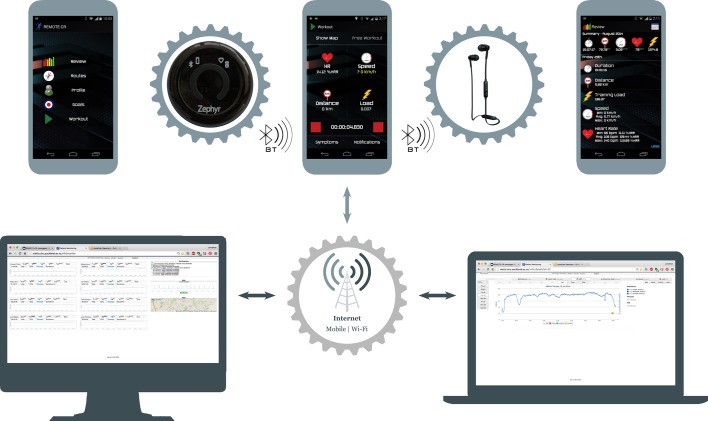
“With this data, the REMOTE-CR gives real-time advice to improve the exercise performance as well as build an historic that the user’s can access through the web portal.”
MethodBatool, T., Neven, A., Smeets, C. J. P. P., Scherrenberg, M., Dendale, P., Vanrompay, Y., Adnan, M., Ross, V., Brijs, K., Wets, G., et al. (2022) · Journal of Transport & Health · doi:10.1016/j.jth.2022.101344 · Cited by 4
Viana, S., Salvador, R., Morouço, P., & Rebelo‐Gonçalves, R. (2022) · European Journal of Investigation in Health Psychology and Education · doi:10.3390/ejihpe12040027 · Cited by 4
“Two studies [29,31] compared the effectiveness of home-based programs vs.”
BackgroundMethodInfluentialNabutovsky, I., Breitner, D., Heller, A., Scheinowitz, M., Klempfner, Y., & Klempfner, R. (2022) · JMIR Cardio · doi:10.2196/36947 · Cited by 4
“RCR has been shown to improve exercise adherence, increase physical activity level, and reduce the relative cost of treatment [6,7].”
Background
Metadata
- Authors
- Maddison, R., Rawstorn, J. C., Stewart, R. A. H., Benatar, J., Whittaker, R., Rolleston, A., Jiang, Y., Gao, L., Moodie, M., Warren, I., Meads, A., & Gant, N.
- Affiliations
- Deakin University (AU)
- Auckland City Hospital (NZ)
- University of Auckland (NZ)
- The Centre for Health (New Zealand) (NZ)
- Corresponding author
- Rawstorn, Jonathan Charles
- ORCID
- Venue
- Heart
- Publisher
- BMJ
- Published
- 2018-08-27
- Volume
- 105
- Issue
- 2
- Pages
- 122-129
- ISSN
- 1355-6037 (ISSN-L)
- 1468-201X
- PMC
- PMC6352408
- OpenAlex
- W2889374857
- Cited by
- 320
- References
- 32
- Citations by year
- 2026: 27 · 2025: 47 · 2024: 52 · 2023: 55 · 2022: 59 · 2021: 36 · 2020: 25 · 2019: 14 · 2018: 5
- FWCI
- 15.13
- Type
- journal article
- Language
- en
- Open access
- hybrid
- doi.org
- Licence
- cc-by-nc
- Locations
- Heart (publishedVersion, cc-by-nc)
- Europe PMC (PubMed Central) (publishedVersion, cc-by-nc)
- PubMed Central (publishedVersion, cc-by-nc)
- PubMed (publishedVersion)
- Own your potential (DEAKIN) (submittedVersion)
- Figshare (submittedVersion, cc-by-nc)
- HighWire Press Open Archive (submittedVersion)
- Funders
- Auckland Medical Research Foundation
- Topics
- Health Sciences › Medicine › Cardiology and Cardiovascular Medicine › Cardiac Health and Mental Health
- Health Sciences › Medicine › Public Health, Environmental and Occupational Health › Telemedicine and Telehealth Implementation
- Health Sciences › Health Professions › General Health Professions › Mobile Health and mHealth Applications
- Keywords
- cardiac telerehabilitation, coronary artery disease, exercise-based cardiac rehabilitation, VO2max, sedentary behavior, cardiovascular risk factors, health-related quality of life, drug costs, non-inferiority, behavioral strategies, exercise adherence, motivation, New Zealand
- MeSH terms
- Coronary Disease, Cost-Benefit Analysis, Exercise Therapy, Female, Humans, Male, Middle Aged, New Zealand, Quality of Life, Rehabilitation Centers, Treatment Outcome, Telemedicine, Internet
About these checks
Registry, retraction, Cites and statistics results are computed, not judged, with one exception: a printed reference that no index lists is read once by a model before it counts as a citation error. Claims are extracted by a model and kept only when their quote appears verbatim in the text; each cited source is then checked, with a model’s help, for whether it says what the claim relies on. Those verdicts can be wrong — read the claim’s quote and the cited source before relying on one.
Statistics and arithmetic are recomputed, not judged.
Confidence bands are shown only for fields calibrated on our annotated test set. None is calibrated yet, so no band is shown.
What counts as a claim ›How we measure confidence ›How we check this ›
Are you an author, or do you see a problem with this page? Request a review
