

The DOI matches its Crossref record; 30 of the 32 references it cites were found in a registry or an index.
Effects and costs of real-time cardiac telerehabilitation: randomised controlled non-inferiority trial
Open accessAbstract
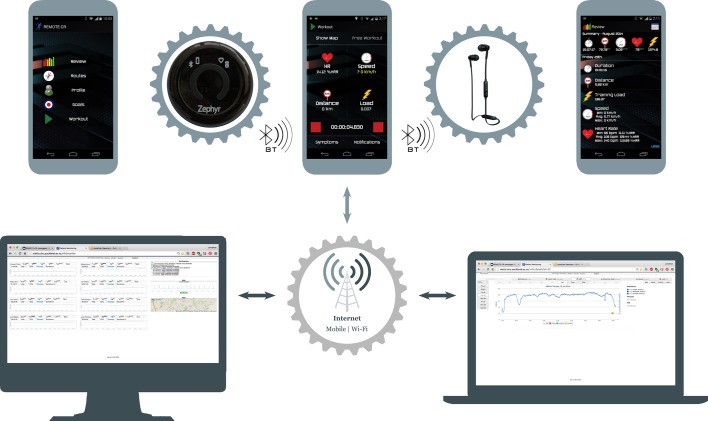
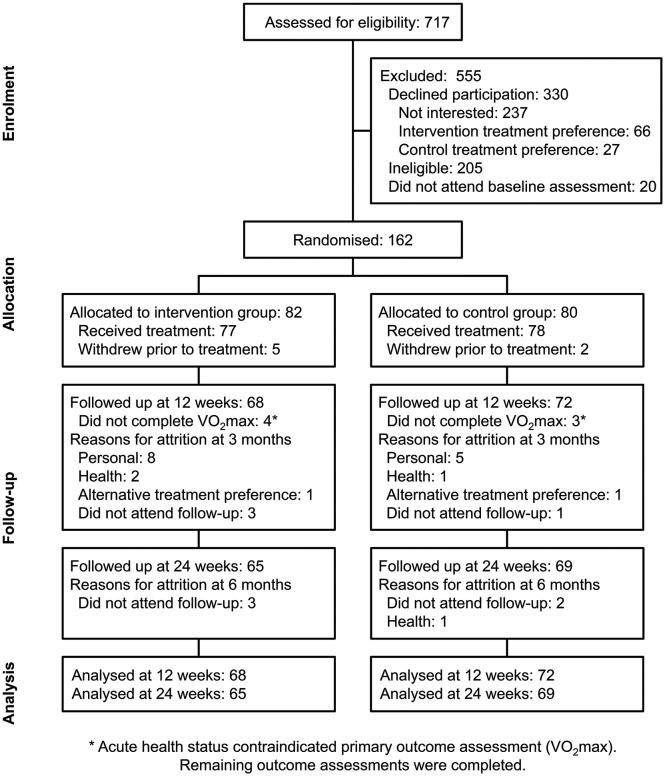
Objective: Compare the effects and costs of remotely monitored exercise-based cardiac telerehabilitation (REMOTE-CR) with centre-based programmes (CBexCR) in adults with coronary heart disease (CHD). Methods: Participants were randomised to receive 12 weeks of telerehabilitation or centre-based rehabilitation. REMOTE-CR provided individualised exercise prescription, real-time exercise monitoring/coaching and theory-based behavioural strategies via a bespoke telerehabilitation platform; CBexCR provided individualised exercise prescription and coaching via established rehabilitation clinics. Outcomes assessed at baseline, 12 and/or 24 weeks included maximal oxygen uptake (V̇O 2 max, primary) modifiable cardiovascular risk factors, exercise adherence, motivation, health-related quality of life and programme delivery, hospital service utilisation and medication costs. The primary hypothesis was a non-inferior between-group difference in V̇O 2 max at 12 weeks (inferiority margin=−1.25 mL/kg/min); inferiority margins were not set for secondary outcomes. Results: 162 participants (mean 61±12.7 years, 86% men) were randomised. V̇O 2 max was comparable in both groups at 12 weeks and REMOTE-CR was non-inferior to CBexCR (REMOTE-CR-CBexCR adjusted mean difference (AMD)=0.51 (95% CI −0.97 to 1.98) mL/kg/min, p=0.48). REMOTE-CR participants were less sedentary at 24 weeks (AMD=−61.5 (95% CI −117.8 to −5.3) min/day, p=0.03), while CBexCR participants had smaller waist (AMD=1.71 (95% CI 0.09 to 3.34) cm, p=0.04) and hip circumferences (AMD=1.16 (95% CI 0.06 to 2.27) cm, p=0.04) at 12 weeks. No other between-group differences were detected. Per capita programme delivery (NZD1130/GBP573 vs NZD3466/GBP1758) and medication costs (NZD331/GBP168 vs NZD605/GBP307, p=0.02) were lower for REMOTE-CR. Hospital service utilisation costs were not statistically significantly different (NZD3459/GBP1754 vs NZD5464/GBP2771, p=0.20). Conclusion: REMOTE-CR is an effective, cost-efficient alternative delivery model that could—as a complement to existing services—improve overall utilisation rates by increasing reach and satisfying unique participant preferences.
Overview
The claims and statistics of this paper haven’t been checked yet.
Run the check — free, no account needed. It reads the open-access text and checks the sources it cites.
Integrity signals
Registry
Cites
Statistics
Figures
Verification
Claims the paper makes
The claims and statistics of this paper haven’t been checked yet.
Run the check — free, no account needed. It reads the open-access text and checks the sources it cites.
Claims other papers make about this one
Each is checked against this paper’s own text: does it say what the citing paper says it does?
The cited source says what the claim attributes to it.
In the citing paper
“Home-based cardiac telerehabilitation using wearable sensors is equivalent or better than centre-based rehabilitation and can increase access to cardiac rehabilitation and reduce the cost”
From Smart wearable devices in cardiovascular care: Where we are and how to move forward (2021) · cites this paper as [85]
In the citing paper
“A non-inferiority, randomized trial comparing REMOTE-CR — a real-time, remote telerehabilitation platform that includes the use of a chest-worn wearable sensor (BioHarness 3, Zephyr Technology, USA) — with a centre-based programme showed that REMOTE-CR was associated with less sedentary time at 24 weeks and was more cost-effective than the centre-based programme85.”
From Smart wearable devices in cardiovascular care: Where we are and how to move forward (2021) · cites this paper as [85]
In the citing paper
“The authors demonstrated that the intervention was an effective and cost-effective delivery model that could potentially improve overall CR utilisation rates by increasing reach and satisfying unique participant preferences.30”
Self-check
Percentages, sums and reported differences re-computed from the paper’s own numbers.
The self-check needs the paper’s full text.
Citations
Cites
Self-efficacy: Toward a unifying theory of behavioral change
Bandura, A. (1977) · Psychological Review · doi:10.1037/0033-295x.84.2.191 · Cited by 43,925
Intrinsic Motivation and Self-Determination in Human Behavior
Deci, E. L., & Ryan, R. M. (1985) · doi:10.1007/978-1-4899-2271-7 · Cited by 26,772
Intrinsic Motivation and Self-Determination in Human Behavior
Miller, K. A. J., Deci, E. L., & Ryan, R. M. (1988) · Contemporary Sociology A Journal of Reviews · doi:10.2307/2070638 · Cited by 15,406
Self-efficacy: Toward a unifying theory of behavioral change
Bandura, A. (1978) · Advances in Behaviour Research and Therapy · doi:10.1016/0146-6402(78)90002-4 · Cited by 10,586
(2014) · Medical Entomology and Zoology · Cited by 9,400
Michie, S., Richardson, M., Johnston, M., Abraham, C., Francis, J., Hardeman, W., Eccles, M. P., Cane, J., & Wood, C. E. (2013) · Annals of Behavioral Medicine · doi:10.1007/s12160-013-9486-6 · Cited by 7,629
Piaggio, G., Elbourne, D. R., Pocock, S. J., Evans, S. J. W., Altman, D. G., & CONSORT Group, F. T. (2012) · JAMA · doi:10.1001/jama.2012.87802 · Cited by 2,428
Exercise-based cardiac rehabilitation for coronary heart disease
Heran, B. S., Chen, J. M., Ebrahim, S., Moxham, T., Oldridge, N., Rees, K., Thompson, D. R., & Taylor, R. S. (2011) · Cochrane Database of Systematic Reviews · doi:10.1002/14651858.cd001800.pub2 · Cited by 1,844
ACSM's guidelines for exercise testing and prescription
Kenney, W. L., Humphrey, R. H., Bryant, C. X., & Mahler, D. A. (1995) · Williams & Wilkins eBooks · Cited by 1,475
Advances in sport and exercise psychology measurement
Duda, J. L. (1998) · University of Birmingham Research Portal (University of Birmingham) · Cited by 1,324
Cited by
Sorted by citations
Items 201–300 of 320
Quelle imagerie et quels outils pour une réadaptation cardiaque moderne ?
Ghannem, M., Boaouina, M. S., & Ghannem, L. (2022) · Annales de Cardiologie et d Angéiologie · doi:10.1016/j.ancard.2022.09.009 · Cited by 4
Berre, M. L., Filiatrault, J., Reichetzer, B., & Dumoulin, C. L. (2022) · Digital Health · doi:10.1177/20552076221123720 · Cited by 4
Cardiopulmonary Exercise Testing, Rehabilitation, and Exercise Training in Postpulmonary Embolism
Dharmavaram, N. L., Esmaeeli, A., Jacobson, K. M., Brailovsky, Y., & Raza, F. (2023) · Interventional Cardiology Clinics · doi:10.1016/j.iccl.2023.02.002 · Cited by 4
Eficácia da telenfermagem na redução do peso e qualidade de vida de adultos: revisão integrativa
Utrila, R. T., Nunes, M. S. Á., Christinelli, H. C. B., Almeida, M. A. S., & Fernandes, C. A. M. (2021) · Revista Enfermagem Atual In Derme · doi:10.31011/reaid-2021-v.95-n.33-art.1007 · Cited by 4
Short, C. E., Rawstorn, J. C., Jones, T. L., Edbrooke, L., Hayes, S. C., Maddison, R., Nightingale, S., Ismail, H., BOER, R. D., Hegi‐Johnson, F., et al. (2024) · JMIR Research Protocols · doi:10.2196/53301 · Cited by 3
“Maddison et al [19] developed a smartphone-based exercise telerehabilitation program (REMOTE-CR) that allowed participants to receive real-time remote exercise supervision and coaching from an exercise professional.”
InfluentialSelf-citationExercise interventions for older patients with frailty and heart failure: A scoping review
Liu, S., Zhang, M., Xiong, X.-Y., Chen, L., & Wu, R. (2025) · Geriatric Nursing · doi:10.1016/j.gerinurse.2025.03.050 · Cited by 3
Saklıca, D., Vardar‐Yağlı, N., Sağlam, M., Yüce, D., Ateş, A. H., & Yorgun, H. (2025) · Arquivos Brasileiros de Cardiologia · doi:10.36660/abc.20240765 · Cited by 4
“…COVID-19 pandemic has exacerbated this problem, prompting health care providers to seek innovative solutions to increase participation, accessibility, efficiency, and cost-effectiveness of programs for CR. 20 In the United States, only 20% to 30% of eligible patients participate in programs for CR.”
InfluentialWu, Y., Ma, Y., Zhang, C., Wang, C., Zhang, S. Y., Zhao, M., Su, H., Liu, C., Wang, Y., & Feng, X. (2025) · International Journal of Nursing Sciences · doi:10.1016/j.ijnss.2025.12.010 · Cited by 3
“Studies have demonstrated that patients who participate in cardiac rehabilitation experience significant improvements in cardiac function, physical activity levels, and mental health [2,3].”
Zou, Y., Du, J., Burger, H., Zuidema, S. U., van der Werf, S., Janus, S. I. M., & Qu, N. (2026) · European Journal of Preventive Cardiology · doi:10.1093/eurjpc/zwag072 · Cited by 3
Israel's first national remote cardiac rehabilitation program: A retrospective analysis
Nabutovsky, I., Breitner, D., Heller, A., Moreno, M., Levine, Y., Klempfner, Y., Scheinowitz, M., & Klempfner, R. (2023) · Digital Health · doi:10.1177/20552076231180762 · Cited by 3
“It facilitates individualized support in almost any location.(8) Overall, our program achieved its goals in terms of exercise adherence and was shown to significantly improve the functional capacity of its participants.”
BackgroundAbe, M., Hirata, T., Morito, N., Kawashima, M., Yoshida, S., Takami, Y., Fujimoto, T., Kawasoe, S., Shibukawa, T., Segawa, H., et al. (2025) · Hypertension Research · doi:10.1038/s41440-025-02365-y · Cited by 4
Komiyama, J., Iwagami, M., Mori, T., Kuroda, N., Jin, X., Ito, T., & Tamiya, N. (2022) · Annals of Clinical Epidemiology · doi:10.37737/ace.22003 · Cited by 3
Advances in Technology Promote Patient-Centered Care in Cardiac Rehabilitation
Ben-Tzur, D., Sabovich, S., Hutzler, Y. S., Rimon, J., Zach, S., Epstein, M., Vadasz, B., Diniz, C. V., Nabutovsky, I., Klempfner, R., et al. (2023) · Cardiology in Review · doi:10.1097/crd.0000000000000599 · Cited by 3
“59,60 Patients also felt an increased sense of comfort and safety when monitored during rehabilitation exercises, 59 which can be achieved using wearable devices 61 from one’s own home.”
Fuda, M. R., Patel, P., van Es, J., Mosleh, K., Cullen, K. J., Lonn, E., Schwalm, J.-D., & Crawshaw, J. (2023) · CJC Open · doi:10.1016/j.cjco.2023.10.013 · Cited by 3
Meng, D., Wei, M., He, S., Lv, Z., Guan, J., Yang, G., & Wang, Z. (2025) · Sport Sciences for Health · doi:10.1007/s11332-025-01336-7 · Cited by 4
“Telerehabilitation, as an emerging rehabilitation model, has been used for patients after stroke [10], in cardiac rehabilitation [11], after total knee replacement and total hip replacement [12, 13].”
Digital Technologies and Artificial Intelligence in Cardiac Rehabilitation
Hamilton, D. E., Xie, J. X., Chang, A. L., Beatty, A. L., & Golbus, J. R. (2025) · Journal of Cardiopulmonary Rehabilitation and Prevention · doi:10.1097/hcr.0000000000000935 · Cited by 3
Vladimirsky, V. E., Vladimirsky, E. V., Yudina, E. A., Lunina, A. N., Yakovlev, M. Y., Ansokova, M. A., & Raspertov, M. M. (2020) · Bulletin of Rehabilitation Medicine · doi:10.38025/2078-1962-2020-100-6-45-56 · Cited by 3
Shajrawi, A. M., Al‐Smadi, A. M., Ashour, A. F., Momani, A., Al‐Akash, H. Y., Granat, M. H., & Jones, I. D. (2022) · Dimensions of Critical Care Nursing · doi:10.1097/dcc.0000000000000547 · Cited by 3
“Many previous studies have shown that secondary prevention strategies have a beneficial impact on the patient, encouraging a healthy lifestyle and decreasing AMI risk factors after treatment.(12,13) Self-efficacy is a psychological construct that has a substantial role in improving patient outcomes and the self-manage…”
BackgroundSolhan, N. B., Karataş, L., Karasu, A. U., Onurlu, İ., Topal, S., & Demirsoy, N. (2025) · Annals of Rehabilitation Medicine · doi:10.5535/arm.250086 · Cited by 2
Short, C. E., Edbrooke, L., Abo, S., Jones, T., Khot, A. S., Mahar, R. K., Lee, J., Crowe, J., Stratulate, S., Granger, C. L., et al. (2025) · BMC Cancer · doi:10.1186/s12885-025-15027-6 · Cited by 2
“As a result, remote models of exercise support can now be equally effective as in-person programs, whilst also being more accessible [26, 27].”
Torres, D. D. F. M., Guimarães3, F. S., Meireles, N. A. S., Cardoso, A. P., Migliori, G. B., & Mello, F. C. D. Q. (2025) · Jornal Brasileiro de Pneumologia · doi:10.36416/1806-3756/e20250222 · Cited by 2
Karisa, P., Sylviana, N., Syamsunarno, M. R., FItria, N., Tiksnadi, B. B., & Setiawan, S. (2026) · Patient Preference and Adherence · doi:10.2147/ppa.s581645 · Cited by 4
“20,24,26,28,32,35 Only a few studies allowed for a clearly lower frequency or duration in the home-based group due to practical limitations, but generally remained within the exercise dose range recommended by CR guidelines.”
InfluentialGherghin, A.-C., Bistriceanu, M. I. A., Onu, I., Iordan, D. A., Dimofte, F., Neofit, A., Costin, D. E., & Scafa‐Udriște, A. (2026) · Life · doi:10.3390/life16030444 · Cited by 2
“This paradigm shift enables the transition from partially effective solutions to a sustainable clinical ecosystem that anticipates, adapts, and optimises care for each patient [22,29,30].”
Dunn, P. J., Charbonneau, R., Ozemek, C., Arena, R. A., & Wisløff, U. (2026) · Progress in Cardiovascular Diseases · doi:10.1016/j.pcad.2026.04.002 · Cited by 2
Костенко, В., & Балаж, М. С. (2020) · Теорія і методика фізичного виховання і спорту · doi:10.32652/tmfvs.2020.1.61-67 · Cited by 2
Izquierdo-García, J., Escudero, A. A., de Meneses, R. T., de la Torre, N., Amat-Macías, I. M., Martín, J. I. C., Sanz-Ayan, P., & Moreno, G. (2023) · Anales del Sistema Sanitario de Navarra · doi:10.23938/assn.1050 · Cited by 2
Ghaben, S. J., & Ludin, A. F. M. (2024) · Biomedical engineering · doi:10.5772/intechopen.1004756 · Cited by 3
Paramita, N., Santoso, . I. S., Nusdwinuringtyas, N., Rasmin, M., Kartinah, N. T., Widaty, S., Jusman, S. W. A., Abdullah, M., Tinduh, D., Widjanantie, S. C., et al. (2024) · International Journal of Telerehabilitation · doi:10.5195/ijt.2024.6610 · Cited by 2
“This method has been done in several studies for cardiac rehabilitation program (Fang et al., 2019; Maddison et al., 2019; Skobel et al., 2017).”
MethodІвановська, О., Тиравська, О. І., Shtepa, O., Мелега, К. П., & Fedorenko, T. V. (2024) · Salud Ciencia y Tecnología · doi:10.56294/saludcyt20241329 · Cited by 2
Liu, Z., Zhang, G., Liang, X., & Qin, D. (2024) · Trials · doi:10.1186/s13063-024-08643-3 · Cited by 2
Digital health for cardiovascular disease and diabetes
Shan, R., Kim, C. H., Spaulding, E. M., Marvel, F. A., & Martin, S. S. (2025) · Elsevier eBooks · doi:10.1016/b978-0-443-15728-8.00004-5 · Cited by 2
Current status and exploration of nurse-led cardiac telerehabilitation: a narrative review
Wu, X., Xu, L., Yu, T., Zhang, X., Bai, X., Zhang, L., Yu, T., & Li, F. (2025) · Interdisciplinary Nursing Research · doi:10.1097/nr9.0000000000000082 · Cited by 2
“The REMOTE-CR study implemented a 12-week CTR program based on behavioral strategies rooted in self-ef fi cacy and self-determination theories, which demonstrated a signi fi cant reduction in medication costs in the CTR group compared with the control group (£168 vs. £307, P 0.05) 45 .”
InfluentialÖzsezer, G., & Dağhan, Ş. (2025) · Computers in Biology and Medicine · doi:10.1016/j.compbiomed.2025.110013 · Cited by 2
姚剑, & Cen, K. (2025) · 中国医学科学研究 · doi:10.70693/cjmsr.v1i1.602 · Cited by 2
Moffit, R. E., McTigue, K. M., Conroy, M. B., Kriska, A. M., Fischer, G. S., Ricci, E. M., Dunstan, D. W., DePerrior, S., Rao, N., Burke, L. E., et al. (2023) · American Journal of Health Promotion · doi:10.1177/08901171231194176 · Cited by 2
Wood, G., Scheer, A., Saundankar, J., Tran, D., Cordina, R., & Maiorana, A. (2024) · Trials · doi:10.1186/s13063-024-08019-7 · Cited by 2
“Studies have shown telehealth-delivered exercise to be accessible and cost-effective in CVD patients [32, 33].”
BackgroundHeartbeat: Time to switch from aortic valve area to aortic valve index?
Otto, C. M. (2019) · Heart · doi:10.1136/heartjnl-2018-314612 · Cited by 2
Perez, J. E., Coronado, R. O. F., Vílchez, R., Ñahui, M. A. H., Alcalá-Marcos, K. M., Meza, R. E. S., Valenzuela, H. S., OH, P. I., & Ghisi, G. L. D. M. (2023) · Journal of Vascular Nursing · doi:10.1016/j.jvn.2023.05.005 · Cited by 1
Nesbitt, K., Champion, S., Foote, J. W., Gebremichael, L. G., Bulamu, N. B., Clark, R. A., & Beleigoli, A. M. R. (2024) · British Journal of Cardiac Nursing · doi:10.12968/bjca.2024.0036 · Cited by 1
Huang, B., Zhang, Q., Wang, Y., Liu, C., Li, H., Wang, D., & Li, W. (2025) · BMC Cardiovascular Disorders · doi:10.1186/s12872-025-05393-1 · Cited by 1
“The score also maps well onto integrated care and tele-reha-bilitation models, facilitating step-down and community follow-up, particularly where resources are constrained [49].”
Aguiló-Furio, J., Tronchoni-Crespo, B., Moreno‐Segura, N., & Agustín, R. M. (2026) · International Journal of Medical Informatics · doi:10.1016/j.ijmedinf.2026.106356 · Cited by 1
Muluk, S. Y., Olcucu, N., & El, Ö. (2026) · PLoS ONE · doi:10.1371/journal.pone.0344922 · Cited by 1
Suebkinorn, O., Beleigoli, A. M. R., Clark, R. A., Gebremichael, L. G., Bulamu, N. B., Hendriks, J., Foote, J. W., Lymn, A., Grace, S. L., & Ramos, J. S. (2026) · Heart Lung and Circulation · doi:10.1016/j.hlc.2026.06.021 · Cited by 1
Застосування сучасних інформаційних технологій у кардіореабілітації: огляд зарубіжного досвіду
Костенко, В., & Балаж, М. С. (2020) · Спортивна медицина фізична терапія та ерготерапія · doi:10.32652/spmed.2020.1.111-114 · Cited by 1
Marcolino, M. S., Alkmim, M. B. M., Souza-Silva, M. V. R., Figueira, R. M., de Resende, R. E., Silva, L. B., & Ribeiro, A. L. P. (2020) · Springer eBooks · doi:10.1007/978-3-030-56917-4_24 · Cited by 1
Betancourt-Peña, J., Otero-Vélez, D. J., Marmolejo-Cuero, D. M., Assis, J. K., & Valencia, J. C. A. (2022) · Fisioterapia · doi:10.1016/j.ft.2022.05.003 · Cited by 1
O uso da telerreabilitação na Atenção Fisioterapêutica à Saúde do Idoso: revisão de escopo
Silva, J. P. D. S., de Souza, C. G., Pacheco, T. B. F., & Monteiro, K. S. (2022) · Saúde e Desenvolvimento Humano · doi:10.18316/sdh.v10i1.8173 · Cited by 1
Rehabilitace a preskripce pohybové aktivity u kardiovaskulárních a vybraných interních onemocnění
Vysoký, R., & Konečný, P. (2022) · doi:10.5507/fzv.22.24461250 · Cited by 1
Implementación de un programa de Telerehabilitación en tiempos de aislamiento social 2020
Lopera-Escobar, A., Montoya, V. T., Cartagena, D. C., Gómez, K. Y., & Pedroza, K. Y. A. (2023) · Movimiento Científico · doi:10.33881/2011-7191.mct.16102 · Cited by 1
Ruzzolini, M., Giallauria, F., Fattirolli, F., Venturini, E., Maranta, F., Mureddu, G. F., Calisi, P., Griffo, R., Vigorito, C., Faggiano, P. M., et al. (2024) · International Journal of Cardiology Cardiovascular Risk and Prevention · doi:10.1016/j.ijcrp.2024.200284 · Cited by 1
“…are also provided to specific populations such as the elderly, frail people, obese and cancer patients and, today, with specific settings like telerehabilitation [40] to reach not only the rural population but also people who can ’ t reach hospital services for any other personal/physical problems.”
BackgroundCardiopulmonary Exercise Testing, Rehabilitation, and Exercise Training in Postpulmonary Embolism
Dharmavaram, N. L., Esmaeeli, A., Jacobson, K. M., Brailovsky, Y., & Raza, F. (2024) · Heart Failure Clinics · doi:10.1016/j.hfc.2024.08.001 · Cited by 1
Șerban, I. B., Fruytier, L., Houben, S., Colombo, S., van de Sande, D. A., Kemps, H., & Brombacher, A. (2025) · JMIR Rehabilitation and Assistive Technologies · doi:10.2196/62986 · Cited by 2
“Existing studies on the requirements and perceptions of CTR technologies have been conducted in heterogeneous populations and in patients with low exercise capacity [38,39] and a sedentary lifestyle [40] or specifically in older adults [41].”
González, J. A. A., Córdoba, D. H., Mora, R. A. L., Parra, P. S. S., & Fernández, O. M. Á. (2020) · Revista Colombiana de Medicina Física y Rehabilitación · doi:10.28957/rcmfr.v30spa7 · Cited by 1
Nevzorova, E. V., Breev, Y. S., Zasyadko, K. I., & Shakula, A. V. (2021) · Bulletin of Rehabilitation Medicine · doi:10.38025/2078-1962-2021-20-3-45-52 · Cited by 1
Araújo, B. T. S., Brandão, D. C., Barros, A. E. V. D. R., Silva, M. P. D. S., Lopes, S. D. M., Xavier, D., Leite, J. C., de Aguiar, M. I. R., de Souza, J. A. F., Campos, S. L., et al. (2022) · Research Society and Development · doi:10.33448/rsd-v11i2.25356 · Cited by 1
“Likewise, it has been shown that telerehabilitation programs are viable, safe and effective, in the elderly population with combined chronic heart and lung diseases, as well as in individuals who have the isolated disorder (Bernocchi et al., 2018; Bourne et al., 2017; Maddison et al., 2019).”
BackgroundNahorna, A., & Валеріївна, А. О. (2023) · The Journal of Sports Medicine and Physical Fitness · doi:10.23736/s0022-4707.23.14566-x · Cited by 1
Rakhshan, M., Sabet-Ghadam, F., Janghorban, R., Jorat, M. V., & Abadi, A. K. H. (2022) · Research Square · doi:10.21203/rs.3.rs-1811138/v1 · Cited by 1
A feasibility pilot- a personalised physiotherapy led remote ACHD cardiac rehabilitation program
Evans, C., Curtis, S., Bedair, R., Turner, M., Szantho, G. V., & Stuart, G. (2021) · International Journal of Cardiology Congenital Heart Disease · doi:10.1016/j.ijcchd.2021.100220
The non-infectious effects of COVID-19 were fierce with the weakest: What lessons did we learn?
Meza‐Ramos, A., & Guasch, E. (2021) · IJC Heart & Vasculature · doi:10.1016/j.ijcha.2021.100925
“Indeed, telerehabilitation had previously demonstrated to yield a similar motivation as conventional cardiac rehabilitation in randomized clinical trials [16].”
Effective Techniques in Coronary Heart Disease Interventions: A meta-analysis (Preprint)Preprint
Agyei, E. E. Y. F., Miettunen, J., & B, H. O.-K. A. (2022) · doi:10.2196/preprints.36302
Tighe, S. A., Kensing, F., Ball, K., Kayser, L., & Maddison, R. (2021) · doi:10.2196/preprints.35198 · Cited by 1
Self-citationKlempfner, R., Breitner, D., Heller, A., Nabutovsky, I., & Klempfner, Y. (2022) · doi:10.2196/preprints.36947
Marvel, F. A., Huynh, P. P., & Martin, S. S. (2021) · Springer eBooks · doi:10.1007/978-3-030-75055-8_5
Remote cardiac rehabilitation saves costs
(2018) · PharmacoEconomics & Outcomes News · doi:10.1007/s40274-018-5255-x
Remotely Delivered Cardiac Rehabilitation Exercise for Coronary Heart Disease (Preprint)Preprint
Giggins, O. M., Doyle, J., Smith, S., Vavasour, G., Moran, O., Gavin, S., Sojan, N., & Boyle, G. (2022) · doi:10.2196/preprints.40283
Current Status and Issues of Remote Cardiac Rehabilitation Therapy
Kida, K., Kaihara, T., & Sasaki, N. (2022) · リハビリテーション医学 : 日本リハビリテーション医学会誌 · doi:10.2490/jjrmc.59.377
Personal Health Informatics Services and the Different Types of Value they Create
Wetter, T. C. (2022) · Cognitive informatics in biomedicine and healthcare · doi:10.1007/978-3-031-07696-1_20
Proposing an #EASIER Cardiopulmonary Rehabilitation Protocol for Coronavirus Disease 2019 Survivors
Goulart, C. D. L., Silva, R. N., Oliveira, M. R., Back, G. D., Arena, R. A., Faghy, M. A., & Borghi‐Silva, A. (2023) · Heart and Mind · doi:10.4103/hm.hm_28_22
Mocan, B., Schonstein, C., Murar, M., Neamțu, C. G. D., Fulea, M., Mocan, M., Dragan, S. R., & Feier, H. B. (2023) · Mathematics · doi:10.3390/math11071598
Evidence of Efficacy in Cardiac Telerehabilitation
Amiya, E. (2023) · リハビリテーション医学 : 日本リハビリテーション医学会誌 · doi:10.2490/jjrmc.60.320
Sinkkonen, E., Korpi, H., & Sjögren, T. (2023) · European Journal of Physiotherapy · doi:10.1080/21679169.2023.2233563
“Other previous studies [27,28,30,31] have also reported equal increments following fully remote technology-executed cardiac rehabilitation and standard rehabilitation.”
Telerreabilitação cardiovascular
Nacarato, D. (2022) · doi:10.47749/t/unicamp.2022.1262332
Crozier, A., Cocks, M. S., Hesketh, K. L., Miller, G., McGregor, G., Thomas, L., & Jones, H. (2024) · BMJ Open · doi:10.1136/bmjopen-2023-076734
“Whilst these studies were conducted to compare supervised in93 person CR and remote CR, they demonstrated that mHealth technology is 94 acceptable in this patient group [17, 18].”
MethodMuñoz-Tomás, M.-T., Parra, A. V., Burillo-Lafuente, M., & Sierra, M. Á. F. (2024) · REVISTA ESPAÑOLA DE COMUNICACIÓN EN SALUD · doi:10.20318/recs.2024.7285
Bashar, N., Aamdani, S. S., Khalid, S., Sattar, S., Samad, Z. Z., & Kamal, A. K. (2024) · doi:10.2196/preprints.58150
Maddison, R., Subedi, N., Li, P., Lamb, K. E., Ball, K., Oldenburg, B. F., Chow, C. K., McNaughton, S. A., Geroge, E., Gao, L., et al. (2024) · doi:10.2196/preprints.66069
Self-citationTelerehabilitation Methods in Cardiopulmonary Rehabilitation
Nalbant, S., Korkmaz, E., & Tuğay, B. U. (2024) · TELe-Health · doi:10.1007/978-3-031-69080-8_6
App-Timizing Cardiac Rehabilitation: Enhancing Patient Engagement with Mobile Health Applications
Tayon, K. G., Carlisle, A. E., Taylor, B. J., Cornwell, W. K., Shapiro, B. P., Thomas, R. J., & Dineen, E. H. (2024) · Current Cardiovascular Risk Reports · doi:10.1007/s12170-024-00751-8
Remote Cardiac Rehabilitation for Cardiovascular Disease
Miura, S. (2024) · リハビリテーション医学 : 日本リハビリテーション医学会誌 · doi:10.2490/jjrmc.61.267
Li, M., Zhuo, X., Shao, L., & Lin, Y. (2024) · Journal of Cardiothoracic Surgery · doi:10.1186/s13019-024-03124-9
“It is suitable for patients with cardio-vascular diseases [31].”
Kim, G. K., & Shim, M. (2024) · Journal of Military Veteran and Family Health · doi:10.3138/jmvfh-2023-0091
Effects of Exercise on Elderly Heart Health: A Comprehensive Analysis
Alazmi, A. S., Albedaiwi, N. H., Zehefa, I. A. A., Alhussain, O. S., Magrashi, E. G., Alazmi, F. A., Alruwaili, K., Alamri, Y. H., & Alanazi, A. F. (2024) · Journal of Advanced Trends in Medical Research · doi:10.4103/atmr.atmr_20_24
Jones, T., Edbrooke, L., Rawstorn, J. C., Denehy, L., Hayes, S. C., Maddison, R., Sverdlov, A. L., Koczwara, B., Kiss, N. K., & Short, C. E. (2024) · JMIR Cancer · doi:10.2196/51536
“A recent randomized controlled trial involving participants with coronary heart disease demonstrated the non-deidenti-fied inferiority of a remotely-delivered cardiac rehabilitation intervention compared with standard face-to-face rehabilitation [17].”
Self-citationConte, G., Magon, A., & Caruso, R. (2025) · European Journal of Cardiovascular Nursing · doi:10.1093/eurjcn/zvae175
Zhang, S., Wang, Y., Wu, J., Ma, C., & Meng, X. (2025) · doi:10.2196/preprints.70848
Wang, S., Yu, P., Zhou, X., Yuan, Y., Chen, J., Chen, D., Liang, J., & Xu, L. (2025) · Frontiers in Medical Technology · doi:10.3389/fmedt.2024.1382316
“Kraal (22) and Maddison (19) studied and compared the ef fi cacy and cost-effectiveness of telecardiac rehabilitation vs. traditional CR.”
Integration of IoT and Machine Learning in Biomedical Signal Processing
Bansal, H., Nautiyal, Y., & Gujar, A. (2025) · IGI Global eBooks · doi:10.4018/979-8-3693-6864-0.ch005
Telerehabilitation to Support Post-Discharge Recovery in Patients with Heart Disease
TAKAHASHI, T., Yokoyama, M. N., Saitoh, M., Iwatsu, K., Morisawa, T., Fujiwara, T., & Daida, H. (2025) · Juntendō Igaku/Juntendo igaku · doi:10.14789/ejmj.jmj25-0014-p
“Randomized controlled trials have shown that tele-CR is non-inferior to traditional CR in terms of improving exercise capacity, reducing cardiovascular risk factors, and enhancing health-related quality of life 10, 11 ) .”
Cardiopulmonary Exercise Testing, Rehabilitation, and Exercise Training in Postpulmonary Embolism
Dharmavaram, N. L., Esmaeeli, A., Jacobson, K. M., Brailovsky, Y., & Raza, F. (2025) · Cardiac Electrophysiology Clinics · doi:10.1016/j.ccep.2024.12.004
Sivertsson, B. C. P., Gartner, A. V., Takahashi, T., & Secher, P. H. (2025) · Telemedicine Reports · doi:10.1177/26924366251362187
“52,75 Unlike more complex systems that require multiple connected devices, the b-near offers a simpler alternative, particularly for elderly CABG patients.”
Мишина, И. Е., Blinova, K. A., Parfenov, A. S., Березина, Е. В., Khoroshilova, О. V., & Zhaburina, M. V. (2025) · Perm Medical Journal · doi:10.17816/pmj4245-19
The role of wearable technology in improving the care of pediatric heart failure
Edelson, J. B., Gao, S., Gandla, D., & Keating, B. J. (2025) · Elsevier eBooks · doi:10.1016/b978-0-443-13279-7.00035-3
The Economics of Cardiac Rehabilitation in North, Central, and South America: A Narrative Review
Decker, S. R. R., & Kazi, D. S. (2025) · Canadian Journal of Cardiology · doi:10.1016/j.cjca.2025.10.013
Mura, M., Portugal, B., Mouton, C., Grimm, B. P., Seil, R., & Malisoux, L. (2025) · Pilot and Feasibility Studies · doi:10.1186/s40814-025-01744-z
“However, for most patients, frequent trips are time-consuming and tedious [33, 34].”
Salarvand, S., Farzanpour, F., & Gharaei, H. A. (2024) · Figshare · doi:10.6084/m9.figshare.26682781
Wood, G., Scheer, A., Saundankar, J., Tran, D., Cordina, R., & Maiorana, A. (2024) · Figshare · doi:10.6084/m9.figshare.26702830
Wood, G., Scheer, A., Saundankar, J., Tran, D., Cordina, R., & Maiorana, A. (2024) · Figshare · doi:10.6084/m9.figshare.26702824
Salarvand, S., Farzanpour, F., & Gharaei, H. A. (2024) · Figshare · doi:10.6084/m9.figshare.26682778
Wood, G., Scheer, A., Saundankar, J., Tran, D., Cordina, R., & Maiorana, A. (2024) · Figshare · doi:10.6084/m9.figshare.26702827
Metadata
- Authors
- Maddison, R., Rawstorn, J. C., Stewart, R. A. H., Benatar, J., Whittaker, R., Rolleston, A., Jiang, Y., Gao, L., Moodie, M., Warren, I., Meads, A., & Gant, N.
- Affiliations
- Deakin University (AU)
- Auckland City Hospital (NZ)
- University of Auckland (NZ)
- The Centre for Health (New Zealand) (NZ)
- Corresponding author
- Rawstorn, Jonathan Charles
- ORCID
- Venue
- Heart
- Publisher
- BMJ
- Published
- 2018-08-27
- Volume
- 105
- Issue
- 2
- Pages
- 122-129
- ISSN
- 1355-6037 (ISSN-L)
- 1468-201X
- PMC
- PMC6352408
- OpenAlex
- W2889374857
- Cited by
- 320
- References
- 32
- Citations by year
- 2026: 27 · 2025: 47 · 2024: 52 · 2023: 55 · 2022: 59 · 2021: 36 · 2020: 25 · 2019: 14 · 2018: 5
- FWCI
- 15.13
- Type
- journal article
- Language
- en
- Open access
- hybrid
- doi.org
- Licence
- cc-by-nc
- Locations
- Heart (publishedVersion, cc-by-nc)
- Europe PMC (PubMed Central) (publishedVersion, cc-by-nc)
- PubMed Central (publishedVersion, cc-by-nc)
- PubMed (publishedVersion)
- Own your potential (DEAKIN) (submittedVersion)
- Figshare (submittedVersion, cc-by-nc)
- HighWire Press Open Archive (submittedVersion)
- Funders
- Auckland Medical Research Foundation
- Topics
- Health Sciences › Medicine › Cardiology and Cardiovascular Medicine › Cardiac Health and Mental Health
- Health Sciences › Medicine › Public Health, Environmental and Occupational Health › Telemedicine and Telehealth Implementation
- Health Sciences › Health Professions › General Health Professions › Mobile Health and mHealth Applications
- Keywords
- cardiac telerehabilitation, coronary artery disease, exercise-based cardiac rehabilitation, VO2max, sedentary behavior, cardiovascular risk factors, health-related quality of life, drug costs, non-inferiority, behavioral strategies, exercise adherence, motivation, New Zealand
- MeSH terms
- Coronary Disease, Cost-Benefit Analysis, Exercise Therapy, Female, Humans, Male, Middle Aged, New Zealand, Quality of Life, Rehabilitation Centers, Treatment Outcome, Telemedicine, Internet
About these checks
Registry, retraction, Cites and statistics results are computed, not judged, with one exception: a printed reference that no index lists is read once by a model before it counts as a citation error. Claims are extracted by a model and kept only when their quote appears verbatim in the text; each cited source is then checked, with a model’s help, for whether it says what the claim relies on. Those verdicts can be wrong — read the claim’s quote and the cited source before relying on one.
Statistics and arithmetic are recomputed, not judged.
Confidence bands are shown only for fields calibrated on our annotated test set. None is calibrated yet, so no band is shown.
What counts as a claim ›How we measure confidence ›How we check this ›
Are you an author, or do you see a problem with this page? Request a review
