

The DOI matches its Crossref record; 30 of the 32 references it cites were found in a registry or an index.
Effects and costs of real-time cardiac telerehabilitation: randomised controlled non-inferiority trial
Open accessAbstract
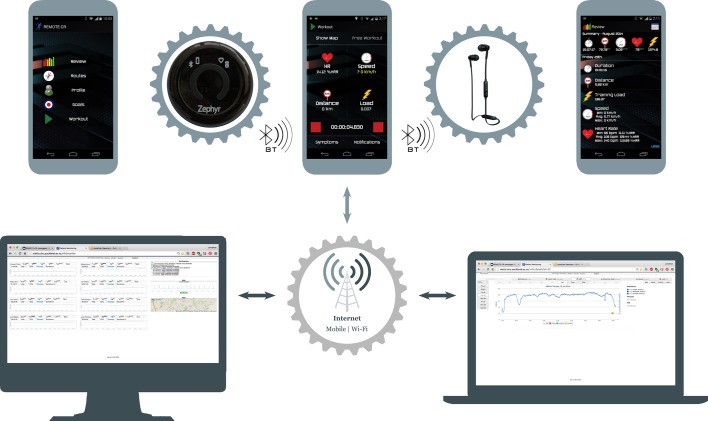
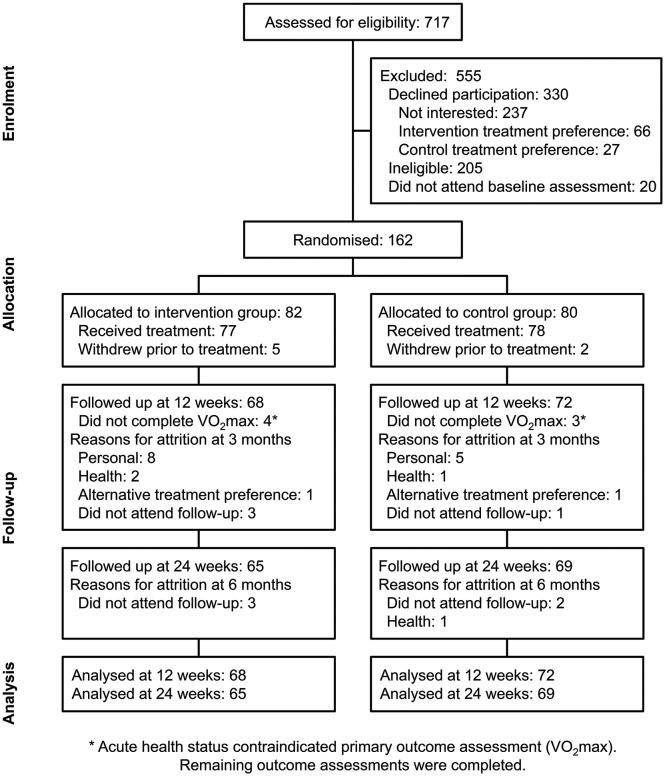
Objective: Compare the effects and costs of remotely monitored exercise-based cardiac telerehabilitation (REMOTE-CR) with centre-based programmes (CBexCR) in adults with coronary heart disease (CHD). Methods: Participants were randomised to receive 12 weeks of telerehabilitation or centre-based rehabilitation. REMOTE-CR provided individualised exercise prescription, real-time exercise monitoring/coaching and theory-based behavioural strategies via a bespoke telerehabilitation platform; CBexCR provided individualised exercise prescription and coaching via established rehabilitation clinics. Outcomes assessed at baseline, 12 and/or 24 weeks included maximal oxygen uptake (V̇O 2 max, primary) modifiable cardiovascular risk factors, exercise adherence, motivation, health-related quality of life and programme delivery, hospital service utilisation and medication costs. The primary hypothesis was a non-inferior between-group difference in V̇O 2 max at 12 weeks (inferiority margin=−1.25 mL/kg/min); inferiority margins were not set for secondary outcomes. Results: 162 participants (mean 61±12.7 years, 86% men) were randomised. V̇O 2 max was comparable in both groups at 12 weeks and REMOTE-CR was non-inferior to CBexCR (REMOTE-CR-CBexCR adjusted mean difference (AMD)=0.51 (95% CI −0.97 to 1.98) mL/kg/min, p=0.48). REMOTE-CR participants were less sedentary at 24 weeks (AMD=−61.5 (95% CI −117.8 to −5.3) min/day, p=0.03), while CBexCR participants had smaller waist (AMD=1.71 (95% CI 0.09 to 3.34) cm, p=0.04) and hip circumferences (AMD=1.16 (95% CI 0.06 to 2.27) cm, p=0.04) at 12 weeks. No other between-group differences were detected. Per capita programme delivery (NZD1130/GBP573 vs NZD3466/GBP1758) and medication costs (NZD331/GBP168 vs NZD605/GBP307, p=0.02) were lower for REMOTE-CR. Hospital service utilisation costs were not statistically significantly different (NZD3459/GBP1754 vs NZD5464/GBP2771, p=0.20). Conclusion: REMOTE-CR is an effective, cost-efficient alternative delivery model that could—as a complement to existing services—improve overall utilisation rates by increasing reach and satisfying unique participant preferences.
Overview
The claims and statistics of this paper haven’t been checked yet.
Run the check — free, no account needed. It reads the open-access text and checks the sources it cites.
Integrity signals
Registry
Cites
Statistics
Figures
Verification
Claims the paper makes
The claims and statistics of this paper haven’t been checked yet.
Run the check — free, no account needed. It reads the open-access text and checks the sources it cites.
Claims other papers make about this one
Each is checked against this paper’s own text: does it say what the citing paper says it does?
The cited source says what the claim attributes to it.
In the citing paper
“Home-based cardiac telerehabilitation using wearable sensors is equivalent or better than centre-based rehabilitation and can increase access to cardiac rehabilitation and reduce the cost”
From Smart wearable devices in cardiovascular care: Where we are and how to move forward (2021) · cites this paper as [85]
In the citing paper
“A non-inferiority, randomized trial comparing REMOTE-CR — a real-time, remote telerehabilitation platform that includes the use of a chest-worn wearable sensor (BioHarness 3, Zephyr Technology, USA) — with a centre-based programme showed that REMOTE-CR was associated with less sedentary time at 24 weeks and was more cost-effective than the centre-based programme85.”
From Smart wearable devices in cardiovascular care: Where we are and how to move forward (2021) · cites this paper as [85]
In the citing paper
“The authors demonstrated that the intervention was an effective and cost-effective delivery model that could potentially improve overall CR utilisation rates by increasing reach and satisfying unique participant preferences.30”
Self-check
Percentages, sums and reported differences re-computed from the paper’s own numbers.
The self-check needs the paper’s full text.
Citations
Cites
Self-efficacy: Toward a unifying theory of behavioral change
Bandura, A. (1977) · Psychological Review · doi:10.1037/0033-295x.84.2.191 · Cited by 43,925
Intrinsic Motivation and Self-Determination in Human Behavior
Deci, E. L., & Ryan, R. M. (1985) · doi:10.1007/978-1-4899-2271-7 · Cited by 26,772
Intrinsic Motivation and Self-Determination in Human Behavior
Miller, K. A. J., Deci, E. L., & Ryan, R. M. (1988) · Contemporary Sociology A Journal of Reviews · doi:10.2307/2070638 · Cited by 15,406
Self-efficacy: Toward a unifying theory of behavioral change
Bandura, A. (1978) · Advances in Behaviour Research and Therapy · doi:10.1016/0146-6402(78)90002-4 · Cited by 10,586
(2014) · Medical Entomology and Zoology · Cited by 9,400
Michie, S., Richardson, M., Johnston, M., Abraham, C., Francis, J., Hardeman, W., Eccles, M. P., Cane, J., & Wood, C. E. (2013) · Annals of Behavioral Medicine · doi:10.1007/s12160-013-9486-6 · Cited by 7,629
Piaggio, G., Elbourne, D. R., Pocock, S. J., Evans, S. J. W., Altman, D. G., & CONSORT Group, F. T. (2012) · JAMA · doi:10.1001/jama.2012.87802 · Cited by 2,428
Exercise-based cardiac rehabilitation for coronary heart disease
Heran, B. S., Chen, J. M., Ebrahim, S., Moxham, T., Oldridge, N., Rees, K., Thompson, D. R., & Taylor, R. S. (2011) · Cochrane Database of Systematic Reviews · doi:10.1002/14651858.cd001800.pub2 · Cited by 1,844
ACSM's guidelines for exercise testing and prescription
Kenney, W. L., Humphrey, R. H., Bryant, C. X., & Mahler, D. A. (1995) · Williams & Wilkins eBooks · Cited by 1,475
Advances in sport and exercise psychology measurement
Duda, J. L. (1998) · University of Birmingham Research Portal (University of Birmingham) · Cited by 1,324
Cited by
Sorted by citations
2023 ESC Guidelines for the management of acute coronary syndromes
Byrne, R. A., Rossello, X., Coughlan, J. J., Barbato, E., Berry, C., Chieffo, A., Claeys, M. J., Dan, G.-A., Dweck, M. R., Galbraith, M., et al. (2023) · European Heart Journal · doi:10.1093/eurheartj/ehad191 · Cited by 5,333
Smart wearable devices in cardiovascular care: Where we are and how to move forward
Bayoumy, K., Gaber, M., Elshafeey, A., Mhaimeed, O., Dineen, E. H., Marvel, F. A., Martin, S. S., Muse, E. D., Turakhia, M. P., Tarakji, K. G., et al. (2021) · Nature Reviews Cardiology · doi:10.1038/s41569-021-00522-7 · Cited by 829
Promoting Physical Activity and Exercise
Fletcher, G. F., Landolfo, C. K., Niebauer, J., Ozemek, C., Arena, R. A., & Lavie, C. J. (2018) · Journal of the American College of Cardiology · doi:10.1016/j.jacc.2018.08.2141 · Cited by 550
2023 ESC Guidelines for the management of acute coronary syndromes
Byrne, R. A., Rosselló, X., Coughlan, J. J., Barbato, E., Berry, C., Chieffo, A., Claeys, M. J., Dan, G., Dweck, M. R., Galbraith, M., et al. (2023) · European Heart Journal Acute Cardiovascular Care · doi:10.1093/ehjacc/zuad107 · Cited by 373
Wearable Devices in Cardiovascular Medicine
Hughes, A. N., Shandhi, M. M. H., Master, H., Dunn, J., & Brittain, E. L. (2023) · Circulation Research · doi:10.1161/circresaha.122.322389 · Cited by 341
JCS/JACR 2021 Guideline on Rehabilitation in Patients With Cardiovascular Disease
Makita, S., Yasu, T., Akashi, Y. J., Adachi, H., Izawa, H., Ishihara, S., Iso, Y., Ohuchi, H., Omiya, K., Ohya, Y., et al. (2022) · Circulation Journal · doi:10.1253/circj.cj-22-0234 · Cited by 314
Scherrenberg, M., Wilhelm, M., Hansen, D., Völler, H., Cornelissen, V., Frederix, I., Kemps, H., & Dendale, P. (2021) · European Journal of Preventive Cardiology · doi:10.1177/2047487320939671 · Cited by 251
“In 2003, Southard and team99 developed and tested an internet-based programme that allows nurse case managers to deliver risk factor management training and education to patients with CAD.”
BackgroundInfluentialRamachandran, H. J., Jiang, Y., Tam, W., Yeo, T. J., & Wang, W. (2021) · European Journal of Preventive Cardiology · doi:10.1093/eurjpc/zwab106 · Cited by 217
Self-citationChindhy, S., Taub, P. R., Lavie, C. J., & Shen, J. (2020) · Expert Review of Cardiovascular Therapy · doi:10.1080/14779072.2020.1816464 · Cited by 216
“Additionally, REMOTE-CR was found to be more cost-effective than CBCR [116].”
MethodDigital Health Interventions for Cardiac Rehabilitation: Systematic Literature Review
Wongvibulsin, S., Habeos, E. E., Huynh, P. P., Xun, H., Shan, R., Rodriguez, K. A. P., Wang, J., Gandapur, Y. K., Osuji, N., Shah, L. M., et al. (2020) · Journal of Medical Internet Research · doi:10.2196/18773 · Cited by 179
“Only one study reported that the digital CR intervention group had more adverse events during the treatment period as compared with the control group that participated in a center-based CR; however, adverse events were comparable during the postintervention follow-up period [41].”
InfluentialThe Influence of Wearables on Health Care Outcomes in Chronic Disease: Systematic Review
Mattison, G., Canfell, O., Forrester, D., Dobbins, C., Smith, D., Töyräs, J., & Sullivan, C. (2022) · Journal of Medical Internet Research · doi:10.2196/36690 · Cited by 171
“Of the 30 studies, 2 (7%) targeted a pediatric population (aged<18 years [30,31], 21 (70%) studied adults with a mean age between 40 and 65 years [32-49,54,55,61], and 6 (20%) evaluated individuals aged >65 years [50-52,56-58].”
BackgroundMethodInfluentialHome-based versus centre-based cardiac rehabilitation
McDonagh, S. T. J., Dalal, H. M., Moore, S. F., Clark, C. E., Dean, S. G., Jolly, K. B., Cowie, A., Afzal, J., & Taylor, R. S. (2023) · Cochrane Database of Systematic Reviews · doi:10.1002/14651858.cd007130.pub5 · Cited by 178
Virtual reality and video games in cardiac rehabilitation programs. A systematic review
García‐Bravo, S., Cuesta‐Gómez, A., Campuzano-Ruiz, R., López-Navas, M. J., Domínguez-Paniagua, J., Araújo-Narváez, A., Copete, E. B., García‐Bravo, C., Flórez-García, M. T., Botas, J., et al. (2019) · Disability and Rehabilitation · doi:10.1080/09638288.2019.1631892 · Cited by 148
Subedi, N., Rawstorn, J. C., Gao, L., Koorts, H., & Maddison, R. (2020) · JMIR mhealth and uhealth · doi:10.2196/17957 · Cited by 138
“Implementation outcome findings are summarized below, with supporting data provided in Table 1 [41-45”
BackgroundMethodInfluentialSelf-citationAntoniou, V., Davos, C. H., Kapreli, E., Baťalík, L., Panagiotakos, D. B., & Pepera, G. (2022) · Journal of Clinical Medicine · doi:10.3390/jcm11133772 · Cited by 119
“Three studies were conducted in Belgium [35,41,42], two in China [30,40], one in the Netherlands [33], one in New Zealand [31], one in Spain [39], one in Iran [43], one in Australia [32], one in Czech Republic [40], one in Poland, one in Germany [36,38], and another one was a multi-center study across Europe [37].”
BackgroundMethodInfluentialRemotely monitored telerehabilitation for cardiac patients: A review of the current situation
Baťalík, L., Filáková, K., Batalikova, K., & Dosbaba, F. (2020) · World Journal of Clinical Cases · doi:10.12998/wjcc.v8.i10.1818 · Cited by 111
Muñoz-Tomás, M.-T., Burillo-Lafuente, M., Vicente-Parra, A., Sanz-Rubio, M. C., Suárez-Serrano, C., Marcén-Román, Y., & Franco-Sierra, M. Á. (2023) · International Journal of Environmental Research and Public Health · doi:10.3390/ijerph20054358 · Cited by 119
“Exercise was also delivered through more complex REMOTE-CR platforms, together with several devices, a smartphone, a portable sensor and web applications and customized middleware [25].”
BackgroundMethodInfluentialVirtual and in-person cardiac rehabilitation
Dalal, H. M., Doherty, P., McDonagh, S. T. J., Paúl, K., & Taylor, R. S. (2021) · BMJ · doi:10.1136/bmj.n1270 · Cited by 93
Baťalík, L., Dosbaba, F., Hartman, M., Batalikova, K., & Špinar, J. (2020) · Medicine · doi:10.1097/md.0000000000019556 · Cited by 96
“First, it is necessary to mention problems related to various monitoring TR devices described in previous studies.([22,23,28]) For example, Kraal et al used a chest strap sensor in his study, monitoring heart rate during training.”
MethodNagatomi, Y., Ide, T., Higuchi, T., Nezu, T., Fujino, T., Tohyama, T., Nagata, T., Higo, T., Hashimoto, T., Matsushima, S., et al. (2022) · ESC Heart Failure · doi:10.1002/ehf2.13934 · Cited by 95
“50 Ischaemic heart disease 4 (13) 1 (6) 3 (20) Dilated cardiomyopathy 9 (35) 6 (43) 3 (25) Sarcoidosis 5 (19) 2 (14) 3 (25) Amyloidosis 2 (8) 1 (7) 1 (8) Hypertrophic cardiomyopathy 2 (8) 0 (0) 2 (17) Hypertensive heart disease 1 (4) 1 (7) 0 (0) Other 7 (27) 4 (29) 3 (25) Medical history, n (%) PCI 3 (10) 1 (7) 2 (13)…”
InfluentialCardiac telerehabilitation as an alternative to centre-based cardiac rehabilitation
Brouwers, R. W. M., van Exel, H. J., van Hal, J. M. C., Jorstad, H. T., de Kluiver, E. P., Kraaijenhagen, R. A., Kuijpers, P. M. J. C., van der Linde, M. R., Spee, R. F., Sunamura, M., et al. (2020) · Netherlands Heart Journal · doi:10.1007/s12471-020-01432-y · Cited by 97
Baťalík, L., Filáková, K., Sládečková, M., Dosbaba, F., Su, J. J., & Pepera, G. (2023) · European Journal of Physical and Rehabilitation Medicine · doi:10.23736/s1973-9087.23.07773-0 · Cited by 91
Prabhu, N. V., Maiya, A. G., & Prabhu, N. S. (2020) · Cardiology Research and Practice · doi:10.1155/2020/1236968 · Cited by 87
“2015 [29] RCT n� 171 mobile rehab: (n� 85) usual: (n� 86) Mobile rehab-30mins for 5 days/week, automated texts and exercise videos usualexercise in settings 3 days/week VO2peak physical activity (IPAQ) HRQoL No difference in VO2max between groups (p � 0.”
BackgroundMethodA Review of the Design and Implementation of a Hybrid Cardiac Rehabilitation Program
Keteyian, S. J., Ades, P. A., Beatty, A. L., Gavic-Ott, A., Hines, S., Lui, K., Schopfer, D. W., Thomas, R. J., & Sperling, L. S. (2021) · Journal of Cardiopulmonary Rehabilitation and Prevention · doi:10.1097/hcr.0000000000000634 · Cited by 84
Cruz-Cobo, C., Bernal-Jiménez, M. Á., Vázquez-García, R., & Santi-Cano, M. J. (2022) · JMIR mHealth and uHealth · doi:10.2196/39593 · Cited by 74
“Fasting blood sugar levels were also reported in 13% (3/23) of homogeneous trials (I(2)=0%), with no significant improvements being found (Mul t imedia Appendix 7 [17,18,21,25,27-29,31,32,34,36]).”
BackgroundMethodInfluentialHwang, R., Morris, N., Mandrusiak, A., Bruning, J., Peters, R., Korczyk, D., & Russell, T. (2019) · Heart, Lung and Circulation · doi:10.1016/j.hlc.2018.11.010 · Cited by 73
Indraratna, P., Tardo, D. T., Yu, J., Delbaere, K., Brodie, M. A. D., Lovell, N. H., & Ooi, S. (2020) · JMIR mhealth and uhealth · doi:10.2196/16695 · Cited by 80
“This noninferiority trial demonstrated comparable average physical fitness (as measured by maximal oxygen consumption: VO 2 max) between the 2 groups [34].”
“Can you see my screen?” Addressing Racial and Ethnic Disparities in Telehealth
Haynes, N., Ezekwesili, A. C., Nunes, K. L., Gumbs, E., Haynes, M., & Swain, J. D. (2021) · Current Cardiovascular Risk Reports · doi:10.1007/s12170-021-00685-5 · Cited by 78
Brouwers, R. W. M., van der Poort, E. K. J., Kemps, H., Marle, M. E. V. D. A., & Kraal, J. J. (2021) · JAMA Network Open · doi:10.1001/jamanetworkopen.2021.36652 · Cited by 74
Future-proofing cardiac rehabilitation: Transitioning services to telehealth during COVID-19
Thomas, E. E., Gallagher, R. D., & Grace, S. L. (2020) · European Journal of Preventive Cardiology · doi:10.1177/2047487320922926 · Cited by 73
“However, it must be mentioned that there is much more to learn about what makes mHealth applications appealing and how these interventions can be used for long-term cardiovascular disease management.3 Videoconferencing offers the additional advantage of enabling providers to see and hear their patients (and vice versa…”
MethodOrtiz‐Piña, M., Molina‐García, P., Femia, P., Ashe, M. C., Martín‐Martín, L., Salazar‐Graván, S., Salas‐Fariña, Z., Prieto‐Moreno, R., Castellote‐Caballero, Y., Estévez‐López, F., et al. (2021) · International Journal of Environmental Research and Public Health · doi:10.3390/ijerph18105493 · Cited by 74
“There are many studies highlighting the benefits of tele-rehabilitation in other clinical areas, such as post joint arthroplasty [7,8], cancer [9], stroke [10], and/or heart conditions [11].”
BackgroundMillion Hearts Cardiac Rehabilitation Think Tank: Accelerating New Care Models
Beatty, A. L., Brown, T. M., Corbett, M., Diersing, D., Keteyian, S. J., Mola, A. M., Stolp, H., Wall, H. K., & Sperling, L. S. (2021) · Circulation Cardiovascular Quality and Outcomes · doi:10.1161/circoutcomes.121.008215 · Cited by 68
Tighe, S. A., Ball, K., Kensing, F., Kayser, L., Rawstorn, J. C., & Maddison, R. (2020) · Journal of Medical Internet Research · doi:10.2196/16774 · Cited by 73
“The REMOTE-CR program [54] and CAP-CR program [55] draw on combinations of web-based and mobile-based features through smartphone-enabled software to facilitate digitally assisted self-management.”
Self-citationKikuchi, A., Taniguchi, T., Nakamoto, K., Sera, F., Ohtani, T., Yamada, T., & Sakata, Y. (2021) · Journal of Cardiology · doi:10.1016/j.jjcc.2021.01.010 · Cited by 67
Reprint of: Promoting Physical Activity and Exercise
Fletcher, G. F., Landolfo, C. K., Niebauer, J., Ozemek, C., Arena, R. A., & Lavie, C. J. (2018) · Journal of the American College of Cardiology · doi:10.1016/j.jacc.2018.10.025 · Cited by 73
The Role of Behavioral Science in Personalized Multimodal Prehabilitation in Cancer
Grimmett, C., Bradbury, K. J., Dalton, S. O., Fecher‐Jones, I., Hoedjes, M., Varkonyi-Sepp, J., & Short, C. E. (2021) · Frontiers in Psychology · doi:10.3389/fpsyg.2021.634223 · Cited by 63
“In the field of cardiac rehabilitation for example, an approach utilizing sensors and a mobile application to provide real-time supervision of aerobic activity in the local environment was non-inferior to a standard in-clinic approach, was cheaper to deliver and resulted in longer-term behavior change (Maddison et al.…”
BackgroundEffectiveness of technology-assisted cardiac rehabilitation: A systematic review and meta-analysis
Chong, M. S., Sit, J. W. H., Karthijekan, K., & Chair, S. Y. (2021) · International Journal of Nursing Studies · doi:10.1016/j.ijnurstu.2021.104087 · Cited by 63
Mobile Technologies to Promote Physical Activity during Cardiac Rehabilitation: A Scoping Review
Meinhart, F., Stütz, T., Sareban, M., Kulnik, S. T., & Niebauer, J. (2020) · Sensors · doi:10.3390/s21010065 · Cited by 56
“The employed mTechs consisted of the following devices to measure PA: fitness watches [13,20], chest-worn devices [21], smartphones [31], activity trackers [14,32], belt straps with sensors [33], motion sensors [15,16], mobile ECG [12,30], a custom sensor attached to shirt [17], and chest straps [19].”
BackgroundMethodResultInfluentialPymer, S., Ibeggazene, S., Palmer, J., Tew, G. A., Ingle, L., Smith, G., Chetter, I. C., & Harwood, A. E. (2021) · Journal of Vascular Surgery · doi:10.1016/j.jvs.2021.03.063 · Cited by 58
Brown, R. C. C., Coombes, J. S., Rodriguez, K. J., Hickman, I. J., & Keating, S. E. (2022) · British Journal of Sports Medicine · doi:10.1136/bjsports-2021-105118 · Cited by 56
Zhong, W., Liu, R., Cheng, H., Xu, L., Wang, L., He, C., & Wei, Q. (2023) · JMIR mhealth and uhealth · doi:10.2196/46359 · Cited by 56
“Our primary finding, consistent with previous studies and related reviews [40-42], showed that exercise-based cardiac telerehabilitation with remote monitoring is equivalent or superior to center-based CR in terms of exercise capacity in cardiac disease.”
Asynchronous and Synchronous Delivery Models for Home-Based Cardiac Rehabilitation
Thomas, R. J., Petersen, C. E., Olson, T. P., Beatty, A. L., Ding, R., & Supervía, M. (2021) · Journal of Cardiopulmonary Rehabilitation and Prevention · doi:10.1097/hcr.0000000000000656 · Cited by 55
Ashur, C., CASCINO, T. M., Lewis, C., Townsend, W. A., Sen, A., Pekmezi, D., Richardson, C. R., & Jackson, E. A. (2021) · Journal of Cardiopulmonary Rehabilitation and Prevention · doi:10.1097/hcr.0000000000000592 · Cited by 56
“Four studies used an HR monitor and reported on V̇o2max.(16-19) Eleven trials11-18,22,23,25 had control groups that attended CR and seven trials20,21,24,26-29 included a control group receiving usual care only (ie, were not enrolled in CR) and typically received a PA brochure or standard advice upon hospital discharge…”
MethodOstrowska, P. M., Śliwiński, M., Studnicki, R., & Hansdorfer-Korzon, R. (2021) · Healthcare · doi:10.3390/healthcare9060654 · Cited by 54
Antoniou, V., Kapreli, E., Davos, C. H., Baťalík, L., & Pepera, G. (2024) · Digital Health · doi:10.1177/20552076241237661 · Cited by 51
“18 Despite the several studies addressing the short or medium-term safety of RDCR interventions, 24,25 scarce evidence exists regarding the long-term evaluation of serious cardiac adverse events (SAEs), re-hospitalization or all-cause mortality rates.”
BackgroundTimakum, T., Xie, Q. S., & Song, M. (2022) · BMC Psychiatry · doi:10.1186/s12888-022-03713-9 · Cited by 55
“A telerehabilitation study [49] was the most cited.”
BackgroundSua, Y. S., Jiang, Y., Thompson, D. R., & Wang, W. (2020) · European Journal of Cardiovascular Nursing · doi:10.1177/1474515119895678 · Cited by 52
Self-citationDaryabeygi‐Khotbehsara, R., Islam, S. M. S., Dunstan, D. W., McVicar, J., Abdelrazek, M., & Maddison, R. (2021) · Journal of Medical Internet Research · doi:10.2196/26315 · Cited by 54
“The reasons for excluding 65 studies (in full-text review) are provided in Multimedia Appendix 2 [21-85].”
BackgroundSelf-citationmHealth Interventions for Exercise and Risk Factor Modification in Cardiovascular Disease
Maddison, R., Rawstorn, J. C., Islam, S. M. S., Ball, K., Tighe, S. A., Gant, N., Whittaker, R., & Chow, C. K. (2019) · Exercise and Sport Sciences Reviews · doi:10.1249/jes.0000000000000185 · Cited by 52
Self-citationScherrenberg, M., Falter, M., & Dendale, P. (2020) · European Heart Journal - Digital Health · doi:10.1093/ehjdh/ztaa005 · Cited by 51
Hernandez, M. F., & Rodríguez, F. (2022) · Current Cardiovascular Risk Reports · doi:10.1007/s12170-022-00711-0 · Cited by 52
Pino, R. D., Díez‐Cirarda, M., Ustarroz-Aguirre, I., Gonzalez-Larragan, S., Caprino, M., Busnatu, Ș., Gand, K., Schlieter, H., Gabilondo, I., & Gómez‐Esteban, J. C. (2022) · Frontiers in Medicine · doi:10.3389/fmed.2022.832229 · Cited by 49
Zhong, W., Fu, C., Xu, L., Sun, X., Wang, S., He, C., & Wei, Q. (2023) · BMC Cardiovascular Disorders · doi:10.1186/s12872-023-03120-2 · Cited by 56
Martín‐Martín, J., Roldán‐Jiménez, C., De-Torres, I., Muro-Culebras, A., Escriche-Escuder, A., González‐Sánchez, M., Ruiz‐Muñoz, M., Mayoral, F., Biró, A., Tang, W. J., et al. (2021) · Frontiers in Digital Health · doi:10.3389/fdgth.2021.620383 · Cited by 51
“Studies population were all sedentary subjects, 5 of them healthy adults (24, 30, 32, 34, 35), and 13 of them with some pathological diagnosis [overweight/obese (19, 25), type 2 diabetes mellitus (23, 26, 36), heart disease (20, 28, 29, 31), cancer (21, 33), depression (22), and osteoarthritis (27) (Table 2)].”
BackgroundMethodGaneshan, S., Jackson, H., Grandis, D. J., Janke, D., Murray, M. L., Valle, V., & Beatty, A. L. (2022) · Journal of Cardiopulmonary Rehabilitation and Prevention · doi:10.1097/hcr.0000000000000688 · Cited by 46
“Diabetes mellitus 12 (32) 10 (26) 1 (5) 36 (39)”
Cartledge, S. H., Rawstorn, J. C., Tran, M. W., Ryan, P., Howden, E. J., & Jackson, A. C. (2021) · European Journal of Cardiovascular Nursing · doi:10.1093/eurjcn/zvab118 · Cited by 48
Self-citationMohammadEbrahimi, S., Mohammadi, A., Bergquist, R. N., Dolatkhah, F., Olia, M., Tavakolian, A., Pishgar, E., & Kiani, B. (2021) · BMC Public Health · doi:10.1186/s12889-021-11326-2 · Cited by 44
“Importantly, as seen in Table 2, the median age in the non-survivor group (68, IQR [59–79]) was 16 years above that of the survivors (52, IQR [36-66]), (p 0.0001).”
BackgroundResultInfluentialGuidelines os the Brazilian Society of Cardiology on Telemedicine in Cardiology - 2019
Lopes, M. A. C. Q., de Oliveira, G. M. M., Ribeiro, A. L. P., Pinto, F. J., Rey, H. C. V., o, A. ́. A. ́. B., Zimerman, L. I., Hajjar, L. A., Rochitte, C. E., Bacal, F., et al. (2019) · Arquivos Brasileiros de Cardiologia · doi:10.5935/abc.20190205 · Cited by 50
Owen, O., & O’Carroll, V. (2022) · Journal of Telemedicine and Telecare · doi:10.1177/1357633x221085865 · Cited by 41
“37,41,43,45 Additionally, Skobel et al. reported patients ’ BMI only as an outcome.”
BackgroundMethodInfluentialCost-effectiveness of home-based cardiac rehabilitation: a systematic review
Shields, G., Rowlandson, A., Dalal, G., Nickerson, S., Cranmer, H., Capobianco, L., & Doherty, P. (2023) · Heart · doi:10.1136/heartjnl-2021-320459 · Cited by 41
Antoniou, V., Xanthopoulos, A. V., Giamouzis, G., Davos, C. H., Baťalík, L., Stavrou, V. T., Gourgoulianis, K. I., Kapreli, E., Skoularigis, J. S., & Pepera, G. (2022) · BMJ Open · doi:10.1136/bmjopen-2021-059945 · Cited by 41
Role of wearable devices in cardiac telerehabilitation: A scoping review
Jones, A. K., Yan, C. L., Rodriguez, B. P. R., Kaur, S., & Andrade-Bucknor, S. N. (2023) · PLoS ONE · doi:10.1371/journal.pone.0285801 · Cited by 39
Galloway, M. E., Marsden, D. L., Callister, R., Nilsson, M., Erickson, K. I., & English, C. (2019) · International Journal of Telerehabilitation · doi:10.5195/ijt.2019.6290 · Cited by 39
Closing Gaps in Lifestyle Adherence for Secondary Prevention of Coronary Heart Disease
Aggarwal, M., Ornish, D. M., Josephson, R., Brown, T. M., Ostfeld, R. J., Gordon, N. F., Madan, S., Allen, K., Khetan, A. K., Mahmoud, A., et al. (2021) · The American Journal of Cardiology · doi:10.1016/j.amjcard.2021.01.005 · Cited by 38
Home-Based Tele-Exercise in Musculoskeletal Conditions and Chronic Disease: A Literature Review
Amorese, A. J., & Ryan, A. S. (2022) · Frontiers in Rehabilitation Sciences · doi:10.3389/fresc.2022.811465 · Cited by 38
Out-of-hospital cardiac arrest survivors need both cardiological and neurological rehabilitation!
Boyce, L. W., Goossens, P. H., Moulaert, V. R. M., Pound, G. M., & Heugten, C. M. V. (2019) · Current Opinion in Critical Care · doi:10.1097/mcc.0000000000000609 · Cited by 36
Colas, C., Bayle, M., Labeix, P., Botelho-Nevers, É., Gagneux‐Brunon, A., Cazorla, C., Schein, F., Breugnon, E., Garcin, A., Féasson, L., et al. (2022) · Frontiers in Sports and Active Living · doi:10.3389/fspor.2022.877188 · Cited by 37
Rawstorn, J. C., Ball, K., Oldenburg, B. F., Chow, C. K., McNaughton, S. A., Lamb, K. E., Gao, L., Moodie, M., Amerena, J. V., Nadurata, V., et al. (2019) · JMIR Research Protocols · doi:10.2196/15022 · Cited by 36
“Behavioral support content builds on our previous CR SMS interventions that have been shown to improve self-management behaviors [10,39,40]; the larger character allowance of push notifications has been used to integrate more natural language than is typically possible with a 160-character SMS.”
InfluentialSelf-citationCost-effectiveness of telehealth-delivered diet and exercise interventions: A systematic review
Law, L., Kelly, J. T., Savill, H., Wallen, M. P., Hickman, I. J., Erku, D., & Mayr, H. L. (2022) · Journal of Telemedicine and Telecare · doi:10.1177/1357633x211070721 · Cited by 35
Cardiovascular Aging and Exercise: Implications for Heart Failure Prevention and Management
Subramanian, V., Tucker, W. J., Peters, A. E., Upadhya, B., Kitzman, D. W., & Pandey, A. (2025) · Circulation Research · doi:10.1161/circresaha.125.325531 · Cited by 34
Predictors of non-participation in a cardiac telerehabilitation programme: a prospective analysis
Brouwers, R. W. M., Brini, A., Kuijpers, R. W. F. H., Kraal, J. J., & Kemps, H. (2021) · European Heart Journal - Digital Health · doi:10.1093/ehjdh/ztab105 · Cited by 30
“In fact, recent CTR trials mainly included participants who were relatively young, predominantly male and had a low to moderate risk of recurrent events.(15,18,19) Therefore, it is questionable whether CTR in its current form is suitable and appealing for patients with a higher residual cardiovascular risk, in whom pa…”
BackgroundZhou, H., Wang, X., Yang, Y., Chen, Z., Zhang, L., Zheng, C., Shao, L., Tian, Y., Cao, X., Hu, Z., et al. (2022) · JAMA Network Open · doi:10.1001/jamanetworkopen.2022.45439 · Cited by 30
Li, R., Wang, M., Chen, S., & Zhang, L. (2024) · International Journal of Nursing Studies · doi:10.1016/j.ijnurstu.2024.104845 · Cited by 31
Toval, Á., Bakker, E. A., Granada-Maia, J. B., de Arenas‐Arroyo, S. N., Solis‐Urra, P., Eijsvogels, T. M. H., Esteban‐Cornejo, I., Martínez‐Vizcaíno, V., & Ortega, F. B. (2025) · European Heart Journal · doi:10.1093/eurheartj/ehae870 · Cited by 35
Cucca, A., Sharma, K., Agarwal, S., Feigin, A., & Biagioni, M. C. (2019) · Journal of NeuroEngineering and Rehabilitation · doi:10.1186/s12984-019-0481-4 · Cited by 31
Ramamoorthy, L., Premkumar, S., & Pillai, A. A. (2022) · Journal of Family and Community Medicine · doi:10.4103/jfcm.jfcm_315_21 · Cited by 29
Digital Health Programs to Reduce Readmissions in Coronary Artery Disease
Braver, J., Marwick, T. H., Oldenburg, B. F., Issaka, A., & Carrington, M. J. (2023) · JACC Advances · doi:10.1016/j.jacadv.2023.100591 · Cited by 32
Abe, M., Hirata, T., Morito, N., Kawashima, M., Yoshida, S., Takami, Y., Fujimoto, T., Kawasoe, S., Shibukawa, T., Segawa, H., et al. (2024) · Hypertension Research · doi:10.1038/s41440-024-01939-6 · Cited by 31
“Moreover, apps for cardiac telerehabilitation of patients with coronary heart disease [86] and apps for the tracking of weight, diet, physical activity, and blood glucose level and the communication with the dietitian of patients with type 2 diabetes [46] have also been demonstrated as…”
Exercise training and cardiac rehabilitation in cardiovascular disease
Kachur, S. M., Lavie, C. J., Morera, R., Ozemek, C., & Milani, R. V. (2019) · Expert Review of Cardiovascular Therapy · doi:10.1080/14779072.2019.1651198 · Cited by 30
“Despite these technical challenges, REMOTE-CR is a recent trial that has shown improved cost-effectiveness for in-home program delivery and lower medications costs with comparable clinical metrics [77].”
BackgroundHeras, J. C. D. L., Tulppo, M. P., Kiviniemi, A. M., Hilberg, O., Løkke, A., Ekholm, S., Catalán-Matamoros, D., & Bendstrup, E. M. (2020) · Disability and Rehabilitation Assistive Technology · doi:10.1080/17483107.2020.1800111 · Cited by 28
Yu, T., Xu, H., Sui, X., Zhang, X., Pang, Y., Yu, T., Lian, X., Zeng, T., Wu, Y., Leng, X., et al. (2023) · Journal of Medical Internet Research · doi:10.2196/42845 · Cited by 26
“We found changes in the MPA outcome after removing 1 study [45] with a greater influence on the pooled effect size (SMD=0.30, 95% CI 0.03-0.56; P =.03; Q(3)=5.41; P =.14; I 2 =44.6%).”
InfluentialRehabilitation at Home Using Mobile Health for Older Adults Hospitalized for Ischemic Heart Disease
Dodson, J. A., Adhikari, S., Schoenthaler, A., Hochman, J. S., Sweeney, G., George, B. J., Marzo, K. P., Jennings, L. A., Kovell, L. C., Vorsanger, M., et al. (2025) · JAMA Network Open · doi:10.1001/jamanetworkopen.2024.53499 · Cited by 27
“34,35 For example, a pragmatic nonrandomized trial of 237 patients with ischemic heart disease at 3 Veterans Health Administration medical centers showed greater gains in 6MWD with remote CR at 3 months compared with a traditional program (95 m vs 41 m; P < .001).”
EU-CaRE study: Could exercise-based cardiac telerehabilitation also be cost-effective in elderly?
Scherrenberg, M., Zeymer, U., Schneider, S., Hof, A. W. J. V. ’., Wilhelm, M., Hof, A. W. J. V. ’., Kolkman, E., Prins, L. F., Prescott, E., Iliou, M. C., et al. (2021) · International Journal of Cardiology · doi:10.1016/j.ijcard.2021.08.024 · Cited by 25
Current role and future perspectives of cardiac rehabilitation in coronary heart disease
Vilela, E., Ladeiras‐Lopes, R., Joao, A., Braga, J., Torres, S., Viamonte, S., Ribeiro, J., Teixeira, M., Nunes, J. P. L., & Fontes‐Carvalho, R. (2021) · World Journal of Cardiology · doi:10.4330/wjc.v13.i12.695 · Cited by 29
Candelaria, D., Kirkness, A., Farrell, M., Roach, K., Gooley, L., Fletcher, A., Ashcroft, S. K., Glinatsis, H., Bruntsch, C., Roberts, J., et al. (2022) · European Journal of Cardiovascular Nursing · doi:10.1093/eurjcn/zvac006 · Cited by 26
Kenny, E., Coyne, R., McEvoy, J., McSharry, J., Taylor, R. S., & Byrne, M. (2023) · Health Psychology Review · doi:10.1080/17437199.2023.2185653 · Cited by 23
Ku, B. P. S., Tse, A. W. S., Pang, B. C. H., Cheung, N. T., Pang, J. Y. W., Chan, J. K. Y., Hui, H. L., Chu, D., & Choi, K. H. W. (2021) · JMIR Rehabilitation and Assistive Technologies · doi:10.2196/19946 · Cited by 25
“Previous studies [10,19,21,26,31] on tele-rehabilitation often require the use of sophisticated communication tools, equipment, or software.”
BackgroundMethodWu, G., Hu, Y., Ding, K., Li, X., Li, J., & Shang, Z. (2022) · Global Heart · doi:10.5334/gh.1170 · Cited by 25
Economic Evaluation of Telerehabilitation: Systematic Literature Review of Cost-Utility Studies
Baffert, S., Hadouiri, N., Fabron, C., Burgy, F., Cassany, A., & Kemoun, G. (2023) · JMIR Rehabilitation and Assistive Technologies · doi:10.2196/47172 · Cited by 25
“…3 (27) Kloek et al [28], Fatoye et al [29], and Nelson et al [31] Orthopedics 6 (55) Frederix et al [24], Frederix et al [25], Maddison et al [30], Hwang et al [32], Kidholm et al [33], and Kraal et al [34] Cardiology 1 (9) Haesum et al [26] Pulmonology 1 (9) Longacre et al [27] Cancer Sampe…”
BackgroundInfluentialHou, Q. L., Liu, L. Y., & Wu, Y. X. (2024) · Journal of Medical Internet Research · doi:10.2196/52341 · Cited by 25
“First, as demonstrated in an RCT, mHealth interventions could facilitate more frequent patient-specialist interactions, fostering enhanced interpersonal engagement that could increase patient participation and self-efficacy in health management [87].”
Efficacy of Smartphone-Based Secondary Preventive Strategies in Coronary Artery Disease
Murphy, A. C., Meehan, G., Koshy, A. N., Kunniardy, P., Farouque, O., & Yudi, M. (2020) · Clinical Medicine Insights Cardiology · doi:10.1177/1179546820927402 · Cited by 23
Thomas, E. E., Chambers, R., Phillips, S., Rawstorn, J. C., & Cartledge, S. (2023) · European Journal of Cardiovascular Nursing · doi:10.1093/eurjcn/zvac111 · Cited by 20
Self-citationIrving, C. A., Azeka, E., Adorisio, R., Blume, E. D., Bogle, C., Chubb, H., Conway, J. L., Cousino, M. K., Edelson, J. B., Ford, K., et al. (2025) · The Journal of Heart and Lung Transplantation · doi:10.1016/j.healun.2025.06.003 · Cited by 28
Zhu, Y., Zhao, Y., & Wu, Y. (2024) · International Journal of Nursing Sciences · doi:10.1016/j.ijnss.2024.03.012 · Cited by 28
“For exercise capacity, 4 studies [32,40,44,48] reported the effect of mHealth app interventions on VO 2 max, and 4 studies [34,38,50,58] reported the effect on 6MWD.”
BackgroundInfluentialCardiopulmonary Telerehabilitation
Aragaki, D. R., Luo, J., Weiner, E., Zhang, G., & Darvish, B. (2021) · Physical Medicine and Rehabilitation Clinics of North America · doi:10.1016/j.pmr.2021.01.004 · Cited by 22
A systematic review of economic analyses of home-based telerehabilitation
Grigorovich, A., Xi, M., Lam, N., Pakosh, M. T., & Chan, B. (2021) · Disability and Rehabilitation · doi:10.1080/09638288.2021.2019327 · Cited by 22
Choo, Y. J., & Chang, M. C. (2022) · Medicine · doi:10.1097/md.0000000000029459 · Cited by 22
“Body composition included body mass index, waist circumference, hip circumference, and weight, which was investigated in 3,[12,13,15] 4,[12,13,16,19] 2,[12,13] and 3[12,17,19] studies, respectively.”
BackgroundMethodInfluentialDwiputra, B., Santoso, A., Purwowiyoto, B. S., Radi, B., Ambari, A. M., Desandri, D. R., Fatrin, S., & Pandhita, B. A. W. (2023) · Global Heart · doi:10.5334/gh.1253 · Cited by 23
Telemedicine in the Cardiovascular World: Ready for the Future?
Soliman, A. M. (2020) · Methodist DeBakey Cardiovascular Journal · doi:10.14797/mdcj-16-4-283 · Cited by 22
Pagliari, C., Isernia, S., Rapisarda, L., Borgnis, F., Lazzeroni, D., Bini, M., Geroldi, S., Baglio, F., & Brambilla, L. (2024) · Journal of Clinical Medicine · doi:10.3390/jcm13123396 · Cited by 21
“27,37,41,42] tested the effect of telerehabilitation on blood values compared to CI, including 830 participants in total.”
Background
Metadata
- Authors
- Maddison, R., Rawstorn, J. C., Stewart, R. A. H., Benatar, J., Whittaker, R., Rolleston, A., Jiang, Y., Gao, L., Moodie, M., Warren, I., Meads, A., & Gant, N.
- Affiliations
- Deakin University (AU)
- Auckland City Hospital (NZ)
- University of Auckland (NZ)
- The Centre for Health (New Zealand) (NZ)
- Corresponding author
- Rawstorn, Jonathan Charles
- ORCID
- Venue
- Heart
- Publisher
- BMJ
- Published
- 2018-08-27
- Volume
- 105
- Issue
- 2
- Pages
- 122-129
- ISSN
- 1355-6037 (ISSN-L)
- 1468-201X
- PMC
- PMC6352408
- OpenAlex
- W2889374857
- Cited by
- 320
- References
- 32
- Citations by year
- 2026: 27 · 2025: 47 · 2024: 52 · 2023: 55 · 2022: 59 · 2021: 36 · 2020: 25 · 2019: 14 · 2018: 5
- FWCI
- 15.13
- Type
- journal article
- Language
- en
- Open access
- hybrid
- doi.org
- Licence
- cc-by-nc
- Locations
- Heart (publishedVersion, cc-by-nc)
- Europe PMC (PubMed Central) (publishedVersion, cc-by-nc)
- PubMed Central (publishedVersion, cc-by-nc)
- PubMed (publishedVersion)
- Own your potential (DEAKIN) (submittedVersion)
- Figshare (submittedVersion, cc-by-nc)
- HighWire Press Open Archive (submittedVersion)
- Funders
- Auckland Medical Research Foundation
- Topics
- Health Sciences › Medicine › Cardiology and Cardiovascular Medicine › Cardiac Health and Mental Health
- Health Sciences › Medicine › Public Health, Environmental and Occupational Health › Telemedicine and Telehealth Implementation
- Health Sciences › Health Professions › General Health Professions › Mobile Health and mHealth Applications
- Keywords
- cardiac telerehabilitation, coronary artery disease, exercise-based cardiac rehabilitation, VO2max, sedentary behavior, cardiovascular risk factors, health-related quality of life, drug costs, non-inferiority, behavioral strategies, exercise adherence, motivation, New Zealand
- MeSH terms
- Coronary Disease, Cost-Benefit Analysis, Exercise Therapy, Female, Humans, Male, Middle Aged, New Zealand, Quality of Life, Rehabilitation Centers, Treatment Outcome, Telemedicine, Internet
About these checks
Registry, retraction, Cites and statistics results are computed, not judged, with one exception: a printed reference that no index lists is read once by a model before it counts as a citation error. Claims are extracted by a model and kept only when their quote appears verbatim in the text; each cited source is then checked, with a model’s help, for whether it says what the claim relies on. Those verdicts can be wrong — read the claim’s quote and the cited source before relying on one.
Statistics and arithmetic are recomputed, not judged.
Confidence bands are shown only for fields calibrated on our annotated test set. None is calibrated yet, so no band is shown.
What counts as a claim ›How we measure confidence ›How we check this ›
Are you an author, or do you see a problem with this page? Request a review
