

Dual targeting of TGF-β and PD-L1 via a bifunctional anti-PD-L1/TGF-βRII agent: status of preclinical and clinical advances
Open accessThe DOI matches its Crossref record; 46 of the 47 references it cites were found in a registry or an index.
Abstract
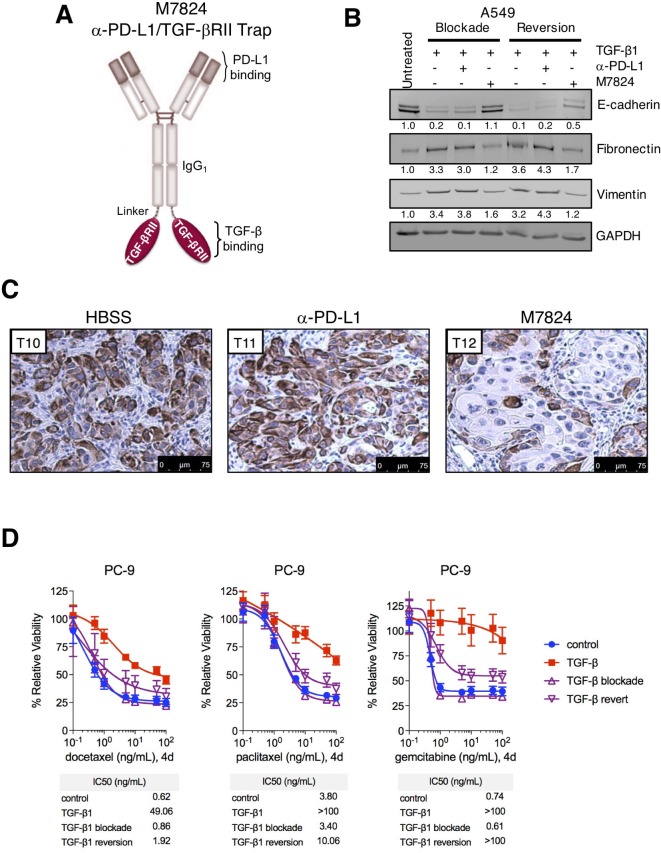
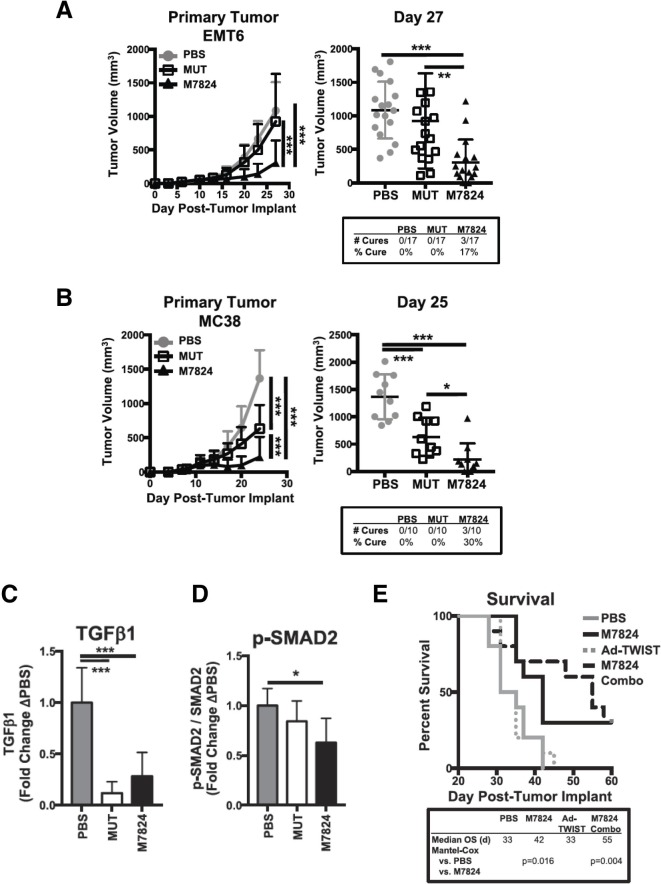
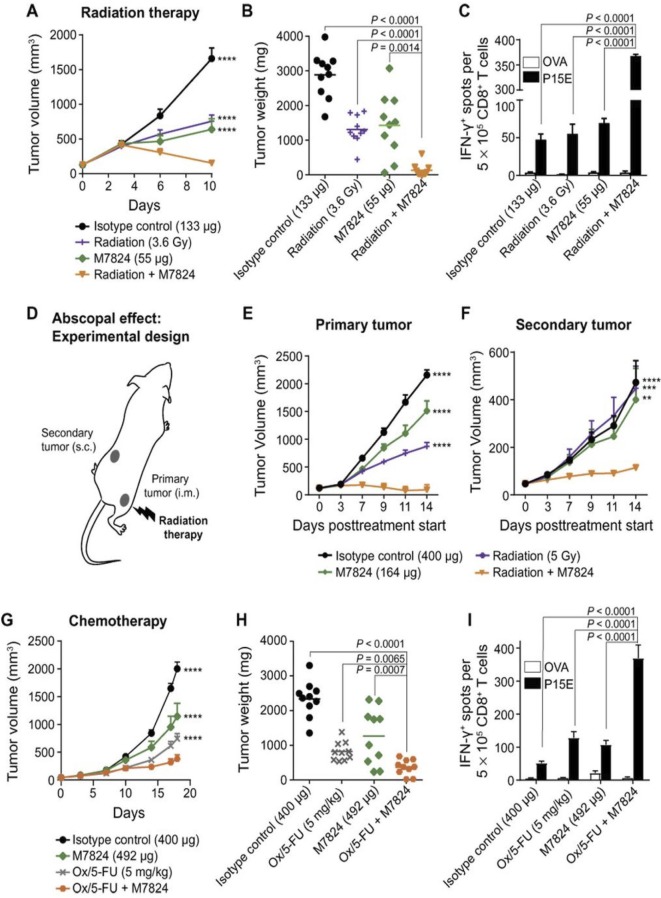
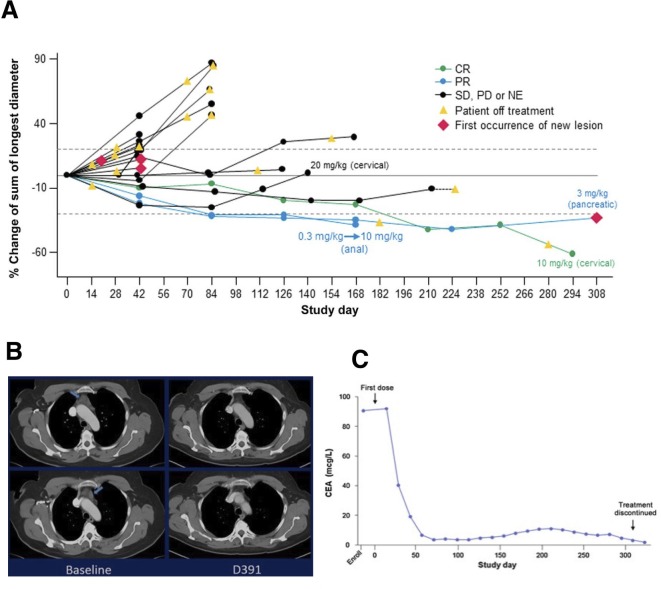
Immunosuppressive entities in the tumor microenvironment (TME) remain a major impediment to immunotherapeutic approaches for a majority of patients with cancer. While the immunosuppressive role of transforming growth factor-β (TGF-β) in the TME is well known, clinical studies to date with anti-TGF-β agents have led to limited success. The bifunctional agent bintrafusp alfa (previously designated M7824) has been developed in an attempt to address this issue. Bintrafusp alfa consists of an IgG 1 targeting programmed death ligand 1 (PD-L1) moiety fused via peptide linkers to the extracellular domain of two TGF-β receptor II molecules designed to ‘trap’ TGF-β in the TME. This agent is able to bring the TGF-β trap to the TME via its anti-PD-L1 component, thus simultaneously attacking both the immunosuppressive PD-L1 and TGF-β entities. A number of preclinical studies have shown bintrafusp alfa capable of (1) preventing or reverting TGF-β-induced epithelial-mesenchymal transition in human carcinoma cells; this alteration in tumor cell plasticity was shown to render human tumor cells more susceptible to immune-mediated attack as well as to several chemotherapeutic agents; (2) altering the phenotype of natural killer and T cells, thus enhancing their cytolytic ability against tumor cells; (3) mediating enhanced lysis of human tumor cells via the antibody-dependent cell-mediated cytotoxicity mechanism; (4) reducing the suppressive activity of T reg cells; (5) mediating antitumor activity in numerous preclinical models and (6) enhancing antitumor activity in combination with radiation, chemotherapy and several other immunotherapeutic agents. A phase I clinical trial demonstrated a safety profile similar to other programmed cell death protein 1 (PD-1)/PD-L1 checkpoint inhibitors, with objective and durable clinical responses. We summarize here preclinical and emerging clinical data in the use of this bispecific and potentially multifunctional agent.
Overview
The claims and statistics of this paper haven’t been checked yet.
Free: it reads the open-access text and checks the first 5 claims that cite a source we can check. Create a free account to check every claim.
Integrity signals
Registry
Cites
Statistics
Figures
Verification
Claims the paper makes
The claims and statistics of this paper haven’t been checked yet.
Free: it reads the open-access text and checks the first 5 claims that cite a source we can check. Create a free account to check every claim.
Claims other papers make about this one
Each is checked against this paper’s own text: does it say what the citing paper says it does?
The source backs part of the claim, not all of it — or backs it for a different population, condition or comparison.
In the citing paper
“Tumor-intrinsic signaling through these pathways is associated with an immunosuppressive microenvironment and low T-cell infiltration [20, 21].”
From Pembrolizumab in advanced osteosarcoma: results of a single-arm, open-label, phase 2 trial (2021) · cites this paper as [21]
Experimental — accuracy not yet measuredIn the citing paper
“The anti-PD-L1-TβRII chimera, M7824, also demonstrated increased efficacy of tumor regression in some mouse models, when compared to TβRII trap alone or anti-PD-L1 monotherapy366, consistent with results from combinations of anti-TGF-β or anti-PD-1/PD-L1145.”
From TGFβ biology in cancer progression and immunotherapy (2021) · cites this paper as [366]
Self-check
Percentages, sums and reported differences re-computed from the paper’s own numbers.
The self-check needs the paper’s full text.
Citations
Cites
Safety, activity, and immune correlates of anti–PD-1 antibody in cancer
Topalian, S. L., Hodi, F. S., Brahmer, J. R., Gettinger, S. N., Smith, D. C., McDermott, D. F., Powderly, J. D., Carvajal, R. D., Sosman, J. A., Atkins, M. B., et al. (2012) · New England Journal of Medicine · doi:10.1056/nejmoa1200690 · Cited by 12,628
Nivolumab versus docetaxel in advanced nonsquamous non-small-cell lung cancer
Borghaei, H., Paz-Ares, L., Horn, L., Spigel, D. R., Steins, M., Ready, N. E., Chow, L. Q., Vokes, E. E., Felip, E., Holgado, E., et al. (2015) · New England Journal of Medicine · doi:10.1056/nejmoa1507643 · Cited by 9,335
TGFβ attenuates tumour response to PD-L1 blockade by contributing to exclusion of T cells
Mariathasan, S., Turley, S. J., Nickles, D., Castiglioni, A., Yuen, K., Wang, Y., Kadel III, E. E., Koeppen, H., Astarita, J. L., Cubas, R., et al. (2018) · Nature · doi:10.1038/nature25501 · Cited by 5,400
The consensus molecular subtypes of colorectal cancer
Guinney, J., Dienstmann, R., Wang, X., de Reyniès, A., Schlicker, A., Soneson, C., Marisa, L., Roepman, P., Nyamundanda, G., Angelino, P., et al. (2015) · Nature Medicine · doi:10.1038/nm.3967 · Cited by 5,170
Nivolumab plus Ipilimumab in Advanced Melanoma
Wolchok, J. D., Kluger, H., Callahan, M. K., Postow, M. A., Rizvi, N. A., Lesokhin, A. M., Segal, N. H., Ariyan, C. E., Gordon, R.-A., Reed, K., et al. (2013) · New England Journal of Medicine · doi:10.1056/nejmoa1302369 · Cited by 4,230
New insights into the mechanisms of epithelial–mesenchymal transition and implications for cancer
Dongre, A., & Weinberg, R. A. (2019) · Nature Reviews Molecular Cell Biology · doi:10.1038/s41580-018-0080-4 · Cited by 3,876
Genomic and Transcriptomic Features of Response to Anti-PD-1 Therapy in Metastatic Melanoma
Hugo, W., Zaretsky, J. M., Sun, L., Song, C., Moreno, B. H., Hu-Lieskovan, S., Berent-Maoz, B., Pang, J., Chmielowski, B., Cherry, G., et al. (2016) · Cell · doi:10.1016/j.cell.2016.02.065 · Cited by 3,448
EMT, cancer stem cells and drug resistance: an emerging axis of evil in the war on cancer
Singh, A., & Settleman, J. (2010) · Oncogene · doi:10.1038/onc.2010.215 · Cited by 2,545
Avelumab plus Axitinib versus Sunitinib for Advanced Renal-Cell Carcinoma
Motzer, R. J., Penkov, K., Haanen, J., Rini, B., Albiges, L., Campbell, M. T., Venugopal, B., Kollmannsberger, C., Negrier, S., Uemura, M., et al. (2019) · New England Journal of Medicine · doi:10.1056/nejmoa1816047 · Cited by 2,503
Transforming Growth Factor-β Signaling in Immunity and Cancer
Batlle, E., & Massagué, J. (2019) · Immunity · doi:10.1016/j.immuni.2019.03.024 · Cited by 2,366
Cited by
Items 201–261 of 261
Tulsian, K., Thakker, D., & Vyas, V. K. (2025) · International Journal of Biological Macromolecules · doi:10.1016/j.ijbiomac.2025.141364 · Cited by 6
Cytokine Therapy in Bladder Cancer: Mechanisms, Efficacy, and Future Prospects
Oyler, H. J., Bruton, L. G., Maher, A. J., Yu, D., Shely, N. W., Wakefield, M. R., & Fang, Y. (2025) · Current Issues in Molecular Biology · doi:10.3390/cimb47040278 · Cited by 5
Dynamics of transforming growth factor β signaling and therapeutic efficacy
Wu, S., Luwor, R. B., & Zhu, H. (2023) · Growth Factors · doi:10.1080/08977194.2023.2215335 · Cited by 5
Nadal, E., Martín-Martorell, P., Benítez, J. C., Sala, M. Á., Cedrés, S., Álvarez-Fernández, C., Dómine, M., Sais, È., Saigí, M., Castro, R. L., et al. (2025) · Lung Cancer · doi:10.1016/j.lungcan.2025.108545 · Cited by 4
Harnessing IDO inhibitors to optimize cancer immunotherapy
Rab, S. O., Jaafar, H. K., Jabir, M. S., Malathi, H., Devi, S., Pramanik, A., Al‐Hetty, H. R. A. K., Alnajar, M. J., Jawad, S. F., & Mustafa, Y. F. (2025) · Naunyn-Schmiedeberg s Archives of Pharmacology · doi:10.1007/s00210-025-04445-9 · Cited by 4
“In parallel, BiTP, another bifunctional molecule designed to target both PD-L1 and TGF-β, demonstrated significant synergistic effects in enhancing anti-tumor immunity in several solid tumor models, resulting in evident and durable tumor regression (Lind et al. 2020).”
Imperiale, B. R., Gamberale, A., Yokobori, N. K., García, A. M., Bartoletti, B., Aidar, O., López, B., Cruz, V. E. M., Montaner, P. G., Palmero, D., et al. (2023) · Immunology · doi:10.1111/imm.13698 · Cited by 4
Wang, F., Lu, S., Zhou, X., Di, X., Wu, R., Chen, G., & Tian, S. (2023) · Frontiers in Immunology · doi:10.3389/fimmu.2023.1103741 · Cited by 4
Zheng, J., Deng, Y., Huang, B., & Chen, X. (2023) · Frontiers in Medicine · doi:10.3389/fmed.2023.1198950 · Cited by 4
Bashir, B., Flickinger, J. C., & Snook, A. E. (2021) · Immunotherapy · doi:10.2217/imt-2021-0012 · Cited by 4
Wang, D., Jia, W., Lian, J., Zhang, J., Ren, X., Wang, Z., Liu, W., Zhou, C., Xu, J., Tian, W., et al. (2026) · NAR Cancer · doi:10.1093/narcan/zcag002 · Cited by 3
“…the independent and complementary immunosuppressive functions of immune inhibitory checkpoints (e.g. PD-1, PD-L1, or CTLA4) and the TGF-β pathway [25, 27, 28], combined inhibition [i.e. Immune checkpoint blockade (ICB) plus TGF-β targeting agents] holds promise as an effective therapeutic strategy.”
Silginer, M., Weller, M., Becher, B., Mastall, M., Weiß, T., Núñez, N. G., Kienzler, J. C., & Roth, P. (2026) · Journal for ImmunoTherapy of Cancer · doi:10.1136/jitc-2025-011824 · Cited by 3
Rojas-Jiménez, E. A., Bui, T. M., Yan, P., Li, Z., Seehawer, M., Nishida, J., Foidart, P., Freeman, G. J., & Polyák, K. (2026) · Proceedings of the National Academy of Sciences · doi:10.1073/pnas.2501052123 · Cited by 3
van Dinther, M., Schwartze, T. A., Zhang, J., Fan, K., van der Zon, G., Power, L., Hinck, C. S., Ciancia, C., Mukundan, A., González‐Prieto, R., et al. (2026) · Advanced Science · doi:10.1002/advs.75322 · Cited by 3
Nishimura, K., Takahara, K., Komura, K., Ishida, M., Hirosuna, K., Maenosono, R., Ajiro, M., Sakamoto, M., Iwatsuki, K., Nakajima, Y., et al. (2024) · npj Precision Oncology · doi:10.1038/s41698-024-00707-6 · Cited by 4
Wiggins, C. J., Morris, V. K., Klimas, N. K., Nagarajan, P., Curry, J. L., & Richards, K. N. (2021) · JAAD Case Reports · doi:10.1016/j.jdcr.2021.04.027 · Cited by 3
“Cutaneous side effects include keratoacanthomas and hyperkeratosis.(6) Only 1 previous report of BP associatedwith bintrafusp alfa was reported in a phase 1 trial.”
BackgroundInfluentialZhang, H., Liu, M., Du, G., Yu, B., Ma, X., Gui, Y., Cao, L., Li, X., & Tan, B. (2022) · Journal of Cancer Research and Clinical Oncology · doi:10.1007/s00432-022-03940-3 · Cited by 4
CAR-T Immunotherapy to Beat Solid Tumors: From Challenges to Improvements
Li, C., Liu, Z., & Zhou, Y. (2022) · Highlights in Science Engineering and Technology · doi:10.54097/hset.v8i.1110 · Cited by 3
“According to a previous study, suppressing or deleting the PD-1 gene in CAR-T cells, as well as fusion of immune checkpoint blockers with CAR-T somatic cells can significantly improve CAR-T immune cell responses and anti-tumor effects [26].”
MethodYi, L., Zhu, X., Xie, J., & Meng, Z. (2023) · Human Vaccines & Immunotherapeutics · doi:10.1080/21645515.2023.2294575 · Cited by 3
Targeting Neoantigens in Cancer: Possibilities and Opportunities in Breast Cancer
Chaudhry, Z., Boyadzhyan, A., Sasaninia, K., & Rai, V. (2024) · Antibodies · doi:10.3390/antib13020046 · Cited by 4
“Increased immunosuppressive modulator expression, such as transforming growth factor (TGF)- β , promotes Treg cell expansion and proliferation [33].”
BackgroundBalabekova, M. K., Kairanbayeva, G. K., Yu, V. K., Zhumakova, S., Li, M., Seilkhanov, T. M., Tassibekov, K. S., Alimova, M. A., Mussilim, M. B., & Ramazanova, A. A. (2025) · Biomedicines · doi:10.3390/biomedicines13123017 · Cited by 2
“Additionally, TGF-β signaling is essential in restriction of effector T cell functional activity to prevent uncontrolled immune response [12–16].”
Zhu, Y., Liu, X., Zhang, C., Zhou, S., Ye, D., Tang, Q., Xiao, H., & Bi, F. (2026) · Translational Cancer Research · doi:10.21037/tcr-2026-0474 · Cited by 2
“…(II) test combinatorial regimens that counteract the Treg rebound [anti-CD25 and CCR4 blockade (30,31) or adenosine/TGF-β pathway inhibition (32-35)]; (III) identify myeloid-reprogramming partners (e.g., CSF1R and CD47/SIRP α ) that can achieve sustain antigen presentation and…”
Feng, Y., Wang, Y., Li, X., Wang, Y., & Zhang, M. (2026) · Frontiers in Immunology · doi:10.3389/fimmu.2026.1810065 · Cited by 3
The establishment of B cell-deficient Igh-J KO mouse model by gene editing and efficacy evaluation
Yu, X., Li, T., Shen, Z., Jing, H., Xie, X., Zhou, X., Shen, Y., & Yang, Y. (2023) · International Immunopharmacology · doi:10.1016/j.intimp.2023.109704 · Cited by 2
Novel Strategies to Improve CAR-T Cells in Solid Tumors: Mini Review
Ahmed, M. M. E. (2022) · Journal of Scientific Research in Medical and Biological Sciences · doi:10.47631/jsrmbs.v3i3.520 · Cited by 2
Möller, M., Schütte, W., Turzer, S., Seliger, B., & Riemann, D. (2023) · Cancers · doi:10.3390/cancers15194873 · Cited by 2
“TGF-ß might be involved in the resistance to chemotherapy and/or ICI therapy [33], as a continuation of the TGF-β inhibitor with immunotherapy showed promising results in pre-clinical studies [34].”
EGCG remodels the TGF-β cervical cancer micro-environment towards immune responsiveness
Gnanagurusamy, J., Sabanayagam, R., Krishnamoorthy, S., Balasubramanian, V., & Muthusami, S. (2025) · Cellular Immunology · doi:10.1016/j.cellimm.2025.105027 · Cited by 2
Mechanisms of Resistance and Strategies to Combat Resistance in PD-(L)1 Blockade
Moise, J., Murthy, J. J., Dabir, D., Yu, S., Kisto, F., Herron, E., & Aulakh, S. (2022) · Immuno · doi:10.3390/immuno2040041 · Cited by 2
Lin, X., Zhou, J., Yonemori, K., Zhang, X., Ruan, J., & Jia, Y. (2026) · Genes & Diseases · doi:10.1016/j.gendis.2026.102124 · Cited by 3
Shi, Z., Hu, C., & Sun, C. (2026) · Biomolecules · doi:10.3390/biom16060777 · Cited by 2
Developing Anti‐EGFR/Anti‐HER2 Bifunctional Antibody for Solid Tumors by Protein Engineering
Sen, S., Semerci, A., Karaca, M., Ahan, R. E., Özçelik, C. E., Duman, E., Saltepe, B., Aras, E., Aras, E., Bozkurt, E. U., et al. (2026) · Biotechnology and Bioengineering · doi:10.1002/bit.70304 · Cited by 1
Immunotherapy of Biliary Tract Cancer
Mertens, J. C., & Fritsch, R. (2023) · Cancer immunotherapy · doi:10.1007/13905_2022_35 · Cited by 1
Goswami, M., Schlom, J., & Donahue, R. N. (2023) · Oncotarget · doi:10.18632/oncotarget.28487 · Cited by 2
Self-citationGayen, S., Mukherjee, S., Dasgupta, S., & Roy, S. (2024) · APOPTOSIS · doi:10.1007/s10495-024-02022-8 · Cited by 1
Yu, E., & Bell, D. W. (2024) · PLoS ONE · doi:10.1371/journal.pone.0312806 · Cited by 1
Schlom, J., Gameiro, S. R., Palena, C., & Gulley, J. L. (2022) · Wiley eBooks · doi:10.1002/9781119000822.hfcm066.pub2
Self-citationImmunotherapy and Cancer Stem Cells
Suryaprakash, R. T. C., Safi, M. A. A., Alonazi, N. A., Alsieedi, A. A., & Kujan, O. (2023) · BENTHAM SCIENCE PUBLISHERS eBooks · doi:10.2174/9789815124606123010007
Babahan, C., Abgarmi, S. A., Sonugür, F. G., Öcal, M., & Akbulut, H. (2023) · TURKISH JOURNAL OF BIOLOGY · doi:10.55730/1300-0152.2661
“Inhibition of TGFβ1 causes a robust antitumor immune response and tumor regression (Holmgaard et al., 2018; Knudson et al., 2018; Mariathasan et al., 2018; Ravi et al., 2018; Lind et al., 2020).”
BackgroundAdvances in the Molecular Mechanisms in Gastrointestinal Tumorigenesis and Treatment
(2024) · Frontiers research topics · doi:10.3389/978-2-8325-5481-4
Exploring Mechanisms of Immunosuppression in Colorectal Cancer: Interaction of MDSCs with TGF-β1
陈, 鹏. (2025) · Advances in Clinical Medicine · doi:10.12677/acm.2025.152546
Al-Zamali, S. K. S., Jallod, I. M. S., Mohammed, S., & Hassan, S. (2025) · Functional Foods in Health and Disease · doi:10.31989/ffhd.v15i10.1763
Yi, M., Zhang, J., Li, A., Niu, M., Yan, Y., Jiao, Y., Luo, S., Zhou, P., & Wu, K. (2021) · Figshare · doi:10.6084/m9.figshare.14053438
Lim, Y. W., Coles, G. L., Sandhu, S. K., Johnson, D. S., Adler, A. S., & Stone, E. L. (2021) · Figshare · doi:10.6084/m9.figshare.14670453
Pacheco‐Torres, J., Penet, M., Mironchik, Y., Krishnamachary, B., & Bhujwalla, Z. M. (2021) · Figshare · doi:10.6084/m9.figshare.14068091
NOTCH1 und das Tumor Microenvironment des Plattenepithelkarzinoms des Kopf-Hals-Bereiches (HNSCC)
Schmidl, B., Wirth, M., & München, T. U. (2022) · mediaTUM (Technical University of Munich)
Mao, Y., Xing, N., Sun, W., Bao, X., Liu, X., Wu, R., & Peng, J. (2026) · Human Vaccines & Immunotherapeutics · doi:10.1080/21645515.2026.2647560
“34,35 The anti-PD-L1/TGF-βRII dual functional fusion protein blocks the PD-1/PD-L1 interaction between tumor cells and immune cell infiltrate, and simultaneously reduces or eliminates TGF-β from the tumor microenvironment.”
Rôle et pertinence clinique du facteur de transcription FOXS1 dans le carcinome hépatocellulaire
Bévant, K. (2021) · theses.fr (ABES) · doi:10.70675/f8cfc7baz9aeez4eb6zbcc6z7e9c846533f8
Efficacy and synergy of low-dose radiotherapy combined with anti-PD-L1 based immunotherapy
Laurent, P.-A. (2023) · theses.fr (ABES) · doi:10.70675/e7695737z26a3z4747zafafzb19e3e74372b
Résistance à l’immunothérapie dans le CBNPC : état des connaissances actuelles
Ancel, J., Dewolf, M., Nawrocki‐Raby, B., Durlach, A., Dalstein, V., Cortot, A. B., Dormoy, V., Gilles, C., Polette, M., & Deslée, G. (2026) · Revue des Maladies Respiratoires · doi:10.1016/j.rmr.2026.04.002
Achievements and challenges of PD-L1/TGF-β bispecific antibody therapy in gastric cancer
Zhang, Y., Xue, R., & Shen, L. (2026) · Scientia Sinica Vitae · doi:10.1360/ssv-2026-0113
Breaking immune exclusion in cold tumors via TGF-β pathway inhibition
Zhang, M., Sun, Y., Chen, L., Xue, D., Zhang, D. X., Yi, M., & Dai, Z. (2026) · Expert Opinion on Biological Therapy · doi:10.1080/14712598.2026.2709483
Beyond Structure: The Dynamic Role of the Extracellular Matrix Components in Immune Evasion
Maqbool, M., Surendranath, A., Baba, S. K., Jawwad, T., Elfaki, I., Mir, R., Kumar, R., Shahab Uddin, M. S., Haris, M., Macha, M. A., et al. (2026) · 癌症:英文版 · doi:10.34133/cancomm.0045
The bright side of the stroma: the tumor-suppressive roles of cancer-associated fibroblasts
Chastel, T., Schmitt, L.-M., Augenstein, C. L., Tomasini, R., & Turtoï, A. (2026) · Molecular Cancer · doi:10.1186/s12943-026-02769-5
Teiama, M. S. A., Gohar, A., Amr, M., El‐Shinawi, M., & Elkhatib, W. F. (2026) · Molecular Biomedicine · doi:10.1186/s43556-026-00534-0
“Several further trials are underway combining Bintrafusp alfa with other immunotherapies, chemotherapies, and radiation therapy [132].”
Reddy, C. S., & Repudi, L. (2026) · Genetics and Molecular Research · doi:10.4238/v8mbt604
Feng, K., Qin, M., Peng, P., Yang, W., Pan, X., Tan, Y., Yang, S., Huang, J., & Zhang, J. (2026) · Balkan Medical Journal · doi:10.4274/balkanmedj.galenos.2026.2026-7-40
“35-37 Consequently, elucidating the underlying molecular mechanisms and identifying new biomarkers are crucial for advancing cancer drug development and optimizing treatment strategies.”
Bifonksiyonel antikor üretimi: terapötik biyoteknolojide sınırların genişletilmesi
Şen, S. (2026) · Bilkent University Institutional Repository (Bilkent University)
Wang, Y., Yu, Y., Deng, Q., 刘登云, Liang, X., Wang, H., Zhou, X., Ouyang, J., Huang, Y., Xiang, L., et al. (2026) · Frontiers in Bioengineering and Biotechnology · doi:10.3389/fbioe.2026.1947125
“…1 (PD-L1) pathway has revolutionized treatment for a subset of metastatic CRC patients (Ribas and Wolchok, 2018), particularly those with microsatellite instable or mismatched tumors, the vast majority of cases exhibit primary resistance (André et al., 2024; Yang and Chen, 2025; Lind et al., 2020).”
Yi, J., Wu, S., & He, H. (2026) · APOPTOSIS · doi:10.1007/s10495-026-02474-0
Cai, G., Zhu, J., Ning, D., Li, G., Zhang, Y., Xiong, Y., Liang, J., Yu, C., Chen, X., Liang, H., et al. (2022) · doi:10.3389/fimmu.2022.997316.s008
Ma, X.-M., Luo, Y.-F., Zeng, F.-F., Su, C., Liu, X., Li, X.-P., & Lu, J. (2022) · doi:10.3389/fonc.2022.815437.s003
Tian, S., Wang, F., Zhang, R., & Chen, G. (2021) · doi:10.3389/fphar.2021.715721.s003
Metadata
- Authors
- Lind, H., Gameiro, S. R., Jochems, C., Donahue, R. N., Strauss, J., Gulley, J. L., Palena, C., & Schlom, J.
- Affiliations
- National Institutes of Health (US)
- Laboratory of Tumor Immunology and Biology, Center for Cancer Research, National Cancer Institute, National Institutes of Health, Bethesda, Maryland, USA
- Corresponding author
- Schlom, Jeffrey
- ORCID
- Venue
- Journal for ImmunoTherapy of Cancer
- Publisher
- BMJ
- Published
- 2020-02
- Volume
- 8
- Issue
- 1
- Pages
- e000433
- ISSN
- 2051-1426 (ISSN-L)
- PMC
- PMC7057416
- OpenAlex
- W3006876324
- Cited by
- 247
- References
- 47
- Citations by year
- 2026: 20 · 2025: 25 · 2024: 37 · 2023: 32 · 2022: 53 · 2021: 61 · 2020: 19
- FWCI
- 4.43
- Type
- journal article
- Language
- en
- Open access
- gold
- doi.org
- Licence
- Locations
- Journal for ImmunoTherapy of Cancer (publishedVersion, cc-by-nc)
- Europe PMC (PubMed Central) (publishedVersion, cc-by-nc)
- PubMed Central (publishedVersion, cc-by-nc)
- PubMed (publishedVersion)
- DOAJ (DOAJ: Directory of Open Access Journals) (submittedVersion, cc-by-sa)
- Funders
- National Cancer Institute (ZIA BC 010425, ZIA BC 010944)
- Topics
- Health Sciences › Medicine › Oncology › Cancer Immunotherapy and Biomarkers
- Life Sciences › Biochemistry, Genetics and Molecular Biology › Molecular Biology › TGF-β signaling in diseases
- Life Sciences › Immunology and Microbiology › Immunology › Immunotherapy and Immune Responses
- Keywords
- bintrafusp alfa, TGFBR2, PD-L1, bifunctional antibody, immunosuppressive tumor microenvironment, epithelial-mesenchymal transition, natural killer cells, regulatory T cells, antibody-dependent cellular cytotoxicity, combination immunotherapy, cancer immunotherapy
- MeSH terms
- Receptor, Transforming Growth Factor-beta Type II, Animals, Humans, Immunotherapy, Transforming Growth Factor beta, Mice, B7-H1 Antigen
About these checks
Registry, retraction, Cites and statistics results are computed, not judged, with one exception: a printed reference that no index lists is read once by a model before it counts as a citation error. Claims are extracted by a model and kept only when their quote appears verbatim in the text; each cited source is then checked, with a model’s help, for whether it says what the claim relies on. Those verdicts can be wrong — read the claim’s quote and the cited source before relying on one.
Statistics and arithmetic are recomputed, not judged.
Confidence bands are shown only for fields calibrated on our annotated test set. None is calibrated yet, so no band is shown.
What counts as a claim ›How we measure confidence ›How we check this ›
Are you an author, or do you see a problem with this page? Request a review
Data sources
Bibliographic data: Semantic Scholar, OpenAlex, Crossref.
Contains information from the Semantic Scholar Academic Graph Datasets, made available under the ODC Attribution License (ODC-BY 1.0).
Semantic Scholar’s data is described in: Kinney, R., et al. (2023). The Semantic Scholar Open Data Platform. arXiv:2301.10140.
