

Phagocytic function of tumor-associated macrophages as a key determinant of tumor progression control: a review
Open accessThe DOI matches its Crossref record; 105 of the 108 references it cites were found in a registry or an index.
Abstract
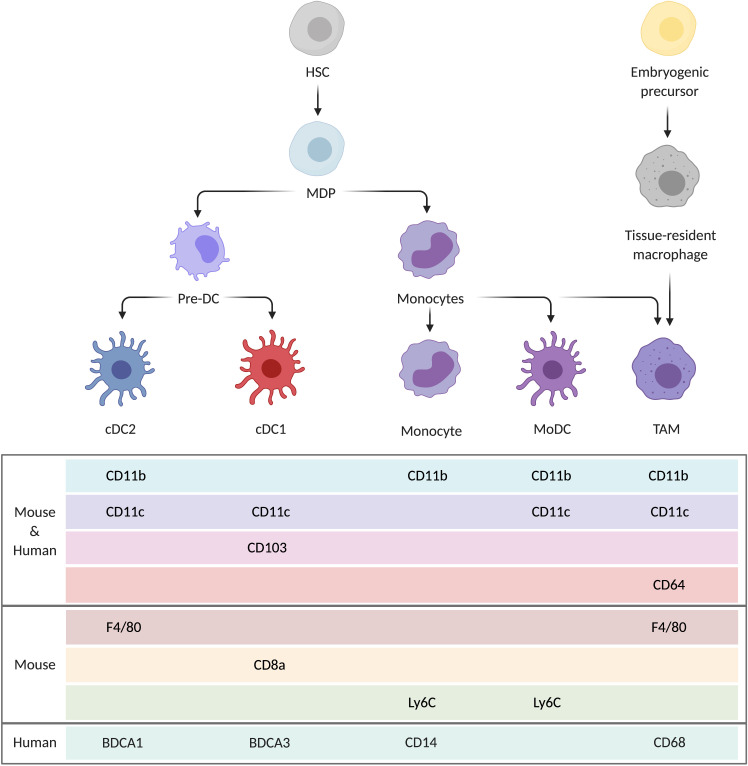
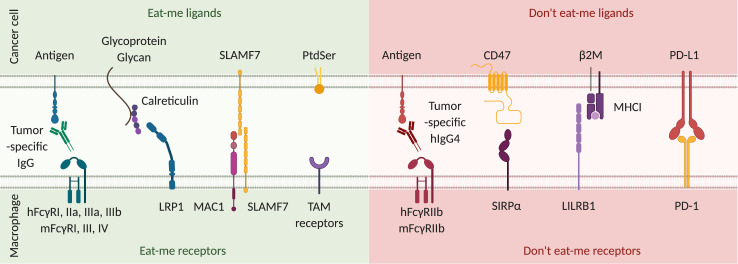
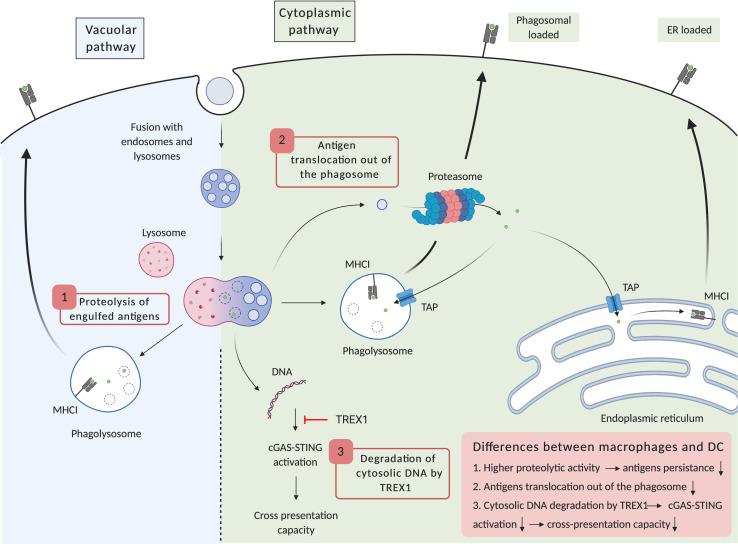
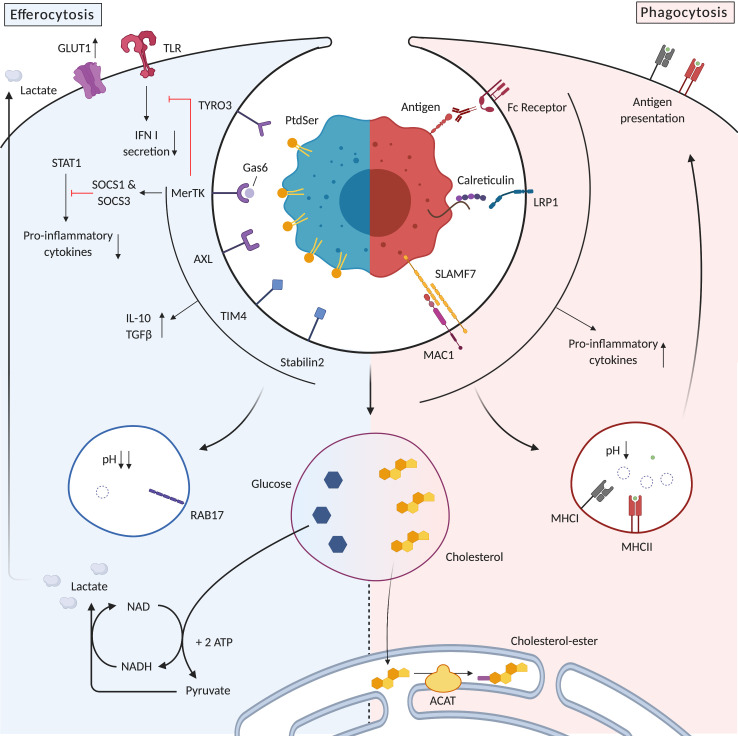
Tumor-associated macrophage (TAM) phagocytic activity is emerging as a new mechanism to harness for cancer treatment. Currently, many approaches are investigated at the preclinical level and some modalities have now reached clinical trials, including the targeting of the phagocytosis inhibitor CD47. The rationale for increasing TAM phagocytic activity is to improve innate anticancer immunity, and to promote T-cell mediated adaptive immune responses. In this context, a clear understanding of the impact of TAM phagocytosis on both innate and adaptive immunity is critical. Indeed, uncertainties persist regarding the capacity of TAM to present tumor antigens to CD8 T cells by cross-presentation. This process is critical for an optimal cytotoxic T-cell immune response and can be mediated by dendritic cells but also potentially by macrophages. In addition, the engulfment of cancer cells affects TAM functionality, as apoptotic cell uptake (a process termed efferocytosis) promotes macrophage anti-inflammatory functions. Because of the abundance of TAM in most solid tumors and the common use of apoptosis inducers such as radiotherapy to treat patients with cancer, efferocytosis potentially affects the overall immune balance within the tumor microenvironment (TME). In this review, we will discuss how cancer cell phagocytosis by TAM impacts antitumor immunity. First, we will focus on the potential of the phagocytic activity of TAM per se to control tumor progression. Second, we will examine the potential of TAM to act as antigen presenting cells for tumor specific CD8 T cells, considering the different characteristics of this process in the tumor tissue and at the molecular level. Finally, we will see how phagocytosis and efferocytosis affect TAM functionality and how these mechanisms impact on antitumor immunity. A better understanding of these aspects will enable us to better predict and interpret the consequences of cancer therapies on the immune status of the TME. Future cancer treatment regimens can thereby be designed to not only impact directly on cancer cells, but also to favorably modulate TAM phagocytic activity to benefit from the potential of this central immune player to achieve more potent therapeutic efficacy.
Overview
The claims and statistics of this paper haven’t been checked yet.
Free: it reads the open-access text and checks the first 5 claims that cite a source we can check. Create a free account to check every claim.
Integrity signals
Registry
Cites
Statistics
Figures
Verification
Claims the paper makes
The claims and statistics of this paper haven’t been checked yet.
Free: it reads the open-access text and checks the first 5 claims that cite a source we can check. Create a free account to check every claim.
Claims other papers make about this one
Each is checked against this paper’s own text: does it say what the citing paper says it does?
The source backs part of the claim, not all of it — or backs it for a different population, condition or comparison.
In the citing paper
“Moreover, the phagocytic role of TAMs can be harnessed to concentrate cytotoxic drugs in the TME [85, 86].”
From Tumor microenvironment signaling and therapeutics in cancer progression (2023) · cites this paper as [85]
Experimental — accuracy not yet measured
Self-check
Percentages, sums and reported differences re-computed from the paper’s own numbers.
The self-check needs the paper’s full text.
Citations
Cites
Oncology meets immunology: the cancer-immunity cycle.
Chen, D. S., & Mellman, I. (2013) · Immunity · doi:10.1016/j.immuni.2013.07.012 · Cited by 6,929
Tumour-associated macrophages as treatment targets in oncology
Mantovani, A., Marchesi, F., Malesci, A., Laghi, L., & Allavena, P. (2017) · Nature Reviews Clinical Oncology · doi:10.1038/nrclinonc.2016.217 · Cited by 4,033
Macrophage plasticity and interaction with lymphocyte subsets: cancer as a paradigm
Biswas, S. K., & Mantovani, A. (2010) · Nature Immunology · doi:10.1038/ni.1937 · Cited by 3,840
Fadok, V. A., Bratton, D. L., Konowal, A., Freed, P. W., Westcott, J. Y., & Henson, P. M. (1998) · Journal of Clinical Investigation · doi:10.1172/jci1112 · Cited by 3,166
The prognostic landscape of genes and infiltrating immune cells across human cancers
Gentles, A. J., Newman, A. M., Liu, C. L., Bratman, S. V., Feng, W., Kim, D., Nair, V. S., Xu, Y., Khuong, A., Hoang, C. D., et al. (2015) · Nature Medicine · doi:10.1038/nm.3909 · Cited by 3,118
Clonal neoantigens elicit T cell immunoreactivity and sensitivity to immune checkpoint blockade
McGranahan, N., Furness, A. J. S., Rosenthal, R., Ramskov, S., Lyngaa, R., Saini, S. K., Jamal-Hanjani, M., Wilson, G. A., Birkbak, N. J., Hiley, C. T., et al. (2016) · Science · doi:10.1126/science.aaf1490 · Cited by 3,065
Functional Polarization of Tumour-Associated Macrophages by Tumour-Derived Lactic Acid
Colegio, O. R., Chu, N.-Q., Szabo, A. L., Chu, T., Rhebergen, A. M., Jairam, V., Cyrus, N., Brokowski, C. E., Eisenbarth, S. C., Phillips, G. M., et al. (2014) · Nature · doi:10.1038/nature13490 · Cited by 3,046
Macrophages as regulators of tumour immunity and immunotherapy
DeNardo, D. G., & Ruffell, B. (2019) · Nature Reviews Immunology · doi:10.1038/s41577-019-0127-6 · Cited by 2,528
Dendritic cells acquire antigen from apoptotic cells and induce class I-restricted CTLs
Albert, M. L., Sauter, B., & Bhardwaj, N. (1998) · Nature · doi:10.1038/32183 · Cited by 2,349
The immune contexture in cancer prognosis and treatment
Fridman, W. H., Zitvogel, L., Sautès–Fridman, C., & Kroemer, G. (2017) · Nature Reviews Clinical Oncology · doi:10.1038/nrclinonc.2017.101 · Cited by 2,263
Cited by
Items 201–240 of 240
The Intersection of Biomaterials, Tissue Engineering, and Immuno-oncology
Clevenger, A. J., VandenHeuvel, S. N., & Raghavan, S. A. (2022) · Royal Society of Chemistry eBooks · doi:10.1039/9781839166013-00342 · Cited by 1
Zheng, F., Wang, Z., Dong, Q., Li, S., Xiong, S., Yuan, Y., Xu, S., & Fu, B. (2024) · Biochemical Genetics · doi:10.1007/s10528-024-10924-0 · Cited by 1
Gadiyar, V., Calianese, D. C., Pulica, R., Varsanyi, C., Wang, Z., Aquib, A., Choudhary, A. K., & Birge, R. B. (2024) · Methods in cell biology · doi:10.1016/bs.mcb.2024.10.003 · Cited by 1
Lecoultre, M., & Helali, A. E. (2025) · Journal for ImmunoTherapy of Cancer · doi:10.1136/jitc-2025-012218 · Cited by 1
Self-citationZhang, S., Zhao, X., Liu, L., Fang, J., Liu, W., & Zhang, H. (2023) · Research Square · doi:10.21203/rs.3.rs-2661427/v1
Cho, Y., Li, R., & Zervantonakis, I. K. (2023) · Current cancer research · doi:10.1007/978-3-031-22802-5_7
Bone marrow stromal antigen 2 is associated with immune microenvironment of colorectal cancerPreprint
Fu, Y.-W., Fu, T., & Zhou, Y. (2023) · Research Square · doi:10.21203/rs.3.rs-3276987/v1
Nifontova, G., Kalenichenko, D., Kriukova, I. S., Terryn, C., Karaulov, A. V., Sukhanova, A. V., Nabiev, I. R., & Audonnet, S. (2023) · HAL
Le rôle de la SUMOylation dans la différenciation du cortex surrénalien
Dufour, D. (2022) · theses.fr (ABES) · doi:10.70675/3ee859f1zad7az421fz8ed8zccb292efa0d0
BIOLOGICAL REACTIONS OF MACROPHAGES TO METAL OXIDE NANOPARTICLES
Zorah, M., Atiyah, H. L., ALI, N. W., Mohammed, R. K., ZAYED, F. H., Mudhafar, M., Alsailawi, H. A., & RAHEEM, S. A. (2024) · International Journal of Applied Pharmaceutics · doi:10.22159/ijap.2024v16i3.49928
Phenotypic and functional diversity of tumor-associated macrophages
Mitri, D. D., Mantovani, A., & Marchesi, F. (2024) · Elsevier eBooks · doi:10.1016/b978-0-443-14064-8.00013-8
Park, J. Y., McCaw, T. R., Dao, H., Donahue, T. R., Crompton, J., Vlashi, E., & Girgis, M. D. (2025) · bioRxiv (Cold Spring Harbor Laboratory) · doi:10.1101/2025.08.12.669943
Ma, X., Lei, K., & Liu, Z. (2025) · Food Science & Nutrition · doi:10.1002/fsn3.70883
Li, X., Tian, X. B., Chen, J., Yao, M., Dong, W., Bai, R., Qin, S., Wan, Y., Zhang, C., Wu, M., et al. (2025) · ACS Applied Materials & Interfaces · doi:10.1021/acsami.5c16275
Clostridioides difficile: A suspected pro-carcinogenic bacterium for gastrointestinal tumors
Zou, J., Tian, B., Xiao, Y., Wu, A., & Li, C. (2025) · Chinese Medical Journal · doi:10.1097/cm9.0000000000003834
“[123,124] Additionally, one recent research found that C. difficile is closely associated with the identified tumor immune subtypes from gastrointestinal tumor samples, with higher levels in subtype 2 than in subtype 1 ( P = 0.015).”
InfluentialM2 macrophages are the origin of tumor metastasisPreprint
Li, H., Miao, Y., Suo, L., Wang, X., Mao, Y., Zhang, X., Zhou, N., Tian, J., Yu, X., Wang, T., et al. (2023) · Research Square · doi:10.21203/rs.3.rs-2381206/v1
Additional file 1 of Targeting HDAC6 improves anti-CD47 immunotherapy
Gracia-Hernandez, M., Yende, A. S., Gajendran, N., Alahmadi, Z., Li, X., Munoz, Z., Tan, K., Noonepalle, S. K. R., Shibata, M., & Villagra, A. (2024) · Figshare · doi:10.6084/m9.figshare.25303067
Regulation of tumor progression by myeloid cells
Jaya, F. N. M., & Gabrilovich, D. I. (2025) · Elsevier eBooks · doi:10.1016/b978-0-443-14064-8.00038-2
Jacek, K. (2025) · RCIN (Digital Repository of the Scientifics Institutes) (Institute of Archaeology and Ethnology of the Polish Academy of Sciences) · Cited by 1
Fukuda, M., Soto, M. C., Perkins, J., Jesus, G. D., Joshi, S., Liu, Z. L., Driscoll, T. P., Li, Y., Ren, Y., & Guan, J. (2026) · ACS Applied Materials & Interfaces · doi:10.1021/acsami.5c25569
Goswami, V., Faiz, A., Dutt, G., Bashir, S., Gupta, A., Das, S., Gouri, A., Joshi, A., & Das, S. K. (2026) · Molecules · doi:10.3390/molecules31214022
Weinekötter, J. (2025) · Qucosa (Saxon State and University Library Dresden)
Zhou, Y., Zhang, Z., Liu, Y., Liu, W., & Dai, J. (2026) · Scientific Reports · doi:10.1038/s41598-026-46752-y
Sustained interferon exposure creates a hyper-metastatic subset of melanoma cellsPreprint
Mannino, M., Wei, T., Cassidy, D., Knight, B., Moose, D. L., Shannon, A. B., Piskounova, E., Zhao, Z., & Morrison, S. J. (2026) · bioRxiv (Cold Spring Harbor Laboratory) · doi:10.64898/2026.04.01.715921
Hirigoyen, U. (2023) · theses.fr (ABES) · doi:10.70675/d01e4153z71abz41a2zac07ze7b8a5b1496a
Chen, W., Kim, S., Beheshtian, C., Jun, A., Kim, S., & Park, N.-H. (2026) · International Journal of Molecular Sciences · doi:10.3390/ijms27073340
Tumor-intrinsic FDFT1 determines coordinated macrophage anti-tumor immunity
Shi, R., Huang, Y., Zheng, P., Zhang, D., Qin, Q., Zhang, F., Wang, M., Zhao, K., Yang, M., Guan, X., et al. (2026) · Developmental Cell · doi:10.1016/j.devcel.2026.04.003
Meng, W., Li, Q., Chen, K., Deng, Y., Xie, C., Wang, F., Yan, Z., Guo, Z., Li, Y., Wen, Y., et al. (2026) · Journal of Hazardous Materials Advances · doi:10.1016/j.hazadv.2026.101311
Wang, J., Luo, J., Li, J., Zhang, Z., Tan, X., Wang, Z., Hu, X., Wang, L., & He, D. (2026) · Journal of Controlled Release · doi:10.1016/j.jconrel.2026.115206
Kuo, W., Chang, R.-C., Lee, Y.-H., Liu, Y.-C., & Chan, S. (2026) · Journal of Visualized Experiments · doi:10.3791/71461
Song, S., Cadena, M., Kim, M., Chung, E., Lee, J., Brushevich, Z., Shin, S., Pelkowski, P. S., & Emelianov, S. (2026) · Advanced Materials · doi:10.1002/adma.74976
Karakousis, V. A., Sioga, A., Vizirianakis, I. S., Kesisoglou, I., Kosmidis, C. S., Pavlidis, L. C., & Papamitsou, T. (2026) · Cells · doi:10.3390/cells15191760
“This PS is recognized by a receptor network including Tyro3, Axl, and MerTK receptor tyrosine kinases, T-cell immunoglobulin and mucin domain-containing molecule 4 (TIM-4), and integrins α v β 3/ α v β 5, which orchestrate formation of the phagocytic cup we document [23,111–114].”
InfluentialCOLTURE 3D COME MODELLO PER STUDIARE IL MICROAMBIENTE TUMORALE DEL MESOTELIOMA MALIGNO
Lamarca, A. (n.d.) · Archivio Istituzionale della Ricerca - Università Vita-Salute San Raffaele
Chan, S. M. (n.d.) · PolyU Institutional Research Archive (Hong Kong Polytechnic University)
Xu, C., Zhou, K., Hu, X., Nan, Y., Sun, Y., Dou, Z., Zhou, R., 薛文静, Hu, Q., Huang, X., et al. (2026) · Cell Reports Medicine · doi:10.1016/j.xcrm.2026.103087
“13,14 Despite the striking anti-tumor potential of CD47-targeted therapies observed in preclinical models, their clinical transla-tion—particularly therapeutic outcomes in solid tumors—has fallen far short of expectations and confronted formidable challenges.”
Liu, H., Wu, S., Zhou, H., Yin, M., He, C., Zhang, H., Hua, S., Xiao, K., Zhu, Y., Ji, H., et al. (2026) · Small · doi:10.1002/smll.76306
Borzooie, H., Tabarsa, M., & Bathaie, S. Z. (2026) · Food Hydrocolloids for Health · doi:10.1016/j.fhfh.2026.100316
Metadata
- Authors
- Lecoultre, M., Dutoit, V., & Walker, P. R.
- Affiliations
- University of Geneva (CH)
- Corresponding author
- Walker, Paul R
- Venue
- Journal for ImmunoTherapy of Cancer
- Publisher
- BMJ
- Published
- 2020-12
- Volume
- 8
- Issue
- 2
- Pages
- e001408
- ISSN
- 2051-1426 (ISSN-L)
- PMC
- PMC7747550
- OpenAlex
- W3112396245
- Cited by
- 223
- References
- 108
- Citations by year
- 2026: 24 · 2025: 54 · 2024: 49 · 2023: 52 · 2022: 34 · 2021: 10
- FWCI
- 2.34
- Type
- journal article
- Language
- en
- Open access
- gold
- doi.org
- Licence
- Locations
- Journal for ImmunoTherapy of Cancer (publishedVersion, cc-by-nc)
- PubMed Central (publishedVersion, cc-by-nc)
- PubMed (publishedVersion)
- Archive ouverte UNIGE (University of Geneva) (publishedVersion, other-oa)
- DOAJ (DOAJ: Directory of Open Access Journals) (submittedVersion, cc-by-sa)
- Archive ouverte UNIGE (University of Geneva) (submittedVersion, cc-by-nc)
- Funders
- Association Frédéric Fellay
- Fonds Lionel Perrier
- Topics
- Life Sciences › Immunology and Microbiology › Immunology › Phagocytosis and Immune Regulation
- Life Sciences › Immunology and Microbiology › Immunology › Immune cells in cancer
- Life Sciences › Immunology and Microbiology › Immunology › Immunotherapy and Immune Responses
- Keywords
- tumor-associated macrophages, phagocytosis, efferocytosis, CD47, tumor microenvironment, cross-presentation, antigen presentation, CD8+ T cells, innate immunity, adaptive immunity, antitumor immunity, tumor progression, macrophage polarization
- MeSH terms
- Humans, Macrophages, Phagocytosis, Disease Progression, Tumor Microenvironment
About these checks
Registry, retraction, Cites and statistics results are computed, not judged, with one exception: a printed reference that no index lists is read once by a model before it counts as a citation error. Claims are extracted by a model and kept only when their quote appears verbatim in the text; each cited source is then checked, with a model’s help, for whether it says what the claim relies on. Those verdicts can be wrong — read the claim’s quote and the cited source before relying on one.
Statistics and arithmetic are recomputed, not judged.
Confidence bands are shown only for fields calibrated on our annotated test set. None is calibrated yet, so no band is shown.
What counts as a claim ›How we measure confidence ›How we check this ›
Are you an author, or do you see a problem with this page? Request a review
Data sources
Bibliographic data: Semantic Scholar, OpenAlex, Crossref.
Contains information from the Semantic Scholar Academic Graph Datasets, made available under the ODC Attribution License (ODC-BY 1.0).
Semantic Scholar’s data is described in: Kinney, R., et al. (2023). The Semantic Scholar Open Data Platform. arXiv:2301.10140.
