

The DOI matches its Crossref record; 51 of the 51 references it cites were found in a registry or an index.
STING activation normalizes the intraperitoneal vascular-immune microenvironment and suppresses peritoneal carcinomatosis of colon cancer
Open accessAbstract
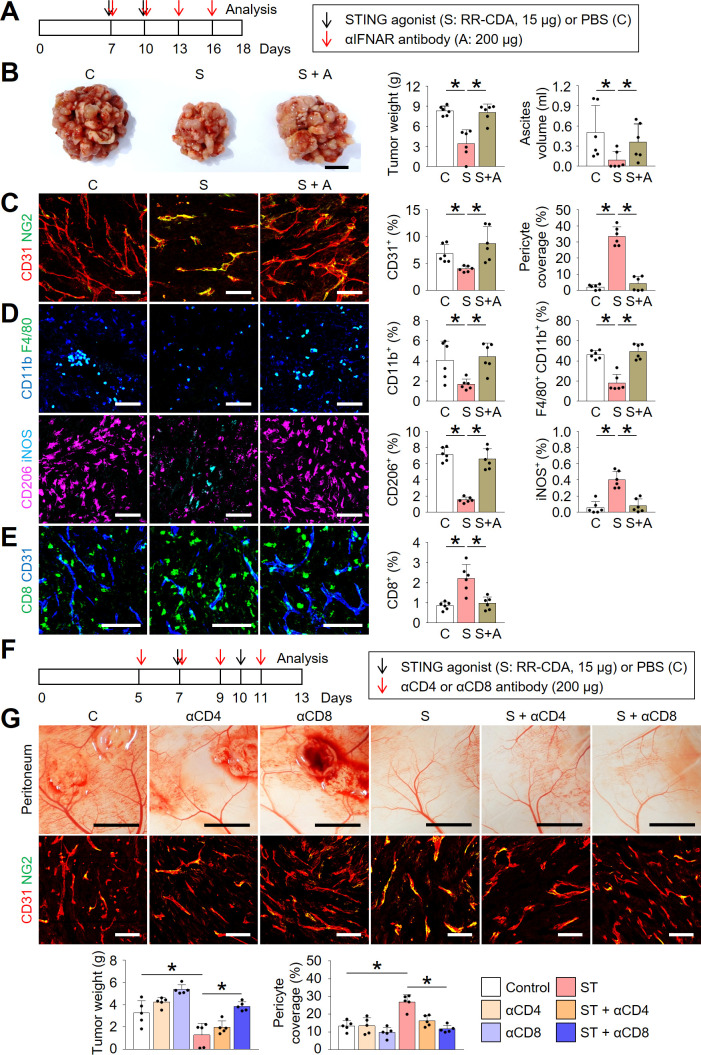
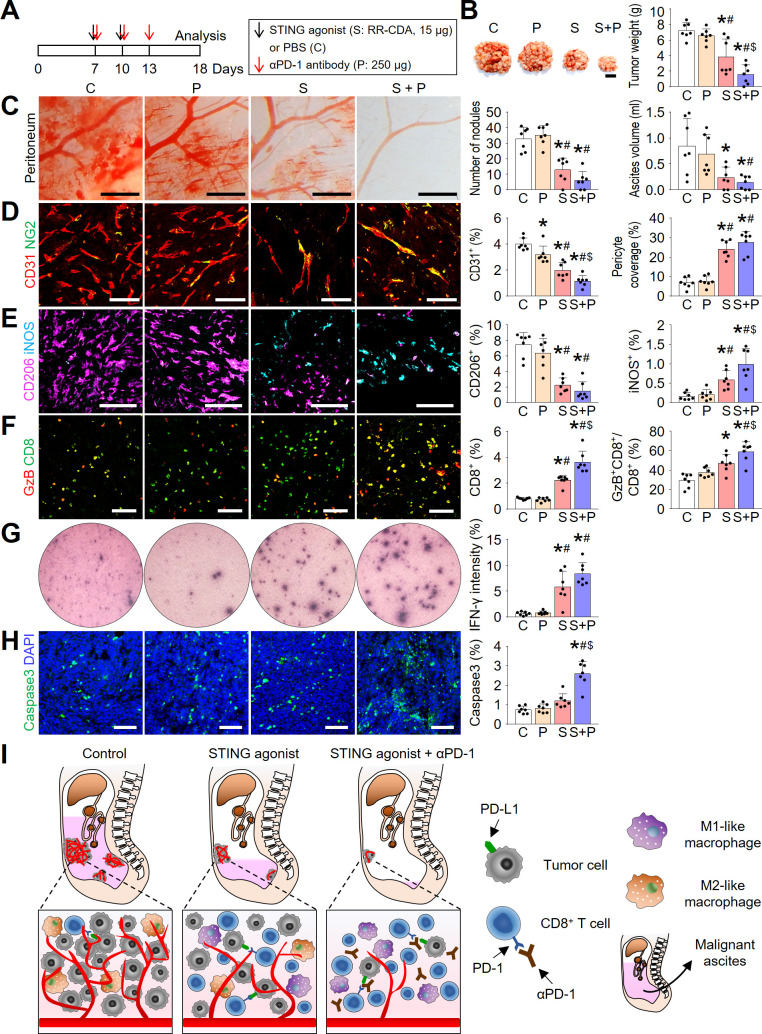
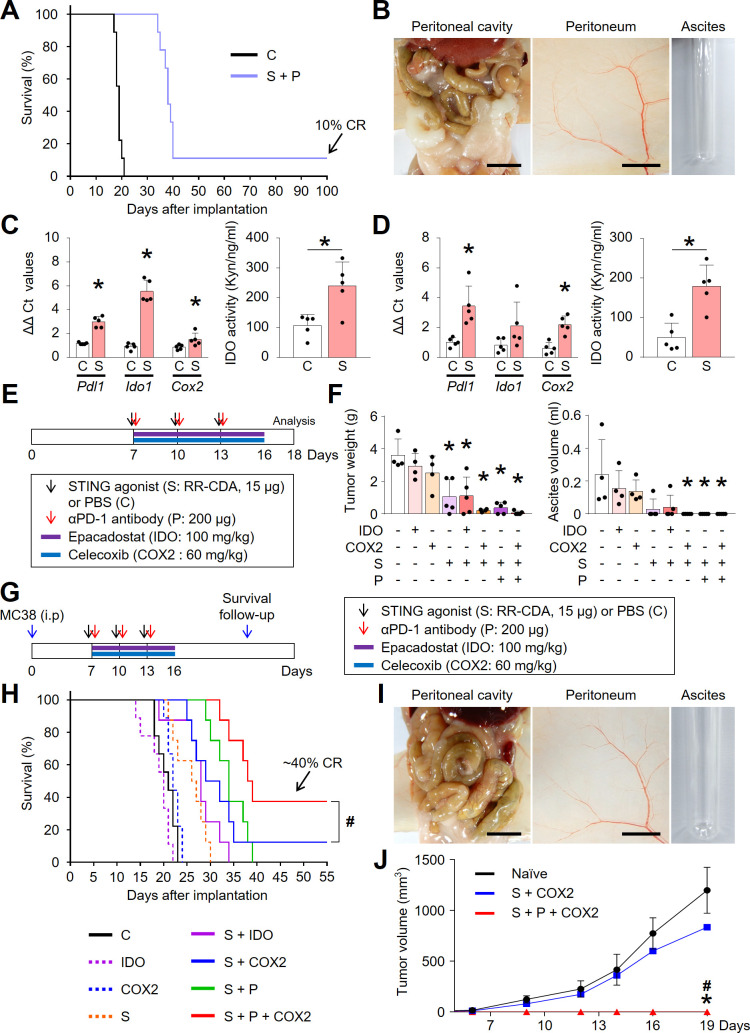
Background: Peritoneal carcinomatosis is a fatal clinical presentation of colon cancer, characterized by unresponsiveness to conventional anticancer therapies, including immune checkpoint inhibitors. Here, we elucidated the immune-evasion mechanisms during the peritoneal carcinomatosis of colon cancer and developed a novel immunotherapy by activating the stimulator of interferon genes (STING) pathway. Methods: We generated a syngeneic peritoneal carcinomatosis model of colon cancer. Mice were intraperitoneally treated with either STING agonist (MIW815, also known as ADU-S100) or PD-1 blockade or both. The tumor microenvironment was comprehensively analyzed using multiplexed immunofluorescence imaging, flow cytometry, and NanoString immune profiling. Results: Intraperitoneal colon cancer cells induce a massive influx of immunosuppressive M2-like macrophages, upregulate immune checkpoints, and impair effector T cell functions during peritoneal dissemination; these collectively create a highly angiogenic and immunosuppressive milieu that is resistant to anti-PD-1 monotherapy. Intraperitoneal administration of a STING agonist suppressed aberrant angiogenesis, increased pericyte coverage, and normalized tumor vessels, thereby facilitating the infiltration of activated CD8 + T cells into peritoneal tumor nodules. Moreover, STING activation reprogramed tumor-associated macrophages toward the M1 phenotype. STING activation converted immunologically cold peritoneal tumors into T-cell-inflamed tumors in a type-I interferon-dependent manner. Lastly, the STING agonist synergistically cooperated with PD-1 and/or COX2 blockade to further suppress the peritoneal dissemination of colon cancer, resulting in complete eradication of tumor and ascites, and inducing durable antitumor immunity. Conclusions: STING activation can normalize the peritoneal vascular and immune microenvironment, providing a rationale for a novel combination therapeutic strategy for peritoneal carcinomatosis in colon cancer.
Overview
The claims and statistics of this paper haven’t been checked yet.
Run the check — free, no account needed. It reads the open-access text and checks the sources it cites.
Integrity signals
Registry
Cites
Statistics
Figures
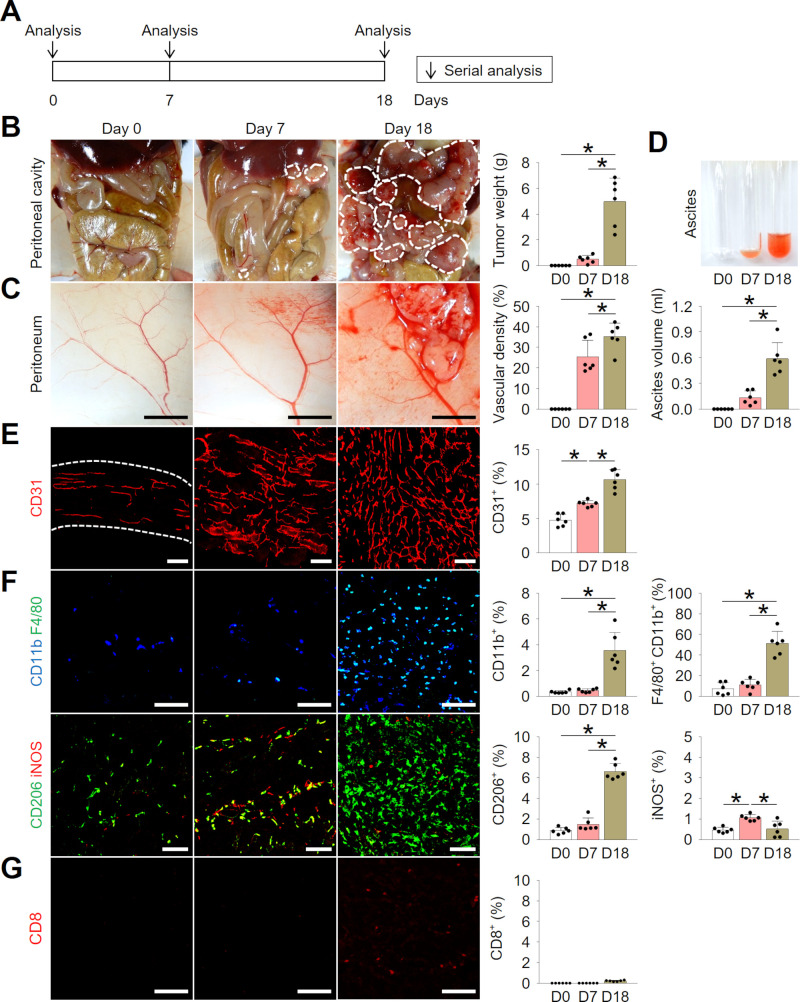
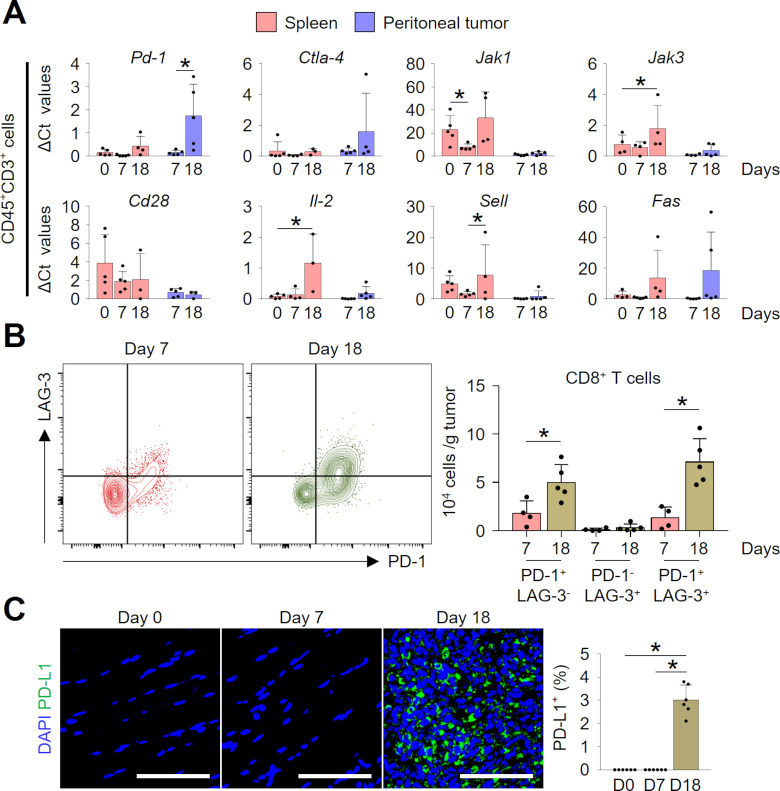
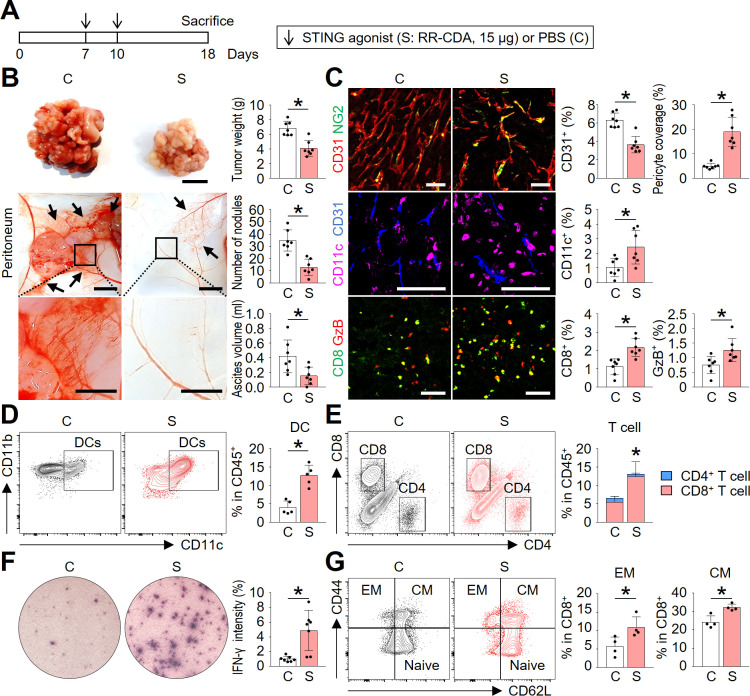
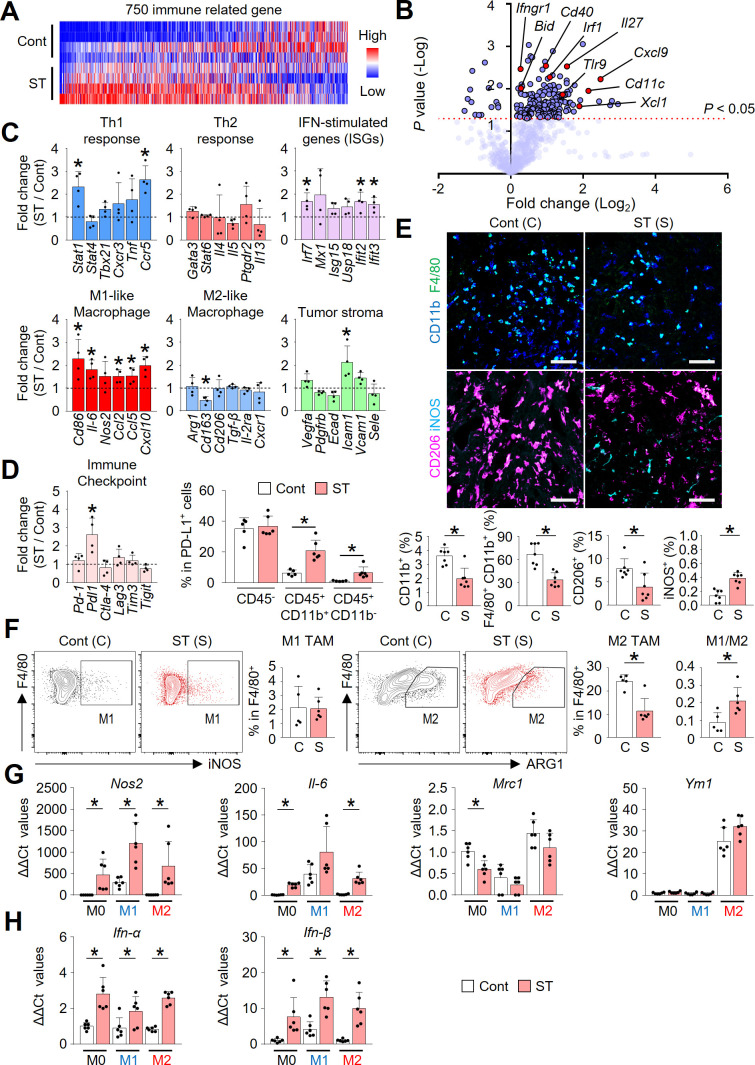
Verification
Claims the paper makes
The claims and statistics of this paper haven’t been checked yet.
Run the check — free, no account needed. It reads the open-access text and checks the sources it cites.
Claims other papers make about this one
Each is checked against this paper’s own text: does it say what the citing paper says it does?
In the citing paper
“Accumulating evidence indicates that chemotherapy, radiotherapy, angiogenesis inhibitor, stimulator of interferon genes (STING) agonist, fecal microbiota transplantation (FMT), epigenetic modulators, or other immunomodulators could synergize α-PD-1/PD-L1, by enhancing cancer antigen release, APC function, or effector activity [22–31].”
From Combination strategies with PD-1/PD-L1 blockade: current advances and future directions (2022) · cites this paper as [25]
Self-check
Percentages, sums and reported differences re-computed from the paper’s own numbers.
The self-check needs the paper’s full text.
Citations
Cites
Cancer immunotherapy using checkpoint blockade
Ribas, A., & Wolchok, J. D. (2018) · Science · doi:10.1126/science.aar4060 · Cited by 6,791
STING regulates intracellular DNA-mediated, type I interferon-dependent innate immunity
Ishikawa, H., Ma, Z., & Barber, G. N. (2009) · Nature · doi:10.1038/nature08476 · Cited by 2,759
Macrophages as regulators of tumour immunity and immunotherapy
DeNardo, D. G., & Ruffell, B. (2019) · Nature reviews. Immunology · doi:10.1038/s41577-019-0127-6 · Cited by 2,591
Regulation and function of the cGAS–STING pathway of cytosolic DNA sensing
Chen, Q., Sun, L., & Chen, Z. J. (2016) · Nature Immunology · doi:10.1038/ni.3558 · Cited by 2,333
STING-Dependent Cytosolic DNA Sensing Mediates Innate Immune Recognition of Immunogenic Tumors
Woo, S.-R., Fuertes, M. B., Corrales, L., Spranger, S., Furdyna, M. J., Leung, M. Y. K., Duggan, R., Wang, Y., Barber, G. N., Fitzgerald, K. A., et al. (2014) · Immunity · doi:10.1016/j.immuni.2014.10.017 · Cited by 1,917
Microenvironmental regulation of tumour angiogenesis
De Palma, M., Biziato, D., & Petrova, T. V. (2017) · Nature Reviews Cancer · doi:10.1038/nrc.2017.51 · Cited by 1,847
Corrales, L., Glickman, L. H., McWhirter, S. M., Kanne, D. B., Sivick, K. E., Katibah, G. E., Woo, S.-R., Lemmens, E., Banda, T., Leong, J. J., et al. (2015) · Cell Reports · doi:10.1016/j.celrep.2015.04.031 · Cited by 1,560
Neoadjuvant checkpoint blockade for cancer immunotherapy
Topalian, S. L., Taube, J. M., & Pardoll, D. M. (2020) · Science · doi:10.1126/science.aax0182 · Cited by 1,001
Matsuzaki, J., Gnjatic, S., Mhawech-Fauceglia, P., Beck, A., Miller, A., Tsuji, T., Eppolito, C., Qian, F., Lele, S., Shrikant, P., et al. (2010) · Proceedings of the National Academy of Sciences · doi:10.1073/pnas.1003345107 · Cited by 859
Mutual regulation of tumour vessel normalization and immunostimulatory reprogramming
Tian, L., Goldstein, A., Wang, H., Ching Lo, H., Sun Kim, I., Welte, T., Sheng, K., Dobrolecki, L. E., Zhang, X., Putluri, N., et al. (2017) · Nature · doi:10.1038/nature21724 · Cited by 841
Lee, W. S., Yang, H., Chon, H. J., & Kim, C. (2020) · Experimental & Molecular Medicine · doi:10.1038/s12276-020-00500-y · Cited by 736
Self-citationcGAS-STING, an important pathway in cancer immunotherapy
Jiang, M., Chen, P., Wang, L., Li, W., Chen, B., Liu, Y., Wang, H., Zhao, S., Ye, L., He, Y., et al. (2020) · Journal of Hematology & Oncology · doi:10.1186/s13045-020-00916-z · Cited by 647
STING activation of tumor endothelial cells initiates spontaneous and therapeutic antitumor immunity
Demaria, O., Gassart, A. D., Coso, S., Gestermann, N., Domizio, J. D., Flatz, L., Gaide, O., Michielin, O. A., Hwu, P., Petrova, T. V., et al. (2015) · Proceedings of the National Academy of Sciences · doi:10.1073/pnas.1512832112 · Cited by 585
Sidky, Y. A., & Borden, E. C. (1987) · PubMed · Cited by 494
The Next Hurdle in Cancer Immunotherapy: Overcoming the Non–T-Cell–Inflamed Tumor Microenvironment
Gajewski, T. F. (2015) · Seminars in Oncology · doi:10.1053/j.seminoncol.2015.05.011 · Cited by 493
Magnitude of Therapeutic STING Activation Determines CD8+ T Cell-Mediated Anti-tumor Immunity
Sivick, K. E., Desbien, A. L., Glickman, L. H., Reiner, G. L., Corrales, L., Surh, N. H., Hudson, T. E., Vu, U. T., Francica, B. J., Banda, T., et al. (2018) · Cell Reports · doi:10.1016/j.celrep.2018.11.047 · Cited by 451
STING: a master regulator in the cancer-immunity cycle
Zhu, Y., An, X., Zhang, X., Qiao, Y., Zheng, T., & Li, X. (2019) · Molecular Cancer · doi:10.1186/s12943-019-1087-y · Cited by 431
Albini, A., Bruno, A., Noonan, D. M., & Mortara, L. (2018) · Frontiers in Immunology · doi:10.3389/fimmu.2018.00527 · Cited by 401
Wu, J., Dobbs, N., Yang, K., & Yan, N. (2020) · Immunity · doi:10.1016/j.immuni.2020.06.009 · Cited by 373
Tumour and host cell PD-L1 is required to mediate suppression of anti-tumour immunity in mice
Lau, J., Cheung, J., Navarro, A., Lianoglou, S., Haley, B., Tótpál, K., Sanders, L., Koeppen, H., Caplazi, P., McBride, J., et al. (2017) · Nature Communications · doi:10.1038/ncomms14572 · Cited by 369
Self-citationSTING-dependent cytosolic DNA sensing pathways
Barber, G. N. (2013) · Trends in Immunology · doi:10.1016/j.it.2013.10.010 · Cited by 341
STING Promotes the Growth of Tumors Characterized by Low Antigenicity via IDO Activation
Lemos, H. D. P., Mohamed, E. T., Huang, L., Ou, R., Pacholczyk, G. A., Arbab, A. S., Munn, D. H., & Mellor, A. L. (2016) · Cancer Research · doi:10.1158/0008-5472.can-15-1456 · Cited by 325
STING activation reprograms tumor vasculatures and synergizes with VEGFR2 blockade
Yang, H., Lee, W. S., Kong, S. J., Kim, C. G., Kim, J. H., Chang, S. K., Kim, S., Kim, G., Chon, H. J., & Kim, C. (2019) · Journal of Clinical Investigation · doi:10.1172/jci125413 · Cited by 316
Self-citationSTING activation in cancer immunotherapy
Su, T., Zhang, Y. L., Valerie, K. C., Wang, X., Lin, S., & Zhu, G. (2019) · Theranostics · doi:10.7150/thno.37574 · Cited by 262
Ohkuri, T., Ghosh, A., Kosaka, A., Zhu, J., Ikeura, M., David, M., Watkins, S. C., Sarkar, S. N., & Okada, H. (2014) · Cancer Immunology Research · doi:10.1158/2326-6066.cir-14-0099 · Cited by 255
Abiko, K., Mandai, M., Hamanishi, J., Yoshioka, Y., Matsumura, N., Baba, T., Yamaguchi, K. D., Murakami, R., Yamamoto, A., Kharma, B., et al. (2013) · Clinical Cancer Research · doi:10.1158/1078-0432.ccr-12-2199 · Cited by 225
Mikuła‐Pietrasik, J., Uruski, P., Tykarski, A., & Książek, K. (2017) · Cellular and Molecular Life Sciences · doi:10.1007/s00018-017-2663-1 · Cited by 199
Hyperprogressive disease during PD-1 blockade in patients with advanced hepatocellular carcinoma
Kim, C. G., Kim, C., Yoon, S. E., Kim, K. H., Choi, S. J., Kang, B., Kim, H. R., Park, S., Shin, E., Kim, Y., et al. (2020) · Journal of Hepatology · doi:10.1016/j.jhep.2020.08.010 · Cited by 187
Self-citationMiao, L., Qi, J., Zhao, Q., Wu, Q.-N., Wei, D., Wei, X., Liu, J., Chen, J., Zeng, Z.-L., Ju, H., et al. (2019) · Theranostics · doi:10.7150/thno.37745 · Cited by 170
Chon, H. J., Lee, W. S., Yang, H., Kong, S. J., Lee, N. K., Moon, E. S., Choi, J., Han, E. C., Kim, J. H., Ahn, J. B., et al. (2019) · Clinical Cancer Research · doi:10.1158/1078-0432.ccr-18-1932 · Cited by 158
Self-citationPathophysiology of colorectal peritoneal carcinomatosis: Role of the peritoneum
Lemoine, L., Sugarbaker, P. H., & der Speeten, K. V. (2016) · World Journal of Gastroenterology · doi:10.3748/wjg.v22.i34.7692 · Cited by 145
Vascular RhoJ is an effective and selective target for tumor angiogenesis and vascular disruption
Kim, C., Yang, H., Fukushima, Y., Saw, P. E., Lee, J., Park, J.-S., Park, I., Jung, J., Kataoka, H., Lee, D., et al. (2014) · Cancer Cell · doi:10.1016/j.ccr.2013.12.010 · Cited by 131
Self-citationStimulator of interferon genes (STING) activation exacerbates experimental colitis in mice
Martin, G. R., Blomquist, C. M., Henare, K. L., & Jirik, F. R. (2019) · Scientific Reports · doi:10.1038/s41598-019-50656-5 · Cited by 109
Targeting the Tumor Microenvironment in Colorectal Peritoneal Metastases
Ceelen, W. P., Ramsay, R. G., Narasimhan, V., Heriot, A. G., & Wever, O. D. (2020) · Trends in cancer · doi:10.1016/j.trecan.2019.12.008 · Cited by 95
STING signaling is a potential immunotherapeutic target in colorectal cancer
Chon, H. J., Kim, H., Noh, J. H., Yang, H., Lee, W. S., Kong, S. J., Lee, S., Lee, Y. S., Kim, W. R., Kim, J. H., et al. (2019) · Journal of Cancer · doi:10.7150/jca.32806 · Cited by 83
Self-citationAlkayyal, A. A., Tai, L., Kennedy, M. A., de Souza, C. T., Zhang, J., Lefebvre, C. A., Sahi, S., Ananth, A. A., Mahmoud, A. B., Makrigiannis, A. P., et al. (2017) · Cancer Immunology Research · doi:10.1158/2326-6066.cir-16-0162 · Cited by 81
Immunology of the peritoneal cavity: Relevance for host-tumor relation
Melichar, B., & Freedman, R. S. (2002) · International Journal of Gynecological Cancer · doi:10.1046/j.1525-1438.2002.01093.x · Cited by 75
Overcoming resistance to STING agonist therapy to incite durable protective antitumor immunity
Lemos, H. D. P., Ou, R., McCardle, C., Lin, Y., Calver, J., Minett, J., Chadli, A., Huang, L., & Mellor, A. L. (2020) · Journal for ImmunoTherapy of Cancer · doi:10.1136/jitc-2020-001182 · Cited by 69
Survival and Prognostic Factors for Metachronous Peritoneal Metastasis in Patients with Colon Cancer
Nagata, H., Ishihara, S., Hata, K., Murono, K., Kaneko, M., Yasuda, K., Otani, K., Nishikawa, T., Tanaka, T., Kiyomatsu, T., et al. (2016) · Annals of Surgical Oncology · doi:10.1245/s10434-016-5732-z · Cited by 64
Kim, M., Nitschké, M., Sennino, B., Murer, P., Schriver, B. J., Bell, A., Subramanian, A., McDonald, C. E., Wang, J., Cha, H., et al. (2017) · Cancer Research · doi:10.1158/0008-5472.can-15-3308 · Cited by 62
Lee, Y. S., Lee, W. S., Kim, C. W., Lee, S. J., Yang, H. J., Kong, S. J., Ning, J., Kang, B., Kang, B., Kim, W. R., et al. (2020) · Journal for ImmunoTherapy of Cancer · doi:10.1136/jitc-2020-000857 · Cited by 62
Self-citationJia, H., Thelwell, C., Dilger, P., Bird, C., Daniels, S., & Wadhwa, M. (2018) · Thrombosis Research · doi:10.1016/j.thromres.2018.01.039 · Cited by 59
Early Investigations and Recent Advances in Intraperitoneal Immunotherapy for Peritoneal Metastasis
Thadi, A., Khalili, M., Morano, W. F., Richard, S. D., Katz, S., & Bowne, W. B. (2018) · Vaccines · doi:10.3390/vaccines6030054 · Cited by 45
Park, H. S., Kwon, W. S., Park, S., Jo, E., Lim, S. J., Lee, C., Lee, J. B., Jung, M., Kim, H. S., Beom, S., et al. (2019) · Journal for ImmunoTherapy of Cancer · doi:10.1186/s40425-019-0708-8 · Cited by 39
Immunology of the peritoneal cavity: Relevance for host-tumor relation
Melichar, B., & Freedman, R. S. (2002) · International Journal of Gynecological Cancer · doi:10.1136/ijgc-00009577-200201000-00002 · Cited by 36
Generation of a Dual-Functioning Antitumor Immune Response in the Peritoneal Cavity
Sedlacek, A. L., Gerber, S. A., Randall, T. D., van Rooijen, N., Frelinger, J. G., & Lord, E. M. (2013) · American Journal Of Pathology · doi:10.1016/j.ajpath.2013.06.030 · Cited by 31
The current status of immunotherapy in peritoneal carcinomatosis
Ströhlein, M. A., Heiss, M. M., & Jauch, K. (2016) · Expert Review of Anticancer Therapy · doi:10.1080/14737140.2016.1224666 · Cited by 25
Update on clinical trials in colorectal cancer peritoneal metastasis
Pinto, A., Eveno, C., & Pocard, M. D. (2017) · International Journal of Hyperthermia · doi:10.1080/02656736.2017.1289565 · Cited by 18
Immunological milieu in the peritoneal cavity at laparotomy for gastric cancer
Yoneda, A. (2012) · World Journal of Gastroenterology · doi:10.3748/wjg.v18.i13.1470 · Cited by 12
Characterization of Oncolytic Vaccinia Virus Harboring the Human IFNB1 and CES2 Transgenes
Cho, E., Islam, S. M. B. U., Jiang, F., Park, J.-E., Lee, B., Kim, N. D., & Hwang, T.-H. (2019) · Cancer Research and Treatment · doi:10.4143/crt.2019.161 · Cited by 8
T Cells Modified with CD70 as an Alternative Cellular Vaccine for Antitumor Immunity
Lee, S.-E., Shin, A.-R., Sohn, H., Cho, H.-I., & Kim, T. (2020) · Cancer Research and Treatment · doi:10.4143/crt.2019.721 · Cited by 5
Self-citation
Cited by
Sorted by citations
Combination strategies with PD-1/PD-L1 blockade: current advances and future directions
Yi, M., Zheng, X., Niu, M., Zhu, S., Ge, H., & Wu, K. (2022) · Molecular Cancer · doi:10.1186/s12943-021-01489-2 · Cited by 1,445
Targeting cytokine and chemokine signaling pathways for cancer therapy
Yi, M., Li, T., Niu, M., Zhang, H., Wu, Y., Wu, K., & Dai, Z. (2024) · Signal Transduction and Targeted Therapy · doi:10.1038/s41392-024-01868-3 · Cited by 528
Type I interferon-mediated tumor immunity and its role in immunotherapy
Yu, R., Zhu, B., & Chen, D. (2022) · Cellular and Molecular Life Sciences · doi:10.1007/s00018-022-04219-z · Cited by 309
“Consequently, the combination of ADU-S100 and anti-PD-1 antibody further enhanced the antitumor effect [139].”
BackgroundChen, Y., Jia, K., Sun, Y. L., Zhang, C., Li, Y., Zhang, L., Chen, Z., Zhang, J., Hu, Y., Yuan, J., et al. (2022) · Nature Communications · doi:10.1038/s41467-022-32570-z · Cited by 210
The cGAS/STING Pathway: A Novel Target for Cancer Therapy
Gan, Y., Li, X., Han, S., Liang, Q., Ma, X., Rong, P., Wang, W., & Li, W. (2022) · Frontiers in Immunology · doi:10.3389/fimmu.2021.795401 · Cited by 194
“During peritoneal metastasis, type I IFN signaling also inhibited the recruitment of CD206 M2-like macrophages (84).”
Background
Metadata
- Authors
- Lee, S. J., Yang, H., Kim, W. R., Lee, Y. S., Lee, W. S., Kong, S. J., Lee, H. J., Kim, J. H., Cheon, J., Kang, B., Chon, H. J., & Kim, C.
- Affiliations
- CHA University (KR)
- CHA University Bundang Medical Center (KR)
- Corresponding author
- Chon, Hong Jae
- Kim, Chan
- ORCID
- Venue
- Journal for ImmunoTherapy of Cancer
- Publisher
- BMJ
- Published
- 2021-06
- Volume
- 9
- Issue
- 6
- Pages
- e002195
- ISSN
- 2051-1426 (ISSN-L)
- PMC
- PMC8215239
- OpenAlex
- W3168539558
- Cited by
- 118
- References
- 50
- Citations by year
- 2026: 24 · 2025: 23 · 2024: 24 · 2023: 24 · 2022: 19 · 2021: 4
- FWCI
- 6.47
- Type
- journal article
- Language
- en
- Open access
- gold
- doi.org
- Locations
- Journal for ImmunoTherapy of Cancer (publishedVersion, cc-by)
- PubMed Central (publishedVersion, cc-by)
- PubMed (publishedVersion)
- DOAJ (DOAJ: Directory of Open Access Journals) (submittedVersion, cc-by-sa)
- Funders
- Korea Medical Device Development Fund (202012D21-01)
- National Research Foundation of Korea (NRF-2020R1A2C2004530, NRF-2020R1C1C1010722)
- Topics
- Health Sciences › Medicine › Oncology › Cancer Immunotherapy and Biomarkers
- Life Sciences › Immunology and Microbiology › Immunology › interferon and immune responses
- Health Sciences › Medicine › Surgery › Intraperitoneal and Appendiceal Malignancies
- Keywords
- STING activation, peritoneal carcinomatosis, colon cancer, vascular normalization, tumor microenvironment, M2 macrophages, M1 macrophage polarization, anti-PD-1 therapy, type I interferon, angiogenesis, pericyte coverage, CD8+ T cell infiltration, immune evasion, immunotherapy
- MeSH terms
- STING Protein, Animals, Colonic Neoplasms, Disease Models, Animal, Humans, Immunotherapy, Membrane Proteins, Peritoneal Neoplasms, Cell Line, Tumor, Mice, Tumor Microenvironment
About these checks
Registry, retraction, Cites and statistics results are computed, not judged, with one exception: a printed reference that no index lists is read once by a model before it counts as a citation error. Claims are extracted by a model and kept only when their quote appears verbatim in the text; each cited source is then checked, with a model’s help, for whether it says what the claim relies on. Those verdicts can be wrong — read the claim’s quote and the cited source before relying on one.
Statistics and arithmetic are recomputed, not judged.
Confidence bands are shown only for fields calibrated on our annotated test set. None is calibrated yet, so no band is shown.
What counts as a claim ›How we measure confidence ›How we check this ›
Are you an author, or do you see a problem with this page? Request a review
