

Real-life survey of pitfalls and successes of precision medicine in genetic epilepsies
Open accessThe DOI matches its Crossref record; 38 of the 40 references it cites were found in a registry or an index.
Abstract
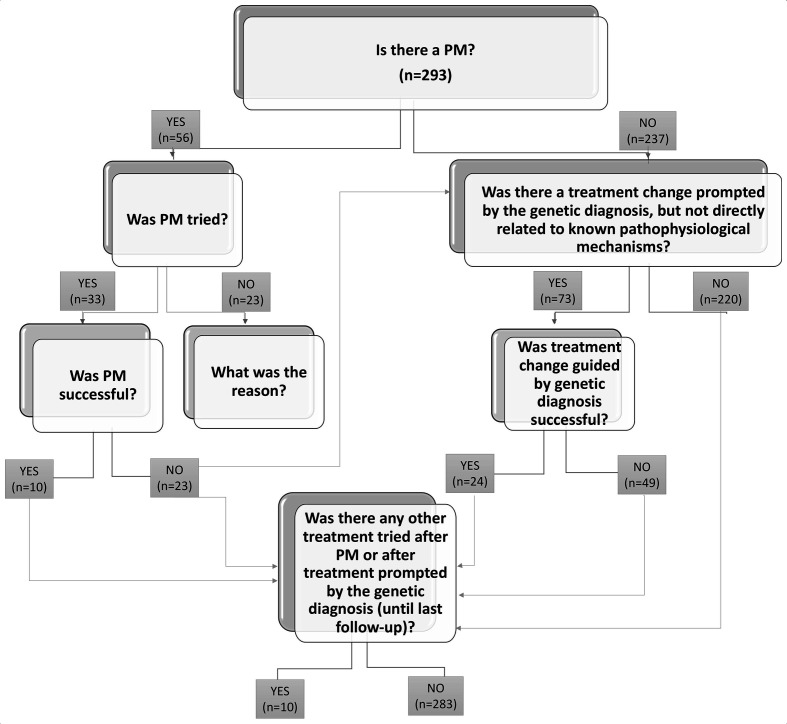
Objective: The term ‘precision medicine’ describes a rational treatment strategy tailored to one person that reverses or modifies the disease pathophysiology. In epilepsy, single case and small cohort reports document nascent precision medicine strategies in specific genetic epilepsies. The aim of this multicentre observational study was to investigate the deeper complexity of precision medicine in epilepsy. Methods: A systematic survey of patients with epilepsy with a molecular genetic diagnosis was conducted in six tertiary epilepsy centres including children and adults. A standardised questionnaire was used for data collection, including genetic findings and impact on clinical and therapeutic management. Results: We included 293 patients with genetic epilepsies, 137 children and 156 adults, 162 females and 131 males. Treatment changes were undertaken because of the genetic findings in 94 patients (32%), including rational precision medicine treatment and/or a treatment change prompted by the genetic diagnosis, but not directly related to known pathophysiological mechanisms. There was a rational precision medicine treatment for 56 patients (19%), and this was tried in 33/56 (59%) and was successful (ie, >50% seizure reduction) in 10/33 (30%) patients. In 73/293 (25%) patients there was a treatment change prompted by the genetic diagnosis, but not directly related to known pathophysiological mechanisms, and this was successful in 24/73 (33%). Significance: Our survey of clinical practice in specialised epilepsy centres shows high variability of clinical outcomes following the identification of a genetic cause for an epilepsy. Meaningful change in the treatment paradigm after genetic testing is not yet possible for many people with epilepsy. This systematic survey provides an overview of the current application of precision medicine in the epilepsies, and suggests the adoption of a more considered approach.
Overview
The claims and statistics of this paper haven’t been checked yet.
Free: it reads the open-access text and checks the first 5 claims that cite a source we can check. Create a free account to check every claim.
Integrity signals
Registry
Cites
Statistics
Figures
Verification
Claims the paper makes
The claims and statistics of this paper haven’t been checked yet.
Free: it reads the open-access text and checks the first 5 claims that cite a source we can check. Create a free account to check every claim.
Claims other papers make about this one
Each is checked against this paper’s own text: does it say what the citing paper says it does?
The source backs part of the claim, not all of it — or backs it for a different population, condition or comparison.
In the citing paper
“Even when an aetiologic genetic diagnosis is made, meaningful change in the treatment paradigm has not yet been possible for most DEEs 183 .”
From Developmental and epileptic encephalopathies (2024) · cites this paper as [183]
Experimental — accuracy not yet measuredThe cited source says what the claim attributes to it.
In the citing paper
“In a 2021 observational study in 293 patients with genetic epilepsies, treatment changes were undertaken because of the genetic findings in 32%, including rational precision medicine treatment or a treatment change prompted by the genetic diagnosis, but not directly related to known pathophysiological mechanisms 183 .”
From Developmental and epileptic encephalopathies (2024) · cites this paper as [183]
Self-check
Percentages, sums and reported differences re-computed from the paper’s own numbers.
The self-check needs the paper’s full text.
Citations
Cites
Richards, S., Aziz, N., Bale, S., Bick, D., Das, S., Gastier-Foster, J., Grody, W. W., Hegde, M., Lyon, E., Spector, E., et al. (2015) · Genetics in Medicine · doi:10.1038/gim.2015.30 · Cited by 32,594
Scheffer, I. E., Berkovic, S., Capovilla, G., Connolly, M. B., French, J., Guilhoto, L., Hirsch, E., Jain, S., Mathern, G. W., Moshé, S. L., et al. (2017) · Epilepsia · doi:10.1111/epi.13709 · Cited by 5,054
French, J. A., Lawson, J. A., Yapici, Z., Ikeda, H., Polster, T., Nabbout, R., Curatolo, P., de Vries, P. J., Dlugos, D. J., Berkowitz, N., et al. (2016) · The Lancet · doi:10.1016/s0140-6736(16)31419-2 · Cited by 764
Genomic and personalized medicine: foundations and applications
Ginsburg, G. S., & Willard, H. F. (2009) · Translational Research · doi:10.1016/j.trsl.2009.09.005 · Cited by 637
Genetic and phenotypic heterogeneity suggest therapeutic implications in SCN2A-related disorders
Wolff, M., Johannesen, K. M., Hedrich, U. B. S., Masnada, S., Rubboli, G., Gardella, E., Lesca, G., Ville, D., Milh, M., Villard, L., et al. (2017) · Brain · doi:10.1093/brain/awx054 · Cited by 600
Self-citationThe spectrum of SCN1A-related infantile epileptic encephalopathies
Harkin, L. A., McMahon, J. M., Iona, X., Dibbens, L., Pelekanos, J. T., Zuberi, S. M., Sadleir, L. G., Andermann, E., Gill, D., Farrell, K., et al. (2007) · Brain · doi:10.1093/brain/awm002 · Cited by 531
Suggested guidelines for the diagnosis and management of urea cycle disorders: First revision
Häberle, J., Burlina, A., Chakrapani, A., Dixon, M., Karall, D., Lindner, M., Mandel, H., Martinelli, D., Pintos‐Morell, G., Santer, R., et al. (2019) · Journal of Inherited Metabolic Disease · doi:10.1002/jimd.12100 · Cited by 506
Baraban, S. C., Dinday, M. T., & Hortopan, G. A. (2013) · Nature Communications · doi:10.1038/ncomms3410 · Cited by 436
GRIN2A mutation and early‐onset epileptic encephalopathy: personalized therapy with memantine
Pierson, T. M., Yuan, H., Marsh, E. D., Fuentes‐Fajardo, K., Adams, D. R., Markello, T., Golas, G., Simeonov, D. R., Holloman, C., Tankovic, A., et al. (2014) · Annals of Clinical and Translational Neurology · doi:10.1002/acn3.39 · Cited by 298
The phenotypic spectrum of SCN8A encephalopathy
Larsen, J., Carvill, G. L., Gardella, E., Kluger, G., Schmiedel, G., Barisic, N., Depienne, C., Brilstra, E., Mang, Y., Nielsen, J. E. K., et al. (2015) · Neurology · doi:10.1212/wnl.0000000000001211 · Cited by 285
Self-citation
Research works printed but not linked: 2
- National Research Council (US) Committee on a Framework for Development of a New Taxonomy of Disease. Toward precision medicine: building a knowledge network for biomedical research and a new taxonomy of disease. Washington: National Academies Press, 2011. ISBN: 978-0-309-22222-8. 22536618
- Hedrich UBS, Lauxmann S, Wolff M, et al. Effective precision therapy in KCNA2-related developmental and epileptic encephalopathy with 4-aminopyridine. Science Translational Medicine 2021; In press.
Cited by
Perucca, E., Perucca, P., White, H. S., & Wirrell, E. C. (2023) · The Lancet Neurology · doi:10.1016/s1474-4422(23)00151-5 · Cited by 305
Developmental and epileptic encephalopathies
Scheffer, I. E., Zuberi, S., Mefford, H. C., Guerrini, R., & McTague, A. (2024) · Nature Reviews Disease Primers · doi:10.1038/s41572-024-00546-6 · Cited by 158
“…study in 293 patients with genetic epilepsies, treatment changes were undertaken because of the genetic findings in 32%, including rational precision medicine treatment or a treatment change prompted by the genetic diagnosis, but not directly related to known pathophysiological mechanisms 183 .”
Self-citationGene variant effects across sodium channelopathies predict function and guide precision therapy
Brunklaus, A., Feng, T., Brünger, T., Perez-Palma, E., Heyne, H., Matthews, E., Semsarian, C., Symonds, J. D., Zuberi, S. M., Lal, D., et al. (2022) · Brain · doi:10.1093/brain/awac006 · Cited by 114
“66,67 Knowledge of the functional impact of a SCN -variant can inform clinical management and therapeutic choice.”
The pharmacological treatment of epilepsy: recent advances and future perspectives
Perucca, E. (2021) · Acta Epileptologica · doi:10.1186/s42494-021-00055-z · Cited by 110
“For genetic epilepsies, targeted (precision) treatments have been reported to improve outcomes in a considerable proportion patients with identified gene mutations [54], although a more recent survey gave a more sober assessment of the current impact of these treatments [55].”
BackgroundMonogenic Epilepsies: Disease Mechanisms, Clinical Phenotypes, and Targeted Therapies
Guerrini, R., Balestrini, S., Wirrell, E. C., & Walker, M. C. (2021) · Neurology · doi:10.1212/wnl.0000000000012744 · Cited by 108
Self-citationMcKnight, D., Morales, A., Hatchell, K. E., Bristow, S. L., Bonkowsky, J. L., Perry, M. S., Berg, A. T., Borlot, F., Esplin, E. D., Moretz, C., et al. (2022) · JAMA Neurology · doi:10.1001/jamaneurol.2022.3651 · Cited by 99
Lado, F. A., Ahrens, S. M., Riker, E., Muh, C. R., Richardson, R. M., Gray, J. M., Small, B., Lewis, S. Z., Schofield, T. J., Clarke, D., et al. (2024) · Neurology · doi:10.1212/wnl.0000000000208087 · Cited by 88
Epigenetic genes and epilepsy — emerging mechanisms and clinical applications
Van Loo, K. M. J., Carvill, G. L., Becker, A. J., Conboy, K., Goldman, A. M., Kobow, K., Lopes-Cendes, I., Reid, C. A., van Vliet, E. A., & Henshall, D. C. (2022) · Nature Reviews Neurology · doi:10.1038/s41582-022-00693-y · Cited by 68
Bayat, A., Fenger, C., Techlo, T. R., Højte, A. F., Nørgaard, I., Hansen, T. F., Rubboli, G., Møller, R. S., & Danish Cytogenetic Central Registry Study Group (2022) · Neurotherapeutics · doi:10.1007/s13311-022-01264-1 · Cited by 39
“, > 50% seizure reduction) in 10/33 (30%) patients [11].”
BackgroundSelf-citationSteps to Improve Precision Medicine in Epilepsy
Balestrini, S., Mei, D., Sisodiya, S. M., & Guerrini, R. (2023) · Molecular Diagnosis & Therapy · doi:10.1007/s40291-023-00676-9 · Cited by 31
“…diagnosis, across six tertiary epilepsy centres, we found a high variability of clinical outcomes after a genetic cause was identified, with a rational precision medicine treatment available only for a minority of patients and its effectiveness being obvious in an even lower proportion [39].”
BackgroundSelf-citationImbrici, P., Conte, E., Blunck, R., Stregapede, F., Liantonio, A., Tosi, M., D’Adamo, M. C., Luca, A. D., Branković, V., & Zanni, G. (2021) · International Journal of Molecular Sciences · doi:10.3390/ijms22189913 · Cited by 27
Precision therapies for genetic epilepsies in 2025: Promises and pitfalls
Wang, S., Perucca, E., Berkovic, S. F., & Perucca, P. (2025) · Epilepsia Open · doi:10.1002/epi4.70065 · Cited by 25
“142,148,149 In a retrospective evaluation of medical records from a tertiary level center in Denmark, 53 of 101 patients with a putative diagnosis of monogenic epilepsy were deemed to be potentially eligible for “precision therapy approaches.””
Knap, B., Nieoczym, D., Kundap, U. P., Kusio-Targońska, K., Kukuła‐Koch, W., Turski, W. A., & Gaweł, K. (2023) · Frontiers in Molecular Neuroscience · doi:10.3389/fnmol.2023.1221665 · Cited by 22
“Precision medicine is a therapeutic approach that is individually selected for each patient and that ideally targets molecular pathomechanisms of the disease (Balestrini et al., 2021).”
BackgroundNeurophysiological Findings in Neuronal Ceroid Lipofuscinoses
Trivisano, M., Ferretti, A., Calabrese, C., Pietrafusa, N., Piscitello, L. M., Pavia, G. C., Vigevano, F., & Specchio, N. (2022) · Frontiers in Neurology · doi:10.3389/fneur.2022.845877 · Cited by 21
“During the last decades, technological advances have driven genetic discovery in epilepsy and increased the understanding of the molecular mechanisms of many epileptic disorders, in some cases providing targets for precision medicine (19, 56).”
BackgroundWachter, M. D., Schoonjans, A., Weckhuysen, S., Schil, K. V., Löfgren, A., Meuwissen, M. E. C., Jansen, A., & Ceulemans, B. (2023) · European Journal of Paediatric Neurology · doi:10.1016/j.ejpn.2023.11.003 · Cited by 18
Developmental and epileptic encephalopathies – therapeutic consequences of genetic testing
Syrbe, S. (2022) · Medizinische Genetik · doi:10.1515/medgen-2022-2145 · Cited by 18
Boßelmann, C. M., Borggräfe, I., Fazeli, W., Klein, K. M., Kluger, G. J., Müller‐Schlüter, K., Neubauer, B. A., von Spiczak, S., von Stülpnagel-Steinbeis, C., Weber, Y. G., et al. (2023) · Clinical Epileptology · doi:10.1007/s10309-023-00580-6 · Cited by 17
Self-citationVerrillo, L., Palma, R. D., de Bellis, A., Drongitis, D., & Miano, M. G. (2023) · Biomolecules · doi:10.3390/biom13091301 · Cited by 16
“In the last years, several studies have been performed to find new anticonvulsant drugs (AED) capable to stop and/or counteract the events transforming functional neuronal circuits into epileptic circuits (epileptogenesis) and consequently generating seizures (ictogenesis) [69–71].”
Novel treatments in epilepsy guided by genetic diagnosis
Marini, C., & Giardino, M. (2021) · British Journal of Clinical Pharmacology · doi:10.1111/bcp.15139 · Cited by 14
“There is a gap between the muchpromoted idea of the aetiology guiding the choice of the appropriate treatment that, for the time being, applies only to a minority of people with epilepsy.(6) 3 | NOVEL TREATMENT STRATEGIES DEVELOPED FROM PATHOPHYSIOLOGICAL KNOWLEDGE (TABLE 2)”
BackgroundSelf-citationMei, D., Balestrini, S., Parrini, E., Gambardella, A., Annesi, G., GIORGIS, V. D., Gana, S., Bassi, M. T., Zucca, C., Elia, M., et al. (2024) · Journal of Medical Genetics · doi:10.1136/jmg-2024-110328 · Cited by 13
“P r o t e c t ed b y c op y r i gh t.”
Self-citationvon Brauchitsch, S., Haslinger, D., Lindlar, S., Thiele, H., Bernsen, N., Zahnert, F., Reif, P. S., Balcik, Y., Au, P. Y. B., Josephson, C. B., et al. (2023) · Epilepsia Open · doi:10.1002/epi4.12719 · Cited by 10
Self-citationHow have the recent updated epilepsy classifications impacted on diagnosis and treatment?
Wirrell, E. C., Riney, K., Specchio, N., & Zuberi, S. M. (2023) · Expert Review of Neurotherapeutics · doi:10.1080/14737175.2023.2254937 · Cited by 9
“Firstly, while the hope is that targeted therapy will result in complete seizure control and improve cognitive and behavioral comorbidities, efficacy may be more modest, particularly with a longer lag between epilepsy onset and use of optimal therapy [54].”
BackgroundMcTague, A., Scheffer, I. E., Kullmann, D. M., & Sisodiya, S. M. (2024) · Handbook of clinical neurology · doi:10.1016/b978-0-323-90820-7.00016-1 · Cited by 8
Self-citationTreatment of Focal-Onset Seizures in Children: Should This Be More Etiology-Driven?
Aeby, A., Ceulemans, B., & Lagae, L. G. (2022) · Frontiers in Neurology · doi:10.3389/fneur.2022.842276 · Cited by 8
“An “ideal” epilepsy therapy would stop seizures and undo the changes caused by specific genetic mutations (137, 138).”
Monogenic Epilepsies in Adult Epilepsy Clinics and Gene-Driven Approaches to Treatment
Clayton, L. M. S., Vakrinou, A., Balestrini, S., & Sisodiya, S. M. (2025) · Current Neurology and Neuroscience Reports · doi:10.1007/s11910-025-01413-x · Cited by 8
“…identifying a genetic diagnosis in an individual with epilepsy, and whilst there is much anticipation and hope from the promise of gene-driven therapies in the monogenic epilepsies, there remain significant challenges in clinical implementation [135, 169], some of which have already been discussed.”
Self-citationClinical and genetic landscape of epilepsies with absence seizures and single‐gene etiology
Balestrini, S., Galli, I. C., Ricci, M. L., Parrini, E., Mei, D., Mastrangelo, M., Pisani, F., Filippi, C., Giordano, L., Cesaroni, E., et al. (2025) · Epilepsia · doi:10.1111/epi.18655 · Cited by 7
Self-citationFrauscher, B., Bénar, C., Engel, J., Grova, C., Jacobs, J., Kahane, P., Wiebe, S., Zjilmans, M., & Dubeau, F. (2023) · Epilepsy & Behavior · doi:10.1016/j.yebeh.2023.109221 · Cited by 7
Badura‐Stronka, M., Wołyńska, K., Winczewska‐Wiktor, A., Marcinkowska, J., Karolewska, D., Tomkowiak-Kędzia, D., Piechota, M., Przyborska, M., Kochalska, N., & Steinborn, B. (2024) · Frontiers in Neurology · doi:10.3389/fneur.2023.1316933 · Cited by 7
Balaji, A., Mohanlal, S., Pachat, D., Babu, S. S., Suresh Kumar, E. K., Mamukoya, N., & Das, S. (2023) · Annals of Indian Academy of Neurology · doi:10.4103/aian.aian_314_23 · Cited by 6
Genetic testing in adults with developmental and epileptic encephalopathy – what do we know?
Krey, I., Johannesen, K. M., Kohnen, O., & Lemke, J. R. (2022) · Medizinische Genetik · doi:10.1515/medgen-2022-2144 · Cited by 6
“Although therapeutic options for DEE are still limited [21], the rapid progress that has been made in recent years in this field, additionally to the importance of improved quality of life in every single successfully diagnosed and treated case, allows enthusiasm in expanding the knowledge and…”
BackgroundDonnellan, E. P., Kehoe, C. M., Moran, A., Chollatain, M. N., Hynes, Y., Hennessy, M. J., Reade, E., & Allen, N. M. (2024) · Epilepsy & Behavior · doi:10.1016/j.yebeh.2024.109804 · Cited by 5
“Nevertheless, there are plenty of examples, in rare and ultra-rare monogenic disorders, where much better outcomes can be achieved with variously defined precision therapies that can modify the phenotype independent of actual correction or modification of the underlying molecular defect [43].”
BackgroundAgarwal, A., Kaur, R., Ashfaque, F., Hadi, Z., Anis, M. W., Ali, A., Ochani, S., & Hasibuzzaman, M. A. (2024) · Precision Medical Sciences · doi:10.1002/prm2.12139 · Cited by 5
“19,20 One study was prospective study with a smaller sample size, emphasizing a diagnostic approach involving brain MRI.”
BackgroundLabate, A., Palma, E., Belcastro, V., Bonanni, P., Cerasa, A., Irelli, E. C., Duma, G. M., Elia, M., Ferlazzo, E., Fortunato, F., et al. (2025) · Epilepsy & Behavior · doi:10.1016/j.yebeh.2025.110756 · Cited by 4
Blueprint for clinical N-of-1 strategies with off-label precision treatments in monogenic epilepsies
Defelippe, V. M., Brilstra, E. H., Otte, W. M., van Thiel, G. J. M. W., Cross, J. H., O'Callaghan, F. J., GIORGIS, V. D., Perucca, E., Braun, K. P. J., & Jansen, F. E. (2025) · Orphanet Journal of Rare Diseases · doi:10.1186/s13023-025-03750-z · Cited by 4
“In view of the unmet needs in the treatments of monogenic epilepsies [5, 23, 24] and the lack of consensus regarding ethical oversight of N-of-1 strategies [13, 25–28], the authors consulted with the Dutch Central Committee on Research Involving Human Subjects (CCMO) in several meetings spanning…”
Self-citationFasaludeen, A., McTague, A., Jose, M., Banerjee, M., Sundaram, S., Madhusoodanan, U. K., Radhakrishnan, A., & Menon, R. N. (2024) · Epilepsy Research · doi:10.1016/j.eplepsyres.2024.107341 · Cited by 4
A crash course in genomics for epilepsy clinicians
Moloney, P. B., & Delanty, N. (2025) · Epilepsy & Behavior · doi:10.1016/j.yebeh.2025.110553 · Cited by 4
Highlights From the Annual Meeting of the American Epilepsy Society 2022
Valencia, I., Alexander, A., Andrade, D. M., Arevalo-Astrada, M., Rubiños, C., Auer, N., Bainbridge, J. L., Baxendale, S., Bartoloméi, F., Becker, D. A., et al. (2023) · Epiliepsy currents/Epilepsy currents · doi:10.1177/15357597231187227 · Cited by 3
“110 Rather than turn immediately toward surgical interventions when a patient fails 2 appropriately chosen and dosed anti-seizure medications, it is incumbent upon providers to ensure that a genetic evaluation has been done, is complete, and up to date prior to epilepsy surgery in every patient,…”
BackgroundWhat are the considerations when initiating treatment for epilepsy in children?
Pisani, F., & Spagnoli, C. (2023) · Expert Review of Neurotherapeutics · doi:10.1080/14737175.2023.2288107 · Cited by 3
“Precision medicine refers to a tailored, rational treatment strategy reversing or modifying disease pathophysiology [107].”
BackgroundNovel and emerging therapeutics for genetic epilepsies
Pejčić, A. V., Јаnkovic, S., Đešević, M., Gojak, R., Lukić, S., Marković, N., & Milosavljević, M. N. (2021) · Expert Review of Neurotherapeutics · doi:10.1080/14737175.2021.1992275 · Cited by 3
“changes in treatment undertaken after identification of abnormalities of relevant genes by genetic tests [171].”
MethodPrecision medicine in epilepsy: Clinicians' perspectives from an international qualitative study
Wachter, M. D., Juul, A., Colliers, A., Ceulemans, B., Weckhuysen, S., Jansen, A., & Møller, R. S. (2025) · Epilepsia · doi:10.1111/epi.18480 · Cited by 2
“4,7–9 Despite these studies, significant uncertainty remains regarding the feasibility of PM in broader clinical practice.”
Self-citationEpilepsy genetics in the paediatric population of the Eastern Anatolia region of Turkey
Yaralı, O., Öğütlü, Ö. B. G., Saritaş, S., Güler, M. C., Keskin, F., & Türkyılmaz, A. (2024) · Journal of Neurogenetics · doi:10.1080/01677063.2024.2424777 · Cited by 1
“A systematic review found that rational precision treatment is possible in 19% of patients with monogenic epilepsy, with 59% of treatments being carried out and a 30% success rate (Balestrini et al. , 2021).”
Morcos, R., & Aledo‐Serrano, Á. (2024) · Springer eBooks · doi:10.1007/978-981-19-3949-5_18-1 · Cited by 1
Rare and complex epilepsies—Challenges in diagnostics and treatment. English Version
Brandt, C., Bien, C. G., Kohnen, O., Krey, I., Ramantani, G., Renzel, R., Wolff, M., & Imbach, L. (2024) · Clinical Epileptology · doi:10.1007/s10309-024-00706-4 · Cited by 1
Seltene und komplexe Epilepsien – Herausforderungen in Diagnostik und Therapie
Brandt, C., Bien, C. G., Kohnen, O., Krey, I., Ramantani, G., Renzel, R., Wolff, M., & Imbach, L. (2024) · Clinical Epileptology · doi:10.1007/s10309-024-00661-0 · Cited by 1
Genome-wide sequencing in children with epilepsy and developmental disorders
Белоусова, Е. Д., Groznova, O. S., & Voinova, V. Y. (2024) · Rossiyskiy Vestnik Perinatologii i Pediatrii (Russian Bulletin of Perinatology and Pediatrics) · doi:10.21508/1027-4065-2024-69-2-56-64 · Cited by 1
Painless Na v 1.7 mutations reveal function-critical residues in the outer vestibule and N-terminusPreprint
Sarveswaran, N., Drissi, I., Shaikh, S. S., Nahorski, M., Cusdin, F. S., Linley, J. E., & Woods, C. G. (2025) · bioRxiv (Cold Spring Harbor Laboratory) · doi:10.1101/2025.05.12.653536 · Cited by 1
“The system could be beneficial for other Na v channelopathies, such as infantile-onset epilepsy, where variant classification and a precise genetic diagnosis can guide early treatment decisions, dramatically improving a patient’s quality of life (Musto et al., 2020; Balestrini et al., 2021).”
Precision medicine for epilepsies: are we there yet?
Andrade, D. M. (2021) · Journal of Neurology Neurosurgery & Psychiatry · doi:10.1136/jnnp-2021-326697
Retracted: Clinical and genetic evaluations of rare childhood epilepsies in Turkey's national cohort
Ünalp, A., Güzin, Y., Ünay, B., Tosun, A. F., Çavuşoğlu, D., Tekin, H. G., Kurul, S. H., Arhan, E., Edizer, S., Öztürk, G., et al. (2023) · Epileptic Disorders · doi:10.1002/epd2.20150
RetractedHartung, N. K. (2024) · Publication Server of Goethe University Frankfurt am Main (Goethe University Frankfurt) · doi:10.21248/gups.86214
Neurogenetics and Personalized Medicine in Epilepsy
Mazumder, R., & Fogel, B. L. (2024) · Springer eBooks · doi:10.1007/978-3-031-62727-9_6
Morcos, R., & Aledo‐Serrano, Á. (2024) · Springer eBooks · doi:10.1007/978-981-99-7557-0_18
Delineation of the genetic causes of complex epilepsies in South African pediatric patients
Esterhuizen, A. I. (2023) · Open University of Cape Town (University of Cape Town)
Specchio, N., Auvin, S., Bisulli, F., Demarest, S., Gardella, E., Kakooza‐Mwesige, A., Nabbout, R., Othman, A. S., Vinayan, K. P., Whitney, R., et al. (2026) · Epilepsia · doi:10.1002/epi.70467
Self-citationGabdulkayum, A., Mirmanova, Z., Daniyarov, A. Z., Satvaldina, N., Kudaibergenov, A. S., Medetbekova, Z. A., Amangeldikyzy, S., Giniyat, A., Akilzhanova, A. R., & Yerezhepov, D. (2026) · Eurasian journal of applied biotechnology · doi:10.11134/btp.3.2026.42
Aeby, A., Ceulemans, B., & Lagae, L. (2022) · doi:10.3389/fneur.2022.842276.s001
Knap, B., Nieoczym, D., Kundap, U., Kusio-Targonska, K., Kukula-Koch, W., Turski, W. A., & Gawel, K. (2023) · doi:10.3389/fnmol.2023.1221665.s001
Metadata
- Authors
- Balestrini, S., Chiarello, D., Gogou, M., Silvennoinen, K., Puvirajasinghe, C., Jones, W. D., Reif, P., Klein, K. M., Rosenow, F., Weber, Y. G., Lerche, H., Schubert-Bast, S., Borggraefe, I., Coppola, A., Troisi, S., Møller, R. S., Riva, A., Striano, P., Zara, F., Hemingway, C., Marini, C., Rosati, A., Mei, D., Montomoli, M., Guerrini, R., Cross, J. H., & Sisodiya, S. M.
- Affiliations
- Meyer Children's Hospital (IT)
- Great Ormond Street Hospital (GB)
- UCL Queen Square Institute of Neurology (GB)
- Goethe University Frankfurt (DE)
- University of Tübingen (DE)
- Ludwig-Maximilians-Universität München (DE)
- Federico II University Hospital (IT)
- University of Southern Denmark (DK)
- University of Genoa (IT)
- Istituto Giannina Gaslini (IT)
- Corresponding author
- Sisodiya, Sanjay M
- ORCID
- Balestrini, Simona
- Chiarello, Daniela
- Silvennoinen, Katri
- Puvirajasinghe, Clinda
- Jones, Wendy D
- Reif, Philipp
- Klein, Karl Martin
- Rosenow, Felix
- Weber, Yvonne G
- Lerche, Holger
- Schubert-Bast, Susanne
- Borggraefe, Ingo
- Coppola, Antonietta
- Møller, Rikke S
- Riva, Antonella
- Striano, Pasquale
- Zara, Federico
- Hemingway, Cheryl
- Marini, Carla
- Rosati, Anna
- Mei, Davide
- Montomoli, Martino
- Guerrini, Renzo
- Cross, J Helen
- Sisodiya, Sanjay M
- Venue
- Journal of Neurology, Neurosurgery & Psychiatry
- Publisher
- BMJ
- Published
- 2021-04-26
- Volume
- 92
- Issue
- 10
- Pages
- 1044-1052
- ISSN
- 0022-3050 (ISSN-L)
- 1468-330X
- PMC
- PMC8458055
- OpenAlex
- W3158189115
- Cited by
- 49
- References
- 40
- Citations by year
- 2025: 6 · 2024: 16 · 2023: 13 · 2022: 8 · 2021: 6
- FWCI
- 7.71
- Type
- journal article
- Language
- en
- Open access
- hybrid
- doi.org
- Locations
- Journal of Neurology Neurosurgery & Psychiatry (publishedVersion, cc-by)
- Europe PMC (PubMed Central) (publishedVersion, other-oa)
- PubMed Central (publishedVersion, cc-by)
- PubMed (publishedVersion)
- Florence Research (University of Florence) (submittedVersion, other-oa)
- University of Southern Denmark Research Portal (University of Southern Denmark) (submittedVersion, cc-by)
- UCL Discovery (University College London) (submittedVersion)
- Florence Research (University of Florence) (submittedVersion)
- CINECA IRIS Institutial Research Information System (University of Genoa) (submittedVersion)
- RWTH Publications (RWTH Aachen) (submittedVersion, other-oa)
- Publication Server of Goethe University Frankfurt am Main (Goethe University Frankfurt) (submittedVersion, cc-by)
- RWTH Publications (RWTH Aachen)
- Funders
- Wellcome (WT104033AIA)
- Wellcome Trust (WT104033AIA)
- DINOGMI Department of Excellence of MIUR (no award/grant number)
- Topics
- Health Sciences › Medicine › Clinical Neurology › Epilepsy research and treatment
- Life Sciences › Biochemistry, Genetics and Molecular Biology › Genetics › Genomics and Rare Diseases
- Life Sciences › Biochemistry, Genetics and Molecular Biology › Clinical Biochemistry › Metabolism and Genetic Disorders
- Keywords
- precision medicine, genetic epilepsy, molecular genetic diagnosis, epilepsy treatment, seizure reduction, treatment modification, clinical practice variation
- MeSH terms
- Adolescent, Adult, Aged, Child, Child, Preschool, Epilepsy, Female, Humans, Infant, Male, Middle Aged, Retrospective Studies, Molecular Diagnostic Techniques, Young Adult, Precision Medicine
About these checks
Registry, retraction, Cites and statistics results are computed, not judged, with one exception: a printed reference that no index lists is read once by a model before it counts as a citation error. Claims are extracted by a model and kept only when their quote appears verbatim in the text; each cited source is then checked, with a model’s help, for whether it says what the claim relies on. Those verdicts can be wrong — read the claim’s quote and the cited source before relying on one.
Statistics and arithmetic are recomputed, not judged.
Confidence bands are shown only for fields calibrated on our annotated test set. None is calibrated yet, so no band is shown.
What counts as a claim ›How we measure confidence ›How we check this ›
Are you an author, or do you see a problem with this page? Request a review
Data sources
Bibliographic data: Semantic Scholar, OpenAlex, Crossref.
Contains information from the Semantic Scholar Academic Graph Datasets, made available under the ODC Attribution License (ODC-BY 1.0).
Semantic Scholar’s data is described in: Kinney, R., et al. (2023). The Semantic Scholar Open Data Platform. arXiv:2301.10140.
