

Engineering Quality and Reliability in Technology-Assisted Review
Open accessThe DOI matches its Crossref record; 23 of the 23 references it cites were found in a registry or an index.
Abstract
The objective of technology-assisted review ("TAR") is to find as much relevant information as possible with reasonable effort. Quality is a measure of the extent to which a TAR method achieves this objective, while reliability is a measure of how consistently it achieves an acceptable result. We are concerned with how to define, measure, and achieve high quality and high reliability in TAR. When quality is defined using the traditional goal-post method of specifying a minimum acceptable recall threshold, the quality and reliability of a TAR method are both, by definition, equal to the probability of achieving the threshold. Assuming this definition of quality and reliability, we show how to augment any TAR method to achieve guaranteed reliability, for a quantifiable level of additional review effort. We demonstrate this result by augmenting the TAR method supplied as the baseline model implementation for the TREC 2015 Total Recall Track, measuring reliability and effort for 555 topics from eight test collections. While our empirical results corroborate our claim of guaranteed reliability, we observe that the augmentation strategy may entail disproportionate effort, especially when the number of relevant documents is low. To address this limitation, we propose stopping criteria for the model implementation that may be applied with no additional review effort, while achieving empirical reliability that compares favorably to the provably reliable method. We further argue that optimizing reliability according to the traditional goal-post method is inconsistent with certain subjective aspects of quality, and that optimizing a Taguchi quality loss function may be more apt.
Overview
The claims and statistics of this paper haven’t been checked yet.
Free: it reads the open-access text and checks the first 5 claims that cite a source we can check. Create a free account to check every claim.
Integrity signals
Registry
Cites
Statistics
Figures
Verification
Claims the paper makes
The claims and statistics of this paper haven’t been checked yet.
Free: it reads the open-access text and checks the first 5 claims that cite a source we can check. Create a free account to check every claim.
Claims other papers make about this one
Each is checked against this paper’s own text: does it say what the citing paper says it does?
The cited source doesn’t support the claim as written.
In the citing paper
“The former estimates the stopping criteria based on the derivation of an estimate of the total number of relevant papers within an initial training set and is considered more reliable than the latter (Cormack & Grossman, 2016; van Haastrecht et al., 2021).”
From Screening Smarter, Not Harder: A Comparative Analysis of Machine Learning Screening Algorithms and Heuristic Stopping Criteria for Systematic Reviews in Educational Research (2024) · cites this paper as Cormack & Grossman, 2016
Checked by a reasoning model — may be wrong.
Experimental — accuracy not yet measuredThe cited source says what the claim attributes to it.
In the citing paper
“Several statistical stopping metrics have been proposed in the literature [15, 21, 22, 35, 38, 49, 50, 53, 55]).”
From The SAFE procedure: a practical stopping heuristic for active learning-based screening in systematic reviews and meta-analyses (2024) · cites this paper as [15]
The cited source says what the claim attributes to it.
In the citing paper
“However, defining a stopping rule is difficult as the cost of labeling additional records must be balanced against the cost of errors made by the model [15].”
From The SAFE procedure: a practical stopping heuristic for active learning-based screening in systematic reviews and meta-analyses (2024) · cites this paper as [15]
Self-check
Percentages, sums and reported differences re-computed from the paper’s own numbers.
The self-check needs the paper’s full text.
Citations
Cites
RCV1: A New Benchmark Collection for Text Categorization Research
Lewis, D., Yang, Y., Rose, T. G., & Li, F. (2004) · Goldsmiths (University of London) · doi:10.5555/1005332.1005345 · Cited by 2,503
Finding a "Kneedle" in a Haystack: Detecting Knee Points in System Behavior
Satopaa, V., Albrecht, J., Irwin, D., & Raghavan, B. (2011) · 2011 31st International Conference on Distributed Computing Systems Workshops · doi:10.1109/icdcsw.2011.20 · Cited by 1,274
Introduction to Quality Engineering: Designing Quality into Products and Processes
Taguchi, G. (1986) · Cited by 1,153
An evaluation of retrieval effectiveness for a full-text document-retrieval system
Blair, D. C., & Maron, M. E. (1985) · Communications of the ACM · doi:10.1145/3166.3197 · Cited by 656
Introduction to Quality Engineering: Designing Quality Into Products and Processes
Parr, W. C. (1989) · Technometrics · doi:10.1080/00401706.1989.10488520 · Cited by 629
Lefebvre, C., Manheimer, E., & Glanville, J. (2008) · Cochrane Handbook for Systematic Reviews of Interventions · doi:10.1002/9780470712184.ch6 · Cited by 559
Variations in relevance judgments and the measurement of retrieval effectiveness
Voorhees, E. M. (2000) · Information Processing & Management · doi:10.1016/s0306-4573(00)00010-8 · Cited by 504
The Philosophy of Information Retrieval Evaluation
Voorhees, E. M. (2002) · Lecture Notes in Computer Science · doi:10.1007/3-540-45691-0_34 · Cited by 389
Stemming algorithms: A case study for detailed evaluation
Hull, D. A. (1996) · Journal of the American Society for Information Science · doi:10.1002/(sici)1097-4571(199601)47:1<70::aid-asi7>3.3.co;2-q · Cited by 369
Efficient construction of large test collections
Cormack, G. V., Palmer, C. R., & Clarke, C. L. A. (1998) · Proceedings of the 21st annual international ACM SIGIR conference on Research and development in information retrieval · doi:10.1145/290941.291009 · Cited by 234
Self-citation
Research works printed but not linked: 4
- 10.1002/(SICI)1097-4571(199601)47:1%3C4::AID-ASI2%3E3.3.CO;2-5 · doi:10.1002/(sici)1097-4571(199601)47:1<4::aid-asi2>3.3.co;2-5
- 9. M. R. Grossman and G. V. Cormack. Comments on "The implications of Rule 26(g) on the use of technology-assisted review". Fed. Cts. L. Rev., 7:285-312, 2014.
- 16. K. Schieneman and T. Gricks. The implications of Rule 26(g) on the use of technology-assisted review. Fed. Cts. L. Rev., 7:239-274, 2013.
- 21. E. M. Voorhees and D. K. Harman. The Text REtrieval Conference. In E. M. Voorhees and D. K. Harman, editors, TREC: Experiment and Evaluation in Information Retrieval, pages 3-19. MIT Press, 2005.
Cited by
Bannach-Brown, A., Przybyła, P., Thomas, J., Rice, A. S. C., Ananiadou, S., Liao, J., & Macleod, M. R. (2019) · Systematic Reviews · doi:10.1186/s13643-019-0942-7 · Cited by 185
“Various approaches have been tested [40], but they do not guarantee achieving a desired sensitivity level.”
BackgroundPrioritising references for systematic reviews with RobotAnalyst: A user study
Przybyła, P., Brockmeier, A. J., Kontonatsios, G., Le Pogam, M., McNaught, J., von Elm, E., Nolan, K., & Ananiadou, S. (2018) · Research Synthesis Methods · doi:10.1002/jrsm.1311 · Cited by 148
“Deciding when to stop can be left to the end-user, eg, if the priori-tised references are consistently irrelevant, or heuristics 84 or statistical approaches (based on an unbiased sample of the remaining references) can inform this decision.”
Background(2023) · doi:10.21203/rs.3.rs-2856011/v1 · Cited by 145
Boetje, J., & van de Schoot, R. (2024) · Systematic Reviews · doi:10.1186/s13643-024-02502-7 · Cited by 146
“Several statistical stopping metrics have been proposed in the literature [15, 21, 22, 35, 38, 49, 50, 53, 55]).”
BackgroundSearch strategy formulation for systematic reviews: Issues, challenges and opportunities
MacFarlane, A., Russell‐Rose, T., & Shokraneh, F. (2022) · Intelligent Systems with Applications · doi:10.1016/j.iswa.2022.200091 · Cited by 211
Scalability of Continuous Active Learning for Reliable High-Recall Text Classification
Cormack, G. V., & Grossman, M. R. (2016) · Proceedings of the 25th ACM International on Conference on Information and Knowledge Management · doi:10.1145/2983323.2983776 · Cited by 78
“In a recent article [8], we describe methods to reliably determine when BMI has achieved high recall.”
BackgroundMethodSelf-citationFAST2: An intelligent assistant for finding relevant papers
Yu, Z., & Menzies, T. (2019) · Expert Systems with Applications · doi:10.1016/j.eswa.2018.11.021 · Cited by 80
SYMBALS: A Systematic Review Methodology Blending Active Learning and Snowballing
van Haastrecht, M., Sarhan, I., Yigit Ozkan, B., Brinkhuis, M., & Spruit, M. (2021) · Frontiers in Research Metrics and Analytics · doi:10.3389/frma.2021.685591 · Cited by 80
“Ofparticular interest are those criteria that are based on an estimate of the total number of relevant papers in the starting set (Cormack and Grossman, 2016).”
BackgroundCampos, D. G., Fütterer, T., Gfrörer, T., Lavelle-Hill, R., Murayama, K., König, L., Hecht, M., Zitzmann, S., & Scherer, R. (2024) · Educational Psychology Review · doi:10.1007/s10648-024-09862-5 · Cited by 75
“The former estimates the stopping criteria based on the derivation of an estimate of the total number of relevant papers within an initial training set and is considered more reliable than the latter (Cormack & Grossman, 2016; van Haastrecht et al., 2021).”
Better Data Labelling With EMBLEM (and how that Impacts Defect Prediction)
Tu, H., Yu, Z., & Menzies, T. (2020) · IEEE Transactions on Software Engineering · doi:10.1109/tse.2020.2986415 · Cited by 60
“Further, the N4 estimator converged much faster and obtained better estimates that other prominent estimators from the text mining literature [23], [85], [100].”
BackgroundOn Building Fair and Reusable Test Collections using Bandit Techniques
Voorhees, E. M. (2018) · ACM International Conference on Information and Knowledge Management (CIKM) · doi:10.1145/3269206.3271766 · Cited by 46
“This form of budget allocation is very similar to the problem of deciding when to stop searching for high recall tasks [3].”
BackgroundImproving Vulnerability Inspection Efficiency Using Active Learning
Yu, Z., Theisen, C., Williams, L. A., & Menzies, T. (2019) · IEEE Transactions on Software Engineering · doi:10.1109/tse.2019.2949275 · Cited by 69
Respite for SMEs: A Systematic Review of Socio-Technical Cybersecurity Metrics
van Haastrecht, M., Yigit Ozkan, B., Brinkhuis, M., & Spruit, M. (2021) · Applied Sciences · doi:10.3390/app11156909 · Cited by 45
“We stopped evaluating research when the last 20 reviewed papers were considered irrelevant, although more sophisticated stopping criteria exist that are worth considering [72].”
MethodTERMINATOR: better automated UI test case prioritization
Yu, Z., Fahid, F. M., Menzies, T., Rothermel, G., Patrick, K., & Cherian, S. (2019) · ACM Joint European Software Engineering Conference and Symposium on the Foundations of Software Engineering (ESEC/FSE) · doi:10.1145/3338906.3340448 · Cited by 58
“supervised learners and can significantly reduce the effort required to achieve high recall [7–11, 19, 50–54, 56, 57].”
BackgroundCLEF 2017 eHealth Evaluation Lab Overview
Goeuriot, L., Kelly, L., Suominen, H., Névéol, A., Robert, A., Kanoulas, E., Spijker, R., Palotti, J., & Zuccon, G. (2017) · Lecture notes in computer science · doi:10.1007/978-3-319-65813-1_26 · Cited by 45
“…of documents returned to retrieve all R relevant documents; Work Saved over Sampling at different Recall levels; Area under the cumulative recall curve normalized by the optimal area; Recall @ 0% to 100% of documents shown; a number of newly constructed cost-based measures; and reliability [1].”
Overview of the CLEF eHealth Evaluation Lab 2018
Suominen, H., Kelly, L., Goeuriot, L., Aurélie Névéol, A., Ramadier, L., Robert, A., Kanoulas, E., Spijker, R., Azzopardi, L. A., Li, D., et al. (2018) · Lecture notes in computer science · doi:10.1007/978-3-319-98932-7_26 · Cited by 37
“Evaluation measures were: Area under the recall-precision curve, that is, Average Precision; Minimum number of documents returned to retrieve all R relevant documents; Work Saved over Sampling at different Recall levels; Area under the cumulative recall curve normalized by the optimal area; Recall @ 0% to 100% of docu…”
MethodZou, J., & Kanoulas, E. (2020) · ACM Transactions on Information Systems · doi:10.1145/3388640 · Cited by 48
König, L., Zitzmann, S., Fütterer, T., Campos, D., Scherer, R., & Hecht, M. (2024) · Research Synthesis Methods · doi:10.1002/jrsm.1762 · Cited by 40
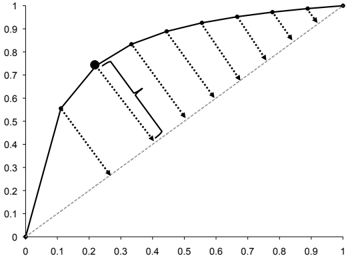
“22 This method calculates the ratio between the slope before ( slope < r ) and after a critical inflection point ( slope > r ) in the gain curve (see Figure B1, Appendix B), which is referred to as the “ knee.”
InfluentialSeed-driven Document Ranking for Systematic Reviews in Evidence-Based Medicine
Lee, G. E., & Sun, A. (2018) · International ACM SIGIR Conference on Research and Development in Information Retrieval (SIGIR) · doi:10.1145/3209978.3209994 · Cited by 48
“The authors adopted continuous active learning (CAL) in SRs, and CAL was developed for technologically assisted reviews (TAR) such as e-discovery in legal area [5, 15].”
BackgroundOverview of the CLEF eHealth Evaluation Lab 2019
Kelly, L., Suominen, H., Goeuriot, L., Neves, M., Kanoulas, E., Li, D., Azzopardi, L. A., Spijker, R., Zuccon, G., Scells, H., et al. (2019) · Lecture notes in computer science · doi:10.1007/978-3-030-28577-7_26 · Cited by 50
“, Average Precision); Minimum number of documents returned to retrieve all relevant documents; Work Saved over Sampling at different Recall levels; Area under the cumulative recall curve normalized by the optimal area; Recall @ 0% to 100% of documents shown; a number of newly constructed cost-based measures; and relia…”
BackgroundMeasuring the impact of screening automation on meta-analyses of diagnostic test accuracy
Norman, C. R., Leeflang, M. M. G., Porcher, R., & Névéol, A. (2019) · Systematic Reviews · doi:10.1186/s13643-019-1162-x · Cited by 33
“We use a variant of active learning that has demonstrated good performance in systematic reviews of diagnostic test accuracy as well as in article discovery in the legal domain [45].”
BackgroundMethodInfluentialKönig, L., Zitzmann, S., Fütterer, T., Campos, D., Scherer, R., & Hecht, M. (2023) · doi:10.31234/osf.io/ybu3w · Cited by 33
Li, D., & Kanoulas, E. (2020) · ACM Transactions on Information Systems · doi:10.1145/3411755 · Cited by 46
“In their AutoTAR experiment, Cormack and Grossman [8] observed that the gain curve (i.e., recall as a function of the number of documents reviewed) shows clearly diminishing returns at some point, and that if a substantial number of relevant documents have been found with high precision and precision drops later on, t…”
BackgroundMethodInfluentialGoldilocks: Just-Right Tuning of BERT for Technology-Assisted Review
Yang, E., MacAvaney, S., Lewis, D. D., & Frieder, O. (2022) · Lecture notes in computer science · doi:10.1007/978-3-030-99736-6_34 · Cited by 43
iSENSE: Completion-Aware Crowdtesting Management
Wang, J., Yang, Y., Krishna, R., Menzies, T., & Wang, Q. (2019) · ACM/IEEE International Conference on Software Engineering: Companion Proceedings (ICSE-Companion) · doi:10.1109/icse.2019.00097 · Cited by 27
“Knee method is widely used in technology-assisted review to decide when to stop, considering the quality and reliability [8].”
MethodHeuristic stopping rules for technology-assisted review
Yang, E., Lewis, D. D., & Frieder, O. (2021) · ACM Symposium on Document Engineering (DocEng) · doi:10.1145/3469096.3469873 · Cited by 29
“A refinement of the Batch Positive method is the Knee Method [8].”
BackgroundMethodInfluentialNavigating Imprecision in Relevance Assessments on the Road to Total Recall: Roger and Me
Cormack, G. V., & Grossman, M. R. (2017) · International ACM SIGIR Conference on Research and Development in Information Retrieval (SIGIR) · doi:10.1145/3077136.3080812 · Cited by 29
“More recently, supervised machine-learning methods have been used to harness relevance feedback, with reported effectiveness apparently exceeding Voorhees’ “practical upper bound,” see e.g. , [6, 14, 25].”
MethodSelf-citationKusa, W., Lipani, A., Knoth, P., & Hanbury, A. (2023) · Intelligent Systems with Applications · doi:10.1016/j.iswa.2023.200193 · Cited by 21
“Recall versus effort plots using the knee method (Cormack & Grossman, 2016) can be used as a more generalised extension of the WSS metric, plotting the scores over the full range of values of recall.”
On minimizing cost in legal document review workflows
Yang, E., Lewis, D. D., & Frieder, O. (2021) · ACM Symposium on Document Engineering (DocEng) · doi:10.1145/3469096.3469872 · Cited by 26
“In applied settings, TAR workflows use heuristics and/or sample-based estimates to decide when to stop a one-phase review [1, 8, 11, 33, 48].”
BackgroundMethodInfluentialToo Many Relevants: Whither Cranfield Test Collections?
Voorhees, E. M., Craswell, N., & Lin, J. (2022) · International ACM SIGIR Conference on Research and Development in Information Retrieval (SIGIR) · doi:10.1145/3477495.3531728 · Cited by 24
“make use of this trajectory to define the “knee” method for determining when to stop searching in a high-recall retrieval task [6].”
MethodTechnology-Assisted Review in Empirical Medicine: Waterloo Participation in CLEF eHealth 2017.
Cormack, G. V., & Grossman, M. R. (2017) · CLEF (Working Notes) · Cited by 19
Self-citationBannach‐Brown, A., Przybyła, P., Thomas, J., Rice, A. S. C., Ananiadou, S., Liao, J., & Macleod, M. R. (2018) · bioRxiv (Cold Spring Harbor Laboratory) · doi:10.1101/255760 · Cited by 24
Scotti, K. L., Young, S. M. N., Gainey, M. A., & Lan, H. (2025) · Cochrane Evidence Synthesis and Methods · doi:10.1002/cesm.70046 · Cited by 37
“The target recall method stops screening once a predefined recall threshold has been met, without requiring statistical confidence [215].”
Certifying One-Phase Technology-Assisted Reviews
Lewis, D. D., Yang, E., & Frieder, O. (2021) · ACM International Conference on Information and Knowledge Management (CIKM) · doi:10.1145/3459637.3482415 · Cited by 21
“ishing impact from new training data [6, 7, 43, 52, 55].”
BackgroundMethodLosada, D. E., Parapar, J., & Barreiro, Á. (2018) · Journal of the Association for Information Science and Technology · doi:10.1002/asi.24077 · Cited by 16
“Cormack and Grossman (2016) were interested in total recall in technology-assisted reviews.”
BackgroundScells, H., Zuccon, G., & Koopman, B. (2020) · Lecture notes in computer science · doi:10.1007/978-3-030-45439-5_27 · Cited by 19
“5,1,3}, total cost, and reliability [11].”
Stopping Methods for Technology-assisted Reviews Based on Point Processes
Stevenson, M., & Bin-Hezam, R. (2023) · ACM Transactions on Information Systems · doi:10.1145/3631990 · Cited by 22
“• Carries out experiments on a range of benchmark data sets to verify the effectiveness of the proposed approach and compare it against several alternative methods, including a generalised version of Cormack and Grossman’s target method [15].”
BackgroundMethodInfluentialAppraising the Potential Uses and Harms of LLMs for Medical Systematic Reviews
Yun, H., Marshall, I. J., Trikalinos, T. A., & Wallace, B. (2023) · Conference on Empirical Methods in Natural Language Processing (EMNLP) · doi:10.18653/v1/2023.emnlp-main.626 · Cited by 41
Campos, D., Fütterer, T., Gfrörer, T., Lavelle-Hill, R. E., Murayama, K., König, L., Hecht, M., Zitzmann, S., & Scherer, R. (2023) · doi:10.31234/osf.io/fpwc2 · Cited by 11
Locality-based security bug report identification via active learning
Ge, X., Fang, C., Qian, M., Ge, Y., & Qing, M. (2022) · Information and Software Technology · doi:10.1016/j.infsof.2022.106899 · Cited by 13
Stopping Criteria for Technology Assisted Reviews based on Counting Processes
Sneyd, A., & Stevenson, M. (2021) · International ACM SIGIR Conference on Research and Development in Information Retrieval (SIGIR) · doi:10.1145/3404835.3463013 · Cited by 10
Boetje, J., & van de Schoot, R. (2023) · doi:10.31234/osf.io/c93gq · Cited by 10
Yang, E., & Lewis, D. D. (2022) · International ACM SIGIR Conference on Research and Development in Information Retrieval (SIGIR) · doi:10.1145/3477495.3531663 · Cited by 9
Using Chao’s Estimator as a Stopping Criterion for Technology-Assisted Review
Bron, M., van der Heijden, P. G. M., Feelders, A., & Siebes, A. (2025) · ACM Transactions on Information Systems · doi:10.1145/3724116 · Cited by 7
“Recently, systems were proposed and built that potentially reduce the human effort needed by limiting the number of irrelevant documents shown to the reviewer [9, 15, 37, 43].”
InfluentialReducing the user labeling effort in effective high recall tasks by fine-tuning active learning
Bianco, G. D., Duarte, D., & Gonçalves, M. A. (2023) · Journal of Intelligent Information Systems · doi:10.1007/s10844-022-00772-y · Cited by 15
“When compared to the aforementioned active learning approaches (i.e., Cormack and Grossman (2016a), Yu and Menzies (2019), Cormack and Grossman (2016b), Wei et al. (2015), and Fang and Zhu (2014)), SSAR has several advantages such as: (1) it does not require an initial labeled set, as needed by…”
BackgroundMethodResultInfluentialRecall, Robustness, and Lexicographic Evaluation
Díaz, F., Ekstrand, M. D., & Mitra, B. (2025) · ACM Transactions on Recommender Systems · doi:10.1145/3728373 · Cited by 15
“6We exclude set-based metrics used in set-based retrieval or some technology-assisted review evaluation [24, 58], since they require systems to provide a cutoff in addition to a ranking.”
Total recall, language processing, and software engineering
Yu, Z., & Menzies, T. (2018) · doi:10.1145/3283812.3283818 · Cited by 12
“• Cormack and Grossman proposed the knee method [2], which detects the inflection point i of current recall curve, and compare the slopes before and after i.”
MethodAssessing expert system-assisted literature reviews with a case study
Yu, Z., Carver, J. C., Rothermel, G., & Menzies, T. (2022) · Expert Systems with Applications · doi:10.1016/j.eswa.2022.116958 · Cited by 6
“…that such active learners outperform supervised and semisupervised learners and can significantly reduce the effort required to achieve high recall (Cormack and Grossman, 2017, 2016a,b, 2015, 2014; Grossman and Cormack, 2013; Wallace et al., 2010b,a, 2011; Wallace and Dahabreh, 2012; Wallace et…”
BackgroundSampling Strategies and Active Learning for Volume Estimation
Zhang, H., Lin, J., Cormack, G. V., & Smucker, M. D. (2016) · International ACM SIGIR Conference on Research and Development in Information Retrieval (SIGIR) · doi:10.1145/2911451.2914685 · Cited by 7
“In our approach, we employ the BMI augmented by the following the knee-finding method proposed by Cormack and Grossman [4].”
MethodSelf-citationEnhancing recall in automated record screening: A resampling algorithm
Hou, Z., & Tipton, E. (2024) · Research Synthesis Methods · doi:10.1002/jrsm.1690 · Cited by 12
Systematic review automation methods
Norman, C. R. (2020) · theses.fr (ABES) · doi:10.70675/044ffa34z5c9bz433az99c8z64697dcd28a2 · Cited by 8
Optimizing Nugget Annotations with Active Learning
Baruah, G., Zhang, H., Guttikonda, R., Lin, J., Smucker, M. D., & Vechtomova, O. (2016) · ACM International Conference on Information and Knowledge Management (CIKM) · doi:10.1145/2983323.2983694 · Cited by 5
Clarke, C. L. A., Cormack, G. V., Lin, J., & Roegiest, A. (2017) · International World Wide Web Conference (WWW) · doi:10.1145/3038912.3052625 · Cited by 5
Self-citationvan Altena, A. J., & Olabarriaga, S. D. (2017) · Data Archiving and Networked Services (DANS) · Cited by 5
On the Quality of the TREC-COVID IR Test Collections
Voorhees, E. M., & Roberts, K. E. (2021) · International ACM SIGIR Conference on Research and Development in Information Retrieval (SIGIR) · doi:10.1145/3404835.3463244 · Cited by 6
“examining 2R + 100 documents where R is the number of relevant documents found so far [3].”
TAR on Social Media: A Framework for Online Content ModerationPreprint
Yang, E., Lewis, D. D., & Frieder, O. (2021) · arXiv (Cornell University) · doi:10.48550/arxiv.2108.12752 · Cited by 11
“Stopping may be conditioned on estimated effectiveness (usually recall), cost limits, and other factors [53, 55, 56].”
BackgroundTRIVIR: A Visualization System to Support Document Retrieval with High Recall
Dias, A. G. (2019) · doi:10.11606/d.55.2019.tde-11092019-090930 · Cited by 5
Repke, T., Tinsdeall, F., Danilenko, D., Graziosi, S., Müller-Hansen, F., Schmidt, L., Thomas, J., & van Valkenhoef, G. (2026) · Cochrane Evidence Synthesis and Methods · doi:10.1002/cesm.70068 · Cited by 11
SALτ: efficiently stopping TAR by improving priors estimates
Molinari, A., & Esuli, A. (2023) · Data Mining and Knowledge Discovery · doi:10.1007/s10618-023-00961-5 · Cited by 10
“The Budget method (Cormack and Grossman 2016) is a heuristic variant of the knee method, where the process is stopped no earlier than when at least 70% of the document collection has been reviewed.”
InfluentialDense Retrieval with Continuous Explicit Feedback for Systematic Review Screening Prioritisation
Mao, X., Zhuang, S., Koopman, B., & Zuccon, G. (2024) · International ACM SIGIR Conference on Research and Development in Information Retrieval (SIGIR) · doi:10.1145/3626772.3657921 · Cited by 9
“Screening prioritisation can also save overall effort (and thus cost) when early stopping is applied to halt screening after top-k documents are reviewed, thereby avoiding the exhaustive screening of all documents [9, 42, 48].”
BackgroundVoMBaT: A Tool for Visualising Evaluation Measure Behaviour in High-Recall Search Tasks
Kusa, W., Lipani, A., Knoth, P., & Hanbury, A. (2023) · International ACM SIGIR Conference on Research and Development in Information Retrieval (SIGIR) · doi:10.1145/3539618.3591802 · Cited by 6
“Recall versus effort plots using the knee method [5] have been used as a more generalised extension, plotting”
MethodBin-Hezam, R., & Stevenson, M. (2023) · Findings of the Association for Computational Linguistics: EMNLP (Findings of EMNLP) · doi:10.18653/v1/2023.findings-emnlp.171 · Cited by 4
Dynamic Sampling Meets Pooling
Cormack, G. V., Zhang, H., Ghelani, N., Abualsaud, M., Smucker, M. D., Grossman, M. R., Rahbariasl, S., & Ghenai, A. (2019) · International ACM SIGIR Conference on Research and Development in Information Retrieval (SIGIR) · doi:10.1145/3331184.3331354 · Cited by 4
Self-citationPOLAR: Policy Optimization for Literature Analysis under Review Constraints
Nunzio, G. M. D. (2025) · ACM International Conference on Information and Knowledge Management (CIKM) · doi:10.1145/3746252.3760834 · Cited by 4
RLStop: A Reinforcement Learning Stopping Method for TAR
Bin-Hezam, R., & Stevenson, M. (2024) · International ACM SIGIR Conference on Research and Development in Information Retrieval (SIGIR) · doi:10.1145/3626772.3657911 · Cited by 7
“The target method (TM) [8] randomly samples documents until a set of predefined target set is identified with results reported for the original method [8] and two extensions: TM-adapted [32] and QBCB [19].”
MethodMultiple Choice Online Algorithms for Technology-Assisted Reviews
Piramuthu, O. B. (2023) · ACM Symposium on Applied Computing · doi:10.1145/3555776.3577595 · Cited by 3
“They compared their experimental results with that from target method [5], knee method [5], and oracle method.”
ResultNormalised Precision at Fixed Recall for Evaluating TAR
Kusa, W., Peikos, G., Staudinger, M., Lipani, A., & Hanbury, A. (2024) · ACM SIGIR International Conference on Theory of Information Retrieval (ICTIR) · doi:10.1145/3664190.3672532 · Cited by 6
Confidence Sequences for Evaluating One-Phase Technology-Assisted Review
Lewis, D. D., Gray, L., & Noel, M. (2023) · International Conference on Artificial Intelligence and Law · doi:10.1145/3594536.3595167 · Cited by 6
“A failure to address this is a fundamental flawwith quantile estimationmethods, e.g., the Target [7, 30], QPET [30], and QBCB rules [30].”
BackgroundImproved risk minimization algorithms for technology-assisted review
Molinari, A., Esuli, A., & Sebastiani, F. (2023) · Intelligent Systems with Applications · doi:10.1016/j.iswa.2023.200209 · Cited by 5
Total Recall: Blue Sky on Mars
Clarke, C. L. A., Cormack, G. V., Lin, J., & Roegiest, A. (2016) · ACM SIGIR International Conference on Theory of Information Retrieval (ICTIR) · doi:10.1145/2970398.2970430 · Cited by 2
“To facilitate system development for the TREC Total Re-call Track [6], the coordinators released an implementation of Cormack and Grossman’s AutoTAR [3, 5] protocol, which is itself an extension of their continuous active learning protocol [2, 4].”
MethodSelf-citationImpact of Stop Sets on Stopping Active Learning for Text Classification
Kurlandski, L., & Bloodgood, M. (2022) · IEEE International Conference on Semantic Computing (ICSC) · doi:10.1109/icsc52841.2022.00012 · Cited by 4
“Instead, we perform TC on the publicly available RCV1-v2 dataset [32] that has been used frequently in past works to simulate TAR [33], [34], [35], [36], [37], [38].”
MethodOn Design and Evaluation of High-Recall Retrieval Systems for Electronic Discovery
Roegiest, A. (2017) · UWSpace (University of Waterloo) · Cited by 2
Testing Reading Tactics for Automated Reading Assistance: Is it Useful to Apply Old Knowledge?Preprint
Yu, Z., & Menzies, T. (2017) · arXiv (Cornell University) · Cited by 2
Understanding in vivo modelling of depression
Bannach‐Brown, A. (2019) · ERA · Cited by 2
Comparison of Tools and Methods for Technology-Assisted Review
O’Halloran, T., McManus, B., Harbison, A., Grossman, M. R., & Cormack, G. V. (2024) · Communications in computer and information science · doi:10.1007/978-3-031-64359-0_9 · Cited by 3
Self-citationA Generalised and Adaptable Reinforcement Learning Stopping Method
Bin-Hezam, R., & Stevenson, M. (2025) · International ACM SIGIR Conference on Research and Development in Information Retrieval (SIGIR) · doi:10.1145/3726302.3729879 · Cited by 2
“TM-adapted [10] randomly samples from the collection until a pre-specified number of relevant documents have been found.”
InfluentialFütterer, T., König, L., Campos, D., Scherer, R., Zitzmann, S., & Hecht, M. (2026) · Advances in Methods and Practices in Psychological Science · doi:10.1177/25152459261442150 · Cited by 2
“In contrast to these rules, approaches such as preva-lence-estimation techniques (Callaghan & Müller-Hansen, 2020) and the knee method (Cormack & Grossman, 2016) apply statistical criteria to determine when to stop screening.”
Cormack, G. V., & Grossman, M. R. (2018) · ACM Symposium on Document Engineering (DocEng) · doi:10.1145/3209280.3232788 · Cited by 2
Self-citationCost-effective data fusion in information retrieval
Sun, J., Wu, S., Nugent, C., & Moore, A. (2025) · Knowledge and Information Systems · doi:10.1007/s10115-025-02434-1 · Cited by 1
Yu, Z., Carver, J. C., Rothermel, G., & Menzies, T. (2019) · Cited by 4
Crowdtesting : When is The Party Over?Preprint
Wang, J., Yang, Y., Yu, Z., Menzies, T., & Wang, Q. (2018) · arXiv (Cornell University) · doi:10.48550/arxiv.1805.03218 · Cited by 1
“Knee method is widely used in technology-assisted review to decide when to stop, considering the quality and reliability [8].”
MethodBetter Technical Debt Detection via SURVEYingPreprint
Fahid, F. M., Yu, Z., & Menzies, T. (2019) · arXiv (Cornell University) · doi:10.48550/arxiv.1905.08297 · Cited by 6
“Cormack et al. [40] finds the knee in the current retrieval curve at each iteration and if the ratio between slops from slope <knee and slope >knee is greater than a predefined threshold ρ , then it stops.”
Refresh Strategies in Continuous Active Learning
Ghelani, N. (2018) · UWSpace (University of Waterloo) · Cited by 3
Ten Blue Links on MarsPreprint
Clarke, C. L. A., Cormack, G. V., Lin, J., & Roegiest, A. (2016) · arXiv (Cornell University) · doi:10.48550/arxiv.1610.06468
Self-citationA Study on a Mixed Stopping Strategy for Total Recall Tasks.
Nunzio, G. M. D. (2019) · IIR eBooks
Searching for Test Case Prioritization Schemes: An Expert System-Assisted Literature Review.Preprint
Yu, Z., Carver, J. C., Rothermel, G., & Menzies, T. (2019) · arXiv (Cornell University)
A New Strategy to Seed Selection for the High Recall Task
Todescato, M. V., Hilger, J., & Bianco, G. D. (2021) · IEEE Latin America Transactions · doi:10.1109/tla.2021.9480153
Prevention Pre-Violence in E-Labs with Machine Learning: PVE
Aydogan, A. F., & Shashidhar, N. K. (2021) · International Symposium on Digital Forensics and Security (ISDFS) · doi:10.1109/isdfs52919.2021.9486349
Um estudo sobre reutilização de treinamento em Modelos de Previsão de Vulnerabilidade
Todescato, M. V., & Bianco, G. D. (2021) · doi:10.5753/erbd.2021.17243
Computer-Assisted Cohort Identification in Practice
Kassaie, B., Irving, E. L., & Tompa, F. W. (2021) · ACM Transactions on Computing for Healthcare · doi:10.1145/3483411 · Cited by 1
“” As a further experiment, we also investigated how active learning would have performed had we adopted the stopping condition derived by Cormack and Grossman [12] using a variant of “mark and recapture” [9].”
BackgroundMethodECIR 2022 Tutorial: Technology-Assisted Review for High Recall Retrieval
Yang, E., Pickens, J., & Lewis, D. D. (2022) · Lecture notes in computer science · doi:10.1007/978-3-030-99739-7_75
Seed-driven document ranking for systematic reviews in evidence-based medicine
Lee, E. (2020) · DR-NTU (Nanyang Technological University) · doi:10.32657/10356/146709
Contextualization with SPLADE for High Recall Retrieval
Yang, E. (2024) · International ACM SIGIR Conference on Research and Development in Information Retrieval (SIGIR) · doi:10.1145/3626772.3657919 · Cited by 4
“Iterative relevance feedback, advertised as Continuous Active Learning TM in eDiscovery [4, 5], is shown to be more efficient in achieving the plateau performance in retrieving relevant documents in a one-phase workflow than uncertainty sampling [16, 17] and simple random sampling.”
Paffrath, F. N., Henke, M., & Duparc, E. (2024) · SSRN Electronic Journal · doi:10.2139/ssrn.5063867
Michielsen, B. S. H. T., Schouten, G., Cromsigt, J. P. G. M., Veltkamp, R. C., Arts, I., Bijlmakers, J., Frauendorf, M., Hofmeester, T. R., Newsom, A., Truong, M.-X., et al. (2026) · AMBIO · doi:10.1007/s13280-026-02399-7
“The value of 10 is suggested for simplicity, with adjustments possible based on the expected prevalence of relevant studies (Cormack and Grossman 2016).”
Early Recall Estimation and Stopping in Technology-Assisted Reviews via Ranker-Sampler Fusion
Nunzio, G. M. D. (2026) · International World Wide Web Conference (WWW) · doi:10.1145/3774905.3795598
Co-Matching : Towards Human–Model Collaborative Legal Case Matching
Huang, C., Yang, X., Deng, Y., Lei, W., Lv, J., & Chua, T.-S. (2026) · ACM Transactions on Information Systems · doi:10.1145/3818676 · Cited by 9
“Due to its simplicity, this approach has been widely adopted, achieving notable successes in applications such as interactive data annotation [15, 27, 53, 64] and technology-assisted manual document review workflows [20, 21, 38, 60].”
Bergner, E., Ebbers, A. L., & Wagner, N. (2026) · Journal of International Development · doi:10.1002/jid.70103 · Cited by 1
ReTARgeting CLEF eHealth: From Historical TAR Benchmarks to Reusable Evaluation Resources
Nunzio, G. M. D. (2026) · Lecture notes in computer science · doi:10.1007/978-3-032-39150-6_21
Label-free, low-cost AI ranking for systematic review screeningPreprint
Jo, T., 이동현, & Lee, L. (2026) · medRxiv · doi:10.64898/2026.10.09.26365173
Metadata
- Authors
- Cormack, G. V., & Grossman, M. R.
- Affiliations
- University of Waterloo (CA)
- Wachtell, Lipton, Rosen & Katz, New York, NY, USA
- Venue
- Proceedings of the 39th International ACM SIGIR conference on Research and Development in Information Retrieval
- Publisher
- ACM
- Published
- 2016-07-07
- Pages
- 75-84
- OpenAlex
- W2341384651
- Cited by
- 98
- References
- 22
- Citations by year
- 2026: 8 · 2025: 6 · 2024: 10 · 2023: 12 · 2022: 8 · 2021: 12 · 2020: 6 · 2019: 13 · 2018: 11 · 2017: 7 · 2016: 5
- FWCI
- 10.19
- Type
- conference paper
- Language
- en
- Open access
- hybrid
- doi.org
- Licence
- Locations
- International ACM SIGIR Conference on Research and Development in Information Retrieval (SIGIR) (publishedVersion, cc-by-nd)
- Funders
- Natural Sciences and Engineering Research Council (5485 / 2011)
- Topics
- Physical Sciences › Computer Science › Information Systems › Information Retrieval and Search Behavior
- Physical Sciences › Computer Science › Artificial Intelligence › Text and Document Classification Technologies
- Physical Sciences › Computer Science › Artificial Intelligence › Topic Modeling
- Keywords
- technology-assisted review, stopping rules, Taguchi loss function, TREC, information retrieval
About these checks
Registry, retraction, Cites and statistics results are computed, not judged, with one exception: a printed reference that no index lists is read once by a model before it counts as a citation error. Claims are extracted by a model and kept only when their quote appears verbatim in the text; each cited source is then checked, with a model’s help, for whether it says what the claim relies on. Those verdicts can be wrong — read the claim’s quote and the cited source before relying on one.
Statistics and arithmetic are recomputed, not judged.
Confidence bands are shown only for fields calibrated on our annotated test set. None is calibrated yet, so no band is shown.
What counts as a claim ›How we measure confidence ›How we check this ›
Are you an author, or do you see a problem with this page? Request a review
Data sources
Bibliographic data: Semantic Scholar, OpenAlex, Crossref.
Contains information from the Semantic Scholar Academic Graph Datasets, made available under the ODC Attribution License (ODC-BY 1.0).
Semantic Scholar’s data is described in: Kinney, R., et al. (2023). The Semantic Scholar Open Data Platform. arXiv:2301.10140.
