

CodeGeeX: A Pre-Trained Model for Code Generation with Multilingual Benchmarking on HumanEval-X
Open accessThe DOI matches its Crossref record; 57 of the 57 references it cites were found in a registry or an index; 13 of the 15 sources its claims cite were checked for support.
Abstract
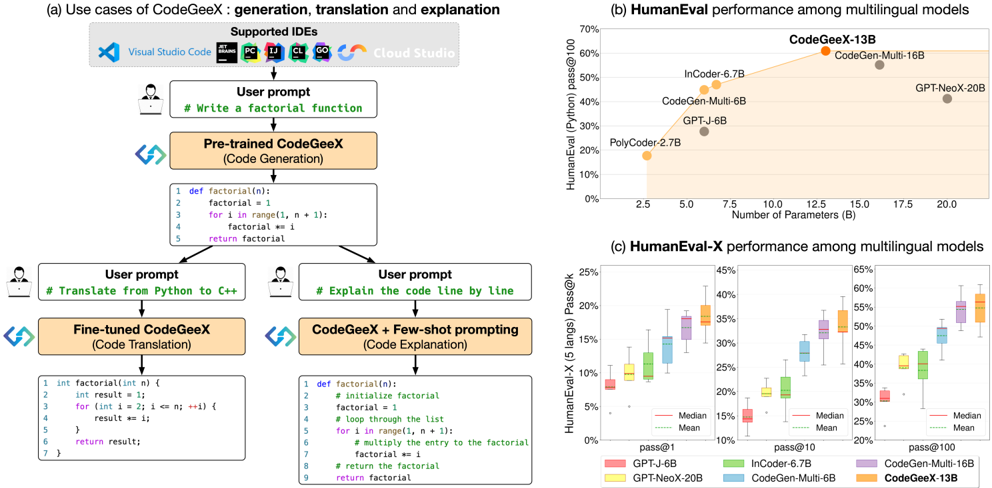
Large pre-trained code generation models, such as OpenAI Codex, can generate syntax-and function-correct code, making the coding of programmers more productive. In this paper, we introduce CodeGeeX, a multilingual model with 13 billion parameters for code generation. CodeGeeX is pre-trained on 850 billion tokens of 23 programming languages as of June 2022. Our extensive experiments suggest that CodeGeeX outperforms multilingual code models of similar scale for both the tasks of code generation and translation on HumanEval-X. Building upon HumanEval (Python only), we develop the HumanEval-X benchmark for evaluating multilingual models by hand-writing the solutions in C++, Java, JavaScript, and Go. In addition, we build CodeGeeX-based extensions on Visual Studio Code, JetBrains, and Cloud Studio, generating 8 billion tokens for tens of thousands of active users per week. Our user study demonstrates that CodeGeeX can help to increase coding efficiency for 83.4% of its users. Finally, CodeGeeX is publicly accessible since Sep. 2022, we open-sourced its code, model weights, API, extensions, and HumanEval-X at https://github.com/THUDM/CodeGeeX.
Overview
CoChat Summary
TL;DR
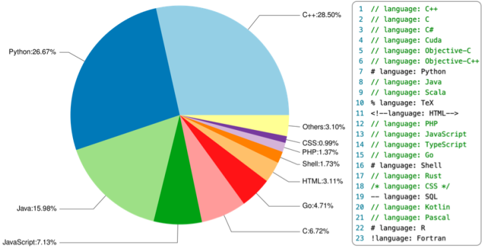
CodeGeeX is a 13B-parameter multilingual code generation model pre-trained on 850B tokens across 23 programming languages, released with the HumanEval-X benchmark for evaluating code generation and translation in Python, C++, Java, JavaScript, and Go. It reports competitive or best average performance among same-scale multilingual baselines on HumanEval-X and positive user-reported coding-efficiency gains.
Key findings
- CodeGeeX achieves the best average performance on HumanEval-X code generation among compared models, with average pass@1 18.40%, pass@10 33.29%, and pass@100 54.76%, slightly better than CodeGen-Multi-16B in all three metrics (0.37%–1.67% improvements).
- On Python HumanEval, CodeGeeX reaches pass@1 22.89%, pass@10 39.57%, and pass@100 60.92%; the paper notes it is second-highest among multilingual code generation models on HumanEval, surpassed by PaLMCoder-540B.
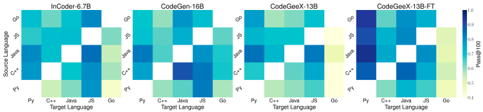
- For cross-lingual code translation, fine-tuned CodeGeeX-13B-FT performs best on pass@100 in 11 of 20 language pairs, while CodeGen-Multi-16B is best on 7.
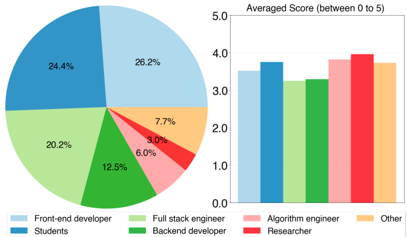
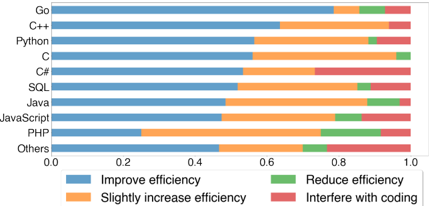
- In a user survey of 168 users, over 83.4% report that CodeGeeX improves or slightly increases coding efficiency; the deployed extensions generate 8 billion tokens per week for tens of thousands of daily active users, averaging 200+ API calls per active user per weekday.
Methods
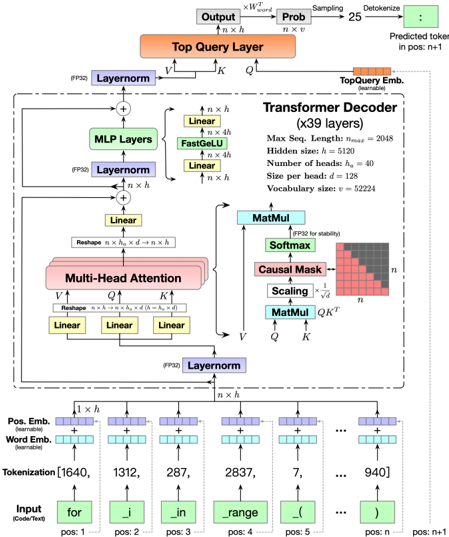
- CodeGeeX is a 39-layer decoder-only transformer with 13B parameters, hidden size 5120, vocabulary size 52,224, maximum sequence length 2048, and a top query layer; it was trained on 850B tokens over 213,000 steps using 1,536 Ascend 910 AI processors, Mindspore v1.7.0, 8-way model parallelism, 192-way data parallelism, and global batch size 3,072.
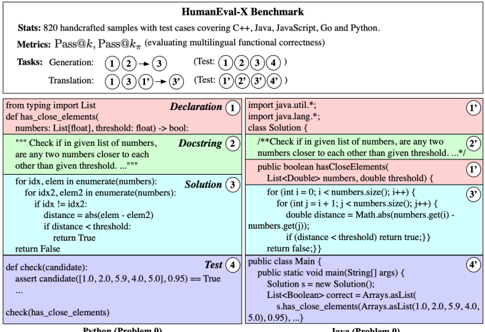
- HumanEval-X was built by manually rewriting the 164 Python HumanEval problems into C++, Java, JavaScript, and Go, yielding 820 problem-solution pairs; it supports code generation and translation across 20 source-target language pairs, evaluated with pass@k using n=200 generations and k ∈ {1, 10, 100}.
- Baselines include GPT-J-6B, GPT-NeoX-20B, InCoder-6.7B, and CodeGen-Multi-6B/16B; additional evaluations cover MBPP, CodeXGLUE code summarization, and XLCoST code translation.
Limitations
- The paper states that it is computationally unaffordable to test different architectural designs for large pre-trained models, and that multilingual models may require larger model capacity to master different languages; it also observes asymmetry in translation performance, suggesting models lack high-level understanding between languages.
- The paper notes language-specific weaknesses: Go is harder to translate into due to strict syntax constraints such as forbidding unused variables/imports, and Ruby is absent from CodeGeeX’s pre-training corpus.
- Evident from the text: the main multilingual evaluation is limited to HumanEval-X and selected benchmarks, and the user-efficiency result comes from a self-reported survey of 168 users rather than a controlled productivity study.
Model-written summary. Check it against the paper before relying on it.
Integrity signals
Registry
Cites
Statistics
Figures
Verification
Claims the paper makes
6 Valid · 3 Not valid · 0 Not checked · 65 Own results and interpretations
The cited sources support only part of this claim — read each source’s verdict below.
In the paper
“existing multilingual datasets [18,28,45] use string similarity metrics like BLEU [21] for evaluation rather than really verify the functional correctness of generated code.”
§ CodeGeeX: A Pre-Trained Model for Code Generation with Multilingual Benchmarking on HumanEval-X > 1 INTRODUCTION
What the sources say
- Supportedcites [18] matched to “CodeXGLUE: A Machine Learning Benchmark Dataset for Code Understanding and Generation” (2021) source
Section 3.5 (p. 4) describes a Java–C# code-translation dataset. Section 5.7 (p. 9) lists exact match, BLEU, and CodeBLEU as its evaluation measures, with CodeBLEU as the overall metric, rather than a functional-correctness test. The claim is supported for this dataset; it should not be read as saying BLEU alone is the overall metric. (LLM, conf=0.87)
- Supportedcites [28] matched to “CodeBLEU: a Method for Automatic Evaluation of Code Synthesis” (2020) source
The citation to this paper is attached to BLEU as an evaluation metric, not to the identification of the multilingual datasets. The Introduction (p. 1) calls BLEU a popular code-synthesis evaluation method based on token overlap, and Related Work (p. 7) says it ignores logical correctness. That supports the attributed distinction between string similarity and verification of functional correctness. (LLM, conf=0.88)
- Supportedcites [45] matched to “XLCoST: A Benchmark Dataset for Cross-lingual Code Intelligence” (2022) source
XLCoST evaluates code generation with BLEU and CodeBLEU (Evaluation Metrics and Baselines, p. 6). Its Limitations and Future Work section (p. 7) says evaluation could be improved by using test cases and treats automated test-case generation as future work. CodeBLEU also checks syntax and data flow, but the paper does not report verifying generated code’s functional correctness with tests. (LLM, conf=0.91)
- Not matchedcites [21]
The reference list we hold has no entry [21].
plain- Asserted: passes — The authors put it forward as true.
- Checkable: passes — It can be checked against evidence.
- Load-bearing: passes — The paper’s conclusions depend on it.
- Based: passes — The paper gives a reason why it holds.
- Supported
The cited sources support only part of this claim — read each source’s verdict below.
In the paper
“HumanEval [7]-developed by OpenAI for evaluating Codex-and other benchmarks [2,13,20] only consist of programming problems in a single language”
- Also stated in: § 3.1 HumanEval-X: A Multilingual Benchmark · plain
“However, similar to MBPP [2] and APPS [13], it only consists of handcrafted programming problems in Python, thus cannot be directly applied to systematically evaluate the performance of multilingual code generation.”
§ CodeGeeX: A Pre-Trained Model for Code Generation with Multilingual Benchmarking on HumanEval-X > 1 INTRODUCTION
What the sources say
- Supportedcites [7] matched to “Evaluating Large Language Models Trained on Code” (2021) source
The Codex and Codex-S Performance section (p. 2) says the authors created a 164-problem dataset to evaluate their model on generating standalone Python functions. Section 2.2 (p. 4) names that dataset HumanEval. The separate citations attached to “other benchmarks” are not judged here. (LLM, conf=0.93)
- Partly supportedcites [2] matched to “Program Synthesis with Large Language Models” (2021) sourceExperimental — accuracy not yet measured
The Introduction (p. 2) says this paper introduces two Python code-synthesis datasets, and §2.1 (p. 4) describes MBPP as containing Python programs. That supports the single-language claim for this paper’s benchmarks. The Introduction (p. 3) mentions HumanEval but does not establish that it, or every other benchmark in the citing sentence, contains problems in only one language. (LLM, conf=0.84)
- Supportedcites [13] matched to “Measuring Coding Challenge Competence With APPS” (2021) source
The Abstract (p. 1) says APPS evaluates generation of Python code, and the Conclusion (p. 9) calls it a benchmark of 10,000 Python programming problems. This supports the single-language point for APPS, the benchmark identified by this citation; it does not need to establish the language coverage of HumanEval. (LLM, conf=0.92)
- Supportedcites [20] matched to “CodeGen: An Open Large Language Model for Code with Multi-Turn Program Synthesis” (2022) source
Section 3 (p. 4) identifies HumanEval as 164 Python programming problems. Sections 4.1 (p. 6) and 4.2 (p. 7) describe this paper’s own benchmark, MTPB, using Python prompts and execution. The paper therefore supports the single-language characterization for the benchmarks it discusses; it does not establish that every programming benchmark is single-language. (LLM, conf=0.87)
plain- Asserted: passes — The authors put it forward as true.
- Checkable: passes — It can be checked against evidence.
- Load-bearing: passes — The paper’s conclusions depend on it.
- Based: passes — The paper gives a reason why it holds.
- Also stated in: § 3.1 HumanEval-X: A Multilingual Benchmark · plain
A result the paper reports from its own data — it cites no other source for it, so there is none to check. The quote shows it is in the paper.
In the paper
“The inference time per token is within 13ms (1.61 seconds / 128 tokens).”
§ CodeGeeX: A Pre-Trained Model for Code Generation with Multilingual Benchmarking on HumanEval-X > 2.4 Fast Inference
plain- Asserted: passes — The authors put it forward as true.
- Checkable: passes — It can be checked against evidence.
- Load-bearing: passes — The paper’s conclusions depend on it.
- Based: passes — The paper gives a reason why it holds.
- Rests on an assumption not shown here.
A result the paper reports from its own data — it cites no other source for it, so there is none to check. The quote shows it is in the paper.
In the paper
“Our user survey suggests that 83.4% of users feel the CodeGeeX extensions improve their programming efficiency.”
- Also stated in: § Budget Allocation Strategies. · plain
“There are on average over 83.4% of users think CodeGeeX can improve or slightly increase their coding efficiency, especially for mainstream programming languages like Go, C++, Python, C, C#, etc.”
- Also stated in: § 6 CONCLUSION · plain
“Over 83.4% of users have positive answers.”
§ CodeGeeX: A Pre-Trained Model for Code Generation with Multilingual Benchmarking on HumanEval-X > 1 INTRODUCTION
plain- Asserted: passes — The authors put it forward as true.
- Checkable: passes — It can be checked against evidence.
- Load-bearing: unclear — It is unclear whether the paper’s conclusions depend on it.
- Based: passes — The paper gives a reason why it holds.
- Rests on an assumption not shown here.
- Also stated in: § Budget Allocation Strategies. · plain
A result the paper reports from its own data — it cites no other source for it, so there is none to check. The quote shows it is in the paper.
In the paper
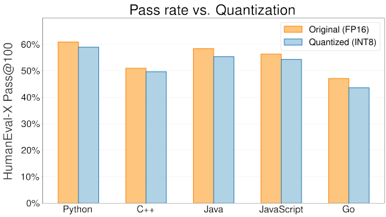
“Importantly, Figure 4 shows that the quantization only slightly affects the performance on the code generation task”
§ CodeGeeX: A Pre-Trained Model for Code Generation with Multilingual Benchmarking on HumanEval-X > 2.4 Fast Inference
plain- Asserted: passes — The authors put it forward as true.
- Checkable: passes — It can be checked against evidence.
- Load-bearing: passes — The paper’s conclusions depend on it.
- Based: passes — The paper gives a reason why it holds.
- Rests on an assumption not shown here.
24 more claims
Create a free account to see all 74 claims and every source verdict.
- Probably not a substantial claim. 20
- It may state two separate claims as one. 29
- The quote only partly states this claim. 2
Self-check
Percentages, sums and reported differences re-computed from the paper’s own numbers.
Each contradiction between two passages listed here was confirmed by an independent check.
Rated major: it would touch a result — a value a result rests on, reported and recomputed p-values on opposite sides of the significance level, two passages that conflict with no sign which is right, or a cited work retracted before this paper was published.
In the paper
“The entire pre-training process takes two months on 192 nodes with 1,536 AI processors, during which the model consumes 850B tokens, equivalent to 5+ epochs (213,000 steps).”
§ CodeGeeX: A Pre-Trained Model for Code Generation with Multilingual Benchmarking on HumanEval-X > 2.3 CodeGeeX Training
Reported 850000000000 · recomputed 1340080128000
Rated minor: it would not touch a result — a value no result rests on, a p-value that stays on the same side of the significance level, or a conflict that is clerical, resolved elsewhere in the paper, or outside its own findings.
In the paper
§ CodeGeeX: A Pre-Trained Model for Code Generation with Multilingual Benchmarking on HumanEval-X > Additional information
“| pass@𝑘𝜋 (𝑘 = 100) | Best Single 33.77% Uniform 36.40% Weighted 36.76% | 42.67% 44.75% 44.97% | 43.95% 43.89% 45.60% | 53.19% 53.47% 53.94%”
§ CodeGeeX: A Pre-Trained Model for Code Generation with Multilingual Benchmarking on HumanEval-X > Additional information
“| | pass@100 32.96% | 42.23% | 40.70% | 53.91% | 60.62% | 58.42% | |”
Rated minor: it would not touch a result — a value no result rests on, a p-value that stays on the same side of the significance level, or a conflict that is clerical, resolved elsewhere in the paper, or outside its own findings.
In the paper
§ CodeGeeX: A Pre-Trained Model for Code Generation with Multilingual Benchmarking on HumanEval-X > Budget Allocation Strategies.
“Both Uniform and Weighted outperform Best Single by promoting a more diverse generation, which gives a higher chance of solving problems.”
§ CodeGeeX: A Pre-Trained Model for Code Generation with Multilingual Benchmarking on HumanEval-X > Additional information
“| 43.95% 43.89% 45.60% |”
Citations
Cites
Deep Residual Learning for Image Recognition
He, K., Zhang, X., Ren, S., & Sun, J. (2016) · 2016 IEEE Conference on Computer Vision and Pattern Recognition (CVPR) · doi:10.1109/cvpr.2016.90 · Cited by 235,474 · cited 1×
“We use an approximation of GELU (Gaussian Linear Units) operation [14], namely FastGELU, which is more efficient under Ascend 910: Generative Pre-Training Objective.”
MethodVaswani, A., Shazeer, N., Parmar, N., Uszkoreit, J., Jones, L., Gomez, A. N., Kaiser, L., & Polosukhin, I. (2017) · arXiv · doi:10.48550/arxiv.1706.03762 · Cited by 120,404
Adam: A Method for Stochastic Optimization
Kingma, D. P., & Ba, J. (2014) · arXiv · doi:10.48550/arxiv.1412.6980 · Cited by 98,946
Language Models are Few-Shot Learners
Brown, T. B., Mann, B., Ryder, N., Subbiah, M., Kaplan, J., Dhariwal, P., Neelakantan, A., Shyam, P., Sastry, G., Askell, A., et al. (2020) · arXiv · doi:10.48550/arxiv.2005.14165 · Cited by 23,372
BLEU: a method for automatic evaluation of machine translation
Papineni, K., Roukos, S., Ward, T., & Zhu, W.-J. (2001) · Proceedings of the 40th Annual Meeting on Association for Computational Linguistics - ACL '02 · doi:10.3115/1073083.1073135 · Cited by 21,344
Advances in Neural Information Processing Systems 29
Teymur, O., Zygalakis, K., & Calderhead, B. (2016) · Cited by 13,887
Transformers: State-of-the-Art Natural Language Processing
Wolf, T., Debut, L., Sanh, V., Chaumond, J., Delangue, C., Moi, A., Cistac, P., Rault, T., Louf, R., Funtowicz, M., et al. (2020) · Proceedings of the 2020 Conference on Empirical Methods in Natural Language Processing: System Demonstrations · doi:10.18653/v1/2020.emnlp-demos.6 · Cited by 8,741
Chain-Of-Thought Prompting Elicits Reasoning in Large Language Models
Wei, J., Wang, X., Schuurmans, D., Bosma, M., Ichter, B., Xia, F., Chi, E., Le, Q. V., & Zhou, D. (2022) · Advances in Neural Information Processing Systems 35 · doi:10.52202/068431-1800 · Cited by 4,505
Gaussian Error Linear Units (GELUs)
Hendrycks, D., & Gimpel, K. (2016) · arXiv · doi:10.48550/arxiv.1606.08415 · Cited by 3,537
HuggingFace's Transformers: State-of-the-art Natural Language Processing
Wolf, T., Debut, L., Sanh, V., Chaumond, J., Delangue, C., Moi, A., Cistac, P., Rault, T., Louf, R., Funtowicz, M., et al. (2019) · arXiv · doi:10.48550/arxiv.1910.03771 · Cited by 3,347
Research works printed but not linked: 3
- Alec Radford Jeffrey Wu Rewon Child David Luan Dario Amodei Ilya Sutskever etal 2019. Language models are unsupervised multitask learners. OpenAI blog Vol. 1 8 (2019) 9. Alec Radford Jeffrey Wu Rewon Child David Luan Dario Amodei Ilya Sutskever et al. 2019. Language models are unsupervised multitask learners. OpenAI blog Vol. 1 8 (2019) 9.
- Lewis Tunstall , Leandro von Werra , and Thomas Wolf . 2022. Natural language processing with transformers. "O'Reilly Media , Inc .". Lewis Tunstall, Leandro von Werra, and Thomas Wolf. 2022. Natural language processing with transformers. "O'Reilly Media, Inc.".
- Richard J Waldinger and Richard CT Lee . 1969 . PROW: A step toward automatic program writing . In Proceedings of the 1st international joint conference on Artificial intelligence. 241--252 . Richard J Waldinger and Richard CT Lee. 1969. PROW: A step toward automatic program writing. In Proceedings of the 1st international joint conference on Artificial intelligence. 241--252.
Cited by
Items 101–200 of 292
AnnCoder: A Mti-Agent-Based Code Generation and Optimization Model
Zhang, Z., Wang, J., Li, Z., Wang, Y., & Zheng, J. (2025) · Symmetry · doi:10.3390/sym17071087 · Cited by 23
Enhancing Project-Specific Code Completion by Inferring Internal API Information
Deng, L., Ren, X., Ni, C., Liang, M., Lo, D., & Liu, Z. (2025) · IEEE Transactions on Software Engineering · doi:10.1109/tse.2025.3592823 · Cited by 15
Wang, L., Chen, C., Zhu, J., Zhan, R., & Han, W. (2026) · Applied Sciences · doi:10.3390/app16010517 · Cited by 13
LLaMoCo: Instruction Tuning of Large Language Models for Optimization Code Generation
Ma, Z., Gong, Y., Guo, H., Chen, J., Ma, Y., Cao, Z., & Zhang, J. (2026) · IEEE Transactions on Evolutionary Computation · doi:10.1109/tevc.2026.3656374 · Cited by 78
“Although general-purpose LLMs such as GPT [31], Llama 2 [32], and Mistral [33] show competitive performance on the widely used LLM benchmarks, including HumanEval [30], MBPP [34], and DS-1000 [35], their performance on a particular task may still be limited.”
Lian, X., Wang, S., Ma, J., Tan, X. L., Liu, F., Shi, L., Gao, C., & Zhang, L. (2024) · ACM/IEEE International Conference on Software Engineering: Companion Proceedings (ICSE-Companion) · doi:10.1145/3639478.3643081 · Cited by 11
Self-citationBridging Eras: Transforming Fortran Legacies into Python with the Power of Large Language Models
Pietrini, R., Paolanti, M., & Frontoni, E. (2024) · IEEE International Conference on Computing and Machine Intelligence (ICMI) · doi:10.1109/icmi60790.2024.10586058 · Cited by 13
Large Language Models for Software Engineering: A Systematic Mapping Study
Görmez, M. K., Yılmaz, M., & Clarke, P. M. (2024) · Communications in computer and information science · doi:10.1007/978-3-031-71139-8_5 · Cited by 18
Fully Autonomous Programming Using Iterative Multi-Agent Debugging with Large Language Models
Grishina, A., Liventsev, V., Härmä, A., & Moonen, L. (2025) · ACM Transactions on Evolutionary Learning and Optimization · doi:10.1145/3719351 · Cited by 19
“Our experiments use the PSB2 [Helmuth and Kelly, 2022] and HumanEval-X [Zheng et al., 2023] in C ++ and Python.”
InfluentialDafnyBench: A Benchmark for Formal Software Verification
Loughridge, C., Sun, Q., Ahrenbach, S., Cassano, F., Sun, C., Sheng, Y., Mudide, A., Misu, M. R. H., Amin, N., & Tegmark, M. (2024) · arXiv · doi:10.48550/arxiv.2406.08467 · Cited by 6
Leveraging multiple control codes for aspect-controllable related paper recommendation
Long, K., Li, S., Tang, J., & Wang, T. (2024) · Information Processing & Management · doi:10.1016/j.ipm.2024.103879 · Cited by 7
Self-citationAnchor Attention, Small Cache: Code Generation With Large Language Models
Zhang, X., Zhou, Y., Yang, G., Gall, H. C., & Chen, T. (2025) · IEEE Transactions on Software Engineering · doi:10.1109/tse.2025.3570680 · Cited by 10
“LLMs for code, e.g., CodeGen [8], CodeLlama [9] and CodeGeeX [10], have showcased impressive proficiency in writing code, boosting the productivity of developers across various programming environments remarkably [11].”
RepoHyper: Search-Expand-Refine on Semantic Graphs for Repository-Level Code Completion
Phan, H. N., Phan, H. N., Nguyen, T. N., & Bui, N. D. Q. (2025) · IEEE/ACM International Conference on AI Foundation Models and Software Engineering (FORGE) · doi:10.1109/forge66646.2025.00009 · Cited by 68
“…tasks (Bui et al., 2023; Chowdhery et al., 2023; Chen et al., 2021a; Austin et al., 2021; Hendrycks et al., 2021; Nijkamp et al., 2023b,a; Zheng et al., 2023; Wang et al., 2023; Bui and Jiang, 2018; Jaya-sundara et al., 2019; Bui et al., 2023; Guo et al., 2024; Li et al., 2023; Roziere…”
SE-Jury: An LLM-as-Ensemble-Judge Metric for Narrowing the Gap with Human Evaluation in SE
Zhou, X., Kim, K., Zhang, T., Weyssow, M., Gomes, L. F., Yang, G., Liu, K., Xia, X., & Lo, D. (2025) · IEEE/ACM International Conference on Automated Software Engineering (ASE) · doi:10.1109/ase63991.2025.00214 · Cited by 29
“To this end, we select two popular code generation datasets that include accompanying test cases: HumanEval-X [44], which spans multiple programming languages, and APPS [45], which provides more complex and challenging coding tasks.”
Self-citationWei, J., Tan, C., Chen, Q., Wu, G., Li, S., Gao, Z., Sun, L., Yu, B., & Guo, R. (2025) · IEEE Computer Society Conference on Computer Vision and Pattern Recognition/Proceedings - IEEE Computer Society Conference on Computer Vision and Pattern Recognition/Proceedings · doi:10.1109/cvpr52734.2025.01243 · Cited by 53
“5-Coder [17], DeepSeek-Coder-Instruct [14], Code-Llama [32], Wiz-ardCoder [25], Codegeex4-all [52], Starcoder2 [21], and Yi-Coder [1].”
Test Code Generation for Telecom Software Systems Using Two-Stage Generative Model
Nabeel, M., Nimara, D. D., & Zanouda, T. (2024) · IEEE International Conference on Communications workshops · doi:10.1109/iccworkshops59551.2024.10615269 · Cited by 14
Zhang, Y., Jin, Z. G., Xing, Y., Li, G., Liu, F., Zhu, J., Dou, W., & Wei, J. (2025) · ACM Transactions on Software Engineering and Methodology · doi:10.1145/3718739 · Cited by 45
Execution-Aware Hierarchical Code Generation with Qwen-72B and Retrieval Augmentation
Guo, R., Sun, A., & Xie, Y. (2025) · International Symposium on Machine Learning and Social Computing · doi:10.1145/3778450.3778516 · Cited by 5
“Multilingual and cross-domain efforts include CodeGeeX, which targets 23 languages to improve transferability [17].”
aiXcoder-7B: A Lightweight and Effective Large Language Model for Code CompletionPreprint
Jiang, S., Li, J., Zong, H., Liu, H., Zhu, H., Hu, S., Li, E. M., Ding, J., Han, Y., Ning, W., et al. (2024) · Qeios · doi:10.32388/atahd0 · Cited by 13
Self-citationMulti-SWE-bench: A Multilingual Benchmark for Issue Resolving
Zan, D., Huang, Z., Liu, W., Chen, H., Zhang, L., Xin, S., Chen, L., Liu, Q., Zhong, X., Li, A., et al. (2025) · arXiv · doi:10.48550/arxiv.2504.02605 · Cited by 5
“Second, benchmarks shift from program-level to repository-level Table 1: A comparison of Multi-SWE-bench to existing issue resolving benchmarks.”
Peng, Q., Chai, Y., & Li, X. (2024) · arXiv · doi:10.48550/arxiv.2402.16694 · Cited by 88
“Some endeavors have extended the HumanEval benchmark to multiple PLs (Athiwaratkun et al., 2023; Zheng et al., 2023).”
BackgroundSqueezing Operator Performance Potential for the Ascend Architecture
Zhou, Y., Wang, Z., Liu, G., Li, S., Lin, X., Wang, Z., Wang, Y., Wei, F., Zhang, J., Hu, Z., et al. (2025) · International Conference on Architectural Support for Programming Languages and Operating Systems (ASPLOS) · doi:10.1145/3676641.3716243 · Cited by 16
“When this parameter is too low, additional loops and data transfers are required to compensate, leading to inefficient computation.”
Self-citationOmniGIRL: A Multilingual and Multimodal Benchmark for GitHub Issue Resolution
Guo, L., Tao, W., Jiang, R., Wang, Y., Chen, J., Liu, X., Ma, Y., Mao, M., Zhang, H., & Zheng, Z. (2025) · Proceedings of the ACM on software engineering. · doi:10.1145/3728871 · Cited by 40
Evaluating the Test Adequacy of Benchmarks for LLMs on Code Generation
Liu, X., Sun, X., Bo, L., Hu, Y., Liu, X., & Ye, Z. (2025) · Journal of Software Evolution and Process · doi:10.1002/smr.70034 · Cited by 9
Model-Driven Quantum Code Generation Using Large Language Models and Retrieval-Augmented Generation
Siavash, N., & Moin, A. (2025) · ACM/IEEE International Conference on Model Driven Engineering Languages and Systems (MODELS) · doi:10.1109/models67397.2025.00031 · Cited by 9
How Well Do Large Language Models Serve as End-to-End Secure Code Agents for Python?
Gong, J., Duan, N., Tao, Z., Gong, Z., Yuan, Y., & Huang, M. (2025) · International Conference on Evaluation and Assessment in Software Engineering (EASE) · doi:10.1145/3756681.3756984 · Cited by 19
A Pilot Study on AI-Assisted Code Generation with Large Language Models for Software Engineering
Liu, H.-C., Tsai, C.-T., & Day, M.-Y. (2024) · Communications in computer and information science · doi:10.1007/978-981-97-1711-8_12 · Cited by 6
On Benchmarking Code LLMs for Android Malware Analysis
He, Y., She, H., Qian, X., Zheng, X., Chen, Z., Qin, Z., & Cavallaro, L. (2025) · ACM SIGSOFT International Symposium on Software Testing and Analysis (ISSTA) · doi:10.1145/3713081.3731745 · Cited by 31
“Second, accurate semantic interpretation is difficult due to the high-level and diverse malicious behaviors in malware [43], while the absence of reliable function-level ground truth (e.g., labeling functions as malicious or benign) further complicates evaluation [14, 16, 37].”
Improving Co-Decoding Based Security Hardening of Code LLMs Leveraging Knowledge Distillation
Li, D., Shu, S., Yan, M. L., Liu, Z., Liu, C. C., Zhang, X., & Lo, D. (2025) · IEEE Transactions on Software Engineering · doi:10.1109/tse.2025.3591791 · Cited by 9
“In addition to this, other code LLMs have been released in succession [34], [27], [5].”
aiXcoder-7B: A Lightweight and Effective Large Language Model for Code Processing
Jiang, S., Li, J., Zong, H., Liu, H., Zhu, H., Hu, S., Li, E. M., Ding, J., Han, Y., Ning, W., et al. (2025) · IEEE/ACM International Conference on Software Engineering: Software Engineering in Practice (ICSE-SEIP) · doi:10.1109/icse-seip66354.2025.00025 · Cited by 25
“• CodeGeex2-7B [18], developed by Zhipu AI, is a 7B parameter model designed for code completion and bug fixing, leveraging a large corpus of code data.”
Large Language Models for SoC Security
Tehranipoor, M. M., Azar, K. Z., Asadizanjani, N., Rahman, F., Kamali, H. M., & Farahmandi, F. (2024) · Springer eBooks · doi:10.1007/978-3-031-58687-3_6 · Cited by 6
Semi-Supervised Code Translation Overcoming the Scarcity of Parallel Code Data
Zhu, M., Karim, M., Lourentzou, I., & Yao, D. D. (2024) · IEEE/ACM International Conference on Automated Software Engineering (ASE) · doi:10.1145/3691620.3695524 · Cited by 24
Bridging Gaps in LLM Code Translation: Reducing Errors with Call Graphs and Bridged Debuggers
Luo, Y., Yu, R., Zhang, F., Liang, L., & Xiong, Y. (2024) · IEEE/ACM International Conference on Automated Software Engineering (ASE) · doi:10.1145/3691620.3695322 · Cited by 25
Less Is More: DocString Compression in Code Generation
Yang, G., Zhou, Y., Cheng, W., Zhang, X., Chen, X., Zhuo, T. Y., Liu, K., Zhou, X., Lo, D., & Chen, T. (2025) · ACM Transactions on Software Engineering and Methodology · doi:10.1145/3735636 · Cited by 23
Using pseudo-AI submissions for detecting AI-generated code
Bashir, S. (2025) · Frontiers in Computer Science · doi:10.3389/fcomp.2025.1549761 · Cited by 9
Cheng, J., Liu, F., Wu, C., & Zhang, L. (2025) · Asia-Pacific Symposium on Internetware · doi:10.1145/3755881.3755925 · Cited by 10
From single-agent to multi-agent: a comprehensive review of LLM-based legal agents
Yang, S., Yang, Z., Liu, Y., & Wang, H. (2025) · AI Agent · doi:10.20517/aiagent.2025.06 · Cited by 10
Self-citationLin, X., Xie, Q., Zhao, B., Tian, Y., Zonouz, S., Ruan, N., Li, J., Beyah, R., & Ji, S. (2025) · IEEE/ACM International Conference on Automated Software Engineering (ASE) · doi:10.1109/ase63991.2025.00091 · Cited by 13
“Large Language Models (LLMs) have demonstrated significant advancements across a variety of tasks, including code generation [46], static analysis [20], and program repair [42].”
CodeS : Natural Language to Code Repository via Multi-Layer Sketch
Zan, D., Yu, A., Liu, W., Chen, D., Shen, B., Yao, Y., Li, W., Chen, X., Gong, Y., Guan, B., et al. (2026) · ACM Transactions on Software Engineering and Methodology · doi:10.1145/3768577 · Cited by 51
Self-citationA Self-Iteration Code Generation Method Based on Large Language Models
Chang, T., Chen, S., Fan, G., & Feng, Z. (2023) · IEEE International Conference on Parallel and Distributed Systems (ICPADS) · doi:10.1109/icpads60453.2023.00049 · Cited by 11
Automated description generation for software patches
Vu, T. T., Bui, T.-D., Do, T.-D., Nguyen, T.-T., Vo, H. D., & Nguyen, S. (2024) · Information and Software Technology · doi:10.1016/j.infsof.2024.107543 · Cited by 4
“The dual objectives of maximizing similarity and accurately predicting affiliating groups contribute to the robust performance of P ATCH E XPLAINER , establishing it as a valuable tool in the software development cycle.”
MethodDandamudi, R., & Rodríguez-Pérez, G. (2024) · IEEE/ACM International Conference on Automated Software Engineering Workshops (ASEW) · doi:10.1145/3691621.3694939 · Cited by 4
Smart contract generation model based on code annotation and AST-LSTM tuning
Yong, C., Defeng, H., Xu, C., Nannan, C., Shen, F., & Liu, J. (2025) · The Journal of Supercomputing · doi:10.1007/s11227-025-07186-x · Cited by 5
Intent-Based Mutation Testing: From Naturally Written Programming Intents to Mutants
Hamidi, A., Khanfir, A., & Papadakis, M. (2025) · IEEE International Conference on Software Testing, Verification and Validation Workshops (ICSTW) · doi:10.1109/icstw64639.2025.10962508 · Cited by 2
“HumanEval-x [30] is an extension of HumanEval that contains the same 164 problems but includes four additional programming languages: C++, Java, JavaScript, and Go.”
Decoding Secret Memorization in Code LLMs Through Token-Level Characterization
Nie, Y., Wang, C., Wang, K., Xu, G., Xu, G., & Wang, H. (2025) · ACM/IEEE International Conference on Software Engineering: Companion Proceedings (ICSE-Companion) · doi:10.1109/icse55347.2025.00229 · Cited by 26
“…for software developers worldwide, with applications such as Google’s Code-SearchNet [21] using CodeBERT [18] for code search, Visual Studio Code integrating GitHub Copilot [22] and CodeGeeX [23] as extensions, and Kaggle’s AI Code Competition using Codex to help beginner programmers learn to code.”
Automatic Generation of PLC Code Based on Finetuned Large Language Models
Ren, L., Zhou, N., Liu, G. P., Deng, W., Liang, X., & Yang, C. (2025) · IEEE China Conference on System Simulation Technology and its Applications (CCSSTA) · doi:10.1109/ieeeconf65522.2025.11136984 · Cited by 1
“Models like Codex [8] demonstrated the feasibility of generating functional code from natural language descriptions.”
Programming Embedded IoT Applications in Natural Language with IoTPilot
Gong, K., Dong, W., Wang, H., Peng, Y., & Gao, Y. C. (2025) · International Conference on Mobile Systems, Applications, and Services · doi:10.1145/3711875.3729136 · Cited by 7
Nguyen, N.-M., Nguyen, H. H., Thanh, L. B., Ahmadi, Z., Doan, T.-N., Wu, D., & Jiang, L. (2026) · ACM Transactions on Software Engineering and Methodology · doi:10.1145/3765751 · Cited by 6
Enhancing Automated Unit Test Generation with Large Language Models: A Systematic Literature Review
Zhang, J., Hu, X., Gao, C., Xia, X., & Li, S. (2026) · ACM Transactions on Software Engineering and Methodology · doi:10.1145/3802827 · Cited by 13
Self-citationLi, J., Deng, H., Zhang, Y., Zhang, K., Shao, T., Zhao, T., Wang, W., Jin, Z. G., Li, G., Liu, Y., et al. (2026) · Proceedings of the ACM on software engineering. · doi:10.1145/3797106 · Cited by 6
Self-citationRepoMod-Bench: A Benchmark for Code Repository Modernization via Implementation-Agnostic Testing
Li, X., Ben-Israel, N. I., Raz, Y., Ahmed, B., Serebro, D., & Raux, A. (2026) · ACM SIGKDD Conference on Knowledge Discovery and Data Mining (KDD) · doi:10.1145/3770855.3817463 · Cited by 5
Defending Code Language Models against Backdoor Attacks with Deceptive Cross-Entropy Loss
Yang, G., Zhou, Y., Zhang, X., Chen, X., Zhuo, T. Y., Lo, D., & Chen, T. (2026) · ACM Transactions on Software Engineering and Methodology · doi:10.1145/3728639 · Cited by 15
“To mitigate this threat, we conduct a careful code inspection of the implementation and utilize well-established third-party libraries (such as PyTorch and Transformers).”
Zhai, Y. (2025) · The Journal of Academic Librarianship · doi:10.1016/j.acalib.2025.103085 · Cited by 5
Investigating Reproducibility Challenges in LLM Bugfixing on the HumanEvalFix Benchmark
Szalontai, B., Márton, B., Pintér, B., & Gregorics, T. (2025) · Software · doi:10.3390/software4030017 · Cited by 4
Evaluation of the Code Generated By Large Language Models: The State of the Art
Ying, Z., Towey, D., & Zhang, Y. (2025) · IEEE Annual International Computer Software and Applications Conference (COMPSAC) · doi:10.1109/compsac65507.2025.00064 · Cited by 3
“Beyond Python, there are other benchmarks targeting additional languages such as Spider (e.g., SQL) [42], HUMANEVAL-X (e.g., C++, JavaScript, and Go) [43], CodeContests (e.g., C++ and Java) [44], and MultiPL-E (e.g., extending HUMANEVAL and MBPP to 18 programming languages) [45].”
Jang, Y., Sakashita, M., Niinuma, K., & Gupta, A. (2026) · CHI Conference on Human Factors in Computing Systems · doi:10.1145/3772318.3791260 · Cited by 3
“In addition, these tools support code review by detecting vulnerabilities such as security flaws or performance issues [66, 80], increasingly being adopted in the software industry [11, 18].”
InfluentialRethinking Verification for LLM Code Generation: From Generation to Testing
Ma, Z., Zhang, T., Cao, M., Liu, J., Zhang, W., Luo, M., Zhang, S., & Chen, K. (2025) · arXiv · doi:10.48550/arxiv.2507.06920 · Cited by 2
Yu, H., Shen, B., Zhang, J. Y., Lin, S., Li, L., Liang, G., Li, Y., Wang, Q., & Xie, T. (2025) · ACM Transactions on Software Engineering and Methodology · doi:10.1145/3725213 · Cited by 3
Self-citationIterative Self-training for Code Generation via Reinforced Re-ranking
Sorokin, N., Sedykh, I., & Malykh, V. (2025) · Lecture notes in computer science · doi:10.1007/978-3-031-88714-7_21 · Cited by 3
“This challenge is evident in code generation benchmarks such as HumanEvalX [23] and MultiPL-E [4], where the disparity between Pass@1 and Pass@100 metrics can exceed two-fold.”
VisualFusion: Enhancing Blog Content with Advanced Infographic Pipeline
Deo, A., Bhat, S., & Karande, S. S. (2025) · IEEE Winter Conference on Applications of Computer Vision · doi:10.1109/wacv61041.2025.00546 · Cited by 2
“After thorough investigation, we identified several models with approximately 7-8 billion parameters that exhibit robust performance, such as Starcoder [19], Magicoder [32], and Microsoft’s Phi [1], CodeGeeX4-9B [36].”
THINK: Tackling API Hallucinations in LLMs via Injecting Knowledge
Liu, J., Zhang, Y., Wang, D., Li, Y., & Dong, W. (2025) · IEEE International Conference on Software Analysis, Evolution and Reengineering (SANER) · doi:10.1109/saner64311.2025.00029 · Cited by 5
“In this study, we investigate mainstream Java benchmarks involving API calls, such as HumanEval-X [55], APIBench [56], and RobustAPI [57].”
Self-citationUniGenCoder: Merging SEQ2SEQ and SEQ2TREE Paradigms for Unified Code Generation
Shao, L., Yan, Y., Poshyvanyk, D., & Su, J. (2025) · IEEE/ACM International Conference on Software Engineering: New Ideas and Emerging Results (ICSE-NIER) · doi:10.1109/icse-nier66352.2025.00020 · Cited by 7
Mix-of-Language-Experts Architecture for Multilingual Programming
Zong, Y., Deng, Y., & Nie, P. (2025) · International Workshop on Large Language Models for Code (LLM4Code) · doi:10.1109/llm4code66737.2025.00030 · Cited by 4
“Most LLMs for code in recent years [1], [5], [9], [25], [35], [42], including the To evaluate code LLMs’ performance across multiple programming languages, a number of multilingual benchmarks have been created, such as HumanEvalPack [28] (which we used in our study), MultiPL-E [8], and HumanEval-X…”
PIDRCMPP: Rapid Multi-Strategy Hierarchical Jailbreak Attacks on LLMs
Wang, J., Zhang, S., Liu, C., Cui, T., Mao, Y., & You, D. (2025) · Communications in computer and information science · doi:10.1007/978-981-96-9994-0_8 · Cited by 1
ApiRAT: Integrating Multi-source API Knowledge for Enhanced Code Translation with LLMs
Wang, C., Qiu, G., Gu, X., & Shen, B. (2025) · IEEE Annual International Computer Software and Applications Conference (COMPSAC) · doi:10.1109/compsac65507.2025.00176 · Cited by 3
“Second, EXP relies on translation templates similar to CodeGeeX [4], which lack standardized references and require manual adjustments (e.g., “ This {{{ ToFillTranslatedPythonCode }}} ” for Java → Python translation).”
The “Question Neighbourhood” Approach for Systematic Evaluation of Code-Generating LLMs
Honarvar, S., Rei, M., & Donaldson, A. F. (2025) · IEEE Transactions on Software Engineering · doi:10.1109/tse.2025.3612251 · Cited by 6
“A variety of benchmarks have been developed to evaluate the correctness of code generated by LLMs. Notable among them are HumanEval [3], HumanEval-X [82], APPS [4], MBPP [9], Big-CodeBench [83], CodeContests [84], and CodeXGLUE [85].”
Enhanced Fault Diagnosis Using Large Language Models and Probabilistic Label Fusion
Chen, Q., Yao, S., Wang, P., Shi, J., Qin, W., Li, J., Wang, J., & He, W. (2025) · IFAC-PapersOnLine · doi:10.1016/j.ifacol.2025.09.401 · Cited by 2
Nie, P., Huang, S., Zheng, C., & Gu, M. (2025) · IEEE International Conference on Software Quality, Reliability and Security (QRS) · doi:10.1109/qrs65678.2025.00072 · Cited by 1
Yu, J., Gao, Z., Bao, L., & Liu, Z. (2026) · ACM Transactions on Software Engineering and Methodology · doi:10.1145/3770748 · Cited by 5
Mao, K., Hu, B., Lin, R., Li, Z., Lu, G., & Zhang, Z. (2025) · Frontiers in Artificial Intelligence · doi:10.3389/frai.2025.1660912 · Cited by 10
From Model Diagram to Code: A Benchmark Dataset and Multi-Agent Framework
Wang, M., Huang, X., Xie, J., Ma, S., Men, J., Liang, D., & Cai, Y. (2025) · ACM International Conference on Multimedia (ACM MM) · doi:10.1145/3746027.3755425 · Cited by 8
SCCA: A Multi-Agent Code Security Analysis Framework for AI-Assisted Code Generation
Jiao, R., Zhang, Y., Li, J., & Ma, B. (2025) · IEEE International Conference on Mobile Ad-Hoc and Sensor Systems (MASS) · doi:10.1109/mass66014.2025.00089 · Cited by 3
Can Emulating Semantic Translation Help LLMs with Code Translation? A Study Based on Pseudocode
Chen, S., Xu, C., Chen, J., Cao, J., Wu, J., & Cheung, S.-C. (2026) · ACM Transactions on Software Engineering and Methodology · doi:10.1145/3790101 · Cited by 1
“…tasks where the result correctness is typically evaluated using manually prepared test assertions or human judgment [7, 9], code translation allows automatic correctness assessment of the translation results by comparing the outputs of the translated and original programs on the same test inputs.”
Riaz, A., Marzolla, M., Rossi, D., & Sinigardi, S. (2025) · International Joint Conference on Neural Networks (IJCNN) · doi:10.1109/ijcnn64981.2025.11228660 · Cited by 2
“Zheng et al. [31] proposed CodeGeeX, a 13B multilingual code generation model that has been pre-trained from scratch on 850 billion tokens in 23 programming languages.”
Feischl, C., & Kern, R. (2026) · ACM Transactions on Software Engineering and Methodology · doi:10.1145/3777383 · Cited by 5
ImportSnare: Directed 'Code Manual' Hijacking in Retrieval-Augmented Code Generation
Ye, K., Su, L., & Qian, C. (2025) · ACM SIGSAC Conference on Computer and Communications Security (CCS) · doi:10.1145/3719027.3765161 · Cited by 8
Java Code Generation Using Prompt Engineering Techniques
Truong, A. H., Le, P., & Tran, H. (2025) · International Journal of Software Engineering and Knowledge Engineering · doi:10.1142/s0218194025500974 · Cited by 1
Improving the ability of pre-trained language model by imparting large language model’s experience
Yin, X., Ni, C., Li, X., & Yang, X. (2025) · Journal of Systems and Software · doi:10.1016/j.jss.2025.112744 · Cited by 2
Literate Programming With LLMs? — A Study on Rosetta Code and CodeNet
Sun, S., & Staron, M. (2025) · IEEE Transactions on Software Engineering · doi:10.1109/tse.2025.3629828 · Cited by 2
“We reviewed several existing datasets for code and programming tasks, including HumanEval [43], HumanEval-ET [44], HumanEval-XL [45], MBPP [46], MBPP-ET [44], Co-deNet [47], PIE [48], Transcoder [42], CodeSearchNet [49], and Rosetta Code [50].”
Output format biases in the evaluation of large language models for code translation
Macedo, M., Tian, Y., Cogo, F. R., & Adams, B. (2025) · Empirical Software Engineering · doi:10.1007/s10664-025-10768-1 · Cited by 7
Exploring Multi-Lingual Bias of Large Code Models in Code Generation
Wang, C., Li, Z., Gao, C., Wang, W., Peng, T., Huang, H., Deng, Y., Wang, S., & Lyu, M. R. (2026) · ACM Transactions on Software Engineering and Methodology · doi:10.1145/3786793 · Cited by 46
“HumanEval-X serves as a variation of the original HumanEval benchmark [23], specifically adapted to include not just Python but also other PLs.”
Self-citationIdentifying and Mitigating API Misuse in Large Language Models
Zhuo, T. Y., He, J., Sun, J., Xing, Z., Lo, D., Grundy, J., & Du, X. (2026) · IEEE Transactions on Software Engineering · doi:10.1109/tse.2026.3651566 · Cited by 25
“Standard language models are pre-trained on raw corpora using next-token prediction, exemplified by models such as Codex [76], CodeGen [77], CodeGeeX [78], CodeT5 [79] and StarCoder [3].”
HPCAgentTester: a Multi-Agent LLM Approach for Enhanced HPC Unit Test Generation
Karanjai, R., Xu, L., & Shi, W. L. (2025) · doi:10.1109/aiware69974.2025.00031 · Cited by 1
“Standard code generation datasets like HumanEval [19] and HumanEval-X [20] predominantly feature sequential code and lack sufficient representation of parallel C/C++ programs using OpenMP and MPI.”
RealisticCodeBench: Towards More Realistic Evaluation of Large Language Models for Code Generation
Yu, X., Chen, H., Liu, L., Hu, X., Keung, J., & Xia, X. (2025) · IEEE/ACM International Conference on Automated Software Engineering (ASE) · doi:10.1109/ase63991.2025.00248 · Cited by 3
“Notable examples include CodeGen [24], StarCoder [25], CodeLlama [26], DeepSeek-Coder [27], and CodeGeeX [28].”
Self-citationUnderstanding Uncertainty In LLMs
Sah, C. K. (2025) · IEEE/ACM International Conference on Automated Software Engineering (ASE) · doi:10.1109/ase63991.2025.00392 · Cited by 2
“These models excel in multi-language programming, code completion, de-bugging, and refactoring [24]–[26], trained on vast codebases to grasp complex logic and intents [11, 18].”
Gong, J., Fang, X., Zhu, W., Peng, J., Wang, L., Chen, M., Zhang, G., & Tang, J. (2026) · Big Data Mining and Analytics · doi:10.26599/bdma.2025.9020057 · Cited by 2
Self-citationFrom Function to Repository: Towards Repository-Level Evaluation of Software Vulnerability Detection
Wen, X.-C., Wang, X., Chen, Y., Hu, R., Lo, D., & Gao, C. (2026) · IEEE Transactions on Software Engineering · doi:10.1109/tse.2026.3662145 · Cited by 44
Mitigating Cognitive Vulnerabilities in Code Generation via Multi-Agent Adversarial Debate
Liu, S., Guo, Q., Liu, X., & Liu, Y. (2026) · International World Wide Web Conference (WWW) · doi:10.1145/3774904.3792557 · Cited by 1
Hallucination detection in large language models based on multi-granularity consistency
Zhang, J., Ma, X., Yang, Q., Cui, T., Chen, X., Lin, Q., & Zhao, B. (2026) · Journal of Intelligent Information Systems · doi:10.1007/s10844-026-01047-6 · Cited by 1
GEM: A Framework for Strengthening LLM-Generated Unit Tests Using Mutation Feedback
Celik, A., & Mahmoud, Q. H. (2026) · Congresso Ibero-Americano em Engenharia de Software (CIbSE) · doi:10.5753/cibse.2026.42441 · Cited by 1
“The datasets for evaluation included ULT (UnLeakedTest-Bench) [Huang et al. 2025], HumanEval-C++, and HumanEval-Java [Zheng et al. 2023].”
Duan, Y., Zhang, D., Jiang, Z., Xie, Z., Liu, Y., Xu, Y., Li, R., & Cui, D. (2026) · IEEE/ACM International Conference on Software Engineering: Software Engineering in Practice (ICSE-SEIP) · doi:10.1145/3786583.3786872 · Cited by 1
Fun2spec: Code Contract Synthesis At Scale
Ugare, S., Suresh, T., Misailovíc, S., & Vanegue, J. (2026) · ACM Joint European Software Engineering Conference and Symposium on the Foundations of Software Engineering (ESEC/FSE) · doi:10.1145/3803437.3805262 · Cited by 5
Code–Test Co-translation: Towards Practical and Effective Program Migration in the Wild
Li, X., Xie, X., Wu, J., Liu, T., & Wang, H. (2026) · Proceedings of the ACM on Programming Languages · doi:10.1145/3839490
Evaluating LLM’s Code Reading Abilities in Big Data Contexts using Metamorphic Testing
Li, Z., Li, Z., Xiao, K., & Li, X. (2023) · International Conference on Big Data and Information Analytics (BigDIA) · doi:10.1109/bigdia60676.2023.10429345 · Cited by 2
“…formatted data and unformatted data and are capable of performing a wide variety of natural language processing tasks, including text generation [6, 7], translation [1, 8], summarization [9, 10], question answering [11, 12], and code generation and comprehension [13, 14]. text generation [6, 7].”
BackgroundSPVR: syntax-to-prompt vulnerability repair based on large language models
Wang, R., Li, Z., Gao, C., Wang, C., Yang, X. H., & Wang, X. (2025) · Automated Software Engineering · doi:10.1007/s10515-025-00579-5 · Cited by 16
“The evaluation on coding-related benchmarks demonstrates that DeepSeek-Coder-Base-33B outperforms existing open-source code LLMs (Roziere et al. 2023; Zheng et al. 2023; Li et al. 2023).”
Leveraging Open-Source LLMs for Zero-Shot Vulnerability Detection: A Comparative Analysis
Capuano, N., Carletti, V., Foggia, P., et al. (2025) · Lecture notes on data engineering and communications technologies · doi:10.1007/978-3-031-87775-9_2 · Cited by 1
How to Select Pre-Trained Code Models for Reuse? A Learning Perspective
Bi, Z., Wan, Y., Chu, Z., Hu, Y., Zhang, J., Zhang, H., Xu, G., & Jin, H. (2025) · IEEE International Conference on Software Analysis, Evolution and Reengineering (SANER) · doi:10.1109/saner64311.2025.00065 · Cited by 2
“Decoder-based models such as CodeGPT [25], Code Llama [6] and CodeGeeX [26] aim to predict the next token one by one ( i.e. , in an autoregressive manner) by considering all previous contextual tokens from left to right.”
CODEMORPH: Mitigating Data Leakage in Large Language Model Assessment
Rao, H., Zhao, Y., Zhu, W., Xiao, L., Wang, M., & Wang, H. (2025) · ACM/IEEE International Conference on Software Engineering: Companion Proceedings (ICSE-Companion) · doi:10.1109/icse-companion66252.2025.00081 · Cited by 7
Obeidat, I., Alquran, R., Mughaid, A., & Obeidat, A. (2025) · Cluster Computing · doi:10.1007/s10586-025-05144-z · Cited by 2
“GPT-3’s success led to the development of Codex for programming tasks and ChatGPT, a fine-tuned model for generating human-like text responses [8] [9].”
Evaluating LLMs for Multimodal GUI Test Generation in Android Applications
Fagundes, N., & Teixeira, L. (2025) · Simpósio Brasileiro de Testes de Software Sistemático e Automatizado (SAST) · doi:10.5753/sast.2025.13852 · Cited by 5
Jufriansah, A., Pramudya, Y., Khusnani, A., & Malahina, E. A. U. (2025) · Journal of Novel Engineering Science and Technology · doi:10.56741/jnest.v4i02.952 · Cited by 2
“For other baselines, the result of their implementation is included [47].”
Metadata
- Authors
- Zheng, Q., Xia, X., Zou, X., Dong, Y., Wang, S., Xue, Y., Shen, L., Wang, Z., Wang, A., Li, Y., Su, T., Yang, Z., & Tang, J.
- Affiliations
- Tsinghua University (CN)
- Zhipu AI (China) (CN)
- Huawei Technologies (China) (CN)
- ORCID
- Venue
- Proceedings of the 29th ACM SIGKDD Conference on Knowledge Discovery and Data Mining
- Publisher
- ACM
- Published
- 2023-08-04
- Pages
- 5673-5684
- OpenAlex
- W4385562549
- Semantic Scholar
- bafe023fb072045dc0cd50316382a61c8dcb9fae
- Cited by
- 563
- References
- 15
- Citations by year
- 2026: 148 · 2025: 205 · 2024: 157 · 2023: 53
- FWCI
- 108.31
- Type
- conference paper
- Language
- en
- Open access
- hybrid
- doi.org
- Licence
- Locations
- ACM SIGKDD Conference on Knowledge Discovery and Data Mining (KDD) (publishedVersion, cc-by)
- arXiv (Cornell University) (submittedVersion, cc-by)
- arXiv (Cornell University) (cc-by)
- Funders
- Natural Science Foundation of China (No. 62276148, No. 61836013, No. 61825602)
- Topics
- Physical Sciences › Computer Science › Information Systems › Software Engineering Research
- Physical Sciences › Computer Science › Artificial Intelligence › Topic Modeling
- Physical Sciences › Computer Science › Computer Science Applications › Teaching and Learning Programming
- Keywords
- multilingual code generation, pre-trained code models, program translation, programming language support, Visual Studio Code extension, coding efficiency
About these checks
Registry, retraction, Cites and statistics results are computed, not judged, with one exception: a printed reference that no index lists is read once by a model before it counts as a citation error. Claims are extracted by a model and kept only when their quote appears verbatim in the text; each cited source is then checked, with a model’s help, for whether it says what the claim relies on. Those verdicts can be wrong — read the claim’s quote and the cited source before relying on one.
The claim verdicts this report counts are experimental: their accuracy is not yet measured.
A language model drew the claims from the paper on 2026-10-05, under version 3 of the claim definition (model deepseek-v4.1-flash, prompt extract-v3).
A second model labelled each claim on 2026-10-05 (model jev-1.13-20260917, definition revision gold-guideline-v0.2).
Cited sources are checked with a language model’s help (gpt-6-sol).
Statistics and arithmetic are recomputed, not judged.
Confidence bands are shown only for fields calibrated on our annotated test set. None is calibrated yet, so no band is shown.
What counts as a claim ›How we measure confidence ›How we check this ›
Are you an author, or do you see a problem with this page? Request a review
Data sources
Bibliographic data: Semantic Scholar, OpenAlex, Crossref.
Contains information from the Semantic Scholar Academic Graph Datasets, made available under the ODC Attribution License (ODC-BY 1.0).
Semantic Scholar’s data is described in: Kinney, R., et al. (2023). The Semantic Scholar Open Data Platform. arXiv:2301.10140.
