

CodeGeeX: A Pre-Trained Model for Code Generation with Multilingual Benchmarking on HumanEval-X
Open accessThe DOI matches its Crossref record; 57 of the 57 references it cites were found in a registry or an index; 13 of the 15 sources its claims cite were checked for support.
Abstract
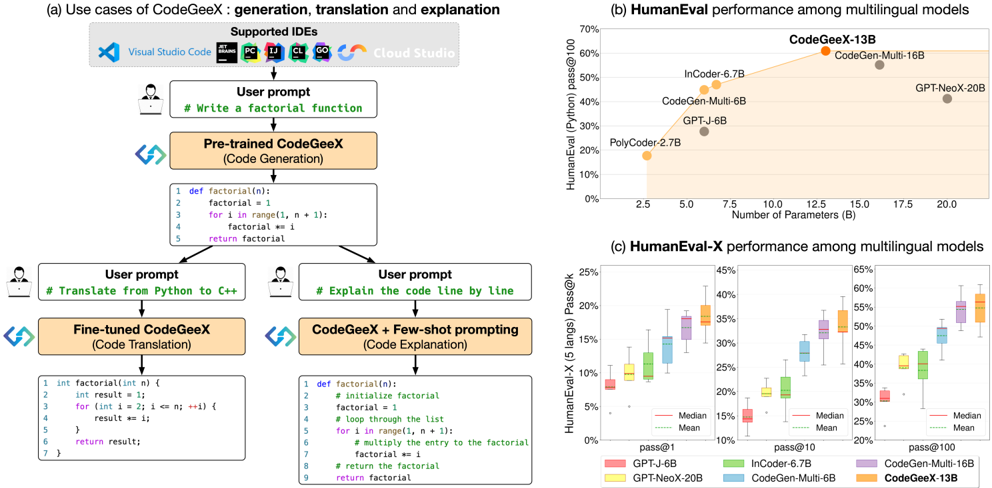
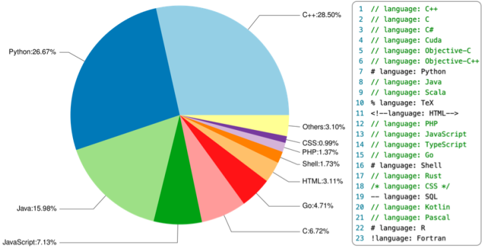
Large pre-trained code generation models, such as OpenAI Codex, can generate syntax-and function-correct code, making the coding of programmers more productive. In this paper, we introduce CodeGeeX, a multilingual model with 13 billion parameters for code generation. CodeGeeX is pre-trained on 850 billion tokens of 23 programming languages as of June 2022. Our extensive experiments suggest that CodeGeeX outperforms multilingual code models of similar scale for both the tasks of code generation and translation on HumanEval-X. Building upon HumanEval (Python only), we develop the HumanEval-X benchmark for evaluating multilingual models by hand-writing the solutions in C++, Java, JavaScript, and Go. In addition, we build CodeGeeX-based extensions on Visual Studio Code, JetBrains, and Cloud Studio, generating 8 billion tokens for tens of thousands of active users per week. Our user study demonstrates that CodeGeeX can help to increase coding efficiency for 83.4% of its users. Finally, CodeGeeX is publicly accessible since Sep. 2022, we open-sourced its code, model weights, API, extensions, and HumanEval-X at https://github.com/THUDM/CodeGeeX.
Overview
CoChat Summary
TL;DR
CodeGeeX is a 13B-parameter multilingual code generation model pre-trained on 850B tokens across 23 programming languages, released with the HumanEval-X benchmark for evaluating code generation and translation in Python, C++, Java, JavaScript, and Go. It reports competitive or best average performance among same-scale multilingual baselines on HumanEval-X and positive user-reported coding-efficiency gains.
Key findings
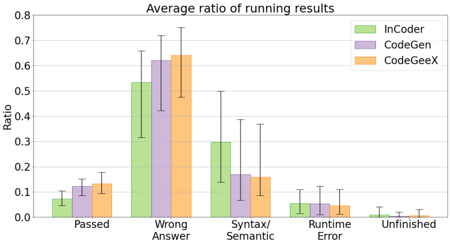
- CodeGeeX achieves the best average performance on HumanEval-X code generation among compared models, with average pass@1 18.40%, pass@10 33.29%, and pass@100 54.76%, slightly better than CodeGen-Multi-16B in all three metrics (0.37%–1.67% improvements).
- On Python HumanEval, CodeGeeX reaches pass@1 22.89%, pass@10 39.57%, and pass@100 60.92%; the paper notes it is second-highest among multilingual code generation models on HumanEval, surpassed by PaLMCoder-540B.
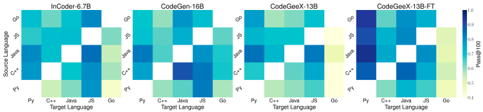
- For cross-lingual code translation, fine-tuned CodeGeeX-13B-FT performs best on pass@100 in 11 of 20 language pairs, while CodeGen-Multi-16B is best on 7.
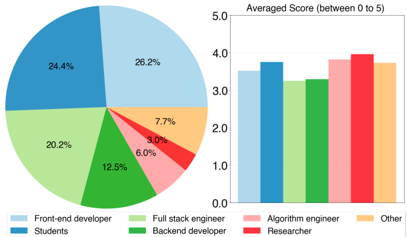
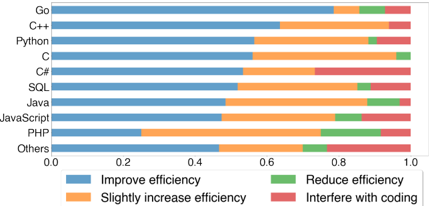
- In a user survey of 168 users, over 83.4% report that CodeGeeX improves or slightly increases coding efficiency; the deployed extensions generate 8 billion tokens per week for tens of thousands of daily active users, averaging 200+ API calls per active user per weekday.
Methods
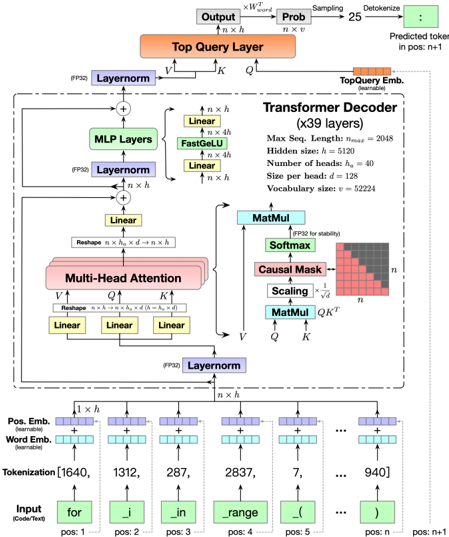
- CodeGeeX is a 39-layer decoder-only transformer with 13B parameters, hidden size 5120, vocabulary size 52,224, maximum sequence length 2048, and a top query layer; it was trained on 850B tokens over 213,000 steps using 1,536 Ascend 910 AI processors, Mindspore v1.7.0, 8-way model parallelism, 192-way data parallelism, and global batch size 3,072.
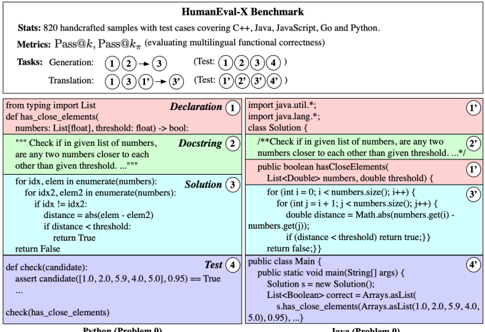
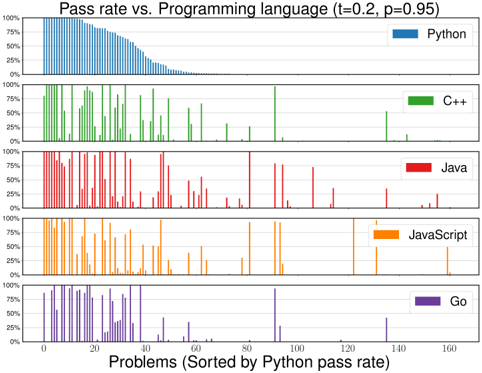
- HumanEval-X was built by manually rewriting the 164 Python HumanEval problems into C++, Java, JavaScript, and Go, yielding 820 problem-solution pairs; it supports code generation and translation across 20 source-target language pairs, evaluated with pass@k using n=200 generations and k ∈ {1, 10, 100}.
- Baselines include GPT-J-6B, GPT-NeoX-20B, InCoder-6.7B, and CodeGen-Multi-6B/16B; additional evaluations cover MBPP, CodeXGLUE code summarization, and XLCoST code translation.
Limitations
- The paper states that it is computationally unaffordable to test different architectural designs for large pre-trained models, and that multilingual models may require larger model capacity to master different languages; it also observes asymmetry in translation performance, suggesting models lack high-level understanding between languages.
- The paper notes language-specific weaknesses: Go is harder to translate into due to strict syntax constraints such as forbidding unused variables/imports, and Ruby is absent from CodeGeeX’s pre-training corpus.
- Evident from the text: the main multilingual evaluation is limited to HumanEval-X and selected benchmarks, and the user-efficiency result comes from a self-reported survey of 168 users rather than a controlled productivity study.
Model-written summary. Check it against the paper before relying on it.
Integrity signals
Registry
Cites
Statistics
Figures
Verification
Claims the paper makes
6 Valid · 3 Not valid · 0 Not checked · 65 Own results and interpretations
The cited sources support only part of this claim — read each source’s verdict below.
In the paper
“existing multilingual datasets [18,28,45] use string similarity metrics like BLEU [21] for evaluation rather than really verify the functional correctness of generated code.”
§ CodeGeeX: A Pre-Trained Model for Code Generation with Multilingual Benchmarking on HumanEval-X > 1 INTRODUCTION
What the sources say
- Supportedcites [18] matched to “CodeXGLUE: A Machine Learning Benchmark Dataset for Code Understanding and Generation” (2021) source
Section 3.5 (p. 4) describes a Java–C# code-translation dataset. Section 5.7 (p. 9) lists exact match, BLEU, and CodeBLEU as its evaluation measures, with CodeBLEU as the overall metric, rather than a functional-correctness test. The claim is supported for this dataset; it should not be read as saying BLEU alone is the overall metric. (LLM, conf=0.87)
- Supportedcites [28] matched to “CodeBLEU: a Method for Automatic Evaluation of Code Synthesis” (2020) source
The citation to this paper is attached to BLEU as an evaluation metric, not to the identification of the multilingual datasets. The Introduction (p. 1) calls BLEU a popular code-synthesis evaluation method based on token overlap, and Related Work (p. 7) says it ignores logical correctness. That supports the attributed distinction between string similarity and verification of functional correctness. (LLM, conf=0.88)
- Supportedcites [45] matched to “XLCoST: A Benchmark Dataset for Cross-lingual Code Intelligence” (2022) source
XLCoST evaluates code generation with BLEU and CodeBLEU (Evaluation Metrics and Baselines, p. 6). Its Limitations and Future Work section (p. 7) says evaluation could be improved by using test cases and treats automated test-case generation as future work. CodeBLEU also checks syntax and data flow, but the paper does not report verifying generated code’s functional correctness with tests. (LLM, conf=0.91)
- Not matchedcites [21]
The reference list we hold has no entry [21].
plain- Asserted: passes — The authors put it forward as true.
- Checkable: passes — It can be checked against evidence.
- Load-bearing: passes — The paper’s conclusions depend on it.
- Based: passes — The paper gives a reason why it holds.
- Supported
The cited sources support only part of this claim — read each source’s verdict below.
In the paper
“HumanEval [7]-developed by OpenAI for evaluating Codex-and other benchmarks [2,13,20] only consist of programming problems in a single language”
- Also stated in: § 3.1 HumanEval-X: A Multilingual Benchmark · plain
“However, similar to MBPP [2] and APPS [13], it only consists of handcrafted programming problems in Python, thus cannot be directly applied to systematically evaluate the performance of multilingual code generation.”
§ CodeGeeX: A Pre-Trained Model for Code Generation with Multilingual Benchmarking on HumanEval-X > 1 INTRODUCTION
What the sources say
- Supportedcites [7] matched to “Evaluating Large Language Models Trained on Code” (2021) source
The Codex and Codex-S Performance section (p. 2) says the authors created a 164-problem dataset to evaluate their model on generating standalone Python functions. Section 2.2 (p. 4) names that dataset HumanEval. The separate citations attached to “other benchmarks” are not judged here. (LLM, conf=0.93)
- Partly supportedcites [2] matched to “Program Synthesis with Large Language Models” (2021) sourceExperimental — accuracy not yet measured
The Introduction (p. 2) says this paper introduces two Python code-synthesis datasets, and §2.1 (p. 4) describes MBPP as containing Python programs. That supports the single-language claim for this paper’s benchmarks. The Introduction (p. 3) mentions HumanEval but does not establish that it, or every other benchmark in the citing sentence, contains problems in only one language. (LLM, conf=0.84)
- Supportedcites [13] matched to “Measuring Coding Challenge Competence With APPS” (2021) source
The Abstract (p. 1) says APPS evaluates generation of Python code, and the Conclusion (p. 9) calls it a benchmark of 10,000 Python programming problems. This supports the single-language point for APPS, the benchmark identified by this citation; it does not need to establish the language coverage of HumanEval. (LLM, conf=0.92)
- Supportedcites [20] matched to “CodeGen: An Open Large Language Model for Code with Multi-Turn Program Synthesis” (2022) source
Section 3 (p. 4) identifies HumanEval as 164 Python programming problems. Sections 4.1 (p. 6) and 4.2 (p. 7) describe this paper’s own benchmark, MTPB, using Python prompts and execution. The paper therefore supports the single-language characterization for the benchmarks it discusses; it does not establish that every programming benchmark is single-language. (LLM, conf=0.87)
plain- Asserted: passes — The authors put it forward as true.
- Checkable: passes — It can be checked against evidence.
- Load-bearing: passes — The paper’s conclusions depend on it.
- Based: passes — The paper gives a reason why it holds.
- Also stated in: § 3.1 HumanEval-X: A Multilingual Benchmark · plain
A result the paper reports from its own data — it cites no other source for it, so there is none to check. The quote shows it is in the paper.
In the paper
“The inference time per token is within 13ms (1.61 seconds / 128 tokens).”
§ CodeGeeX: A Pre-Trained Model for Code Generation with Multilingual Benchmarking on HumanEval-X > 2.4 Fast Inference
plain- Asserted: passes — The authors put it forward as true.
- Checkable: passes — It can be checked against evidence.
- Load-bearing: passes — The paper’s conclusions depend on it.
- Based: passes — The paper gives a reason why it holds.
- Rests on an assumption not shown here.
A result the paper reports from its own data — it cites no other source for it, so there is none to check. The quote shows it is in the paper.
In the paper
“Our user survey suggests that 83.4% of users feel the CodeGeeX extensions improve their programming efficiency.”
- Also stated in: § Budget Allocation Strategies. · plain
“There are on average over 83.4% of users think CodeGeeX can improve or slightly increase their coding efficiency, especially for mainstream programming languages like Go, C++, Python, C, C#, etc.”
- Also stated in: § 6 CONCLUSION · plain
“Over 83.4% of users have positive answers.”
§ CodeGeeX: A Pre-Trained Model for Code Generation with Multilingual Benchmarking on HumanEval-X > 1 INTRODUCTION
plain- Asserted: passes — The authors put it forward as true.
- Checkable: passes — It can be checked against evidence.
- Load-bearing: unclear — It is unclear whether the paper’s conclusions depend on it.
- Based: passes — The paper gives a reason why it holds.
- Rests on an assumption not shown here.
- Also stated in: § Budget Allocation Strategies. · plain
A result the paper reports from its own data — it cites no other source for it, so there is none to check. The quote shows it is in the paper.
In the paper
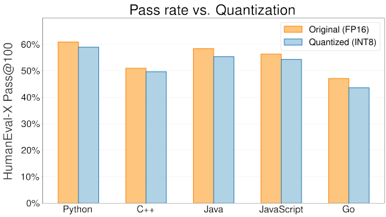
“Importantly, Figure 4 shows that the quantization only slightly affects the performance on the code generation task”
§ CodeGeeX: A Pre-Trained Model for Code Generation with Multilingual Benchmarking on HumanEval-X > 2.4 Fast Inference
plain- Asserted: passes — The authors put it forward as true.
- Checkable: passes — It can be checked against evidence.
- Load-bearing: passes — The paper’s conclusions depend on it.
- Based: passes — The paper gives a reason why it holds.
- Rests on an assumption not shown here.
24 more claims
Create a free account to see all 74 claims and every source verdict.
- Probably not a substantial claim. 20
- It may state two separate claims as one. 29
- The quote only partly states this claim. 2
Self-check
Percentages, sums and reported differences re-computed from the paper’s own numbers.
Each contradiction between two passages listed here was confirmed by an independent check.
Rated major: it would touch a result — a value a result rests on, reported and recomputed p-values on opposite sides of the significance level, two passages that conflict with no sign which is right, or a cited work retracted before this paper was published.
In the paper
“The entire pre-training process takes two months on 192 nodes with 1,536 AI processors, during which the model consumes 850B tokens, equivalent to 5+ epochs (213,000 steps).”
§ CodeGeeX: A Pre-Trained Model for Code Generation with Multilingual Benchmarking on HumanEval-X > 2.3 CodeGeeX Training
Reported 850000000000 · recomputed 1340080128000
Rated minor: it would not touch a result — a value no result rests on, a p-value that stays on the same side of the significance level, or a conflict that is clerical, resolved elsewhere in the paper, or outside its own findings.
In the paper
§ CodeGeeX: A Pre-Trained Model for Code Generation with Multilingual Benchmarking on HumanEval-X > Additional information
“| pass@𝑘𝜋 (𝑘 = 100) | Best Single 33.77% Uniform 36.40% Weighted 36.76% | 42.67% 44.75% 44.97% | 43.95% 43.89% 45.60% | 53.19% 53.47% 53.94%”
§ CodeGeeX: A Pre-Trained Model for Code Generation with Multilingual Benchmarking on HumanEval-X > Additional information
“| | pass@100 32.96% | 42.23% | 40.70% | 53.91% | 60.62% | 58.42% | |”
Rated minor: it would not touch a result — a value no result rests on, a p-value that stays on the same side of the significance level, or a conflict that is clerical, resolved elsewhere in the paper, or outside its own findings.
In the paper
§ CodeGeeX: A Pre-Trained Model for Code Generation with Multilingual Benchmarking on HumanEval-X > Budget Allocation Strategies.
“Both Uniform and Weighted outperform Best Single by promoting a more diverse generation, which gives a higher chance of solving problems.”
§ CodeGeeX: A Pre-Trained Model for Code Generation with Multilingual Benchmarking on HumanEval-X > Additional information
“| 43.95% 43.89% 45.60% |”
Citations
Cites
Deep Residual Learning for Image Recognition
He, K., Zhang, X., Ren, S., & Sun, J. (2016) · 2016 IEEE Conference on Computer Vision and Pattern Recognition (CVPR) · doi:10.1109/cvpr.2016.90 · Cited by 235,474 · cited 1×
“We use an approximation of GELU (Gaussian Linear Units) operation [14], namely FastGELU, which is more efficient under Ascend 910: Generative Pre-Training Objective.”
MethodVaswani, A., Shazeer, N., Parmar, N., Uszkoreit, J., Jones, L., Gomez, A. N., Kaiser, L., & Polosukhin, I. (2017) · arXiv · doi:10.48550/arxiv.1706.03762 · Cited by 120,404
Adam: A Method for Stochastic Optimization
Kingma, D. P., & Ba, J. (2014) · arXiv · doi:10.48550/arxiv.1412.6980 · Cited by 98,946
Language Models are Few-Shot Learners
Brown, T. B., Mann, B., Ryder, N., Subbiah, M., Kaplan, J., Dhariwal, P., Neelakantan, A., Shyam, P., Sastry, G., Askell, A., et al. (2020) · arXiv · doi:10.48550/arxiv.2005.14165 · Cited by 23,372
BLEU: a method for automatic evaluation of machine translation
Papineni, K., Roukos, S., Ward, T., & Zhu, W.-J. (2001) · Proceedings of the 40th Annual Meeting on Association for Computational Linguistics - ACL '02 · doi:10.3115/1073083.1073135 · Cited by 21,344
Advances in Neural Information Processing Systems 29
Teymur, O., Zygalakis, K., & Calderhead, B. (2016) · Cited by 13,887
Transformers: State-of-the-Art Natural Language Processing
Wolf, T., Debut, L., Sanh, V., Chaumond, J., Delangue, C., Moi, A., Cistac, P., Rault, T., Louf, R., Funtowicz, M., et al. (2020) · Proceedings of the 2020 Conference on Empirical Methods in Natural Language Processing: System Demonstrations · doi:10.18653/v1/2020.emnlp-demos.6 · Cited by 8,741
Chain-Of-Thought Prompting Elicits Reasoning in Large Language Models
Wei, J., Wang, X., Schuurmans, D., Bosma, M., Ichter, B., Xia, F., Chi, E., Le, Q. V., & Zhou, D. (2022) · Advances in Neural Information Processing Systems 35 · doi:10.52202/068431-1800 · Cited by 4,505
Gaussian Error Linear Units (GELUs)
Hendrycks, D., & Gimpel, K. (2016) · arXiv · doi:10.48550/arxiv.1606.08415 · Cited by 3,537
HuggingFace's Transformers: State-of-the-art Natural Language Processing
Wolf, T., Debut, L., Sanh, V., Chaumond, J., Delangue, C., Moi, A., Cistac, P., Rault, T., Louf, R., Funtowicz, M., et al. (2019) · arXiv · doi:10.48550/arxiv.1910.03771 · Cited by 3,347
Research works printed but not linked: 3
- Alec Radford Jeffrey Wu Rewon Child David Luan Dario Amodei Ilya Sutskever etal 2019. Language models are unsupervised multitask learners. OpenAI blog Vol. 1 8 (2019) 9. Alec Radford Jeffrey Wu Rewon Child David Luan Dario Amodei Ilya Sutskever et al. 2019. Language models are unsupervised multitask learners. OpenAI blog Vol. 1 8 (2019) 9.
- Lewis Tunstall , Leandro von Werra , and Thomas Wolf . 2022. Natural language processing with transformers. "O'Reilly Media , Inc .". Lewis Tunstall, Leandro von Werra, and Thomas Wolf. 2022. Natural language processing with transformers. "O'Reilly Media, Inc.".
- Richard J Waldinger and Richard CT Lee . 1969 . PROW: A step toward automatic program writing . In Proceedings of the 1st international joint conference on Artificial intelligence. 241--252 . Richard J Waldinger and Richard CT Lee. 1969. PROW: A step toward automatic program writing. In Proceedings of the 1st international joint conference on Artificial intelligence. 241--252.
Cited by
Items 201–293 of 293
Jufriansah, A., Pramudya, Y., Khusnani, A., & Malahina, E. A. U. (2025) · Journal of Novel Engineering Science and Technology · doi:10.56741/jnest.v4i02.952 · Cited by 2
“For other baselines, the result of their implementation is included [47].”
RustRepoTrans: Repository-level Context Code Translation Benchmark Targeting Rust
Ou, G., Liu, M., Chen, Y., Wang, Y., Peng, X., & Zheng, Z. (2025) · IEEE/ACM International Conference on Automated Software Engineering (ASE) · doi:10.1109/ase63991.2025.00057 · Cited by 43
An exploratory study on fine-tuning large language models for secure code generation
Li, J., Rabbi, F., Cheng, C., Sangalay, A., Tian, Y., & Yang, J. (2026) · Empirical Software Engineering · doi:10.1007/s10664-026-10803-9 · Cited by 32
The fools are certain; the wise are doubtful: Exploring LLM confidence in code completion
Kotti, Z., Dritsa, K., Spinellis, D. D., & Λουρίδας, Π. (2026) · Automated Software Engineering · doi:10.21203/rs.3.rs-7302683/v1 · Cited by 3
“Notable open code LLMs include StarCoder (Li et al, 2023), CodeGeeX (Zheng et al, 2023), LLaMA (Touvron et al, 2023a,b), Code LLaMA (Roz-ière et al, 2024), SantaCoder (Allal et al, 2023), PolyCoder (Xu et al, 2022b), InCoder (Fried et al, 2023), and CodeGen (Nijkamp et al, 2023).”
McEval: Massively Multilingual Code Evaluation
Chai, L., Liu, S., Yang, J., Yin, Y., Jin, K., Liu, J., Sun, T., Zhang, G., Ren, C., Guo, H., et al. (2024) · arXiv · doi:10.48550/arxiv.2406.07436 · Cited by 73
Self-citationEvaluating LLMs in ROS robotic software code generation
Zhao, Y., Mao, X., Zhang, T., Li, T., & Xiao, Z. (2027) · Empirical Software Engineering · doi:10.1007/s10664-026-10910-7
“(1) General-Purpose Programming Baseline : To simulate general-purpose programming, we adopt the HumanEval-X benchmark (Zheng et al. 2023) as the baseline for evaluating the code generation capabilities of current LLMs in conventional C++ software development.”
Programming Language Models in Multilingual Settings
Katzy, J. (2024) · ACM/IEEE International Conference on Software Engineering: Companion Proceedings (ICSE-Companion) · doi:10.1145/3639478.3639787
“The rapid adaptation of Large Language Models (LLMs) to code-related tasks has shown that they are capable of solving a wide variety of programming tasks such as code completion, summarization, translation, and interpreting source code [1–7].”
BackgroundAction2Code: Transforming Video Demonstrations into Sequential Robotic Instructions
Upadhyay, A., Reddy, G., Dubey, A., Saurav, S. K., & Sengupta, S. (2024) · International Conference on Ubiquitous Robots (UR) · doi:10.1109/ur61395.2024.10597493 · Cited by 1
“The increasing popularity of natural language-to-code generation is attributed to the recent rise of large language models (LLMs) trained extensively on vast datasets containing both natural language and code [5][8].”
BackgroundMethodServiceCoder: A Service Computing Code Generation Model
Chen, Y., Yu, L., Zhou, X., Su, H., Liu, J., & Wang, Y. (2024) · IEEE International Conference on Web Services (ICWS) · doi:10.1109/icws62655.2024.00133
Code Generation Based on Quality-Aware Reordering
Yuan, S., & Yu, L. (2024) · International Conference on Intelligent Computing and Signal Processing (ICSP) · doi:10.1109/icsp62122.2024.10743331
Assessing Carbon Footprint: Understanding the Environmental Costs of Training Devices
Costagliola, G., Rosa, M. D., & Piscitelli, A. (2024) · Procedia Computer Science · doi:10.1016/j.procs.2024.09.685
Enhancing Code LLMs with Reinforcement Learning in Code Generation: A SurveyPreprint
He, Y., Shi, T., Li, Y., & Chen, Q. (2025) · Qeios · doi:10.32388/8g8tb2
Self-citationOn the Potential of Large Language Models in Parallel Systems: A Systematic Analysis
Cheng, X., Luo, S., Yang, J., Lei, Y., Li, Z., & Yang, L. (2024) · China Automation Congress (CAC) · doi:10.1109/cac63892.2024.10864500
“Advanced LLMs like ChatGPT and GPT-4, with billions of parameters, exhibit significant potential in complex tasks such as code generation [21], recommendation [22], and symbolic reasoning [23], owing to their emergent abilities and generalizability.”
VisionLingua: Empowering Multimodal Understanding with Cutting-Edge Language Models
Kamboj, D., Gola, K. K., & Arya, S. (2025) · Communications in computer and information science · doi:10.1007/978-3-031-83796-8_4
Defierithos: The Lonely Warrior Rises from ResonancePreprint
Wang, L. (2025) · doi:10.36227/techrxiv.174181746.67591790/v3
Research on Hybrid Collaborative Development Model Based on Multi-Dimensional Behavioral Information
Gao, S., Liao, W., Shu, T., Zhao, Z.-N., & Wang, Y. (2025) · Applied Sciences · doi:10.3390/app15094907 · Cited by 1
Defierithos: The Lonely Warrior Rises from ResonancePreprint
Wang, L. (2025) · doi:10.36227/techrxiv.174181746.67591790/v4
Advancing Large Language Models in Code Generation: Usaco Benchmark and Bug Mitigation Insights
Trentini, J., Liu, V., Peng, Y., & Zong, Z. (2025) · IEEE International Conference on Program Comprehension (ICPC) · doi:10.1109/icpc66645.2025.00057 · Cited by 4
“HumanEvalX [61] and MultiPL-E [62] extended the amount of available languages along with HumanEval+ to increase problem difficulty [63].”
Zhang, Z., Yang, H., Yan, Q., Yan, H., Min, W., Wei, Z., Kuang, L., & Xia, Y. (2025) · IEEE International Conference on Program Comprehension (ICPC) · doi:10.1109/icpc66645.2025.00036 · Cited by 1
“We implemented two DLCoG instances using the code LLM CodeGeeX4 [18] and the general model GPT-4 [19].”
Algorithmic Inversion: A Learnable Algorithm Representation for Code Generation
Shi, Z., Wu, F., Zeng, W., Kong, Y., Shen, S., & Wu, Y. (2025) · IEEE International Conference on Program Comprehension (ICPC) · doi:10.1109/icpc66645.2025.00054
“The introduction of models such as CodeX [4], CodeGen [15], Incoder [16], Code LLama [17], CodeGeeX [18], StarCoder [5], and DeepSeek-Coder [6] has propelled LLMs to unprecedented levels in the domain of code generation.”
Moghadam, I. H., Lijzenga, O., & Zaytsev, V. (2025) · ACM SIGPLAN International Conference on Generative Programming: Concepts and Experiences (GPCE) · doi:10.1145/3742876.3742881 · Cited by 1
Su, F.-Y., Ngo, G.-H., Phan, B., & Chiang, J.-H. (2025) · Database · doi:10.1093/database/baaf025 · Cited by 3
IMPACT: Identifying and Classifying Multiple Sourced and Categorized Self-Admitted Technical Debts
Li, Q., Yin, Z., Yang, Y., Li, C., Shen, Z., Ge, J., Zhong, W., Luo, B., & Ng, V. (2026) · ACM Transactions on Software Engineering and Methodology · doi:10.1145/3747180 · Cited by 3
“CodeGeeX [64] is an LLM pre-trained on code corpora, including repository-level code corpora from 23 programming languages on Pile, CodeParrot, and GitHub, achieving excellent results in code generation.”
Hard400: A Bilingual Code Generation Evaluation Benchmark for Large Language Models
Zhang, Q., Zhang, S., Li, J., Zhou, H., Chen, X., & Liu, H. (2025) · Lecture notes in computer science · doi:10.1007/978-981-96-9812-7_42
Compositional Abilities Emerge Multiplicatively: Exploring Diffusion Models on a Synthetic Task
Okawa, M., & Tanaka, H. (2025) · NTT technical review · doi:10.53829/ntr202509ra1 · Cited by 5
Context Engineering for AI-Assisted Programming for Domain-Specific Languages
HajHmida, M. B., & Lee, E. A. (2025) · Lecture notes in computer science · doi:10.1007/978-3-032-01377-4_2 · Cited by 2
Zhang, J., Zhang, J., Shen, X., Xue, L., Nie, L., Lin, F., Wu, K., Zhang, T., & Du, P. (2026) · ACM Transactions on Software Engineering and Methodology · doi:10.1145/3769305
“Newly developed AI coding assistants, such as CodeGeex [51] and Cody [4], simplify the process of cross-language code conversion significantly.”
Advancements in AI-Powered Code Generation: A Comparative Analysis of Modern LLMs
Nimisha, P., & Eldho, K. J. (2025) · International Conference on Innovative Mechanisms for Industry Applications · doi:10.1109/icimia67127.2025.11200714
“Several open-source code generation tools are available, and for this study, we have selected eight recent models: CodeGeex [24], Code Llama [25], StarCoder, PanGu-Coder [18], WizardCoder [12], CodeT5+ [22], DeepSeek-Coder [5], and CodeGen Mono [14].”
MetaCoder: Generating Code from Multiple Perspectives
Chen, X., Jiang, Z.-J., Guo, Y., Jia, Z.-Y., Zheng, S., Zhang, Y.-L., & Li, S.-S. (2025) · Asia-Pacific Symposium on Internetware · doi:10.1145/3755881.3755884
“On the HumanEval and other benchmarks[9, 44], Llama 3.1 and DeepSeek Coder V2 show such differences.”
InfluentialEvaluating SAP Joule for Code Generation
Heisler, J., Reisinger, J., & Fischer, A. (2025) · International Generative AI and Computational Language Modelling Conference (GACLM) · doi:10.1109/gaclm67198.2025.11232153 · Cited by 1
“The HumanEval-X benchmark was published in union with the the CodeGeeX model [4].”
Yu, Z., Li, C., Zhang, Y., Liu, M., Pinckney, N., Zhou, W., Liang, R., Yang, H., Ren, H. M., & Lin, Y. (2025) · 2025 IEEE/ACM International Conference On Computer Aided Design (ICCAD) · doi:10.1109/iccad66269.2025.11240644 · Cited by 1
Repository-level code completion with adaptive segmentation and fused retrieval
Shen, Y., Qin, P.-L., Zhao, K.-Y., Zhang, F.-W., Zhang, F., & Li, G.-J. (2025) · Empirical Software Engineering · doi:10.1007/s10664-025-10762-7
Attention Distance: A Novel Metric for Directed Fuzzing with Large Language Models
Bin, W., Yang, A., Li, K., Aofan, L., Li, H., Luo, G., Huang, W., & Zhuang, Y. (2026) · ACM/IEEE International Conference on Software Engineering: Companion Proceedings (ICSE-Companion) · doi:10.1145/3744916.3787818 · Cited by 2
Codetector: A Framework for Zero-Shot Detection of AI-Generated Code
Adham, N., Duwe, H., & Hoos, H. H. (2026) · Lecture notes in computer science · doi:10.1007/978-3-032-09192-5_11 · Cited by 2
AI Prompt Engineering for Reliable and Explainable Code Generation
Goel, N., Sharath, M. R., Tunikuntla, V. S. S. P., & Singh, R. (2025) · IEEE International Conference on Computing, Engineering and Design (ICCED) · doi:10.1109/icced68324.2025.11324662
“They indicated in their studies that software development automation had enormous potential but on the other hand, they indicated that there was a significant probability of hallucinated code, errors, and unstable results particularly when the prompt was not clear or complete [14].”
Chen, Z., Li, Z., Song, Z., Shi, Z., & Sun, L. (2025) · IEEE International Conference on Parallel and Distributed Systems (ICPADS) · doi:10.1109/icpads67057.2025.11322923 · Cited by 2
“Innovations include instruction tuning [13], Parameter-Efficient Fine-Tuning (PEFT) [14], and tool-augmented model designs [15], along-side improved benchmarking [16], [17].”
Shi, Q., Han, Q., Cui, Z., & Zeng, Z. (2025) · Conference proceedings/Conference proceedings - IEEE International Conference on Systems, Man, and Cybernetics · doi:10.1109/smc58881.2025.11343558 · Cited by 1
“Meanwhile, the release of open datasets and benchmarks, such as HumanEval [1], MBPP [7], HumanEval-X [9], LLMSecEval [10], and MultiPL-E [11], enables researchers to systematically evaluate models’ functional correctness and cross-lingual generalization capabilities under standardized testing…”
Model-MRFaG: A Test Code Generation Framework Based on Fine-tuned LLMs
Zhou, X., Yu, L., Liu, J., Yangand, C., & Wang, L. (2025) · Conference proceedings/Conference proceedings - IEEE International Conference on Systems, Man, and Cybernetics · doi:10.1109/smc58881.2025.11343040
“…results show that the TestCoder model demonstrates certain advantages compared to benchmark models such as StarCoder-15B [17], StarCoder2-7B [18], and CodeGeeX2-6B in both general code test sets including HumanEval [14], HumanEval-X [15], MBPP [16], and test code generation capability assessments.”
Comprehend, Imitate, and then Update: Unleashing the Power of LLMs in Test Suite Evolution
Xu, T., Liu, J., Yao, Y., Li, C., Xu, F., & Ma, X. (2025) · IEEE/ACM International Conference on Automated Software Engineering (ASE) · doi:10.1109/ase63991.2025.00046 · Cited by 6
“Therefore, following recent work on test generation [38], [39], [40] and code evaluation benchmarks [41], [42], [43], we adopt execution-based metrics as the primary evaluation criteria.”
Context-Aware CodeLLM Eviction for AI-assisted Coding
Thangarajah, K., Chen, B., Chang, S., & Hassan, A. E. (2025) · IEEE/ACM International Conference on Automated Software Engineering (ASE) · doi:10.1109/ase63991.2025.00271 · Cited by 4
“Some CodeLLMs excel at generating code, while others are more effective at understanding or reasoning through complex logic, especially when tailored to specific programming languages [9]–[14].”
Jiao, R., Zhang, Y., Li, J., & Ma, Z. (2025) · IEEE/ACM International Conference on Automated Software Engineering (ASE) · doi:10.1109/ase63991.2025.00071 · Cited by 5
“Recently, a proliferation of Large Language Models (LLMs) has emerged to support coding tasks such as code generation and completion [16], [20], [29], [39], [43], [50], [61].”
Chen, S., Zhou, Z., Zhao, Y., Yang, C., Li, Z., Xiao, Y., Lin, X. A., Meng, X., Wei, J., & Liu, K. (2026) · ACM International Conference on Web Search and Data Mining (WSDM) · doi:10.1145/3773966.3778008
A Novel Large-Small Model Collaboration Framework for Code Generation: Balancing Cost and Accuracy
Liu, C., Hu, C., Tao, S., & Li, F. (2026) · IEEE International Conference on Big Data and Smart Computing (BigComp) · doi:10.1109/bigcomp68355.2026.00065
Natural language processing metrics efficiency for evaluating a generated code: facing the challenge
Fedrushkov, D., Kovalchuk, S. V., & Aliev, A. (2026) · Scientific and technical journal of information technologies mechanics and optics · doi:10.17586/2226-1494-2026-26-1-135-144 · Cited by 2
The Influence of Prompt Language on Code Generation: A Comparative Analysis of Turkish and English
Özçelik, D., Kişla, B., & Nazlıoğlu, S. (2026) · International Informatics and Software Engineering Conference (IISEC) · doi:10.1109/iisec69317.2026.11418431
ModSolAgent: Automated Finite Element Code Generation for Abaqus via LLM-Based Agent
Li, Z., Ge, H., Tang, G., & Liu, Y. (2026) · IEEE Transactions on Industrial Informatics · doi:10.1109/tii.2026.3669495 · Cited by 1
“However, in contrast to conventional code-generation benchmarks that often prioritize qualitative assessment [3], the challenges in CAE-based finite element modeling and solving stem from strong inter-step coupling and complex reasoning requirements, which must ensure both functional integrity and…”
A program-centered approach to solving AI tasks with ready-to-use models
Pham, T.-T., Duong, M.-Q., Luong, D.-Q., Nguyen, T.-H., Nguyen, T., Nguyen, S., & Vo, H. (2026) · Future generations computer systems · doi:10.1016/j.future.2026.108510
Muñoz-Babiano, F., Lamo, P., & Alonso, R. S. (2026) · ADCAIJ ADVANCES IN DISTRIBUTED COMPUTING AND ARTIFICIAL INTELLIGENCE JOURNAL · doi:10.14201/adcaij.32926
“In addition to these models, various instruction-tuning strategies have emerged, such as CodeGeeX and CodeAlpaca (Zheng et al., 2023; Samsi et al., 2023).”
Benchmarking AI Models for Automated Code Generation and Testing Using HumanEval
Manzoor, M., Rehman, M. U., Kazim, M., Deka, L., Khattak, A. A., & Usmani, I. A. (2026) · Global Conference on Wireless and Optical Technologies (GCWOT) · doi:10.1109/gcwot69191.2026.11499481
“Metrics such as pass@k are utilized by benchmarks like HumanEval to determine the probability that at least one produced sample will succeed in passing each concealed test [3], [4].”
Li, Y., Liu, J., Yin, L., Dong, W., Li, S., & Zhang, J. (2026) · IEEE Transactions on Software Engineering · doi:10.1109/tse.2026.3692469
“Specifically, we adopt tasks from the HumanEval-X benchmark [21], which provides programming problems paired with input–output test suites that serve as independent oracles for validating functional correctness.”
Self-citationAI for quality management: A review
Huang, Y., Tan, Y., Li, Y., Li, Y., & Tsui, K.-L. (2026) · ENGINEERING Management · doi:10.1007/s42524-026-5394-x · Cited by 1
“…states from a gearbox or reducer twin with physical measurements, researchers have framed the twin as a source of mechanistic priors that make posterior diagnostic attribution more robust, especially in regimes where real faults are rare or hazardous to elicit (Xia et al., 2023; Liu et al., 2024c).”
Self-citationEnhancing JavaScript Code Autocompletion by Fine-Tuning StarCoder
Saha, I., Dhar, S., Samanta, S., Mondal, A., Patra, S., & Sengupta, A. (2026) · Lecture notes in electrical engineering · doi:10.1007/978-3-032-18470-2_3
Huang, C., Han, H., & Tian, Y. (2026) · Lecture notes in computer science · doi:10.1007/978-3-032-20080-8_14
An LLM-Enhanced Code-Space Adversarial Attack Method Against Malware Detection Models
Gan, S., Lv, M., Zeng, H., Chen, T., Zhu, T., Chen, J., Qiu, J., Kurishbayev, A. K., & Imanmadi, D. (2026) · International Journal of Software Engineering and Knowledge Engineering · doi:10.1142/s0218194026500427
LaQual: An automated framework for LLM app quality evaluation
Wang, Y., Hou, X., Si, J., Zhao, Y., Lin, W., & Wang, H. (2026) · Journal of Systems and Software · doi:10.1016/j.jss.2026.112997 · Cited by 3
“Although LLM evaluation methods evolve, they typically focus on specific domains, such as law, mathematics, or code generation, and rely on corresponding benchmarks with predefined metrics [23, 24, 25, 26, 27].”
Horvat, M., Ursić, I., & Krmpotić, K. (2026) · Electronics · doi:10.3390/electronics15132805 · Cited by 1
An empirical study of LLM-based refactoring consistency
Zhang, Y., Yuan, L.-J., & Dong, C.-H. (2026) · Empirical Software Engineering · doi:10.1007/s10664-026-10911-6 · Cited by 2
“The code before and after refactoring with CodeGeeX-4 is shown in Fig.”
InfluentialCan Large Language Models Reason About Complex Execution Paths? An Empirical Study on Python
Wang, W., Liu, K., Sun, Z., Chen, A. R., Li, G., Huang, G., & Ma, L. (2026) · ACM Transactions on Software Engineering and Methodology · doi:10.1145/3822511 · Cited by 2
Understanding and Predicting Accepted Code Suggestions in AI-Assisted Programming
Jiang, J., Li, L., Hou, J., Tan, X. L., & Zhang, L. (2026) · Proceedings of the ACM on software engineering. · doi:10.1145/3808125
DuCodeMark: Dual-Purpose Code Dataset Watermarking via Style-Aware Watermark-Poison Design
Chen, Y., Xiao, Y., Fang, C., Chen, Z., & Xu, B. (2026) · Proceedings of the ACM on software engineering. · doi:10.1145/3797076 · Cited by 2
DualCodeDetect: Zero-Shot LLM-Generated Code Detection via Dual-Channel Perturbation
Li, Z., Shang, X., Fu, Z., Guo, S., Zhang, W., Yu, N., & Chen, K. (2026) · Proceedings of the ACM on software engineering. · doi:10.1145/3808166 · Cited by 1
Neuron-Guided Interpretation of Code LLMs: Where, Why, and How?
Yin, Z., Gu, X., & Shen, B. (2026) · Proceedings of the ACM on software engineering. · doi:10.1145/3797083 · Cited by 10
Not All Local LLMs Are Equal: A Benchmark of Energy and Performance
Cunha, S., Ribeiro, F., Cruz, L., & Saraiva, J. (2026) · IEEE/ACM International Workshop on Green and Sustainable Software (GREENS) · doi:10.1145/3786148.3788630 · Cited by 2
An Initial Exploration of Contrastive Prompt Tuning to Generate Energy-Efficient Code
Weidmann, S., & Castor, F. (2026) · International Workshop on Large Language Models for Code (LLM4Code) · doi:10.1145/3786181.3788718
Brandebusemeyer, C., Schimmer, T., & Arnrich, B. (2026) · IEEE/ACM International Conference on Software Engineering: Software Engineering in Practice (ICSE-SEIP) · doi:10.1145/3786583.3786870 · Cited by 6
“The programming-related tasks for the controlled sessions were selected from the HumanEval-X benchmark dataset [48].”
Adaptive Mixing of Embeddings from Multiple Code Language Models for Fault Localization
Yang, J., Park, E. Y., & Ko, I. (2026) · IEEE International Conference on Software Testing, Verification and Validation (ICST) · doi:10.1109/icst69053.2026.00044
“CodeLMs have shown strong performance on various code-related tasks, including code generation [32], code summarization [25], and code search [33].”
Li, L. E., Huang, Y., Shi, J., & Yang, Y. (2026) · Lecture notes in computer science · doi:10.1007/978-981-92-3435-6_41
Zhang, Q., Zhou, L., Sun, B., & Wang, N. (2026) · Lecture notes in computer science · doi:10.1007/978-981-92-3394-6_19
SemanticRerank: Retrieval-Augmented Code Completion with Adaptive Semantic-Textual Fusion
Ma, J. J., Li, L., Niu, T., & Pan, Z. (2026) · Lecture notes in computer science · doi:10.1007/978-981-92-3426-4_19
A Code Ranking Framework with Human-Inspired Agent-Based Tests Generation
Cao, L., Liang, J., Wang, J., & Cai, Y. (2026) · IEEE International Conference on Program Comprehension (ICPC) · doi:10.1145/3794763.3794820
MERIT: A Multi-Signal Repair Framework for Code Translation with Large Language Models
Guo, J. (2026) · 2026 7th International Conference on Big Data & Artificial Intelligence & Software Engineering (ICBASE) · doi:10.1109/icbase70763.2026.11619379
“HumanEval-X [17] is a multilingual extension of HumanEval [18]; we use its Python, Java, and C++ subsets (164 problems each), with test code adapted to each target language.”
Jeevitha, D., Kasthuri, K., Aishwarya, M., & Madhushree, R. (2026) · International Conference on Computing Methodologies and Communication (ICCMC) · doi:10.1109/iccmc69250.2026.11624731
Code Refinement with Repository Context: How Far are We?
Wang, K., Lan, P., Liu, J., Ren, S., Bao, L., Han, J., Lo, D., & Liao, Z. (2026) · ACM Transactions on Software Engineering and Methodology · doi:10.1145/3820059 · Cited by 1
Zhang, X., & Yang, B. (2026) · IEEE Access · doi:10.1109/access.2026.3722027 · Cited by 1
“Subsequent models, including Code Llama [2], CodeGeeX [3], StarCoder [4], and DeepSeek-Coder [5] demonstrate strong capabilities in isolated programming tasks.”
UMLCoder: A Novel Multi-Agent Framework for Generating Code with the Help of uml Diagrams
Mao, K., Lin, R., Lu, G., Li, Z., & Hu, B. (2026) · International Conference on Intelligent Communications and Computing (ICICC) · doi:10.1109/icicc71012.2026.11637859
“Pre-trained on large-scale datasets, models like CodeBERT, CodeT5, Codex, and CodeGen exhibit strong programming capabilities and high benchmark scores [6], [10].”
Bhardwaj, K., & Menon, H. (2026) · IEEE International Symposium on Parallel & Distributed Processing, Workshops and Phd Forum · doi:10.1109/ipdpsw71298.2026.00116
Cross-Model Collaboration for Enhancing LLM-Based Code Generation
Huang, J., Ye, W., Sun, W., Feng, Y., & Liu, Y. (2026) · ACM Transactions on Software Engineering and Methodology · doi:10.1145/3840382
Evaluation and Distillation of Source Code Generation Tasks by Large Language Models
Brahman, D. (2026) · Digital Commons - DU (University of Denver) · doi:10.56902/etdcrp.2026.69
Multi-Agent Strategies for Bridging Programming Language Gaps in Code Generation
Moumoula, M. B., Nikiema, S. L., Djiré, A. E., Kaboré, A. K., Klein, J., & Bissyandé, T. F. (2026) · ACM Transactions on Software Engineering and Methodology · doi:10.1145/3841174 · Cited by 1
“Multiple benchmarks have been developed to evaluate code generation across programming languages, including HumanEval-X [38], HumanEval-XL [29], MultiPL-E [10], [36], MBXP [3], CrossCodeEval [14], and BabelCode [31].”
Zheng, D.-W., Wang, Y.-L., Shi, E.-S., Liu, X.-L., Ma, Y.-C., Zhang, H.-Y., & Zheng, Z.-B. (2024) · Proceedings of the 2026 IEEE/ACM 48th International Conference on Software Engineering · doi:10.1145/3744916.3773271 · Cited by 20
TACO: Trust Assessment of Large Language Models in Coding Assistance Tasks
Weng, S., Feng, Y., Li, J., Yin, Y., Zhang, Z., Liu, L., & Liu, J. (2026) · ACM/IEEE International Conference on Software Engineering: Companion Proceedings (ICSE-Companion) · doi:10.1145/3744916.3787835
SPDZCoder: Combining Expert Knowledge with LLMs for Generating Privacy-Computing Code
Dong, X., Xin, P., Huang, L., Wang, Y., Li, J., & Xu, W. (2026) · ACM Transactions on Software Engineering and Methodology · doi:10.1145/3845985 · Cited by 1
“Nevertheless,to illustrate the potential impact of fine-tuning when a certain amount of parallel data is available, we fine-tune three representative code models, namely Yi-Coder-9B-Chat [2], CodeGeeX4-All-9B [71], and Qwen2.”
Measuring Reproducibility in LLM Research: A Rubric and Cross-Topic Corpus Study
Chong, C.-J., Hou, C.-X., Liu, S.-C., & Yao, Z.-H. (2026) · Proceedings of the 4th ACM Conference on Reproducibility and Replicability · doi:10.1145/3820002.3828584
“[4];AlphaCode[63];CodeGen[79];InCoder[27];CodeLlama[90];CodeGeeX[124];CodeT[14];DS-1000[57];MultiPL-E[12];RepoBench[68];RepoCoder[121];StarCoder[60];AlphaCodium[89];Chongetal.”
Do Machines Struggle Where Humans Do? Obfuscation as a Probe of Human and Machine Code Comprehension
Le, J. (2026) · ACM SIGPLAN International Conference on Systems, Programming, Languages, and Applications: Software for Humanity (SPLASH) · doi:10.1145/3837729.3839573
Pozdnyakov, O., & Parkhomenko, A. (2026) · Науковий вісник НЛТУ України · doi:10.36930/40360410
A critical assessment of the rise of agentic AI, its capabilities, task domains and open challenges
Khan, R. U., Aljuaid, H., & Ning, Z. (2026) · Discover Artificial Intelligence · doi:10.1007/s44163-026-02342-5 · Cited by 3
“CodeGeeX (Tsinghua) : A multilingual code generation model benchmarked on HumanEval-X across six programming languages, demonstrating strong cross-lingual transfer [56].”
SwiftGram: Dynamic Lexical Forking for Precise and Efficient Grammar-Constrained Decoding
Ling, S.-Y., Kang, L.-Y., Liu, J., Wang, S., Ma, Z.-R., & Ye, D. (2026) · Proceedings of the 41st IEEE/ACM International Conference on Automated Software Engineering · doi:10.1145/3832783.3834419
Self-citationAnchorRepair: A Reference-Guided Dual-Agent Framework for Code Translation Repair
Sun, J., Zhao, Y., Li, F., & Jiang, J. (2026) · IEEE/ACM International Workshop on Automated Program Repair (APR) · doi:10.1145/3843776.3844669
“Automated code translation reduces manual effort and has attracted widespread attention in recent years [10, 15, 36, 45].”
Nayim, M. A. M., Kouchi, F. R., Sikder, A. K., & Cohen, M. B. (2026) · IEEE/ACM International Workshop on Automated Program Repair (APR) · doi:10.1145/3843776.3844668
Large Language Model Enabled Symbolic Execution for Automated Functional Analysis
Liu, M., Chen, Z., Wang, X., He, Z., Gu, J., Chen, M., Wang, L., & Dong, W. (2026) · IEEE/ACM International Conference on Automated Software Engineering (ASE) · doi:10.1145/3832783.3837524
“Our evaluation employs two established benchmarks: HumanEval-X [71] for code generation and logic_bombs [67] for symbolic execution.”
A Taxonomy of Programming Languages for Code Generation
Raihan, N., Newman, C., & Zampieri, M. (2026) · arXiv
“Benchmarks such as MultiPL-E (Cassano et al., 2023), HumanEval-X (Zheng et al., 2023), mHumanEval Raihan et al. (2024a), and the multilingual evaluation of Athiwaratkun et al. (2023) have extended code evaluation beyond Python.”
Metadata
- Authors
- Zheng, Q., Xia, X., Zou, X., Dong, Y., Wang, S., Xue, Y., Shen, L., Wang, Z., Wang, A., Li, Y., Su, T., Yang, Z., & Tang, J.
- Affiliations
- Tsinghua University (CN)
- Zhipu AI (China) (CN)
- Huawei Technologies (China) (CN)
- ORCID
- Venue
- Proceedings of the 29th ACM SIGKDD Conference on Knowledge Discovery and Data Mining
- Publisher
- ACM
- Published
- 2023-08-04
- Pages
- 5673-5684
- OpenAlex
- W4385562549
- Semantic Scholar
- bafe023fb072045dc0cd50316382a61c8dcb9fae
- Cited by
- 563
- References
- 15
- Citations by year
- 2026: 148 · 2025: 205 · 2024: 157 · 2023: 53
- FWCI
- 108.31
- Type
- conference paper
- Language
- en
- Open access
- hybrid
- doi.org
- Licence
- Locations
- ACM SIGKDD Conference on Knowledge Discovery and Data Mining (KDD) (publishedVersion, cc-by)
- arXiv (Cornell University) (submittedVersion, cc-by)
- arXiv (Cornell University) (cc-by)
- Funders
- Natural Science Foundation of China (No. 62276148, No. 61836013, No. 61825602)
- Topics
- Physical Sciences › Computer Science › Information Systems › Software Engineering Research
- Physical Sciences › Computer Science › Artificial Intelligence › Topic Modeling
- Physical Sciences › Computer Science › Computer Science Applications › Teaching and Learning Programming
- Keywords
- multilingual code generation, pre-trained code models, program translation, programming language support, Visual Studio Code extension, coding efficiency
About these checks
Registry, retraction, Cites and statistics results are computed, not judged, with one exception: a printed reference that no index lists is read once by a model before it counts as a citation error. Claims are extracted by a model and kept only when their quote appears verbatim in the text; each cited source is then checked, with a model’s help, for whether it says what the claim relies on. Those verdicts can be wrong — read the claim’s quote and the cited source before relying on one.
The claim verdicts this report counts are experimental: their accuracy is not yet measured.
A language model drew the claims from the paper on 2026-10-05, under version 3 of the claim definition (model deepseek-v4.1-flash, prompt extract-v3).
A second model labelled each claim on 2026-10-05 (model jev-1.13-20260917, definition revision gold-guideline-v0.2).
Cited sources are checked with a language model’s help (gpt-6-sol).
Statistics and arithmetic are recomputed, not judged.
Confidence bands are shown only for fields calibrated on our annotated test set. None is calibrated yet, so no band is shown.
What counts as a claim ›How we measure confidence ›How we check this ›
Are you an author, or do you see a problem with this page? Request a review
Data sources
Bibliographic data: Semantic Scholar, OpenAlex, Crossref.
Contains information from the Semantic Scholar Academic Graph Datasets, made available under the ODC Attribution License (ODC-BY 1.0).
Semantic Scholar’s data is described in: Kinney, R., et al. (2023). The Semantic Scholar Open Data Platform. arXiv:2301.10140.
